A traffic crash has resulted in the closure of the right eastbound lane along Delaware Route 20, between Sussex Avenue and Chapel Branch Road.
Drivers traveling eastbound in that stretch should be prepared for lane restrictions and potential delays as crews work to clear the scene.
Motorists are encouraged to allow extra travel time or seek an alternate route until the lane is fully reopened. Updates on the situation are expected as conditions change.
National Public Radio is taking a public look at a reporting mistake that occurred during coverage of the Supreme Court’s final day of its current term.
All Things Considered host Scott Detrow led a candid on-air discussion with two key figures at NPR: editor-in-chief Thomas Evans and veteran legal correspondent Nina Totenberg. The conversation centered on an error that emerged from Totenberg’s reporting on the last day of the high court’s term.
The network chose to address the issue openly, bringing together its top editorial leadership and the reporter involved to discuss what went wrong in the coverage.
A second upstate New York man is speaking out after he says federal officers paid him a visit in connection with an email he wrote criticizing U.S. Immigration and Customs Enforcement.
David Streever, who lives in Rochester, was traveling in Finland when two federal officers went to his home and handed his wife a warning notice, according to his attorney. The notice indicated that an email Streever had sent several months earlier was being treated as a threat.
Streever wrote the email back in January, addressing it to Todd Lyons, who was serving as the acting director of ICE at the time. The message came after an immigration officer fatally shot Minneapolis resident Renee Good during a demonstration against ICE. In the email, Streever called Lyons “a monstrous human being” who “will never know peace.”
The full contents of the email, as described by Streever’s attorney Adam Steinbaugh of the Foundation for Individual Rights and Expression, included this passage directed at Lyons: “The way you are protecting the obvious execution in Minnesota, even as we see the videos, will lead to your downfall. Even Trump will turn on you before the end, and you will be a sad, despised man who eats himself alive with shame at your own pathetic weakness.”
When Streever returned from Finland and checked into a hotel in New York City, federal agents attempted to confront him there as well, but hotel staff turned them away, Steinbaugh said.
The warning delivered to Streever came during the same week that a Syracuse poll worker named Paigelynne Gonyea reported that two federal officers approached her at a voting location during New York’s primary elections. Gonyea said the visit was related to a social media post she had written about the ICE officer involved in the shooting of Good.
ICE declined to comment on Streever’s case, citing an ongoing investigation. However, the agency released a statement saying: “ICE investigates all credible threats towards its employees and officers, including threats to the ICE Director.”
Steinbaugh pushed back firmly on the idea that Streever’s email crossed any legal line. “A true threat is a serious expression of an intent to commit violence. This email doesn’t even come close,” he said. “It’s political speech, it’s an act of petitioning your government.”
Streever also released a statement of his own: “Like many Americans, I was deeply upset after the shootings in Minnesota and I felt compelled to do something. Writing a letter to the head of ICE seemed like the least I could do to express my sense of outrage. I never dreamed it would lead to a knock on my door by federal officers.”
Steinbaugh confirmed that Streever has not reached out to the U.S. Department of Homeland Security, ICE’s parent agency, since receiving the warning, and has no plans to do so.
In Gonyea’s case, a Department of Homeland Security spokesperson named Lauren Bis shared an image of a separate social media post in which Gonyea allegedly shared the home address of Jonathan Ross, the ICE officer who shot and killed Good. Part of that post was redacted in the image provided. Bis stated that Gonyea “committed a federal crime by posting the address of an ICE law enforcement officer online” and warned that “if you doxx our officers, we will investigate you, and you will be brought to justice.”
Gonyea maintains that the warning she received was tied to a different post — one in which she shared a photo of Ross and wrote: “I think today is a great day for Jonathan to be indicted.” She noted that post was made after Ross had already been publicly identified by news outlets, and it remains visible online.
A representative from the New York Attorney General’s Office confirmed the office is aware of both residents’ encounters with federal agents and said officials have been reviewing the interaction between Gonyea and federal officers that took place at the polling site.
Civil liberties advocates say both cases raise serious concerns about government overreach. Nathan Freed Wessler, deputy director of the ACLU’s speech, privacy and technology project, said the First Amendment protects the right to criticize government officials.
“Nobody should be tracked down at their home or hotel room by federal agents in retribution for sending an email merely expressing frustration and opposition to the government’s actions,” Wessler said. “This is an abuse of power and a gross attempt to chill Americans’ constitutionally protected speech.”
Travelers using Elderon Drive at Elderon Drive, also known as the Loop, should be prepared for intermittent lane closures as construction work continues in the area.
The lane restrictions are expected to remain in place until 6:00 PM. Drivers passing through the area may experience brief delays depending on the timing of their commute.
Motorists are encouraged to use caution when traveling through the construction zone and to allow additional time to reach their destinations.
Motorists in the area should be aware that Mt Lebanon Road, between US 202 and Severn Road, is currently closed due to downed wires blocking the roadway.
Drivers are advised to avoid the area and plan for alternate routes until the road is cleared and reopened. No estimated time for reopening has been provided at this time.
Travelers are encouraged to check for updates on road conditions before heading out.
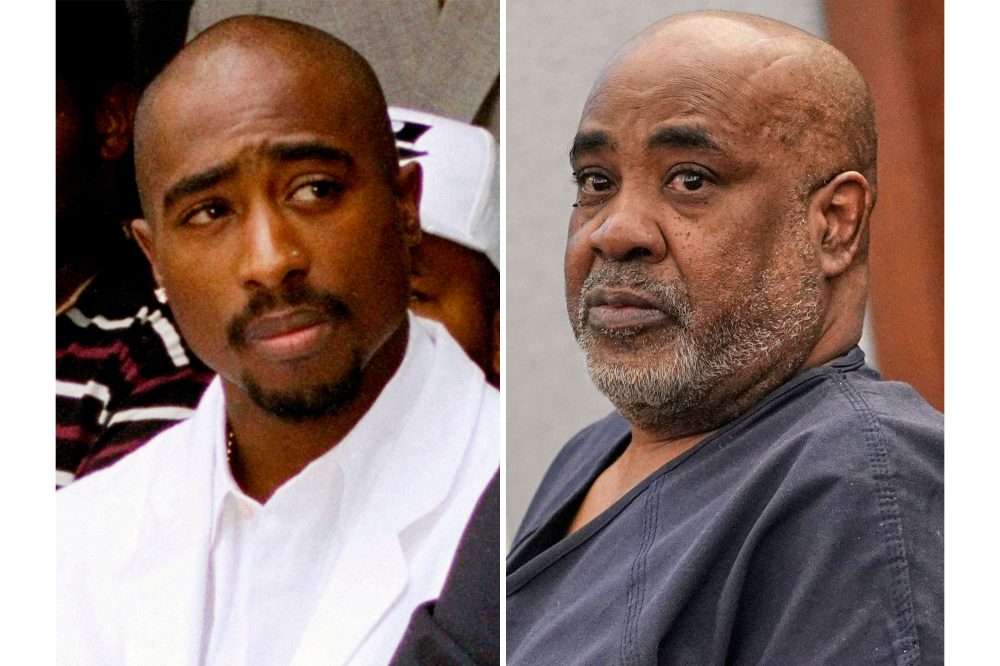
LAS VEGAS — A judge has cleared the way for prosecutors to use a memoir co-authored by the man accused of orchestrating the 1996 murder of rap legend Tupac Shakur as evidence in his upcoming trial.
Judge Carli Kierny issued the ruling Tuesday, rejecting a bid by the defense to block the 2019 book “Compton Street Legend” from being introduced at trial, which is scheduled to kick off August 10. The defense had also sought to exclude statements that Duane “Keffe D” Davis made to law enforcement in 2008 and 2009.
Davis, 63, is charged with murder with a deadly weapon with intent to promote, further, or assist a criminal gang — stemming from the drive-by shooting of Shakur in Las Vegas.
The attack took place on September 7, 1996, when Shakur was riding in a black BMW alongside Death Row Records founder Marion “Suge” Knight. A white Cadillac pulled alongside their vehicle at a red light near the Las Vegas Strip, and shots rang out. Shakur was struck multiple times and passed away six days later. Knight survived the attack with only minor injuries.
For years, Shakur’s death remained one of the most high-profile unsolved murders in the country. The case had gone cold until Davis began making public remarks about the shooting — including in his book, where he claimed to have been inside the Cadillac and said he supplied the gun used in the attack. Those revelations reignited the investigation, and Davis was arrested in September 2023. He has pleaded not guilty.
Much of the prosecution’s case rests on the book Davis co-wrote about his involvement with the gang South Side Compton Crips, along with comments he made in YouTube interviews.
Defense attorney Michael Sanft argued the book was largely fictionalized for commercial purposes and that it was uncertain which portions, if any, Davis personally wrote. Sanft also contended that Davis’s 2008 and 2009 police statements should be off-limits because Davis believed he was protected from prosecution under a proffer agreement that allowed him to speak with detectives freely.
Judge Kierny disagreed, ruling that Davis had embraced the book’s contents as his own by repeatedly describing it as the “real truth,” regardless of who physically wrote each section. While she acknowledged concern that Davis had been told in 2008 he would not face prosecution for what he disclosed, she ultimately found his statements to law enforcement were made voluntarily.
Marc DiGiacomo, chief deputy district attorney in Clark County, argued that the earlier statements lost their protected status once Davis chose to write and publicly discuss the events himself. The state, he said, has the right to use those interviews to corroborate what Davis put in print.
“Had he decided to never write the book, he would not, probably, have ever been prosecuted for the crime,” DiGiacomo said.
Travelers along Newport Pike should be aware of a lane restriction currently in effect between Larch Avenue and South Augustine Street.
A right lane and shoulder closure is in place in that stretch due to ongoing construction activity. The closure is expected to remain in effect until 4 p.m.
Drivers in the area are encouraged to allow extra travel time or consider using alternate routes to avoid potential delays.
Eleven years have passed since Nefertiri “Neffie” Trader vanished from a New Castle neighborhood, and investigators are once again shining a light on her case in hopes of finding answers.
Trader, a 33-year-old mother of three, was last seen at approximately 4:00 a.m. on Monday, June 30th, 2014, on Freedom Trail in the Saddlebrook community, a neighborhood located off Christiana Road — also known as Delaware Route 273 — in New Castle, Delaware.
A neighbor who witnessed the incident reported seeing a man physically force Neffie into her own vehicle, described as a silver 2000 Acura bearing Delaware license plate 404893.
The case has gone cold in the years since her disappearance, and authorities are now conducting a formal cold case review in an effort to generate new leads and bring closure to Trader’s family.
Anyone with information about Nefertiri Trader’s whereabouts or the circumstances surrounding her disappearance is urged to come forward and contact authorities.
SALISBURY, Md. — The City of Salisbury wants residents to know that some previously shared information about holiday trash and recycling service has been updated.
Pickup will continue on its normal schedule on Friday, July 3. Homeowners are reminded to have their trash and recycling containers out at the curb no later than 6 a.m. on their regular collection day.
City officials say keeping collections on schedule allows crews to deliver dependable service while still giving workers the opportunity to spend the official Independence Day holiday with their loved ones. The city thanked residents in advance for their cooperation in helping the day run smoothly.
Drivers traveling along Lancaster Pike should be aware of a traffic signal outage currently affecting the roadway between Newport Gap Pike and Brackenville Road.
Traffic signals in that stretch are reported as dark, meaning they are not functioning. When traffic signals are out, motorists are required by law to treat each affected intersection as a four-way stop, yielding appropriately and proceeding with caution.
Drivers are encouraged to allow extra travel time and remain alert while passing through the affected area. Updates on signal repairs are expected as crews work to restore normal operations.
Drivers traveling along Lancaster Pike in New Castle County should proceed with extra caution after traffic signals in the area went dark.
According to Delaware Department of Transportation, the signal outage affects Lancaster Pike between Newport Gap Pike and Brackenville Road.
When traffic signals are not functioning, state law requires drivers to treat the intersection as a four-way stop, yielding to vehicles already in the intersection and taking turns with other drivers.
Motorists are encouraged to allow extra travel time, remain alert, and follow proper right-of-way rules until signals are restored. No estimated repair time has been provided at this time.
TikTok has agreed to settle a lawsuit filed on behalf of a minor who claimed the popular social media platform caused harm to his mental health, according to a spokesperson from the law firm representing the young plaintiff.
The announcement came Tuesday, with the settlement resolving the case before it could proceed to what would have been a second individual trial focused on allegations that social media causes harm to children.
Motorists traveling along Cannon Road (Route 18) should plan for possible slowdowns as a flagging operation is currently underway in the area.
The intermittent traffic control operation is taking place between Sussex Highway (Route 13) and Elks Road. Flaggers are directing vehicles through the zone as work continues in the area.
The flagging operation is expected to wrap up by 5 p.m. Drivers are encouraged to allow extra travel time or consider alternate routes if possible.
Motorists traveling along Cannon Road, also known as Route 18, between Sussex Highway (Route 13) and Elks Road should be aware of a traffic control operation currently underway in the area.
An intermittent flagging operation is in effect, meaning drivers may experience periodic stops as workers direct traffic through the zone.
The flagging operation is expected to continue until 5 p.m. Drivers are encouraged to allow extra travel time or consider an alternate route if possible.
The Delaware State Police is conducting an investigation into a fatal officer-involved shooting that took place Monday evening in the Magnolia area.
At around 9:15 p.m. on June 29, 2026, troopers were dispatched to the 100 block of East Cherry Drive in Magnolia following a report of a domestic incident. As they made their way to the scene, officers learned that 37-year-old Kristopher Glanden of Frederica was reportedly suicidal, armed with a handgun, and attempting to force his way into a home where his ex-partner and other family members had taken shelter.
Upon arriving, troopers found Glanden standing in the front yard of the property. He repeatedly refused to follow the officers’ commands, and at one point during the confrontation, he raised the handgun and pointed it directly at the troopers. Two officers then discharged their service weapons, striking Glanden. The troopers immediately rendered first aid while awaiting emergency medical services, but Glanden was pronounced dead at the scene.
Following standard Delaware State Police procedures for officer-involved shootings, the department’s Homicide Unit took over the investigation. Detectives recovered a loaded 9mm handgun from the scene.
Neither of the two troopers involved sustained injuries. Both have been placed on administrative leave as a use-of-force investigation proceeds in coordination with the Delaware Department of Justice’s Division of Civil Rights and Public Trust.
Investigators are asking anyone with information related to this case to reach out to Sergeant K. Gause at (302) 741-2703. Tips can also be submitted through a private Facebook message to the Delaware State Police or by contacting Delaware Crime Stoppers at (800) 847-3333.
Anyone who has been a victim or witness of a crime, or who has lost someone to a sudden death and needs support, can contact the Delaware State Police Victim Services Unit / Delaware Victim Center around the clock via their toll-free hotline at 1-800-VICTIM-1 (1-800-842-8461). The unit can also be reached by email at [email protected].
On the final day of the Supreme Court’s current term, National Public Radio issued a swift retraction Tuesday after one of its articles falsely claimed that Justice Samuel Alito was leaving the court. The news organization attributed the mistake to “a misunderstanding.”
The erroneous story was written by NPR’s longtime Supreme Court and legal affairs correspondent, Nina Totenberg. NPR said she planned to speak about the situation on air later that same day.
An editor’s note distributed through some NPR affiliate stations read: “Earlier today, we erroneously published a story saying that Supreme Court Justice Samuel Alito was retiring. Neither Alito nor the court’s public information office has announced his retirement, and we have retracted the story.”
NPR Editor-in-Chief Tommy Evans later released a statement acknowledging the mistake and expressing regret for any confusion it may have created.
“Due to a misunderstanding, NPR’s Supreme Court and Legal Affairs Correspondent Nina Totenberg incorrectly reported that Justice Samuel Alito had retired. Neither Justice Alito nor the Supreme Court Public Information Office has announced his retirement,” Evans stated.
He continued: “As soon as the error was realized, the story was retracted and removed from NPR’s website and an on-air correction was broadcast. We regret the error and any confusion this may have caused.”
Evans also noted that Totenberg would appear on Tuesday’s broadcast of “All Things Considered” to address the matter, and that she had personally reached out to Justice Alito to apologize.
NPR had already pulled the story before Evans’ statement, after the Supreme Court’s public information office disputed the report earlier in the day.
The confusion appears to have stemmed from a busy day at the court. Chief Justice John Roberts had announced the retirement of several court staff members, as he typically does once the court’s final opinions of the term are released. However, Justice Alito’s name was not included in those announcements.
Earlier this year, speculation had circulated about what Alito’s future plans might be. However, both Fox News and CBS reported this past spring that he intended to stay on the court.
Alito has served on the Supreme Court since 2006, when he filled the seat vacated by Justice Sandra Day O’Connor. He was nominated to the position by President George W. Bush, a Republican.
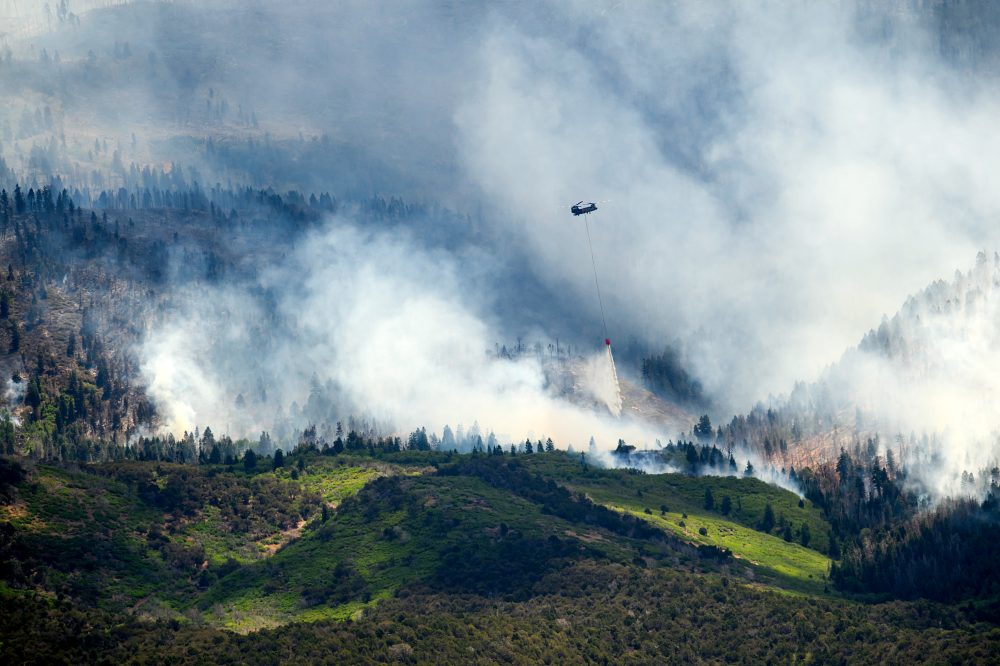
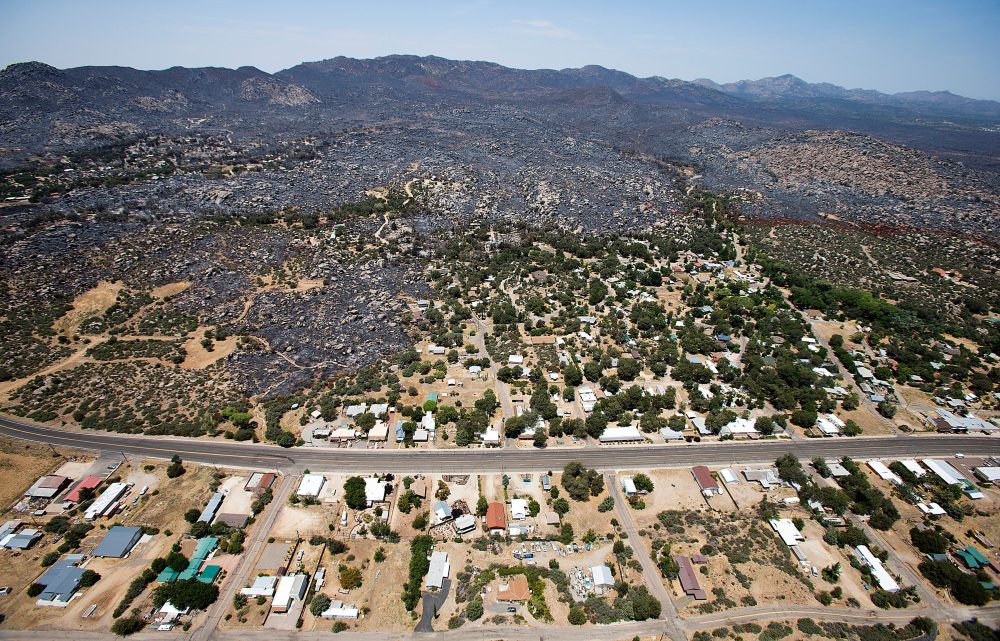
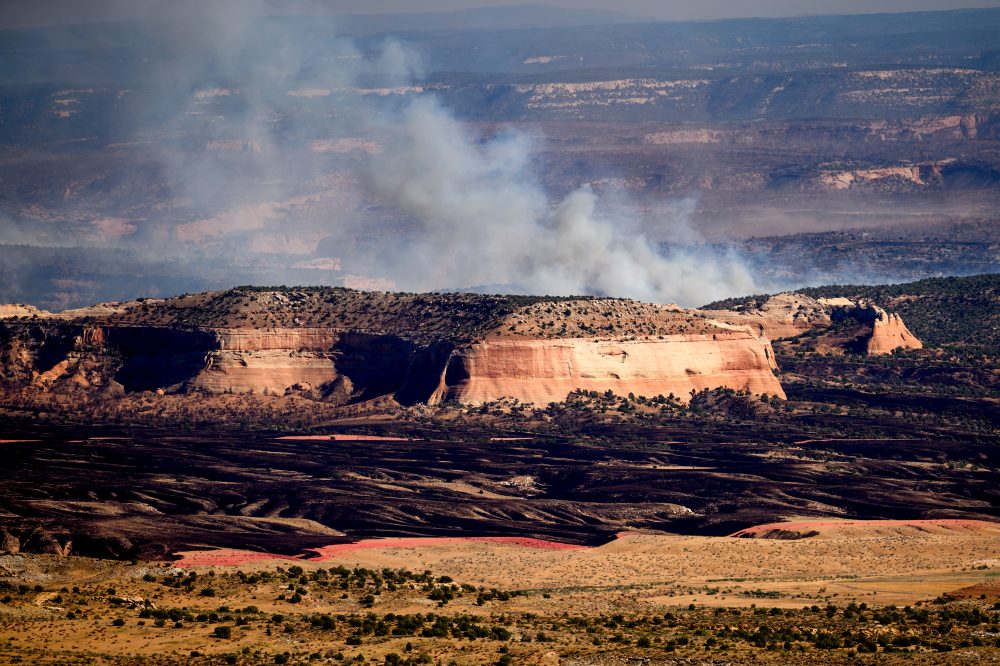
The deaths of three federal firefighters in a Colorado wildfire are shining a harsh light on the Trump administration’s newly created federal fire agency and its decision to revive a long-abandoned policy requiring all wildfires to be put out as fast as possible.
One of the three firefighters who died was employed by the newly formed U.S. Wildland Fire Service — an agency established this year without the typical congressional approval process by pulling personnel from four Interior Department agencies. The fallen firefighters were part of an elite, helicopter-based crew that became trapped on Saturday in a rapidly spreading wildfire near the Utah border while fighting the blaze on the ground.
Authorities report that the group was among five firefighters who attempted to protect themselves by deploying emergency shelters — tent-like devices designed to shield against flames — as the fire overtook their position. Two firefighters survived but were hospitalized with burn injuries.
The merging of thousands of firefighters into a single agency has created confusion among some personnel about their chain of command and job responsibilities, according to former government officials familiar with the situation.
The administration’s push for “full suppression” of all new fires represents a dramatic departure from a trend that had been building over decades — one that recognized fire as a useful land management tool capable of clearing out old vegetation that acts as fuel and reducing the risk of catastrophic blazes fueled by a warming climate.
The policy shift has also proven financially beneficial to private aerial firefighting companies that profit from the faster, more aggressive response to new fires.
Federal officials have not yet disclosed the specific circumstances that led to the firefighters being overrun, including what their mission objective was at the time.
“The question is, why were they attacking that fire in the first place?” said Timothy Ingalsbee, a former federal firefighter and cofounder of the advocacy organization Firefighters United For Safety, Ethics and Ecology. “What was actually at risk? If it was a bunch of shrubs on remote mountaintops, what was the real risk that justified putting those firefighters at risk?”
The fires broke out across the western United States over the past week following months of dry conditions and historically low snowpack in some regions.
Operating under a directive from Interior Secretary Doug Burgum, the Wildland Fire Service is required to pursue full suppression “for every wildfire under its management,” federal officials confirmed in a statement to the Associated Press.
“Any wildfire that represents a threat to life, property, infrastructure or the environment should be extinguished as quickly as possible,” the statement read. “Our experienced fire managers retain the authority to select the safest and most effective tactics based on conditions on the ground.”
Critics, however, argue the administration is attempting to fix a system that was already working. The four agencies from which the new fire service drew its personnel — the Bureau of Land Management, Fish and Wildlife Service, Bureau of Indian Affairs, and National Park Service — had a track record of successfully extinguishing 98% of the fires they managed.
Steve Ellis, who retired as a deputy director of the Bureau of Land Management and now chairs the National Association of Forest Service Retirees, said the new agency and its policy will not solve the problem of catastrophic wildfires driven by dense forests, growing populations in fire-prone areas, and extreme weather tied to climate change.
“Severing forest management and forest managers from fire suppression will make firefighting less safe and put communities at greater risk,” Ellis said.
The other two firefighters killed in Colorado were employed by the Department of Agriculture’s Forest Service, which manages the majority of wildfires across the country and is also operating under a full suppression directive. The Trump administration had originally sought to bring Forest Service firefighters into the new consolidated agency, but Congress blocked that portion of the plan.
Under the current administration, federal officials have been deploying aircraft to fire scenes more rapidly after ignition, according to Austin Moeller, a senior aerospace analyst with Canaccord Genuity Group, an investment firm.
“Anyone that has an air tanker benefits from this more aggressive contracting activity,” Moeller said.
One company that stands to gain significantly is Bridger Aerospace, a Montana-based aerial firefighting firm founded by U.S. Sen. Tim Sheehy. Before winning his Senate seat in 2024, Sheehy had hired lobbyists in an unsuccessful effort to get the Montana Legislature to establish a statewide fire service similar to the one now created at the federal level. Within a month of taking office, he introduced legislation to formally codify the consolidation of federal firefighters into a single agency.
Sheehy’s spokesman, Tate Mitchell, said the senator stepped away from his company during the 2024 campaign and placed his Bridger assets into a blind trust. Mitchell also said that while the idea for the new fire agency originated with President Trump, Sheehy supports it.
“One of Senator Sheehy’s top priorities in the Senate is using his experience to stop the catastrophic fires destroying American communities and he won’t apologize for it,” Mitchell said.
Bridger describes itself as one of the country’s leading aerial firefighting companies. Its CEO, Sam Davis, has said the company’s fleet of Super Scooper aircraft, surveillance planes, and fire observation technology make it “uniquely positioned” to benefit from the renewed emphasis on aggressive fire suppression.
The new full suppression policy is reminiscent of a 1935 rule known as the “10 a.m. rule,” which required fire agencies to extinguish all new fires by 10 a.m. the following day. Michael Dudley, a retired director of fire, aviation and air management at the Forest Service, said that old approach is largely responsible for the overgrown forests seen today.
Wildfires naturally clear out dead and small vegetation, Dudley explained. But as agencies became increasingly effective at putting fires out, forests continued to grow denser with accumulated fuel — meaning that when fires do break out now, they have far more material to burn and are much harder to control.
Scientists who study wildfire behavior say the goal of stopping every fire is simply unrealistic. Some of the most destructive recent blazes spread too quickly, burned in too-remote locations, or started from multiple ignition points simultaneously — making full suppression impossible.
“The narrative that if we just try harder, we’re gonna make these fires go away isn’t true,” said David Calkin, a former Forest Service wildfire researcher. “The fire paradox is not beatable: The more you make fire go away, the more fuel accumulates. The more fuel accumulates, the harder it is to make fires go away.”
Firefighters within the consolidated agency are now working under Wildland Fire Service Chief Brian Fennessy, who previously served as chief of California’s Orange County Fire Authority since 2018. Dudley noted that the reorganization has left many personnel uncertain about their roles.
“There’s a level of confusion as everyone’s trying to sort out responsibilities and who’s in charge and who do you report to,” Dudley said.
An Interior Department spokesperson described Fennessy as highly respected, with decades of experience managing some of the nation’s most complex fire situations in densely populated southern California.
Luke Mayfield, a founder of the group Grassroots Wildland Firefighters, said he believes the consolidation will ultimately benefit firefighters, but acknowledged that significant work remains before the new agency is fully operational.
“Everyone was aware of the potential fuel and fire conditions we face this fire season,” Mayfield said. “Those conditions are surfacing and have resulted in firefighter fatalities with weather conditions that won’t let up in the near future.”
A legal expert weighed in on the Supreme Court’s most recent round of decisions as the current term came to a close.
Kim Wehle, a professor of law at the University of Baltimore School of Law, sat down with NPR host Michel Martin to walk through the high court’s final rulings of the term.
The discussion offered a closer look at the significance of the decisions handed down by the nation’s highest court as justices wrapped up their work for the season.
LAS VEGAS — It was a landmark evening in a small desert city with big ambitions. Shortly after the close of World War II, Las Vegas unveiled what a local newspaper described as America’s very first all-you-can-eat buffet, drawing out local dignitaries and the social elite for the occasion. Glazed ham and prime rib were on the menu at the El Rancho Vegas, and American dining would never quite be the same.
While the space race and arms race dominated Cold War-era news coverage, a quieter revolution was happening on American farms. Through advances in genetics, chemical treatments, and motorized machinery, U.S. agricultural output nearly tripled between 1948 and 2017 — and someone had to eat all that food.
The buffet concept offered one answer. At least three Las Vegas legends claimed credit for inventing it. The most widely told version centers on a promoter named Herb McDonald, who one night reportedly set out cheese and cold cuts along a bar. According to his 2002 obituary, “Gamblers walking by said they were hungry, and the buffet was born.”
Michael Green, a history professor at the University of Nevada, Las Vegas, explains that other casinos soon followed suit, offering buffets as a way to keep gamblers fed and on the floor. For a single flat price, diners could pile their plates with salads, meats, pasta, and seafood — and, crucially, go back for seconds.
But the origin story has long been contested. Las Vegas historian Jeffrey Carlson dismisses the El Rancho tale outright. “It couldn’t have been that simple,” he says, pointing to a rival account that ties the buffet’s creation to organized crime figures who helped shape early Las Vegas.
In his book “Neon Metropolis: How Las Vegas Started the Twenty-First Century,” author Hal K. Rothman credits mobster Davie Berman with the invention. Berman relocated from Iowa in 1944 as Jewish gangsters were acquiring local hotels and casinos. He reportedly hired a chef who laid out lox, whitefish, herring, and other traditional Jewish brunch items on a long table. “A Las Vegas tradition, the buffet, was born,” Rothman wrote.
Regardless of its true origins, the all-you-can-eat buffet eventually spread far beyond Nevada, taking root in restaurant chains like Golden Corral and Ponderosa across the country. Over time, however, food industry expert Darren Tristano notes that the format began losing customers to casual dining establishments like Olive Garden and Chili’s.
Then came 2020. The COVID-19 pandemic struck a serious blow to the buffet business — one that has yet to fully heal. The idea of communal food stations where everyone reaches for the same serving spoons suddenly lost much of its appeal.
Still, longtime Las Vegas food journalist Al Mancini believes the buffet will always hold a special place in that city’s culture. “There’s a visceral reaction to just loading up that tray,” he says. “People still love that, and I think they always will.”
This story is part of a recurring series called “American Objects,” produced in recognition of the 250th anniversary of the United States.
WASHINGTON — The U.S. Treasury Department has launched a sweeping crackdown on the Jalisco New Generation Cartel, widely regarded as Mexico’s most powerful criminal organization, through a new round of sanctions and a financial warning system for banks.
Treasury’s Office of Foreign Assets Control moved to sanction two Mexican men along with nine companies operating in transportation, financial services, and real estate. All are accused of ties to a cartel-linked fuel theft operation designed to dodge Mexican taxes while funneling tens of millions of dollars each year back to the cartel.
At the same time, Treasury’s Financial Crimes Enforcement Network issued a formal alert to banks and financial institutions, outlining warning signs of fuel being smuggled from the United States into Mexico as part of tax evasion schemes.
Treasury Secretary Scott Bessent addressed the broader significance of the action in a statement: “Today’s action highlights the extent to which Mexico’s cartels are expanding beyond traditional drug trafficking to generate revenue for their criminal organizations, which continue to traffic deadly drugs that kill Americans.”
The U.S. Drug Enforcement Agency has documented the Jalisco New Generation Cartel’s reach across 21 of Mexico’s 32 states, making it even more widespread than the Sinaloa Cartel, which is believed to operate in 19 states. President Donald Trump designated the Jalisco New Generation Cartel and five other Mexican cartels as foreign terrorist organizations last year.
In recent years, Mexican authorities have seized millions of gallons of stolen diesel, gasoline, and petroleum distillates in states along the Texas border. Criminal organizations tap directly into pipelines and redirect fuel either to service stations that are forced to purchase from the cartels or sell it openly on the streets.
U.S. authorities have gone so far as to accuse the Jalisco New Generation Cartel of running its own network of service stations as part of the operation.
Authorities in rural Michigan are asking for the public’s help after the body of a newborn infant was discovered inside a portable toilet at a major music festival over the weekend.
The baby, who was less than one month old, was found by a sanitation company worker during a routine maintenance check Sunday morning — the final day of the Electric Forest festival in Rothbury, Michigan, according to Michigan State Police.
Police have not released information about the baby’s sex, the cause of death, or whether anyone connected to the child has been identified.
An autopsy was completed Monday, and Michigan State Police Lt. Pat Agema said investigators would share updates once those results have been reviewed. As of Tuesday, Agema confirmed the death has not been classified as a homicide.
The Electric Forest festival kicked off Thursday and typically brings tens of thousands of people together to enjoy electronic dance music and jam bands. The majority of attendees camp at the 2,000-acre Double JJ Resort, located near the shores of Lake Michigan. Police indicated the infant’s body was found within the festival’s camping area, and they are actively seeking witnesses or anyone with information that could assist the investigation.
Festival organizers shared the state police announcement on Monday, writing that “it causes us so much pain to have to share this difficult news with you.” They echoed law enforcement’s call for help, urging anyone who attended the event to “assist in any way.”
Organizers had not responded to a request for comment as of Tuesday.
New Castle County Division of Police detectives have arrested two juveniles following an investigation into an attempted robbery that also involved an assault on a victim in Newark, Delaware.
The incident was first reported on Friday, May 22, 2026, at around 6:27 p.m., when officers were dispatched to the Iron Hill Apartments, situated in the unit block of Brookedge Court, in the 19702 zip code area of Newark.
Upon arrival, officers learned that a victim had been assaulted during what appeared to be an attempted robbery. Given the nature of the circumstances involved, detectives took over the investigation, which ultimately led to the identification and arrest of two juvenile suspects.
Blake Lively is asking for $8 million in legal costs from actor and director Justin Baldoni, following the resolution of their highly publicized conflict surrounding the 2024 film “It Ends With Us.”
Court documents filed Tuesday by Lively’s legal team revealed the breakdown: close to $7.5 million in attorney fees split between two law firms that represented her, along with approximately $500,000 in additional costs.
The two sides reached a settlement last month, just as a trial was about to begin in federal court in Manhattan. The case centered on Lively’s allegations that Baldoni had orchestrated a campaign to harm her public image and reputation after she privately accused him of sexually harassing her during filming. Baldoni, who both directed the film and starred alongside Lively, denied her accusations.
Although Lively received no money from the settlement itself, a judge later ruled she has the right to recover certain legal costs she was forced to incur after Baldoni filed a countersuit against her. The judge has yet to sign off on the specific dollar amount she is now requesting.
One of Lively’s attorneys, Michael Gottlieb, stated in a court declaration that he billed her at an average rate of $2,187 per hour — reduced from his standard rate of $2,795 per hour. He logged 224 hours working on her defense against Baldoni’s countersuit, amounting to $457,000 in fees.
In their court filing, Lively’s lawyers accused Baldoni and his production company, Wayfarer Studios LLC, of using aggressive legal tactics intended to exhaust her financially. “They could have ended it (and offered to reimburse Lively) at any time. Having refused to do so, they should be ordered to reimburse Lively for all of the costs, attorney’s fees, and expenses they improperly forced her to incur,” the filing stated. Attempts to reach Baldoni’s attorney for comment were unsuccessful.
Lively, 38, originally filed suit against Baldoni, 42, and Wayfarer Studios in December 2024. She alleged they worked with publicists to preemptively tarnish her reputation after she raised sexual harassment concerns privately about the “It Ends With Us” set.
Baldoni responded weeks later with his own lawsuit, targeting Lively, her husband — “Deadpool” actor Ryan Reynolds — and their publicist, alleging defamation and extortion. He denied harassing Lively or running any smear campaign, and claimed her complaints about his conduct were fabricated as part of an attempt to take creative control of the movie.
Judge Lewis J. Liman dismissed Baldoni’s countersuit last year and later threw out Lively’s sexual harassment claims as well, ruling she could not pursue them because she was working as an independent contractor rather than a direct employee on the film set.
In permitting Lively to seek legal cost reimbursement, the judge pointed to a California law designed to shield survivors of sexual harassment and discrimination from retaliatory lawsuits intended to intimidate or silence them. Judge Liman explained that under this law, if a defamation claim filed in response to a lawsuit is dismissed — even before evidence has been fully gathered — the plaintiff must cover the defendant’s legal fees and costs.
The judge noted that an exception would apply if Baldoni and Wayfarer Studios could demonstrate that Lively’s claims were driven by malice, but found they had presented no such evidence.
Lively’s attorneys said in their filing that $4.5 million of the total should go to Gottlieb’s firm, Willkie Farr & Gallagher, with approximately $3 million directed to the firm Manatt, Phelps & Phillips, LLP. The judge declined Lively’s request to triple any damages or pursue punitive damages under California law, saying those remedies conflicted with federal procedural rules designed to protect the rights of all parties involved.
“It Ends With Us,” based on Colleen Hoover’s bestselling 2016 novel about a romance that descends into domestic violence, hit theaters in August 2024 and performed better than expected at the box office.
Lively is known for her early role in the 2005 film “The Sisterhood of the Traveling Pants” and her years on the TV series “Gossip Girl” from 2007 to 2012, as well as later film roles in “The Town” and “The Shallows.” Baldoni gained recognition starring in the TV comedy “Jane the Virgin,” directed the 2019 film “Five Feet Apart,” and authored “Man Enough,” a book that challenges traditional ideas about masculinity.
A flagging operation is currently underway on Stockton Drive between South Stockton Drive and East Basin Road, and drivers in the area should be prepared for possible slowdowns.
The operation is described as intermittent, meaning traffic control personnel may be directing vehicles through the area at various intervals rather than continuously. The flagging activity is expected to remain in place until 1 p.m.
Drivers are encouraged to allow extra travel time or consider alternate routes if possible until the work is completed.
Delaware students are being set up for success in some of today’s most in-demand careers, thanks to a program that bridges traditional classroom instruction with practical, hands-on experience.
Through Career and Technical Education, students across the state are tackling real problems, developing solutions, and putting technical knowledge to work in real-world situations — skills that employers and Delaware’s broader economy will increasingly rely on in the coming years.
That dedication to preparing the next generation of workers recently paid off in a big way, as Delaware’s Career and Technical Education efforts earned national recognition — a milestone that underscores the impact these programs are having on students and the state alike.
Delaware is working to secure the future of its teaching workforce by encouraging students to explore education careers before they even graduate.
Through programs such as Teacher Academy and Educators Rising, students are getting real classroom experience and building the leadership skills they will need if they choose to pursue careers in education.
State officials say the strategy is designed to help meet Delaware’s growing demand for qualified educators in the years ahead.
The programs give young people a head start by immersing them in the teaching profession early, allowing them to make informed decisions about whether education is the right career path for them.
Delaware officials recently highlighted the initiative as a key part of the state’s broader workforce development efforts, showcasing how early exposure to the classroom can help pipeline future teachers into the profession.
Despite the heat, the New Castle County Division of Police is heading to the LaGrange Neighborhood with a Pop-Up Play Zone event designed to bring the community together.
Families and children are encouraged to come out and enjoy an afternoon packed with games, snacks, and the chance to meet and connect with local neighbors and officers.
The event is seen as a great way for kids to get outside and for residents to build relationships within their community.
Ocean City, Maryland is welcoming summer with an action-packed July schedule, centered around the nation’s 250th birthday and a spirit of community celebration.
The coastal resort town announced its July calendar on June 30, 2026, highlighting a landmark Independence Day event on July 4th as the centerpiece of the month’s festivities.
The celebration is designed to honor the United States’ 250th anniversary while also spotlighting the best that Ocean City has to offer — bringing together locals and visitors in a star-spangled tribute to the country’s milestone birthday.
Organizers are encouraging everyone to come out, enjoy the summer sunshine, and be part of what promises to be a memorable month along the Maryland shore.
As Delaware gets ready to mark a truly historic occasion — the 250th anniversary of American independence — the Delaware State Fire Marshal’s Office is sending a clear message to both residents and visitors: when it comes to fireworks, leave it to the experts.
The upcoming Semiquincentennial celebration is expected to bring record-breaking crowds to community events throughout the state. With that in mind, fire officials say they are closely monitoring what they describe as an elevated risk of preventable fire-related injuries and incidents tied to the holiday festivities.
The Delaware State Fire Marshal’s Office is encouraging everyone taking part in the Fourth of July celebrations to attend professionally organized fireworks displays rather than attempting to handle fireworks on their own.
The Andrew Carnegie Foundation on Tuesday unveiled its annual “Great Immigrants, Great Americans” roster for 2026, celebrating 25 individuals who made their way to the United States from nations across the globe.
This year’s honorees represent a broad spectrum of achievement, from corporate boardrooms and university lecture halls to concert stages and athletic competitions. Here is the complete 2026 class:
Iman Abuzeid, co-founder and CEO of Incredible Health, originally from Sudan
Sunil Amrith, the Renu and Anand Dhawan Professor of History at Yale University, originally from Kenya
Nikesh Arora, Chair and CEO of Palo Alto Networks, originally from India
Mahzarin Banaji, the Richard Clarke Cabot Professor of Social Ethics at Harvard University, originally from India
Sanjiv Chopra, professor of medicine at Harvard Medical School, originally from India
Ingrid Daubechies, James B. Duke Distinguished Professor Emeritus of Mathematics at Duke University, originally from Belgium
Hernan Diaz, Pulitzer Prize-winning author, originally from Argentina
Jane Fraser, Chair and CEO of Citi, originally from Scotland
Johannes Fruehauf, president and CEO of Biolabs and founder and chairman of LabCentral, originally from Germany
Gabriela Hearst, co-founder and creative director of fashion brand Gabriela Hearst, originally from Uruguay
Abbas Karimi, Paralympic swimmer, originally from Afghanistan
Reshma Kewalramani, President and CEO of Vertex, originally from India
Jeong Kim, Chair and Founder of Kiswe, originally from South Korea
Ling Ma, novelist and associate professor at the University of Chicago, originally from China
Cristian Măcelaru, conductor of the Cincinnati Symphony Orchestra, originally from Romania
Guadalupe Maravilla, visual artist, originally from El Salvador
Joel Mokyr, Robert H. Strotz Professor of Arts & Sciences at Northwestern University, originally from the Netherlands
Hiroshi Motomura, Susan Westerberg Prager Professor of Law and Faculty Co-Director of the Center for Immigration Law and Policy at UCLA School of Law, originally from Japan
Gregory Nagy, Francis Jones Professor of Classical Greek Literature and Professor of Comparative Literature at Harvard University, originally from Hungary
Antonio Neri, President and CEO of Hewlett Packard Enterprise, originally from Argentina
Cristina Rivera Garza, Pulitzer Prize-winning author, M.D. Anderson Professor in Hispanic Studies, and Director of the Creative Writing Program in Hispanic Studies at the University of Houston, originally from Mexico
James Robinson, professor in the Harris School of Public Policy and Department of Political Science at the University of Chicago, originally from England
Hock E. Tan, President and CEO of Broadcom Inc., originally from Malaysia
Omar Yaghi, Nobel Prize winner and James and Neeltje Tretter Chair Professor of Chemistry at the University of California, Berkeley, originally from Jordan
Michelle Zatlyn, co-founder, President and CEO of Cloudflare, originally from Canada
The Andrew Carnegie Foundation has revealed its 2026 class of “Great Immigrants, Great Americans” honorees, a group that includes Citi CEO Jane Fraser, Pulitzer Prize-winning authors Hernan Diaz and Cristina Rivera Garza, and fashion designer Gabriela Hearst. The foundation — which recently changed its name from the Carnegie Corporation of New York to better reflect its nonprofit identity and its ties to famed Scottish immigrant and industrialist Andrew Carnegie — made the announcement Tuesday, as immigration advocates voiced concerns about the direction of U.S. immigration policy following last week’s Supreme Court decisions.
Foundation President Dame Louise Richardson said the awards program, which launched in 2005, has never been intended as a political statement. Still, she acknowledged the timing carries weight.
“We’re not articulating it in response to this moment,” Richardson told The Associated Press. “But it seems especially important at this moment that we celebrate immigrants and their contributions and also that we present a view of immigrants different from the ones so often portrayed in the media.”
The broader immigration debate continues to play out at the highest levels of government. President Donald Trump’s administration is actively working to expand immigration enforcement while reducing the number of legal immigrants and asylum seekers allowed into the country. Meanwhile, Pope Leo XIV offered a contrasting perspective earlier this month during a visit to a site in Spain once at the center of the European migration crisis, declaring, “Human dignity has no passport and does not lose its value when crossing a border.”
Richardson — a naturalized U.S. citizen originally from Ireland — said the conversation around immigration has grown increasingly tense, particularly regarding legal immigration and skilled worker visas.
“That just strikes me as an act of self-harm on a national level,” she said, “because so many of these people are the engines of the economy.”
Among the honorees is Dr. Iman Abuzeid, co-founder and CEO of Incredible Health, an artificial intelligence-powered platform focused on healthcare careers. Originally from Sudan and now based in San Francisco, Abuzeid said the recognition feels like a tribute not just to her own journey, but to all those who supported her along the way.
“And if my story makes it feel like it’s more possible for someone else, then that’s probably the part that I care about the most,” she said.
Abuzeid said she deliberately chose the United States as her destination after living in Saudi Arabia, the United Arab Emirates, and completing medical school in England.
“It is the best country for what I’m trying to do,” she said. “I think if you’re ambitious and you’re willing to work hard and you’ve got some skills, it is probably the best country in the world for you.”
She said her experience as an immigrant gave her the courage to take risks and trust in her own abilities. That perspective has also shaped how she built Incredible Health, which serves both employers seeking healthcare workers and the workers themselves — roughly 20% of whom are immigrants. Her background, she said, has made her more sensitive to issues of bias in the workplace.
“I think being from Sudan does make me a little bit more attuned to topics like bias and diversity,” Abuzeid said. “Because we’re operating a marketplace at scale, we can see these patterns in our data where workers of certain last names were seeing bias against them. … So when we removed that, we were able to improve that part of the marketplace.”
Another honoree, Cristian Măcelaru, conductor of the Cincinnati Symphony Orchestra and a native of Romania, described immigration as a mutual opportunity — one that benefits both the immigrant and the country welcoming them.
“This is an opportunity we should hold dear,” he said. “It really makes for a unique kind of country.”
Măcelaru moved to Michigan at age 16 to study music at Interlochen Arts Academy. He said the immigrant experience never fully fades, even as one builds a new life.
“I’ve met so many incredible people that were supportive of my arrival to the United States and embracing of who I was,” he said. “But, at the same time, there is that nostalgia for what you’ve left behind that accompanies you on a daily basis. … The immigrant experience never leaves you.”
Măcelaru, who led the Orchestre National de France during the opening ceremony of the 2024 Paris Olympics — watched by more than a billion people worldwide — said cultural strength comes from embracing what others bring to the table.
“I think all of us actually love the cultures of different places,” he said. “It doesn’t matter where we are on the planet, you end up loving music that is from a different place. You end up loving food that is from a different country.”
Also honored is Gregory Nagy, Harvard University’s Francis Jones Professor of Classical Greek Literature and a professor of Comparative Literature. A native of Hungary, Nagy emigrated with his family as a child after World War II, first settling in Canada before moving to the United States when his father was invited to join Indiana University as a professor of classical piano.
“To have an influx of new cultures and new ways of looking at things — that variety is the human fabric,” Nagy said. “I’m just awestruck by how important the melting pot is.”
Nagy spent his formative years in Bloomington, Indiana, and takes pride in calling himself “a friendly Midwesterner.” His course on “The Ancient Greek Hero” has been taught for more than 50 years and is currently the longest-running class at Harvard. He draws on Danish philosopher Søren Kierkegaard’s concept of repetition — the idea that even repeating something changes it — to illustrate how cultures evolve through new influences.
He noted that the ancient Greek understanding of heroism more closely resembles modern comic book heroes than the idealized figures many Americans tend to admire. That evolution, he said, is driven by younger generations, much like the social changes that followed the election of Péter Magyar as Hungary’s prime minister in April.
“I was very fortunate to become an immigrant,” Nagy said. “And I was lucky enough to achieve puberty in Indiana, so that Americanizes you very well.”
Ford has issued a recall covering more than 741,000 vehicles in the United States after a transmission problem was found that could compromise the park system and raise the risk of crashes or injuries.
According to the National Highway Traffic Safety Administration, the recall covers select Ford F-150, Lincoln Aviator, Ford Explorer, Lincoln Navigator, and Ford Expedition vehicles with model years ranging from 2018 to 2021.
Federal safety regulators say the affected vehicles may experience a temporary, unintended engagement of the transmission parking pawl while the vehicle is still moving. This can happen when certain gear shifts are made, potentially causing damage to components within the park system.
When that park system damage occurs, the transmission’s ability to keep the vehicle stationary — particularly when the parking brake has not been applied — could be compromised. The NHTSA warns that a vehicle rolling unexpectedly while in “park” significantly increases the chance of a crash or personal injury.
Ford has reported awareness of 24 claims involving property damage and nine alleged injuries connected to this issue. Two of those injury claims involve allegations of emotional harm.
Owners of affected vehicles will be notified by mail and directed to bring their vehicle to a Ford or Lincoln dealership. Technicians will update the vehicle’s Powertrain Control Module to the most current software version. The transmission will also be inspected for park system damage, and any damaged components will be replaced at no cost to the owner.
For more information, vehicle owners can reach Ford’s customer service line at 1-866-436-7332 or contact the National Highway Traffic Safety Administration’s Vehicle Safety Hotline at 1-888-327-4236.
A federal judge has refused to throw out a lawsuit brought by dozens of state attorneys general against Meta Platforms, allowing claims to proceed that the company deliberately built Facebook and Instagram to hook children and then hid the damage it was causing.
U.S. District Judge Yvonne Gonzalez Rogers, based in Oakland, California, issued the ruling late Monday, rejecting Meta’s motion to dismiss. The judge allowed claims involving deception, unfair practices, and violations of the federal Children’s Online Privacy Protection Act to continue.
Judge Gonzalez Rogers went further, stating there was no dispute that Meta failed to meet the law’s requirements for notifying users and obtaining parental consent. On that specific point, she granted summary judgment in favor of the states — meaning that portion of the case is essentially already decided against Meta.
As of Tuesday, Meta had not responded to requests for comment on the ruling.
A left lane closure is in effect on W Market Street eastbound between S Mary Street and S James Street due to ongoing construction activity.
The closure is expected to remain in place until 4:30 PM. Drivers traveling through that stretch should anticipate possible delays and consider using alternate routes to avoid the affected area.
Motorists traveling southbound on Pennsylvania Avenue should plan for a lane restriction currently in place due to construction activity.
The right lane is closed along the southbound stretch of Pennsylvania Avenue between North Union Street and North Clayton Street. The closure is expected to remain in effect until 5 p.m.
Drivers in the area are encouraged to allow extra travel time or consider alternate routes to avoid potential delays.
Drivers traveling along Dinahs Corner Road should be prepared for intermittent lane closures currently in effect between Pearson Corner Road and West Denny Road.
The lane restrictions are due to construction activity in the area. The closures are expected to remain in place until 6:00 PM.
Motorists are encouraged to allow extra travel time or consider using an alternate route to avoid potential delays in the area.
Drivers traveling along Harvest Drive between Wagon Wheel Drive and Wheatsheaf Drive should be prepared for intermittent lane closures as construction crews work in the area.
The lane restrictions are expected to remain in place until 5 PM. Motorists are encouraged to use caution when passing through the construction zone and to allow additional time for their commute.
Northbound travelers on US-301 are facing a lane restriction near the merge with DE-1 due to ongoing construction activity.
The left lane is currently closed at that location, creating potential slowdowns for drivers in the area. The closure is expected to remain in effect until 5 p.m.
Drivers are encouraged to allow extra travel time or consider alternate routes to avoid delays in the construction zone.
Drivers traveling along Nassau Road should be aware of an intermittent lane shift currently in effect between Coastal Highway (Route 1) and New Road.
The lane shift is expected to remain in place until 5 p.m. Motorists are urged to slow down and proceed with caution through the affected stretch of roadway.
No additional details regarding the cause of the lane shift were provided. Drivers are encouraged to allow extra time when traveling through the area and to watch for any traffic control personnel or signage.
Drivers traveling along West Harvest Drive should be prepared for slowdowns due to ongoing construction activity in the area.
Intermittent lane closures are in effect on West Harvest Drive from Wagon Wheel Drive to Wheatsheaf Drive. The closures are expected to remain in place until 5 PM.
Motorists are encouraged to use caution when passing through the construction zone and to allow additional time for their commute if traveling in that area.
An intermittent lane closure is currently in effect at the intersection of Haystack Lane and Wheatsheaf Drive as a result of construction work in the area.
The lane restriction is expected to continue until 5 PM. Drivers traveling through that area should anticipate possible delays and consider alternate routes if available.
Motorists are encouraged to slow down and use caution when passing through the construction zone.
Drivers heading through the intersection of Centerville Road and Boxwood Road should be aware of a temporary lane restriction currently in effect.
The right turn lane at Boxwood Road is closed while crews perform signal service work at the intersection. Motorists are advised to allow extra travel time or consider alternate routes until the work is completed.
The closure is expected to remain in place until 8 a.m. No further details on the nature of the signal work were provided.
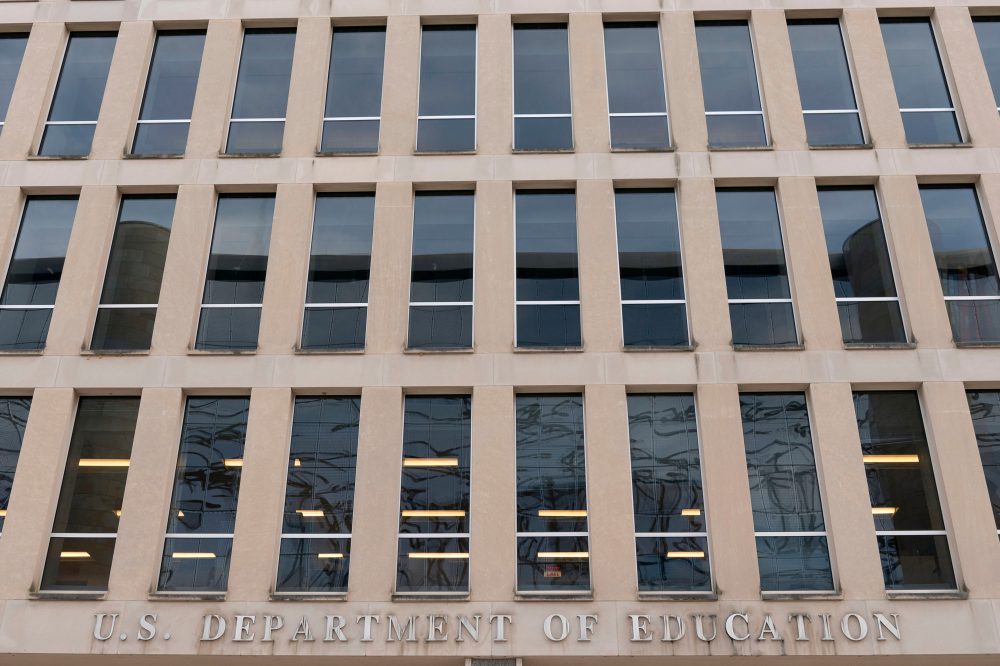
A long-awaited federal program that directs Pell grant dollars toward short-term workforce training officially got underway on July 1, but the rollout is off to a slow start as most programs struggle to qualify.
While the funding is now technically available, only 11 states have put together the necessary guidelines and frameworks that allow colleges in their states to actually apply for the money.
The initiative was designed to help workers gain job skills through shorter, more focused training programs — rather than traditional multi-year degree paths — using federal financial aid that was previously unavailable for such courses.
Despite the program’s launch, many training programs across the country are finding it difficult to meet the requirements needed to access the new federal dollars, leaving the promise of expanded workforce education largely out of reach for now.
Not long ago, crime analysts were sounding alarms about what they called a “new normal” — a sustained period of higher violent crime across the United States. That concern now appears to have faded, as the country’s murder rate edges closer to breaking an all-time record low.
The turnaround represents a striking shift in the national conversation around public safety. Experts who had braced for long-term elevated homicide figures are instead watching the data trend in the opposite direction.
While concerns about violent crime surged in recent years, the latest figures suggest the country may be on the verge of reaching its lowest murder rate ever recorded.
Jerry Esters proudly hoists the American flag every day outside his Detroit home. Just a short distance away, Yvonne Pistochini says there is absolutely no circumstance under which she would display the Stars and Stripes where she lives.
Both are Black.
For Esters, the flag represents the doors of opportunity that allowed a great-great-grandson of enslaved people to build a successful life. Pistochini, 79, says simply that the America the flag represents is not the country she witnessed growing up.
A new survey from The Associated Press-NORC Center for Public Affairs Research, released ahead of the nation’s 250th birthday, reveals that Americans’ feelings about the flag are sharply divided along lines of politics, age, and race.
Republicans and older white adults are among the most likely groups to say they fly the flag, while younger Democrats and Black adults are among those most likely to say they never display it. These attitudes toward the flag — including whether it serves as a unifying or divisive symbol — reflect the broader, deep fault lines that exist in how Americans view their country’s history and achievements.
“A lot of Black Americans see the flag as a symbol of both inclusion and exclusion,” said Matthew Delmont, a professor of American history at Dartmouth College. “Black Americans, more so than white Americans, also understand the flag can be used to justify a version of patriotism that is rooted in exclusion, with the flag being used to say ‘you don’t belong here.’”
The poll surveyed 2,596 adults between April 16 and April 20. Results indicate that older white Americans — particularly those who identify as Republican — are more inclined to view the flag as a unifying symbol.
Roughly half of American adults said they display the flag at home for most of the year or at least during holidays. Around 7 in 10 Republicans and about 6 in 10 Americans aged 60 and older say they fly it at minimum during holidays.
By contrast, approximately 6 in 10 Democrats and independents say they “never” fly the U.S. flag. That figure climbs to 75% among Democrats under the age of 45.
Esters, a 64-year-old retired clay sculptor who worked for a Detroit automaker, flies three American flags outside his home on the city’s west side.
“When these homes were built, Black men like me, my mother and my family … we couldn’t even buy these homes,” he said. “To me, that’s one reason I fly the flag. We went through a lot to be able to own nice homes, and this is what we fought for.”
He also flies the flag in honor of Moriah Martin, his great-great-grandmother, who was born into slavery.
“I’m kind of living out her dreams — what I did for a living, having a business, having a nice home,” he said. “I think that’s the American way, but we got to fight for it and we, as Blacks, fought for it.”
According to the survey, Esters represents a minority viewpoint among Black adults. Only about 3 in 10 Black adults say they ever display the American flag, compared with roughly half of white and Hispanic adults.
Pistochini says today’s political divisions, unequal opportunities for people of color and the poor, and ongoing inequality are not what she believes the flag should represent. She also pushed back on the idea that flying a flag equals patriotism.
“Just because you fly a flag doesn’t make you a patriot,” Pistochini said. “If there was patriotism, we would not have all this. We can’t look at (what’s going on) and say this is America.”
Ben Gaskins, who chairs the political science department at Lewis & Clark College in Portland, Oregon, says the flag holds deep personal meaning for many Americans.
“It is those who are older people, who are white and people who are more conservative,” Gaskins said. “They take it as more central to their identity.”
Nancy Hansen, a 73-year-old retired Customs and Border Protection clerk from Culvertson, Montana, says she believes “you have to be for the country, no matter what” and that the flag means “freedom” to her.
“Freedom to live where we want to live, travel where we want to travel, raise our kids where we want to raise our kids,” said Hansen, who is white and identifies as Republican.
Each year around July 4th, the American Legion places flags outside homes and businesses in Culvertson, including outside Hansen’s home.
Linda and Greg Cunningham, a white conservative couple from Pontiac, Michigan, are going all out this summer. The outside of their home, located northwest of Detroit, is decorated in red, white, and blue, with an American flag flying atop a pole just steps from their front door.
“It’s no political thing, at all,” said Linda Cunningham, 63. “It’s our freedom. I love the American flag. I love the whole concept of it. I love America. I know there’s so much going on in the world, right now, and I know everyone has their own views, and I’m just sad that politics have to be brought into the flag.”
Among those who participated in the survey, 47% described the flag as a “more unifying” symbol. About 16% called it “more divisive,” while 36% said it was neither.
Only 22% of Black adults view the flag as a unifying symbol, compared with 55% of white adults and 42% of Hispanic adults.
“It’s a painful symbol. It’s a reminder of what we could be and how it’s failed to live up to that for Black people, for Indigenous people and people of color,” said Allison Wiltz, a Black author and founder of Writers and Editors of Color.
Paul Walthour, 71, occasionally flies the flag at his Minneapolis-area home on special occasions and holidays. He says when he’s at his cabin away from home, the flag goes up each morning and comes down at the end of the day.
“This is antiquated, perhaps,” said Walthour, who is white and a retired advertising agency creative director. “I feel it’s a symbol that you’re proud to be an American.”
Still, he added: “Unfortunately, I kind of think it’s kind of a symbol of dividing more than uniting. The people who fly it on the far right have one kind of feeling about it, and the people who fly it on the left have a different kind of feeling about it.”
The AP-NORC poll of 2,596 adults was conducted April 16-20 using a sample drawn from NORC’s probability-based AmeriSpeak Panel, designed to be representative of the U.S. population. The margin of sampling error for adults overall is plus or minus 2.6 percentage points.
More than 150 years ago, two men broke a significant barrier in Athens, Georgia, becoming the first Black individuals ever elected to serve as legislators in that city.
Alfred Richardson and Madison Davis won their seats in 1868, a milestone that came during the Reconstruction era following the Civil War. However, the resistance and backlash directed at them did not fade quietly — its effects have carried forward through generations.
Today, advocates and historians are working to bring renewed attention to Richardson and Davis, hoping to ensure that their pioneering roles in American political history are not forgotten.
As the United States marks a major milestone — its 250th anniversary — one Milwaukee woman is offering a deeply personal take on what this moment means to her.
The woman, an education advocate whose parents came to the United States from Mexico, is reflecting on her relationship with America and what the country’s semiquincentennial celebration means through the lens of an immigrant family’s experience.
Her story highlights the complex and layered feelings that many Americans with immigrant backgrounds carry as the nation commemorates 250 years since its founding.
Ford is pulling more than 741,000 vehicles off the road through a recall after federal safety regulators identified a transmission defect that can damage the park system, potentially causing vehicles to roll away on their own.
The U.S. National Highway Traffic Safety Administration announced Tuesday that the recall covers 741,195 vehicles, specifically certain 2018-2021 Navigator, Expedition, 2020-2021 Explorer, Lincoln Aviator, and 2021 F-150 models.
To fix the problem, dealers will update the vehicle’s software and inspect the transmission components, replacing any damaged parts at no charge to the owner, according to NHTSA.
In a separate action, Ford is also recalling 36,046 Bronco vehicles in the U.S. because of fender flares that were not properly secured during manufacturing. Those curved panels, which sit above the tires and wrap around the wheel arches, can break free from the vehicle while driving, creating a road hazard and raising the risk of a crash.
Dealers will inspect and either repair or replace the fender flares as needed, also at no cost to vehicle owners, NHTSA said.
If you own one of the affected vehicles, contact your local Ford or Lincoln dealer to schedule the free repair.
Drivers heading through the intersection of DE-26 and Kent Avenue should be aware that the traffic signal at that location is currently operating in flash mode.
According to Delaware Department of Transportation, the flashing signal is the result of construction activity in the area. The signal is expected to remain in flash mode until 5 a.m.
When a traffic signal is flashing, drivers should treat the intersection with extra caution. A flashing red light requires a full stop before proceeding, similar to a stop sign, while a flashing yellow light calls for drivers to slow down and proceed carefully.
Motorists in the area are encouraged to allow extra travel time and remain alert while passing through the construction zone.
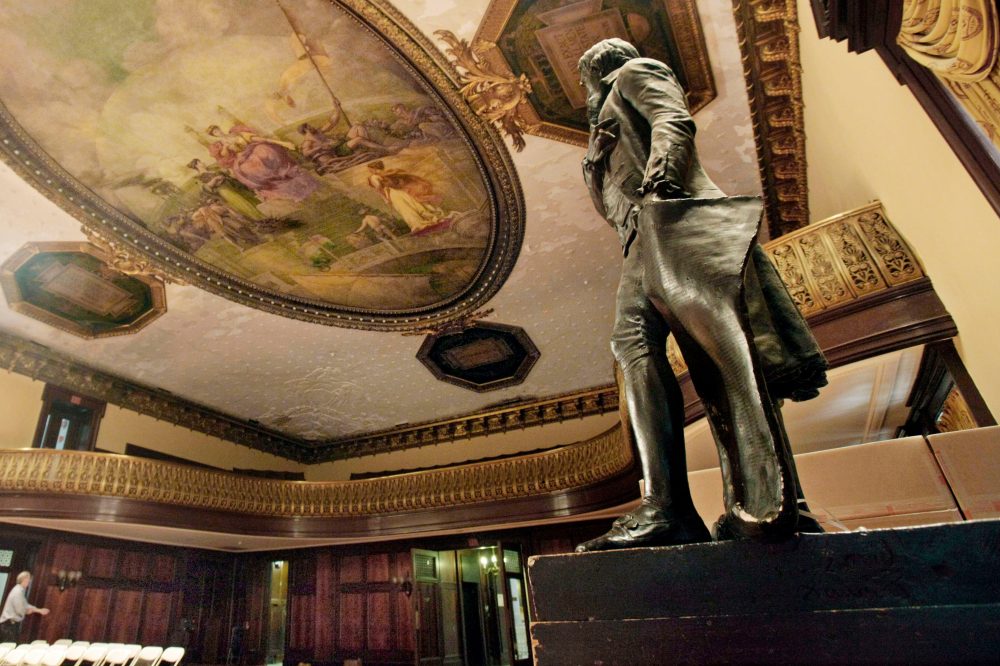
CHARLOTTESVILLE, Va. — He’s an award-winning presidential historian who has written a full biography of Thomas Jefferson. Yet even Jon Meacham pauses when asked to define what it truly means to be a “Jeffersonian.”
“Well for a long time, before the civil rights movement, it meant to be more inclined toward states’ rights and limited government,” says Meacham, who serves as the National Constitution Center’s Semiquincentennial Scholar. He then stops himself, asking to begin again — recalling how President Franklin Delano Roosevelt once described Jefferson as an “apostle of liberty” who would have backed the United States entering World War II to fight the Nazis.
The term could be interpreted in countless ways. While historians may debate the relative “greatness” of America’s founding figures, as the nation’s 250th birthday draws near, many scholars agree that no founder’s life and ideas continue to echo quite like Jefferson’s. Meacham puts it plainly: Jefferson embodied “the very best and the very worst” of the United States.
And much of everything in between.
At the heart of America’s founding lies Jefferson’s most glaring contradiction — the man who wrote that “all men are created equal” remained a slaveholder until his dying day. Yet Jefferson explored and advanced both sides of so many defining debates: self-sufficient farming life versus worldly progress, pluralism versus separatism, small government versus the grand vision of an “empire of liberty.”
“There is no more malleable figure in early America than Jefferson,” says Andrew Burstein, a history professor at Louisiana State University who captured that very idea in a book he published a decade ago titled “Democracy’s Muse: How Thomas Jefferson became an FDR Liberal, a Reagan Republican, and a Tea Party Fanatic, All the While Being Dead.”
Historian Peter S. Onuf, who has authored numerous works on Jefferson, puts it this way: “There have been times in American history when just about everyone would have considered themselves ‘Jeffersonian.’ Yet even at those moments, he was a controversial figure.”
The debate over Jefferson’s legacy plays out even in places that exist because of him.
At the University of Virginia — the school he founded and considered one of his greatest personal accomplishments — a memorial now stands honoring the thousands of enslaved people who lived and labored on its grounds.
At Monticello, the hilltop plantation and estate near Charlottesville where Jefferson lived when not serving in public office, a banner near the front entrance references the Declaration of Independence with the words, “After all, our guy wrote it.” But deeper into the property, the history of enslavement is impossible to ignore — from a burial ground containing dozens of graves of enslaved people to a dedicated exhibit honoring Sally Hemings, the enslaved woman widely believed to have had six children with Jefferson.
Brandon Dillard, Monticello’s director of historic interpretation and audience engagement, describes the staff’s purpose as a mission “to tell unflinching stories of America’s complex origins and fitful progress toward the ideals Jefferson articulated in the Declaration of Independence.”
Jefferson viewed Monticello as a retreat from the pressures of his era, but modern concerns still find their way onto the grounds. A guide on the gardens tour points out that a folding plant Jefferson once tried but failed to cultivate — the “Mimosa Pudica,” or “sensitive plant” — now flourishes there, a result of climate change. The visitors’ center has earned LEED Gold certification for energy efficiency, Dillard notes, and geothermal systems have been added to other structures for climate control.
Questions of race also continue to shape the Monticello experience. Nearly all of the site’s guides are white — an issue Dillard acknowledges is widespread across the country. A recent survey from the American Association for State and Local History found that only about 10% of workers at museums, historic sites, and historical societies were nonwhite, and that many Latino, Latina, Latinx, and multiracial respondents reported facing discrimination and harassment on the job. Dillard declined to speak in detail about the experiences of guides of color at Monticello specifically.
Jefferson’s contradictions stretch back through centuries of American history. Both sides of the Civil War claimed him. Both sides of the civil rights movement did the same.
Confederate sympathizers in the 19th century and segregationists in the 20th pointed to his belief in states’ rights, while Abraham Lincoln and civil rights leaders emphasized his authorship of the Declaration of Independence. In 1963 alone, Jefferson was invoked in the inaugural address of Alabama Gov. George Wallace as he pledged to resist federal school integration efforts — and just months later by the Rev. Martin Luther King Jr. during his landmark “I Have a Dream” speech at the March on Washington.
President Franklin Roosevelt used Jefferson as an ideological partner for the New Deal — the Thomas Jefferson Memorial in Washington, D.C., was itself a New Deal project. Years later, President Ronald Reagan, a former New Deal supporter turned conservative, held Jefferson up as a symbol of opposition to wasteful government spending. Free speech advocates have frequently cited Jefferson’s pivotal role in supporting the Bill of Rights, while President Donald Trump has quoted Jefferson’s 1807 complaint that “Nothing can now be believed which is seen in a newspaper” as an apparent nod to his ongoing battle against what he calls “fake news.”
Jefferson has also been positioned on opposing sides of today’s immigration debate. Ibram X. Kendi, author of “How to Be an Anti-Racist,” points to Jefferson’s documented support for colonization of Black people as a precursor to modern scapegoating and xenophobia. At the same time, even as the Trump administration pushes aggressively to limit immigration and in some cases strip citizenship, Monticello has continued its longstanding tradition of hosting July 4th naturalization ceremonies. Virginia Gov. Abigail Spanberger is scheduled to serve as this year’s keynote speaker.
“As new citizens share their personal stories every Fourth of July,” Dillard says, “we are reminded that the values uplifted in that Declaration are values toward which people from all backgrounds aspire.”
Monticello draws hundreds of thousands of visitors every year, each arriving for their own reasons.
Erin Porter, a Virginia native in her 40s, had never visited Monticello until recently and wanted to check it off her personal bucket list. Nathan Jaycox of Connecticut, a former nuclear engineer, came to soak up history for a course he hopes to teach. And Duane Cromwell, a longtime Vancouver resident, arrived with something more personal on her mind.
Cromwell, 70, grew up in Greenville, South Carolina, where she was taught that slavery was “an economic necessity” and never learned about Jefferson’s history as an enslaver. She was in town last month for a family reunion and came to Monticello eager to move past what she called the “whitewashed Southern version” of history — one filled with myths of villainous “yankees” and victimized rebels who stood against them.
“Did you (ever) notice kudzu growing up over trees and buildings while in the South? It is an invasive plant brought to the region to control erosion. Well, it is like racism. It is pervasive, part of the horizon, always there but soon you don’t notice it,” she says.
“Having said that, I do think that people do go along better, there is more interactions, relationships than when I was growing up. Everyone needs each other and in the South, there is a great sense of humor and friendliness that help people navigate the awkward moments.”
For Cromwell, a visit to Monticello was an opportunity to learn, to grow — and, like so many Americans before her, to use Thomas Jefferson as a lens through which to examine her country.
Southbound travelers on Interstate 95 near the Chapman Road underpass should expect delays overnight as two right lanes have been closed in the area.
The lane closures are expected to remain in effect until 5 AM. Drivers are advised to allow extra travel time and proceed with caution through the affected stretch of highway.
No additional details regarding the cause of the closure were immediately available. Motorists are encouraged to stay alert for traffic control personnel and signage in the area.
Motorists traveling along US-13 between the US-40 junction and Llangollen Boulevard are facing a right lane closure that is expected to remain in place until 6 AM.
Drivers in the area are advised to use caution and allow for additional travel time while the lane restriction is active. No further details about the cause of the closure were immediately available.
Stay with TV Delmarva for updates on this and other traffic conditions across the region.
A westbound lane on DE-2 between Trout Stream Drive and Cleveland Avenue is closed, according to Delaware transportation officials.
The closure is expected to remain in effect until 6 AM. Motorists traveling in that area are advised to use caution and allow extra time for their commute.
No additional details regarding the cause of the closure were provided. Drivers are encouraged to check for updates before heading out.
PROVO, Utah — The parents of Charlie Kirk and his widow, Erika Kirk, plan to be in the courtroom next week for a critical hearing in the murder case against the man accused of killing the conservative activist, according to a source familiar with the matter who was not authorized to speak on the record.
A weeklong preliminary hearing is scheduled to begin July 6, during which prosecutors will attempt to demonstrate they have sufficient evidence against Tyler Robinson to move the case forward to trial. It will be the most substantial presentation of evidence in the case to date — and the first time Kirk’s family will be seated in the same courtroom as the accused.
Robinson, a 23-year-old from southwestern Utah, is charged with aggravated murder in connection with the September 10 shooting death of Kirk. The conservative activist was struck in the neck by a bullet while speaking before a crowd of thousands at Utah Valley University. Robinson has not yet entered a plea, and prosecutors have stated their intention to pursue the death penalty if he is found guilty.
Following her husband’s death last fall, Erika Kirk stepped into the leadership role at Turning Point USA, the conservative youth organization that Charlie Kirk co-founded. At his memorial service, she publicly stated that she forgives the young man accused of taking her husband’s life. Despite that, she has actively worked to ensure court proceedings remain open to the public.
Erika Kirk is expected to be present throughout the entire week, joined by Charlie Kirk’s parents, Robert and Kathryn Kirk, who have largely remained out of public view since the tragedy.
During the hearing, prosecutors say they plan to present forensic analyses, surveillance footage, recorded witness statements, autopsy results, and alleged messages in which Robinson reportedly admitted to the crime.
Investigators have said DNA matching Robinson’s profile was discovered on the trigger of the rifle used in the shooting, the fired cartridge casing, two unfired rounds, and a towel that had been used to wrap the weapon. Prosecutors have also revealed that Robinson left a note for his romantic partner stating, “I had the opportunity to take out Charlie Kirk and I’m going to take it.”
Eastbound travelers on US-40 are facing a lane restriction between Salem Church Road and Rockwood Road, with the right lane closed until 6 AM.
DelDOT has reported the closure, and drivers in the area should anticipate potential slowdowns during this time. No additional details regarding the cause of the closure have been provided.
Motorists are encouraged to allow extra travel time or consider using an alternate route until the lane reopens.
Travelers on DE-16 between DE-113 and DE-1 should be aware of intermittent shoulder closures currently in place due to construction work in the area.
The closures are expected to continue until 6 a.m., and drivers are encouraged to remain alert and allow extra time when passing through the affected stretch of roadway.
No additional details regarding the nature of the construction were provided. Motorists should watch for construction crews and equipment near the shoulder and follow any posted signage or traffic control instructions.
Travelers heading southbound on Route 1 near the Route 9 intersection are facing lane restrictions following a crash at that location.
According to traffic officials, two right lanes on Route 1 southbound at Route 9 have been closed as a result of the incident. Motorists in the area are advised to use caution and allow for extra travel time.
Drivers are encouraged to consider alternate routes until the lanes are reopened and normal traffic flow is restored.
Northbound travelers on Valley Road between Limestone Road and Grove View Drive are facing intermittent lane closures that are expected to remain in place until 6 a.m.
Drivers in the area should use caution and allow extra travel time. Alternate routes are recommended where possible until the closures are lifted.
Travelers on DE-2 are facing overnight lane closures between East Green Valley Circle and Meadowood Drive, according to a traffic alert.
Both the eastbound and westbound left lanes on that stretch of roadway are currently closed. The restrictions are expected to remain in place until 6 a.m.
Drivers in the area should allow extra travel time or consider using alternate routes until the lanes reopen.
Graduate students studying nursing, physical therapy, and several other health-related fields will temporarily be able to borrow larger amounts in federal student loans, following a court ruling that blocked part of a Trump administration policy limiting how much they could borrow.
The U.S. Education Department announced a revised rule Monday aimed at complying with a federal judge’s order issued last week. Department officials described the change as temporary while they continue fighting in court to restore their original rule, which had classified medicine and law as “professional programs” but left out fields like nursing.
While the department disagrees with the judge’s decision, it will follow the order as the legal battle continues. Undersecretary Nicholas Kent released a statement saying, “We will continue to make the case that the definition is both lawful and appropriate.”
The ruling marks a temporary victory for eight groups that took the department to court over the issue. Those groups represent nurse practitioners, therapists, speech-language pathologists, and others who argued the original rule would harm their students.
However, in following the judge’s order precisely, the department has also removed some degree programs from the professional list — meaning those students will now face lower borrowing caps. Theology programs are among the most notable to lose their professional designation, though the master of divinity degree — commonly pursued by pastors and ministers — will remain on the professional list with access to higher loan amounts.
The updated rule takes effect Wednesday and stems from a broader student loan overhaul included in President Donald Trump’s tax legislation. Degrees classified as professional programs carry a federal loan cap of $200,000, while other graduate degrees are capped at $100,000. Previously, graduate students could borrow up to the full cost of attendance through federal loans.
Trump administration officials pushed for the new caps as a way to reduce student debt and bring down tuition costs they said had grown out of control.
The groups that filed suit argued the original rule would force students to either abandon their education or turn to riskier private loans. While many graduate nursing programs fall under the $100,000 cap, some — particularly in high-demand specialties like nurse anesthesia — can exceed that amount.
In a notice sent to universities Monday, the Education Department expressed confidence that the original rule would ultimately hold up in court. The revised rule is expected to stay in place during the judge’s preliminary stay, though the department cautioned that it “may change as litigation in the case proceeds.”
The original rule had identified roughly a dozen programs as professional degrees — a designation the Trump administration said was based on a technical definition dating back to the 1960s, not a judgment on the importance of any particular field. That original list included law, medicine, theology, pharmacy, veterinary medicine, clinical psychology, and others.
The new temporary rule expands that list to 29 specific degree programs. Newly added programs include the master of science in nursing, doctor of nursing practice, and doctor of nurse anesthesia practice. Physical therapy, athletic training, speech-language pathology, physician associates, and anesthesiologist assistants were also added to the professional category.
The department also released a list of roughly 25 programs now considered non-professional. In addition to theology, that list includes applied psychology and pharmaceutical sciences, among others. The doctor of pharmacy degree, however, remains classified as professional.
The judge who issued last week’s ruling, U.S. District Judge Beryl Howell in Washington, called the department’s original definition “misguided” and said it strayed from a longstanding definition established by Congress. The ruling specifically blocked parts of the department’s definition that had been added through a federal rulemaking process.
The department’s original criteria for professional programs included requirements such as taking at least six years to complete and requiring a license before a graduate can begin practicing. It also specified that professional degrees could not lead to jobs requiring supervision by someone with greater education, training, or qualifications.
A separate legal challenge brought by a coalition of Democratic-led states, which targets the loan caps more broadly, remains ongoing in court.
A Michigan couple is facing serious criminal charges, including murder, after their 7-year-old son died last November weighing 255 pounds (116 kilograms). Genesee County Prosecutor David Leyton announced the charges Monday, saying the boy was not receiving proper nutrition.
“Clearly the parents were feeding the child improperly, to say the least,” Leyton said. “He wasn’t getting the nutrition he needed.”
The child, identified as Casper O’Brien, stopped breathing at the family’s Flint home when emergency responders were called. His parents — Damien O’Brien, 40, and Jessica O’Brien, 41 — have each been charged with second-degree murder, torture, and three counts of second-degree child abuse.
Both parents were arraigned last week and remain jailed in Genesee County, located roughly an hour northwest of Detroit, with no bond. A probable cause hearing has been scheduled for Thursday.
Casper stood 4 feet, 2.5 inches tall (128 centimeters) and was medically classified as obese, according to the Genesee County Medical Examiner’s report. His official cause of death was dilated cardiomyopathy — a condition in which the heart becomes enlarged and weakened, losing its ability to pump blood effectively and impacting other organs including the lungs. His weight was cited as a contributing condition.
Despite the family having health coverage, prosecutors say the parents failed to bring Casper in for medical treatment. Leyton told reporters he believes the boy survived on “a steady diet of snack foods.” Casper was nonverbal, bedridden, and suffered from severe bed sores and various rashes.
The autopsy report noted that law enforcement and Child Protective Services found piles of trash throughout the home, and Casper had never been enrolled in school. Leyton described the hoarding conditions inside the residence as “terrible.”
An attorney representing Damien O’Brien, Elias Fanous, released a statement declining to speculate on the details of the case. He said his client was “innocent until proven guilty beyond a reasonable doubt in a court of law.” An attorney for Jessica O’Brien had not responded to a request for comment by Monday.
Records show Casper’s last visit to his primary care provider was in February 2024, when he was diagnosed with a cough, congestion, and metabolic disease. At that appointment, he weighed 104 pounds (47 kilograms). His mother was given guidance on healthy eating and exercise, and a referral to a pediatric endocrinologist was made — but Casper never attended that appointment. The specific metabolic disease was not detailed in available medical records.
One of the child abuse charges is connected to the couple’s 5-year-old daughter, who has since been placed in foster care.
Leyton reflected on the gravity of the case, saying, “It’s a very, very sad and tragic situation. I’ve been the prosecuting attorney for 22 years and I thought I’d seen it all but I’ve never seen anything quite like this.”
NEW YORK — Hollywood filmmaker Carl Rinsch received a two-and-a-half-year federal prison sentence Monday following his conviction on charges that he cheated Netflix out of $11 million intended for a sci-fi television series that was never completed. Among those who had urged the court to go easy on him was actor Keanu Reeves.
Rinsch, 48, is best recognized for directing the 2013 samurai fantasy film “47 Ronin.” A federal jury found him guilty in December on wire fraud and related charges. Prosecutors presented evidence showing that Rinsch told Netflix the additional funds were needed to wrap up production on a series called “White Horse,” but instead funneled the money into a personal account and went on an extraordinary spending spree — including purchasing two mattresses for a combined $638,000.
Standing before the court Monday, Rinsch and his defense attorneys attributed his conduct to mental health struggles and issues with medication, saying he is now receiving care from a new provider.
“This process has forced me to confront things about my health, my judgment and my life,” Rinsch told the court. He expressed remorse for his actions, admitted that “real harm was caused,” and stated: “I failed to recognize the danger of the state I was in.”
The specific nature of his psychological issues was not outlined in court, and neither Rinsch nor his attorneys elaborated on them afterward.
Prosecutors had pushed for a five-year sentence, noting that Rinsch also owes approximately $11 million in restitution.
“Mr. Rinsch had every possible advantage,” including family wealth, an elite education, well-known friends, and a thriving career, prosecutor David Markewitz told the judge. He characterized Rinsch’s motive as “naked greed.”
Rinsch, who has also gone by Carl Erik Rinsch professionally, grew up in the Los Angeles area and began making short films as a teenager. He transitioned into directing commercials before landing the high-profile “47 Ronin,” which stars Reeves as the leader of a group of outcast samurai seeking revenge for their master’s death.
In a letter submitted before sentencing, Reeves wrote that Rinsch brings “exceptional joy and warmth to the people around him” and “creative inspiration to others through his creativity and vision.”
The “Matrix” star acknowledged he was not familiar with the specifics of the case but noted that Rinsch “can self-sabotage by amplifying the scale, scope and landscape of what had been negotiated.” Reeves expressed hope that the sentence “might be tempered with measures of leniency and mercy as well as justice.”
According to prosecutors, Netflix originally paid Rinsch roughly $44 million for “White Horse” between 2018 and 2019. In 2020, he requested and received an additional $11 million, claiming he needed it to finish the production.
Instead, he diverted that money into a personal account and made a string of bad investments, losing nearly half of it within just a couple of months, prosecutors and witnesses testified. He then moved the remaining funds into cryptocurrency, turning a profit, which he deposited into his own bank account.
What followed was a wave of lavish spending. Prosecutors said Rinsch bought five Rolls-Royces, a red Ferrari, $652,000 worth of watches and clothing, and the two ultra-expensive mattresses — plus an additional $295,000 on high-end bedding and linens. He also used a portion of the funds to pay down roughly $1.8 million in credit card debt.
U.S. District Judge Jed S. Rakoff acknowledged that Rinsch’s mental health challenges “may explain some of the excesses” but said they do not “detract from the court’s conclusion that he was determined to lie to get substantial monies from Netflix, lie to cover it up.”
As the judge announced the sentence, Rinsch sat writing on a piece of paper at the defense table. One of his attorneys, Benjamin Zeman, placed a hand on his back.
Following the hearing, Rinsch — who is scheduled to report to prison in September — embraced supporters who had come to court. He and his legal team declined to speak with reporters on the way out, though attorney Daniel McGuinness indicated they intend to appeal the conviction.
Travelers heading along Star Road between Alton Wood Lane and Cox Road are facing intermittent lane closures due to ongoing construction activity.
The lane restrictions are expected to remain in place until 6 p.m., according to traffic officials. Drivers in the area should anticipate possible delays and consider alternate routes if available.
Motorists are urged to slow down, remain alert, and follow the directions of any traffic control devices or personnel present in the construction zone.
A Maryland man will spend more than a year in federal prison after a judge handed down a 15-month sentence for making violent, hate-filled threats online, the U.S. Department of Justice announced Monday.
U.S. District Judge Adam Abelson sentenced Raymond Pumphrey, 47, to the prison term, which will be followed by three years of supervised release, according to a DOJ statement.
As part of his guilty plea, Pumphrey admitted to posting a string of threatening messages on YouTube and other social media platforms. The posts were aimed at spreading hateful messages, with Black and Muslim communities being primary targets, the DOJ said.
Prosecutors say Pumphrey called for and threatened to personally take part in the killing of Black people across numerous major American cities. He also made explicit threats against several politicians and members of their families, according to the DOJ.
The case comes amid longstanding concerns from civil rights advocates about online racism directed at Black Americans, which they have linked to factors including white supremacy and insufficient content moderation on social media platforms.
Advocates have also pointed to a years-long rise in Islamophobia, tracing its roots to the September 11, 2001 terrorist attacks and, more recently, to anti-immigration policies, white supremacist ideology, and tensions surrounding Israel’s war in Gaza.
Political analysts have separately raised alarms about the growing threat of political violence as polarization continues to intensify across the United States.
Motorists traveling eastbound on Pennsylvania Avenue should be aware of an active lane closure currently in effect between North Union Street and North Clayton Street.
The right lane in the eastbound direction has been shut down to accommodate construction work in the area. Drivers are advised to plan accordingly and allow extra time when traveling through this stretch of road.
The lane is expected to reopen by 6 p.m. Until then, travelers may want to consider alternate routes to avoid potential delays.
Investigators are shining a new light on a decades-old homicide from Wilmington, Delaware, as authorities revisit the 1996 death of 38-year-old Debra Minor.
According to records from the New Castle County Division of Police, the incident occurred in the early morning hours of June 29, 1996 — at around 1:30 a.m. Officers from the New Castle County Division of Police, along with investigators from the State Fire Marshal’s Office, were called to 102 East 40th Street in the Pennrose community of Wilmington.
Debra Minor was 38 years old at the time of her death. Her case has gone unsolved for nearly 30 years.
Authorities have not released additional details about the circumstances surrounding her death at this time. Anyone with information related to this cold case is encouraged to come forward and contact investigators.
A moving operation is currently active near the intersection of Coastal Highway, also known as Route 1, and Broadkill Road, or Route 16, according to traffic officials.
The operation is expected to remain in the area until 3:00 PM. Motorists traveling through that stretch should be prepared for possible slowdowns or lane restrictions while the work is underway.
Drivers are encouraged to allow extra travel time or consider using an alternate route to avoid any delays associated with the moving activity.
A traffic crash has resulted in the right lane being closed at Meadowood Drive at Mayflower Drive, according to transportation officials.
Motorists traveling through the area are advised to use caution and allow extra travel time. Drivers may want to consider alternate routes until the scene is cleared and the lane is reopened.
No additional details regarding the crash or an estimated time for the lane to reopen were immediately available.
Bi-State Boulevard is closed between Bacons Road and Dorothy Road following a report of wires down in the area.
Motorists are urged to avoid the affected stretch of roadway and plan for alternate routes until further notice. No estimated time for reopening has been announced at this time.
Drivers should use caution in the surrounding area and stay alert for updates as crews work to address the situation.
Drivers heading through the Elderon Drive area at The Loop should be prepared for intermittent lane closures as construction work continues in the area.
According to traffic officials, the lane restrictions are expected to remain in place until 6:00 PM. The closures are intermittent, meaning traffic may be able to move through at times, but delays are still possible.
Motorists are encouraged to use caution when passing through the construction zone and to allow additional time for their commute if traveling in that area before the closures are lifted this evening.
A wildfire burning near the Colorado-Utah border has taken the lives of three firefighters and left two others injured, making it one of the most deadly incidents for firefighters since a catastrophic blaze in Arizona more than a decade ago.
The Yarnell Hill Fire of June 30, 2013, which claimed 19 firefighter lives in Arizona, remains the single deadliest event for U.S. firefighters since the September 11, 2001, terrorist attacks and the worst for wildland firefighters in more than 100 years. Those firefighters perished about 30 miles southwest of Prescott, Arizona, after shifting winds drove flames toward them as they attempted to escape. They were in the process of deploying fire shelters — small, heat-resistant emergency tents designed to offer a chance at survival — when the fire overtook them in a brushy box canyon. Temperatures at the scene reached 2,000 degrees Fahrenheit.
On Saturday, a wildfire west of Grand Junction, Colorado, resulted in the deaths of three firefighters, with two more sustaining injuries. The fire has scorched approximately 44 square miles of land. All five firefighters were part of a Helitack crew — specialists who are transported by helicopter into hard-to-reach areas to clear vegetation and construct fire-resistant barriers in the path of advancing flames.
Much like the Yarnell Hill tragedy, these firefighters also made the decision to stop retreating and instead deploy fire shelters in an attempt to survive the advancing blaze.
Authorities say a thorough investigation could take months to complete, and a full picture of what occurred may be difficult to piece together. In the Yarnell Hill investigation, officials were unable to verify radio communications from the crew during a critical 30-minute window that might have revealed key details about the decisions made in the final moments.
The final report from that investigation cleared the firefighters of any wrongdoing, concluding they were properly qualified, adequately staffed, well-trained, and had “followed all standards and guidelines.” Their commanders were also found to have made reasonable decisions given the rapidly deteriorating conditions. The report summed up the tragedy by noting, “Complexity can outpace organizational attempts to respond.”
Fire shelters are considered a measure of absolute last resort, offering uncertain odds in otherwise unsurvivable situations. In a 2015 wildfire in Washington state, two firefighters who used the tents made it out alive, while three others who sheltered inside a truck did not survive.
The effectiveness of the shelters depends heavily on the specific conditions at the time of deployment. Riva Duncan, president of Grassroots Wildland Firefighters — a firefighter advocacy organization — noted Monday that the tents are not built to withstand direct contact with flames.
“It’s your last-ditch effort to try to survive,” Duncan said.
WASHINGTON — President Donald Trump put his signature on a new memorandum Monday that backs Americans’ right to repair their own vehicles.
Although most car owners are already legally allowed to work on their own vehicles, federal law draws the line at tampering with emissions-control systems. On top of that, automakers have long kept independent mechanics and everyday consumers from accessing diagnostic software, repair manuals, and specialized tools needed to fix modern vehicles.
Those in the right-to-repair movement argue that these limitations push repair costs higher and take choices away from consumers. Automakers, on the other hand, contend the restrictions are necessary to ensure vehicle safety, protect against cybersecurity threats, and maintain emissions standards.
Trump described Monday’s action as a follow-up to a similar order he signed earlier this year, which applied to farm equipment and off-road machinery. He said he was moved to act after hearing reports of people facing legal trouble simply for working on their own vehicles.
“It’s really common sense,” Trump said, adding that in his view, many Americans are more capable of repairing their own cars than professional mechanics.
A grieving mother is calling on the United States Navy to make sweeping, long-term changes to the way it handles sexual assault cases — changes she says are long overdue following the death of her daughter.
The woman’s daughter, a sailor, was killed by a fellow shipmate, and her mother is now channeling that loss into a push for meaningful reform within the military branch.
She is demanding that the Navy take a hard look at its policies and make lasting adjustments to better protect service members from violence and sexual assault at the hands of their peers.
A traffic crash has prompted the closure of Boulden Boulevard between Southgate Boulevard and Moores Lane, according to transportation officials.
Motorists traveling through the affected stretch are advised to find alternate routes until the roadway is cleared and reopened. No additional details regarding the severity of the crash or an estimated reopening time were immediately available.
Drivers are urged to use caution in the surrounding area and allow extra travel time.
ALBUQUERQUE, N.M. — New Mexico’s governor announced Monday that the state may pursue billions of dollars in civil damages following revelations that agents with the U.S. Drug Enforcement Administration repeatedly allowed fentanyl shipments to pass through drug-troubled communities while trying to build larger criminal cases.
Democratic Gov. Michelle Lujan Grisham pledged to bring her anger “right to the White House and Congress” to demand guarantees that the DEA is no longer employing the dangerous tactic in New Mexico — and that it isn’t being used anywhere else in the country. Overdose rates have climbed sharply in New Mexico even as fentanyl-related deaths have dropped in other states.
“This is a stunning failure by the federal government,” the governor told reporters at a press conference held at the state medical examiner’s office in Albuquerque, where she was joined by state and local law enforcement officials demanding accountability. “It’s disgusting and despicable.”
The White House and DEA did not respond to requests for comment.
The governor’s statements came one week after the Associated Press revealed that DEA agents had repeatedly watched — without stopping — fentanyl shipments as part of a strategy to pursue bigger criminal targets between 2023 and 2025.
Both current and former DEA agents, including whistleblower David Howell, told the AP that the approach was a dangerous gamble with public safety and may have broken U.S. Justice Department rules designed to protect the public. The DEA initially denied Howell’s claims, but later asked the Justice Department’s independent watchdog to launch its own review.
The fentanyl went uncollected even as the DEA was running a public awareness campaign called “One Pill Can Kill,” which warned that even a tiny amount of the substance can be fatal — all during what has been described as the deadliest drug epidemic in U.S. history.
New Mexico’s attorney general last week launched a criminal investigation to determine whether any federal officials violated state law by knowingly exposing residents to the synthetic opioid.
“We’re going to protect the rest of the United States from this kind of foul, ‘I need a big case’ effort no matter what the consequences,” Lujan Grisham said. “We’re angry because it’s immoral.”
Albuquerque Mayor Tim Keller described fentanyl as his city’s “No. 1 challenge,” saying it fuels crime, homelessness, and places enormous strain on health care resources.
“Using us in some sort of uninformed, undisciplined experiment that’s literally killing our people — that’s what this is,” Keller said. “This should outrage every single New Mexican.”
President Trump last week shared a link on his Truth Social account to a story blaming the scandal on the “Biden-run Justice Department.” The Justice Department also stated last week that “the alleged conduct occurred under the Biden Administration’s disastrous open border policies.”
However, whistleblower Howell first raised concerns during the Biden administration in 2023 and was sidelined as a result. He continued to flag uninspected fentanyl shipments as recently as last year. The largest shipment he documented — 1.8 million pills — was one the DEA learned about but chose not to intercept in March 2025, two months into President Trump’s second term.
Lujan Grisham has criticized both administrations for failing to stop the flow of fentanyl into New Mexico. She pointed to the death last year of a 15-month-old girl who reportedly ingested some of her mother’s drugs in Española, a town hit hard by poverty and addiction.
It remains unclear whether any specific fatal overdoses in the state can be directly tied to the DEA’s strategy. While overdose deaths fell 14% nationally last year, New Mexico saw a 21% increase, according to government data.
“Somebody must pay for the damage to the state, the public safety risks that will be shared by everyone here for a decade or more, and pay to try to right the wrongs and put people’s lives back together,” the governor said.
Lujan Grisham, who will leave office at the end of this year after serving two terms, said the hardest part of being an elected official is facing victims of what she called “senseless” loss.
“There are no words that can take away that pain,” she said. “Whatever we can do to prevent the next loss for the next family, is the work that we’re all collectively doing.”
A JetBlue pilot reported a collision with a drone Monday morning while on approach to JFK International Airport in New York, prompting a federal investigation.
According to the Federal Aviation Administration, the incident occurred at approximately 7:15 a.m. as the aircraft descended through 3,000 feet — about 914 meters — while crossing over the coastline. The plane continued to land safely without requiring any emergency assistance, and a subsequent inspection of the aircraft revealed no damage.
Audio captured by ATC.com recorded the pilot alerting air traffic control about the encounter. “We collided with a drone back there in the turn,” the pilot said. “It hit us right above the cockpit.”
JetBlue confirmed that all passengers exited the aircraft normally following the landing. The plane — an Airbus A321 that had been flying overnight from Las Vegas to New York — was then pulled from service for a thorough inspection. The airline reported that it “found no damage or evidence of a collision.”
In a written statement, the airline added: “Safety is JetBlue’s first priority, and we will assist with any relevant investigations.”
Under FAA rules, drones are generally permitted to fly no higher than 400 feet, or about 122 meters. However, the agency restricts drone use in airspace around airports and certain major public events due to safety concerns. Law enforcement officials note that even recreational drone operators filming overhead video can distract officers from monitoring other potential security threats.
FAA incident reports indicate that drone encounters near airports are becoming increasingly common. The danger is greatest near airports, where the flight paths of drones and commercial aircraft are most likely to intersect. The FAA reports that more than 100 drone sightings near airports are reported each month, and the agency works alongside law enforcement to investigate them. Drone operators who violate restricted airspace can face steep fines, license revocation, or confiscation of their equipment.
Growing concerns about drone threats have also been fueled by the deadly impact drones have had on battlefields in the wars in Ukraine and Iran, raising alarms among officials about broader security risks.
Authorities also caution that not every pilot report of a drone strike turns out to be an actual collision. In April, the FAA determined that a drone had passed approximately 1,000 feet — about 305 meters — below a United Airlines aircraft approaching San Diego, and had not made contact with the plane.
NEW YORK — A federal judge announced Monday that Luigi Mangione’s federal trial in the killing of UnitedHealthcare CEO Brian Thompson has been pushed back to January, scrapping the previously planned fall schedule.
U.S. District Judge Margaret Garnett said the delay is necessary to allow Mangione’s defense attorneys to concentrate on his state murder trial, which is set to get underway on September 8.
According to Garnett, jury selection in the federal case will now kick off on January 5 rather than the originally scheduled October 13 date. Opening statements and testimony are slated to begin January 25, replacing the former November 4 start date. The judge made the announcement during a hearing held in Manhattan.
Garnett also said she will keep the juror questionnaire under wraps until after the jury panel is selected, warning that having it circulate online for months ahead of jury selection “would only make what promises to be a difficult task more difficult.”
The hearing got off to a late start after Mangione became stuck in a courthouse elevator. He was eventually escorted into the courtroom by two deputy U.S. Marshals, appearing somewhat amused by the situation. Upon entering, he briefly looked out at the gallery, where roughly two dozen supporters had gathered.
Garnett acknowledged she had hoped with “undue optimism” to hold the federal trial in the fall, but said “we can no longer wait to see what happens” with the state case. “In my view it’s simply impossible to be moving through the jury selection process in this case while the defendant and his counsel are fully occupied by conducting the state trial,” she said.
Mangione’s attorneys chose not to speak with reporters following the hearing.
Mangione has entered not guilty pleas to both state and federal charges stemming from the December 4, 2024 killing. A conviction in either case could result in a life prison sentence.
Dressed in a beige jail uniform, the 28-year-old Ivy League graduate appeared alert and engaged throughout Monday’s brief proceeding. He was seen watching the proceedings intently at times, with his fingers laced together and his chin resting on them.
Before the hearing began, Mangione spoke animatedly with his attorneys, Karen Friedman Agnifilo and Marc Agnifilo, gesturing with his hands as he sat between them at the defense table.
The federal charges against Mangione allege he traveled across state lines by bus to stalk and kill Thompson, and that he used tools including a cellphone, the internet, and interstate highways, and stayed at a hostel catering to out-of-state guests while planning and executing the attack.
At a state court hearing in February, Mangione himself spoke out against facing two separate trials, telling the judge: “It’s the same trial twice. One plus one is two. Double jeopardy by any commonsense definition.” His lawyers had previously argued that consecutive trials on a tight timeline would infringe on his constitutional rights.
Thompson, 50, was shot and killed while walking toward a Manhattan hotel where UnitedHealth Group was holding its annual investor conference. Surveillance footage captured a masked gunman shooting him from behind. Investigators say the words “delay,” “deny,” and “depose” were found on the ammunition — a reference to a phrase commonly associated with insurance companies avoiding claim payouts.
Mangione was taken into custody five days after the shooting at a McDonald’s in Altoona, Pennsylvania, approximately 230 miles west of Manhattan.
In January, Judge Garnett ruled that the death penalty would not be pursued in the federal case, but allowed prosecutors to use evidence recovered from Mangione’s backpack at the time of his arrest. That evidence included a 3D-printed handgun that investigators say matches the weapon used to kill Thompson, along with a notebook in which authorities allege Mangione wrote about his intention to “wack” an insurance executive.
Earlier this month, Mangione’s defense team announced plans to pursue a psychiatric defense in the state case — a strategy that would have centered on claims that he was experiencing extreme emotional disturbance at the time of the killing. However, they reversed that decision just one day later. That particular defense is not permitted in federal court.
Mangione has drawn a significant following among people frustrated with the health insurance industry. An online fundraiser for his legal defense has collected more than $1.5 million, and his court appearances have been met by groups of supporters, some sporting “FREE LUIGI” T-shirts and green clothing — a nod to the Mario Bros. video game character of the same name.
Motorists traveling through Odessa in New Castle County should be aware of a lengthy road closure coming soon to the area.
The Delaware Department of Transportation (DelDOT) has announced that Taylor’s Bridge Road will be completely shut down between Union Church Road and Fleming Landing Road. The closure takes effect Monday, August 3rd and will remain in place 24 hours a day, seven days a week.
The shutdown is expected to last a total of 709 days — nearly two full years — while crews work to replace Taylor Bridge, also identified as Bridge 1-447, in Odessa.
Drivers are encouraged to seek alternate routes during the extended closure period.
Motorists in the area should be prepared for intermittent lane closures on Vance Neck Road between Bayview Road and Marathon Drive.
The lane restrictions are the result of ongoing construction activity in that stretch of roadway. Drivers are advised to plan accordingly and allow extra travel time until the closures are lifted at 5 p.m.
Travelers may want to consider alternate routes to avoid potential delays during this period.
Delaware State Police are currently investigating a shooting that took place Saturday evening in the Newark area.
Around 6:30 p.m. on June 27, 2026, troopers were called to a local hospital after two individuals showed up with gunshot wounds. Both victims were reported to be in stable condition with injuries not considered life-threatening. The Criminal Investigations Unit was brought in to take charge of the case.
As the investigation progressed, detectives determined the shooting likely happened on Otts Chapel Road near Elkton Road in Newark. Officers canvassed the scene and recovered multiple spent shell casings from the area.
The investigation remains active and ongoing. Detectives are urging anyone who may have witnessed the incident or has any relevant information to reach out to Detective J. Lucyk directly at (302) 365-8446. Tips can also be submitted through a private Facebook message to the Delaware State Police or by contacting Delaware Crime Stoppers at 1-800-847-3333.
Anyone who has been a victim or witness of a crime, or who has lost a loved one to a sudden death and needs support, can contact the Delaware State Police Victim Services Unit and Delaware Victim Center. The unit is available around the clock through a toll-free hotline at 1-800-VICTIM-1 (1-800-842-8461). You may also reach the Victim Services Unit by email at [email protected].
A newly appointed judge has scheduled April 5 as the starting point for jury selection in the retrial of disgraced former attorney Alex Murdaugh, who faces two counts of murder in the shooting deaths of his wife and son. The South Carolina Supreme Court threw out his murder convictions in May, finding that a court clerk had “egregiously attacked Murdaugh’s credibility” by indicating to jurors that his testimony should not be believed.
Murdaugh was once a well-known figure in rural South Carolina, recognized both for his family name and for winning million-dollar verdicts in court. He was employed at his family’s law firm, which had been in operation for more than a century, and his father, grandfather, and great-grandfather all served as elected county prosecutors. Despite the overturned murder convictions, Murdaugh will remain behind bars due to separate federal convictions for stealing millions of dollars from clients. His case has been the focus of multiple documentaries and true crime podcasts.
Below is a chronological look at the major events leading up to the upcoming retrial:
June 7, 2021: Murdaugh contacts police to report that his wife Maggie, 52, and their son Paul, 22, have been shot and killed near dog kennels on the family’s property.
Sept. 4, 2021: According to officials, Murdaugh attempts to orchestrate his own death in a scheme designed to secure a $10 million life insurance payout for his surviving son. The plan fails when a gunshot fired by an associate of Murdaugh only grazes his head.
Oct. 14, 2021: Law enforcement arrests Murdaugh at a drug rehabilitation center in Florida, charging him with stealing insurance settlement funds totaling more than $4 million that were meant for the sons of his deceased housekeeper.
Nov. 17, 2021: Prosecutors announce 27 additional charges against Murdaugh, alleging he misappropriated nearly $5 million in settlement funds. Authorities say he was concealing money from attorneys who had sued him in connection with the death of a teenager killed when, according to officials, an intoxicated Paul Murdaugh crashed a boat he was operating.
Jan. 18, 2022: Further indictments push the total number of charges against Murdaugh to 71, with prosecutors alleging he stole nearly $8.5 million in wrongful death and accident settlements from more than a dozen individuals.
May 4, 2022: Russell Laffitte, who had served as CEO of Palmetto State Bank before being fired earlier that year, is indicted on charges that he worked with Murdaugh to defraud victims out of $1.8 million.
June 28, 2022: New indictments describe an eight-year scheme involving money laundering and a painkiller operation.
July 14, 2022: Murdaugh is formally charged with murder in the killings of his wife and son. Grand jury indictments allege he shot his wife with a rifle and his son with a shotgun.
Feb. 23, 2023: Taking the witness stand, Murdaugh denies being responsible for the deaths of his wife and son, though he acknowledges he lied to investigators about the last time he saw them alive.
March 2, 2023: After roughly six weeks of testimony, a jury finds Murdaugh guilty on both murder counts following less than three hours of deliberation.
March 3, 2023: A judge hands down a life sentence.
Jan. 29, 2024: A South Carolina judge rejects Murdaugh’s request for a new trial after his legal team alleged that a clerk of court had tampered with the jury.
April 2, 2024: Murdaugh receives a 40-year federal prison sentence for stealing from clients and his law firm.
Feb. 11, 2026: Murdaugh petitions the South Carolina Supreme Court to overturn his murder convictions.
May 13, 2026: In a unanimous decision, the South Carolina Supreme Court overturns Murdaugh’s murder convictions and life sentence, concluding that the court clerk’s behavior “egregiously attacked Murdaugh’s credibility” by casting doubt on his testimony in front of jurors.
June 29, 2026: Newly appointed Judge Debra McCaslin sets April 5 as the date for jury selection to begin in Murdaugh’s retrial on the two murder charges, with pretrial motions scheduled for August 14. The defense has asked that Murdaugh be permitted to appear in regular clothing rather than an orange prison jumpsuit and shackles. His legal team is also seeking to move the trial away from Colleton County, where both the killings and the original trial occurred.
WASHINGTON — The U.S. Supreme Court issued a landmark ruling Monday, determining that constitutional privacy rights extend to the location data generated by cellphones — a decision stemming from the case of a bank robber who was tracked down using a geofence warrant.
Writing for the six-justice majority, Justice Elena Kagan said that people do not surrender their expectation of privacy simply by opting into Google’s location history feature.
“A cellphone user is not to be viewed as sharing private information with third parties — which then can be freely passed on to the government — just by doing the ordinary things cellphone users do,” Kagan wrote.
Justice Samuel Alito authored a dissenting opinion, arguing that the defendant, Okello Chatrie, had no reasonable expectation of privacy over information he chose to share with Google.
The ruling represents the court’s continued effort to apply a constitutional amendment ratified in 1791 to modern technologies that the nation’s founders could never have anticipated.
The case began after a bank robbery in a suburb of Richmond, Virginia. Investigators obtained a geofence warrant following the May 2019 robbery, using it to identify cellphones that had been in the vicinity of the bank when the crime occurred.
One of those devices was traced back to Chatrie, who had managed to avoid detection until authorities employed the location-tracking tool.
The warrant set the investigation in motion. After placing Chatrie near the Call Federal Credit Union in Midlothian at the time of the robbery, police secured a search warrant for his residence. Inside, they discovered nearly $100,000 in cash — including bills still wrapped in bands bearing the signature of the bank teller.
Chatrie later pleaded guilty to the robbery and received a sentence of nearly 12 years behind bars. His legal team appealed, arguing that all evidence gathered should have been thrown out.
Defense attorneys challenged the geofence warrant as an invasion of privacy, noting it allowed investigators to collect location data from people in the area without any specific reason to suspect them in the crime. Prosecutors countered that Chatrie had no privacy claim because he had voluntarily enabled Google’s location history on his device.
The Supreme Court stopped short of ruling Monday on whether the search itself violated the Fourth Amendment, which prohibits unreasonable searches and seizures. Instead, the justices sent the case back to a lower court for additional proceedings.
A federal judge had previously found that the search violated Chatrie’s rights but still permitted the evidence to be used, reasoning that the officer who applied for the warrant had acted in good faith. The federal appeals court based in Richmond upheld the conviction in a divided ruling.
In a separate but related case, a federal appeals court in New Orleans concluded that geofence warrants “are general warrants categorically prohibited by the Fourth Amendment.”
Prisoners seized control of portions of a regional jail in eastern North Carolina on Monday after overwhelming correctional officers on duty, according to authorities.
The incident began around 5 a.m. at the Bertie-Martin Regional Detention Center in Windsor, where just three guards were responsible for overseeing 88 inmates at the time. The North Carolina State Bureau of Investigation announced the takeover in a statement on social media, noting that local, state, and federal agencies responded immediately.
Bertie County Sheriff Tyrone Ruffin assured the public there was no immediate danger to surrounding communities. Windsor is located approximately 120 miles, or about 190 kilometers, east of Raleigh.
During the standoff, inmates took two of the three guards hostage while the third managed to escape. Through negotiations, authorities secured the release of both guards along with 80 of the inmates. That left eight prisoners still inside the facility. By early afternoon, the Bureau of Investigation had entered the building and was working to take those remaining inmates into custody, Sheriff Ruffin said at a news conference.
Ruffin noted that the inmates who were released were moved to a “secure place,” though he did not elaborate further. The two guards who had been held captive were receiving medical treatment, but the sheriff offered no additional details about the nature of their injuries.
Authorities did not explain why only three guards were on duty to manage the entire jail population when the incident unfolded.
A secure perimeter was set up around the detention center, and the public was urged to stay away from the area. More than 20 law enforcement agencies were on the scene.
The sheriff did not indicate what triggered the takeover, but told reporters, “Right now we have a lot going on that we’re trying to get under control. I will release that information to the public as soon as I can.”
Federal officials on Monday released the names of three wildland firefighters who died over the weekend while battling wildfires near the Colorado-Utah border.
The U.S. Forest Service identified the three as Emily Barker, 38, of Clinton Township, Michigan; Nick Hutcherson, 27, of Glendale, Arizona; and Sydney Watson, 26, of Warrior, Alabama.
The trio were killed and two others were burned when fast-moving flames overtook them on Saturday. The firefighters had deployed emergency shelters — devices designed to protect them from fire and intense heat — but were unable to survive the rapidly spreading blaze.
All three belonged to a Helitack crew, a specialized unit that is transported by helicopter into remote, hard-to-reach areas with the goal of stopping newly ignited fires before they grow out of control. The work is considered extremely hazardous, as crews often find themselves in areas where fires are expanding at a dangerous pace.
The tragedy unfolded almost exactly 13 years after 19 wildland firefighters perished near Yarnell, Arizona, in June 2013. Those victims, like the three killed Saturday, were members of a specialized firefighting team who had also attempted to use emergency shelters when they were trapped in a brush-filled box canyon.
The deaths come during a particularly dangerous stretch of wildfire activity across the western United States. Dry conditions stretching back months, combined with a record-low snowpack this past winter in some regions, have fueled an explosion of fires. Wildfire experts have been sounding alarms for months about the elevated fire risk expected this summer.
Currently, more than two dozen large fires are burning across the country, with nearly 8,000 wildland firefighters and scores of firefighting helicopters deployed in response. Roughly half of the largest active blazes are located in Alaska, with most of the remaining fires concentrated in Western states.
So far in 2025, wildfires have scorched more than 4,600 square miles — approximately 11,900 square kilometers — making it the worst year for wildfire destruction since 2022.
WASHINGTON — Federal law enforcement is gearing up for what officials describe as one of the most demanding security operations ever staged in the nation’s capital, as Washington prepares to host massive celebrations marking 250 years of American independence.
The security challenge is compounded by a recent surge in politically motivated violence — including several incidents near the White House — and the presence of a sitting president who both enjoys large public gatherings and has been the target of multiple assassination attempts.
“It comes as no surprise to you that D.C. on a normal day is a target-rich environment,” said Darren B. Cox, assistant director in charge of the FBI’s Washington Field Office, during a recent press conference outlining the security plans. “We are prepared for any threats.”
Officials expect hundreds of thousands of visitors to pour into Washington over the coming weeks for the anniversary festivities. They will be met by thousands of law enforcement officers and agents, 5,000 National Guard troops, and an array of military-style vehicles and equipment rarely seen on American streets.
The biggest crowds are anticipated on July 4th, when several events will take place at the same time, including the Great American State Fair — a showcase featuring all 50 states spread across the National Mall. The traditional fireworks display that evening has been designated a National Security Special Event by the Department of Homeland Security for the first time, giving it the highest level of federal security coordination available.
For those planning to attend, that designation means strict identification checks, lengthy lines, and walk-through magnetometers — a process similar to airport security. Snipers are also expected to be stationed at certain events.
Flights at Ronald Reagan Washington National Airport, located just across the Potomac River from the city, will be suspended from noon on July 4th through the following day — a longer halt than in previous years due to the scale of the celebrations. Additional flight disruptions are possible if other America 250 events involve aerial flyovers or parachute demonstrations.
Multiple agencies are coordinating the security effort, including the FBI, Secret Service, U.S. Capitol Police, U.S. Park Police, and the D.C. National Guard. At an earlier press conference this month, officials displayed some of the equipment that could be deployed, such as BearCat armored SWAT vehicles, Mine-Resistant Ambush Protected vehicles — known as MRAPs — along with communication vans and FBI diving boats.
“Our protective model is meant to adjust to any type of direct or indirect threats that we come across,” said Tara McLeese, special agent in charge of the Secret Service’s Washington Field Office. “I can assure you that we have no lack of imagination as to the potential threats out there.”
Brig. Gen. Leland Blanchard II, interim commander of the D.C. National Guard, noted that planning has been ongoing for months and has included rehearsals. He said Guard members will continue performing the duties they have carried out over the past ten months as part of a deployment President Donald Trump says is aimed at reducing crime in the city. Those duties include traffic management, crowd control, and emergency response around the events.
President Trump, who has already participated in several lead-up events — including last week’s kickoff rally launching the Great American State Fair — posted on Truth Social that he plans to hold a rally on the National Mall on July 4th.
At a Monday press conference, Cox repeated that “at this time we are not tracking any credible threats related to the July 4th event, but we always remain vigilant.”
The celebrations are unfolding against a backdrop of heightened political tension. One man, Cole Tomas Allen, has been charged with attempting to assassinate the president after he rushed past security at the White House Correspondents’ Association dinner in April. Allen has pleaded not guilty. In the weeks that followed, two separate individuals fired at Secret Service officers near the White House on two different occasions. More recently, the FBI announced it had disrupted a planned attack targeting Trump’s UFC cage-fighting event at the White House, with several suspects arrested in connection with that plot.
Security around the National Mall was already being stepped up before the festivities officially began, after Trump — without offering evidence — claimed vandals had damaged the Reflecting Pool, which he said he had recently renovated.
Matt Dallek, a political scientist at George Washington University who studies extremism, said Trump presents a unique challenge for security planners because he is “both an accelerant and a target of political violence.”
Some observers are drawing comparisons to the nation’s 1976 bicentennial celebration. At that time, the country was still reeling from Watergate and the Vietnam War, and there had been two assassination attempts against then-President Gerald Ford in the ten months before the celebration.
“There was a lot of sourness in the country in ’76, a lot of cynicism about the direction of the country,” Dallek said. He noted that both Ford and his Democratic opponent Jimmy Carter recognized the danger posed by political divisions and “were looking to bring down the level of vitriol.”
Angelyn Spaulding Flowers, a professor of Homeland Security and Administration of Justice at the University of the District of Columbia, described the current security presence as unprecedented for Washington, pointing to the extended and open-ended National Guard deployment that has kept additional security patrols in the city for months.
Drivers traveling through Odessa should expect a significant detour for an extended period. The Delaware Department of Transportation (DelDOT) has announced the closure of a section of Walker School Road, specifically between Union Church Road and Fleming Landing Road.
The closure will be in effect around the clock, seven days a week, beginning Monday, August 3rd. Motorists should be prepared for the road to remain closed for a total of 709 days — nearly two years — while crews work to replace Taylor Bridge in Odessa.
Workers will be replacing Bridge 1-447 during the project. This closure affects a different portion of Walker School Road than a previously announced shutdown in the same area.
Drivers are encouraged to plan alternate routes and allow extra travel time for the duration of the project.
Dover police are investigating a shooting that critically injured an 18-year-old man in the early morning hours of Sunday, June 28th, 2026.
Officers were called to a rear alley in the 400 block of Kent Avenue at approximately 12:13 a.m. after a shooting was reported. When they arrived, they found the young man sitting in the passenger seat of a vehicle, suffering from a gunshot wound to his upper body. Officers immediately stepped in to help the victim until emergency medical crews arrived on scene.
The victim was taken by ambulance to a nearby hospital, where he remains in critical condition. Investigators recovered more than 30 shell casings from the scene, indicating a significant number of shots were fired.
The investigation is ongoing. Anyone with information is urged to contact the Dover Police Department at (302) 736-7145. Callers may remain anonymous. Tips can also be submitted through Delaware Crime Stoppers by calling 800-TIP-3333 or by visiting www.delaware.crimestoppersweb.com. A cash reward may be available for information that leads to an arrest.
A late-night traffic stop on North Dupont Highway escalated into a pursuit and resulted in multiple charges involving firearms and drugs, according to authorities.
At around 2:35 a.m. on Saturday, June 27, 2026, an officer working the Patrol B-Squad noticed a Chevrolet Malibu driving without a registration plate. The officer switched on their emergency equipment and moved to pull the vehicle over, but the driver refused to stop.
The article indicates the driver’s failure to comply led to further law enforcement action, ultimately resulting in multiple firearm and drug-related charges being filed in connection with the incident.
CAMDEN, Del. — The Delaware Department of Transportation has announced a significant road closure affecting drivers in the Camden area beginning Monday, July 6th.
Upper King Road will be completely closed between Willow Avenue and Voshell Mill Road. The closure is expected to remain in effect through Friday, September 4th, weather permitting. The work is being done to construct the new West Camden Bypass alignment.
Drivers heading north on Upper King Road toward Camden will need to follow a detour using Voshell Mill Road, then take US 13 northbound, and continue to Camden Wyoming Avenue.
For those leaving Camden and heading south on Upper King Road, the detour requires continuing on Camden Wyoming Avenue to US 13 southbound, then turning onto Voshell Mill Road.
Motorists are advised to allow extra travel time during this construction period and to follow all posted detour signs.
Delaware’s DART transit system has released its service plan for Independence Day, falling on Saturday, July 4, 2026.
In New Castle County, bus service will be available on Routes 2, 4, 5, 6, 9, 13, 15, 33, 40, and 64. All of those routes will follow a Sunday schedule for the holiday. Paratransit service will be limited to complimentary ADA-only rides on that day.
Riders in Sussex County can take advantage of Beach Bus services, which will also be in operation during the holiday. Travelers heading to the shore are encouraged to check the DART First State website for specific route details and schedules.
For more information or questions, riders can contact DTC Public Affairs at [email protected] or by calling (302) 576-6002.
The U.S. Supreme Court has ruled against a controversial surveillance technique used by law enforcement, finding that it runs afoul of constitutional protections guaranteed under the Fourth Amendment.
In a 6-3 decision, the Court determined that so-called geofencing — a method that allows investigators to obtain location data on every person present within a specific geographic area during a given time period — constitutes an unreasonable search under the Constitution.
Justice Elena Kagan wrote the majority opinion, stating that the technique crosses the line drawn by the Fourth Amendment’s prohibition on unreasonable searches.
The ruling places new restrictions on how law enforcement agencies across the country can use this type of digital location data in their investigations.
The United States Supreme Court has stepped in to allow Lisa Cook to hold onto her seat at the Federal Reserve — at least for now.
The court’s ruling means Cook can remain in her role as a member of the Federal Reserve’s Board of Governors while her legal challenge to her removal is decided by lower courts.
Cook had been dismissed from her position and subsequently contested that dismissal through the court system. The Supreme Court’s decision effectively puts that process on pause, keeping her in place as the legal proceedings continue.
Eastbound travelers on Vines Creek Road (Route 26) are facing a right shoulder closure between Main Street and Armory Road (Route 20/Road 382) due to construction activity in the area.
The closure is expected to remain in place until 5 PM. Drivers are encouraged to use caution when passing through the area and allow extra travel time if possible.
Drivers traveling along Janice Road should be prepared for intermittent lane restrictions between southbound Coastal Highway and Arlene Drive.
The lane closure is the result of construction activity in the area and is expected to remain in effect until 5 p.m.
Motorists are encouraged to use caution when passing through the construction zone and to allow additional travel time if their route takes them through that stretch of road.
Delaware State Police have arrested a 65-year-old Wilmington man following a lengthy investigation into an organized retail theft scheme that spanned multiple businesses across New Castle County.
Eric Tillman was taken into custody after investigators spent months building a case against him. According to police, the Delaware State Police Criminal Investigations Unit received a tip in March 2026 that Tillman was targeting people struggling with drug addiction, convincing them to steal goods from retail stores in exchange for only a small portion of what those items were actually worth.
Detectives identified several major retailers as targets in the scheme, including Giant, Walgreens, CVS, Target, and Kenny Family ShopRite locations throughout New Castle County.
Investigators worked alongside the New Jersey State Police Troop “A” Criminal Investigation Office and loss prevention staff from the affected stores. Through that collaboration, they discovered Tillman was hauling the stolen goods to a storage unit in New Jersey, where he would then sell the merchandise at flea markets across the state.
On June 8, 2026, detectives tracked Tillman down in Wilmington and arrested him without any confrontation. Investigators then executed search warrants at his Wilmington home, the New Jersey storage unit, and two vehicles. The searches turned up approximately 4,317 items believed to be stolen, with a combined estimated retail value of $70,292.36.
Tillman was transported to Troop 2, where he was formally charged with three felonies: Theft – Organized Retail Crime, Receiving Stolen Property, and Conspiracy in the Second Degree. He was arraigned through the Justice of the Peace Court and later released on an $8,000 unsecured bond.