Kirkwood Highway, also known as Delaware Route 2, is experiencing an emergency full road closure between Possum Park Road and Anna Way following a reported gas leak.
The closure is in effect as crews work to address the situation. Motorists traveling through the area are urged to avoid the affected stretch of roadway and plan for alternate routes until further notice.
No estimated time for reopening has been announced at this time. Drivers should stay alert for updates as conditions change.
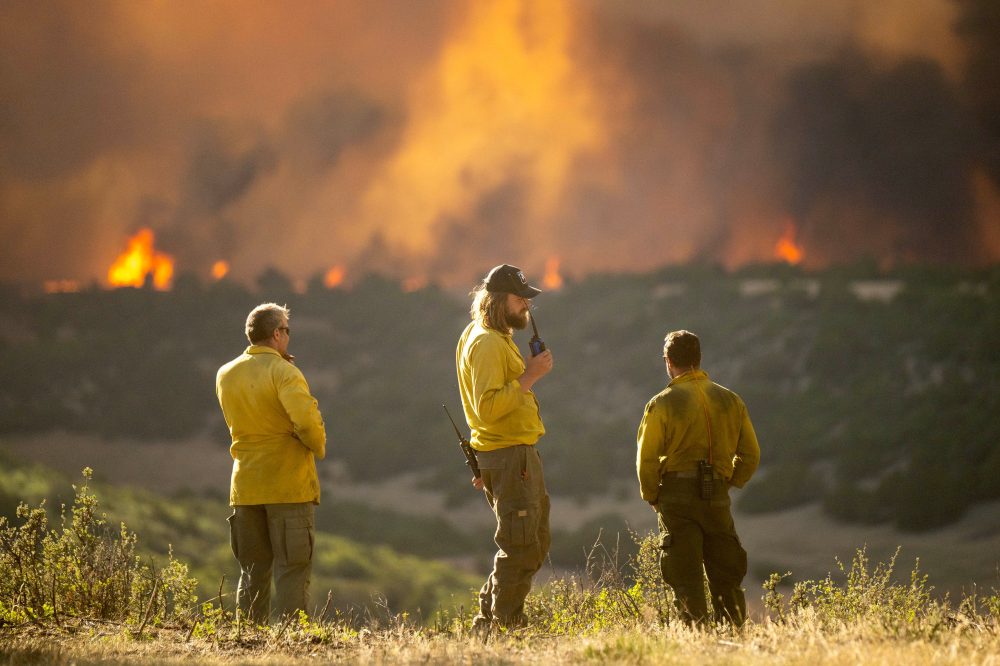
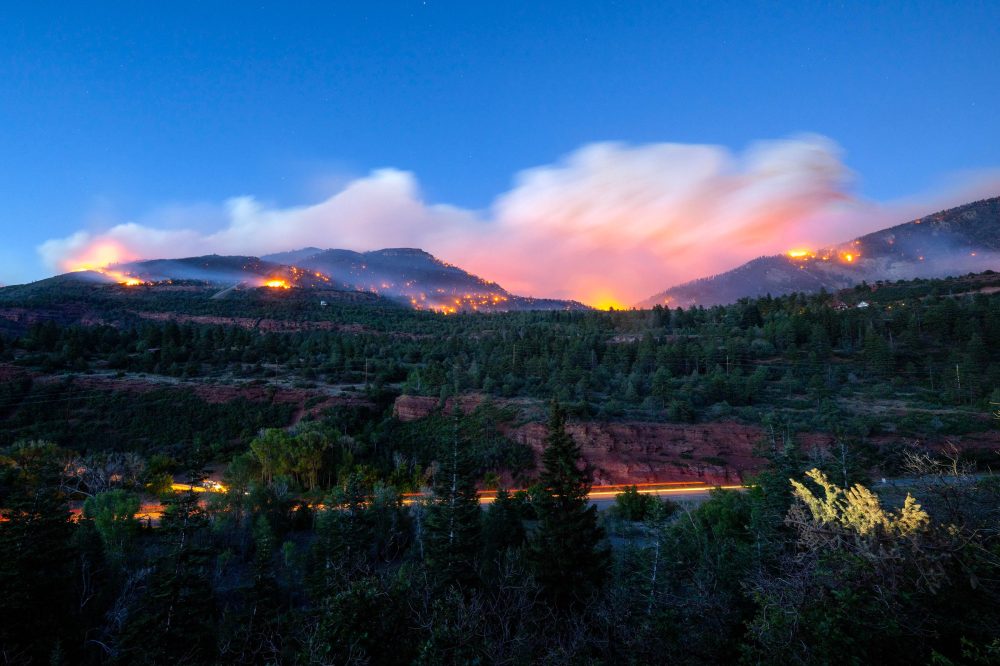
ALBUQUERQUE, N.M. — This has already proven to be a deadly year for those battling wildfires, and officials are working overtime to position resources where they can strike quickly before flames grow into catastrophic events that claim lives and destroy homes.
Fire managers face the constant challenge of anticipating where nature will strike next, deploying thousands of firefighters, hundreds of engines, fleets of bulldozers, helicopters, and air tankers to wherever they can have the greatest impact.
This season, those managers are contending with stubborn drought conditions worsened by historically low snowpack levels, along with stretches of hot, dry, and windy weather that have created ideal conditions for fire. Hundreds of homes have already been destroyed. Three firefighters lost their lives fighting fires in Colorado, and most recently, a helicopter assisting with a separate Colorado fire went down in a reservoir, killing the pilot.
While the national wildfire preparedness level has not yet reached its highest tier, available resources are being stretched thin as new fires ignite on a daily basis.
“The U.S. Wildland Fire Service is prioritizing pre-positioning of crews, engines and aircraft in areas with the highest likelihood of wildfire activity,” the agency said in a statement to The Associated Press. “This allows for quicker initial attack when new wildfires ignite, which is often the most effective way to keep fires small.”
The National Interagency Fire Center — a coalition of federal and state agencies that supports wildfire response on the ground — rates national preparedness on a scale of one to five, based on fire activity, resource demand, weather, and ground conditions. By late June, a spike in fire activity led coordinators to raise the level to four and redirect more crews toward the most active fire zones.
Since the start of July alone, more than 2,000 fires have been confirmed by the national fire center. The surge of fire activity across the West has resulted in more experienced incident management teams being called into service, with some traveling from Alaska and California to assist with fires in the Great Basin region.
As of Monday, 16 of those teams were overseeing nearly 17,000 people working across more than a dozen states.
Preparedness levels typically climb in July and August, but fire managers are hoping they can continue balancing resources without hitting the maximum level.
Over the past decade, fire managers have reached the highest preparedness tier an average of 25 days per year, with the longest continuous stretch occurring in 2021, according to federal data. The earliest that top designation was ever reached was June 21, 2002.
The country has ten geographic area coordination centers that manage the movement of firefighters and equipment across the nation.
Mike Morgan, director of the Colorado Division of Fire Prevention and Control, acknowledged during an early July news conference that his state was receiving assistance from an Alaska-based team.
“Thank God that they have the ability to free those resources up,” he said. “So I think at the moment I would say I feel pretty good about where we’re at. But I’m very concerned about where we go.”
In Utah, additional crews were brought in to help battle the Babylon Fire, currently the largest active wildfire in the United States at 166 square miles — an area larger than the city of Seattle.
In total, more than 5,600 square miles have burned across the U.S. so far this year — a combined area larger than Yellowstone and Grand Canyon national parks — outpacing the ten-year average.
The latest forecast shows above-normal wildfire potential throughout July across a broad swath of the country, from the Four Corners region — where New Mexico, Arizona, Colorado, and Utah converge — northward through Oregon, Idaho, and Washington. Conditions are not expected to ease until September.
Christopher Dunn, an assistant professor of wildfire risk science at Oregon State University, said these forecasts guide decisions about where and how to deploy resources, which shift as the fire season progresses from one region to another.
In a particularly busy year, states must decide whether to release resources to assist other areas or push federal officials to hold crews in reserve for potential local emergencies — a dynamic Dunn described as hoarding resources.
“So there is sort of this delicate balance that has to be walked there, where you share, they share, everybody shares,” he said, “and everybody benefits from that sharing while not overextending your resources so much that you find yourself in a losing position.”
That sharing, however, comes at a cost to the firefighters themselves. Longer time in the field means more overtime and a greater risk of burnout.
“With all this sharing and all of this increase in fire everywhere, we’re just going to see increased pressure on them to work more and work harder and essentially burn out quicker,” Dunn said.
Each fire season renews the ongoing debate about public investment in a permanent wildland firefighting workforce and what can be done to keep the most experienced personnel from leaving the profession.
“More experience is critical when dealing with extreme conditions,” said Camille Stevens-Rumann, a former wildland firefighter and associate professor at Colorado State University.
Even with ample resources in place, there is little firefighters can do when conditions include multiple consecutive days of strong winds, low humidity, and high temperatures. Stevens-Rumann said that is precisely why strategic pre-positioning of resources matters so much.
“They can be available for when those conditions die down, like in the evening,” she said. “But when we have day after day of red flag warnings and high winds, it’s really hard to control a fire.”
Despite her background as both a firefighter and a wildfire researcher, Stevens-Rumann said seeing fires close to her own home is a different experience entirely.
“There’s no denying it. It’s easy to disassociate that when you’re on a fire crew and you’re arriving to a place that you don’t have a connection to per se to fight a fire. You know, you’re there to do a job,” she said, “but when you see it in your own backyard, it’s definitely a totally different experience.”
This year, firefighters have been directed to aggressively attack every fire as fast as possible to prevent it from spreading — a shift away from a decades-long practice of allowing some fires to burn naturally in order to clear brush and dead vegetation that could fuel future blazes. Stevens-Rumann noted concerns about what this approach means for firefighter safety and whether the work being done on the landscape is truly effective.
“It doesn’t do us any good to build miles and miles of line that just get burnt over, over and over again,” she said, adding that newer strategies are helping managers identify where to make a stand more effectively.
Early detection remains a critical tool in the fight. Despite once numbering in the thousands, there are now only about 350 fire lookout towers still standing in the U.S., many of them staffed by volunteers because of shrinking budgets, according to Michael Guerin, chairman of the Forest Fire Lookout Association.
These towers are not limited to the West. New Jersey opened a new one this year, and they are also in use in Pennsylvania, Maine, and other eastern states.
Recent fire activity has forced the evacuation of some lookout towers in Colorado. Meanwhile, Guerin and fellow volunteers in California are bracing for conditions to worsen when the Santa Ana winds arrive.
Help may also be on the way from space. Officials with the California Department of Forestry and Fire Protection announced in early July that the first satellites have been launched into orbit as part of a future space-based wildfire detection network.
For now, lookout volunteers rely on maps, compasses, and their knowledge of local landmarks to help pinpoint fires for initial attack crews. But their role does not end there, Guerin said.
“We then become the overwatch — the people that keep them safe while they’re doing the hard work on the ground.”
Whiteleysburg Road is currently closed in both directions between Burnite Mill Road and Ingram Mill Road due to a crash, according to traffic officials.
The full road closure is in effect, and drivers in the area are advised to find alternate routes and expect delays while crews work the scene.
No further details about the crash have been released at this time. Motorists should use caution in the surrounding area and allow for extra travel time.
Travelers should use caution on Valley Road between Lancaster Pike and Evanson Road, where intermittent lane closures are in effect until 6 AM.
The lane restrictions may cause delays for drivers in the area. Motorists are encouraged to allow extra travel time or consider using an alternate route until the closures are lifted.
Southbound travelers on Interstate 95 near the DE-896 overpass are facing a temporary lane restriction overnight.
According to Delaware transportation officials, the right lane under the DE-896 bridge on I-95 southbound is currently closed. The closure is expected to remain in effect until 2 AM.
Drivers in the area should use caution, reduce speed, and be prepared for potential delays. Authorities recommend allowing extra time if traveling through that stretch of highway during the overnight hours.
Motorists traveling eastbound on Kirkwood Highway, also known as Delaware Route 2, are facing a right lane closure due to ongoing construction work.
The affected stretch runs between Dillwyn Road and Melrose Place. Drivers in the area should plan for possible delays and allow extra travel time until the lane reopens.
The closure is expected to remain in place until 6 a.m., at which point the lane is scheduled to reopen to traffic.
Defense contractor L3Harris Technologies has been awarded a $955 million contract to build 18 satellites for the United States’ Golden Dome missile defense shield, according to announcements made Monday by both the company and the contracting agency.
The contract was issued by the Space Development Agency, which operates under the U.S. Space Force. With this latest deal, L3Harris has now received orders for a minimum of 70 missile-tracking and defense satellites from the U.S. government — five of which are already in orbit.
Over the past year, L3Harris has been expanding its space and satellite manufacturing operations across the country as part of an effort to support President Donald Trump’s Golden Dome initiative.
The company says the satellites are designed to detect and track advanced missile threats, and that manufacturing will get underway right away.
L3Harris is among the defense contractors that have seen growing business amid record levels of U.S. defense spending and rising tensions in various parts of the world.
Drivers heading onto or off of Interstate 495 should expect slower than normal travel conditions as crews conduct sweeping operations on the ramps in both directions.
Both the northbound and southbound ramps on I-495 are affected, with slow-moving equipment on the roadway as part of the sweeping work. The operations are scheduled to continue until midnight.
Motorists are advised to remain alert, reduce their speed, and allow extra travel time when approaching the affected ramps. Officials urge drivers to use caution around the slow-moving equipment until the work is completed.
Drivers heading northbound on Pennsylvania Avenue should be aware of a lane restriction currently in place due to ongoing construction work.
The right lane on Pennsylvania Avenue northbound, between N Scott Street and N Van Buren Street, is closed. The closure is scheduled to last until 5 p.m.
Motorists traveling through the area are encouraged to allow extra travel time or seek an alternate route to avoid potential delays.
Westbound travelers on B Street between New Castle Avenue and Townsend Street should expect a lane restriction as construction crews have closed the left lane in that stretch.
According to Delaware Department of Transportation, the closure is scheduled to last until 4 p.m. Drivers are encouraged to allow extra travel time or seek an alternate route to avoid potential delays in the area.
WASHINGTON (AP) — The official U.S. military death count from the war with Iran has climbed to 14 service members, following the death of a Navy pilot whose helicopter went down in the Arabian Sea earlier this month.
The number of American troops wounded in the conflict has also grown, now exceeding 400 as of Monday. Capt. Tim Hawkins, a spokesman for U.S. Central Command, confirmed that the majority of those injuries involved traumatic brain injuries.
The helicopter went down on July 1 in what the Navy initially called an emergency landing. At the time, officials stated there was “no indication the emergency was caused by hostile action.” The three other sailors on board were rescued shortly after the crash.
The Pentagon’s casualty count added this as one non-hostile death in July. Prior to this, the last recorded deaths came in March, at the outset of the war, when 13 service members were killed in a series of separate incidents.
Those earlier deaths included six soldiers killed in an Iranian drone strike on a command center in Kuwait. A seventh soldier died more than a week after being wounded in an attack on Prince Sultan Air Base in Saudi Arabia. Six additional service members lost their lives when a KC-135 refueling aircraft supporting operations against Iran went down in Iraq.
The total wounded count now stands at 414, including a U.S. Air Force member added to the list Monday. While Iran and the United States have resumed trading strikes, it remains unclear whether that renewed activity contributed to the airman’s injury.
U.S. Central Command did not provide specific details about that airman. Traumatic brain injuries — largely caused by nearby missile strikes and explosions — have become the defining wound of this conflict, and their long-term effects on service members are still not fully understood. Along with post-traumatic stress disorder, they have emerged as some of the most common injuries among veterans of the post-9/11 era.
When pressed Monday for updated figures on seriously wounded troops, U.S. Central Command spokeswoman Maj. Emma Thompson said she had no new information to share. She repeated that “almost all” of the injured have since returned to active duty and declined to say how many troops had been wounded severely enough to require evacuation from the region.
Motorists traveling along Stein Highway (Route 20) in the area between Atlanta Road (Road 30) and Sussex Highway should expect a lane restriction while crews work in the area.
The lane closure is expected to remain in place through Friday, July 17th. Drivers are advised to use caution and allow extra travel time when passing through the work zone.
Motorists in the area should be aware that a lane closure is currently in effect on Stein Highway (Route 20) between Atlanta Road (Road 30) and Sussex Highway.
Workers are active in the area, and the lane restriction is scheduled to remain in place through Friday, July 17th.
Drivers are encouraged to use caution when passing through the work zone and to allow additional travel time for any delays that may occur.
Northbound travelers on Route 141 are facing a lane shift between Newport Gap Pike and the Exit 4 off-ramp as construction crews work in the area.
The lane shift is expected to remain in place until 3 PM. Drivers are encouraged to use caution while passing through the work zone and to budget additional time for their commute.
No further details about the nature of the construction project were immediately available. Motorists should stay alert for signage and flaggers in the area.
Eastbound travelers on Shawnee Road (Route 36) are facing a shoulder closure between Old Shawnee Road and DuPont Boulevard, also known as Route 113.
The closure is the result of construction work in the area and is expected to last until 6 p.m.
Drivers are encouraged to remain alert and allow extra time when traveling through this stretch of road. Use caution near construction zones and be prepared for possible slowdowns.
Intermittent lane closures are in effect on Quail Hollow Drive between Village Drive and the cul-de-sac as construction crews work in the area.
The lane restrictions are expected to continue until 6 p.m., and drivers passing through the area should be prepared for potential delays or reduced lanes during that time.
Motorists are encouraged to allow extra travel time or consider using an alternate route until construction activity wraps up for the day.
A northbound lane on Turkey Point Road, also known as Road 240, is currently closed to traffic between Ludlow Lane and Plymouth Road due to construction activity.
The lane restriction is expected to be in place until 6:00 PM. Drivers traveling in that direction should anticipate delays and consider alternate routes if possible.
No additional details regarding the nature of the construction were provided. Motorists are encouraged to use caution in the area and watch for workers and equipment near the roadway.
Construction activity on Carsdale Court is causing intermittent lane closures between Arundel Drive and the cul-de-sac, according to traffic officials.
The lane restrictions are expected to remain in place until 6:00 PM. Drivers traveling through the area should anticipate possible delays and consider alternate routes if available.
Motorists are urged to slow down and use caution when passing through the construction zone.
The Trump administration has handed over a large volume of previously withheld evidence to prosecutors in Minneapolis who are investigating the deaths of two American citizens shot by immigration agents during deportation operations earlier this year, local officials announced Monday.
Hennepin County Attorney Mary Moriarty, the city’s top prosecutor, said the federal government finally provided the evidence after six months of negotiations, disputes over jurisdiction, and legal action. She described the materials as “voluminous.”
The evidence package includes body camera recordings from agents involved in the shootings, additional digital materials, and the bullet-damaged vehicle belonging to victim Renee Good. Speaking at a news conference, Moriarty thanked federal officials for their willingness to “consider changing course.”
“We need cooperation. Our community needs it,” she told reporters. “Our democracy requires it.”
Moriarty said the handover followed conversations with the Minnesota U.S. Attorney’s office and the FBI’s local field office, neither of which responded to requests for comment Monday.
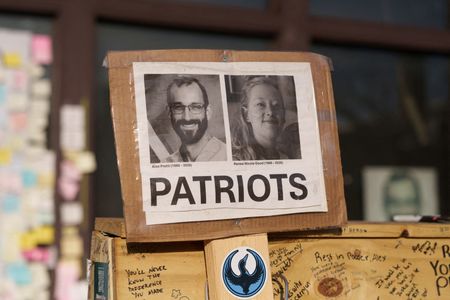
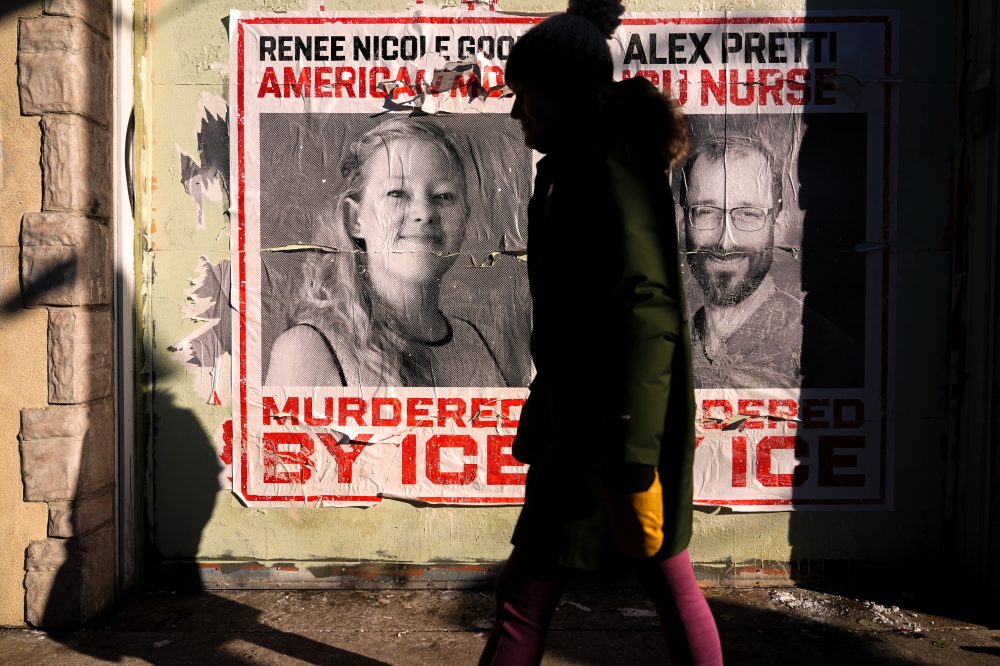
An Immigration and Customs Enforcement agent fatally shot Good inside her vehicle on January 7. Border Patrol agents shot and killed Alex Pretti on a public street during protests on January 24. Both victims were U.S. citizens. Separately, an ICE agent shot Venezuelan citizen Julio Sosa-Celis in the leg on January 14, wounding him.
Moriarty’s office is still actively investigating the deaths of Good and Pretti, and she has not yet announced whether state charges will be filed against the federal agents responsible. However, charges have already been brought in connection with the Sosa-Celis shooting — ICE agent Christian Castro has been indicted under Minnesota law on four counts of second-degree assault and one count of falsely reporting a crime.
All three incidents occurred during Trump’s Operation Metro Surge last winter, a large-scale enforcement campaign in which hundreds of armed immigration agents swept through Minnesota cities in search of individuals to deport.
Democratic leaders in the state publicly condemned the Republican president’s actions, saying constitutional rights of Minnesotans were being widely violated, and pledged to pursue accountability.
The Trump administration had previously refused state requests for the evidence, arguing that only the U.S. Department of Justice and the Department of Homeland Security should investigate the agents involved. Officials also incorrectly claimed the agents had blanket immunity from state prosecution.
Federal law enforcement agencies abruptly stopped their standard evidence-sharing practices shortly after Good’s killing, prompting the state to file a lawsuit against the Trump administration. That legal case is still active, though Moriarty indicated it could potentially be resolved once her office has had time to review the newly received materials.
Pursuing a state criminal case against a federal law enforcement officer is an uncommon and legally challenging process. The U.S. government has the ability to move such a case from state to federal court if the Department of Justice argues the agent was performing lawful duties at the time.
In February, amid public anger over the shootings, the Trump administration announced it was ending the large-scale deportation surge in Minnesota and would instead focus on more targeted enforcement rather than broad sweeps.
In other recent immigration-related incidents, an ICE agent last week fatally shot Lorenzo Salgado Araujo, a Mexican man federal officials said had been living in the U.S. without legal status for decades, during a traffic stop in Houston. On Monday, a separate shooting involving U.S. immigration agents left one person dead in Biddeford, Maine.
Drivers in the area of Elderon Drive at the Elderon Drive Loop should be aware of intermittent lane closures currently in effect due to construction work in the area.
The lane restrictions are expected to remain in place until 6:00 PM, and travelers passing through the area may experience brief delays as a result.
Motorists are encouraged to use caution when approaching the construction zone and to allow for additional travel time if their route takes them through this area.
Motorists traveling along Carsdale Court between Arundel Drive and the cul de sac should plan for intermittent lane closures due to active construction in the area.
The lane restrictions are expected to remain in place through 6:00 PM. Drivers are encouraged to use caution when passing through the construction zone and should anticipate possible delays.
A crash on Delaware Route 8 westbound has resulted in the right lane being closed near Kenton Road.
Motorists traveling in that direction should be aware of the lane restriction and allow extra travel time. Authorities have not yet released additional details regarding the incident.
Drivers are encouraged to use caution in the area and consider alternate routes until the roadway is fully cleared.
Finding information about Delaware’s public schools just got a lot simpler. The Delaware Department of Education has officially launched a new online resource called Explore Delaware Schools, designed to serve as a one-stop destination for families seeking information about the state’s public school system.
Before this portal existed, parents and guardians often had to visit several different websites just to piece together basic information about local schools. The new platform aims to change that by consolidating school information, attendance boundaries, and school profiles all in one accessible location.
The driving idea behind the launch is straightforward: public information about schools should be simple to find, easy to understand, and consistently available no matter where someone goes looking for it.
Throughout the month of May, the New Castle County Division of Police teamed up with the Delaware Office of Highway Safety (OHS) to take part in the Preventing Roadside Deaths Enforcement Campaign. The joint effort centered on cracking down on violations of Delaware’s Move Over Law and making roadways safer for those working on the side of the road.
Delaware’s Move Over Law extends its protections beyond just police officers, firefighters, and emergency medical personnel, covering a wider range of roadside workers who face dangers from passing traffic every day.
MINNEAPOLIS — Minnesota prosecutors announced Monday that they have finally obtained critical evidence in their investigations into the fatal shootings of Renee Good and Alex Pretti, two protesters killed during demonstrations against a federal immigration enforcement crackdown in the state earlier this year.
Hennepin County Attorney Mary Moriarty confirmed the breakthrough, saying, “Through the cooperation of our federal partners we have obtained the hard drives of previously withheld evidence in the killings of Renee Good and Alex Pretti and the shooting of Julio Sosa-Celis. We have also obtained some of the physical evidence that was previously withheld, including Renee Good’s car.”
For months, federal officials had been holding back witness statements, police body camera recordings, and other materials connected to the killings. Moriarty said state and local investigators now have possession of Good’s damaged vehicle as well.
Good, a 37-year-old mother of three, was shot and killed while driving away from an anti-immigration enforcement protest in Minneapolis on January 7, as U.S. Immigration and Customs Enforcement agents were conducting sweeping operations throughout the area. Her death, along with Pretti’s killing just weeks later, triggered widespread outrage nationwide and fueled calls to limit immigration enforcement activities.
“The wonderful thing now is we have all the evidence,” Moriarty said. She added that investigators are currently working through the materials, which include hard drives containing statements, hours of body camera footage, and Good’s physical vehicle.
“We need transparency. We need cooperation. Our community needs it,” Moriarty said. “Our democracy requires it.”
Late last month, Minnesota Attorney General Keith Ellison and Moriarty asked a federal judge to extend deadlines in their lawsuit against the U.S. Department of Justice, citing renewed talks with the FBI over sharing information. Attorneys representing the federal government agreed to that request. Ellison and Moriarty noted that those discussions were likely to influence Minnesota’s request for a summary judgment in the case.
Ellison expressed lingering frustration over the delay, saying he remains “deeply troubled that the federal government spent more than half a year attempting to conceal this evidence from state investigators.”
“It should never have taken this long for Minnesota law enforcement to gain access to the federal government’s evidence,” Ellison said. “I hope that this is the beginning of a major course correction on the part of the federal government.”
LEWES, Del. — Cyclists, walkers, and other users of the Georgetown/Lewes Rail Trail Shared Use Path should plan for a temporary route change beginning Monday, July 20.
The Delaware Department of Transportation (DelDOT) announced that the trail will be shifted onto the newly paved New Road, which runs beneath the Nassau Bridge. The detour is necessary to allow crews to complete construction of the Shared Use Path in its final layout between Nassau Road and Janice Road.
The temporary reroute is expected to remain in place through August 14, though that timeline is subject to weather conditions.
Anyone traveling through the area is asked to follow the posted detour signs and exercise caution while passing through the active construction zone.
A deadly shooting in Biddeford, Maine, on Monday morning involved federal immigration agents, according to the speaker of the Maine House, though full details of what happened are still coming to light.
Maine House Speaker Ryan Fecteau, a Democrat, took to Facebook to share what he knew about the incident. Biddeford is a coastal community of roughly 23,000 residents located about 15 miles southwest of Portland.
“This morning a shooting occurred in Biddeford. A person was killed. ICE was involved,” Fecteau wrote, referring to U.S. Immigration and Customs Enforcement. “State Police and the Department of Public Safety are now on scene to gather details and would expect the FBI to investigate as well.”
Fecteau acknowledged that those were the only facts available to him at the time and promised to share more information as the day progressed.
Requests for comment sent to ICE, the FBI, and the Maine Department of Public Safety were not immediately returned.
An immigrant rights advocacy organization called Project Relief posted on social media that one of its community members had been killed “during an encounter with ICE in Biddeford” and that the group had reached out to the person’s family. The group described the victim as “young” but did not share an age or other identifying information.
“This was a young person whose life was cut short,” the group said, urging justice for the family and community.
A local group called Biddeford Saco for Racial Justice organized a noon protest at Mechanics Park in Biddeford in response to the shooting. Local reports indicated that demonstrators had already begun arriving in the city, which features a working-class downtown along the Saco River and a shorefront area known for drawing vacationers.
As of late morning, investigators were still working the scene. Officers had sealed off a residential intersection using patrol vehicles, barricades, and yellow crime scene tape. At least one protester holding a sign stood just outside the police perimeter while law enforcement limited access to the surrounding neighborhood. A church sat atop a nearby hill overlooking the scene.
Maine Gov. Janet Mills released a statement saying she had been briefed on the fatal shooting “involving Federal law enforcement.” She said State Police were at the scene and coordinating with the state attorney general’s office, the chief medical examiner’s office, and federal authorities to piece together what occurred.
“I know that situations like these are alarming and frightening,” said Mills, a Democrat.
If confirmed, this would mark at least the ninth death resulting from an encounter with federal immigration officials since the Trump administration launched its immigration enforcement campaign — and the second such death in just one week, following the fatal shooting of a man in Houston.
The incident comes as the Trump administration has ramped up its mass deportation efforts. In a five-day stretch at the end of June, ICE made more than 10,000 arrests nationwide. Those numbers suggest that while the administration has moved away from targeting specific cities, arrests are continuing and accelerating.
Democratic Rep. Chellie Pingree of Maine said in a social media video that she was on her way to Portland to catch a flight to Washington when she learned about the shooting. She said she was seeking answers about the circumstances, including whether officers involved had been wearing body cameras, and added, “More than anything else, I want to know, ‘Why are you in Maine?’”
ICE had a notable presence in Maine earlier this year, sparking several large-scale protests. The Department of Homeland Security, which oversees ICE, branded that operation “Catch of the Day” — an apparent nod to Maine’s fishing industry — similar to how it has named other enforcement surges, such as “Patriot” in Massachusetts, “Metro Surge” in Minnesota, and “Midway Blitz” in Chicago.
Immigration officials announced in late January that they had wrapped up “enhanced operations” in Maine after making hundreds of arrests. A Homeland Security spokesperson said at the time that some of those arrested in Maine had been “convicted of horrific crimes including aggravated assault, false imprisonment, and endangering the welfare of a child.” However, court records told a more complicated story: while some detainees did have felony convictions, others had unresolved immigration proceedings or had been arrested but never convicted of any crime.
The Trump administration’s immigration enforcement actions drew widespread criticism last winter following the deaths of Alex Pretti and Renee Good in Minnesota. Last week, an ICE officer fatally shot Salgado Araujo, 52, of Houston, after federal agents in unmarked vehicles pursued him while he was transporting his work crew to a job site.
Northbound travelers on Route 141 are facing a lane shift between Newport Gap Pike and the Exit 4 off-ramp as a result of active construction in the area.
The lane shift is expected to remain in place until 3 PM. Drivers are encouraged to use caution while passing through the construction zone and to budget extra time for their commute.
No further details about the nature of the construction work have been provided at this time.
LEWES, Del. — The Delaware Department of Transportation is warning drivers about upcoming lane restrictions on Janice Road in Lewes.
Beginning Tuesday, July 21st and running through Monday, July 27th, crews will conduct paving operations along Janice Road between SR1 and the Lewes Senior Center. During this time, intermittent lane closures will be in effect.
Drivers passing through the area are advised to slow down and be prepared for possible minor delays as work crews are on-site.
For additional details, visit DelDOT’s official website at www.deldot.gov.
BOSTON — A Massachusetts man has been convicted of conspiring to illegally ship electronic components to Iran, breaking U.S. sanctions laws, a federal jury decided Monday.
Mahdi Mohammad Sadeghi, an employee at global electronics firm Analog Devices, was accused of helping an Iranian business associate circumvent American export control regulations. Federal prosecutors allege that the business associate runs a Tehran-based company that produces navigation systems for military drones operated by Iran’s Revolutionary Guard. The alleged scheme reportedly involved setting up a shell company in Switzerland.
A second person named in the case, Mohammad Abedininajafabadi — referred to in court documents as Abedini — was not tried alongside Sadeghi. Authorities believe Abedini is currently in Iran following what appeared to be a prisoner exchange involving an Italian journalist.
Sadeghi was convicted on three of the five counts he faced. He showed no outward reaction when the verdict was read, which came early in the fourth day of jury deliberations. He and his legal team declined to speak with reporters as they exited the courthouse. He will remain out of custody until his sentencing on October 13.
Sadeghi is a 43-year-old naturalized U.S. citizen who chose not to take the stand in his own defense. A father of two, he lost his position at Analog Devices after the charges were filed. He was originally arrested in December 2024 — well before the current conflict with Iran — though his trial took place during that ongoing hostilities.
During closing arguments, Assistant U.S. Attorney Alathea Porter laid out the government’s position plainly. “At its core, this case is straightforward. You cannot send goods, especially the goods at issue in this case, to Iran. Period. Full stop,” she told the jury. “The defendant knew that, and conspired with Mr. Abedini to do that.”
Fellow prosecutor Assistant U.S. Attorney Jared Dolan argued that documents, text messages, and photographs demonstrated the illegal activity was the direct result of the relationship between Sadeghi and Abedini. “The evidence established that he knew what Abedini was doing because he told him in writing,” Dolan said. “He helped him anyway.”
Sadeghi’s defense attorney, William Fick, pushed back strongly, telling jurors the prosecution’s narrative “makes no sense” and contained significant gaps. Fick argued his client was simply giving a longtime friend guidance on how to pursue business with the semiconductor company and was not involved in actually obtaining the parts for Abedini.
Fick also argued there was no proof the components ever reached Iran, and he challenged the prosecution’s characterization of the Swiss company as a front operation. “If you look at the world through dirty glasses, everything looks dirty,” Fick told jurors. “That is fundamentally what the prosecution is asking you to do here.”
The defense attorney further noted that prosecutors had not demonstrated Sadeghi had anything to gain from the alleged scheme — though prosecutors countered that proving a motive was not required. “He had nothing to gain and everything to lose,” Fick said. “He has lived in the country for decades. He was a well-regarded, respected employee on his way up in the company.”
Prosecutors had originally sought to introduce evidence connected to an Iranian drone used in a 2024 attack that killed three U.S. service members at a remote base in Jordan. Defense attorneys moved before trial to block any such evidence relating to Abedini’s alleged involvement in drone manufacturing or attacks on American troops.
The judge sided with the defense on that issue, ruling that prosecutors could only present general information about Abedini’s Iranian company and the potential military uses of its technology, including drones. During a February hearing, prosecutors acknowledged they lacked evidence that Sadeghi had any knowledge that the technology he allegedly helped export was connected to the drone involved in the Jordan attack.
Both defendants face export control violation charges. Abedini faces an additional charge of conspiring to provide material support to a foreign terrorist organization, a charge tied to the deaths of the three service members.
Abedini was taken into custody at an Italian airport on a U.S. warrant in December 2024, but was released about a month later and returned to Iran. Just three days after his arrest, Italian journalist Cecilia Sala was detained while working in Iran. Sala, widely believed to have been held as leverage for Abedini’s freedom, was able to return home in January 2025.
Newark, Delaware — A police K-9 named Vudu played a key role in tracking down a suspect who was hiding inside a home during an active burglary investigation late Saturday night.
Just before 11 p.m. on Saturday, July 11, 2026, officers were dispatched to Saratoga Court in the Valley Wood community following a report of a burglary in progress. The homeowner had discovered a door to the basement standing open and spotted an unidentified person inside the residence.
Multiple officers arrived at the scene quickly and began searching the property. K-9 Vudu was deployed to assist in locating the suspect, who was hiding within the home.
A group of state and federal judges are hitting the road, traveling through three states to bring an important message directly to the public.
The judges are visiting courthouses and schools along the way, using the tour as an opportunity to speak with everyday Americans about the significance of the rule of law and how it shapes life in the United States.
Drivers heading northbound on Route 1 are facing a brief slowdown after a disabled vehicle forced the closure of the left lane just north of the toll plaza.
The lane blockage is causing travel delays estimated between five and ten minutes for motorists passing through the area.
Drivers are encouraged to use caution and allow extra time when traveling through that stretch of Route 1 until the situation is cleared.
Eastbound travelers on Shawnee Road (Route 36) are facing a shoulder closure between Old Shawnee Road and DuPont Boulevard, also known as Route 113.
The closure is the result of active construction work in the area and is expected to remain in effect until 6 p.m.
Drivers are encouraged to allow extra travel time and remain alert when passing through the construction zone. Authorities ask that motorists slow down and stay aware of workers and equipment that may be present near the roadway.
A left lane closure is currently in effect on Laurel Drive, also known as Route 24, between Substation Road and Curley Drive.
According to DelDOT, the lane restriction is scheduled to remain in place until 2 p.m. Drivers traveling through that stretch of roadway should expect some slowdowns and consider alternate routes if possible.
No additional details about the cause of the closure were provided. TV Delmarva will update this story if more information becomes available.
A pilot has died after a firefighting aircraft plunged into a reservoir in Colorado, authorities confirmed.
The Gunnison County sheriff’s office reported the aircraft went down Sunday in Silver Jack Reservoir. Divers were called in and successfully recovered the pilot’s body from the water.
Officials believe the pilot was the only person aboard the aircraft at the time of the crash. The plane had been deployed to support ground crews battling the Gold Mountain Fire, a blaze that has been burning for roughly two weeks in southwestern Colorado. The fire has now spread to approximately 57 square miles — or about 148 square kilometers — and was only 13% contained as of early Monday morning.
A request for additional details about the crash was submitted to the Federal Aviation Administration.
This tragedy comes just days after wildland firefighters across Colorado gathered to honor three fellow firefighters who lost their lives after being overtaken by flames near the Colorado-Utah border.
Across the western United States, numerous large wildfires continue to burn. Active fires are spread throughout Colorado, Utah, and New Mexico, with additional blazes burning in eight other states stretching from Alaska to Arizona.
The National Weather Service has warned that prolonged hot and dry conditions expected this week will heighten fire weather concerns across the region.
A lane shift is currently in effect for southbound Route 896 drivers approaching the ramp from Interstate 95 northbound to Ramp D.
The temporary traffic configuration is the result of construction work in the area and is expected to remain in place until 5:00 p.m.
Drivers traveling through the area are encouraged to slow down, stay alert for changed traffic patterns, and plan for possible delays during the construction period.
Motorists traveling through Wilmington should plan for delays on Baynard Boulevard, where construction crews have prompted intermittent lane closures between North Broom Street and Concord Avenue (Route 202).
The lane restrictions are expected to remain in effect until 5:00 PM. Drivers are encouraged to allow extra travel time or consider alternate routes to avoid potential slowdowns in the area.
Westbound travelers on Harrington Highway, also known as Route 14, in Milford are encountering a lane shift between Canterbury Road and Church Hill Road due to active construction work in the area.
The lane shift is expected to remain in place until 5 PM. Drivers are encouraged to slow down, stay alert, and follow all posted traffic control signs as they move through the construction zone.
No additional details about the nature of the construction project were provided. Motorists looking for alternate routes may want to plan ahead to avoid potential delays.
Emotions ran high this past weekend in Houston, where community members came together to remember Lorenzo Salgado Araujo, a man who was fatally shot by agents from Immigration and Customs Enforcement.
The gathering drew a crowd that displayed a powerful mix of grief and anger as attendees paid their respects to Salgado Araujo and called attention to the circumstances surrounding his death.
Road crews are on the scene along Swinnen Drive today, carrying out curb cleaning operations that are scheduled to continue until 5:30 p.m.
Motorists traveling through the area are advised to use caution and allow extra time, as the work may affect normal traffic flow until crews have finished for the day.
Northbound travelers on Edgemoor Road are facing a lane restriction this afternoon as construction crews work in the area.
The right lane on Edgemoor Road northbound is closed between Philly Pike and Governor Printz Boulevard. The closure is expected to remain in effect until 5 PM.
Drivers in the area should allow extra travel time or consider using an alternate route to avoid delays.
Motorists traveling southbound on Interstate 95 are facing a right shoulder closure between Exit 1A and the toll plaza, according to traffic officials.
The lane restriction is the result of ongoing construction activity in the area. Drivers are advised to use caution and be prepared for possible slowdowns as they approach the affected stretch of roadway.
The closure is scheduled to remain in place until 5:00 PM. No further details about the nature of the construction work were provided.
Northbound travelers on Whiteleysburg Road (Road 59) are facing a temporary right lane shift between Vernon Road and Sugar Stick Road due to ongoing construction activity.
The lane shift closure is expected to remain in effect until 5 PM. Drivers in the area are encouraged to plan accordingly and use caution when passing through the construction zone.
Southbound travelers on Atlanta Road (Road 30) are facing a lane shift between Tull Drive and Oak Street due to ongoing construction work.
The lane shift closure is expected to remain in place until 3:30 PM. Drivers in the area should slow down and be prepared for changed traffic patterns as crews work in the zone.
Motorists are encouraged to allow extra travel time or consider alternate routes if possible until the closure is lifted.
Minos Conaway Road is currently closed at its intersection with Route 1 due to active construction in the area.
According to traffic officials, the closure is expected to remain in place until September 14, 2026 at 8 p.m. Drivers who normally travel through that intersection will need to find an alternate route until the construction work is completed.
No additional details were provided regarding the nature of the construction project. Motorists are encouraged to allow extra travel time and watch for signage directing them around the affected area.
When prisoners try to formally report mistreatment behind bars, they are often met with retaliation — and that’s making it harder for inmates to hold federal prison staff accountable, according to a new investigation.
NPR and The Marshall Project jointly conducted the investigation, which found that federal prison guards are using various tactics to discourage or prevent inmates from filing complaints in the first place.
Prisoners have the legal right to submit grievances about how they are treated while incarcerated. However, the investigation suggests that exercising that right can come at a cost for many inmates.
Retaliation against prisoners who speak up is a key concern highlighted in the report. When guards or staff respond to complaints with punishment or intimidation, it can effectively shut down the grievance process before any formal legal action is ever taken.
The findings point to a broader problem within the federal prison system, where the mechanisms meant to protect inmates from abuse may themselves be undermined by those in positions of authority.
A 25-year-old man was shot and killed by a federal agent with the Memphis Safe Task Force while he was experiencing a mental health crisis, according to reports.
Jonah Neal was struck by a Homeland Security Investigations agent in May in Memphis, Tennessee. His death is one of at least four fatal shootings connected to the task force.
Neal’s grandmother, Cindy Leachman Aldridge, has been left holding onto memories of her grandson following the deadly encounter. She was photographed at her home in Owensboro, Kentucky, holding a picture of Jonah.
The Memphis Safe Task Force has come under scrutiny following the string of deadly shootings involving its agents. The incident involving Neal raises broader questions about how law enforcement responds to individuals in mental health distress.
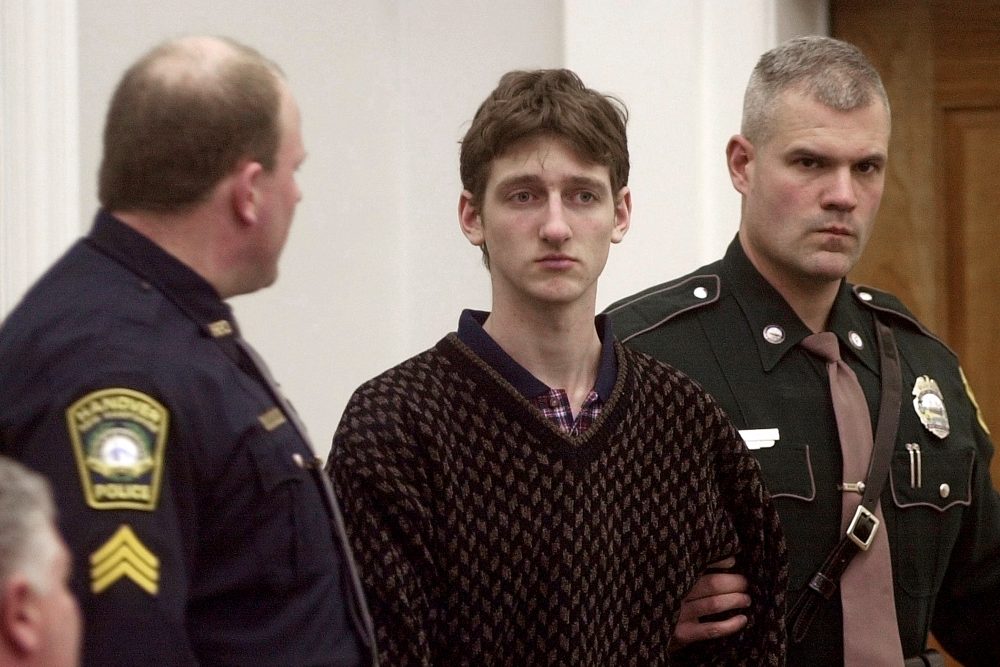
A Vermont man who was just 17 years old when he helped kill two married Dartmouth College professors a quarter century ago is now asking a court to shorten his life prison sentence.
Robert Tulloch, currently 43 years old, received an automatic life sentence without the possibility of parole after pleading guilty to first-degree murder in the 2001 stabbing deaths of Half and Susanne Zantop. However, a 2012 U.S. Supreme Court decision declared that mandatory life-without-parole sentences for juvenile offenders are unconstitutional — a ruling that was later extended to apply retroactively to existing cases.
Those decisions opened the door for hundreds of people who had been sentenced to life in prison as teenagers to seek new sentences, including five men in New Hampshire who committed murders while minors. Tulloch’s resentencing hearing, the final one among those five cases, got underway Monday at Grafton County Superior Court.
Prosecutors have not yet disclosed what sentence they plan to request. However, in a filing submitted to the court last week, Tulloch’s attorneys — Richard Guerriero and Oliver Bloom — argued that a minimum sentence of 30 to 40 years is appropriate. They based their argument on comparisons with other juvenile murder cases in New Hampshire and similar cases across the country affected by the Supreme Court rulings.
The defense attorneys also pointed to Tulloch’s prison record, saying it shows significant personal growth over the years. After some early disciplinary issues, he has had no major infractions since 2012 and no minor ones since 2017. As his lawyers noted, “The vast majority of his write-ups are for possessing too many books.”
Drawing from his therapy records, the attorneys said Tulloch has shown “significant remorse” for what he himself describes as a terrible and unforgivable act. The records also reflect his acknowledgment of his “warped youthful thinking” and his “good capacity for empathy.”
According to Tulloch’s accomplice, James Parker, the two teenagers were deeply dissatisfied with their lives in Chelsea, Vermont, and hatched a scheme to kill strangers, steal their money, and relocate to Australia. For several months leading up to the murders, the pair went door-to-door in New Hampshire and Vermont posing as environmental survey takers. That ruse eventually got them inside the home of the Zantops. Susanne Zantop, 55, led Dartmouth’s German studies department, while her husband, Half Zantop, 62, was a professor of Earth sciences.
Parker, who was 16 at the time, told prosecutors that Tulloch stabbed Half Zantop and then instructed Parker to attack Susanne Zantop, whom Tulloch also stabbed. Physical evidence — including fingerprints found on a knife sheath and a bloody boot print — connected the two teens to the killings. After being interviewed by police, they fled Vermont and hitchhiked westward before being taken into custody at a truck stop in Indiana several weeks later.
Parker cooperated with investigators and pleaded guilty to being an accomplice to second-degree murder. He was released on parole in 2024 at age 40, having served close to the minimum term of his 25-years-to-life sentence. During his parole hearing, Parker was asked by a board member what he thought about what he had done. “I think it’s unimaginably horrible,” he replied. “I know there’s not an amount of time or things that I can do to change it, or alleviate any pain that I’ve caused.”
The Supreme Court rulings addressed only mandatory life-without-parole sentences for juvenile offenders, yet the United States remains the only nation in the world that still allows judges to impose discretionary life sentences on minors. According to the Campaign for the Fair Sentencing of Youth, 28 states and the District of Columbia have outlawed the practice entirely, while five additional states permit it but currently have no one serving such a sentence.
New Hampshire legislators have repeatedly turned down efforts to eliminate life sentences for juvenile offenders, though Tulloch’s case could strengthen future reform efforts. After Tulloch argued in 2018 that sentencing minors to life without parole violated the state constitution, the presiding judge asked the state Supreme Court to weigh in — but that court declined. Then, last July, Superior Court Judge Lawrence MacLeod sided with Tulloch, ruling that the state constitution categorically forbids such sentences as “cruel or unusual” punishment.
Nationwide, among juvenile lifers who have been resentenced following the U.S. Supreme Court decisions, more than 75% received sentences of less than 40 years, according to a study published in 2024 in the Journal of Criminal Justice. In New Hampshire specifically, one man was resentenced to life without parole after refusing to attend his own hearing or allow his attorneys to argue for a lesser sentence. Others in the state received new minimum sentences of 25, 40, and 45 years to life.
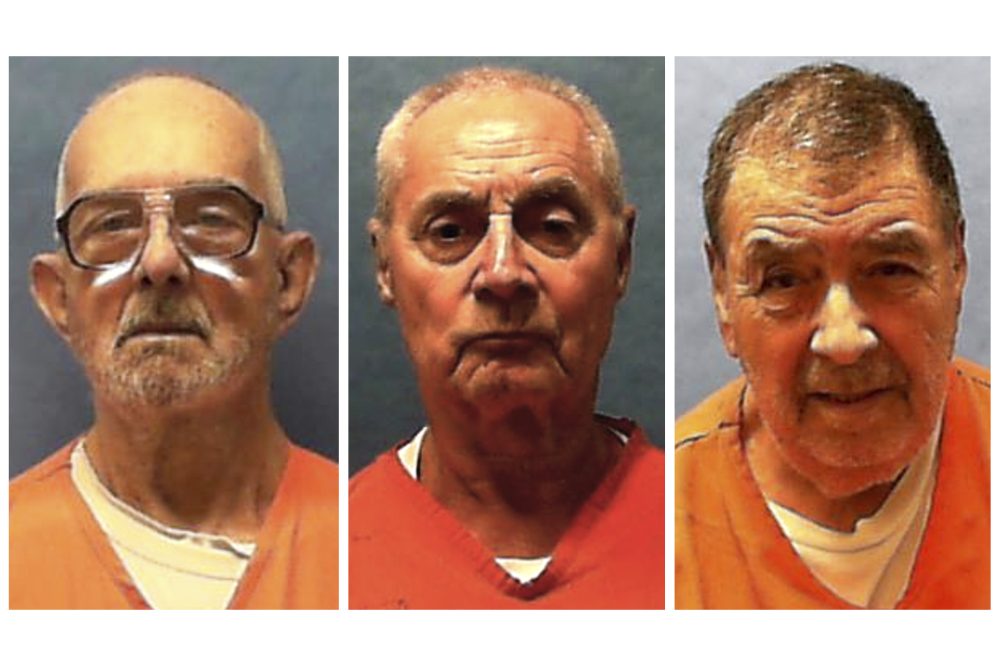
MIAMI — Florida recently executed its oldest death row inmate in modern history, and the next two prisoners scheduled to die are even older, shining a spotlight on the nation’s rapidly aging death row population.
On June 25, Dusty Ray Spencer, 74, was put to death after being convicted of fatally stabbing his wife in 1992. The U.S. Supreme Court had turned down his appeal, which argued that his liver disease would make lethal injection especially painful. Spencer became the oldest person Florida has executed in the modern era.
Now, two more elderly inmates are scheduled to die before the end of July. Dennis Sochor, convicted of murdering 18-year-old Patricia Gifford on New Year’s Day in 1982 — just hours after meeting her at a party — is set to be executed Tuesday. He would be just one week older than Spencer was at the time of his execution.
Marilyn Gifford, the victim’s sister, said her family plans to witness the execution. “I’m just happy it’s ever happening in our lifetime,” she said. “I wish my mother was alive to see it.”
A childhood family friend of the Giffords, Frank Frandel, who grew up in Portland, Michigan, recalled Sochor as a bully. “I could believe he could be violent like that,” Frandel said. He dismissed any sympathy for Sochor’s age, noting that Sochor’s father is turning 99 this year. “He could live another 20 years. So no, I don’t feel sorry for him being at that age,” Frandel said.
At the time Patricia Gifford disappeared, Sochor had been free on probation stemming from a 1980 rape conviction.
The second upcoming execution involves Dominick Anthony Occhicone, 80, who has been on death row for nearly 40 years after being convicted in the murders of his ex-girlfriend’s parents in 1986. He is scheduled to die on July 28. If carried out, Occhicone would become the second oldest prisoner known to be executed in the United States. The oldest was Walter Moody Jr., who was 83 when Alabama put him to death in 2018 for killing a federal judge and a Black civil rights attorney. There are currently three inmates on Florida’s death row who are even older than Occhicone.
Occhicone’s attorneys say he suffers from multiple age-related health problems, including kidney and prostate issues, and that he requires assistance getting in and out of the shower.
The back-to-back scheduling of these executions has raised questions, though the reasons behind it remain unclear. Maria DeLiberato, legal director of Floridians for Alternatives to the Death Penalty, pointed out that in Florida, the governor has nearly exclusive authority over when executions are scheduled — a power that differs from many other death penalty states, where the courts make that determination.
Gov. Ron DeSantis has overseen a record 19 executions in 2025, more than any other Florida governor in a single year since the state reinstated the death penalty in 1976. Nine inmates have been executed in Florida so far this year. DeSantis’ office did not respond to a request for comment on the upcoming executions.
Last year, DeSantis explained his approach, saying: “Some of these crimes were committed in the ’80s. Justice delayed is justice denied.”
The effort to schedule executions hasn’t always been swift. The family of one victim spent a full year writing and calling DeSantis’ office requesting that a death warrant be signed before the killer was finally executed earlier this year.
Nationally, the average age of executed inmates has climbed from the 30s to the 50s over the past 50 years, according to the Death Penalty Information Center. Lengthy appeals processes and mandatory reviews — designed to protect constitutional rights and prevent wrongful executions — have contributed to inmates spending decades behind bars, sometimes developing serious medical conditions in the process.
Under current Supreme Court precedent, individuals who were under 18 at the time of their crime cannot be executed. But age alone does not provide a legal basis for avoiding execution, according to Gerod Hooper, an attorney with Florida’s Capital Collateral Regional Counsel, a state agency that handles post-conviction legal representation.
“You’d have to say it’s unconstitutional to execute this 80-year-old because he’s mentally deficient, he doesn’t have capacity to be executed,” Hooper said. “Or because of some underlying medical condition, the drug cocktail they inject would cause undue pain and suffering.”
In other states, some death row inmates with dementia in Utah and Alabama have avoided execution and later died of natural causes. An inmate in Idaho has received at least one stay of execution due to cancer and other health issues, though state officials continue to pursue his execution.
The Rev. Dustin Feddon, a Catholic priest who has ministered to Florida death row inmates since 2013, questioned the ethics of executing the elderly. Reflecting his church’s opposition to capital punishment, he asked: “Is this intentional, as though to say, we’re not going to let a natural death help you escape executions?” He added: “To execute those that are the most frail and elderly is even more cruel and unusual.”
About half of Florida’s 242 death row inmates have exhausted their appeals and could have a death warrant issued against them at any time.
Whether you’re settling in for a movie night or looking for something new to listen to, this week has no shortage of fresh content hitting your screens and speakers. Here’s a look at what’s worth your time, as highlighted by Associated Press entertainment journalists.
Television & Film
Netflix’s fan-favorite series “Heartstopper” wraps up its story with a feature-length finale titled “Heartstopper Forever,” arriving on the platform July 17. Written by series creator and graphic novelist Alice Oseman, the film picks up after the Season 3 ending, in which Nick Nelson (played by Kit Connor) and Charlie Spring (played by Joe Locke) deepen their relationship. The story moves forward with new hurdles, including Nick weighing his university options.
Filmmaker Sofia Coppola — known for “Lost in Translation” and “The Bling Ring” — steps into documentary territory for the first time with “Marc by Sofia,” a profile of fashion designer Marc Jacobs. Much of the film was captured as Jacobs prepares to debut a ready-to-wear collection. It lands on HBO Max on July 16.
Christian Petzold’s film “Miroirs No. 3” arrives on Mubi on July 17. Described by AP Film Writer Jake Coyle as “beguiling and restorative,” the film follows a piano student (Paula Beer) who recovers from a car accident at the rural home of an older woman (Barbara Auer) who lives near the crash site. It was considered one of the standout films of the first half of 2026.
Anya Taylor-Joy stars as Lucky, a con artist sitting on a winning lottery ticket she can’t legally cash, in a new Apple TV+ series simply called “Lucky.” While the jackpot could be her ticket to a fresh start, both law enforcement and her crime boss are closing in. Reese Witherspoon, who selected the source novel for her book club back in 2021, serves as an executive producer. The first two episodes drop Wednesday.
Will Ferrell takes on the role of Lonnie Hawkins in “The Hawk” — a golfer who was ranked No. 1 in the world back in 2004. Now, years of wear on the course are catching up with him, and both his ex-wife and his son — golf’s newest rising star — are pushing him toward retirement. Lonnie isn’t ready to walk away, though. He’s determined to win one more major and complete a career Grand Slam. The supporting cast includes Molly Shannon, Jimmy Tatro, Fortune Feimster, Luke Wilson, and Chris Parnell. “The Hawk” premieres July 16 on Netflix.
Robert Irwin, winner of Season 34 of “Dancing with the Stars,” now steps into the host’s role for “The Next Pro,” a new Hulu series in which 12 dancers compete for a spot as a professional on the show’s next season. Judging the competition is Mark Ballas — a three-time Mirrorball champion — alongside his mother Shirley Ballas, a celebrated Latin dance competitor, instructor, and British television personality. Rotating guest judges will include Derek Hough, Witney Carson, and Jenna Johnson. The show debuts on Hulu Tuesday.
“Marc by Sofia” also arrives July 16, while Sofia Coppola marks her first foray into documentary filmmaking with an intimate look at designer Marc Jacobs preparing to launch a new collection.
Music
Steve Lacy, the alt-R&B artist formerly of the group the Internet, is releasing a new album this Friday called “Oh yeah?” Lacy broke through in a big way in 2022 with the hit “Bad Habit” and its memorable, self-deprecating hook: “I wish I knew you wanted me.” The new project marks a pop-leaning evolution, featuring a dreamy collaboration with SZA titled “Is It Cool?” and the ambitious track “The Feeling.”
Also dropping Friday is “Caribenya” from Colombian Canadian artist Lido Pimienta. The album’s title blends the words “Caribe” and the name of elusive Irish singer Enya — a fitting framework for an album that sits at the crossroads of cumbia, DIY roots, and Pimienta’s ongoing anti-colonial sonic experimentation. She is frequently compared to both Björk and Natalia Lafourcade.
Gaming
“Culdcept Begins” brings back a cult-classic game that has been missing from consoles for years. It combines elements of a board game — think rolling dice and claiming property like in Monopoly — with a collectible card game mechanic similar to Magic: The Gathering, where players summon creatures, cast spells, and deploy weapons. Landing on a space already claimed by an opponent triggers a battle. With more than 400 cards and boards that change with every session, the game offers both a solo campaign and online multiplayer. It launches Thursday, July 16, on Switch.
“D-topia” presents a world where artificial intelligence curates daily life to maximize human happiness — but not everything runs smoothly. Players take on the role of a facilitator tasked with repairing the cracks in the system, encountering residents who aren’t quite as content as they’re supposed to be. Dig deeper and you’ll uncover the hidden “Block Side” — and the unsettling secrets it holds. Publisher Annapurna Interactive calls it “a calm, yet thought-provoking journey” where player choices can lead to very different outcomes. “D-topia” is available starting July 14 on PlayStation 5, Xbox X/S, Switch, and PC.
Motorists traveling eastbound on US-40 at Porter Road are facing a temporary lane restriction due to ongoing construction work.
The right turning lane at that intersection is currently shut down, and drivers should plan accordingly when passing through the area.
The closure is scheduled to remain in effect until 6 a.m., at which point the lane is expected to reopen. Drivers are encouraged to allow extra travel time or seek alternate routes until construction activity wraps up.
Route 1 northbound is closed at Exit 104 following a crash, according to Delaware’s Department of Transportation.
Motorists traveling in the area are urged to avoid the roadway and plan for alternate routes until the closure is lifted. No additional details about the crash or a timeline for reopening have been provided at this time.
Drivers should stay alert for updates from DelDOT as conditions change.
Delaware Route 1 northbound has been closed just north of Exit 104 following a crash, according to Delaware transportation officials.
Motorists traveling in the area are advised to plan for delays and consider using alternate routes until the roadway is cleared and reopened.
No further details regarding the crash, including the number of vehicles involved or any injuries, have been made available at this time. Updates are expected as the situation develops.
Motorists traveling along Route 2 should be aware of an overnight lane restriction currently in effect.
The right lane on DE-2 in both the eastbound and westbound directions is closed between Pike Creek Road and Milltown Road. The closure is expected to remain in place until 6 a.m.
Drivers are encouraged to allow extra travel time or consider alternate routes until the lane reopens.
Northbound travelers on South State Street at South DuPont Highway, also known as Route 13, are facing a right lane closure due to ongoing construction activity.
The lane restriction is expected to remain in effect until 2 PM. Drivers in the area should anticipate possible delays and consider alternate routes if available.
Motorists are encouraged to slow down, stay alert, and follow any posted signs or instructions from traffic control personnel in the construction zone.
Drivers traveling along Summit Bridge Road (Route 896) should be aware of an active trash operation taking place in the shoulder and median of the roadway.
The work is affecting both northbound and southbound lanes between Pulaski Highway (Route 40) and Route 71, and is expected to continue until 3:00 PM.
Motorists passing through the area are urged to remain alert and watch for workers and equipment along the roadside.
A podcast is shedding new light on Georgia’s one-of-a-kind role in America’s revolutionary history — and it’s doing so one roadside marker at a time.
NPR’s Don Gonyea recently spoke with Andrew Iden, the Executive Producer of Marked!: The Podcast, a series that explores Georgia’s involvement in the American Revolution through the lens of the state’s roughly 2,000 roadside historical markers.
The conversation delved into how those markers — the kind drivers often pass without a second glance — actually hold the key to understanding what made Georgia’s experience during the revolutionary period stand apart from the other colonies.
Drivers traveling northbound on Route 1 in Smyrna should expect a delay of approximately 10 to 15 minutes due to congestion in the area.
Authorities are reporting a slowdown along this stretch of roadway. The cause of the backup is congestion, and no additional details about the source of the delay have been provided at this time.
Motorists in the area are encouraged to allow extra travel time or seek an alternate route until conditions improve.
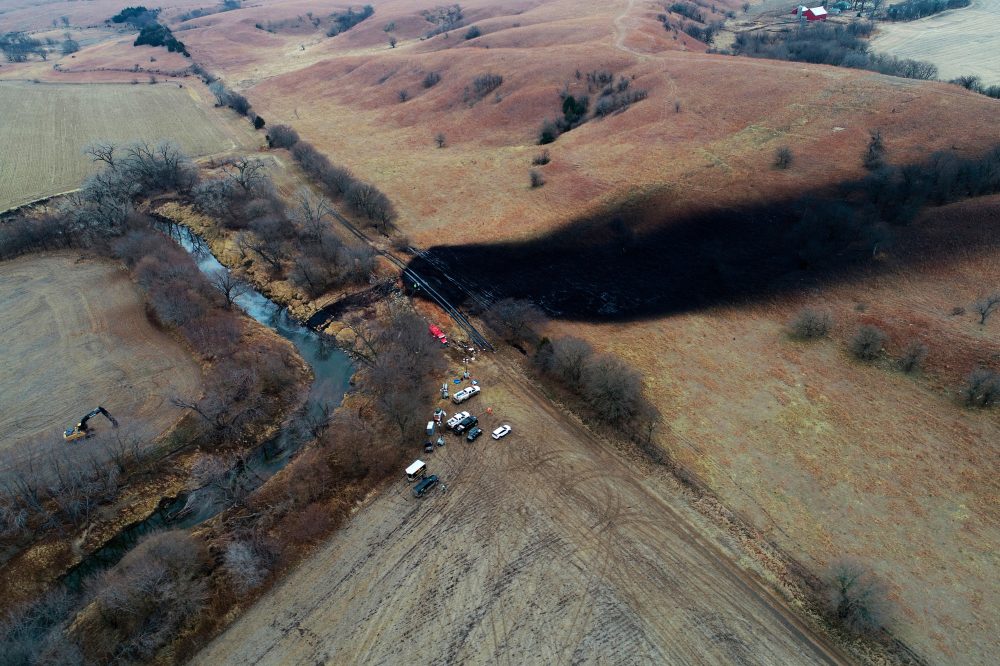
A proposed legal settlement filed in federal court would require the operator of the Keystone Pipeline system to pay $26.9 million in civil penalties connected to a significant oil spill that occurred in Kansas back in December 2022.
The agreement, reached with both the U.S. Environmental Protection Agency and the state of Kansas, targets South Bow, a Canada-based company, for alleged violations of federal and state clean water laws. The pipeline rupture released close to 13,000 barrels of heavy crude oil into a creek flowing through a rural pasture in Washington County, Kansas — roughly 150 miles northwest of Kansas City.
That spill was the largest onshore crude oil pipeline accident in the United States in nine years, and it exceeded the combined total of all 22 previous spills recorded on the same pipeline system, according to a 2021 report from the U.S. Government Accountability Office. The volume of oil released would have nearly filled an Olympic-sized swimming pool.
Under the proposed decree filed Friday in U.S. District Court in Kansas, South Bow would also pay Kansas more than $3 million toward environmental restoration efforts. In addition to the civil penalty, the company would be required to invest approximately $40 million in measures aimed at preventing future accidents. A judge must sign off on the agreement after a mandatory 30-day public comment window.
Jeffrey Hall, the EPA’s assistant administrator for enforcement, described the environmental damage in stark terms. “The oil spill blanketed land and water, rendering the waterway lifeless and useless and requiring extensive cleanup and remediation,” he said in a statement. “The substantial penalty reflects the seriousness of the environmental harm.”
South Bow officials did not immediately respond to requests for comment Sunday, but the company told The Canadian Press that it began cleanup efforts “proactively” — before receiving any directives from U.S. regulators. That cleanup process was completed in early 2024.
The pipeline was originally built by TC Energy, which later spun off South Bow as an independent company in 2024, after the Kansas cleanup had already been finished.
No pipeline workers or nearby residents were hurt in the incident, and officials confirmed that public drinking water supplies were not impacted. However, a complaint filed Friday alongside the proposed settlement stated that more than 2,700 animals were either harmed or killed. The affected region is also habitat for the long-eared bat, a species listed as endangered.
An engineering consulting firm, in a May 2023 report prepared for the U.S. government, found that the section of pipeline where the rupture occurred had been “overstressed” ever since it was installed in December 2010. Investigators believe construction activity at the time likely disturbed the surrounding soil. The court complaint filed Friday also noted that soil beneath the pipe had been “improperly compacted,” and that although the company dug up the site again in 2013, it never replaced that particular section of pipe.
The Keystone system stretches 2,689 miles and transports thick Canadian tar sands oil to refineries located in Illinois, Oklahoma, and Texas.
In April, President Donald Trump authorized South Bow and another company to proceed with construction of a second pipeline running from Canada to Wyoming — a scaled-down version of the much larger $8 billion Keystone XL project that former President Joe Biden’s administration halted in 2021 due to environmental concerns.
A crash on Delaware Route 1 southbound in the vicinity of Exit 119 has prompted intermittent lane closures, according to transportation officials.
Motorists traveling through the affected stretch should anticipate potential slowdowns and are advised to proceed with caution. Drivers may want to consider alternate routes until the situation is cleared.
No additional details regarding the crash or an estimated time for the lanes to fully reopen have been provided at this time. TV Delmarva will update this story as more information becomes available.
New Castle County Division of Police has activated a Gold Alert for a missing 14-year-old girl identified as Diamond Brown.
Diamond was last seen around 11:00 p.m. on Saturday, July 11, 2026, in the area of the 200 block of Highland Boulevard in New Castle.
Despite extensive efforts to find her, officers have been unable to locate Diamond or make contact with her. Authorities say there is concern for her well-being.
Anyone with information on Diamond Brown’s whereabouts is urged to contact the New Castle County Division of Police immediately.
Northbound Route 1 is currently closed at the Spring Creek Bridge following a crash, according to traffic officials.
Motorists traveling in the area are urged to avoid the roadway and plan for alternate routes until the scene is cleared. Delays in the area are expected.
No further details regarding the crash, including the number of vehicles involved or any injuries, have been made available at this time. Drivers should monitor traffic updates for the latest information on when the road may reopen.
Disney’s live-action remake of “Moana” claimed the top spot at the domestic box office this weekend, but the victory came with little to celebrate — the film’s opening numbers fell well short of what the studio was counting on.
The movie, which reportedly cost $250 million to make, brought in just $43 million from ticket sales across the U.S. and Canada during its opening weekend, based on studio estimates released Sunday. Overseas, the film added another $52 million across 50 markets, bringing its total global debut to $95 million.
Disney had high hopes for the project, given that “Moana” is one of its most beloved franchises. The original 2016 animated film holds the title of the most-watched movie on Disney+. Its follow-up, “Moana 2” — which was assembled from a planned streaming series — crossed the $1 billion mark and set a Thanksgiving opening record with $225 million when it debuted in 2024, just 19 months ago.
This new version, directed by Thomas Kail, brings Dwayne Johnson back in the role of the demigod Maui, while Catherine Lagaʻaia steps in as the adventurous Polynesian princess. Although Lagaʻaia received praise for her performance, the film sailed into a storm of negative reviews, with many critics calling it little more than a scene-by-scene retread of the original animated movie.
The film currently holds a 34% rating on Rotten Tomatoes. Audiences were more forgiving — 66% of opening weekend viewers were women, and according to PostTrak, 63% said they would “definitely” recommend it to others. Among parents, that number jumped to 78%. The film also earned an A- CinemaScore rating.
Disney’s track record with live-action remakes of its animated classics is a mixed bag. Some have crossed the $1 billion mark, including “Lilo & Stitch,” “The Lion King,” and “Beauty and the Beast.” Others have struggled, with last year’s “Snow White” standing out as a notable disappointment, finishing with just $205 million worldwide.
Paul Dergarabedian, who heads marketplace trends for Rentrak, suggested that the crowded family film landscape may have played a role in “Moana’s” underwhelming start. Universal’s “Minions & Monsters” came in second place with $20.5 million, and “Toy Story 5” was close behind in third with $18.5 million.
“Families love going to the movies, but right now there are three of them,” Dergarabedian said. “That’s a lot of competition.”
He noted that while PG-rated films outperformed others in both 2024 and 2025, “Moana’s” numbers may not signal family movie burnout — rather, they may simply reflect a natural ceiling when audiences are forced to choose. “Toy Story 5” continues to perform well after four weekends, with a running worldwide total of $879.1 million.
There are also indications that opening weekend numbers may not tell the whole story. “Minions & Monsters” opened below expectations over the Fourth of July holiday but saw only a modest 45% drop this weekend, pushing its domestic running total to $108.3 million.
The other major new release this weekend was a sharp departure from family fare. The R-rated horror film “Evil Dead Burn,” released by Warner Bros., opened to $13.7 million and landed in fourth place.
Rounding out the top five was Angel Studios’ “Young Washington,” a film about George Washington, which brought in $6.4 million in its second weekend in theaters.
A traffic crash has forced the closure of southbound S. DuPont Highway between Tower Hill Road and School Street, according to transportation officials.
Motorists traveling through the affected stretch should anticipate delays and are encouraged to seek alternate routes until the roadway is cleared and reopened.
No further details regarding the crash, including the number of vehicles involved or any injuries, have been made available at this time. Drivers should use caution in the surrounding area.
A Georgia judge has scheduled a combined plea and sentencing hearing later this month for a teenager facing charges in connection with a deadly shooting at Apalachee High School that left four people dead.
Colt Gray, now 16, had previously entered a not guilty plea to charges that include murder, stemming from the September 2024 attack at the high school located northeast of Atlanta. The shooting claimed the lives of two students and two teachers and left several others injured.
According to a court filing made Friday, the judge handling the case set a “Non-Negotiated Plea and Sentencing Hearing” to get underway on July 24. The judge had previously indicated that if Gray intended to change his plea to guilty before trial, he would need to notify both the state and the court by this coming Wednesday.
A non-negotiated plea differs from a traditional plea deal in an important way: rather than the defense and prosecution agreeing on a sentence in advance, the judge retains full authority over sentencing. Both sides are given the opportunity to present a summary of the case and offer a sentencing recommendation before the judge makes a final decision.
An email sent Sunday to Gray’s attorney seeking comment was not returned.
Gray’s trial had originally been scheduled to begin in mid-October in Columbia County, roughly 100 miles from Barrow County where the shooting took place. The judge approved a defense request to move the trial to a different venue.
Gray’s father, Colin Gray, was found guilty by a jury in March on charges that included second-degree murder and involuntary manslaughter. Prosecutors argued that he provided his teenage son with the assault-style rifle used in the school attack. The elder Gray is also awaiting sentencing later this month.
The shooting on September 4, 2024, took the lives of teachers Richard “Ricky” Aspinwall, 39, and Cristina Irimie, 53, along with students Mason Schermerhorn and Christian Angulo, both 14 years old. An additional teacher and eight students were wounded, with seven of those struck by gunfire. Colt Gray was 14 at the time of the shooting and was charged as an adult, facing a total of 55 counts including murder, cruelty to children, and 25 counts of aggravated assault.
Investigators testified that Gray brought the rifle onto the school bus with the barrel concealed inside a rolled-up piece of poster board. He reportedly slipped out of his second-period class and came out of a bathroom armed with the weapon, firing on people in both a classroom and a hallway.
Authorities described the attack as carefully premeditated. A Georgia Bureau of Investigation agent testified that Gray left behind a notebook in his classroom containing step-by-step instructions and a diagram outlining his plan, including an estimate that he could kill up to 26 people and wound as many as 13 others. The school had an enrollment of approximately 1,900 students.
Both Colt and Colin Gray had been interviewed by sheriff’s deputies in May 2023 regarding an online threat connected to Colt Gray, who denied making the threat at that time. Colt Gray skipped eighth grade, enrolled as a freshman at Apalachee after the school year had already started, and subsequently missed multiple days of school.
Family members had reportedly been trying to get psychological help for Colt Gray prior to the shooting, though it appears he never actually met with a counselor.
Colt’s mother, Marcee Gray, who was separated from Colin Gray at the time, told investigators she had confronted Colin Gray weeks before the shooting, urging him to lock up his firearms and limit Colt’s access to them. Records show that instead, Colin Gray purchased ammunition, a gun sight, and other shooting accessories for the boy over time.
Prosecutors also said that Colt Gray had created a shrine in his bedroom dedicated to Nikolas Cruz, the gunman responsible for the 2018 massacre at Marjory Stoneman Douglas High School in Florida.
A multi-lane closure is in effect on Interstate 95 northbound near Otts Chapel Road following a crash, according to traffic incident information.
Motorists traveling in that direction are urged to use caution and anticipate possible slowdowns in the affected area. Drivers are encouraged to consider alternate routes until the lanes are reopened.
No additional details regarding injuries or the cause of the crash were immediately available. Updates are expected as the situation develops.
A traffic incident on southbound Route 1 near Twin Willows Road has resulted in one lane being shut down, according to Delaware transportation officials.
The lane closure is the result of a crash in the area. Motorists traveling southbound on Route 1 near that stretch should anticipate slowdowns and allow extra travel time.
Drivers are encouraged to use caution when passing through the area and to follow the direction of any traffic personnel on scene. Updates on the lane closure will be provided as more information becomes available.
Northbound travelers on Interstate 95 are facing a right shoulder closure near Salem Church Road, situated between Chapman Street and South Chapel Road.
According to Delaware Department of Transportation, the lane restriction is the result of active construction work in that corridor.
The closure is expected to remain in place until 5 p.m. on July 23, 2026. Drivers are encouraged to remain alert and allow extra time when passing through the affected area.
During his final year of high school on the Puyallup Reservation, Gerald Dillon swapped much of his traditional coursework for hands-on career training. Every morning he stepped into a second-grade classroom as a teaching assistant, the young students would leap from their seats to greet him with hugs and fist bumps.
For Dillon, who was 18 at the time and had previously found school dull enough to coast through with minimal effort, those moments gave him a reason to show up.
“It motivates me. I like making connections with the kids, I like helping them,” Dillon said.
The shift began in his junior year when he signed up for career-focused courses. His grades climbed, and he ultimately graduated in June from Chief Leschi Schools in Washington state. He is now weighing the possibility of pursuing a college degree in education.
School administrators say the push toward technical and career-readiness training is showing real results, with more students finishing school on time rather than dropping out.
That kind of progress mirrors a broader trend across the U.S. Bureau of Indian Education, which oversees 183 elementary and secondary schools educating more than 40,000 students. In 2015, just over half of high school students at BIE-affiliated schools graduated within four years. By 2025, that figure had climbed to a record 79%.
Some educators within the BIE credit local program innovations for the improvement. Assistant Secretary of Indian Affairs Billy Kirkland has pointed to the gains as evidence of the Trump administration’s dedication to Native American students, including investments in teacher development. The agency also overhauled how it reports graduation data, correcting longstanding flaws that had caused the numbers to appear worse than they actually were.
Still, significant concerns remain. Moves to dismantle the U.S. Department of Education and ongoing disruptions tied to cuts made by DOGE have raised fears that the progress could be reversed before struggling schools have a chance to catch up.
Agency officials acknowledge that part of the jump in graduation figures reflects more accurate record-keeping rather than a sudden improvement in student outcomes. For years, school administrators throughout the system used faulty tracking methods — often counting students who transferred elsewhere as dropouts.
“We had to come to a consensus and set an accountability framework for our schools,” said Carmelia Becenti, the agency’s chief academic officer.
Starting in 2018, the BIE began standardizing how schools collect and report graduation data. According to Becenti, the result has been a clearer and more encouraging picture of student outcomes.
An Associated Press analysis of BIE data found that graduation rates across the system have risen 55% since the new reporting standards began rolling out, with nine secondary schools reporting growth of 100% or more.
Fewer than one-third of BIE schools are directly run by the federal agency. The remainder are operated by tribal governments using federal funding. At some of those schools, educators say the data improvements only tell part of the story.
Don Brummett, superintendent of Chief Leschi Schools, said his team recognized a “disconnect” between the school’s previous emphasis on college preparation and the reality that many students simply wanted to enter the workforce after graduation.
“We devalued the trades. That was a mistake,” Brummett said.
The school introduced its career and technical education program in 2020, backed by funding from the Puyallup Tribal Council. Since then, Brummett said students who might have otherwise walked away from school entirely have found new motivation through programs in health sciences, education, and fisheries management.
Dillon said the practical, job-focused training suited the way he learns best. “It was kind of the first time I felt excited to go to school,” he said, recalling the days he helped second-graders practice reading and study the life cycle of a frog. Between 2019 and 2025, Chief Leschi Schools saw its four-year graduation rate jump from 53% to 87%.
Career training is just one approach tribal-run BIE schools have taken to keep students on track. At Choctaw Central High School, operated by the Mississippi Band of Choctaw, administrators say a virtual learning experiment launched during the COVID-19 pandemic helped push graduation rates from roughly 70% to 93%.
“For certain kids that have more responsibilities at home, kids that need to work, we saw that (virtual learning) gave them a flexible schedule and an opportunity to earn their diploma,” said principal Alaric Keams.
After pandemic restrictions ended, the district kept the virtual option available to all high school students.
Not every tribal government, however, has the financial resources to fund these types of programs or take over management of BIE schools.
Peter Lengkeek, chairman of the Crow Creek Sioux Tribe in South Dakota, says the BIE-operated high school serving his community is chronically short-staffed and burdened by years of deferred maintenance — including a gymnasium with sinking walls and a rodent problem. The school has reported graduating fewer than 60% of its students on time in recent years.
“If we were able to, we would step in and try to remedy a lot of these things,” Lengkeek said. “We have to rely on the government to fulfill its treaty promise.”
Tribal leaders say they fear the combination of a dismantled federal education department, DOGE-driven staff reductions, and threats of deep funding cuts could erode the gains that have been made.
In November 2025, the Department of Education began transferring oversight of dozens of programs serving Native students over to the BIE. At a tribal consultation meeting held in February in Washington, D.C., dozens of tribal leaders voiced strong opposition, arguing the transition would pile additional responsibilities onto an agency already stretched too thin. Several accused the department of bypassing its legal obligation to consult tribes before moving forward.
“We are here too late,” said Herschel Gorham, lieutenant governor of the Cheyenne and Arapaho Tribes. “The ink was dry on the agreements before the tribes were ever notified. That should never, ever happen.”
Jason Dropik, executive director of the National Indian Education Association, said instability at the agency’s Washington headquarters ripples down to individual schools. He pointed to a Trump administration executive order that sought to transform the BIE into a school choice system — an effort that was scaled back following pushback from tribal nations.
“That caused some delays and disruptions to services,” Dropik said. “When drastic changes go into motion without tribal consultation, there can be unintended consequences for our students.”
Lengkeek said he worries the BIE will be consumed by political turmoil while schools like the one in his community continue to fall short.
“This system holds the future of our nations in its hands,” Lengkeek said. “We need stability. We need increased funding. We need infrastructure.”
Drivers traveling through Wilmington should be aware of intermittent lane closures currently affecting Baynard Boulevard between North Broom Street and Concord Avenue.
The closures are tied to construction work taking place in that stretch of road and are expected to remain in place through 5:00 PM.
Motorists in the area are encouraged to use alternate routes where possible or budget additional time for their commute until the work is completed.
Drivers traveling through Wilmington should be aware of temporary lane restrictions currently affecting a stretch of Baynard Boulevard.
According to traffic officials, intermittent lane closures are in effect on Baynard Boulevard between Concord Avenue and North Broom Street. The closures are the result of active construction in the area.
The lane restriction is expected to remain in place until 5 p.m. Motorists are encouraged to allow extra travel time or consider using alternate routes to avoid delays.
Drivers heading northbound on B Street should be aware of a lane restriction currently in place due to ongoing construction work.
The left lane on B Street northbound, between New Castle Avenue and Townsend Court, is closed to traffic. The closure is scheduled to remain in effect until 4 p.m.
Motorists traveling through the area are encouraged to allow extra time or consider alternate routes to avoid potential delays.
Drivers in the area should be aware that Oakwood Road, between Bybrook Road and Thomas Road, is experiencing intermittent lane closures due to construction activity.
The lane restrictions are expected to remain in place until 5:00 PM. Travelers passing through the affected stretch of roadway may encounter delays during that time.
Motorists are encouraged to allow extra travel time or consider using an alternate route to avoid the construction zone.
The Delaware State Police Sex Offender Apprehension and Registration Unit, known as SOAR, has released public notifications regarding both wanted and homeless sex offenders currently in Delaware.
Wanted Sex Offenders
SOAR is actively searching for six sex offenders who have failed to register or update their addresses as required by law. The individuals sought include Gene Dukes, Charles Fulton, Christopher Gartner-Hunter, Brandon Hicks, Michael Viscount, and Spencer Wright.
Anyone who knows the whereabouts of these individuals is asked to call SOAR at (302) 739-5882. Tips can also be submitted anonymously through Delaware Crime Stoppers at (800) 847-3333. The six individuals listed represent only a portion of those currently wanted — a full list is available on the Delaware Sex Offender Registry website.
Homeless Sex Offenders
SOAR is also notifying the public about four sex offenders who have recently reported being without a permanent residence. These individuals — Oubey Barrett, Lewis Brittingham, Thomas Burger, and Koshaun Mack — are not wanted for any registration violation at this time.
If anyone has information suggesting that any of these individuals are actually living at a residence, they are asked to report it by calling (302) 739-5882 or contacting Delaware Crime Stoppers at (800) 847-3333. As with the wanted list, these four represent only a portion of all currently homeless sex offenders in the state. The complete list can be found on the Delaware Sex Offender Registry website.
Two new national polls are shedding light on rising safety concerns among Jewish Americans and shifting attitudes toward Israel and Hamas since the October 7, 2023, terrorist attack.
According to an AP-NORC poll, approximately 6 in 10 Jewish adults in the United States report feeling less safe as Jews than they did before the Hamas attack on Israel. That number climbs even higher among those who identify as religiously Jewish, with roughly 7 in 10 expressing the same concern.
The survey also found that about 4 in 10 Jewish respondents said they are now less inclined to wear, carry, or display anything that identifies them as Jewish. Meanwhile, nearly 3 in 10 said that they or someone in their household had experienced some form of antisemitic incident over the past year — including physical assault, verbal abuse, online harassment, or property damage.
Around 6 in 10 Jewish adults described prejudice against Jews as an “extremely” or “very” serious problem in the United States. Those with strong emotional ties to Israel were even more likely to hold that view.
The AP-NORC Center for Public Affairs Research conducted its survey between June 11 and 17, 2026, questioning 3,040 American adults through NORC’s probability-based AmeriSpeak Panel.
A second survey, conducted by the Pew Research Center, found that 13% of Americans between the ages of 18 and 29 hold a favorable opinion of Hamas. While that figure is down from 18% the previous year and 14% in 2024, it still reflects notable support for the designated terrorist organization among younger Americans.
Overall, 13% of Democrats and 6% of Republicans expressed favorable views of Hamas. Breaking it down further by age and party, one in six young Democrats — those between 18 and 29 — viewed Hamas favorably, compared with one in nine young Republicans.
Among religious groups, favorable views of Hamas were highest among Muslims at 44%, a seven-point increase from 2024. Support was lowest among Jewish respondents at 2% and white evangelical Protestants at 4%.
The Pew data also showed a broader decline in favorable views of Israel. The share of Americans holding an unfavorable opinion of the Israeli people jumped from 25% in 2022 to 42%, while favorable views dropped from 67% to 52%. Negative views of the Israeli government rose even more sharply, climbing from 43% in 2022 to 62%.
Among Americans under 30, 58% said they sympathize more with Palestinians compared to 32% who sided with Israelis. Among young Democrats specifically, 72% expressed pro-Palestinian views while 26% were pro-Israeli.
The Pew Research Center surveyed 12,574 American adults in May, with a margin of error of 1.3%.
A traffic crash has resulted in the closure of Delaware Route 72 at its intersection with Delaware Route 71, according to state transportation officials.
Motorists traveling in the affected area are advised to avoid the intersection and plan for alternate routes until the roadway is reopened. The closure is in effect as crews respond to the scene.
No further details regarding the crash, including the number of vehicles involved or any injuries, have been made available at this time. Drivers should use caution and stay alert for updates from Delaware transportation authorities.
Delaware State Police have released the name of the man killed in a single-vehicle crash that took place Friday morning on Hastings Farm Road in Seaford. The victim has been identified as 25-year-old Kesnel Similien, a resident of Seaford, Delaware.
The Delaware State Police Collision Reconstruction Unit is continuing its investigation into the circumstances surrounding the deadly crash. Investigators are urging anyone who may have witnessed the accident or who has video footage of the incident to reach out to Master Corporal J. Smith at (302) 703-3267. Tips can also be submitted through a private Facebook message to the Delaware State Police or by calling Delaware Crime Stoppers at 1-800-847-3333.
Anyone who has been affected by this tragedy — whether as a witness, a victim of crime, or someone who has lost a loved one to a sudden death — can reach out to the Delaware State Police Victim Services Unit and the Delaware Victim Center. Support and resources are available around the clock through a toll-free hotline at 1-800-VICTIM-1 (1-800-842-8461). The Victim Services Unit can also be contacted by email at [email protected].
Starting this Sunday, sending a first-class letter through the U.S. Postal Service will cost you a little more. The agency is bumping up the price of a stamp from 78 cents to 82 cents as it struggles to stay financially afloat.
The 4.8% increase was announced back in April. The USPS has cautioned that it may exhaust its cash reserves as early as next year if something doesn’t change.
Postmaster General David Steiner appeared before Congress last month and painted a stark picture of the agency’s finances. He described the postal service as operating under a broken business model, noting that the agency has accumulated net losses of roughly $120 billion since 2007. He called on lawmakers to step in and help fix its operations.
A big part of the problem is the dramatic decline in first-class mail — the agency’s most profitable product. Mail volume has fallen to levels not seen since the 1960s, largely because so much communication has shifted to digital channels. Despite that drop, the postal service is still required to keep up expensive delivery operations across the entire country.
Steiner suggested there may be room to raise prices even further, saying he believes Americans would be open to paying 90 or even 95 cents per letter. He pointed out that in much of the rest of the world, mailing a letter already costs $2 or more.
Train lovers across the country are turning out in huge numbers to catch a glimpse of a true piece of American railroad history rolling through their cities.
Union Pacific’s Big Boy No. 4014 — recognized as the world’s largest operating steam engine locomotive — is on a rare cross-country tour, thrilling crowds at every stop along the route.
The massive locomotive, which dates back to the 1940s, rolled into Philadelphia on July 5, 2026, where attendees gathered to take photographs and get an up-close look at the historic machine. The stop was one of many planned across multiple cities and states throughout the United States.
The tour is tied to the celebration of America’s 250th anniversary, giving the public a unique opportunity to see the legendary steam-powered giant in action — something that rarely happens given the locomotive’s age and size.
PROVO, Utah — Over the course of five days, prosecutors laid out what they described as compelling evidence against the man charged with killing conservative activist and Turning Point USA founder Charlie Kirk, while defense attorneys challenged DNA findings and questioned the credibility of other witnesses.
However, it will still be weeks before a Provo judge rules on whether Tyler Robinson must face trial on an aggravated murder charge for the September 10 killing of Kirk at Utah Valley University. Both sides will deliver closing arguments on September 1 after filing legal briefs with State District Judge Tony Graf.
Robinson has not entered a plea at this point, and his legal team is working to remove the death penalty as a possible punishment. Robinson surrendered to authorities one day after Kirk was shot. Kirk had been a close ally of President Donald Trump and was credited with helping energize young voters to support him during the 2024 election.
Here is a breakdown of what emerged during the preliminary hearing.
Kirk, who was 31 years old, was fatally shot while addressing a crowd of thousands on September 10. Prosecutors presented multiple videos they say show Robinson on the university campus that day.
Former State Bureau of Investigation Agent David Hull walked the court through the footage, including one clip showing a man he identified as Robinson purchasing food at a Chick-fil-A and making contact with members of Kirk’s organization.
Hull testified that Robinson returned to campus in different clothing several hours later and fired the fatal shot from a rooftop. Prosecutors showed video of a man climbing onto a campus building, crouching down, and moving toward the edge. After the shot was fired, the man ran back across the roof, dropped to the ground, and fled on foot.
On Thursday, prosecutors played an audio recording of Robinson’s former roommate and romantic partner, Lance Twiggs. In the recording, Twiggs says Robinson told him the day after Kirk’s death that “he wishes he hadn’t done it.”
Prosecutors also presented messages from a Discord chat they say involved Robinson and his friends. In the messages, a man identified by prosecutors as Robinson wrote: “Hey guys I have bad news for you all. it was me at UVU yesterday. Im sorry for all of this. Im surrendering through a sheriff friend in a few moments. Thanks for all the good times.”
In addition, prosecutors said Robinson left a handwritten note for Twiggs stating, “I had the opportunity to take out Charlie Kirk and I’m going to take it.”
Defense attorneys tried and failed to prevent the public release of Twiggs’ statements and the chat room messages, arguing that prosecutors would frame the material as a confession and compromise Robinson’s right to a fair trial.
Investigators recovered what they believe to be the murder weapon — a bolt-action rifle with one spent round — wrapped in a towel in a wooded area near the campus.
State Bureau of Investigation analyst Jennifer Faumuina testified that DNA found on the towel matched two individuals: Robinson’s roommate, and someone very likely to be Robinson.
FBI DNA analyst Amanda Bakker explained the testing process she used, noting that she ran the tests again after Twiggs provided a DNA sample. Because Robinson and Twiggs lived together, Twiggs’ DNA was expected to appear on household items like the towel, Bakker said.
Robinson was identified as a “possible contributor” of DNA found on both the towel and a screwdriver discovered on the rooftop where the shot originated. Bakker noted that U.S. Department of Justice guidelines prohibit analysts from using phrases like “absolute identification” or “reasonable degree of scientific certainty.”
Defense attorney Michael Burt challenged Bakker’s conclusions, pressing her and other forensic specialists about the limits of DNA testing, including scenarios where DNA evidence might be absent or misleading. “She can’t match Mr. Robinson to the questioned samples,” Burt said.
The DNA debate is expected to resurface if the case proceeds to trial. Forensics expert Lawrence Quarino, who has no involvement in the case, said law enforcement agencies rely on “extremely reliable” methods to calculate the probability that a person’s DNA matches samples collected from a crime scene.
Kirk’s widow, Erika Kirk, along with his parents, Kathryn and Robert Kirk, attended every day of the hearing, though they occasionally stepped out before graphic material was shown.
A particularly emotional moment came on Friday when the court played an enhanced, zoomed-in version of campus surveillance footage. Erika Kirk watched closely as the figure believed to be Robinson moved across the rooftop. When the person dropped to a crawl near the edge, she turned and embraced her mother-in-law, who was in tears. The two held each other with their faces buried in one another’s arms until the video was nearly finished, while Robert Kirk rubbed Kathryn’s back.
Robinson’s parents were also present throughout the hearing, seated a couple of rows from the Kirk family. Robinson himself remained quiet and showed little emotion during the proceedings.
Donald Trump Jr. attended the first several days of the hearing, and conservative activist Jack Posobiec was also present in the courtroom.
Only 14 seats were available to the public on a first-come, first-served basis. The limited availability led some people to camp outside the courthouse, with folding chairs, sleeping pads, and blankets visible at the entrance each day.
Nguyen Weeks traveled from Northern California to attend but was unable to get a seat on the first two days. By Wednesday, she arrived at 2 a.m. to secure the first spot in line. Weeks said she came to witness “how justice happens.”
Tiani Shoemaker drove roughly an hour from Salt Lake City on Friday to show support for Kathryn Kirk. She was able to pass along a hat bearing the words “love like a mother” and a note of condolences to a member of the Kirk family’s security staff. She also said she wanted to witness a moment in history.
“This really is like the whole world is focused on little Provo, Utah, right now,” Shoemaker said.
Northbound travelers on B Street are facing a left lane closure between New Castle Avenue and Townsend Court as construction crews work in the area.
The lane restriction is expected to remain in place until 4 p.m., according to traffic officials. Drivers in the area should allow extra travel time or consider using an alternate route to avoid potential delays.
No additional details about the nature of the construction work were immediately available. Motorists are encouraged to stay alert and follow any posted signage in the work zone.
Motorists traveling southbound on Interstate 95 should be aware of an active lane restriction currently in effect on the bridge spanning the Christiana River.
Construction activity in the area has led to the closure of the right shoulder on the southbound side of the bridge. The restriction is expected to remain in place until 5 p.m.
Drivers are encouraged to use caution while passing through the work zone and to allow extra travel time if their route takes them across the Christiana River bridge on I-95 southbound.
New Castle County Division of Police detectives have arrested two individuals in connection with an armed robbery that took place in the Stanton area earlier this year.
Officers were dispatched to Mill Road in Stanton at approximately 12:56 a.m. on Thursday, May 14, 2026, after receiving a report of a robbery that had just taken place.
According to investigators, the incident stemmed from a vehicle exchange that had occurred the day before. A victim had traded their Volkswagen for a Honda belonging to 18-year-old Reese Hendricks, which ultimately led to the robbery that prompted the police response.
Detectives continued to investigate the circumstances surrounding the incident, and the case eventually resulted in the arrest of two suspects. The investigation is ongoing.
A lane shift is currently in effect at the intersection of Milltown Road and Old Limestone Road, according to transportation officials.
The lane restriction is expected to remain in place until 11 a.m. Drivers traveling through the area should use caution and allow extra time for their commute.
No additional details were provided regarding the cause of the lane shift. Motorists are encouraged to stay alert for traffic control signage in the area.
Drivers traveling along US Route 40 should be aware of a shoulder closure currently in effect between Brookmont Drive and Glasgow Drive.
The closure is related to ongoing construction activity in the area and is expected to remain in place through July 13, 2026.
Motorists passing through the affected stretch are encouraged to slow down, stay alert, and watch for construction crews and equipment near the roadway.
On the Fourth of July, hundreds of white nationalists wearing masks descended on Washington, D.C., staging a highly visible march through the nation’s capital.
The group behind the demonstration was Patriot Front, an organization that has drawn growing concern from civil rights observers and law enforcement watchers alike. Despite their public presence, many questions remain about the true nature of the organization — including who its members really are and how the group finances its operations.
The sight of hundreds of masked individuals marching through Washington on a national holiday raised immediate questions: what does this group actually represent, and is its public image an accurate reflection of what it truly stands for?
Investigators and journalists have been looking into the group’s funding sources and membership, suggesting that what the public sees from Patriot Front may not tell the whole story about the organization behind the masks.
Justin Gignac showed up in a wedding tuxedo, trash-grabbing claw in hand, wading through crowds of Taylor Swift fans who had spent hours waiting outside Madison Square Garden. He was on the hunt for friendship bracelet beads — a meaningful keepsake in the Swift fan community. He came up empty on that front.
What he did find: a single AirPod, a ring pop, an ovulation test strip and a rainbow fan, among other discarded items. He packaged each piece into tiny one-inch boxes and sold them online. Fifty of those little collections of street debris were snapped up by Swift fans as far away as Australia, Germany and the United Kingdom.
“People were like, ‘Is there any more? Is there any more?’” he recalled.
In the days following what many have dubbed “the United States’ royal wedding,” fans combed Manhattan’s streets and the internet for any trace of the event. Despite it being a massive, star-studded gathering of roughly a thousand people, Swift managed to keep nearly every detail under wraps.
For close to twenty years, Swift has built her career on turning private experiences into shared ones — crafting songs that felt like entries from a personal diary, because sometimes they were. But her own wedding has become notable for what she has chosen to keep to herself.
A full week after the ceremony, not one confirmed photo had emerged showing the inside of the venue, the wedding ceremony itself, or Swift’s gown. Attendees and staff were required to sign strict non-disclosure agreements and hand over their cell phones. The couple arranged for street closures and surrounding tent walls to shield the celebration from outside view.
Some New York City residents expressed frustration over the security measures, which disrupted access to a major transit hub during a holiday weekend — all in the middle of a heat wave. The elaborate privacy effort also highlighted how, at Swift’s level of fame, genuine privacy demands a degree of wealth and influence that very few people possess.
Still, fans in Swift merchandise crowded the barricades, watching a steady stream of black SUVs roll into the arena.
In the early morning hours, a bakery van pulled up outside. A catering worker offered a box of apple honey pastries, which a police officer then distributed to fans waiting outside. One person in the crowd could be heard shouting: “Oh my God, you guys, we’re having Taylor Swift’s dessert!”
Gignac has spent 25 years turning New York City trash into collectible art, creating limited-edition sets from major city moments — like the Knicks parade — where the discarded objects themselves tell the story of a gathering. Swift’s wedding, he said, was a different kind of challenge.
“I was like, OK, let me see how close I can get,” he said. “Everything going on on the block outside of Madison Square Garden was a part of the festivities as well — it’s just a very different part.”
The area outside the venue was “fairly clean,” he noted, but he gathered enough to work with. He even tied discarded straws into knots to, as he put it, “reinforce the wedding theme.”
Fans who later saw the boxes told him the project brought to mind Swift’s song “New Year’s Day” — a track about lingering after a party ends and holding onto whatever is left behind.
“You’ve never had a song change your life, and the artist be the soundtrack of your life?” Gignac said. “That’s such a massive role in your day to day — it’s nice to have something from that.”
The absence of real photos left a gap that was quickly filled with artificial intelligence. Fake images of Swift and Kelce in wedding attire began circulating online, along with fabricated glimpses of the so-called “secret garden” that guests had described — an interior transformation of the arena featuring greenery, trees and flowers.
Some of the AI images were clearly meant as jokes, with users inserting themselves into the scene or pretending they had been hired as photographers. Others were crafted to appear genuine — blurry, pixelated shots meant to look like they had been secretly taken inside the venue.
Swift fans are well-known for hunting down hidden clues and “Easter eggs” in her music and social media posts. Longtime fan Alexa Volland said those same sharp-eyed habits helped many quickly identify AI-generated fakes by spotting distorted facial features, physically impossible dress details and hidden watermarks from tools like Google DeepMind’s SynthID.
“They built a habit of close observation,” Volland said.
Volland, who works as a video producer for the News Literacy Project, said she was surprised no real images had leaked — but was glad Swift maintained control over her own story.
“As a Swiftie, I would prefer to have those first looks come directly from her,” she said. “I know that we will eventually get a song that is probably the most revealing, way more revealing than any AI-generated image ever made.”
Boston-based Swift fan Margaret Willison said she was still waiting on one specific detail from the wedding.
“I need to know what her first song was,” she said. “It’s been haunting me.”
Willison, who has led workshops on Swift’s music and fan culture, said this kind of anticipation is central to Swift’s appeal. She has a rare ability to take seemingly small moments and turn them into something larger — “a cathedral we all get to be part of,” as Willison described it.
Willison said many fans trust that Swift will eventually share whatever she wants them to know, on her own terms.
“We don’t want something that’s been stolen from her,” she said.
Years ago, Swift sang about stepping away from the spotlight and choosing “the rose garden over Madison Square.” In the end, Willison said, it turned out those two things were not mutually exclusive.
“In all of her previous relationships, there was this tension between how much she was able to shine and still be understood by a partner,” Willison said. “Isn’t it incredible that she found that she didn’t have to choose?”
Every morning, well before the sun came up, Lorenzo Salgado Araujo would leave his home, gather his construction crew, and head off to build yet another house somewhere in the Houston area. Fourteen hours later, he would return to his wife — the woman he had fallen in love with as a teenager in Mexico — and the modest home he had built for his own family on the city’s east side.
That was his life for decades, according to his oldest son, Ronaldo Salgado. He says his father constructed hundreds of homes over a 35-year career, providing for his family and living to see all three of his sons pursue college educations.
On Tuesday, a U.S. Immigration and Customs Enforcement officer shot and killed Salgado Araujo, 52, after federal agents in unmarked vehicles chased down his white van as he was driving his crew to a work site. The fatal encounter has ignited anger among Houston officials and intensified national debate over ICE operations and the Trump administration’s immigration enforcement push.
Democratic U.S. Rep. Sylvia Garcia, whose congressional district covers the area where the shooting occurred, spoke out on Friday. “This family needs answers. America needs answers,” she said. “This should not be happening in our streets or any street in this country.”
Garcia said she was briefed by ICE’s acting director and learned that federal agents were actually searching for a different person when they attempted to stop Salgado Araujo’s van. The Department of Homeland Security has claimed that an ICE officer fired in self-defense after Salgado Araujo — whom officials referred to as an “illegal alien” — allegedly struck an ICE vehicle with his van. No evidence has been released to support that account.
An attorney who spoke with the three men riding in the van on Friday said they told him Salgado Araujo was shot through a passenger-side window, and that the officer who fired was not positioned in front of the van and was not in any immediate danger.
Salgado Araujo’s family has also challenged the official version of events. They said attorneys who were helping him apply for a work permit had coached him on how to respond if immigration agents ever stopped him. The family says he was close to obtaining legal status at the time of his death.
“He knew what to do,” Ronaldo Salgado told reporters this week. “He knew not to sign anything. He knew that the first phone call he should make should be either to myself or to my mom. So that way we can get the process started of getting him out.”
Ronaldo Salgado believes his father may have panicked because he didn’t realize the unmarked vehicles following him were federal agents — possibly fearing that someone was trying to rob him of his van or his tools.
The killing in the predominantly Hispanic neighborhood marks at least the eighth death connected to the Trump administration’s immigration enforcement campaign.
Salgado Araujo came to the United States more than 30 years ago and built a life in Houston alongside his wife, where they raised their three children together. Education was always a priority in their household, said Ronaldo, who is now a teacher. One of his brothers became an engineer, and the other is currently studying engineering in college.
Friends who grew up with Ronaldo remembered his father as a gentle, soft-spoken man who always took the time to ask about his sons’ friends and inquire about his wife’s day — even after working exhausting hours.
“We didn’t really see him until the end of the day when he came home to have dinner, but that just shows how much of a hard worker he was,” said neighbor Jessica Alanis Magdaleno. “Everything they have now is thanks to the dedication to that.”
Josué Flores, who has been friends with Ronaldo Salgado since their freshman year of high school, said he first encountered Lorenzo Salgado Araujo at one of his son’s football games. “I think it speaks volumes of the kind of person that he was,” Flores said, noting that Salgado Araujo showed up to cheer on his son even after a grueling day of work.
A relative said Salgado Araujo’s wife is “inconsolable” following his death. “She is very upset… angry, sad, disoriented,” said Jose Torres Ramon, a nephew living in Mexico, in a Facebook message to the Associated Press.
In the evenings after coming home, Salgado Araujo enjoyed sitting on the porch listening to music and spending time with the family dog. Those who knew him described him as a man of simple, steady habits.
“He did not deserve to die,” Ronaldo Salgado said. “He dedicated his life in the United States to giving his family the American dream.”
NEW YORK (AP) — Just one week ago, 18-year-old Nolan Xavier Wells boarded a boat with a group of friends to celebrate the Fourth of July on an island off Mississippi’s Gulf Coast. He would never return home.
His body was discovered two days after he disappeared. According to Wells’ parents, what exactly happened remains deeply unclear — a puzzle filled with contradictory accounts, explanations that don’t hold up, and critical details that seem to be missing. The case has also raised concerns given Mississippi’s troubled racial history and widespread distrust of law enforcement in the region.
On Friday, Christine and Elmore Wonsley held a news conference in New York City, urging investigators to conduct a thorough and open inquiry into their son’s death. They expressed serious doubt over claims that Wells told his friends to leave the island without him, and over suggestions that he — a high-level athlete who knew how to swim — had accidentally drowned.
Wells’ body was recovered in the early morning hours of Monday along the shoreline of Horn Island, an uninhabited strip of land roughly 7 miles (11.2 kilometers) off the Mississippi coast, more than a day after he was last seen alive. The island, approximately 11 miles (17.7 kilometers) long and located near the Alabama state line, can only be reached by boat. The family’s attorneys said approximately 200 people were on the island that Fourth of July.
“We just want to know what happened and why our baby didn’t come home,” Christine Wonsley said, glancing upward several times as she stood beside her attorney, Ben Crump, and the Rev. Al Sharpton, who will preside over Wells’ funeral.
Crump announced that the Wells family has hired a forensic pathologist based in Washington, D.C. — one with no connection to Mississippi law enforcement — to conduct an independent autopsy while the family waits for the official autopsy results, which could take several weeks. Crump also said the family plans to bring in experts to recover messages that appear to have been erased from Wells’ cellphone, with plans to eventually hand the device over to authorities.
The family also made a public appeal for any witnesses at Horn Island to come forward and asked people to share any video footage that may capture Wells during his time on the island. That request mirrors a similar call from the Jackson County Sheriff’s Office as investigators try to piece together what happened in the moments before Wells vanished.
A social media photo, reportedly taken during the boat ride to the island, shows Wells with his arms around three white male friends. Sheriff John Ledbetter stated that Wells’ friends are cooperating with investigators and that authorities do not currently suspect foul play. However, Crump noted that those friends now have legal representation and that his own investigators have not yet been able to speak with them.
Wells’ death has sparked widespread speculation and suspicion, with many people reflecting on Mississippi’s history of racial tension and what it means to be a Black person in a predominantly white setting.
Actor and producer Tyler Perry is helping cover the cost of Wells’ funeral. Former NFL quarterback Colin Kaepernick is helping fund the independent autopsy. Filmmaker Spike Lee attended Friday’s news conference to show solidarity with the Wells family.
Crump said Wells’ parents came to him because they do not believe Mississippi law enforcement will conduct a fair investigation, citing the state’s history under Jim Crow — including the 1955 lynching of Emmett Till and the killings of three civil rights workers in the 1960s.
“The history of Mississippi is something that they don’t just read about in books,” Crump told reporters at the Rev. Sharpton’s National Action Network headquarters in Harlem. “It’s a lived experience for many Black Americans that oftentimes when our children are killed in highly questionable situations that there is this notion that ‘Oh, there was nothing wrong, no foul play, let’s just sweep it under the rug.’ Well, we refuse to sweep it under the rug.”
This is the second case Crump has taken on in Mississippi in recent months. He was also recently hired by the family of a one-year-old Mississippi child who was killed when police opened fire on a moving vehicle.
Sheriff Ledbetter told the Associated Press this week that investigators believe Wells “chose to stay on the island with the assumption that he was going to ride back to the mainland with someone else.”
But Wells did not have his cellphone or his keys with him — both were in the possession of his friends.
“What teenager would leave their phone behind if they’re going to stay on this island? What teenager wouldn’t take their phone?” Crump said. “It’s not adding up at all.”
Crump said video recorded by bystanders on the island appears to show someone he identified as Wells in an argument, apparently trying to get his phone back. A witness also reportedly told investigators that Wells had intended to leave on the boat with his friends — directly contradicting the sheriff’s account of events.
“The friends come back and he’s left there with some story about how he said leave him behind,” Sharpton said. “But then by some magic one of the friends has his keys and his phone.”
The sheriff did not respond to Associated Press requests for comment on the family’s concerns.
Christine Wonsley said her worry began when a friend of her son called her just after 11 p.m. on July 4. After attempting to locate him herself, she reported him missing to police and met an officer with her husband at a McDonald’s parking lot. The process was further complicated by a dispute between law enforcement agencies over which one had jurisdiction over the island. One of Wells’ friends had also separately reported him missing to the U.S. Coast Guard.
Elmore Wonsley said he went out on a boat the morning of July 5 to search for his son near Horn Island. Crews from multiple local and state agencies launched an extensive search operation, and Wells’ body was found early Monday, according to family members.
“If he’s drowning, nobody sees him drown? Nobody offers assistance? Nobody tries to help? I mean, obviously he stands out,” Crump said. “I think he’s the only Black person I saw when I’m looking at the videos.”
Christine Wonsley said she used a phone-tracking app to locate her son’s device and, after a friend retrieved it, discovered that some of his messages appeared to have been deleted. Wells, who was known for taking photos at social and family gatherings, had two Snapchat accounts — but both were empty, with no pictures or saved messages, she said.
During the search for their son, Elmore Wonsley went to collect Wells’ car keys from the home where his friends had stayed the night before the island trip. His son’s car was still parked outside, he said.
Wells, who would have celebrated his 19th birthday next month, played wide receiver for the football team at Southwest Mississippi Community College in Summit, Mississippi, and had dreams of competing at a top-tier Division I program.
His coach, Les George, spoke to WAPT-TV about the young man’s character. “He was a guy that never had a bad day. Never,” George said. “He was very sociable with everyone, didn’t meet a stranger. He would pop up at my office and come sit on the couch just to hang out and talk.”
Christine Wonsley said she and her husband made a point of teaching Wells about history and preparing him to navigate the racial tensions that remain present throughout the South.
By all accounts, Wells was a peacemaker who disliked conflict — his parents even recalled a moment when, still in diapers, he broke into a dance to lighten the mood during one of their arguments. He had a reputation for wanting everyone to feel included and for avoiding confrontation.
“Nolan is a person with a big heart,” Elmore Wonsley said.
The last time his parents saw him was the evening before the boat trip. He stopped by their home, cooked them salmon for dinner, and hugged his mother goodbye.
As mourning and protests have spread in the wake of Wells’ death, Christine Wonsley had a message for those speaking out on his behalf.
“Please be peaceful,” she said. “Nolan was not someone who liked fights, physical fights. He didn’t even really like arguments. Don’t go out there trying to be tough. Think about what Nolan would want, and he wouldn’t want that type of behavior.”
A left turn lane on Glasgow Avenue at the intersection with westbound US Route 40 is currently closed due to construction activity in the area.
According to traffic officials, the closure is expected to remain in effect through July 13, 2026, meaning drivers can anticipate the restricted access for an extended period.
Motorists traveling in that area are encouraged to plan ahead, consider alternate routes, and use extra caution near the construction zone.
Westbound travelers on DE-2 are facing a lane restriction overnight, with the left lane shut down between Delaware Park Drive and Pike Creek Road.
According to Delaware Department of Transportation, the closure is expected to remain in place until 6 AM. Drivers in the area should allow extra time or consider using an alternate route to avoid delays.
Meta, the company behind Instagram and Facebook, is pushing back against a groundbreaking jury verdict in Los Angeles that held it responsible for creating social media platforms designed to get young users hooked, with little regard for their mental well-being.
Attorneys for Meta filed a notice of appeal Tuesday in Los Angeles County Superior Court. The specific legal arguments supporting the appeal will be laid out in future court filings.
At the heart of the case was a 20-year-old woman — identified in court only by her initials, KGM, and her first name, Kaley — who testified that she became addicted to social media during her childhood and that the experience made her mental health struggles worse. The jury determined that negligence by both Meta and Google-owned YouTube, which was also named as a defendant, played a substantial role in causing her harm.
The jury awarded Kaley $3 million in damages and recommended an additional $3 million in punitive damages. Her lead attorney, Mark Lanier, released a statement Friday saying the legal team expects the appellate court to “continue the careful application of the law to this case, affirming the verdict of the trial court.”
Filing a notice of appeal kicks off what can be a long legal process. A Meta spokesperson repeated a statement Friday that was first issued when the jury returned its verdict in March, saying that teen mental health is “profoundly complex and cannot be linked to a single app.”
José Castañeda, a spokesperson for Google, said in a statement Friday that YouTube also intends to appeal, adding that “these are standard motions for this case to move forward.”
Both Meta and Google had previously filed post-trial motions asking the judge to overturn the jury’s verdict — a routine legal move by defense attorneys — and requested a new trial. Trial Judge Carolyn B. Kuhl rejected those motions in early June.
Technology companies like Meta and YouTube typically enjoy legal protections from liability over content posted by outside users, thanks to Section 230 of the 1996 Communications Decency Act. To work around those protections, attorneys for Kaley focused their arguments on the platforms’ design features, such as “infinite scroll” — the never-ending nature of social media feeds — and autoplay functions.
Throughout the five-week trial, the question of whether those arguments crossed into content-related territory was the subject of frequent objections from the defense.
The verdict arrived at a particularly difficult moment for Meta legally. Just one day before the California jury reached its decision, a jury in New Mexico also found that Meta’s platforms harm children’s mental health and safety. That New Mexico jury, siding with state prosecutors who brought the case, ordered a penalty of $375 million. Meta has said it disagrees with that verdict and plans to appeal it as well.
“We will continue to defend ourselves vigorously, and we remain confident in our record of protecting teens online,” a Meta spokesperson said in a statement issued around the time of both verdicts and again on Friday.
Kaley’s lawsuit was the first of its kind, and the outcome could shape the results of thousands of similar cases filed against social media companies for allegedly causing deliberate harm. TikTok and Snap Inc., the parent company of Snapchat, were initially named as defendants in the case as well, but both reached undisclosed settlement agreements before the trial got underway.
Erika Kirk was allowed Friday to view surveillance footage that prosecutors say captures the man accused of murdering her husband, prominent conservative activist Charlie Kirk, on a Utah university campus.
The video compilation, drawn from campus security cameras at Utah Valley University, was shown only to those physically present in the courtroom. While most of the five-day preliminary hearing — which is determining whether Tyler Robinson should stand trial — has been livestreamed at Erika Kirk’s urging, this particular footage was not made available to the public.
According to a report from The Associated Press, Erika Kirk watched closely as the video showed a figure running across the roof of the campus building where investigators say Kirk was shot. When the figure appeared to drop to a crawl near the edge of the roof, Erika Kirk reportedly turned and embraced Kirk’s mother, who was in tears, and both looked away until the video was nearly finished.
As Charlie Kirk’s legal representative under Utah state law, Erika Kirk has pushed for all evidence presented at the hearing to be made public through livestreaming, or at minimum shown to her and others in the courtroom. Her attorney, Jeffrey Neiman, argued in a court filing Wednesday that without full transparency, “speculation and conspiracy theories related to the tragic assassination of Mr. Kirk will continue to proliferate.”
District Court Judge Tony Graf, who had already reviewed the surveillance footage earlier in the week, has been weighing the transparency request against concerns that public access to certain evidence at this early stage could make it harder to seat impartial jurors if the case goes to trial. Graf had also called for portions of a key interview with Robinson’s roommate to be redacted, and some prosecution evidence has been shown only in the courtroom rather than via livestream.
The judge is expected to issue a ruling later this year on whether Robinson should face trial, following oral arguments set for September 1.
Charlie Kirk, 31, was a prominent ally of President Donald Trump. He was killed in front of thousands of people while participating in a student debate at Utah Valley University — one of the most high-profile incidents in a troubling series of attacks on politicians and public figures that has raised alarm about political violence in the United States. Trump’s son, Donald Trump Jr., attended the first day of this week’s hearing alongside Kirk’s wife.
Erika Kirk, 37, is a podcaster, businesswoman, and former Miss Arizona USA. Following her husband’s death, she assumed leadership of Turning Point USA, the conservative organization Charlie Kirk co-founded.
Utah, like most states, gives a deceased person’s family the right to be informed about court proceedings and to speak at sentencing hearings. Erika Kirk’s legal team has argued that Utah’s crime victim law entitles her, as a victim’s representative, to view all evidence presented in court.
In a statement released Friday after court adjourned, the Kirk family said: “We pray that truth will continue to be heard through a process that is fair, transparent, and grounded in the facts.”
Robinson’s defense team has argued that prosecutors intend to present certain evidence — including the interview with Robinson’s roommate — as “confessions” that he killed Kirk. Defense attorney Richard Novak warned that potential jurors being exposed to such material could compromise Robinson’s constitutional right to a fair and impartial trial.
On Thursday, prosecutors displayed a handwritten note that the court had barred from public view. The note, found beneath Robinson’s computer keyboard, read: “I had the opportunity to take out Charlie Kirk, and I’m going to take it.”
As a consequence of the note being aired publicly, Judge Graf on Friday imposed a one-day ban on livestreaming any images entered as evidence — a separate matter from his earlier decision to keep the surveillance video compilation off the public stream.
Robinson, who was studying to become an electrician at the time of the shooting, faces seven criminal charges, including aggravated murder. Prosecutors are seeking the death penalty. He has not yet entered a plea.
A preliminary investigation report released Friday by the National Transportation Safety Board reveals that both engines on a small business jet lost power before the aircraft crashed onto a Texas highway in June, leaving the flight crew with no way to reach a nearby airport.
Before the crash, the pilots had searched for a field or other flat surface to land on, but air traffic controllers told them no such options were available in the area. The accident claimed one life and left six others injured.
The NTSB report indicates that early in the flight, the crew noticed an unfamiliar “unusual vibration” they had never encountered before. The aircraft had taken off from the Mexican resort city of San José del Cabo, bound for Austin. After consulting with staff at NetJets, the company that operated the jet, the crew determined it was safe to continue to their destination.
As the jet neared the U.S.-Mexico border, warning messages began appearing in the cockpit indicating low fuel pressure. Additional alerts followed, and the crew declared an emergency.
The flight crew reported a generator failure and “multiple other failures” — including a “fuel level low” warning — to Houston air traffic controllers, and requested permission to divert to Laredo International Airport. That request was approved, but as the jet made its final approach, the right engine “flamed out,” and the left engine followed just moments later.
Surveillance footage captured “two instances of fire flaring up around the airplane as it was on final approach,” according to the report.
A pilot radioed the Laredo air traffic control tower asking whether there was an open field to the right of their position. A controller responded that there was not. When the pilot asked again about any open area to the right, the controller replied, “It’s just going to be the main highway, and that’s just about it.”
With no other options, the flight crew guided the plane onto the highway, touching down roughly one mile — about 1.6 kilometers — southeast of the airport. Upon landing, the jet “sheared off several light poles,” struck a vehicle, and came to rest straddling the edge of an overpass with the main cabin exit door “oriented upward.” That door was eventually forced open, and five people were able to get out.
The fiery scene near the Mexican border drew bystanders rushing from their vehicles to help police pull passengers and crew from the burning wreckage. Video from the chaotic scene showed one person attempting to break the cockpit glass with a sledgehammer, while others used improvised tools to pry open the plane’s door. Local officials reported that a firefighter entered the smoke-filled aircraft to pull out one remaining person after the others had already escaped. The NTSB report noted that the jet “sustained substantial damage” to its fuselage, both wings, and its tail.
According to the Laredo Police Department, two pilots and three teenagers survived the crash and were later discharged from the hospital. A dog that was also on board suffered smoke inhalation but was expected to recover, according to Jose Baeza, an investigator with the police department, who spoke in June.
The crash claimed the life of Joshua Baer, a prominent figure in Texas’ technology and startup communities.
A 32-year-old Pennsylvania man who openly identified himself as a white supremacist and Nazi is facing federal charges after threatening violence against a member of Congress, Muslims, transgender people, and Democrats, the Department of Justice announced Friday.
A federal grand jury in Pittsburgh handed down a 12-count indictment naming Robert Hlovchiec as the sole defendant. The DOJ’s statement did not identify which member of Congress was targeted.
According to prosecutors, Hlovchiec posted threatening comments on YouTube videos between February and March of this year. Those threats targeted the unnamed lawmaker, Democrats and liberals, transgender individuals, and various minority communities including Muslims.
Among the threats quoted by the DOJ, Hlovchiec wrote: “If i get the chance im going to do a mass shooting wherever (member of Congress) is standing. (Member of Congress) needs to die … America is not for sale. America is not a Muslim country.”
In a separate threat, he allegedly wrote: “If i get the chance I’ll shoot everyone in (member of Congress)’s family. America is a white Christian nation. We are ready to kill and die before foreigner Muslims take over.”
The grand jury charged Hlovchiec with interstate threats and with attempting to influence, impede, or retaliate against a federal official through threats. The DOJ noted that Hlovchiec also expressed desires to carry out mass shootings and assassinations.
Attempts to reach a representative for the defendant were unsuccessful at the time of the announcement.
Rights advocates in the United States have pointed to a steady rise in Islamophobia over the more than two decades since the September 11, 2001 attacks, with more recent factors including anti-immigration policies, white supremacist activity, and tensions surrounding Israel’s war in Gaza. Political experts have also raised separate alarms about the growing threat of political violence driven by increasing polarization across the country.