
WASHINGTON (AP) — As the United States marks a quarter-millennium of existence, many Americans are choosing to block out the partisan noise and the endless scroll of social media outrage, and instead reconnect with what the country personally means to them.
In the days leading up to the Fourth of July, the Associated Press sat down with everyday citizens to get a sense of the national mood. What emerged was not the chest-thumping patriotism often associated with American celebrations, but something more measured — a blend of gratitude, worry, and a desire for common ground.
In Topeka, Kansas, auto technician Joe Fuqua-Bejarano said the strength of this country lies not in its politics but in its people. Speaking from a fireworks stand where he runs a busy side business, he pointed to resilience as the defining American quality. “We’ve just all got to find unity somewhere, whether that’s in laughter or perseverance, and keep everybody cool,” he said.
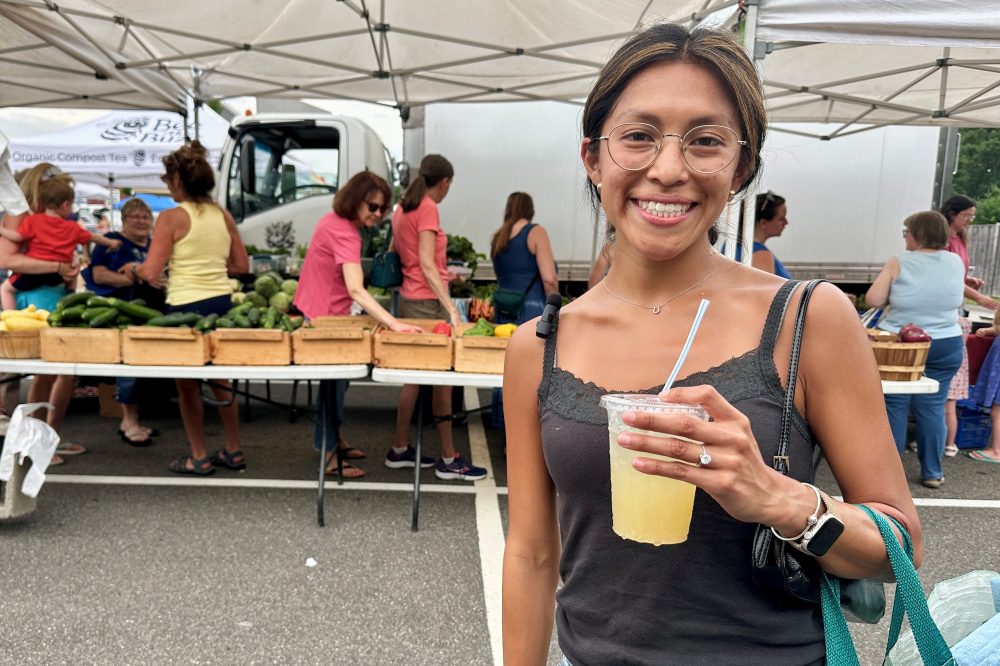
Christina Zhou, a 25-year-old research assistant from Cambridge, Massachusetts, acknowledged the divisions but refused to dwell on them. “There are lots of points of contention going around,” she said, “yet there are still a lot of beautiful things that are happening.” Her approach: focus on what’s close to home. “What I’m trying to do is think about just things that are happening locally. It feels a little bit more like within our own personal control.”
In Mont Vernon, New Hampshire, 50-year-old farmer Mindy Dean said the big anniversary has barely registered in her household. She and her family will spend Saturday milking goats and possibly catching some local fireworks. “We’re just happy Americans,” she said. “We kinda do our own thing and just enjoy our freedom as Americans.”
Meanwhile, 81-year-old retiree Neil Casey of Nashua, New Hampshire, and his friend Maureen Regan of Cambridge are taking a more active approach, touring Boston’s historic landmarks — including Paul Revere’s house — and attending as many Fourth of July events as they can. Regan drew inspiration from international soccer fans who visited the country for the World Cup. “They love everything we have,” she said, “and I want people to not forget that and remember how lucky we are.” Her message to fellow Americans: “Just enjoy the moment. Enjoy that we’ve been here for 250 years.”
For others, the celebration is harder to embrace. Some find it difficult to separate the holiday from President Donald Trump’s decision to tie the National Mall festivities to what he said would culminate in a Trump rally on Saturday.
“When you’re celebrating the Fourth of July right now, it feels like that’s like a Republican thing to do,” said Madeline Capodilupo, a 26-year-old special-education teacher from Boston, who planned to spend the weekend at her fiancé’s family beach house in Maine. “It’s just hard to celebrate something when it doesn’t feel like we should be celebrating anything.”
At Detroit’s Eastern Market, Ronald Hall — an Air Force veteran who served 18 months near the end of the Vietnam War — and his wife Karen, who spent two years in the Army and participated in Operation Desert Storm, reflected on what the holiday has always meant to them. As a Black man, Ronald said the celebration was never about the country as it was, but about its promise. “I grew up remembering the promise,” he said. “That’s what we celebrated: the promise, not the country.”
Veterans were well-represented in the conversations. At the New Hampshire Veterans Home in Tilton, residents are anticipating an upcoming community celebration featuring a National Guard Black Hawk helicopter, a World War II ambulance, food trucks, live music, and even Uncle Sam on stilts.
Leo LeClerc, 83, an Air Force veteran who served in Vietnam, said his faith in America runs deep — but it is being tested. “I believe this country is the greatest that ever existed,” he said. “Our democracy is strong and it will continue to be strong as long as people participate in it.” Still, he added, “I don’t like what’s going on in this country” and “I don’t feel very good about the 250th.” An independent who voted for Trump in 2016, LeClerc said he now believes a “cult of personality has taken over” around the president.
Tom Gaumont, 74, an Army veteran and former history teacher, looked back at the 1976 bicentennial as a more optimistic moment, even in the shadow of President Richard Nixon’s resignation under threat of impeachment. “I’m kinda sad at this point with what I anticipate,” he said. “I’ve seen and taught about how these things kind of crumble, so I’m concerned.” He added: “We’ve lasted this long, and this is a very existential time in our history.”
Allan Bailey, 83, a Republican and Vietnam veteran who later owned a motel, echoed that concern. “I’m worried about how the country is going, I really am,” he said. “I don’t know what we’re going to leave our children, and that bothers me a lot.”
In Dearborn, Michigan, a more hopeful voice came from Nabeel Mawari, 38, an immigrant from Yemen who is now a U.S. citizen. While he planned to work his security guard job on Saturday as his wife and two young sons celebrated with relatives, Mawari spoke warmly about his adopted homeland from his backyard. “My life is here,” he said. “We try to make the U.S.A. the greatest. That’s why I’m here. I love this country. The Fourth of July, it is very important.”
Perhaps the most straightforward sentiment came from Gary MacGrath, 77, a caricaturist who has worked a suburban Philadelphia fair for 14 years. This year, his booth happened to be squeezed directly between the local Democratic and Republican Party clubs. A former bartender, MacGrath said he long ago learned to “never talk about religion or politics” — a rule he was sticking to. But he allowed himself one brief observation: “It’s 250 years. Let’s keep democracy going.”