
Sweeping changes to federal student loans took effect July 1, and millions of borrowers across the country are expected to feel the impact. These changes are part of President Donald Trump’s “Big Beautiful Bill” and bring an end to certain repayment options while placing new limits on graduate and parent loans.
Combined with the elimination of the Biden-era SAVE repayment plan, experts warn that many borrowers will see their monthly payments rise considerably.
“The main concern is the affordability of monthly payments. I think a lot of people are simply going to see their payment increase significantly and they’re either going to have to stretch pretty significantly to make that payment work or they’re not going to be able to make the payment,” said Michele Zampini, an associate vice president at The Institute for College Access & Success.
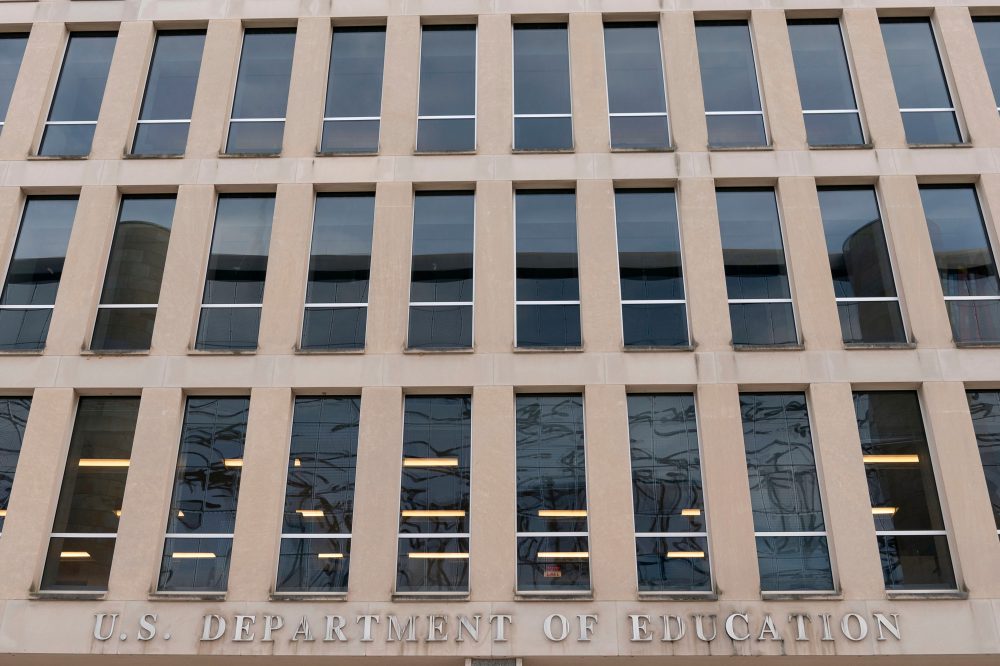
As of June, roughly 9 million Americans are already in default on their federal student loans, according to the Education Department. Hundreds of thousands more are behind on payments and at risk of falling into default this year.
Earlier this month, Education Department officials announced that borrowers enrolled in automatic payments will qualify for a 1% interest rate reduction starting July 1. However, those already using auto pay were receiving a 0.25% discount, meaning the actual new savings amounts to just 0.75%. The reduction is temporary and will remain in place only through June 2028.
The SAVE plan had been one of the most borrower-friendly repayment options the federal government had ever offered. It quickly ran into legal trouble after its launch, leaving millions of borrowers in uncertainty. Earlier this year, the U.S. Court of Appeals for the 8th Circuit struck it down, and the plan officially ended Wednesday.
Approximately seven and a half million borrowers were enrolled in the SAVE plan. Loan servicers began sending out official notices Wednesday, according to Lindsay Vail Clark, chief borrower advocate at Savi, a student loan debt assistance platform.
Those borrowers have 90 days from when they receive their notice to enroll in a different income-driven repayment plan. Vail Clark advises borrowers to begin exploring their options right away, since processing delays are expected. If a borrower does not sign up for a new plan before the 90-day window closes, the Education Department will automatically place them in a standard repayment option.
Vail Clark noted that because notices are going out on a rolling basis, there is no single universal deadline for all SAVE plan borrowers.
Trump’s “Big Beautiful Bill” also changed how much graduate students can borrow in federal loans. Under the new rules, programs classified as professional degrees are capped at $200,000, while other graduate programs face a $100,000 limit. Previously, graduate students could borrow up to the full cost of their degree through federal loans.
This week, the administration revised its plan in response to a court order, restoring higher borrowing eligibility for students in graduate nursing, physical therapy, and several other fields that had initially been subject to the lower limits.
Parent PLUS Loans are also being affected. New caps limit these loans to $20,000 per student and $65,000 per family. Additionally, parents who take out new Parent PLUS Loans on or after July 1 will no longer have access to income-driven repayment plans — only a new tiered standard payment plan.
“Going forward, they’re basically only going to have the standard payment option and there’s not going to be any caveat or any safety net to adjust that based on income, if they have a low income or if they have an income fluctuation or some kind of other hardship,” Zampini said.
Parents who consolidated their Parent PLUS Loans into a Direct Consolidation Loan before July 1 may continue repaying through the income-contingent repayment plan until June 30, 2028, after which they will be moved to the income-based repayment plan.
Borrowers who currently have loans can still apply for the Income-Based Repayment Plan, the Pay as You Earn plan, or the Income-Contingent Repayment plan. For those taking out new loans on or after July 1, only two income-driven options will be available: the Repayment Assistance Plan and the Income-Based Repayment Plan. Borrowers can use the Education Department’s loan simulator online to compare which repayment plan may work best for their situation.
The Public Service Loan Forgiveness Program remains unchanged for now. Two federal judges struck down proposed rule changes on Tuesday — just one day before those changes were set to take effect. The Trump administration had sought to disqualify nonprofit workers whose work is considered to have a “substantial illegal purpose,” a move critics called politically motivated.
Involuntary collections on defaulted federal student loans remain on hold. The Trump administration announced earlier this year that it is delaying plans to withhold wages from borrowers who have defaulted. Borrowers are considered in default after falling at least 270 days behind on payments, at which point wages and federal tax refunds can be garnished.
Borrowers currently in default can contact their loan holder to apply for a loan rehabilitation program. After five successful reduced payments under the program, wage garnishment stops. Those with multiple federal loans can also consolidate them into a single loan with a fixed interest rate at studentaid.gov. The consolidation process typically takes about 60 days, and borrowers can only consolidate their loans once.