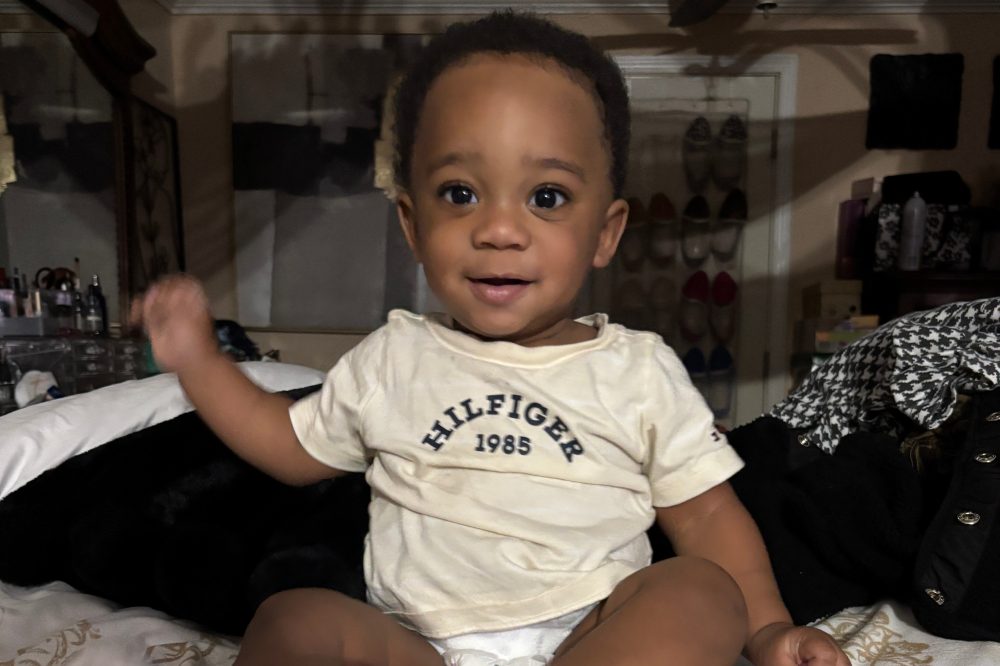

A Mississippi family is pushing back against the official police account of how their 1-year-old son was fatally shot, presenting new autopsy evidence they say undermines the officers’ claim that they were in danger at the time of the shooting.
Civil rights attorney Ben Crump announced Wednesday that a preliminary autopsy — commissioned by the family of baby Kohen Wiley — indicates the child was struck by a bullet fired from the side of the car, not from the front. This finding directly contradicts the officers’ assertion that the vehicle was moving toward them when one of them opened fire. Kohen’s mother, who was seated in the passenger seat holding her son, maintains that the driver was moving away from the officers, not toward them.
Kohen and his mother are Black. The June 14 shooting has ignited protests and widespread anger in the small town of Senatobia, where residents say troubling interactions with local police have been a recurring problem. According to Crump, the entire incident was set in motion when officers were called to a Walmart parking lot over diapers that may have been shoplifted.
Speaking from the pulpit of Senatobia Church of Christ, flanked by more than a dozen supporters including the baby’s grandparents — some holding “Justice for Baby Kohen” signs — Crump said, “We’re going to try to continue to demand transparency.”
Crump was careful to note, however, that the pathologist who conducted the preliminary examination did not have access to all available information. He said the family intends to keep pressing until authorities release police body camera footage, dashcam video, and surveillance recordings from the Walmart.
A spokesperson for the Mississippi Bureau of Investigation, which is overseeing the ongoing probe, declined to make any comment on Wednesday.
At the church, the family displayed photographs and diagrams of Kohen’s injuries, along with a photo of the car involved. The passenger-side window was shattered, and what appeared to be a bullet hole was visible in the windshield on the passenger side. Authorities have confirmed that another woman in the vehicle was also seriously injured.
Crump said the broken passenger window is consistent with a bullet being fired into that side of the vehicle. The preliminary autopsy findings, he said, show the bullet entered the baby’s torso on his right side and exited on his left — a conclusion he said is further supported by clusters of cuts on the right side of the child’s chest and abdomen, which would be consistent with shattered tempered glass.
“That’s very important as we try to solve a puzzle,” Crump said. “The reason that we’re having to try to solve the puzzle is because they won’t release the video.”
The initial statement from state investigators described the encounter this way: “Officers attempted to stop the vehicle, but the driver drove in the direction of the officers, almost striking one. An officer then discharged their weapon and the vehicle fled the scene.”
Ian Adams, a policing expert who teaches criminal justice at the University of South Carolina, said investigators will need to examine the vehicle’s position, the seating arrangement of those inside, and where the officers were standing. He cautioned against drawing firm conclusions too quickly.
“We need to know a lot more before drawing firm conclusions based on bullet wounds alone,” Adams said.
The death has drawn comparisons to other high-profile cases in which Black individuals lost their lives over accusations of minor offenses, including the murder of George Floyd. Kohen’s mother has said she believed her friend had paid for the diapers.
Crump, who gained national recognition representing the families of Floyd and other Black people killed by police, pointed out that the officers’ own report acknowledges they saw two women and a child get into the car before the shooting occurred. He questioned why an officer would discharge a weapon knowing a child was present.
“They want us to believe that it was a life-or-death situation,” Crump said. “They told us that, but they have not showed us that.”