Work will begin again next week on the $16 billion Hudson Tunnel Project after the Trump administration unfroze $127 million in federal funding, New York Governor Kathy Hochul announced Wednesday.
The states of New York and New Jersey filed a lawsuit following the U.S. Department of Transportation’s decision to hold back $205 million in project funding beginning October 1. This funding stoppage forced construction to stop, leaving 1,000 workers without jobs. The Hudson Tunnel Project is designed to create a new commuter rail tunnel linking Manhattan with New Jersey while also fixing an existing tunnel that’s more than 100 years old and serves over 200,000 passengers and 425 trains each day.
Three western states filed a federal lawsuit Wednesday demanding the Trump administration distribute congressionally approved grants for renewable energy initiatives that have been frozen by the new administration.
California, Colorado and Washington launched the legal challenge after the Trump administration halted funding previously allocated through environmental legislation, including the Inflation Reduction Act, according to California’s attorney general’s office. The funding freeze represents part of a wider administration strategy to reduce support for renewable energy sources like wind and solar power while focusing on boosting domestic oil production.
California stands to lose $1.2 billion in federal support for its Alliance for Renewable Clean Hydrogen Energy Systems (ARCHES) program, which was designed to transition utilities, public transportation, trucking operations and ports away from fossil fuel dependency, according to Attorney General Rob Bonta.
The states argue that federal agencies are legally obligated to implement congressional legislation. “Congress has the power of the purse, not the executive branch, and Congress already appropriated this funding,” Bonta explained during a Tuesday interview before the lawsuit announcement. “It’s as simple as” federal agencies must follow the law, he added.
This legal action represents the latest in an ongoing series of court challenges California and other states have mounted against Trump administration policies across multiple policy areas.
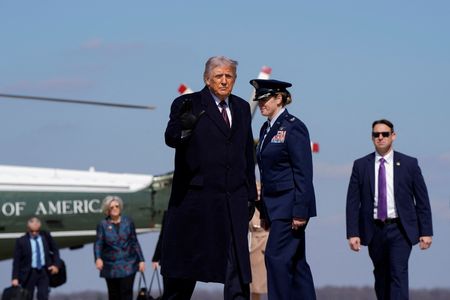
WASHINGTON — The U.S. military confirmed Thursday that future presidential aircraft will sport a patriotic red, white, gold and dark blue paint design, fulfilling President Donald Trump’s vision for a new look.
Air Force officials announced the updated color scheme will be applied to the new aircraft being prepared to serve as Air Force One, along with smaller jets used to transport senior government officials.
Military officials unveiled a design rendering that mirrors an aircraft model previously displayed in the Oval Office during meetings with international dignitaries.
Boeing is currently working to modify two 747-800 aircraft intended to replace the current pair of older Boeing 747-200 planes that transport the president and carry the Air Force One designation when he’s on board.
Back in 2018, Trump had ordered the replacement of the famous Kennedy-era blue and white livery with a different white and navy design. His original plan called for a white upper section and dark blue lower portion, including the aircraft’s belly, with a dark red stripe extending from nose to tail. The proposed design closely resembled Trump’s private aircraft.
However, Air Force analysts determined the darker paint colors would drive up expenses and push back delivery schedules for the new presidential jets. President Joe Biden subsequently canceled the redesign in March 2023.
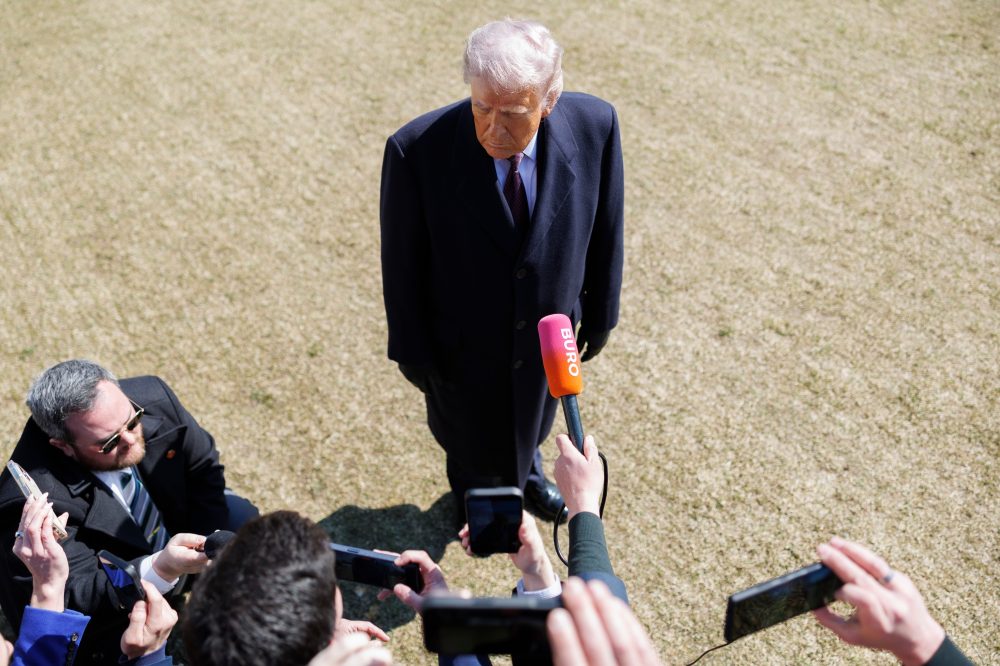
Speaking to media last month, Trump expressed his preference, saying “we want power blue, not baby blue,” in reference to the current aircraft’s appearance.
“Everything has its time and place. We’ll be changing the colors,” Trump stated.
The Air Force announcement indicates a third Boeing 747-8i aircraft will receive the same patriotic paint treatment.
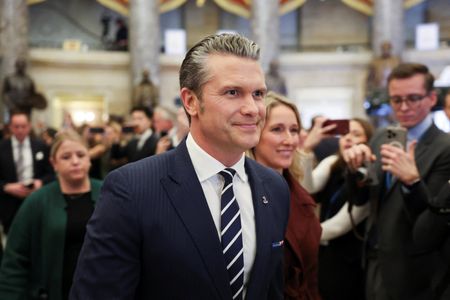
Last May, Defense Secretary Pete Hegseth officially received a luxury Boeing 747 from Qatar for presidential use, though the acceptance of this costly gift from a foreign government raised ethical and legal concerns.
Air Force Secretary Troy Meink informed Congress in June that security upgrades for the aircraft would cost under $400 million, though he didn’t provide specific details about the modifications.
A congressional representative from Iowa believes legislation permitting year-round E15 ethanol fuel sales could advance quickly through Congress. Representative Randy Feenstra, who serves on the House Rural Domestic Energy Council, reported that his committee held productive discussions on Wednesday regarding the biofuel initiative.
“This is full on, year round E15 and we worked with the small, midsized and large refiners,” Feenstra stated following the meeting. The congressman indicated that negotiations involved petroleum refiners across the industry spectrum as lawmakers work to build consensus on the ethanol legislation.
Climate advocacy organization Extinction Rebellion disclosed Wednesday that federal authorities have been conducting an investigation into the group, with FBI personnel making contact with several members during the past year.
The bureau declined to provide details when contacted for a response, stating it cannot verify or deny ongoing investigations per Department of Justice protocols.
According to the activist organization’s public statement, federal agents from the Joint Terrorism Task Force approached a former participant at their home on February 6, 2026. The residence was located approximately 200 miles from New York City, where the person had been involved with the group’s local chapter.
During that encounter, the agents questioned the individual about their participation in Extinction Rebellion’s New York City operations, the organization reported. The former member directed all inquiries to their legal counsel.
The group revealed additional contact occurred in March 2025, when six activists connected to Extinction Rebellion’s Boston branch were approached by individuals claiming FBI affiliation. No subsequent communications followed those initial contacts.
The activist organization provided limited additional information, and federal authorities offered no details regarding the investigation’s scope or objectives.
Civil liberties organizations have expressed concerns about free speech protections during President Donald Trump’s current term, pointing to his administration’s response to pro-Palestinian demonstrations regarding Israel’s military actions in Gaza, along with his public statements targeting liberal organizations and groups challenging his policy positions on immigration and environmental issues.
Trump’s administration has made allegations against various organizations, frequently without supporting evidence, claiming they provide financial support and coordination for political violence. Environmental advocates have criticized the president’s rollback of climate regulations and America’s exit from international environmental agreements.
According to its international website, the environmental organization describes itself as a “decentralised, international and politically non-partisan movement using non-violent direct action and civil disobedience to persuade governments to act justly” regarding climate issues. Notable activist Greta Thunberg has participated in events coordinated by the organization.
Federal immigration officials are investigating the death of a 59-year-old Cambodian man who died while in custody at an Indiana detention facility this week.
Immigration and Customs Enforcement announced Wednesday that Lorth Sim was discovered unresponsive in his cell at Miami Correctional Facility on Monday. The cause of his death remains under investigation, and this marks the seventh fatality this year within the federal immigration detention system.
According to ICE records, Sim arrived in the United States as a refugee in 1983 and obtained permanent resident status three years later in 1986. He was taken into custody in Boston this past December.
Immigration court records show that a judge had previously ordered Sim’s deportation to Cambodia back in 2006. Federal authorities noted that Sim had prior arrests on charges including disorderly conduct, indecent exposure, and larceny, resulting in a suspended sentence and probation.
The death occurs amid a significant expansion of immigration enforcement under President Trump’s administration. Current detention numbers have swelled to approximately 68,000 individuals in early February, representing a dramatic increase from the 40,000 people held when Trump assumed office. This surge has coincided with immigration custody deaths reaching their highest point in twenty years.
Civil rights organizations and Democratic lawmakers have raised serious concerns about the treatment and conditions within ICE detention centers, describing them as inhumane.
Recent incidents have intensified this scrutiny. Earlier this month, Leqaa Kordia, a 33-year-old Palestinian woman whose mother holds U.S. citizenship, required three days of hospitalization after suffering a seizure while in immigration detention. Kordia reported being restrained with chains during her medical treatment.
Federal immigration authorities maintain they provide appropriate medical care to all detainees, and government officials reject claims of inhumane treatment.
Particular attention has focused on ICE following the January 3rd death of Cuban immigrant Geraldo Lunas Campos at a Texas detention facility. The El Paso County medical examiner ruled that death a homicide caused by asphyxia from compression to the neck and torso. A Washington Post investigation included witness accounts alleging guards choked Lunas.
The Department of Homeland Security has provided inconsistent explanations regarding that incident and has not acknowledged the choking allegations or homicide determination.
Immigration and Customs Enforcement agents are frequently informing community members who monitor their enforcement activities that such observation constitutes a violation of federal law, according to legal experts who dispute these claims.
Constitutional law specialists assert that the majority of individuals who track and document ICE operations are exercising their First Amendment rights and acting within legal boundaries.
The tension has escalated as more community groups organize to observe immigration enforcement activities in neighborhoods across the country. Federal agents have been warning these observers that their presence interferes with law enforcement operations.
However, civil rights attorneys emphasize that citizens generally have the constitutional right to observe and record government activities in public spaces, as long as they maintain appropriate distance and do not physically obstruct officers.
The dispute highlights growing friction between federal immigration enforcement and community advocacy groups who seek to document these operations for accountability purposes.
Delaware Senator Chris Coons joined fellow lawmakers on a fact-finding mission to Ukraine this week, where they pledged to return to Washington with renewed calls for tougher economic measures against Russia.
Speaking to reporters during a phone call from Ukraine on Wednesday, the Democratic senators emphasized their commitment to advancing harsh energy sanctions and other legislative measures designed to force Russia to halt its military actions against Ukraine.
New Hampshire Senator Jeanne Shaheen, accompanied by three other Democratic colleagues, stated their intention to intensify efforts upon returning to the Capitol. “I would hope that we would see a stronger effort and some real work when we get back to put pressure on (Russian President Vladimir) Putin,” Shaheen declared.
Connecticut Senator Richard Blumenthal highlighted the need to target nations purchasing Russian energy resources. “We are united that countries buying Russian oil and gas – and they are China, India, Hungary, Brazil – should be given very strong incentives to stop doing so, and it’s a way to really positively impact Ukraine’s fight,” Blumenthal explained.
The senators conducted their discussions amid challenging weather conditions in Odesa, where they engaged with Ukrainian coast guard personnel, naval representatives, American business officials, and local community leaders before departing for Moldova Wednesday evening.
Their visit coincided with the conclusion of two days of diplomatic negotiations in Geneva between Ukrainian and Russian representatives, which wrapped up Wednesday without achieving any significant breakthroughs. The talks occurred as Russia’s comprehensive military campaign against Ukraine approached its four-year mark.
While Ukrainian President Volodymyr Zelenskiy expressed disappointment with the negotiation results, President Donald Trump’s administration characterized the discussions as showing “meaningful progress.”
Ukraine continues to face mounting pressure from the Trump administration to accept a potential agreement that might require significant territorial or political compromises, even as Russian military forces continue targeting the nation’s electrical infrastructure and making gradual territorial gains.
Congressional members from both major political parties, including Republicans aligned with Trump as well as Democrats, have argued against placing excessive pressure on Kyiv to accept unfavorable terms. In recent months, they successfully enacted legislation providing hundreds of millions of dollars in aid to Zelenskiy’s administration, which Trump ultimately signed into law.
A key piece of pending legislation in Congress would establish sanctions against nations that purchase Russian petroleum products, natural gas, and uranium. This bipartisan measure, co-sponsored by Blumenthal and South Carolina Republican Senator Lindsey Graham, has garnered support from 85 out of 100 senators but has yet to receive a floor vote.
Republican Senate leadership has refrained from scheduling the bill for consideration due to opposition from Trump, who has maintained control over sanctions policy within the executive branch rather than allowing Congress to direct such measures since beginning his second presidential term in January 2025.
The Democratic senators currently visiting Ukraine expressed hope for swift passage of the sanctions legislation and voiced optimism regarding separate proposed legislation targeting Russia’s “shadow fleet” – a network of aging oil tankers used to transport Russian crude to China, India, and other purchasing nations.
Rhode Island Senator Sheldon Whitehouse emphasized the importance of maintaining pressure on Russia. “Nobody, literally nobody, believes that Russia is acting in good faith in the negotiations with our government and with the Ukrainians. And so pressure becomes the key, and the shadow fleet is one element of that pressure,” Whitehouse stated.
Graham participated in discussions with more than a dozen Republican and Democratic senators who met with Zelenskiy during last weekend’s Munich Security Conference. Following those meetings, Graham indicated that Trump had endorsed his sanctions proposal and called for a congressional vote.
During Wednesday’s call, the visiting senators indicated their readiness to oppose any negotiated settlement that would force Ukraine into excessive concessions, stating they would refuse to ratify such an agreement.
Delaware’s Senator Coons emphasized the importance of security assurances in any potential deal. “We will be looking for very strong security guarantees,” Coons said.
WASHINGTON — The Trump administration’s chief economist called for punishment of Federal Reserve researchers on Wednesday after they published findings indicating U.S. businesses and consumers shoulder nearly all costs from new trade tariffs implemented by the administration in recent months.
Kevin Hassett, who heads the White House National Economic Council, criticized the research during a CNBC appearance, stating: “The paper is an embarrassment. It’s the worst paper I’ve ever seen in the history of the Federal Reserve system. The people associated with this paper should presumably be disciplined.”
The harsh criticism marks another instance of the Trump White House challenging the Federal Reserve’s traditional independence from political interference. The administration’s strong reaction also indicates ongoing sensitivity about economic pressures affecting American families, as polling data reveals continued public frustration with costs for essentials like food, housing, vehicles and home furnishings.
The New York Federal Reserve Bank’s research, released recently, determined that American businesses and consumers are absorbing approximately 90% of tariff expenses implemented under Trump’s trade policies. The study documented how average import duties jumped dramatically from 2.6% early last year to 13% by year’s end.
Multiple independent analyses have reached identical conclusions, including research conducted by Harvard University and University of Chicago economists, findings from Germany’s Kiel Institut research organization, and a recent nonpartisan Congressional Budget Office assessment.
The mechanics of tariff collection explain why domestic entities bear these costs. U.S. importing companies pay tariffs directly to federal treasury coffers, meaning foreign manufacturers would only absorb expenses if they substantially reduced their prices to compensate for the additional duties. However, the Fed’s analysis showed overseas exporters have implemented only minimal price reductions, far below tariff increases.
This confrontation follows a pattern of White House attacks on economists reaching similar conclusions about tariff burden distribution. Last August, Trump called for Goldman Sachs CEO David Solomon to terminate the firm’s chief economist after that analyst predicted Americans would increasingly shoulder tariff costs over time.
WASHINGTON — The White House welcomed guests Wednesday evening for its annual Black History Month celebration, occurring less than two weeks following President Donald Trump’s controversial social media post that generated widespread criticism from both political parties.
During Wednesday’s ceremony, Trump avoided mentioning the deleted social media content, which he has refused to apologize for despite significant public backlash. The president also made no reference to Barack Obama, America’s first Black commander-in-chief, instead focusing his remarks on other notable African American historical figures.
“We celebrate Black History Month. We honor the memory of those who came before us by continuing their legacy,” Trump stated during the reception.
The president highlighted several Black Americans who have publicly supported him, including former heavyweight champion Mike Tyson, whom Trump commended for speaking out against racism allegations. Trump also mentioned rapper Nicki Minaj, making comments about her appearance including remarks about her fingernails and calling her skin “so beautiful.”
Several administration officials joined Trump on stage, including Housing and Urban Development Secretary Scott Turner and White House pardon advisor Alice Marie Johnson.
“As you look out upon this sea of Black Americans, this president hears you. This president cares for you. Don’t let anyone tell you that this president right here, Donald Trump has not — is not for Black America,” Johnson declared. “Because he is.”
Trump outlined various policy initiatives he claims have helped Black communities, including legislation he enacted last year removing federal taxes on tip income and his decision to deploy National Guard units to restore order in cities with significant Black populations, including Washington, New Orleans and Memphis, Tennessee.
The White House gathering occurred one day after Trump defended himself on social media, writing that he has been “falsely and consistently called a Racist by the Scoundrels and Lunatics on the Radical Left” in a post intended to honor the late Rev. Jesse Jackson, who passed away Tuesday.
When reporters questioned White House press secretary Karoline Leavitt about the president’s statement, she responded Wednesday morning: “There is a lot this president has done for all Americans, regardless of race. And he has absolutely been falsely called and smeared as a racist.”
While Trump has consistently acknowledged Black History Month during his presidency, his administrative actions and public statements frequently conflict with celebrating diversity and recognizing Black American achievements.
The current administration has specifically targeted diversity, equity and inclusion initiatives that have provided employment opportunities for many Black Americans in government agencies and private companies over recent decades. Trump has labeled DEI programs as “discrimination” and is working to eliminate them from federal operations while encouraging private businesses to follow suit.
Despite this approach, Trump positions himself as a supporter of historically Black colleges and universities. The White House emphasized Wednesday that the administration allocated $500 million to HBCUs last year. However, this funding boost primarily came from redirecting federal dollars previously designated for institutions serving predominantly Hispanic student populations. The HBCU funding announcement came shortly after the Education Department withdrew $350 million from grant programs supporting colleges with substantial Hispanic and other minority enrollment. Administration officials declared those previous grant programs violated constitutional principles.
Trump launched his second presidential term by arguing that certain African American history curricula are designed to foster anti-American sentiment. He signed an executive directive titled “restoring truth and sanity to American history,” which his administration has used to remove historical content from national parks deemed to “inappropriately disparage Americans past or living,” including markers related to Black history.
Early in his current term, Trump issued an official proclamation designating February as Black History Month, even as the Defense Department announced it would no longer use official resources to observe cultural awareness months.
Last year’s White House Black History Month reception similarly followed another executive order that terminated federal diversity, equity and inclusion programs.
WASHINGTON – The Biden administration on Wednesday urged Cuba to implement substantial reforms immediately, describing the communist nation as a deteriorating regime while stopping short of demanding leadership changes.
White House press secretary Karoline Leavitt addressed reporters about the situation during a Wednesday briefing, characterizing Cuba’s current state as unstable.
“They are a regime that is falling. Their country is collapsing and that’s why we believe it’s in their best interest to make very dramatic changes very soon,” Leavitt stated during the press conference.
The press secretary emphasized America’s commitment to promoting democratic values throughout the region, expressing the administration’s desire to witness thriving democratic nations across the Western Hemisphere. However, Leavitt declined to elaborate on specific measures the United States might pursue to achieve these goals.
The U.S. State Department is working on a new website that would allow people in Europe and other regions to access content that their governments have blocked, according to three sources with knowledge of the initiative.
The website will operate under the domain “freedom.gov,” sources revealed. Officials have discussed incorporating virtual private network capabilities that would make users’ internet activity appear to come from the United States, with one source noting that the site won’t track user behavior.
Undersecretary for Public Diplomacy Sarah Rogers is leading this initiative, which was originally scheduled to debut at last week’s Munich Security Conference but faced delays, the sources indicated.
Reuters was unable to confirm the specific reasons for the postponement, though two sources mentioned that some State Department personnel, including legal staff, have expressed reservations about the proposal without specifying their exact concerns.
This initiative could create additional tension between the Trump administration and European allies, who are already dealing with disagreements over trade issues, Russia’s conflict in Ukraine, and President Trump’s interest in asserting influence over Greenland.
The website would also place Washington in an unusual position of seemingly encouraging people to circumvent their local regulations.
When contacted by Reuters, a State Department representative stated that the U.S. government doesn’t operate a censorship-bypassing program targeting Europe specifically, but noted: “Digital freedom is a priority for the State Department, however, and that includes the proliferation of privacy and censorship-circumvention technologies like VPNs.”
The representative disputed claims about any delayed announcement and said it was incorrect that State Department attorneys had voiced concerns.
The Trump administration has prioritized free speech issues, particularly what it perceives as suppression of conservative viewpoints online, making it a cornerstone of foreign policy efforts in Europe and Brazil.
European approaches to free expression differ significantly from American standards, where the Constitution safeguards nearly all forms of speech. European Union restrictions developed from efforts to prevent any return of extremist messaging that powered Nazism, including its targeting of Jewish people, immigrants, and minority groups.
American officials have criticized EU policies they claim suppress right-wing political figures in Romania, Germany, and France, arguing that regulations like the EU’s Digital Services Act and Britain’s Online Safety Act restrict free expression.
The EU delegation in Washington, serving as the 27-nation bloc’s diplomatic mission, didn’t immediately respond to requests for comment regarding the American proposal.
Through regulations that primarily affect social media platforms and major services like Meta’s Facebook and X, the EU restricts access to — and sometimes mandates quick removal of — material labeled as illegal hate speech, terrorist content, or dangerous misinformation under various rules, laws, and decisions implemented since 2008.
Rogers has become a vocal supporter of the Trump administration’s stance on EU content regulations. Since assuming her role in October, she has traveled to more than six European nations and met with representatives from right-wing organizations that the administration claims face oppression. The department declined to make Rogers available for interviews.
The Trump administration’s National Security Strategy, released in December, cautioned that Europe faced “civilisational erasure” due to its immigration policies. The document stated the U.S. would focus on “cultivating resistance to Europe’s current trajectory within European nations.”
EU regulators frequently mandate that American-based platforms remove content and can implement bans as a final option. X, owned by Trump associate Elon Musk, received a 120 million-euro penalty in December for failing to comply.
Germany, as an example, issued 482 removal orders in 2024 for material it determined supported or encouraged terrorism and compelled providers to eliminate 16,771 pieces of content.
Similarly, Meta’s oversight board in 2024 mandated removal of a Polish political party’s posts containing racial slurs and portraying immigrants as sexual predators, content that EU law classifies as illegal hate speech.
Kenneth Propp, a former State Department official who handled European digital regulations and now works at the Atlantic Council’s Europe Center, described the U.S. plan as “a direct shot” at European rules and laws. He said freedom.gov “would be perceived in Europe as a U.S. effort to frustrate national law provisions.”
Edward Coristine, a former member of Musk’s cost-cutting Department of Government Efficiency, is also participating in the U.S. portal project, according to two sources. Coristine collaborates with the National Design Studio, established by Trump to improve government website aesthetics. Reuters couldn’t reach Coristine for comment.
The specific benefits the U.S. government portal would provide beyond those offered by commercial VPN services remain unclear.
Federal registry get.gov shows the freedom.gov web address was registered on January 12. As of Wednesday, the site contained no content but displayed the National Design Studio’s logo, the phrase “fly, eagle, fly” and a login form.
Prior to Trump’s second presidency, the U.S. government supported commercial VPNs and similar tools as part of global democracy promotion efforts, helping users access unrestricted information in China, Iran, Russia, Belarus, Cuba, Myanmar, and other nations.
SANTA FE, N.M. — Lawmakers in New Mexico’s unique volunteer legislature have moved to end their unpaid status that has existed since the state joined the union.
In a close vote Tuesday evening, the state Senate approved a constitutional amendment that would eliminate the current ban on direct legislative pay. The measure will now go before voters this November, who will decide whether to link lawmaker salaries to New Mexico’s median household income.
The proposal gained momentum after years of failed attempts, driven this time by a coalition of younger female state representatives who highlighted the difficulties of managing careers, families, and legislative responsibilities simultaneously.
Currently, New Mexico covers lawmakers’ travel costs and provides meal and lodging stipends during legislative sessions. Many representatives also qualify for public retirement benefits.
The volunteer “citizen legislature” has traditionally been viewed with pride throughout New Mexico. However, supporters of paying legislators argue the current arrangement prevents young people and working-class individuals from running for office and can hamper work on complicated policy matters as lawmakers must maintain separate paying jobs.
For comparison, lawmakers in states like New York and California earn more than $100,000 annually, while New Hampshire pays its legislators just $100 per year.
NEW YORK (AP) — Following a series of cold weather deaths, New York City Mayor Zohran Mamdani announced Wednesday that the city will restart operations to clear homeless encampments, but with a significantly different strategy than his predecessor used.
The Democratic mayor had halted the encampment clearing program shortly after taking office in January, criticizing the previous administration’s methods as inadequate for connecting people with permanent housing solutions.
However, Mamdani now says his revised strategy — which puts the city’s homeless services department in charge instead of police and includes extensive outreach efforts — will produce better outcomes.
“We will meet them looking to connect them with shelter, looking to them with services, looking to connect them with a city that wants them to be sheltered and indoors and warm and safe. And that is something that I believe will yield far better results,” he said at an unrelated news conference.
The announcement follows the deaths of at least 19 individuals outdoors during recent severe cold weather, sparking concerns about the city’s homeless response efforts. City officials report no evidence that any of the deceased were residents of encampments, despite the administration’s intensive efforts to encourage homeless individuals to use new shelters, heated buses and warming facilities.
The outdoor fatalities have created an early challenge for Mamdani’s administration, generating questions about whether more could have been done and renewed criticism regarding the new mayor’s limited administrative background.
Former Mayor Eric Adams had made encampment sweeps a signature element of his public safety agenda. Those operations, conducted by police and sanitation teams, faced strong opposition from homeless advocacy organizations and produced limited success — while most cleared sites remained empty, only a small percentage of those encountered during sweeps agreed to enter temporary housing.
The updated protocol calls for posting advance notice before clearing any encampment, followed by daily visits from homeless services outreach staff for one week to connect individuals with available resources and support services.
On the eighth day, sanitation crews would remove the encampment structures, with officials hoping residents would have relocated voluntarily. Police would only observe the process, according to a city spokesperson.
Coalition for the Homeless Executive Director David Giffen expressed surprise at the announcement, calling it “blindsided” by the decision and describing it as a “political response” that won’t benefit homeless New Yorkers.
He warned that such actions could damage relationships between city outreach staff and unsheltered individuals, potentially leading to more fatalities during future extreme weather events.
“When a city worker shows up and throws out all your belongings, you’re not going to trust that person the next time they show up offering you a place to sleep inside,” Giffen said.
New York City Council Speaker Julie Menin, also a Democrat, praised Mamdani’s decision as “an important step forward.”
“Allowing New Yorkers to stay on the street during extreme weather is inhumane,” Menin said in a statement, adding that after oversight hearings at the Council, “it was clear that the City needed to take a closer look at how this policy was being implemented. Protecting lives must remain our top priority.”
The Trump administration is set to roll back environmental regulations governing coal-fired power facilities this week, which would permit these plants to release increased amounts of dangerous pollutants such as mercury, according to a Wednesday report from the New York Times.
Top officials from the U.S. Environmental Protection Agency are anticipated to make this announcement public during their scheduled visit to Louisville, Kentucky, on Friday, the Times reported.
GREENBELT, Md. — A federal jury is deliberating the fate of a renowned Supreme Court attorney who secretly earned tens of millions of dollars as a high-stakes poker player while allegedly evading taxes on his massive gambling winnings.
Thomas Goldstein, who co-founded the influential SCOTUSblog and argued more than 40 cases before the nation’s highest court, faces 16 federal charges following a six-week trial that concluded Wednesday in Maryland. His indictment last year stunned Washington’s legal circles, where Goldstein was a respected figure until his 2023 retirement.
Federal prosecutor Sean Beaty described Goldstein as among the most brilliant attorneys ever to appear before the Supreme Court during closing arguments.
“He’s not a dummy. He’s a willful tax cheat,” Beaty told the jury.
Defense lawyer Jonathan Kravis countered that federal investigators rushed to judgment and wrongly believed an accountant’s fabricated claims about his client’s gambling activities without proper investigation.
“Not even close,” Kravis said. “Tom Goldstein is innocent.”
The proceedings, which began January 12, featured testimony from Hollywood actor Tobey Maguire, known for his “Spider-Man” films and poker enthusiasm, who sought Goldstein’s legal assistance in collecting gambling money owed by a billionaire. Goldstein also testified on his own behalf.
Federal authorities allege Goldstein concealed millions in gambling earnings from tax collectors, siphoned funds from his law practice Goldstein & Russell to cover poker debts, and improperly claimed gambling losses as business write-offs.
“It was a textbook tax-evasion scheme,” Beaty stated. “And Mr. Goldstein executed that nearly flawlessly.”
Goldstein maintains his innocence, claiming he consistently directed his firm’s staff and accountants to properly categorize his personal expenditures. In a 2014 message to an employee, he wrote that “we always play completely by the rules.”
His defense team acknowledges Goldstein should have monitored his company’s financial matters more carefully and concedes he made unintentional errors on tax documents. However, Kravis insisted his client never deliberately cheated on taxes or knowingly filed false information.
“A mistake is not a crime,” he argued.
Additional charges accuse Goldstein of deceiving IRS investigators and concealing gambling debts from accountants, staff members, and mortgage companies. Court documents claim he failed to disclose a $15 million gambling debt on home loan paperwork while house-hunting in Washington, D.C., with his spouse in 2021.
According to prosecutors, Goldstein earned approximately $50 million in poker proceeds during 2016 alone, including about $22 million from games in Asia. The alleged tax scheme unraveled when another gambler, believing Goldstein had cheated him, reported a 2016 debt to the IRS.
The indictment also claims Goldstein misused his law firm to inappropriately pay wages and health benefits to four women with whom he maintained or pursued romantic relationships from 2016 through 2022. He reportedly met three through a “sugar daddy” dating platform that connects older men with younger women seeking financial assistance, while encountering the fourth at a poker event where she worked as a server and masseuse.
Government lawyers say these women held fictitious positions and contributed minimal work to Goldstein’s firm. The charges allege he avoided taxes by categorizing the women’s compensation and healthcare costs as legitimate business expenses.
Goldstein’s legal team criticized prosecutors for inappropriately presenting sensational details about his romantic relationships to grand jurors. Days before his January indictment, his attorneys claimed Justice Department officials hastily pursued charges before the presidential transition.
“This roving search for a crime appears to be motivated in large part by personal animus towards Mr. Goldstein,” defense lawyers wrote ten days before formal charges were filed.
Goldstein previously served on the legal team representing Democrat Al Gore in Supreme Court litigation following the contested 2000 election ultimately decided in favor of Republican George W. Bush. Last November, after learning of the investigation but before facing charges, Goldstein published an opinion piece in The New York Times calling for dismissal of criminal cases against Republican President Donald Trump.
“Although this idea will pain my fellow Democrats, all of the cases should be abandoned,” he wrote following Trump’s 2024 election victory.
Prosecutors sought to introduce statements Goldstein recently made to The New York Times Magazine regarding his criminal case. He told the publication that his wife, who helped establish SCOTUSblog alongside him, remained unaware of his gambling activities or relationships with other women.
“I just had this entirely separate life,” he revealed to journalist Jeffrey Toobin.
The British Broadcasting Corporation announced Wednesday it will seek dismissal of President Donald Trump’s massive $10 billion defamation lawsuit, claiming the president cannot prove the network harmed his reputation through a controversial documentary.
Court documents filed in Miami federal court reveal the BBC’s strategy to challenge Trump’s legal case on multiple fronts. The network plans to argue that Trump has not successfully demonstrated valid claims for defamation or violations of Florida’s unfair trade practices statutes.
Additionally, the BBC intends to challenge whether the court has proper authority to hear the case under Florida state law, federal civil procedure rules, and constitutional due process protections. The network has previously issued an apology to Trump regarding the editing in question.
Trump’s legal team has not yet provided comment on the BBC’s filing. The network has until March 17 to submit its official response to Trump’s December 15 lawsuit, with a trial date set for February 15, 2027.
The lawsuit stems from allegations that the BBC manipulated video footage from Trump’s January 6, 2021 address to create a misleading impression that he directly instructed his supporters to attack the U.S. Capitol as Congress prepared to confirm Joe Biden’s 2020 election victory.
The disputed editing in the documentary titled “Trump: A Second Chance?” combined footage of Trump telling supporters they would march to the Capitol with separate footage recorded nearly an hour later where he urged them to “fight like hell.”
Trump is demanding a minimum of $5 billion in damages for each of his claims against the publicly-funded British broadcaster.
The documentary controversy and accompanying accusations of editorial bias resulted in the November departures of the BBC’s chief executive and news director.
President Donald Trump voiced sharp criticism Wednesday of British Prime Minister Keir Starmer regarding an agreement concerning the Diego Garcia military installation, calling the British leader’s approach misguided.
Writing on his Truth Social platform, Trump stated: “Prime Minister Starmer is losing control of this important Island by claims of entities never known of before.”
The president also indicated that the United States might need to utilize Diego Garcia, along with an airfield in Fairford, to “eradicate a potential attack” from Iran should diplomatic efforts fail to resolve the ongoing nuclear standoff with Tehran.
The controversy stems from a 2025 deal in which Britain agreed to hand over sovereignty of the Chagos Islands to Mauritius, while maintaining operational control of the crucial U.S.-UK military facility on Diego Garcia through a lease lasting 99 years.
WASHINGTON – The White House confirmed Wednesday that President Donald Trump has not engaged in direct conversations with Democratic members of Congress in recent days regarding potential government shutdown issues.
Press Secretary Karoline Leavitt made the statement during Wednesday’s briefing, clarifying the current level of communication between the administration and Democratic leadership on the matter.
WASHINGTON – The Treasury Department announced Wednesday new guidelines requiring oil companies conducting business in Venezuela to handle their tax payments through a split system.
Under the new rules, businesses operating in Venezuela’s oil sector will pay local taxes, permits, and fees directly to Venezuelan authorities. Meanwhile, energy royalties, per-barrel charges, and federal tax obligations must be deposited into the Foreign Government Deposit Funds, which are overseen by the current administration.
These guidelines were outlined in a Frequently Asked Questions document that Reuters obtained before its official posting on the Treasury Department’s website.
The new FAQ document references two general licenses that Treasury released on February 10th. The first license removed U.S. sanctions that had restricted Venezuelan oil exports, sales, storage, and transportation activities. The second authorization permits American companies to provide goods, technology, software, or services for Venezuela’s oil and gas exploration, development, and production operations.
Missouri Attorney General Catherine Hanaway is taking a stance that federal pesticide labeling requirements should satisfy state regulations as legal battles continue over glyphosate-based products. Hanaway expressed her position clearly, stating: “Look, if there’s an EPA warning that’s prescribed for any herbicide or pesticide, that should be enough in Missouri.”
Her comments come during a period when both state legislators and the U.S. Supreme Court are examining various legal disputes connected to glyphosate, the active ingredient in many weed killers. Meanwhile, Monsanto’s popular Roundup product faces ongoing litigation challenges in courts across the country.
Maryland officials have given the green light to more than $7.1 million in state grants supporting recreational improvements and environmental protection efforts spanning seven counties, including several on the Eastern Shore.
The Maryland Board of Public Works endorsed the funding package, which will benefit Allegany, Cecil, Dorchester, Frederick, Kent, Queen Anne’s, and St. Mary’s counties through various Department of Natural Resources programs.
Recreation projects received the largest portion of funding, with over $3.6 million allocated through the Program Open Space – Local initiative for four separate endeavors. Two major recreation facilities will be developed with this money: Cecil County plans to build a new recreation center at Calvert Regional Park that will include an indoor track, sports courts, and community gathering spaces. Meanwhile, Dorchester County will upgrade the Thendara Center in Hurlock with kitchen and restroom improvements, plus replacement of an outdoor shooting facility.
An additional $73,000 from the Local Parks and Playgrounds Infrastructure Program will fund two smaller projects. Frederick County’s Thurmont will receive $19,000 toward constructing a pedestrian bridge on the Gateway Trail, while Kent County gets $53,000 to enhance the boardwalk and install new seating at Betterton Beach. This infrastructure program was established during fiscal years 2022 and 2023 specifically to support municipal and county park development.
Environmental conservation efforts also received substantial backing, with $522,000 designated for permanent conservation easements through the Rural Legacy program covering 262 acres in St. Mary’s County. The Patuxent Tidewater Land Trust will oversee protection of two separate properties – a 57-acre agricultural site and a 205-acre wooded area – within the Huntersville Rural Legacy Area. These preserved lands will safeguard 7,800 feet of predominantly forested stream corridors serving both the Patuxent River and Potomac River watersheds.
The board additionally approved nearly $2.9 million through the Conservation Reserve Enhancement Program for acquiring conservation easements on 394 acres total. Queen Anne’s County will see protection of 290 combined acres that will preserve 2,500 feet of forested stream buffers along waterways feeding into Tuckahoe Creek. Kent County’s 104-acre easement, managed by the Eastern Shore Land Conservancy, will protect more than 9,000 feet along Tavern Creek, which flows into the Chester River.
Complete details about these approved items can be found in the Board of Public Works meeting materials from February 18, 2026. The board consists of three members: Governor Wes Moore, Treasurer Dereck E. Davis, and Comptroller Brooke E. Lierman.
The Program Open Space – Local component has operated since 1969 under the Department of Natural Resources, supporting county and municipal governments in planning, acquiring, and developing recreational properties and amenities. Property transfer taxes provide the program’s funding source.
Maryland’s Rural Legacy Program, launched in 1997, focuses on preserving extensive working landscapes across 36 designated areas statewide. Both this program and the Maryland Agricultural Land Preservation Foundation recently received national recognition from the American Farmland Trust.
The state’s Conservation Reserve Enhancement Program permanent easement option has operated since 2009, acquiring conservation agreements from voluntary participants that ensure continued maintenance of conservation practices beyond federal contract expiration dates.
Rev. Jesse Jackson’s historic 1988 presidential campaign launch in Pittsburgh represented more than political ambition—it embodied his vision for America to achieve its greatest potential.
“If I can become president,” Jackson declared, reflecting on his upbringing in poverty as a Black child in segregated South Carolina, “every woman can. Every man can. I’m giving America a chance to make a choice to fulfill the highest and best of an authentic and honest democracy.”
Though Jackson’s presidential bid didn’t succeed, it sparked inspiration across America among those who believed in his vision. Jackson passed away Tuesday at age 84, leaving behind a transformative legacy.
Today, numerous activists, religious leaders, civic organizers, and elected officials trace their motivation back to Jackson’s groundbreaking campaigns and his unwavering commitment to equality and justice.
“Here I was, a kid growing up in public housing, and I got to witness this Black man running for president. He gave me a glimpse of what is possible, and he taught me how to say, ‘I am somebody’,” explained Democratic Sen. Raphael Warnock of Georgia, referencing Jackson’s famous slogan taken from poetry.
Warnock, who leads Ebenezer Baptist Church in Atlanta—the same congregation once pastored by Rev. Martin Luther King Jr.—believes Jackson’s influence remains crucial today amid current political challenges regarding elections, international relations, and immigration policy.
“His voice is now silent, but his example is eternal, and that work is left to us,” Warnock stated.
Jackson’s remarkable career encompassed international humanitarian efforts, advocacy for progressive economic policies, and leadership within the Civil Rights Movement that King had previously guided. Jackson witnessed King’s assassination at the Memphis hotel where it occurred.
Jackson’s 1988 White House pursuit forced Americans to consider whether King’s protégé could reach the presidency twenty years after the civil rights leader’s death. His equality-focused message during the Democratic primary attracted diverse voter support and surprised party establishment figures, who subsequently restructured the primary process due to increased participation.
Political experts believe these changes later enabled another Black Illinois politician to win the presidency twenty years afterward.
Barack Obama acknowledged this connection in his tribute to Jackson’s life.
Obama noted that former first lady Michelle Obama “got her first glimpse of political organizing at the Jacksons’ kitchen table when she was a teenager.” He added, “And in his two historic runs for president, he laid the foundation for my own campaign to the highest office in the land.”
This relationship didn’t prevent Jackson from critiquing Obama or supporting activists who challenged America’s first Black president’s policies.
“He continued to reach out to young Black activists throughout the protests that started in 2014,” explained DeRay McKesson, a racial justice organizer active in Ferguson, Missouri, during Black Lives Matter demonstrations. “As an activist and organizer, I appreciate that Jesse, just like the generation of people he came up with, had a deep understanding of structural change.”
Following his presidential campaigns, Jackson maintained significant political influence. Operating from his Rainbow PUSH Coalition headquarters in Chicago, he guided emerging leaders for decades. Following his death, numerous activists, political strategists, and congressional members attributed their success to Jackson’s mentorship.
Democratic Rep. Troy Carter of Louisiana first encountered Jackson while working as a young aide to New Orleans Mayor Sidney Barthelemy.
“Over the years, since our first meeting, he encouraged me in every step of my political career. His legacy will endure in every life he inspired,” Carter reflected.
Former Vice President Kamala Harris honored Jackson by recalling how his 1988 campaign created unity among supporters. As a San Francisco law student, she remembered strangers “from every walk of life would give me a thumbs-up or honk of support” when they spotted her “Jesse Jackson for President” bumper sticker.
“They were small interactions, but they exemplified Reverend Jackson’s life work — lifting up the dignity of working people, building community and coalitions, and strengthening our democracy and nation,” Harris wrote. She later became the first Black woman nominated for president by a major party.
Even political opponents recognized Jackson’s significance as a civil rights pioneer and champion of progressive humanitarian principles.
“I don’t have to agree with someone politically to deeply respect the role Jesse Jackson, a South Carolina native, played in uplifting Black voices and inspiring young folks to believe their voices mattered,” wrote Sen. Tim Scott of South Carolina, the Senate’s only Black Republican. “Those that empower people to stand taller always leave a lasting mark.”
Tennessee state Rep. Justin Pearson discovered Jackson at age 8 through a Black history picture book his mother provided, with Jackson’s image on the cover.
Pearson, now 31, expressed gratitude to Jackson for “creating space for people like me to be where I am.” He met Jackson after Republican legislators expelled him and another Black Democratic colleague for participating in a gun control demonstration at the Tennessee Statehouse.
The Memphis representative later accompanied Jackson to place a wreath where King was murdered. Pearson has joined Jackson at various civil rights commemorations across the South, noting Jackson’s distinctive presence even among other prominent figures.
“You have a lot of civil rights elders who you read about, but it means something different when you have somebody who you can talk to, who can be present, who is there physically,” said Tennessee state Rep. Justin Jones, the other expelled legislator who met Jackson. Both representatives won reelection to their positions.
Jackson “was committed to raising the rising generation of civil rights voices and leaders and legislators, and somebody who has a whole movement that is standing on his shoulders,” Jones, 30, observed.
Stacey Abrams was 10 years old in Gulfport, Mississippi, during Jackson’s initial presidential campaign. The ministers’ daughter recalls being “transfixed” by this “larger than life figure who did not look like everyone else.”
As former Georgia House minority leader, Abrams launched two unsuccessful gubernatorial campaigns. Both times, she worked to mobilize diverse constituencies, including communities of color and lower-income voters, using strategies that reflected Jackson’s political approach. Jackson provided guidance throughout both campaigns.
“I’ve been one of, I would say, thousands of people who received counsel and support from Jackson, but also got a phone call that said, ‘I’m thinking about you,’ or an offer to come and be a part of something he was doing,” Abrams shared.
“I think that’s the legacy that’s most important, that he didn’t stand as a single figure who wanted to be alone. He built community.”
The Federal Communications Commission obtained written transcripts of Bad Bunny’s Super Bowl halftime show from NBC following complaints from a Republican congressman who claimed the Spanish-language performance might have broken federal broadcast standards, an FCC official revealed Wednesday.
Commissioner Anna Gomez disclosed that she examined the performance transcripts after discovering the agency had requested them from NBC, which is owned by Comcast. “I reviewed them carefully, and I found no violation of our rules and no justification for harassing broadcasters over a standard live performance,” Gomez stated.
The review came after a GOP legislator raised concerns that the Puerto Rican superstar’s Spanish-language performance during the halftime show could have contained content that violated broadcast decency standards.
An extraordinary situation has emerged in Washington as President Trump pursues billions of dollars in compensation from the very government he oversees, creating what experts describe as an unparalleled ethical dilemma.
The president’s legal claims for damages put his own Justice Department in the unusual position of potentially having to approve massive payments to their boss, raising questions about conflicts of interest at the highest levels of government.
This unprecedented scenario involves the administration essentially being asked to rule on whether taxpayers should compensate Trump for alleged damages, creating what legal observers call an extraordinary conflict between the president’s personal interests and his official duties.
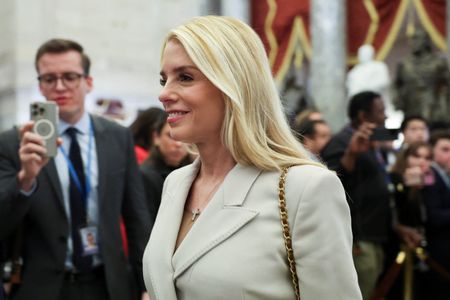
The situation presents Attorney General Pam Bondi and the Justice Department with a complex challenge as they navigate the uncharted territory of a president seeking compensation from his own government.
WASHINGTON – The head of the Federal Communications Commission pushed back Wednesday against claims that federal regulators forced CBS to block a political interview on Stephen Colbert’s late-night program, while also announcing an official probe into ABC’s daytime talk show “The View.”
FCC Chairman Brendan Carr verified that his agency has launched an enforcement action to determine whether ABC’s popular morning program broke federal equal time regulations regarding political candidate appearances.
The controversy began when Colbert revealed Monday that CBS attorneys prevented him from broadcasting a sit-down interview with James Talarico, a Democratic state lawmaker from Texas seeking his party’s U.S. Senate nomination. According to Colbert, network legal teams made this decision following updated FCC guidelines issued in January that removed previous exemptions for daytime and late-night talk shows from equal time requirements when featuring political candidates.
PHILADELPHIA (AP) — Federal officials are challenging a court ruling that mandated the return of a historical display about nine enslaved individuals who lived at George Washington’s former residence in Philadelphia’s Independence Mall.
The Justice Department maintains that federal authorities have exclusive control over the narratives presented at National Park Service locations. Last month, park officials suddenly took down displays at the Philadelphia location, leading the city and exhibit supporters to file legal action.
On Monday, U.S. Senior Judge Cynthia M. Rufe issued a temporary restraining order requiring the materials to be put back in place during ongoing litigation and preventing Trump administration officials from developing new historical interpretations for the site. The following day, the administration submitted an appeal notice to the 3rd U.S. Circuit Court of Appeals in Philadelphia.
Judge Rufe, who was nominated by Republican President George W. Bush, drew parallels between President Donald Trump’s administration and the authoritarian government depicted in George Orwell’s dystopian work “1984,” which altered historical documentation to support its agenda.
“As if the Ministry of Truth in George Orwell’s 1984 now existed, with its motto ‘Ignorance is Strength,’ this Court is now asked to determine whether the federal government has the power it claims — to dissemble and disassemble historical truths when it has some domain over historical facts,” Rufe wrote. “It does not.”
Philadelphia, recognized as the birthplace of America, anticipates hosting millions of visitors this year as the nation marks the 250th anniversary of its establishment in 1776.
This location is part of a broader pattern where the current administration has discretely eliminated educational materials addressing the experiences of enslaved individuals, LGBTQ+ communities, and Native American populations at various historical sites.
State education officials are taking steps to shut down a Delaware charter school after identifying serious problems with its operations.
The Charter School Accountability Committee within Delaware’s Department of Education voted Tuesday to pursue closure of the Bryan Allen Stevenson School of Excellence, commonly known as BASSE. The panel cited multiple issues including problems with student enrollment numbers, financial management, and organizational structure.
Community members will have a chance to weigh in on the closure proposal during a public hearing set for 5 p.m. on March 9. The meeting will take place at Delaware Technical Community College’s Owens Campus located in Georgetown.
The hearing will also include time for public comments regarding the committee’s recommendation to terminate the school’s operating charter.
A senior economic advisor to President Trump is calling for disciplinary action against Federal Reserve researchers who published findings that contradict the administration’s position on trade tariffs.
Kevin Hassett, who leads the White House’s National Economic Council, delivered harsh criticism Wednesday of a New York Federal Reserve study examining who pays the price for increased import taxes. The research concluded that Americans shoulder the burden of tariff costs, contradicting the Trump administration’s longstanding claim that foreign nations absorb these expenses.
During a CNBC interview, Hassett denounced the research in strong terms. “The paper is an embarrassment,” he stated. “It’s, I think, the worst paper I’ve ever seen in the history of the Federal Reserve System” and “the people associated with this paper should presumably be disciplined” for writing it.
Hassett further criticized the methodology behind the study, claiming the New York Fed researchers have “put out a conclusion which has created a lot of news that’s highly partisan based on analysis that wouldn’t be accepted in a first semester econ class.”
The disputed research analyzed the effects of the president’s substantial increases in import duties and determined that domestic consumers and businesses ultimately pay these costs rather than foreign exporters. Similar conclusions have emerged from other economic studies on the topic.
Officials at the New York Federal Reserve had not provided a response to requests for comment regarding Hassett’s statements.
MONTGOMERY, Ala. — Republican lawmakers in Alabama have passed new legislation that would significantly limit the state’s power to create environmental regulations beyond federal requirements, mirroring the deregulatory approach championed by President Donald Trump’s administration.
The Alabama Legislature voted Tuesday to approve the business-backed measure, which blocks state agencies from establishing pollution standards that surpass federal guidelines. When federal standards don’t exist, Alabama could only create new environmental rules by proving a “direct causal link” between harmful emissions and “manifest bodily harm” to people.
Advocates of the Alabama bill argue it ensures regulations are based on “sound science” and prevents government overreach. However, environmental advocates warn the legislation will severely handicap the state’s capacity to address environmental and public health threats, including PFAS contamination — commonly called forever chemicals — that has affected large portions of the South.
Sarah Stokes, a senior attorney with the Southern Environmental Law Center, described the bill as creating an “impossible hurdle” for state environmental protections because it specifies that simply showing an “increased risk of disease” isn’t sufficient to prove harm to people.
“It’s a blank check to businesses. We’re basically sacrificing human health for businesses,” Stokes stated. “That doesn’t seem like the best calculation for our citizens.”
The U.S. Chamber of Commerce and various business organizations endorsed the legislation. Republican Sen. Donnie Chesteen, who sponsored the bill, described it as “pro-business” legislation during committee hearings this month.
“If we’re going to be able to compete with states in the Southeast to attract and bring some of these businesses in, then we need to have these standards adopted so that it’s clearly defined what our companies are working with,” Chesteen explained. Supporters also pointed to the measure as aligned with Trump’s deregulatory policies.
“This does not remove the use of sound science and legitimate science,” Republican Rep. Troy Stubbs stated during floor debate. “What it does is protect Alabama and the people of Alabama from runaway government that can become overly burdensome and regulatory to a point that it drives the cost of living way up.”
Stubbs argued the legislation wouldn’t weaken current regulations, claiming existing state environmental rules would remain unchanged. Environmental attorney Stokes, however, expressed worry that companies might use the new law to challenge current regulations.
This Alabama action represents part of a broader movement to constrain state environmental oversight. Indiana Gov. Mike Braun issued an executive order last year preventing Indiana from implementing environmental regulations stricter than federal ones without state law authorization or gubernatorial approval. Tennessee legislators passed similar legislation last year mandating that regulations exceeding federal standards demonstrate connections to “manifest bodily harm in humans.”
Stokes noted that Alabama’s proposal extends further than Tennessee’s law. Similar legislation has been proposed in Utah.
According to Stokes, the Alabama bill emerged after advocacy organizations convinced the Alabama Environmental Management Commission to consider updating state standards for arsenic, cyanide, and eleven other toxic substances.
Cara Horowitz, an environmental law professor and executive director of the Emmett Institute on Climate Change and the Environment at UCLA School of Law, said the legislation would block state agencies from making “independent decisions about how much to protect public health from things like water pollution, air pollution, and toxics.”
“Alabama could adopt its own pollution standard only where the state’s rationale for doing so relies on a very particular kind of science,” Horowitz explained in an email. “Alabama could not rely, for example, on studies showing a correlation between pollution exposure and an increased risk of disease.”
The legislation also prohibits agencies from using the EPA’s Integrated Risk Information System as the primary foundation for water quality standards. This system evaluates health risks from environmental chemicals, but chemical industry lobbying groups have criticized it as excessively restrictive and scientifically questionable.
Alabama Democrats opposed the bill during two hours of debate before GOP legislators voted to halt discussion and force the vote.
Democratic Rep. Chris England argued the bill transforms Alabama citizens into experimental subjects. “We are a petri dish for businesses to do as they will until they kill people,” England declared.
Rep. Neil Rafferty, also a Democrat, said the bill is “defining sound science just to gut our ability to use it to drive science-based and data-driven policy.”
The state House of Representatives approved the measure 88-34, sending it to Republican Gov. Kay Ivey. Her office has not yet responded to requests for comment.
WASHINGTON — Health and environmental organizations filed a federal lawsuit Wednesday against the Environmental Protection Agency, contesting the agency’s recent decision to overturn a key scientific determination that has served as the foundation for U.S. greenhouse gas regulations and climate action.
The EPA finalized a rule Thursday that eliminates a 2009 government declaration — called the endangerment finding — which concluded that carbon dioxide and other greenhouse gases pose a threat to public health and welfare. This Obama-era determination has served as the legal foundation for nearly all climate regulations under the Clean Air Act, covering motor vehicles, power plants and other pollution sources contributing to global warming.
The reversal removes all greenhouse gas emission standards for cars and trucks and could trigger a wider dismantling of climate regulations on stationary sources like power plants and oil and gas operations, according to experts.
The legal challenge was filed in the U.S. Court of Appeals for the District of Columbia Circuit, arguing that the EPA’s elimination of the endangerment finding violates the law. The 2009 determination backed sensible protections to reduce climate pollution, including from cars and trucks, according to the lawsuit. Vehicle standards implemented by the Biden administration were designed to “deliver the single biggest cut to U.S. carbon pollution in history, save lives and save Americans hard-earned money on gas,” the coalition stated in their court filing.
Following almost twenty years of scientific evidence that supports the 2009 determination, “the agency cannot credibly claim that the body of work is now incorrect,” stated Brian Lynk, a senior attorney at the Environmental Law & Policy Center.
“This reckless and legally untenable decision creates immediate uncertainty for businesses, guarantees prolonged legal battles and undermines the stability of federal climate regulations,” Lynk stated.
Organizations bringing the lawsuit include the American Public Health Association, American Lung Association, Alliance of Nurses for a Healthy Environment and Physicians for Social Responsibility, alongside environmental organizations such as the Center for Biological Diversity, Conservation Law Foundation, Environmental Defense Fund, Natural Resources Defense Council and Sierra Club.
The lawsuit names EPA Administrator Lee Zeldin and the EPA as defendants.
President Donald Trump described the reversal as “the single largest deregulatory action in American history, by far,” while Zeldin characterized the endangerment finding as “the Holy Grail of federal regulatory overreach.”
The endangerment finding “led to trillions of dollars in regulations that strangled entire sectors of the United States economy, including the American auto industry,” Zeldin stated. “The Obama and Biden administrations used it to steamroll into existence a left-wing wish list of costly climate policies, electric vehicle mandates and other requirements that assaulted consumer choice and affordability.”
Environmental organizations characterized the action as the largest assault in U.S. history on federal authority to combat climate change. Scientific evidence supporting the endangerment finding has only strengthened in the 17 years since its approval, they argued.
The Clean Air Act legally requires EPA to restrict emissions of any air pollutant that causes or contributes to “air pollution that may reasonably be anticipated to endanger public health or welfare.” In 2007, the Supreme Court ruled in Massachusetts v. EPA that carbon dioxide and other greenhouse gases qualify as “air pollutants” under the Clean Air Act and directed EPA to make a science-based determination about whether that pollution endangers human health and welfare. EPA reached that conclusion in 2009, leading to new vehicle standards. The agency used that finding as the basis for additional standards.
The EPA’s own research determined that removing the vehicle standards will raise gas prices and force Americans to pay more for fuel, advocates noted.
The EPA’s elimination of the endangerment finding, combined with removing protections that limit vehicle emissions, “marks a complete dereliction of the agency’s mission to protect people’s health and its legal obligations under the Clean Air Act,” said Dr. Gretchen Goldman, president and CEO at the Union of Concerned Scientists.
“This shameful and dangerous action … is rooted in falsehoods, not facts, and is at complete odds with the public interest and the best available science,” Goldman stated. Heat-trapping emissions and global average temperatures continue rising — mainly from burning fossil fuels — creating mounting human and economic costs worldwide, she noted.
Recent special election victories haven’t lifted Democratic spirits, as a fresh survey from The Associated Press-NORC Center for Public Affairs Research shows party members remain discouraged following President Donald Trump’s 2024 election triumph.
The polling data reveals that roughly 70% of Democratic Party members maintain a favorable opinion of their organization. Though most Democrats continue supporting their party, this represents a significant drop from previous levels of enthusiasm.
With midterm elections still months ahead, weak approval ratings don’t necessarily predict electoral failure. Democrats may benefit from other circumstances this year, particularly widespread negative opinions about Trump and Republican officials.
However, this enthusiasm gap could create lasting challenges for the party. Democratic support for their own organization crashed following the 2024 election results. Even after decisive November victories in off-year races and subsequent electoral successes, member confidence hasn’t rebounded.
Environmental and health advocacy organizations filed a federal lawsuit Wednesday against the Environmental Protection Agency, contesting the agency’s decision to eliminate a key scientific determination that has served as the foundation for U.S. greenhouse gas regulations and climate change efforts.
Last week’s finalized regulation eliminates a 2009 government declaration called the endangerment finding, which established that carbon dioxide and additional greenhouse gases pose risks to public health and safety. This Obama administration determination supports virtually all climate-related regulations under Clean Air Act provisions covering automobiles, power facilities, and other sources contributing to planetary warming.
EPA Administrator Lee Zeldin described the endangerment finding as federal regulatory excess, while lawsuit supporters argue it provided reasonable protections to reduce climate pollution from vehicles and other sources.
The sleek black-and-white strapless dress came from her regular fashion designer and stylist, Herve Pierre, whose design and fitting process appears in “Melania,” her recently launched documentary.
Trump plans to donate the dress to the Smithsonian Institution’s National Museum of American History on Friday, White House officials announced. The museum operates a well-known first ladies exhibition displaying over two dozen of their formal gowns.
This marks Trump’s second contribution to the collection. In 2017, she donated the cream-colored off-the-shoulder dress from that year’s inaugural celebrations, also created by Pierre.
Even with internal party dissatisfaction, Democrats maintain at least one possible edge heading into midterm election season.
Approximately 35% of American adults trust Democrats to better manage healthcare issues, while only 23% prefer Republicans on this topic.
Meanwhile, Republicans have seen their standing decline on issues central to Trump’s reelection success — economic policy and immigration — though Democrats haven’t gained ground in these areas.
Just 31% of Americans now trust Republicans with economic management, dropping from 36% the previous year. Democrats haven’t improved their economic credibility; instead, more Americans now say they trust “neither” party.
The dissatisfaction extends beyond Democrats — Americans currently express lukewarm feelings toward both major parties.
Roughly one-third of U.S. adults view either the Democratic or Republican Party positively, the AP-NORC survey found. About 25% of Americans dislike both organizations, with this dual negativity particularly pronounced among independent voters and those under 45.
Democratic popularity decline appears more recent. Gallup polling spanning 25 years indicates Americans previously held much more positive views of Democrats. Public opinion shifted against them around 2010, and since then, at least half of Americans have maintained unfavorable party views.
Current negative Democratic perceptions match the Republican Party’s lowest historical approval periods.
Democratic enthusiasm for their organization dropped after Trump secured the presidency in 2024. Despite multiple recent special election victories, polling indicates party morale remains depressed.
Fresh AP-NORC data confirms that 70% of Democratic Party members maintain positive party views. While most Democrats still support their organization, current enthusiasm levels fall well below historical standards.
Democratic self-approval collapsed following the 2024 election, tumbling from 85% in September 2024 to 67% by October 2025.
A coalition of national park supporters and teachers has filed a federal lawsuit challenging the Trump administration’s efforts to remove educational exhibits that address slavery, the forced relocation of Native Americans, and other difficult periods in the nation’s past.
The legal action seeks to prevent park officials from dismantling displays that educate visitors about these challenging historical topics at national park sites across the country.
The plaintiffs argue that removing these educational materials would eliminate important opportunities for Americans to learn about and confront the more troubling aspects of the nation’s history.
Lewes residents have the opportunity to examine their city’s property assessment records for 2026, according to a notice from municipal officials.
The comprehensive assessment documentation can be accessed at the City Manager’s Office inside City Hall at 114 E. Third Street in Lewes. For those who prefer digital access, the records are also available through the city’s website.
The public review period runs from February 13, 2026, through March 6, 2026, giving property owners and interested residents approximately three weeks to examine the assessment information.
Television comedian Stephen Colbert continues his public confrontation with CBS management regarding content restrictions on his late-night program.
During Tuesday’s broadcast of “The Late Show,” Colbert expressed shock at CBS’s public denial that network attorneys had prevented him from airing a segment featuring Democratic Texas Senate hopeful James Talarico the previous evening.
In a theatrical display of frustration, the host placed CBS’s official statement inside a pet waste bag before discarding it on stage.
The comedian had published his Talarico conversation on YouTube instead, explaining to his audience the network’s concerns about FCC Chairman Brendan Carr potentially implementing “equal time” regulations requiring broadcasters to offer similar airtime to rival candidates following political interviews.
“We looked and we can’t find one example of this rule being enforced for any talk show interview, not only for my entire late-night career, but for anyone’s late-night career going back to the 1960s,” Colbert stated.
While Carr mentioned in January his consideration of eliminating late-night show exemptions, no such action has occurred. “But CBS generously did it for him,” Colbert remarked.
The host revealed that CBS executives knew Monday evening he planned to address this matter publicly, with network attorneys approving his prepared remarks. This made their subsequent statement claiming they provided “legal guidance” about equal time violations particularly surprising to him.
“I don’t know what this is about,” Colbert said. “For the record, I’m not even mad. I really don’t want an adversarial relationship with the network. I’ve never had one.”
He criticized what he called the failure of “this giant global corporation” to resist intimidation tactics. Paramount Global owns CBS.
Colbert’s tenure at CBS will conclude in May following the network’s announcement last summer. While CBS cited financial considerations for ending the program, which frequently mocks President Donald Trump, both Colbert and observers question whether Trump’s ongoing criticism influenced the decision.
This controversy mirrors last fall’s incident when ABC temporarily removed Jimmy Kimmel from broadcasts over comments about conservative activist Charlie Kirk’s death, later reversing course after viewer backlash.
By Wednesday morning, Colbert’s YouTube conversation with Talarico had attracted over five million views, approximately twice his typical CBS viewership.
Meta’s chief executive Mark Zuckerberg is scheduled to provide testimony before a jury today as part of legal proceedings examining the potential connection between social media platforms and rising mental health issues among adolescents.
The Facebook founder’s court appearance comes as part of ongoing litigation that questions whether social networking sites are contributing factors in the current teen mental health emergency affecting young people across the nation.
In separate news from Washington, Department of Homeland Security communications director Tricia McLaughlin has announced she will be stepping down from her role within the federal agency.
The image shows Zuckerberg at a White House gathering with technology industry leaders hosted by President Trump in the State Dining Room on September 4, 2025.
WASHINGTON — Despite winning several recent special elections, the Democratic Party continues to struggle with internal approval ratings following Donald Trump’s 2024 presidential victory, according to fresh polling data from the AP-NORC Center for Public Affairs Research.
The survey shows that roughly 70% of Democratic voters maintain positive feelings toward their party — a significant drop from the 85% approval rating recorded in September 2024, which fell to 67% by October 2025. This decline represents an unusually steep fall in party confidence that hasn’t recovered despite recent electoral successes.
While midterm elections remain months away and poor favorability ratings don’t guarantee electoral failure, the enthusiasm gap could present long-term challenges for the party. Historical trends typically favor the opposition party during midterm cycles, and negative public opinion of Trump and Republicans, combined with independent voters gravitating toward the out-of-power party, may still benefit Democrats.
The internal dissatisfaction spans all demographic groups within the Democratic base, cutting across age, race, ideology, and education levels — indicating that targeted appeals to specific voter segments won’t easily resolve the issue.
Gallup polling confirms this trend, showing a 12-percentage-point decline in Democratic self-approval over the past year, marking the lowest rating since tracking began in 2001. Notably, Democrats didn’t experience similar drops after Trump’s initial 2016 victory.
Additional research from Pew Research Center found that approximately two-thirds of Democrats reported feeling “frustrated” with their party in September, compared to just 40% of Republicans expressing similar sentiments about the GOP. Among frustrated Democrats, roughly 40% believed their party wasn’t fighting Trump aggressively enough, while about 10% cited poor leadership and lack of unified messaging.
The discontent extends beyond party lines, with roughly one-quarter of all Americans holding negative views of both major political parties, particularly among independent voters and those under 45. Only about half of U.S. adults view one party positively, while just 10% approve of both parties.
Long-term Gallup data indicates that Democratic favorability among the general public began declining around 2010, with at least half of Americans maintaining unfavorable views since then. Current negative ratings for Democrats now match the worst periods for Republican approval.
However, some opportunities exist for Democrats heading into the midterm cycle. Healthcare remains a top priority for Americans as costs continue rising, with 35% trusting Democrats to handle the issue better compared to 23% for Republicans — numbers consistent with October 2025 polling.
Republicans have lost ground on Trump’s signature campaign issues. Public trust in the GOP’s economic stewardship dropped from 36% to 31% over the past year, though Democrats haven’t capitalized on this decline, with more Americans now saying they trust neither party on economic matters. No party holds an advantage on cost-of-living concerns, according to the latest survey.
Immigration presents a similar pattern, with Republican trust falling from 39% to roughly one-third of adults, but Democrats haven’t gained from this shift either.
The AP-NORC survey interviewed 1,156 adults between February 5-8 using NORC’s AmeriSpeak Panel, designed to represent the U.S. population. The overall margin of error is plus or minus 3.9 percentage points, with a plus or minus 6.0 percentage point margin for Democratic respondents specifically.
Utah state legislators are examining proposed legislation that would give college students the right to refuse academic assignments that go against their religious convictions. Republican State Representative Mike Peterson has put forward the bill after his own daughter faced what he considers a problematic classroom situation. According to Peterson’s account to the Salt Lake Tribune, a professor required his daughter to compose a letter to a government official advocating for LGBT-related policies. Peterson explained his rationale for the legislation, stating “Sometimes a student gets put in a position where it violates their conscience and have no recourse.” The proposed measure aims to provide students with an alternative when they believe their coursework conflicts with their deeply held faith-based principles.
Defense attorneys across the country are keeping close watch on what they describe as a shift in the Justice Department’s approach to criminal prosecutions.
Legal professionals are documenting cases where federal prosecutors appear to be employing unconventional charging strategies, including what some characterize as aggressive legal theories and potential politically-motivated prosecutions.
The attorneys are systematically monitoring instances where the DOJ’s charging decisions seem to deviate from traditional prosecutorial practices, raising questions about consistency in how federal cases are being handled.
This increased scrutiny comes as defense lawyers note patterns in federal charging decisions that they believe represent a departure from historical norms in criminal justice proceedings.
Civil rights activists across the nation are mourning the loss of Jesse Jackson while vowing to carry forward his decades-long mission for racial equality following his death Tuesday at 84.
Jackson emerged as a pivotal figure in America’s civil rights movement following Martin Luther King Jr.’s assassination in 1968, dedicating over fifty years to breaking down segregation barriers and expanding political involvement for Black Americans and other underrepresented groups.
However, civil rights and diversity programs nationwide now face mounting challenges under the current Trump administration’s policies.
The federal government has rolled back diversity initiatives and targeted educational materials about slavery that officials label “anti-American.” The administration has also backed efforts to restore Confederate monuments honoring Civil War leaders who defended slavery. Civil rights advocates express concern that these actions threaten to reverse decades of advancement.
Through a series of interviews with civil rights leaders and experts, many expressed alarm that Jackson’s dream of a unified, multiracial American democracy faces serious threats in today’s polarized political environment.
National Urban League President and CEO Marc Morial warned: “We’re in a moment where the fabric and the social compact of America, which included rights, could be unraveled and we could be on the brink of a long period of division and hate in America.”
“The last 60 to 70 years have been about building this multicultural, multiracial democracy in America and we’re in a period of danger,” Morial added.
President Trump offered his condolences on Truth Social, sharing multiple photographs with Jackson and calling him “a good man, with lots of personality, grit, and ‘street smarts’” while describing the civil rights leader as “a force of nature.”
When contacted about Jackson’s passing, the White House directed inquiries to Trump’s social media statement. Officials did not immediately respond to questions regarding the elimination of diversity programs.
CARRYING FORWARD JACKSON’S MISSION
Jackson, who launched two campaigns for the Democratic presidential nomination, became renowned for his magnetic ability to channel grassroots energy into electoral power — registering millions of new voters through his National Rainbow Coalition while remaining at the forefront of racial justice activism.
Civil rights leaders emphasized that such political engagement remains crucial today.
Civil rights lawyer and Democratic analyst Areva Martin stressed the importance of preserving Jackson’s legacy through continued organizing and advocacy for civil and voting rights, especially as the Trump administration dismantles diversity programs, intensifies immigration enforcement, and challenges foundational civil rights laws like the 1965 Voting Rights Act that prohibited nationwide voting discrimination.
“We need to pick up the mantle,” Martin declared. “If Jesse Jackson were able-bodied he would have been out across the country organizing voters and building coalitions. He would know that’s the only way to fight to win back Congress and reverse the damage done by this administration.”
Community organizers have raised concerns about aggressive immigration enforcement operations and raids in Democratic strongholds, disproportionately affecting Black and Latino neighborhoods in what advocates describe as efforts to diminish immigrant communities’ voting influence.
NAACP President Derrick Johnson announced that his organization will intensify outreach initiatives leading up to November’s midterm elections in Jackson’s honor, highlighting multiple legal challenges addressing alleged voter suppression and registration efforts.
“Jesse Jackson is American history,” Johnson stated. “His legacy demonstrates how one can use their voice and a platform to advance interest in causes that are pro-democracy, pro-America and pro-bringing people together.”
The Movement for Black Lives, which energized the 2020 racial justice demonstrations, committed to continuing Jackson’s tradition of electoral participation.
The group is establishing nationwide rapid-response “community care networks,” already activated to distribute food and essential supplies in at least seven cities during ongoing federal immigration operations.
“He had the audacity — from his presidential run, being that Black left voice and being unapologetic about the need for us to form coalitions and engage with systems,” explained Dr. Amara Enyia, the movement’s co-executive director.
Jackson established the Chicago-headquartered civil rights organizations Operation PUSH and the National Rainbow Coalition, later merged into the Rainbow PUSH Coalition.
Ziff Sistrunk, a 70-year-old Chicago local, regularly participates in complimentary Saturday morning community breakfasts at the organization’s offices that combine social connection with civic participation.
“Jackson showed us how to resist, he showed us how to protest and how to be a statesman,” Sistrunk reflected. “All we have to do for the next generation who want to make changes is use his life as an example.”
Federal officials are advancing plans to construct additional border barrier sections through areas known for their environmental significance and cultural importance. Community organizers are making urgent appeals to congressional representatives to intervene and prevent the construction work.
The proposed wall segments would cut through regions that activists say contain delicate ecosystems and sites of cultural value. Environmental advocates worry about the potential impact on local wildlife habitats and protected natural areas.
Opposition groups are mobilizing efforts to pressure lawmakers into blocking the construction plans before work begins in these sensitive locations.
Immigration and Customs Enforcement officials conducted a large-scale detention operation in Maine over several days, resulting in more than 200 people being taken into custody. The agency has confirmed that a portion of those detained during the enforcement action have subsequently been released.
The multi-day sweep represents a significant immigration enforcement effort in the state, with ICE agents focusing their activities over a concentrated time period. While the exact number of those released has not been specified, officials indicate that some individuals are returning to communities within Maine.
Environmental and historical preservation organizations filed a federal lawsuit Tuesday challenging the Trump administration’s National Park Service policies, which they claim are removing crucial historical and scientific information from America’s national parks.
The legal action targets what the groups describe as systematic efforts to eliminate educational content and interpretive materials that have traditionally helped visitors understand the historical and scientific significance of these protected sites.
The lawsuit comes amid ongoing debates about how historical events and scientific information should be presented at federally managed locations across the country.
The conservation and historical organizations argue that these policy changes undermine the educational mission of the National Park Service and deprive the public of important information about American history and natural science.
LOS ANGELES — A California ballot initiative targeting the state’s wealthiest residents is creating a political rift between prominent Democrats at a time when party unity is crucial for upcoming midterm elections.
Vermont Senator Bernie Sanders is scheduled to hold a rally Wednesday afternoon in Los Angeles, advocating for a controversial tax measure that would impose a 5% levy on billionaire assets. The proposal has sparked fierce opposition from California’s tech industry, with some executives threatening to relocate if the measure passes.
Governor Gavin Newsom stands firmly against the initiative, expressing concerns that it could destabilize state revenues and damage California’s economic competitiveness on a national scale.
The progressive senator from Vermont, known for his democratic socialist views, has maintained strong support in California since winning the state’s 2020 Democratic presidential primary by a wide margin. Sanders has spent decades criticizing wealthy elites and highlighting income inequality.
A major healthcare union is spearheading efforts to get the November ballot measure approved, which would create a one-time 5% assessment on billionaire holdings including stocks, artwork, businesses, collectibles and intellectual property. Revenue would help replace federal healthcare funding for low-income residents that was eliminated under former President Trump’s administration.
Sanders expressed his backing for the tax on social media platform X, stating he “strongly supports” the measure “at a time of unprecedented and growing wealth and income inequality.”
“Our nation will not thrive when so few own so much,” Sanders wrote.
The debate emerges as Americans across party lines express anxiety about economic conditions and the country’s direction amid deep political divisions. Public skepticism toward government effectiveness remains high.
This disagreement has placed Newsom at odds with Sanders and other progressive Democrats, who view the California tax as a model for similar initiatives nationwide.
Brian Brokaw, a veteran Newsom advisor leading opposition efforts, argued the proposal wouldn’t address key Democratic priorities. “The issues that are really going to be motivating Democrats this year, affordability and the cost of health care and cuts to schools, none of these would be fixed by this proposal. If fact, they would be made worse,” Brokaw said.
Historical patterns show midterm elections typically favor the party not holding the presidency, with Democrats working to gain enough House seats to flip the chamber’s narrow Republican control. California’s newly drawn congressional districts could potentially deliver up to five additional Democratic seats, leaving the GOP with minimal representation.
University of California, Berkeley political science professor Eric Schickler noted the political challenges. “It is always better for a party to have the political debate focused on issues where you are united and the other party is divided,” Schickler explained. “Having an issue like this where Newsom and Sanders — among others — are on different sides is not ideal.”
However, Schickler acknowledged that billionaire taxation resonates with many voters, potentially helping Democratic candidates “rally that side and break through from the pack.”
The measure has already influenced gubernatorial and down-ballot races. Republican candidates Chad Bianco and Steve Hilton have criticized the tax as job-destroying, while Democratic San Jose Mayor Matt Mahan argues inequality issues should be addressed through federal tax code reforms.
Opposition groups are launching targeted digital campaigns and email outreach to influence party leaders, timing their efforts with Sanders’ visit and this weekend’s state Democratic convention.
Whether voters will see the proposal remains uncertain, as supporters must collect over 870,000 petition signatures to qualify for the ballot.
The campaign has already attracted substantial financial backing on both sides, with millions flowing into competing political committees.
Newsom has consistently opposed state wealth taxes, viewing them as harmful to California’s status as the world’s fourth-largest economy. Facing budget constraints and considering a potential 2028 presidential campaign, the governor is working to prevent the measure from reaching voters.
Policy experts warn that wealthy residents leaving the state could cost California hundreds of millions in tax revenue. Supporters counter that the funding is essential to maintain vital services that would otherwise be lost due to federal budget cuts.
COLUMBUS, Ohio — Congressional investigators will question billionaire retail executive Les Wexner behind closed doors Wednesday about his controversial relationship with convicted sex offender Jeffrey Epstein, following the release of new Justice Department documents.
The 88-year-old former L Brands founder has agreed to comply with a subpoena issued by House Oversight and Government Reform Committee Democrats.
Wexner’s connection to Epstein has drawn scrutiny for years, given their extensive business relationship spanning decades. Court filings include allegations from prominent Epstein victim Virginia Giuffre, who claimed Wexner was among those to whom Epstein trafficked her.
The retail magnate has repeatedly rejected any knowledge of or participation in Epstein’s criminal activities and states he never encountered Giuffre. Speaking to L Brands shareholders in 2019, Wexner expressed shame for his association with someone “so sick, so cunning, so depraved.”
No criminal charges have been filed against Wexner, and the Justice Department documents indicate Epstein did not operate a sex trafficking network.
The recently released files mention Wexner’s name over 1,000 times, which his representative described as unsurprising considering their lengthy partnership. These records provide fresh insights into their association, which concluded acrimoniously when Wexner and his spouse Abigail discovered Epstein had embezzled funds from them.
The two men first crossed paths through a mutual business contact around 1986.
This timing proved beneficial for Wexner’s financial interests. The successful Ohio entrepreneur had expanded from operating one Limited store in Columbus to controlling major retail brands of the 1980s mall era: The Limited, Limited Express, Lane Bryant and Victoria’s Secret. His empire later encompassed Abercrombie & Fitch, Lerner, White Barn Candle Co. and additional brands.
By the late 1980s, Wexner had entrusted management of his substantial wealth to Epstein. Documentation reveals that in 1991, he granted Epstein power of attorney, enabling him to handle investments, conduct business transactions, acquire real estate, and help develop what became Wexner’s extensive New Albany, Ohio estate. Wednesday’s testimony will occur either at that location or in the vicinity, according to participating legislators.
Speaking to Vanity Fair in 2003, Wexner praised Epstein’s “excellent judgment and unusually high standards,” calling him “always a most loyal friend.”
Among the newly disclosed documents, Epstein wrote personal notes about Wexner stating: “never ever, did anything without informing les” and “I would never give him up.” Another document, appearing to be an unsent letter to Wexner, referenced their “gang stuff” spanning over 15 years and described their mutual dependence — with Wexner enriching Epstein while Epstein increased Wexner’s wealth.
A Wexner representative confirmed he never received this correspondence.
“It appears Epstein was furious that Mr. Wexner refused to meet with him years after Mr. Wexner terminated Epstein and cut off all ties with him following Mr. Wexner’s discovery of Epstein’s theft and criminal conduct,” spokesperson Tom Davies stated. “The draft appears to fit a pattern of untrue, outlandish, and delusional statements made by Epstein in desperate attempts to perpetuate his lies and justify his misconduct.”
Wexner only disclosed publicly after Epstein’s July 2019 federal sex trafficking arrest that he had ended their relationship. In an August Wexner Foundation statement, he indicated this occurred in 2007. However, the newly released Justice Department records demonstrate continued communication beyond that date.
On June 26, 2008, Wexner sent Epstein an email following announcement of a plea agreement requiring 18 months in Florida jail on state charges of soliciting prostitution from a minor to avoid federal prosecution. Epstein ultimately served 13 months.
“Abigail told me the result… all I can say is I feel sorry. You violated your own number 1 rule…always be careful,” Wexner wrote. Epstein responded: “no excuse.”
Davies clarified that the 2007 date Wexner referenced in 2019 pertained to dismissing Epstein as financial advisor, canceling his power of attorney and removing his access to Wexner’s banking accounts.
In his 2019 statement, Wexner also revealed that Epstein had stolen “vast sums” from his family’s fortune during his financial oversight role. An investigative memo from the recent document release indicates Wexner’s legal team informed investigators in 2008 that Epstein had returned $100 million, believed to represent only a fraction of the stolen amount.
The document releases have empowered sexual assault survivors and intensified pressure on Wexner.
Epstein survivor Maria Farmer expressed vindication following a redacted FBI report in the documents confirming she filed among the earliest complaints against Epstein.
Despite the complaint documenting his possession of underage nude photographs, the records have renewed focus on Farmer’s disturbing account of an alleged forced sexual encounter with Epstein and Ghislaine Maxwell during summer 1996 at Epstein’s New Albany residence. This property sat approximately half a mile from the Wexner family home. The Wexners maintain they remained unaware of Farmer’s allegations until media reports surfaced years later.
Concurrently, survivors of another sexual predator — deceased Dr. Richard Strauss, a former Ohio State University team physician found to have sexually abused at least 177 male students over multiple years — are referencing Wexner’s Epstein connection in their effort to remove his name from a campus football facility funded by his donations. Their petition awaits review by a university committee. Davies declined to comment.
The alumni group achieved a legal success last week when a district court judge ruled they can compel Wexner’s testimony in their lawsuit against the university. He served on Ohio State’s board of trustees during the period when Strauss, who died before his crimes were exposed, committed his offenses.
Additionally, an Ohio State representative confirmed that Dr. Mark Landon, head of the Department of Obstetrics and Gynecology, is cooperating with the school’s investigation regarding his mention in the Epstein files. Recent documents revealed Epstein retained Landon in 2006 for $25,000 quarterly.
“I did not provide any clinical care for Jeffrey Epstein or any of his victims,” Landon stated. “I was a paid consultant for the New York Strategy Group regarding potential biotech investments from 2001 to 2005.” Davies indicated the consultation Epstein sought was conducted on the Wexners’ behalf.
The Trump administration has announced George Kelesis as its latest nominee for Nevada’s chief federal prosecutor role, following ongoing legal disputes over the current appointee’s qualifications to serve in the position.
The White House revealed Kelesis’s nomination last week. The longtime Nevada criminal defense lawyer would take over from Sigal Chattah, who has held the role since her appointment in March but whose legal authority to serve is currently being examined by an appellate court.
Chattah represents one of multiple Trump nominees for U.S. attorney positions who failed to receive Senate confirmation and have been deemed legally ineligible for their roles by federal courts. Similar eligibility disputes have recently forced appointees in New Jersey and Virginia to step down, while another in California continues serving under a modified title.
When contacted for comment, Chattah chose not to respond.
While the nation’s chief federal prosecutors generally need Senate approval, federal law allows the attorney general to make interim appointments.
Attorney General Pam Bondi has worked in multiple instances to extend the tenure of appointees lacking sufficient bipartisan backing for confirmation beyond normal time limits. These efforts have sparked legal challenges from criminal defendants and opposition from judges who consider the appointments improper.
A federal district judge determined in September that Chattah lacks valid authority in her position but permitted her to continue handling certain cases during the appeals process. The 9th U.S. Circuit Court of Appeals conducted hearings last week without yet issuing a decision. Given losses in comparable cases, the selection of Kelesis suggests the administration anticipates an unfavorable outcome for Chattah.
A recent conflict concluded last month in Virginia’s Eastern District when Lindsey Halligan, a Trump supporter quickly appointed to the acting U.S. attorney position, announced her resignation. She had initiated prosecutions against two Trump critics, former FBI Director James Comey and New York Attorney General Letitia James. A court threw out those cases in November and declared her appointment unlawful. The Justice Department is challenging the dismissal of those prosecutions.
The administration faced a similar defeat in New Jersey when a federal judge determined Alina Habba had served as U.S. attorney beyond the permitted timeframe. Habba stepped down in December after an appeals court confirmed the lower court’s decision.
Bill Essayli, Trump’s selection for the Central District of California U.S. Attorney role, was also barred by a judge from serving as acting U.S. attorney. However, he remains the office’s senior prosecutor under the title First Assistant U.S. Attorney since the administration hasn’t nominated another candidate for the top position. The administration hasn’t indicated plans to replace him.
During last week’s appeals hearing, federal attorney Tyler Anne Lee contended that Chattah holds valid authority as acting U.S. attorney and may continue while Kelesis undergoes the nomination process. Should Kelesis face rejection or withdrawal of his nomination, Lee maintained that Chattah could remain in position for 210 days.
Kelesis might face better prospects for Senate confirmation, which generally demands bipartisan backing. Nevada’s Democratic Senators Catherine Cortez Masto and Jacky Rosen strongly opposed Chattah’s appointment, labeling her an extremist. They haven’t voiced similar objections to Kelesis. Cortez Masto plans to conduct a “tough, thorough interview with Kelesis,” according to her spokesperson Lauren Wodarski.
Kelesis maintains nonpartisan voter registration and has contributed to candidates from both major parties throughout his career. Since beginning his Las Vegas legal practice in 1981, he has specialized in white-collar criminal defense and tax-related civil and criminal litigation. He currently chairs the Nevada Tax Commission and has taught as an adjunct professor at the University of Nevada Las Vegas law school.
Similar to Chattah, he provided legal representation to a Nevada Republican accused of sending fraudulent certificates to Congress falsely claiming Trump won the state’s 2020 presidential election.
However, Chattah is generally considered more polarizing. Her unsuccessful 2022 state attorney general campaign included accusations of racist remarks about her opponent, Democrat Aaron Ford, who is Black. She has consistently promoted Trump’s debunked assertions about election fraud in 2020. She also represented religious institutions that challenged Nevada’s pandemic restrictions.
NEW YORK — A federal immigration court has halted deportation proceedings against Mohsen Mahdawi, a Palestinian graduate student who organized demonstrations at Columbia University opposing Israel and the conflict in Gaza.
Immigration Judge Nina Froes dismissed the case on Tuesday after discovering that federal prosecutors made a critical error in handling evidence. The government lawyers submitted a photocopied document without the required legal certification, violating federal procedures.
The decision represents another obstacle for the Trump administration’s broad campaign to remove pro-Palestinian campus organizers and other critics of Israeli policy from the United States. Federal officials retain the option to challenge the court’s decision.
Earlier this year, immigration authorities faced a similar defeat when another judge prevented the deportation of Rümeysa Öztürk, a graduate student at Tufts University who had written an editorial piece condemning her school’s handling of the Gaza situation.
Mahdawi has maintained legal permanent residency status in America for ten years after being born in a refugee settlement within the Israeli-controlled West Bank territory. Immigration officers detained him during a naturalization appointment last April, though a federal court ordered his release after two weeks.
Federal authorities have persisted in their removal efforts, referencing a policy statement from Secretary of State Marco Rubio that allows for expelling non-citizens whose activities could potentially conflict with American diplomatic objectives.
However, prosecutors presented only an uncertified photocopy of this directive to the immigration court, failing to meet mandatory documentation standards established by federal regulations.
“I am grateful to the court for honoring the rule of law and holding the line against the government’s attempts to trample on due process,” Mahdawi said in a statement released by his attorneys. “This decision is an important step towards upholding what fear tried to destroy: the right to speak for peace and justice.”
Mahdawi’s legal team has simultaneously filed a separate lawsuit in federal district court challenging the lawfulness of his initial detention. Those proceedings continue to move forward, according to his representatives.
The Department of Homeland Security has not responded to requests for comment regarding the court’s ruling.
Cecil County Executive Adam Streight is scheduled to present his annual State of the County address, delivering his remarks from Schafer’s Canal House located in Chesapeake City, Maryland.
The presentation, focusing on the county’s outlook for 2026, will provide residents with an overview of current initiatives and future planning efforts for the jurisdiction.
Schafer’s Canal House in Chesapeake City serves as the venue for this year’s address, where Streight will discuss county priorities and developments.
WASHINGTON – Vice President JD Vance voiced concerns Tuesday about the potential misuse of artificial intelligence technology by private corporations to monitor American citizens.
During an appearance on Fox News’ “The Story” program, Vance outlined his apprehensions about corporate AI applications. “I worry about companies using artificial intelligence to surveil Americans. I worry about invasions of privacy, I worry a lot about political bias,” the Vice President stated during the television interview.
The comments highlight growing national debate over how businesses implement AI technology and its implications for citizen privacy rights.
WASHINGTON — An 18-year-old Georgia man was taken into custody by U.S. Capitol Police on Tuesday following a dangerous incident where he sprinted toward the Capitol building while wielding a loaded shotgun.
Capitol Police Chief Michael Sullivan identified the suspect as Carter Camacho from Smyrna, Georgia. According to Sullivan, Camacho left his Mercedes SUV parked near the Capitol grounds and charged toward the building’s west entrance, covering “several hundred yards” while armed before officers stopped him and commanded him to drop his weapon and lie down.
During a news briefing after the incident, Sullivan revealed that Camacho was dressed in tactical gear including a protective vest and gloves. Officers also discovered a Kevlar helmet and gas mask inside his vehicle. Sullivan confirmed the shotgun contained ammunition and that Camacho carried extra rounds with him.
Authorities are still investigating what motivated the attack, including whether Camacho intended to target specific members of Congress, Sullivan stated. Currently, Congress is in recess.
Sullivan mentioned that while the department has recorded footage of the event, they are requesting any additional video evidence from witnesses who may have captured the incident.
“Who knows what would have happened if we wouldn’t have officers standing here?” Sullivan commented, noting that the department had conducted active shooter training exercises in nearly the same location in recent months.
The suspect was previously unknown to law enforcement and is not a local resident, Sullivan explained. According to the chief, the Mercedes SUV was not registered under Camacho’s name, and he maintains multiple residential addresses. Capitol Police have charged him with unlawful activities and possessing an unlicensed rifle, along with violations related to unregistered firearms and ammunition.
This arrest occurred just one week ahead of President Donald Trump’s scheduled State of the Union speech to Congress. Sullivan emphasized that the incident will not alter security preparations for the address. “We take the State of the Union very, very seriously,” he stated.
Criminal activity in Washington has dropped significantly in 2026 compared to previous years. Last August, President Trump issued an emergency declaration for the city to combat crime, resulting in the deployment of over 2,000 National Guard troops along with thousands of federal law enforcement personnel and agents.
These federal officers and agents remain stationed throughout the capital city.
WASHINGTON — Federal prosecutors have issued additional subpoenas as part of a Florida investigation examining how the United States responded to Russian meddling in the 2016 presidential race, sources familiar with the matter tell news outlets.
The first round of subpoenas sent in November demanded documents concerning the creation of a U.S. intelligence report that detailed Moscow’s efforts to assist Trump in defeating Hillary Clinton during the 2016 contest.
While the initial document requests focused on materials from around the time the Obama administration released its intelligence report in January 2017, the newer subpoenas are seeking any documentation from the years that followed, according to sources who requested anonymity when discussing the confidential investigative demands.
Justice Department officials refused to provide comment on Tuesday.
Multiple former intelligence and law enforcement leaders have received subpoenas, and attorneys representing former CIA Director John Brennan, who supervised the intelligence report’s creation, have confirmed he has been designated as a target.
The Trump administration has renewed its examination of the intelligence community’s assessment partly because its classified edition included portions of the “Steele dossier,” which contained opposition research funded by Democrats and compiled by ex-British intelligence officer Christopher Steele before being shared with the FBI. The research examining Trump’s possible connections to Russia contained unverified claims and scandalous allegations, which Trump has repeatedly cited as evidence that the entire Russia probe was flawed.
The Florida-based investigation seems to be connected to wider administration efforts to reexamine conclusions and choices made during the Russia investigation years ago.
A publicly released CIA analysis published last July by current Director John Ratcliffe did not challenge the finding that Russia interfered in the election but identified “multiple procedural anomalies” in the intelligence assessment and criticized Brennan for including references to the Steele dossier in the classified version.
Whether the Florida investigation will lead to criminal charges remains uncertain.
In correspondence sent last December to the chief judge of the Southern District of Florida, Brennan’s legal team contested the investigation’s foundation, asking what justification prosecutors had for launching the probe in that jurisdiction and stating they had received no explanation from prosecutors regarding what potential violations were under investigation.
California officials are gearing up for a legal battle against the Trump administration’s recent modifications to federal childhood vaccination guidelines, according to the state’s top prosecutor.
Attorney General Rob Bonta announced Tuesday that his office is developing a lawsuit to contest the policy changes implemented under Health and Human Services Secretary Robert F. Kennedy Jr. Bonta leads the legal team for the nation’s most populated state.
During a Tuesday interview, Bonta also indicated he might consider collaborating with the Trump administration to reduce extensive federal protections that shield pharmaceutical companies from lawsuits related to alleged vaccine harm.
The Department of Health and Human Services has not yet responded to requests for comment on the matter.
Legal action from California would intensify pressure on the current administration, as healthcare professionals and public health authorities have cautioned that these policy shifts may result in declining immunization rates across the country.
Since assuming his role, Kennedy has dramatically altered established vaccination policies. The Centers for Disease Control and Prevention has released an updated immunization framework that eliminated blanket recommendations for vaccines protecting against rotavirus, flu, meningococcal disease, and both hepatitis A and B. The new approach emphasizes that families should discuss vaccination decisions with their doctors through what officials term “shared clinical decision-making.”
The American Academy of Pediatrics, along with other prominent medical associations, has already filed legal challenges aimed at blocking the revised vaccine schedule. Their lawsuit contends the overhaul lacks legal authority and scientific backing. The litigation seeks to remove Kennedy’s appointed Advisory Committee on Immunization Practices and reverse their determinations.
Speaking with reporters Tuesday, both Bonta and Connecticut’s Attorney General William Tong criticized Kennedy’s stance on vaccines. Regarding potential litigation, Bonta stated his “team is mobilized” and is “looking at what the complaint looks like, where to file, what our standing is, all the, all the things we have to have locked in.”
Bonta declined to share specific details about the planned legal action, including its expected filing date. Tong similarly indicated urgency, saying “we’re scrambling our jets.” A representative from his office later confirmed Connecticut is collaborating with California on a possible multi-state court filing.
Current federal law requires most individuals seeking to sue vaccine manufacturers to present their cases to a specialized vaccine court operated by HHS. This system aims to resolve claims efficiently while limiting financial awards and reducing company liability.
Kennedy and his supporters have long criticized this program, partly because HHS attorneys defend these cases instead of pharmaceutical companies directly. Prior to leading HHS, Kennedy represented clients claiming vaccine-related injuries and played a key role in organizing large-scale legal action against Merck regarding its Gardasil vaccine. Federal judges sided with Merck in numerous instances.
While Bonta expressed doubt about sweeping legal protections Congress has granted to certain industries, including vaccine producers, he emphasized his reluctance to support Kennedy’s anti-vaccine positions.
“I like the facts. I like science. I don’t want to give any airtime to his– I mean, just conspiracy bullshit,” Bonta said.
“Can there be an example of a pharmaceutical company that did something wrong, and hurt people based on the facts, and they’re enjoying absolute immunity when they should have accountability? Yeah, that’s possible,” Bonta added.
Public support for President Donald Trump’s immigration agenda has dropped to its weakest point since he took office again, with a new Reuters/Ipsos survey showing declining approval particularly among male voters who helped secure his 2024 victory.
The four-day survey, completed this Monday, found that only 38% of Americans believe Trump is effectively managing immigration matters – a key focus of his administration. This represents a decline from 39% recorded in January polling and marks a significant drop from the 50% approval he enjoyed in his early months back in office.
During his 2024 campaign, Trump pledged to execute the largest deportation operation in recent American history and immediately implemented extensive immigration enforcement operations upon taking office in January 2025. Citizens across the country now regularly witness masked federal agents in tactical equipment, and confrontations between immigration officers and demonstrators have turned violent.
The polling data reveals particularly notable declines in support among male voters, who were instrumental in Trump’s election win. While men consistently backed his immigration approach at nearly 50% throughout 2025, current support has fallen to 41%. Female approval has similarly decreased from approximately 40% for most of 2025 to 35% in this latest measurement.
In an uncommon policy reversal, the Trump administration announced last week it would halt its controversial deportation operations in Minnesota following incidents where immigration agents fatally shot two American citizens.
Trump’s broader presidential approval rating has also remained at its lowest levels, with 38% of respondents supporting his overall job performance – matching results from a late January survey. He began his current term with 47% approval.
The nationwide online poll surveyed 1,117 American adults and carries a margin of error of 3 percentage points.
Municipal governments nationwide are wrestling with whether to continue using automated license plate scanning systems as privacy concerns mount.
The technology, which automatically captures and stores vehicle license plate information, has become a source of controversy in communities across America. Local officials are expressing growing unease about how the collected data might be used and who could gain access to it.
A primary concern driving these municipal debates centers on the possibility that federal immigration enforcement agencies could tap into locally-gathered license plate databases. This potential access to community surveillance data has prompted city leaders to question whether the benefits of the technology outweigh the privacy risks for their residents.
Throughout Barack Obama’s eight-year presidency, his staff remained baffled by Donald Trump’s persistent presence in politics, unable to understand how ridicule, controversies, or dismissal failed to diminish his influence.
This confusion emerges clearly in a comprehensive oral history of the Obama administration made public Tuesday, featuring conversations with 450 former officials. The extensive interviews reveal how Obama’s team of seasoned political professionals struggled to grasp an evolving electorate shaped by emerging social media platforms.
During Obama’s two White House terms, his advisers witnessed the rise of online conspiracy theories, including false claims about the president’s birthplace, but failed to recognize Trump’s political staying power or his connection with disaffected voters whom the administration viewed as supporting a “clown.”
David Simas, who served as Obama’s White House political director, remembered confidently telling the president “He’s done” in October 2016, just five weeks before the election, after showing Obama the explosive “Access Hollywood” recording on his phone. Even on the eve of voting, with Hillary Clinton’s lead narrowed to approximately three points, Simas remained optimistic, thinking “She’s fine.”
Trump ultimately secured 306 electoral votes compared to Clinton’s 232, despite losing the popular vote – a result that devastated Democrats. The oral history interviews illuminate how extensively staff members, polling experts, and media organizations dismissed Trump’s victory chances while Americans grew increasingly skeptical of government and traditional political leaders.
Former White House press secretary Josh Earnest reflected on the widespread disbelief: “Not many people even expected that he had a chance to win. It was hard not to take it personally, because Trump’s candidacy, the essence of his being, and everything that he stood for, and everything about the way that he carried himself, and everything that he championed, and his rhetoric, his campaign tactics— all were anathema to everything that the Obama campaign and the Obama era, the Obama administration, had been about.”
The Obama Presidency Oral History project interviews show how advisers felt Trump rejected their administration’s key achievements: economic recovery efforts, automotive industry rescue, healthcare reform, and significant environmental regulations. Many described learning how Americans across age groups and political affiliations consumed news and engaged with social media – areas where Trump demonstrated natural skill.
A pivotal period beginning in April 2011 exemplified the administration’s dismissive approach and potentially motivated Trump’s presidential ambitions.
Trump had been promoting the baseless conspiracy theory that Obama, actually born in Hawaii, was not a natural-born citizen and therefore constitutionally ineligible for the presidency – claims that carried racial undertones and personally affected Obama. Initially, the president followed advisers’ recommendations to ignore these allegations.
David Axelrod, then serving as Obama’s senior adviser, recalled the president’s initial reluctance: “He felt with all the important things that needed to be dealt with, this was stupid and shouldn’t be dignified. But ultimately, it had to be.”
On April 27, Obama publicly released his detailed birth certificate proving his Hawaiian birth.
Nancy-Ann DeParle, former White House deputy chief of staff for policy, disagreed with this decision: “I thought it was a mistake at the time, because I thought, ‘This is absurd, and it’s unnecessary and beneath him to dignify the question.’”
The birth certificate release forced speechwriter Jon Favreau to revise Obama’s upcoming White House Correspondents Dinner remarks. Knowing Trump would attend the event, Favreau took the situation seriously, stating in his interview: “I thought what he was doing was racist. I thought that it was not just damaging to Obama but damaging to the country.”
Despite the gravity, Favreau described an intensive joke-writing session with Hollywood director Judd Apatow that left the writing team laughing uncontrollably. The possibility of Trump reaching the presidency? “Not even a brief moment did I ever think that,” he admitted.
Obama enthusiastically approved the final speech, with Favreau noting the president’s tendency toward sarcastic humor.
Obama began his remarks with a cheerful “Mahalo!” and showed a humorous birth video mocking Fox News coverage.
“I want to make clear to the Fox News table: That was a joke,” he said. “That was not my real birth video. That was a children’s cartoon.”
He then acknowledged Trump’s presence: “Donald Trump is here tonight!” as Trump sat stone-faced at his table.
“We all know about your credentials and breadth of experience,” Obama continued while the Washington elite laughed. Referencing Trump’s reality show, the president said: “At the steakhouse, the men’s cooking team did not impress the judges from Omaha Steaks. And there was a lot of blame to go around.” Obama sarcastically suggested that deciding “the kind of decisions that would keep me up at night” included whom to fire in such situations.
The following day brought Obama’s announcement of Osama bin Laden’s death during a U.S. special forces operation in Pakistan. He had approved the mission earlier that week without informing most close advisers, meaning he knew about the successful raid while delivering his Trump criticism.
Axelrod described the speech’s impact on Obama: “In some ways, it was cathartic for the president.”
Earlier that evening, Axelrod recalled walking past Trump’s table and overhearing him discuss potentially running for president. Axelrod “chuckled at it and went to my seat.”
Rev. Jesse Jackson, who passed away Tuesday at age 84, will be remembered not only for his unwavering commitment to civil rights but also for his extraordinary ability to inspire through speech. Throughout his career, Jackson championed causes affecting the poor and disenfranchised, from fair housing to voting access. His voice resonated through his work with the Rainbow/PUSH Coalition, during his 1980s presidential campaigns, and later as he supported the Black Lives Matter movement.
Several powerful statements capture the essence of Jackson’s mission and message.
While Jackson didn’t author these words originally, he made this poem his signature rallying call during 1960s demonstrations and even shared it on a 1972 “Sesame Street” appearance:
“I may be poor, / But I am Somebody. / I may be young, / But I am Somebody. / I may be on welfare, / But I am Somebody.”
During a Chicago address in the 1970s promoting his PUSH Excel educational program, Jackson connected learning with civic participation:
“Senior high school graduation must be seen as a passage of rites into adulthood. On that graduation day or night, we must put a diploma in one hand symbolizing knowledge and wisdom, and put a voter registration card in that other hand symbolizing power and responsibility.”
Jackson often emphasized action over complaint, stating: “Both tears and sweat are salty, but they render a different result. Tears will get you sympathy; sweat will get you change.”
During his initial presidential bid, Jackson addressed the 1984 Democratic National Convention with this vision of American diversity:
“America is not like a blanket — one piece of unbroken cloth, the same color, the same texture, the same size. America is more like a quilt: many patches, many pieces, many colors, many sizes, all woven and held together by a common thread.”
Four years later, as he came close to securing the Democratic nomination, Jackson delivered his memorable “Keep hope alive” message to delegates:
“You must not surrender. You may or may not get there, but just know that you’re qualified and you hold on and hold out. We must never surrender. America will get better and better. Keep hope alive. Keep hope alive. Keep hope alive. On tomorrow night and beyond, keep hope alive.”
Speaking to Kansas State University students in November 1993, Jackson challenged young people to combat society’s problems:
“At this stage we are on the defensive as a struggle, as a humane struggle. Fear: it is pushing hope back. Cowardice is pushing courage back. Death is taking the joy of life. Dope is outdistancing hope. Escapism is outdistancing embrace. When youth come alive, you have the energy, the strength, the need, and the moral authority to make America better and the whole world more secure.”
At the Martin Luther King Jr. Bridge dedication ceremony in Virginia during September 2008, Jackson spoke about the structure’s symbolic meaning:
“It must lead to more futures and fewer young funerals. It must embrace Dr. King’s last dream, a poor people’s campaign, where all could come together with a job, income, education, and health care. A bridge that leads us from racial battleground to economic common ground. It leads us to healing.”
During a December 2013 address to England’s Cambridge Union Society, Jackson emphasized unity and encouraged young activists:
“Common ground leads to coalition, to cooperation, to reconciliation and redemption, and to higher moral and economic ground. … I want to say to you young people especially — keep reaching beyond your grasp, keep dreaming beyond your circumstances, keep dreaming of a new Europe. When young people move, the world changes.”
The nation’s largest pediatricians organization has taken the Federal Trade Commission to court, claiming the agency is conducting an unconstitutional investigation targeting their position on medical care for transgender children.
On Tuesday, the American Academy of Pediatrics filed the federal lawsuit in Washington, D.C., contesting the FTC’s January demand for extensive documentation related to the group’s stance on gender-affirming treatments for young people.
The medical organization argues that the federal agency’s information request violates constitutional free speech protections and represents payback from President Trump’s administration for the group’s advocacy positions.
“Unable to prevail in the marketplace of ideas, the FTC has resorted to burdening AAP with an intrusive and expensive investigation that is unconstitutional and outside the scope of the FTC’s statutory authority,” the pediatricians stated in their court filing, which asks a judge to halt the document demand.
The FTC has not yet provided a response to requests for comment on the legal challenge.
According to court documents, the Federal Trade Commission issued what amounts to a subpoena on January 15, investigating potential false advertising or deceptive practices related to how the organization promotes “pediatric gender dysphoria treatment.” Gender dysphoria refers to the medical diagnosis for distress caused when someone’s gender identity differs from their biological sex at birth.
This federal investigation follows Trump’s executive orders from January 2025 that established official recognition of only male and female sexes while directing government agencies to halt all federal support for gender-affirming medical care for minors.
The pediatricians group contends the FTC is specifically targeting them over a 2018 policy statement where they endorsed appropriate medical interventions to help transgender youth.
Just three days before the trade commission’s document request, a federal judge prevented the Department of Health and Human Services from canceling nearly $12 million in grant money awarded to the pediatricians organization. That funding was terminated following disputes with Health Secretary Robert F. Kennedy Jr. regarding vaccine policy changes.
The medical group is also pursuing separate litigation challenging federal health officials’ efforts under Kennedy to modify vaccine policies in ways they believe will reduce immunization rates and damage public health.
Established in 1930 and headquartered in the Chicago region, the American Academy of Pediatrics represents 67,000 pediatricians and pediatric specialists across various medical fields.
U.S. Capitol Police detained an 18-year-old man Tuesday afternoon after he charged toward the Capitol building while armed with a loaded shotgun, according to Capitol Police Chief Michael Sullivan.
The suspect arrived at the scene shortly after midday in a white Mercedes SUV, parking close to the Capitol before exiting his vehicle and sprinting toward the building that serves as home to Congress, Sullivan explained.
Authorities discovered the young man was outfitted in tactical equipment, including a protective vest and gloves. Officers also found additional gear in his vehicle, including a Kevlar helmet and gas mask.
When confronted by law enforcement officers who commanded him to surrender his firearm, the suspect cooperated and dropped the weapon, Sullivan reported to the media.
Police have not yet determined what motivated the individual’s actions.
This security breach occurred just under three months following a deadly ambush attack near the White House that claimed the life of one National Guard member and left another injured.
The timing is particularly notable as President Donald Trump is scheduled to present his State of the Union speech at the Capitol next week.
“We take the State of the Union very, very seriously, and this doesn’t change our posture. We will be prepared on State of the Union night,” Sullivan said.
Late-night television host Stephen Colbert disclosed that CBS network attorneys blocked him from broadcasting an interview with Texas Democratic Senate hopeful James Talarico due to concerns over federal broadcasting regulations that could require equal airtime for opposing candidates.
The controversy centers on federal rules mandating that television stations provide equivalent on-air opportunities to all political candidates when one appears on their programming. Colbert discussed the situation during Monday evening’s broadcast and subsequently released the complete interview through online channels.
The Trump administration, working through the Federal Communications Commission that oversees America’s broadcast networks, has been tightening enforcement of these requirements, particularly targeting talk shows like Colbert’s that officials claim may have “partisan purposes.”
“He was supposed to be here, but we were told in no uncertain terms by our network’s lawyers, who called us directly, that we could not have him on the broadcast,” Colbert explained during “The Late Show with Stephen Colbert.”
CBS released a statement Tuesday explaining that Colbert’s program “was provided legal guidance that the broadcast could trigger the FCC equal-time rule for two other candidates” competing in the March 3 Democratic primary, “and presented options for how the equal time for other candidates could be fulfilled.” The network decided “to present the interview through its YouTube channel with on-air promotion on the broadcast rather than potentially providing the equal-time options.”
Talarico, who has been vocal in his opposition to President Donald Trump, shared a brief excerpt of his Colbert conversation on social media platform X, describing it as “the interview Donald Trump didn’t want you to see.”
The regulatory framework stems from the Communications Act of 1934, comprehensive legislation that has governed American broadcasting for nearly nine decades. The law requires stations to provide comparable airtime to competing candidates when one receives coverage, if requested by opponents.
These requirements also extend to paid political advertising, mandating that stations offer equal advertising opportunities to all candidates seeking the same office.
Several exemptions exist within the regulations, including news programs, legitimate interview shows, live event coverage, and documentary programming. However, when candidates appear on entertainment shows or host their own programs, the equal time provisions are triggered.
Importantly, these rules only affect traditional broadcast television and radio, excluding cable networks, streaming platforms, and social media content.
Historically, talk shows have not been subject to equal time requirements, but the current administration has moved to alter this precedent.
The Federal Communications Commission issued updated guidance in January, alerting late-night and daytime talk show hosts about equal time obligations. FCC Chairman Brendan Carr has challenged the talk show exemption, suggesting hosts operate with “partisan purposes.”
“The FCC has not been presented with any evidence that the interview portion of any late night or daytime television talk show program on air presently would qualify for the bona fide news exemption,” the agency’s public notice stated.
The guidance also requires television networks to seek individual program exemptions from the agency.
Colbert emphasized the distinction between broadcast and streaming regulations during his remarks, noting that his nearly quarter-hour interview with Talarico appeared exclusively on his show’s YouTube channel rather than on traditional television.
Chairman Carr, whom Trump selected to head the FCC, has frequently targeted network talk programs, previously suggesting that investigating ABC’s “The View” — whose hosts regularly criticize Trump — over exemption violations might be “worthwhile.”
The FCC did not provide immediate responses to requests for comment Tuesday.
The agency previously enforced the Fairness Doctrine, established in 1949, which required broadcasters to present opposing perspectives on controversial public issues. Unlike equal time rules written into federal law, this was an FCC regulation rather than congressional legislation.
The doctrine focused on topics rather than individual candidates. The Supreme Court validated the rule against First Amendment challenges in 1969, determining that limited broadcast spectrum availability justified government regulation.
The FCC eliminated the Fairness Doctrine in 1987, citing increased spectrum availability, and President Ronald Reagan blocked congressional efforts to make it permanent law.
WASHINGTON — An 18-year-old man was taken into custody by U.S. Capitol Police on Tuesday following a dangerous incident in which he abandoned his vehicle and charged toward the Capitol building while armed with a loaded shotgun.
According to Capitol Police Chief Michael Sullivan, the suspect left a Mercedes SUV parked near the Capitol and sprinted “several hundred yards” toward the building’s west entrance before law enforcement officers stopped him and forced him to the ground.
During a news briefing after the incident, Chief Sullivan revealed that the individual was equipped with tactical gear including a protective vest and gloves. Officers also discovered a Kevlar helmet and gas mask inside his vehicle. Sullivan confirmed the shotgun contained ammunition and the suspect carried extra rounds.
Authorities are still investigating what motivated the attack, including the possibility that members of Congress were intended targets. However, Congress is currently not in session.
Chief Sullivan mentioned that his department has surveillance video of the event but is requesting any additional footage the public may have captured.
“Who knows what would have happened if we wouldn’t have officers standing here?” Sullivan stated, noting that his department had conducted active shooter training exercises in nearly the same location in recent months.
The suspect was previously unknown to law enforcement and Sullivan indicated he is not from the Washington area. The Mercedes SUV was not registered under the young man’s name, and authorities say he maintains multiple residential addresses.
WASHINGTON – The United States Air Force revealed Tuesday that it will implement a fresh color design for its executive transportation fleet, including future Air Force One aircraft, featuring a combination of red, white, gold and dark blue colors.
This updated appearance represents a shift away from the traditional white and dual-tone blue coloring that has been in use since the Kennedy presidency in the 1960s. The new design incorporates aspects of a red, white and blue color scheme that former President Donald Trump had previously suggested, but which was abandoned in 2022 when Air Force officials concluded that darker paint colors might lead to aircraft overheating problems.
President Donald Trump revealed details Tuesday about three significant infrastructure developments planned for construction across Ohio, Texas, and Georgia.
Through a post on his Truth Social platform, Trump outlined the planned facilities: a natural gas power generation plant slated for Ohio, petroleum and natural gas operations in Texas, and a critical minerals processing center in Georgia.
The announcement marks the latest in a series of energy sector investments being promoted by the Trump administration.
New Jersey’s acting attorney general announced Tuesday that she will abandon efforts to revive racketeering charges against influential Democratic figure George E. Norcross III and his co-defendants.
Jennifer Davenport, recently named to the position by newly-elected Governor Mikie Sherrill, made the announcement almost three weeks following an appellate court’s decision to uphold a lower court’s dismissal of the criminal charges. The original indictment had been pursued by Matt Platkin, who held the attorney general position under former Governor Phil Murphy.
“In light of the Appellate Division’s decision, we have concluded that our prosecutorial resources would be best spent on other matters,” the attorney general’s office said in a statement. “Our office remains committed to prioritizing public corruption prosecutions in this time of deepening mistrust in government.”
The criminal charges originated from a June 2024 indictment that Platkin revealed during a press conference where Norcross made the remarkable decision to attend personally, positioning himself directly before the attorney general as the charges were announced.
The indictment alleged that Norcross and five additional defendants operated “an enterprise” dating back to 2012, leveraging their political connections to shape laws that would benefit their personal interests. However, a state judge issued an extensive ruling spanning nearly 100 pages, determining that the prosecution’s claims failed to establish criminal coercion or extortion and were beyond the statute of limitations.
Throughout the legal proceedings, Norcross and his legal team consistently proclaimed his innocence, arguing the charges were driven by political motivations—claims that Platkin has consistently rejected.
Norcross, who held the position of executive chairman at insurance company Conner Strong & Buckelew, has long been recognized as one of New Jersey’s most powerful unelected Democratic figures. His influence extended to serving on the Democratic National Committee until 2021 and previously leading the Camden County Democratic Party.
For nearly two decades, staff at Frederick County’s jail in Maryland have routinely posed two questions to every inmate: Which country holds your citizenship? What is your place of birth?
When responses indicated origins outside the United States, local deputies with specialized federal training would begin investigating potential immigration violations. Frederick County Sheriff Charles Jenkins reports that since 2008, his department has transferred 1,884 individuals to U.S. Immigration and Customs Enforcement custody.
This practice ends immediately following legislation enacted Tuesday by Democratic Governor Wes Moore, which bans immigration enforcement partnerships between local agencies and federal authorities.
Maryland’s new statute demonstrates how Democratic-controlled states are resisting President Donald Trump’s immigration enforcement expansion. A total of ten states, all under Democratic leadership, have implemented statewide restrictions preventing law enforcement from participating in key programs Trump uses for mass deportation efforts.
Similar legislation prohibiting ICE cooperation agreements became law this month in New Mexico and took effect in January in Maine. New York Governor Kathy Hochul supports comparable measures that would prevent local officers from receiving ICE deputization. Virginia Governor Abigail Spanberger recently ended state-level ICE partnerships established by her Republican predecessor, though local sheriff agreements remain intact.
Democratic opposition has intensified as the Trump administration faces growing criticism over large-scale enforcement operations in multiple cities and the deadly shootings of Renee Good and Alex Pretti by federal agents in Minnesota.
“There needs to be accountability for this organization, because right now the Trump-Vance ICE operation is not moving with proper accountability measures,” Moore stated to reporters following the signing ceremony.
Frederick County’s longtime Republican sheriff argues that ending the ICE partnership will require releasing individuals who might subsequently commit additional offenses.
“I’m extremely disappointed with the legislation,” Jenkins said, “because really and truly, it’s going to put the public at risk in a lot of ways.”
After assuming office last year, Trump reinstated a decades-old initiative that provides local officers with training to question and detain suspected undocumented immigrants.
The 287(g) initiative — referencing the 1996 legislation that established it — operated under President Joe Biden’s administration solely for immigrants already in custody on criminal charges. Trump broadened its scope to include local task forces authorized to conduct street arrests, reviving an approach that former President Barack Obama had ended due to racial profiling concerns.
Program participation has surged dramatically, growing from 135 agreements across 20 states before Trump’s presidency to over 1,400 current agreements spanning 41 states and territories. Some local departments maintain multiple agreements covering various immigration enforcement functions.
Approximately 800 agencies hold task force agreements, providing the broadest enforcement authority. As incentive, ICE provides local agencies signing task force agreements with $100,000 for new vehicles. For each trained task force officer, ICE covers salary, benefits and $7,500 in equipment costs.
Four Republican-led states — Arkansas, Florida, Georgia and Texas — mandate local jail participation in the program. These states represent half of all 287(g) agreements nationwide.
The expansion of ICE partnerships coincides with increased federal immigration enforcement funding. A major tax reduction law signed by Trump last year allocates $150 billion for immigration enforcement, including over $46 billion to recruit 10,000 ICE agents and $45 billion for expanded immigrant detention facilities.
Nine Maryland counties led by Republican sheriffs maintain cooperative ICE agreements. These partnerships must cease under the new law, which passed with overwhelming support in the Democratic-controlled General Assembly.
Maryland House Speaker Joseline Peña-Melnyk, who arrived from the Dominican Republic at age 8, described the legislation as reflecting Maryland’s commitment to civil rights.
“We value empathy,” she stated. “We value peoples’ contribution. We value the Constitution. We value and support and protect civil rights.”
However, some Republican sheriffs and legislators warn that prohibiting cooperative agreements may prompt ICE to deploy more federal agents within the state.
“I think what you’ll see is more immigrant enforcement, not less,” said Harford County Sheriff Jeffrey Gahler, whose department has transferred approximately 430 inmates to ICE over nine years. “Our program was the safest way and the best way to identify people” in the U.S. illegally.
The Department of Homeland Security claimed the new law “will make Maryland less safe” and increase federal workload in the state.
“When politicians bar local law enforcement from working with DHS, our law enforcement officers have to have a more visible presence so that we can find and apprehend the criminals let out of jails and back into communities,” the department stated.
An AP-NORC poll indicates approximately 60% of U.S. adults believe Trump has “gone too far” in deploying federal immigration agents to American cities, with political independents showing increasing discomfort with his methods.
“The growing public pushback against Trump’s immigration enforcement – especially in more Democratic-leaning states – has created political pressure and a political opening to pass laws like the one in Maryland,” said Nayna Gupta, policy director at the nonprofit American Immigration Council.
Tuesday saw Virginia’s Senate approve legislation along party lines establishing significant restrictions on proposed 287(g) agreements. The measure still requires House approval.
“I’m seeking to give some comfort to thousands of men, women and children in the Commonwealth who are living in fear that federal agents might send them or their family members to a country they fled, or a country they have never been to,” said Democratic state Senator Saddam Azlan Salim, the bill’s sponsor.
New Mexico lawmakers also referenced intensive immigration enforcement activities in Minnesota when justifying limits on ICE cooperation. The New Mexico legislation prohibits state and local government contracts for ICE detention facilities and eliminates agreements allowing local officers to perform federal immigration duties.
Curry County, located roughly 100 miles southwest of Amarillo, Texas, represents New Mexico’s sole jurisdiction with a 287(g) agreement. Sheriff Michael Brockett explained the arrangement provides secure transfer methods to ICE custody, “rather than federal agents searching for released prisoners on the streets and in neighborhoods of our community.”
ST. PAUL, Minn. — As Minnesota’s legislative session begins Tuesday, Democratic lawmakers are pushing to limit the authority of federal immigration enforcement agents within state borders, while their Republican counterparts plan to concentrate on eliminating fraud in government-funded programs that President Donald Trump referenced when defending recent immigration operations.
According to White House border czar Tom Homan, over 1,000 federal officers have already departed the Minneapolis-St. Paul region this past weekend, with hundreds more expected to leave soon. However, the political consequences of these enforcement actions will continue to shape discussions at the state capitol throughout the session, which extends into late May.
Passing meaningful legislation may prove challenging given the legislature’s narrow partisan divide. Republicans control the House with a tied chamber and Republican speaker, while Democrats maintain just a single-seat advantage in the Senate. This means any bill requires support from both parties to advance. Adding complexity, this year brings elections for all 201 legislative positions, and House Speaker Lisa Demuth, who is seeking the Republican gubernatorial nomination, hopes to secure Trump’s backing.
“There are definitely going to be priorities on both sides of the aisle. … But when it comes right down to it, we need to have bipartisan votes to move bills through the committees and get the work done for Minnesotans,” Demuth told reporters Monday.
Enhanced security measures are now in place at the capitol following last summer’s tragic assassination of former Democratic House Speaker Melissa Hortman and her spouse. All visitors must now pass through weapons detection screening.
Democratic Governor Tim Walz announced a $10 million assistance package last week to help small businesses that suffered customer and employee losses during the federal enforcement operations, with additional aid proposals potentially forthcoming.
Prior to the session’s start, Democratic legislators in both chambers introduced eleven separate bills designed to address what they view as federal immigration officers’ most problematic actions during the recent surge.
The proposed measures would prohibit federal agents from entering schools, daycare facilities, medical centers, and universities. Additional provisions would ban federal officers from concealing their faces with masks while mandating clearly visible identification. The legislation would also require federal authorities to include state investigators in probes of officer-involved shootings, including the deaths of Renee Good and Alex Pretti. State officials remain excluded from these investigations, with the FBI formally notifying Minnesota Monday that it will not provide information or evidence from the Pretti death investigation.
House Democratic leader Zack Stephenson acknowledged they don’t anticipate backing from Republican leadership but hope individual GOP members might cross party lines.
“What we’ve seen these last six weeks has been so exceptional, so damaging, that I don’t know how you can be human and not respond to it,” Stephenson said. “But even if it’s not that, we also know it’s an election year and voters are watching, and voters will hold people accountable if they don’t stand up to this administration.”
Stephenson recognized that any state-imposed limitations on federal law enforcement would likely face court challenges.
“But some things are worth fighting for,” Stephenson added. “And if we’re not going to fight for this, what are we doing here?”
Republicans show minimal interest in confronting federal authorities and prefer redirecting attention toward anti-fraud efforts.
“Minnesotans want our state and local law enforcement to cooperate with federal immigration enforcement,” said Rep. Harry Niska, the House’s second-ranking Republican.
A primary Republican anti-fraud goal involves establishing an independent Office of Inspector General to investigate and prevent public fund misuse. The Senate approved similar legislation last year with bipartisan support in a 60-7 vote. House Democratic leadership prevented a floor vote at the previous session’s conclusion, but the proposal returns this year.
Republicans also seek greater accountability measures for agencies and officials who allow fraud to occur under their oversight.
The nation’s highest court revealed Tuesday it has implemented automated technology designed to flag potential ethical conflicts among the nine justices, who maintain the final say on whether to remove themselves from cases.
Developed by the court’s IT department working alongside other staff members, this new system will cross-reference details about attorneys and case participants with information supplied by each justice’s chambers, according to a court representative.
Court officials described these “automated recusal checks” as an addition to current methods justices use when evaluating possible conflicts of interest.
Last year, the Supreme Court established its inaugural formal ethics guidelines governing justice behavior. However, critics highlighted the lack of enforcement tools and the continued practice allowing individual justices to personally determine whether to recuse themselves from cases.
According to the court’s ethical standards, justices must step aside from cases where their “impartiality might reasonably be questioned.”
Supporting this technological upgrade, the court announced enhanced documentation standards for certain legal filings, requiring more comprehensive listings of case participants and applicable stock symbols when appropriate. These updated filing rules become effective March 16.
Gabe Roth from Fix the Court advocacy organization described the announcement as “somewhat positive,” while expressing his broader concerns about justices maintaining stock portfolios during their service.
“The court wrote at the end of the code that it would ‘undertake an examination of best practices’ on judicial ethics, and the use of conflict-check software is a best practice,” Roth said, noting software-based checks have long been used by lower courts.
Six organizations dedicated to park conservation, historical preservation, and scientific education launched legal action Tuesday to halt the Trump administration’s efforts to eliminate informational materials from national parks and monuments, following the removal of displays addressing subjects including slavery and climate science.
The National Parks Conservation Association, American Association for State and Local History, and four additional organizations filed their federal court challenge in Boston, contending that the U.S. Department of the Interior is conducting a “sustained campaign to erase history and undermine science.”
According to the legal filing, the department is eliminating signage and displays from parks in direct violation of congressional directives that govern operations at more than 430 national park locations, implementing an unlawful policy without providing reasonable justification for the removals.
“Censoring science and erasing America’s history at national parks are direct threats to everything these amazing places, and our country, stand for,” stated Alan Spears, senior director of cultural resources at the National Parks Conservation Association.
The Interior Department has not provided a response to requests for comment.
This legal challenge represents one of two court cases filed Tuesday targeting modifications the department has made to national monuments and parks under its oversight as part of Trump’s broader policy agenda.
Multiple community organizations initiated separate litigation in New York, claiming the department illegally removed Pride flags from the Stonewall National Monument, which stands as the nation’s first national monument honoring the LGBTQ rights movement.
The Boston court filing came one day after a Pennsylvania federal judge mandated that the National Park Service restore a display that had been taken down from the President’s House Site at Independence National Historical Park in Philadelphia, which detailed the history of slavery and President George Washington’s ownership of enslaved individuals.
Tuesday’s legal action indicated that this particular exhibit was among multiple displays removed following Trump’s executive order signed in March 2025, which targeted what he described as a “revisionist movement” that depicted the United States as “inherently racist, sexist, oppressive, or otherwise irredeemably flawed.”
Trump’s directive instructed the Interior Department to restore parks, monuments, and memorials that had been altered or removed to combat what the White House characterized as a “false revision of history.”
The lawsuit states that after Interior Secretary Doug Burgum issued subsequent orders implementing Trump’s directive, the National Park Service identified hundreds of signs and materials that it has started removing from parks across the country.
These removals include signage at Maine’s Acadia National Park that explained climate change’s effects on the park and discussed the cultural importance of Cadillac Mountain to the Wabanaki people, who are native to that region.
WASHINGTON – Federal transportation officials have freed up an additional $77 million in previously frozen funding for the massive $16 billion Hudson Tunnel Project, New York Governor Kathy Hochul announced on Tuesday.
The funding release follows legal action taken by New York and New Jersey after the U.S. Department of Transportation withheld $205 million designated for the tunnel project starting October 1st. Combined with $30 million released last Friday, federal officials have now provided $107 million of the disputed funds.
Despite the partial funding restoration, work on the major infrastructure project remains at a standstill. The Gateway Development Commission, the agency managing the tunnel construction, stated Tuesday they are actively working to “get workers back on the job to resume some construction as soon as possible.”
NEW YORK — President Trump’s family business has submitted federal trademark applications seeking exclusive control over using his name on airports, though the company states it won’t charge fees for at least one proposed airport renaming in Florida.
The Trump Organization’s filings with the federal trademark office request sole rights to the president’s name on airports and numerous airport-related items, including passenger shuttle buses, umbrellas, luggage, and flight suits. These applications come as Florida lawmakers debate legislation to rename Palm Beach airport after Trump, while separate disputes involve funding for a New York-New Jersey tunnel linked to proposals naming both that project and Virginia’s Dulles International Airport after the president.
According to the Trump Organization, the Florida legislation prompted these trademark applications, with the company emphasizing it seeks no financial gain — only defense against “bad actors” since the Trump name represents the “most infringed trademark in the world.”
“To be clear, the President and his family will not receive any royalty, licensing fee, or financial consideration whatsoever from the proposed airport renaming,” the company stated, referencing what’s currently known as Palm Beach International Airport, located near Trump’s Mar-a-Lago resort.
When questioned about potential future royalty charges for Trump’s name at other airports or on merchandise covered in the filings, the company didn’t provide an immediate response.
Trademark attorney Josh Gerben, who discovered these filings over the weekend, described the applications as unprecedented in his experience.
“While presidents and public officials have had landmarks named in their honor, a sitting president’s private company has never in the history of the United States sought trademark rights in advance of such naming,” Gerben explained on his blog. “I should be very clear: these are trademark filings that are completely unprecedented.”
The applications submitted by DTTM Operations, a Trump family company division, to the U.S. Patent and Trademark Office cover three variations — President Donald J. Trump International Airport, Donald J. Trump International Airport and DJT.
Over the past year, the family has expanded their branding efforts, attaching the Trump name to towers, golf facilities and housing projects across Dubai, India, Saudi Arabia and Vietnam. The company has additionally marketed Trump-branded electric guitars, bibles and sneakers through the same DTTM division.
Addressing concerns about profiting from his presidency, Trump has maintained that his business operates under a trust managed by his sons, with no direct daily involvement from him.
A federal judge has blocked Immigration and Customs Enforcement from taking back into custody a Salvadoran man residing in Maryland, determining that the mandatory 90-day detention window has lapsed and federal officials lack a realistic deportation strategy.
Kilmar Abrego Garcia’s situation has emerged as a significant case in ongoing immigration discussions following his erroneous deportation to El Salvador in the previous year. Upon his return to the United States, he has been contesting efforts by Department of Homeland Security personnel to send him to multiple African nations.
U.S. District Judge Paula Xinis of Maryland criticized the government’s approach in her Tuesday ruling, stating they “made one empty threat after another to remove him to countries in Africa with no real chance of success.” She concluded that “there is no ‘good reason to believe’ removal is likely in the reasonably foreseeable future.”
The man maintains family ties in America through his wife and child and has established residence in Maryland over several years, though he originally entered the country without authorization as a minor. A 2019 immigration court decision determined he could not be sent back to El Salvador due to gang-related threats against his family there, yet he was incorrectly deported regardless.
Under mounting public criticism and judicial pressure, the Trump administration facilitated his return in June, though only after obtaining criminal charges against him for alleged human trafficking activities in Tennessee. He has entered a not guilty plea to these charges. Administration officials maintain he cannot remain in the United States permanently and have indicated plans to deport him to Uganda, Eswatini, Ghana, or Liberia according to court documents.
Judge Xinis highlighted in her decision that the government has “purposely—and for no reason—ignored the one country that has consistently offered to accept Abrego Garcia as a refugee, and to which he agrees to go,” referring to Costa Rica.
His legal representative, Simon Sandoval-Moshenberg, contended during proceedings that immigration detention should not function as punishment. He argued that immigrants may only be held to enable their removal and cannot be confined indefinitely without a realistic deportation strategy.
“Since Judge Xinis ordered Mr. Abrego Garcia released in mid-December, the government has tried one trick after another to try to get him re-detained,” Sandoval-Moshenberg stated in a Tuesday email. “In her decision today, she recognized that if the government were truly trying to remove Mr. Abrego Garcia from the United States, they would have sent him to Costa Rica long before today.”
Television host Stephen Colbert announced Monday evening that CBS legal representatives blocked the broadcast of his conversation with Texas Democratic State Representative James Talarico, who seeks his party’s U.S. Senate nomination.
During Monday’s episode of “The Late Show,” Colbert stated, “Donald Trump’s administration wants to silence anyone who says anything bad about Trump on TV, because all Trump does is watch TV.”
The Federal Communications Commission, now under Republican leadership, announced last month that daytime and evening talk programs no longer qualify as legitimate news shows exempt from equal opportunity regulations. These rules mandate that broadcasters provide comparable airtime to competing political candidates.
Colbert directed criticism toward FCC Chairman Brendan Carr and CBS attorneys, arguing they implemented Carr’s policy for “purely financial reasons.”
This explanation mirrors Paramount’s justification when announcing in July that Colbert’s show would conclude in May while the company pursues FCC approval for its $8.4 billion acquisition by Skydance Media.
News organizations reported earlier this month that the FCC launched an inquiry into whether ABC’s daytime program “The View” violated equal time regulations following Talarico’s guest appearance.
President Donald Trump has consistently urged Carr to challenge U.S. television networks and has denounced what he perceives as biased reporting.
The blocked interview appeared on the show’s YouTube channel, accumulating approximately one million views by 11 a.m. Eastern Time.
Before January, talk show programs qualified for equal opportunity exemptions as legitimate news interviews, following a 2006 FCC Media Bureau decision regarding Jay Leno’s “The Tonight Show” interview segments.
Television networks have used this precedent to justify recent candidate interviews.
Neither Carr, Paramount Skydance, nor CBS responded to comment requests regarding Colbert’s statements. The White House declined commentary.
Democratic FCC Commissioner Anna Gomez condemned CBS’s choice to withhold the interview, characterizing it as censorship. She emphasized that the FCC lacks legal power to pressure broadcasters for political motives and that CBS maintains free speech protections to broadcast the conversation.
“This represents another concerning instance of corporate surrender to this administration’s extensive effort to censor and manipulate speech,” Gomez stated. “While Paramount, CBS’s parent corporation, faces regulatory matters with the government, business interests cannot excuse withdrawing newsworthy programming.”
Paramount Skydance currently pursues the acquisition of Warner Bros Discovery.
Carr encountered bipartisan opposition after demanding broadcasters remove ABC late-night host Jimmy Kimmel in September, threatening penalties or license revocation, declaring “it’s time for them to step up.”
Two prominent broadcasters agreed to remove Kimmel, and Disney temporarily suspended his program before reinstatement. In December, Democratic Senator Tammy Baldwin of Wisconsin confronted Carr, stating “you used your position within the federal government to take Jimmy Kimmel off the air in a clear attempt to chill free speech.”
WASHINGTON — Federal prosecutors have delivered additional subpoenas as part of a Florida-based probe examining the government’s handling of Russian meddling in the 2016 presidential race, sources with knowledge of the investigation tell the Associated Press.
The initial round of subpoenas sent out in November sought documents connected to the creation of an intelligence community report that outlined Russia’s comprehensive campaign to assist Trump in defeating Hillary Clinton during the 2016 election.
While the earlier subpoenas focused on materials from around the January 2017 release of the intelligence report during the Obama administration’s final days, these newer legal demands are seeking any documentation from the years that followed, according to sources who requested anonymity when discussing the non-public investigative requests.
The Justice Department refused to provide comment on Tuesday.
These subpoenas demonstrate ongoing investigative work in one of multiple criminal probes the Justice Department has launched targeting Trump’s political adversaries. Various former intelligence and law enforcement leaders have received subpoenas in this investigation. Legal representatives for former CIA Director John Brennan, who supervised the intelligence assessment’s creation and whom Trump has labeled “crooked as hell,” stated they’ve been notified he’s a target but haven’t been given any “legally justifiable basis for undertaking this investigation.”
The intelligence community report, released during the Obama administration’s closing days, determined that Russia had formed a “clear preference” for Trump in 2016 and that Vladimir Putin had directed an influence operation designed to weaken faith in American democratic processes and damage Clinton’s electoral prospects.
This finding, along with a separate probe into potential coordination between Trump’s 2016 campaign and Russia, have remained among the Republican president’s primary complaints, and he has promised payback against government officials who participated in these inquiries. The Trump administration’s Justice Department indicted former FBI Director James Comey last year on charges of making false statements and obstruction, though the case was subsequently dropped.
Several government investigations, including bipartisan congressional studies and former special counsel Robert Mueller’s criminal probe, have confirmed that Russia interfered to benefit Trump through hacking and releasing Democratic emails and conducting a hidden social media operation designed to create division and influence American voters. Mueller’s investigation concluded that Trump’s campaign eagerly accepted Russian assistance, but didn’t prove that Russian agents and Trump or his team conspired to manipulate the election outcome.
The Trump administration has recently reexamined the intelligence community assessment partly because a classified section included a summary of the “Steele dossier,” a collection of Democratic-funded opposition research compiled by former British intelligence officer Christopher Steele and subsequently provided to the FBI. This research into Trump’s possible Russian connections contained unverified claims and scandalous allegations, and Trump has consistently highlighted its flaws to undermine the entire Russia investigation.
A declassified CIA review commissioned by current Director John Ratcliffe and published last July criticizes Brennan’s supervision of the assessment.
The review doesn’t dispute the finding of Russian election meddling but criticizes Brennan for allowing the classified version to reference the Steele dossier.
Brennan told Congress, and also stated in his book, that he opposed including the dossier in the intelligence assessment because its content and sources hadn’t been verified, and he has maintained the dossier didn’t influence the assessment’s conclusions. He claims the FBI advocated for its inclusion.
The recent CIA review attempts to portray Brennan’s position differently, claiming he “showed a preference for narrative consistency over analytical soundness” and ignored dossier concerns because he felt it aligned “with existing theories.” It cites him, without providing context, as stating in writing that “my bottomline is that I believe that the information warrants inclusion in the report.”
In a December letter sent to the chief judge of the Southern District of Florida, where the investigation is headquartered, Brennan’s attorneys questioned the investigation’s foundation, asking what justification prosecutors had for launching the inquiry in Florida and noting they had received no explanation from prosecutors about what potential crimes were being examined.
“While it is mystifying how the prosecutors could possibly believe there is any legally justifiable basis for undertaking this investigation, they have done nothing to explain that mystery,” the lawyers said.
Television host Stephen Colbert disclosed that CBS network attorneys blocked his scheduled interview with Texas Democratic Senate hopeful James Talarico from appearing on Monday evening’s program due to concerns about violating federal broadcasting regulations regarding equal time for political candidates.
During his program “The Late Show with Stephen Colbert,” the host explained the situation to viewers. “He was supposed to be here, but we were told in no uncertain terms by our network’s lawyers, who called us directly, that we could not have him on the broadcast,” Colbert stated.
The comedian went on to reveal additional restrictions placed on the discussion. “Then I was told, in some uncertain terms, that not only could I not have him on, I could not mention me not having him on. And because my network clearly doesn’t want us to talk about this, let’s talk about this.”
The incident occurred just as early voting commenced in Texas primary elections, highlighting how media organizations are adapting to revised broadcasting regulations implemented during the Trump administration that govern political candidate interviews.
Talarico shared portions of the conversation on social media platforms, describing it as “the interview Donald Trump didn’t want you to see.”
While broadcasters have long been subject to equal time requirements for political candidates, these regulations historically did not extend to talk show programming. However, the Federal Communications Commission released updated guidance in January, alerting late-night and daytime television hosts that they must now provide equal access to political candidates. FCC Chairman Brendan Carr challenged the previous talk show exemption, suggesting hosts were acting with “partisan purposes.”
The FCC’s public notice stated: “The FCC has not been presented with any evidence that the interview portion of any late night or daytime television talk show program on air presently would qualify for the bona fide news exemption.”
Colbert pointed out that equal time rules apply only to traditional broadcast television, not streaming services. As a result, his approximately 15-minute conversation with Talarico appeared on his show’s YouTube channel instead, with the host specifically noting the segment would only be available online rather than on television.
On social media platform X, Talarico posted a brief excerpt from their discussion, writing: “This is the interview Donald Trump didn’t want you to see. His FCC refused to air my interview with Stephen Colbert. Trump is worried we’re about to flip Texas.”
Neither CBS nor the FCC provided immediate responses to requests for comment on Tuesday.
Texas voters began early voting Tuesday in races where Talarico and Representative Jasmine Crockett are among Democrats competing for the U.S. Senate position currently occupied by four-term Republican Senator John Cornyn. The primary election is scheduled for March 3.
Chairman Carr, whom Trump selected to head the agency last year, has frequently targeted network talk shows with criticism. He previously suggested that investigating ABC’s “The View” — whose hosts regularly critique Trump — regarding the exemption could be “worthwhile.”
Colbert’s tenure as host is approaching its end, following CBS’s decision last year to conclude his program in May due to financial considerations, ending a long-running television tradition amid an evolving media environment.
However, the timing of that cancellation announcement — occurring three days after Colbert criticized an agreement between Trump and Paramount Global, CBS’s parent company, concerning a “60 Minutes” report — prompted two U.S. senators to publicly question the decision’s motivations, as it removes one of Trump’s most vocal and consistent late-night television critics from the airwaves.
WASHINGTON — Multiple conservation and historical organizations filed a federal lawsuit Tuesday challenging National Park Service policies they claim are eliminating historical facts and scientific information from America’s national parks.
The Boston-filed legal action alleges that directives from President Donald Trump and Interior Secretary Doug Burgum have compelled park officials to eliminate or modify displays containing accurate historical information and scientific data, particularly regarding slavery and climate change.
These exhibit modifications followed a Trump executive directive aimed at “restoring truth and sanity to American history” throughout the nation’s museums, parks and historic sites. The order instructed the Interior Department to prevent these locations from featuring content that “inappropriately disparage Americans past or living.”
According to the plaintiff organizations, this review initiative has intensified recently, resulting in the elimination of multiple displays covering slavery history, civil rights, Indigenous peoples’ treatment, climate science, and other “core elements of the American experience.”
The legal challenge involves a coalition including the National Parks Conservation Association, American Association for State and Local History, Association of National Park Rangers and Union of Concerned Scientists. This lawsuit follows Monday’s federal court ruling requiring restoration of an exhibit about nine individuals enslaved by George Washington at his former Philadelphia residence.
Park officials eliminated informational displays last month from Independence National Historical Park, where George and Martha Washington resided with nine enslaved people during the 1790s when Philadelphia served as the temporary national capital. The judge mandated exhibit restoration by Presidents Day, the federal holiday celebrating Washington’s legacy.
Beyond the Philadelphia situation, park officials have identified civil rights movement interpretive materials for elimination, according to the organizations. At Alabama’s Selma to Montgomery National Historic Trail, approximately 80 items face removal.
Officials have targeted the permanent display at Kansas’s Brown v. Board of Education National Historical Park for mentioning “equity,” the lawsuit states. A Pride flag was eliminated from New York City’s Stonewall National Monument. Missing signage from Grand Canyon National Park previously described how settlers forced Native American tribes “off their land” for park establishment and “exploited” the terrain for mining and grazing.
“Censoring science and erasing America’s history at national parks are direct threats to everything these amazing places, and our country, stand for,” stated Alan Spears, senior director of cultural resources at the parks conservation association.
“National parks serve as living classrooms for our country, where science and history come to life for visitors,” Spears continued. “As Americans, we deserve national parks that tell stories of our country’s triumphs and heartbreaks alike. We can handle the truth.”
The Interior Department did not provide immediate comment.
U.S. District Judge Cynthia Rufe ordered Monday that all Philadelphia exhibit materials must return to their original state while legal proceedings continue regarding the removal’s legitimacy. She barred Trump officials from installing alternative displays explaining the history differently.
Rufe, appointed by Republican President George W. Bush, opened her written decision with a quote from George Orwell’s dystopian novel “1984” and drew comparisons between the Trump administration and the book’s authoritarian Ministry of Truth, which altered historical records to match its preferred narrative.
Delaware residents now have the opportunity to gain behind-the-scenes access to the state’s prison system through a new educational initiative launching this spring.
The Delaware Department of Correction is currently accepting applications for its Spring 2026 Citizens Academy, a comprehensive six-week educational program scheduled to commence Tuesday, April 14, in New Castle County.
This evening program will run for six consecutive weeks, providing participants with an in-depth understanding of how Delaware’s correctional facilities operate. The academy represents an effort by state corrections officials to increase transparency and community engagement with the prison system.
Delaware residents interested in learning more about the inner workings of the state’s correctional operations can apply for this unique educational opportunity that promises to provide insider access typically not available to the general public.
WILMINGTON — Delaware’s state flags will fly at half-staff at government buildings and facilities across the state following an order from Governor Matt Meyer to pay tribute to three prominent figures who recently passed away.
The governor’s directive honors two former Delaware state lawmakers, George Bunting and John Viola, who both died within the past week. The flag lowering also recognizes the life and legacy of Rev. Jesse Jackson.
State facilities throughout Delaware will participate in this gesture of remembrance for the former legislators, who served the people of Delaware during their time in the General Assembly.
WILMINGTON — Delaware Governor Matt Meyer has issued an order directing all state government buildings and facilities to lower their flags to half-staff this week in tribute to two former Delaware lawmakers who died recently.
The flag directive honors George Bunting and John Viola, both former members of the Delaware General Assembly who passed away within the past week. The governor’s order also calls for flags to be lowered in memory of Rev. Jesse Jackson, recognizing his lifetime of service and impact.
State facilities across Delaware will display flags at half-staff as a mark of respect for the three individuals and their contributions to public service and community leadership.
President Trump issued a statement commemorating civil rights pioneer Susan B. Anthony, describing the 19th-century activist as a champion of human rights and dignity. In his remarks, Trump praised the suffragette leader, stating she was “a true American giant and an unwavering advocate for the cause of human dignity. We recommit to the timeless truth she spent her life defending: that every human being is made in the holy image of God.”
Anthony, who entered the world as a member of the Quaker faith in 1820, dedicated her entire adult life to championing multiple social justice movements, most notably the fight to abolish slavery and secure voting rights for women. The historical figure became one of America’s most recognized voices in the struggle for civil liberties during the 1800s.
A yearly study released by National Right to Life shows that roughly two-thirds of abortion procedures across the United States now involve medication rather than surgical methods, with these pharmaceutical options available for delivery throughout the nation. The organization’s latest findings indicate that 25 states have taken steps to protect abortion access through legislation or constitutional amendments, while the remaining 25 states have implemented significant limitations on the procedure, with some states enacting near-total prohibitions.
The partial federal government shutdown affecting the Department of Homeland Security shows no signs of ending soon, as neither Congress nor the White House indicated any willingness to compromise during the holiday weekend. The shutdown started Saturday when Democratic lawmakers and President Trump’s administration couldn’t agree on funding legislation to keep DHS operational through September.
The political standoff centers on Democratic calls for immigration enforcement reforms following last month’s deadly shootings of two American citizens, Alex Pretti and Renee Good, by federal agents in Minneapolis.
This shutdown differs significantly from the lengthy 43-day closure that occurred last fall, as it only impacts DHS-related agencies. Affected departments include the Transportation Security Administration, Coast Guard, Immigration and Customs Enforcement, and Customs and Border Protection. However, ICE and CBP operations will largely continue thanks to billions in additional funding provided through Trump’s 2025 tax and spending legislation.
With Congress in recess until February 23, both political parties appear firmly entrenched in their respective positions. The funding dispute impacts multiple agencies including TSA, the Federal Emergency Management Agency, Coast Guard, Secret Service, ICE, and CBP.
Democratic leaders are pushing for comprehensive changes to immigration enforcement procedures following the fatal officer-involved shootings. Their demands include mandatory body cameras for immigration agents and requiring judicial warrants before making arrests on private property.
White House border czar Tom Homan stated the administration would not accept Democratic requirements for federal officers to clearly identify themselves, remove face coverings during operations, and wear unique identification numbers.
Despite the shutdown, ICE and CBP deportation activities continue without interruption due to the additional funding secured through Trump’s 2025 tax and spending legislation.
Each federal agency determines which employees are classified as “essential” or “excepted” – both terms meaning these workers must continue their duties during shutdowns, though they typically work without pay until funding resumes.
Essential personnel include military members, airport security staff, and law enforcement officers. The designation can cover various roles, from those critical to public safety to positions legally authorized to operate without new appropriations.
More than 270,000 DHS employees are considered essential, meaning they remain on duty during the shutdown. During the fall 2025 shutdown, over 258,000 DHS workers stayed on the job while approximately 22,000 – about 5% of the workforce – were furloughed.
The Secret Service and FEMA are also experiencing disruptions from the shutdown.
Most Secret Service and Coast Guard personnel will continue working, though they may miss paychecks if the shutdown extends. At FEMA, the closure hampers the agency’s ability to reimburse states for disaster relief expenses. Some FEMA workers face furloughs, reducing coordination capabilities with state and local partners. Training programs for first responders at Maryland’s National Disaster and Emergency Management University have been suspended.
The current situation developed because Trump agreed to Democratic requests to separate Homeland Security funding from a larger spending bill, allowing additional time to negotiate immigration enforcement changes including agent conduct standards and identification requirements. DHS received only temporary funding through Friday.
The remainder of federal government operations are funded through September 30, meaning most federal programs remain unaffected by this shutdown. Food assistance programs continue, and most federal workers and military personnel will receive their regular pay.
WILMINGTON — Delaware Governor Matt Meyer has directed that flags at all state properties be lowered to half-staff this week following the recent deaths of two former state lawmakers.
The flag directive honors George Bunting and John Viola, both former Delaware General Assembly members who died last week. The governor’s order also recognizes the life and contributions of Rev. Jesse Jackson.
State facilities throughout Delaware will display flags at half-staff as a mark of respect for the public service these individuals provided to the state and nation.
CHICAGO (AP) — Rev. Jesse Jackson received coverage from The Associated Press during his preparation for a groundbreaking 1984 presidential bid when he was 41 years old and actively involved in civil rights work. The AP is sharing that original story again, written by the late AP journalist Sharon Cohen, exactly as it ran on Aug. 7, 1983.
___
Jackson envisions himself walking the isolated, challenging path of religious prophets — someone called by divine purpose and sent forward like Jesus, Gandhi or Rev. Martin Luther King Jr. to guide others from difficult times.
“I’m very much driven by my religion to rise,” he says. “There’s a push that comes from religious duty. Gandhi couldn’t stop. Martin couldn’t stop. Jesus couldn’t stop.”
And according to his own words, Rev. Jesse L. Jackson cannot stop either.
“I’m in the prophetic ministry,” he says. “It’s the kind of ministry ancient prophets engaged in when they challenged the conduct of kings and queens.”
Jesse Louis Jackson — the 41-year-old Southern native, product of the civil rights era and potential 1984 black presidential contender — represents someone consumed, nearly fixated with his chosen calling.
Jackson carries a message of hope wherever he travels. His approach involves rhythm and rhyme. He excels at creating memorable phrases.
“If you are behind in a race, you CAN’T run equally,” he tells church audiences. “The race does not go to the fast or to the strong but to those who hold out.”
“If you pickle your brains with liquor, you CAN’T hold out. If you shoot cocaine in your membrane, you CAN’T hold out. If you put dope in your veins, rather than hope in your brains, you CAN’T hold out.”
His presentations captivate listeners. Before long the crowd responds with chants of “Preach, brother. Preach it.” And he continues.
“We’re not the result of accidents, we’re the result of providence. We’re not here because we’re lucky. We’re here because we’re blessed.”
Following his presentations, people surround him, taking photographs, requesting autographs and asking him to kiss their children. He accommodates everyone.
“My gift is a gift of the spirit,” he says.
This spiritual gift appears in various ways throughout the development of this multifaceted individual from an eager, impulsive aide to King into a charismatic — though sometimes disputed — political presence in his own capacity.
During the 1960s, he fought for civil rights, organizing restaurant protests and participating in open housing demonstrations.
The 1970s brought emphasis on dignity and economic fairness. Push-Excel emerged as a self-improvement initiative encouraging academic commitment. Corporate partnerships began ensuring equitable black participation.
Currently, his focus centers on leadership. He promotes voter registration throughout the South. He advocates for increased black representation in government. His ultimate goal involves electing a black president, potentially Jesse Jackson himself.
“It’s not enough to get in the mainstream and swim,” Jackson says. “You must get in the mainstream and redirect its course.”
Jackson has attempted to make his contribution for years through highly public methods, sometimes causing frustration and annoyance among others.
He has criticized inappropriate content in disco songs, intervened in local employment conflicts and organized boycotts against major corporations.
He has supported the rights of Haitians, Palestinians and Polish people.
He traveled to Panama to evaluate the canal agreement and addressed 20,000 South African blacks about apartheid.
Jewish Americans were disturbed when he embraced Yasser Arafat, the Palestine Liberation Organization leader. Alabama legislators welcomed his historic address as the first black speaker before their body this century.
Recently, Jackson has been considering a Democratic primary presidential campaign and increasingly sounds like someone seeking office, generating mixed responses from fellow black leaders who question the political wisdom of a black candidacy currently.
Polling data shows him performing better than some declared candidates. “God did not limit genius to white males,” says Jackson. “He distributed it all over town.”
Jackson has never sought elected office. His formal base remains Chicago’s Operation PUSH (People United to Serve Humanity), though he essentially embodies the organization. Jackson established the group in 1971, initially calling it the more ambitious People United to Save Humanity, after leaving the Southern Christian Leadership Conference. He has served as president continuously, currently earning $40,000 annually.
When supporters and critics discuss Jackson, they consistently mention identical characteristics — his self-regard, his ambition, his grand concepts, his organizational limitations, and his skillful media cultivation.
“He seems himself on a messianic mission,” says half-brother Noah Robinson. “What is it that motivates a person to grow? For Jesse, it’s his ego. God bless him for having that ego.”
“I always describe a visionary as someone who looks at cloudy skies and does not see the clouds, but sees the sun,” says Gary, Ind., Mayor Richard Hatcher, a friend and PUSH chairman of the board. “He’s able to do that.”
Mary Frances Berry, a member of the U.S. Civil Rights Commission, added though that “Jesse’s not really an organization man. His strong suit is not really running an organization.”
“The most pungent criticism is that he is constantly announcing campaigns and crusades that evaporate after the TV set is turned off,” says Don Rose, a political strategist who worked with Jackson in the 1960s civil rights movement.
Jackson, says Hatcher, “seems to have the ability to elicit from people either a very strong feeling of support … or a very strong feeling of dislike, and sometimes a feeling that borders almost on hatred.”
Several prominent black leaders indeed accuse Jackson of opportunism, claiming he exploits situations and takes credit for others’ achievements. However, virtually none have publicly opposed him.
Nobody questions Jackson’s commanding presence. Standing 6-foot-2 with an athletic build, he wears carefully fitted conservative suits that long ago replaced the flashy dashikis he favored in the 1960s, along with his prominent Afro hairstyle.
He maintains his Baptist minister’s speaking ability, avoids smoking and drinking, yet displays humor that leads friends to believe Jackson could have succeeded as an entertainer.
Constantly traveling, he still makes time to check with teachers about his son’s academic progress. Jesse Jr., 18, his oldest of five children, attends a private Episcopal school in Washington, D.C. “He wants us to be an example of what he preaches,” says Jesse Jr.
Though Jackson addresses many topics, one message remains constant throughout his words and life: an unwavering determination to achieve success.
“When you do less than your best, it’s a SIN,” he tells audiences. “To be black in America, you have to be superior to be equal.”
Jackson was born Oct. 8, 1941, in Greenville, S.C., and completed his education at North Carolina A&T, earning degrees in sociology and economics, and meeting Jacqueline Davis, his 1962 bride.
Following college, Jackson attended Chicago Theological Seminary and participated in King’s civil rights demonstrations.
King named him Operation Breadbasket director, the SCLC’s economic division, in 1967. Following King’s 1968 assassination, he created Operation PUSH four years later.
Jackson accompanied King on that fatal day in 1968 when he was killed in Memphis, Tenn. He appeared at a Chicago City Council session the next day wearing a shirt reportedly stained with the murdered civil rights leader’s blood.
Leading PUSH, Jackson has functioned as an urban motivational figure, encouraging and praising, persuading and challenging blacks to work diligently, succeed academically, and claim their rightful share of influence.
Jackson’s Operation PUSH reports securing over $1 billion in business agreements with Burger King, Coca-Cola, Heublein, and Seven-Up that establish additional distributorships and increased advertising in black-oriented publications.
Not every initiative has generated support.
When PUSH declared an Anheuser-Busch beer boycott last year, some St. Louis blacks, where the company operates, criticized him for targeting the wrong business.
Others claim Jackson’s programs benefit too few people.
Another Jackson creation, PUSH-EXCEL — Push for Excellence, a 1976 program promoting daily study time, teacher commitment and student discipline — has encountered additional challenges.
Seven Department of Education audit reports completed this year seek to disallow PUSH-EXCEL’s use of $736,000. They indicated the funds apparently supported items not covered under the organization’s federal grants and contracts.
Additionally, officials noted that approximately $1 million in expenditures has been questioned due to insufficient documentation. This money represents part of roughly $6 million granted to PUSH-EXCEL over three or four years.
The audits do not suggest criminal wrongdoing. Jackson states PUSH representatives are collaborating with auditors to address the issues.
As Jackson began discussing presidential matters like American re-industrialization, employment, or military spending, some critics challenged his credentials for addressing such national topics.
Jackson rejects this criticism.
“I wasn’t trained in auto mechanics and brick masonry,” he says. “I had a liberal arts education … So if on a given day Mr. Reagan can speak about agricultural policy and trade policy and international affairs and art and culture and science, who’s to suggest I should be less able to speak to a broad range of issues?”
Jackson indicates his Southern registration drive’s success, funding and organization will influence his decision about seeking the Democratic nomination. If he declines, he believes another black candidate should run.
The Democrats, he argues, “have in many ways made us like the Harlem Globetrotters. We can provide the thrills and excitement, but not participate in the other room where policy decisions are made.”
While supporters and black leaders remain split on a Jackson candidacy, some recognize advantages from considering the possibility.
“He’s made the party more cognizant of black voters,” says Georgia state Sen. Julian Bond. “It has made race — in a positive way — an agenda item in the campaign for the Democratic nomination.”
Federal immigration enforcement efforts in Maine are creating unexpected political hurdles for Republicans working to preserve their grip on Congress, with particular attention falling on GOP Senator Susan Collins.
The enforcement actions have thrust immigration policy into the spotlight as a defining issue in what could be a pivotal Senate race. Collins finds herself navigating the political fallout from President Trump’s immigration initiatives in her home state.
On January 21, Immigration and Customs Enforcement officials began a targeted operation dubbed “Operation Catch of the Day” in Maine, focusing on locating and detaining individuals without legal immigration status. The operation sparked immediate controversy and protests, including an anti-ICE demonstration in Lewiston on January 24.
The enforcement activities represent part of the broader Trump administration’s approach to immigration policy, but they’re creating complications for Republican lawmakers who must balance party loyalty with constituent concerns in their home districts.
Political observers note that immigration enforcement actions like those seen in Maine could influence voter sentiment in key Senate contests, potentially affecting the Republican Party’s ability to maintain control of the upper chamber of Congress.
Collaborative efforts between Immigration and Customs Enforcement and local police departments have seen dramatic growth during President Trump’s second administration, according to data examined by NPR.
The expansion of these federal-local partnerships marks a significant shift in how immigration enforcement is being carried out across the country. Under these arrangements, local law enforcement officers can work directly with federal immigration agents during operations.
While Washington D.C. does not participate in the formal 287(g) partnership program, the city’s Metropolitan Police Department can still coordinate with federal immigration enforcement agencies during joint operations, as demonstrated in recent traffic stops involving multiple agencies including the FBI, Homeland Security Investigations, and ICE officers.
The increased cooperation represents a notable change from previous years when such partnerships were less frequently utilized, highlighting the current administration’s emphasis on expanding immigration enforcement capabilities through local partnerships.
Republican officials in Minnesota are standing behind their decision to invite social media influencers to investigate alleged fraud within the state’s social services system, even as Democrats argue this move contributed to a subsequent increase in immigration enforcement actions.
The controversy centers around the GOP’s strategy of using online personalities to examine potential misconduct in social welfare programs. While Republicans maintain they were justified in pursuing these fraud allegations, Democratic leaders are placing responsibility on the Republican party for what they describe as creating conditions that led to heightened ICE operations in the area.
The dispute highlights ongoing tensions between the two parties over immigration policy and enforcement priorities, with each side attributing different causes and consequences to recent developments in Minnesota’s immigration landscape.
A war of words has erupted between President Donald Trump and Maryland Governor Wes Moore regarding the handling of a catastrophic sewage leak that has contaminated the Potomac River since January.
From his Florida residence during the holiday weekend, Trump criticized what he characterized as inadequate local leadership in addressing the environmental crisis. The president announced on social media that he was directing federal agencies to take charge of coordinating the cleanup effort.
“There is a massive Ecological Disaster unfolding in the Potomac River as a result of the Gross Mismanagement of Local Democrat Leaders, particularly, Governor Wes Moore, of Maryland,” Trump wrote in his post. He further stated he “cannot allow incompetent Local ‘Leadership’” to transform the Potomac “into a Disaster Zone.”
However, the damaged infrastructure falls under the authority of DC Water, a Washington-based utility that operates under federal oversight from the U.S. Environmental Protection Agency. The failed pipeline, known as the Potomac Interceptor, dates back to the 1960s.
Governor Moore’s spokesperson, Ammar Moussa, fired back at the president’s accusations, stating the administration has been avoiding its responsibilities regarding the cleanup of what University of Maryland scientists describe as among the most significant sewage disasters in American history.
“The President has his facts wrong — again,” Moussa declared. “Apparently the Trump administration hadn’t gotten the memo that they’re actually supposed to be in charge here.”
Moussa also noted that EPA representatives failed to attend a recent legislative session focused on the cleanup efforts, suggesting federal agencies were not fully engaged in the response.
DC Water’s top executive, David L. Gadis, confirmed Monday that his organization has maintained communication with the EPA since the pipeline failure occurred.
A White House representative, speaking without authorization to be named publicly, defended Trump’s criticism by claiming Maryland had been slow to work with federal authorities and had neglected necessary infrastructure improvements to the state’s water systems.
The president indicated that the Federal Emergency Management Agency would lead coordination efforts, while acknowledging that a funding freeze affecting the Department of Homeland Security could impact operations.
Congressional Democrats and the Trump administration failed to reach agreement on DHS funding legislation, resulting in a partial government shutdown that began Saturday. The funding gap affects multiple agencies including FEMA, the Coast Guard, TSA, Secret Service, ICE, and Customs and Border Protection.
White House spokesperson Karoline Leavitt used the sewage crisis to pressure Democrats, posting on social media: “Add this to the long list of reasons Democrats need to get serious and fund the Department of Homeland Security.”

The environmental disaster began January 19 when a massive 72-inch diameter sewage pipe collapsed, releasing millions of gallons of untreated wastewater into the river system northwest of the nation’s capital.
DC Water officials report that repair work has proven more challenging than initially anticipated. Recent pipeline inspections revealed a substantial blockage approximately 30 feet from the rupture site, described as “far more significant” than originally estimated. Engineers discovered a large rock formation blocking the line that must be cleared before permanent repairs can begin.
The utility estimates emergency repairs will require an additional four to six weeks to complete. The restoration work will address the immediate pipe damage as well as broader environmental remediation needs.
District of Columbia environmental officials have assured residents that drinking water supplies remain uncontaminated but have advised against direct contact with Potomac River water. Authorities recommend avoiding fishing in affected areas and keeping pets away from the waterway.
This latest dispute adds to ongoing tensions between Trump and Moore, a Democrat considered a potential presidential candidate in 2028. The two have clashed repeatedly since Trump returned to office.
Trump has announced he will exclude Moore and Colorado Governor Jared Polis from a White House governors’ dinner scheduled for Saturday during the National Governors Association gathering in Washington.
The administration has also criticized Moore regarding crime rates in Baltimore, with Trump threatening to deploy National Guard forces to the city. Moore and other Maryland Democratic leaders have countered that Baltimore homicides have dropped to historic lows, with sustained decreases beginning in 2023, and rejected the need for Guard deployment.
Additionally, the Trump administration has questioned Moore about diversity contracting policies and rising expenses related to rebuilding Baltimore’s Francis Scott Key Bridge, which collapsed in March 2024 after a container vessel collision.
Speaking to reporters during his return flight from Florida Monday evening, Trump cited both the bridge reconstruction and sewage spill response as reasons for excluding Moore from the governors’ dinner.
“He can’t fix anything,” Trump told the press corps.
Moore’s spokesman emphasized the state’s willingness to collaborate with federal officials on addressing the crisis.
“The Potomac isn’t a talking point, and the people of the region deserve serious leadership that meets the moment,” Moussa concluded.
New Mexico state legislators have unanimously authorized what officials describe as the first comprehensive investigation into activities at Jeffrey Epstein’s Zorro Ranch, where the deceased financier allegedly engaged in sex trafficking and sexual assault of girls and women.
The bipartisan commission will collect testimony from alleged abuse survivors at the property, situated approximately 30 miles south of Santa Fe, New Mexico’s capital. State lawmakers are also encouraging area residents to come forward with information.
Epstein passed away in 2019 in what authorities determined was suicide while in a New York detention facility awaiting trial on federal sex trafficking allegations.
The four-member truth commission will work to identify visitors to the ranch and state officials who potentially had knowledge of activities at the 7,600-acre estate, or participated in alleged sexual abuse occurring in its hacienda-style main residence and additional buildings.
This Democratic-sponsored investigation intensifies political pressure to expose Epstein’s criminal activities, creating challenges for President Donald Trump following the Justice Department’s recent release of millions of Epstein documents that revealed new details about ranch operations.
The released documents show connections between Epstein and two former Democratic New Mexico governors, as well as a former state attorney general.
The House of Representatives legislation, which received unanimous approval, could create exposure for additional politicians connected to Epstein in the Democratic-controlled state, along with scientists, investors and other prominent individuals who visited the property.
The investigation carries a $2.5 million budget and includes subpoena authority, seeking to address weaknesses in New Mexico law that potentially enabled Epstein’s operations within the state. Committee work begins Tuesday, with interim results expected in July and a complete report due by December.
“He was basically doing anything he wanted in this state without any accountability whatsoever,” stated New Mexico state Representative Andrea Romero, a Democrat who helped sponsor the legislation.
Romero indicated that committee testimony could support future criminal prosecutions.
Victim advocacy groups praised the decision, noting that Zorro Ranch had received less attention from federal investigations that concentrated on Epstein’s Caribbean island and New York residence.
“Many of the survivors had experiences in New Mexico, and as we’ve learned, you know, there were local politicians and other people that were aware of what was happening in New Mexico,” explained attorney Sigrid McCawley, whose firm has represented hundreds of Epstein survivors.
Among those survivors was the late Virginia Giuffre, who experienced abuse multiple times at the ranch, McCawley noted.
The U.S. Department of Justice referred comment requests to the FBI, which declined to provide a statement.
Multiple civil lawsuits allege Epstein sexually assaulted minors at Zorro Ranch, though he never faced criminal charges for these alleged incidents.
Romero stated there are no records of federal law enforcement conducting searches at what locals called “the playboy ranch,” where Epstein allegedly sexually abused a 16-year-old girl as early as 1996.
Former New Mexico Attorney General Hector Balderas initiated an investigation in 2019 but suspended it at federal prosecutors’ request to prevent “parallel investigation,” according to his statement.
Current New Mexico Attorney General Raul Torrez has designated a special agent to examine allegations that may emerge from the truth commission, according to spokesperson Lauren Rodriguez.
Democratic State Representative Marianna Anaya, a sexual assault survivor advocate who co-sponsored the legislation, is developing companion legislation to extend New Mexico’s statute of limitations for childhood sexual assault, which would enable civil lawsuits by Epstein’s alleged abuse survivors.
Epstein purchased the ranch in 1993 from Bruce King, a three-term New Mexico Democratic governor who died in 2009.
The financier transported guests and “masseuses” to the property and employed local massage therapists, ranch manager Brice Gordon informed the FBI in 2007, according to documents in the Epstein files.
In unsealed 2016 court testimony, Giuffre stated that Epstein’s associate Ghislaine Maxwell instructed her to provide a “massage” to the late former New Mexico Governor Bill Richardson at the ranch. According to Giuffre’s memoir, Maxwell’s “massage” instructions meant victims should engage in sexual encounters with abusers.
Richardson’s representative Madeleine Mahoney stated in 2019 that Giuffre’s claims were “completely false.”
Gordon informed the FBI that most masseuses Epstein employed at the ranch were recruited locally through Ten Thousand Waves spa, a Santa Fe establishment, or through referrals.
Spa spokesperson Sara Bean stated in a recent phone interview that Ten Thousand Waves neither supplied nor referred masseuses to Zorro Ranch.
In the documentary “Surviving Jeffrey Epstein,” former Santa Fe massage therapist Rachel Benavidez alleged that Epstein sexually abused her when she was hired to work at the ranch.

Investment consultant Joshua Ramo disclosed Sunday that he visited the ranch once for a 2014 lunch representing professors from the Massachusetts Institute of Technology and Harvard University, who attended the meeting. Ramo, who was then CEO of consulting firm Kissinger Associates, said he and Epstein met with business leaders and scientists approximately 14 times in New York between 2013 and 2016.
“I deferred to the due diligence of the institutions involved, assuming that his presence signaled he had been appropriately vetted,” Ramo said regarding the ranch visit. “I feel a deep sense of grief for the survivors of his crimes.”
Email correspondence shows Epstein contacted Ramo in 2015 about visiting Ten Thousand Waves, suggesting they meet for lunch in Santa Fe. Ramo replied, “I assumed we were meeting at the pink bottom ranch.” Ramo, currently CEO of consulting firm Sornay LLC, said he cannot recall that comment or whether they met that day.
Throughout the years, Epstein donated to New Mexico Democratic political campaigns, including those of Richardson and Gary King, Bruce King’s son and former New Mexico attorney general. When these contributions became public, both men promised to return the funds or donate them to charity.
Gary King traveled on an Epstein-chartered aircraft during his 2014 New Mexico gubernatorial campaign, according to emails in the Epstein files. Epstein agreed to cover approximately half of the $22,000 charter cost, with King paying the remainder. King did not respond to requests for comment.
A federal judge has mandated that the Trump administration must reinstall a display documenting nine individuals who were enslaved by George Washington at his former Philadelphia residence, after officials removed it last month on Presidents Day, the holiday celebrating Washington’s contributions to America.
Philadelphia city officials filed a lawsuit in January following the National Park Service’s decision to take down informational displays from Independence National Historical Park, the location where George and Martha Washington resided with nine enslaved individuals during the 1790s when Philadelphia served as the temporary national capital.
The exhibit’s removal followed a Trump executive order focused on “restoring truth and sanity to American history” at federal museums, parks and historical sites. The directive instructed the Interior Department to prevent these locations from showcasing content that “inappropriately disparage Americans past or living.”
U.S. District Judge Cynthia Rufe issued her decision Monday, requiring complete restoration of all original materials while legal proceedings continue regarding the removal’s constitutionality. Her order prevents Trump administration officials from substituting alternative displays that present the history from a different perspective.
Judge Rufe, nominated by Republican President George W. Bush, opened her written decision by referencing George Orwell’s authoritarian novel “1984” and drew parallels between the Trump administration and the book’s totalitarian Ministry of Truth, which altered historical documentation to match its preferred version of events.
“As if the Ministry of Truth in George Orwell’s 1984 now existed, with its motto ‘Ignorance is Strength,’ this Court is now asked to determine whether the federal government has the power it claims — to dissemble and disassemble historical truths when it has some domain over historical facts,” Rufe wrote. “It does not.”
During January court proceedings, she cautioned Justice Department attorneys that their arguments were “dangerous” and “horrifying” when they claimed Trump officials could select which aspects of American history to present at National Park Service locations.
The Interior Department has not yet responded to requests for comment regarding the decision, which was issued while government offices remained closed for the federal holiday.
Judge Rufe did not specify a deadline for the exhibit’s restoration. Federal authorities retain the option to appeal her ruling.
This historical location represents one of multiple sites where the administration has quietly eliminated content addressing the experiences of enslaved people, LGBTQ+ individuals, and Native Americans.
At Grand Canyon National Park, removed signage previously described how settlers forced Native American communities “off their land” to establish the park and “exploited” the natural environment through mining and livestock operations.
Last week, officials removed a rainbow flag from the Stonewall National Monument, where bar customers resisted a police raid and sparked the contemporary LGBTQ+ rights movement. The administration has also deleted references to transgender individuals from the monument’s website, despite transgender women of color playing pivotal roles in the historic uprising.
The Philadelphia display, developed twenty years ago through collaboration between city and federal representatives, featured biographical information about each of the nine people enslaved by the Washington family at the residence, including two who successfully escaped.
One escapee was Oney Judge, who was born into bondage at the family’s Mount Vernon, Virginia plantation and fled from their Philadelphia home in 1796. Judge traveled north to New Hampshire, a free state, while Washington declared her a fugitive and published notices seeking her capture and return.
Following Judge’s escape from the Philadelphia residence, the park service in 2022 endorsed the site’s participation in a national Underground Railroad network where visitors could learn about abolitionists and escaped enslaved people. Judge Rufe observed that materials concerning Judge were among those removed, which she stated “conceals crucial information linking the site to the Network to Freedom.”
After park service workers used crowbars to remove the informational plaques on January 22, only the names of Judge and eight other enslaved individuals remained carved into a concrete wall — Austin, Paris, Hercules, Richmond, Giles, Moll and Joe, who were known by single names, and Christopher Sheels.
Hercules also gained his freedom in 1797 after being transported to Mount Vernon, where the Washingtons held numerous other enslaved people. Despite being labeled a fugitive slave, he successfully reached New York City and adopted the name Hercules Posey.
Multiple local political figures and Black community leaders praised the court decision, which coincided with ongoing demonstrations at the site advocating for the exhibit’s return.
State Representative Malcolm Kenyatta, a Philadelphia Democrat, stated the community successfully resisted the Trump administration’s effort to “whitewash our history.”
“Philadelphians fought back, and I could not be more proud of how we stood together,” he said.
Five Delaware residents were honored last week with the state’s most prestigious civilian recognition during a ceremony in Dover.
Governor Matt Meyer bestowed the Order of the First State award upon Brooks Banta, Ellen Bartholomaus, Anand Panwalker, Mike Vincent, and Robert “Bob” for their exceptional contributions that have benefited communities throughout Delaware.
The recipients were acknowledged for their outstanding achievements and leadership across multiple fields including public service, healthcare, the arts, and sports.
Delaware’s Order of the First State represents the highest honor the state can give to civilians who have demonstrated extraordinary service and created a lasting positive impact on their communities.
The ceremony recognized these five individuals for their dedication to strengthening Delaware through their various professional and volunteer efforts over the years.