
Tuesday’s primary elections in Texas marked the first time millions of voters cast ballots under newly configured congressional boundaries, creating a vastly different political landscape than previous elections.
Following a nationwide push to redraw U.S. House districts before November’s midterm elections, Texas voters experienced the effects of new mapping boundaries firsthand. Former President Donald Trump had urged Republican-controlled states to reconfigure congressional districts as a strategy to diminish Democratic opportunities to regain control.
The Lone Star State’s revised maps are designed to secure five extra House seats for Republicans. These adjustments combined progressive Dallas communities with conservative East Texas regions and modified boundary lines near the Mexican border to capitalize on Republican gains among Hispanic constituents.
While the altered district lines for political advantage concern some Democratic voters regarding fair representation, Republican supporters view them as better reflecting the state’s conservative leanings. Meanwhile, certain Houston areas continue experiencing outright bewilderment.
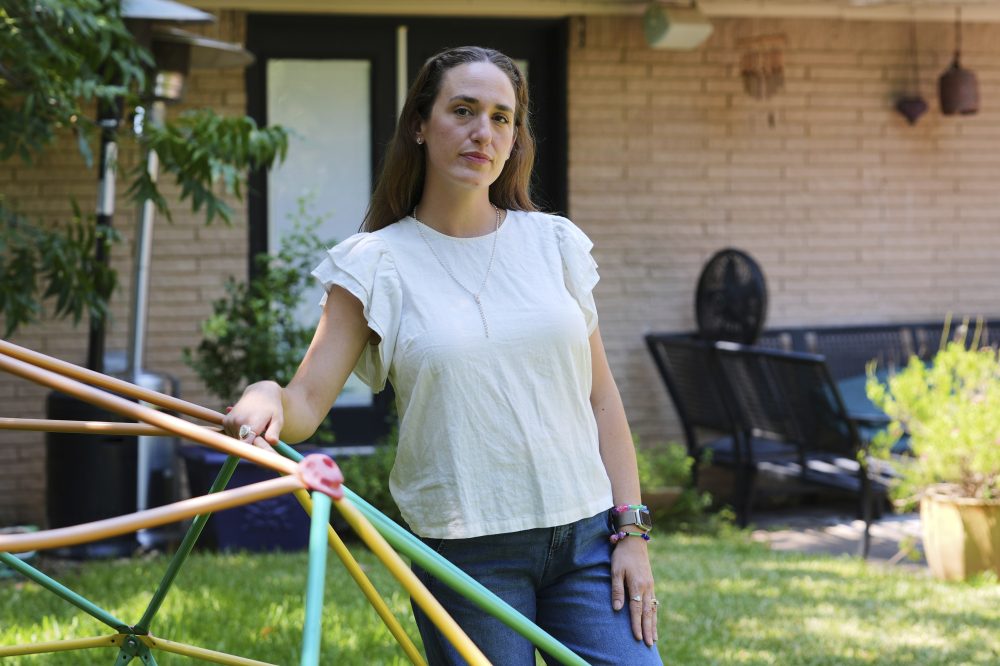
Angela Juergens, a 37-year-old former New York resident who relocated to Texas for her career as a public school art educator, now serves as a stay-at-home mother of two. Despite questioning her decision to remain in a state led by far-right Republicans, she had discovered solidarity among fellow Democratic voters in her tree-lined Dallas community.
Previously residing in a district where Kamala Harris won by substantial margins during the 2024 presidential race and represented by Democratic Rep. Julie Johnson, Juergens now finds her street reassigned to Republican Rep. Lance Gooden’s district, which extends over 100 miles eastward into Texas’ rural pine forest regions.
“We felt represented, but with this change, we did not elect Lance Gooden and we don’t feel at home with that,” she said.
“While this administration feels like it’s out of control, we need some checks and balances in the government,” Juergens said. “And we need a true representation of all the people and it just feels like they are just trying to cut it all out.”
Ryan Vannest, a 53-year-old retired high school educator who has supported Republican candidates since 1990, has long respected GOP leaders including Ronald Reagan, John McCain and George H.W. Bush.
The border resident expressed disappointment about his transfer from Republican Rep. Monica De La Cruz’s district to one represented by Democrat Rep. Henry Cuellar, who faced bribery and conspiracy allegations before receiving a Trump pardon. “We just need new people,” Vannest said.
He expressed his distaste for Trump and submitted protest votes for entertainers during all three presidential campaigns. The practice of redrawing districts for partisan benefit troubles him.
“It’s just so extreme,” Vannest said. “They’re pandering to the elite, rich, white folk who just want to keep themselves in power. The redistricting, it’s just another example of it, trying to keep power.”
Clara Faulkner relocated to the Fort Worth suburb of Forest Hill nearly five decades ago when virtually no other Black families resided there. Over time, she witnessed the community transform into a racially diverse area within a secure Democratic congressional district.
The updated mapping places Faulkner, an 83-year-old former mayor of the small community housing approximately 14,000 people, into a heavily conservative district represented by Republican U.S. Rep. Roger Williams. About half the constituents in her new district are white, spanning into predominantly rural counties. “It’s just outlandish racism, right in your face,” Faulkner said.
“How the Republicans operate has never been a benefit to me,” Faulkner said. “And the way they draw the Republican districts just to tear our neighborhoods apart, I think they believe in divide and conquer.”
Kenneth Crawley, an 81-year-old retired nurse residing in Mission near the Mexican border, expressed dissatisfaction about his removal from Republican Rep. Monica De La Cruz’s district.
However, he maintains that Republican leadership should continue, believing they best represent his preferences for reduced taxation and robust public safety. He consistently votes for Republican candidates across the ballot.
“I stick with the party, and the party that I stick with is the Republican Party because that’s the things that they support,” Crawley said. “In this new district, the Democrats, they want to let all these foreigners come across the border. That’s not what I want.”
Rene Martinez, a 79-year-old Democratic supporter, was also transferred into Gooden’s firmly Republican district. He expresses concern that issues affecting farm subsidies or healthcare access in rural areas Gooden represents differ significantly from his priorities in Dallas, where he serves as president of a local League of United Latin American Citizens council.
“I can’t identify with it. They can’t identify with us,” Martinez said.
Despite his district not being expected to remain competitive, he maintains optimism for Democrats this election cycle. Martinez referenced the surprising special election victory in January when a Democrat captured a state Senate district that Trump won decisively in 2024.
“I’m feeling like we’ve got some tailwinds behind our sails a little bit,” he said.
Luke Wilkinson, a 43-year-old Republican voter working as an inventory manager at a Rio Grande Valley car dealership, doesn’t view redistricting as particularly significant.
He remains doubtful that “my vote or my opinion matter all that much.” With employment responsibilities, financial obligations and other concerns occupying his attention, he was also placed in Cuellar’s district and described the congressman as “a decent enough guy.” Nevertheless, he plans to support the GOP candidate because the party aligns with his values.
“I’ll still vote. I’ll vote the way I feel and what my heart says,” Wilkinson said. “If I’m in a different district, that doesn’t change anything.”