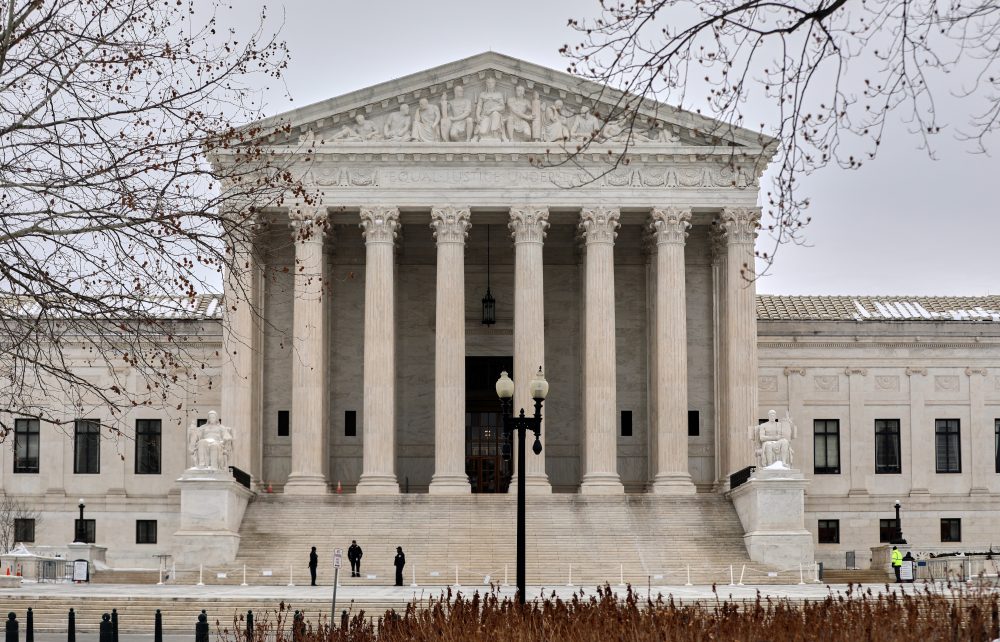

WASHINGTON — During oral arguments Monday, Supreme Court justices signaled they may strike down the federal prohibition preventing marijuana users from possessing firearms, creating unexpected bipartisan agreement on the bench.
Most justices appeared inclined to support a limited decision favoring Ali Danial Hemani, a Texas resident who challenged his criminal prosecution for gun possession while using cannabis several times weekly.
The Trump administration urged the nation’s highest court to uphold criminal charges against Hemani based on federal statutes prohibiting firearm ownership by illegal drug users. However, justices across the ideological spectrum expressed doubt about the law’s validity.
Conservative Justice Amy Coney Barrett questioned the government’s position, asking: “What is the government’s evidence that using marijuana a couple of times a week makes someone dangerous?”
While the Trump administration previously challenged various gun regulations, Principal Deputy Solicitor General Sarah Harris defended this particular statute as necessary protection against potentially hazardous individuals obtaining weapons. The same law formed the basis for Hunter Biden’s gun conviction related to cocaine addiction, though he received a presidential pardon from his father, former President Joe Biden.
Justice Neil Gorsuch highlighted the contradictory nature of current marijuana policy, noting: “What do we do with the fact that marijuana is sort of illegal and sort of isn’t, and that the federal government itself is conflicted on this?” Cannabis remains federally prohibited despite legalization in approximately half of all states.
Gorsuch helped establish the conservative majority’s 2022 landmark ruling in New York State Rifle and Pistol Association v. Bruen, which requires gun regulations to demonstrate strong historical precedent from America’s founding era.
Justice Ketanji Brown Jackson, representing the court’s liberal wing, argued the cannabis firearm prohibition lacks sufficient historical foundation. “I think your argument sort of falls apart under the Bruen test,” she told government attorneys.
Federal lawyers referenced historical statutes disarming “habitual drunkards” as precedent supporting their position. However, Gorsuch countered by citing founding fathers’ drinking habits, including John Adams consuming hard cider at breakfast and James Madison’s daily whiskey ration. “Are they all habitual drunkards who would be properly disarmed for life under your theory?” he asked.
Hemani’s attorney Erin Murphy distinguished historical alcohol restrictions as targeting extreme cases, arguing modern cannabis consumers who use products like sleep-aid gummies can safely handle firearms.
The litigation created uncommon political partnerships, with both the American Civil Liberties Union and National Rifle Association supporting Hemani alongside marijuana advocacy organizations like NORML. Conversely, gun safety organizations such as Everytown, typically opposing Trump administration Second Amendment positions, backed the federal prohibition.
Several justices worried that ruling for Hemani might enable weapon access for users of more dangerous substances including methamphetamine or heroin. Eliminating current restrictions could force courts to repeatedly evaluate individual drugs’ danger levels.
Chief Justice John Roberts expressed concern about judicial overreach, stating: “It just seems to me that this takes a fairly cavalier approach to the necessary consideration of expertise and the judgments we leave to Congress and the executive branch.”
This represents the court’s second firearms case this term following their 2022 decision. Justices also seem prepared to invalidate Hawaii’s law restricting weapons in commercial establishments and hotels.
The court will issue its final ruling before June’s conclusion.