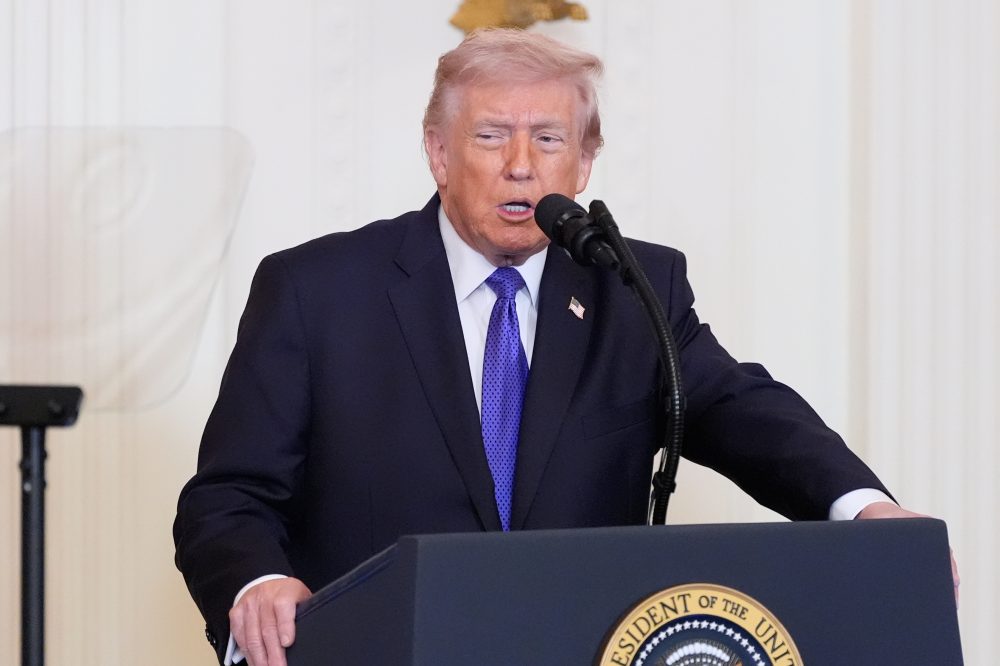
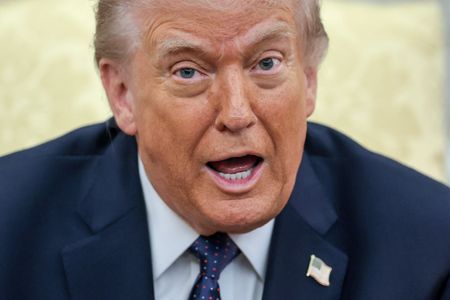
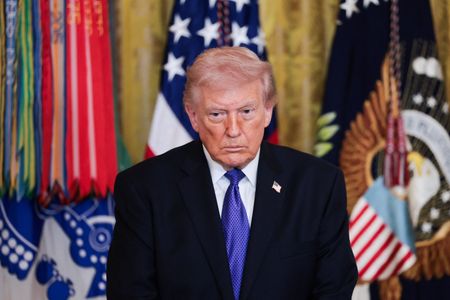
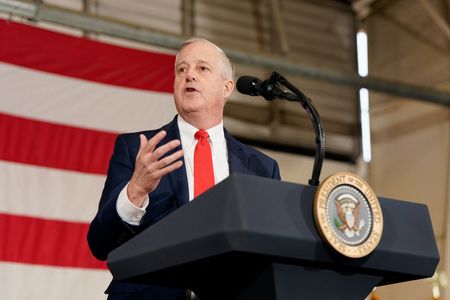
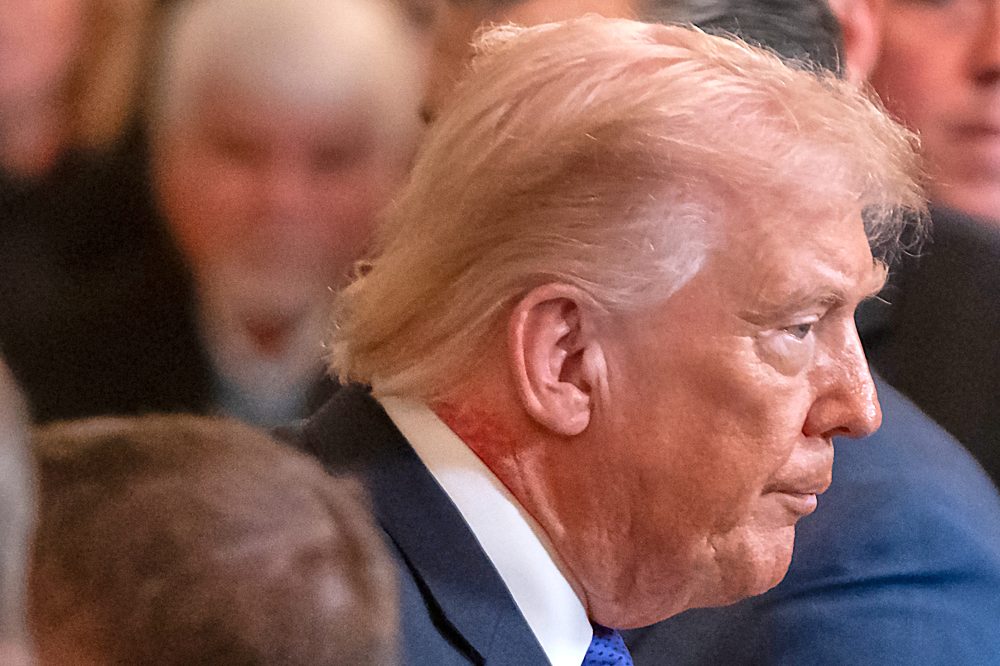
During a Thursday White House gathering featuring the Inter Miami soccer team, President Donald Trump outlined his foreign policy priorities, stating he intends to resolve the Iranian conflict before addressing Cuba relations.
“Will be just a question of time before you and a lot of unbelievable people are going to be going back to Cuba,” Trump told attendees at the March 5th event.
The President indicated that Cuban leadership is eager for negotiations, claiming the nation wants “to make a deal so badly.”
“We want to finish this one first,” Trump explained when discussing the ongoing Iranian situation before shifting focus to Cuban relations.
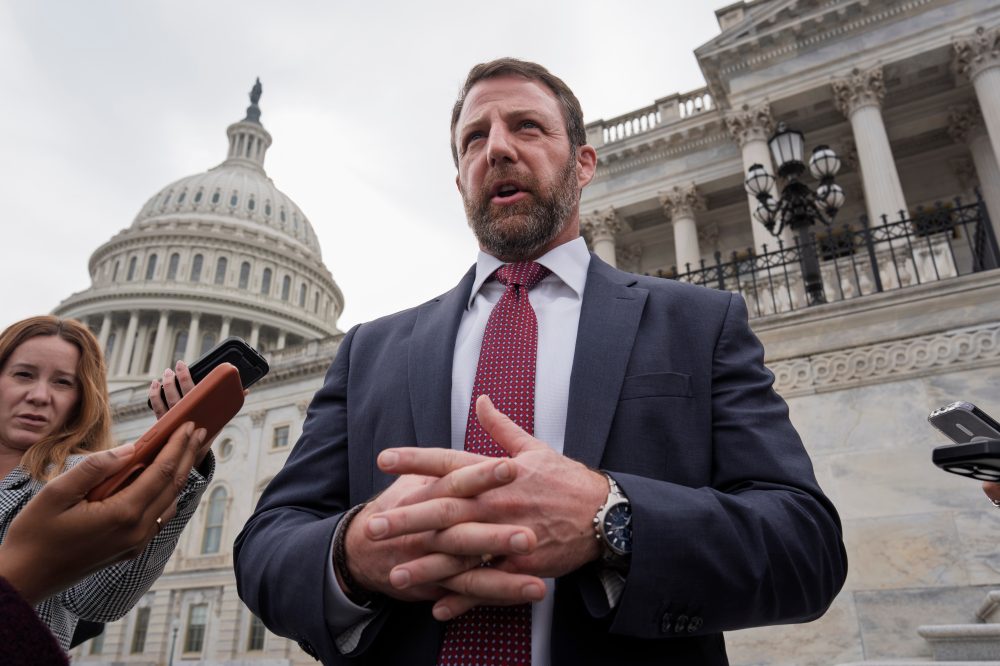
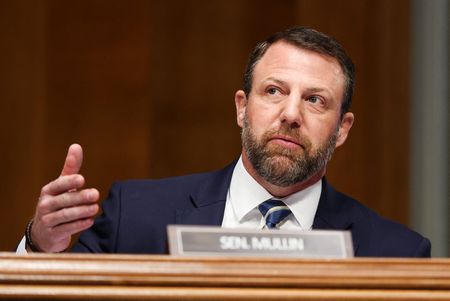
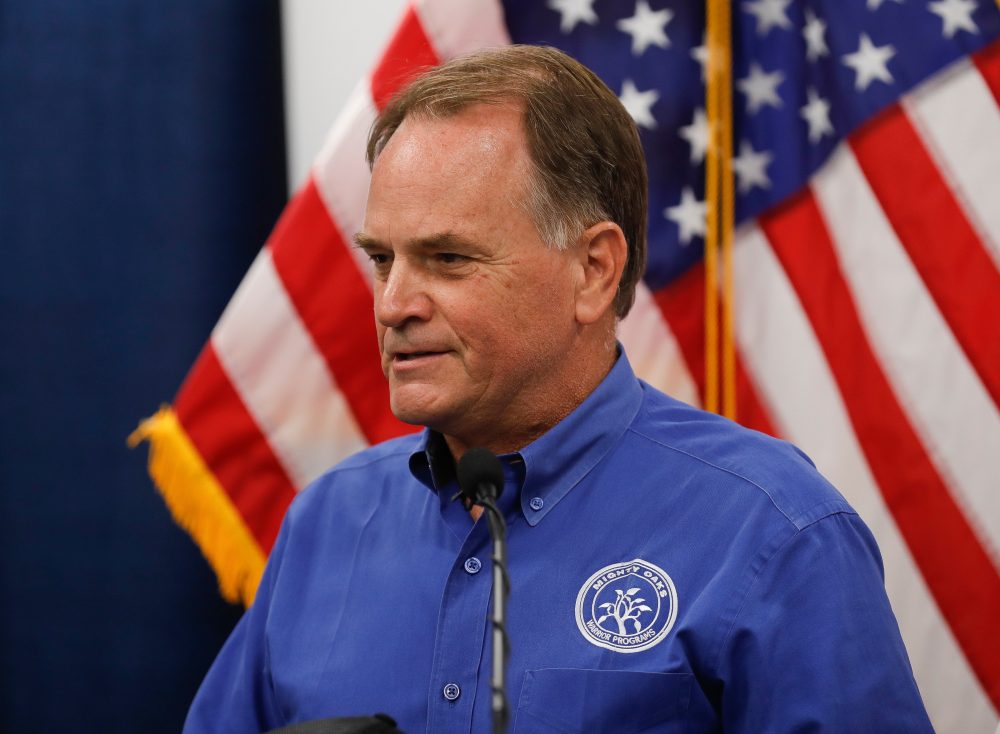
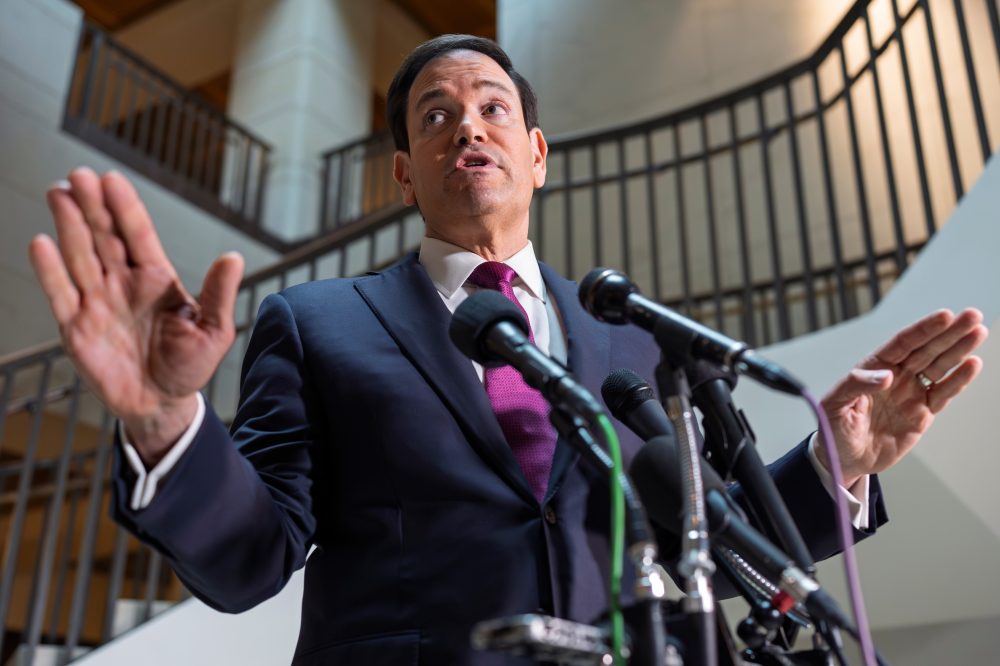
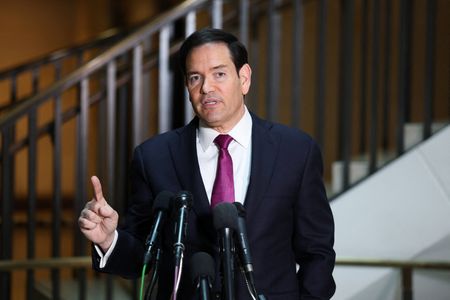
President Donald Trump has selected Oklahoma Republican Senator Markwayne Mullin to serve as his next Homeland Security Secretary, marking a rapid political ascent for the former plumbing business owner who entered Congress just over a decade ago.
The 48-year-old senator has established himself as one of Trump’s most vocal allies in the upper chamber and is set to join the administration following Thursday’s dismissal of Kristi Noem, who faced growing scrutiny regarding her department leadership.
With a background in mixed martial arts and collegiate wrestling, Mullin has cultivated an aggressive approach in the Senate and strengthened his relationship with Trump after they attended an NCAA wrestling match together in Tulsa during 2023.
“Markwayne will make a spectacular Secretary of Homeland Security,” Trump posted on his Truth Social account.
A member of the Cherokee Nation, Mullin secured Oklahoma’s open Senate seat in 2022 after prevailing in a competitive Republican primary. Before entering politics, he operated a thriving plumbing business in Oklahoma featuring distinctive red vehicles branded with “The Red Rooter” signage, launching his initial House campaign as an anti-establishment candidate frustrated with government red tape affecting his business operations.
He eventually captured Oklahoma’s expansive 2nd Congressional District, a rural territory that shifted from Democratic control to increasingly conservative representation over the past ten years.
Mullin’s confrontational Senate moments include a heated 2023 committee session with International Brotherhood of Teamsters leadership, during which he challenged the union chief to “stand your butt up” while rising from his chair and removing his ring.
“If you want to run your mouth, we can be two consenting adults,” Mullin declared to Sean O’Brien, the union’s president, following their previous social media disputes. “We can finish it here.”
The senator originally pledged to limit himself to three congressional terms but abandoned that commitment when seeking reelection, acknowledging he “didn’t understand politics” when making his initial promise.
Mullin has also drawn scrutiny for accepting approximately $1.8 million through federal pandemic relief programs intended to support struggling small businesses during the coronavirus crisis.
Treasury Department records revealed that four companies under Mullin’s ownership collected between $800,000 and $1.9 million through the Paycheck Protection Program. His spokesperson previously stated the congressman wasn’t involved in daily business operations and directed inquiries to the companies’ financial officer.
The senator has embraced his Cherokee Nation heritage and championed issues affecting tribal communities, including defending tribal sovereignty rights. He also campaigned for Trump among Native American voters in North Carolina during the 2024 election cycle.
Federal officials are preparing to unveil new strategies to address climbing energy costs, with the Treasury Department expected to make an announcement as early as Thursday that could include unprecedented intervention in oil futures markets, according to a senior White House official.
This approach would represent a departure from traditional methods, as the federal government typically addresses energy price concerns through physical oil supply adjustments rather than financial market interventions. Officials are working urgently to minimize both the political and economic consequences of escalating fuel costs.
Energy markets have seen significant volatility, with Brent crude oil prices reaching approximately $85 per barrel due to concerns that ongoing conflicts could interrupt shipping through the Strait of Hormuz. This critical waterway handles roughly 20% of worldwide oil transportation. Meanwhile, gasoline prices across the United States have risen above $3 per gallon.
Treasury Department representatives were not immediately available to provide additional details about the potential measures.
A federal appeals court delivered a significant victory to President Trump on Thursday, determining he possesses the legal authority to halt refugee admissions to the United States for an indefinite period.
The 9th U.S. Circuit Court of Appeals, through a three-judge panel, reversed most of the court orders issued by a Seattle federal judge last year that had prevented the suspension of refugee resettlement activities.
Following his inauguration in January 2025, Trump immediately froze the refugee program, stating that the U.S. Refugee Admissions Program needed to guarantee that incoming refugees would “appropriately assimilate.” This action prompted a class-action legal challenge from refugees, their relatives, and organizations that assist with resettlement.
Senior U.S. Circuit Judge Jay Bybee, who authored the panel’s opinion, acknowledged the “enormous practical implications” of the court’s decision to reverse the majority of rulings made by U.S. District Judge Jamal Whitehead, whose pro-plaintiff decisions had been temporarily suspended during the appeals process.
“There are over one hundred thousand vetted and conditionally approved refugees, many of whom may have spent years completing the USRAP process in a third country only to be turned away on the tarmac,” Bybee noted in his written opinion.
However, Bybee, along with his fellow appellate judges who were all nominated by Republican presidents, explained that Congress had provided the president with extensive authority to halt immigrant entry.
“Whether that consequence reflects prudent policy is not a question for this court,” Bybee stated.
Attorney Mevlude Akay Alp, representing the plaintiffs through the International Refugee Assistance Project, responded with a statement criticizing the decision, saying it “removes the ability for refugees stranded by the refugee ban to be safely resettled, or even have their cases processed, while President Trump’s cruel ban continues.”
The White House has not provided a response to requests for comment on the ruling.
Although the appellate court reversed most of Whitehead’s decisions, it maintained certain injunctions by a 2-1 margin, specifically those preventing the elimination of services for refugees already in the United States and the cancellation of agreements with resettlement support facilities.
U.S. Circuit Judge Kenneth Lee, who was appointed during Trump’s previous term, issued a partial dissent, arguing for the complete reversal of all injunctions issued by Whitehead, who was nominated by former Democratic President Joe Biden.
“District courts cannot stand athwart, yelling ‘stop’ just because they genuinely believe they are the last refuge against policies that they deem to be deeply unwise,” Lee wrote in his dissenting opinion.
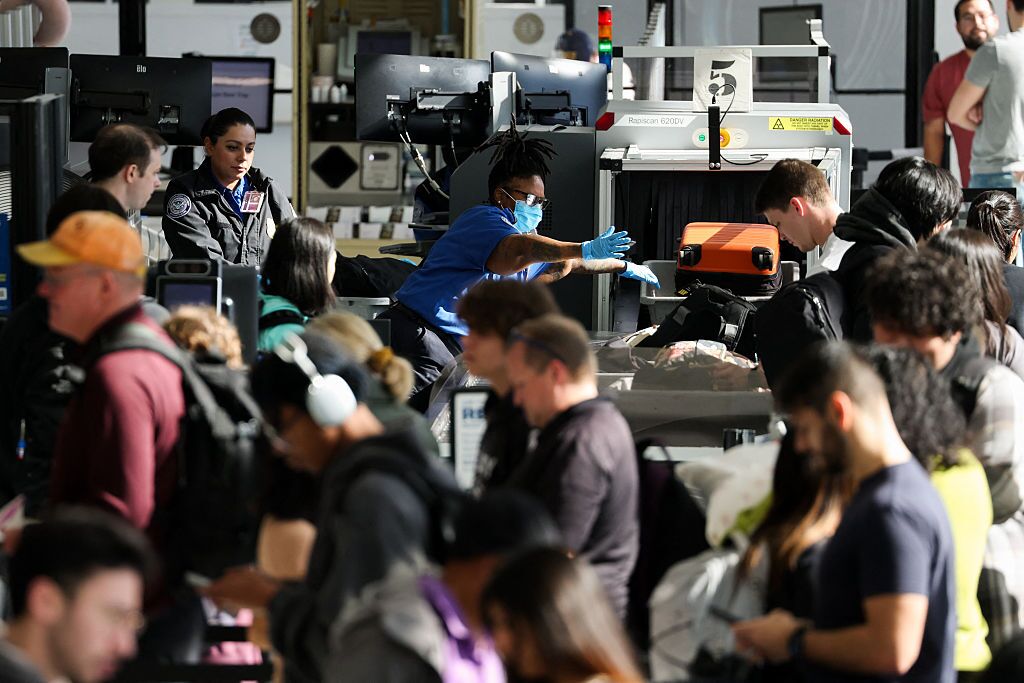
Aviation and travel sector executives are calling on lawmakers to resolve the Department of Homeland Security funding impasse as the peak spring break travel period draws near.
Industry representatives warn that continued congressional gridlock could result in Transportation Security Administration personnel and port security staff missing complete salary payments during what is traditionally one of the busiest travel times of the year.
The funding dispute comes at a particularly challenging time for the travel sector, which relies heavily on federal security operations to maintain smooth airport and port operations during high-volume travel seasons.
Without resolution, the standoff could impact security screening operations and other critical travel infrastructure just as millions of Americans prepare for spring vacation trips.
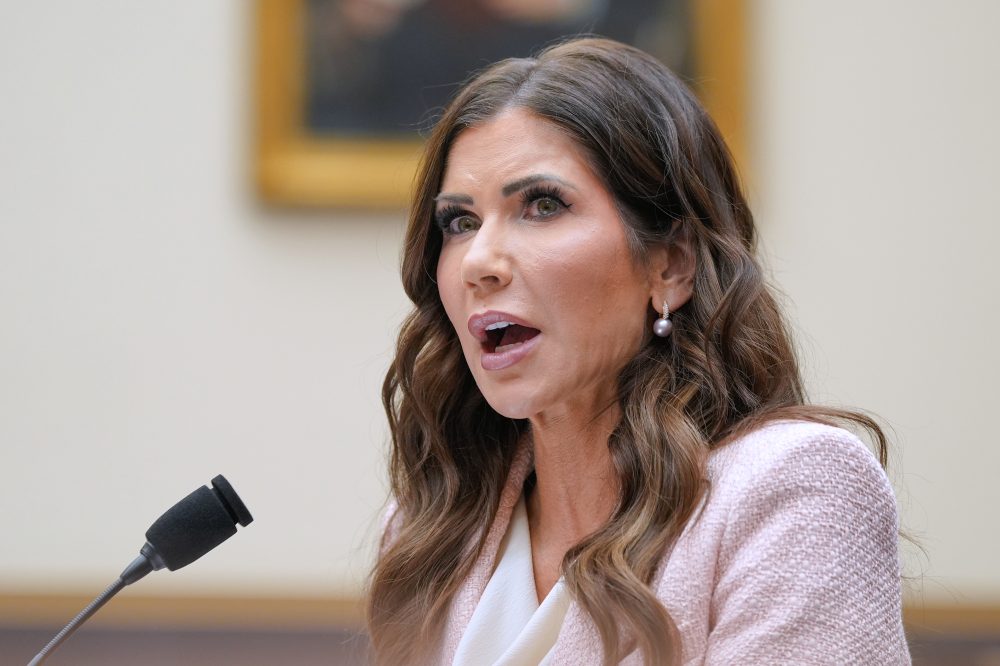
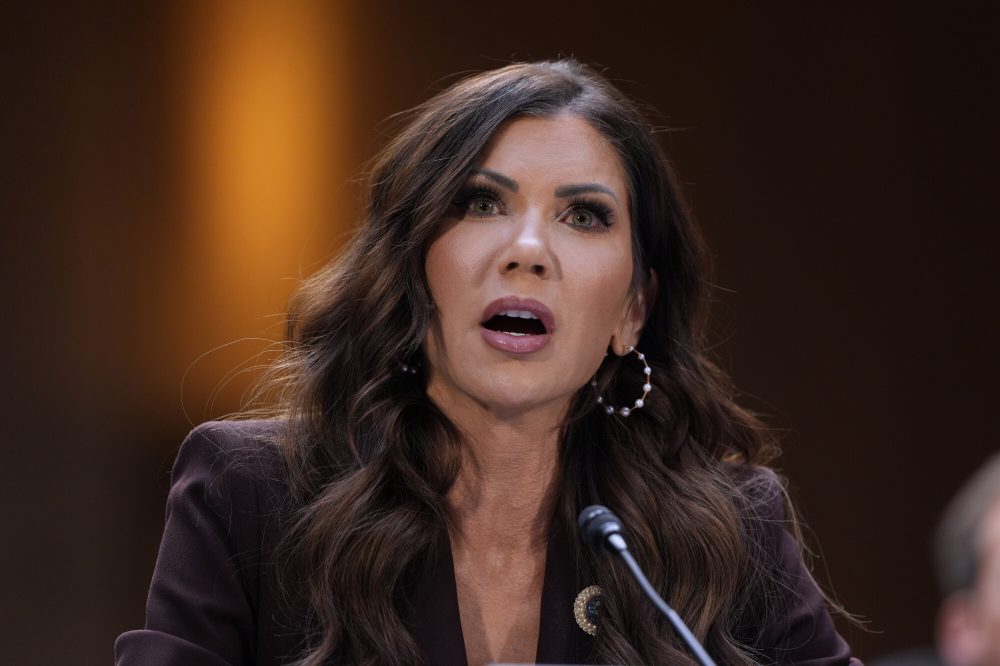
President Donald Trump terminated Kristi Noem from her position as Homeland Security secretary on Thursday following mounting concerns about her performance in the role, marking her as the initial Cabinet member to depart Trump’s administration during his second presidency.
The dismissal comes as a collection of photographs documenting Noem’s tenure has been assembled by Associated Press photo editors.
President Donald Trump has dismissed Homeland Security Secretary Kristi Noem following mounting criticism of her immigration enforcement approach, announcing Thursday that Oklahoma Republican Senator Markwayne Mullin will be nominated as her replacement.
The president revealed the decision through social media posts on Thursday, just two days following Noem’s difficult questioning by both Republican and Democratic lawmakers on Capitol Hill.
Rather than leaving government entirely, Noem will transition to a newly created position as “Special Envoy for The Shield of the Americas,” according to Trump’s announcement. This fresh security program will concentrate on Western Hemisphere initiatives.
This marks the first Cabinet-level departure during Trump’s current presidential term. Noem’s exit concludes a controversial period leading immigration enforcement operations that sparked significant protests and legal challenges.
In her response on social media platform X, Noem expressed gratitude for the new appointment. “Thank you @POTUS Trump for appointing me as the Special Envoy for the Shield of the Americas,” she posted. She emphasized her commitment to collaborating with senior administration officials “to dismantle cartels that have poured drugs into our nation and killed our children and grandchildren.”
“In this new role, I will be able to build on the partnerships and national security expertise, I forged over the last 13 months as Secretary of Homeland Security,” Noem continued in her statement. She claimed her department “delivered the MOST secure border in American history” and that FEMA had “delivered disaster relief at a 100% faster rate.”
Interestingly, Noem made no reference to her dismissal during a lengthy presentation at a Nashville law enforcement gathering that same day.
Throughout her tenure, Noem positioned herself as the public face of immigration operations, frequently placing herself at the center of enforcement activities.
Despite lacking law enforcement experience, she regularly donned protective gear and joined agents during immigration operations while media cameras captured the scenes.
One particularly notable moment occurred during a March trip to an El Salvador detention facility, where she posed for photographs in front of shirtless, tattooed inmates that the Trump administration had deported as suspected gang members.
During her Thursday address to the Sergeant Benevolent Association Major Cities Conference in Nashville, Noem spoke for over 20 minutes without acknowledging her termination.
Even during the question-and-answer portion, attendees didn’t bring up the dismissal. When asked about future law enforcement funding, Noem appeared to indicate she would remain in her current position.
“I think your best options for funding alternatives would be through some grants that with the department, we have specific grants towards, terrorism grants,” she responded. “So maybe what I’ll do is I will forward those grant opportunities to all of you so that you can share them with your departments and have that opportunity.”
Mullin will inherit leadership of the government’s third-largest department, responsible for implementing Trump’s strict immigration policies during a crucial period for that agenda.
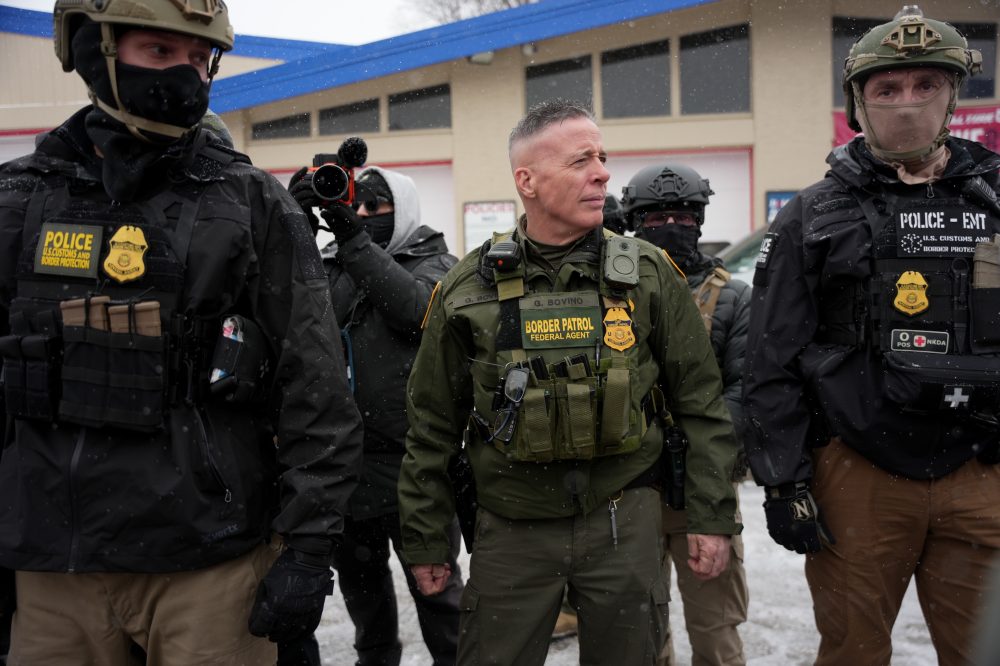
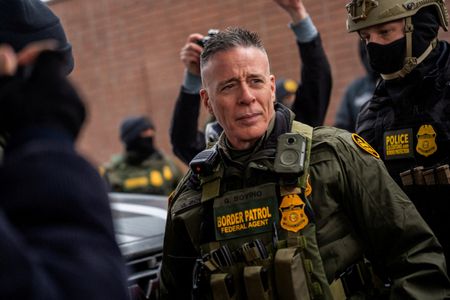
The first year of Trump’s administration featured highly publicized immigration operations with attention-grabbing names, typically overseen by Border Patrol commander Gregory Bovino, who answered directly to Noem.
Noem frequently participated in these operations personally, accompanying officers during arrest missions.
However, these prominent operations in cities including Los Angeles, Chicago, and Minneapolis often resulted in confrontations with activists and demonstrators that were recorded and shared widely, fueling opposition to the president’s immigration policies.
The situation reached a breaking point following fatal shootings in Minneapolis, prompting Trump to deploy border czar Tom Homan to assume direct oversight of Minneapolis operations. Bovino was subsequently reassigned to different duties.
While Noem becomes the first Trump Cabinet official to be removed from office, the president’s practice of arranging alternative positions for dismissed officials represents an emerging pattern.
The “Special Envoy for The Shield of the Americas” position represents a new security program focused on Western Hemisphere concerns, according to Trump’s announcement.
This approach mirrors other recent personnel moves. Former national security adviser Mike Waltz received a United Nations ambassador nomination after accidentally including a journalist in a Signal conversation about military strategies last year.
Similarly, Trump selected IRS Commissioner Billy Long as Iceland ambassador following Long’s contradictory statements regarding administration messaging during his brief two-month tenure.
Additionally, Trump announced in August that former State Department spokesperson Tammy Bruce would serve as deputy U.N. representative after her State Department departure.
President Donald Trump announced Thursday a significant cabinet shake-up, naming Oklahoma Senator Markwayne Mullin as the next Secretary of Homeland Security to replace Kristi Noem, who has faced mounting criticism over her aggressive immigration enforcement approach.
“I am pleased to announce that the Highly Respected United States Senator from the Great State of Oklahoma, Markwayne Mullin, will become the United States Secretary of Homeland Security (DHS), effective March 31, 2026,” Trump posted on Truth Social.
The leadership change comes amid questions about the future direction of Trump’s immigration policies. Noem will transition to a new position as “Special envoy for The Shield of the Americas,” according to the president’s announcement.
The former South Dakota governor became a controversial figure during her tenure, gaining attention for inflammatory social media posts about immigrants and what critics called harsh enforcement tactics. Her approach included deploying masked immigration agents in major cities like Los Angeles, Chicago, and Washington D.C., conducting sweeps in neighborhoods and locations such as Home Depot parking lots.
Noem faced intense scrutiny in January following a deadly incident in Minneapolis where federal immigration agents fatally shot two U.S. citizens, Renee Good and Alex Pretti. She immediately characterized their actions as “domestic terrorism,” but later-released video footage contradicted claims by Noem and other administration officials that the victims were violent aggressors.
The public outcry over these deaths prompted the administration to shift toward more focused immigration enforcement in Minnesota, moving away from the broad sweeps that had sparked violent confrontations with community members opposing the crackdown.
Congressional Democrats initiated impeachment proceedings against Noem, while at least two Republican lawmakers also called for her removal following these incidents. During March congressional hearings, lawmakers from both parties criticized her management of DHS and her enforcement methods, including concerns about a $220 million advertising campaign that prominently featured the secretary.
The staffing transition raises uncertainty about whether the Trump administration will escalate its mass deportation efforts or adopt a more selective strategy. Public support for Trump’s immigration policies declined as agents detained American citizens and used tear gas in streets while attempting to increase deportations, which fell below the administration’s target of one million annually.
Despite serving as a vocal advocate for Trump’s agenda, immigration policy remains under the control of White House Deputy Chief of Staff Stephen Miller, a longtime Trump advisor. The 54-year-old Noem received quick Senate confirmation to lead the 260,000-employee department when Trump returned to office in January 2025.
Throughout her time in office, Noem used provocative language on social media, calling immigrants with criminal records “scumbags” while arrests of non-criminal immigrants increased under the administration. She personally participated in enforcement operations in New York City and visited a high-security El Salvador prison housing Venezuelan immigrants who had been deported without charges or legal representation.
Border crossings dropped dramatically under Trump’s restrictive policies, a sharp contrast to the elevated illegal immigration levels during former President Joe Biden’s Democratic administration.
Following Trump’s broader agenda, Noem also moved to reduce legal immigration pathways and strengthen screening processes. She terminated multiple Temporary Protected Status programs that had provided work authorization to hundreds of thousands of immigrants from Venezuela, Haiti, and other countries, triggering legal challenges.
After an Afghan immigrant allegedly attacked National Guard personnel in Washington D.C., Noem stated she advised Trump to implement “a full travel ban on every damn country that’s been flooding our nation with killers, leeches, and entitlement junkies.”
Opponents accused Noem of vilifying immigrants and implementing enforcement policies that primarily affected law-abiding working immigrants and their families. During her leadership, deaths in immigration detention facilities reached a 20-year peak while DHS oversight staff experienced significant cuts.
MADISON, Wis. — A 20-year-old Wisconsin man received a seven-year prison sentence Thursday for attempting to burn down a Republican congressman’s office because he opposed the lawmaker’s support for TikTok divestiture legislation.
Fond du Lac County Circuit Judge Tricia Walker also ordered Caiden Stachowicz of Menasha to serve seven years of extended supervision following his prison term, according to court documents.
Stachowicz entered a no contest plea in November to arson charges. In return for his plea, which carries the same weight as a guilty verdict during sentencing without admitting wrongdoing, prosecutors dismissed burglary and property damage charges.
Defense attorney Timothy Hogan did not respond to requests for comment.
Court documents reveal that a police officer arrived at the scene of a fire outside Republican U.S. Rep. Glenn Grothman’s Fond du Lac office around 1 a.m. on January 19, 2025, and found Stachowicz in the vicinity. The office is located approximately 55 miles northwest of Milwaukee.
Stachowicz admitted to the officer that he ignited the fire due to his dislike of Grothman, the complaint states. His original plan involved breaking into the building to start the fire indoors, but after failing to shatter a window, he doused an electrical box behind the structure and the front entrance area with gasoline before lighting it with a match and observing the flames, according to court filings.
The defendant explained his motivation by saying he wanted to destroy the office because the federal government was eliminating TikTok in violation of his constitutional freedoms and peaceful solutions were no longer viable, the complaint indicates. He noted that Grothman supported the ban but emphasized he had no intention of harming the congressman or anyone else.
In April 2024, Grothman cast his vote for legislation mandating that ByteDance, TikTok’s China-based parent company, divest its American operations. The original compliance deadline was January 19, 2025, though President Donald Trump has extended the timeline through several executive orders. TikTok completed arrangements two months ago to establish an American version of the video-sharing platform, which Trump has endorsed.
Representatives from Grothman’s congressional office have not responded to requests for comment.
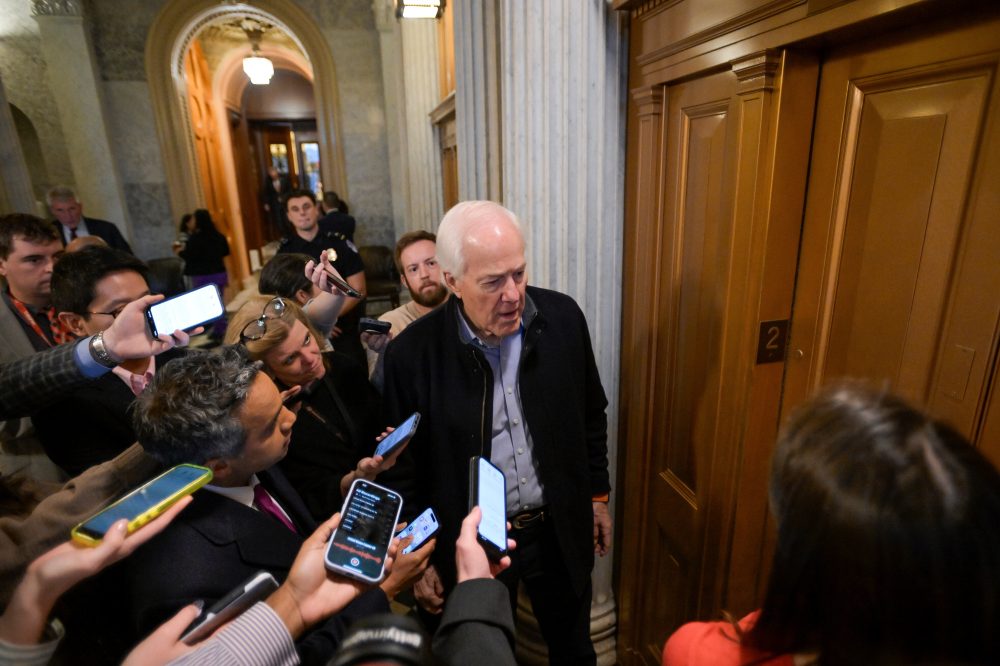
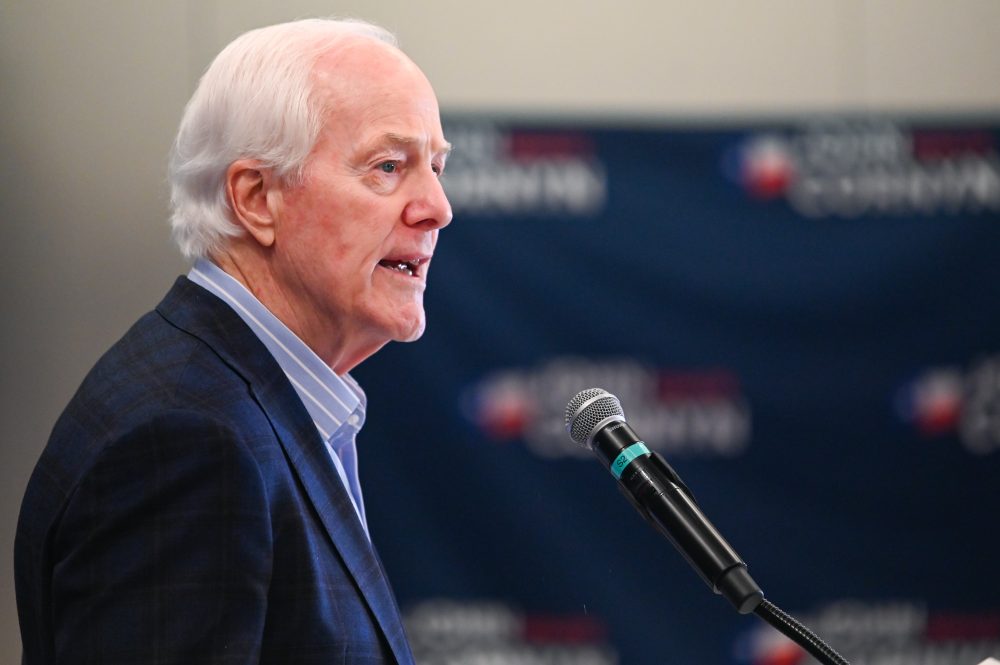
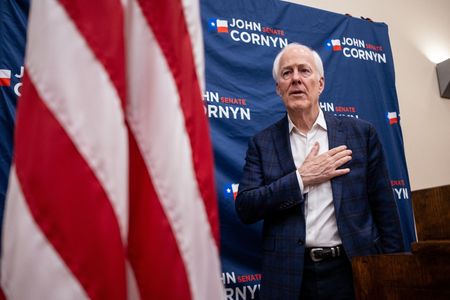
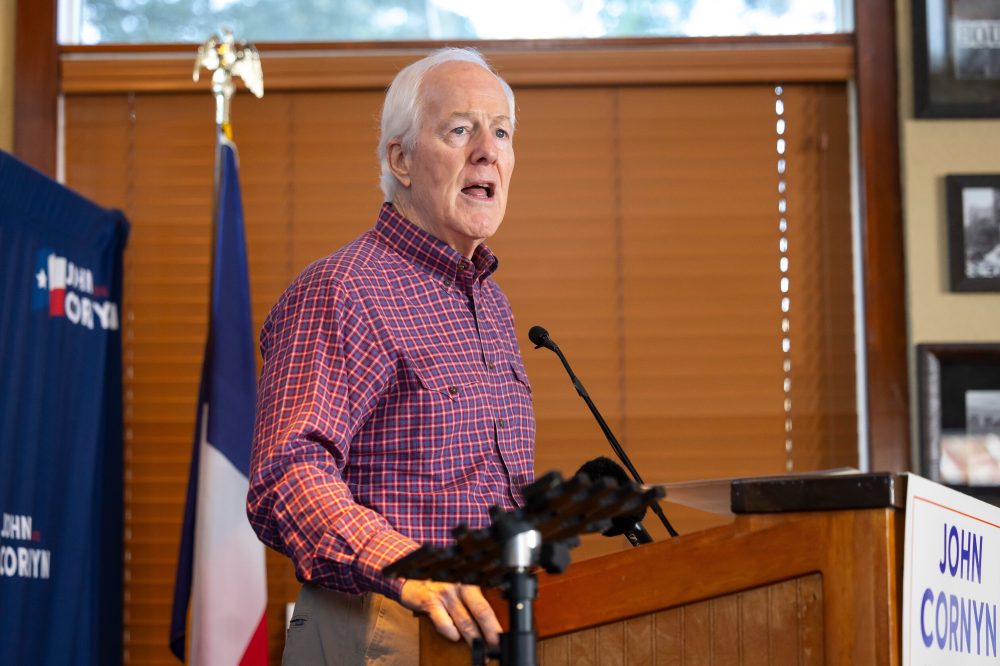
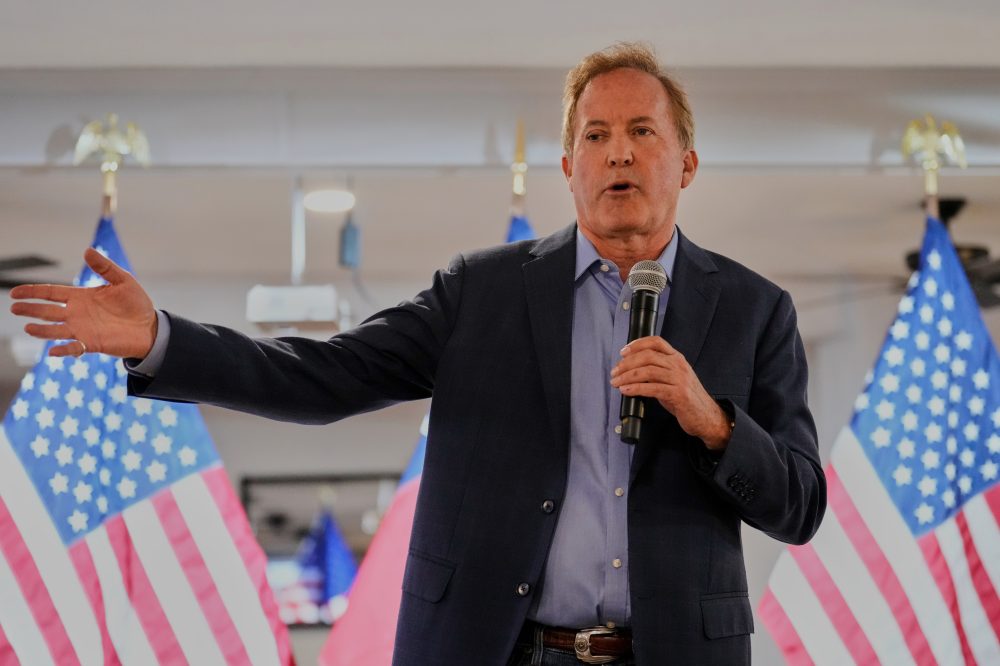
Texas Senator John Cornyn is launching aggressive attacks against his Republican primary runoff rival while the state anticipates President Donald Trump’s promised backing in the race.
Cornyn’s campaign unveiled a new attack advertisement Thursday targeting state Attorney General Ken Paxton with multiple ethical and personal allegations. The move signals the beginning of what could become an even more contentious and costly second round of campaigning.
The advertisement highlights controversies surrounding Paxton, including his impeachment proceedings on corruption allegations that resulted in acquittal but revealed an extramarital relationship, plus a state securities fraud case that Paxton settled through a plea agreement while maintaining his innocence.
Campaign officials for Cornyn report investing tens of thousands of dollars to ensure voter exposure to the advertisement. While this represents a small fraction of the over $110 million already spent before Tuesday’s primary, it could signal much larger expenditures ahead if the six-minute video becomes shortened television commercials.
Trump refrained from backing any candidate during the primary phase, disappointing Republicans who worry about wasted resources and time in Texas rather than focusing on more competitive swing states. The president indicated Wednesday he plans to announce his choice for the May 26 runoff and expects the unendorsed candidate to withdraw, though no decision has been revealed.
Cornyn barely secured first place in Tuesday’s concluded primary but failed to reach the majority threshold needed to prevent a runoff. Representative Wesley Hunt placed third before being eliminated.
Republican leadership supports Cornyn, the established incumbent pursuing his fifth term, while cautioning that Paxton carries excessive controversy to succeed against Democratic candidate James Talarico in November’s general election.
However, Paxton has demonstrated durability against previous attacks and has positioned himself as a champion for Trump’s “Make America Great Again” agenda. Speaking with conservative commentator Benny Johnson, he declared he would not withdraw regardless of endorsement developments.
“I’m going to give people in Texas a choice,” Paxton said. “The people in Washington can have their own opinion. The president can have his own opinion.”
Paxton presented an alternative proposal through social media, suggesting he might consider withdrawal if Senate Republican leadership eliminated the filibuster to advance Trump-supported legislation requiring strict citizenship verification for voting. This proposal remains stalled in the Senate.
Trump seemed irritated by Paxton’s defiance.
“That is bad for him,” he told Politico. “So maybe, maybe that leads me to go the other direction.”
The president had previously stated on social media that he would endorse a Texas candidate because the divisive race cannot “be allowed to go on any longer.”
WASHINGTON — President Donald Trump dismissed Homeland Security Secretary Kristi Noem from her position Thursday following intense scrutiny of her department’s performance on immigration enforcement and emergency response efforts.
The president announced via social media that Oklahoma Republican Senator Markwayne Mullin will be nominated to replace Noem, just two days after she endured harsh questioning from both Republican and Democratic lawmakers on Capitol Hill.
In his announcement, Trump indicated Noem would transition to serve as “Special Envoy for The Shield of the Americas,” describing it as a newly created security program concentrated on Western Hemisphere operations.
Shortly after Trump’s public statement, Noem appeared at a scheduled Department of Homeland Security gathering where she delivered prepared comments without acknowledging her removal, instead reinforcing points from Trump’s recent State of the Union address.
This marks the first Cabinet-level departure during Trump’s current presidential term. Noem’s exit concludes a controversial period leading the department amid widespread opposition and legal challenges to immigration enforcement strategies.
Her position became increasingly precarious following this week’s congressional hearings, where she encountered unusual but severe criticism from Republican representatives. Lawmakers particularly questioned a $220 million advertising initiative featuring Noem that promoted voluntary departure for undocumented immigrants.
During testimony, Noem stated Trump had prior knowledge of the advertising campaign, though Trump contradicted this claim in a Thursday Reuters interview, denying he approved the promotional effort.
The former South Dakota governor faced ongoing criticism throughout her tenure overseeing Trump’s strict immigration policies, particularly following fatal shootings of two demonstrators in Minneapolis by immigration enforcement personnel. Her department also drew scrutiny regarding its management of congressional funding allocations.
Growing dissatisfaction with Noem’s implementation of the administration’s immigration agenda — especially her response to the Minneapolis shooting incident involving two American citizens — combined with concerns over disaster management contributed to her removal. Both Democratic and Republican legislators criticized her performance during this week’s hearings on multiple fronts.
Beyond immigration matters, Noem encountered bipartisan criticism regarding delays in Federal Emergency Management Agency funding approvals and the administration’s overall disaster response coordination.
While Mullin requires Senate confirmation for the permanent position, federal vacancy legislation permits him to serve in an acting capacity as Homeland Security secretary during the nomination process.
WASHINGTON — Delaware is among 24 states that filed a federal lawsuit Thursday challenging President Donald Trump’s recently implemented global import duties, which were put in place following a major Supreme Court setback.
Democratic state attorneys general spearheading the legal challenge claim Trump is exceeding his executive authority with the proposed 15% import duties affecting much of the world.
The president has defended the tariffs as necessary tools to address America’s persistent trade deficits. Trump implemented the duties using Section 122 of the Trade Act of 1974 after the Supreme Court invalidated tariffs he had established last year through emergency powers legislation.
The previously unused Section 122 permits presidents to establish tariffs up to 15%, but limits them to five months without congressional approval.
Oregon, Arizona, California and New York attorneys general are spearheading the legal action.
The plaintiff states contend that Section 122 was designed for use only under specific, narrow conditions and doesn’t authorize Trump to establish broad-based import taxes. They also claim the tariffs will increase expenses for state governments, businesses and consumers.
Many of these same states previously won legal battles against Trump’s tariffs established under different legislation: the International Emergency Economic Powers Act (IEEPA).
Just four days after the Supreme Court invalidated his comprehensive IEEPA tariffs on February 20, Trump utilized Section 122 to establish 10% duties on international goods. Treasury Secretary Scott Bessant announced to CNBC on Wednesday that the administration would increase the rates to the maximum 15% this week.
Democratic states and other opponents argue the president cannot utilize Section 122 as a substitute for the invalidated tariffs to address trade deficit issues.
The Section 122 provision targets what it describes as “fundamental international payments problems.” The central question is whether this language encompasses trade deficits — the difference between U.S. exports and imports.
Section 122 emerged from financial crises during the 1960s and 1970s when the U.S. dollar was backed by gold. Foreign nations were exchanging dollars for gold at fixed rates, threatening currency collapse and market instability. Since the dollar is no longer gold-backed, opponents argue Section 122 is outdated.
In an embarrassing development for Trump, his Justice Department argued in court documents last year that the president needed emergency powers because Section 122 had “not have any obvious application” for addressing trade deficits, calling them “conceptually distinct” from balance-of-payment concerns.
However, some legal experts believe the Trump administration has stronger legal ground this time.
“The legal reality is that courts will likely provide President Trump substantially more deference regarding Section 122 than they did to his previous tariffs under IEEPA,” Peter Harrell, visiting scholar at Georgetown University’s Institute of International Economic Law, wrote in a Wednesday analysis.
The specialized Court of International Trade in New York, which will consider the states’ lawsuit, ruled last year when striking down the emergency-powers tariffs that Trump didn’t require them since Section 122 was available for combating trade deficits.
Companies that paid duties under that legislation achieved a court victory Wednesday when a judge determined refunds are warranted.
Trump possesses additional legal mechanisms for implementing tariffs, with some already surviving judicial scrutiny. Duties Trump established on Chinese imports during his initial presidency under Section 301 of the same 1974 trade legislation remain active.
The lawsuit also includes attorneys general from Colorado, Connecticut, Delaware, Illinois, Maine, Maryland, Massachusetts, Michigan, Minnesota, Nevada, New Jersey, New Mexico, North Carolina, Rhode Island, Vermont, Virginia, Washington, Wisconsin, plus the governors of Kentucky and Pennsylvania.
WASHINGTON — The federal commission examining President Donald Trump’s White House ballroom construction proposal has postponed its decision until April 2nd, according to the panel’s chairman during Thursday’s proceedings.
Will Scharf, who chairs the National Capital Planning Commission and serves as a senior advisor to the Republican president, revealed the scheduling change at the beginning of the panel’s March session.
The commission was expected to render its decision on Thursday after hearing additional project information from White House representatives and commission staff members.
However, Scharf announced the vote would be delayed until April to accommodate all citizens wishing to provide input. The overwhelming response — with over 100 individuals registering to speak — prompted the meeting to move to an online format.
The commission has received numerous written submissions regarding Trump’s proposal for a 90,000-square-foot ballroom addition to be constructed where the former East Wing previously existed. The president has stated the $400 million project will be funded through private contributions. Trump ordered the East Wing’s demolition in October.
Scharf explained the virtual meeting format would facilitate the public testimony process, which he anticipated could continue into Friday due to the substantial number of registered speakers.
“They are taking time out of what I presume are busy schedules to join us,” he stated. “One way or the other, we are going to make sure that members of the public have the opportunity to be heard on this project.”
Project opponents have criticized Trump for proceeding with the East Wing demolition before obtaining approval from both the National Capital Planning Commission and the U.S. Commission of Fine Arts. The fine arts commission granted its approval last month.
The National Trust for Historic Preservation, operating as a private nonprofit organization, petitioned a federal court to suspend construction activities until proper submissions were made to both federal commissions and Congress, while also ensuring public input opportunities.
U.S. District Judge Richard Leon denied this request last week, prompting the trust to announce plans for filing a revised legal challenge.
A federal lawsuit has been filed in Washington, D.C. targeting President Trump and Pam Bondi over their handling of TikTok’s asset sale.
The legal complaint alleges the Trump administration sidestepped federal laws specifically created to prevent the dissemination of Chinese propaganda within the United States. Instead of following these regulations, the lawsuit claims the administration facilitated a partial ownership transfer to business associates with close ties to Trump.
The lawsuit was submitted to federal court in the nation’s capital, challenging the administration’s approach to the controversial social media platform’s ownership structure.
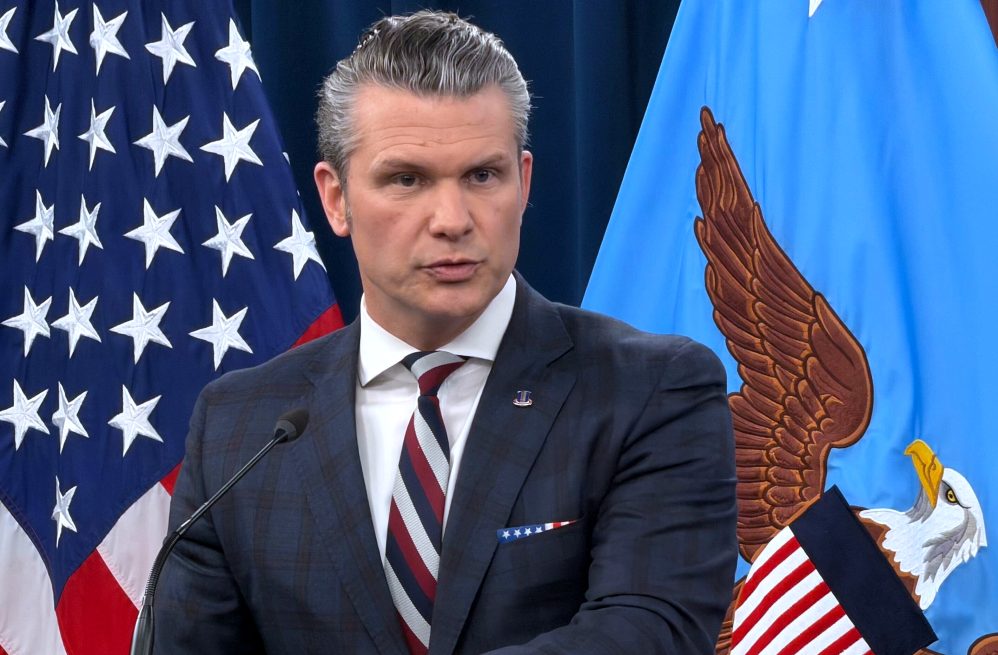
MIAMI (AP) — At a regional security conference in Miami on Thursday, Defense Secretary Pete Hegseth called on Latin American nations to intensify their military campaigns against drug trafficking organizations, cautioning that Washington stands ready to pursue unilateral action if partner countries don’t step up their efforts against criminal networks threatening U.S. border security.
“America is prepared to take on these threats and go on the offense alone if necessary,” Hegseth declared during his address at U.S. Southern Command headquarters, speaking before defense leaders from allied nations across the region.
The Pentagon organized what it called the inaugural “Americas Counter Cartel Conference,” drawing military officials from more than a dozen conservative-leaning governments that maintain strong ties with President Donald Trump, including representatives from Argentina, Honduras and the Dominican Republic. These defense leaders accompanied their presidents to Florida ahead of a planned weekend summit with Trump at his nearby golf resort.
During his remarks, Hegseth emphasized the shared Christian values between the United States and Latin America, arguing these principles face danger due to years of insufficient action and relying solely on traditional law enforcement methods to counter organized crime and terrorist networks throughout the Western Hemisphere.
“Business as usual will not stand,” he declared, promising American assistance to fight cartels, rebuild deterrence capabilities and “make the Americas great again.”
Deputy White House Chief of Staff Stephen Miller, who has helped shape Trump’s hardline regional policies, reinforced Hegseth’s message with even stronger language.
“Cartels that operate in this hemisphere are the ISIS (Islamic State group) and al-Qaida of this hemisphere and must be treated just as ruthlessly,” Miller stated, emphasizing that “hard power” and deadly force — rather than criminal prosecution — should be deployed against these organizations.
“The human rights that we are going to protect are not those of the savages that rape, torture and murder but those of the average citizens,” he added.
These discussions occur as the Republican administration works to deploy military resources to reassert American influence in the hemisphere while simultaneously managing military operations in Iran.
Upon assuming office in January 2025, Trump announced a renewed emphasis on Latin American affairs, a strategic shift his national security framework calls the “Trump Corollary” to the 19th-century Monroe Doctrine, which aimed to prevent European interference in the Americas. Central to this approach is expanded use of U.S. military forces to eliminate drug cartels that have long been blamed for escalating violence and homicide rates that stunt Latin America’s economic growth and drive migration northward.
“For too long, leaders in Washington abandoned the simple wisdom of the Monroe Doctrine,” Hegseth stated, referring to Trump’s regional security emphasis as the “Donroe Doctrine.”
Trump previously classified cartels from Mexico and Venezuela as foreign terrorist organizations before later announcing that the United States was engaged in “armed conflict” with these groups.
This unprecedented use of executive authority to address drug trafficking forms the legal foundation for Washington’s justification of dozens of attacks against suspected narcotics smugglers in Caribbean and Eastern Pacific waters — totaling 44 vessel strikes that have killed at least 150 people.
A large-scale naval presence not witnessed in Latin America since the Cold War’s conclusion also enabled the U.S. military mission in early January that resulted in the capture of Venezuela’s former president, Nicolas Maduro. He currently faces narcotics charges in New York.
Trump’s strategy has gained backing from regional conservatives like El Salvador’s Nayib Bukele, who gained power promising to use “mano dura” — an iron fist approach — against criminal organizations. This week marked the first time Ecuador conducted joint military operations with U.S. forces targeting organized crime networks.
However, using military forces to replace roles typically handled by civilian law enforcement carries significant risks in a region where military institutions lack strong oversight, armed forces have histories of human rights violations, and corruption remains a persistent problem.
“Without strong rule-of-law institutions and civilian oversight, militarizing the fight against cartels can weaken the very institutions needed to defeat them,” warned Rebecca Bill Chavez, president of the Inter-American Dialogue and former deputy assistant defense secretary for Western Hemisphere affairs.
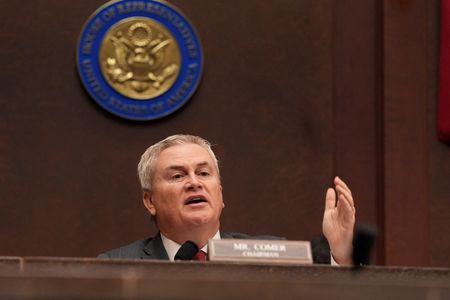
WASHINGTON – A congressional committee is demanding transparency from major travel and rideshare companies about their potential use of artificial intelligence to manipulate consumer pricing.
On Thursday, House Oversight Committee Chairman James Comer sent formal inquiries to the chief executives of five prominent companies, including rideshare giants Uber and Lyft, as well as travel booking platform Expedia. The Republican lawmaker is seeking information about whether these firms employ what’s known as ‘surveillance pricing’ – using detailed customer data to increase costs.
In his correspondence to the companies, Comer expressed alarm that advanced pricing algorithms combined with extensive personal consumer information could enable businesses to “weaponize personal data and pad their profit margins at the expense of providing transparency to consumers.”
The investigation also encompasses online marketplace Instacart and travel booking service Booking.com. None of the targeted companies provided immediate responses when contacted for comment about the congressional inquiry.
The probe reflects growing congressional concern about how major technology and travel companies leverage consumer data and artificial intelligence in their pricing strategies.
A federal lawsuit has been filed against President Donald Trump and Attorney General Pam Bondi, challenging the administration’s decision to approve TikTok’s restructured ownership arrangement on Thursday.
The legal action, brought by the Public Integrity Project representing two American retail investors who own stakes in competing social media companies, was filed in the U.S. Court of Appeals for the District of Columbia. The plaintiffs argue that the government’s approval violates a 2024 federal law and seek to force a renegotiation of the arrangement.
According to the filing, the goal is to require a new deal “that doesn’t put administration allies in a position to censor political content on one of the world’s most popular media platforms.”
The legal challenge does not attempt to shut down TikTok, which serves 200 million American users.
Last April, Congress enacted legislation mandating that ByteDance divest its American operations by January 2025 or face prohibition and potentially hundreds of billions in penalties. However, Trump chose not to implement the law’s enforcement, while Bondi informed businesses they would not face consequences for continuing TikTok operations.
ByteDance announced that TikTok USDS Joint Venture LLC, completed in January with 80% ownership by non-Chinese stakeholders, would protect American user information, applications, and algorithms using data security and cybersecurity protocols. The company provided limited information regarding the ownership transfer or financial terms.
The lawsuit states: “Under the announced deal, ByteDance would still control all the essential elements of TikTok. Such a deal would subvert the very purpose of the TikTok Law, as ByteDance could continue to push Chinese propaganda and censor the content it does not like.”
This ownership restructuring represents a significant development for the social media platform following years of legal battles that started in August 2020 when President Trump initially attempted to prohibit the application due to national security issues.
This marks the first court challenge to the ownership deal and may provide insight into the new joint venture structure that is crucial for TikTok’s continued operation in America, despite criticism from certain congressional members.
Representatives from the White House, Justice Department, and TikTok have not yet provided responses to requests for comment.
Trump has stated that the arrangement satisfies the requirements outlined in the divestiture legislation.
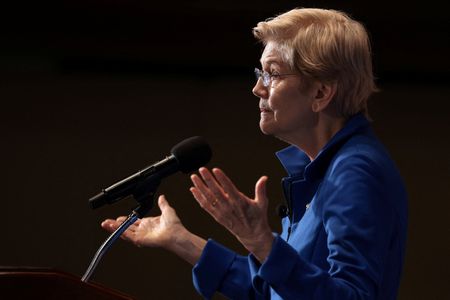
Massachusetts Senator Elizabeth Warren is set to unveil new legislation Thursday aimed at preventing a U.S. Army ammunition facility from distributing military-grade bullets to civilian buyers, citing concerns that some rounds have ended up in the hands of Mexican drug cartels and been linked to numerous mass shooting incidents across America.
The proposed Stop Militarizing Our Streets Act, backed by Senator Andy Kim along with Representatives Robert Garcia and Jamie Raskin, would ban Pentagon contractors from distributing military-grade assault weapons and ammunition to civilian purchasers.
The legislation would also mandate that military contractors exclusively work with commercial dealers who implement basic safety measures, including customer background checks and maintaining records showing minimal connections to firearms later involved in criminal activities.
The proposed law specifically addresses the Lake City Army Ammunition Plant located in Independence, Missouri, a World War Two-era facility that serves as the primary rifle ammunition supplier for U.S. military forces.
Winchester, an Olin Corporation subsidiary, operates the facility under an Army contract that permits commercial sales of any ammunition not purchased by the military.
Warren noted that powerful .50-caliber rounds confiscated by Mexican officials from cartel members were tracked back to the Lake City facility.
Olin Corporation and its Winchester subsidiary have not yet provided responses to requests for comment.
“Americans’ tax dollars should not be used to fuel gun violence,” Warren stated. “Congress must step in to keep Americans safe, and that means stopping the U.S. military and giant defense contractors from selling weapons of war to cartels, criminal groups, and mass shooters that terrorize our communities.”
A 2023 New York Times investigation revealed that AR-15 ammunition manufactured at the Lake City facility had been utilized in at least twelve mass shooting events since 2012, including the tragedies in Aurora, San Bernardino, Las Vegas, Sutherland Springs, Parkland, Buffalo, and Uvalde.
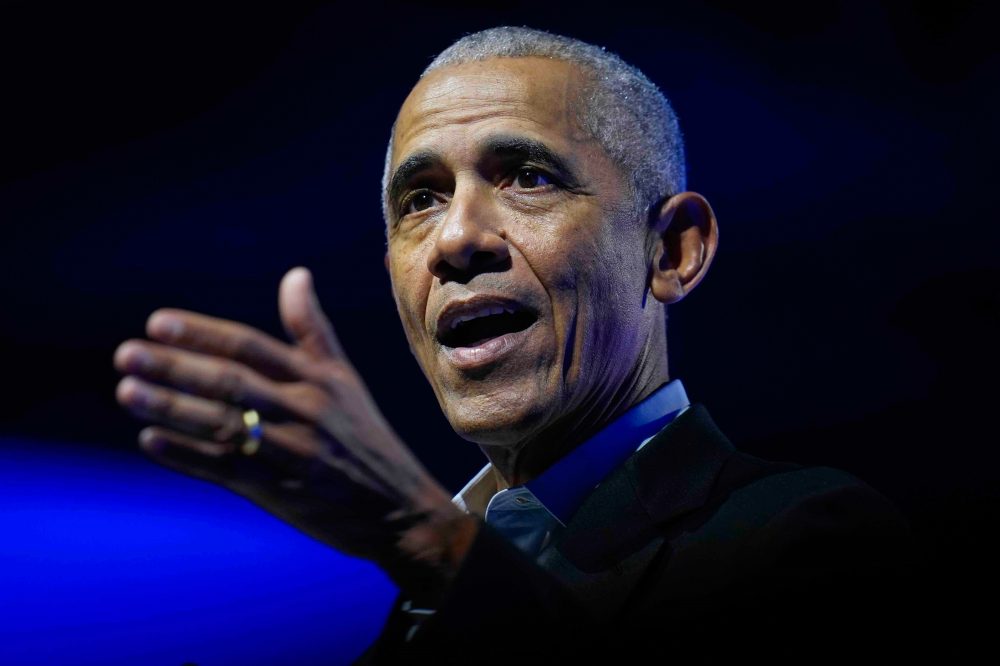
Former President Barack Obama has endorsed Virginia Democrats’ congressional redistricting initiative, marking his involvement in another state-level mapping dispute as midterm elections approach.
Obama’s endorsement came Thursday, one day following the Virginia Supreme Court’s decision to allow the redistricting question to proceed to an April 21 voter referendum. Early voting starts Friday.
This marks Obama’s second endorsement of a Democratic redistricting effort that asks voters to temporarily bypass independent map-drawing processes in favor of party-drawn districts to counteract former President Donald Trump’s push for GOP gerrymandering in Republican-led states. California voters passed a comparable measure last fall to respond to Republicans’ mid-decade redistricting efforts that started in Texas.
In a video provided to The Associated Press before its public release, Obama urges Virginia residents to back the voter referendum on the redrawn districts. He stated the measure will ensure “your voting power is not diminished by what Republicans are doing in other states.”
“This amendment gives you the power to level the playing field in the midterms this fall,” Obama states in the video, distributed by Virginians for Fair Elections. “And voters will have the final say over what the maps look like.”
Virginia Democrats unveiled a new congressional map in February designed to provide their party with four additional seats. The Democratic-controlled legislature approved the proposed map, and Democratic Governor Abigail Spanberger signed it into law.
The map becomes active only with voter approval and Virginia Supreme Court backing.
Obama also emphasizes that it’s a temporary measure, similar to California’s proposal. Following the 2030 census, he explains, “Virginia will go back to a system that lets a bipartisan redistricting commission redraw the maps.”
Virginia’s situation has changed rapidly, with no certainty the new map will be implemented this year even with voter approval.
Wednesday’s Virginia Supreme Court decision was its second ruling allowing the new map to go before voters while justices examine legal challenges to the initiative. The court has yet to determine whether the mid-decade redistricting plan and voter referendum are constitutional, suggesting the April vote might be meaningless if it upholds a lower court’s ruling blocking the effort.
Virginia Democratic legislators have characterized their redistricting proposal as a reaction to Trump’s encouragement of Republican states to redraw their maps to preserve a GOP House majority. Republicans call it an attempt by northern Virginia liberals to control congressional districts throughout the state.
Virginia currently has six Democrats and five Republicans representing the state in the U.S. House, elected from districts created by a court after a bipartisan legislative commission couldn’t reach agreement on a map following the 2020 census.
Redistricting has become a key issue for Obama.
He has highlighted the matter since departing office in 2017 and helped fundraise for the National Democratic Redistricting Committee and its related organizations, one of which has filed and backed lawsuits in multiple states challenging GOP-drawn districts. Eric Holder, Obama’s former attorney general, leads that organization.
Obama actively supported California’s Democratic redistricting ballot measure last year and appeared in advertisements backing Proposition 50, which the U.S. Supreme Court upheld last month.
At an NDRC fundraising event, Obama said partisan gerrymandering wasn’t his “preference.” However, he added, if Democrats “don’t respond effectively, then this White House and Republican-controlled state governments all across the country, they will not stop, because they do not appear to believe in this idea of an inclusive, expansive democracy.”
Wicomico County Executive Julie Giordano and her administrative team have received a personal invitation to attend a congressional markup hearing in the nation’s capital this Thursday, March 5th.
The invitation was extended by House Judiciary Committee Chairman Jim Jordan’s office, requesting Giordano’s presence at the Washington, D.C. proceedings.
Details about the specific purpose of the hearing or Giordano’s role in the markup session were not immediately available.
Federal officials have failed to release $625 million in promised security funding for the upcoming FIFA World Cup, missing a January 30 deadline and raising concerns among host cities about their ability to adequately prepare for the major international event.
New Jersey Representative Nellie Pou, a member of the House Homeland Security Committee, believes partisan motivations are behind the Department of Homeland Security’s failure to distribute the allocated funds.
“I don’t have any doubt that they are using that for political reasons,” Pou told Front Office Sports about DHS’s delayed payments.
The Democratic congresswoman went further, characterizing the Trump administration’s intentions as “100%” political.
Pou’s congressional district encompasses MetLife Stadium in East Rutherford, New Jersey, which will host eight World Cup matches, including the championship game on July 19. FIFA has designated the facility as “New York New Jersey Stadium” for tournament purposes, dropping the corporate sponsor name.
The representative disputed explanations from DHS Secretary Kristi Noem about the funding delay.
“Secretary (Kristi) Noem is saying she isn’t releasing them because of funding impasse. That is absolutely not true,” Pou stated.
In a written statement issued last week, Noem defended the department’s position and blamed Democrats for the holdup.
“FEMA was in the final stages of reviewing applications to ensure proper oversight when Democrats shut down the government putting significant portions of the FEMA staff on administrative leave. No funds have been awarded yet under the FIFA World Cup Grant Program. The longer DHS goes without funding, the less prepared our nation will be for threats at the FIFA World Cup and America 250. This Democrat shutdown directly impacts DHS’s ability to keep Americans safe at these events and our national security,” Noem wrote.
“Democrats must end this shutdown now and let DHS get back to our mission of protecting the Homeland,” she continued.
Multiple host cities have expressed urgency about receiving their allocated security grants.
During a House Homeland Security Committee hearing last week, Miami host committee Chief Operating Officer Raymond Martinez warned about his city’s anticipated $70 million grant.
“Within the next 30 days is the drop-dead date. I know that the local agencies are very anxious. But without receiving this money, it could be catastrophic for our planning and coordination,” Martinez testified.
Kansas City Deputy Police Chief Joseph Mabin also emphasized the critical nature of the federal funding during the same hearing.
“The … funding would be critical for our staffing and our mutual aid partners to come in and assist. We just don’t have enough officers within my own department to cover all the threats,” Mabin explained.
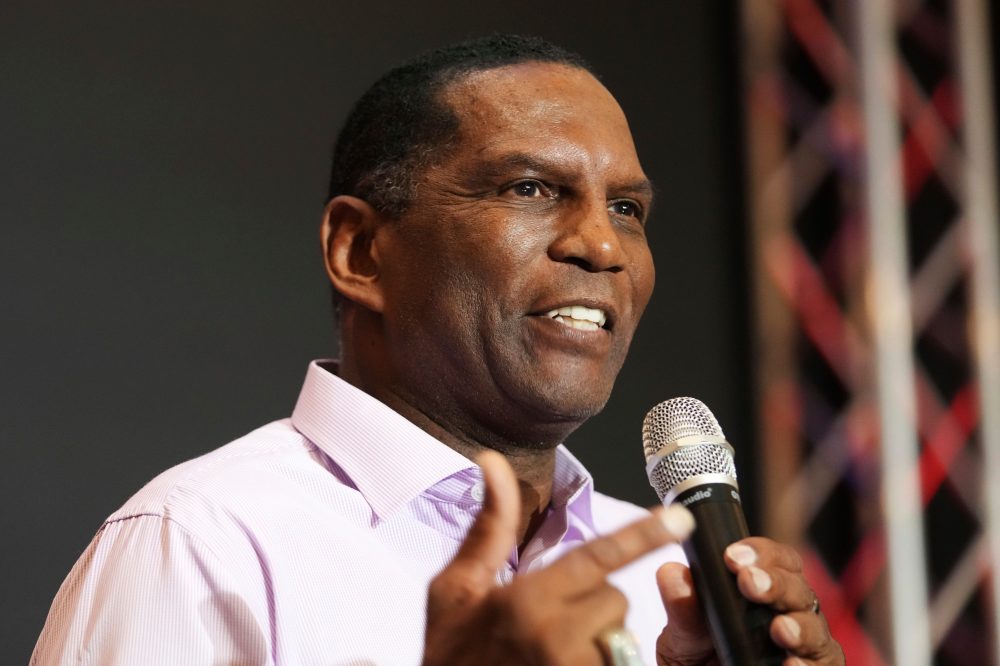
Former professional football star Burgess Owens announced Wednesday that he will step away from Congress rather than seek another term, following a redistricting battle in Utah that has created a political scramble among Republican lawmakers.
The 74-year-old congressman’s decision comes after a court-ordered redistricting map has forced Utah’s four sitting Republican House members to compete for just three available seats in the upcoming election. A state judge’s new congressional boundaries have created favorable conditions for Democrats to potentially capture one of Utah’s four House districts.
Owens and fellow Republican officials challenged the redistricting plan in court, but both state and federal judges dismissed their legal efforts, ruling it was too late to modify the district lines for the 2026 elections.
“I will finish this term fully committed and fully accountable,” Owens stated. “My final political sprint will be here in Utah and across the country, helping my colleagues expand our Republican majority.”
The congressman’s withdrawal from the race eliminates a potential primary battle for Representatives Blake Moore, Celeste Maloy, and Mike Kennedy, who can now pursue the three Republican-favorable districts without facing another sitting incumbent.
In the newly created Salt Lake County district, Democrats are fielding multiple candidates, including former Representative Ben McAdams, whom Owens narrowly beat in his initial 2020 congressional victory. The Democratic field includes several progressive candidates positioned to McAdams’ political left.
Before entering politics, Owens had a distinguished NFL career as a safety, playing for the New York Jets and earning a Super Bowl championship with the Raiders in 1980. Currently serving his third congressional term, he has been a vocal supporter of Donald Trump, describing the former president as “an advocate for Black Americans.”
Owens’ retirement announcement marks a significant milestone: all four Black Republican members of the House have now declared their intention to leave Congress. Representatives Byron Donalds of Florida, John James of Michigan, and Wesley Hunt of Texas are all pursuing different political offices rather than seeking reelection.
The departing congressman indicated he plans to continue advocating for children, families, and opportunity from outside elected office.
These four representatives are part of a larger exodus from the House, with 53 current members—21 Democrats and 32 Republicans—announcing their retirement plans following this year’s elections.
The timing raises questions about Black Republican representation in the next Congress, as primaries are just beginning in early states. The House Republican conference last lacked any Black members between 2013 and 2015.
Among the departing Black Republicans, Donalds was first to announce his plans in February 2025, declaring his candidacy for Florida governor to replace term-limited Ron DeSantis. James followed in April with his bid for Michigan’s open gubernatorial race, while Hunt officially challenged Texas Senator John Cornyn in October. Hunt’s campaign ended Tuesday with a primary loss, leaving Cornyn to face Texas Attorney General Ken Paxton in a May runoff.
Throughout Donald Trump’s second term in office, lawmakers have repeatedly challenged his military decision-making authority, beginning with actions in Latin America and now extending to Middle Eastern operations.
The Republican-led House will face another critical vote on Thursday following the Senate’s rejection of a Democratic proposal aimed at constraining Trump’s authority in the ongoing U.S.-Israeli conflict with Iran.
Similar to many of his predecessors, Trump asserts extensive, nearly unrestricted command over American military forces. His administration has sanctioned naval strikes in Venezuelan waters, implemented maritime blockades, and greenlit military missions targeting Venezuelan leader Nicolás Maduro’s removal from power — actions that could constitute acts of war under international standards. Before launching extensive bombing operations in Iran, he also suggested potential military involvement in Greenland and other Latin American regions.
While the Constitution designates the president as military commander, it also establishes congressional oversight responsibilities. Trump has declared he will not approve any legislation that restricts his military options — evidence that some scholars believe demonstrates how civilian military control has shifted from its constitutional foundation.
Military historian Peter Mansoor, a retired U.S. Army colonel and Ohio State University professor, explained the constitutional framework: “The Constitution gives war powers to two different branches of government.” He expressed concern that “the pendulum has swung towards the executive,” noting that “the framers meant for Congress to be the most powerful branch.”
Constitutional provisions regarding military authority are clearly outlined in two key articles. Article I grants Congress the power “to declare war,” while Article II designates the president as “commander in chief of the Army and Navy.” Additionally, Congress maintains control over military funding.
Since World War II, Congress has not issued any formal war declarations. However, American military personnel have engaged in major combat operations in Korea, Vietnam, Iraq, and Afghanistan, among other locations, resulting in casualties and deaths since 1945.
During the Venezuelan operation, an Army pilot sustained injuries, prompting Trump to present him with the Medal of Honor — an award legally reserved for combat actions against foreign adversaries. As of Wednesday, the Iranian conflict has claimed six American service members’ lives.
During last month’s Senate discussions about Venezuela, Senator Rand Paul of Kentucky criticized what he called an “elaborate song and dance” and declared it “an absurdity” to suggest Trump’s military actions constituted anything less than warfare.
Virginia Democrat Senator Tim Kaine, who introduced both Venezuelan and Iranian war powers measures, described his latest proposal — which was defeated 47-53 — as preventing presidential attempts to circumvent constitutional requirements.
Throughout American history, Congress has formally declared war against 11 nations across five separate conflicts. The 19th century saw three declarations, World War I prompted two, and World War II generated six. In each instance, presidents formally requested congressional action, typically following direct attacks on American interests or territory.
Even President James K. Polk sought congressional approval for the Mexican War, despite its primary purpose being territorial expansion.
During this same historical period, Congress frequently authorized military force without formal war declarations. Early authorizations typically covered specific naval operations protecting American commercial activities. This approach, first used in 1798, became the standard framework for post-World War II military engagements.
President Harry Truman inherited World War II victory under declarations issued during Franklin Roosevelt’s administration. In 1950, when the newly formed United Nations called for intervention in Korea and requested member nation assistance, Truman deployed American forces in what he termed a “police action” without seeking congressional permission. Congress subsequently approved the Defense Production Act that year to support war mobilization efforts, essentially endorsing Truman’s decision retroactively. This legislation remains available for Pentagon use today.
The conflict known historically as the “Vietnam War” — though often labeled “the Vietnam conflict” by administrations expanding Southeast Asian operations — spanned presidencies from Dwight Eisenhower through Gerald Ford.
Lyndon Johnson convinced Congress to approve the Gulf of Tonkin Resolution in 1964, using this authorization to escalate American involvement significantly.
Despite growing casualties and declining public support, Johnson and successor Richard Nixon maintained broad congressional authority. The 1964 resolution stated: “Congress approves and supports the determination of the President, as Commander-in-Chief, to repel any armed attack against the forces of the United States and to prevent further aggression.”
Although Congress revoked this measure in 1971, Nixon continued military operations without withdrawal.
According to Mansoor, formal war declarations serve purposes beyond initiating conflicts. They also establish official endings — requiring Senate ratification of peace treaties. Avoiding these legal parameters, he explained, creates conditions for “forever wars.”
As America struggled toward its Vietnam exit in 1973, Congress enacted the War Powers Resolution, designed to establish presidential constraints by mandating communication with lawmakers and enabling congressional votes on military action parameters. This legislation provided the framework for this year’s unsuccessful Venezuelan resolutions and Iranian measures.
In 2020, the Democratic-controlled House narrowly passed legislation intended to limit Trump’s Iranian military authority at that time. However, the War Powers Resolution has proven ineffective as a practical check on executive power.
Ronald Reagan deployed troops to Lebanon in 1982 as part of an international peacekeeping mission. He did not reference the War Powers Resolution when informing Congress and delayed seeking congressional authorization until 1983 — after military casualties had already occurred.
In 1990, George H.W. Bush informed Congress under War Powers Resolution provisions that he had sent troops to the Middle East following Iraq’s Kuwait invasion. Bush requested congressional “support” rather than “authorization” only after securing United Nations approval for international coalition action led by American forces. Congress authorized military force in January 1991.
Bill Clinton deployed American troops repeatedly — to Somalia, Haiti, Rwanda, Bosnia and Herzegovina, Kosovo, and Iraq. He sought congressional funding but not explicit authorizations. When lawmakers pressured Clinton to seek approval for 1998 Iraqi strikes, he asserted presidential authority interpretations similar to Trump’s current arguments.
George W. Bush rapidly mobilized military forces following the September 11, 2001 terrorist attacks. After quick congressional consultation, lawmakers passed a joint resolution authorizing comprehensive action. This unique measure targeted no specific country initially and focused on al-Qaida. Congress supported the measure almost unanimously while requesting reports every 60 days.
Military historian Mansoor observed that Bush used this authorization to conduct anti-terrorism operations globally. Bush returned to Congress in 2002, requesting authorization for Iraqi action.
The congressional authorization Bush received contained no expiration date. His successor, Barack Obama, inherited Iraqi troops and initially maintained their presence. Afghan operations continued through Obama’s two terms, Trump’s first presidency, and into Joe Biden’s administration.
Biden ultimately withdrew American forces from Afghanistan, ending what had become the nation’s longest undeclared war in American history.
WASHINGTON — The new chief executive of the Internal Revenue Service mostly refused to address congressional inquiries about illegal sharing of taxpayer information during his first appearance before lawmakers Wednesday, stating the violations occurred prior to his appointment.
Frank Bisignano, who became IRS CEO in October, appeared before the House Ways and Means Committee to discuss the agency’s performance during the ongoing 2026 tax filing period. Treasury Secretary Scott Bessent continues serving as the IRS’s acting commissioner while Bisignano leads the organization in his newly established role.
In his opening statement, Bisignano highlighted how the Internal Revenue Service is executing the Republican-led tax and spending legislation, which eliminates taxation on tips and overtime pay, removes certain automotive loan interest taxes, establishes tax breaks for senior citizens, and creates Trump Accounts for children’s savings programs.
Democratic committee members, however, focused their questioning on a federal court ruling that found the IRS violated federal law by sharing protected taxpayer data “approximately 42,695 times” with Immigration and Customs Enforcement through an information-sharing arrangement between ICE and the Department of Homeland Security designed to locate and remove undocumented immigrants. Immigration enforcement represents a key priority for Republican President Donald Trump’s administration.
“Was anyone fired? Was anyone disciplined? Was anyone held accountable? Was anyone held to account?” questioned Representative Mike Thompson, a California Democrat.
Bisignano referenced active court cases and refused to discuss the data breaches, stating, “I don’t want to debate the numbers.”
Federal District Judge Colleen Kollar-Kotelly ruled last month that the IRS illegally provided taxpayer records for thousands of individuals to immigration authorities.
Multiple legal challenges targeting the IRS-DHS information agreement remain active in federal court. Two judicial orders have prevented the agencies from conducting large-scale taxpayer data transfers and prohibited ICE from using any IRS information currently in its files. These temporary restraining orders continue to be enforced.
Representative Suzan DelBene of Washington state declared, “This is a catastrophic leadership failure and a huge hit on the public’s confidence in your integrity.”
Bisignano, who simultaneously serves as Social Security Administration commissioner, replied, “Obviously all these events occurred before my tenure.” However, he acknowledged it was “my responsibility to get it right.”
The information-sharing pact, signed last April by Bessent and Homeland Security Secretary Kristi Noem, permits ICE to provide names and addresses of undocumented immigrants to the IRS for verification against tax filing records. The agreement prompted the previous acting IRS commissioner to step down.
Democratic lawmakers also challenged Bisignano regarding the IRS’s recent termination of union agreements with agency employees. Representative Richard Neal of Massachusetts argued that “by terminating the union contract it makes it easier to take apart the IRS.”
Bisignano, whose father previously worked for the Treasury Department, responded, “Federal employees under statute have greater benefits than any union in the world can provide for their people.”
Maryland officials have allocated more than $3.7 million in state grants to seven counties for recreational facilities and environmental preservation initiatives, the Board of Public Works announced today.
The funding from the Maryland Department of Natural Resources will benefit projects in Allegany, Caroline, Charles, Howard, Prince George’s, Queen Anne’s, and Washington counties.
Over $1 million in Program Open Space – Local grants will support three initiatives: College Park in Prince George’s County will purchase 1.59 acres for a new recreational park that will showcase urban forestry practices; Washington County plans to install new playground equipment at Marty Snook Park to replace aging facilities; and Caroline County will continue developing trails, athletic fields, and parking areas at North County Regional Park in Greensboro.
An additional $1.6 million was designated for Local Parks and Playgrounds Infrastructure Program initiatives across three counties. Caroline County will add observation decks, covered areas, and play equipment at North County Regional Park, building on their other project at the same location. Allegany County will enhance the Willowbrook Outdoor Wellness Center in Cumberland with accessibility-compliant recreational features and walking paths. Howard County will develop its inaugural garden park, named Longwood Public Gardens in Glenwood, designed to support pollinators while offering educational and tranquil spaces for community members. The Local Parks and Playgrounds Infrastructure Program received funding during fiscal years 2022 and 2023 to support municipal and county recreation initiatives.
For environmental protection efforts, officials approved $774,400 to secure permanent conservation easements through the Rural Legacy program in Charles County. The county will safeguard two properties spanning 180 acres within the Zekiah Watershed Rural Legacy Area, which serves as crucial habitat for species at risk of extinction. These easements will protect over one mile of wooded stream corridors within the watershed.
The Board additionally authorized $253,000 for a Conservation Reserve Enhancement Program (CREP) Permanent Conservation Easement covering 42 acres in Queen Anne’s County. This purchase will preserve roadside vistas and 1,500 feet of forested waterway buffers along a Tuckahoe Creek tributary.
Complete details about these and additional matters can be found in the Board of Public Works March 4, 2026 meeting documentation. The three-person Board consists of Governor Wes Moore, Treasurer Dereck E. Davis, and Comptroller Brooke E. Lierman.
Program Open Space – Local has provided financial support to county and city governments for recreational land planning, acquisition, and development since its establishment under the Department of Natural Resources in 1969. The initiative, which includes both Local and Stateside components, represents Maryland’s ongoing dedication to environmental conservation while creating outdoor recreational opportunities for residents. Revenue comes from property transfer taxes.
The Rural Legacy Program, launched in 1997, protects extensive working landscapes across 36 locally designated regions throughout Maryland. Both the Rural Legacy Program and the Maryland Agricultural Land Preservation Foundation recently received national recognition from the American Farmland Trust.
Maryland’s permanent easement component of the Conservation Reserve Enhancement Program (CREP) has operated since 2009, purchasing conservation easements from voluntary landowners that mandate ongoing maintenance of Conservation Reserve Program practices beyond federal contract expiration dates.
WASHINGTON – Federal employment declined by 386,826 positions during President Donald Trump’s initial year of his second presidency, new government statistics reveal.
The Office of Personnel Management, which serves as the federal government’s human resources department, released the workforce data on Wednesday.
This significant reduction in government personnel reflects Trump’s campaign commitment to reduce federal bureaucracy, which he has characterized as excessive and wasteful in its operations.
Northampton County, Virginia officials are reaching out to residents who want to get involved in local government through volunteer service.
The county currently has openings on several boards and commissions that need to be filled by interested citizens. These volunteer positions offer community members a chance to participate directly in local decision-making processes.
Residents who are interested in serving their community through these appointed roles are encouraged to contact the county to learn more about available opportunities and application requirements.
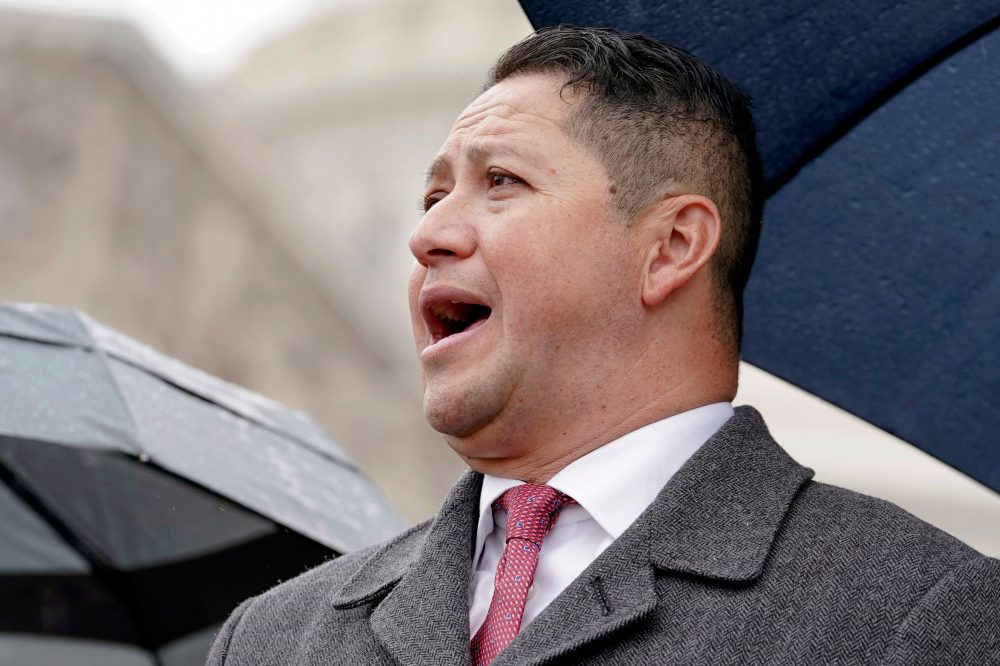
WASHINGTON — Federal lawmakers have initiated a formal ethics investigation into Texas Representative Tony Gonzales following accusations that he engaged in an inappropriate relationship with a member of his staff.
House Ethics Committee leadership announced Wednesday that a bipartisan investigative team will examine claims that Gonzales committed sexual misconduct involving an office employee and potentially provided improper benefits or special treatment through discrimination.
The congressman’s office has not responded to requests for comment from news organizations regarding the investigation.
Gonzales, who is currently serving his third term in Congress, has stated he will not resign over these accusations. Speaking with reporters at the Capitol, he indicated that additional information will eventually be made public.
“What you’ve seen is not all the facts,” Gonzales stated.
The 20-year Navy veteran, who served deployments in Iraq and Afghanistan before entering politics in 2020, is a father of six children. This week, he was pushed into a May primary runoff against Brandon Herrera, a firearms manufacturer and YouTube personality focused on gun rights, after failing to secure enough votes in the 2024 Republican primary.
According to reporting by the San Antonio Express-News, text message communications were obtained showing former Gonzales employee Regina Ann Santos-Aviles discussing an affair with the congressman in messages to a coworker.
The Associated Press has not verified these text messages independently. Legal representation for Adrian Aviles, the husband of Santos-Aviles, confirmed that he discovered the alleged affair prior to his wife’s death.
Santos-Aviles, age 35, died by suicide in September 2025 after self-immolation in her backyard in Uvalde, Texas. The Bexar County Medical Examiner’s Office officially classified her death as suicide.
WASHINGTON — Congressional ethics officials announced Wednesday they have begun investigating Texas Representative Tony Gonzales amid claims he engaged in an improper relationship with a member of his staff.
In a bipartisan statement, the House Ethics Committee’s leadership revealed they are examining allegations that Gonzales committed sexual misconduct involving an office employee and potentially provided unfair preferential treatment.
Representatives from Gonzales’ congressional office have not responded to requests for comment from news organizations.
The Republican lawmaker, currently serving his third term, has previously stated he will not resign over these accusations. Speaking to reporters at the Capitol, he indicated more information would eventually be revealed.
“What you’ve seen is not all the facts,” Gonzales stated.
The 44-year-old congressman, who is married with six children, initially captured his seat in 2020 following a two-decade military service that included deployments to Iraq and Afghanistan. This week, he was pushed into a May primary runoff against challenger Brandon Herrera, a firearms manufacturer and YouTube personality focused on gun rights who came close to defeating Gonzales in the 2024 Republican primary.
According to reporting by the San Antonio Express-News, text messages were discovered showing former Gonzales employee Regina Ann Santos-Aviles admitting to a coworker that she had engaged in an affair with the congressman.
The Associated Press has not verified these text messages independently. Legal representation for Adrian Aviles, Santos-Aviles’ spouse, confirmed that the husband learned of the alleged affair prior to his wife’s passing.
Santos-Aviles, age 35, passed away in September 2025 after intentionally setting herself ablaze at her Uvalde, Texas residence. Medical examiners in Bexar County subsequently determined her death was by suicide.
DALLAS — Texas Republicans are preparing for what could be a brutal and expensive battle ahead.
Veteran Senator John Cornyn and his supporters invested close to $70 million to make it through Tuesday’s initial Republican primary contest. He maintained a narrow lead over Ken Paxton, the state’s attorney general known for his conservative activism, as vote counting continued Wednesday.
The two candidates will now face off in a May 26 runoff election that party officials worry could prove even more contentious and costly than the initial race.
“It’s judgment day for Ken Paxton,” Cornyn declared Tuesday evening.
However, it’s uncertain whether any amount of negative campaigning can derail Paxton — who has faced ongoing allegations involving corruption and personal misconduct — particularly as he presents himself as the type of Make America Great Again champion that President Donald Trump requires in the nation’s capital.
Paxton spoke defiantly to several hundred supporters gathered at a Dallas hotel ballroom, a stark contrast to Cornyn’s smaller media availability.
“We just sent a message, loud and clear, to Washington,” he declared. “We are not going to go quietly, and we are not going to let you buy the seat.”
GOP officials are concerned about the runoff because this 83-day campaign period coincides with what political strategists from both parties recognize as an unusually strong opportunity for Democrats to capture a Texas Senate seat — something that hasn’t occurred in almost 40 years.
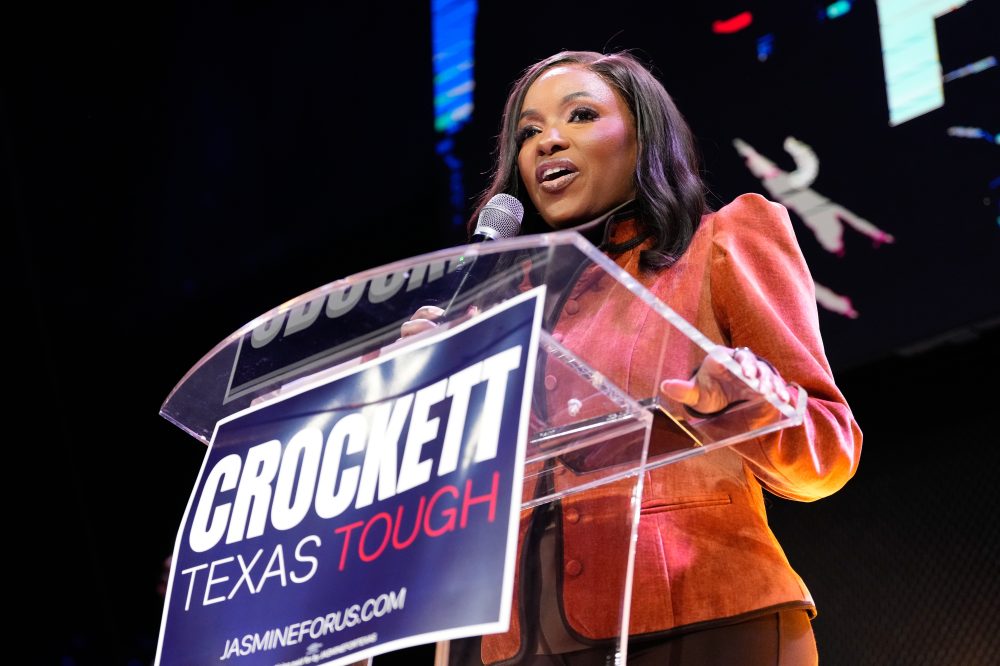
Democrats selected state Representative James Talarico as their nominee, whom Republicans quickly labeled a far-left radical — despite privately viewing the 36-year-old progressive Christian as a more formidable general election opponent than his primary rival, Representative Jasmine Crockett.
This Texas race unfolds as Trump works to preserve congressional control during his remaining two years in office. While Republicans feel more optimistic about maintaining their Senate majority compared to the House, a competitive Texas contest could complicate their strategy or drain resources needed for tighter races in states like North Carolina, Maine, Ohio and Alaska.
Washington Republican leadership maintains that Cornyn has the superior opportunity, particularly after his first-place finish in Tuesday’s primary, with Representative Wesley Hunt placing a distant third before conceding. Cornyn’s team suggested the runoff would be unnecessary without “Wesley Hunt’s vanity campaign.”
“Paxton’s problems aren’t just an issue in a Republican primary; they also threaten to put the Senate seat at risk due to his lack of strength against Democrat nominee Talarico,” stated a memo from Cornyn’s campaign.
However, Paxton and his supporters show no indication of retreating.
“The D.C. establishment has done its job: it rallied around its wounded incumbent, opened the fundraising spigot, and flooded the airwaves. But the results, the data, and the reality on the ground all point to the same conclusion: John Cornyn has no viable path to the Republican nomination,” wrote the pro-Paxton Lone Star PAC in their memo. “Cornyn should suspend his campaign, concede the nomination to Ken Paxton, and refuse to allow another $100+ million in Republican resources to be burned in a race that is already decided.”
The sole individual who might prevent this internal party warfare, or at least minimize its damage, is Trump. However, the president has refused to back any candidate in the primary, calling all of them “great,” and it remains uncertain whether his position will shift for the runoff.
Without Trump’s endorsement, Cornyn made clear he would advocate for himself. He informed reporters that Paxton would represent “a dead weight at the top of the ticket for Republicans” come November.
“I’ve worked for decades to build the Republican Party, both here in Texas and nationally,” Cornyn stated. “I refuse to allow a flawed, self-centered and shameless candidate like Ken Paxton to risk everything we’ve worked so hard to build over these many years.”
Cornyn will encounter significant fundraising challenges, having already exhausted substantial resources in the primary’s first phase. Campaign staff indicated he has scheduled some small fundraising events but nothing immediately following this week’s voting as he returns to the capital.
Additionally, Paxton’s supporters believe the political environment will favor the attorney general.
“The casual and moderate Republican voters who are most likely to support an establishment incumbent are the least likely to return for a runoff,” noted the Lone Star PAC memo. “The committed conservative activists who form Paxton’s base are the most likely to show up.”
U.S. Representative Jasmine Crockett acknowledged defeat Wednesday in her bid for the Texas Democratic Senate nomination, endorsing state lawmaker James Talarico who secured victory in the primary contest.
The congresswoman urged Democratic voters to rally around Talarico, who locked up the party’s nomination in results confirmed overnight.
“Texas is primed to turn blue and we must remain united because this is bigger than any one person,” Crockett said in a statement. “This is about the future of all 30 million Texans and getting America back on track.”
Prior to her concession, Crockett’s campaign had indicated they might pursue legal action regarding alleged irregularities during the primary voting process. Campaign representatives have not yet clarified whether those legal challenges will proceed.
Talarico now moves forward to the November general election, where he will square off against whichever Republican emerges from their runoff contest between incumbent Senator John Cornyn and state Attorney General Ken Paxton.
President Donald Trump will welcome executives from major technology companies to the White House on Wednesday to discuss a new initiative designed to shield consumers from electricity rate increases linked to data center expansion.
The meeting will include representatives from Google, Meta, and OpenAI, who will participate in what the administration calls the ‘Ratepayer Protection Pledge’ – a program Trump first outlined during his State of the Union speech.
According to White House officials, this commitment is designed to prevent the artificial intelligence infrastructure boom from driving up electric bills for American families and small business owners.
The announcement comes as November’s midterm elections approach, with many voters expressing growing worry about energy affordability and the mounting pressure data centers place on the nation’s electrical grid systems.
Sources with knowledge of the discussions indicate that participating technology companies will agree to secure or develop their own electricity sources for data centers, whether through constructing new power facilities or expanding existing ones.
The tech giants are also expected to finance improvements to electrical delivery infrastructure and negotiate specialized rate structures with utility providers, according to these same sources.
Major technology corporations attending the White House gathering represent companies investing enormous sums in artificial intelligence computing capabilities that consume significant amounts of electrical power.
The President has encouraged these companies to develop dedicated power sources rather than depending entirely on regional electrical grids, as part of a broader strategy to maintain technological leadership while addressing political and economic energy cost concerns.
However, some experts question whether this approach will generate new electricity supplies quickly enough to reduce grid strain. Jon Gordon, who serves as director at Advanced Energy United, a clean energy trade organization that includes data center operators, expressed skepticism about the timeline.
Gordon noted that Trump’s emphasis on natural gas and fossil fuel power generation for data centers, rather than faster-deployment options like solar and wind energy, could slow progress.
‘The real problem is the inability to get generation online fast enough to meet the data center demand,’ Gordon stated. ‘Hyperscalers paying for the generation doesn’t get it online any faster.’
Both supporters and skeptics will monitor whether this pledge results in meaningful commitments or remains primarily ceremonial, as legislators and consumer advocacy organizations have demanded stronger safeguards against utility rate increases connected to data center development.
Family advocacy organizations are expressing strong approval following a recent Supreme Court decision that blocks California educational institutions from assisting students in gender identity transitions without parental knowledge or consent while related legal challenges proceed through the courts.
This latest ruling comes after the high court’s previous decision from last year that established parents’ authority to remove their children from educational programs or curriculum that advance LGBTQ-related topics. Legal observers note that the Supreme Court appears to be increasingly supportive of parental authority in educational matters and may be starting to reverse previous expansions of gender identity policies within school systems.
BILLINGS, Mont. — Seth Bodnar, who recently concluded his tenure as University of Montana president, announced Wednesday his intention to run as an independent candidate against Republican Senator Steve Daines in this November’s election, following a series of Democratic losses across Montana in recent electoral cycles.
The Associated Press received advance details of Bodnar’s Wednesday announcement. His choice to pursue the race without major party support highlights how weakened Montana Democrats have become, particularly after losing all statewide offices following Senator Jon Tester’s defeat in 2024 after serving three terms.
Wednesday marked the filing deadline for major party candidates seeking spots on November’s ballot. As of Tuesday, no prominent Democratic figures had stepped forward to enter the Senate contest.
Daines, pursuing his third term in office, previously worked as a business executive and maintains strong ties with President Donald Trump. The GOP currently holds a narrow Senate advantage with 53 seats compared to 45 Democrats and two independent members.
In a video statement, Bodnar criticized America’s political framework as dysfunctional, claiming Washington politicians prioritize wealthy and influential interests over ordinary citizens.
“The American dream is getting crushed, and both parties are to blame. They pit us against each other while they line their own pockets,” Bodnar stated in his announcement video. “We need a new approach, an independent senator who will fight for hardworking Montanans.”
The 47-year-old Pennsylvania native from Grove City earned top honors at West Point and completed Army special forces service before transitioning to an executive role at GE Transportation.
Following eight years leading the University of Montana, Bodnar concluded his presidency last month. To secure ballot placement for the general election rather than the primary, he must gather 13,327 petition signatures.
Campaign finance records from the Federal Election Commission indicate Daines has accumulated over $8 million in contributions since his 2020 reelection. His campaign reported nearly $5 million in available funds as of December 31.
These fundraising figures could grow dramatically should the contest intensify: Montana’s 2024 Senate battle between Tester and Republican Tim Sheehy exceeded $300 million in total expenditures, establishing a per-voter spending record for congressional races according to party representatives.
The 63-year-old Daines, originally from Van Nuys, California, but raised in Bozeman, Montana, worked as an executive at Right Now Technologies before winning his House seat in 2012.
After one House term, he successfully captured the Senate position previously occupied by Democrat Max Baucus in 2014. Daines secured victory by a substantial margin against a relatively unknown challenger after Baucus’ intended Democratic replacement, former Lieutenant Governor John Walsh, withdrew following allegations of thesis plagiarism during his time at the U.S. Army War College.
In 2020, Daines defeated Democratic Governor Steve Bullock with a 10-point victory margin. That contest held Montana’s political spending record until the recent Tester-Sheehy race surpassed it.
Between 2023 and 2025, Daines oversaw Republican Senate fundraising operations as chairman of the National Republican Senatorial Committee.
Montana voters historically practiced “ticket splitting,” supporting candidates from both major parties across different races. This moderate tendency diminished as national concerns like immigration and healthcare gained prominence in state political discussions.
This transformation has particularly impacted Montana Democrats, who have surrendered the governor’s mansion, both Senate seats, and every other statewide position they previously controlled since 2014. During 2022’s election, independent candidate Gary Buchanan received more votes than Democrat Penny Ronning in the general election for a Republican-controlled House seat covering eastern Montana.
The Republican winner of that race, former Representative Matt Rosendale, garnered more votes than Buchanan and Ronning’s totals combined.
A group of young male voters who helped propel Donald Trump to victory in 2024 are now grappling with conflicting emotions over his administration’s military strikes against Iran, according to interviews conducted at a New Hampshire college.
Michael Leary, a 19-year-old first-time voter, expressed concern that the Iranian military operation might contradict the “America First” message that convinced him to support Trump. The student from Manchester, New Hampshire said he worried the action could drag America into another prolonged Middle Eastern conflict.
However, Leary also acknowledged feeling pleased about reports of Iranian Supreme Leader Ayatollah Ali Khamenei’s death and wasn’t prepared to criticize Trump’s choice, hoping the joint mission with Israel would conclude quickly without American casualties.
“One of my things with Trump was it was going to be ‘America First.’ That was the rhetoric he was running on,” Leary explained about casting his inaugural presidential vote for Trump in 2024.
“It’s not that I disagree with the war or the strikes … We need to learn more and see what’s going to happen. But it felt like a step back from what he was saying.”
This combination of backing and concern — supporting Khamenei’s elimination while fearing Trump’s “regime change” agenda might entangle America in extended warfare — appeared among five additional Trump supporters during a student discussion Reuters conducted at Saint Anselm College in New Hampshire this week.
Young male demographics represented one of 2024’s most surprising electoral shifts, moving toward Trump after Democrats had controlled the youth demographic for years. However, recent surveys indicate this backing is declining due to frustration over continuing inflation and aggressive immigration policies that some consider excessively severe.
Weekend Reuters/Ipsos surveys revealed only 25% of Americans back the Iranian strikes.
The student discussion, though representing a limited sample, provides an initial glimpse into how some young men are interpreting the Iran military action, indicating Trump might have a narrow timeframe to achieve clear American victories and calm a conflict that has expanded into Lebanon, disrupted international markets and driven oil costs significantly upward.
A rapid conclusion to the Iranian conflict could help Trump appear as a decisive military leader, but extended warfare risks alienating the young men who fueled his 2024 comeback.
John Fitzpatrick, a 20-year-old political science student, expressed support for “decapitating” an Iranian government he considered a persistent American threat and characterized Iran’s counter-strikes as “scrambling for one last gasp of air.”
“It would be nice to see regime change — not that we should have boots on the ground or be as deeply entrenched as we were in Iraq,” explained Fitzpatrick, who leads the Saint Anselm College Republicans. “I think it’s overall positive.”
Artemius Gehring, 20, shared similar views, stating Trump’s goal was resolving a decades-long dispute dating to the 1979 hostage situation, when Iranian militants captured the American embassy in Tehran and detained dozens of Americans for 444 days.
“I think what he’s trying to do is just end it,” Gehring stated. “It’s the right move.”
CONCERNS ABOUT MISSING STRATEGY
Tyler Witzgall, a 20-year-old second-year student, said although he endorsed eliminating Khamenei, he remained troubled by the Trump administration’s apparent absence of a solid replacement strategy, a gap he feared might create chaos or potentially civil conflict.
“He’s telling the people of Iran to rise up and take over the government, and that’s easier said than done,” Witzgall observed. “Why are we taking these actions when there’s no specific plan right now or none that we know of?”
Witzgall noted the Iranian strikes, combined with January’s capture of Venezuela’s Nicolás Maduro, demonstrated what he viewed as excessive focus on international affairs. He said his Trump vote aimed to strengthen the economy and accomplish domestic goals and wanted more presidential attention directed there.
Trump’s commitments to control inflation, increase economic growth and strengthen immigration policies helped draw young men to his candidacy. Pew Research Center exit poll analysis shows he captured 46% of males aged 18-29 in 2024, versus 51% for Democratic candidate and former Vice President Kamala Harris. This represents a significant change from 2020, when Trump lost young men to President Joe Biden by 14 percentage points, 53% to 39%.
Recent surveys show those improvements have disappeared. In February, approximately 33% of men aged 18-29 approved Trump’s White House performance, declining from 43% during the same 2025 period, based on Reuters/Ipsos polling from those timeframes.
The Iranian crisis resolution could determine whether Trump’s approval numbers increase or decrease, with possible implications for Republicans in November’s midterm elections. A CNN survey of 1,004 Americans discovered voters aged 18-34 showed the strongest opposition to the strikes, with 71% expressing disapproval.
Leary said determining whether the Iranian attacks represented the proper decision remained premature.
“It could absolutely turn into the right move, or we could stay in Iran for 30-plus years, spend a ton of money – money that could have been spent at home.”
WASHINGTON – Members of the United States Senate are preparing to cast votes Wednesday on a cross-party measure designed to limit President Donald Trump’s military operations against Iran and mandate that Congress authorize any future armed conflicts with the nation.
The initiative represents the most recent attempt by Democratic lawmakers, joined by several Republicans, to constrain Trump’s pattern of military deployments. Those backing the measure characterize it as an effort to restore Congress’s constitutional authority over declarations of war.
Virginia Democratic Senator Tim Kaine, who serves as a primary sponsor of the resolution, emphasized the importance of accountability during a telephone news conference before the scheduled afternoon vote. “I do think it’s really important to put every member of Congress on the record about this,” Kaine stated.
He continued with pointed criticism: “If you don’t have the guts to vote ‘Yes’ or ‘No’ on a war vote, how dare you send our sons and daughters into war where they risk their lives?”
Republicans maintain narrow control in both congressional chambers and have previously prevented similar measures aimed at limiting presidential war authority from advancing.
GOP members have criticized Democrats for using national security as a political tool, arguing that Trump has authorized only restricted operations, including the January capture of Venezuelan leader Nicolas Maduro, rather than comprehensive military campaigns.
The ongoing U.S.-Israel military action against Iran, which commenced five days ago, has already escalated significantly, resulting in destruction across Iran, Israel, and the broader Middle East region, while producing the first American military casualties.
House representatives are anticipated to vote on the same measure Thursday.
Louisiana Republican House Speaker Mike Johnson expressed confidence Tuesday that sufficient votes exist to block the resolution, characterizing it as potentially endangering American forces and emboldening Iranian military units.
“Imagine a scenario where Congress would vote to tell the commander-in-chief that he was no longer allowed to complete this mission. That would be a very dangerous thing,” Johnson explained to members of the press.
Johnson’s comments came after receiving a confidential briefing from senior administration officials regarding the Iranian situation.
Should the resolution succeed in the Senate, it would still require House passage and two-thirds support in both chambers to override Trump’s anticipated veto.
Nevertheless, Kaine indicated that he and fellow supporters might pursue additional attempts if the Iranian conflict persists.
“Sometimes people will see things that concern them, and they’ll vote ‘No,’ but then later as events continue to develop they may vote ‘Yes,’” he explained.
Federal authorities are transferring pregnant unaccompanied migrant minors to a South Texas facility that has been previously identified by Office of Refugee Resettlement officials as having insufficient medical capabilities.
The shelter, operated by for-profit contractor Urban Strategies, has raised concerns among government personnel and child welfare advocates who believe the administration’s strategy is designed to consolidate these vulnerable minors in Texas, a state where abortion services are completely prohibited.
This development represents a significant shift in how the federal government handles pregnant migrant teenagers in its custody, with critics questioning whether adequate medical care can be provided at the flagged facility.
Florida’s state university system has implemented a temporary suspension on recruiting international faculty members through the H-1B visa program, a decision that will remain in place until January 5, 2027.
The suspension follows an October directive from Governor Ron DeSantis, who instructed educational institutions to address what he characterized as “visa abuse” within the higher education sector.
According to regulations published on their official website, the Florida Board of Governors, which provides oversight for the state’s public universities, approved this temporary prohibition through a formal vote.
The policy change will impact prospective employees across all 12 institutions within the State University System of Florida, though current visa holders will not be affected.
This development occurs alongside President Donald Trump’s recent implementation of a one-time $100,000 application fee for new H-1B visa seekers, part of his broader immigration policy initiatives.
Neither Governor DeSantis’s office nor the Board of Governors responded to requests for comment regarding the new policy.
The H-1B program enables international professionals with specialized expertise – particularly in science, technology, engineering, and mathematics fields – to obtain U.S. employment authorization. The program distributes 65,000 visas each year, plus an additional 20,000 reserved for individuals holding advanced degrees, with approval periods ranging from three to six years.
Data from the U.S. Citizenship and Immigration Services indicates that Florida’s 12 state universities successfully sponsored more than 600 H-1B visa recipients during the previous year.
During his October announcement, DeSantis stated that American universities “were importing foreign workers on H-1B visas instead of hiring Americans who are qualified and available to do the job.”
State Representative Steve Toth emerged victorious over incumbent U.S. Representative Dan Crenshaw in Tuesday evening’s Republican primary contest, marking the end of Crenshaw’s congressional career as the sole Texas House Republican who did not receive President Donald Trump’s backing in the nation’s opening major primary of 2026.
The former Navy SEAL, known for his occasional independence from party orthodoxy that sometimes put him at odds with Republican colleagues, campaigned throughout the primary season while defending himself against criticism from conservative factions within the party who questioned whether he supported Trump’s political priorities.
Toth, who serves in the state legislature and belongs to the hard-right Republican faction there, secured a significant late-campaign boost when Republican Senator Ted Cruz announced his support for the challenger.
The incumbent congressman, who suffered the loss of his right eye after being wounded by an improvised explosive device during his 2012 deployment in Afghanistan, had previously disagreed publicly with Cruz regarding the senator’s backing of Trump’s unsubstantiated assertions about winning the 2020 presidential race.
Among Texas Republican congressional candidates in 2022, Crenshaw stood out as one of the rare politicians willing to accept that President Joe Biden’s 2020 election victory was valid, a stance that sometimes created friction with his Republican peers.
Conservative activists also targeted Crenshaw after video footage circulated widely showing him denouncing certain Republican figures as “grifters” and “performance artists” who merely echo what conservative constituents want to hear.
The 41-year-old congressman had been pursuing a fifth consecutive term representing the 2nd Congressional District, which encompasses suburban communities located north and east of Houston.
Tuesday marked the official launch of the 2026 midterm election season as citizens in Texas, North Carolina, and Arkansas cast ballots in crucial primary contests that will shape the political landscape heading into November.
These initial primary elections represent the opening chapter of what promises to be an intense campaign season, with both congressional seats and state-level offices hanging in the balance come fall.
The outcomes of Tuesday’s voting will determine which candidates move forward to compete in the general election, where control of both federal and state governments will be decided by voters nationwide.
NBC News projects that Texas will see a Republican Senate runoff between current U.S. Senator John Cornyn and the state’s Attorney General Ken Paxton after neither candidate secured the necessary majority in Tuesday’s primary election.
The incumbent Cornyn finished first in the three-candidate race, while U.S. Representative Wesley Hunt came in third place. Since no candidate reached the 50% threshold, Cornyn and Paxton will compete in a runoff scheduled for May 26.
The primary battle proved expensive, with supporters of Cornyn, who has backing from Senate Republican leadership, pouring more than $60 million into efforts to help the sitting senator defeat Paxton.
Political observers note that Republican primary runoff voters typically lean more conservative, which could give Paxton an advantage in the upcoming contest. However, Cornyn has countered by pointing to concerns about Paxton’s past controversies, suggesting these issues could make him a weaker candidate against any Democratic opponent in the general election and potentially put what should be a secure Republican Senate seat at risk.
Despite winning Texas by nearly 14 percentage points in 2024, former President Trump chose not to back any candidate in the primary. Whether Trump will make an endorsement before the May runoff remains uncertain.
Texas State Representative Gina Hinojosa secured victory in Tuesday’s Democratic gubernatorial primary, according to reports from national media outlets, positioning herself for a November face-off against incumbent Republican Governor Greg Abbott.
The 52-year-old lawmaker, who has represented her district since winning election to the Texas House in 2016, entered the primary as the clear frontrunner. Hinojosa brings nearly ten years of experience as the former chairwoman of the Texas Democratic Party to her gubernatorial bid.
The November general election presents significant challenges for Hinojosa, as she attempts to unseat Abbott, who is pursuing his fourth consecutive term in office. Texas Democrats have not claimed the governor’s mansion since 1990, highlighting the steep climb ahead for the party.
Before entering politics, Hinojosa built her career as an attorney specializing in civil rights and labor law. Her primary campaign earned backing from multiple major newspapers across Texas, including The Houston Chronicle. While the Chronicle acknowledged she may not be “a scintillating candidate,” the publication described her as the “Democrats’ best hope” for reclaiming the state’s top executive office.
California’s top Democratic Party official is making an unusual plea to gubernatorial hopefuls: take a hard look at your chances and consider stepping aside.
Rusty Hicks, who leads the California Democratic Party, issued the warning Tuesday as concerns mount that an overcrowded primary field could create an opening for Republicans to seize control of the governor’s mansion.
The Golden State uses an open primary format where the top two vote-getters advance to November, regardless of their political party. This creates a scenario where Democrats could theoretically be shut out entirely if Republican candidates capture the two highest vote totals in the June 2nd primary.
In a public message to Democratic contenders, Hicks acknowledged the situation: “Despite the ongoing chatter, the likelihood of two Republicans effectively ‘locking out’ California Democrats from the contest for Governor in the General Election is relatively low.”
But he added a cautionary note: “However, while it is implausible, it is not impossible and I know we are collectively committed to taking the steps required to avoid that possibility.”
California implemented its current primary system in 2012, and while both major parties have typically been represented in general elections since then, Democrats have maintained their winning streak in all statewide races beginning in 2011.
The upcoming race will determine who succeeds Gavin Newsom, currently in his second and final term as governor. Newsom, who faces term limits under state law, is widely viewed as a potential 2028 presidential candidate.
The Democratic field has swelled to more than a dozen declared candidates, including former Health and Human Services Secretary Xavier Becerra and California Democratic Party Vice Chair Betty Yee. Meanwhile, fewer than a dozen Republicans have entered the contest.
Given the crowded Democratic field, party leadership has opted against backing any single candidate, according to Hicks. This decision reflects ongoing concerns about vote splitting among too many contenders.
With Friday marking the final day for candidates to file their paperwork, Hicks emphasized the urgency for hopefuls to realistically evaluate their campaign prospects and fundraising capabilities.
During a Tuesday press conference at the White House, President Trump pushed back against allegations that Israel influenced the United States into military conflict, arguing instead that Iranian leadership posed an immediate threat to strike first.
Speaking alongside German Chancellor Frederick Merz in the Oval Office, Trump addressed reporters’ questions about the circumstances leading to current military operations. “We were having negotiations with these lunatics, and it was my opinion that [the Iranians] were going to attack first,” the president stated.
Trump emphasized his conviction about Iran’s intentions, telling reporters: “They were going to attack. If we didn’t do it, they were going to attack first. I felt strongly about that.”
The president went further, suggesting he may have influenced Israel’s decision-making rather than the reverse. “So if anything, I might have forced Israel’s hand,” he remarked.
This statement comes amid conflicting intelligence assessments. The Pentagon informed Congress on Sunday that no intelligence supported the idea that Iran was preparing a preemptive attack.
The controversy emerged following Monday briefings by US Secretary of State Marco Rubio to key congressional leaders, where Rubio reportedly indicated American military actions began based on expectations that Israel was planning to launch strikes.
Addressing Iran’s current military status, Trump declared during the same press conference that ongoing conflict has severely damaged Iranian capabilities. “Just about everything’s been knocked out. So we’ll see how we do,” the president said.
Trump also expressed concerns about potential leadership changes in Iran following the death of Supreme Leader Ali Khamenei, who was killed during joint US-Israeli strikes on Tehran beginning February 28.
“I guess the worst case would be—we do this, and then somebody takes over who’s as bad as the previous person … That could happen,” Trump acknowledged.
The president expressed hope for new Iranian leadership that would benefit the population. “We’d like to see somebody in there that’s going to bring it back for the people,” Trump added.
Trump cautioned Iranian citizens against street demonstrations while military operations continue.
When questioned about exiled Crown Prince Reza Pahlavi potentially leading Iran, Trump described him as seeming like a decent person but indicated preference for leadership from someone currently residing within Iran.
WASHINGTON – Top executives from major U.S. defense companies are scheduled to meet with Trump administration officials at the White House this Friday to discuss speeding up weapons manufacturing, according to five sources with knowledge of the planned gathering.
The meeting will include representatives from major contractors such as Lockheed Martin and RTX, the parent company of Raytheon, among other key defense suppliers, sources told reporters on condition of anonymity due to the private nature of the discussions.
This high-level gathering highlights Washington’s growing concern about weapons inventory levels following recent military operations against Iran that significantly depleted munitions supplies. U.S. weapons stockpiles have been steadily reduced by billions of dollars since Russia’s 2022 invasion of Ukraine and Israel’s military actions in Gaza, with artillery systems, ammunition and anti-tank missiles being heavily drawn down. The Iran conflict utilized more long-range missiles than those provided to Ukraine.
According to at least one source, the meeting’s primary focus will be pushing defense manufacturers to accelerate their production timelines.
Neither Lockheed Martin, the Pentagon, nor the White House provided immediate responses to comment requests, while RTX declined to comment. In a Monday social media statement, Trump claimed the U.S. maintains a “virtually unlimited supply” of munitions and that “wars can be fought ‘forever,’ and very successfully, using just these supplies.”
The White House session coincides with Deputy Defense Secretary Steve Feinberg’s recent Pentagon efforts to develop a supplemental budget request of approximately $50 billion, which could be announced as early as Friday, according to one source. This additional funding would cover replacement costs for weapons deployed in recent Middle East and other conflicts. The preliminary figure remains subject to change.
Efforts to increase production have gained momentum following Saturday’s U.S. military strikes against Iran, which involved Tomahawk cruise missiles, F-35 stealth aircraft and low-cost one-way attack drones.
Raytheon, which manufactures Tomahawk missiles, has established a new Pentagon agreement to eventually increase production to 1,000 units per year. Currently, the Pentagon plans to purchase 57 missiles in 2026 at an average price of $1.3 million each.
The administration has been increasingly pressuring defense contractors to emphasize production capabilities over shareholder distributions. President Trump issued an executive order in January directing the identification of contractors considered to be underperforming on contracts while paying profits to shareholders.
The Pentagon is preparing to publish a list of underperforming contractors. Named companies will have 15 days to provide board-approved improvement plans. Should these plans be deemed inadequate, the Pentagon may pursue enforcement measures, including contract cancellations.
Texas Governor Greg Abbott has clinched victory in Tuesday’s Republican gubernatorial primary, positioning himself for a bid at a fourth consecutive term, according to projections from major news outlets.
The 68-year-old incumbent, who maintains strong ties with former President Donald Trump, has been a commanding force in Texas state government since his initial election victory in 2014. Throughout his tenure, Abbott has championed a progressively right-leaning policy platform that positioned Texas – the nation’s largest Republican-controlled state – at the forefront of restrictive abortion legislation even before the Supreme Court overturned Roe v. Wade, prohibited so-called immigration “sanctuary cities” in 2017, established the nation’s most extensive school voucher initiative, and relaxed firearms regulations.
Current polling data indicates Abbott maintains a commanding lead heading into the November general election.
A prominent supporter of former President Donald Trump has secured the Republican nomination for a pivotal U.S. Senate race that could influence which party controls Congress next year.
Michael Whatley, who previously led the Republican National Committee and received Trump’s endorsement for the North Carolina Senate contest, claimed victory in Tuesday’s primary election. Media outlets reported that Whatley captured more than 30% of the vote in a competitive field of seven candidates, allowing him to avoid a runoff election.
The November general election will pit Whatley against Roy Cooper, the well-regarded former Democratic governor of North Carolina. This matchup represents a key opportunity for Democrats as they work to flip control of the Senate.
Cooper enters the race as a formidable opponent in a state where Democrats haven’t claimed a Senate victory since 2008. However, party strategists believe current political conditions – including concerns about economic issues and Trump’s controversial immigration policies – could create an opening for a Democratic win.
The Senate seat opened up when Republican incumbent Thom Tillis, who frequently disagreed with Trump’s approach, announced his intention to retire from Congress early next year in 2025.
North Carolina has become increasingly competitive in recent election cycles, establishing itself as a crucial swing state. Trump managed to carry the state in 2024, but by a narrow margin of just over 3 percentage points.
For Democrats to regain Senate control, they must pick up a net total of four seats while also protecting several of their own vulnerable incumbents. Political analysts expect the North Carolina race to attract massive spending from both parties, potentially making it among the costliest Senate contests nationwide.
Hundreds of Texas voters faced significant confusion and were redirected from polling sites during Tuesday’s primary election after recent modifications to voting procedures created widespread problems in two major counties.
A Dallas County judge mandated that polling locations extend their hours by two additional hours beyond the standard 7 p.m. deadline, responding to what was described as “voter confusion so severe” that it overwhelmed and crashed the county election department’s website. This emergency order came following a request submitted by the area’s Democratic Party.
The source of the confusion stemmed from changes to long-standing voting practices in Dallas and Williamson counties. For several years, residents in both locations had enjoyed the convenience of casting ballots at any polling site within their county boundaries. However, this primary election marked a shift after local Republican organizations chose not to participate in the countywide voting arrangement. According to state regulations, both major political parties must consent to countywide voting for the system to operate.
As a result, voters throughout both counties were restricted to casting their ballots exclusively at their designated home precincts on Tuesday.
The two Democratic candidates competing in the U.S. Senate primary race criticized the impact these changes had on voter participation and demanded extended polling hours.
“Both Dallas and Williamson county voters have grown accustomed to countywide voting, including on election day,” stated the campaign of U.S. Rep. Jasmine Crockett. “This effort to suppress the vote, to confuse and inconvenience voters, is having the intended effect as people are being turned away from the polls.”
State lawmaker James Talarico’s campaign expressed being “deeply concerned” about numerous reports of voters arriving at polling sites only to be redirected elsewhere.
The situation became even more complex because voting locations might vary based on a person’s party registration, explained Nic Solorzano, who speaks for the Dallas County Elections Department.
“We’re seeing a lot of people that are going to their vote centers that they usually go to … and not realizing they can’t do that anymore. They have to go to their precinct-based location,” Solorzano stated.
Officials had not immediately clarified whether the judge’s extended hours decision affected all voting precincts or applied only to Democratic polling locations.
Tuesday marked the beginning of the 2026 midterm election cycle in Texas, alongside North Carolina and Arkansas. Apart from the Texas complications and a technical issue with electronic poll books in one rural North Carolina county that delayed statewide results by one hour, voting proceeded relatively smoothly.
Dallas College student Tomas Sanchez experienced the confusion firsthand when he arrived at his campus voting location to participate in the Democratic primary. Officials informed him he was operating under a “mistaken impression” and needed to travel approximately 6 miles to his assigned precinct near his residential neighborhood.
“This is something that we were really concerned about, honestly,” Solorzano acknowledged. He noted that after almost seven years of allowing voters to cast ballots anywhere within the county, “then we kind of had to retool our entire operation to go back to precinct-based voting for Election Day.”
County election officials had attempted to prepare voters through various communication methods, including posting signs, broadcasting advertisements, and distributing text messages and mail notifications about the changes. On election day, former poll workers were positioned outside voting sites with tablets to assist people in locating their correct polling places.
Although Solorzano indicated his department wasn’t maintaining official counts of redirected voters, local Democratic leaders described the numbers as substantial.
Dallas Democratic Party executive director Brenda Allen reported that her organization received hundreds of calls from voters across party lines seeking help finding their correct precincts. She pointed out that congressional district boundaries in the county had also been redrawn during Texas’ recent redistricting process, and new precinct boundaries weren’t finalized until December, providing minimal time for voter education.
“Lots of reports of people being turned away, hundreds of people unable to vote. Both parties are affected by this,” Allen commented. “It’s not great.”
Similar problems occurred in Williamson County, located in the suburbs north of Austin, where the local Democratic Party headquarters was overwhelmed with calls, according to executive director Madison Dickinson.
“We’re having significant problems with the precinct-level voting,” she reported, adding that Republican voters were also confused by the modifications and contacted the Democratic Party seeking assistance.
Republican organizations maintained a lower profile regarding the changes on social media, though the Dallas County Republican Party did share a link directing voters to their assigned polling locations. The Williamson County Republican Party did not provide comments when contacted.
LOS ANGELES — Concerned that California’s unique voting system could lead to an unexpected Republican victory, the state’s Democratic Party leader issued an urgent plea Tuesday asking struggling candidates to exit the gubernatorial contest.
State Democratic Party Chairman Rusty Hicks issued a public statement expressing concern that California’s crowded Democratic field might split the party’s votes so thin that only Republican contenders could make it to the general election in November. This scenario is possible because of California’s distinctive “top-two” primary format, where all candidates compete on a single ballot and only the two highest vote-getters proceed to November, regardless of their party affiliation.
While unlikely, Hicks warned that such a development could have consequences beyond losing the governor’s office for the first time since 2006. Without a Democratic candidate on the November ballot, voter participation might drop significantly when the party needs high turnout to help reclaim control of the U.S. House and counter President Donald Trump’s political influence in Washington.
“I recognize my suggestions are hard for many to contemplate and may be even viewed as overly harsh,” Hicks stated. While his letter didn’t specify individuals, it seemed directed at several candidates polling in single digits, including multiple minority candidates.
The reaction from those trailing in polls came quickly. Tony Thurmond, the state’s schools superintendent who is Black, accused the party of “essentially telling every candidate of color … to drop out.” He pledged to continue his campaign.
“Aren’t we supposed to be the party who embraces democracy?” he stated in a video shared on social platform X.
Betty Yee, a former state controller whose parents immigrated from China, made no reference to Hicks’ appeal when she announced Tuesday that she was officially filing her candidacy paperwork. Meanwhile, San Jose Mayor Matt Mahan’s campaign responded that “voters choose the next governor, not political gatekeepers.”
Hicks’ rare direct involvement in the race follows weeks of mounting Democratic concerns about potentially facing an all-Republican November ballot. The top GOP contenders are Riverside County Sheriff Chad Bianco and conservative media personality Steve Hilton, both Trump supporters.
This gubernatorial election represents the first time since California adopted its “top two” primary format over ten years ago that no clear Democratic favorite has emerged, drawing numerous party members into the competition.
The Democratic field includes current and former congressional representatives Katie Porter, Rep. Eric Swalwell, and Xavier Becerra, who previously led health policy in the Biden administration; wealthy businessman Tom Steyer; former Los Angeles Mayor Antonio Villaraigosa; former state Assembly majority leader Ian Calderon; plus Thurmond, Yee, and Mahan.
Polling from the nonpartisan Public Policy Institute of California shows the race has split into two tiers, with Hilton, Porter, Bianco, Swalwell, and Steyer running competitively in the top group, while remaining candidates lag significantly behind.
Governor Newsom, who hasn’t endorsed anyone in the contest, shared Hicks’ worries about a potential Democratic catastrophe. Regarding Hicks’ message, Newsom said, “I’ll be candid with you. My first reaction is: I get why he sent it. There is some concern.”
The situation has also sparked internal Democratic tensions. Villaraigosa’s team released a statement urging Becerra to withdraw, arguing it would prevent a Republican sweep. Both candidates are Latino and competing for support within that voter base.
Democratic strategist Drexel Heard II, who formerly led the Los Angeles County Democratic Party, endorsed Hicks’ approach, texting that “any party’s role and mission has always been to shepherd the best candidates and then win the race.”
A Republican victory in California would send shockwaves through national politics. Democratic voter registration exceeds Republican numbers by almost 2-to-1 across the state. Democrats also control the legislature overwhelmingly, leaving Republicans with minimal influence.
Democratic anxiety intensified after Silicon Valley business owner and Republican Jon Slavet ended his campaign. His withdrawal allows conservative voters to concentrate their support between the two leading GOP candidates, Bianco and Hilton.
Hicks maintained that Democratic candidates without a “viable path” to November should withdraw from the race.
Democratic analyst Paul Mitchell has been conducting polling simulations to calculate the probability of both Republican candidates advancing from the June 2 primary. With Slavet no longer running, Mitchell estimates a 25% chance of an all-Republican November ticket.
In the primary, Democrats are projected to capture approximately 60% of votes, with Republicans taking 40%.
While Democratic support will be divided among many candidates, “Republicans are consolidating their vote behind two candidates,” Mitchell explained. Slavet’s exit “just helps clarify the concern Democrats have.”
WASHINGTON (AP) — Lawmakers on Capitol Hill erupted in frustration Tuesday as Trump administration officials faced intense scrutiny over the escalating Iran conflict, with Congress demanding clear explanations about military strategy, long-term plans, and the human and financial toll of what has rapidly expanded into a broader Middle Eastern war.
For the second consecutive day, Trump administration representatives met behind closed doors with House and Senate members, attempting to prevent an upcoming congressional vote on war powers restrictions that would limit Trump’s authority to continue the joint U.S.-Israeli military operations against Iran.
“The president determined we were not going to get hit first. It’s that simple,” Secretary of State Marco Rubio told reporters during a heated exchange at the Capitol.
Rubio walked back his previous day’s comments suggesting Trump launched strikes because Israel was prepared to act unilaterally. He now claims the president chose to attack over the weekend because conditions offered the best opportunity for a successful operation.
“There is no way in the world that this terroristic regime was going to get nuclear weapons, not under Donald Trump’s watch,” he stated.
The abrupt shift to military engagement has thrown Capitol Hill’s political and legislative priorities into chaos while raising serious concerns about the potential for extended warfare and government overthrow following the death of Iran’s Supreme Leader Ayatollah Ali Khamenei. Military casualties have reached six American service members.
These developments have accelerated congressional efforts to pass war powers legislation — one of the most significant decisions legislators can make, particularly with active combat underway — while administration representatives inform lawmakers that additional funding will be necessary to sustain the conflict. This comes as the competitive midterm election cycle begins, which could threaten Trump’s narrow Republican congressional majority.
Senate Democratic Leader Chuck Schumer expressed worry about “mission creep” in what could become an extended war after leaving the classified briefing.
During morning Armed Services Committee proceedings, senators challenged Trump officials regarding Rubio’s Monday assertion that the president launched preemptive strikes believing Israel was ready to attack, hoping to prevent Iranian retaliation against American military installations and overseas interests.
Sen. Angus King, the Maine independent, called it “very disturbing” that Trump initiated warfare because Israeli Prime Minister Benjamin Netanyahu wanted to bomb Iran. Previous American presidents, he noted, “have consistently said, ‘No.’”
Defense official Elbridge Colby informed senators that the president ordered the military campaign to eliminate Iranian missile capabilities and prevent nuclear weapons development.
Trump himself rejected suggestions that Israel influenced his decision. During Oval Office comments, he stated, “I might might have forced their hand.”
Sen. Markwayne Mullin, a Trump supporter from Oklahoma, praised the president’s actions, saying he “did the world a favor.”
“How about we say, ‘Thank you, Mr. President, for finally getting rid of this nuisance,’” he suggested.
However, Sen. Elizabeth Warren, D-Mass., questioned how this aligns with Trump’s “America First” pledge to avoid lengthy overseas military commitments.
Trump has indicated the conflict might continue indefinitely and hasn’t dismissed the possibility of deploying ground forces to Iran.
“‘America First’ and ‘peace through strength’ are served by rolling back — as the military campaign is designed to do — the threats posed,” Colby replied. “This is certainly not nation-building. This is not going to be endless.”
Concerns are mounting about Iran’s future leadership following Khamenei’s death after decades in power, with fears that a power vacuum could trigger widespread instability.
Democrats cautioned against deploying American ground troops to Iran following more than twenty years of warfare in Iraq and Afghanistan since the September 11, 2001, terrorist attacks.
“I am more fearful than ever we may be putting boots on the ground,” said Sen. Richard Blumenthal, D-Conn., following the classified briefing.
“The reason why there’s so much consternation on our side is because President Trump has not given us a clear reason why he is in Iran,” said Sen. Kirsten Gillibrand, D-N.Y. “If he wants to declare war on Iran, that is the job and responsibility of Congress under the Constitution.”
Republicans maintain that Americans shouldn’t determine Iran’s political future.
“That’s going to be largely up to the Iranian people,” said Senate Majority Leader John Thune, a Republican.
Sen. Tom Cotton, the GOP chairman of the Senate Intelligence Committee, referenced the January U.S. operations in Venezuela that removed President Nicholas Maduro and installed his vice president, Delcy Rodriguez, as leader.
Cotton told CBS over the weekend that he expects “some leaders inside of Iran who might be jockeying to audition for the role of Iran’s Delcy Rodriguez.”
Trump, while encouraging Iranians to reclaim their nation, has admitted the uncertain situation.
“Most of the people we had in mind are dead,” Trump said Tuesday. He also dismissed suggestions of installing Reza Pahlavi, the exiled crown prince from Iran’s former monarchy, as the country’s new leader.
Sen. Lindsey Graham, a Trump ally, said over the weekend, “It’s about the threats, not about who’s in charge. If the next group in Iran continues to threaten America, they will meet the same fate.”
Both congressional chambers are preparing votes on war powers measures designed to limit Trump’s ability to continue Iranian military operations without legislative consent.
The Constitution grants Congress, not the president, authority to declare war. However, lawmakers frequently avoid this responsibility, allowing executive branch power to expand in deploying military forces without congressional authorization.
“Why are we spending billions of dollars to bomb Iran?” asked House Democratic Leader Hakeem Jeffries, who predicted strong Democratic support for the resolution.
House Speaker Mike Johnson countered that restricting presidential authority would be “frightening” while American forces are actively engaged in combat.
Some legislators suggest that if Congress doesn’t vote to constrain Trump, they should consider an Authorization of the Use of Military Force, requiring lawmakers to formally endorse the Iranian operation.
Former President George W. Bush successfully obtained congressional authorization before launching post-9/11 military campaigns.
NEW YORK CITY – Mayor Zohran Mamdani joined forces with New York Governor Kathy Hochul on Tuesday to unveil plans for providing 2,000 no-cost childcare slots for two-year-olds in America’s most populous city, marking the beginning of the mayor’s effort to deliver on his sweeping campaign pledge of universal free childcare.
Officials announced that the initiative, dubbed “2K,” will expand dramatically in its second year to serve 12,000 children among the estimated 100,000 two-year-olds living in New York City. The program will move forward without the tax increases that Mamdani had previously advocated for but Hochul had resisted, though neither leader outlined financing strategies beyond the second year.
New York State will provide the program’s funding – $73 million in year one and $425 million in year two – as part of the state’s broader $1.2 billion commitment to free early childhood education initiatives.
When reporters pressed Hochul about potential tax increases to support the program, she responded firmly: “We can do it with existing revenues. Take what I’m saying as your answer.”
While Mamdani avoided discussing financing details during Tuesday’s announcement, he defended the program’s economic benefits, stating: “we’re making what Wall Street would call a good investment. Researchers estimate that every dollar spent on early childcare returns as much as $13.”
Universal childcare formed a cornerstone of Mamdani’s successful mayoral campaign alongside promises to freeze rents and eliminate bus fares. The mayor, who assumed office in January, now faces the challenge of implementing these ambitious proposals.
Financial hurdles have already complicated his free public transit initiative. When questioned about the bus fare elimination last month, Mamdani acknowledged that “it continues to be a budget conversation” while the city searches for alternative revenue sources to replace income lost by the Metropolitan Transportation Authority, which operates the state-controlled transit system.
The mayor’s rent freeze proposal awaits action from the Rent Guidelines Board, which determines annual rent adjustments for approximately one million regulated apartments throughout the city. Mamdani recently appointed a majority of board members, including the chairperson, positioning himself to influence upcoming decisions.
The board has not yet set a date for its meeting on future rent rates, though last year’s session took place in late June.
Virginia state officials are taking their fight to limit children’s social media usage to a federal appeals court after a judge blocked their controversial new law.
The Commonwealth filed an appeal on Tuesday, asking the 4th U.S. Circuit Court of Appeals in Richmond to overturn a preliminary injunction issued February 27 by U.S. District Judge Patricia Tolliver Giles in Alexandria.
The disputed legislation, which former Republican Governor Glenn Youngkin signed into law last May, would have restricted minors under 16 to just 60 minutes of social media access per day. The measure also mandated age verification for all platform users and went into effect at the beginning of this year.
Youngkin and supporters crafted the law to protect young people from what they described as social media’s “addictive” features and to safeguard children’s mental wellbeing.
However, NetChoice, an industry organization representing major tech companies including Google, Meta Platforms (which owns Facebook and Instagram), and Elon Musk’s X platform, challenged the restrictions in court. The group argued Virginia’s law infringed on First Amendment protections by limiting access to legally protected speech, maintaining that parents should make these decisions for their families.
Judge Giles, who was nominated by former Democratic President Joe Biden, acknowledged the state’s legitimate concerns about protecting children from social media dependency but ruled that Virginia’s approach was overly broad.
The federal appeals court will now determine whether NetChoice has strong grounds for their constitutional challenge to succeed.
WASHINGTON – Top officials from President Donald Trump’s national security team spent Tuesday on Capitol Hill attempting to build congressional support for ongoing U.S.-Israel military operations against Iran, as lawmakers from both parties demanded greater oversight.
The high-level briefings featured Secretary of State Marco Rubio, Defense Secretary Pete Hegseth, CIA Director John Ratcliffe, and Joint Chiefs Chairman General Dan Caine addressing first the full Senate, then the House of Representatives.
While Trump’s Republican Party maintains narrow control of both chambers and typically supports his foreign policy moves, the Middle Eastern conflict has created unusual bipartisan pushback regarding military engagement without legislative consent.
Several lawmakers expressed interest in receiving additional intelligence briefings, particularly as the administration may soon request supplemental war funding from Congress.
Ohio Republican Representative Warren Davidson voiced skepticism on social media, stating: “America First was supposed to be a rejection of the globalist war machine. I look forward to seeing the intelligence the administration found so persuasive, then voting.”
Questions arose after Secretary Rubio revealed Monday that U.S. attacks on Iran were coordinated with Israeli plans. Maine Senator Angus King, an independent who aligns with Democrats, raised concerns during Tuesday’s Armed Services hearing: “Have we now delegated the most solemn decision that can be made in our society, the decision to go to war, to another country.”
FUNDING QUESTIONS EMERGE
Senate Majority Leader John Thune of South Dakota and House Speaker Mike Johnson of Louisiana both indicated it remains unclear whether Congress will need to approve additional war funding.
Following Monday evening’s leadership briefing, Johnson acknowledged funding discussions had occurred. “There are more details to be determined, how long the operation goes and what the need is,” Johnson explained to reporters.
Democratic leaders signaled strong resistance to any funding requests without proper congressional authorization. House Democratic Leader Hakeem Jeffries of New York argued Trump must secure legislative approval before seeking financial support for military operations.
Both chambers plan votes on war powers resolutions this week – the Senate on Wednesday and the House on Thursday – aimed at blocking continued Iranian attacks without congressional consent.
Jeffries predicted solid Democratic backing for the measure, explaining: “There is a requirement under the Constitution that it is members of Congress that make the decision as to whether to get us entangled in this kind of armed conflict and that’s what the resolution this week will be all about.”
Republican lawmakers have previously defeated similar efforts to force Trump to seek legislative approval for military actions. Even if current resolutions pass, they would likely lack the two-thirds majority needed in both chambers to override a presidential veto.
A major artificial intelligence company’s ethical battle with the Pentagon is reshaping how Americans view AI technology in warfare while highlighting serious questions about whether these systems are reliable enough for military operations.
Claude, the AI chatbot created by Anthropic, surpassed OpenAI’s ChatGPT in mobile app downloads across America for the first time this week, according to data from Sensor Tower research firm. The surge appears connected to public support for Anthropic’s refusal to compromise its ethical guidelines regarding military applications.
The Trump administration declared Claude a supply chain threat on Friday and ordered federal agencies to discontinue its use after Anthropic CEO Dario Amodei maintained his company’s restrictions against autonomous weapons development and domestic surveillance programs. Anthropic plans to fight the Pentagon’s decision in federal court once it receives official notification of the sanctions.
While military analysts and human rights advocates have praised Amodei’s principled position, some experts criticize the AI industry’s previous aggressive marketing that convinced government officials to deploy this technology in critical situations.
“He caused this mess,” stated Missy Cummings, a former Navy fighter pilot who currently leads the robotics and automation center at George Mason University. “They were the No. 1 company to push ridiculous hype over the capabilities of these technologies. And now, all of a sudden, they want to be for real. They want to tell people, ‘Oh, wait a minute. We really shouldn’t be using these technologies in weapons.’”
Anthropic representatives did not respond to requests for comment. Pentagon officials declined to discuss whether Claude remains in use for operations, including the Iran conflict, citing security protocols.
In a December research paper presented at a leading AI conference, Cummings advocated for government restrictions on generative AI systems “to control, direct, guide or govern any weapon.” Her concerns center not on AI becoming too intelligent, but on the frequent errors—known as hallucinations or confabulations—that make large language models “inherently unreliable and not appropriate in environments that could result in the loss of life.”
“You’re going to kill noncombatants,” Cummings told The Associated Press during a Tuesday interview. “You’re going to kill your own troops. I’m not clear whether the military truly understands the limitations.”
Defending his company’s position last week, Amodei emphasized these technological shortcomings, stating that “frontier AI systems are simply not reliable enough to power fully autonomous weapons. We will not knowingly provide a product that puts America’s warfighters and civilians at risk.”
Among major AI developers, Anthropic had been uniquely authorized for classified military systems, working alongside data analysis firm Palantir and additional defense contractors. President Trump announced Friday that the Pentagon has six months to eliminate Anthropic’s military applications, coinciding with his approval of Saturday’s Iran strikes.
Cummings, who previously advised Palantir, suggested Claude may have already contributed to military strike planning.
“I just fundamentally hope that there were humans in the loop,” she explained. “A human has to babysit these technologies very closely. You can use them to do these things, but you need to verify, verify, verify.”
This approach contradicts messaging from AI companies suggesting their technology approaches human-like intelligence, she noted.
“If there’s culpability here, I’d say half is Anthropic’s for driving the hype and half is the Department of War’s fault for firing all the people that would have otherwise advised them against stupid uses of technology,” Cummings observed.
One social media user described Anthropic’s government troubles as a “Hype Tax”—a post shared by President Trump’s senior AI advisor David Sacks, who frequently criticizes the company.
Despite potential legal complications that could harm Anthropic’s defense contractor relationships, the controversy has enhanced its reputation as an ethics-focused AI developer.
“It’s applaudable that a company stood up to the government in order to maintain what it felt were its ethics and were its business choices, even in the face of these potentially crippling policy responses,” said Jennifer Huddleston, a senior fellow at the libertarian-leaning Cato Institute.
Consumer response has been immediate, with Claude downloads surging to become the top iPhone application on Saturday and leading all mobile platforms nationwide by Monday, Sensor Tower reported. This success came at ChatGPT’s expense, as OpenAI’s consumer standing suffered following Friday’s announcement of a Pentagon partnership to replace Anthropic in classified environments.
Apple App Store data showed ChatGPT’s one-star reviews—the lowest possible rating—increased by 775% on Saturday and continued climbing into the week, prompting OpenAI to implement crisis management measures.
“We shouldn’t have rushed to get this out on Friday,” OpenAI CEO Sam Altman acknowledged in a Monday social media statement. “The issues are super complex, and demand clear communication. We were genuinely trying to de-escalate things and avoid a much worse outcome, but I think it just looked opportunistic and sloppy.”
Altman scheduled an “all-hands” employee meeting for Tuesday to address the situation.
“There are many things the technology just isn’t ready for, and many areas we don’t yet understand the tradeoffs required for safety,” Altman stated. “We will work through these, slowly, with the (Pentagon), with technical safeguards and other methods.”
COLUMBIA, S.C. — Congressional ethics investigators have launched a formal probe into South Carolina Representative Nancy Mace following accusations that she improperly claimed housing reimbursements from a program designed to help lawmakers cover Washington living expenses.
The third-term Republican congresswoman has rejected the accusations, calling the investigation process “partisan” and claiming ethics officials have “ignored” evidence she provided in her defense.
Following its own review, the Office of Congressional Conduct concluded it found “substantial reason to believe that Rep. Mace engaged in improper reimbursement practices.” The office has now forwarded its findings to the House Ethics Committee for further examination.
The congressional program in question assists House members with the financial burden of maintaining residences both in Washington and their home states, covering expenses like meals, transportation, and housing costs. According to the investigation report, Mace collected approximately $9,500 during her second term in 2023 and 2024 that exceeded “the true costs” of the Washington residence she occupied with her then-fiancé.
The Office of Congressional Conduct noted that because Mace “refused to interview” during their inquiry, investigators “was unable to determine how or why Rep. Mace decided to seek the maximum allowable reimbursement when it exceeded her expenses incurred.”
While acknowledging that “Mace’s lodging expenses may have exceeded the maximum allowable reimbursement for some months,” the report concluded that available evidence “suggests Rep. Mace did not take appropriate measures to ensure she sought reimbursement for expenses actually incurred.”
In a December filing to the committee, Mace’s legal representative William Sullivan Jr. argued that the congresswoman’s former fiancé, from whom she separated in late 2023, has been “engaged in an ongoing campaign to discredit and injure the Congresswoman through false narratives and misuse of legal process, and that any information originating from them would raise serious credibility concerns.”
Sullivan further contended that ethics officials refused to reveal whether the former fiancé participated in their investigation. He argued the referral to the Ethics Committee “appears to rely heavily on unverified materials originating from individuals with personal or adversarial motives.”
Florida Republican Representative Michael Guest, who chairs the Ethics Committee, confirmed his panel received the Mace referral in December. Guest emphasized that launching an investigation does not constitute evidence of misconduct and noted the committee will not provide additional statements until completing its review.
A federal court has rejected President Donald Trump’s attempt to eliminate New York City’s groundbreaking traffic fee designed to ease congestion and fund public transportation improvements.
U.S. District Judge Lewis Liman ruled Tuesday that the Department of Transportation overstepped its authority when it tried to cancel the $9 charge that was previously approved under Joe Biden’s presidency.
The judge determined the Metropolitan Transportation Authority was correct in claiming the department’s decision was “arbitrary and capricious” due to insufficient justification for the reversal.
In his comprehensive 149-page decision, Liman emphasized that New York’s state legislature enacted the fee, the governor signed it into law, and federal agencies had given proper authorization before implementation.
“The democratic process worked,” the judge stated, while acknowledging that Trump and other critics could pursue additional challenges to the program that started January 5, 2025.
Governor Kathy Hochul praised the ruling as validation of what she called a “once-in-a-lifetime success story” that has delivered significant benefits during its first year, including decreased traffic jams and essential transit funding.
“The judge’s decision is clear: Donald Trump’s unlawful attempts to trample on the self-governance of his home state have failed spectacularly,” Hochul declared. “Congestion pricing is legal, it works, and it is here to stay.”
The Department of Transportation has not yet responded to requests for comment.
The fee applies to most vehicles entering Manhattan below Central Park, with costs varying by vehicle type and timing, typically around $9 in addition to existing bridge and tunnel tolls.
While similar traffic reduction programs operate in cities like London, Stockholm, Milan and Singapore, this marks the first such initiative in the United States.
Trump, whose Trump Tower and other real estate holdings sit within the fee zone, has been a vocal opponent of the program.
He promised during his campaign to eliminate New York’s plan immediately upon taking office. Transportation Secretary Sean Duffy followed through in February by withdrawing federal approval.
Duffy characterized the toll as “a slap in the face to working-class Americans and small business owners” and warned of potential federal funding cuts for New York projects if the program continued.
However, Judge Liman issued a temporary restraining order preventing such retaliation while he considered the case. The same judge had previously rejected multiple lawsuits from opponents including New Jersey’s governor, New York City teacher unions, trucking organizations and suburban officials.
Hochul herself had initially expressed doubts about the toll, which was developed years before she became governor. She delayed its 2024 launch due to economic worries before ultimately reducing the fee from $15 to $9.
As the program reached its first anniversary in January, Hochul joined transit officials in highlighting its achievements ahead of her reelection campaign.
Recent Metropolitan Transportation Authority data shows the toll has prevented approximately 27 million vehicles from entering central Manhattan, cutting air pollution by 22% and reducing travel times by 23% for those who choose to drive and pay.
The program has also brought in more than $550 million for the region’s underfunded transit network, surpassing initial estimates.
Economic indicators within the fee zone have improved since implementation, with higher sales tax collections, office lease activity and pedestrian traffic contradicting predictions of economic harm.
“Traffic is down, business is up, and we’re making crucial investments in a transit system that moves millions of people a day,” said MTA CEO Janno Lieber. “New York is winning.”
Lewes city officials are inviting residents to weigh in on proposed changes to local housing regulations that would affect accessory dwelling units within city limits.
The municipality is accepting public input on a draft ordinance that would modify existing zoning rules found in Chapter 197 of the city’s Municipal Code. Specifically, the proposed changes target Section 197-46.1, which governs accessory dwelling units, commonly known as ADUs.
Community members interested in sharing their thoughts on the zoning modification have until noon on March 6, 2026, to submit their comments to city officials. The proposed ordinance carries the designation Ord 2-26 and was previously identified as Ord 3-24.
Accessory dwelling units typically refer to secondary housing structures on residential properties, such as garage apartments, basement units, or small detached homes that provide additional living space.
The City of Lewes is inviting residents to weigh in on proposed changes to how parking lots must be designed within city limits.
Officials are seeking public input on Ordinance 01-26, which would modify existing zoning regulations specifically related to vehicular parking area design standards. The proposed amendments target Section 197-61(C) of Chapter 197 in the city’s zoning code, which governs off-street parking requirements.
Community members interested in sharing their thoughts on these parking design revisions have until noon on March 6, 2026 to submit their comments to the city.
Delaware Attorney General Kathy Jennings has teamed up with her counterparts from New York and New Jersey in a federal court battle aimed at protecting existing restrictions on mailing firearms across state lines.
The three state attorneys general stepped into the lawsuit today after the Trump Administration decided not to defend the federal regulations, which could potentially open the door for unrestricted gun shipments through the U.S. Postal Service.
At the center of the legal dispute is a federal statute enacted by Congress in 1927 that places limitations on shipping firearms through the mail. The Delaware AG’s office says defending this law is crucial to preventing an influx of prohibited weapons from crossing state boundaries via postal delivery.
The intervention represents a coordinated effort by the tri-state attorneys general to maintain current federal firearms shipping restrictions that they argue protect public safety in their respective states.
MINNEAPOLIS (TV Delmarva) — Tensions erupted in a federal courtroom Tuesday as a judge confronted Minnesota’s top federal prosecutor during an unusual contempt hearing, describing their interaction as marked by “testy and frosty” moments.
The heated confrontation between U.S. District Judge Jeffrey Bryan and U.S. Attorney Daniel N. Rosen represents part of a broader national trend of mounting friction between federal judges and Justice Department personnel over immigration enforcement issues.
During the proceedings, Rosen directly challenged the judge, declaring “Your honor has made a remark smearing myself.”
Judge Bryan convened the hearing to determine whether Rosen, along with a senior deputy and a local Immigration and Customs Enforcement official, should face contempt charges for allegedly disregarding court directives to return personal belongings to dozens of previously detained immigrants who were subsequently released. These items include money, identification papers, and personal clothing.
“The court cannot ignore the respondents’ unlawful conduct,” Bryan stated when announcing the hearing, pointing to “numerous unlawful violations of court orders.”
The judge characterized the hearing as “an extraordinary measure” and warned it would mark “a historic low point” for the federal prosecutor’s office should contempt citations be issued.
When tensions peaked during the session, Bryan acknowledged that he and the prosecutor had “been a little testy and frosty with each other” before calling a recess. The hearing was scheduled to continue later that afternoon.
This confrontation exemplifies a growing nationwide pattern of judicial criticism regarding immigration enforcement practices. Recent weeks have seen multiple judges across the country issuing sharp rebukes and harsh rulings related to the administration’s mass deportation efforts, with the Justice Department apparently struggling to manage the overwhelming caseload.
Similar incidents have occurred in other jurisdictions. A Minnesota district judge recently took the unusual step of holding a government attorney in contempt for failing to return identification documents to an immigrant. Meanwhile, a West Virginia judge criticized federal and state officials for indefinitely detaining non-citizens, arguing such practices violate constitutional due process rights.
“Continued detention without individualized custody determinations, after this court’s repeated holdings that such detention violates the Fifth Amendment, will result in legal consequences,” U.S. District Judge Joseph Goodwin warned in his ruling.
Minnesota’s chief federal judge has become particularly vocal in his criticism. Chief Judge Patrick Schiltz, a George W. Bush appointee viewed as conservative, recently issued stern warnings to Rosen and ICE officials, threatening criminal contempt charges if they continue ignoring court orders.
“The Court is not aware of another occasion in the history of the United States in which a federal court has had to threaten contempt — again and again and again — to force the United States government to comply with court orders,” Schiltz wrote.
Administration officials have pushed back against judicial criticism, claiming judges are failing to properly apply the law and rushing through cases inappropriately.
WASHINGTON — In an unexpected policy reversal, the Trump administration announced Tuesday it will continue pursuing legal action against several prominent law firms, just 24 hours after dropping the court case entirely.
The sudden change of direction marks the newest chapter in a year-long campaign by the Republican administration to penalize top-tier law firms whose lawyers previously handled cases Trump disagreed with or were connected to investigations targeting him.
Federal courts have consistently sided against the government when the targeted law firms challenged the executive orders. This led the Justice Department to file an appeal. However, on Monday, Justice Department lawyers submitted paperwork to the federal appeals court in Washington withdrawing their appeal, effectively ending enforcement efforts against Perkins Coie, Jenner & Block, Susman Godfrey and WilmerHale.
But Tuesday brought another twist when the Justice Department filed new court documents without explanation, retracting Monday’s withdrawal and stating they would continue the appeal. The department argued that since the appeals court hadn’t yet approved their dismissal motion, the law firms suffered no damage from the position change. Officials noted they informed attorneys representing all four firms about the reversal, and those lawyers expressed opposition.
White House officials directed inquiries about the policy shift to the Justice Department, where representatives refused to provide comment.
Perkins Coie released a statement noting the Justice Department had “offered no explanation to either the parties or the court for its reversal.”
“We remain committed to defending our firm, our people, and our clients,” the firm stated.
Susman Godfrey declared in their response that the firm “will defend itself and the rule of law — without equivocation.”
The series of executive orders, which form part of a wider Trump administration retaliation effort, direct that lawyers at these firms lose their security clearances, have government contracts canceled, and face prohibition from entering federal buildings. The affected firms have characterized these orders as an unconstitutional attack on the justice system.
Several other major law firms have avoided similar orders by negotiating settlements in advance, requiring them to collectively provide hundreds of millions of dollars in pro bono legal services supporting causes favored by the Trump administration.
WASHINGTON – A top Pentagon official raised serious concerns Tuesday about artificial intelligence agreements that could bring military operations to a standstill, warning that contract limitations threaten the military’s ability to conduct and plan combat missions.
Emil Michael, the under secretary of defense for research and engineering, expressed alarm after examining terms governing AI systems already integrated into highly classified military commands. Michael did not identify which AI company’s contracts prompted his concerns.
Speaking at Washington’s American Dynamism Summit, where technology firms focused on defense and space gathered, Michael’s remarks followed recent tensions over Pentagon use of Anthropic’s AI technology. The dispute led President Donald Trump to prohibit the company from federal contracts, designating it a national security threat.
“I had a ‘holy, holy cow’ moment,” Michael told summit attendees. “There were things … you couldn’t plan an operation … if it would potentially lead to kinetics” or explosions. He outlined numerous limitations embedded within agreements covering commands overseeing aerial operations across Iran, China and South America.
According to Michael, the agreements were designed so that violating service terms could cause the AI system to “just stop in the middle of an operation.” At the time of his assessment, Anthropic’s Claude represented the sole AI platform accessible to Defense Department classified networks.
Michael’s worries intensified when a high-ranking executive from an unidentified AI firm questioned whether their technology had been utilized in what Michael described as one of the military’s most effective recent operations. Reports indicate Anthropic’s Claude assisted in planning the U.S. raid that captured former Venezuelan President Nicolas Maduro in January.
“What we’re not going to do is let any one company dictate a new set of policies above and beyond what Congress has passed,” Michael stated.
These revelations may clarify the conflict between Anthropic and the Defense Department. Defense Secretary Pete Hegseth labeled the company a “supply-chain risk” due to its unwillingness to compromise on restrictions regarding autonomous weapons and mass surveillance capabilities.
Shortly afterward, competitor OpenAI secured its own Pentagon agreement. OpenAI CEO Sam Altman’s statement indicated the Defense Department had accepted similar restrictions for OpenAI’s technology.
The Department of Justice made an unexpected about-face Tuesday, announcing it will continue fighting to reinstate former President Donald Trump’s executive orders that penalized four major law firms, just one day after attempting to abandon those legal battles.
Federal courts had previously overturned the Trump administration’s executive orders that targeted the law firms Perkins Coie, WilmerHale, Jenner & Block, and Susman Godfrey. The orders took aim at these firms based on their legal representation work, diversity initiatives, and political connections, prompting the administration to file appeals last year.
In a whiplash series of legal maneuvers, the Justice Department on Monday filed paperwork with the U.S. Court of Appeals for the District of Columbia Circuit requesting dismissal of its pending appeals. However, by Tuesday, the department had submitted new documents asking the court to ignore its previous withdrawal request.
Wicomico County residents will have the opportunity to weigh in on their local government’s financial plans during an upcoming public budget hearing.
County Executive Julie M. Giordano has scheduled the session to review the proposed fiscal year 2027 spending plan, which encompasses the county’s operating expenses, capital improvement projects, and both governmental and enterprise fund allocations.
The public hearing will address the appropriation of all county expenditures for the upcoming fiscal year, giving residents a chance to voice their opinions on how their tax dollars will be spent.
All Wicomico County citizens are encouraged to attend and participate in the budget discussion process.
WASHINGTON – President Donald Trump announced Tuesday that American military forces have successfully struck numerous Iranian military installations, claiming that “just about everything has been knocked out.”
The president delivered these remarks from the Oval Office prior to his scheduled meeting with German Chancellor Friedrich Merz.
When questioned by reporters, Trump explained his decision to authorize military action against Iran stemmed from his intuition, stating he ordered the attack because “I had a feeling” that Iran would launch strikes against America while nuclear program discussions remained stalled.
The president offered no supporting evidence for his assessment. Iranian officials had been expecting to resume diplomatic discussions with American representatives following talks conducted in Geneva the previous Thursday.
According to Trump, Iran continues launching missiles, though he expressed confidence that Tehran’s missile capabilities would be eliminated through continued American military operations.
“They’ve shot a lot of them, and we’re knocking out a lot,” Trump stated.
President Trump is championing new voting regulations that would impose stricter requirements on how Americans cast their ballots, according to recent reports.
The former president is backing enhanced limitations on mail-in voting procedures while also endorsing the SAVE Act, legislation that would mandate voters provide documentation proving their U.S. citizenship before casting ballots.
UCLA election law expert Richard Hasen is examining the potential consequences of these proposed voting changes and what they could mean for future elections.
WASHINGTON – A federal judge ruled Tuesday that the Trump administration acted illegally when it attempted to shut down Manhattan’s pioneering congestion pricing initiative.
The groundbreaking traffic management system, which became the first of its kind in America when it launched in January 2025, aims to cut down on vehicle congestion while generating revenue for improvements to New York’s deteriorating subway and bus infrastructure. Federal District Judge Lewis Liman delivered the ruling that declared the Trump administration’s February 2025 attempt to shut down the program violated federal law.
Judge Liman had previously issued a temporary restraining order in May that blocked the federal government from withholding funding for New York infrastructure projects as retaliation for the congestion pricing initiative. Tuesday’s judgment reinforces that protection by formally declaring the Transportation Department’s actions unlawful.
A state appeals court in Ohio has blocked implementation of a controversial law that would have mandated proper burial services for aborted fetal remains. The court determined that the measure conflicts with constitutional abortion protections that Ohio residents approved through a ballot initiative in 2023.
The blocked legislation would have required abortion providers to arrange and pay for burial services for all fetal remains from terminated pregnancies. According to the appeals court ruling, this financial burden and procedural requirement could create barriers that interfere with women’s access to abortion services.
The legal challenge centers on whether the burial mandate violates the reproductive rights amendment that Ohio voters incorporated into their state constitution last year. The appellate judges concluded that imposing these additional costs and requirements on medical facilities could obstruct the abortion process.
Delaware’s top education official has rolled out an ambitious new blueprint designed to improve student outcomes throughout the First State over the next four years.
Education Secretary Cindy Marten unveiled the Delaware Department of Education’s Strategic Plan for 2025-2028 today, establishing concrete goals aimed at preparing every student for success after graduation, whether they pursue higher education or enter the workforce directly.
The comprehensive initiative focuses on four key areas: improving reading proficiency, boosting high school completion rates, expanding access to quality early childhood education programs, and addressing the ongoing challenge of keeping experienced teachers in Delaware classrooms.
This marks the first strategic plan of its kind for the state education department, representing a systematic approach to addressing educational challenges facing Delaware schools and students.
Tuesday marked the official start of midterm election season as voters in three states headed to polling locations for primary contests. Citizens in Texas, North Carolina, and Arkansas began selecting their preferred candidates for November’s crucial general election, which will determine congressional control and leadership in state governments nationwide.
Texas emerged as the day’s main battleground, featuring intense primary battles in both major parties for United States Senate nominations. Political observers anticipate the Republican contest may extend to a runoff election if no candidate secures a majority.
In Arkansas, established Republican officeholders maintained strong positions heading into their primary elections. Senator Tom Cotton, pursuing a third consecutive term, faced challenges from Arkansas State Police trooper Jeb Little and Bradford minister Micah Ashby.
Governor Sarah Huckabee Sanders, who previously worked as President Donald Trump’s press secretary during his initial administration, encountered no Republican opposition in her bid for a second gubernatorial term. Political analysts expect both Sanders and Cotton to cruise to victory in November, given Arkansas hasn’t chosen a Democratic candidate for statewide office since 2010.
Voting locations across El Paso and Hudspeth counties opened their doors to approximately one million residents in Texas’s western Mountain Time Zone region.
Arkansas polling sites operated from 7:30 in the morning until 7:30 in the evening, with voters required to present photo identification before casting ballots.
Roughly 2,600 voting locations opened at 6:30 a.m. Eastern Time and remained accessible until 7:30 p.m. Eastern Time. Many citizens had already participated through mail-in voting or early in-person voting periods that concluded Saturday.
North Carolina features a competitive Senate race following Republican Senator Thom Tillis’s decision to retire rather than seek another term after disagreements with Trump. Former Governor Roy Cooper is pursuing the Democratic party’s nomination, while former Republican National Committee Chairman Michael Whatley seeks to represent Republicans in the general election.
North Carolina voters also selected nominees for House of Representatives positions, including the Republican candidate who will face Democratic Representative Don Davis in the 1st District. Legislative redistricting during Trump’s presidency made this district more favorable to Republican candidates as part of efforts to maintain House control.
WASHINGTON – Former President Donald Trump declared that America’s military arsenal is vast enough to sustain warfare indefinitely, making the bold claim as current tensions with Iran continue to escalate.
Through an overnight social media message, Trump stated the nation possesses a “virtually unlimited supply” of military munitions, asserting that conflicts “can be fought ‘forever,’ and very successfully, using just these supplies.”
“The United States is stocked, and ready to WIN, BIG!!!” Trump posted online.
These remarks arrived on Monday evening as the ongoing conflict reached its fourth day after U.S. and Israeli forces conducted airstrikes against Iran over the weekend.
The statement represents a notable shift for Trump, who during his second presidential term campaigned on avoiding new military conflicts while prioritizing domestic economic issues. Throughout his political career, he has frequently criticized America’s prolonged military engagements in Iraq and Afghanistan. Despite general Republican backing for the Iran operations, some prominent MAGA supporters have voiced opposition to the recent strikes, particularly with November’s midterm elections approaching.
Earlier Monday, Trump provided no specific timeline for concluding operations against Tehran, though he mentioned initial projections suggested a four to five week duration.
“We’re already substantially ahead of our time projections. But whatever the time is, it’s OK. Whatever it takes,” Trump stated during his first public appearance since hostilities began, briefly addressing the situation before a White House Medal of Honor presentation.
Notably, Trump has yet to deliver a formal televised address to the American people, which typically occurs during significant military operations.
WASHINGTON — The question of who emerged victorious has been answered by The Associated Press countless times throughout American elections spanning almost two centuries since the news organization’s establishment.
Announcing a winner requires meticulous and comprehensive examination of current vote counts along with various election information. The primary objective is establishing whether any scenario exists where the candidate in second place could surpass the frontrunner. When such possibilities are eliminated, the leading candidate is declared victorious.
Here’s an examination of how AP functions and determines election outcomes through what’s known as race calling:
America lacks a central organization that gathers and distributes election outcomes. Local offices numbering in the thousands manage elections according to state-established guidelines. Frequently, states don’t provide current result tracking themselves.
AP bridges this void by collecting vote outcomes and announcing winners, delivering essential information during the gap between Election Day and official result certification, a process typically requiring several weeks.
The organization’s vote compilation combines data that might otherwise remain unavailable online for days or weeks following elections, or be spread across numerous local websites. Without uniform national standards or consistent state expectations, it guarantees standardized data format, terminology, and strict quality oversight.
AP employs vote count correspondents who collaborate with local election administrators to gather results straight from counties or precincts conducting initial counts. These correspondents relay information via telephone or electronic means immediately upon availability. When results appear on state or county websites, AP collects them from those sources as well.
Counties frequently refresh vote totals while counting ballots overnight. AP continuously updates its tally as these outcomes become available. During general elections, AP processes up to 21,000 vote updates hourly.
While votes arrive, AP examines races to identify winners.
A crucial factor AP evaluates is the quantity of uncounted ballots and their geographic origins. When official or precise tallies of remaining votes aren’t accessible, AP estimates turnout for every race using multiple factors, utilizing this estimate to monitor counted votes versus remaining ballots.
AP also attempts identifying how previously counted ballots were submitted and remaining vote types, including mail-in ballots or those cast in person on Election Day.
This matters because voter method selection often correlates with party preference. Following the politicization of mail voting during the 2020 election, Democrats have shown greater tendency toward mail voting, while Republicans have favored in-person Election Day voting.
Many states allow prediction of which votes get counted first, based on previous elections or election official announcements. In other locations, votes carry clear type identification upon release.
This aids in determining whether early advantages will diminish or expand. For instance, when states initially count Election Day in-person votes before mail-in ballots, early Republican leads might decrease as more mail ballots get processed. However, if mail ballots receive priority counting, early Republican advantages could signal decisive victories.
Nearly always, races receive calls well before complete vote counting. AP’s election journalism and analysis team declares races immediately upon clear winner determination.
During competitive contests, AP analysts might wait for additional vote tallies or confirmation regarding remaining ballot quantities.
Competitive races with active tabulation — particularly in states counting substantial post-election night votes — could be labeled “too early to call.” Races might be “too close to call” when margins remain unclear even after counting all ballots except provisional and delayed absentee votes.
AP race calls aren’t predictions or speculation-based. They represent declarations founded on vote result analysis and election data showing one candidate has won and no other competitor can overtake the winner once complete counting concludes.
WASHINGTON — Secretary of Homeland Security Kristi Noem will face senators Tuesday in her first Capitol Hill testimony since fatal shootings of two demonstrators in Minneapolis sparked national controversy over the Trump administration’s immigration enforcement methods.
Noem’s testimony before the Judiciary Committee follows a weekend bar shooting in Texas under investigation as potential terrorism, raising concerns about Iranian tensions affecting domestic security.
Congressional battles over her department’s funding remain unsettled due to immigration enforcement tactics, though last year’s spending legislation provided substantial resources for the Republican administration’s deportation efforts.
Noem’s last congressional appearance occurred in December. Since then, President Trump’s immigration policies implemented by her agency have faced strong opposition in Minnesota, resulting in two protester deaths — both American citizens — at the hands of federal immigration agents.
What began as an anti-fraud initiative in Minnesota eventually involved deploying hundreds of Immigration and Customs Enforcement and Customs and Border Protection personnel to the state. Community members responded by organizing demonstrations, using whistles to alert neighborhoods about ICE presence, and delivering food to immigrants afraid to venture outside.
ICE officers fatally shot Renee Good on January 7, triggering intense backlash from Minnesota officials and residents demanding Homeland Security cease state operations. On January 24, Customs and Border Protection agents killed Alex Pretti, another Minnesota resident who was recording enforcement activities.
These fatalities prompted demands for accountability and transparency. Noem initially characterized both Good and Pretti as aggressors, drawing sharp criticism from Democrats and some Republicans who have demanded her resignation.
Following public anger over the deaths, Trump dispatched border czar Tom Homan to Minneapolis to oversee ground operations. Homan has announced a reduction of ICE and CBP personnel deployed for Operation Metro Surge, while maintaining the president’s broader deportation agenda will proceed.
Democrats plan aggressive questioning of Noem, alleging officers under her authority have overstepped boundaries, employed excessive force, and violated constitutional rights while implementing Trump administration policies.
“Secretary Noem is the public face for an abominable anti-immigrant crusade. Her agents continue to wreak havoc on our cities and act with unspeakable cruelty against children, immigrant families, and American citizens,” stated Sen. Dick Durbin of Illinois, the committee’s ranking Democrat, before the hearing.
The Homeland Security Department declined to provide comment.
Homeland Security has frequently attributed conflicts in Minneapolis, Chicago, and other enforcement locations to Democratic leaders who allegedly encourage public resistance against officers conducting arrests.
Noem is scheduled to testify before a House committee Wednesday.
Department of Homeland Security Secretary Kristi Noem will appear before Senate lawmakers Tuesday to answer questions about the Trump administration’s aggressive immigration enforcement policies, as her department remains without full funding due to Democratic opposition.
The former South Dakota governor, who was selected by President Trump for the position last year, may also address concerns about potential security threats following recent U.S. military actions against Iran and allegations of internal dysfunction within her agency.
Under Noem’s leadership, the department has implemented Trump’s immigration priorities, which include sending thousands of masked federal officers into American cities to conduct neighborhood sweeps targeting suspected immigration violators, often resulting in confrontations with local residents.
Noem is set to appear before the Senate Judiciary Committee Tuesday, followed by testimony to the House Judiciary Committee Wednesday.
President Trump has maintained that large-scale deportation operations are necessary following what he describes as excessive illegal immigration during Joe Biden’s presidency, and he continues to support Noem’s performance in the role.
Noem has faced mounting criticism following incidents in Minneapolis this January where federal immigration officers fatally shot two American citizens. Rather than awaiting complete investigations, Noem immediately labeled the victims “domestic terrorists,” drawing condemnation from lawmakers in both parties as video footage later contradicted her characterizations of the incidents.
The Immigration and Customs Enforcement agency operates under Noem’s departmental oversight.
Congressional Democrats have blocked new appropriations for her department, demanding modifications to current immigration enforcement methods. Although funding expired last month for the agency employing 260,000 people, most immigration enforcement and national security functions continue as they are classified as essential services.
House Democrats initiated impeachment proceedings against Noem in January, alleging that immigration officers under her supervision have infringed upon American citizens’ civil liberties, that she has obstructed congressional oversight of migrant detention facilities, and that she awarded government contracts to Republican-connected companies and individuals tied to her personal associates.
The impeachment initiative faces slim chances of success given Republican control of the House.
Noem’s testimony may also address questions regarding her senior advisor, longtime Trump associate Corey Lewandowski.
Reuters reported last week, based on source accounts, that Lewandowski inappropriately entered a government aircraft cockpit uninvited during a flight last year, subsequently dismissing the pilot over a misplaced blanket belonging to Noem. While Lewandowski disputed the accuracy of these source accounts, he declined to address specific aspects of the incident.
Trump’s immigration stance, previously considered a political asset, may now present challenges for Republicans seeking to maintain congressional majorities in November’s midterm elections. A February Reuters/Ipsos survey revealed that although most Americans support removing immigrants lacking legal status, approximately 60% believe immigration enforcement has become excessive.
WASHINGTON – Texas voters head to the polls Tuesday to select Democratic and Republican nominees for November’s congressional elections that will help decide which party controls the U.S. House for the coming two years. Redistricting efforts have significantly altered the political landscape across the state.
Six congressional contests stand out as particularly noteworthy on this opening night of the midterm primary season:
GREEN RELOCATES TO NEW DISTRICT
Redistricting has transformed Houston-area District 9 to strongly favor Republican candidates, prompting current Democratic Congressman Al Green to seek office in a different district.
Leading Republican contenders include state Rep. Briscoe Cain, who has received Governor Greg Abbott’s endorsement, and Alex Mealer, a former oil and gas finance executive and small business owner who earned President Donald Trump’s support.
GONZALES CONFRONTS CONTROVERSY
District 23, stretching from western San Antonio to El Paso along the Mexican border, has become turbulent due to accusations against three-term Republican incumbent Tony Gonzales. Local news outlets have reported allegations that Gonzales solicited explicit photographs from a staff member who later died by suicide. Gonzales has denied these claims.
His primary challenger is Brandon Herrera, a firearms manufacturer who goes by “the AK guy.” Herrera positions himself as more conservative than Gonzales, who frustrated many Republicans by voting to confirm President Joe Biden’s 2020 election results and supporting a 2022 gun control measure that became law.
The Republican primary winner is expected to easily win the general election.
CUELLAR CONFRONTS DIFFICULT REELECTION
Democratic Congressman Henry Cuellar, who has served 21 years in the House, encounters a tougher reelection battle for his San Antonio-area District 28, which has been redrawn to be more favorable to Republicans.
Considered perhaps the most conservative Democrat in Congress, Cuellar endured years of legal difficulties that complicated previous campaigns. His legal troubles diminished in December when Trump pardoned him on charges including bribery.
Cuellar is likely to face Republican Tano Tijerina, a Webb County judge and former Major League Baseball player who has received endorsements from both Trump and Abbott.
REPUBLICANS TARGET DALLAS SEAT
District 32, encompassing Dallas, has undergone such dramatic redistricting in Republicans’ favor that current Democratic Representative Julie Johnson has decided to run in an adjacent district.
The Republican primary showcases Jace Yarbrough, a constitutional law attorney who has secured endorsements from Trump, conservative donors, and prominent House Republicans.
Additional Republican candidates include Ryan Binkley, who mounted an unsuccessful 2024 presidential bid; Paul Bondar, who sought a congressional seat in Oklahoma in 2024; and Darrell Day, the 2024 nominee for this position who calls himself the “MAGA candidate.”
VICENTE GONZALEZ FACES UPHILL BATTLE
District 34 has become more Republican-friendly through the inclusion of the Corpus Christi region, meaning Democratic Representative Vicente Gonzalez will face a challenging November contest if he survives Tuesday’s primary.
Gonzalez, first elected in 2017, has shifted rightward on certain immigration matters and supported legislation prohibiting transgender athletes from competing in girls’ sports, as his constituency has grown more Republican-leaning recently.
Self-described democratic socialist Etienne Rosas, a researcher and academic, is challenging Gonzalez in the primary.
Seven candidates are competing for the Republican nomination, with the top two both sharing the surname Flores.
Eric Flores, a former federal prosecutor in Texas, has gained endorsements from Trump, Abbott, and other leading Republicans. Mayra Flores, a former House member who was subsequently defeated twice by Gonzalez in general elections, has lost Trump’s support.
However, she is relying on strong voter name recognition.
LIBERAL AUSTIN DISTRICT UNDERGOES CHANGES
Redistricting has made District 35, which previously connected the liberal cities of Austin and San Antonio, more competitive for Republicans, prompting incumbent Democrat Representative Greg Casar to run in a different district.
Eleven candidates are pursuing the Republican nomination, with four considered most viable. These include state Representative John Lujan, who has Abbott’s endorsement; former marketing professional Joshua Cortez; Air Force veteran and kickboxing gym owner Carlos De La Cruz; and Navy veteran Jay Furman, who lost to Cuellar in 2024.
Democratic contenders include Johnny Garcia, a former sheriff’s deputy; Maureen Galindo, a tenants’ rights organizer; John Lira, who has previously run for Congress; and Whitney Masterson-Moyes, who operates a sporting clays facility.
The 2024 midterm election season officially launched Tuesday as voters in Texas, North Carolina, and Arkansas headed to the polls for primary contests that will shape the battle for Congressional control during President Donald Trump’s final two years in office.
These initial primary elections will select Republican and Democratic candidates for November’s general election, when all 435 House seats and one-third of the Senate’s 100 positions will be decided by voters nationwide.
The voting occurs just days following U.S. military action against Iran, which some administration officials privately believe could create political challenges for Trump and GOP candidates as polling shows voters prioritize domestic concerns like cost of living and border security.
Democrats need to gain just three House seats to secure a majority in that chamber come November, while their path to Senate control remains more challenging. Historical trends show the president’s party typically suffers losses during midterm cycles, and Trump’s approval numbers have declined recently.
Should Democrats capture either chamber, they could obstruct Trump’s policy priorities and launch potentially damaging investigations into his administration.
LONE STAR STATE CONTEST HIGHLIGHTS PARTY DIVISIONS
The intense Texas Senate Republican primary has become an early indicator of internal party conflicts affecting both major parties.
Long-serving Senator John Cornyn, representing the GOP establishment after more than 20 years in Washington, faces a serious challenge from Texas Attorney General Ken Paxton, a Trump loyalist who maintains strong support among MAGA voters despite numerous controversies.
Cornyn warns that a Paxton nomination could transform a reliably Republican seat into a competitive contest, potentially threatening the party’s narrow Senate control. Paxton counters by portraying Cornyn as disconnected from Texas voters’ priorities.
Both contenders emphasize their Trump allegiance, including support for the recent Iran military operations, though the former president hasn’t issued an official endorsement.
Republican Senate leadership supports Cornyn, with his allies spending $69 million on advertisements compared to Paxton’s $4 million, according to AdImpact data, demonstrating party concerns about the controversial Paxton candidacy.
With another conservative candidate, Representative Wesley Hunt, also competing, the race will likely proceed to a May runoff between the two highest vote-getters.
Among Democrats, state Representative James Talarico, who emphasizes his Christian beliefs and appeals to Republican voters, runs neck-and-neck with Representative Jasmine Crockett, whose sharp Trump criticism has earned national attention.
While Democrats have long sought to flip Texas, the party hasn’t won statewide since 1994. However, party officials believe the scandal-ridden Paxton—who survived Republican impeachment proceedings, faces securities fraud charges, and endured a public divorce—could be vulnerable in November.
Political experts still favor Paxton given Texas’s conservative voter base.
“Ken Paxton is still a Republican in a very Republican state that’s got a turnout machine that understands how to win elections,” said Brandon Rottinghaus, a University of Houston political science professor.
REDISTRICTING CREATES NEW COMPETITIVE LANDSCAPE
North Carolina voters will select nominees for another pivotal Senate contest, where Republican Thom Tillis’s retirement opened a seat in this battleground state.
Democrats hope former Governor Roy Cooper, facing minimal primary opposition, can capture the seat in November. The well-regarded Cooper has won six statewide campaigns.
Michael Whatley, former Republican National Committee chairman with Trump’s backing, leads public polling against six other GOP candidates.
Tuesday’s elections debut new congressional district maps in Texas and North Carolina, after Republican legislators redrew House boundaries last year at Trump’s direction to maximize GOP seats, sparking nationwide redistricting battles.
Several Texas House incumbents face potential defeat Tuesday. Republican Tony Gonzales, already battling a conservative YouTuber challenger, has resisted bipartisan resignation calls following allegations of a relationship with a female staffer who later died by suicide. Gonzales denies any wrongdoing.
In Houston’s vicinity, two Democratic incumbents, Al Green and Christian Menefee, compete against each other after redistricting eliminated Green’s former district.
Homeland Security Secretary Kristi Noem is scheduled to appear before Senate lawmakers to address concerns about the department’s immigration enforcement activities and recent operational challenges.
The congressional hearing will center on how Noem is implementing President Trump’s large-scale deportation initiatives during his second administration, particularly following the deaths of two United States citizens during interactions with immigration enforcement personnel.
The questioning is expected to scrutinize the methods and protocols being used in the current deportation campaign, as senators seek answers about the fatal incidents involving American citizens and immigration officers.
Noem, who has been overseeing the department’s border security and immigration enforcement operations, will likely face intense scrutiny from both parties regarding the administration’s approach to mass deportations and the safety measures in place during enforcement actions.
President Donald Trump’s recent military strikes against Iran on March 1, 2026, are creating friction within his political base, which was repeatedly assured of a non-interventionist foreign policy approach.
During his campaign, Trump consistently pledged to his ‘Make America Great Again’ supporters that he would pursue an ‘America First’ strategy that would avoid new military conflicts abroad. However, the current Iranian military engagement is putting that commitment to the test.
The escalation has drawn criticism from within Trump’s own political circle, including from Rep. Marjorie Taylor Greene (R-GA), who has publicly condemned the president for breaking his campaign promises. Greene has accused Trump of abandoning the ‘America First’ principles that were central to his political platform and his assurances of avoiding new military entanglements.
The Iranian conflict represents a significant challenge for the MAGA movement, as supporters must now reconcile their anti-war expectations with the reality of their chosen leader’s military actions. This situation is testing how adaptable the movement’s followers will be regarding one of their fundamental policy positions.
President Trump’s administration has established an ambitious objective to develop one million registered apprenticeship programs across the United States, with Arkansas being designated as the state to lead this significant workforce development initiative.
The administration has tasked Arkansas with pioneering the implementation of this expansive apprenticeship program that aims to provide hands-on training opportunities for workers nationwide.
State officials marked Delaware’s annual 302 Day celebration by bringing civics education directly to elementary students across the First State on Monday.
Lieutenant Governor Kyle Evans Gay joined Education Secretary Cindy Marten for classroom visits in four different school districts, where they worked with fourth-grade students on interactive civics activities. The educational outreach comes as the United States prepares to commemorate its 250th anniversary.
The classroom visits were coordinated with support from the Delaware Public Archives and other state partners to provide students with hands-on learning experiences about government and civic engagement.
KATHMANDU, Nepal (AP) — Parliamentary elections are taking place Thursday across Nepal, coming just one year after young protesters successfully brought down the administration that emerged from the country’s last electoral contest.
Key details surrounding Thursday’s voting:
This national election occurs only three years following Nepal’s last parliamentary contest, after political turmoil resulted in the administration’s downfall in 2025. An interim leadership took control and subsequently scheduled new elections.
Election Commission data shows nearly 19 million Nepalis have voter registration. The breakdown includes approximately 966,000 male voters and 924,000 female voters. An additional 200 individuals registered under an “others” classification, encompassing those not identifying as male or female plus LGBTQ+ community members.
Voter registration numbers have increased by almost 1 million people compared to the November 2022 parliamentary election, as the youth-driven protests generated heightened political engagement.
Nepal sets its voting eligibility at age 18, with officials encouraging young adults meeting requirements to complete registration.
The September 2025 youth-organized demonstrations that toppled the former administration and prompted these early elections have emerged as a central campaign theme.
Various political organizations have committed to elevating younger voter concerns, vowing to address corruption issues and enhance governmental operations.
Citizens will choose 165 House of Representatives members directly for Parliament’s influential lower chamber. Political parties will fill the remaining 110 positions in the 275-seat House using proportional representation, with party vote shares determining lawmaker appointments.
Nepal’s governments have typically formed through coalition arrangements, requiring two or more parties to unite for House majority control. The nation experiences ongoing political instability, witnessing 15 different governments across the past twenty years.
The Nepali Congress and Communist Party of Nepal (Unified Marxist–Leninist) represent the country’s traditionally powerful political forces. Both parties participated in last year’s ousted government and now confront public frustration. The National Independent Party, established in 2022, has gained considerable campaign momentum. Former Kathmandu Mayor Balendra Shah, who previously worked as a rapper, serves as the party’s prime ministerial candidate.
Delaware Governor Matt Meyer has officially proclaimed the first week of March as Weights and Measures Week throughout the state.
The governor’s proclamation covers March 1-7 and highlights the critical work performed by the Delaware Department of Agriculture’s Weights and Measures division.
“I urge all Delawareans to recognize the importance of equity in the marketplace and the role that the Delaware Department of Agriculture’s Weights and Measures staff play in ensuring your protection in commercial transactions,” Governor Meyer stated in his official proclamation.
The designation aims to raise public awareness about the importance of accurate measurements and fair trading practices that protect consumers during everyday purchases.
WASHINGTON — A federal appeals court on Monday turned down the Trump administration’s request to delay the billion-dollar process of repaying tariffs that the Supreme Court declared unlawful last month.
The U.S. Court of Appeals for the Federal Circuit moved the case forward to a lower court to handle the next steps in the refund proceedings.
Last Friday, attorneys for the Trump Justice Department had asked the Federal Circuit to take a cautious approach and wait 90 days before proceeding. However, the court declined this request.
On February 20, the Supreme Court determined that Trump’s extensive tariffs imposed on most nations worldwide violated the law, opening the door for importers who paid these fees to pursue reimbursement.
By mid-December, the federal government had gathered over $130 billion through these tariffs, and according to Penn Wharton Budget Model estimates, could face refund obligations totaling $175 billion.
However, the Supreme Court provided no direction regarding repayments in its ruling, not even addressing the refund issue. The U.S. Court of International Trade in New York will now determine how this complex reimbursement process should move forward.
Trade attorney Ryan Majerus, who works as a partner at King & Spalding and previously served as a U.S. trade official, shared his expectations: “I would expect the Court of International Trade to quickly issue an order requesting a status update from the government on their plans with respect to refunds (or expedited briefing). I expect the court to take an aggressive posture, asking the government to justify how they intend to comply with the Supreme Court’s ruling.”
Siddartha Rao, a partner at Hoguet Newman Regal & Kenney law firm, reported receiving numerous client inquiries about the situation.
“We are somewhat in uncharted territory,” he explained.
The Trump administration has been working to implement new tariffs to replace those invalidated by the Supreme Court.
Rao noted that one major concern involves how the government will actually fund these refunds.
“Everyone is sort of cognizant of the fact that it’s not like there’s over a hundred billion dollars sitting in, you know, in a room somewhere to just cut checks,” Rao explained. “So, you know, this is a Treasury problem, and it may very well be that the administration is reimposing tariffs for the reasons that it’s cited … it’s important for strategic trade agreements and for bargaining power and all of that. But it also might be that they need to raise revenue to pay out refunds.”
WASHINGTON — White House officials have provided an explanation for a prominent red mark visible on President Donald Trump’s neck during a recent public appearance, stating it results from a prescribed skin treatment.
The discoloration became a topic of public discussion after photographers captured detailed images of the president’s neck area during a Medal of Honor presentation held in the White House East Room on Monday.
According to a statement from Sean Barbabella, Trump’s physician, “President Trump is using a very common cream on the right side of his neck, which is a preventative skin treatment, prescribed by the White House Doctor.” Barbabella added that “The President is using this treatment for one week, and the redness is expected to last for a few weeks.”
Administration officials declined to provide additional details about the specific medication being used, the exact start date of the treatment, or the particular condition being addressed. However, photographic evidence suggests the skin discoloration has been present since at least February 23, when Trump appeared at a White House event for “angel families,” which occurred one day prior to his State of the Union speech.
Medical records from Trump’s April 2025 physical examination revealed he was using mometasone cream on an as-needed basis for an undisclosed skin issue.
At 79 years old, Trump holds the distinction of being the oldest individual to assume the presidency when he took office in January. Given his age, his physical condition receives significant public attention and medical oversight.
In December, Barbabella reported that Trump underwent MRI scans of his heart and abdomen in October as standard preventive care appropriate for men in his age group, with results described as “perfectly normal.” The October examination at Walter Reed National Military Medical Center concluded that Trump maintains “exceptional health,” according to his doctor’s assessment.
WASHINGTON – Secretary of State Marco Rubio indicated Monday that America isn’t preparing to send ground troops to Iran at this time, though President Donald Trump maintains those military capabilities as potential options.
Speaking to reporters in Washington, Rubio explained that the current administration expects to accomplish its established goals without deploying ground forces to the Middle Eastern nation.
The Secretary of State’s comments come amid ongoing tensions between the United States and Iran, as the Trump administration continues to evaluate its strategic approach in the region.
The state of Minnesota filed a federal lawsuit Monday aimed at preventing the Trump administration from blocking $243 million in Medicaid payments, cautioning that healthcare services for vulnerable families could face cuts if the funding freeze proceeds.
State officials are requesting a Minneapolis federal court to grant an emergency restraining order that would stop the administration from withholding the Medicaid dollars, which serve as a crucial healthcare lifeline for Americans with limited income.
The legal action follows Vice President JD Vance’s announcement last week that the administration would “temporarily halt” certain Medicaid payments to Minnesota due to suspected fraud issues, describing it as part of an intensive effort to crack down on the misuse of taxpayer money.
Minnesota’s top legal official, Attorney General Keith Ellison, highlighted his office’s successful record in combating Medicaid fraud, noting over 300 criminal convictions and $80 million recovered in judgments and restitution payments since taking office.
“Trump’s attempts to look like he’s fighting fraud only punish the people and families who most need the high-quality, affordable healthcare that all Minnesotans deserve,” Ellison stated. “As long as I am attorney general, I will do everything in my power to defend our tax dollars, both from fraudsters and from the Trump administration’s cruelty.”
The court filing targets the Department of Health and Human Services and the Centers for Medicare and Medicaid Services, along with Dr. Mehmet Oz in his role as CMS administrator and Robert F. Kennedy Jr. serving as HHS secretary.
Federal health officials did not respond to requests for comment by late Monday evening.
According to Ellison’s office, the potential funding reduction represents approximately 7% of Minnesota’s three-month Medicaid allocation. Officials warn the state might need to drastically reduce healthcare programs for low-income residents or slash other government services if the cuts move forward.
In Minnesota, the Medicaid program operates under the name Medical Assistance and covers 1.2 million residents who lack the financial means to purchase health insurance independently. Families of four earning $42,759 or less annually may qualify for Medical Assistance benefits, according to state officials.
The legal challenge argues the administration broke due process rules by attempting to withhold hundreds of millions of dollars without demonstrating Minnesota’s failure to comply with Medicaid requirements through proper investigation and formal hearings.
State attorneys claim federal officials failed to provide Minnesota with specific information about their decision, violating federal regulations. The lawsuit references established legal principles, including one stating that while Congress can attach requirements to federal funding for states, “the conditions must be set out unambiguously.”
Minnesota’s legal filing also contends the administration violated constitutional protections by applying new requirements retroactively to the state’s Medicaid funding arrangement.
The complaint describes the funding freeze as unreasonable and arbitrary, characterizing it as part of a broader pattern of political retaliation against Minnesota.
Federal officials announced plans to suspend $259.5 million in Minnesota Medicaid payments for the final quarter of 2025, with the state’s lawsuit specifically challenging $243 million of that total amount.
Texas Republican Representative Tony Gonzales fought to survive a heated primary challenge on Tuesday while confronting demands for his resignation over claims he had an extramarital relationship with a staff member who tragically took her own life.
The embattled congressman, who has refused to step down from office, participated in the country’s initial major primary contest of 2026 while facing criticism from Republican colleagues following media reports last month that purportedly revealed intimate text communications between him and his former employee.
Gonzales found himself in a repeat battle against Republican opponent Brandon Herrera, a firearms manufacturer and popular YouTube personality focused on gun rights who came within fewer than 400 votes of defeating Gonzales during their 2024 primary race.
Despite the controversy, President Donald Trump gave his backing to Gonzales in December, and the congressman joined other Texas Republicans during Trump’s recent visit to the state’s coastal region.
“There will be opportunities for all of the details and facts to come out,” Gonzales stated last week while in Washington. “What you’ve seen is not all the facts.”
The father of six children initially secured his congressional seat in 2020 following two decades of military service in the U.S. Navy, including deployments to Iraq and Afghanistan.
His 2020 victory surprised Democratic strategists in the expansive border district that spans from western San Antonio all the way to El Paso along the Mexican frontier. Trump’s unexpectedly robust showing among Hispanic voters in the Rio Grande Valley helped propel Gonzales to victory.
In recent social media statements, Gonzales claimed he was being subjected to blackmail and later indicated he believed he was facing “coordinated political attacks.”
According to the San Antonio Express-News, the publication acquired text messages where the former aide, Regina Ann Santos-Aviles, allegedly told a coworker about having an affair with Gonzales.
The Associated Press has not verified or obtained independent copies of these communications. Legal representation for Adrian Aviles, the deceased woman’s spouse, confirmed that her husband learned of the alleged relationship prior to her death.
Santos-Aviles, age 35, died in September 2025 after igniting herself in her Uvalde residence’s backyard. Officials at the Bexar County Medical Examiner’s Office subsequently determined her death was suicide.
RALEIGH, N.C. — Tuesday’s primary elections in North Carolina will officially launch what’s expected to become one of America’s most watched Senate battles, setting up a likely showdown between ex-Democratic Governor Roy Cooper and former Republican National Committee Chair Michael Whatley.
Both candidates lead their respective party fields and are expected to secure their nominations when voting concludes. The primary ballot also features numerous other contests for House seats, state legislative positions, and judicial offices.
As one of three states beginning this year’s midterm election cycle alongside Texas and Arkansas, North Carolina represents a key battleground where Democrats have maintained the governor’s mansion even while voters supported President Donald Trump. The primary takes place amid ongoing tensions from the U.S. and Israeli military action against Iran.
The conflict, which started over the weekend, has resulted in at least six American military deaths, escalated into broader regional warfare as Iran struck back, and caused oil and gas prices to spike. Trump, who ran on “America First” isolationist principles and initiated military action without congressional approval, now faces growing scrutiny about the war’s justification and how it will end.
This North Carolina Senate contest could prove decisive in determining Senate control, with Republicans currently holding the majority. The position became available after Sen. Thom Tillis chose retirement following disputes with President Trump. Political analysts predict a flood of outside spending could make this the costliest Senate campaign in American history, potentially hitting $1 billion.
Democrats view Cooper, who completed two gubernatorial terms and enjoyed decades of statewide political success, as their strongest candidate for victory. To regain Senate control, Democrats must flip four seats, with strategists identifying North Carolina, Maine, Alaska, and Ohio as their most promising targets.
Cooper competes against five lesser-known Democratic challengers on Tuesday. The Republican Senate primary also includes Navy veteran Don Brown and Michele Morrow, who ran as the GOP’s 2024 state education superintendent candidate.
Cooper jumped into the race shortly after Tillis announced his retirement plans last summer, with Whatley following suit. Whatley received Trump’s endorsement after the president’s daughter-in-law Lara Trump chose not to run. Both candidates have spent months campaigning primarily against each other rather than focusing on primary opponents.
Whatley pledges to advance Trump’s legislative priorities if elected, describing an agenda that reduced taxes and government spending while strengthening America’s military capabilities.
“It’s very important for us to have a conservative champion and for President Trump to have an ally in the Senate,” he said while voting early in Gastonia. “We’re going to be fighting for every family and every community in North Carolina.”
Some primary voters believe Congress needs Democratic leadership to balance Trump and policies they view as harmful.
“I think we need to send a message. And I think the more Democrats that show up, and the more independents that show up for this midterm election, and the more seats we can take from the Republicans, the more he might get the message,” said Lisa Frucht, 67, said as she cast a ballot for Cooper at an early voting site north of Raleigh.
Republican voter Gary Grimes, who selected Whatley, suggested Democratic congressional control would trigger additional unsuccessful impeachment attempts against Trump.
“It’ll be a repeat of what they did to Trump in the first term,” said Grimes, 71, “And they can’t see anything except getting Trump, at any cost.”
No Democrat has captured a North Carolina Senate seat since 2008. Cooper, 68, maintains an undefeated record in North Carolina elections dating to his initial state House campaign in the mid-1980s, including 16 years as attorney general and eight years as governor through 2024.
Whatley, 57, previously served in President George W. Bush’s administration, worked for former North Carolina Senator Elizabeth Dole, and operated as an energy industry lobbyist.
Cooper and his supporters have focused their campaign criticism on Whatley’s loyalty to Trump and his policy positions, arguing he supports increased tariffs and Medicaid cuts while bearing responsibility for delayed Hurricane Helene recovery assistance.
Speaking to reporters after voting in Raleigh recently, Cooper said he wants to “make sure that I’m a strong, independent senator who can work with this president when I can, stand up to him when I need to and recognize that people are struggling right now.”
Whatley, Trump, and fellow Republicans have attacked Cooper’s criminal justice record, claiming he implemented lenient crime policies during his gubernatorial tenure. They have repeatedly referenced last August’s fatal stabbing of Ukrainian refugee Iryna Zarutska on a Charlotte light-rail system. Trump acknowledged Zarutska’s mother as a guest at last week’s State of the Union address.
Cooper recently told reporters that his career centers on “prosecuting violent criminals and keeping thousands of them behind bars.”
Tuesday’s elections also feature primary contests in all North Carolina House districts except one. These include a five-way Republican primary in the northeastern 1st Congressional District, currently held by Democratic Representative Don Davis, who ran unopposed in his primary.
The Republican-led General Assembly redrew the 1st District last fall to create more conservative-leaning boundaries, part of Trump’s nationwide redistricting effort before the 2026 elections to maintain House control. Davis won his 2024 race by fewer than 2 percentage points.
DALLAS — Texas Republican Senator John Cornyn faces a challenging battle to secure his fifth term in Tuesday’s GOP primary, while Democratic voters will decide between Rep. Jasmine Crockett and state Rep. James Talarico for their party’s nominee heading into November’s general election, where Democrats remain optimistic about their prospects.
Texas joins North Carolina and Arkansas in launching this year’s midterm primary season, with these contests occurring as the United States and Israel engage in warfare with Iran. The conflict, which erupted over the weekend, has resulted in the deaths of at least six American military personnel, escalated into a broader regional crisis following Iranian retaliation, and caused oil and natural gas prices to surge. President Donald Trump, who ran on an “America First” isolationist platform and initiated military action without Congressional approval, now confronts growing scrutiny about the war’s justification and exit plan.
Tuesday marks the conclusion of voting in North Carolina and Arkansas primaries that signal the beginning of the 2026 midterm cycle, as Democrats seek to break Republican control in Washington and obstruct Trump’s agenda.
In the Republican primary, Cornyn confronts opposition from MAGA-backed Ken Paxton, the state attorney general, and Rep. Wesley Hunt in a race anticipated to proceed to a May runoff between the leading vote recipients. All three GOP candidates have emphasized their connections to Trump, though the former president has not made an endorsement in this contest.
Both Crockett and Talarico contend they represent the superior general election option in a state where Trump won by nearly 14 points in 2024 and where no Democrat has claimed statewide victory in more than three decades.
Voters will also select House candidates under newly drawn congressional district maps that Republican legislators — encouraged by Trump — redesigned to boost GOP representation.
Cornyn seeks to prevent becoming the first Texas Republican senator in history to lose renomination.
His strained relationship with Trump contributes to Cornyn’s vulnerability. He and supporting organizations have invested $64 million solely in television advertisements since July attempting to shore up his standing.
Paxton launched his serious campaign efforts just last month but has gained national attention through lawsuits targeting Democratic programs. He maintains popularity in Texas despite surviving a 2023 impeachment proceeding on corruption allegations, from which he was cleared, and facing accusations of extramarital affairs from his spouse.
Senate Republican leadership, which supports Cornyn, fears that Paxton’s potential weaknesses would force the party to spend heavily defending the seat if he becomes the nominee — resources that could be deployed more effectively elsewhere.
Paxton has aired advertisements highlighting endorsements from Turning Point USA, the organization established by late conservative leader Charlie Kirk, along with Kirk’s endorsement before his assassination in September.
Hunt’s October entry into the race complicated any candidate’s ability to reach the 50% threshold required to prevent a May 26 runoff.
All three Republican contenders have broadcast advertisements emphasizing their close relationships with Trump.
For Democrats, their first significant 2026 primary presents a choice between contrasting approaches as the party seeks its first Texas Senate victory since 1988.
Talarico, a seminary student who frequently cites Biblical references, has conducted rallies statewide including in strongly Republican territories. Crockett, who has developed national recognition for sharp critiques of Republicans, has concentrated on mobilizing Black voters in Dallas and Houston metropolitan areas.
Talarico had outspent Crockett on television advertising by more than four-to-one through late February. He received significant attention last month when CBS declined to broadcast his interview with late-night host Stephen Colbert. Colbert stated the network canceled the segment due to concerns about violating Trump’s FCC regulations. Talarico’s campaign reported raising $2.5 million within 24 hours after the interview — which aired online — was removed from television.
Texas Republicans’ unusual mid-decade redistricting aimed to help Trump’s party capture five Democratic-controlled seats to prevent losing House control. This created internal Democratic conflicts between incumbent members and established what are expected to be November’s most competitive races.
In the 34th District, former Rep. Mayra Flores seeks a political return. Flores created history in a 2022 special election as the first Republican to prevail in the Rio Grande Valley in 150 years, though she lost her full-term bid that same year. She competes against Eric Flores, a Trump-endorsed attorney, for the nomination to challenge Democratic Rep. Vicente Gonzalez.
In the 23rd District, Rep. Tony Gonzales appears vulnerable after Republican colleagues demanded his resignation over an affair with a staff member who died by suicide. He faces gun manufacturer and YouTube personality Brandon Herrera, who identifies as “the AK guy.” This district encompasses Uvalde, location of the tragic 2022 Robb Elementary School shooting.
Republican Rep. Dan Crenshaw encounters a challenge in the 2nd District from GOP state Rep. Steve Toth, who received Sen. Ted Cruz’s endorsement.
Former Major League Baseball player Mark Teixeira is campaigning in District 21, covering southwest Texas, for the position held by Republican Rep. Chip Roy, who is pursuing the state attorney general office. Teixeira, a Republican, played for four MLB franchises, including the Texas Rangers and New York Yankees during their 2009 World Series championship.
Democrat Bobby Pulido, a Latin Grammy recipient, is competing in South Texas’ 15th District against physician Ada Cuellar. The winner will face two-term Republican Rep. Monica De La Cruz.
In the 33rd District, Democratic Rep. Julie Johnson confronts former Rep. Colin Allred, a former NFL linebacker and 2024 Senate candidate. Johnson, serving her first term, faces vulnerability partly because Allred previously represented portions of this district, which spans the Dallas and Fort Worth regions. He also maintains a national fundraising apparatus from his Senate race.
Democratic Rep. Al Green is also battling to retain his position after his Houston-centered 9th District was redrawn to favor Republicans. Green, 78, now competes in a newly configured 18th District against Democratic Rep. Christian Menefee, 37, who won a January special election for the current 18th District. The new district incorporates two-thirds of Green’s former territory.
Republican Gov. Greg Abbott is seeking reelection and likely faces Democratic state Rep. Gina Hinojosa in the general election.
Four-term U.S. Rep. Chip Roy is pursuing the GOP nomination for state attorney general, with Paxton running for Senate. Roy has served as a prominent conservative Freedom Caucus member.
WASHINGTON – Republican members of Congress stood behind President Donald Trump’s military strikes against Iran on Monday, asserting the commander in chief acted within his constitutional powers, while Democratic lawmakers questioned the justification and announced plans for war powers legislation this week.
Top administration officials including Secretary of State Marco Rubio, Defense Secretary Pete Hegseth, CIA Director John Ratcliffe, and Joint Chiefs Chairman General Dan Caine provided classified briefings to congressional leadership about the Iranian operations, which began two days earlier alongside Israeli forces targeting the Islamic republic.
Before entering the briefing session, Rubio explained to media that an urgent threat existed because U.S. officials were aware Israel intended to strike Iran and anticipated Iranian retaliation against American military personnel.
GOP legislators cited this anticipated retaliation as the basis for the “imminent threat” requiring immediate U.S. military response.
House Speaker Mike Johnson addressed reporters following the classified session, stating: “Because Israel was determined to act with or without the U.S., our commander in chief and the administration … had a very difficult decision to make.”
Johnson continued: “In my view, right now … our military and the commander in chief, he is presiding over the completion of an operation that was limited in scope, limited in its objective, and absolutely necessary for our defense. I think that operation will be wound up quickly.”
Democratic representatives countered that the Constitution grants Congress exclusive authority to declare war, arguing Trump overstepped his bounds by launching what he described as a potentially weeks-long military campaign without legislative consent.
They criticized the administration for presenting inconsistent rationales for the Iranian offensive and raised concerns about whether American strategic interests were driving policy decisions.
Virginia Democratic Senator Mark Warner noted the administration has offered multiple justifications within the past week, ranging from dismantling Iran’s nuclear capabilities to halting ballistic missile programs, pursuing regime change, and destroying naval assets.
Warner emphasized that Trump’s senior officials have failed to demonstrate a clear and present danger to the United States.
“I stand firmly with Israel. But I believe at the end of the day, when we are talking about putting American soldiers in harm’s way, when we have American casualties and expectations of more, there needs to be the proof of an imminent threat to American interests. I still don’t think that standard has been met,” Warner stated.
As of Monday evening, six American service members had lost their lives in the ongoing conflict.
Administration representatives are scheduled to return to Capitol Hill Tuesday for comprehensive briefings with the complete Senate and House membership.
Lawmakers expect to conduct votes later this week on war powers measures designed to prevent Trump from continuing Iranian military operations without formal congressional war authorization.
While the Constitution assigns Congress, rather than the president, authority over military deployments, exceptions exist for targeted operations addressing national security concerns.
Despite Trump’s Republican Party maintaining narrow control in both congressional chambers, and some GOP members joining Democratic war powers initiatives, the party has successfully blocked previous attempts to require legislative approval for military actions.
A small Queen Anne’s County community is celebrating after receiving more than $1 million in federal funding for a major municipal project.
Senators Chris Van Hollen and Angela Alsobrooks made the trip to Barclay to personally deliver the substantial funding award to town officials. The federal directed spending allocation totals $1.044 million and is designated specifically for the construction of a combined community center and town hall facility.
The funding represents a significant investment in the infrastructure of Barclay, providing the town with resources to build a multipurpose facility that will serve both governmental and community functions for residents.
Communities throughout Vermont are experiencing a shift in their traditional town hall discussions, as residents increasingly bring contentious national and global topics to local government meetings.
Municipal gatherings that historically centered on neighborhood concerns like road maintenance, budget approvals, and local ordinances are now becoming battlegrounds for debates over divisive issues affecting the broader nation and world.
This trend reflects a growing pattern across New England and other regions, where citizens are using their most accessible democratic forums to voice opinions on matters extending far beyond their town boundaries.
The transformation of these grassroots political meetings demonstrates how national polarization is filtering down to the most local levels of American democracy, changing the nature of community discourse in small towns.
WACO, Texas (AP) — As Texas voters prepared for Tuesday’s Senate primary election, candidates found themselves navigating the delicate topic of recent U.S. and Israeli military strikes against Iran during their final campaign push Monday.
The developing international conflict created an unexpected backdrop for the hotly contested race, with Republican hopefuls showing stronger backing for the Trump administration’s military response compared to their Democratic counterparts. However, given the uncertain nature of the situation and America’s unclear long-term strategy, most candidates approached the subject with notable restraint.
During a brief 15-minute speech at a Waco restaurant, Republican Attorney General Ken Paxton barely acknowledged the overseas military action at his final campaign stop before election day.
When pressed by journalists following his remarks, Paxton defended President Trump’s decisions while acknowledging his limited access to classified information as a state official. He expressed confidence that the military response wouldn’t alienate Trump’s core supporters, despite the president’s previous promises to avoid what he terms “forever wars” – conflicts lacking clear withdrawal plans.
However, Paxton sidestepped questions about whether Trump had effectively communicated the strikes’ objectives to the public.
“An open-ended war? I don’t have any intelligence, but I don’t think that’s Trump’s idea,” Paxton stated. “He wants to get this over with.”
Among Paxton’s supporters gathered at George’s Restaurant and Bar in Waco, enthusiasm for the administration’s approach was evident.
Local resident Connie Stamps praised the action, particularly the elimination of Iranian leadership, saying it “is going to be good for the whole world.”
“I’m very thankful we have a president who does what he says he’s going to do,” she declared, rejecting suggestions that Trump was contradicting his anti-war campaign promises. “He cares about the whole world. He’s the peace president.”
Throughout his three presidential campaigns, Trump has consistently opposed extended foreign military involvement, though his administration has shared limited details about long-term objectives beyond dismantling Iran’s power structure. Recent weeks had seen ongoing diplomatic discussions between the U.S. and Iran regarding nuclear program agreements.
Senator John Cornyn, facing primary challenges from both Paxton and Congressman Wesley Hunt, similarly gave minimal attention to Iran during his campaign event in Schertz, near San Antonio.
When questioned afterward, Cornyn endorsed the strikes, which the Trump administration launched without prior congressional authorization. Asked about Trump’s communication of war objectives, Cornyn offered a measured response.
“We’ll have a debate in Congress what the goals and objectives are,” he explained, while asserting, “I am completly satisfied in the president’s explanation.”
Cornyn praised Trump’s video announcement regarding the attacks, saying: “I think the president made a cogent and good explanation. I think there will be more debate.”
The senator revealed that during a recent Air Force One trip to Texas with Trump, the president sought input from the state’s congressional delegation about potential strikes, with the group expressing unanimous support.
Veteran Elton Hartwich, identifiable by his Vietnam War cap, voiced strong support for the military action and urged broader public backing.
“I think it should be backed by more poeple,” he said. “I think we as Americans gotta look back at what Iranians did to our people.”
Conversely, David Ozuna from New Braunfels, who attended Cornyn’s gathering, opposed the strikes and criticized Trump’s explanations as insufficient. His stance stems from personal experience with family members who were killed or injured during military service.
“I think that we as citizens, before we send our sons and daughters, mothers and fathers to support this thing, deserve to have a good explanation as to what we’re doing, what the objective is and where we’re going,” Ozuna emphasized.
On the Democratic side, Senate candidate James Talarico, competing against Representative Jasmine Crockett for the party’s nomination, briefly addressed the conflict during a University of Houston rally, focusing solely on mourning three fallen U.S. service members.
Houston resident Charles Padmore offered harsh criticism of the Iranian strikes, describing them as “absolutely horrible.”
“It shouldn’t have happened. It’s illegal. We’re the aggressor. They didn’t do anything to us, really, so we shouldn’t have been so aggressive in attacking them, and a lot of people have died,” Padmore argued.
He criticized Trump’s failure to clearly articulate national objectives and expressed concern about prolonged conflict. “This could go for years to come if they don’t have a clear exit strategy,” he warned.
Hennepin County’s chief prosecutor revealed Monday she is pursuing criminal charges against federal immigration agents following alleged misconduct during recent enforcement operations across the Twin Cities area.
County Attorney Mary Moriarty disclosed during a press briefing that her office is examining 17 separate incidents, including one where Border Patrol official Greg Bovino allegedly hurled a smoke device at demonstrators on January 21st. A separate January 7th incident involved federal agents conducting an arrest near a school while using chemical spray with students and faculty nearby.
“Make no mistake, we are not afraid of the legal fight, and we are committed to doing this correctly,” Moriarty declared. “Operation Metro Surge caused immeasurable harm to our community.”
Neither the Department of Homeland Security, which supervises Border Patrol operations, nor Bovino responded to requests for comment.
Bovino has become a prominent figure in the current administration’s immigration enforcement strategy, implementing aggressive methods during operations in Minneapolis-St. Paul, Chicago and Los Angeles. During the Chicago operation, federal agents repeatedly used chemical agents for crowd control in residential areas, prompting a judge to require Bovino to wear recording equipment and make daily court appearances regarding the enforcement actions. However, that judicial order was reversed before his initial required appearance.
Federal agents adopted confrontational methods when managing protesters in Minneapolis-St. Paul and arrested multiple individuals who were whistling and filming arrests.
Bovino was ultimately reassigned from his leadership position in the Minnesota operation following fatal shootings by federal officers of two individuals: 37-year-old mother Renee Good and 37-year-old nurse Alex Pretti, both killed on separate days in January. These deaths sparked nationwide protests and criticism of Department of Homeland Security force policies.
Moriarty’s office has established a digital platform where photographs, video footage and witness statements from any period during Operation Metro Surge can be submitted.
While the current administration has supported federal officers’ actions, Moriarty is clearly signaling that her office is “collecting evidence about all sorts of possible crimes,” according to Rachel Moran, who teaches criminal law and policing at University of St. Thomas School of Law in Minneapolis.
In situations where officers inappropriately deployed chemical weapons, forcibly threw individuals down or destroyed vehicle windows, Moran cited as examples, prosecutors might be examining assault or property destruction charges.
“These would be situations where the state has to determine: Is there evidence that agents acted unlawfully and outside the scope of their authorized duties?” Moran explained. “I think agents did illegal things here. I watched it.”
While federal officers carried out immigration enforcement across the entire Twin Cities region, Moriarty’s investigation will concentrate solely on events within Hennepin County, encompassing Minneapolis and numerous surrounding communities.
Her office is simultaneously investigating the deaths of Good and Pretti, and she expressed being “confident” about pursuing charges. Moriarty stated Monday that her office is ready to take legal action against the federal government to obtain requested evidence for the investigations if they don’t respond by Tuesday.
“The question is, should we charge in federal court? Do we expect the federal government to obstruct us? I would say they’re already doing that,” Moriarty commented.
The Department of Justice initiated a civil rights investigation into Pretti’s death but determined no civil rights probe was warranted for Good’s death. The Federal Bureau of Investigation has prevented state investigators from examining evidence in her case.
The DOJ and FBI did not respond to requests for comment.
Despite acknowledging the obstacles her office faces in prosecuting federal agents, Moriarty emphasized their dedication to transparency and accountability.
Mark Osler, who worked as criminal division director under Moriarty for one year during 2023 and 2024, believes the public can expect greater clarity regardless of whether charges result.
“One of the most important roles that prosecution has … is truth-telling, is to bring to the surface what actually happened at a given time,” stated Osler, currently a law professor at University of St. Thomas. “We’ll all know more than just what we saw in those initial videos by the time she’s done. I’m confident of that.”
WASHINGTON – The Department of the Interior is threatening disciplinary action against staff members who leaked internal documents showing how the Trump administration intended to alter historical narratives at national park locations across the country.
The leaked government database, initially covered by the Washington Post and published on public websites Monday, exposed extensive plans by the Trump administration to modify or eliminate content related to African-American history, LGBT rights, climate change, and other subjects at hundreds of national park facilities.
A spokesperson for the Interior Department dismissed the revelations, stating: “The narrative being advanced is false and these draft, deliberative internal documents are not a representation of final action taken by the department.” The National Park Service operates under Interior Department oversight.
President Trump has made targeting cultural and historical venues – including museums, monuments, and national parks – a priority in his effort to eliminate what he describes as “anti-American” ideology.
These directives and executive actions have resulted in the removal of slavery-related exhibits, the restoration of Confederate monuments, and other measures that civil rights organizations argue could undo decades of advancement.
The Interior Department spokesperson claimed the internal working papers were manipulated in a misleading manner prior to their public release. The spokesperson further characterized the leak as both inappropriate and unlawful, though did not cite which specific statute was allegedly broken.
“Employees who altered internal records and leaked in an effort to hurt the Trump administration will be held accountable,” the spokesperson stated.
The current administration has worked to suppress internal opposition within federal agencies and has taken disciplinary measures against workers who have spoken out against its initiatives.
In recent months, several Federal Emergency Management Agency staff members were placed on administrative leave following their signatures on a public letter criticizing agency leadership, while certain Environmental Protection Agency workers faced termination after signing a letter condemning government actions.
The nation’s highest court has prevented New York state from moving forward with plans to redraw congressional district boundaries, delivering a victory to Republican party interests.
The legal dispute focuses on New York’s 11th congressional district, which covers Staten Island along with a portion of Brooklyn. State officials had sought to modify these district lines during the current term.
This Supreme Court decision blocks those redistricting efforts, maintaining the current congressional map configuration in New York. The ruling represents a significant development in ongoing nationwide battles over electoral district boundaries.
Congressional redistricting has become a contentious political issue across the United States, with both major parties seeking to influence how district lines are drawn to potentially affect election outcomes.
Former President Bill Clinton has revealed that Donald Trump once spoke to him about enjoying ‘great times’ with Jeffrey Epstein, the convicted sex offender, according to sworn testimony released Monday.
The revelation came during Clinton’s videotaped testimony before the House Oversight Committee, where he described a conversation with Trump at a golf tournament sometime between 2002 and 2003.
During that exchange, Clinton testified under oath, Trump mentioned their past friendship before it deteriorated. ‘Somehow he knew I had flown in Jeffrey Epstein’s aircraft,’ Clinton recounted to lawmakers. ‘He said, ‘You know, we had some great times together over the years, but we fell out all because of a real estate deal.”
According to Trump’s previous statements, his friendship with Epstein ended after the financier recruited young women who were employed at Trump’s Mar-a-Lago resort.
Clinton emphasized that Trump’s comments did not suggest any improper conduct involving Epstein. The White House has not yet responded to requests for comment regarding Clinton’s testimony.
Both former presidents had connections to Epstein prior to his 2008 guilty plea for soliciting prostitution from a minor. Neither Clinton nor Trump has faced criminal charges related to Epstein, and both have maintained they witnessed no evidence of sex trafficking activities.
The wealthy financier, who hosted numerous business and political figures at his luxury properties in New York, Florida, and the Caribbean, was taken into custody again in 2019 on federal sex trafficking charges. He died in his jail cell later that year in what authorities determined was suicide.
During the Trump administration, the Justice Department made public millions of documents from Epstein investigations, including photographs showing Clinton with women whose identities were concealed.
Clinton has consistently denied any wrongdoing while expressing regret about his past association with Epstein.
In his recent testimony, Clinton explained that former Treasury Secretary Larry Summers introduced him to Epstein, describing the financier as a philanthropist willing to provide private jet transportation for Clinton’s global AIDS foundation work. Clinton acknowledged using Epstein’s aircraft for international trips to Asia, Africa, and Europe, plus one domestic flight, but said he stopped accepting such assistance after 2003.
‘I thought Mr. Epstein was an interesting man, but I didn’t think he was really interested in what I was doing,’ Clinton stated during his testimony.
The former president denied having any sexual contact with individuals connected to Epstein or his associate Ghislaine Maxwell, though he did acknowledge receiving a neck massage from a flight attendant who was later identified as an Epstein abuse victim. Clinton said he was unaware of Epstein’s history of abusing young women recruited as masseuses.
‘I didn’t think it was anything unusual. I can’t tell you how many airplanes I’ve been on where rich people asked me to go and they had someone offering massage. All these boats that you go on and all that, they all do that. And usually I don’t do that,’ he explained.
Clinton also testified that he never traveled to Epstein’s private Caribbean island and was unaware that Epstein had visited the White House 17 times during his presidency from 1993 to 2001.
The Republican-controlled committee also issued a subpoena to former Secretary of State Hillary Clinton, who testified last week that she had no recollection of ever meeting Epstein.
Minneapolis-area prosecutors announced Monday they are examining possible criminal conduct by federal immigration enforcement officers during a controversial operation that resulted in the deaths of two American citizens.
Hennepin County Attorney Mary Moriarty revealed her office has launched an investigation into what she termed “potentially unlawful behavior” by federal agents during Operation Metro Surge, an immigration crackdown that faced strong community opposition earlier this year.
The prosecutor’s office has established an online portal where residents can submit video footage and other evidence of incidents involving Gregory Bovino, a Border Patrol official who previously referred to himself as “commander at large,” along with other federal agents suspected of criminal activity.
“We will investigate and pursue charging where appropriate, and we’ll seek collaboration with local law enforcement wherever and whenever needed,” Moriarty stated during a news conference. “Make no mistake, we are not afraid of any legal fight.”
While recognizing the challenges in prosecuting federal agents who have substantial legal protections, Moriarty emphasized: “There is no absolute immunity for federal agents.”
The Department of Homeland Security, which supervises both Border Patrol and ICE operations, has not yet responded to requests for comment. Moriarty noted that federal authorities have provided no information to her office regarding the investigation.
The county attorney had previously created similar evidence-gathering portals concerning the fatal shootings of Renee Good and Alex Pretti by federal agents. Those death investigations remain active, according to Moriarty.
The immigration enforcement campaign started in early December. Following the controversial shootings, President Donald Trump’s Border czar Tom Homan assumed control of the operation in late January, replacing Bovino, who has faced significant criticism from Democratic officials and civil rights advocates for his management of enforcement actions in Minnesota and other states.
According to a January report in The Atlantic, citing a Homeland Security official and two knowledgeable sources, Bovino was reassigned from his traveling enforcement role back to his previous position as Border Patrol sector chief in El Centro, California. Neither the White House nor the Department of Homeland Security has confirmed Bovino’s current assignment status.
After taking over, Homan met with Minnesota Governor Tim Walz and Minneapolis Mayor Jacob Frey, establishing a more cooperative approach. In February, Homan announced the departure of thousands of agents from the area, while stating that immigration enforcement activities would continue.
The nation’s highest court delivered a significant ruling Monday, temporarily suspending California regulations that can prevent schools from sharing details about transgender students’ gender identity with their parents unless the student agrees to the disclosure.
The Supreme Court sided with Christian families and educators who filed suit against these safeguards, arguing the policies infringed upon their constitutional rights to religious freedom and parental authority under the First and Fourteenth Amendments. The court approved an emergency petition to restore a lower court’s decision while the legal battle moves forward, overturning an appeals court’s previous suspension of that ruling.
The court’s three liberal members opposed Monday’s action.
This California case represents one of numerous legal battles nationwide involving efforts to safeguard the privacy of transgender and gender-nonconforming students in educational settings.
The justices are simultaneously weighing whether to hear a separate case involving a Massachusetts school district regarding staff support for students’ gender identity. In 2024, the court declined to review similar legal challenges from Wisconsin and Maryland.
The Supreme Court, dominated by a 6-3 conservative majority, has faced repeated requests to rule on President Donald Trump’s administration and Republican-controlled states’ efforts to limit transgender individuals’ rights.
Last year, the high court supported Tennessee’s prohibition on gender-affirming medical treatment for transgender minors and also permitted Trump’s military ban on transgender service members. On January 13, justices heard arguments about Idaho and West Virginia laws preventing transgender athletes from competing on female sports teams, with conservative justices seemingly prepared to support those limitations.
California’s statutes include multiple provisions, such as privacy rights under the state constitution, which officials say could apply when transgender students oppose revealing their gender identities to parents or guardians, sometimes due to concerns about hostility, rejection, or potential violence.
Those bringing the 2023 constitutional challenge argued the policies force public schools to enable “secret gender transition” and to “hide children’s expressed transgender status at school from their own parents – including religious parents.”
The Democratic-led state has maintained the provisions don’t actually prohibit sharing information with parents and sometimes even permit or mandate disclosure when withholding such information could threaten the student’s wellbeing.
Christian educators from the Escondido Union School District in San Diego County initiated the lawsuit, contending that following these policies violated their First Amendment protections for free speech and religious practice.
Two deeply Catholic married couples also joined the litigation, claiming their children identified as transgender boys at school without parental knowledge or approval, violating their religious freedoms and their parental rights under the 14th Amendment’s due process clause to guide their children’s care.
U.S. District Judge Roger Benitez ruled for the plaintiffs in December and issued an injunction blocking these policies.
“A child’s gender incongruity is a matter of health. Matters of a child’s health are matters over which parents have the highest right and duty of care,” Benitez stated in his decision.
Benitez prohibited the state regulations that would stop school staff from notifying parents “about their child’s gender presentation at school” or permit using names or pronouns that don’t “match the child’s legal name and natal pronouns” without parental approval.
The San Francisco-based 9th U.S. Circuit Court of Appeals suspended Benitez’s decision on January 5, pointing to numerous flaws in the judge’s reasoning.
“A preliminary review of the record shows that the state does not categorically forbid disclosure of information about students’ gender identities to parents without student consent,” the 9th Circuit stated in its ruling.