
ANNAPOLIS, Md. — Maryland lawmakers are considering legislation that would provide stronger financial protections for property owners impacted by eminent domain proceedings related to electrical transmission projects.
During a February 19 hearing, senators examined a proposal from Sen. Chris West, R–Baltimore County, that would implement two significant reforms to the state’s eminent domain statutes for overhead power lines. The legislation would require courts to reimburse property owners for legal expenses and court fees in successful condemnation challenges, while also enabling homeowners living near transmission lines to pursue compensation for property value losses, regardless of whether their land is actually seized.
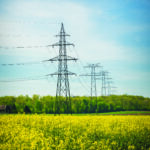
West explained that the proposal stems from concerns about a planned 67-mile electrical transmission project stretching from Pennsylvania’s Peach Bottom nuclear facility through northern Maryland to Point of Rocks, where it would link to existing infrastructure serving data centers in Northern Virginia.
“This giant transmission line is in effect a long extension cord,” West told the Senate Judicial Proceedings Committee on Feb. 19. “It carries every electron that goes in at the one end up near Peach Bottom up the Pennsylvania line, travels 67 miles through the extension cord and comes out in Point of Rocks.”
The Maryland Public Service Commission is currently reviewing the transmission project and is anticipated to make an approval decision before the next legislative session concludes. Approval would grant New Jersey-based developer PSEG the authority to use eminent domain to obtain property along the transmission route through legal proceedings if landowners decline to sell voluntarily.
Agricultural landowners have been vocal opponents of the transmission project over the past two years, making their presence known at public forums held across Baltimore, Carroll and Frederick counties. These well-attended meetings influenced West’s decision to pursue modifications to Maryland’s eminent domain statutes.
West highlighted a financial burden facing property owners under existing law, noting that while those whose land is taken through eminent domain may receive fair market compensation, they often encounter a costly predicament when condemning authorities present what they consider inadequate valuations.
“If they go to court to try to establish the correct just compensation — in this hypo $100,000 — they will have to pay legal fees,” West said, adding that attorney and expert witness costs can approach tens of thousands of dollars. “They will end up at the end of the day with no more than about $75,000.”
The proposed legislation would mandate that courts award reasonable legal fees and expenses to property owners when a court or jury determines the assessed property value surpasses the condemning authority’s appraisal. This requirement would apply exclusively to condemnation proceedings involving overhead transmission lines.
“In short, if the owner is forced to go to court to obtain fair value, they will not be financially penalized for doing so,” West said.
The bill’s second key component would expand compensation eligibility beyond property owners whose land is taken. Homeowners residing within 300 feet of a transmission line could pursue compensation by proving that the line’s construction decreased their property’s fair market value.
“But what about the immediate neighbors?” West asked. “The person who owns the home next door, under our current eminent domain law gets nothing, even though the value of his or her house has been severely diminished because it’s literally in the shadow of the steel tower.”
West clarified that the legislation would enable these homeowners to recover quantifiable economic losses rather than speculative or emotional damages.
“This is not speculative or emotional harm,” he said. “It is measurable economic damage and it is only fair.”
Harris Eisenstein, an attorney who spoke in favor of the bill, shared his 15 years of experience representing Maryland residents and businesses in eminent domain cases, arguing that current statutes fail to consistently provide “true just compensation.”
“Although Maryland condemners must pay just compensation, state law, as it presently exists, does not allow condemnees to fully recover a truly just amount for the life-changing loss of property rights,” Eisenstein said.
He noted that initial compensation offers from condemning authorities often fall below fair market value, compelling property owners to retain attorneys and expert witnesses to contest them.
“The result is that even if compensation increases, the net recovery is reduced by whatever money they have to spend on attorneys and experts,” Eisenstein said. “This is unjust.”
Eisenstein argued the legislation would create more balanced conditions, especially as Maryland confronts multiple transmission projects linked to regional electrical demand.
When Sen. Shelly Hettleman questioned the bill’s 300-foot boundary for neighboring property owners seeking compensation and whether that distance might be extended, West explained that 300 feet — approximately the length of a football field — was designed to include properties most likely to experience substantial value decreases due to large transmission towers.
“If the committee wants to increase the distance to 400 or 500 feet, you’re not going to get any objection from me,” he said.
No witnesses testified against the proposal during the hearing.
West mentioned that two amendments were suggested, including one from the Maryland Department of Transportation to specify that the bill applies exclusively to overhead electrical transmission lines, and another technical modification to correct references between assessed and appraised value.
West stressed that the legislation would not prevent infrastructure projects from proceeding.
“It simply ensures that when the government exercises one of the most powerful authorities available, the power to take or significantly impact private property, Maryland residents are fairly compensated for real economic losses,” he said.