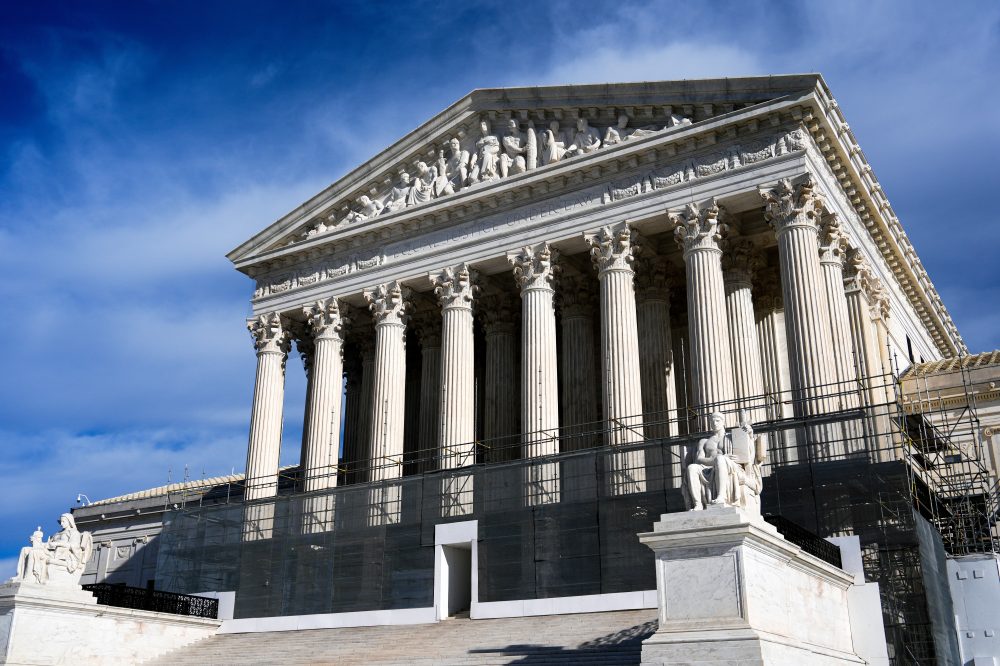

WASHINGTON — Two political movements that typically stand on opposite sides of the aisle are finding common ground in an extraordinary Supreme Court case scheduled for Monday, creating partnerships that would have seemed impossible just years ago.
The high court will examine whether federal law can prohibit marijuana users from legally possessing firearms, a question that has produced some of the most surprising political alliances in recent memory.
In an unusual twist, the incoming Trump administration finds itself defending restrictions on gun ownership, with support from gun-control organizations that typically back Democratic policies.
Meanwhile, the National Rifle Association has joined forces with the American Civil Liberties Union in opposing the federal restriction.
The legal battle centers on federal legislation that prohibits individuals who regularly consume marijuana from lawfully possessing firearms. This issue has created disagreement among lower courts following a significant 2022 Supreme Court ruling that broadened Second Amendment protections.
ACLU legal director Cecillia Wang argues the statute violates constitutional gun rights and lacks clarity regarding what constitutes drug use.
“We’re deeply concerned with the potential of this statute to basically give federal prosecutors a blank check,” she said. “Millions of Americans use marijuana and there is no way for them to know based on words of this statute whether they could be charged or convicted of this crime because they own a firearm.”
Medical marijuana has gained legal status in most states, while recreational use is permitted in approximately half the nation.
However, the federal prohibition extends beyond marijuana to encompass all illegal substances, potentially opening the door for broader gun ownership rights among various drug users. Everytown for Gun Safety maintains the restriction satisfies the Supreme Court’s standard that firearms laws must be rooted in historical precedent.
“Restricting firearm use by illegal drug users is ‘as old as legislative recognition of the drug problem itself,’” their legal team stated.
Despite state-level changes, marijuana remains federally prohibited, though President Trump has issued an executive order to expedite its reclassification as a less hazardous substance.
The Justice Department seeks to reinstate criminal charges against Ali Danial Hemani, a Texas resident who faced felony accusations for possessing a firearm while admitting to smoking marijuana every other day. During a home search connected to a larger investigation, FBI agents discovered a small quantity of cocaine, though only the gun-related charge was pursued.
The conservative-leaning 5th U.S. Circuit Court of Appeals dismissed the case, determining that only individuals who are intoxicated while armed can face criminal charges.
While the administration has supported gun rights in other matters, government attorneys contend this restriction is reasonable. “Habitual illegal drug users with firearms present unique dangers to society — especially because they pose a grave risk of armed, hostile encounters with police officers while impaired,” they argued in legal filings. They compare the law to historical restrictions on frequently intoxicated individuals.
Although the conservative-majority Supreme Court has expanded firearm rights, it has also maintained federal legislation disarming individuals subject to domestic violence restraining orders. The Justice Department draws parallels between drug users and domestic violence subjects as similar risks. The same law was applied in Hunter Biden’s case, who was convicted of purchasing a firearm while struggling with cocaine addiction.
However, the NRA and other Second Amendment organizations, typically Republican allies, oppose the administration in Hemani’s case.
“Americans have traditionally chosen which substances are acceptable for responsible recreational use, and the fundamental right to keep and bear arms was never denied to people who occasionally partook in such drugs — unless they were carrying arms while actively intoxicated,” Second Amendment Foundation attorneys wrote in court documents.
The marijuana advocacy organization NORML supports this position, noting that baby boomers represent one of the fastest-growing user demographics, often using products like marijuana gummies for arthritis relief and sleep issues.
“It’s laughable to think that by outlawing cannabis users possessing firearms you’ll minimize the problem with gun violence,” said Joe A. Bondy, chair of NORML’s board of directors, one of America’s oldest and largest marijuana legalization advocacy groups.