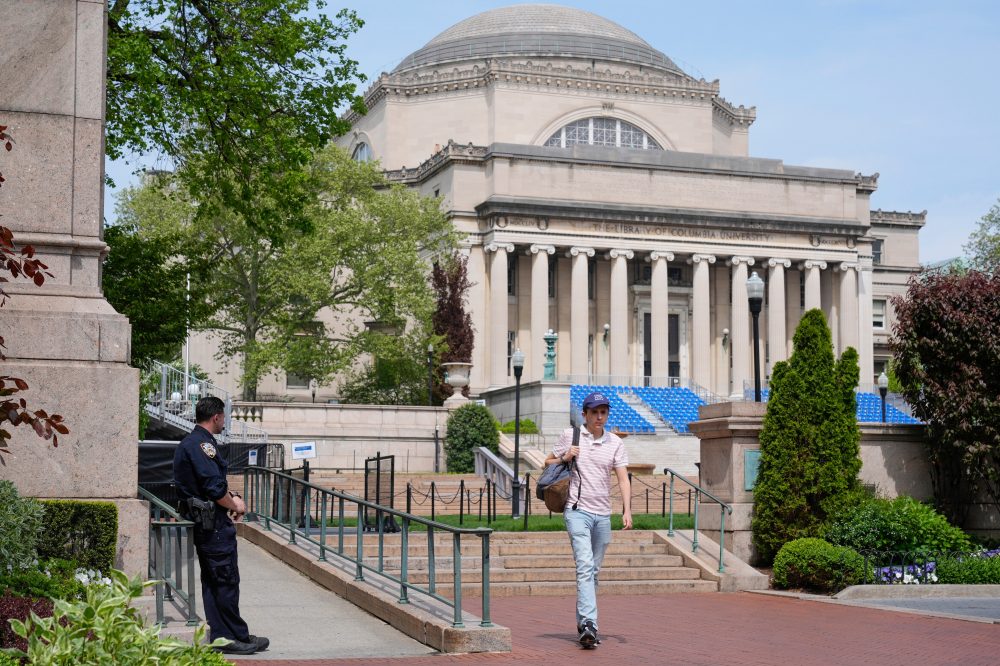

A Thursday morning incident at Columbia University has ignited debate over federal immigration enforcement tactics after agents allegedly impersonated police officers to carry out an arrest.
Campus security received a 911 report at 6:32 a.m. about two suspicious individuals in dark clothing loitering in a university residential building. When New York Police Department officers responded, they discovered U.S. Immigration and Customs Enforcement agents conducting what officials described as an unusually complex operation.
University officials stated that the federal agents had deceived their way into the building by claiming to be police officers searching for a missing 5-year-old child. The agents reportedly showed a flyer featuring the supposed missing child to a campus security officer to gain entry.
This deception enabled the agents to reach the apartment of Ellie Aghayeva, an international student from Azerbaijan whom immigration authorities allege violated her visa terms by overstaying. NYPD officers arrived after the agents had already entered her residence, confirmed their federal status, and departed the scene.
The incident has drawn sharp criticism from Democratic officials and calls for investigation, while President Donald Trump intervened to secure Aghayeva’s release following discussions with New York City Mayor Zohran Mamdani on Thursday.
The operation threatens to strain relationships between local police and ICE, as federal agents increasingly adopt disguises including utility workers, delivery personnel, and other uniformed roles to advance Trump’s expanded deportation efforts.
Though these deceptive practices aren’t prohibited by law, former law enforcement officials describe the Columbia incident as a concerning escalation that could severely damage public confidence in legitimate emergency situations.
“When police genuinely need to locate an endangered child, citizens may now hesitate to provide assistance,” explained Michael Alcazar, a former NYPD hostage negotiator. “This type of ICE deception will immediately complicate police work.”
Department of Homeland Security spokesperson Tricia McLaughlin challenged aspects of the university’s account, asserting that federal agents “identified themselves verbally and displayed visible badges” while being admitted by a property manager.
McLaughlin avoided answering repeated inquiries about whether agents used the missing child pretense to access the apartment.
Columbia’s acting president Claire Shipman confirmed Thursday that security footage “recorded the agents displaying photographs of the alleged missing child in the hallway,” calling the situation “completely unacceptable.”
The university has not yet released the surveillance video, while NYPD has also withheld body camera footage from their response. Police officials stated their officers acted lawfully by not interfering with an ongoing federal investigation.
The arrest has triggered campus demonstrations and created anxiety among students. Aghayeva’s supporters describe her as a final-semester neuroscience and politics student on an international visa. Her legal representatives filed an emergency petition stating she received no explanation for her detention.
DHS officials claim Aghayeva’s visa was revoked in 2016 for class attendance violations. Despite her release, she continues facing deportation proceedings.
Columbia law professor Jeffrey Fagan, who researches policing practices, noted that studies demonstrate deceptive law enforcement tactics particularly damage public trust when they result in arrests “viewed as unwarranted.”
“Anyone examining this situation will immediately consider it unjustified,” he stated. “This will diminish community trust when officers next require public cooperation.”
Peter Moskos, a criminal justice professor at John Jay University and former Baltimore police officer, shared similar concerns. He emphasized that sanctuary policies were designed to improve public safety by fostering trust between immigrant communities and police.
“The concept relies on trusting police and calling them when needed without deportation fears,” he explained. “However, ICE appears determined to destroy that trust.”