
WASHINGTON (AP) — Lawmakers on Capitol Hill erupted in frustration Tuesday as Trump administration officials faced intense scrutiny over the escalating Iran conflict, with Congress demanding clear explanations about military strategy, long-term plans, and the human and financial toll of what has rapidly expanded into a broader Middle Eastern war.
For the second consecutive day, Trump administration representatives met behind closed doors with House and Senate members, attempting to prevent an upcoming congressional vote on war powers restrictions that would limit Trump’s authority to continue the joint U.S.-Israeli military operations against Iran.
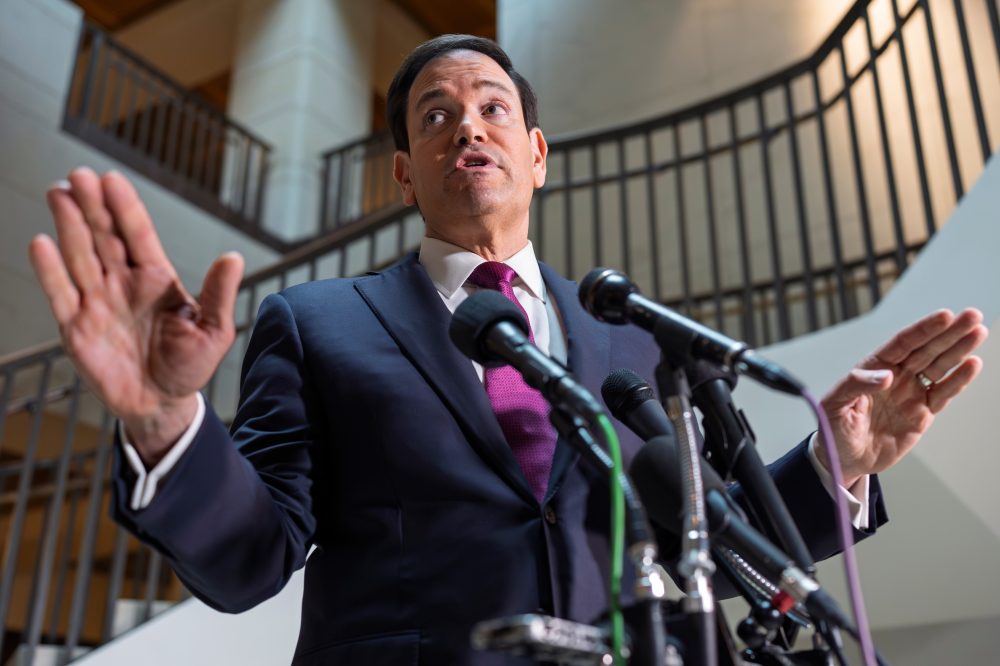
“The president determined we were not going to get hit first. It’s that simple,” Secretary of State Marco Rubio told reporters during a heated exchange at the Capitol.
Rubio walked back his previous day’s comments suggesting Trump launched strikes because Israel was prepared to act unilaterally. He now claims the president chose to attack over the weekend because conditions offered the best opportunity for a successful operation.
“There is no way in the world that this terroristic regime was going to get nuclear weapons, not under Donald Trump’s watch,” he stated.
The abrupt shift to military engagement has thrown Capitol Hill’s political and legislative priorities into chaos while raising serious concerns about the potential for extended warfare and government overthrow following the death of Iran’s Supreme Leader Ayatollah Ali Khamenei. Military casualties have reached six American service members.
These developments have accelerated congressional efforts to pass war powers legislation — one of the most significant decisions legislators can make, particularly with active combat underway — while administration representatives inform lawmakers that additional funding will be necessary to sustain the conflict. This comes as the competitive midterm election cycle begins, which could threaten Trump’s narrow Republican congressional majority.
Senate Democratic Leader Chuck Schumer expressed worry about “mission creep” in what could become an extended war after leaving the classified briefing.
During morning Armed Services Committee proceedings, senators challenged Trump officials regarding Rubio’s Monday assertion that the president launched preemptive strikes believing Israel was ready to attack, hoping to prevent Iranian retaliation against American military installations and overseas interests.
Sen. Angus King, the Maine independent, called it “very disturbing” that Trump initiated warfare because Israeli Prime Minister Benjamin Netanyahu wanted to bomb Iran. Previous American presidents, he noted, “have consistently said, ‘No.’”
Defense official Elbridge Colby informed senators that the president ordered the military campaign to eliminate Iranian missile capabilities and prevent nuclear weapons development.
Trump himself rejected suggestions that Israel influenced his decision. During Oval Office comments, he stated, “I might might have forced their hand.”
Sen. Markwayne Mullin, a Trump supporter from Oklahoma, praised the president’s actions, saying he “did the world a favor.”
“How about we say, ‘Thank you, Mr. President, for finally getting rid of this nuisance,’” he suggested.
However, Sen. Elizabeth Warren, D-Mass., questioned how this aligns with Trump’s “America First” pledge to avoid lengthy overseas military commitments.
Trump has indicated the conflict might continue indefinitely and hasn’t dismissed the possibility of deploying ground forces to Iran.
“‘America First’ and ‘peace through strength’ are served by rolling back — as the military campaign is designed to do — the threats posed,” Colby replied. “This is certainly not nation-building. This is not going to be endless.”
Concerns are mounting about Iran’s future leadership following Khamenei’s death after decades in power, with fears that a power vacuum could trigger widespread instability.
Democrats cautioned against deploying American ground troops to Iran following more than twenty years of warfare in Iraq and Afghanistan since the September 11, 2001, terrorist attacks.
“I am more fearful than ever we may be putting boots on the ground,” said Sen. Richard Blumenthal, D-Conn., following the classified briefing.
“The reason why there’s so much consternation on our side is because President Trump has not given us a clear reason why he is in Iran,” said Sen. Kirsten Gillibrand, D-N.Y. “If he wants to declare war on Iran, that is the job and responsibility of Congress under the Constitution.”
Republicans maintain that Americans shouldn’t determine Iran’s political future.
“That’s going to be largely up to the Iranian people,” said Senate Majority Leader John Thune, a Republican.
Sen. Tom Cotton, the GOP chairman of the Senate Intelligence Committee, referenced the January U.S. operations in Venezuela that removed President Nicholas Maduro and installed his vice president, Delcy Rodriguez, as leader.
Cotton told CBS over the weekend that he expects “some leaders inside of Iran who might be jockeying to audition for the role of Iran’s Delcy Rodriguez.”
Trump, while encouraging Iranians to reclaim their nation, has admitted the uncertain situation.
“Most of the people we had in mind are dead,” Trump said Tuesday. He also dismissed suggestions of installing Reza Pahlavi, the exiled crown prince from Iran’s former monarchy, as the country’s new leader.
Sen. Lindsey Graham, a Trump ally, said over the weekend, “It’s about the threats, not about who’s in charge. If the next group in Iran continues to threaten America, they will meet the same fate.”
Both congressional chambers are preparing votes on war powers measures designed to limit Trump’s ability to continue Iranian military operations without legislative consent.
The Constitution grants Congress, not the president, authority to declare war. However, lawmakers frequently avoid this responsibility, allowing executive branch power to expand in deploying military forces without congressional authorization.
“Why are we spending billions of dollars to bomb Iran?” asked House Democratic Leader Hakeem Jeffries, who predicted strong Democratic support for the resolution.
House Speaker Mike Johnson countered that restricting presidential authority would be “frightening” while American forces are actively engaged in combat.
Some legislators suggest that if Congress doesn’t vote to constrain Trump, they should consider an Authorization of the Use of Military Force, requiring lawmakers to formally endorse the Iranian operation.
Former President George W. Bush successfully obtained congressional authorization before launching post-9/11 military campaigns.