
LOS ANGELES — Concerned that California’s unique voting system could lead to an unexpected Republican victory, the state’s Democratic Party leader issued an urgent plea Tuesday asking struggling candidates to exit the gubernatorial contest.
State Democratic Party Chairman Rusty Hicks issued a public statement expressing concern that California’s crowded Democratic field might split the party’s votes so thin that only Republican contenders could make it to the general election in November. This scenario is possible because of California’s distinctive “top-two” primary format, where all candidates compete on a single ballot and only the two highest vote-getters proceed to November, regardless of their party affiliation.
While unlikely, Hicks warned that such a development could have consequences beyond losing the governor’s office for the first time since 2006. Without a Democratic candidate on the November ballot, voter participation might drop significantly when the party needs high turnout to help reclaim control of the U.S. House and counter President Donald Trump’s political influence in Washington.
“I recognize my suggestions are hard for many to contemplate and may be even viewed as overly harsh,” Hicks stated. While his letter didn’t specify individuals, it seemed directed at several candidates polling in single digits, including multiple minority candidates.
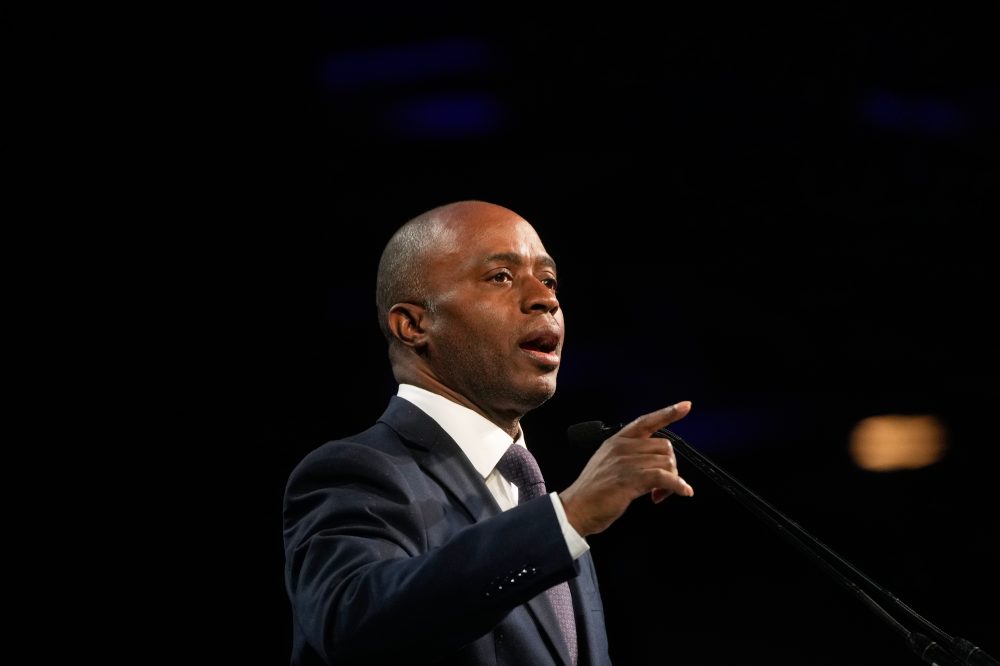
The reaction from those trailing in polls came quickly. Tony Thurmond, the state’s schools superintendent who is Black, accused the party of “essentially telling every candidate of color … to drop out.” He pledged to continue his campaign.
“Aren’t we supposed to be the party who embraces democracy?” he stated in a video shared on social platform X.
Betty Yee, a former state controller whose parents immigrated from China, made no reference to Hicks’ appeal when she announced Tuesday that she was officially filing her candidacy paperwork. Meanwhile, San Jose Mayor Matt Mahan’s campaign responded that “voters choose the next governor, not political gatekeepers.”
Hicks’ rare direct involvement in the race follows weeks of mounting Democratic concerns about potentially facing an all-Republican November ballot. The top GOP contenders are Riverside County Sheriff Chad Bianco and conservative media personality Steve Hilton, both Trump supporters.
This gubernatorial election represents the first time since California adopted its “top two” primary format over ten years ago that no clear Democratic favorite has emerged, drawing numerous party members into the competition.
The Democratic field includes current and former congressional representatives Katie Porter, Rep. Eric Swalwell, and Xavier Becerra, who previously led health policy in the Biden administration; wealthy businessman Tom Steyer; former Los Angeles Mayor Antonio Villaraigosa; former state Assembly majority leader Ian Calderon; plus Thurmond, Yee, and Mahan.
Polling from the nonpartisan Public Policy Institute of California shows the race has split into two tiers, with Hilton, Porter, Bianco, Swalwell, and Steyer running competitively in the top group, while remaining candidates lag significantly behind.
Governor Newsom, who hasn’t endorsed anyone in the contest, shared Hicks’ worries about a potential Democratic catastrophe. Regarding Hicks’ message, Newsom said, “I’ll be candid with you. My first reaction is: I get why he sent it. There is some concern.”
The situation has also sparked internal Democratic tensions. Villaraigosa’s team released a statement urging Becerra to withdraw, arguing it would prevent a Republican sweep. Both candidates are Latino and competing for support within that voter base.
Democratic strategist Drexel Heard II, who formerly led the Los Angeles County Democratic Party, endorsed Hicks’ approach, texting that “any party’s role and mission has always been to shepherd the best candidates and then win the race.”
A Republican victory in California would send shockwaves through national politics. Democratic voter registration exceeds Republican numbers by almost 2-to-1 across the state. Democrats also control the legislature overwhelmingly, leaving Republicans with minimal influence.
Democratic anxiety intensified after Silicon Valley business owner and Republican Jon Slavet ended his campaign. His withdrawal allows conservative voters to concentrate their support between the two leading GOP candidates, Bianco and Hilton.
Hicks maintained that Democratic candidates without a “viable path” to November should withdraw from the race.
Democratic analyst Paul Mitchell has been conducting polling simulations to calculate the probability of both Republican candidates advancing from the June 2 primary. With Slavet no longer running, Mitchell estimates a 25% chance of an all-Republican November ticket.
In the primary, Democrats are projected to capture approximately 60% of votes, with Republicans taking 40%.
While Democratic support will be divided among many candidates, “Republicans are consolidating their vote behind two candidates,” Mitchell explained. Slavet’s exit “just helps clarify the concern Democrats have.”