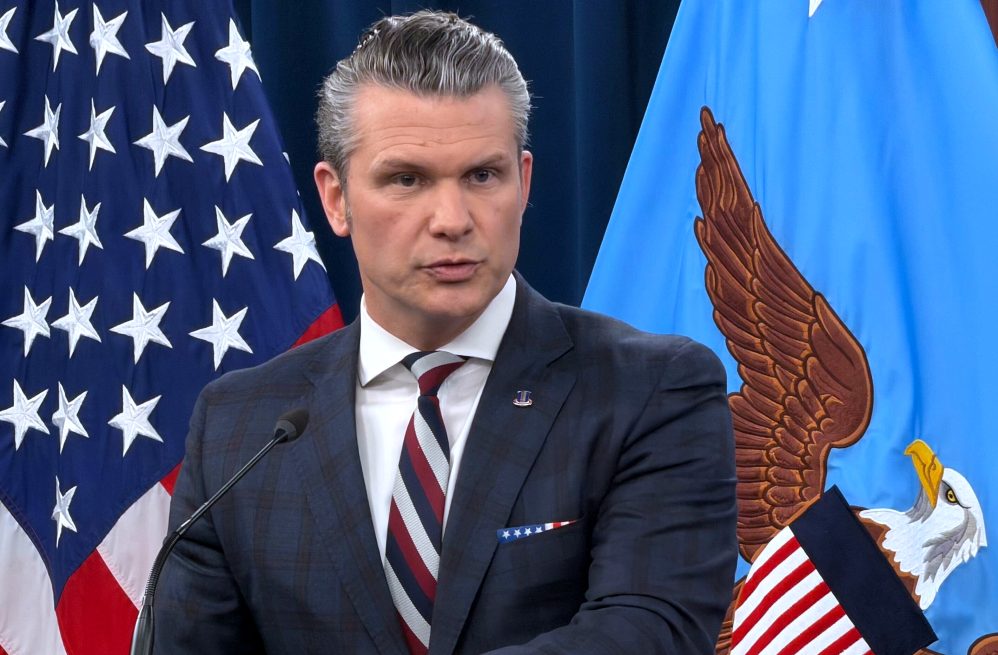

MIAMI (AP) — At a regional security conference in Miami on Thursday, Defense Secretary Pete Hegseth called on Latin American nations to intensify their military campaigns against drug trafficking organizations, cautioning that Washington stands ready to pursue unilateral action if partner countries don’t step up their efforts against criminal networks threatening U.S. border security.
“America is prepared to take on these threats and go on the offense alone if necessary,” Hegseth declared during his address at U.S. Southern Command headquarters, speaking before defense leaders from allied nations across the region.
The Pentagon organized what it called the inaugural “Americas Counter Cartel Conference,” drawing military officials from more than a dozen conservative-leaning governments that maintain strong ties with President Donald Trump, including representatives from Argentina, Honduras and the Dominican Republic. These defense leaders accompanied their presidents to Florida ahead of a planned weekend summit with Trump at his nearby golf resort.
During his remarks, Hegseth emphasized the shared Christian values between the United States and Latin America, arguing these principles face danger due to years of insufficient action and relying solely on traditional law enforcement methods to counter organized crime and terrorist networks throughout the Western Hemisphere.
“Business as usual will not stand,” he declared, promising American assistance to fight cartels, rebuild deterrence capabilities and “make the Americas great again.”
Deputy White House Chief of Staff Stephen Miller, who has helped shape Trump’s hardline regional policies, reinforced Hegseth’s message with even stronger language.
“Cartels that operate in this hemisphere are the ISIS (Islamic State group) and al-Qaida of this hemisphere and must be treated just as ruthlessly,” Miller stated, emphasizing that “hard power” and deadly force — rather than criminal prosecution — should be deployed against these organizations.
“The human rights that we are going to protect are not those of the savages that rape, torture and murder but those of the average citizens,” he added.
These discussions occur as the Republican administration works to deploy military resources to reassert American influence in the hemisphere while simultaneously managing military operations in Iran.
Upon assuming office in January 2025, Trump announced a renewed emphasis on Latin American affairs, a strategic shift his national security framework calls the “Trump Corollary” to the 19th-century Monroe Doctrine, which aimed to prevent European interference in the Americas. Central to this approach is expanded use of U.S. military forces to eliminate drug cartels that have long been blamed for escalating violence and homicide rates that stunt Latin America’s economic growth and drive migration northward.
“For too long, leaders in Washington abandoned the simple wisdom of the Monroe Doctrine,” Hegseth stated, referring to Trump’s regional security emphasis as the “Donroe Doctrine.”
Trump previously classified cartels from Mexico and Venezuela as foreign terrorist organizations before later announcing that the United States was engaged in “armed conflict” with these groups.
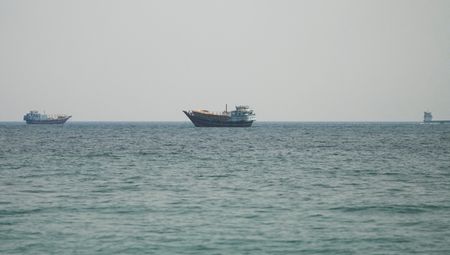
This unprecedented use of executive authority to address drug trafficking forms the legal foundation for Washington’s justification of dozens of attacks against suspected narcotics smugglers in Caribbean and Eastern Pacific waters — totaling 44 vessel strikes that have killed at least 150 people.
A large-scale naval presence not witnessed in Latin America since the Cold War’s conclusion also enabled the U.S. military mission in early January that resulted in the capture of Venezuela’s former president, Nicolas Maduro. He currently faces narcotics charges in New York.
Trump’s strategy has gained backing from regional conservatives like El Salvador’s Nayib Bukele, who gained power promising to use “mano dura” — an iron fist approach — against criminal organizations. This week marked the first time Ecuador conducted joint military operations with U.S. forces targeting organized crime networks.
However, using military forces to replace roles typically handled by civilian law enforcement carries significant risks in a region where military institutions lack strong oversight, armed forces have histories of human rights violations, and corruption remains a persistent problem.
“Without strong rule-of-law institutions and civilian oversight, militarizing the fight against cartels can weaken the very institutions needed to defeat them,” warned Rebecca Bill Chavez, president of the Inter-American Dialogue and former deputy assistant defense secretary for Western Hemisphere affairs.