A Marion County Superior Court judge has temporarily suspended Indiana’s abortion ban after ruling on a lawsuit filed by plaintiffs who argue that access to abortion services is protected under their religious beliefs. Judge Christina Klineman granted the preliminary injunction in response to the challenge.
The legal strategy being used in this case mirrors efforts being pursued across the country by the Satanic Temple, an organization that seeks to safeguard abortion access by framing it as a matter protected under First Amendment religious freedoms.
Indiana Right to Life has responded to the ruling, stating that religious freedom protections “were never intended to equate taking the life of an unborn child with religious expression.”
Federal officials are conducting a cost analysis of a multimillion-dollar program designed to monitor racial discrimination at polling places across the country.
The Office of Personnel Management announced Thursday that it’s working with the Justice Department to determine if the $2.5 million annual price tag for the election observer initiative is warranted and whether changes should be made to the program.
According to OPM officials, the monitoring program only activates when the U.S. attorney general receives a “written meritorious complaint” alleging racial discrimination in voting processes.
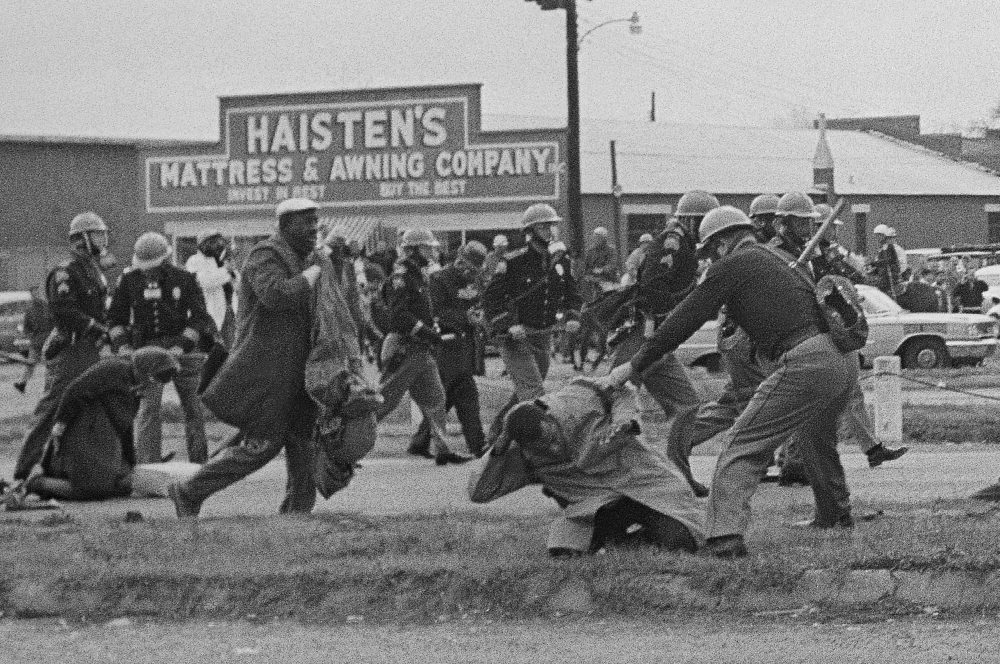
The federal oversight program was significantly reduced following a 2013 Supreme Court decision in a case involving Shelby County, Alabama. That ruling eliminated a key section of the Voting Rights Act that previously required states and local governments with histories of racial discrimination to obtain federal permission before modifying their election procedures.
The landmark Voting Rights Act, passed in 1965, represented one of the most important legislative victories of the civil rights era.
Earlier Thursday, CBS News reported that the White House is weighing whether to eliminate funding for the election monitoring program that works to safeguard minority voting rights.
When asked for comment, White House officials directed inquiries to the Justice Department.
A Justice Department representative told CBS News that the agency has no intention of discontinuing its separate election oversight program within the civil rights division.
The OPM confirmed Thursday that federal election observers are currently deployed in three locations operating under court mandates: Union County, New Jersey; Pawtucket, Rhode Island; and two regions in Alaska.
The United States is preparing for midterm elections this November. Republicans, led by President Donald Trump, maintain slim control of both the House and Senate.
Trump has been urging GOP legislators to pursue stricter voting regulations in advance of the upcoming elections.
ATLANTA — Georgia voters in the state’s 14th Congressional District will head to the polls Tuesday to select a new representative following Marjorie Taylor Greene’s departure from Congress earlier this year after tensions with President Donald Trump escalated.
The crowded field features 17 candidates, including prominent Republicans Clay Fuller and Colton Moore, along with Democrat Shawn Harris. Tuesday’s contest may only mark the beginning of a lengthy electoral process in the northwest Georgia district.
Fuller, who serves as a district attorney and has received Trump’s backing, aims to secure victory without heading to an April 7 runoff election. A runoff becomes mandatory if no candidate captures more than half the vote in the district spanning 10 counties from Atlanta’s suburbs to the Tennessee border.
“We need to win this thing on March 10 and send an America First warrior to fight for President Trump,” Fuller declared to supporters gathered in Rome, Georgia, on Feb. 19 during a Trump campaign event.
However, achieving an outright victory may prove challenging given the large candidate pool of 12 Republicans, three Democrats, one Libertarian, and one independent, despite five Republican candidates dropping out of the race.
The victorious candidate will complete Greene’s remaining term, but must campaign again to stay in office past January. Both parties have scheduled May 19 primaries for the full two-year term, with potential June 16 runoffs preceding November’s general election.
Ten Republicans and Harris have already secured spots on November’s ballot for the full term. This group includes both Fuller and Moore, a former state legislator popular among far-right supporters who gained attention for his aggressive defense of Trump during Georgia’s election interference case.
Harris, who operates a cattle farm and previously served as a general, campaigns on moderate positions and addressing local concerns. Nevertheless, Democratic victory appears unlikely in the 14th District, which the Cook Political Report identifies as Georgia’s most solidly Republican constituency.
District voters rallied behind Greene’s conservative agenda in 2020 when she shifted her campaign there after abandoning her original bid in a more competitive Atlanta-area district.
Greene became one of Congress’s most recognizable figures before departing in January. She maintained unwavering support for Trump following his 2020 loss to Joe Biden, amplifying his unsubstantiated claims about election fraud. During Trump’s 2024 campaign, she traveled nationwide as a surrogate speaker, frequently appearing at rallies wearing her signature red “Make America Great Again” cap.
However, Greene’s relationship with Trump soured last year when he and fellow Republicans opposed her potential Senate or gubernatorial campaigns. Greene publicly criticized Trump’s international policies and his decision not to release Jeffrey Epstein-related documents. Trump eventually announced his willingness to back a primary opponent, prompting Greene to announce her resignation one week later.
Electing another Republican would strengthen the party’s slim House majority. Republicans currently hold 218 seats compared to Democrats’ 214.
WASHINGTON — New polling data shows the American public remains sharply divided along partisan lines regarding U.S. military involvement in Iran, with recent surveys indicating more people oppose the action than support it.
Survey results reveal widespread concern that the military engagement is putting America at greater risk, despite many viewing Iran as a security threat. These findings present potential challenges for Trump as he faces the prospect of an extended conflict that could bring substantial economic disruption. On Monday, the president sent mixed signals about how long the conflict might continue, hinting it could be nearing completion while simultaneously warning of additional military force if Iran interferes with international oil supplies.
Rising and falling oil costs may already be causing voter anxiety. Weekend polling found approximately 70% of registered voters express significant worry that the conflict will drive up oil and gas prices, with most expecting the U.S. military response to continue for several months or longer.
Survey data shows Republicans generally support the president’s approach, though there are signs of hesitation regarding any response involving American ground forces in Iran. Given Trump’s campaign promises to prioritize “America first” policies and end U.S. participation in prolonged overseas conflicts, the Iran situation could create particular political tension.
The latest Quinnipiac Poll, conducted over the weekend, found 53% of registered voters disapprove of U.S. military action against Iran. Just 40% express support, while roughly 10% remain undecided.
These findings align with rapid-response text polling from The Washington Post and CNN, both conducted immediately after the joint U.S.-Israel strikes commenced, which similarly showed more Americans rejecting than supporting the military response.
However, a recent Fox News survey found public opinion more evenly split, with half of registered voters approving the U.S. military action and half disapproving.
Multiple recent polls indicate most Americans believe the Trump administration has failed to clearly articulate the reasoning behind the military strikes, with disagreement over whether Iran actually presented an “imminent and direct threat” to America, as White House officials have claimed.
In the Quinnipiac survey, 55% of voters said they didn’t believe Iran represented an “imminent military threat” to the U.S. prior to current military operations. Conversely, about 60% of registered voters in the Fox News poll characterized Iran as a “real national security threat,” while a recent AP-NORC poll found roughly half of U.S. adults deeply worried that Iran’s nuclear capabilities pose a direct danger to America.
With oil prices fluctuating, the overwhelming majority of voters express significant concern about potential increases in oil and gasoline costs within the United States, the Quinnipiac poll shows. Only about 25% of voters report being minimally concerned or unconcerned about price increases.
Democrats and independents show the highest levels of concern, though approximately half of Republicans also worry the conflict could increase gas prices.
Trump stated Monday that the U.S. would escalate action against Iran if they attempted to disrupt global oil distribution.
As the Iran conflict expands throughout the Middle East, many Americans fear Trump’s military choices have compromised U.S. security.
Roughly half of voters in both Quinnipiac and Fox News polls indicated the U.S. military action in Iran makes America “less safe,” while only about 30% in each survey said it improved national security. The CNN poll discovered about half of U.S. adults believed the strikes would make Iran “more of a threat” to America, while only approximately 30% thought it would reduce the danger.
About 60% of U.S. adults said they trust Trump “not much” or “not at all” to make appropriate decisions regarding U.S. military force in Iran, according to CNN polling. Republicans showed greater confidence than Democrats or independents.
An AP-NORC poll conducted prior to the strikes found similar results, with 56% of U.S. adults trusting Trump “only a little” or “not at all” to make correct decisions about overseas military force deployment.
Most voters worry about potential expansion of the conflict.
Approximately 75% of voters reject the concept of deploying ground troops to Iran, according to the Quinnipiac poll conducted after six U.S. service member deaths were announced. A seventh service member death was reported Wednesday.
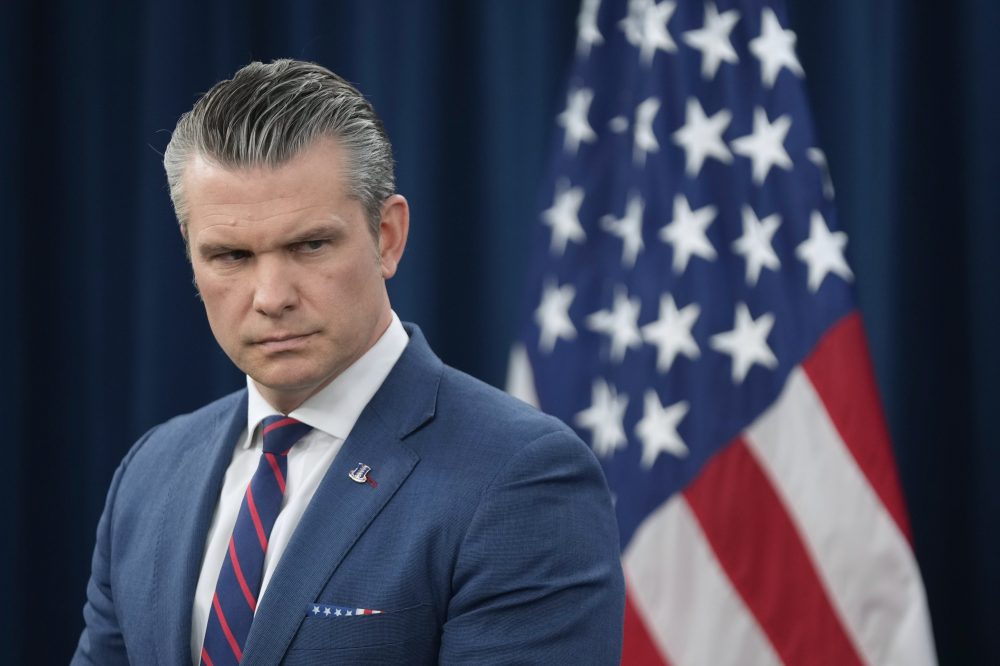
The Trump administration has recognized the probability of American casualties and hasn’t eliminated the possibility of sending American soldiers to Iran. Defense Secretary Pete Hegseth stated last week it would be “foolishness” to expect U.S. officials to publicly declare “here’s exactly how far we’ll go.”
Only about 20% in the Quinnipiac poll supported deploying troops to Iran. Even among Republican voters, more oppose than support ground troop deployment, 52% to 37%.
WASHINGTON – Steve Witkoff, who serves as a special envoy and key advisor to President Donald Trump, announced during a Tuesday television interview that he expects to make a trip to Israel in the coming week.
Speaking with CNBC, Witkoff indicated the purpose of his anticipated visit would be to work with Israeli officials on coordinating strategic plans concerning Iran-related military operations.
A Rehoboth Beach city commissioner delivered sharp criticism against a fellow board member during a recent public meeting, alleging months of inappropriate behavior that has disrupted city operations.
During the March 9 commissioners meeting, Susan Stewart made a formal statement targeting Commissioner Suzanne Goode’s conduct, describing what she characterized as documented misconduct spanning from September 2023 to the present.
Stewart outlined her concerns in a prepared statement to the board:
“I want to address something that is very troubling and I think the time has come that commissioners need to speak out about this. What I’m about to describe is documented, has been formally responded to by the city, and directly affects this body’s ability to serve our residents.”
The allegations Stewart presented included claims that Goode had engaged in racially and sexually inappropriate characterizations of city personnel, made defamatory statements under Delaware law, and harassed staff and commissioners based on religious beliefs. Stewart also accused Goode of making disrespectful comments about disabled relatives of other commissioners.
Additional accusations included unproven claims of corruption against the mayor and other commissioners, failure to fulfill elected duties, backing litigation against the city, and encouraging outside interference in municipal affairs.
Stewart noted that despite multiple formal cease and desist notices from the city, the alleged behavior continued and intensified.
“The City issued formal, multiple cease and desist letters, yet the conduct did not stop. It’s only escalated. That matters, because it tells us this is not inadvertent. It is deliberate,” Stewart stated.
Stewart requested that the city create a website link providing easy access to Goode’s email records, emphasizing that such communications are already public under open records laws.
“Because these communications are already public records subject to open records law, I am asking the City today to make Commissioner Goode’s full email record accessible by a link on our city website. This will not disclose anything private, it will simply make it easy for any resident who cares to see what’s happening to our City staff, come to their own conclusion. The public deserves to hear Suzanne in her own words,” Stewart explained.
The commissioner also advocated for potential formal disciplinary action, urging her colleagues to take a stand.
“I would like to see, in the future, consideration of formal reprimand. We keep sending letters requesting that Commissioner Goode modify her behavior. She’s either incapable or unwilling to do it. Policy decisions and differences are one thing. Repeated harassment, we some of it here today, so I am imploring other commissioners – I know it’s nice to be liked and not to stand out – we have a moral and legal obligation to protect the people that work for this City. And we need to stand up and we need to do it now,” Stewart concluded.
The city will not be adding a direct link to Goode’s emails on its website at this time. However, residents interested in reviewing these communications can file a Freedom of Information Act request through the city’s official website.
Contact information for inquiries: Brooke Thaler, Communications Department, 302-227-6181, ext. 522.
The White House launched a sharp attack against CNN Thursday following the network’s decision to broadcast segments of Iran’s new Supreme Leader’s public address, representing the administration’s second criticism of CNN’s Iran-related coverage within a three-day period.
This confrontation highlights the delicate balance news organizations must strike when covering conflicts, particularly regarding their duty to report perspectives from nations the U.S. government considers adversaries. The situation also revealed contradictions, as Supreme Leader Ayatollah Mojtaba Khamenei’s message during his inaugural public address since taking over after his father’s death in an Israeli airstrike was readily accessible through multiple sources.
In a social media post, the White House declared that “fake news CNN just aired four straight minutes of uninterrupted Iranian state TV, run by the same psychotic and murderous regime that prided itself on brutally slaughtering Americans for 47 years.”
Earlier this week, White House communications director Steven Cheung criticized CNN anchor Erin Burnett’s conversation with Seyed Hossein Mousavian, a former Iranian nuclear negotiator. During the interview, Burnett inquired about Mousavian’s knowledge regarding Iran’s willingness to engage in discussions with the United States, to which he indicated limited interest.
“Ever notice how CNN just regurgitates quotes and unverified information from Iranian terrorists?” Cheung posted on X. “Total disgrace. They have become the murderous Iranian Regime’s version of Pravda,” he added, making reference to the former Soviet Union’s official publication.
While CNN remained silent on Cheung’s earlier criticism, the network issued a response to Thursday’s White House attack. CNN pointed out that it joined Sky News and Al Jazeera in broadcasting segments of the ayatollah’s live statement.
“The world is watching with anticipation which direction this war will take,” CNN stated. “Purported remarks from Iran’s new supreme leader are a critical component in helping audiences understand where this conflict is heading and were aired for their obvious news value.”
Multiple news organizations, including The Associated Press, distributed breaking news alerts about Khamenei’s statements. His promises to continue strikes against regional Arab nations and intentions to disrupt global oil supplies became major headlines. The New York Times prominently featured coverage of the address on its homepage immediately following the speech, later analyzing that the remarks “was an early indication of how the new supreme leader would approach the war, as well as how he would lead the country.”
CNN has remained a frequent target of President Donald Trump’s criticism since his initial presidency. The network faces particular vulnerability currently due to Paramount Global’s pending acquisition of CNN’s parent company, Warner Bros. Discovery, which has sparked concerns about future editorial autonomy.
The network presented a news anchor reading selected portions of Khamenei’s statement in Farsi alongside English translations, rather than broadcasting the complete address. Following the speech, correspondent Nick Paton Walsh provided analysis to anchor Kate Bolduan, emphasizing how the leader’s absence from public view — reportedly due to injuries from an air attack — carried as much significance as his words.
“We were waiting to see the face of the man to have proof of his health and survival,” Walsh explained, “and they’ve not met that moment. Instead, a handwritten message, it seems, that mostly reiterates things we kind of already knew.”
According to the Tech Transparency Project, numerous Iranian officials and organizations maintain verified profiles on X, the platform formerly known as Twitter and owned by Trump associate Elon Musk. CNBC reported Thursday that Khamenei operates one such account, and an X profile featuring his image shared his statement’s text in both Farsi and English.
Despite his father’s death, an account displaying the former leader’s image remained active Thursday, primarily sharing content from his son. “The revenge we have in mind is not just because of the martyrdom of the illustrious Leader of the Revolution,” stated one Thursday post. “Every member of the nation martyred by the enemy is a separate case that demands we seek revenge.”
Although X faces official restrictions in Iran, many citizens access the platform through virtual private networks. The platform did not immediately respond to Thursday inquiries.
American journalists have a lengthy tradition of pursuing interviews with world leaders, including those considered U.S. adversaries. The most famous example remains “60 Minutes” correspondent Mike Wallace’s 1979 interview with Iran’s Ayatollah Ruhollah Khomeini during the American hostage crisis.
Jane Ferguson, an experienced international correspondent and founder of journalism platform Noosphere, defended CNN’s decision to broadcast the Iranian leader’s newsworthy remarks as entirely appropriate. She argued that government officials should not critique news organizations’ editorial choices.
“We’ve always faced this,” Ferguson noted regarding criticism when reporters engage with figures hostile to American interests. “This has been a bit of low-hanging fruit for awhile.”
Rice University historian Douglas Brinkley argued that singling out CNN in this situation was unjustified. While he agreed that understanding adversarial leaders’ perspectives holds news value, he stressed the importance of journalistic caution.
“You have to be leery of being used as a propaganda tool by the Iranian regime,” Brinkley observed. “On the other hand, knowing what the enemy is saying and looking for a sign of a peace offering or a nuance is important … It’s a difficult balance.”
SACRAMENTO, Calif. — Federal officials have escalated their conflict with California by filing a lawsuit Thursday challenging the state’s pioneering automotive emission regulations designed to reduce vehicle pollution.
Former President Donald Trump has consistently opposed California’s initiatives to reduce exhaust emissions and promote electric vehicle usage. Last summer, he prevented the state from implementing its groundbreaking prohibition on new gasoline-powered vehicle sales starting in 2035. Trump has also frequently criticized California’s elevated fuel costs, which stem primarily from taxation and environmental policies.
Governor Gavin Newsom’s administration strongly condemned the legal action, pointing out its timing coincides with rising fuel costs due to Middle Eastern conflicts and increased consumer interest in electric alternatives.
“Gas prices are soaring nationwide because of Trump’s reckless choices, and now he’s attacking the Golden State for trying to give Californians more freedom and cheaper options,” stated Anthony Martinez, a spokesperson for Newsom.
California drivers paid an average of $5.37 per gallon Thursday, data from the American Automobile Association shows. The national average stood at $3.60 per gallon. Statewide prices have increased approximately 56 cents per gallon, while national prices rose 35 cents since last week — roughly 20% higher since U.S. and Israeli strikes on Iran.
“It’s ironic that they’re doing this just at the time when people are most worried about gas prices,” commented Dan Farber, who directs the Center for Law, Energy, and the Environment at UC Berkeley’s law school.
Following Trump’s previous blocking of California’s strict electric vehicle requirements, the state immediately filed a counter-lawsuit. The California Air Resources Board maintained that existing emission standards addressing climate and health concerns would continue operating despite the blocked ambitious regulations.
However, federal attorneys argue in their lawsuit that California lacks authority to implement even these moderate standards.
“Oppressive, expensive electric vehicle mandates drive up costs for American consumers and violate federal law,” declared Attorney General Pam Bondi.
California has historically received Environmental Protection Agency approval for stricter emission requirements than federal standards, partly due to severe air quality issues. Other states may adopt California’s regulations.
Trump’s initial presidency saw the revocation of this special authority. The Biden administration restored California’s waiver privileges in 2022.
The current administration has also announced intentions to roll back Biden-era fuel efficiency requirements for new vehicles.
WASHINGTON — Responding to demands from President Donald Trump, Senate Republicans are preparing to engage in an extended floor debate next week concerning legislation that would establish stringent citizenship verification requirements for voters, despite acknowledging the measure lacks sufficient support for enactment.
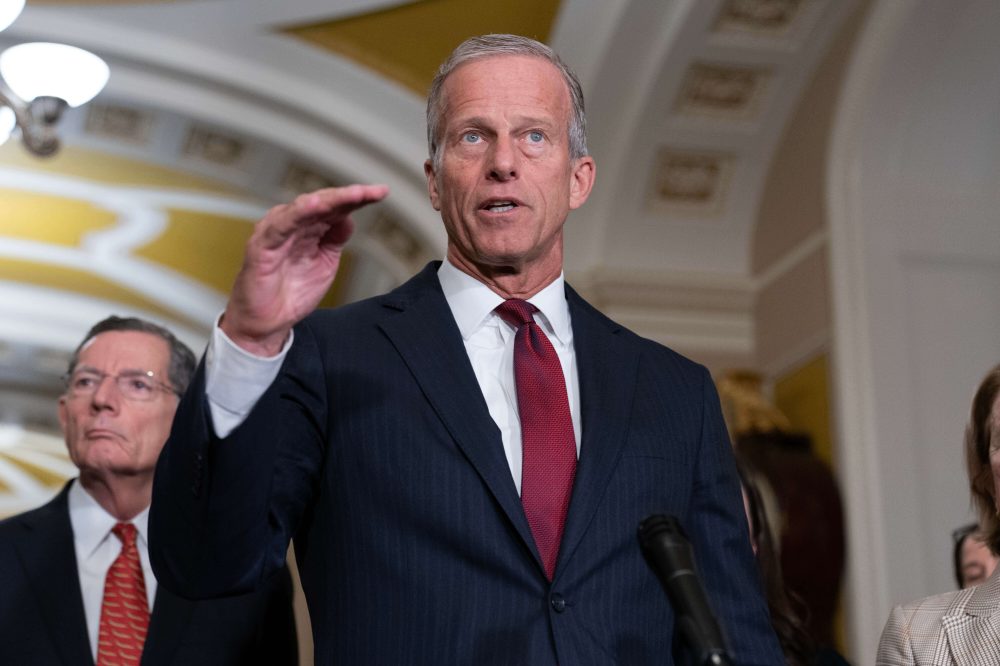
Senate Majority Leader John Thune of South Dakota is organizing an extended speaking session on the Senate floor for an unspecified duration, though it will not constitute the formal “talking filibuster” that Trump has advocated for. The Republican strategy involves maintaining control of the floor for potentially days or weeks to apply pressure on Democratic colleagues.
“I can guarantee that we are going to put Democrats on the record,” Thune declared from the Senate floor Thursday while announcing the strategy for the House-passed legislation.
Trump has declared he will not approve any additional legislation until Congress passes this measure — officially titled the Safeguard American Voter Eligibility or SAVE America Act. The bill encounters complete Democratic resistance, meaning Senate approval would require Republicans to modify chamber rules and abolish the filibuster, a step many GOP senators refuse to take.
The president has elevated this legislation as a key priority before the midterm elections, contending Republicans require it for electoral success — despite his party securing both the presidency and congressional control in 2024 without such measures. Current federal statutes already mandate that national election voters swear under oath, with potential prosecution consequences, that they possess U.S. citizenship.
The proposed legislation would additionally mandate photo identification for ballot casting, a requirement already implemented in numerous states.
Trump’s adamant stance on this bill, combined with energetic support from the Republican base, has created pressure for Thune. The GOP leader has consistently stated they lack the votes to eliminate the filibuster, which establishes a 60-vote requirement, or to implement the talking filibuster Trump has vigorously promoted.
Even with adequate votes, a talking filibuster would not ensure passage. Advocates argue Democrats would eventually exhaust themselves speaking or permit the legislation to advance. However, Democrats would retain the right to propose unlimited amendments on any topic, compelling Republicans to cast difficult votes during an election year while further prolonging the process.
“We can’t find a piece of legislation in history that’s been passed that way,” Thune stated this week.
Positioned between Trump’s pressure and Democratic resistance, Republican senators have developed an alternative approach to control the floor themselves — preventing Democrats from obtaining a weeks-long platform for speeches. This strategy circumvents procedural complications, even though the process will likely conclude with an unsuccessful vote. Republicans also plan to examine several amendments addressing Trump’s priorities, including restrictions on mail-in voting.
“Republicans are looking forward to this debate,” Thune stated.
Like the talking filibuster approach, this plan carries risks — primarily that it may not appease Trump, who has insisted on passage and threatened to obstruct nearly all other Congressional business.
Utah Senator Mike Lee, a Republican who has collaborated with Trump to advance the SAVE America Act and advocated for the talking filibuster, said Thursday the outcome remains uncertain.
“I think he understands that we need to put in an aggressive effort here,” Lee commented regarding Trump. “And a lot of that is going to have to be determined in real time as we go about it.”
Lee indicated Trump’s satisfaction with the process “will depend on whether in his view, we gave it everything we have.”
Republican Senator Katie Britt of Alabama stated the objective is determining how to bring it to the floor and “actually achieve a result.”
“We’re working through what that means and what we need to be prepared to do,” Britt explained.
Democrats unanimously reject the legislation, contending it would prevent approximately 20 million American voters lacking readily available birth certificates or similar documentation from exercising their voting rights.
Senator Alex Padilla, the top Democrat on the Senate Rules Committee, announced his party is organizing “to bring our arguments — and the facts — to the floor as well.”
He suggested it would be more precise to call it the “Save Trump’s Ass Act,” because he argued the only method Republicans can attempt to maintain power in November’s elections is by creating barriers for eligible voters.
Padilla characterized the SAVE America Act as “not a voter ID bill. It is a voter suppression bill. It is a voter purging bill.”
NEW YORK (AP) — We’ve all wondered at some point: “What else could I have purchased with that money instead?”
Military conflicts raise the same question on a much larger scale.
During the opening seven days of the Trump administration’s military engagement with Iran, America spent over $11.3 billion — a sum that could have purchased countless alternatives. When numbers reach such astronomical heights, they become difficult to comprehend. The Associated Press has calculated what this enormous expenditure could have bought when divided into smaller, more relatable purchases.
Associated Press correspondent Lisa Mascaro from Washington provided additional reporting. Additional graphics covering the U.S.-Iran military engagement are available online, where this breakdown will also appear.
Rehoboth Beach commissioners moved forward with their fiscal year 2027 budget planning during Monday’s fourth budget session, approving all nonprofit funding requests that came before them.
The city is developing its budget for the fiscal year that starts April 1, 2026, and Monday’s March 9 meeting centered on allocating funds to community organizations.
Commissioners gave their approval to funding requests from five local nonprofits, with the largest allocation going to the Rehoboth Beach Volunteer Fire Company at $300,000. The Rehoboth Beach Public Library and CAMP Rehoboth each received approval for $75,000 in funding.
Both Rehoboth Beach Main Street and the Rehoboth Beach Historical Society were approved for $60,000 each, though the historical society had initially requested $52,000.
City officials also examined potential changes to building permit extension fees for projects extending past 12 months. While no new policies were introduced, commissioners reviewed updated fee proposals based on recommendations from previous budget discussions. This matter will be addressed again in future meetings as the city continues evaluating the most effective renewal structure.
Commissioners additionally addressed personnel matters, including whether to implement merit increases or merit bonuses for city employees, and discussed the Paid Family Leave Tax.
The city will hold its final budget approval session on March 20, 2026.
WASHINGTON — A Justice Department official is facing professional misconduct allegations after threatening a prestigious law school over its diversity programs, according to ethics charges filed in the nation’s capital.
Ed Martin, currently serving as the Justice Department’s pardon attorney, stands accused of sending a threatening communication to Georgetown Law School’s dean while he held the position of interim U.S. Attorney for Washington, D.C. The Office of Disciplinary Counsel filed the charges last Friday.
According to the ethics filing, Martin threatened that his office would refuse to hire Georgetown law students unless the institution dismantled its diversity, equity and inclusion initiatives. The allegations claim Martin violated his professional oath and constitutional protections for free speech and due process.
Hamilton Fox, the Disciplinary Counsel who brought the charges, has requested a D.C. Court of Appeals panel determine appropriate disciplinary action. Martin has been given 20 days to submit a written response to the accusations. Neither Martin nor his legal representative responded to requests for comment.
The controversy stems from Martin’s February communication to Georgetown Law Dean William Treanor, in which he claimed a whistleblower reported that the school “continues to promote and teach DEI.” Martin’s action aligned with a Trump administration executive order targeting federal DEI programs.
“This is unacceptable,” Martin stated in his correspondence, threatening to block all Georgetown students from consideration for employment opportunities, internships, or fellowships until the matter was addressed.
Dean Treanor pushed back against Martin’s demands, citing First Amendment protections. “Given the First Amendment’s protection of a university’s freedom to determine its own curriculum and how to deliver it, the constitutional violation behind this threat is clear, as is the attack on the University’s mission as a Jesuit and Catholic institution,” Treanor responded.
When Martin discovered the ethics investigation last year, he attempted to contact D.C. Court of Appeals judges directly, criticizing Fox’s “uneven behavior” and requesting a “face-to-face meeting with all of you to discuss this matter and find a way forward,” according to the disciplinary filing.
Deputy Attorney General Todd Blanche defended Martin, characterizing the complaint as originating from “a blatantly Democrat-run political organization.” The Justice Department issued a statement claiming the charges represent “a partisan organization’s agenda” targeting Trump administration officials while overlooking ethical violations by attorneys who served under Democratic administrations.
“Let us not forget that DC-barred members of Biden’s special counsel were found to have acted against President Trump without legal authority and in clear violation of the Constitution, yet the bar did nothing,” the department stated.
Martin, a conservative activist without prosecutorial background, was selected by President Trump in January to head the country’s largest U.S. Attorney’s office. He had previously played a prominent role in Trump’s “Stop the Steal” movement following the 2020 election.
Trump eventually withdrew Martin’s nomination for permanent appointment after a Republican senator opposed his confirmation due to Martin’s vocal support for January 6, 2021 Capitol protesters. In May, Trump nominated Fox News personality Jeanine Pirro to take over the U.S. Attorney position.
While Martin continues in his role as pardon attorney, he was recently stripped of his leadership position in the Justice Department’s “Weaponization Working Group,” which examines federal prosecutions of Trump.
CHICAGO — An unusual opportunity for Illinois voters to choose a new U.S. senator has ignited a fierce contest among the state’s top three Democratic contenders.
However, the Democratic primary to succeed retiring Senator Dick Durbin has transformed into a crucial political evaluation for another name appearing on Tuesday’s ballot: Governor JB Pritzker.
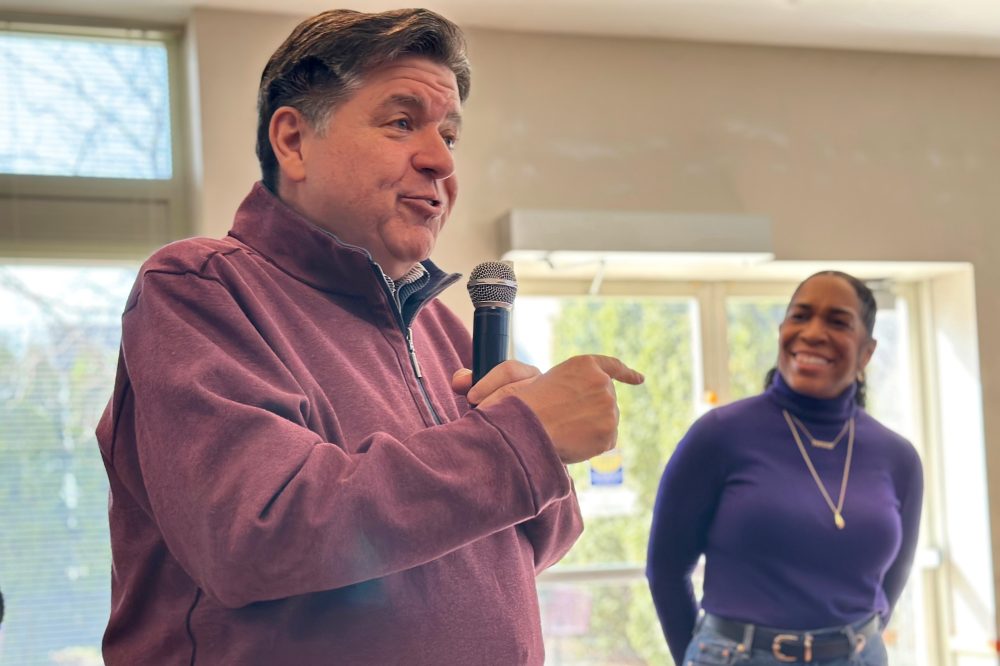
The wealthy governor is endorsing Lieutenant Governor Juliana Stratton against two seasoned House representatives — Raja Krishnamoorthi and Robin Kelly. Pritzker has invested millions in Stratton’s campaign, joined her at senior center visits, and even featured in a profanity-laden television commercial targeting Trump. Yet Pritzker’s prominent involvement has generated complications, including pushback from influential Black Democratic leaders, doubts about the potential 2028 presidential hopeful’s sway, and voter concerns regarding his use of personal fortune.
“Money should not have to be a factor into tipping the scales in the political arena,” stated Maria Pike, a Chicago anti-violence activist. Despite being a strong Pritzker supporter, she feels uncomfortable with the millions the governor, who faces no opposition in his own primary, has directed toward electing Stratton. She plans to vote for Kelly.
Sixteen contenders have entered the race following Durbin’s retirement announcement after three decades as senator, where he serves as the Senate’s second-ranking Democrat.
The Democratic primary victor among ten candidates is expected to secure victory in the solidly blue state this November. Illinois hasn’t elected a Republican senator since 2016, when Mark Kirk lost to Democrat Tammy Duckworth.
The leading candidates include 52-year-old Krishnamoorthi, a five-term congressman who launched the first television advertisements in July. Krishnamoorthi demonstrates exceptional fundraising ability, collecting over $30 million from approximately mid-2025 through last month.
He avoided direct comments about Pritzker’s involvement.
“At the end of the day, voters will make their decision. They don’t want anyone else to decide for them,” Krishnamoorthi stated. “We’re on a good path. We just have to run down it as fast as we can.”
Among all 2026 Senate contenders nationwide this election cycle, Krishnamoorthi ranked second in fundraising behind only Georgia Democrat Jon Ossoff, based on Federal Election Commission records.
Kelly raised approximately $3.3 million during the same period, while Stratton collected about $4 million, both significantly trailing Krishnamoorthi.
However, Pritzker contributed $5 million to a super PAC primarily focused on supporting Stratton’s election in December.
While governors and prominent politicians commonly endorse candidates, primary involvement often generates divisions. Pritzker, inheritor of the Hyatt Hotels fortune, holds a unique position due to his wealth. He has served as the state party’s financial backbone for years, supporting numerous candidates both within Illinois and nationally.
Yet no previous endorsement has been so directly connected to his personal career trajectory.
Pritzker selected Stratton as his running mate in 2017, just months into her single legislative term. When discussing her major achievements, she highlights her support for Pritzker’s initiatives, including Illinois’ minimum wage increase.
Stratton adopted an aggressive debate strategy, criticizing Krishnamoorthi’s voting history and funding sources so intensely that he joked about needing “body armor” during a televised January forum.
Her debut television advertisement features voters and Senator Duckworth directing profanity at Trump. While Stratton and Pritzker don’t use the expletive, they appear together smiling.
“It captured what so many people are feeling right now. Why are we playing around that these are normal times?” Stratton explained. “People are looking for fire.”
She maintains that Pritzker’s backing presents no disadvantages.
Others disagree with this assessment.
The Congressional Black Caucus, which includes Kelly as a member, recently criticized his support.
“Governor Pritzker’s effort to tip the scales in Illinois’ U.S. Senate race is beyond frustrating,” stated Representative Yvette Clarke of New York, the caucus leader. “A sitting governor shouldn’t be heavy-handing the race. Quite frankly, his behavior in this race won’t soon be forgotten by any of us.”
Kelly, 69, clarified she didn’t request the statement.
“They see what’s going and they feel like, a very qualified woman that’s running, is already there,” she said. “Just because you don’t have the most money, doesn’t mean that you haven’t done the most.”
She referenced outgoing Governor Tim Walz, who hasn’t endorsed any candidate in Minnesota’s Senate race, where Lieutenant Governor Peggy Flanagan and Representative Angie Craig compete for the Democratic nomination.
Kelly won her first election in 2013, campaigning on gun control messaging that connected with her district encompassing Chicago’s South Side, suburban areas, and rural regions. Through her people-over-profits platform, she has established herself as a progressive voice, including denouncing Israel’s Gaza operations as genocide.
Chicago resident Kiyonna Mosely, 49, expressed trust in Pritzker but lacks familiarity with Stratton. She appreciates Kelly’s anti-gun violence record and finds her relatable.
“She just kind of speaks my language when she is speaking, always straightforward,” Mosely said. “She’s experienced a lot of things I have, with being a Black woman.”
Pritzker has justified his participation as proper. He said he understood the CBC’s position of “standing up for a friend of theirs.”
“I’m working very hard to elect someone as our U.S. senator, a Black woman, who would be a member of the Congressional Black Caucus when she wins,” he told reporters last week in Springfield. “She has the best chance of being a great U.S. senator for us among the three Democrats in the running.”
Some voters welcome his involvement.
Pritzker receives credit for bringing governmental stability to Illinois, something voter Susan Stockman values. The 73-year-old retired suburban Chicago teacher plans to vote for Stratton partly because of Pritzker’s endorsement.
“He’s done as great of a job as anybody can do,” she said. “I don’t think there’s any such thing as being too involved.”
Tuesday’s election results will also indicate Pritzker’s political strength as his name surfaces in discussions about potential 2028 presidential candidates. Pritzker added over $25 million to his campaign treasury last year, generating speculation about broader political ambitions, though he remains evasive about presidential plans.
Recently, Stratton has appeared more frequently at Pritzker’s official events. Thursday saw Pritzker campaigning for her through multiple senior living center visits on Chicago’s South Side. Already among Trump’s harshest critics, Pritzker told residents in one predominantly Black neighborhood that Stratton provides a fresh approach to challenging the president.
“My partner in governance for seven years decided that it was time for her to go take this fight to Washington on my behalf,” he told residents.
Candidates have also focused efforts on connecting with voters throughout the state. Stratton, 60, grew up in Chicago but claims her rural communities commission experience has established her recognition in downstate areas. Kelly emphasizes her Peoria connections, approximately 150 miles southwest of Chicago, where she attended college.
Krishnamoorthi, born in India and raised in Peoria, says he has spent years cultivating support beyond his suburban Chicago district, engaging with residents on Medicare issues beginning in 2023 and securing endorsements from prominent downstate Democrats.
This strategy appeals to 63-year-old Kimberly Beal, who resides in Kelly’s congressional district and attended Thursday’s Stratton event. She’s considering voting for Krishnamoorthi.
“His boots on the group approach has been one I like,” she said. “He brings a no-nonsense appeal.”
JEFFERSON CITY, Mo. — A Missouri circuit court has upheld newly drawn congressional district boundaries endorsed by former President Donald Trump, designed to boost Republican chances of capturing another House seat in upcoming elections.
Legal challengers argued the revised districts breached Missouri’s constitutional requirement for geographically compact boundaries. However, Jackson County Circuit Judge Adam Caine dismissed these arguments in his Thursday decision.
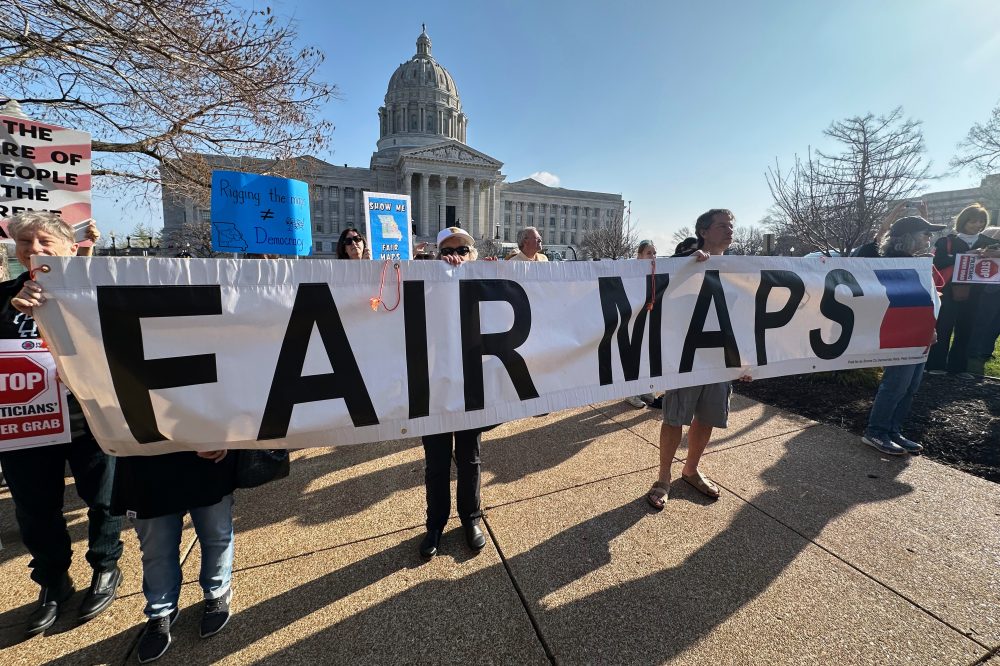
While Republicans celebrated this legal win, additional court battles continue at the Missouri Supreme Court, where opponents argue that redrawing districts mid-decade violates the constitution. Critics have also gathered more than 300,000 petition signatures seeking to put the congressional map before voters statewide.
Missouri represents one of multiple states where Trump has pushed for congressional boundary changes, seeking electoral advantages as Republicans work to maintain their slim House majority this November. Following Trump’s call for Texas redistricting, Democrats responded with their own map changes in California, sparking similar battles nationwide.
The state’s current House delegation includes six Republicans and two Democrats under boundaries established in 2022 following the latest census. Initially, Republican legislators rejected proposals for a seven-seat Republican map, fearing it might spread the party too thin and create vulnerability during strong Democratic election cycles.
However, White House pressure led Republicans to abandon these concerns last year, prioritizing partisan gains through district revision.
The revised map, approved during September’s special legislative session, targets the Kansas City-area seat held by Democratic Representative Emanuel Cleaver. The plan shifts Kansas City portions into two neighboring Republican districts while extending Cleaver’s 5th Congressional District eastward into heavily Republican rural territory.
Legal documents filed by challenging voters claimed the new boundaries “radically departs” from traditional patterns by dividing and elongating the 5th District, which previously centered more tightly around Kansas City.
Republican Attorney General Catherine Hanaway’s legal team argued the updated map actually improves overall design. While acknowledging the 5th District’s reduced compactness, state lawyers maintained the statewide map achieves better compactness and reduces municipal splits across district lines. Judge Caine accepted this reasoning.
The judge noted that challengers essentially argued against combining rural and urban voters within single districts. However, Caine referenced previous instances of such combinations, including maps used from 2012-2020 that merged Kansas City’s downtown core with eastern rural areas.
“The decision of what municipalities to split is a political and policy determination that is properly left in the hands of the General Assembly and Missouri’s political processes,” Caine wrote.
Organizations representing the challenging voters condemned the ruling but haven’t announced appeal plans.
“If allowed to stand, it would represent a significant setback for fair representation in Missouri,” stated the American Civil Liberties Union and Campaign Legal Center jointly.
Delaware lawmakers have passed legislation requiring every school district and charter school in the state to establish comprehensive policies governing student cell phone usage during school hours.
Under the new law, educational institutions must collaborate with teachers and staff to develop policies that include six key components. Schools must establish clear standards for appropriate cell phone usage on campus and implement restrictions on device use during classroom instruction.
The legislation also mandates that schools designate specific times and locations where students are permitted to use their mobile devices. Additionally, policies must promote dialogue between educational institutions, families, and students regarding cell phone regulations.
Each policy must outline a framework of suitable penalties for students who violate the cell phone rules. However, schools must also include provisions for emergency circumstances and students requiring medical or educational accommodations.
All Delaware school districts and charter schools have until August 1, 2025, to submit their policies to the state Department of Education and publish them on their official websites. Educational institutions retain the flexibility to modify their cell phone policies as circumstances require, but any revisions must be reported to the Department and updated online.
Delaware’s three counties will soon have enhanced legal authority to gather evidence when assessing property values for taxation purposes, following the passage of new legislation that strengthens their subpoena powers.
The measure, which serves as a replacement for Senate Bill 230, grants specific authority to county finance leaders to demand testimony and documents during property valuation disputes. Under the new law, this power applies specifically when counties use income-based or cost comparison methods to determine a property’s fair market value.
The legislation identifies three key officials who can exercise these expanded powers: the Chief Financial Officer of the Office of Finance, Kent County’s Department of Finance Director, and Sussex County’s Finance Director.
When property owners challenge tax assessments or when counties need to defend their valuation methods, these officials can now compel individuals and businesses to provide testimony and produce relevant documents. If someone refuses to comply with a subpoena, the Superior Court has the authority to enforce the order and can use contempt of court powers against non-compliant parties.
The final version of the bill differs from the original Senate proposal by removing provisions that would have affected Section 284 of Delaware’s General Corporation Law, focusing the legislation specifically on county assessment authority.
The Treasury Department announced Thursday that Treasury Secretary Scott Bessent will conduct trade discussions with China’s Vice Premier He Lifeng over the weekend in Paris, setting the stage for President Trump’s planned state visit to Beijing that begins March 31.
While Beijing has not yet publicly acknowledged these weekend negotiations between Bessent and He, they appear to serve as preliminary preparations for the state visit, which China also has not officially confirmed. The White House has indicated Trump plans to meet with Chinese President Xi Jinping, with the visit widely viewed as an effort to maintain stability between the globe’s two biggest economies.
In a statement, Bessent said, “Thanks to the bonds of mutual respect between President Trump and President Xi, the trade and economic dialogue between the United States and China is moving forward. Under the guidance of President Trump, our team will continue to deliver results that put America’s farmers, workers, and businesses first.”
This will mark Trump’s first presidential trip to China since his 2017 visit during his initial term. The upcoming visit occurs five months following the leaders’ meeting in Busan, South Korea, where they established a one-year ceasefire in their trade dispute that had previously escalated tariffs to triple-digit levels before both nations stepped back.
Business leaders and policy experts plan to monitor the Bessent-He discussions closely for hints about potential deals when Trump and Xi convene in Beijing, particularly regarding whether China might increase purchases of American goods like soybeans and aircraft, and how both countries will address their trade deficit issues.
Chinese Foreign Minister Wang Yi recently described the coming period as a “big year” for U.S.-China relations. Though he stopped short of confirming the state visit, Wang noted that “the agenda of high-level exchange is already on the table.”
Wang added, “What the two sides need to do now is to make thorough preparations accordingly, create a suitable environment, manage the risks that do exist and remove unnecessary disruptions.”
Bessent and He have been spearheading trade discussions between both nations since the previous year, conducting meetings across multiple cities including Geneva, London, Stockholm, Madrid and Kuala Lumpur.
WASHINGTON — As military action against Iran has driven fuel costs sharply higher, President Donald Trump has changed his messaging strategy, now portraying elevated oil prices as beneficial rather than focusing on keeping energy costs affordable for consumers.
This shift in approach occurs while Trump’s administration has yet to present a concrete strategy for reopening the vital Strait of Hormuz, leaving numerous oil and natural gas tankers unable to navigate the crucial waterway.
“The United States is the largest Oil Producer in the World, by far, so when oil prices go up, we make a lot of money,” Trump posted Thursday on his social media platform.
This represents a dramatic change from just one month ago during his State of the Union speech, when Trump celebrated gasoline prices at $2.30 per gallon. That figure has now climbed over 50% to reach a nationwide average of $3.60 per gallon, based on AAA data.
This reversal highlights how Trump’s domestic political calculations now conflict with his international military objectives. The timing creates challenges for his party with November’s midterm elections approaching. While Trump previously credited elevated gas prices with helping him unseat former President Joe Biden, he expressed no concern Saturday about current rising costs potentially affecting voter sentiment or forcing an early end to the conflict.
Financial firm Goldman Sachs warned Thursday that their projections indicate higher oil prices will drive up inflation, slow economic growth, and increase unemployment rates by year’s end.
Oil prices on international markets have fluctuated dramatically in response to Trump’s changing statements and as shipping companies avoid the Strait of Hormuz. Thursday saw global crude oil benchmark prices reach $100 per barrel.
“The swings in Brent crude oil prices over the past several days are eye-catching and odds are volatility will remain because of the absence of a timeline for when the conflict will deescalate and when the Strait of Hormuz, which is effectively closed, will see traffic begin to recover,” analysts at the consultancy Oxford Economics concluded on Wednesday.
Trump has delivered conflicting statements regarding his plans to resolve the shipping crisis. During Monday’s press conference, he assured that the Strait of Hormuz “is going to remain safe” despite being designated a danger zone, asserting that U.S. Navy presence and tanker insurance would maintain security.
However, by Tuesday, he warned on Truth Social that Iran would face “Military consequences” at “a level never seen before” if mines were placed in the strait, later emphasizing that American forces were destroying Iran’s mine-laying vessels.
Wednesday brought another confusing development when Energy Secretary Chris Wright briefly posted that the U.S. Navy had successfully escorted a tanker through the waterway, only to delete the inaccurate statement shortly afterward.
Following initial reluctance to utilize strategic oil reserves, Trump announced Wednesday that America would coordinate with other nations to release oil supplies aimed at reducing prices. The administration later specified it would draw down 172 million barrels. However, experts suggest this coordinated international release will likely stabilize rather than significantly lower oil prices.
“Such a move will slow rather than stop rising oil prices and offer a temporary salve to the searing burn of rising gasoline prices,” said Joe Brusuelas, chief U.S. economist at the consultancy RSM.
The administration also indicated it might suspend Jones Act requirements mandating U.S.-flagged vessels for domestic port-to-port shipping. White House press secretary Karoline Leavitt described this temporary measure as ensuring “vital energy products and agricultural necessities are flowing freely to U.S. ports.”
Energy Secretary Wright appeared on television Thursday to acknowledge the conflict was creating “a significant disruption” in immediate gas prices, while attempting to highlight long-term advantages of neutralizing Iran’s threat to America and Middle Eastern allies.
Despite Trump’s Wednesday assertion that “the straits are in great shape” and his suggestion that oil companies should utilize them, Wright could not specify when the U.S. Navy might begin escorting tankers through the Strait of Hormuz, the bottleneck responsible for current price increases.
“It’ll happen relatively soon, but it can’t happen now,” Wright told CNBC. “We’re simply not ready. All of our military assets right now are focused on destroying Iran’s offensive capabilities.”
WASHINGTON — In a rare display of bipartisan cooperation, the U.S. Senate overwhelmingly approved comprehensive housing legislation Thursday, targeting the nation’s growing affordability crisis with an 89-10 vote.
The sweeping measure aims to cut regulatory red tape, place restrictions on corporate home purchases, and broaden the use of federal housing funds for affordable construction projects. The legislation now returns to the House of Representatives, which previously approved similar measures earlier this year.
Massachusetts Senator Elizabeth Warren, who collaborated with Republican colleagues to secure broad cross-party support, emphasized the urgency of the nation’s housing shortage. “We have a housing shortage all across America,” Warren stated. “We need more housing of every kind. More housing for first-time home buyers, more housing for renters, more housing for seniors, more housing for people with disabilities, more rural housing, more urban housing, more, more, and more.”
Warren added that the legislation “will help drive down prices.”
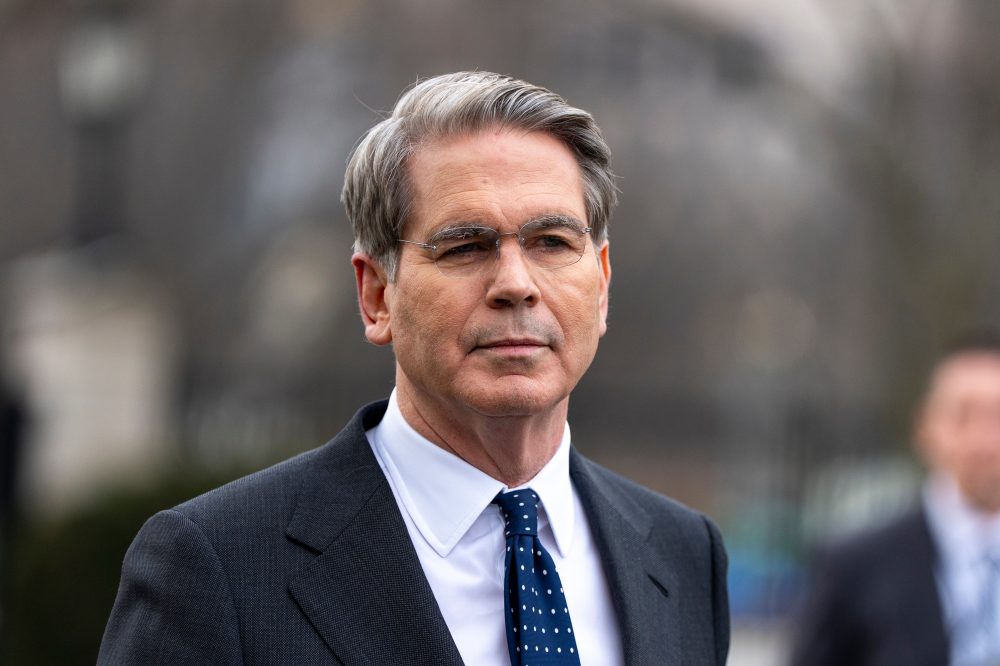
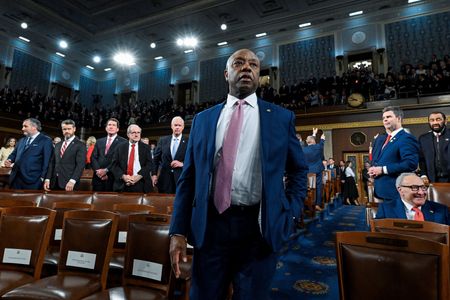
Republican Senator Tim Scott of South Carolina, who chairs the Senate Banking Committee and spearheaded the effort alongside Warren, highlighted the historic nature of the achievement. Speaking before the vote, Scott said the Senate could “do what so many people failed to do in this legislative body for the last few decades, and that is pass consequential legislation that makes it easier to become a homeowner.”
However, the bill’s future remains uncertain despite the decisive Senate approval. Questions persist about whether the House will approve the legislation again and if President Donald Trump will ultimately sign it into law.
While Trump previously supported the measure throughout bipartisan negotiations, he recently complicated its progress by declaring he would not sign new legislation unless Congress first passes voter identification requirements and restrictions on mail-in voting. The Senate is expected to consider that separate bill next week, though it faces likely defeat due to unified Democratic opposition.
House leadership has also signaled reluctance to accept the Senate version as written, suggesting they may initiate formal conference negotiations between the chambers — a process that could extend for months.
Senate Majority Leader John Thune acknowledged Thursday that conference negotiations remain possible, “but obviously the quickest way to do this would be to pick up the Senate bill and pass it.” If the White House wants swift action, Thune noted, “they’ll probably have to make that argument to House leadership.”
The legislation would empower local governments with greater housing authority, enable banks to increase affordable housing investments, and remove caps on public housing units eligible for private Section 8 financing for property rehabilitation.
Peter Carroll from Cotality, a housing data tracking company, praised the local approach. “You’ve got many provisions in this bill that stop treating the U.S. like one single housing market and start giving local leaders the tools they need to fix their unique regional puzzle,” Carroll explained.
The measure seeks to simplify homebuilding by reducing regulatory hurdles that mandate environmental assessments and inspections. It also removes funding limits for emergency shelter beds and homeless outreach programs.
Recognizing the growing reliance on manufactured and modular housing for areas needing quick housing solutions, the bill eliminates requirements for permanent chassis construction, facilitating easier building and design processes.
Housing advocacy organizations acknowledge the bill’s limitations, wishing for more direct investment in housing construction and renter assistance programs.
Urban Institute researcher Yonah Freemark noted the inherent constraints of bipartisan compromise. “This legislation is the product of essentially senators and House members wanting to come up with something that could pass with both Democratic and Republican votes, which means it’s inherently less ambitious,” Freemark observed.
Among the bill’s most controversial elements is a provision restricting institutional investors from purchasing single-family homes — a key Trump administration priority.
The measure defines institutional investors as entities owning 350 or more single-family properties, directly or indirectly. Current investors wouldn’t need to sell existing properties purchased before the law’s enactment.
These investors could still purchase or construct single-family homes for rental purposes but would face mandatory sales to individual buyers after seven years, with required “price concessions” and 30-day “first-look” periods for current tenants.
The U.S. housing market has struggled since 2022, when mortgage rates began climbing from pandemic-era historic lows.
Previously owned home sales have hovered near 4 million annually since 2023 — significantly below the typical 5.2 million annual rate. Sales reached a 30-year low last year and continue declining, with January and February showing year-over-year decreases.
Dramatic price increases in recent years, combined with chronic housing shortages worsened by years of insufficient construction, have pushed many potential buyers out of the market.
While median monthly rent has declined for over two years, January rates remained 15.2% higher than early 2020 levels, according to Realtor.com data.
These trends have intensified pressure on lawmakers this year, with November midterm elections approaching, to demonstrate concrete action on homeownership and rental affordability challenges.
WASHINGTON – The White House disclosed Thursday that a recent FBI warning about potential Iranian drone strikes on California stemmed from a single unconfirmed tip, with officials emphasizing no genuine threat exists.
White House Press Secretary Karoline Leavitt revealed that the law enforcement bulletin, which became public Wednesday, originated from just one unverified email sent to California authorities last month.
The classified warning had been distributed through the Los Angeles Joint Regional Intelligence Center, alerting agencies about Tehran’s possible retaliatory plans. The bulletin emerged as ongoing military actions that started February 28 with extensive U.S. and Israeli strikes against Iran continue.
According to the FBI intelligence, Iran reportedly hoped to execute a surprise assault using drones launched from maritime vessels targeting California locations if America conducted military operations against Iranian territory, as of early February.
Taking to social media platform X Thursday, Leavitt clarified the warning’s origins, stating it came from a single email containing one unconfirmed tip sent to California law enforcement.
“TO BE CLEAR: No such threat from Iran to our homeland exists, and it never did,” Leavitt wrote.
ABC News initially reported on the FBI security alert.
President Donald Trump has dismissed concerns about Iranian-sponsored attacks within American borders. When reporters asked Wednesday whether he feared Iran might escalate retaliation to include strikes on U.S. territory, Trump responded, “No, I’m not.”
WASHINGTON — Senate Majority Leader John Thune announced Tuesday that lawmakers will vote on legislation requiring stringent citizenship verification for elections, while rejecting President Donald Trump’s call for an extended filibuster strategy to force passage.
The president has declared he won’t approve any other legislation until Congress passes the Safeguard American Voter Eligibility Act, commonly called the SAVE America Act. However, Democrats unanimously oppose the measure, leaving Republicans without the necessary votes unless they eliminate Senate filibuster rules.
Thune indicated his caucus lacks sufficient support for rule changes or implementing a marathon filibuster that would require Democrats to continuously occupy the Senate floor to block the legislation.
“That is just a function of math,” Thune explained to reporters Tuesday, delivering his most definitive remarks following weeks of Republican discussions. “For better or worse, I’m the one who has to be a clear-eyed realist about what we can achieve here.”
Instead of Trump’s preferred approach, Republican leadership plans to bring the bill up for a standard vote as early as next week, which will likely result in defeat. Thune stated Republicans will “have a fight on the floor” and compel Democrats to take a position on “whether they think noncitizens should vote in American elections.”
The president’s aggressive attempts to control Senate procedures have created challenges for Thune, who must balance appeasing Trump with managing increasingly frustrated conservative voters demanding action before midterm elections. However, most Republican senators appear to support Thune’s strategy.
“There’s been enough dithering,” stated Sen. John Kennedy of Louisiana. “It’s time to go and let the chips fall where they may.”
Trump has prioritized the SAVE America Act ahead of midterm elections, claiming Republicans need it to secure victories despite winning both the presidency and congressional control in 2024 without such legislation. Current federal law already mandates U.S. citizenship for national election participation.
“It’ll guarantee the midterms,” Trump told House Republicans Monday during their annual retreat at his Florida resort. “If you don’t get it, big trouble.”
However, Trump’s demands face Senate procedural realities, where minority Democrats can block legislation through filibuster, forcing Republicans to secure 60 votes while holding only 53 seats. Democrats consistently oppose the bill, arguing it would prevent approximately 20 million American citizens lacking readily available birth certificates or documentation from voting.
While Republicans could eliminate filibuster rules or attempt extended floor debates, Thune maintains insufficient GOP conference support exists for either option.
Even with adequate support, marathon filibuster tactics wouldn’t guarantee success. Proponents suggest Democrats would eventually exhaust themselves speaking or allow passage, but Democrats could introduce unlimited amendments on any topic, forcing Republicans into difficult election-year votes while further delaying proceedings.
“We can’t find a piece of legislation in history that’s been passed that way,” Thune remarked this week.
Utah Senator Mike Lee, who has championed the extended filibuster approach alongside Trump, posted on social media Tuesday that the “Senate should do everything it can in an effort to pass” the legislation.
“While passage isn’t guaranteed, we can be certain that failure will be the outcome if we don’t try,” Lee wrote.
Following Tuesday’s GOP conference meeting, multiple senators expressed readiness to proceed with the legislation despite inability to accommodate presidential procedural demands.
“I think we just go ahead and try to get on the bill,” said Sen. Roger Marshall of Kansas.
Wisconsin’s Ron Johnson suggested extended floor debate time, opposing a “one and done vote” approach.
“Our base would scream about that and that wouldn’t be smart,” Johnson explained.
Little anger toward Thune emerged, as many Republican colleagues agree that eliminating filibuster rules would be unwise and extended filibuster tactics risky. Republicans have historically opposed efforts to “nuke” the filibuster, arguing minority legislative rights require protection.
“There’s a right way to do it, there’s a wrong way to do it,” said North Carolina Republican Sen. Thom Tillis. “Nuking the filibuster doesn’t work. The talking filibuster would be a goat rodeo.”
Tillis praised Thune, saying he “has the toughest job in Washington, D.C. He’s doing just fine. And he, quite honestly, has taken on a lot for the members.”
Trump announced over the weekend his desire to expand the legislation, including mail-in ballot restrictions he has promoted since his 2020 election loss. He also wants two unrelated transgender rights provisions: banning biological males from women’s sports and blocking certain minor sex reassignment procedures.
“Let’s go for the gold,” Trump urged House Republicans.
House Speaker Mike Johnson stated Tuesday at the Florida retreat they are “looking at mechanisms” for additions, despite the House already passing and sending the bill to the Senate. However, mail-in ballot restrictions face uncertain House support given their popularity in numerous states.
Thune suggested the House would need to pass revised legislation incorporating these additions.
“It would probably make sense for them to send over another version,” he concluded.
Worcester County has announced that the Mystic Harbour Water & Wastewater Advisory Board will convene for a scheduled meeting this Friday, March 6th, beginning at 2:00 PM.
County officials have made the meeting agenda available to the public through their official website. The agenda document, dated March 6, 2026, can be accessed as a PDF file for residents who wish to review the topics that will be discussed during the session.
The advisory board meeting was posted to the county’s event calendar on Thursday, March 12th at 12:47 PM by county staff member ctunnell. Community members interested in attending or following the proceedings can find additional information through Worcester County’s online events calendar.
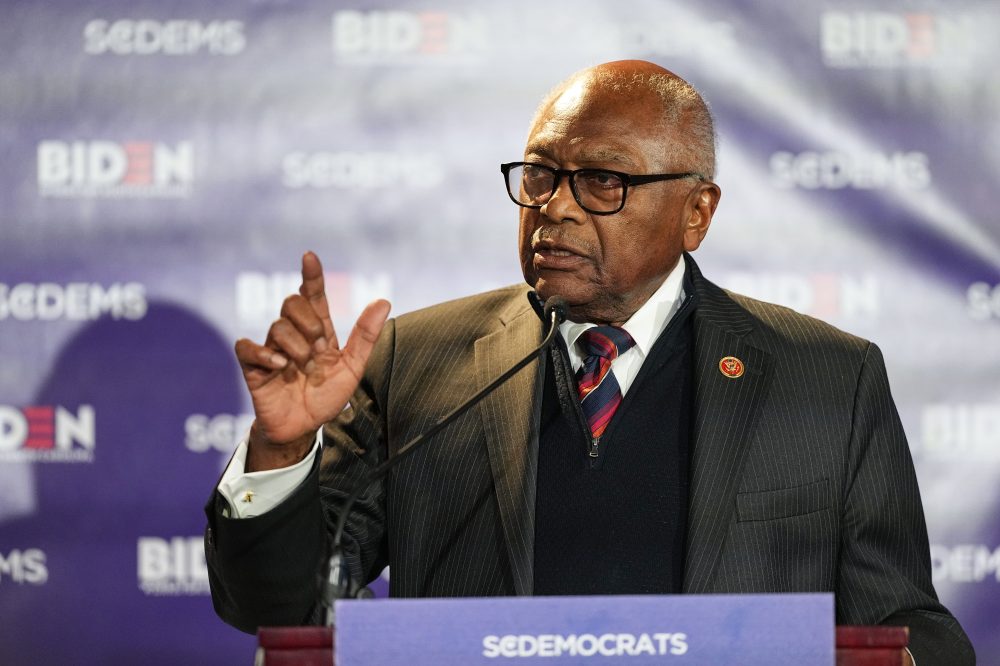
Veteran South Carolina Congressman Jim Clyburn announced Thursday his intention to seek an 18th term in the House of Representatives, a decision that could establish him as a senior Democratic voice if his party reclaims control this November.
The 85-year-old lawmaker stands as the senior-most Democrat in South Carolina’s delegation and represents the sole remaining member of the previous Democratic leadership structure planning to continue serving. Both former House Speaker Nancy Pelosi from California and former Majority Leader Steny Hoyer from Maryland have announced their retirement plans.
Having previously held positions as majority whip and assistant Democratic leader, Clyburn’s continued presence in Congress could allow him to work alongside what may become the chamber’s first Black speaker, as New York Representative Hakeem Jeffries stands ready to assume leadership should Democrats regain the majority. Clyburn previously held the distinction of being the highest-ranking African American House member for many years.
When launching his campaign for a 16th term four years earlier, Clyburn shared with The Associated Press his commitment to continue serving as long as his health remained strong and his family supported his efforts.
“I’ve told them, if you ever see that I need to go to the rocking chair or spend my spare time on the golf course, let me know,” he explained regarding advice from his daughters. “And so far, they’re telling me, from what they feel and hear, I should keep going.”
Clyburn secured his 2024 reelection victory with a margin exceeding 20 percentage points. Since his initial election in 1992, he has represented a district spanning from Columbia’s surrounding areas through rural central and eastern counties extending to Charleston.
Completing an 18th term would make Clyburn the most enduring House representative in South Carolina’s history. The state’s Senate delegation has seen longer tenures, including Republican Strom Thurmond’s 48-year service and Democrat Fritz Hollings’ nearly 39-year career.
South Carolina’s election filing period begins Monday and concludes March 30, with primary elections scheduled for June 9.
WASHINGTON – Federal officials have launched legal action against California, challenging the state’s environmental vehicle regulations as violations of federal authority.
The Transportation Department filed the lawsuit Thursday in federal district court, targeting the California Air Resources Board over rules governing zero-emission vehicles and exhaust pollution standards. Officials argue these state-level regulations exceed California’s legal authority and conflict with federal oversight.
The legal challenge focuses on environmental vehicle standards that continue to operate despite President Trump’s recent action to cancel California’s Advanced Clean Cars II program, which aimed to eliminate gas-powered vehicle sales by 2035. While that specific initiative was blocked through federal legislation, California’s existing emission requirements remain active.
The federal lawsuit seeks to invalidate these remaining state regulations, setting up a potential court battle over environmental policy and states’ rights to set their own vehicle emission standards.
Former President Donald Trump announced his support Tuesday for Ed Gallrein, a former Navy SEAL, in the race for Kentucky’s 4th Congressional District currently represented by Thomas Massie.
Trump revealed his backing of Gallrein through a social media post on Tuesday, targeting the seat currently occupied by one of his sharpest Republican detractors in the House.
The relationship between Trump and Massie has deteriorated over recent months, with the Kentucky representative consistently demanding transparency regarding documents connected to the Jeffrey Epstein investigation. Massie has also been vocal in his disapproval of how the Trump administration addressed Epstein-related matters.
In his Tuesday endorsement announcement, Trump continued his pattern of public criticism directed at Massie, reinforcing the ongoing tension between the former president and the Kentucky congressman.
WASHINGTON – Federal lawmakers are on the verge of approving comprehensive legislation Thursday that aims to increase affordable housing development across the United States, providing politicians with a key talking point as they seek re-election while addressing rising living expenses.
The bipartisan measure has been championed by an unlikely duo: conservative Republican Tim Scott of South Carolina, who chairs the Senate Banking Committee, and progressive Democrat Elizabeth Warren of Massachusetts, the committee’s ranking member. Should the Senate approve the bill as anticipated, it will move to the House of Representatives for consideration.
Wednesday evening saw senators vote by a wide margin to move the legislation forward for final passage. The collaborative effort stood out in sharp contrast to the day’s heated partisan battles over border security issues and ongoing military actions in Iran that lack congressional authorization.
New Jersey Democratic Representative Andy Kim addressed the Senate Wednesday, stating the legislation “will take meaningful steps to lower the first-time home buyer age significantly by allowing for the construction of substantially more homes at more affordable prices.”
The proposed law would establish various government incentives targeting housing and financial sectors to address an estimated shortage of 4 million homes caused by multiple contributing factors.
These challenges include elevated mortgage rates, home values that have climbed 60% since 2019 according to certain analyses, building material supply issues stemming from the coronavirus pandemic, and ongoing repercussions from the 2008 housing market collapse.
The legislation would streamline or eliminate environmental assessments for building projects while increasing available funding through federal block grants distributed to states.
Additionally, the measure would increase loan caps for government-backed mortgages on multi-unit residential properties.
In a provision drawing criticism, the bill would restrict institutional investors to purchasing no more than 350 single-family homes and mandate they sell newly constructed rental properties within seven years of acquisition. This aims to prevent investment firms from outbidding individual homebuyers.
Several industry organizations voiced opposition to these restrictions this week, contending they might reduce the overall supply of available housing units.
Idaho’s House of Representatives has approved a measure asking the U.S. Supreme Court to reverse its landmark 2015 ruling that made same-sex marriage legal across the nation.
The legislative resolution argues that the Supreme Court’s marriage equality decision “is at odds with the Constitution and the principles upon which the United States is established.” The measure also emphasizes that matrimonial law has historically fallen under state jurisdiction rather than federal oversight.
The resolution now moves to the Idaho Senate, where lawmakers will decide whether to advance the measure.
Democratic legislators in New Hampshire have voted down two anti-abortion measures during their recent session. The first proposal sought to prohibit abortions beyond the 20-week mark of pregnancy, while the second aimed to provide legal protections for pregnancy resource centers that oppose abortion services.
Political observers indicate that while these legislative proposals could potentially resurface in future sessions, their chances of success remain slim. Even if such measures were to gain legislative approval, they would likely encounter a gubernatorial veto from Governor Kelly Ayotte, a Republican who maintains pro-choice positions on reproductive rights.
The outcome reflects New Hampshire’s political landscape, where the state leans predominantly liberal and lawmakers from both major political parties generally support maintaining access to abortion services.
Federal officials have discretely resumed a program that had been inactive for decades, one designed to restore firearm ownership privileges to individuals with felony convictions. The initiative has already processed cases for several people, including someone accused of serving as a fraudulent elector during the 2020 presidential election.
The Department of Justice’s decision to reactivate this restoration process marks a significant shift in policy regarding gun rights for those with criminal backgrounds. The program had remained largely unused for years before being brought back into operation.
Details about the specific cases being processed and the criteria used for approval have not been made publicly available by federal authorities. The revival of this program represents a notable change in how the current administration approaches the intersection of criminal justice and Second Amendment rights.
The Trump administration is pushing forward with plans to implement stricter requirements for commercial driving licenses following a series of fatal accidents involving foreign-born truck drivers.
Federal officials are calling for enhanced regulations governing who can obtain commercial driver’s licenses, citing recent high-profile collisions that have raised safety concerns on America’s highways.
However, transportation safety experts and advocacy groups are questioning whether these proposed changes would actually reduce traffic fatalities or improve overall road safety conditions.
The initiative represents part of the administration’s broader immigration enforcement strategy, now extending into the commercial transportation sector that plays a crucial role in the nation’s supply chain.
Industry observers note that any significant changes to commercial licensing requirements could have far-reaching implications for the trucking industry, which already faces driver shortage challenges across the country.
Federal officials have silently brought back a program that had been inactive for decades, one designed to return firearm privileges to individuals with felony convictions. The Justice Department’s revival of this initiative is now drawing scrutiny over how transparent the process has been.
At least one individual whose name appears on the restoration list has prompted particular concerns about whether the public has adequate visibility into how these decisions are being made and who qualifies for renewed gun ownership rights.
President Trump called on lawmakers during his State of the Union speech to prevent states from issuing commercial driver’s licenses to undocumented immigrants, despite federal regulations already prohibiting this practice.
The administration and supporters argue this measure would enhance highway safety across the country. However, opponents point out that the Department of Transportation has not provided evidence showing that immigrant drivers pose greater risks on the road compared to other motorists.
RICHMOND, Va. — Virginia may soon see another member of the McAuliffe family in elected office.
Dorothy McAuliffe, who served as Virginia’s first lady and previously worked as a State Department official, announced Wednesday her intention to seek a congressional seat in a recently created district. The wife of former Democratic Governor Terry McAuliffe brings significant name recognition to the race.
“We need a leader who has a record of delivering and can finally bring down costs for families, who will increase access to affordable healthcare, and who will never back down from holding Donald Trump and ICE accountable,” McAuliffe stated in her announcement.
Virginia residents will vote on a constitutional amendment April 21 that would establish new congressional boundaries throughout the state.
Should voters approve the redistricting proposal, McAuliffe plans to seek election in the expansive 7th District, covering territory from Arlington County all the way to western Augusta County. The majority of constituents in this district would reside in the Washington, D.C. suburbs, and political analysts consider it one of four newly created seats likely to elect Democrats.
“I look forward to traveling this district — from Arlington to Augusta and Prince William to Powhatan — and sharing that vision for this community that I’ve long called home,” she stated.
A practicing lawyer and mother to five children, McAuliffe held the role of Virginia’s first lady between 2014 and 2018. During her tenure, she championed programs focused on children’s nutrition and worked to address Virginia’s backlog of unprocessed sexual assault evidence kits.
The former first lady considered challenging then-Republican Representative Barbara Comstock in 2017 but ultimately decided against entering that race. Most recently, she accepted a position in 2022 as the State Department’s special representative for global partnerships under the Biden administration.
McAuliffe faces stiff competition in what promises to be a contested Democratic primary. Virginia Delegate Dan Helmer, serving his fourth term, and former federal prosecutor J.P. Cooney both launched their campaigns last month. Cooney previously worked under special counsel Jack Smith and was dismissed from his position during the Trump presidency. Additionally, State Delegate Elizabeth Guzman, who made history as the first Latina immigrant elected to Virginia’s General Assembly, has indicated she may also enter the race.
All potential candidates, including McAuliffe, would need to reassess their campaign strategies should Virginia’s Supreme Court reject the redistricting plan or if voters defeat the constitutional amendment.
WASHINGTON — President Donald Trump continues to declare victory in his military campaign against Iran, but his administration has provided conflicting messages about how and when the 12-day conflict might conclude.
Global financial markets remain unstable and Trump’s approval ratings have declined since he initiated the military action against Iran. The president has alternated between demanding Iran’s complete capitulation and suggesting he might accept a scenario where one hardline Iranian leader simply replaces another.
The inconsistent messaging from Trump and his senior officials has heightened uncertainty surrounding the nearly two-week-old military engagement, which has affected virtually every region of the Middle East while creating economic instability worldwide. With both nations refusing to back down, the conflict’s trajectory remains uncertain with no clear resolution in sight.
On Tuesday, Defense Secretary Pete Hegseth informed journalists that Trump will determine “whether it’s the beginning, the middle or the end” of the military action. During a Monday address to House Republicans, Trump described the conflict as both a “short-term excursion” that might conclude quickly while also declaring “we haven’t won enough.”
These contradictory statements have drawn sharp criticism from lawmakers who argue the president lacks defined objectives. “They didn’t have a plan,” Arizona Democratic Senator Mark Kelly stated to reporters. “They have no timeline. And because of that, they have no exit strategy.”
Following his decision to begin bombing Iran, Trump has repeatedly modified his timelines and objectives for the military campaign, creating more confusion than clarity through his shifting rhetoric.
In recent days, the president has demanded Iran’s leadership accept “unconditional surrender” while simultaneously claiming he has already accomplished his goal of destroying Iran’s military capabilities.
Trump’s administration has attempted to reassure concerned Americans that this will not become a prolonged engagement, even as the president maintains that deploying ground forces remains a possibility.
Military officials report significant damage to Iran’s naval forces and substantial progress in neutralizing the country’s missile and drone capabilities used against regional neighbors. However, the strategically important Strait of Hormuz, which typically handles about 20% of global oil shipments daily, remains blocked for commercial traffic, and Iranian leadership shows no signs of yielding.
Iran’s Revolutionary Guard has pledged to prevent “a single liter of oil” from passing through the crucial waterway until America ends its bombing operations. Ali Larijani, Iran’s senior national security official, responded defiantly on Tuesday after Trump threatened to strike Iran “TWENTY TIMES HARDER” if Tehran continues blocking oil shipments through the strait.
“The sacrificial nation of Iran doesn’t fear your empty threats,” Larijani posted on X. “Even those bigger than you couldn’t eliminate Iran. Be careful not to get eliminated yourself.”
Trump has found it challenging to justify to Americans why preventive military action against Iran was essential and how it aligns with his campaign promise to avoid the “forever wars” of recent decades that he has criticized for their financial and human costs. So far, eight American service members have died and approximately 140 have been wounded in Iranian counterattacks across the region.
Among Trump’s various justifications for initiating the war, he has stated he had a “feeling” that Iran was preparing to attack the United States.
White House press secretary Karoline Leavitt modified this explanation, telling reporters the president’s “feeling” was “based on fact.”
Despite this claim, Pentagon officials have privately informed congressional staff that U.S. intelligence agencies have no evidence suggesting Iran was planning a preemptive strike against America.
Recent surveys indicate Trump’s decision to attack Iran has not generated the typical surge of public support that usually accompanies the start of American military conflicts.
Approximately half of respondents in Quinnipiac and Fox News surveys said U.S. military operations in Iran make America “less safe,” while only about 30% in each poll believed it improved national security. A CNN survey found roughly half of American adults think the military action makes Iran “more of a threat” to the U.S., while only about 30% believed it would reduce the danger.
The CNN poll also revealed that about 60% of American adults trust Trump “not much” or “not at all” to make appropriate decisions regarding U.S. military force in Iran.
European partners are proceeding cautiously after British Prime Minister Keir Starmer and Spain’s Prime Minister Pedro Sánchez experienced Trump’s anger for what he considered insufficient support for his military campaign.
Even German Chancellor Friedrich Merz, who has generally supported the U.S.-Israeli operations against Iran, expressed concern on Tuesday that “more questions arise with every day of war.”
“Above all, we’re concerned that there is apparently no joint plan for how this war can be brought quickly to a convincing end,” Merz stated.
Merz emphasized that “Germany and Europe have no interest in an endless war” or in seeing Iran’s territorial unity collapse.
Trump has avoided taking responsibility for the bombing of a girls’ school in southern Iran during the conflict’s first day, an attack that resulted in at least 165 deaths.
On Saturday, Trump blamed Iran for the incident, claiming its security forces have “very inaccurate” weapons.
After the investigative organization Bellingcat published verified footage on Monday showing a U.S. Tomahawk cruise missile striking a Revolutionary Guard compound near the school and causing the explosion, Trump maintained it might still be Iran’s responsibility but said he would accept the findings of an ongoing U.S. investigation.
The president incorrectly stated that Tehran possesses Tomahawk missiles, a U.S.-manufactured weapons system available only to America and select close allies.
When questioned by a reporter, Leavitt avoided directly addressing why Trump made the false claim about Iran having access to the American-made missiles.
She responded partly that “the president has a right to share his opinions with the American public” while noting “he has said he’ll accept the conclusion of that investigation.”
Senate Minority Leader Chuck Schumer of New York told reporters that Trump’s assertion “is beyond asinine.”
“Again, he says whatever pops into his head no matter what the truth is,” Schumer stated. “And we all know he lies, but on something as formidable as this, it’s appalling.”
Senator Kevin Cramer, a North Dakota Republican, was among Trump supporters who gently urged the administration to clarify what occurred at the school.
Cramer said the military must “do everything you can to eliminate those mistakes going forward.”
RICHMOND, Va. — After almost twenty years of tax incentives that transformed Virginia into the world’s largest data center hub, state senators are moving to eliminate breaks worth $1.6 billion per year to the tech industry.
The Senate proposal would force data center companies to start paying at least 5.3% in sales taxes on their equipment and software purchases. Industry representatives warn this change could bring new construction to a complete stop.
“We have now left the ‘NIMBY’ phase: Not In My Backyard,” Republican state Sen. Mark Obenshain said last month. “And we’ve entered the ‘banana’ phase: Build Absolutely Nothing Anywhere Near Anything.”
Virginia’s rise as a data center powerhouse began eighteen years ago when the state offered tax breaks to attract tech companies. The strategy worked beyond expectations, with the industry investing over $80 billion and generating thousands of jobs in just the past two years, according to state tax officials.
The push to end these incentives reflects nationwide concerns about data centers’ massive power consumption and impact on local communities. These facilities now rival small cities in their electricity needs, straining power grids as artificial intelligence drives demand even higher.
The Data Center Coalition, representing major tech companies, claims the proposed tax would “effectively halt investment” in Virginia. However, development continues, with Amazon Data Services purchasing land from George Washington University this month for another northern Virginia facility.
The Senate’s bipartisan vote — 21 Democrats and seven Republicans supporting the measure — has created friction within the Democratic Party as budget negotiations intensify before Saturday’s deadline.
Gov. Abigail Spanberger’s office expressed concern about “going back on Virginia’s commitments to businesses that have invested in the Commonwealth.”
Democratic Sen. L. Louise Lucas, who leads the finance committee and backs the tax change, responded on X: “Gov. Spanberger thinks our chicken isn’t cooked — then what is the Senate supposed to pluck out of our budget? Raises for teachers, health insurance assistance, transit support, a tax rebate, or childcare slots?”
The debate comes as data centers have evolved into sprawling complexes of server warehouses, electrical substations, and backup generators that dwarf traditional factories and stadiums. Many require more electricity than utilities have ever provided to a single customer.
House Democrats oppose eliminating the tax breaks, setting up a confrontation with senators as lawmakers race to finalize the state budget.
Republican Sen. Richard Stuart believes removing the incentives won’t slow Virginia’s data center boom: “This ain’t going to slow this train down one iota.”
Virginia isn’t alone in reconsidering data center tax policy. Minnesota eliminated sales tax exemptions on electricity for the largest facilities last year while adding usage fees and stricter regulations including water use oversight.
Washington state legislators are advancing a bill to maintain tax breaks for new data centers while ending them for existing facilities upgrading equipment — a change worth $83 million in the first year.
Illinois Gov. JB Pritzker called for a two-year “pause” on data center incentives last month, citing rising residential electric bills. Arizona Gov. Katie Hobbs wants to completely eliminate her state’s sales tax exemption, calling it a “corporate handout.”
Similar repeal bills have been introduced this year in Arizona, Michigan, and Georgia, though tech companies continue aggressive lobbying efforts in state capitals.
Georgia passed legislation for a two-year pause on data center tax exemptions, but Gov. Brian Kemp vetoed the measure in 2024.
Virginia senators still face organized opposition. The International Brotherhood of Electrical Workers has lobbied lawmakers to preserve the data center industry.
“We need this industry,” said Dorian Hargrave, a Virginia-based electrical worker, in a statement. “If we lose it, our economy is going to take a very big hit.”
Federal officials have resumed the Global Entry service on Wednesday following a suspension that lasted more than two weeks due to the partial government shutdown.
The expedited entry service enables pre-screened travelers who pay a fee to bypass regular immigration lines by using automated kiosks when returning to the United States from international destinations, significantly reducing wait times at airports and border crossings.
When announcing the suspension on February 22, Department of Homeland Security leadership indicated the program would remain closed throughout the duration of the partial shutdown.
The agency redirected U.S. Customs and Border Protection personnel who normally operated the Global Entry service to handle standard passenger processing duties.
Extended security queues at several major U.S. airports over the recent weekend sparked worries about potential disruptions during the upcoming busy spring travel period.
The government shutdown commenced on February 14 following failed negotiations between Democratic lawmakers and the White House over funding legislation for the Department of Homeland Security. The disagreement centers on Democratic demands for modifications to immigration enforcement policies that form a key component of President Donald Trump’s deportation initiatives.
The recent disruptions have renewed discussions about preventing airport security slowdowns during future political standoffs, with proposals including expanded privatization of security screening operations under continued TSA supervision.
Following former President Trump’s continued assertions that Democratic opponents must resort to fraudulent tactics to secure victories, news reporters ventured into Pennsylvania’s politically competitive regions to assess public sentiment on these claims.
The investigation involved multiple days of interviews across two key swing districts in Pennsylvania, areas that often serve as bellwethers for broader national political trends.
Reporter findings indicate substantial evolution in voter perspectives regarding election integrity concerns compared to attitudes held immediately following the 2020 presidential contest.
The Pennsylvania districts visited represent crucial battlegrounds where shifting voter opinions on election security could significantly impact future electoral outcomes.
Residents interviewed during the reporting trip offered varied responses to questions about election fraud allegations and their confidence in the democratic process.
These changing viewpoints among Pennsylvania voters highlight the ongoing national debate over election security measures and public trust in electoral institutions.
Following the cessation of penny manufacturing several months ago, state governments nationwide are establishing regulations for how cash transactions should be handled when exact change isn’t possible.
Former President Donald Trump declared an end to penny manufacturing last year, citing the wasteful expense of producing coins that cost 3.7 cents each to manufacture, according to U.S. Mint data from 2024. This decision created penny shortages at retail locations during the summer months, compelling both merchants and customers to adapt to transactions without the ability to make precise change.
The Treasury Department has indicated it will keep the approximately 114 billion existing pennies in circulation for as long as feasible, and businesses must continue accepting pennies as valid payment.
The primary approach being considered involves rounding cash payments to the nearest five-cent increment through a method known as symmetrical rounding. Under this system, final prices ending in one, two, six, or seven cents would round downward for cash payments. For instance, totals of $1.91 or $1.92 would become $1.90. Conversely, prices concluding with three, four, eight, or nine cents would round upward, meaning $1.98 or $1.99 purchases would cost $2 in cash.
Congressional legislation introduced previously and approved by the House financial services committee would implement symmetrical rounding nationwide. Representative Lisa McClain, a Michigan Republican, stated via email that federal legislation is necessary to avoid creating a “confusing patchwork of state policies.”
The legislation remains pending a full House vote and would require Senate approval before reaching Trump’s desk.
Meanwhile, six states—Arizona, Florida, Oregon, Tennessee, Virginia, and Washington—have enacted bills addressing cash transactions without pennies, awaiting gubernatorial approval. State approaches vary between permitting businesses to round purchases versus mandating the practice.
Indiana’s Republican Governor Mike Braun signed legislation this month requiring businesses to round all cash transactions not ending in zero or five. However, lawmakers created a second bill making rounding voluntary, which would become effective Sunday pending Braun’s signature.
Both Indiana measures allow businesses to choose their rounding method: consistently rounding up to the nearest nickel, always rounding down, or using the symmetrical approach.
Tennessee’s Republican-controlled legislature passed measures exempting symmetrical rounding from state consumer protection lawsuits without requiring the practice.
“It is to provide safe harbor for private businesses,” explained Republican Representative Charlie Baum, the Tennessee bill’s sponsor, during legislative debate.
An Associated Press review using Plural bill-tracking services found approximately two dozen states have introduced rounding legislation since late last year.
Beyond legislative action, various state agencies have issued guidance recommending rounding occur after tax calculations, ensuring full taxed amounts reach state coffers.
While electronic payments have reduced cash usage, Federal Reserve survey data from 2024 shows roughly 80% of American adults recently used cash, with higher usage among seniors and lower-income households.
The Treasury Department has stated online that prices would be “rounded down just as often as they will be rounded up, so there should be no overall effect on consumer prices.”
However, Federal Reserve Bank of Richmond researchers analyzed 2023 survey data revealing prices not ending in zero or five frequently concluded with eight or nine. Though payment amounts vary based on multiple item purchases and tax rates, the prevalence of upward rounding could collectively transfer millions from consumers to businesses, though individual losses would amount to mere pennies per person.
Social media posts from Americans experiencing rounding have expressed feelings of being cheated, even over small amounts.
Nikki Capozzo-Hennessy, a 50-year-old Trumbull, Connecticut resident, prefers cash payments to monitor her spending habits. She shared her grocery receipt online after noticing a rounding adjustment on her $8.73 after-tax purchase, where the store rounded down, giving her three cents back.
Capozzo-Hennessy acknowledged potential frustration from consistently paying extra pennies but recognizes the practicality of uniform rules. As a food truck operator, she anticipates using symmetrical rounding for consistency.
“At the end of the day it’s three cents, but I can imagine with all the purchases that you make, it can add up,” Capozzo-Hennessy noted.
Washington State Representative April Berg, who sponsored rounding legislation there, understands consumer frustration over losing pennies but emphasizes that eliminating the physical currency leaves few alternatives.
“We did make sure that everyone is allowed to pay exactly what they owe,” Berg said regarding her legislation.
The Treasury estimates ending penny production will generate $56 million in annual savings, though rounding may increase nickel demand. Five-cent coins are also expensive to produce, costing nearly 14 cents each in 2024, according to Mint data.
Current federal legislation includes potential cost-reduction measures, permitting the Treasury to modify coin composition using less expensive zinc and nickel rather than copper and nickel.
SALT LAKE CITY — Utah has maintained one of America’s strictest anti-gambling stances for over 100 years, with no casinos, lotteries, or betting tracks allowed within state boundaries. This prohibition stems from the conservative values of The Church of Jesus Christ of Latter-day Saints, which considers gambling a harmful vice that promotes selfishness and addiction.
Now the state faces a modern challenge as it prepares to pass legislation targeting prediction market platforms such as Kalshi and Polymarket. These smartphone-based services enable users to place wagers on everything from weather patterns in Los Angeles to potential military conflicts involving the United States.
While federal regulators and other states continue debating whether these platforms represent financial instruments or gambling operations, Utah officials have reached a definitive conclusion.
“We are putting a casino in the pocket of every single American, and they are targeting especially young people,” Governor Spencer Cox stated. “It is really awful what they are doing, and we are going to make sure this doesn’t happen in our state.”
Cox has committed to signing the proposed legislation, creating tension between conservative Utah and federal authorities. Kalshi has already filed a lawsuit against the state, with support from the Commodity Futures Trading Commission, the federal body overseeing financial market regulation.
This dispute places Utah, typically not known for confrontational stances, at the center of a nationwide cultural, political, and economic debate. On one side stands a state heavily shaped by Mormon church influence, where both elected officials and religious leaders treat this matter as a moral campaign. Opposing them is an expanding industry — both Kalshi and Polymarket carry estimated valuations of $20 billion following recent funding rounds — with Washington connections that may provide regulatory protection.
Donald Trump’s oldest son serves as an advisor to both companies and has invested in Polymarket. Additionally, Trump’s Truth Social platform is developing its own cryptocurrency-based prediction market called Truth Predict.
The outcome of this legal battle could influence how other states approach similar issues going forward.
“What’s at stake here is whether states will be able to regulate gambling or if gambling is going to be subsumed into finance and ultimately regulated by Congress,” explained Todd Phillips, a Georgia State University professor who has extensively studied prediction market regulation.
Both Polymarket and Kalshi operate by allowing users to purchase and sell contracts based on event probabilities. Contract prices typically range from one cent to 99 cents, roughly corresponding to the percentage of users who believe a particular outcome will occur.
These companies maintain their products help customers manage risk, similar to how farmers purchase corn futures to secure crop prices in advance. Traditional derivative markets like the Chicago Board of Trade and Chicago Mercantile Exchange have long provided binary options to investors, essentially betting on whether events will or will not happen.
However, unlike established derivative markets, most of Kalshi’s trading activity and approximately half of Polymarket’s now involves sports betting. Kalshi reported more than $1 billion in trading volume for the Super Bowl alone.
Utah’s strategy focuses on limiting prediction markets’ state operations by restricting proposition betting in sports, a potentially significant revenue source for these platforms.
The legislation Cox plans to approve would extend the state’s gambling prohibition to include wagers on specific in-game events rather than overall game results. Examples of these “prop bets” include individual player performance or teams reaching particular statistical benchmarks like rebounds.
The bill also targets sportsbook companies such as FanDuel and DraftKings that have established their own prediction markets, which analysts suggest could help these companies circumvent state gambling restrictions.
Due to vocal opposition from Utah officials, Kalshi filed a preemptive lawsuit in late February, requesting judicial intervention to prevent Utah from enforcing gambling restrictions on their platform. A federal judge has not yet ruled on Kalshi’s petition. Other judges in Nevada and Massachusetts have issued preliminary rulings supporting states seeking to ban Kalshi and Polymarket sports betting, while judges in New Jersey and Tennessee have ruled in Kalshi’s favor.
Kalshi maintains its product differs from sportsbooks or casinos because customers bet against each other rather than against the “house,” according to spokesperson Elisabeth Diana.
The Commodity Futures Trading Commission under Trump has supported Kalshi’s position, claiming exclusive regulatory authority over prediction markets. The agency contends states cannot prohibit these products from operating within their borders based solely on moral objections.
“To those who seek to challenge our authority in this space, let me be clear, we will see you in court,” chairman Michael Selig recently declared in a social media video.
This represents the first significant issue where Cox has opposed Trump since the Republican governor rebuilt his relationship with Trump over the past year and a half, after not supporting him in 2016 and 2020.
Patrick Mason, who chairs Mormon history and culture studies at Utah State University, expressed no surprise at Cox and other Utah Republicans taking this position against prediction markets, even when it means opposing their party’s Washington leadership. In Utah, where approximately half of the 3.5 million residents are Latter-day Saints, even church bingo games are uncommon.
“Maybe they play for M&Ms, but never money,” he noted.
All major state politicians, including the governor, lieutenant governor, and entire congressional delegation, belong to the Salt Lake City-headquartered church. When they perceive an issue as moral rather than political, religious teachings often override party loyalty, Mason explained.
Church doctrine forbids all forms of gambling, describing it as driven by “a desire to get something for nothing” and harmful to individuals and families.
“The idea that it goes against a sense of work ethic, a kind of fair exchange, has always been at the heart of the way a lot of people think about themselves in terms of Utah identity, and certainly Latter-day Saint identity and ethics,” Mason said.
Utah’s religious foundation led to gambling prohibition since statehood in 1895. Along with Hawaii, it maintains the nation’s most restrictive gambling laws, even excluding broad multi-state lotteries like Powerball or Mega Millions.
Phillips, the regulation-focused professor, indicated that without Congressional clarification on prediction market legality, courts will determine the outcome.
“The line between gambling and finance is very, very fine,” Phillips observed. “There’s a reason why Congress has, over and over again, stepped in to define and regulate financial markets when the products skew too close to gambling.”
Congressional movement has already begun, partially led by another Utah Republican.
Republican Representative Blake Moore of Utah and Democratic Representative Salud Carbajal of California introduced bipartisan legislation this week for stricter prediction market regulation. The bill would prohibit prediction markets from accepting bets on warfare, assassinations, terrorist attacks, or election results, while allowing states to ban sports-related betting.
“We, as a society, should not be taking bets on whether we are going to invade Cuba,” Moore stated.
Democratic senators have also announced plans to introduce legislation banning violence-related wagers.
“It’s insane this is legal,” Connecticut Senator Chris Murphy wrote on social media.
In court documents, Kalshi has attempted to demonstrate its sports prediction market’s economic value and utility. The company cites an example of insurance companies underwriting college athlete careers using prediction markets for risk hedging. Kalshi also suggests hotels, travel agencies, and stadium management companies might use prediction markets to hedge risks against underperforming sports.
Moore remains unconvinced by Kalshi and Polymarket’s economic arguments.
“Utah’s economic outlook has been strong for many years,” he said. “I see no need why we need to embrace these as an economic tool.”
School districts in rural America are grappling with the loss of international educators as new federal immigration policies make it increasingly difficult to retain teachers from overseas.
In South Carolina’s Allendale County, international educators make up 25% of the teaching staff in this rural, economically disadvantaged district. These teachers primarily hail from Jamaica and the Philippines.
District leader Vallerie Cave commends these foreign educators for their expertise and commitment, but she’s now bracing for departures as the current administration overhauls immigration visa procedures.
With rising costs for visa sponsorship and unpredictable immigration regulations, Cave explained the situation has become too uncertain to renew contracts for some international educators or recruit new ones.
“Some of my very best teachers are having to return to their countries,” Cave said.
Rural educational systems are particularly affected by President Donald Trump’s stricter immigration enforcement, which is disrupting a crucial resource for addressing teacher shortages that intensified following the COVID-19 pandemic. Remote rural districts face challenges attracting American educators to isolated communities with limited housing options, retail establishments, and services like healthcare, often while offering lower compensation than larger urban districts.
Cave hopes to recruit local educators to replace the departing international teachers. Should that effort fail, she may increase the district’s reliance on virtual instruction. Other districts are exploring options like hiring non-certified staff, merging classes, or eliminating certain course options.
The White House introduced a $100,000 charge for H-1B visas in September, which permits skilled international workers to work in America. The administration justified this by claiming American workers were being displaced, particularly in well-compensated technology sector positions. Opposition voices contend the fee will exacerbate worker shortages in non-technology fields.
Data from the National Education Association shows over 2,300 H-1B visa holders work as teachers across 500 school systems nationwide. Twenty states filed a December legal challenge against the fee, claiming it would essentially block school districts from recruiting international educators.
While the administration offers a waiver application process, education professionals and advocacy organizations maintain that exempting teachers serves the public good. Educators can also enter the country using J-1 visas, which support temporary cultural exchange programs and aren’t affected by the new charge.
Oregon’s Umatilla School District brought in two Spanish educators for mathematics and science classes. District leader Heidi Sipe described these teachers as “phenomenal,” though they departed during the summer break.
“Unfortunately, due to some things at home and then the stress of the unknown, they did choose to go back,” Sipe said.
The district avoided seeking international replacements due to expenses and uncertainty, instead advertising positions early and successfully finding local candidates, according to Sipe. However, other educational administrators doubt they’ll achieve similar results.
Allendale County’s international educators, working under both H-1B and J-1 visa categories, teach mathematics, science, language arts, and special education. Cave noted that even before the fee increase, sponsoring one teacher annually cost between $15,000 and $20,000.
Educational leaders acknowledge that hiring certified, in-person staff remains the ideal solution — educators who can work directly with students to clarify concepts and develop stronger relationships throughout the academic day. When this approach isn’t feasible, they must consider alternatives.
Cave plans to expand virtual teaching through Fullmind, a service the district currently uses for three state-certified instructors. Students gather in classrooms while their teacher connects through video technology. Fullmind announced Thursday its acquisition of Elevate K-12, now serving over 225 school systems with remote instruction.
While South Carolina permits districts to employ non-certified teachers during staffing crises, Cave would prefer expanding online instruction before considering that route. She explains that teacher shortage challenges have persisted since the pandemic, when numerous districts used federal emergency funding to create new positions but struggled to find adequate staffing.
“I can’t really do competitive pay,” she said. “For rural America, impoverished America, it is still a problem recruiting teachers.”
Halifax County Schools in rural North Carolina employs 103 international teachers among its 159-person teaching staff. The district is developing long-term recruitment strategies targeting potential educators during their high school junior and senior years.
In the immediate term, the district hopes to recruit international teachers from other systems seeking to convert their J-1 visas to H-1B status, potentially avoiding the $100,000 fee, explained Carolyn Mitchell, the district’s human resources executive director.
“You have to try to figure out every alternative way when you know that you may need people,” Mitchell said.
PROVIDENCE, R.I. — Chuck Collins believes he struck it rich through his great-grandfather’s Oscar Mayer meat processing empire, but instead of safeguarding his fortune, he’s championing efforts to increase taxes on America’s wealthiest citizens.
Collins played a key role in establishing Massachusetts’ higher tax rate on earnings exceeding $1 million, and this concept is now gaining momentum across several Democratic-controlled states such as California, Maryland, Minnesota and New Jersey. In Washington state, which lacks an income tax system, legislators may approve legislation this week creating one specifically targeting million-dollar earners.
“I think people are waking up to the harms of these inequalities,” said Collins, a founding member of the group Patriotic Millionaires, which calls for higher taxes on the country’s super affluent. “Including people who have wealth, who say, if we keep going down this road, it ain’t going to end well for anybody.”
Washington has remained unique among Democratic states for nearly a century without taxing wages or salaries, following a state Supreme Court ruling that eliminated income taxes, though it does collect revenue from certain investment gains.
With budget constraints looming, state legislators are considering legislation establishing an almost 10% annual levy on individual income above $1 million. The proposed tax could generate billions in new funding earmarked for universal K-12 meal programs, childcare assistance, family tax relief and removing sales taxes from personal hygiene products like shampoo.
Following an overnight session where lawmakers debated various amendments, the state House approved the measure this week. The legislation now returns to the Senate, which previously passed its own version. Democratic Gov. Bob Ferguson has signaled his approval if the Democratic-controlled Legislature can deliver the bill before Thursday’s adjournment deadline.
“Washington is a state that has had an extremely regressive tax structure for 93 years,” House Majority Leader Joe Fitzgibbon, a Democrat, said in an interview. “It falls very heavily on working and middle class people in our state.” He said that if the change is adopted, it will help. “We don’t need to be a tax haven,” he said.
However, Republican legislators and other critics warn that targeting wealthy individuals won’t comprehensively address revenue challenges and may discourage business investment.
Colin Hathaway, a millionaire businessman in Washington, said he’s concerned the proposed tax would treat the money earned by his roofing company as income, even though he’s putting most of it back into the business. He was already hit by the state’s previous move to hike capital gains taxes, and said an additional tax could force him to move way from the state where his high school-aged children grew up.
“There’s a strong incentive to not be doing business here,” he said.
Legal challenges and ballot initiatives will likely emerge if lawmakers approve the measure.
As affordability dominates legislative discussions nationwide, several progressive states are exploring various forms of wealth taxation.
California presents the most aggressive approach to taxing the wealthy, despite already imposing taxes on millionaires. Supporters are developing a ballot initiative establishing a one-time 5% levy on assets belonging to individuals worth $1 billion or more. The plan, supported by a major healthcare union, would compensate for federal healthcare funding reductions for low-income populations enacted under President Donald Trump’s administration.
Critics view California’s wealth tax initiative as evidence that America’s movement to tax the rich has evolved beyond revenue generation to efforts aimed at reducing or eliminating extreme wealth, according to Jared Walczak, a senior fellow at the Tax Foundation.
“You see that in the language around something like the California wealth tax, where the ballot language itself talks about it being a tax on sustaining excessive accumulations of wealth,” Walczak said.
Rhode Island lawmakers are reviewing a budget plan endorsed by Democratic Gov. Dan McKee that would implement increased taxes on residents earning $1 million annually or more.
Michigan organizers are gathering signatures for a November ballot measure asking voters to replace the state’s current flat tax structure. Their proposal would add a 5% tax on individuals earning over $500,000 or couples filing jointly with $1 million in income. The state board of education supports this initiative, which would channel new revenue toward K-12 education funding.
New York City Mayor Zohran Mamdani has renewed his campaign for New York state to increase taxes on wealthy residents, despite facing resistance from Democratic Gov. Kathy Hochul. Chicago Mayor Brandon Johnson has made similar appeals, though the Illinois legislature hasn’t advanced millionaire tax legislation.
This recent progressive state movement contrasts sharply with Republican-led states, which have opposed higher taxes on their wealthiest residents and have worked to eliminate or substantially reduce personal income taxes.
Eight states currently operate without income taxes, and Walczak noted the divide between states pursuing tax relief and those seeking higher wealthy taxes “is larger than it has been for decades.”
Uncertainty remains about whether such reductions lead to increased alternative taxes or reduced public service funding.
“I think most Americans are pretty fed up because I think they understand that there’s really two tax systems. There’s one for your average person. You’re a nurse? You’re firefighter? Every two weeks you pay taxes. And then for the super wealthy, there’s all these tax breaks and all these special loopholes,” said David Kass, executive director of the left-leaning advocacy group Americans for Tax Fairness.
Massachusetts frequently appears in discussions about millionaire tax effectiveness. Voters approved the Fair Share Amendment in 2022, adding a 4% surcharge on income exceeding $1 million, with the threshold adjusted annually for inflation. The amendment has generated $6 billion for education and transportation programs, according to the state’s Executive Office for Administration and Finance.
“It’s good for everybody, in a time of grotesque inequality, for wealthy people to chip in a little bit more,” said Collins, Oscar Mayer’s great-grandson. “Especially at a time when others are just struggling to keep up.”
SANTA FE, N.M. — Several states controlled by Democratic leadership are enacting new legislation aimed at preventing federal immigration enforcement officers from being positioned at voting sites during upcoming elections, citing concerns about potential voter intimidation.
This week, New Mexico became the first state to enact a law prohibiting armed federal agents from being stationed at polling locations, responding to worries about President Donald Trump’s immigration enforcement policies. At least six other states with Democratic leadership are weighing similar legislation.
These legislative efforts reflect significant skepticism among blue states toward the Trump administration, particularly given their experiences with aggressive immigration enforcement, threats of military deployment, and potential reductions in federal funding. State officials’ concerns intensified after the president indicated interest in federalizing U.S. elections, despite constitutional provisions that assign election administration to individual states.
Trump administration officials maintain they have no intentions of positioning immigration agents at polling places. During recent congressional testimony, leaders from Immigration and Customs Enforcement and Border Patrol responded “No, sir” when questioned about plans to station personnel at voting sites. Heather Honey, the Department of Homeland Security’s deputy assistant secretary for election integrity, recently assured state election officials that claims about immigration agents being deployed to polls “is simply not true.”
Despite these assurances, eight state election officials are seeking written guarantees from Trump’s nominee to replace Kristi Noem as Department of Homeland Security secretary. In a Monday letter to the president’s choice for the position, Markwayne Mullin, the group requested formal commitments “that ICE will not have a presence at polling locations during the 2026 election cycle.”
Existing federal statutes already ban the deployment of armed federal personnel to voting locations except when “necessary to repel armed enemies of the United States,” yet Democratic legislators, election administrators, and governors continue expressing alarm.
“The fear is that the Trump administration will attempt to evoke a national emergency or execute some other deployment of federal agents or military troops in order to interfere with elections and intimidate voters,” stated Connecticut Democratic state Rep. Matt Blumenthal, who co-authored legislation establishing a 250-foot buffer zone around polls for federal agents along with other restrictions on federal involvement. “And we’re not going to let that happen.”
Similar proposals to prohibit immigration agents at voting sites are advancing in Democratic-led states of various sizes, spanning from California to Rhode Island.
Virginia legislators are considering a measure that would prevent federal civil immigration officials from conducting arrests within 40 feet of polling places or courthouses. However, the polling site provision remains under discussion, and its inclusion in the final legislation remains uncertain.
New Mexico’s recently enacted law forbids orders that would place any armed individual in the “civil, military or naval service of the United States” at local voting locations and adjacent parking areas, or within 50 feet of monitored ballot collection boxes, beginning with early voting periods.
The New Mexico statute, effective in May and applicable to the state’s June 2 primary election, allows individuals who face intimidation or interference at polls from federal agents or military personnel to pursue civil litigation for relief in state courts. State prosecutors and local and state election administrators may also file lawsuits, with courts authorized to impose penalties up to $50,000 per violation.
The law also blocks modifications to voter qualifications and election procedures that contradict New Mexico statutes, as Trump encourages the U.S. Senate to pass legislation imposing stringent new citizenship verification requirements for elections nationwide.
State measures designed to counter federal election law will likely encounter legal obstacles due to the supremacy clause in the U.S. Constitution, which establishes that federal law takes precedence over state law.
“It could set up a direct clash between state governments and the federal government. We don’t know exactly how that’s going to go,” explained Richard Hasen, director of the Safeguarding Democracy Project at the UCLA School of Law. “Given the supremacy clause, there’s only so much states can do.”
New Mexico Gov. Michelle Lujan Grisham explained that her skepticism toward the Trump administration’s election oversight stems from ongoing Department of Justice attempts to obtain detailed state voter information without providing explanations, plus Trump’s persistent false assertions about widespread fraud in the 2020 presidential election.
“Do I believe the federal government and people in the White House? No,” stated Lujan Grisham, whose term concludes at the end of 2026.
“We are sending a message to everyone: We will hold free and fair elections, and New Mexicans will be safe in every ballot location and that’s our responsibility,” the Democratic governor declared Tuesday at a press conference. “The Constitution says the states run their elections, and that bill makes that painfully re-clear to the federal government.”
Republican legislators in New Mexico, who hold minority status in the state legislature, unanimously opposed the measure.
“I would question strongly why we have to do this other than just to have to poke the president in the eye,” stated GOP state Sen. Bill Sharer of Farmington during legislative floor discussions.
State Sen. Katy Duhigg, an Albuquerque Democrat who co-sponsored the measure, described it as “better safe than sorry with democracy.” She explained her desire to “make sure that there was some sort of tool that our local law enforcement would have at their disposal if something does happen, if the federal government does in some manner try to interfere with our elections.”
Connecticut’s proposed legislation, set for a hearing this week, also addresses federal attempts to confiscate ballots or other election materials. The measure would mandate that state officials receive advance notice of such actions.
Blumenthal acknowledged that state legislators cannot prevent seizures like the January FBI search at an election facility in Fulton County, Georgia, a Democratic stronghold encompassing Atlanta. However, he noted “there might be an opportunity for our state attorney general’s office or the secretary of the state’s office to challenge that.”
Construction has been temporarily suspended on a major immigration detention facility in Maryland after a federal judge sided with state environmental concerns this week.
U.S. District Judge Brendan Hurson issued the restraining order Wednesday, putting work on hold for up to two weeks while the court reviews Maryland’s broader legal challenge to the project.
The facility, situated on 54 acres in Washington County, involves converting an existing warehouse into a detention center with capacity for 1,500 individuals. Federal officials have invested more than $100 million in the project, according to Maryland Attorney General Anthony Brown, who filed the lawsuit in February.
Brown’s legal team contended that the Trump administration bypassed required environmental assessments and failed to seek public comment before moving forward with construction.
In his ruling, Judge Hurson determined the state demonstrated federal officials “likely failed to comply with their obligations under (the National Environmental Policy Act).”
The judge further noted that “Defendants do not appear to have taken a ‘hard look’ at the potential environmental consequences of their plans for the Williamsport Warehouse.”
The Department of Homeland Security, which oversees Immigration and Customs Enforcement, had previously indicated willingness to collaborate with state authorities on expanding detention capacity. However, federal officials have disputed Maryland’s claims that environmental issues are the true basis for the legal action.
The Trump administration’s expanded immigration enforcement efforts have drawn sharp criticism from civil rights organizations, who argue the policies violate constitutional protections and create dangerous conditions for minority communities.
Trump has defended his immigration policies as necessary measures to combat illegal border crossings and enhance national security.
Attorney General Brown celebrated the court decision as a victory for proper legal procedures.
“Though temporary, this ruling stops the construction of this massive immigration detention center while our lawsuit continues to play out in court. We will not let DHS and ICE rush through the proper legal process in their haste to ramp up deportations,” Brown stated.
WASHINGTON (TV Delmarva) — Defense Secretary Pete Hegseth has barred photographers from his recent two briefings regarding the Iran conflict, marking a departure from established Pentagon practices without any official explanation.
Pentagon spokesperson Joel Valdez refused to provide comment when asked about the policy change.
Relations between Hegseth’s Defense Department and journalists covering the Pentagon have grown increasingly strained. Many established news organizations have abandoned their Pentagon workstations rather than comply with new Trump administration restrictions that limit their access and control who they may interview.
A reconstituted press pool has taken their place, consisting of reporters who accepted the new guidelines and largely represent media outlets favorable to President Donald Trump.
While the Pentagon continues issuing temporary passes to reporters from organizations that left their posts, allowing them to attend Hegseth’s war briefings, the Defense Secretary rarely acknowledges these legacy media journalists. However, he did recognize Eric Schmitt from The New York Times during Tuesday’s session.
The New York Times has filed a lawsuit challenging Hegseth’s media restrictions, with U.S. District Judge Paul Friedman hearing arguments in the case last week.
“As The Times has long said, there is a clear importance and public service to allowing journalists to report fully on the U.S. military,” stated Charles Stadtlander, the newspaper’s spokesperson. “This includes photojournalists, who deserve access and credentialing to attend Pentagon briefings.”
The Associated Press offered no immediate response regarding the photographer ban. Video recording equipment continues to be permitted at Hegseth’s briefings.
The newspaper’s Iran war reporting has attracted criticism from White House Press Secretary Karoline Leavitt. During Tuesday’s briefing, she stated the administration would not be “harassed” by The Times regarding their investigation into the bombing of an Iranian girls’ school that killed approximately 175 people, many of them students.
Leavitt indicated Trump would accept whatever conclusions emerge from the Defense Department’s investigation into responsibility for the attack. “We’re not going to be harassed by The New York Times, who’ve been putting out a lot of articles on this making claims that have just not been verified by the Department of War, to quickly wrap up this investigation because The New York Times is calling on us to do so,” she declared.
On Wednesday, the newspaper published a report citing anonymous sources indicating that preliminary administration findings have determined U.S. forces were responsible for the bombing. According to the report, military officials believe the Tomahawk missile strike was based on outdated intelligence information.
TOPEKA, Kan. — Following an extensive legal battle lasting nearly a year, officials in Leavenworth, Kansas have granted approval for a closed private correctional facility to resume operations housing immigration detainees, coinciding with nationwide efforts to expand detention capacity.
The Leavenworth City Commission granted approval Tuesday for a permit requested by private corrections company CoreCivic. In a 4-1 decision, commissioners authorized a three-year operating permit that includes requirements for minimum staff levels, prohibits housing juvenile detainees, and establishes a municipal monitoring committee.
“If they don’t follow those guidelines, we can pull the permit,” Mayor Nancy Bauder stated prior to the commission vote.
The facility in question, known as the Midwest Regional Reception Center, contains 1,104 beds and sits approximately 10 miles west of Kansas City International Airport. CoreCivic, among the country’s leading private prison companies, projects the facility will produce $60 million in annual revenue when operating at capacity.
The municipality of Leavenworth initiated legal action against CoreCivic when the company attempted to restart operations at the closed facility without obtaining municipal approval.
The litigation unfolded across both state and federal court systems, with the U.S. Department of Justice supporting CoreCivic’s position in court documents. Federal officials characterized the city’s actions as an “aggressive and unlawful effort” designed to “interfere with federal immigration enforcement.”
This legal dispute stands out as the only known case nationwide where a municipality successfully delayed a private detention facility’s opening during President Donald Trump’s mass deportation initiatives. Municipal leaders contended that mandatory permitting would help avoid future complications, while CoreCivic argued no permit was necessary and the approval process would create unacceptable delays.
Leavenworth represented an unexpected opponent given the Republican-leaning community’s strong association with correctional institutions. The city’s name has become synonymous with incarceration, and local prison facilities employ hundreds of residents across two military installations, America’s original federal prison, a state correctional center, and a county detention facility, all located within 6 miles of city hall.
CoreCivic ceased housing federal pretrial detainees at its Leavenworth location in 2021 following then-President Joe Biden’s directive for the Justice Department to reduce reliance on private correctional facilities. The American Civil Liberties Union and federal public defenders documented violations of prisoner rights, including incidents of stabbings, suicides, and one murder.
Municipal court filings detailed instances of detainees being confined in shower areas as disciplinary measures and alleged CoreCivic hindered local law enforcement investigations into sexual assaults and other serious crimes.
Nearly four dozen community members voiced opposition to the permit during public comments before the commission vote. Mayor Bauder repeatedly cautioned the audience about excessive noise levels, and law enforcement ejected one protester who shouted profane remarks.
“We, we the people of Leavenworth, are not fooled and we don’t care about their money,” local resident David Benitez addressed the commissioners.
Several permit supporters highlighted potential economic benefits for the community. Two CoreCivic staff members advocated for approval, including Charles Johnson from Kansas City, Kansas, who described how his employment provided meaning and helped his family achieve financial independence from government assistance.
“The people I work alongside are caring, professional and committed to doing things the right way,” Johnson stated, though his remarks prompted negative reactions from opponents gathered outside the meeting chamber.
City Commissioner Holly Pittman noted that the municipality’s firm stance enabled negotiations for permit conditions. She expressed concern that rejection could trigger costly litigation.
“I will not gamble the financial stability of this city,” Pittman declared before casting her approval vote. “Let me be clear: Approval does not mean endorsement.”
Federal investigators are examining fresh allegations that employees from the Department of Government Efficiency inappropriately handled confidential Social Security Administration records, according to a government watchdog agency.
An inspector general has opened an inquiry following whistleblower reports about the “potential misuse” of sensitive Social Security data by DOGE personnel. The investigation represents the latest development in ongoing concerns about how the department’s staff has managed access to protected government information.
The probe comes amid continued scrutiny over DOGE workers’ attempts to obtain access to confidential Social Security records. Questions have mounted about whether proper protocols were followed when department staff sought to review the sensitive data.
WASHINGTON (AP) — Congressional investigators examined Jeffrey Epstein’s extensive financial network Wednesday during a private hearing with his former accountant, seeking to uncover details about his relationships with influential wealthy individuals.
Richard Kahn, who maintained a close working relationship with Epstein over many years and currently oversees his estate as an executor, participated in the behind-closed-doors session with House members. During his testimony, Kahn stated he never witnessed Epstein’s sexual misconduct firsthand, though he offered lawmakers additional insight into how the disgraced financier built his fortune. Over two decades, Epstein accumulated hundreds of millions while cultivating relationships with some of the globe’s most influential figures.
According to Rep. James Comer, the Republican leader of the House Oversight Committee, Kahn “was under the impression that Epstein made his money as a tax advisor and a financial planner.” Committee members believe that gaining a complete understanding of Epstein’s financial operations could shed light on how he managed to continue his trafficking and sexual abuse of minors for such an extended period.
“Jeffrey Epstein’s sex trafficking ring would not have been possible without Richard Kahn, who managed Epstein’s money for years, authorized payments, including payments to victims and survivors,” stated Rep. James Walkinshaw, D-Va., who noted that Kahn claimed he couldn’t remember specific details about certain transactions and communications when questioned.
Kahn has maintained that he had no knowledge of Epstein’s sexual crimes and never encountered any of his victims.
The Kentucky Republican Comer revealed that during the testimony, committee members verified that Epstein obtained substantial sums from several prominent figures: former retail executive Les Wexner, hedge fund leader Glenn Dubin, technology entrepreneur Steven Sinofsky, investor Leon Black, and members of the Rothschild banking dynasty.
While none of these individuals face accusations of misconduct regarding their Epstein connections, committee Democrats maintain that anyone linked to the financier deserves examination. The panel previously questioned Wexner last month, and Comer has requested that Black and others participate in recorded interviews.
Democratic Rep. Suhas Subramanyam disclosed that Kahn informed lawmakers about Epstein’s financial connections to Ehud Barak, Israel’s former prime minister who served from 1999 to 2001. Barak faces no wrongdoing allegations and has expressed regret about his association with Epstein.
Comer announced Wednesday that his committee has examined more than 40,000 documents obtained through subpoenas to JPMorgan Chase and Deutsche Bank. According to Comer’s findings, Epstein maintained connections to no fewer than 64 business organizations.
While President Donald Trump has categorically rejected any improper conduct in his past dealings with Epstein, Comer noted that Kahn reported never observing any financial exchanges between the two men. Comer emphasized that Kahn joins other witnesses who have testified they never observed Trump engaging in inappropriate behavior with Epstein.
“The investigation’s about getting the truth to the American people, trying to figure out how the government failed, answer questions we all have,” Comer explained.
A group of 17 Democratic state attorneys general launched legal action Wednesday against the Trump administration’s new mandate forcing higher education institutions to provide detailed information demonstrating they don’t factor race into their admissions decisions.
The directive came after President Trump expressed concerns in August that universities might be using personal essays and other indirect methods to consider race in admissions, which he considers unlawful discrimination.
The 2023 Supreme Court decision ended affirmative action programs in college admissions, though it permitted schools to consider how racial experiences have influenced students’ lives when applicants discuss such experiences in their application essays.
“This Administration’s unlawful and haphazard actions are threatening the well-being of Massachusetts students and the prosperity of our colleges and universities,” Massachusetts Attorney General Andrea Joy Campbell said in a statement. “There is no way for institutions to reasonably deliver accurate data in the federal government’s rushed and arbitrary time frame, and it is unfair for schools to be threatened with fines, potential losses of funding, and baseless investigations should they not fulfill the Administration’s request.”
The legal challenge was submitted to federal court in Boston.
Education Department spokesperson Ellen Keast stood behind the information gathering effort.
“American taxpayers invest over $100 billion into higher education each year and deserve transparency on how their dollars are being spent,” Keast said in a statement. “The Department’s efforts will expand an existing transparency tool to show how universities are taking race into consideration in admissions. What exactly are State AGs trying to shield universities from?”
The current directive mirrors aspects of recent settlement deals the federal government reached with Brown University and Columbia University, which restored their federal research funding. Both institutions committed to providing government officials with demographic information, academic performance metrics, and test scores for applicants, accepted students, and enrolled students. The schools also consented to government audits and public release of admissions statistics.
The directive instructs Education Secretary Linda McMahon to mandate additional reporting from colleges “to provide adequate transparency into admissions.” The National Center for Education Statistics will gather expanded information, including demographic and gender breakdowns of college applicants, accepted students, and enrolled students. McMahon specified that this information, required by March 18, must be separated by race and gender and provided retroactively for seven years.
Colleges that don’t provide timely, complete, and accurate information could face action under Title IV of the Higher Education Act of 1965, which establishes requirements for institutions receiving federal student financial aid, the memo states.
Campbell contends the survey timeline is unrealistic and “leaves institutions vulnerable to inadvertent errors and unreliable data that could lead to cost penalties and baseless investigations into their practices and that jeopardizes student privacy and could lead to individuals being easily identified.”
The federal government utilizes the Integrated Postsecondary Education Data System, known as IPEDS, to collect information from thousands of colleges and universities receiving federal assistance. The coalition also maintains that the expanded data requirements threaten student privacy.
“Many institutions have data protection obligations to their students, which are placed at risk by the Administration’s new IPEDS demands for in-depth information about individual students,” the plaintiffs wrote in the lawsuit.
DES MOINES, Iowa (AP) — Iowa has implemented new legislation that eliminates local government authority to establish gender identity anti-discrimination measures, following the state’s unprecedented decision to strip such protections from its civil rights laws last year.
The preemptive measure became effective immediately Tuesday when Republican Governor Kim Reynolds signed it into law. The legislation prohibits municipalities and counties from establishing civil rights safeguards that extend beyond those specifically outlined in state statutes.
Numerous municipalities throughout Iowa had established gender identity protections in their local codes, including major population centers like Des Moines and Iowa City, which houses the University of Iowa. Just last month, Ames, home to Iowa State University, approved its own ordinance providing gender identity protections.
Republican lawmakers controlling both legislative chambers argued the new preemption measure creates uniformity regarding protected classifications. Democratic legislators opposed the legislation.
“There could literally be hundreds of situations where we have conflicts with local ordinances,” Republican state Representative Steve Holt explained. “And considering the climate that we’re in today, a patchwork of different civil rights ordinances would be extremely difficult for businesses and schools to navigate.”
Research from the Movement Advancement Project, an LGBTQ+ advocacy organization, indicates that Arkansas and Tennessee have similar laws preventing local anti-discrimination ordinances from exceeding state protections.
Iowa’s original 1965 Civil Rights Act did not include sexual orientation and gender identity provisions. These protections were incorporated in 2007 when Democrats controlled the legislature, with backing from approximately twelve Republican lawmakers.
Reynolds and fellow Iowa Republicans argued last year that these anti-discrimination measures conflicted with newer legislation restricting transgender students’ access to facilities like restrooms and locker rooms, as well as their participation in athletic programs.
Speaking Wednesday, Reynolds maintained that recent laws remained threatened by what she called a “hodgepodge” of varying civil rights protections across different communities.
“We just believe that locals should follow the state law especially when it comes to civil rights, otherwise we have a mismatch of rights out there,” she stated. “We thought that it was important that they be consistent.”
Iowa’s current civil rights legislation provides protection against discrimination involving race, color, creed, sex, sexual orientation, religion, national origin, and disability status.
Laura Bergus, a City Council member and attorney in Iowa City, located approximately 100 miles east of Des Moines, noted that gender identity discrimination protections have existed in local regulations for roughly three decades.
Following last year’s state legislation, the city adopted a resolution “to reinforce the fact that we had that authority and to make sure that our residents knew that discrimination on the basis of gender identity specifically was still prohibited in Iowa City,” Bergus stated Wednesday.
Bergus characterized the new law as “extreme overreach” that restricts local governments from addressing community-specific needs, and indicated Iowa City is exploring potential legal challenges.
“Our local leadership remains committed to protecting all of us,” Bergus declared.
Iowa residents have until April 27 to submit civil rights complaints to the state regarding gender identity discrimination incidents that occurred prior to the civil rights code changes taking effect July 1, 2025. State data through February 13 shows only one complaint has been accepted for investigation since that date.
During the preceding twelve months, 46 gender identity-based complaints were accepted for investigation.
The rollback also eliminated Iowa residents’ ability to modify sex designations on birth certificates.
State health department records provided to The Associated Press show 208 birth certificates had sex designation modifications from January through June 2025. This represents a substantial increase from 2024, when 135 such requests were made throughout the entire year.
According to the state health department, Iowa no longer monitors the number of birth certificate change requests received but continues receiving them. All requests are now denied.
Jake Sullivan, President Biden’s former national security advisor, recently shared his perspective on current Iran policy during an interview with NPR’s Scott Detrow.
The conversation centered on the Trump administration’s communications strategy regarding Iran relations and potential approaches to resolving ongoing tensions.
Sullivan, who held the top national security role during the Biden presidency, offered insights into how the current situation with Iran might be addressed moving forward.
The current White House is incorrectly characterizing former President Jimmy Carter’s position on mail-in voting by twisting findings from a two-decade-old election study, as officials promote new federal voting legislation requiring stricter citizenship verification and photo identification before the upcoming midterm elections.
During consecutive days this week, President Donald Trump and White House press secretary Karoline Leavitt referenced the 2005 Commission on Federal Election Reform study while supporting the Safeguard American Voter Eligibility Act, known as the SAVE America Act. The bipartisan commission was jointly led by Carter, a Democrat, and former Secretary of State James Baker, who served under three Republican presidents: Gerald Ford, Ronald Reagan, and George H.W. Bush.
Both Trump and Leavitt incorrectly suggested that Carter opposed mail-in and absentee voting due to fraud concerns, which distorts what the commission actually concluded.
During Monday’s Republican Members Issues Conference, Trump stated: “Jimmy Carter, the best thing he ever did, he headed a commission after he was president. It was the single best thing. And he did a thing on mail-in ballots. He said mail-in ballots should not be allowed because they are inherently dishonest.”
At Tuesday’s White House press briefing, Leavitt said: “The bipartisan 2005 report of the Commission on Federal Election Reform, shared by, of all people, former President Jimmy Carter and former Secretary of State James Baker, concluded that, quote, ‘absentee ballots remain the largest source of potential voter fraud.’”
However, evidence shows Carter actually endorsed mail-in voting and absentee ballots throughout his life, based on his own public statements, comments from his grandson Jason Carter, and official positions from The Carter Center. While the 2005 study acknowledged that absentee and mail-in ballots could create fraud opportunities, it also provided recommendations to minimize those risks and called for additional research on the matter. Election security specialists maintain there’s no proof that mail-in and absentee voting generates widespread fraud, either currently or twenty years ago.
Jason Carter, who chairs The Carter Center’s board of trustees, told The Associated Press Wednesday: “My grandfather supported mail-in voting — so much so that he used it himself. Any claim to the contrary unnecessarily sows doubt in election integrity and undermines voter confidence in a consequential election year.”
The late president publicly backed mail-in voting and absentee ballots in 2020, maintaining this position until his death in 2024.
In May 2020, during COVID-19 pandemic concerns about election safety, Carter declared: “I urge political leaders across the country to take immediate steps to expand vote-by-mail and other measures to help protect the core of American democracy — the right of our citizens the vote.”
Four months afterward, responding to media coverage about his absentee ballot opinions, Carter clarified: “I approve the use of absentee ballots and have been using them for more than five years.”
Mail-in voting continues to attract support from voters in both major political parties. In the 2024 election, which Trump won, approximately 30% of voters submitted mailed ballots, according to the U.S. Election Assistance Commission. This exceeded pre-pandemic numbers, when roughly 25% of voters used mailed ballots. Among the four states where mailed ballot usage increased compared to 2020, three are under Republican control: Indiana, South Dakota, and Utah.
Trump has personally voted by mail in Florida, his home state.
The Commission on Federal Election Reform, established by American University’s Center for Democracy and Election Management with funding from various philanthropic organizations, released “Building Confidence in U.S. Elections” in 2005. The study concluded that “absentee ballots remain the largest source of potential voter fraud” and that mail-in voting “is likely to increase the risks of fraud and of contested elections” in some states.
Nevertheless, the report didn’t discourage mail-in and absentee ballot usage. Instead, it provided recommendations for reducing fraud risks.
The commission made three specific suggestions regarding absentee ballots and voter registration fraud: limiting ballot handling to designated individuals while prohibiting candidates or party workers from collecting and delivering absentee ballots; encouraging states to enact laws preventing fraud from payments related to voter registration, absentee ballot collection, or signature gathering; and ensuring states don’t discourage legitimate voter registration or get-out-the-vote activities.
The report also recommended stronger ballot security measures and additional research into mail-in and early voting advantages and disadvantages. Notably, it observed that Oregon, which had implemented vote-by-mail for seven years, showed “little evidence of fraud.”
“The administration’s claims about President Carter’s views on mail-in voting are not true,” The Carter Center stated to The Associated Press this week.
The organization noted the claims ignore “the rest of the report’s findings or President Carter’s acknowledgment of the safeguards that have emerged in the 20+ years since this report came out.”
Election experts confirm that mail-in and absentee voting doesn’t create widespread election fraud, despite increased usage over the past twenty years, growing from approximately 13% of voters in 2004 to nearly one-third of all ballots cast in the most recent election.
Mark Lindeman, policy and strategy director at Verified Voting, a nonpartisan election technology organization, explained: “There’s no evidence that mail-in voting fraud was rampant then, and it’s not rampant now. Mail voting has become more common and more mature. So, over that period of time, states have learned from each other — best practices for not only avoiding fraud, but just generally administering mail balloting well.”
Improvements include better ballot tracking systems, processes for correcting initially rejected ballots, and enhanced capabilities for identifying and resolving duplicate voter registrations.
Trump’s position on mail-in voting has shifted repeatedly over time. He preemptively criticized mail balloting months before the 2020 election began, while simultaneously encouraging Florida voters to use mail-in ballots in a state he ultimately won. Following his 2020 loss, Trump and other Republicans blamed mail-in voting for the results.
Republicans, including Trump at times, promoted mail-in voting to their supporters before the 2024 election when it was viewed as strategically necessary during a competitive race.
When asked about Trump and Leavitt’s statements, White House spokeswoman Abigail Jackson responded: “President Trump and Karoline are completely right — and Karoline read a direct quote from the report during her briefing.”
She added that The Carter Center’s May 2020 press release containing Carter’s mail-in voting endorsement “does not invalidate the findings” of the 2005 commission report.
WASHINGTON — Tensions boiled over in the Senate Wednesday as both Republican and Democratic leaders expressed mounting anger over the ongoing Department of Homeland Security funding crisis, now in its fourth week and causing extensive airport delays across the nation.
The partisan divide has created a legislative stalemate, with Democrats insisting they’ll approve funding for certain DHS operations while refusing to back Immigration and Customs Enforcement and Customs and Border Protection without operational reforms. Republicans firmly rejected key Democratic conditions, leading both sides to block each other’s temporary funding proposals during extended Senate floor discussions.
The shutdown, which started February 14, has created what lawmakers acknowledge is a deep political chasm with no easy resolution in sight.
“We are in a negotiation. However, we are not close,” stated Sen. Brian Schatz, D-Hawaii. “You may think this is some issue that we think we’re going to turn to our political advantage, but I promise you, when we saw Renee Good and Alex Pretti killed, this became an issue that was beyond politics.”
“And there are a lot of us who are not going to provide resources to this agency that is acting in such a ways that makes citizens of the United States so unsafe,” he added.
Republican senators pushed back equally hard against proposed Democratic reforms.
“Let me be clear, we are going to do nothing — nothing — that kneecaps ICE’s ability to enforce our immigrations laws,” declared Sen. Eric Schmitt, R-Mo.
This funding crisis represents the sole remaining piece of the federal budget puzzle, as Congress successfully passed 11 of 12 annual spending measures following last year’s record-breaking government shutdown.
Democratic negotiators are pushing for multiple departmental reforms, including banning ICE operations at sensitive sites such as schools and religious institutions, establishing independent oversight for misconduct allegations, mandating judicial warrants before agents can enter private properties without permission, and requiring officers to display identification while prohibiting face coverings.
Senate Majority Leader John Thune, R-S.D., accused Democrats of avoiding genuine negotiations, noting that the White House submitted its most recent funding proposal nearly two weeks ago without receiving any Democratic response.
“Usually, around here, in order to get a deal, there has to be a negotiation where the two sides sit down together,” Thune explained. “And my understanding is that has been completely rebuffed by the senator from Washington.”
Sen. Patty Murray, the top Democrat on the Senate Appropriations Committee, countered that while she maintains contact with Republican colleagues, these discussions don’t constitute meaningful negotiations without White House participation. She specifically demanded assurance that Stephen Miller, the influential White House deputy chief of staff, wouldn’t sabotage any congressional agreements.
“I am willing to talk to people, but I’m not willing to sit in a room, have coffee, give away a few things and have Stephen Miller override whatever we all agree to,” Murray explained. “We need to know the White House is serious.”
The Department of Homeland Security became a cornerstone of President Donald Trump’s immigration enforcement overhaul, with ICE arrests and detentions rising sharply under his administration. These aggressive enforcement methods have alarmed Democrats and prompted some Republicans to advocate for more targeted strategies.
Earlier bipartisan negotiations had produced a DHS funding agreement that included additional resources for de-escalation training and $20 million for body cameras for immigration agents. However, that compromise collapsed following the Pretti shooting incident in Minneapolis.
“My side was not going to stand down and say, ‘oh well, nothing happened,’” Murray stated.
Murray again proposed funding all DHS operations except ICE and Customs and Border Protection, marking her second such attempt in two weeks, but Republicans rejected the offer.
Meanwhile, Sen. Katie Britt, R-Ala., suggested a two-week funding extension for the entire department to ensure federal workers receive paychecks while negotiations continue, but Democrats blocked this proposal.
The ongoing impasse continues, though the fact that lawmakers are actively communicating may signal modest progress.
More than 260,000 DHS employees continue working without pay, marking their second unpaid period in recent months after enduring last fall’s 43-day shutdown. The most noticeable impact has been severe staffing shortages among Transportation Security Administration workers at airports nationwide.
Houston’s secondary airport experienced the most severe disruptions, with security lines exceeding three hours throughout Sunday and Monday. Other major airports, including those in New Orleans and Atlanta, also reported wait times surpassing one hour.
The Department of Homeland Security used social media Wednesday to blame Democrats for creating a shutdown that “has led to HOURS long security lines at airports across the country, leading Americans to miss their spring break flights.”
Business organizations are expressing concern about the economic consequences of travel disruptions. The U.S. Chamber of Commerce urged Congress to swiftly pass funding legislation and terminate the departmental shutdown.
“Blocking operational funding and paychecks for those who help us travel safely is wrong and strains the air travel system,” said Neil Bradley, the organization’s executive vice president and chief policy officer.
Former President Donald Trump made campaign appearances across Ohio and northern Kentucky during a busy Wednesday on the campaign trail. The day-long tour represented Trump’s efforts to demonstrate economic and political momentum while ongoing tensions with Iran continue to create volatility in financial markets and affect his standing in polls.
The campaign stops came as part of Trump’s broader strategy to focus on economic issues during his appearances in the Midwest region.
This coverage includes a collection of photographs selected by Associated Press photo editors documenting the campaign events.
Jeffrey Epstein’s former accountant told federal lawmakers Wednesday that he remained unaware of the disgraced financier’s sexual crimes throughout their professional relationship.
Richard Kahn appeared before the House Oversight Committee to answer questions about his role managing Epstein’s financial affairs. During his testimony, Kahn maintained he had no knowledge of the criminal conduct that would later lead to Epstein’s downfall.
When questioned about various payments and financial transfers Epstein made to individuals, Kahn indicated these transactions did not seem concerning at the time. He told committee members that the monetary gifts distributed by his former client failed to trigger any warning signs from his perspective.
The congressional hearing represents part of ongoing efforts by lawmakers to examine the broader network surrounding Epstein’s operations and determine what associates may have known about his illegal activities.
As former President Donald Trump considers which candidate to support in Texas’s upcoming Senate runoff, multiple Republican officials in the Lone Star State are cautioning him against backing the incumbent.
The May 26 runoff pits four-term Senator John Cornyn against state Attorney General Ken Paxton, after neither secured enough votes in the March 3 primary to avoid a second round of voting. Trump announced on March 4 that he planned to endorse one of the candidates and later suggested to Politico that he was favoring Cornyn, though no official endorsement has materialized.
Houston-area legislator Tom Oliverson, who chairs the Republican caucus in the Texas House, warned that supporting Cornyn could backfire with Trump’s most loyal followers. “Some of his hardest and most ardent supporters will see this as a slap in the face,” Oliverson stated.
State Representative Steve Toth from The Woodlands, who recently unseated incumbent Rep. Dan Crenshaw, expressed similar concerns about a potential Cornyn endorsement. “What the president doesn’t understand here in Texas is the amount of frustration that Texas voters have with John Cornyn,” Toth explained.
While acknowledging Trump’s continued popularity in Texas, Toth added: “I don’t think it’s a mistake that’s going to hurt him. But do I think it’s a mistake for him to possibly endorse John Cornyn? Yes, I do.”
However, Cornyn maintains support among some legislative allies. Fort Worth Representative Charlie Geren offered a harsh assessment of the race, stating: “I’m hoping that the president will look at all the facts and support an honorable senator who has represented Texas very well, as opposed to a crook and a liar.”
In an apparent effort to curry favor with Trump, Cornyn shifted his stance on Senate procedures this week regarding the SAVE America Act, legislation requiring citizenship verification for voter registration that Trump has identified as his top priority. Writing in a New York Post opinion piece, Cornyn declared: “I support whatever changes to Senate rules that may prove necessary” to advance the bill “through the Senate and on the president’s desk for his signature.”
Paxton had already attempted to demonstrate his commitment to Trump’s agenda by stating nearly a week earlier that he would consider withdrawing from the race if the Senate approved the citizenship verification measure. The legislation currently lacks sufficient support to overcome a filibuster, and Senate Majority Leader John Thune opposes changing procedural rules.
The campaign has turned increasingly negative, with Cornyn’s team launching a $330,000 television advertisement that references allegations of marital infidelity against Paxton. The ad features religious imagery and a narrator declaring “Thou shalt not commit adultery,” alluding to accusations made by Paxton’s own wife.
Cornyn, who won his seat in 2002 during George W. Bush’s presidential tenure, has had a complicated relationship with Trump. In 2023, he suggested that Trump’s “time has passed,” and previously criticized Trump’s border wall proposal as “naive.” He also supported gun control measures following the 2022 Uvalde school shooting.
Representative Matt Shaheen of Plano argued that Cornyn’s broader appeal makes him more electable against Democratic nominee James Talarico. “John Cornyn is the only person who can beat James Talarico,” Shaheen said. “And I believe the president understands that.”
State Representative Wesley Virdell from Brady, a prominent gun rights advocate, expressed concern about Trump’s potential decision. “I have concern that he may be getting bad advice from certain officials,” Virdell said. “I hope he will take other conservative members’ opinions into consideration, because I think it’s going to look really bad for President Trump if he endorses him.”
Despite his gesture regarding Trump’s legislative priorities, Paxton shows no indication of leaving the race. He is scheduled to address the Conservative Political Action Committee conference when it convenes in Dallas.
Representative Shelley Luther from rural Grayson County predicted disappointment among her constituents if Trump supports Cornyn. “They’d be like, ‘He’s out of touch with what Texans want,’” she explained.
WASHINGTON — Following the Supreme Court’s February decision that invalidated President Donald Trump’s earlier tariff system, the Trump administration launched a comprehensive trade investigation Wednesday targeting foreign manufacturing practices.
The administration is working to recover hundreds of billions in lost revenue after the high court overturned Trump’s previous import taxes that were imposed during a declared economic emergency. Officials are now pursuing alternative legal pathways to establish new tariffs.
The current investigation operates under Section 301 of the Trade Act of 1974, which provides authority for implementing new import duties. However, U.S. Trade Representative Jamieson Greer cautioned reporters during a Wednesday briefing that he wouldn’t speculate about potential outcomes.
“The policy remains the same — the tools may change depending on, you know, the vagaries of courts and other things,” Greer explained, emphasizing the administration’s commitment to safeguarding American employment.
This renewed tariff effort threatens to revive the economic turbulence that disrupted global markets previously. The overturned tariffs had established new trade arrangements with international partners, and it remains uncertain how fresh import taxes might affect existing agreements. Greer characterized these trade frameworks as independent entities, separate from the current investigation.
The investigation unfolds amid ongoing conflict in Iran and approaching midterm elections where Democratic candidates are challenging Trump’s Republican supporters by arguing citizens deserve tariff refunds after the Supreme Court ruling.
According to Greer, the probe will focus on excessive industrial capacity and government support that may provide foreign manufacturers with unfair competitive advantages over American businesses.
The investigation encompasses 16 nations and territories: China, the European Union, Singapore, Switzerland, Norway, Indonesia, Malaysia, Cambodia, Thailand, South Korea, Vietnam, Taiwan, Bangladesh, Mexico, Japan, and India. Officials are examining what they consider persistent trade surpluses with America and policies including subsidies and wage suppression.
Additionally, the administration is launching another Section 301 investigation aimed at prohibiting imports of products manufactured through forced labor.
Greer suggested future Section 301 investigations might address digital service taxes, pharmaceutical pricing, and ocean pollution. The Commerce Department maintains separate trade probes under Section 232 of the 1962 Trade Expansion Act.
Time constraints pressure the administration to complete these investigations quickly. Current 10% tariffs on foreign goods under section 122 of the 1974 Trade Act will expire July 24 after 150 days. While Trump announced plans to increase that rate to 15%, he hasn’t implemented the change.
Greer indicated the administration is “keying off” the investigation timeline based on the 150-day deadline, aiming to present “potential options” to Trump promptly.
The investigations will operate independently from last year’s trade frameworks that established baseline tariff rates, including 15% charges on European Union, Japanese, and South Korean goods before the Supreme Court’s reversal. However, Greer suggested these frameworks might influence decisions.
“My sense is that these countries continue to want to deal, and President Trump continues to want the deal,” Greer stated, noting that with tariffs under consideration, countries’ commitments and framework implementation would be evaluated as they intersect with Section 301 requirements.
Five individuals receiving food assistance benefits have filed a federal lawsuit challenging new government restrictions that bar them from purchasing candy, sugary beverages, and energy drinks with their benefits.
The legal action, filed Wednesday in Washington D.C. federal court, targets the U.S. Department of Agriculture over what the Trump administration calls “food restriction” waivers now active in 22 states nationwide.
The five individuals bringing the case – residents of Colorado, Iowa, Nebraska, Tennessee, and West Virginia – argue these new rules “destabilize food access” for those enrolled in the Supplemental Nutrition Assistance Program.
Agriculture Secretary Brooke Rollins and Health and Human Services Secretary Robert F. Kennedy Jr. have backed these restrictions as components of their “Make America Healthy Again” initiative.
According to the lawsuit, the affected families depend on some of the now-restricted items for managing medical issues including diabetes and food allergies, as well as obtaining necessary energy for daily activities.
The restrictions create checkout confusion and force families into impossible financial decisions, the plaintiffs contend, making them choose between using cash for restricted foods or paying for essential expenses like housing and transportation.
Amanda Johnson from Knoxville, Tennessee, shared that her state’s waiver implementation would leave her autistic 19-year-old daughter with access to just three “safe” food and drink options – including only bottled water – due to a severe eating disorder.
Johnson explained that her daughter’s remaining six safe food choices, which include M&M’s and Welch’s fruit punch, would become unavailable under the restrictions.
An Agriculture Department representative declined to comment on the ongoing legal matter.
The legal challenge claims the department overstepped its authority by approving these waivers without proper “reasoned decision-making” and requests the court invalidate them.
Legal representation comes from the National Center for Law and Economic Justice, a nonprofit organization advocating for low-income individuals, working alongside a private legal firm.
The MAHA initiative has pushed for changes to federal dietary recommendations and supports other policies including restrictions on childhood vaccination programs.
The Defense Department has informed senior officials that artificial intelligence technology from Anthropic could remain in use past the previously established six-month elimination timeline under exceptional circumstances related to national security, according to internal documentation obtained by Reuters.
The guidance, dated March 6 and bearing the signature of Pentagon Chief Information Officer Kirsten Davies, specifies that such exceptions may be granted “in rare and extraordinary circumstances” and “will only be considered for mission-critical activities directly supporting national security operations where no viable alternative exists.”
Defense units requesting such exceptions must provide detailed risk reduction strategies for review and approval, the document states. CBS News initially disclosed the memo’s existence.
Pentagon officials acknowledged the memo’s authenticity but refused additional commentary. Anthropic representatives have not yet responded to inquiries.
Government contracting attorney Franklin Turner from McCarter & English suggested the exception provision reflects the practical difficulties of enforcing the prohibition. “I do expect to see a flurry of waiver requests,” Turner stated.
The guidance represents a “recognition of the fact that it’s really hard for most vendors to certify they have removed the company from the entirety of their supply chain,” Turner explained. He noted contractors may struggle to verify their software contains no open-source elements from Anthropic.
This development follows an intense multi-week disagreement regarding technology safeguards for military use of Anthropic’s artificial intelligence systems. The conflict concluded with Defense Secretary Pete Hegseth designating the company as a supply chain threat and prohibiting Pentagon and contractor usage.
On Monday, Anthropic initiated legal action seeking to prevent implementation of the Pentagon’s restriction.
The internal guidance additionally instructs officials to focus on eliminating Anthropic products from systems handling sensitive operations, including nuclear weapons and missile defense programs.
The document reinforces that the prohibition applies to defense contractors as well. Pentagon procurement officials have 30 days to inform contractors, who must then verify complete adherence within the 180-day timeframe.
The Trump White House has calculated that military operations against Iran during the conflict’s opening week cost American taxpayers more than $11.3 billion, according to a source with knowledge of congressional discussions.
Administration representatives shared this financial assessment during a private Senate briefing held Tuesday, though the figure represents only partial costs from the war’s initial phase rather than comprehensive expenses, the source revealed Wednesday.
Multiple Capitol Hill staffers anticipate the administration will formally ask Congress for supplemental war funding in the coming days. While some officials suggest the request could reach $50 billion, others believe that amount may prove insufficient.
The White House has yet to release public cost projections for the military campaign or outline expectations for how long operations might continue. During a Kentucky visit Wednesday, Trump declared “we won” while emphasizing American forces would remain engaged to complete their mission.
The New York Times initially disclosed the $11.3 billion spending figure Wednesday.
Military action against Iran commenced February 28 through coordinated American and Israeli air operations, resulting in approximately 2,000 casualties primarily among Iranian and Lebanese forces as fighting expanded into Lebanon. The conflict has disrupted international energy markets and global shipping routes.
Government officials informed legislators that $5.6 billion worth of military munitions were expended during the campaign’s first 48 hours alone.
Congressional members, who face potential votes on additional war appropriations, have voiced concerns that sustained operations could exhaust American military stockpiles while defense manufacturers already struggle to meet existing demand.
Last week, Trump conducted meetings with leadership from seven major defense companies as Pentagon officials worked to restore equipment inventories.
Democratic representatives are demanding public sworn testimony from administration officials regarding the Republican president’s strategic objectives, including projected timeline and post-conflict plans for Iran.
A drone manufacturing company with financial backing from President Donald Trump’s eldest sons is positioning itself to compete for lucrative Pentagon contracts.
Powerus, which counts Donald Trump Jr. and Eric Trump among its investors, has experienced rapid growth through acquisitions of competitor companies and is eyeing a share of the $1.1 billion the Pentagon has allocated for building domestic armed drone manufacturing capabilities following the administration’s prohibition on Chinese drone imports.
The Trump family’s business expansion has faced scrutiny for international real estate ventures in countries seeking presidential favor and cryptocurrency investments that benefit from administration policies. Less noticed are their new investments in federal contractors supplying various products from rocket components and rare earth materials to artificial intelligence processors and computing equipment.
Company co-founder Brett Velicovich dismissed concerns about potential conflicts of interest regarding government contracts that could financially benefit the president’s family members.
“There’s no conflict there. Whatever they’re doing, is what they’re doing,” Velicovich stated when asked about the Trump brothers’ involvement. “Our focus at the company has nothing to do with politics.”
When contacted for comment about possible conflicts, the Trump Organization provided a statement from Eric Trump: “I am incredibly proud to invest in companies I believe in. Drones are clearly the wave of the future.”
Established approximately one year ago by former U.S. Army Special Operations personnel, Powerus currently produces drones primarily for civilian applications including agricultural fertilizer distribution and wildfire suppression. However, the company is rapidly scaling operations to provide the Defense Department with military drones similar to those deployed in conflicts involving Ukraine, Russia, and Iran’s recent attacks on U.S.-allied Gulf nations.
The firm has acquired three competing companies within the last six months and intends additional purchases. Powerus recently secured $60 million in investor funding for its acquisition strategy and plans to access further capital through a reverse merger process, where a private entity gains public trading status by purchasing an existing publicly-traded company with minimal operations.
The target public company is Aureus Greenway Holdings, a Florida-based entity partially owned by Eric and Donald Jr. that operates several golf properties and maintains a Nasdaq listing.
Between the two brothers, Donald Jr. maintains the most extensive involvement in federal contracting businesses through his venture capital firm, 1789 Capital.
Following Trump’s reelection, 1789 Capital brought Donald Jr. on as a partner before launching an aggressive investment campaign, backing 25 companies within one year compared to just six investments in the previous two years, according to Pitchbook research data. The majority of these target companies appear to be pursuing federal contracts, taxpayer funding, or have already secured such agreements.
The Trump brothers have also established their own investment company to acquire stakes in American businesses aligned with their father’s goal of revitalizing domestic manufacturing. After The Associated Press inquired about regulatory filing language indicating the firm would target companies seeking federal grants, Trump’s chief business attorney submitted revised documentation removing that language.
Donald Jr. appears well-positioned to support Powerus’s objectives. He has publicly advocated for armed drone development, demonstrates technical knowledge of the industry, and publicly supported Defense Secretary Pete Hegseth during his contentious confirmation process.
When questioned about Powerus’s decision to merge with a Trump-affiliated company rather than the numerous other Nasdaq-listed entities with minimal operations, co-founder Velicovich said he lacked financial expertise to explain the choice.
“Our focus is 100% on getting the right technology in the hands of the warfighter,” he explained, “regardless of who the investors are.”
A federal appeals court delivered a setback to the Trump administration on Wednesday, denying its effort to overturn a judicial order mandating continued funding for New York’s massive Hudson Tunnel project.
The three-member panel from the Second U.S. Circuit Court of Appeals determined that lifting the lower court’s temporary restraining order while an appeal proceeds would allow the Transportation Department to halt future funding payments. The judges warned this could lead to construction work stopping, creating “serious risk of injury and deterioration that the states, at considerable expense, will become responsible to safeguard against.”
The dispute centers on the $16 billion Hudson Tunnel infrastructure project, with the court’s decision ensuring payments to the overseeing authority will continue for now.
AKRON, Ohio — Ohio Republican U.S. Senator Jon Husted will appear via remote testimony this Wednesday in the ongoing corruption trial involving two former FirstEnergy Corporation executives.
Husted will serve as a defense witness for former chief executive Chuck Jones and former company lobbyist Michael Dowling. His testimony is expected to verify details from numerous meetings, email exchanges, and text messages that have been referenced throughout the five-week trial proceedings where his name has appeared. No allegations of misconduct have been made against Husted.
The senator’s court appearance occurs during a contentious election season as he campaigns to retain his Senate position this fall. Husted received the appointment last year following JD Vance’s departure from the seat. His anticipated opponent is Democrat Sherrod Brown, who previously served three terms as senator before losing his 2024 reelection campaign.
During early 2019, when Husted held the position of lieutenant governor-elect, federal prosecutors claim Jones and Dowling provided bribes to Ohio’s incoming utility regulator, Sam Randazzo, who has since passed away. The alleged payments were made in exchange for favorable legislation and regulatory decisions, including support for a $1 billion rescue package for two nuclear facilities connected to FirstEnergy. This bailout became central to a broader $60 million corruption scandal that led to the current prosecutions. Former Ohio House Speaker Larry Householder, who orchestrated the scheme, is currently serving a 20-year prison sentence.
On December 18, 2018, Governor-elect Mike DeWine and Husted joined Jones, Dowling, and Josh Rubin for dinner at Columbus’s historic Athletic Club. DeWine later selected Randazzo to lead Ohio’s Public Utilities Commission. Earlier that same day, Rubin — who worked as both a FirstEnergy lobbyist and advisor to the 2018 DeWine-Husted campaign — had counseled the executives on strategies for influencing DeWine regarding their preferred candidate to head the utilities commission, according to text messages included in the criminal filing.
Rubin advised the executives against informing DeWine about their planned visit to Randazzo’s home following the dinner. That evening, Randazzo sent Dowling a text message containing financial figures spanning 2019 through 2024: “Total 4,333,333.” Dowling responded: “Got it, Sam. Good seeing you as well. Thanks for the hospitality. Cool condo.”
The following day brought another exchange between Jones and Randazzo. Jones wrote: “We’re going to get this handled this year, paid in full, no discount. Don’t forget about us or Hurricane Chuck may show up on your doorstep! Of course, no guarantee he won’t show up sometime anyway.”
Randazzo’s reply stated: “Made me laugh — you guys are welcome anytime and anywhere I can open the door. Let me know how you want me to structure the invoices. Thanks.”
Randazzo was facing both state and federal criminal charges related to his involvement in the corruption scheme when he died by suicide in April 2024.
Former First Lady Jill Biden is preparing to share her personal account of President Joe Biden’s unexpected withdrawal from the 2024 presidential campaign, marking the first time she has publicly addressed the turbulent period that ended her husband’s five-decade political journey.
After nearly half a century as a political spouse, the former first lady has chosen to reveal her private thoughts about those challenging three weeks in her upcoming memoir rather than through public statements at the time.
Simon & Schuster’s Gallery Books announced Wednesday that her book, titled “View from the East Wing: A Memoir,” will hit shelves on June 2.
In a brief phone conversation with The Associated Press, Jill Biden described the memoir as a “reflection of my four years as first lady” and noted that the writing process provided emotional relief.
“It was kind of cathartic for me to write it, and I wrote about all the, you know, sometimes painful — but other times, most of it really beautiful moments that Joe and I shared during his presidency,” she explained.
The former first lady refused to elaborate on Tuesday about specific experiences, whether positive or negative, including observing her husband navigate the choice to conclude his half-century political journey by exiting the 2024 race.
When Joe Biden launched his second-term campaign in April 2023, he was already 80 years old and held the record as America’s oldest sitting president. Questions about his age and capacity to serve until age 86 became increasingly prominent public concerns. Fellow Democrats began urging him to withdraw following his poor debate showing against Trump in June 2024, during which he spoke with a hoarse voice, failed to effectively communicate his points, and frequently seemed to lose focus. His team attributed the weak performance to illness.
Initially, Joe Biden maintained his commitment to continue campaigning, but within weeks he announced his departure from the race and threw his support behind Vice President Kamala Harris. Harris secured the Democratic nomination but ultimately fell to Trump in the November 2024 general election.
Jill Biden explained that through her memoir, “I have put things in perspective,” offering what she characterizes as a “more balanced view” of her husband’s presidential tenure.
The book also serves as recognition of women who, similar to herself, manage various responsibilities simultaneously.
“It’s also a story about my being able to balance life, you know, as a working woman and as a mother, a grandmother, a first lady,” she noted.
Throughout her White House years, the 74-year-old Jill Biden broke new ground as the first presidential spouse to maintain her pre-White House profession. Having taught English and writing at community colleges for many years, she continued her teaching duties twice weekly at a Northern Virginia institution while fulfilling her first lady responsibilities.
According to the publisher, the former first lady also chronicles her service during an extraordinary chapter in American history, covering the COVID-19 pandemic and the consequences of the January 6, 2021, Capitol attack.
Her husband took the presidential oath on the Capitol steps on January 20, 2021, merely two weeks after Trump supporters, motivated by his unfounded allegations of electoral fraud, violently invaded the building attempting to prevent lawmakers from confirming Joe Biden’s electoral victory.
The pandemic response dominated Joe Biden’s initial year in office, and while he primarily remained at the White House, Jill Biden donned protective masks and traveled nationwide promoting vaccination efforts. She also maintained her focus on military families, educational initiatives, community colleges, cancer prevention, and women’s health programs.
Prior to her first lady role, Jill Biden served as second lady from 2009 to 2017 during her husband’s vice presidency under Barack Obama. She currently leads the Milken Institute’s Women’s Health Network.
This marks Jill Biden’s second memoir, following 2019’s “Where the Light Enters,” which detailed her relationship with Joe Biden, then a Delaware U.S. Senator, and their marriage and shared life. She has additionally authored three children’s books.
HEBRON, Kentucky – President Donald Trump turned his attention back to domestic economic concerns Wednesday, making his first campaign stop since the U.S.-Israeli military operation in Iran began nearly two weeks ago.
The Kentucky visit marked Trump’s initial public appearance focused on domestic policy since the conflict started, giving him an opportunity to highlight his economic agenda before November’s midterm elections where Republicans face tight races to maintain control of Congress.
The president scheduled speaking engagements in northern Kentucky and Cincinnati, Ohio, though White House press secretary Karoline Leavitt couldn’t specify the reasoning behind selecting these particular locations. Notably, the Kentucky area falls within the district of Republican Representative Thomas Massie, who has been a vocal Trump critic and frequently opposes his own party’s positions.
Massie gained attention for spearheading efforts demanding greater transparency from the Justice Department regarding documents related to deceased convicted sex offender Jeffrey Epstein.
Trump has thrown his support behind the Republican challenger set to compete against Massie in May’s primary election.
During his appearances, Trump planned to emphasize his initiatives to reduce prescription medication costs, a central talking point for Republicans attempting to address voter concerns about economic pressures.
This economic-focused tour represents Trump’s ongoing effort to promote his domestic policies to Americans, though these messages have frequently been overshadowed by international developments, particularly the Iran conflict that has driven fuel costs higher.
According to AAA data, gasoline prices have increased by 61 cents per gallon both in Kentucky and across the nation compared to the previous month.
“Short term oil prices, which will drop rapidly when the destruction of the Iran nuclear threat is over, is a very small price to pay,” Trump wrote on social media earlier this week, “ONLY FOOLS WOULD THINK DIFFERENTLY!”
Bill Kunkel, a 67-year-old former welder from Union, Kentucky, expressed concerns to Reuters about how the Iran military action and Trump’s trade policies might continue impacting the region’s logistics and manufacturing sectors.
“I voted for Trump because he was going to get us out of all of these wars. That is one of the reasons why I agree with Massie – it can’t just be a forever war,” Kunkel stated, referencing Massie’s opposition to Trump’s Iran war decision.
In an interview, Massie said he welcomes the president’s visit to his district, noting their shared voter base.
“I’ve taken care to never insult the president, to never call him names. If I have a policy disagreement with him, I articulate it and keep it to that,” he explained.
Trump has backed Ed Gallrein, a former Navy SEAL officer and farmer whom Trump describes as “high-quality,” to challenge Massie, whom Trump labels “unreliable.” Gallrein’s campaign confirmed his attendance at the president’s event.
“There is growing dissatisfaction with where Massie is, and part of it is not supporting the president,” commented Larry Mazzuckelli, a retired federal employee and political observer from Union, Kentucky.
Extended security checkpoint lines stretched into baggage areas and parking structures at several American airports over the weekend, signaling potential widespread travel complications as the current government shutdown continues.
Such disruptions, though not yet common nationwide, rarely affect San Francisco International Airport — the biggest among approximately two dozen U.S. airports utilizing private security contractors through a specialized federal initiative that permits airports to contract out screening duties while maintaining TSA supervision.
Since contractor payments derive from federal contracts, compensation typically continues during government shutdowns.
“The money’s already been allocated, the payments have already been made, and that continues without interruption,” SFO spokesperson Doug Yakel told The Associated Press. “That is a very nice place to be.”
This difference highlights an ongoing aviation industry discussion: Could private contractors working under TSA supervision offer a solution — protecting airport security functions from political standoffs that can interrupt American air travel?
Several aviation professionals view the TSA screening initiative as a possible framework for maintaining security checkpoint operations with minimal disruptions during shutdowns. At SFO, this arrangement helped sustain screening activities throughout last year’s unprecedented 43-day shutdown, according to Yakel.
However, opponents warn that privatization isn’t a complete solution — and might create additional hazards. The labor organization representing federal screeners contends that transferring operations to private firms could undermine employment protections and decrease compensation and benefits for workers already experiencing significant turnover under challenging circumstances.
TSA’s screening partnership initiative permits airports to employ private security firms selected by the federal government to operate checkpoints while TSA maintains procedural authority and supervision. The agency states that private security personnel undergo identical security background investigations and must satisfy the same health standards as potential federal security screeners.
Beyond SFO, other participating facilities include Kansas City International Airport, Atlantic City International Airport and Orlando Sanford International Airport.
The overwhelming majority of America’s approximately 400 commercial airports depend on federal screening personnel employed directly by TSA. During shutdowns, these employees must continue working despite halted paychecks — a situation that has historically resulted in increased absences and slower checkpoint processing as shutdowns extend.
The present partial shutdown impacts only the Department of Homeland Security, which encompasses TSA. Congressional Democrats declined to fund the department due to disagreements with its immigration enforcement methods. This interruption represents the third shutdown in under a year leaving TSA personnel temporarily without compensation — requiring them to await back pay once government operations resume.
These interruptions can spread throughout the travel network, creating cascading issues across already packed flight schedules. The pressure is particularly intense during this period as airlines and airports prepare for what they anticipate will be among the busiest spring break travel seasons recorded.
Aviation security specialist Sheldon Jacobson, whose research helped develop TSA PreCheck, stated the program’s effectiveness at SFO, a major international facility, demonstrates that privatization “is something that needs to be explored.”
SFO ranks within the top 15 busiest American airports by passenger volume. As a significant international travel hub, it stands as California’s second-busiest airport after Los Angeles International Airport.
“It’s operated just as well as any other airport,” Jacobson stated, noting that SFO’s numerous terminals and role as a United Airlines hub prove that even large-scale operations can function effectively under this framework. “If SFO is the litmus test for delivering this privatized product, then many other airports can do it, too.”
Jacobson observed that most airports currently utilizing the program are smaller facilities, but “the scale issue should not be a limiting factor,” and advocated for expanded discussion on how such alternatives could deliver government services efficiently while benefiting travelers.
“Of course TSA would have oversight. It’s not like they’re freewheeling on their own,” he said regarding privately contracted screeners. “We might as well use a government shutdown that affects air travel as an opportunity to begin that discussion.”
The American Federation of Government Employees, representing TSA officers, has consistently opposed privatization.
“We will never advocate for any privatization of any federal employees. We don’t believe that’ll work,” Johnny Jones, secretary-treasurer of the TSA union’s bargaining unit, said in a brief phone call this week.
Through a blog entry on their website, the union contends it could undermine accountability for aviation security — among the reasons Congress decided to federalize airport screening following the September 11 attacks.
The union also cautioned that private companies might face pressure to reduce expenses in ways affecting training, staffing numbers and employee benefits. Depending on contractors, the union states, could generate inconsistencies between airports if various companies manage checkpoints nationwide, potentially complicating supervision of a system designed to uphold uniform national security standards.
“We have to remember the TSA was created in the wake of 9/11 when there were no security standards or very minimal security standards,” said airline industry analyst Henry Harteveldt, president of Atmosphere Research Group. “The TSA came around, they established very stringent airport screening security requirements, which exist to this day.”
Others suggest simpler approaches to address the shutdown issue.
Industry organizations — including the U.S. Travel Association, Airlines for America and the American Association of Airport Executives — are pressing Congress to enact legislation ensuring aviation workers receive payment regardless of the government’s funding situation.
“Every time Washington fails to fund the government, these essential workers pay the price. So do travelers. So does the economy,” Geoff Freeman, U.S. Travel Association’s president, said in a statement. “That is why America’s travel industry has come together, because this workforce is too important, and the stakes are too high, for this to keep happening.”
Republican legislators have advocated in recent years to eliminate the agency completely and substitute its screening responsibilities with private contractors supervised by the federal government.
Last year, two GOP senators introduced the “Abolish TSA Act,” which would gradually eliminate the agency and transfer supervision to a new office responsible for aviation security. Supporters of the unlikely legislation claim privatized screening could operate more efficiently and remain less susceptible to shutdowns.
TSA leadership has indicated willingness for discussion. Speaking at a House Appropriations subcommittee hearing last year, Ha Nguyen McNeill, a senior official performing the duties of TSA administrator, said “nothing is off the table” regarding potential privatization.
“If a new privatization scheme makes sense, then we’re happy to have that discussion to see what we can come up with,” McNeill said. “It’s not an all-or-nothing game.”
At SFO, officials report their screening framework was implemented over two decades ago for reasons unconnected to government shutdowns. However, with shutdowns in recent years becoming longer and more disruptive, the airport states their arrangement has revealed an unexpected advantage: reduced staffing interruptions at checkpoints.
“The benefits, I think, are compelling,” Harteveldt said. “The real issue is making sure that any vendor, any partner to the TSA, upholds the strict standards that TSA has established and works with TSA to ensure that screening remains efficient and finds ways to make it even better.”
Former President Donald Trump has scheduled visits to Ohio and Kentucky for Wednesday, where he will promote his economic agenda while addressing concerns about how the ongoing Iran conflict is affecting the nation’s financial stability. The trip also marks his effort to unseat one of the Republican lawmakers who has consistently opposed him.
Trump’s first stop will be Cincinnati, where he plans to tour the facilities of Thermo Fisher Scientific, a pharmaceutical company. During this visit, he will highlight his administration’s work on reducing prescription drug costs, emphasizing his commitment to making daily expenses more manageable for American families as the midterm elections approach in November.
Following the Cincinnati event, Trump will travel to a logistics and packaging facility in Hebron, Kentucky, located within Rep. Thomas Massie’s congressional district. Trump is actively supporting a primary opponent against Massie in the upcoming election.
This journey represents Trump’s first major effort this primary season to fulfill his promises of targeting party members who have challenged his leadership on important issues. White House press secretary Karoline Leavitt emphasized the economic focus, stating he’ll be “talking about the economy, which is, of course, the utmost importance to him.”
Public opinion surveys indicate Americans had growing concerns about Trump’s economic stewardship even before the Iran situation escalated. The military engagement has complicated Trump’s messaging strategy, as fuel costs he previously celebrated for staying low are now climbing rapidly, and stock markets that had reached new peaks have begun declining.
February employment data showed companies eliminated 92,000 positions, far more than anticipated, while adjustments removed an additional 69,000 jobs from December and January reports that the White House had previously described as “blockbuster.”
Despite these challenges, Trump maintains his position that the nation’s economy is thriving while placing responsibility on Democrats for any problems. “They’re the one that caused the problem,” he told House Republicans during a Florida meeting on Monday. “But we’re really bringing down prices big.”
After Democratic victories in Virginia and New Jersey gubernatorial contests last November, the White House announced Trump would conduct nationwide travel to demonstrate his focus on everyday economic concerns and calm voters worried about persistent inflation and economic expansion.
Since that announcement, Trump has visited Pennsylvania, Georgia, Michigan, North Carolina, and Texas, though his remarks have occasionally emphasized his personal political disputes rather than his proposals for reducing household expenses across America.
Wednesday’s events will feature Trump’s first primary season appearance supporting his pledge to challenge party members who oppose his key initiatives. Trump has given his endorsement to Ed Gallrein, who works as a farmer and businessman while serving as a retired Navy SEAL, in his campaign against incumbent Massie in Kentucky’s Republican primary scheduled for May 19. Trump and Gallrein will make a joint appearance on Wednesday.
Massie has been a vocal Trump opponent who voted against the administration’s preferred tax and spending legislation, and challenged Trump by advocating for the release of documents connected to Jeffrey Epstein sex trafficking investigations. He has also criticized the U.S. military action in Venezuela that removed former President Nicolás Maduro and, more recently, the Iran conflict.
“This isn’t America First,” Massie wrote on X Sunday, attributing rising fuel costs to the war.
DORAL, Fla. — Former President Donald Trump believes he has the solution for Republicans worried about maintaining their congressional control: expand current voter ID requirements to eliminate mail-in voting and limit transgender protections.
Speaking to GOP members at his Miami-area golf resort on Monday, Trump declared, “It’ll guarantee the midterms. If you don’t get it, big trouble.”
However, within a day, House Republican leadership revealed different priorities, with Trump’s renamed legislation — now called the SAVE America Act instead of the SAVE Act — notably absent from their top agenda items.
Michigan Representative Lisa McClain, serving as House GOP conference chair, focused on family tax relief, energy self-sufficiency, and proposed savings accounts for newborns while discussing “real results for real people.” Louisiana’s House Majority Leader Steve Scalise emphasized collaboration with Trump to “make life more affordable for working families.” Minnesota Representative Tom Emmer, the House majority whip, celebrated consecutive victories while declaring “working families are keeping more of their hard-earned money in their pockets.”
As House Republicans conclude their annual policy retreat Wednesday, a clear election-year rift has developed.
With their majority hanging by just a handful of seats, veteran Republicans want to spotlight the party’s efforts on cost reduction — challenging work given their razor-thin voting margin. Trump, however, frequently pursues different objectives.
The conflict he launched in Iran has undermined the party’s affordability messaging, forcing GOP leadership to field repeated inquiries about escalating fuel prices, which House Speaker Mike Johnson characterized as a “temporary blip.” Trump’s promoted voting legislation stems from his continued assertion that he prevailed in the 2020 presidential race — claims that numerous courts and his former attorney general have rejected.
The former president sometimes dismissed the conventional economic concerns his fellow Republicans wanted to emphasize.
“Every time I go out, save America, sir. Save America Act,” Trump stated at the GOP gathering. “That’s all they talk about. They don’t talk about housing. They don’t talk about anything. That’s what they want to talk about.”
Johnson, who maintains close ties with Trump and shared the stage with him this week, isn’t backing away from Trump’s voting bill advocacy. Tuesday saw him reject any suggestion of disagreement between his colleagues and the administration.
“We’re all on the same page,” Johnson stated. “The president and I are exactly in lockstep.”
Nevertheless, obstacles remain substantial.
Seeking to pressure legislators, including certain Republicans, Trump declared he would refuse to sign any other bills until his voting legislation passes. This creates potential congressional gridlock precisely when lawmakers need voter approval for their return to Washington.
Enacting legislation meeting Trump’s specifications will prove difficult. Since the House already approved an earlier version, Trump’s requested modifications would require new chamber action.
Senate dynamics present additional complications, where Republicans face challenges advancing the measure without Democratic backing — and that was before Trump requested expansions, urging Republicans to “go for the gold.”
Meanwhile, Congress faces other significant responsibilities, including reopening the Department of Homeland Security and confirming its incoming director.
Johnson indicated Tuesday that lawmakers could potentially continue operating despite Trump’s signing threats. The speaker referenced constitutional provisions allowing bills to become law if sent to the president but remain unsigned for 10 days.
Confronting difficult political calculations, Johnson attempts redirecting attention toward Democrats, particularly regarding the DHS closure, which has caused airport security delays nationwide in recent days.
“If you missed a wedding or funeral or are worried about missing your flight for spring break this weekend, you have Democrats to blame,” he declared.
Republicans devoted much of this week to reminding voters about pre-Trump administration difficulties. They repeatedly referenced inflation and border crossings during former President Joe Biden’s tenure.
The pivotal question for this year’s elections may be whether voters prioritize the transition from Biden to Trump or concentrate on future developments.
Should voters adopt a forward-looking perspective, Republicans could face additional challenges.
Approximately one-third of Americans identified inflation or personal financial concerns as government priorities this year, based on December AP-NORC polling. Virtually none mentioned voting legislation or election security worries.
Under intense Florida sunshine Tuesday afternoon, several House Republicans gathered to argue they deserve continued power while demonstrating responsiveness to constituent needs.
“We’re not sitting back on our laurels,” declared Representative Beth Van Duyne of Texas. “We recognize there is still plenty for us to do and we’re working on that.”
WASHINGTON – A Trump administration State Department nominee has withdrawn his candidacy following backlash over racially charged statements that cost him Republican backing in the Senate.
Jeremy Carl, who was selected for the assistant secretary of state position overseeing international organizations, announced his decision Tuesday on social media platform X. While expressing gratitude to President Trump and Secretary of State Marco Rubio for their continued support, Carl acknowledged it wasn’t enough to secure confirmation.
“We also needed the unanimous support of every GOP Senator on the Committee on Foreign Relations, given the unanimous opposition of Senate Democrats to my candidacy, and unfortunately, at this time this unanimous support was not forthcoming,” Carl wrote in his statement.
The Senate Foreign Relations Committee must typically approve nominations before they advance to a full Senate confirmation vote.
Carl’s prospects dimmed after Utah Republican Senator John Curtis, who sits on the foreign relations panel, expressed concerns following February confirmation hearings. Curtis stated he couldn’t support Carl as the right representative for America’s interests in international forums.
Curtis specifically pointed to Carl’s “anti-Israel views” and “insensitive remarks” targeting Jewish people as reasons for his opposition.
It’s unusual for Republican senators to oppose Trump’s nominees, as the GOP-controlled chamber has generally supported the president’s appointments and agenda.
Neither the White House nor State Department provided immediate responses to requests for comment.
During his confirmation hearing, senators grilled Carl about previous statements regarding Jewish people and his endorsement of the “great replacement theory” – a debunked conspiracy claiming that leftist and Jewish elites are orchestrating the demographic replacement of white Americans through non-white immigration.
Carl told senators he couldn’t recall making some of the quoted statements and expressed regret about others. “I made some comments in interviews about minimizing the effects of the Holocaust that were absolutely wrong,” he admitted during testimony.
When questioned about whether efforts to replace white Americans were underway, Carl responded that he believed Democratic immigration policies have “certainly sent signs of that.”
Carl currently works as a senior fellow at the Claremont Institute, a conservative think tank, and previously served as deputy assistant secretary of the interior during Trump’s first presidency.
The United States Senate has given the official go-ahead for artificial intelligence chatbots to be used in government operations, according to a New York Times report published Tuesday that referenced an internal memorandum.
Senate staff members are now permitted to utilize three specific AI platforms for their official duties: OpenAI’s ChatGPT, Google’s Gemini chat service, and Microsoft Copilot. According to the report, these three AI tools have already been incorporated into the Senate’s existing technology systems.
When contacted for confirmation about this development, a Microsoft representative stated the company was investigating the reported approval. Neither Google nor OpenAI provided responses when asked to comment on the matter.
PHOENIX (AP) — Arizona’s Republican Senate President Warren Petersen announced Monday that he provided federal investigators with documents from the 2020 presidential election, marking another development in the Trump administration’s pursuit of the former president’s unsubstantiated claims about the election he lost to Joe Biden.
In a social media statement, Petersen revealed he responded “late last week” to a federal grand jury subpoena requesting documents from the disputed Maricopa County election review that Republican legislators had commissioned.
“The FBI has the records,” Petersen stated.
Petersen declined to provide further details when contacted, with a Republican Senate spokesperson confirming via email that he “does not have anything to add outside of his X post at this time.” The Phoenix FBI field office has not responded to inquiries about the matter.
This development represents the second instance in 2025 where federal agents have collected election materials from key battleground counties that Trump failed to win during his reelection bid. Earlier in January, FBI agents confiscated ballots and additional documents from Georgia’s Fulton County, encompassing Atlanta, following a Justice Department search warrant application. Court documents revealed the warrant was based on longstanding allegations that had undergone extensive investigation without uncovering evidence of significant fraud.
Democratic Arizona Attorney General Kris Mayes released a sharp rebuke following Petersen’s announcement, emphasizing that numerous audits, independent reviews, and court proceedings regarding the 2020 election discovered no proof of widespread irregularities that would have changed the results.
“Warren Petersen knows all of this. He has known it for years. He spread false stories of election fraud in 2020, and he remains an unrepentant election denier,” Mayes stated. “What the Trump administration appears to be pursuing now is not a legitimate law enforcement inquiry. It is the weaponization of federal law enforcement in service of crackpots and lies.”
Republican legislators contracted a company that conducted a six-month investigation in 2021 seeking fraud evidence from the prior year’s presidential contest, an effort that experts criticized for its partisan approach and questionable methods. The review examined far-fetched theories, including testing ballots for bamboo fibers to determine if they had been illegally imported from Asia.
The investigation concluded without validating former President Trump’s false assertions of election theft — actually determining that Biden had received 360 additional votes beyond what Maricopa County’s certified results showed, including the Phoenix area.
Cyber Ninjas, the contracted firm, also confirmed there were “no substantial differences” between their manual ballot recount and the official tally.
Earlier examinations of the 2.1 million ballots conducted by impartial professionals following state protocols identified no major issues with Maricopa County’s 2020 election administration, which was overseen by Republicans both then and currently. Biden carried the county by 45,000 votes and secured Arizona by 10,500 votes statewide.
Federal authorities employed different approaches to secure election documents in both states. The Georgia situation involved a court-approved search warrant requiring FBI agents to demonstrate probable cause for suspected criminal activity. In Arizona, investigators used subpoenas, a legal tool that doesn’t require judicial approval or prosecutors to establish probable cause for potential crimes.
These 2020 election investigations occur amid Justice Department disputes with various states, including some under Republican leadership, regarding access to comprehensive voter information containing names, birth dates, addresses, and partial Social Security numbers. Election administrators have raised concerns that sharing such data could violate state and federal privacy regulations and potentially enable improper voter registration removals.
Worcester County officials have announced an upcoming meeting of the Solid Waste Advisory Board scheduled for Wednesday, January 14, 2026, beginning at 9:00 AM.
The meeting agenda was posted on Monday, March 9, 2026, and is now available for public review through the county’s official website. Residents interested in waste management issues can access the complete agenda document online.
The advisory board regularly convenes to discuss waste management policies and procedures affecting Worcester County residents. Those seeking more information about the meeting can find additional details on the county’s events calendar.
A new survey conducted by the Public Religion Research Institute shows that evangelical Protestant voters continue to demonstrate the strongest support for President Trump among all religious demographics, with 70% expressing approval. The national polling data indicates that Catholic voters show 53% support for the president, while mainline Protestant congregations register 45% backing as Trump enters his second year of his current term. The research reveals significantly lower approval ratings for the president among atheists, agnostics, and individuals who do not identify with any specific religious tradition.
As midterm elections draw near, Republican strategists are grappling with declining enthusiasm among a key voting bloc that helped secure Trump’s 2024 victory: young male voters.
At Saint Anselm College in New Hampshire, a group of six male students who cast ballots for Trump shared their mixed assessments of his presidency so far. Their reactions ranged from cautious support to clear frustration, highlighting concerns that extend beyond this small campus gathering.
National survey data reveals a troubling trend for Republicans. Trump’s approval rating among men between 18 and 29 years old fell to 33% last month, a significant drop from the 43% recorded in February 2025, based on Reuters/Ipsos polling.
The decline stems largely from economic disappointments and concerns about immigration enforcement methods, according to youth vote analysts who spoke with Reuters. Many young men report seeing no meaningful improvement in their financial situations since Trump took office in January 2025.
Tyler Witzgall, a 20-year-old sophomore at Saint Anselm, voiced concerns shared by many of his generation about their economic future.
“I’m still going to graduate and be in an enormous amount of debt. I won’t be able to buy a home for a while,” Witzgall stated, giving Trump a C or C-plus grade due to his dissatisfaction with the president’s handling of domestic economic matters.
Even students who remain supportive of Trump have expressed criticism of his administration’s approach. Ian Pomfret, another 20-year-old sophomore who gives Trump a B-plus overall rating, condemned what he views as excessive force in immigration operations.
“The ICE thing is a huge problem,” Pomfret commented, referencing the deaths of two U.S. citizens during federal raids in Minneapolis. “I feel like there is a better way of going about it than raiding and killing and instant deportation.”
Despite their criticisms, none of the students expressed regret about their 2024 votes, viewing Democratic nominee Kamala Harris as representing a continuation of policies they opposed regarding immigration and economic management.
The shifting sentiment among young voters poses challenges for Republican congressional candidates heading into November’s midterm elections, where the party holds narrow majorities in both chambers.
Political strategist John Della Volpe, who specializes in Generation Z voting patterns, warned that Republicans cannot rely on this demographic’s continued support.
“All evidence in the last 15 or 16 months is that this cohort cannot be counted on at this stage to be reliable Republican voters,” Della Volpe explained. “Mostly because they haven’t felt tangible improvements in their day-to-day lives.”
However, some Republican operatives remain optimistic. A party strategist working on House campaigns noted that CBS News polling in February showed 43% of young voters consider Republican positions “mainstream,” suggesting the party could still succeed by capturing at least 40% of youth votes.
Historical data shows young voter participation typically drops during midterm cycles, with only 25% casting ballots in 2022 compared to 50% overall turnout. Nevertheless, youth engagement can prove decisive in competitive races, as demonstrated in 2018 when increased turnout following mass shootings helped Democrats flip numerous congressional seats.
Recognizing the importance of reaching younger audiences, the Republican National Committee launched its TikTok presence last month, targeting a platform used by 60% of Americans under 30, according to Pew Research data.
White House spokesman Davis Ingle defended Trump’s record, stating no president has accomplished more for young men than Trump, “who is working tirelessly to create jobs, cool inflation, increase housing affordability, and more.”
John Brabender, a media consultant who helped Trump’s campaign appeal to young men in 2024, acknowledged the party needs better messaging strategies for midterm candidates running without Trump on the ballot.
“I will be the first to say that collectively we’ve done a poor job of … communicating directly to the hearts and minds of people at a much younger age,” Brabender admitted.
The competition for young voter attention is evident in New Hampshire’s Senate race, where Democrats must defend one of four competitive seats this November.
Democratic frontrunner Chris Pappas launched his TikTok account in October, frequently addressing housing costs that concern younger voters.
“If you ask someone in their 20s about owning a home, that seems like a far-off notion,” Pappas said during an interview. “We’ve got to make that dream within reach of more people.”
Republican candidate Scott Brown, a former senator seeking his party’s nomination, emphasizes his personal interests in connecting with younger constituents.
“It’s not a stretch for me to walk in and start playing hoops with somebody or get up on stage and jam with some teenagers,” Brown said, noting that his campaign employs two young staffers he describes as “social media whizzes” to enhance his online presence.
Back at Saint Anselm College, students expressed desire for more civil political discourse while maintaining their likely Republican voting intentions for November.
Tyler Delaney, a 19-year-old freshman, predicted Trump’s confrontational style could create problems if Democrats regain House control as many expect.
“It gets to a point where you need to have some bipartisanship, and I think that’s gonna hit Trump hard after the midterms.”
A Republican transportation safety official claims the White House dismissed him from his federal position Friday without providing any justification for the decision.
Todd Inman, who had been serving on the National Transportation Safety Board since April 2024, announced Sunday that his employment was terminated. Inman previously worked as chief of staff to Transportation Secretary Elaine Chao when Donald Trump was president.
During his tenure at the NTSB, Inman led investigations into two major aviation tragedies. He served as the primary board representative at the scene of January’s deadly collision between an American Airlines aircraft and an Army helicopter near Reagan Washington National Airport, which claimed 67 lives. He also investigated November’s UPS cargo aircraft crash during takeoff in Louisville, Kentucky, where 15 people died.
White House officials have not responded to media inquiries about Inman’s dismissal. The NTSB removed Inman’s information from their official website Sunday and notified senior staff via email that his role had been terminated, according to internal communications obtained by news outlets.
NTSB representatives declined to provide additional details about the situation.
This marks the second time this year the White House has removed an NTSB board member. In May, officials fired Vice Chair Alvin Brown, a Democratic appointee who previously served as Jacksonville, Florida’s first African American mayor. Brown has since filed a lawsuit contesting his removal.
The NTSB handles investigations for all civilian aircraft incidents and examines major accidents involving highways, waterways, pipelines, and railways. The agency determines what caused these incidents and issues safety recommendations to prevent future occurrences.
Reflecting on his service, Inman expressed gratitude for his time at the agency. “Witnessing these horrible accidents have undoubtedly taken a toll on me and my family and has changed my perspective in a positive way on how we regulate safety for the traveling public,” Inman stated.
The Senate recently confirmed John DeLeeuw to replace Brown’s vacant position. DeLeeuw previously worked as American Airlines’ managing director of safety and efficiency and served as a Boeing 787 captain.
Air passengers faced extensive delays on Sunday at major airports across the country, with some waiting several hours at security screening areas due to staffing issues linked to the federal government shutdown affecting the Department of Homeland Security.
Houston’s William P. Hobby Airport reported security checkpoint delays reaching three hours during Sunday evening, according to the airport’s official website. Airport officials had already anticipated higher passenger volumes due to spring break travel season.
Throughout Sunday, Hobby Airport progressively updated its social media recommendations on X, initially suggesting passengers arrive early, then extending that to 3-4 hours ahead of departure, and finally advising travelers to allow 4-5 hours for the screening process due to the partial federal shutdown.
Houston Airports, which operates both Hobby and George Bush Intercontinental Airport, issued a statement explaining that the shutdown “can impact security operations day-to-day and shift-to-shift.” Meanwhile, George Bush Intercontinental Airport experienced minimal delays, with checkpoint waits of just minutes during the same timeframe.
Similar problems plagued Louis Armstrong New Orleans International Airport, where officials posted on X about TSA agent shortages creating “longer-than-average” security lines. The airport recommended passengers plan for at least three hours before flights, warning that screening could take up to two hours and similar disruptions might persist throughout the week.
Whether these significant delays occurred at additional airports nationwide remains unclear. The extended wait times added to existing travel complications from weather-related flight cancellations in cities like Atlanta over recent days.
Transportation Security Administration personnel must continue working without compensation during the DHS shutdown, which started February 14. Democratic congressional members have indicated DHS funding will remain blocked until new limitations are implemented on federal immigration enforcement following the deadly shootings of Alex Pretti and Renee Good in Minneapolis this year.
Chris Sununu, who serves as president and CEO of Airlines for America, a major airline industry organization, called on federal leaders to take immediate action.
“We are in spring break travel season and expecting record numbers of people to take to the skies. Airlines have done their part to prepare; now Congress and the administration must act with urgency to reach a deal that reopens DHS and ends this shutdown,” he said. “America’s transportation security workforce is too important to be used as political leverage.”
Jessica Andersen Alexie experienced the Houston airport delays firsthand while traveling with her children, ages 10 and 13, as they returned to New Orleans following the World Baseball Classic.
Alexie explained they arrived three hours before their scheduled departure but encountered such lengthy lines they realized missing their flight was inevitable. She explored renting a vehicle for the drive home but found no cars available. After rebooking on a later flight, she managed to navigate the CLEAR security program after approximately 3½ hours of waiting.
While dining after clearing security, she checked for additional flight options, thinking other stranded passengers might have canceled their plans, and discovered three available seats on an earlier departure that got her family home Sunday afternoon. Upon landing in New Orleans, she observed security lines extending into the airport parking structure.
The Fox News network has issued a public apology after broadcasting incorrect footage of former President Donald Trump during their coverage of a military ceremony honoring fallen service members this past weekend.
The network mistakenly aired older video showing Trump without a hat while reporting on his participation in Saturday’s dignified transfer ceremony at Dover Air Force Base, where the remains of six soldiers killed in Middle East operations were returned home.
According to Fox News, a staff member accidentally selected archived footage from a previous ceremony, which was then broadcast during two Sunday morning programs. The network emphasized that accurate footage was used in other broadcasts, including their Saturday coverage.
“We regret the error and apologize for the incorrect footage,” the network stated in their official response.
Fox News anchor Griff Jenkins delivered an on-air correction Sunday, stating “we extend our respect and condolences” to the families of the fallen service members.
The mistake has drawn criticism from various quarters, with some questioning whether the error was intentional. During these divisive times, online commentators speculated without proof that the network deliberately used the older footage to avoid showing Trump wearing a baseball cap during one of a president’s most serious ceremonial responsibilities.
Media critic Mehdi Hasan, who founded the online publication Zeteo, expressed skepticism about the explanation. “If any other network did this it would be a huge scandal, Fox would lead the chorus of criticisms and faux-outrage, and people would lose their jobs,” Hasan commented.
The incident also troubled some within Fox News itself. Johnny “Joey” Jones, a military veteran who co-hosts “The Big Weekend Show” on the network, took to social media to express his disappointment.
“My belief was that this was an honest mistake, but that doesn’t make it an acceptable one,” Jones posted online, adding that he felt “embarrassed and ashamed” about the error.
Jones emphasized the gravity of such ceremonies, writing: “Few things are more sacred than our heroes who give their lives in the line of duty.”
The Fox News host also defended his colleagues from partisan attacks, stating: “If posting snarky comments and insults is your way of reacting to this, please direct them at me. I’m the one with sharp words on these issues. If you are using this as a way to take a partisan jab at my hard working colleagues, check your watch.”
Polling locations closed Tuesday evening in Northwest Georgia following a special primary election where residents selected a candidate to succeed former Representative Marjorie Taylor Greene in the U.S. House of Representatives.
The competitive primary featured numerous contenders seeking to fill the congressional vacancy left by Greene’s departure from office. Political observers are closely watching the results to gauge the continuing influence of former President Trump’s political endorsement in Republican primaries.
The winner of Tuesday’s primary will advance to represent the district, with Trump’s backing potentially serving as a decisive factor among the field of candidates competing for voter support.
Air travelers encountered extraordinary delays at airport security checkpoints across the nation on Sunday, with some wait times stretching beyond three hours as Transportation Security Administration staffing shortages worsened during the ongoing partial government shutdown.
The most severe delays occurred at Houston Hobby Airport, where passengers endured security line waits averaging 3.5 hours at peak times, with delays still reaching three hours by 4 p.m. Eastern time.
Officials at Louis Armstrong New Orleans International Airport issued an advisory stating: “TSA is experiencing a shortage of workers at the security checkpoint, which is causing longer-than-average lines. Passengers with travel scheduled today are advised to arrive at least 3 hours before their scheduled departure.”
The Transportation Security Administration confirmed that extended wait times also plagued George Bush Intercontinental Airport in Houston, Charlotte Douglas International Airport in North Carolina, and Hartsfield-Jackson Atlanta International Airport.
The crisis stems from the February 13 lapse in Homeland Security Department funding after lawmakers failed to broker an agreement on immigration enforcement changes sought by Democrats. This funding gap has left approximately 50,000 TSA security screening personnel working without compensation.
The Department of Homeland Security reported on Sunday: “Travelers are facing TSA lines of up to nearly 3 hours long at some major airports, causing missed flights and massive delays during peak travel.” The department, operating under the Republican Trump administration, placed blame on Congressional Democrats for blocking efforts to restore departmental funding.
Transportation security workers “now face their first full missed paycheck, leading to financial hardship, absences, and crippling staffing shortages,” according to DHS officials.
Industry representatives from major airlines and travel organizations warned last week that the shutdown could severely impact spring vacation travel plans.
Airlines are anticipating unprecedented spring travel volume, with projections showing 171 million passengers taking flights during the season – a 4% increase compared to the same timeframe last year, according to Chris Sununu, chief executive of the trade group Airlines for America.
“The fear is that, once again, they’re not going to act until something really desperate happens, until we get long lines,” Sununu commented on Thursday.
The spring travel surge will intensify just as TSA employees receive their first zero-dollar paycheck on March 13, Sununu noted.
Ha Nguyen McNeill, the Transportation Security Administration’s senior administrator, informed Congress last month that approximately 1,110 transportation security officers departed the agency during October and November 2025 following a 43-day government shutdown – representing more than a 25% spike from the corresponding period in 2024.
A federal court has determined that Kari Lake, President Donald Trump’s selection to head the U.S. Agency for Global Media, overstepped her legal bounds when she dramatically scaled back Voice of America operations. U.S. District Court Judge Royce C. Lamberth issued the Saturday ruling, though its immediate impact on VOA’s current operations remains unclear.
Lake dismissed Judge Lamberth’s decision as “bogus” and announced plans to challenge the ruling through the appeals process.
The internationally-focused news organization, which has broadcast to global audiences since its World War II origins, currently functions with minimal personnel covering only select languages following Lake’s decision to end employment contracts and eliminate most staff positions.
While Trump selected Lake to oversee the agency responsible for Voice of America and similar services including Radio Free Europe/Radio Liberty, she has not secured Senate approval for the position. Judge Lamberth determined that existing laws preventing unauthorized government appointments prohibited her from exercising such authority.
“Only the Appointments Clause or the Vacancies Act’s exclusive structure may authorize service as a principal officer, and Lake satisfies the requirements of neither the statute nor the Constitution,” Lamberth wrote.
The court decision addressed legal action brought by Voice of America White House bureau chief Patsy Widakuswara along with colleagues Kate Neeper and Jessica Jerreat. These journalists were among those terminated by Lake and have challenged her restructuring efforts.
“We feel vindicated and deeply grateful,” the journalists said in a statement. They described the ruling against Lake as “a powerful step toward undoing the damage she has inflicted on this American institution that we love.” The reporters noted they continue working to understand how the decision affects other colleagues whose professional futures remain uncertain.
Voice of America supporters describe the service as representing America’s “soft power” by delivering objective news reporting to nations where government entities restrict information access. Lake has argued that government-funded news organizations waste resources and should instead advance the current administration’s positions.
Reporters Without Borders stated that Lamberth’s ruling confirmed their belief that the administration unlawfully dismantled VOA operations. However, additional steps are needed to restore VOA journalists to their positions, according to Clayton Weimers, who leads the organization’s North American division.
“This case is proof that fighting for press freedom matters,” Weimers said.
In a statement shared on X, Lake expressed strong opposition to the court’s determination.
“The American people gave President Trump a mandate to cut bloated bureaucracy, eliminate waste, and restore accountability to government,” she said. “An activist judge is trying to stand in the way of those efforts at USAGM. Judge Lamberth has a pattern of activist rulings — and this case is no different.”
Trump administration officials took to Sunday morning television programs to justify their recent decision to temporarily ease certain Russian oil sanctions while forecasting that the current spike in fuel costs will be short-lived.
Energy Secretary Chris Wright and UN Ambassador Mike Waltz made appearances across several news shows, explaining that the waiver granted last week permits India to purchase Russian oil as a way to reduce global market tensions.
“It’s a 30-day pause to allow, which is just kind of common sense, to allow the millions and millions of barrels of oil that are sitting out on ships to go to Indian refineries,” Waltz explained during his NBC “Meet the Press” interview.
During his CNN “State of the Union” appearance, Wright stated the waiver could help “tamp this fear of shortage of oil, tamp the price spikes and the concerns we see in the marketplace.”
The ongoing conflict has entered its second week with no resolution in sight, leaving American consumers facing elevated fuel costs that add another challenge to the nation’s economy, which surprisingly shed 92,000 jobs last month.
AAA data from Friday showed regular gasoline averaging $3.32 per gallon nationwide, marking an 11% jump from the prior week and reaching the highest point since September 2024. Diesel prices climbed even more dramatically to $4.33 per gallon, up 15% weekly and hitting levels not seen since November 2023.
“We believe this is a small price to pay to get to a world where energy prices are returned back to where they were,” Wright commented on “Fox News Sunday.”
Wright emphasized that neither oil nor natural gas supplies are actually scarce, arguing instead that price increases stem from “fear and perception” about the Iran operation potentially becoming prolonged.
“But it won’t be,” Wright stated, reinforcing President Trump’s expectation that the conflict will conclude in weeks rather than months.
In a Thursday Reuters interview, Trump forecast that fuel prices will “drop very rapidly” once hostilities end.
Louisiana Republican Senator John Kennedy directed criticism at energy market speculators.
“The oil prices have gone up because you’ve got a bunch of oil traders out there in their Gucci loafers, with their caramel Frappuccinos who are bidding up the price,” Kennedy said during his “Fox News Sunday” appearance.
Political experts suggest that sustained gasoline price increases could damage Republican prospects in November’s midterm elections, when congressional control will be decided. A recent Reuters/Ipsos survey revealed most respondents disagreed with Trump’s description of the economy as “booming.”
WASHINGTON – Pentagon officials announced Wednesday that American military forces have eliminated an Iranian commander who allegedly orchestrated efforts to assassinate President Donald Trump.
Defense Secretary Pete Hegseth revealed during a press conference that the targeted individual commanded a unit responsible for the assassination scheme against the president.
“The leader of the unit who attempted to assassinate President Trump has been hunted down and killed. Iran tried to kill President Trump and President Trump got the last laugh,” Hegseth stated during the briefing.
The Defense Secretary clarified that targeting this specific individual was not the primary objective of broader military operations, explaining that the assassination plot was never directly discussed by the President or other officials as a mission focus.
“While that was not the focus of the effort by any stretch of the imagination — in fact, never raised by the President or anybody else — I ensured, and others ensured, that those who were responsible for that were eventually part of the target list,” Hegseth explained to reporters.
The Pentagon chief declined to identify the eliminated Iranian official but confirmed the military action occurred on Tuesday.
Federal prosecutors filed charges in 2024 against an Iranian individual connected to an alleged assassination scheme directed by Iran’s Revolutionary Guard Corps, targeting Trump during his transition period as president-elect.
Iranian officials have consistently rejected allegations that their government planned attacks against Trump or other American leaders.
WASHINGTON — Despite President Donald Trump’s bold predictions that 2026 would deliver exceptional economic expansion, the year has begun with employment declines, climbing fuel costs, and increased uncertainty about the nation’s economic direction.
During his State of the Union speech just under two weeks ago, the Republican commander-in-chief boldly declared to Americans: “The roaring economy is roaring like never before.” However, recent employment figures, fuel prices, and stock market performance indicate Trump’s confident predictions may be premature.
A disconnect exists between the economic prosperity Trump forecasted and the unpredictable outcomes his policies have generated — a situation that may influence this year’s congressional midterm contests as he works to maintain Republican control of both chambers. While Trump’s tariff policies continue causing market turbulence, military conflict with Iran has suddenly sparked concerns about rising costs for oil and natural gas. Administration officials maintain it’s still early in 2026 and stronger economic performance lies ahead.
“WOW! The Golden Age of America is upon us!!!” Trump wrote on social media February 11 following the monthly employment data revealing 130,000 new positions in January.
However, employment conditions have deteriorated significantly since that post.
Last Friday’s jobs data revealed February losses of 92,000 positions. Previous months’ numbers were also adjusted downward, with December now showing a deficit of 17,000 jobs. While monthly statistics can fluctuate, a pattern has developed indicating persistent weakness. Excluding healthcare positions, the nation would have lost approximately 202,000 jobs since Trump took office in January 2025. The administration points to construction gains outside residential building as evidence of future employment growth.
Trump frequently claims American-born workers are benefiting from jobs rather than immigrants. However, recent data challenges this assertion.
Unemployment among U.S.-born citizens has increased over twelve months from 4.4% to 4.7%. This indicates more people Trump promised would find work through his immigration policies are actually seeking employment.
“Slashing energy costs is among the most important actions we can take to bring down prices for American consumers,” Trump stated during a February Texas speech before U.S. and Israeli forces struck Iran. “Because when you cut the cost of energy, you really cut — you just cut the cost of everything.”
The president has consistently told Americans that maintaining low gasoline prices would be crucial for controlling inflation. He has highlighted decreases, referencing numbers well below national averages to reassure citizens that driving costs were dropping.
However, Iranian strikes beginning February 28 have temporarily disrupted this message. Gas station prices have surged 19% during the past month to $3.45 nationally, AAA reports. Goldman Sachs investment analysts warned that sustained higher oil costs could push inflation from January’s 2.4% rate to 3% by year’s end.
The administration is counting on strategies to limit energy price increases, essentially wagering that either the conflict will conclude quickly or officials can successfully increase tanker traffic through the Strait of Hormuz.
“The president has been clear about short term disruptions due to Operation Epic Fury even as U.S. and allied forces make stunning progress against the Iranian terrorist regime,” stated White House deputy press secretary Kush Desai. “The long run trend, however, has been clear: President Trump’s economic agenda continues to unleash robust private sector job, investment, and economic growth that’s driving America’s resurgence.”
“You know, we set the all-time record in history with the Dow going to 50,000,” Trump commented Thursday at the White House.
This commonly repeated claim has lost impact. The Dow Jones Industrial Average, among Trump’s favored success indicators, has fallen 5% during the past month. Market values have risen during his presidency, similar to gains under previous Democratic President Joe Biden. Recent declines could reverse if Iranian hostilities cease and corporations report strong earnings in coming quarters. The current drop should serve as a cautionary signal since the administration has emphasized expanding stock market participation through programs like “Trump accounts” for young people.
Market performance has become an indicator of public economic sentiment, with stock owners typically showing greater optimism while those without investments remain more pessimistic.
Joanna Hsu, who leads the University of Michigan’s consumer surveys, observed that February showed a “sizable” sentiment improvement among stock owners that “was fully offset by a decline among consumers without stock holdings.”
Trump can highlight success in economic productivity improvements — creating more value per work hour. This signals positive long-term U.S. growth prospects and reflects the nation’s robust technology sector.
Business productivity increased 2.8% during last year’s fourth quarter, Thursday’s Labor Department data showed. The concern is these improvements may not translate to worker pay increases as labor’s income percentage dropped to historic lows last year, according to Mike Konczal, senior policy director at the Economic Security Project, a nonprofit supporting progressive economic policies.
“Under the Biden administration, America was plagued by the nightmare of stagflation, meaning low growth and high inflation — a recipe for misery, failure and decline,” Trump declared at January’s World Economic Forum in Davos, Switzerland.
Economic data presents a different picture, making Biden’s 2024 performance appear superior to Trump’s 2025 results. U.S. economic expansion reached 2.8% during Biden’s final year, compared to 2.2% under Trump in 2025.
Regarding inflation, the Federal Reserve’s primary measurement tool is the personal consumption expenditures index. It registered 2.6% in both 2024 and 2025.
Trump has built his economic argument on outperforming Biden. While he has prevented the inflation surges that troubled Biden’s term, he hasn’t achieved superior growth or job creation.
WASHINGTON – President Donald Trump announced Sunday through his Truth Social platform that he plans to block all other legislative measures until Congress passes controversial voting legislation that Democrats claim could prevent eligible citizens from casting ballots.
Trump issued his ultimatum regarding the SAVE America Act, which successfully cleared the Republican-controlled House of Representatives last month but encounters significant obstacles in the GOP-led Senate.
“I, as President, will not sign other Bills until this is passed,” Trump declared while spending his weekend at the Doral golf resort in Florida.
Constitutional experts note uncertainty around Trump’s ability to enforce such a pledge, since any bill becomes law automatically after 10 days without presidential action when Congress remains in session.
The proposed SAVE America legislation mandates citizenship verification during voter registration for upcoming November midterm contests and establishes criminal consequences for election administrators who register individuals lacking proper documentation.
Democratic leadership characterizes the measure as voter suppression designed to damage their electoral prospects during a period when independent political observers predict they could regain House control.
A series of recent Democratic victories in special elections has concerned Republican strategists, as Trump’s remaining presidential term could face significant challenges should Democrats secure a House majority.
The current Trump administration is taking steps to eliminate a regulation implemented during the Biden presidency that modified how states distribute child care assistance payments.
The proposed rollback targets a Biden-era policy that mandated changes to state child care subsidy distribution systems. Trump administration officials are justifying the reversal by pointing to concerns about possible fraudulent activity within the current system.
The original regulation was designed to bring more stability to child care providers across the country by altering the payment structure for subsidized care programs.
This move represents one of several policy reversals the Trump administration is pursuing as it works to undo various initiatives put in place by the previous administration.
Federal officials plan to provide a classified briefing to key senators Wednesday following a pair of drone incidents along the Texas border that led aviation authorities to restrict airspace for commercial flights.
In the most recent incident on February 25, military personnel mistakenly destroyed a government drone using a laser-based anti-drone weapon system near Fort Hancock, Texas. The mishap caused the Federal Aviation Administration to expand flight restrictions in the surrounding area.
Earlier that month on February 18, the FAA initially grounded all flights for 10 days at El Paso’s airport, but reversed the decision within eight hours. The temporary shutdown occurred after Customs and Border Protection deployed high-energy laser systems near the Mexican border to counter drone threats.
Texas Republican Senator Ted Cruz, who chairs the Senate Commerce Committee, requested the classified meeting to better understand the events. “I asked for the classified briefing because I want to understand exactly what’s happened,” Cruz stated.
The closed-door session will include representatives from the FAA, Pentagon, and Department of Homeland Security, with attendance limited to senior Republicans and Democrats from three key congressional committees, according to congressional staff.
Democratic Senator Maria Cantwell, the ranking member on the Commerce Committee, acknowledged the growing significance of drone threats while stressing the importance of coordination between military and aviation officials. “I hope we’re going to hear from them some better plan how we try to address these things in the future. But the environment is changing,” Cantwell remarked.
Pentagon officials declined to provide comments regarding the upcoming briefing.
According to previous reporting, the El Paso airport closure resulted from FAA safety concerns about the laser anti-drone technology. The aviation agency agreed to lift its El Paso restrictions after the Pentagon committed to postponing additional testing until the FAA completes a safety assessment.
Border protection agents deployed the laser technology in February to eliminate four suspected drug cartel drones, despite FAA warnings that the system hadn’t been approved for use near commercial aviation, a congressional aide revealed. Officials indicated this marked the first domestic deployment of such laser technology.
A father charged with murder after allegedly killing a man accused of sexually abusing his teenage daughter has captured the Republican nomination for sheriff in his Arkansas county while his criminal case remains pending.
Aaron Spencer secured victory over incumbent Lonoke County Sheriff John Staley in Tuesday’s Republican primary, garnering more than 53% of votes across all precincts, based on preliminary tallies from the Arkansas Secretary of State’s office.
In a Facebook statement, Staley acknowledged his defeat and offered congratulations to Spencer, stating: “Tonight the voters made their decision in the Republican Primary, and I respect the decision.” The same department that Staley leads had taken Spencer into custody in 2024.
Spencer will now compete against Democratic candidate Brian Mitchell Sr. in November’s general election within the predominantly Republican county. However, a conviction in the murder case would prevent him from taking office if elected. Spencer faces charges for the death of Michael Fosler, 67, who had been released on bail following accusations of multiple sexual crimes against Spencer’s then-13-year-old daughter. While Spencer’s legal team acknowledges he fired the fatal shots, they argue his actions were legally justified as protection of his child from a predator.
Neither Spencer’s campaign representatives nor his legal counsel provided responses to requests for comment on Wednesday.
Currently released on bail, Spencer awaits a murder trial that was initially set for January. The proceedings were postponed following the removal of the original judge, and court officials have yet to announce a new trial date. Spencer has entered a plea of not guilty to the charges.
According to court filings, the fatal shooting occurred in October 2024 when Spencer discovered his daughter was not in her bedroom during the night. While searching for her in his vehicle, he located the girl sitting in the passenger seat of Fosler’s truck. Spencer then forced Fosler’s vehicle off the roadway, and following a confrontation, contacted emergency services to report the shooting, court records indicate.
In a social media post from last month, Spencer committed to creating a specialized unit focused on investigating sexual crimes against minors if voters elected him to office.
Minnesota’s top officials appeared before a U.S. House committee Wednesday to address accusations that they have failed to adequately combat fraud, with Governor Tim Walz arguing that federal immigration enforcement operations have disrupted their investigative capabilities.
During the House Oversight Committee hearing, Republican lawmakers criticized Gov. Walz and Attorney General Keith Ellison for what they characterized as insufficient action against government program fraud, claiming the officials prioritized political considerations over stopping financial abuse rather than halting questionable payments.
Committee Chair James Comer, a Kentucky Republican, directly challenged the Minnesota officials’ stewardship of public funds. “You have not been good stewards of the taxpayer dollars,” Comer stated. “And the Democratic position is keep the money flowing. The American taxpayers have had enough.”
Walz expressed willingness to collaborate with federal authorities on fraud investigations but emphasized that immigration enforcement activities were creating obstacles to those efforts. “The people of Minnesota have been singled out and targeted for political retribution at an unparalleled scale,” Walz testified. “We’re going to prosecute, as we have, every single person that’s involved in fraud, but we can’t do it alone.”
Both Minnesota officials justified their anti-fraud work while attempting to redirect the hearing’s attention to the deployment of 3,000 federal agents to Minnesota that commenced in December. The Trump administration has pointed to fraud concerns as one reason for the enforcement operation. Homeland Security Secretary Kristi Noem revealed Tuesday that approximately 650 investigators continue working in Minnesota as part of an expanded fraud investigation.
Attorney General Ellison criticized the federal operation’s effectiveness in addressing fraud. “Operation Metro Surge did nothing to address fraud in our state,” Ellison testified. “It harmed our economy and it scarred our people and it dealt a devastating blow to fraud enforcement in Minnesota.”
Ellison highlighted staffing problems at the U.S. Attorney’s Office in Minnesota, where multiple lawyers have resigned, leaving remaining staff “drowning in immigration-related petitions” instead of pursuing fraud prosecutions. The U.S. attorney for Minnesota faced a contempt hearing Tuesday regarding Immigration and Customs Enforcement’s failure to return detainees’ personal belongings.
The attorney general defended his office’s record, stating it has “punched above our weight” by securing 300 Medicaid fraud convictions and recovering over $80 million for taxpayers.
Louisiana Republican Rep. Clay Higgins demanded Ellison’s resignation, alleging he has failed to lead investigations into criminal fraud activity.
The hearing occurred after Vice President JD Vance announced last week that the Trump administration would “temporarily halt” $243 million in Minnesota Medicaid funding due to fraud concerns, describing it as part of an intensive campaign against public fund misuse. Minnesota filed a lawsuit Monday to prevent the funding freeze, cautioning that healthcare services for low-income families might face cuts if the money is withheld.
Comer accused Walz Wednesday of continuing Medicaid payments despite being aware of fraud because he “didn’t want to rock the boat.”
Republican committee members challenged Walz about his knowledge of fraud in the $250 million Feeding Our Future scandal, accusing him of delaying action to shield the Somali American community. Ohio Republican Rep. Jim Jordan questioned Walz about the ethnicity of those indicted in the case.
“Their ethnicity is not my concern,” Walz responded.
According to the U.S. Attorney’s Office for Minnesota, Somali Americans represent 82 of the 92 defendants charged in the Feeding Our Future case.
California Democratic Rep. Robert Garcia attempted to shift focus back to immigration enforcement by displaying photographs of children detained by federal officers and the bloodied car seat of Renee Good, who was fatally shot by an officer. Federal agents also killed Minnesota resident Alex Pretti, who had been recording enforcement activities.
“This violence does not make us safer,” Garcia declared. “It does not address fraud, waste and abuse.”
SELMA, Ala. — Thousands converged on this historic Alabama city over the weekend to mark 61 years since state troopers brutally attacked civil rights demonstrators on the Edmund Pettus Bridge, but this year’s commemoration carries fresh anxiety about the future of voting protections.
The brutal assault on March 7, 1965 — later dubbed Bloody Sunday — horrified Americans nationwide and became a catalyst for enacting groundbreaking federal legislation that eliminated voting obstacles faced by Black citizens throughout the segregated South.
This year’s memorial events, which span the entire weekend and culminate with Sunday’s symbolic bridge crossing, occur while the nation’s highest court weighs a case that could weaken a crucial section of the Voting Rights Act designed to protect minority representation in congressional and local elections.
“I’m concerned that all of the advances that we made for the last 61 years are going to be eradicated,” said Charles Mauldin, 78, one of the marchers who was beaten that day.
The Supreme Court is poised to decide a Louisiana dispute about whether race can be considered when creating congressional boundaries. A decision restricting such considerations could have far-reaching implications, potentially allowing Republican-led states to redraw maps and eliminate districts where Black and Latino voters hold majorities — areas that typically support Democratic candidates.
Democratic politicians, civil rights advocates and other leaders flocked to the southern community to honor this crucial Civil Rights Movement milestone while urging continued activism. Just as the original Bloody Sunday demonstrators persevered, today’s organizers emphasized the need for ongoing determination.
Former state Sen. Hank Sanders, who co-founded the yearly remembrance ceremony, described the 1965 Selma confrontation as a watershed moment that advanced America toward genuine democratic ideals.
“The feeling is a profound fear that we will be taken back — a greater fear than at any time since 1965,” Sanders said.
U.S. Rep. Shomari Figures won election in 2024 to an Alabama district that was redrawn by the federal court. He said what happened in Selma and the subsequent passage of the Voting Rights Act “was monumental in shaping what America looks like and how America is represented in Congress.”
“I think coming to Selma is a refreshing reminder every single year that the progress that we got from the Civil Rights Movement is not perpetual. It’s been under consistent attacks almost since we’ve gotten those rights,” Figures said.
During the original 1965 demonstration, protesters led by John Lewis and Hosea Williams proceeded in pairs across the Selma span toward Montgomery. Mauldin, just 17 at the time, marched in the third pair behind the two leaders.
Reaching the bridge’s highest point, the marchers spotted the massive force of law enforcement officials, including mounted officers, positioned ahead. Despite the intimidating scene, they continued forward. “Being fearful was not an option. And it wasn’t that we didn’t have fear, it’s that we chose courage over fear,” Mauldin recalled in a telephone interview.
“We were all hit. We were trampled. We were tear-gassed. And we were brutalized by the state of Alabama,” Mauldin said.
A powerful technology industry organization has voiced its opposition to Defense Secretary Pete Hegseth regarding the Pentagon’s recent classification of artificial intelligence firm Anthropic as a supply chain threat, warning that such actions could jeopardize military access to top-tier technological solutions.
The Information Technology Industry Council, representing major corporations including Nvidia, Amazon.com, and Apple, sent correspondence on Wednesday stating their unease with the supply chain risk designation stemming from a procurement disagreement, though they avoided specifically mentioning Anthropic by name.
“We are concerned by recent reports regarding the Department of War’s consideration of imposing a supply chain risk designation in response to a procurement dispute,” the organization wrote in their Wednesday-dated communication.
The controversy stems from a prolonged and contentious battle between Anthropic and military officials over technology safety measures for Claude AI systems utilized by defense personnel. Following weeks of escalating tensions, President Donald Trump implemented a government-wide prohibition on the company last week, establishing a six-month timeline for agencies to discontinue use of their services. Subsequently, Hegseth directed Pentagon contractors to eliminate Anthropic’s advanced AI technologies from their operations.
The industry council further warned that such declarations could “undermine the government’s access to the best-in-class products and services from American companies that serve all agencies and components of the federal government.”
Pentagon officials have not yet provided a response to requests for comment on the matter.
This correspondence represents the most substantial backing Anthropic has received from the broader technology sector, which encompasses the company’s financial backers, vendors, and clients.
Military officials and the Federal Aviation Administration have joined forces for specialized laser testing in New Mexico following a pair of February incidents that resulted in unexpected airspace shutdowns across Texas.
According to a Friday military announcement, the collaborative testing took place over the weekend at White Sands Missile Range and was designed to “specifically address FAA safety concerns” that emerged from previous operations.
Congressional leaders expressed frustration over what appeared to be poor communication between agencies after the Defense Department permitted U.S. Customs and Border Protection to operate anti-drone laser technology in early February without informing aviation officials. The lack of notification prompted the FAA to shut down airspace above El Paso for several hours, leaving numerous passengers stranded.
According to the Trump administration, the military action was part of efforts to counter drone incursions by Mexican cartels, which frequently occur along the southern border region.
A second incident occurred on February 26 when military personnel used laser technology to destroy what they perceived as a “seemingly threatening” drone operating near the U.S.-Mexico boundary. Congressional sources later revealed the destroyed aircraft actually belonged to Customs and Border Protection.
This mishap triggered another FAA airspace closure, this time affecting the area surrounding Fort Hancock, located approximately 50 miles southeast of El Paso.
“We appreciate the coordination with the Department of War to help ensure public safety,” the FAA stated regarding the joint testing initiative. “The FAA and DOW are working with interagency partners to address emerging threats posed by unmanned aircraft systems while maintaining the safety of the National Airspace System.”
Current regulations require military forces to provide formal notification to the FAA whenever counter-drone measures are deployed within domestic airspace.
Illinois Democratic Senator Tammy Duckworth, who serves as the ranking member of the Senate Aviation Subcommittee, has previously demanded an independent investigation into both February events.
The White House announced Wednesday that President Donald Trump is consulting with his advisory team regarding America’s potential involvement in Iran once current military operations conclude, while U.S. intelligence agencies track reports about potential leadership changes in Tehran.
Press Secretary Karoline Leavitt confirmed that intelligence officials are examining reports indicating Mojtaba Khamenei, whose father served as Iran’s supreme leader before his death, has positioned himself as a leading candidate for succession.
“We’ve seen those reports as well, of course, and this is something that our intelligence agencies in looking at. We The truth is, we’ll have to wait and see,” Leavitt stated during a press briefing.
According to intelligence assessments, Mojtaba Khamenei has spent considerable time cultivating relationships with Iran’s elite Revolutionary Guards while expanding his influence within the country’s religious hierarchy, positioning him as the top contender to follow his deceased father, Ayatollah Ali Khamenei.
Leavitt explained that while Trump continues deliberating with his national security advisors about Washington’s potential future involvement in Iran, the administration’s immediate priority remains ensuring the current military operation’s success.
The press secretary also pushed back against critics who question the U.S. objectives in the joint Israeli-American aerial campaign against Iran, particularly those challenging whether Washington has demonstrated sufficient evidence of direct threats to American interests.
“This decision to launch this operation is based on a cumulative effect of various direct threats that Iran posed to the United States of America,” Leavitt explained.
She further characterized Iran’s government as a destabilizing force, stating: “Again, this is a rogue terrorist regime that has been threatening the United States, our allies and our people for 47 years and the American people are smart enough to know that.”
The administration has dismissed claims that Israel influenced America’s decision to engage in the conflict, even as Trump’s team has provided inconsistent explanations and faced pushback from both supporters and Democratic lawmakers who characterize the action as an unnecessary “war of choice.”
Public opinion polling conducted by Reuters and Ipsos this week revealed limited American support for the military action, with just 25% of respondents backing U.S. strikes against Iran that have contributed to regional instability. Approximately half of those surveyed, including 25% of Republican voters, expressed concern that Trump demonstrates excessive readiness to deploy military force.
NEW YORK — Federal health officials are broadening their investigation into state Medicaid programs by targeting New York, initiating a fraud examination just days after freezing close to $260 million in Minnesota’s Medicaid payments over comparable concerns.
Dr. Mehmet Oz, who leads the Centers for Medicare and Medicaid Services, revealed Tuesday that the Trump administration has detected troubling patterns within New York’s Medicaid system. He has given state leadership a 30-day deadline to furnish comprehensive information about their approach to combating fraud, waste, and abuse, or face potential payment delays.
“Heart surgeons are trained to look at the numbers,” said Oz, who previously worked as a celebrity cardiac surgeon, during a Tuesday video statement. “Right now, the numbers coming out of New York’s Medicaid program don’t add up.”
This latest inquiry represents part of a broader federal campaign to combat fraud nationwide, which administration officials argue is essential for controlling excessive spending and safeguarding taxpayer dollars. As midterm election voters express concerns about rising costs, Trump has intensified these anti-fraud measures, revealing that Vice President JD Vance will assist in balancing the federal budget by leading a nationwide “war on fraud.”
Democratic state leaders have criticized the Republican administration’s actions as having political motivations and potentially devastating consequences for millions of Americans who depend on the healthcare safety net designed for low-income individuals.
In correspondence addressed to Democratic New York Governor Kathy Hochul, Oz stated that the state’s expenditure amounts, coupled with “serious concerns” regarding oversight of specific Medicaid services, require “immediate investigation, corrective action and enhanced transparency.”
The correspondence highlighted particular areas of worry, including an unusually high percentage of New York’s Medicaid recipients obtaining personal care services for daily activities such as bathing, grooming, and meal preparation.
New York’s escalating Medicaid expenses have historically troubled the state’s governors and represented a key focus for former Governor Andrew Cuomo, a Democrat who struggled for years with the program’s increasing costs as the population ages and additional benefits are added. The state’s program, which required $115.6 billion during the 2025 fiscal year, serves healthcare needs for approximately one-third of New Yorkers and allocates more per individual than any other state’s Medicaid program.
Hochul has similarly attempted to control expenses by restructuring the administration of a home healthcare program.
When questioned by reporters Wednesday regarding Oz’s correspondence, Hochul stated that the Trump administration is singling out a Democratic-controlled state for political purposes but noted, “I will have to stand up and show them the truth and show them the facts, that they’re wrong. When there is fraud I will help them fight it.”
Hochul’s administration characterized the fraud investigation as the Trump administration’s effort to strip healthcare access from ordinary New Yorkers.
The New York probe follows by less than one week CMS’s suspension of Medicaid payments to Minnesota due to fraud concerns. Oz indicated the funds would only be released after Minnesota establishes “a comprehensive corrective action plan.”
The administration had previously referenced fraud allegations concerning daycare facilities operated by Minneapolis-area Somali residents as justification for a substantial federal enforcement operation in that region. Democratic Minnesota Governor Tim Walz described the new funding suspension as “targeted retribution.”
Minnesota filed a lawsuit against the Trump administration Monday regarding the delayed payments. The state is simultaneously appealing CMS’s decision to withhold $2 billion in yearly Medicaid funding announced in early January.
The Trump administration has attempted to withhold funding from Democratic-controlled states on at least two additional occasions recently, citing fraud concerns. This occurred with childcare subsidies and other social service programs in Minnesota, New York, and three additional states, as well as with the Supplemental Nutrition Assistance Program in 22 states that refused to provide data the federal government claims is necessary for fraud detection.
In both instances, judges have determined that funding must continue temporarily.
WASHINGTON — President Trump’s choice to lead the Federal Reserve has officially been sent to the Senate for confirmation proceedings. Kevin Warsh, who previously served in a senior role at the central bank, was submitted to lawmakers on Wednesday to replace Jerome Powell when his leadership term concludes in two months.
The nomination, which Trump first revealed on January 30th, will now go before the Senate Banking Committee for review and hearings.
However, Warsh’s path to confirmation may face significant hurdles. Republican Senator Thom Tillis from North Carolina, who sits on the banking panel, has declared his intention to vote against the nominee until federal investigators complete their probe into Powell’s conduct. The current Fed chief disclosed on January 11th that Justice Department officials had issued a subpoena regarding his congressional testimony last June concerning the central bank’s $2.5 billion headquarters renovation project.
Tillis indicated last month that while the committee might proceed with confirmation hearings for Warsh, he would still cast a blocking vote. Should committee Democrats also oppose the nomination, it would fail to advance to a full Senate vote.
The nominee has been a vocal critic of recent Federal Reserve policies, particularly the institution’s approach to keeping interest rates low during the post-pandemic recovery period. Warsh argues these policies helped fuel the most severe inflation surge the country had experienced in 40 years during 2021 and 2022.
Despite his previous criticism, Warsh has recently aligned himself with Trump’s calls for reduced interest rates. He contends that technological advances in artificial intelligence will boost economic productivity and growth without triggering price increases, creating conditions that would allow the Fed to lower borrowing costs. However, many current Federal Reserve officials remain skeptical that AI developments will justify cutting rates.
A federal court has determined that Kari Lake, selected by President Donald Trump to head the U.S. Agency for Global Media, overstepped her legal boundaries when she dramatically reduced Voice of America operations. U.S. District Court Judge Royce C. Lamberth issued the Saturday ruling, though its immediate impact on VOA’s current status remains unclear.
Lake dismissed Lamberth’s decision as “bogus” and announced plans to appeal the ruling.
The international broadcasting service, which began delivering news worldwide during World War II, now functions with minimal staff covering only select languages following Lake’s decision to end contracts and terminate most personnel.
While Trump selected Lake to oversee the agency responsible for Voice of America and similar services including Radio Free Europe/Radio Liberty, she has not received Senate approval for the position. Judge Lamberth determined that existing laws preventing unqualified government appointments blocked her authority to act in this role.
“Only the Appointments Clause or the Vacancies Act’s exclusive structure may authorize service as a principal officer, and Lake satisfies the requirements of neither the statute nor the Constitution,” Lamberth wrote.
The court decision addressed a legal challenge brought by Patsy Widakuswara, Voice of America’s White House bureau chief, along with colleagues Kate Neeper and Jessica Jerreat. These journalists were among those terminated by Lake and have contested her decisions.
“We feel vindicated and deeply grateful,” the journalists said in a statement. They described the ruling against Lake as “a powerful step toward undoing the damage she has inflicted on this American institution that we love.” The group noted they continue working to understand how the decision affects colleagues whose professional futures remain uncertain.
Voice of America supporters view the service as demonstrating America’s “soft power” by providing objective news coverage to nations where governments restrict information access. Lake has argued that government-funded news organizations waste resources and should instead advance the administration’s positions.
Reporters Without Borders stated that Lamberth’s ruling confirmed their belief that the administration illegally dismantled VOA operations. However, additional steps are needed to restore VOA journalists to their positions, according to Clayton Weimers, executive director of the organization’s North American division.
“This case is proof that fighting for press freedom matters,” Weimers said.
In a statement posted on X, Lake expressed strong disagreement with the court’s decision.
“The American people gave President Trump a mandate to cut bloated bureaucracy, eliminate waste, and restore accountability to government,” she said. “An activist judge is trying to stand in the way of those efforts at USAGM. Judge Lamberth has a pattern of activist rulings — and this case is no different.”
President Trump delivered pledges to address Cuba while commending Venezuela’s collaborative efforts during a gathering of Latin American officials at the Shield of the Americas Summit.
Speaking before an audience of regional leaders, the president outlined his administration’s intentions toward the Caribbean nation while simultaneously highlighting positive developments in relations with Venezuela.
The summit featured Trump signing a proclamation focused on combating cartel-related criminal activities, demonstrating the administration’s commitment to addressing organized crime throughout the Americas.
The president’s remarks came as part of broader discussions among hemispheric leaders addressing regional security challenges and cooperation initiatives across Latin America and the Caribbean.
A federal judge delivered a significant setback to the Trump administration Saturday, determining that Kari Lake’s tenure leading the U.S. Agency for Global Media broke federal law and nullifying her extensive efforts to slash personnel and operations at Voice of America.
U.S. District Judge Royce Lamberth issued a summary judgment favoring the challengers — VOA journalists and a federal workers’ union — who contended Lake’s appointment as acting CEO and her subsequent decisions violated both the Federal Vacancies Reform Act and the Constitution’s Appointments Clause.
According to Lamberth’s ruling, Lake lacked eligibility to serve as acting CEO because she wasn’t working for USAGM when former CEO Amanda Bennett stepped down in January 2025, nor had the Senate confirmed her for any other federal position. Lake didn’t officially join USAGM until March as a senior adviser, though an agency announcement in November had described her as deputy CEO.
The court also dismissed the administration’s contention that Lake could exercise CEO powers through delegation from previous acting CEO Victor Morales.
This decision represents the third instance where Lamberth has sided against the Trump administration in Voice of America-related litigation. Earlier rulings in April and September blocked initiatives that would have eliminated numerous VOA positions, though an appeals court later reversed the April decision.
Lake announced plans to challenge Lamberth’s most recent decision. “Judge Lamberth has a pattern of activist rulings — and this case is no different,” she said in a statement.
Legal representatives for the challengers did not respond immediately to requests for comment.
Lamberth emphasized that under the Vacancies Act, decisions made by someone illegally occupying a vacant position “shall have no force or effect” and cannot be validated afterward. This standard could undermine the legitimacy of Lake’s choices, including workforce reductions affecting hundreds of workers that remain suspended by court order.
“As a consequence, any actions taken by Lake during her asserted tenure as acting CEO between July 31 and November 19, 2025…are void,” Lamberth stated in his ruling.
Voice of America, which previously transmitted programming in 49 languages to 420 million people across more than 100 nations, saw its reach dramatically reduced to just four languages under the administration’s campaign to dismantle the organization.
WASHINGTON — Congressional lawmakers approved a subpoena Wednesday demanding Attorney General Pam Bondi appear before the House Oversight Committee to discuss how the Justice Department has managed documents from the Jeffrey Epstein sex trafficking case.
The subpoena received bipartisan backing, with five Republican members joining Democrats in supporting the measure introduced by South Carolina GOP Representative Nancy Mace. The vote demonstrates ongoing congressional dissatisfaction with how the department has reviewed and released records concerning the convicted financier.
The Justice Department declined to provide immediate response regarding the congressional subpoena.
The committee has been actively pursuing testimony related to Epstein connections, recently conducting depositions with former President Bill Clinton and former Secretary of State Hillary Clinton. The lawmakers questioned the former Democratic president about his associations with Epstein dating back over twenty years.
WASHINGTON – The United States Senate delivered a victory to President Donald Trump on Wednesday, supporting his military operations against Iran by rejecting a bipartisan measure designed to limit presidential war powers.
The Senate voted 52-47 against advancing the resolution, which would have halted ongoing air operations and mandated that Congress authorize any future military action against Iran. The vote took place as balloting was still underway in the 100-member chamber.
The defeated resolution represented a cross-party effort to reassert legislative branch authority over military decisions involving Iran, but fell short of the support needed to move forward.
Petroleum costs have skyrocketed since the United States and Israel intensified their conflict with Iran one week ago, yet President Donald Trump dismissed suggestions Saturday to utilize America’s Strategic Petroleum Reserve for price relief.
During questioning aboard Air Force One, reporters asked Trump about potentially accessing the reserve. The expanding Middle Eastern conflict has disrupted regions vital for oil and gas production and transportation, creating global energy market strain. American drivers are already experiencing increased fuel costs, affecting household budgets significantly.
“We’ve got a lot of oil. Our country has a tremendous amount,” Trump said. “There’s a lot of oil out there. That’ll get healed very quickly.”
Republicans face mounting pressure regarding cost-of-living concerns before November’s midterm elections. Accessing the petroleum reserve represents one of the limited unilateral actions presidents can take to influence oil markets.
America’s Strategic Petroleum Reserve consists of underground salt formations across Texas and Louisiana, capable of storing over 700 million barrels, though currently not at capacity. According to Energy Department figures, the reserve contained approximately 415 million barrels at last month’s end, increasing from roughly 395 million barrels during the same period in 2025.
Congress established the reserve following the 1970s Arab oil embargo, providing emergency supply access for the United States. Energy Department records indicate the stockpile reached its maximum over fifteen years ago, holding more than 726.6 million barrels at its peak.
While America now exports more petroleum than it imports, the reserve continues operating and has been accessed for multiple purposes throughout its history, including hurricane impact mitigation, shipping channel disruptions, and deficit reduction funding.
Previous administrations have utilized the reserve during supply interruptions caused by geopolitical tensions, releasing additional supply to markets hoping to reduce prices. President Joe Biden made substantial withdrawals in 2022 after Russia invaded Ukraine, reducing stockpiles to 1980s levels. President George H.W. Bush authorized nearly 34 million barrel withdrawals during the 1991 Gulf War, though only 17 million were actually used. President Barack Obama approved releasing 30 million barrels in 2011 to counter Libyan supply disruptions.
As the Iranian conflict intensifies, petroleum prices have rapidly increased, reaching their highest point since 2023. Brent crude, the international benchmark, surged 8.5% to $92.69 Friday, climbing from nearly $70 per barrel just days earlier. U.S. benchmark crude rose 12.2% to $90.90 per barrel Friday.
The Trump administration implemented one response to rising prices last week: Treasury Department authorization allowing India to purchase Russian crude oil and petroleum products through April 4, describing the sanctions waiver as a “stop-gap measure” to “alleviate pressure” on markets.
When asked about additional measures like accessing the SPR, Trump minimized the necessity of using those supplies, emphasizing America’s “tremendous amount” of oil while criticizing Biden for previous reserve withdrawals.
Trump indicated he would refill the SPR at the “appropriate time, which is basically a gut instinct.”
Average U.S. gasoline prices have already increased, reaching approximately $3.41 per gallon Saturday, up about 43 cents from one week prior, according to AAA motor club data. Since refineries purchase crude oil in advance, extended conflict could intensify price impacts. Even with Strategic Petroleum Reserve withdrawals, refineries might continue operating with costlier supply temporarily.
State averages vary considerably due to factors including regional refinery supply, local fuel specifications, and different tax structures. Saturday’s data showed California averaging nearly $5.08 per gallon, the nation’s highest, while Kansas recorded the lowest at approximately $2.90 per gallon.
Gasoline prices disproportionately affect lower-income households, who typically spend higher percentages of their income on fuel compared to wealthier Americans, making increases particularly burdensome for cost-conscious consumers.
The extraction process involves pumping water into salt caverns, causing the lighter crude oil to rise to the surface where it’s collected and transported through pipelines to refineries.
The Trump administration has temporarily suspended the distribution of a federal security alert regarding potential Iran-related dangers to the United States, according to a government official who spoke with Reuters.
The security notice, prepared jointly by the FBI, Department of Homeland Security, and National Counterterrorism Center, was designed to inform state and local police departments about elevated risks. An administration official, speaking anonymously about internal discussions, said the release was paused so the content could be reviewed for accuracy.
According to the official, the document prepared by DHS’ Office of Intelligence and Analysis lacked adequate detail and suffered from poor writing quality.
Reports from The Daily Mail on Friday indicated the administration blocked distribution of the bulletin, which allegedly contained specific information about how Iranian-backed groups might conduct operations within U.S. borders.
When contacted for comment, the FBI and National Counterterrorism Center have not yet provided responses.
A Department of Homeland Security representative explained to Reuters that standard protocol involves sharing intelligence reports with the White House before distribution to other agencies.
“The White House is coordinating closely with all government agencies to ensure information being disseminated is accurate, up to date, and has been properly vetted — even if that means taking additional time to review to ensure nothing is done in a vacuum,” the White House said in a statement.
The military action against Iran represents the most significant U.S. operation in the Middle East region since American forces invaded Iraq in 2003.
The State Department reported Saturday that more than a dozen chartered evacuation flights have been completed since the previous week, transporting thousands of American citizens out of the Middle East.