
SALT LAKE CITY — Utah has maintained one of America’s strictest anti-gambling stances for over 100 years, with no casinos, lotteries, or betting tracks allowed within state boundaries. This prohibition stems from the conservative values of The Church of Jesus Christ of Latter-day Saints, which considers gambling a harmful vice that promotes selfishness and addiction.
Now the state faces a modern challenge as it prepares to pass legislation targeting prediction market platforms such as Kalshi and Polymarket. These smartphone-based services enable users to place wagers on everything from weather patterns in Los Angeles to potential military conflicts involving the United States.
While federal regulators and other states continue debating whether these platforms represent financial instruments or gambling operations, Utah officials have reached a definitive conclusion.
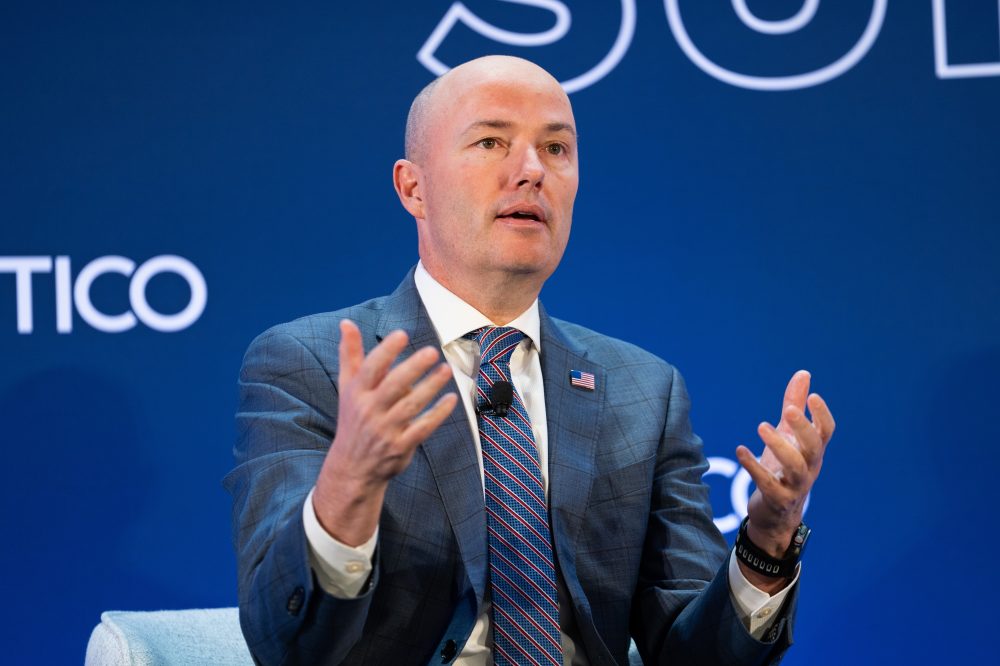
“We are putting a casino in the pocket of every single American, and they are targeting especially young people,” Governor Spencer Cox stated. “It is really awful what they are doing, and we are going to make sure this doesn’t happen in our state.”
Cox has committed to signing the proposed legislation, creating tension between conservative Utah and federal authorities. Kalshi has already filed a lawsuit against the state, with support from the Commodity Futures Trading Commission, the federal body overseeing financial market regulation.
This dispute places Utah, typically not known for confrontational stances, at the center of a nationwide cultural, political, and economic debate. On one side stands a state heavily shaped by Mormon church influence, where both elected officials and religious leaders treat this matter as a moral campaign. Opposing them is an expanding industry — both Kalshi and Polymarket carry estimated valuations of $20 billion following recent funding rounds — with Washington connections that may provide regulatory protection.
Donald Trump’s oldest son serves as an advisor to both companies and has invested in Polymarket. Additionally, Trump’s Truth Social platform is developing its own cryptocurrency-based prediction market called Truth Predict.
The outcome of this legal battle could influence how other states approach similar issues going forward.
“What’s at stake here is whether states will be able to regulate gambling or if gambling is going to be subsumed into finance and ultimately regulated by Congress,” explained Todd Phillips, a Georgia State University professor who has extensively studied prediction market regulation.
Both Polymarket and Kalshi operate by allowing users to purchase and sell contracts based on event probabilities. Contract prices typically range from one cent to 99 cents, roughly corresponding to the percentage of users who believe a particular outcome will occur.
These companies maintain their products help customers manage risk, similar to how farmers purchase corn futures to secure crop prices in advance. Traditional derivative markets like the Chicago Board of Trade and Chicago Mercantile Exchange have long provided binary options to investors, essentially betting on whether events will or will not happen.
However, unlike established derivative markets, most of Kalshi’s trading activity and approximately half of Polymarket’s now involves sports betting. Kalshi reported more than $1 billion in trading volume for the Super Bowl alone.
Utah’s strategy focuses on limiting prediction markets’ state operations by restricting proposition betting in sports, a potentially significant revenue source for these platforms.
The legislation Cox plans to approve would extend the state’s gambling prohibition to include wagers on specific in-game events rather than overall game results. Examples of these “prop bets” include individual player performance or teams reaching particular statistical benchmarks like rebounds.
The bill also targets sportsbook companies such as FanDuel and DraftKings that have established their own prediction markets, which analysts suggest could help these companies circumvent state gambling restrictions.
Due to vocal opposition from Utah officials, Kalshi filed a preemptive lawsuit in late February, requesting judicial intervention to prevent Utah from enforcing gambling restrictions on their platform. A federal judge has not yet ruled on Kalshi’s petition. Other judges in Nevada and Massachusetts have issued preliminary rulings supporting states seeking to ban Kalshi and Polymarket sports betting, while judges in New Jersey and Tennessee have ruled in Kalshi’s favor.
Kalshi maintains its product differs from sportsbooks or casinos because customers bet against each other rather than against the “house,” according to spokesperson Elisabeth Diana.
The Commodity Futures Trading Commission under Trump has supported Kalshi’s position, claiming exclusive regulatory authority over prediction markets. The agency contends states cannot prohibit these products from operating within their borders based solely on moral objections.
“To those who seek to challenge our authority in this space, let me be clear, we will see you in court,” chairman Michael Selig recently declared in a social media video.
This represents the first significant issue where Cox has opposed Trump since the Republican governor rebuilt his relationship with Trump over the past year and a half, after not supporting him in 2016 and 2020.
Patrick Mason, who chairs Mormon history and culture studies at Utah State University, expressed no surprise at Cox and other Utah Republicans taking this position against prediction markets, even when it means opposing their party’s Washington leadership. In Utah, where approximately half of the 3.5 million residents are Latter-day Saints, even church bingo games are uncommon.
“Maybe they play for M&Ms, but never money,” he noted.
All major state politicians, including the governor, lieutenant governor, and entire congressional delegation, belong to the Salt Lake City-headquartered church. When they perceive an issue as moral rather than political, religious teachings often override party loyalty, Mason explained.
Church doctrine forbids all forms of gambling, describing it as driven by “a desire to get something for nothing” and harmful to individuals and families.
“The idea that it goes against a sense of work ethic, a kind of fair exchange, has always been at the heart of the way a lot of people think about themselves in terms of Utah identity, and certainly Latter-day Saint identity and ethics,” Mason said.
Utah’s religious foundation led to gambling prohibition since statehood in 1895. Along with Hawaii, it maintains the nation’s most restrictive gambling laws, even excluding broad multi-state lotteries like Powerball or Mega Millions.
Phillips, the regulation-focused professor, indicated that without Congressional clarification on prediction market legality, courts will determine the outcome.
“The line between gambling and finance is very, very fine,” Phillips observed. “There’s a reason why Congress has, over and over again, stepped in to define and regulate financial markets when the products skew too close to gambling.”
Congressional movement has already begun, partially led by another Utah Republican.
Republican Representative Blake Moore of Utah and Democratic Representative Salud Carbajal of California introduced bipartisan legislation this week for stricter prediction market regulation. The bill would prohibit prediction markets from accepting bets on warfare, assassinations, terrorist attacks, or election results, while allowing states to ban sports-related betting.
“We, as a society, should not be taking bets on whether we are going to invade Cuba,” Moore stated.
Democratic senators have also announced plans to introduce legislation banning violence-related wagers.
“It’s insane this is legal,” Connecticut Senator Chris Murphy wrote on social media.
In court documents, Kalshi has attempted to demonstrate its sports prediction market’s economic value and utility. The company cites an example of insurance companies underwriting college athlete careers using prediction markets for risk hedging. Kalshi also suggests hotels, travel agencies, and stadium management companies might use prediction markets to hedge risks against underperforming sports.
Moore remains unconvinced by Kalshi and Polymarket’s economic arguments.
“Utah’s economic outlook has been strong for many years,” he said. “I see no need why we need to embrace these as an economic tool.”