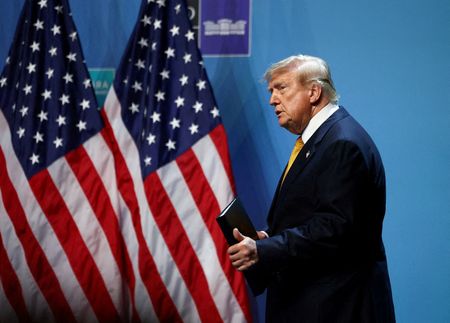

WASHINGTON — As military action against Iran has driven fuel costs sharply higher, President Donald Trump has changed his messaging strategy, now portraying elevated oil prices as beneficial rather than focusing on keeping energy costs affordable for consumers.
This shift in approach occurs while Trump’s administration has yet to present a concrete strategy for reopening the vital Strait of Hormuz, leaving numerous oil and natural gas tankers unable to navigate the crucial waterway.
“The United States is the largest Oil Producer in the World, by far, so when oil prices go up, we make a lot of money,” Trump posted Thursday on his social media platform.
This represents a dramatic change from just one month ago during his State of the Union speech, when Trump celebrated gasoline prices at $2.30 per gallon. That figure has now climbed over 50% to reach a nationwide average of $3.60 per gallon, based on AAA data.
This reversal highlights how Trump’s domestic political calculations now conflict with his international military objectives. The timing creates challenges for his party with November’s midterm elections approaching. While Trump previously credited elevated gas prices with helping him unseat former President Joe Biden, he expressed no concern Saturday about current rising costs potentially affecting voter sentiment or forcing an early end to the conflict.
Financial firm Goldman Sachs warned Thursday that their projections indicate higher oil prices will drive up inflation, slow economic growth, and increase unemployment rates by year’s end.
Oil prices on international markets have fluctuated dramatically in response to Trump’s changing statements and as shipping companies avoid the Strait of Hormuz. Thursday saw global crude oil benchmark prices reach $100 per barrel.
“The swings in Brent crude oil prices over the past several days are eye-catching and odds are volatility will remain because of the absence of a timeline for when the conflict will deescalate and when the Strait of Hormuz, which is effectively closed, will see traffic begin to recover,” analysts at the consultancy Oxford Economics concluded on Wednesday.
Trump has delivered conflicting statements regarding his plans to resolve the shipping crisis. During Monday’s press conference, he assured that the Strait of Hormuz “is going to remain safe” despite being designated a danger zone, asserting that U.S. Navy presence and tanker insurance would maintain security.
However, by Tuesday, he warned on Truth Social that Iran would face “Military consequences” at “a level never seen before” if mines were placed in the strait, later emphasizing that American forces were destroying Iran’s mine-laying vessels.
Wednesday brought another confusing development when Energy Secretary Chris Wright briefly posted that the U.S. Navy had successfully escorted a tanker through the waterway, only to delete the inaccurate statement shortly afterward.
Following initial reluctance to utilize strategic oil reserves, Trump announced Wednesday that America would coordinate with other nations to release oil supplies aimed at reducing prices. The administration later specified it would draw down 172 million barrels. However, experts suggest this coordinated international release will likely stabilize rather than significantly lower oil prices.
“Such a move will slow rather than stop rising oil prices and offer a temporary salve to the searing burn of rising gasoline prices,” said Joe Brusuelas, chief U.S. economist at the consultancy RSM.
The administration also indicated it might suspend Jones Act requirements mandating U.S.-flagged vessels for domestic port-to-port shipping. White House press secretary Karoline Leavitt described this temporary measure as ensuring “vital energy products and agricultural necessities are flowing freely to U.S. ports.”
Energy Secretary Wright appeared on television Thursday to acknowledge the conflict was creating “a significant disruption” in immediate gas prices, while attempting to highlight long-term advantages of neutralizing Iran’s threat to America and Middle Eastern allies.
Despite Trump’s Wednesday assertion that “the straits are in great shape” and his suggestion that oil companies should utilize them, Wright could not specify when the U.S. Navy might begin escorting tankers through the Strait of Hormuz, the bottleneck responsible for current price increases.
“It’ll happen relatively soon, but it can’t happen now,” Wright told CNBC. “We’re simply not ready. All of our military assets right now are focused on destroying Iran’s offensive capabilities.”