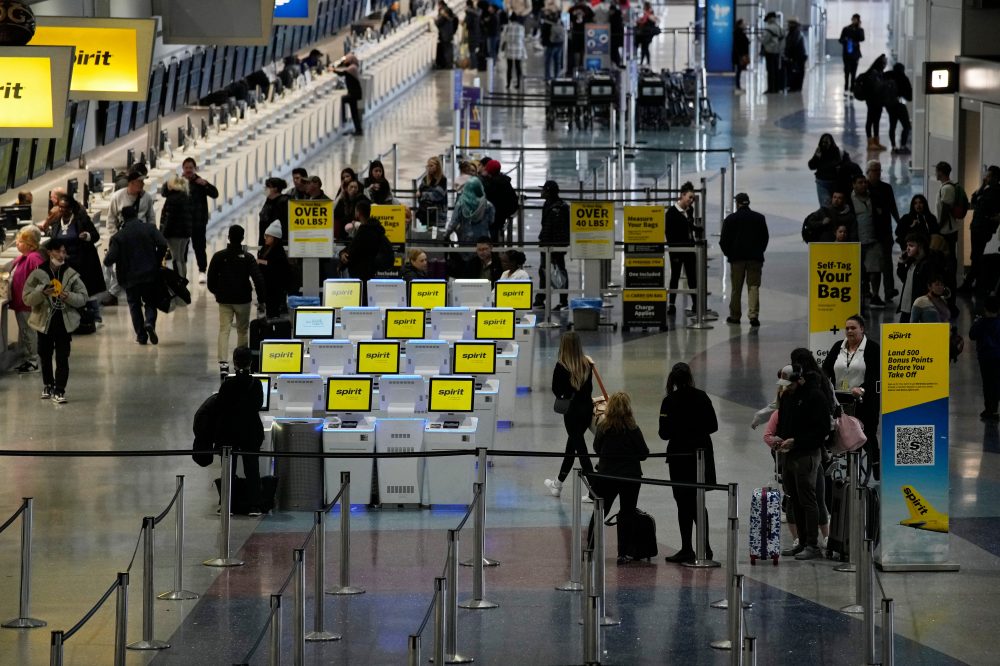

Extended security checkpoint lines stretched into baggage areas and parking structures at several American airports over the weekend, signaling potential widespread travel complications as the current government shutdown continues.
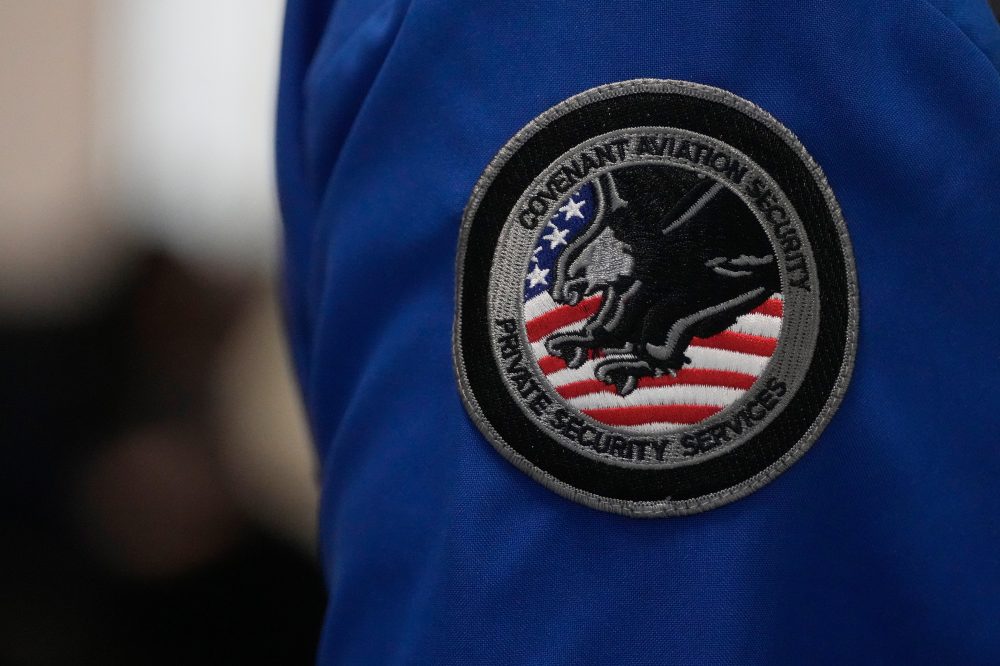
Such disruptions, though not yet common nationwide, rarely affect San Francisco International Airport — the biggest among approximately two dozen U.S. airports utilizing private security contractors through a specialized federal initiative that permits airports to contract out screening duties while maintaining TSA supervision.
Since contractor payments derive from federal contracts, compensation typically continues during government shutdowns.
“The money’s already been allocated, the payments have already been made, and that continues without interruption,” SFO spokesperson Doug Yakel told The Associated Press. “That is a very nice place to be.”
This difference highlights an ongoing aviation industry discussion: Could private contractors working under TSA supervision offer a solution — protecting airport security functions from political standoffs that can interrupt American air travel?
Several aviation professionals view the TSA screening initiative as a possible framework for maintaining security checkpoint operations with minimal disruptions during shutdowns. At SFO, this arrangement helped sustain screening activities throughout last year’s unprecedented 43-day shutdown, according to Yakel.
However, opponents warn that privatization isn’t a complete solution — and might create additional hazards. The labor organization representing federal screeners contends that transferring operations to private firms could undermine employment protections and decrease compensation and benefits for workers already experiencing significant turnover under challenging circumstances.
TSA’s screening partnership initiative permits airports to employ private security firms selected by the federal government to operate checkpoints while TSA maintains procedural authority and supervision. The agency states that private security personnel undergo identical security background investigations and must satisfy the same health standards as potential federal security screeners.
Beyond SFO, other participating facilities include Kansas City International Airport, Atlantic City International Airport and Orlando Sanford International Airport.
The overwhelming majority of America’s approximately 400 commercial airports depend on federal screening personnel employed directly by TSA. During shutdowns, these employees must continue working despite halted paychecks — a situation that has historically resulted in increased absences and slower checkpoint processing as shutdowns extend.
The present partial shutdown impacts only the Department of Homeland Security, which encompasses TSA. Congressional Democrats declined to fund the department due to disagreements with its immigration enforcement methods. This interruption represents the third shutdown in under a year leaving TSA personnel temporarily without compensation — requiring them to await back pay once government operations resume.
These interruptions can spread throughout the travel network, creating cascading issues across already packed flight schedules. The pressure is particularly intense during this period as airlines and airports prepare for what they anticipate will be among the busiest spring break travel seasons recorded.
Aviation security specialist Sheldon Jacobson, whose research helped develop TSA PreCheck, stated the program’s effectiveness at SFO, a major international facility, demonstrates that privatization “is something that needs to be explored.”
SFO ranks within the top 15 busiest American airports by passenger volume. As a significant international travel hub, it stands as California’s second-busiest airport after Los Angeles International Airport.
“It’s operated just as well as any other airport,” Jacobson stated, noting that SFO’s numerous terminals and role as a United Airlines hub prove that even large-scale operations can function effectively under this framework. “If SFO is the litmus test for delivering this privatized product, then many other airports can do it, too.”
Jacobson observed that most airports currently utilizing the program are smaller facilities, but “the scale issue should not be a limiting factor,” and advocated for expanded discussion on how such alternatives could deliver government services efficiently while benefiting travelers.
“Of course TSA would have oversight. It’s not like they’re freewheeling on their own,” he said regarding privately contracted screeners. “We might as well use a government shutdown that affects air travel as an opportunity to begin that discussion.”
The American Federation of Government Employees, representing TSA officers, has consistently opposed privatization.
“We will never advocate for any privatization of any federal employees. We don’t believe that’ll work,” Johnny Jones, secretary-treasurer of the TSA union’s bargaining unit, said in a brief phone call this week.
Through a blog entry on their website, the union contends it could undermine accountability for aviation security — among the reasons Congress decided to federalize airport screening following the September 11 attacks.
The union also cautioned that private companies might face pressure to reduce expenses in ways affecting training, staffing numbers and employee benefits. Depending on contractors, the union states, could generate inconsistencies between airports if various companies manage checkpoints nationwide, potentially complicating supervision of a system designed to uphold uniform national security standards.
“We have to remember the TSA was created in the wake of 9/11 when there were no security standards or very minimal security standards,” said airline industry analyst Henry Harteveldt, president of Atmosphere Research Group. “The TSA came around, they established very stringent airport screening security requirements, which exist to this day.”
Others suggest simpler approaches to address the shutdown issue.
Industry organizations — including the U.S. Travel Association, Airlines for America and the American Association of Airport Executives — are pressing Congress to enact legislation ensuring aviation workers receive payment regardless of the government’s funding situation.
“Every time Washington fails to fund the government, these essential workers pay the price. So do travelers. So does the economy,” Geoff Freeman, U.S. Travel Association’s president, said in a statement. “That is why America’s travel industry has come together, because this workforce is too important, and the stakes are too high, for this to keep happening.”
Republican legislators have advocated in recent years to eliminate the agency completely and substitute its screening responsibilities with private contractors supervised by the federal government.
Last year, two GOP senators introduced the “Abolish TSA Act,” which would gradually eliminate the agency and transfer supervision to a new office responsible for aviation security. Supporters of the unlikely legislation claim privatized screening could operate more efficiently and remain less susceptible to shutdowns.
TSA leadership has indicated willingness for discussion. Speaking at a House Appropriations subcommittee hearing last year, Ha Nguyen McNeill, a senior official performing the duties of TSA administrator, said “nothing is off the table” regarding potential privatization.
“If a new privatization scheme makes sense, then we’re happy to have that discussion to see what we can come up with,” McNeill said. “It’s not an all-or-nothing game.”
At SFO, officials report their screening framework was implemented over two decades ago for reasons unconnected to government shutdowns. However, with shutdowns in recent years becoming longer and more disruptive, the airport states their arrangement has revealed an unexpected advantage: reduced staffing interruptions at checkpoints.
“The benefits, I think, are compelling,” Harteveldt said. “The real issue is making sure that any vendor, any partner to the TSA, upholds the strict standards that TSA has established and works with TSA to ensure that screening remains efficient and finds ways to make it even better.”