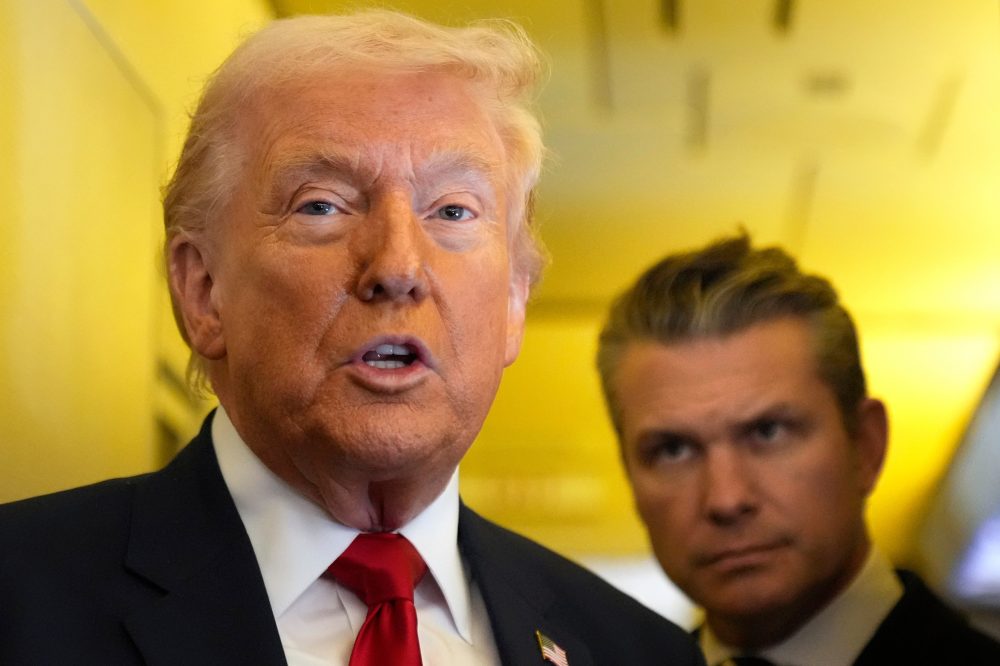

Petroleum costs have skyrocketed since the United States and Israel intensified their conflict with Iran one week ago, yet President Donald Trump dismissed suggestions Saturday to utilize America’s Strategic Petroleum Reserve for price relief.
During questioning aboard Air Force One, reporters asked Trump about potentially accessing the reserve. The expanding Middle Eastern conflict has disrupted regions vital for oil and gas production and transportation, creating global energy market strain. American drivers are already experiencing increased fuel costs, affecting household budgets significantly.
“We’ve got a lot of oil. Our country has a tremendous amount,” Trump said. “There’s a lot of oil out there. That’ll get healed very quickly.”
Republicans face mounting pressure regarding cost-of-living concerns before November’s midterm elections. Accessing the petroleum reserve represents one of the limited unilateral actions presidents can take to influence oil markets.
America’s Strategic Petroleum Reserve consists of underground salt formations across Texas and Louisiana, capable of storing over 700 million barrels, though currently not at capacity. According to Energy Department figures, the reserve contained approximately 415 million barrels at last month’s end, increasing from roughly 395 million barrels during the same period in 2025.
Congress established the reserve following the 1970s Arab oil embargo, providing emergency supply access for the United States. Energy Department records indicate the stockpile reached its maximum over fifteen years ago, holding more than 726.6 million barrels at its peak.
While America now exports more petroleum than it imports, the reserve continues operating and has been accessed for multiple purposes throughout its history, including hurricane impact mitigation, shipping channel disruptions, and deficit reduction funding.
Previous administrations have utilized the reserve during supply interruptions caused by geopolitical tensions, releasing additional supply to markets hoping to reduce prices. President Joe Biden made substantial withdrawals in 2022 after Russia invaded Ukraine, reducing stockpiles to 1980s levels. President George H.W. Bush authorized nearly 34 million barrel withdrawals during the 1991 Gulf War, though only 17 million were actually used. President Barack Obama approved releasing 30 million barrels in 2011 to counter Libyan supply disruptions.
As the Iranian conflict intensifies, petroleum prices have rapidly increased, reaching their highest point since 2023. Brent crude, the international benchmark, surged 8.5% to $92.69 Friday, climbing from nearly $70 per barrel just days earlier. U.S. benchmark crude rose 12.2% to $90.90 per barrel Friday.
The Trump administration implemented one response to rising prices last week: Treasury Department authorization allowing India to purchase Russian crude oil and petroleum products through April 4, describing the sanctions waiver as a “stop-gap measure” to “alleviate pressure” on markets.
When asked about additional measures like accessing the SPR, Trump minimized the necessity of using those supplies, emphasizing America’s “tremendous amount” of oil while criticizing Biden for previous reserve withdrawals.
Trump indicated he would refill the SPR at the “appropriate time, which is basically a gut instinct.”
Multiple variables influence pump prices nationwide.
Average U.S. gasoline prices have already increased, reaching approximately $3.41 per gallon Saturday, up about 43 cents from one week prior, according to AAA motor club data. Since refineries purchase crude oil in advance, extended conflict could intensify price impacts. Even with Strategic Petroleum Reserve withdrawals, refineries might continue operating with costlier supply temporarily.
State averages vary considerably due to factors including regional refinery supply, local fuel specifications, and different tax structures. Saturday’s data showed California averaging nearly $5.08 per gallon, the nation’s highest, while Kansas recorded the lowest at approximately $2.90 per gallon.
Gasoline prices disproportionately affect lower-income households, who typically spend higher percentages of their income on fuel compared to wealthier Americans, making increases particularly burdensome for cost-conscious consumers.
The extraction process involves pumping water into salt caverns, causing the lighter crude oil to rise to the surface where it’s collected and transported through pipelines to refineries.