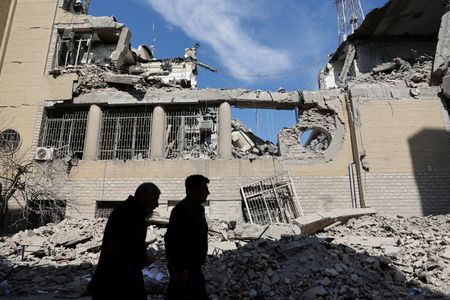

The White House announced Wednesday that President Donald Trump is consulting with his advisory team regarding America’s potential involvement in Iran once current military operations conclude, while U.S. intelligence agencies track reports about potential leadership changes in Tehran.
Press Secretary Karoline Leavitt confirmed that intelligence officials are examining reports indicating Mojtaba Khamenei, whose father served as Iran’s supreme leader before his death, has positioned himself as a leading candidate for succession.
“We’ve seen those reports as well, of course, and this is something that our intelligence agencies in looking at. We The truth is, we’ll have to wait and see,” Leavitt stated during a press briefing.
According to intelligence assessments, Mojtaba Khamenei has spent considerable time cultivating relationships with Iran’s elite Revolutionary Guards while expanding his influence within the country’s religious hierarchy, positioning him as the top contender to follow his deceased father, Ayatollah Ali Khamenei.
Leavitt explained that while Trump continues deliberating with his national security advisors about Washington’s potential future involvement in Iran, the administration’s immediate priority remains ensuring the current military operation’s success.
The press secretary also pushed back against critics who question the U.S. objectives in the joint Israeli-American aerial campaign against Iran, particularly those challenging whether Washington has demonstrated sufficient evidence of direct threats to American interests.
“This decision to launch this operation is based on a cumulative effect of various direct threats that Iran posed to the United States of America,” Leavitt explained.
She further characterized Iran’s government as a destabilizing force, stating: “Again, this is a rogue terrorist regime that has been threatening the United States, our allies and our people for 47 years and the American people are smart enough to know that.”
The administration has dismissed claims that Israel influenced America’s decision to engage in the conflict, even as Trump’s team has provided inconsistent explanations and faced pushback from both supporters and Democratic lawmakers who characterize the action as an unnecessary “war of choice.”
Public opinion polling conducted by Reuters and Ipsos this week revealed limited American support for the military action, with just 25% of respondents backing U.S. strikes against Iran that have contributed to regional instability. Approximately half of those surveyed, including 25% of Republican voters, expressed concern that Trump demonstrates excessive readiness to deploy military force.