
WASHINGTON — Tensions boiled over in the Senate Wednesday as both Republican and Democratic leaders expressed mounting anger over the ongoing Department of Homeland Security funding crisis, now in its fourth week and causing extensive airport delays across the nation.
The partisan divide has created a legislative stalemate, with Democrats insisting they’ll approve funding for certain DHS operations while refusing to back Immigration and Customs Enforcement and Customs and Border Protection without operational reforms. Republicans firmly rejected key Democratic conditions, leading both sides to block each other’s temporary funding proposals during extended Senate floor discussions.
The shutdown, which started February 14, has created what lawmakers acknowledge is a deep political chasm with no easy resolution in sight.
“We are in a negotiation. However, we are not close,” stated Sen. Brian Schatz, D-Hawaii. “You may think this is some issue that we think we’re going to turn to our political advantage, but I promise you, when we saw Renee Good and Alex Pretti killed, this became an issue that was beyond politics.”
“And there are a lot of us who are not going to provide resources to this agency that is acting in such a ways that makes citizens of the United States so unsafe,” he added.
Republican senators pushed back equally hard against proposed Democratic reforms.
“Let me be clear, we are going to do nothing — nothing — that kneecaps ICE’s ability to enforce our immigrations laws,” declared Sen. Eric Schmitt, R-Mo.
This funding crisis represents the sole remaining piece of the federal budget puzzle, as Congress successfully passed 11 of 12 annual spending measures following last year’s record-breaking government shutdown.
Democratic negotiators are pushing for multiple departmental reforms, including banning ICE operations at sensitive sites such as schools and religious institutions, establishing independent oversight for misconduct allegations, mandating judicial warrants before agents can enter private properties without permission, and requiring officers to display identification while prohibiting face coverings.
Senate Majority Leader John Thune, R-S.D., accused Democrats of avoiding genuine negotiations, noting that the White House submitted its most recent funding proposal nearly two weeks ago without receiving any Democratic response.
“Usually, around here, in order to get a deal, there has to be a negotiation where the two sides sit down together,” Thune explained. “And my understanding is that has been completely rebuffed by the senator from Washington.”
Sen. Patty Murray, the top Democrat on the Senate Appropriations Committee, countered that while she maintains contact with Republican colleagues, these discussions don’t constitute meaningful negotiations without White House participation. She specifically demanded assurance that Stephen Miller, the influential White House deputy chief of staff, wouldn’t sabotage any congressional agreements.
“I am willing to talk to people, but I’m not willing to sit in a room, have coffee, give away a few things and have Stephen Miller override whatever we all agree to,” Murray explained. “We need to know the White House is serious.”
The Department of Homeland Security became a cornerstone of President Donald Trump’s immigration enforcement overhaul, with ICE arrests and detentions rising sharply under his administration. These aggressive enforcement methods have alarmed Democrats and prompted some Republicans to advocate for more targeted strategies.
Earlier bipartisan negotiations had produced a DHS funding agreement that included additional resources for de-escalation training and $20 million for body cameras for immigration agents. However, that compromise collapsed following the Pretti shooting incident in Minneapolis.
“My side was not going to stand down and say, ‘oh well, nothing happened,’” Murray stated.
Murray again proposed funding all DHS operations except ICE and Customs and Border Protection, marking her second such attempt in two weeks, but Republicans rejected the offer.
Meanwhile, Sen. Katie Britt, R-Ala., suggested a two-week funding extension for the entire department to ensure federal workers receive paychecks while negotiations continue, but Democrats blocked this proposal.
The ongoing impasse continues, though the fact that lawmakers are actively communicating may signal modest progress.
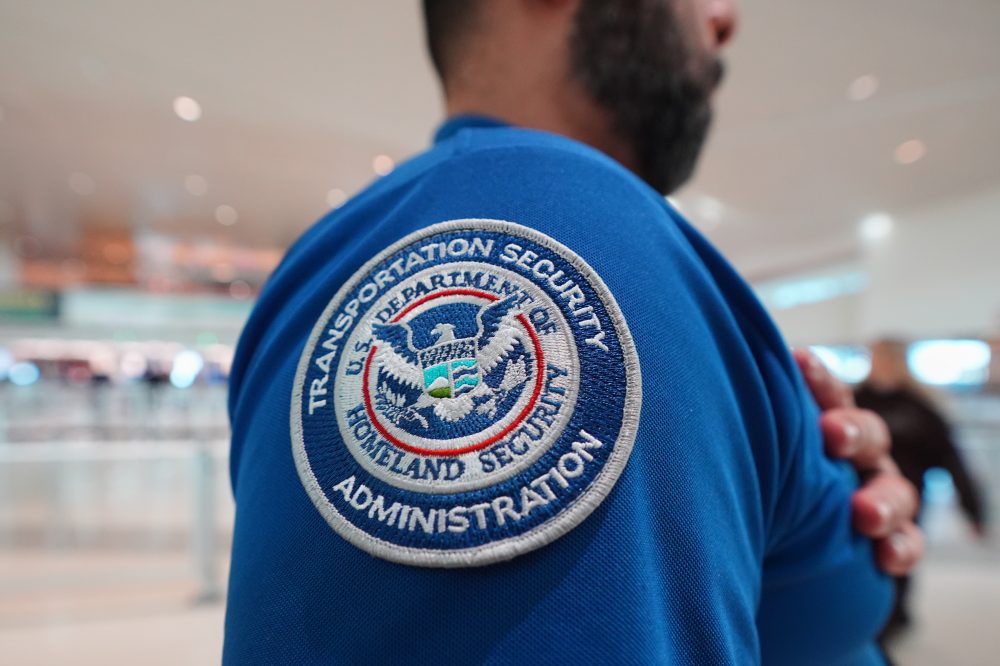
More than 260,000 DHS employees continue working without pay, marking their second unpaid period in recent months after enduring last fall’s 43-day shutdown. The most noticeable impact has been severe staffing shortages among Transportation Security Administration workers at airports nationwide.
Houston’s secondary airport experienced the most severe disruptions, with security lines exceeding three hours throughout Sunday and Monday. Other major airports, including those in New Orleans and Atlanta, also reported wait times surpassing one hour.
The Department of Homeland Security used social media Wednesday to blame Democrats for creating a shutdown that “has led to HOURS long security lines at airports across the country, leading Americans to miss their spring break flights.”
Business organizations are expressing concern about the economic consequences of travel disruptions. The U.S. Chamber of Commerce urged Congress to swiftly pass funding legislation and terminate the departmental shutdown.
“Blocking operational funding and paychecks for those who help us travel safely is wrong and strains the air travel system,” said Neil Bradley, the organization’s executive vice president and chief policy officer.