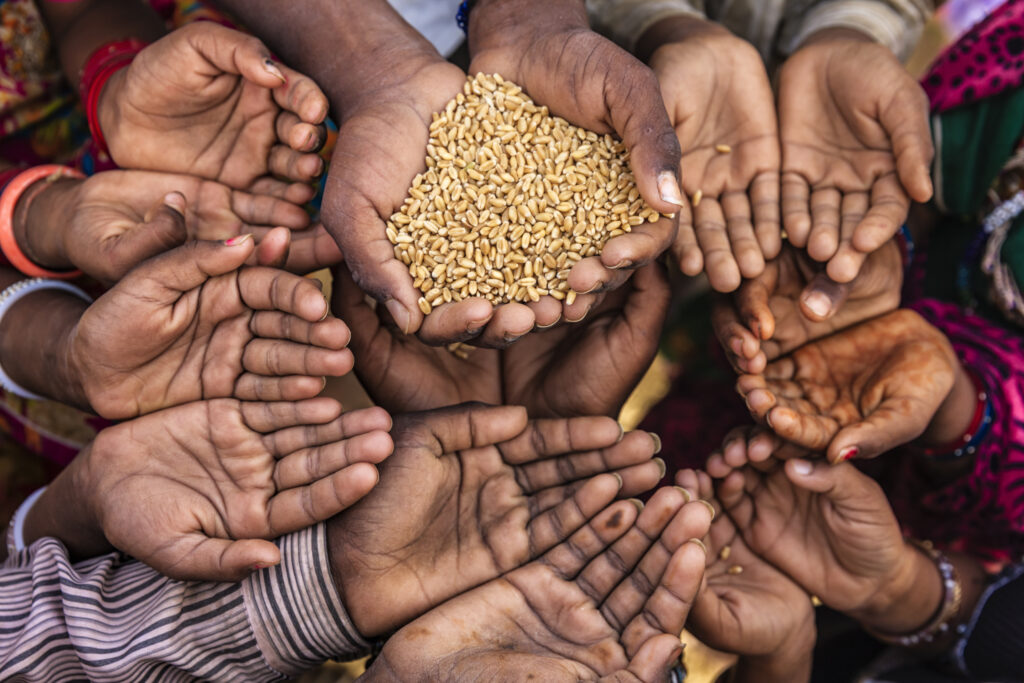

The U.S. Department of Agriculture has announced the first wheat allocation under its newly assumed management of the Food for Peace program, designating 20,000 metric tons (735,000 bushels) for emergency feeding initiatives.
“We appreciate the efforts of Agriculture Secretary Brooke Rollins, Under Secretary for Trade and Foreign Agricultural Affairs Luke Lindberg and their teams for their hard work to bring this first award of wheat under the USDA’s administration of the Food for Peace program,” said Dalton Henry, USW vice president of communications and policy.
The grain allocation will support emergency feeding operations in East Africa through the World Food Program’s distribution network. Delivery is scheduled for later this summer alongside other agricultural commodities such as rice and sorghum.
“This is the first of hopefully many shipments under the USDA’s administration of the Food for Peace program,” said Amanda Hoey, chief executive officer of the Oregon Wheat Commission and chair of the USW Food Aid Working Group. “Through this program, we reaffirm to the world that the United States is more than a seller of grain, but a dedicated partner in feeding millions of hungry people around the world.”
The Food for Peace initiative, formally known as Public Law 480, became law in 1954 under President Dwight D. Eisenhower. Throughout its nearly 70-year history, American-grown wheat has served as a cornerstone commodity for international food assistance, typically comprising half of all bulk in-kind aid and consuming approximately one million metric tons of U.S. wheat each year.
The USDA and U.S. Department of State executed an interagency agreement in December 2025 transferring Food for Peace administration to the agriculture department. The USDA currently manages other international feeding initiatives, including the McGovern-Dole Food for Education program focused on school nutrition and the development-oriented Food for Progress program.
Similar to these existing programs, Food for Peace receives authorization through the Farm Bill and operates under agricultural appropriations subcommittee oversight. Any permanent administrative transfer to USDA would require Congressional approval.
“The USDA’s administration of the Food for Peace program aligns with the agency’s agricultural focus and technical expertise for this flagship program,” Henry said. “We look forward to the continuation of the program’s successful track record of humanitarian assistance, including those who will be future customers for U.S. wheat farmers.”
Beyond the initial commodity awards, U.S. Wheat Associates also praised USDA’s announcement of additional Food for Peace program funding. The Notice of Funding Opportunity will accept applications from feeding programs operating in the Democratic Republic of Congo, El Salvador, Ethiopia, Guatemala, Haiti, Kenya and Rwanda.
“USDA is working to return Food for Peace to its core functions,” said Deputy Under Secretary for Trade and Foreign Agricultural Affairs Michelle Bekkering in the release. “This funding will more responsibly deliver lifesaving food assistance with high-quality American commodities, helping American farmers and producers at home and people in need across the world.”