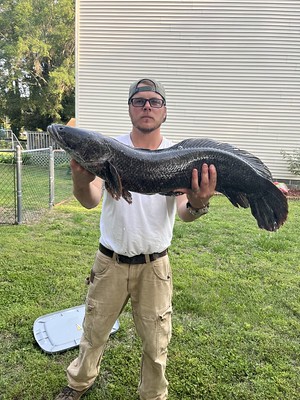

Fishing enthusiasts across Maryland have numerous species to pursue this week as spring conditions continue to improve. Striped bass fishing has commenced for the 2026 season throughout much of the Chesapeake Bay region, while black sea bass season has begun in Ocean City’s offshore waters. Freshwater anglers can still find recently stocked trout in waterways statewide, plus a diverse selection of other species including the invasive Chesapeake Channa, also known as northern snakehead.
Water Conditions Forecast: May 6-12
Monitoring station data shows main Bay surface temperatures and river mouth readings are maintaining levels near 60 degrees. Smaller waterways and tributaries are also registering temperatures in the 60s, though protected coves and sun-exposed areas on clear days will experience faster warming, often reaching the upper 60s.
Most Maryland rivers and streams are experiencing below-normal flow rates. Water clarity should remain typical throughout most Maryland sections of the Bay and its tributaries, except for reduced visibility in tidal portions of the Bush and Gunpowder rivers due to algae blooms. Tidal movements will be stronger than usual on Wednesday and Thursday following the May 1 full moon.
Upper Chesapeake Bay
Anglers working the lower Susquehanna River and Susquehanna Flats are concentrating on white perch and blue catfish. White perch are responding well to small jig heads baited with grass shrimp, small minnows, or bloodworm pieces. These same baits perform effectively on bottom rigs. Blue catfish in the river are taking various cut baits and scented offerings. Largemouth bass are providing catch-and-release action on the flats, with Chesapeake Channa also being caught in weedy areas.
Striped bass restrictions remain in effect above the Abbey Point to Worton Point boundary line until June 1, with catch-and-release only between that line and the Brewerton Channel until the same date.
Waters below the Brewerton Channel are producing solid striped bass fishing within the 19- to 24-inch slot limit. Weekend anglers experienced good success trolling umbrella rigs and tandem-rigged medium bucktails with sassy shads or twister tails. Light tackle enthusiasts are finding success casting paddle tails along shoreline structure and jigging. Love Point rocks remains a favored location this week.
White perch are transitioning to summer habitat near structure including submerged rocks, old piers, docks, bulkheads, and oyster bars around tidal river mouths. Small jigs, spinners, and spin jigs work well when cast to shoreline structure. These fish will soon be found on various underwater humps and ridges in the upper Bay. Grass shrimp and bloodworms remain the top bait choices for bottom rigs.
Large blue catfish are roaming open Bay waters this time of year, typically on flats adjacent to channel edges down to the Bay Bridge area. Despite elevated salinity levels from limited rainfall, large blue cats seem unaffected. Smaller to medium blue catfish are more commonly found in tidal rivers, with the Chester River being among the most productive upper Bay locations.
Middle Bay
Bay Bridge piers continue attracting anglers casting soft plastic jigs near pier foundations. Some fishermen are also drifting small white perch or cut bait toward the pier bases, using required circle hooks while avoiding prohibited eel baits.
Striped bass fishing within slot parameters has anglers trolling umbrella rigs with medium lures or jigging and casting medium baits. Medium bucktails fitted with sassy shads or twister tails are favored trailer choices for umbrella rigs. Jigging with 3/4-ounce soft plastic jigs along channel edges when fish appear suspended off bottom is proving effective. Casting paddle tails near shoreline structure also produces slot-sized striped bass. Popular areas include Poplar Island rocks, Thomas Point Light, and rocks fronting the Naval Academy. The Choptank River remains closed to striped bass targeting.
White perch are appearing in lower sections of tidal rivers and beginning to provide quality fishing at traditional spots. Prominent points, deepwater docks and piers, and shoreline structure offer good targeting opportunities. Shallow shoreline waters fish best during morning and evening hours using small paddle tails, jigs, spin jigs, and spinners. Deeper areas can be worked with grass shrimp or bloodworm pieces on simple bottom rigs.
Blue catfish inhabit all regional tidal rivers, with the Choptank holding the highest concentrations. The Cambridge to Denton area contains large blue catfish populations. High salinity levels from limited rainfall mean the area above Dover Bridge holds many medium-sized blues, while larger specimens tend to be farther downriver.
Lower Bay
Lower Bay striped bass anglers enjoyed their first weekend opportunity to harvest fish within the 19- to 24-inch slot. Many trolled umbrella rigs while others jigged with soft plastic lures or worked shallow lower Bay shorelines. Casting paddle tails and poppers during morning and evening hours proved successful.
The Potomac River won’t open for striped bass fishing until May 16, and Maryland tidal rivers remain closed to striped bass targeting.
Channel edges off Cove Point and from the 76 Buoy south to the 72B and 72A buoys provided good trolling. Jigging along these same channel edges where suspended fish can be located with electronics also worked well. Soft plastic 3/4-ounce jigs in 5- to 6-inch sizes and bright colors are popular choices. Hoopers Island cuts, Tangier Sound sedge banks, and Cedar Point rocks rewarded anglers casting paddle tails, jigs, and poppers this past weekend.
Black drum are being reported in the Tangier Sound area and near the Target Ship at Mud Leads. Anglers are spotting them on fish finders and using soft crab baits, with large red drum expected to follow soon.
White perch are moving into summer habitat in lower sections of tidal rivers and creeks, as well as Bay areas. Casting small jig heads tipped with grass shrimp or bloodworm pieces works well in moderate depths. Evening hours are productive for casting small jigs, spin jigs, and spinners near shoreline structure for light-tackle fun.
May provides excellent blue catfish opportunities as cooler temperatures allow these fish to move freely across various depths near channels. Larger blue catfish are in pre-spawn aggressive feeding mode. Most cut baits and scented offerings prove effective. The Potomac, Patuxent, and Nanticoke all support large blue catfish populations.
Freshwater Fishing
Trout anglers in put-and-take areas continue benefiting from ongoing stockings in central and western regions. As May progresses and temperatures rise, stockings will decrease in central areas and increase in western regions where cooler water persists. March stockings provided over 91,000 trout at more than 100 locations.
Smallmouth bass and walleye have finished spawning and are active in the upper Potomac River and Deep Creek Lake. Very low water flows and clear conditions in the upper Potomac favor long casts with light lines near current breaks and underwater ledges. Emerging grass beds offer exciting topwater action when casting poppers during early morning hours near bed edges. The Monocacy River and Prettyboy and Liberty reservoirs also support smallmouth bass populations.
Largemouth bass have completed or are nearly finished with spawning activities everywhere except western regions. Male largemouth remain at nest sites protecting larvae, while females can be found in waters away from shallow spawning areas.
May offers excellent opportunities for various sunfish species found abundantly in most state waters. These fish often provide first catches for young anglers while offering entertainment for adults using appropriate tackle. Lightweight fly rods with small poppers or ants, or ultra-light spinning gear with small lures can enhance any fishing trip.
Atlantic Ocean and Coastal Bays
Surf anglers are experiencing consistent action with striped bass, black drum, and large bluefish along Assateague and Ocean City beaches. Striped bass typically measure well beyond legal slot limits but provide exciting catch-and-release opportunities. Black drum are medium-sized, while bluefish are large but thin. Striped bass and bluefish are taking cut bait, black drum prefer sand fleas and clams. Dogfish and clearnose skates are unfortunately also present.
At the inlet and Route 50 Bridge area, anglers are catching tautog, flounder, and large catch-and-release striped bass. Tautog are responding to sand fleas, flounder to Gulp baits and squid strips, and striped bass to drifted cut bait. Small striped bass often falling short of the 28-inch minimum are being caught by casting soft plastic jigs near dock and bridge piers, bulkheads, and jetty rocks.
Flounder continue migrating through the inlet into back bay areas, with channels leading from the inlet being prime drifting locations. Striped bass provide excellent catch-and-release fishing at Route 611 and Route 90 bridge piers. Casting paddle tails and soft plastic jigs are the most popular techniques, though most striped bass fall short of the 28-inch minimum.
Offshore and nearshore wreck and reef site anglers are enjoying quality fishing for tautog, black sea bass, and mixed flounder. The 2026 black sea bass regulations for federal waters include a 15-fish daily limit per angler and 12.5-inch size limit. The 2026 black sea bass season runs from May 1 through December 31. Tautog season remains open until May 16, then closes until July 1.