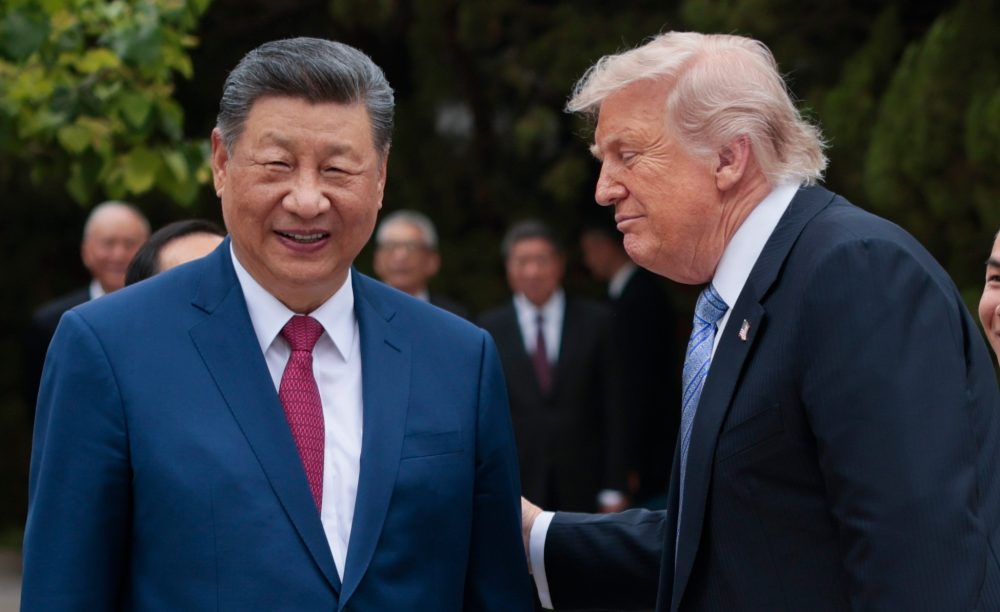

Following President Donald Trump’s recent summit with Chinese President Xi Jinping in Beijing, China has committed to purchasing American agricultural goods at a rate of $17 billion annually beginning in 2026 and continuing through 2028, the White House announced Sunday.
The agreement will reopen Chinese markets to US beef and allow poultry imports from states that the U.S. Department of Agriculture has certified as bird flu-free, according to the White House. These new commitments come in addition to previous soybean purchase agreements from last year.
American farmers who suffered during the trade conflict are finding some relief in these deals, as they had watched a crucial export market for soybeans and other agricultural products disappear. Farmers are also facing additional challenges from Trump administration policies, including the US and Israel’s conflict with Iran that has disrupted shipping through the Strait of Hormuz, limiting global fertilizer supplies and driving up costs.
Beijing has not yet independently verified the agreement details.
On Saturday, China’s Ministry of Commerce stated that both nations would “resolve or make substantial progress toward resolving certain non-tariff barriers and market access issues” concerning agricultural products.
According to a ministry spokesperson, the US will “actively work” to address China’s concerns about detained dairy products, seafood, potted bonsai exports, and recognizing Shandong province as bird-flu-free. Meanwhile, China will “likewise actively work” to resolve US concerns about beef processing facility registration and poultry meat exports from specific states to China.
Both countries also committed to expanding trade, including agricultural goods, through measures like mutual tariff reductions on “a specific range of products,” though the spokesperson did not identify which products would be affected.
Recognizing the connection between food security and national security, China has broadened its agricultural import sources, increasingly relying on Brazil, Argentina and other nations instead of the US.
U.S. Department of Agriculture statistics reveal that China’s purchases of American agricultural products reached $38 billion in 2022 but dropped to $8 billion in 2025. Soybean purchases specifically fell from nearly $18 billion in 2022 to $3 billion in 2025.
The extent of additional Chinese purchases from American soybean producers remains unclear. These farmers faced severe impacts during the trade war, as China, historically the top foreign purchaser of American soybeans, completely halted purchases last year following Trump’s tariff increases on Chinese goods.
This new agreement expands upon an October trade agreement between Trump and Chinese President Xi Jinping, where China agreed to resume US soybean purchases. The White House reported that China committed to buying 12 million metric tons in the current marketing year and 25 million metric tons annually for the following three years.
The White House stated that hundreds of US beef facilities, including operations managed by Tyson and Cargill, will regain export access to China, though the volume of beef sales remains uncertain.
China allowed licenses for hundreds of US beef plants to lapse last year, causing import values to fall below $500 million in 2025, according to USDA data. Chinese purchases of US beef had reached a peak of $2.14 billion in 2022, government statistics show.
US poultry meat and product exports to China totaled $286 million in 2025, declining from over $1 billion in 2022.
During last week’s summit, Trump and Xi explored methods to strengthen economic cooperation, including expanding market access for American companies in China and increasing Chinese investment in US industries, the White House reported. The leaders agreed to establish separate trade and investment boards, though they provided limited details about these proposals or how they would differ from current trade discussions.
The Board of Trade will enable both governments to manage trade in “non-sensitive goods,” while the Board of Investments will create a forum for discussing investment-related matters, according to the White House.
China’s Ministry of Commerce explained that both entities would address each side’s concerns regarding trade and investment. The Board of Trade, the ministry spokesperson noted, would allow discussions about issues like tariff reductions on specific products. “In principle, the two sides agreed to reduce tariff on products of respective concern at equivalent scale,” the spokesperson stated.
When Xi met with US business leaders accompanying Trump on the trip last week, he indicated that China’s opportunities would expand further. Brian Sikes, CEO of agricultural giant Cargill, was among those who traveled to Beijing.
Soybeans, which China uses for livestock feed and biofuels, rank among America’s top agricultural exports. Previously, soybean exports to China represented approximately half of all US agricultural exports to the Asian country.
USDA statistics show the US exported 10.9 million metric tons of soybeans to China as of May 7, positioning China to meet its earlier commitment by the marketing year’s end on August 31. This amount falls significantly below the 25 million to 30 million metric tons China purchased in previous years.
Prior to Trump’s originally scheduled Beijing visit in late March, which was delayed due to the Iran conflict, the American Soybean Association encouraged him to prioritize soybeans in trade discussions with Xi.
Scott Metzger, president of the association, said Thursday the organization hopes to see “additional soybean purchases this marketing year, as well as continued progress toward fulfilling future purchase commitments.”
“Greater certainty and consistency in the marketplace help provide farmers with the confidence they need as they make decisions for the year ahead,” he said.