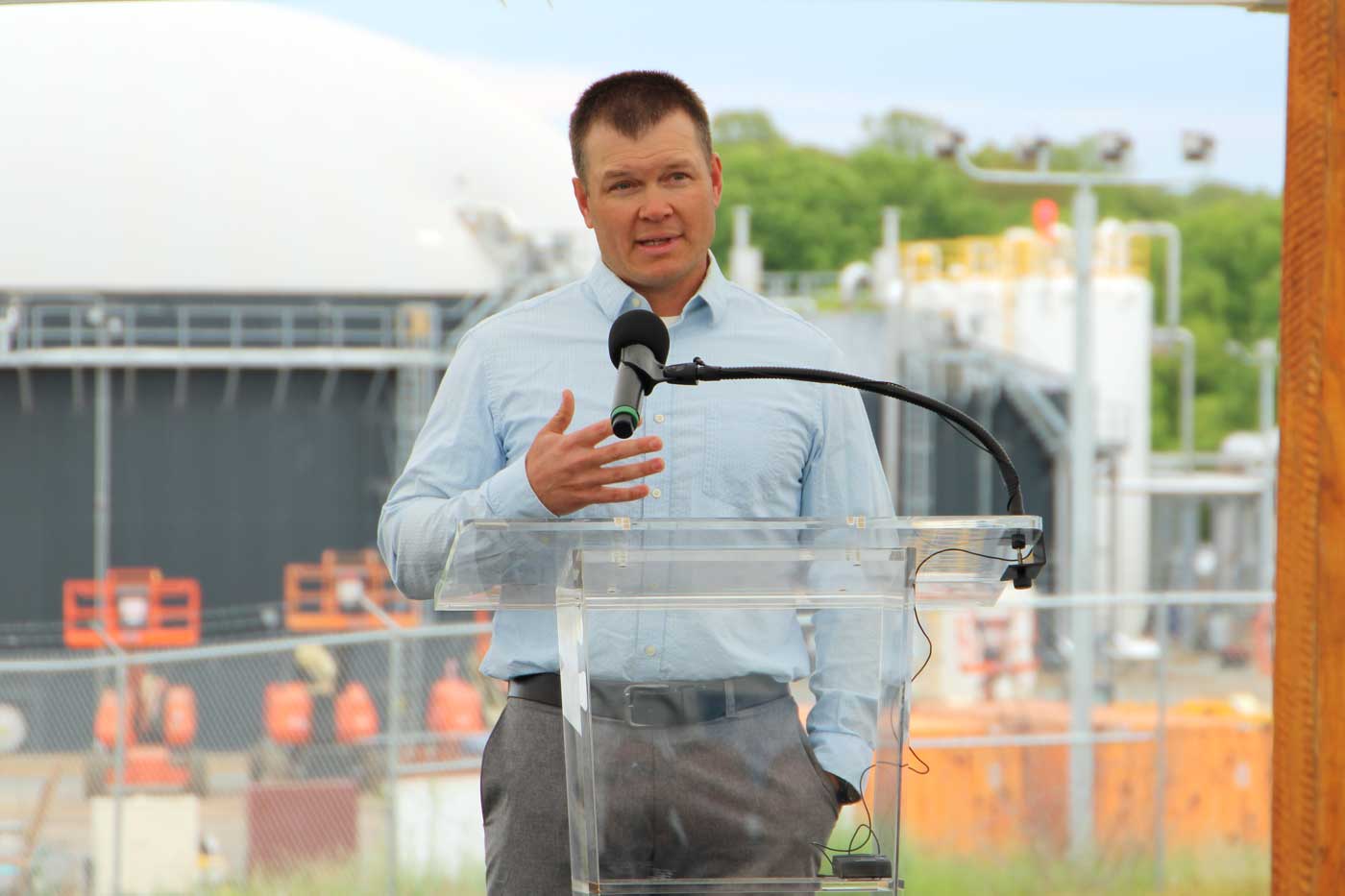

AMELIA COURT HOUSE, Va.—Converting organic waste into renewable energy has moved from concept to reality at a Virginia farming operation.
Massachusetts-based Vanguard Renewables is cutting greenhouse gas emissions on a large scale by keeping organic waste out of landfills, while bolstering domestic energy systems and supporting sustainable farming practices across the United States. The company’s latest project recently began operations at Oakmulgee Dairy Farm in Amelia Court House.
This location, along with two facilities in Wisconsin, processes nearly 1,000 tons of food waste daily across three major U.S. markets, feeding enough energy into the electrical grid to supply industrial operations and tens of thousands of residential customers.
“We’re taking organic waste that would otherwise end up in landfills across the region and leveraging industry-best technology to deliver carbon-negative, high-quality gas to the grid,” said Mike O’Laughlin, CEO of Vanguard Renewables at the April 28 commissioning event.
Oakmulgee represents Virginia’s longest-running continuously operated dairy farm, managed by Larkin Moyer alongside his sons, Jeremy and Brandon. Vanguard Renewables contacted them about the partnership opportunity in 2022.
The agricultural operation provided ideal conditions for the initiative, featuring a robust, well-established dairy business, appropriate size, close access to a gas pipeline, and availability of both farm and food waste materials.
The Moyers benefit from a long-term land lease agreement that generates revenue while promoting more environmentally friendly manure handling practices. The operation also provides the farm with organic fertilizer and bedding materials at no charge, cutting operational costs.
The volume generated will assist “literally thousands of other acres of neighboring farms” with fertilizer requirements, Moyer observed.
Prices for basic fertilizer components have risen substantially due to international conflicts.
“This will help ensure that the sixth generation has the opportunity to also run this farm,” he said. “It can keep family farms in business for their next generations too, plus creating jobs in their communities.”
Organic materials handled by the processing system include fats, oils, greases, food manufacturing waste and unmarketable food items. This waste reaches the facility through agreements with area food processors and distributors, where packaging is removed and later recycled.
The combination of dairy waste and food scraps undergoes processing in a closed, airless system. Generated gas is collected and refined into renewable natural gas, which supplies homes, businesses and major corporations—establishing a complete circular process.
These facilities launched through a partnership with TotalEnergies, combining Vanguard Renewables’ knowledge in organic waste recycling and biomethane creation with TotalEnergies’ worldwide energy development experience. Renewable natural gas from these operations fuels AstraZeneca’s U.S. facilities through one of the nation’s largest corporate purchase agreements.
The complete report will appear in September’s Virginia Farm Bureau News magazine this fall.
Media contacts: Javier Vargas, Vanguard Renewables communications, or Moyer.