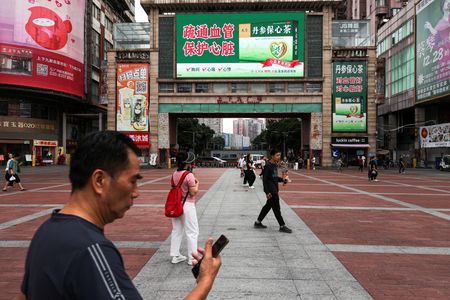

China’s economy is sending mixed signals, with fresh government data revealing a growing divide between a booming manufacturing sector and a struggling consumer base.
Industrial production climbed 4.5% in May compared to the same month last year, an improvement over the 4.1% growth seen in April, according to figures released Tuesday by the National Bureau of Statistics. That result came in ahead of analyst forecasts, which had projected a 4.3% gain.
A worldwide boom in artificial intelligence investment has helped China’s massive manufacturing sector weather the trade disruptions stemming from turmoil in the Middle East. Exports surged 19.4% — but that windfall has not translated into stronger spending at home.
Consumer retail sales, considered a key indicator of domestic demand, dropped 0.6% in May. That reversed a modest 0.2% gain recorded in April and came in below forecasts of flat growth. It marked the first monthly decline in retail sales since December 2022.
The auto industry reflected that weakness clearly. Car sales inside China fell for the eighth month in a row in May, highlighting softening demand in the world’s largest vehicle market. Analysts expect that pressure to continue through the remainder of the year.
Even a five-day national holiday in early May — the Labour Day break — failed to spark a meaningful boost in consumer activity. The effect of a government program encouraging consumers to trade in old goods for new ones has also been fading.
Tuesday’s data underscores what economists describe as a two-speed economy: exports are performing exceptionally well, while domestic demand continues to weaken against the backdrop of a prolonged slump in the property market.
Inflation figures also reflect this imbalance. The gap between rising factory-gate prices — which hit their highest point since July 2022 — and nearly stagnant consumer prices suggests that production is outpacing what households are actually buying.
Investment figures came in well below expectations. Fixed-asset investment dropped 4.1% during the first five months of 2025, a steeper decline than the 1.6% fall recorded through April. Economists had anticipated only a 2% decrease.
Real estate investment continued to slide as well, falling 16.2% in the January-through-May period compared to the same stretch last year. That follows a 13.7% drop in the first four months of the year. New home prices also declined at a slightly faster pace in May on a month-over-month basis.
Data on household borrowing released last week suggested that many Chinese consumers remain reluctant to take out loans to purchase homes, amid slow income growth and concerns about job stability.
The national unemployment rate dipped slightly to 5.1% in May, down from 5.2% in April, though worker anxiety persists — partly driven by fears that artificial intelligence could displace jobs.