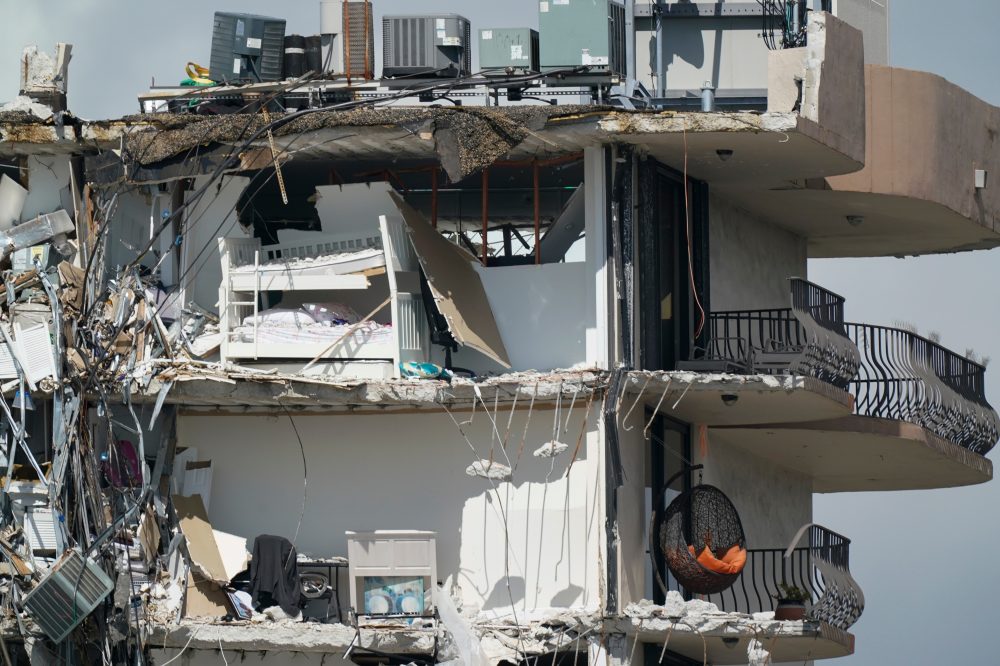

MIAMI — Federal investigators have concluded that the catastrophic failure of a Florida beachfront condominium did not happen all at once — it was a slow-motion disaster that began unfolding weeks before the building crumbled into rubble in the middle of the night, claiming 98 lives in 2021.
The National Institute of Standards and Technology released its final report Monday, revealing that two connections between garage columns and the pool deck began giving way around early June. The building’s design failed to meet required codes, and changes made to the structure during its 40-year lifespan left other parts of the pool deck too weak to handle the added stress — setting the stage for the gradual collapse that followed.
“When building structures are designed and built to required codes and standards, they have margins against failure, meaning they should be able to support much more load than they are expected to bear,” said Judith Mitrani-Reiser, who co-led the investigation. “In the case of Champlain Towers South, these margins against failure were too narrow from the start.”
The findings add detail to a picture that has been emerging since the collapse — one that reveals weeks of warning signs and long-standing structural problems within the building.
Most of the residents inside were asleep when the Surfside, Florida building — located a few miles north of Miami — came down at 1:22 a.m. on June 24, 2021. A Miami judge later approved a settlement exceeding $1 billion to address personal injury and wrongful death claims tied to the disaster.
Harley Tropin, the attorney who represented victims’ families and survivors in a class-action lawsuit, declined to offer any comment on the newly released report.
Investigators found that the building did not conform to the building codes that were in effect at the time it was constructed, and the actual construction deviated from the original design. Later modifications around the pool area — including the addition of heavy planters, sand, and pavers — “further diminished the margins against failure, as did long-term degradation from corrosion,” according to the report.
Photographs taken by people at the building in the weeks leading up to the collapse captured a lengthy crack in a planter wall on the pool deck, along with additional cracks at the corner where the planter wall and a planter box met, the NIST report states.
One witness told investigators that about three weeks before the collapse, part of a gate near the planter wall had shifted slightly downward, causing it to jam — another early sign of structural distress.
The original firms responsible for designing and constructing the building in the late 1970s are no longer in business.
Following the disaster, Florida state lawmakers passed a law in 2022 requiring condominium associations to maintain adequate financial reserves for major repairs. Many residents were blindsided by large fees needed to cover years of neglected maintenance in order to comply with the new law. A subsequent law was then passed giving condo associations and residents greater flexibility in managing those costs.