Los Angeles Dodgers superstar Shohei Ohtani is not expected to take the mound when the MLB All-Star Game kicks off July 14 in Philadelphia, thanks to a recent adjustment to his pitching schedule.
The four-time MVP has generally been taking the mound every Wednesday this season, but that routine was shifted this week. Ohtani instead started Friday’s contest against the San Diego Padres, giving him additional rest during a stretch of 13 consecutive games.
If he remains on his regular week of rest and makes his next start the following Friday, he would arrive at the All-Star break with only three days of rest — making his use as a pitcher highly unlikely.
Dodgers manager Dave Roberts, who will be leading the National League squad at the All-Star Game, addressed the situation Friday. “I haven’t formally said it, but if you just kind of do the math, it would be hard to imagine,” he said. “But I don’t have to make that decision quite yet.”
Despite barely falling short of the innings threshold that would have made him fully ineligible, Ohtani, 31, ranked second in all of Major League Baseball in ERA heading into Friday at 1.58. Only Brewers pitcher Jacob Misiorowski holds a better mark at 1.47, though Misiorowski is also unavailable to pitch at the All-Star Game since he is scheduled to start two days before it.
That opens the door for Phillies ace Cristopher Sanchez, who carries a 10-3 record and a 2.00 ERA, to start the game in his home ballpark as the likely NL representative.
Even without a pitching role, Ohtani will still be a major presence at the All-Star Game. He led all players in the first round of fan voting and is slated to serve as the NL’s starting designated hitter. At the plate this season, he has posted a .291 batting average with 18 home runs and 50 RBIs across 80 games.
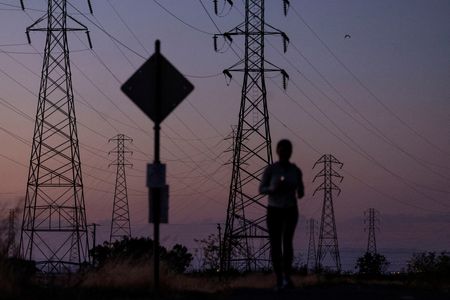
The National Weather Service office in Mount Holly, New Jersey has issued an Extreme Heat Warning effective from 10:53 PM on July 3rd through 8:00 PM on the evening of July 4th.
The warning covers the region during what is typically one of the busiest outdoor holidays of the year. Residents planning to attend Fourth of July celebrations, cookouts, or fireworks events should be aware of the dangerous heat conditions expected throughout the day.
Health officials generally advise that during extreme heat events, people should drink plenty of water, wear lightweight and light-colored clothing, and limit strenuous outdoor activity — especially during the hottest parts of the afternoon. Those without air conditioning are encouraged to seek out cooling centers.
Extra attention should be given to elderly residents, young children, and pets, who are particularly vulnerable to heat-related illness. Never leave children or animals in parked vehicles.
Residents should monitor updated forecasts from the National Weather Service as the holiday approaches.
An Extreme Heat Warning has been issued by the National Weather Service out of Mount Holly, New Jersey, covering the area through much of the Fourth of July holiday.
The warning took effect late Thursday night at 10:53 PM EDT on July 3rd and is set to expire at 8:00 PM EDT on Friday, July 4th.
Residents are encouraged to stay hydrated, limit time outdoors during peak heat hours, and check on elderly neighbors, young children, and pets during the dangerous heat event. If you do not have air conditioning, consider visiting a cooling center in your area.
Officials typically remind the public that extreme heat is one of the leading weather-related causes of death in the United States. Taking simple precautions can be life-saving during conditions like these.
LOS ANGELES (AP) — Shohei Ohtani’s chances of taking the mound at this year’s All-Star Game on July 14 appear slim, following a schedule change made by the Los Angeles Dodgers to protect his arm.
Ohtani, who excels both as a pitcher and a hitter, had been making his starts primarily on Wednesdays. However, the Dodgers pushed his outing back to Friday this week as part of an effort to manage his workload during a demanding stretch of 13 games in 13 days.
When asked whether that change effectively ruled out an All-Star pitching appearance, manager Dave Roberts offered a candid assessment on Friday: “I haven’t formally said it, but if you just kind of do the math, it would be hard to imagine. But I don’t have to make that decision quite yet.”
Roberts is set to lead the National League squad at the All-Star Game in Philadelphia.
Ohtani is already locked into the starting lineup as the designated hitter. He topped all vote-getters in the first round of fan balloting, drawing 3,341,257 votes overall.
While the right-hander is also a strong contender for a spot on the NL pitching staff, Philadelphia left-hander Cristopher Sánchez appears to be the most likely starting pitcher given the home-field setting. Milwaukee’s Jacob Misiorowski leads all of baseball with a 1.45 ERA, but his turn in the Brewers’ rotation falls two days before the All-Star Game, which would leave him unavailable for the contest.
Heading into Friday night’s start against San Diego, Ohtani ranked second in the majors with a 1.58 ERA.
After Friday’s outing, Ohtani is slated for one more regular-season start before the break — on July 10 at home against Arizona. That would leave his arm with just three days of rest before the All-Star Game, a timeline the Dodgers appear unwilling to risk.
Roberts also acknowledged that Ohtani hasn’t been at his sharpest lately. “Shohei hasn’t had his best stuff recently and that’s the truth,” the manager said. “The fastball command hasn’t been what it was earlier in the season, the sweeper hasn’t been the same.”
Ohtani has been dealing with soreness in his left knee as well as a blister on the middle finger of his pitching hand. Still, Roberts offered some encouragement before Friday’s game: “He feels good, the body feels good. The knee feels as good as it’s felt in quite some time, so that’s encouraging.”
Cincinnati Reds pitcher Hunter Greene is ready to return to the mound, with the right-hander scheduled to make his first appearance of the season Saturday evening against the Baltimore Orioles.
Greene has been on the shelf since March, when he underwent a procedure to remove bone chips from his throwing elbow. The recovery kept him out of action for several months before he began working his way back through the minor leagues.
During his rehabilitation, Greene made three starts across two minor league levels, covering 14 1/3 innings without allowing a single run. He struck out 13 batters, gave up just five hits, and issued only two walks during that stretch.
His most recent outing came Sunday for Triple-A Louisville, where he tossed 6 1/3 shutout innings, surrendering just one hit while striking out four and walking nobody. He threw 82 pitches in that start.
Reds skipper Terry Francona indicated the team has no plans to hold Greene back when he takes the hill Saturday. “I think he’s strong enough (and) stretched out enough, healthy enough, where we’re going to get him back, not just in name only, but in production also,” Francona said.
Greene, 26, was selected second overall by Cincinnati in the 2017 draft. Over four major league seasons, he has shown glimpses of elite talent, compiling a 25-29 record with a 3.65 ERA across 91 career starts, while racking up 617 strikeouts in 495 2/3 innings pitched.
Last season, Greene went 7-4 with a 2.76 ERA in 19 starts, though he was slowed by groin injuries. The year before that, he posted a 9-5 record with a 2.75 ERA over 26 starts and earned a spot in the National League All-Star Game.
The Reds are hoping Greene can remain healthy and team up with fellow right-hander Chase Burns to form a formidable one-two punch at the top of their rotation. Burns, the No. 2 overall pick in the 2024 draft, has been one of the best pitchers in the National League this year, going 10-1 with a 2.40 ERA in 17 starts. The 23-year-old has struck out 116 batters in 97 2/3 innings.
Seattle Mariners All-Star center fielder Julio Rodriguez is heading to the injured list after taking a throw directly to the back of his helmet during Thursday’s game, the team announced Friday.
Rodriguez, 25, was struck by a throw from Nolan Schanuel during the first inning of Seattle’s 1-0 home victory over the Los Angeles Angels. Despite the blow, Rodriguez remained in the game and even advanced to third base on the play. Manager Dan Wilson and head athletic trainer Kyle Torgerson came out to check on him, and Rodriguez continued playing center field through the top of the second inning before eventually making his way to the clubhouse. He was removed from the game in the third inning.
On Friday, the Mariners officially placed Rodriguez on the seven-day concussion injured list. As part of the corresponding roster moves, Seattle called up utility player Miles Mastrobuoni from Triple-A Tacoma and shifted right-handed pitcher Cooper Criswell, who is dealing with a right shoulder strain, to the 60-day injured list.
Rodriguez, a three-time All-Star selected in 2022, 2023, and 2025, is batting .259 this season with 14 home runs and 40 RBIs across 87 games. The 2022 American League Rookie of the Year has put together a career batting average of .272, with 126 home runs and 381 RBIs over 677 games.
Mastrobuoni, 30, has appeared in eight games with Seattle this season, going 5-for-23 at the plate with one RBI for a .217 average. Over 202 games spread across parts of five seasons with the Tampa Bay Rays, Chicago Cubs, and Mariners, he holds a career batting average of .230 with two home runs and 22 RBIs.
Argentina’s path to the World Cup Round of 16 was anything but smooth Friday evening in Miami, as the reigning world champions required an extra-time own goal to outlast a gutsy Cape Verde squad 3-2 in front of 64,478 fans at a steamy Miami Stadium.
Cape Verde, competing in their very first World Cup, made history just by reaching the Round of 32 — and nearly made more of it by pushing the three-time world champions to the absolute limit. The African nation came back from a goal down not once, but twice, stunning the overwhelming majority of the packed crowd into silence.
The decisive moment came six minutes into the second period of extra time, when Lionel Messi whipped a corner kick into the box. Cristian Romero rose to meet it and headed the ball home off the arm of Cape Verde’s Diney Borges, sending Argentina through to face Egypt in Atlanta on Tuesday.
Messi had opened the scoring in the 29th minute — his seventh goal of the tournament — when Lisandro Martinez lifted a long ball over the Cape Verde defense and into the feet of the 39-year-old star. Messi controlled it with the outside of his left boot and finished it into the roof of the net for his 20th career World Cup goal across six tournaments.
Cape Verde refused to fold. Deroy Duarte drew the sides level just before the hour mark, finishing off a pass from captain Ryan Mendes with a composed strike — controlling with his left foot and drilling past the goalkeeper with his right.
Argentina appeared to have settled it early in the first period of extra time when Lisandro Martinez unleashed a stunning shot into the top of the net to make it 2-1. But Cape Verde left back Sidny Lopes Cabral answered with a curling effort into the top corner to level things at 2-2 and keep his nation’s dream alive.
Even after the decisive own goal, Lopes Cabral had a chance to equalize again from a free kick, but Argentina goalkeeper Emiliano Martinez produced a sharp save to preserve the win in the closing moments.
Argentina coach Lionel Scaloni, who was overseeing his 100th match leading the national team, acknowledged the difficulty of the contest. “The match was incredibly tough. You always have to take the positive, and it’s that this team never gives up,” he said. “I want to congratulate our opponents, today they showed they are a great team. When it is said there are no easy matches in the World Cup, it’s true.”
For much of the game, Cape Verde libero Kevin Pina was arguably the standout player on the field, and Argentina — Messi aside — struggled to break down a disciplined and organized Cape Verde defense. The island nation had frustrated Spain, Uruguay, and Saudi Arabia with draws during the group stage, and they brought that same never-say-die mentality into this match.
Cape Verde coach Bubista was emotional but proud following the defeat. “I’m proud of my team, the work they’ve put in,” he said. “We must take pride in what we’ve done for our country. To be able to play the way we did against the world champions, and to draw level twice, is something incredible.”
Ranked 67th in the world heading into the tournament and the only World Cup debutant to advance past the group stage, Cape Verde returns home having left a lasting impression on the global soccer stage. “More than anything, we must be proud of what we’ve achieved,” Bubista added. “This World Cup has done justice to our efforts. It has shown our character. It’s a shame to lose, but it was incredible.”
Mike Trout is closing in on a comeback from a hamstring injury, and the Los Angeles Angels star is hoping to be back on the field in time for the upcoming All-Star Game in Philadelphia.
Trout has been on the injured list since June 17, when he strained his right hamstring while running the bases in a game against Arizona. On Friday, he went through his regular pregame workout routine before the Angels kicked off a series against the Boston Red Sox, and he expects to take some swings on the field this weekend.
The 34-year-old said he is confident he could return to game action early next week — a timeline his manager Kurt Suzuki did not push back on.
“He looks good,” Suzuki said. “I saw him today when I first came in. He was working out. He was obviously on the road trip, doing his thing. He’s getting really close. Really, really close.”
Trout has not yet been officially named to the All-Star roster for the game at Citizens Bank Park, but the two-time All-Star Game MVP is widely anticipated to earn a spot in the AL starting outfield — what would be his 12th All-Star selection.
The honor carries extra weight this summer. Trout was raised in Millville, New Jersey, just 40 miles outside of Philadelphia, making the home crowd feel like a homecoming of sorts.
The three-time AL MVP last participated in All-Star festivities back in 2019. Injuries prevented him from playing in the game despite being selected from 2021 through 2023, and a knee injury cut his 2024 season short before he was not chosen at all last year.
This season, Trout has largely stayed healthy for the last-place Angels, putting together a team-best .866 OPS along with 17 home runs and 36 RBIs across 74 games.
He indicated last week that he plans to skip the Home Run Derby in an effort to protect his health heading into the second half of the season.
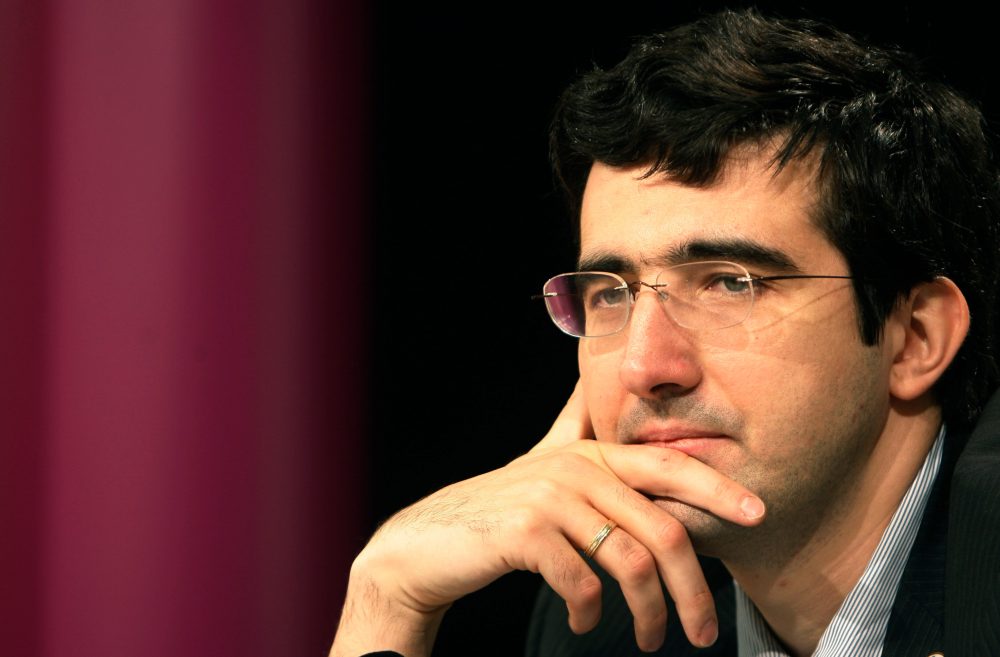
The international governing body for chess handed down a suspension of at least one year to former world champion Vladimir Kramnik on Friday, following his unproven public accusations of cheating against other players — including Daniel Naroditsky, who passed away last year at the age of 29.
Kramnik had targeted Naroditsky with cheating allegations last year and continued to voice those suspicions on social media. Naroditsky, a gifted American grandmaster who played a major role in bringing chess to a wider online audience through educational YouTube videos and livestreams, rejected the claims before his death.
In an email to The Associated Press, Kramnik confirmed he intends to challenge the suspension through an appeal.
“I am absolutely confident that this unlawful verdict will ultimately be overturned, and I intend to pursue all necessary instances to the very end in order to restore justice and, in particular, my reputation,” Kramnik wrote in a social media post.
According to the chess federation, Kramnik publicly made cheating accusations without “adequate evidentiary support,” which it said violated its rules prohibiting cyber bullying.
The federation acknowledged that fighting cheating is among its top priorities, but stressed that any such accusations must go through proper procedures and be backed by solid evidence.
“He exposed identifiable players to unjustified reputational harm and undermined the safeguards established by the disciplinary framework,” federation representatives stated in their ruling.
Naroditsky was discovered dead at his North Carolina home in October. A toxicology report determined he died from an abnormal heartbeat brought on by an accidental overdose.
Before his death, Naroditsky had spoken openly about the impact Kramnik’s accusations had on him. “Ever since the Kramnik stuff, I feel like if I start doing well, people assume the worst of intentions. The issue is just the lingering effect of it,” he said during his final livestream.
Kramnik described Naroditsky’s death as a tragedy, while also claiming that a cynical effort had been made to connect him to Naroditsky’s passing without any factual basis.
WASHINGTON — President Trump on Friday granted pardons to 11 people, among them nine individuals who faced federal charges for tampering with vehicle emissions systems, a former associate of convicted Washington lobbyist Jack Abramoff, and a ranch owner with a post-conviction record the White House described as exemplary.
Earlier in the day, Trump previewed some of the pardons on his Truth Social platform, though he did not name any of the individuals at that time.
“It is my Great Honor to have just signed Pardons for six people who were persecuted by the Biden Administration, and were in, or being sent to, prison, for ‘fixing their car,’” Trump wrote on Truth Social.
“I AM SETTING THEM ALL FREE, RIGHT NOW!” he added.
When the White House released the full list Friday evening, it confirmed pardons for nine people tied to violations of the Clean Air Act — specifically for disabling emissions monitoring equipment on vehicles or selling devices that allow emissions systems to be circumvented.
The pardons follow an action Trump took earlier in the week, signing a memo directing the Environmental Protection Agency to allow Americans to modify their own vehicles as they choose. During that signing, Trump referenced a diesel mechanic he had pardoned the previous year for disabling emissions monitoring systems. The memo also dealt with aftermarket auto parts and would override the authority of the California Air Resources Board to assess parts that impact vehicle emissions.
The White House said Trump had “relieved consumers from these regulatory burdens” through the pardons.
Also among those pardoned Friday was Adam Kidan, who had been a business partner of lobbyist Jack Abramoff. Kidan entered a guilty plea in 2005 on charges of fraud and conspiracy connected to the acquisition of a fleet of gambling boats. He was sentenced the following year to nearly six years behind bars.
That case was part of a sweeping investigation into a lobbying scandal from the early 2000s that touched Abramoff, Capitol Hill, the Interior Department, and officials within President George W. Bush’s administration.
After his release from prison in 2009, Kidan moved into the staffing industry, eventually founding a company called Chartwell Staffing Solutions. He currently serves as president of Empire Workforce Solutions, according to the White House.
Newsday reported in March that Kidan was one of the organizers of a fundraiser held at Trump’s Mar-a-Lago resort on behalf of a Long Island Republican running for Congress.
A request for comment sent to Kidan’s business had not received a response by Friday evening.
Trump also pardoned a ranch owner named Jack Harvard, pointing to his strong record since his conviction and noting that Harvard allows U.S. military and NATO troops to conduct training exercises on his property at no cost. The White House did not provide further details about Harvard’s original conviction.
Friday’s pardons are consistent with a broader trend during Trump’s second term of using the executive power of clemency to benefit political allies, public figures, and others seen as ideologically aligned with his administration.
Argentina escaped with a hard-fought 3-2 victory over Cape Verde in their World Cup last-32 showdown on Friday in Miami, with the decisive moment coming in the 111th minute when an own goal sealed the win for the reigning champions.
Lionel Messi got Argentina on the board first, finishing off a long ball played in behind the defense by Lisandro Martinez to open the scoring.
Cape Verde fought back and drew level in the 59th minute when Deroy Duarte fired a low shot to equalize, pushing the match into extra time.
Martinez then put Argentina back in front at 2-1, heading home from a corner kick during the first half of extra time.
Cape Verde refused to quit, however, as Sidny Cabral produced a stunning curling strike from outside the penalty area in the 103rd minute to level the score once again at 2-2.
The winner finally came in the 111th minute when Cristian Romero met a Messi corner with a header that deflected off Diney Borges and into the net, going down as an own goal and sending Argentina through to the next round.
President Donald Trump signed pardons for 11 people on Friday, according to a White House official. Nine of those pardoned had been convicted of violating the Clean Air Act by altering or disabling the emissions control systems on trucks.
Trump took to his Truth Social platform to highlight six of the men, characterizing their prosecutions — which took place during President Joe Biden’s administration — as punishment for simply “fixing their car.”
The move comes as Trump’s administration has already taken significant steps to roll back environmental regulations. Earlier this year, in February, the administration reversed a scientific determination that greenhouse gas emissions pose a danger to human health, and it also did away with federal emissions standards governing tailpipe pollution from cars and trucks.
Among the others receiving pardons on Friday was Adam Kinan, who serves as vice chairman of the Staffing Advisory Group. Kinan had been sentenced to prison back in 2006 alongside his business partner, Washington lobbyist Jack Abramoff, after both were convicted of wire fraud.
Indiana Fever star Caitlin Clark stepped forward Friday to condemn the rising tide of hostility being directed at players throughout the WNBA, calling out harassment aimed at herself, her teammates, her coaches, and even opposing players.
Clark’s remarks came after nearly a week of fallout following Indiana’s June 24 matchup with the Phoenix Mercury, during which Alyssa Thomas made contact with Clark’s throat. Thomas was later handed a one-game suspension. In the aftermath, Thomas revealed she had been subjected to death threats and racist abuse — a disclosure that sparked a broader conversation about player safety and the state of online behavior surrounding the league.
“The harassment, the hate. None of that is OK,” Clark stated. “That goes for the opposing teams we play, that goes for my teammates, that goes for my coaches.”
Clark acknowledged that scrutiny of on-court performance is a natural part of professional athletics, but she drew a firm line at attacks targeting a player’s character or personal identity.
“There should never be question of character,” Clark said. “That’s truly what I believe, that’s how I was raised. So, none of that is OK and I don’t want anyone to experience that.”
Fever head coach Stephanie White also spoke out against the atmosphere surrounding the situation, pointing to a troubling rise in what she described as “toxicity, racism, homophobia” and other forms of hateful commentary, especially across social media platforms.
Clark also expressed frustration that the incident continued to dominate sports coverage days after the game took place, saying it was doing a disservice to the rest of the league.
“When I turned the TV on Sunday, and that game was on Wednesday and that’s all people were talking about,” Clark said. “I feel like that’s such a disservice to the rest of our league.”
The WNBA has been expanding its player safety efforts in recent seasons, introducing tools designed to track and respond to online threats, along with increased mental health support resources for players.
As for Clark’s playing status, she remains out due to a back injury. She did practice on Friday and expressed optimism about returning soon, though she will not be available when the Fever travel to face the Las Vegas Aces on Sunday. Through 17 games this season, Clark is averaging 21.2 points, 8.2 assists, and 4.0 rebounds per game.
Veteran NBA center Andre Drummond is heading to the New York Knicks, agreeing to a one-year contract worth $3.9 million, according to reports that surfaced Friday.
The 32-year-old Drummond, who will turn 33 next month, is set to take over for Mitchell Robinson, a dependable defender who spent eight years in New York and was a key contributor to the squad that claimed the 2026 NBA Finals title.
Drummond brings considerable experience to the Knicks, having suited up for six different franchises across 14 NBA seasons. He spent the first seven and a half years of his career with the Detroit Pistons before moving on to five other teams throughout the league.
Most recently, Drummond played for the Philadelphia 76ers, where he averaged 6.4 points and 8.4 rebounds over 63 games last season, including 25 starts.
For his career, the two-time All-Star has posted averages of 12.1 points, 11.9 rebounds, and 1.2 blocked shots across 967 games, with 688 starts. His 1,197 career blocked shots place him eighth among currently active NBA players.
Travelers along Elderon Drive at the Loop should be prepared for intermittent lane closures as construction work continues in the area.
According to traffic officials, the lane restrictions are expected to remain in place until 12 p.m. Drivers are encouraged to use caution when passing through the construction zone.
No detour information was immediately available, but motorists are advised to allow extra time for their commute and remain alert for construction crews and equipment in the roadway.
Taylor Swift and NFL tight end Travis Kelce have officially wed, a spokesperson confirmed on Friday, July 3.
Rather than a traditional wedding party, the couple chose to keep things in the family. According to the spokesperson, “Taylor & Travis did not have bridesmaids or groomsmen. Instead, her brother Austin Swift served as Taylor’s Man of Honor and Jason Kelce was Travis’ Best Man.”
The spokesperson also revealed that the couple had a familiar face lead the ceremony, stating, “The ceremony joined both families together and was officiated by friend Adam Sandler.”
The Toronto Maple Leafs wasted no time getting their newest star under contract, signing first overall draft pick Gavin McKenna to a three-year entry-level deal on Friday — just seven days after selecting him at the top of the NHL draft.
The team gave McKenna the highest salary permitted under the league’s collective bargaining agreement. Under the current structure, entry-level contracts max out at $1.025 million in the first year, $1.075 million in the second, and $1.125 million in the third.
According to The Athletic, McKenna is also eligible to earn as much as $1 million in Schedule A bonuses and up to $2.5 million in Schedule B bonuses each season. Those bonuses are tied to on-ice performance goals and individual honors such as All-Star Game selections and postseason award recognition.
The 18-year-old McKenna had been widely viewed as the clear-cut top prospect heading into the draft following a dominant debut season at Penn State. Playing left wing, he racked up 51 points — 15 goals and 36 assists — across just 35 games as a freshman.
McKenna also suited up for Team Canada at the World Junior Championships, contributing 14 points (four goals and 10 assists) in seven games as Canada claimed the bronze medal.
Originally from Whitehorse, Yukon, McKenna joins a short list of players taken first overall by Toronto. The only other Maple Leafs players to hold that distinction are Wendel Clark, selected in 1985, and Auston Matthews, chosen in 2016.
A swimmer was bitten on the foot in what authorities believe was a shark attack Friday at a New York City beach, leading officials to temporarily shut down swimming at the location.
The incident took place at Jones Beach State Park Field 6, where the victim sustained lacerations to their foot. Lifeguards responded right away, and the injured swimmer was transported by ambulance to a nearby hospital. Officials say the injuries were not life-threatening.
The attack at Jones Beach came just one day after multiple shark sightings were reported at other beaches in New York City and on Long Island.
After the bite was reported, swimming was halted so that officials could conduct a search of the water for sharks and other potentially dangerous marine life. After approximately one hour of searching with no sharks found, swimming was permitted to resume — though it was limited to wading no deeper than waist height, according to the New York City Parks Department.
On Thursday, New York City officials reported several shark sightings at Rockaway Beach in Queens, which triggered a series of temporary beach closures. The city’s Emergency Management office issued a public warning about the closures and encouraged beachgoers to follow instructions from lifeguards.
Further east, lifeguards at a Long Island beach spotted a shark Thursday in the waters off Point Lookout and immediately cleared people from the ocean. Both Point Lookout and the neighboring Hempstead beaches were also temporarily closed to swimmers following that sighting.
The surge of beach activity — and the heightened attention to shark sightings — comes as record-breaking heat continues to blanket the eastern United States, pushing large numbers of people toward coastal waters.
Authorities have increasingly turned to drones to scan the water for sharks, which experts say has made sightings more frequent. However, while sharks are a common presence in waters off the U.S. coastline, actual bites remain quite rare.
Gavin Naylor, who leads the shark research program at the Florida Museum of Natural History, told The Associated Press that globally there are between 60 and 80 confirmed unprovoked shark bites each year. He noted that it is extremely unusual for two or more people to be bitten in close proximity to one another.
PORTLAND, Maine — The co-owner of a Maine lumber mill has succumbed to injuries he received during a catastrophic fire and explosion at his family’s facility, pushing the total number of deaths connected to the disaster to three.
Alden J. Robbins passed away Thursday from injuries he sustained in the May 15 fire at Robbins Lumber in Searsmont, according to statements released Friday by Maine Gov. Janet Mills and the Robbins family. The fire sent massive columns of black smoke rising into the sky and required a response from hundreds of firefighters dispatched to a rural area of the state.
Two firefighters had previously died from injuries sustained while battling the blaze — Searsmont Assistant Fire Chief Wayne Woodbury, 76, and Andrew Cross, 27, of the Morrill Volunteer Fire Department. Ten people were injured in total, including Robbins’ daughter Lily.
The Robbins family released a heartfelt statement about their loss. “Alden was the heart of our family in so many ways, and nothing mattered more to him than the people he loved,” the family said. “Throughout his battle, he fought with extraordinary courage and determination, holding on so that his family could have precious time with him. He passed away peacefully, surrounded by those who loved him.”
Investigators are still working to determine the full circumstances of the fire, though authorities have confirmed it was accidental and started at the base of a silo. The Maine State Fire Marshal’s Office reported that a rapid ignition of particulate material triggered an explosion inside the silo, causing it to lift off its concrete base and release large quantities of sawdust and other materials. The silo then fell over, and the surrounding area was quickly consumed by flames.
Gov. Mills described Robbins as a longtime leader in Maine’s lumber industry, calling him “a devoted steward of one of our state’s most storied businesses.” She also expressed her condolences to his family. “My heart is with his family, including his father and former company President James Robbins, Alden’s wife, Amy, and their six children,” Mills said. “I ask Maine people to join me in keeping the Robbins family and all impacted by this tragedy in their hearts and in their prayers during this difficult time.”
Delaware State Police have arrested a 46-year-old Hockessin woman, Neha Gour, following a child abuse investigation tied to a Newark childcare facility.
The investigation was launched in late April 2026 by the Delaware State Police Criminal Investigations Unit after a child abuse allegation surfaced at the Delaware Technical Community College Stanton Childhood Development Center, located at 400 Stanton-Christiana Road in Newark.
The case came to light when a mother brought her young son in for medical care after noticing bruising on his wrist. As detectives reviewed the evidence, they determined that Gour — who was working as a teacher at the facility at the time — picked the 3-year-old up by the neck and placed him in a chair, causing the child to cry and reach for his neck. Investigators further found that Gour then grabbed the child forcefully by the wrist and pulled him to a different part of the classroom. Based on their findings, detectives secured an arrest warrant for Gour.
On June 30, 2026, Gour voluntarily surrendered at Troop 6. She was charged with Child Abuse Third Degree, a felony offense, and was subsequently arraigned in Justice of the Peace Court before being released on her own recognizance.
Russia’s military declared on Friday that its troops have taken control of Kostiantynivka, a city in eastern Ukraine that Moscow has long considered a critical target in its ongoing push through the Donetsk region.
The announcement was delivered by General Valery Gerasimov, the head of Russia’s General Chief of Staff, while President Vladimir Putin was on-site at a command post monitoring Russian military operations in Ukraine.
During a briefing to Putin on the conflict — now entering its fifth year — Gerasimov stated that the southern group of Russian forces was actively working to take full control of the Donetsk region.
“The troops of the group have liberated the city of Kostiantynivka, one of the main defensive hubs of the enemy within the Sloviansk-Kramatorsk-Kostiantnynivka fortified area,” Gerasimov said.
Russia’s Defence Ministry shared footage on the Telegram messaging platform purporting to show scenes from inside the captured city, including images of Russian soldiers raising national flags amid heavily damaged buildings.
For some time, Russia’s military had been reporting that its troops held portions of Kostiantynivka, which is considered part of a network of heavily fortified positions central to Ukraine’s defense of the region.
As of Friday, Ukraine’s military had not issued any statement in response to Russia’s claims.
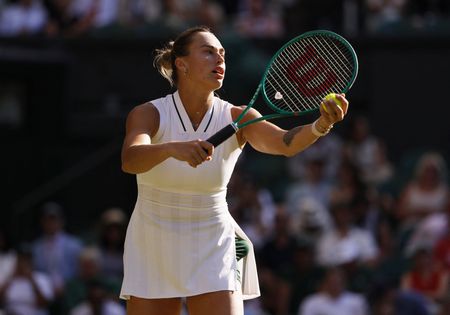
Strawberries and cream is as synonymous with Wimbledon as the grass courts themselves — but apparently, not everyone at the All England Club has given the beloved tradition a taste.
World number one Aryna Sabalenka made a surprising confession to reporters on Friday following her victory that set up a fourth-round matchup against Naomi Osaka: despite years of competing at Wimbledon, she has never once tried the tournament’s signature dish.
“I don’t know if it’s overrated or underestimated, whatever,” Sabalenka said. “I would say I’m not a fan of strawberries with any sort of cream. I just like plain strawberries.”
The admission seemed to catch even Sabalenka herself off guard. After noting how much other people enjoy the treat, she paused and reflected on her own experience.
“Actually, to be honest, it’s actually crazy, I never try it. Can you believe?” she said.
The dessert is a beloved staple of the two-week tournament, with fans expected to consume roughly 2.5 million strawberries paired with 17,363 litres of cream during this year’s Championships.
Sabalenka, who has been a fixture at Wimbledon since 2017, explained that her competitive mindset has kept her away from the sugary indulgence.
“I believe that there is sugar,” the Belarusian said. “Every time I’m playing, I try to stay no sugar. I never try it. Wow, that’s actually crazy. I just realised that. After so many years, I never tried it. How about that?”
The 28-year-old is considered one of the top contenders for the women’s title, but she has promised that win or lose, she will finally settle the question once her campaign wraps up.
“After the tournament, I’ll try and I’ll tell you if it’s overestimated or if it’s underestimated,” she said with a laugh. “We’ll talk about that later.”
For now, Sabalenka remains one of the rare Wimbledon regulars who has yet to weigh in on the Championships’ most celebrated off-court tradition.
Maryland Governor Wes Moore spoke with NPR host Juana Summers about the meaning behind Martyrs Day, which falls on July 5th each year.
The day serves as a time to honor and remember individuals who gave their lives in the pursuit of equality and civil rights — a cause that continues to resonate across the country.
Governor Moore reflected on the importance of recognizing those sacrifices and the legacy they leave behind for future generations.
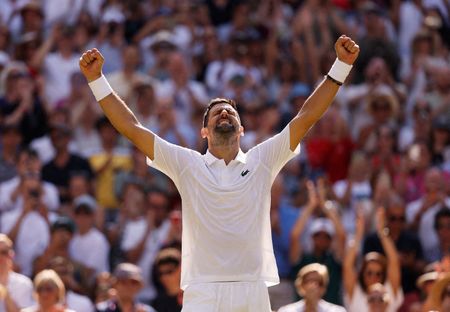
A sun-soaked All England Club was the backdrop Friday for Novak Djokovic adding yet another chapter to his storied Wimbledon legacy, as the 39-year-old Serbian star dispatched Frenchman Arthur Rinderknech 7-5, 6-4, 1-6, 7-6(4) to reach the fourth round for the 18th time — matching Roger Federer’s record for most such appearances at the tournament.
The victory was also Djokovic’s 105th career win on the Wimbledon lawns, pulling him level with Federer on the all-time list. Djokovic is chasing what would be a record-equalling eighth Wimbledon title and an outright record 25th Grand Slam championship overall.
In a lighthearted on-court interview after the match, Djokovic — who celebrated the win with some playful dancing that made his daughter Tara laugh — suggested a creative solution to the tie with Federer. “I propose a match-up between me and Roger for 106,” he joked. “Let’s just stop it here and call Roger to come.”
The match itself was not without drama. Djokovic controlled the first two sets with precise shot-making and the athletic flexibility that has become his trademark, drawing loud cheers from the crowd — including a bow from the Serb after one diving volley winner. However, Rinderknech, the 25th seed who upset Alexander Zverev in last year’s first round, stormed through the third set and came within two points of handing Djokovic his first 6-0 set loss at Wimbledon. Djokovic ultimately needed a clean tiebreak in the fourth set to close things out, with both players ending up on the ground at match point.
Djokovic will next face Russian Roman Safiullin, a win that would give him sole possession of second place on the all-time Wimbledon match-wins list, moving past Federer.
Italian world number one Jannik Sinner, who could potentially meet Djokovic in the semi-finals, has been gradually finding his form on grass. On Friday, he looked sharp in a 6-4, 6-3, 6-4 victory over American Jenson Brooksby. “Trying to move better. Return today was a little bit better. So all things considered, today was a small step forward,” Sinner said. He had survived a first-round scare against Miomir Kecmanovic before settling into the tournament. Sinner’s next opponent is 151st-ranked Shintaro Mochizuki, and he cannot face a seeded player until the semi-finals.
Eighth seed Daniil Medvedev, who might have been a potential quarter-final opponent for Sinner, was eliminated by Germany’s Jan-Lennard Struff 7-6(4), 7-6(5), 7-5.
Canadian Felix Auger-Aliassime quietly continued his tournament run, beating American Michael Zheng 7-6(1), 6-2, 6-1, and will next face Alejandro Davidovich Fokina.
On the women’s side, top seed Aryna Sabalenka moved efficiently into the fourth round with a 6-4, 6-4 victory over Latvia’s Jelena Ostapenko, a former French Open champion known for her aggressive play. “She is really dangerous. Last match I played against her, I couldn’t do anything, she just smashed me off the court,” Sabalenka said. “The plan is to get better every day. A little better level every time I am competing on this beautiful grass.” Sabalenka has yet to drop a set in the tournament.
Her next challenge will be Japan’s Naomi Osaka, who reached the last 16 for the first time after a commanding 6-1, 6-3 victory over Daria Kasatkina. Sabalenka acknowledged the difficulty ahead: “I’m ready to fight and do whatever it takes to get through.”
American Coco Gauff also advanced, though not without some nerves, beating fellow American Claire Liu 6-3, 6-7(5), 6-2 after squandering match points in the second set. Eighteen-year-old American Iva Jovic, one of 15 Americans to reach the third round across the singles draws, continued her impressive run with a 6-3, 3-6, 6-4 win over experienced Russian Ekaterina Alexandrova.
American fourth seed Jessica Pegula also advanced past Spain’s Jessica Bouzas Maneiro, while 11th seed Belinda Bencic needed a deciding-set tiebreak to get past Anna Kalinskaya.
Two 19-year-old men’s players who had generated excitement heading into the tournament saw their runs come to an end. Brazil’s Joao Fonseca, the 24th seed, was beaten convincingly by Safiullin 6-3, 6-3, 6-3, while Spain’s Rafael Jodar fell to Japan’s Shintaro Mochizuki 1-6, 7-6(5), 6-4, 6-4.
Defending 2024 Wimbledon champion Barbora Krejcikova advanced with a 6-3, 7-5 win over Nikola Bartunkova and will face fellow Czech 10th seed Karolina Muchova, who ended the run of Thailand’s Mananchaya Sawangkaew 6-2, 7-6(1).
Indiana Fever guard Caitlin Clark stepped in front of reporters Friday for the first time in several days to address a growing controversy over player safety in the WNBA, making clear that harassment of any kind directed at players or coaches will not be tolerated.
The situation began during a June 24 game when Phoenix Mercury’s Alyssa Thomas — a six-time All-Star — made contact with Clark’s throat. Referees did not flag the play during the game, which left many of Clark’s supporters outraged. The WNBA stepped in the following day, issuing Thomas a one-game suspension for a Flagrant Foul 2.
Fever head coach Stephanie White publicly criticized the officiating crew for failing to catch the foul in real time, arguing that the league was not doing enough to protect what she described as a generational talent.
The controversy took another turn this week when Thomas revealed she had been on the receiving end of online harassment and threats connected to the incident.
Clark addressed the situation directly, saying, “Harassment, hate, none of that is okay. That goes for the opposing teams we play, that goes for my teammates, that goes for my coaches.”
Clark has been widely credited with driving a historic surge of interest in women’s basketball following her record-setting college career. However, that wave of new attention has also left many WNBA players feeling exposed and vulnerable under an increasingly intense spotlight.
The league launched a player safety initiative last year — covering both online and in-person threats — after athletes reported that racist and sexist abuse had become an unwanted side effect of the sport’s growing popularity.
While Clark called for better officiating in the league, she also expressed frustration that the Thomas incident had continued to dominate the sports conversation days after it occurred.
“I turn the TV on Sunday and that game was on Wednesday and that’s all people are still talking about. And I feel like that’s just a real disservice to our league,” Clark said.
She added, “Then for the narrative to be taken other places, it’s just really not acceptable. I think it’s just hard to see.”
The Philadelphia Flyers made a bold move Friday, announcing they have extended a five-year, $90 million offer sheet to Anaheim Ducks center Leo Carlsson — a deal that would make him the highest-paid player in the entire league.
At $18 million in average annual salary, Carlsson’s potential earnings would surpass those of Minnesota Wild forward Kirill Kaprizov, who last September signed an eight-year, $136 million contract extension. Kaprizov’s deal, worth an average of $17 million per season beginning next year, had stood as the richest in league history since the NHL’s salary cap era kicked off in 2005.
Now it’s Anaheim’s move. The Ducks have a seven-day window to decide whether they want to match Philadelphia’s offer and keep Carlsson on their roster. If they pass on matching the deal and allow the 21-year-old to head to Philadelphia, they will receive one first-round draft pick from the Flyers in each of the next four seasons as compensation.
Carlsson, a native of Karlstad, Sweden, was selected second overall in the 2023 NHL Draft and jumped directly into the professional ranks. In 201 regular-season games with the Ducks, he has racked up 61 goals and 80 assists.
Last season alone, Carlsson posted 67 points — including 29 goals and 38 assists — across 70 regular-season games, finishing with a plus-4 rating. He also showed up when it mattered most, contributing four goals and seven assists over 12 games during the 2026 Stanley Cup playoffs.
New government data released Friday shows the Ebola outbreak in the Democratic Republic of Congo has grown to 1,502 confirmed cases, with 473 of those resulting in death.
The affected areas are located in the country’s eastern region, spanning the provinces of Ituri, North Kivu, and South Kivu.
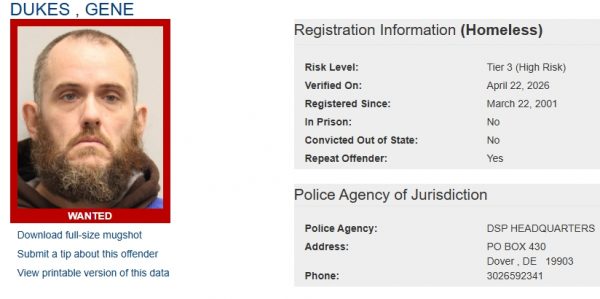
Delaware State Police are asking for the public’s help in locating four registered sex offenders who have failed to comply with state registration requirements, while also notifying residents about a recently homeless sex offender.
The Delaware State Police Sex Offender Apprehension and Registration Unit, known as SOAR, has issued wanted notifications for Gene Dukes, Charles Fulton, Dimitri Sudler, and Spencer Wright. Each of these individuals failed to either register or re-register at their current address as required by law.
Anyone with information about the whereabouts of these individuals is urged to call SOAR directly at (302) 739-5882. Tips can also be submitted anonymously through Delaware Crime Stoppers at (800) 847-3333. The four individuals named represent only a portion of the state’s current wanted sex offenders — the full list is available through the Delaware Sex Offender Registry website.
In a separate notification, SOAR is also informing the public that James McCray has recently been reported as homeless. McCray is not wanted for failing to register, but authorities want to know if anyone has information suggesting he is residing at a fixed address. If you have such information, contact SOAR at (302) 739-5882 or Delaware Crime Stoppers at (800) 847-3333.
McCray also represents only a portion of the currently identified homeless sex offenders in Delaware. The complete list can be found on the Delaware Sex Offender Registry website.
A small casino town sitting on the border between Nevada and California was teetering on the edge of extinction — but now there may be hope for its survival.
Primm, Nevada, once a bustling destination for gamblers and road-trippers, had been slowly dying. The town, which carries the name of a prominent local family, had seen better days, and its future looked increasingly uncertain.
Now, that same family — the one the town was named after — has decided to step in and take on the enormous task of bringing Primm back from the brink. Whether they can breathe new life into the struggling desert community remains to be seen, but their involvement marks a significant turning point for the area.
The challenge ahead is considerable. Reviving a town that has been in decline is no small feat, and observers are watching closely to see whether this family-led effort can reverse Primm’s fortunes and restore it to its former status as a destination worth stopping for.
PHILADELPHIA — The Philadelphia Flyers have made a bold move in the NHL offseason, submitting a five-year, $90 million offer sheet to Anaheim Ducks center Leo Carlsson. The deal would pay Carlsson $18 million annually — the highest per-season salary since the NHL’s salary cap era kicked off in 2005.
The offer sheet was formally tendered on Friday, triggering a seven-day window for the Anaheim Ducks to exercise their right of first refusal under the NHL’s collective bargaining agreement. If the Ducks choose not to match, the Flyers would be required to send four first-round draft picks to Anaheim — one in each of the next four seasons.
This marks the first time Philadelphia has pursued a player through an offer sheet in 14 years. Back then, the Flyers — under different management — extended a 14-year, $110 million offer sheet to Nashville defenseman Shea Weber. The Predators ultimately matched that deal and kept Weber.
Carlsson, 21, put together an impressive 2024-25 regular season, recording 29 goals and 38 assists for 67 points in 70 games. He continued that strong play into the postseason, tallying 11 points across 12 playoff games as Anaheim advanced to the second round.
The Swedish-born center, a native of Karlstad, Sweden, stands 6-foot-3 and weighs 208 pounds. He was selected by Anaheim with the second overall pick in the 2023 NHL Draft. Over his NHL career, Carlsson has accumulated 141 points — 61 goals and 80 assists — in 201 regular-season games.
For context on where this contract fits historically, the Minnesota Wild signed Kirill Kaprizov last September to an eight-year, $136 million extension — the richest deal in NHL history. Kaprizov’s $17 million annual cap hit beginning next season surpasses Carlsson’s proposed salary, as well as Edmonton’s Leon Draisaitl, who signed an eight-year, $112 million deal averaging $14 million per year. Alex Ovechkin’s 13-year, $124 million contract with Washington, signed back in 2008, previously held the record for highest total contract value.
One year after a catastrophic flood devastated communities along the Guadalupe River in central Texas, residents of Kerrville came together to mark the grim anniversary of the disaster.
The occasion was a somber one, as those in the community paused to remember the death and destruction that the floodwaters unleashed on the region.
The Guadalupe River flooding left a lasting mark on Kerrville and surrounding communities, and Thursday’s remembrance reflected the weight of that loss still felt by those who lived through it.
The University of Maryland Eastern Shore bowling program is being celebrated for more than just its performance on the lanes — the team is earning high marks in the classroom as well.
The National Tenpin Coaches Association has recognized the UMES bowling team as having the second-highest team grade point average among all NCAA programs for the 2025-26 academic year.
The honor highlights the dedication of the student-athletes on the Hawks roster, who have balanced the demands of collegiate competition with strong academic performance throughout the school year.
A fight between two groups of young people at a shopping mall in Dearborn, Michigan escalated into gunfire Friday, killing two people and wounding a third, according to police.
The violence broke out at Fairlane Town Center, sending shoppers running in all directions. Dearborn Police Chief Issa Shahin said the chaos even resulted in a person being struck by a vehicle outside the mall while trying to get away.
Shahin made clear this was not a random attack — the two groups had a prior connection, and when they crossed paths inside the mall, a physical fight broke out before weapons were drawn. Both groups were found to have been carrying handguns, he said.
One of the victims died at the scene inside the mall, while the second died at a nearby hospital. Information on the third shooting victim has not been released by authorities.
Several individuals believed to be connected to the altercation were brought in for questioning at the police station, though no arrests had been made as of Friday.
Video that circulated on social media appeared to capture the moment panicked shoppers fled the mall as gunshots rang out.
The entire mall was evacuated following the shooting, and police planned to keep it closed while their investigation continued.
Fairlane Town Center is home to more than 125 stores and restaurants, according to its website.
Dearborn is a community of more than 100,000 residents located roughly 9 miles — or about 15 kilometers — west of Detroit.
Michigan State Police Specialist Lt. Tyhrann Howard confirmed that state police were assisting with the investigation but directed all questions to the Dearborn Police Department. A representative for mall security declined to comment when reached by phone.
Devoted fans and determined celebrity sleuths appeared to have their suspicions confirmed on Friday evening when a long procession of black vehicles arrived at Madison Square Garden in New York City, delivering elegantly dressed guests to what is believed to be one of the most talked-about weddings of the year.
The gathering drew onlookers eager for even a brief glimpse of the festivities surrounding the wedding of Taylor Swift and Travis Kelce, the Kansas City Chiefs player. The couple had announced their engagement back in August 2025.
According to reports, the wedding celebration is expected to stretch well into Saturday morning, making for a late-night event befitting two of the biggest names in entertainment and professional sports.
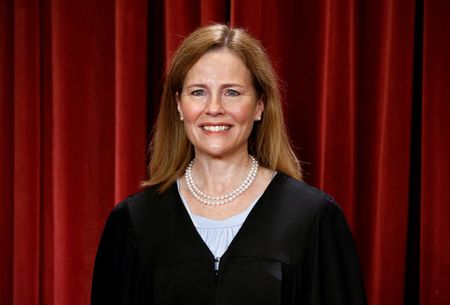
Justice Amy Coney Barrett has cemented her reputation during the U.S. Supreme Court’s most recent term as one of the few members of the court’s 6-3 conservative majority willing to occasionally break ranks — sometimes voting alongside the court’s liberal justices and against the president who put her on the bench, Donald Trump.
Barrett’s 2020 appointment to a lifetime seat on the nation’s highest court during Trump’s first term gave conservatives their current supermajority. She has been a key player as conservative justices have pushed American law sharply to the right this decade, joining decisions that rolled back abortion rights and affirmative action, expanded gun and religious rights, and supported Republican-led redistricting efforts.
But Barrett, 54, became a lightning rod for criticism from Trump and others on the American right this year after voting against some of the president’s biggest priorities. Those included a ruling she authored on Monday that upheld the ability of states to count mail-in ballots that arrive after Election Day, as well as decisions rejecting Trump’s sweeping global tariffs and his executive order limiting birthright citizenship.
Vice President JD Vance weighed in Wednesday on Barrett’s vote in Tuesday’s birthright citizenship ruling, saying, “Do I think she made a mistake in the ruling? I do.”
Conservative commentator Megyn Kelly did not hold back on her SiriusXM show after the mail-in ballot ruling. “Amy Coney Barrett is a turncoat,” Kelly said. “She’s constantly siding with the left.”
Fellow right-wing commentator Matt Walsh called her a “terrible pick” and a “DEI hire” — a reference to diversity, equity and inclusion policies that conservatives strongly oppose.
Mike Davis, a Trump ally who leads the conservative Article III Project, went even further during an appearance on a right-wing political commentator’s show Tuesday. “I think it was the biggest mistake imaginable supporting Amy Coney Barrett,” Davis said. “She is a disaster for the Supreme Court.” He added, “She should resign. She is not up to the job.”
Legal experts, however, push back on the notion that Barrett isn’t a reliably conservative justice. They argue her votes simply reflect the reality that Trump cannot win every case and cannot count on his appointees to back him on every issue — especially during a second term in which he has continued to push the boundaries of presidential authority and reshape the federal government.
“To expect any justice to always vote the way that we wish things were, it’s just complete fantasy, and it misunderstands the entire enterprise,” said Brian Fitzpatrick, a law professor at Vanderbilt University who previously clerked for the late conservative Supreme Court Justice Antonin Scalia.
The court closed out its latest nine-month term with three decisions on Tuesday. Looking at 13 major rulings involving Trump and Republican or conservative interests argued during the term, Barrett sided with those positions 10 times and against them three times.
Among her supportive votes, Barrett backed Trump’s efforts to remove Federal Reserve Governor Lisa Cook and Federal Trade Commission member Rebecca Slaughter. She also sided with Republicans including Vance who challenged campaign finance rules, supported weakening a key Voting Rights Act provision, and backed Trump on ending protections for hundreds of thousands of Haitian and Syrian immigrants and allowing a stricter approach to asylum seekers.
Barrett also voted to uphold state laws in West Virginia and Idaho banning transgender student athletes from competing on female teams at public schools and universities, and to strike down a Colorado law prohibiting psychotherapists from using “conversion” talk therapy aimed at changing an LGBT minor’s sexual orientation or gender identity.
She was also part of the majority in two cases that expanded Second Amendment gun rights — one striking down a Hawaii law that restricted carrying handguns on private property open to the public without the owner’s permission, and another limiting a federal law that bars certain drug users from owning firearms.
The three cases where she broke from Trump and Republican positions were the tariffs ruling, the birthright citizenship decision, and the mail-in ballot case. The mail-in ballot ruling Barrett wrote passed 5-4, with fellow conservative Chief Justice John Roberts and liberal Justices Sonia Sotomayor, Elena Kagan, and Ketanji Brown Jackson joining her.
In her opinion, Barrett wrote that federal law only requires voters to cast their ballot by Election Day. “The election-day statutes say nothing about ballot receipt, and we cannot add to the words Congress chose,” she wrote.
The ruling allows Mississippi to continue counting mail-in ballots postmarked on or before Election Day but received up to five business days after a federal election. Limiting mail-in ballots would generally benefit Republicans, as Democratic voters have historically been more likely to use them.
Trump made three appointments to the Supreme Court during his first term — Neil Gorsuch in 2017, Brett Kavanaugh in 2018, and Barrett two years after that. Trump had previously appointed Barrett to a federal appeals court, and she also served as a law professor at the University of Notre Dame.
Trump selected Barrett, praising her as “one of our nation’s most brilliant and gifted legal minds,” to fill the seat left vacant by the death of liberal Justice Ruth Bader Ginsburg. She was confirmed by a Republican-led Senate over unified Democratic opposition.
At a White House ceremony following her confirmation, Barrett pledged her independence from political influence. “The oath that I have solemnly taken tonight means at its core I will do the job without fear or favor and do it independently of the political branches and of my own preferences,” she said, with Trump standing behind her.
Barrett and Justice Gorsuch joined Roberts and the liberal justices in February to strike down Trump’s tariffs — a signature policy he pursued under a law designed for national emergencies. Trump responded by saying their decision was an “embarrassment to their families.”
On Monday, Trump called the mail-in ballot ruling a “tremendous loss” for his administration.
In the birthright citizenship case, Trump’s directive sought to deny U.S. citizenship to babies born on American soil to certain immigrants. Barrett and the three liberal justices joined a ruling written by Roberts concluding that Trump’s executive order violated the 14th Amendment’s clause granting citizenship to those born in the U.S. who are “subject to the jurisdiction thereof.”
Top White House aide Stephen Miller appeared on Fox News Tuesday and said, “Let’s just call it like it is: Justice Roberts and Justice Barrett decided to cave to the radical left.”
Barrett and Roberts were part of the 6-3 conservative majority in the Slaughter case, which gave Trump one of his biggest wins of the year — expanding presidential power over the federal government and overturning a 1935 precedent that had limited Trump’s ability to remove officials at independent regulatory agencies.
In the Cook case, however, Barrett disagreed with Roberts’ decision to treat the U.S. central bank differently from other federal agencies, writing that the ruling was in “serious tension” with the court’s Slaughter decision.
University of Oklahoma law professor Michael Smith offered a word of caution to American liberals who might be celebrating Barrett’s occasional dissents. “I have been banging the drum, and I will continue: Do not put your hope in Justice Barrett,” Smith said. “She is very much on board with the program of the conservative justices. There is very little reason to hold out hope that she will make much of a difference for liberal goals.”
CARACAS — The number of people killed in Venezuela’s twin earthquakes last week has grown to 2,645, the country’s information ministry announced on Friday.
In addition to the thousands of lives lost, more than 12,000 people sustained injuries and approximately 15,000 others were displaced from their homes as a result of the devastating earthquakes, according to the ministry.
SEATTLE — United States forward Folarin Balogun says the red card he received during Wednesday’s last-32 World Cup victory over Bosnia and Herzegovina was an unfair ruling, but he’s already shifted his attention to doing whatever he can to help the team in Monday’s round-of-16 showdown with Belgium.
Balogun had quite the eventful afternoon against Bosnia, netting his third goal of the tournament to put the U.S. ahead early, only to be ejected in the second half after his foot came down on the ankle of Bosnian defender Tarik Muharemovic.
U.S. head coach Mauricio Pochettino publicly pushed back on the decision, calling the contact accidental. Balogun agreed, saying the situation was simply unavoidable.
The Monaco forward described the aftermath as an emotional whirlwind. He said getting a reaction from NBA legend LeBron James following his goal celebration was “a surreal moment,” but that joy was quickly overshadowed by the realization that he would miss the next match due to suspension.
“It’s been a rollercoaster, there’s been lots of different emotions,” Balogun told reporters ahead of Friday’s training session — a session that kicked off with coach Pochettino taking some baseball pointers before heading out to throw the ceremonial first pitch at the Seattle Mariners’ game later that evening.
“I’ve been sad, I’ve been happy, it’s been surreal to be honest,” Balogun said. “It’s important for me to say, obviously, first and foremost, it was totally unintentional, which I’m sure a lot of people know. I don’t think it was the correct call. I think a yellow card would have been fair.”
Even so, Balogun made clear he intends to be a presence for the squad even without setting foot on the field.
“Just to support the boys, support the team,” he said. “I love seeing how engaged the country is in our journey and what we’re doing. I think my role is just to continue to support everybody, to keep morale high.”
The U.S. players looked loose and energetic throughout the training session, later moving to a nearby ballpark for a casual baseball game. Defender Tim Ream reportedly stood out at the plate during the outing.
HOUSTON — Canadian soccer coach Jesse Marsch is calling on his players to stay sharp and aggressive when they take on Morocco in the World Cup round of 16 this Saturday, warning that the African nation presents virtually no exploitable flaws heading into the Houston showdown.
Marsch described Morocco as a side with a dangerous, free-flowing midfield that thrives on movement and creativity — a combination that could spell trouble for Canada if even one player strays from the game plan.
“This is where we expect to be and this is where we want to be, and we know that Morocco is going to challenge every single thing we do and this is a team that has literally zero weaknesses,” Marsch said on the eve of the match.
“We have to try to be good at the things that we care about and that we are good at, and we have to see if that can hold up against an opponent like this.”
Canada’s run at this World Cup has already etched the team into the nation’s sporting history books, but Marsch made clear his squad has more work to do when they face the 2022 semi-finalists. He also dismissed the idea that revenge would serve as any kind of motivator, despite Morocco handing Canada a 2-1 defeat during the group stage of the 2022 World Cup.
“There’s not a ton of motivation for anyone in our camp to say that we lost last World Cup to Morocco and now we need to right that wrong,” he said.
“This is a different time. They’re a different team. We’re a different team. This is a very different moment and we just want to do everything we can to find a way to get the result.”
Canada has already made history during this tournament by recording their first-ever World Cup point and victory. Marsch acknowledged that Morocco carries themselves with a confident swagger, making the challenge even greater for his side.
One bright spot for Canada is the expected availability of star player Alphonso Davies, who made his first appearance of the tournament as a substitute in the 75th minute during Canada’s round-of-32 win over South Africa. Marsch confirmed Davies would be available for Saturday’s match.
“They know how big a moment this is,” Marsch said. “I expect their best performance of the tournament and it would be foolish to expect anything else.”
Drivers heading along Sutton Place should be prepared for a slowdown as a flagging operation is currently underway in the area.
The traffic control operation affects the stretch between E Sutton Place eastbound and W Sutton Place, where flaggers are directing vehicles through the area.
The flagging operation is expected to remain in place until 5 PM. Motorists are encouraged to allow extra travel time or consider alternate routes if possible.
Maryland Governor Wes Moore recently joined NPR’s Juana Summers for a conversation about the meaning behind July 5th — a day set aside to honor the memory of those who gave their lives fighting for equality and civil rights.
Known as Martyrs’ Day, the July 5th commemoration serves as a reminder of the sacrifices made by individuals throughout history in the ongoing struggle for civil rights and equal treatment.
Governor Moore spoke with Summers about the importance of marking this occasion and keeping the legacy of those martyrs alive in public memory.
Walker School Road is currently closed to traffic in both directions as construction work gets underway in the area.
The closure affects the segment of Walker School Road running between Gum Brush Road and Saw Mill Branch Road. Drivers traveling through that corridor will need to find an alternate route.
The road is expected to remain closed throughout the duration of the construction project, with the reopening scheduled for October 24th, 2026.
Motorists are encouraged to allow extra travel time and plan ahead when driving in the area.
MEXICO CITY — Mexican authorities announced Friday that remains discovered at a location in the eastern state of Veracruz have been confirmed to belong to journalist Roxana Guzman, whose abduction and killing has once again cast a dark shadow over press freedom in Mexico.
Guzman served as director of the crime news outlet Pulso Informativo del Sureste. On June 2, armed and masked men broke down the front door of her home and took her away. Video footage of the incident spread widely across social media platforms.
Reports from local media indicated that after killing Guzman, those responsible attempted to dissolve her body in drums filled with fuel. Investigators later recovered skeletal remains at the location.
The Veracruz state prosecutor’s office released a statement confirming the findings: “Forensic tests concluded the identification process and scientifically confirmed that the remains recovered during the investigation belonged to the journalist.”
In total, eight individuals have been taken into custody in connection with Guzman’s kidnapping and death. Among those arrested are four municipal police officers from Ixhuatlan del Sureste, a small town located roughly 300 kilometers — about 186 miles — south of Veracruz city.
Prosecutors allege that the officers provided material resources, food, and logistical assistance to the criminal group behind the attack.
According to the press freedom organization Article 19, two other journalists have also been killed this year as a direct result of their reporting. The group notes that 10 journalists have lost their lives since President Claudia Sheinbaum assumed office in October 2024, further cementing Mexico’s grim reputation as one of the most perilous nations in the world for members of the press.
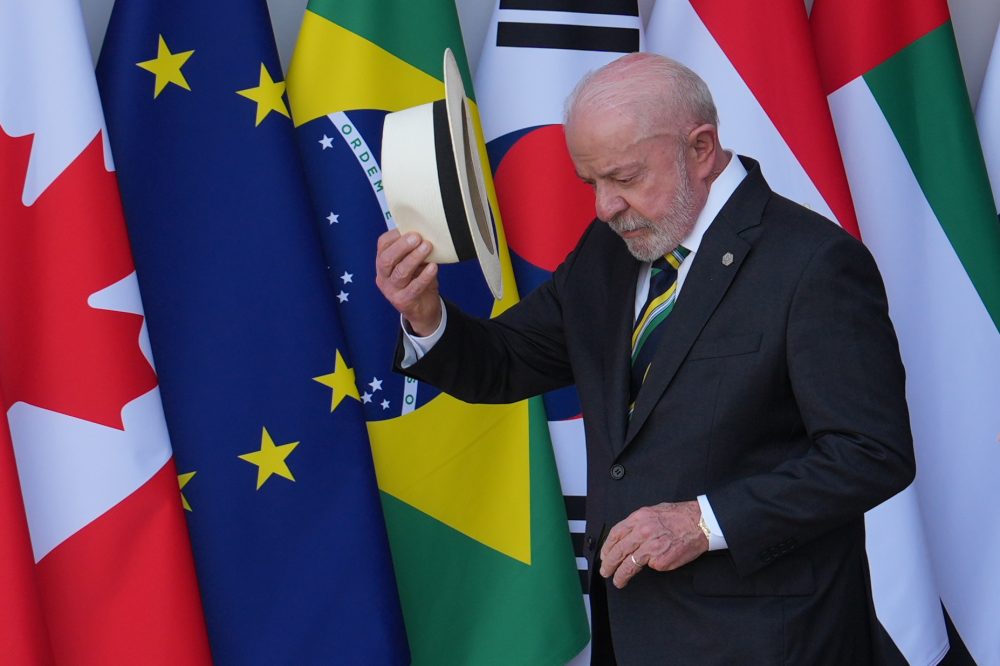
RIO DE JANEIRO — Brazilian President Luiz Inácio Lula da Silva and his chief political rival, Sen. Flávio Bolsonaro, found themselves in a sharp public dispute this week over the Trump administration’s proposal to slap 25% tariffs on Brazilian products — even as both men claim to be working against the measure.
The two leading contenders for October’s presidential election have been trading accusations over who is better positioned to push back against the proposed taxes, signaling that each believes the tariff issue could prove decisive with voters.
Sen. Bolsonaro, the son of former President Jair Bolsonaro, argued that the tariffs actually benefit Lula politically. Meanwhile, Lula’s government pushed back against the U.S. characterization of Brazil’s trade policies as unfair, discriminatory, or harmful to American commerce.
The Trump administration first announced a 50% tariff on Brazilian imports last July, citing what it called a “witch hunt” against Jair Bolsonaro, who was on trial at the time for allegedly attempting to overturn his 2022 election loss to Lula. He was later convicted.
In a letter, U.S. President Donald Trump accused Brazil of engaging in unfair trade practices and directed U.S. Trade Representative Jamieson Greer to launch a formal investigation. That probe resulted in charges against Brazil in June, including allegations of weak anti-corruption enforcement and unfair tariff structures. Notably, the U.S. has maintained a goods trade surplus with Brazil for several years.
Relations between the two countries had appeared to improve after Lula and Trump met last year, but the June tariff proposal reignited tensions. Lula publicly warned Trump against interfering in Brazil’s domestic electoral process.
The tariff threat prompted Lula to once again champion Brazilian sovereignty — a stance that generated a significant and unexpected surge in his popularity last year.
Flávio Bolsonaro addressed the political dimension directly in a formal submission he sent Wednesday to the office of the U.S. Trade Representative. He included polling data showing that Lula’s electoral standing had risen during periods of heightened U.S. tariff pressure.
“Brazilian public polling shows that the incumbent government’s electoral position has strengthened during precisely the periods when U.S. tariff pressure has been most salient,” Bolsonaro wrote, arguing that moving forward with tariffs would give Lula a “political victory.”
Bolsonaro also suggested in the document that the tariffs be postponed rather than dropped entirely, saying the findings of the trade investigation could be “reaffirmed in full even as implementation is suspended.”
Lula wasted no time firing back, calling the submission “yet another act of treason against the fatherland.”
It was also noted that Jair Bolsonaro’s other son, Eduardo, who resides in Texas, was convicted this year for illegally lobbying the U.S. government to pressure Brazilian officials into halting his father’s trial.
“It is unacceptable that the Bolsonaro family, with its sellout policies, seeks to submit Brazil to the interests of the United States,” Lula wrote Thursday on X. “There has never been, nor is there, any justification for a tariff hike now or later.”
Just three hours after Lula’s post, Flávio Bolsonaro responded on X, claiming that Lula is the only person who actually “wants the tariff hike against Brazilian products.” He also announced plans to travel to the U.S. the following week to continue pushing against the additional tariffs.
On the trade investigation itself, Lula’s government rejected several of the U.S. complaints, including the claim that Brazil’s PIX instant payment system unfairly undercuts competing electronic payment services. The government maintained that its policies are lawful, evenhanded, and supportive of market competition.
The two rivals have also clashed over a separate U.S. decision to designate two of Brazil’s major organized crime groups — First Command of the Capital, known as PCC, and Red Command — as terrorist organizations. Sen. Bolsonaro backed the designation, while some analysts viewed it as an attempt by the U.S. to influence Brazil’s election. Lula has argued the label is inappropriate because the groups are motivated by profit, not political ideology.
Earlier this week, the U.S. announced sanctions against companies and individuals connected to PCC, describing the organization as “the largest transnational criminal organization in the Western Hemisphere.”
A federal appeals court ruled Friday that President Donald Trump’s administration is permitted to put up new interpretive panels at the historic Philadelphia site where President George Washington once lived.
The location holds deep significance — it sits in the same area where the Declaration of Independence was adopted on July 4, 1776. A spokesperson for the National Park Service had not responded to questions about when the new panels would actually be installed.
The new displays are intended to replace a set of panels installed in 2010. Those original panels told the story of nine enslaved individuals who lived at the home alongside George and Martha Washington during the 1790s, a period when Philadelphia briefly served as the nation’s capital.
The push to remove those panels stems from a 2025 executive order signed by President Trump directing that federally owned or controlled historic sites should not contain information that would “disparage Americans past or living,” and should instead highlight the “greatness of the achievements and progress of the American people.”
Friday’s ruling came from a three-judge panel of the U.S. 3rd Circuit of Appeals — a court located just across an intersection from the President’s House site itself. The ruling was largely procedural, allowing a decision made last month to move forward.
That earlier ruling, issued by the same three judges — each nominated by a different president, including Trump, former President George W. Bush, and former President Barack Obama — found that a lower court had been wrong to order the federal government to remove its newly installed panels. The administration has maintained in court documents that its replacement panels also address the topic of slavery.
On Thursday, the government formally requested permission to proceed with reinstalling the panels, stating they were ready to go up and should be installed “without further delay.”
However, the City of Philadelphia, which originally filed a lawsuit over the removal of the earlier panels, is working to slow down the process. On Friday, the city asked the appeals court to pull back its earlier order — at least temporarily — so Philadelphia could have time to respond to the administration’s Thursday request.
In its court filing, the city argued it would suffer harm if the new panels go up, stating: “The President’s House is a site of exceptional importance to Philadelphia and the Nation, developed through years of federal-local collaboration to tell a historically significant and long-suppressed story.”
It’s worth noting that roughly half of the original panels had already been put back up earlier this year before a court stepped in and halted that effort.
Nestled on the Nevada-California border, the casino town of Primm was once a lively and popular destination — but in recent years, it has been teetering on the edge of disappearing entirely.
Now, in a dramatic turn, the family for whom the town was named has decided to intervene, taking on the enormous task of breathing new life into the struggling community.
The road ahead will not be easy. Reviving a town that has fallen so far into decline presents a serious challenge, even for those with a personal connection to its history and legacy.
A dangerous heat wave threw a wrench into Fourth of July festivities across much of the central and eastern United States on Friday, as officials scrambled to cancel or postpone dozens of parades, concerts, and fireworks shows while the nation celebrated its 250th anniversary.
Among the events disrupted was the Great American State Fair on the National Mall in Washington — a key part of President Donald Trump’s plans to commemorate the country’s 250th birthday. The fair temporarily shut its doors Friday afternoon as temperatures climbed to 101 degrees Fahrenheit (38 degrees Celsius). Organizers said they planned to reopen at 5 p.m., weather permitting, with added safety measures including cooling tents and misting stations.
Record-setting temperatures had moved into the eastern part of the country from the Midwest earlier in the week. The National Weather Service reported that more than 185 million people were under heat alerts on Friday, with heat index values potentially climbing as high as 115 degrees Fahrenheit (46 degrees Celsius) in many areas.
Forecasters and government officials warned that the extreme heat could turn deadly. They urged anyone spending time outdoors during the Fourth of July weekend to drink plenty of water, find shade when possible, and be alert to warning signs of heat-related illness.
Event cancellations were reported across at least seven states. Among the most notable was a major Independence Day parade in Philadelphia, along with events in Takoma Park, Maryland, and Loudoun County, Virginia.
Seventh-seeded American Coco Gauff kept her Wimbledon title hopes alive Thursday, defeating compatriot Claire Liu 6-3, 6-7(5), 6-2 in the third round to advance to the fourth round and equal her best-ever showing at the prestigious grass-court tournament.
The 22-year-old, who holds both the U.S. Open and French Open titles, had a rough outing at Wimbledon last year when she was eliminated in her very first match. This time around, she came in looking to prove herself on grass, and initially looked well on her way to a comfortable win against Liu.
Gauff cruised through the first set with ease, but world number 146 Liu — competing as a qualifier — refused to go quietly. Liu saved three match points in the second set and forced a tiebreak as evening shadows fell over Court One. Gauff’s passive play in the tiebreak allowed Liu to take it and even the match at one set each.
Despite the setback, Gauff came out focused in the deciding third set, breaking Liu’s serve in the very first game with a well-placed deep backhand that drew an error. From there, she built a commanding 5-2 lead and closed out the match.
Speaking in her on-court interview afterward, Gauff was candid about her performance. “I think I’m not playing my best tennis,” she said, though she acknowledged some bright spots. “I think today I served well as I did in my last match, I held when I needed to. I definitely feel more confident.”
She also reflected on squandering match points in the second set. “Yeah, I’m just happy to get through. I had some opportunities to close it out in the second set, but I’m glad I didn’t let that derail me and was able to come out with a win today.”
Gauff added that she took something away from the close call. “I felt better today. I think Claire stepped up her level and I definitely had my opportunities with some of those match points, but it’s only experiences that you can learn from.”
Up next for Gauff is a fourth-round matchup against Swiss 11th seed Belinda Bencic. “The opponents I’ve played have been high level players and good grasscourt players. Belinda will be the same,” Gauff said. “It’ll be a tough one.”
Canadian national soccer team head coach Jesse Marsch is well aware his squad will need every edge available when they face Morocco in a round of 16 World Cup showdown in Houston on Saturday — and that includes determining the best way to deploy a recovering Alphonso Davies.
The Bayern Munich left-back, who serves as Canada’s captain, returned from a hamstring injury suffered in early May by playing the final 15 minutes of Sunday’s 1-0 victory over South Africa. In that brief appearance, Davies immediately made his presence felt, setting up Promise David for a shot that narrowly missed just outside the left post.
“I thought he had a good impact on the game and, more than anything, what you saw is that South Africa really respected him when he came in,” Marsch said. “So, we will be thinking about how to use Alphonso again in this game, whether from the start or off the bench.”
Davies, who has scored 15 goals in his international career with Canada, has achieved a level of global recognition that landed him on a special McDonald’s World Cup cup collection alongside soccer legends including David Beckham, Thierry Henry, Lamine Yamal, and Christian Pulisic.
Canada secured their first-ever knockout round victory when Stephen Eustaquio found the net in the second minute of second-half stoppage time to seal the win over South Africa.
Despite that milestone, Marsch is under no illusions about what awaits his team. Morocco currently sits sixth in the updated — though unofficial — FIFA world rankings, compared to Canada’s 30th position and South Africa’s 54th.
“Preparing for Morocco is like a gory, horrible nightmare,” Marsch said. “It’s like, I don’t want to watch them play. They’re too good.”
A major concern for Marsch is Morocco’s attacking midfielder Ismael Saibari, who found the back of the net in all three of his team’s group stage contests. Adding to the intrigue, it was announced Wednesday that Saibari will be joining Davies at Bayern Munich, arriving from PSV Eindhoven.
Morocco advanced to the round of 16 by defeating the Netherlands 3-2 on penalties after the two sides played to a 1-1 draw in the round of 32. Following that victory, Morocco coach Mohamed Ouahbi declared it was time for the world to pay attention to his squad.
“Morocco has gained everybody’s respect now,” Ouahbi said. “It’s not because of what we’ve said. We’ve now shown it.”
Ouahbi also spoke to the power of the support behind his players. “(The players) know that behind them there are millions and millions of people. We played when it was 2 in the morning in Morocco and we’re certain that most people stayed awake. That gives you the energy not to give up, to keep going and to believe in yourself.”
The two nations previously met in the final group stage match at the 2022 World Cup, with Morocco coming out on top 2-1. That tournament saw Morocco go on to eliminate Spain and Portugal, becoming the first African country ever to reach the semifinal round.
Still, Ouahbi acknowledged that knockout soccer is unpredictable. “Nobody can stop us if we play the football we know how to play,” he said. “But nobody is unbeatable. If we get things wrong, we’ll go home.”
The winner of Saturday’s Canada-Morocco match will face either France or Paraguay — who square off Saturday in Philadelphia — in the quarterfinals in Foxborough, Massachusetts on July 9.
The country’s biggest power grid operator declared a federal emergency alert on Friday, ordering utilities to slash electricity use across its service territory as it struggled to keep up with demand driven by a prolonged heat wave.
PJM, which supplies electricity to 67 million people across the Mid-Atlantic states, parts of the South, and the Washington, D.C. area, said it directed utilities to cut power to customers who have pre-existing contracts agreeing to reduce their consumption during grid emergencies.
The grid operator is facing a combination of serious problems at once — generators going offline, severe overloading on high-voltage transmission lines, and a dramatic jump in air conditioning use as temperatures remain dangerously high across the region.
The financial impact has been striking. In northern Virginia — home to the world’s largest concentration of data centers — spot wholesale electricity prices have climbed above $2,000 per megawatt hour this week. Under normal conditions, when PJM is not under stress, prices typically run around $40 per megawatt hour.
Industry analysts and PJM’s own operations data indicate the price explosion is largely tied to the high cost of moving electricity across heavily congested transmission lines.
The National Weather Service office in Mount Holly, New Jersey has issued a Severe Thunderstorm Watch for the area, beginning at 3:36 PM EDT on July 3rd and remaining in effect until 11:00 PM EDT that same night.
A Severe Thunderstorm Watch means conditions are favorable for the development of severe thunderstorms across the watch area. Residents should remain alert and be ready to take shelter quickly if a warning is issued.
Meteorologists urge people to stay weather-aware throughout the evening hours. Have a plan in place, keep devices charged, and monitor local forecasts for any updates or upgraded warnings as storms develop.
The Texas Attorney General’s office announced Friday it has opened an investigation into StubHub Inc., following a flood of complaints from World Cup fans who paid for tickets through the resale platform but never received them.
Reuters reported last month on fans who had purchased World Cup tickets through the U.S.-based resale site well in advance of their matches, only to find out just hours before game time that their tickets could not be delivered. Several buyers said StubHub’s so-called “FanProtect Guarantee” — which promises replacement tickets at no additional charge — was never honored.
StubHub declined to comment directly on the investigation, but a company spokesperson released a statement saying the company was “working tirelessly to resolve ticket transfer issues and get every fan into their match.”
“Even a single bad experience is deeply disappointing for fans and for us. That’s why, in the rare instance that problems arise, our FanProtect Guarantee provides replacement tickets or a full refund,” the statement continued.
The company has previously pointed to problems with FIFA’s ticketing infrastructure as the root cause of the delivery failures. However, the international soccer governing body pushed back on that claim, stating its ticketing system has been functioning reliably.
Attorney General Ken Paxton addressed the situation directly, saying: “My office is investigating reports that StubHub is failing to deliver tickets that Texas fans have rightfully purchased.”
Paxton added, “In many cases, attending a World Cup match is a once-in-a-lifetime experience. If StubHub is ghost ticketing Texans out of that experience, my office will use every tool available to hold them accountable and help fans who have been wronged.”
Two Texas cities — Dallas and Houston — are serving as host venues for the tournament, which is being held across Canada, Mexico, and the United States.
The Attorney General’s office is urging Texas residents who purchased World Cup tickets through StubHub and did not receive them to submit a complaint to the Office of the Attorney General’s Consumer Protection Division.
Separately, a group of fans filed a proposed class action lawsuit against StubHub earlier this week related to ticket delivery problems for World Cup matches.
World number one Aryna Sabalenka put on a commanding performance at Wimbledon on Friday, defeating Jelena Ostapenko 6-4, 6-4 to punch her ticket into the fourth round of the prestigious grasscourt tournament.
The match carried real stakes for Sabalenka. Ostapenko, ranked 31st in the world, is a player who can overpower virtually anyone when her shots are clicking — and the Belarusian knew it firsthand. Their most recent meeting, in last year’s Stuttgart final, ended with Sabalenka on the losing end of Ostapenko’s heavy-hitting style.
The challenge was further complicated by Ostapenko’s grasscourt credentials. The Latvian holds two titles on the surface, while Sabalenka has yet to claim one. Still, the Centre Court showdown on a gorgeous sunny afternoon went decisively in Sabalenka’s favor.
The two players traded fast, aggressive shots with rallies rarely lasting long. Sabalenka broke Ostapenko’s serve in the fifth game of the opening set and never looked back, closing out the set with a thundering 111 mph ace.
In the second set, Ostapenko fought off one match point while serving at 4-5, but she couldn’t hold on. One game later, Sabalenka pumped her fist in triumph as Ostapenko’s return sailed beyond the baseline.
Royal Box guest Usain Bolt was on hand to witness the swift victory, which Sabalenka wrapped up in impressive fashion.
The four-time Grand Slam champion had graded her first-round showing an 8 out of 10 and her second-round effort a 9 out of 10. Friday’s performance suggested she’s trending toward a perfect score.
“She’s really dangerous and the last match I played against her, I couldn’t do anything. She just smashed me off the court,” Sabalenka said of Ostapenko. “I’m really happy that I was able to get this win, especially in straight sets, and happy with the performance, with the level.”
Sabalenka, who has reached the Wimbledon semi-finals three times without going further, made clear she’s focused on raising her game as the tournament progresses. “The plan is to get better every day and do a little bit better than I usually do on this beautiful grass,” she said.
Her next opponent will be Naomi Osaka, who has drawn attention this Wimbledon for her fashion choices heading into 2026.
World Cup excitement in Brazil is getting under people’s skin — and into their hair. In the city of Resende, located in Brazil’s Rio de Janeiro state, a 27-year-old barber named Washington Santos has crafted a unique hairstyle featuring the Brazilian flag as a way to celebrate his country’s pursuit of a sixth World Cup championship, known in Portuguese as the “hexa.”
The creation, which Santos calls the “Hexa Cut,” has quickly caught on with local soccer fans looking for a bold way to show their support for the national team.
Santos originally debuted the style during the 2022 World Cup, when footage of his work began spreading across social media. He brought the look back for this year’s tournament, and has since applied the colorful design to the heads of roughly 30 customers — the majority of them kids and teens.
“I wanted to create something different,” Santos said of his inspiration.
The technique is detailed and time-consuming. It starts with a standard haircut, followed by bleaching the hair to a white base. Santos then applies handmade stencils of his own design to map out the flag’s shape before carefully painting on the blue circle, yellow diamond, and green background. The finishing touches are done freehand.
Santos found his way into barbering more than ten years ago after a friend encouraged him to enroll in a barbering course offered through a local residents’ association. These days, he typically sees around five clients per week requesting the patriotic style — though that number climbs sharply whenever Brazil has a match on the schedule.
Since developing the Brazilian flag design, Santos has grown his artistic portfolio to include flags from other nations, spider web patterns, and soccer club color schemes.
During a recent visit to the shop, 27-year-old fan Gleizyane de Souza expressed her belief that the haircut could play a role in helping Brazil finally capture that elusive sixth title.
“We’re doing our part,” she said. “Now it’s up to the players to do theirs.”
Chinese automaker Chery has officially assumed control of a former Nissan manufacturing facility in Rosslyn, South Africa, following through on a deal that was first announced back in January. The handover took place on Friday, and company executives say they plan to pour millions of dollars into upgrading equipment and facilities before rolling out vehicles in mid-2027.
The company issued a statement outlining its ambition to make South Africa the centerpiece of its African operations, covering manufacturing, exports, research and development, and regional management.
Chery, which holds the distinction of being China’s largest car exporter, has pledged to keep all 692 workers currently employed at the plant. Vice President Charlie Zhang also indicated the project is expected to generate close to 3,000 total jobs — both direct and indirect — spanning manufacturing, supply chains, and related industries.
Speaking at a ceremony held at the former Nissan site — attended by executives, government officials, and industry representatives — Zhang laid out the company’s broader vision. “Our long-term goal is to turn the Rosslyn plant into a complete auto center with research and development, supply chain operations, and training, supporting Chery’s expanding presence and the goal of exceeding 100,000 annual vehicle sales in South Africa,” he said.
The move is part of a broader trend among Chinese automakers, who are facing intense competition and overcapacity at home and are increasingly looking abroad for growth opportunities, expanding both their manufacturing footprints and sales networks around the world.
Initially, the Rosslyn plant will be used to manufacture the Jetour T series lineup, which includes the T1, the Jaecoo J5, and the Chery Tiggo 4 SUVs. The Jaecoo J5 will be offered in both traditional internal combustion engine and new energy vehicle configurations.
Zhang told reporters that while Chery will invest millions in facility upgrades, he declined to give a specific dollar figure. During the production ramp-up period in the third and fourth quarters of 2027, the company expects output to reach 15,000 vehicles.
Chery has also launched an initiative aimed at sourcing 40% of its content locally during the initial phase of production and is currently evaluating tier-1 suppliers in the region. Additionally, Chery Auto Executive Vice President Zhang Guibing told reporters the company intends to bring in suppliers from China, particularly for components related to electric and intelligent vehicle technology.
LIMA, Peru — Conservative politician Keiko Fujimori was officially declared the winner of Peru’s presidential runoff election on Friday, with rising crime rates serving as the central issue that shaped the race.
At 51 years old, Fujimori is the daughter of a disgraced former Peruvian president and had been seeking the country’s highest office for the fourth time. She is set to become Peru’s ninth president in just ten years when she is inaugurated later this month.
The nation’s top election authority formally certified the results on Friday. Earlier in the week, election officials released final tallies showing that with every ballot counted, Fujimori received 9,223,000 votes — representing 50.135% of the total — while nationalist congressman Roberto Sánchez collected more than 9,173,000 votes, or 49.865%.
Both candidates advanced to the June 7 runoff after outlasting 33 other competitors in an April first-round vote.
The issue weighing most heavily on voters was a surge in criminal activity, particularly extortion carried out by violent organized crime groups. Fujimori campaigned on a tough-on-crime platform, promising to take an iron-fisted approach to combating the problem.
Fujimori is the daughter of the late Alberto Fujimori, who served as Peru’s president during the 1990s. His administration successfully dismantled the Shining Path extremist rebel movement, but his government also took an authoritarian direction. He was convicted in 2009 on human rights abuse charges stemming from the fight against the rebels, and later faced additional corruption convictions.
RIO DE JANEIRO — The FIFA World Cup has brought its usual wave of national pride to Brazil, with green and yellow decorations adorning restaurants, bars, and apartment buildings, and soccer dominating nearly every conversation. But alongside the celebration, a troubling issue has moved to the forefront: the flood of gambling advertisements tied to the games.
According to Brazilian fintech company Klavi, which analyzed data from a sample of 1.2 million people, the share of Brazilians placing sports bets has more than tripled since the tournament began — jumping from 11% in May, before the competition started, to roughly 35% by the end of June.
Brazil’s health ministry reports that the number of people seeking treatment for gambling addiction has more than doubled over the past five years. A 2025 study by the non-profit Institute of Studies for Health Policies estimates that betting and gambling cost Brazilian society 38.8 billion reais — approximately $7 billion — each year, while also contributing to rising rates of depression and suicide.
Sports betting was legalized in Brazil in 2018, but unchecked advertising and a lack of oversight created significant problems, leading the government to introduce new regulations in 2023. Earlier this week, Brazil’s Finance Minister Dario Durigan announced that additional regulatory measures were on the way. On Thursday, the Finance Ministry said it had contacted two media outlets and four betting companies, requesting explanations for content that may have violated existing laws. Authorities also ordered the immediate removal of any advertisements found to be breaking current rules.
Brazil has grown into the world’s third-largest sports betting market, trailing only the United States and the United Kingdom, according to a 2023 report from data analysis firm Comscore.
The issue has drawn attention from lawmakers across party lines. During a Senate hearing on Thursday, Sen. Eduardo Girão declared, “We are witnessing a humanitarian tragedy unfolding in Brazil.” The crisis has also prompted prominent musicians, including Gilberto Gil and Caetano Veloso, to join a campaign pushing for stricter gambling laws.
Advertisements that go beyond standard commercial breaks — with live on-air hosts personally endorsing betting platforms and promoting real-time odds during game coverage — have drawn particular criticism. Carolina Terra, a professor at the University of São Paulo’s communications and arts school, warned about the dangers of embedding betting content within broadcasts. “Betting is intended for people aged 18 and over. But when it is embedded in content (…) anyone can be exposed to it, including children, teenagers, and other vulnerable groups. The exposure becomes indiscriminate,” she said.
CazéTV, a streaming platform on YouTube and the only broadcaster in Brazil with rights to all 104 World Cup matches, has been at the center of the controversy. The platform not only ran traditional betting advertisements but also had its commentators promote gambling during live game coverage, blurring the line between endorsement and broadcast journalism.
Brazil’s National Consumer Secretariat, which operates under the Justice Ministry, launched a formal investigation into CazéTV’s World Cup broadcasts on June 24. Shortly after, the country’s advertising self-regulatory body opened three separate proceedings related to betting promotions delivered verbally by on-air personalities, and recommended suspending those ads. In response, CazéTV issued a statement saying it would take a more cautious and specific approach to betting partnerships and return to more traditional advertising formats, while maintaining that its advertising practices comply with Brazilian law.
For some viewers, the betting environment has personal consequences. Michael Marcos, a 22-year-old transport inspector from the northeastern Brazilian state of Alagoas, dealt with anxiety related to gambling last year and took a six-month break — before returning to betting when the World Cup started. “Watching Brazil play is already an emotional experience. But if I bet 1000 reais ($200) on them, the emotion will be even greater because there’s an accompanying tension to do with whether I’m going to win or lose money,” he said. To protect his mental health, Marcos said he is limiting his bets to teams he believes are highly likely to win, such as France, and plans to stop wagering once the tournament ends.
Gustavo Freitas, a 34-year-old advertising professional, said he has spent around $200 on bets since the World Cup began — ten times what he typically wagers in a normal month. He views it as entertainment rather than a money-making strategy. “No one believes they’re going to become rich playing videogames on weekends. It’s the same for betting,” he said. “The problem is thinking that you’re going to find the perfect formula and forgetting the old saying (…): the bank always wins.”
As the World Cup draws global attention, money, and celebration to Mexico, a prominent Afghan activist is raising an urgent question: will any of that momentum reach the girls and refugees living outside the stadium walls?
Khalida Popal, a founder of Afghanistan’s women’s national football team, was forced to flee her homeland after the Taliban reclaimed power in 2021 and effectively wiped women from sports and much of public life in the country.
Now based in Mexico City, Popal is partnering with local organizations to hold football clinics for refugee children and underserved communities. Her goal is to use the World Cup’s platform to push host countries toward creating a meaningful, lasting social legacy — one that outlasts the final whistle.
“The World Cup is happening in a very short time,” Popal told Reuters. “But what about after the World Cup? And how the community needs to get the focus and support.”
Popal acknowledged that Mexico has made real strides in women’s football, highlighting the growing influence of Liga MX Femenil and the historic appointment of Katia Garcia as the first Mexican female referee to officiate in a men’s World Cup match.
“I watched the woman stand there. That’s the Mexico we want to see,” Popal said, emphasizing that women in visible leadership roles on the pitch give young girls the confidence to believe they have a place in football.
FOOTBALL IS POLITICS
Popal pushed back firmly against the idea that sport and social issues should remain separate. “Everything about football is politics. It’s business and it’s politics,” she said, arguing that women’s football in particular has always been intertwined with activism.
Because the sport historically lacked financial support, she explained, female players were motivated purely by passion — and that passion empowered them to lead major global campaigns addressing the gender pay gap, gender-based violence, and LGBTQ+ inclusion.
But Popal stressed that progress on the field must be matched by change off of it. Mexico continues to face serious levels of gender-based violence and femicide. According to the U.N. refugee agency, 70,500 people sought asylum in Mexico last year — the majority of them women and children living in shelters. Popal warned that failing to provide these communities with opportunities and sustained support only deepens cycles of violence and exclusion.
Her perspective is informed by what she has witnessed in Afghanistan. Since the Taliban’s return in 2021, she said, women have been methodically removed from public life, with restrictions covering education, employment, and sport. She described Afghanistan as “an open prison” for women, noting that Taliban rules now go so far as to penalize women for speaking too loudly in public.
For Popal, the Afghan women’s team in exile stands for something far greater than a return to international competition — it is a symbol of why protecting women’s rights matters.
PROTECTING THE PLAYERS’ VOICES
As women’s football draws growing corporate investment and worldwide attention, Popal sounded an alarm that the activist spirit at the sport’s core could be drowned out.
“Football has become so commercialised that it has taken away the voice from the athletes,” she said. “The more money comes in, the more brands come in, the more stamped, the more logos you have on your chest, the more you lose your power of having a voice.”
Through her organization, Girl Power, Popal is working to protect that authenticity. By bringing football directly to refugee shelters and grassroots communities, she hopes to foster sisterhood and resilience — and to prove that the sport belongs to everyone, not just those with privilege and resources.
Russian military strikes killed six people across three different regions of Ukraine on Friday, according to regional officials.
In southeastern Dnipropetrovsk region, a wave of more than 50 attacks using drones, artillery, and aerial bombardments left three people dead, including two fatalities near the town of Nikopol. That town sits on the opposite bank of the Dnipro River from the Russian-controlled Zaporizhzhia nuclear power plant. Regional Governor Oleksandr Hanzha reported the deaths and noted that twelve additional people were injured, sharing the update on Telegram.
To the northeast, two more people lost their lives in a strike on the city of Zaporizhzhia, which has repeatedly been targeted in recent deadly attacks. Regional Governor Ivan Fedorov confirmed the deaths and said seventeen others were wounded in that assault.
In the city of Sumy, located near the Russian border, one person was killed after Russian forces launched glide bombs into the area. Regional Governor Oleh Hryhorov reported the fatality. Russian forces have long pursued efforts to establish a buffer zone in that region.
Separately, prosecutors revealed that an overnight Russian drone strike on a residential home in the northern part of Sumy region killed four people.
Reuters was unable to independently confirm the reports from regional officials.
Meanwhile, the Ukrainian capital of Kyiv was holding a day of mourning on Friday, one day after a Russian missile and drone attack killed at least 30 people — making it the deadliest single strike on the city so far this year.
Toby Neugebauer, the co-founder and largest shareholder of energy and data center development company Fermi, announced Friday that he is putting his proxy campaign on hold. The move came after a Texas Business Court judge stepped away from the case just before a scheduled hearing, throwing off the timeline for a planned strategic review.
Neugebauer said that more than 70% of the votes counted so far had supported his effort to call a special meeting. However, the unexpected judicial delay made it impossible to seat new board directors in time to oversee what he described as a “true dual-track process” aimed at addressing the company’s financial and leasing needs.
Despite suspending the campaign, Neugebauer said he intends to keep pressing the court to issue a ruling on Fermi’s 70% supermajority bylaw — a provision he has publicly criticized as a tool used to entrench the existing board.
The proxy effort had gained notable backing from advisory firms Glass Lewis and Egan-Jones, Neugebauer noted.
He also expressed continued confidence in Fermi’s ability to lock down its tenant group. The company supplies power to data centers during a period of surging demand driven by the artificial intelligence industry. Neugebauer said he believed a deal could be reached, provided that negotiations involve the same parties his team had been working with prior to his departure from the company.
Andrew McCutchen is reportedly headed to Atlanta, with the Braves signing the veteran outfielder to a minor league contract — possibly giving the 39-year-old one final shot at a World Series ring.
McCutchen’s time with the Texas Rangers came to an end on May 28, when the club released him following a tough stretch at the plate. In 37 games, he hit just .192 with one home run, five RBIs, and 22 strikeouts in 73 at-bats.
The former National League MVP and five-time All-Star has played in 2,299 major league games over 18 seasons. Despite reaching the postseason four times, he has never advanced past the divisional round.
Over his career, McCutchen has accumulated 333 home runs, 2,280 hits, 1,157 RBIs, and 220 stolen bases, finishing with a .271 batting average. He has suited up for the Pittsburgh Pirates (2009-17, 2023-25), San Francisco Giants (2018), New York Yankees (2018), Philadelphia Phillies (2019-21), and Milwaukee Brewers (2022). Pittsburgh originally selected him with the 11th overall pick in the 2005 MLB Draft.
Growing up as a Braves fan, McCutchen is expected to begin his Atlanta tenure with Triple-A Gwinnett, according to reports.
In other roster moves, Atlanta recalled right-hander Anthony Molina on Friday after optioning right-hander James Karinchak to Gwinnett following Thursday’s game. The Braves also brought left-hander Danny Young back from a rehabilitation assignment, reinstating him from the injured list, while designating right-hander Ian Hamilton for assignment.
MIAMI (AP) — Even as the NBA experiences one of its most dramatic stretches of roster shakeups in recent memory, all eyes remain fixed on one man: LeBron James.
The league has seen a flurry of blockbuster moves in recent days. Giannis Antetokounmpo was dealt to Miami in exchange for Tyler Herro. Jaylen Brown headed to Philadelphia in a trade for Paul George. Kawhi Leonard returned to Toronto, Ja Morant was shipped to Portland, LaMelo Ball landed in Minnesota, and Dusty May departed NCAA champion Michigan to take the head coaching job in Dallas.
Despite all of that activity, the basketball world is still holding its breath — waiting on James, as it so often does.
“He’s still the face of the league,” said Rich Paul, James’ agent and CEO of Klutch Sports.
If anyone doubted whether the NBA’s oldest active player and all-time scoring leader still commands that kind of attention, those doubts have been put to rest. Soccer’s World Cup is underway, the wedding of Taylor Swift and Travis Kelce at Madison Square Garden — home of NBA champion New York Knicks — is drawing global fascination, it’s a holiday weekend in the United States, and yet the question of where James will play next season continues to dominate sports conversation.
Here is what is known for certain: James, who turns 42 in December, will suit up for a 24th NBA season — and it will not be with the Los Angeles Lakers.
Beyond that, the picture gets murky. Paul appeared on the “Game Over” podcast, which he co-hosts with Max Kellerman, and revealed a whiteboard covered in potential landing spots. The list included — but may not be limited to — Philadelphia, Cleveland, Miami, Minnesota, Denver, Golden State, San Antonio, Dallas, Boston, and New York.
“If the Knicks hadn’t have won, there would be no board,” Paul said on the podcast. “He’d be going to the Knicks.”
As for timing, James can make his decision whenever he chooses. However, no team can officially announce or comment on a signing before Monday at 12:01 p.m. Eastern time — unless James agrees to a minimum salary deal, which in his case would be approximately $3.9 million.
Speculation is swirling about whether he might make a splash on July 4th, coinciding with the nation’s 250th birthday celebration, or perhaps on July 8th — the 16th anniversary of the famous “The Decision” television broadcast. For now, no one seems to know, and it’s possible James himself hasn’t made up his mind.
Money appears unlikely to be a driving factor. James pulled in nearly $600 million in gross salary over his first 23 seasons, and his net worth is widely believed to top $1 billion.
One factor that may carry surprising weight: golf. James has become a passionate golfer, and cities like Minnesota, Cleveland, Philadelphia, Denver, New York, and Boston don’t offer much in the way of outdoor golf during January and February. That said, all of those markets have top-tier indoor training facilities, so it likely won’t be a deal-breaker.
James is expected to prioritize joining a title contender, finding a situation that suits his family — including his wife and daughter — and avoiding quality-of-life concerns. Every team on his list is believed to be capable of making a compelling case on all of those fronts.
Paul’s podcast appearance was packed with analysis, breaking down how James might fit into the rosters of the various teams on his board and discussing how recent trades — such as Philadelphia’s acquisition of Brown — could shift the calculus. But when it came to hinting at a frontrunner, Paul offered nothing definitive.
“You can think whatever you think,” Paul said. “This is just my board. You decide what you want to think.”
Some of Travis Kelce’s Kansas City Chiefs teammates, his brother Jason — a retired Philadelphia Eagles Super Bowl champion — and other notable figures from the sports world are expected to be on hand when Kelce ties the knot with pop superstar Taylor Swift this Friday.
San Francisco 49ers tight end George Kittle recently confirmed he received a wedding invitation and intends to be there for the ceremony.
The couple’s big day is set to take place at Madison Square Garden, the famous New York arena that serves as home to the NBA’s New York Knicks and the NHL’s Rangers. Swift was recently spotted courtside at Game 4 of the NBA Finals at that same venue, watching the Knicks mount a historic comeback — rallying from 29 points down to defeat San Antonio in what stands as the largest deficit overcome at that stage in league history.
Madison Square Garden has been a landmark for iconic sports moments since the current structure opened above Penn Station in 1968. The Knicks captured their first NBA championship there in 1970, when Willis Reed made his legendary return from injury to fuel a Game 7 win over the Los Angeles Lakers.
The arena also witnessed one of boxing’s greatest nights in 1971, when Joe Frazier defeated Muhammad Ali in what became known as the “Fight of the Century” — the first of three historic bouts between the two legends. Ali would return to win the rematch in 1974.
In 1994, the Rangers broke a 54-year championship drought at the Garden, taking down the Vancouver Canucks to claim the Stanley Cup.
Kelce himself is a three-time Super Bowl champion with Kansas City and has earned AP All-Pro honors four times at the tight end position. His brother Jason, a center, was named All-Pro seven times during his career and was part of the Eagles squad that won the Super Bowl following the 2017 season.
An Extreme Heat Warning has been issued by the National Weather Service out of Mount Holly, New Jersey, covering the area through the Fourth of July holiday.
The warning took effect on Thursday, July 3rd at 1:40 PM Eastern Time and is set to expire on Friday, July 4th at 8:00 PM Eastern Time.
Extreme Heat Warnings are issued when dangerously high temperatures pose a significant risk to public health. Residents should take steps to stay cool, stay hydrated, and check on vulnerable neighbors, elderly family members, and those without access to air conditioning.
If you must be outdoors, limit strenuous activity to the cooler morning hours and seek shade whenever possible. Never leave children or pets unattended in vehicles.
An Extreme Heat Warning has been issued by the National Weather Service out of Mount Holly, New Jersey, signaling a dangerous heat event for the area.
The warning took effect at 1:40 PM EDT on Thursday, July 3rd and is set to expire at 8:00 PM EDT on Friday, July 4th — meaning the dangerous conditions are expected to continue through much of the Independence Day holiday.
Residents should take steps to protect themselves from the extreme heat, including staying indoors in air-conditioned spaces, drinking plenty of water, and checking on elderly neighbors and relatives. Pets should not be left in vehicles, and outdoor activities should be limited during the hottest parts of the day.
ROME — A traditionalist Catholic organization that broke from the authority of Pope Leo XIV is pushing back against the Vatican’s swift and severe punishment, arguing its members were acting in the best interest of the faithful and are now being treated unjustly.
The leader of the Society of St. Pius X sent a letter to Pope Leo XIV just one day after the Vatican excommunicated the group’s bishops and priests and issued a warning that ordinary members who continue participating in the schism could also face excommunication — a formal break from the church.
The group, widely known as the SSPX, is dedicated to celebrating the traditional Latin Mass and stands firmly against the modernizing changes the Catholic Church has made over the decades. On Wednesday, the organization consecrated four new bishops at its seminary in Econe, Switzerland — a ceremony that took place without the pope’s approval and is considered one of the most serious violations of church law.
Pope Leo XIV had personally urged the SSPX not to go through with the ceremony, but the group proceeded anyway. Within a single day, the Vatican issued an extraordinarily strict response that caught even the SSPX’s harshest critics off guard.
In the letter addressed to the pope, SSPX superior the Rev. Davide Pagliarani framed the group as a bold defender of Catholic tradition and a target of an unfair ruling from Rome.
“What the Society of Saint Pius X has done, and will continue to do, is nothing other than an extraordinary initiative for the salvation of souls, amidst the doctrinal and moral confusion into which the church is plunged,” Pagliarani wrote.
Despite what he called “unjust and invalid” penalties, Pagliarani wrote that the SSPX will continue to love the church and “offers up the suffering caused by these new sanctions for the good of the universal church and of Your Holiness.”
The SSPX was founded in 1970 by French Archbishop Marcel Lefebvre in opposition to the reforms of the Second Vatican Council, which transformed the church’s relationships with other Christians, Jewish communities, and people of other faiths, and permitted Mass to be held in local languages rather than Latin.
Though now considered a fringe movement on the far right of Catholicism, the SSPX has been a persistent challenge for the Vatican for five decades, largely because it positions itself as more authentically Catholic than the Holy See itself. The severity of the Vatican’s reaction suggested that after attempting to work things out with the SSPX across three different papacies, Pope Leo XIV’s Vatican had finally reached its limit.
The Rev. Robert Gahl, an ethics expert at The Catholic University of America, said the speed and firmness of the Vatican’s reaction was meaningful because it clearly signaled to SSPX followers that they were taking part in a schism. He said this exposed the group’s false claim to be “more Catholic than the pope.”
Gahl noted that the SSPX argued it was compelled to move forward with the consecrations out of necessity — claiming its members needed access to sacraments and that those sacraments were somehow superior to what the broader church provides. The Vatican’s strong response, he said, “calls them out and says, ‘If you want the salvation that the church offers, you have to belong to the church, and you stepped out of full communion by disobeying the pope’s explicit command.’”
LONDON — Two Romanian nationals received prison sentences Friday for the stabbing of a journalist who works for a Persian-language satellite news channel based in London, in an attack a judge determined was orchestrated on behalf of the Iranian government.
Pouria Zeraati, a well-known presenter at Iran International, was stabbed in the leg in March 2024 near his residence in the Wimbledon neighborhood of London.
Nandito Badea, 21, and George Stana, 25, were convicted by a jury last month on charges of wounding with intent to cause grievous bodily harm.
Presiding Judge Bobbie Cheema-Grubb stated that the “evidence overwhelmingly points” to the assault having been carried out under the direction of Iranian authorities.
“I am sure that this was an attack carried out for and for the benefit of a foreign power,” the judge declared during the sentencing proceedings at London’s Central Criminal Court.
British security officials have asserted that Iran is responsible for a growing number of operations on U.K. soil, using criminal intermediaries to go after opposition media organizations and the Jewish community.
Iran International has faced threats in the past because of its critical reporting on Iran’s theocratic leadership. Zeraati was a prominent figure at the channel, and prosecutors revealed that a billboard displaying his image had appeared in the Iranian capital bearing a “Wanted: Dead or Alive” message.
In 2023, the broadcaster temporarily relocated its operations to Washington, D.C., after describing an escalation of what it called “state-backed threats from Iran.” The channel later resumed broadcasting from a new location in London.
According to police, Badea — a former professional soccer player — and another individual carried out the stabbing before escaping in a getaway vehicle driven by Stana. The two then departed the country via Heathrow Airport. Both Badea and Stana were arrested in Romania in December 2024 and subsequently extradited to the United Kingdom. A third suspect, David Andrei, is facing separate criminal proceedings in Romania.
The judge noted that Stana should have understood the “targeted and serious” nature of the attack and its connection to Iran, sentencing him to 12 years in prison. Badea, who was involved in the plot for a shorter period, received an eight-year sentence.
Iran’s top diplomatic representative in the U.K. has rejected claims that Tehran had any involvement in the attack.
Zeraati recovered from his injuries and returned to his broadcasting role, but said in a victim impact statement that the ordeal left him “scared and anxious” and forced him to move abroad “for fear of any reprisals.”
Chief Superintendent Kris Wright of Counter Terrorism Policing London stated, “It was our case that this targeted and violent attack on a journalist was carried out on behalf of the Iranian regime, and the judge agreed with that assessment of the evidence.”
“Our message to anyone being asked to carry out activity by foreign states or even unknown entities online is to think again, because you will be caught and you will face justice,” he added.
The head of Britain’s MI5 domestic intelligence agency, Ken McCallum, said in October that more than 20 “potentially lethal Iran-backed plots” had been disrupted over the previous 12 months.
An Iranian proxy group has also claimed responsibility for a recent series of suspected antisemitic attacks, including stabbings and attempted fire bombings targeting synagogues.
LONDON — A court in Belfast has cleared three men of murder charges stemming from the 2019 shooting death of journalist Lyra McKee, who was fatally struck by a bullet while reporting on a riot in Northern Ireland.
Justice Patricia Smyth acknowledged Friday that her ruling would bring “little if any comfort or relief” to McKee’s loved ones. However, following a nonjury trial that took place intermittently over the last two years at Belfast Crown Court, she determined that the circumstantial evidence presented was not strong enough to support a conviction.
“Lyra McKee’s murder was an act of senseless violence,” Smyth stated. “The gunman has never been brought to the court and the evidence against those accused of assisting or encouraging has fallen short of that required for conviction.”
McKee, who was 29 years old, was standing near law enforcement officers watching an anti-police riot in Londonderry — also referred to as Derry — on April 18, 2019, when she was shot. Rioters had been throwing fire bombs at police and set a car ablaze before four shots were fired. A bullet from a masked gunman struck and killed McKee.
No one was ever charged with actually firing the weapon. However, three men — Paul McIntyre, 58, Peter Cavanagh, 37, and Jordan Gareth Devine, 25 — faced murder charges as alleged accomplices who encouraged or assisted the shooter. All three denied the charges and none took the stand to testify.
A small paramilitary organization called the New IRA, which stands against Northern Ireland’s peace process, claimed that one of its members accidentally shot the reporter while attempting to target police officers.
McKee had dedicated much of her journalism to documenting the lives of what she called “ceasefire babies” — the generation that came of age after the 1998 Good Friday Agreement brought an end to roughly three decades of sectarian conflict. She was emerging as a significant voice in chronicling the lasting impact of paramilitary violence carried out by Irish nationalists and those who supported Northern Ireland remaining part of the United Kingdom.
Her death drew widespread mourning. The prime ministers of both Britain and Ireland, along with political leaders from Northern Ireland’s Protestant and Catholic communities, were among the hundreds who gathered for her funeral. Her killing also played a role in prompting feuding politicians to revive Northern Ireland’s power-sharing government, which had collapsed in 2017.
Justice Smyth determined that McKee was murdered by a gunman who intended to kill or seriously injure police officers in order to “guarantee the oxygen of publicity” from the violent riot.
McKee’s sister spoke out after the verdict, saying the system had let her family down and pledging to keep fighting for justice. She condemned what she described as a culture of silence, pointing out that not one of the approximately 150 witnesses to the shooting had come forward.
“People are afraid to speak out, they are afraid to tell the truth, they are afraid to share information that they have,” said Nichola Corner. “That culture of silence needs to stop in Northern Ireland. It is unfair to victims and it completely allows people with blood on their hands to walk free.”
The National Union of Journalists, of which McKee was a member, along with the press freedom organization Reporters Without Borders, offered condolences to McKee’s family and voiced concern that those responsible for her death may escape accountability.
“The authorities must continue to pursue all legal avenues to establish accountability and ensure that those responsible for Lyra’s death are brought to justice,” said Felicity Garvey of Reporters Without Borders. “Journalists cannot work freely and safely if those who kill members of the press can do so with impunity.”
Six additional men were also on trial for charges tied to the riot, though not for involvement in the killing. Four of those men were acquitted of rioting charges. Christopher Gillen, 45, was found guilty of rioting and throwing fire bombs, while Kieran McCool, 57, was convicted of assaulting a community worker.
ROME — Pope Leo XIV joined a special event remotely on Friday, calling on the United States to renew its dedication to the founding principles of protecting life and human dignity — just one day before the nation marks the 250th anniversary of the Declaration of Independence.
Speaking via live video from Rome to an audience at the National Constitution Center, the first U.S.-born pope in history reflected on America’s long tradition of welcoming immigrants and upholding religious freedom. The Philadelphia-based center serves as a nonpartisan hub for constitutional education and debate.
As part of the event, the center presented Leo with its prestigious annual Liberty Medal — an honor given each year to a person “of courage and conviction” who works to advance liberty across the globe. The center recognized Leo this year for his “lifelong work promoting religious liberty and freedom of conscience and expression around the world — ideals enshrined by America’s founders in the First Amendment.”
With the medal draped around his neck, Leo addressed the gathering from Rome on the anniversary’s eve. He was set to spend July 4th itself at a location carrying deep symbolic weight given the current administration’s immigration crackdown: the Sicilian island of Lampedusa, a destination for hundreds of thousands of migrants escaping conflict, hardship, and poverty.
Leo and President Trump have been at odds over the pope’s position that migrants deserve to be treated with dignity, welcomed, and supported — a stance rooted in the Gospel’s call to “welcome the stranger.”
In his remarks, Leo pointed to America’s origins, describing the country as built by “courageous men and women who dreamed of liberty and of a better life for themselves and for their children,” who declared that all people are created equal and possess certain unalienable rights, including life, liberty, and the pursuit of happiness.
He also invoked the “noble vision” of the nation’s Founding Fathers, crediting it with making America “a byword for freedom, as the country opened its doors to successive waves of immigrants, enabling them and their children to play their part in shaping the future of the nation.”
Leo further drew on the Declaration’s affirmation of the right to life, stating that every person holds inherent human dignity and must be protected from conception through natural death — language consistent with the Vatican’s opposition to abortion and euthanasia.
“The moral greatness of a nation is manifested, above all, in its capacity to support, protect and cherish the lives of all, especially the most vulnerable and those whose worth is questioned,” he said.
The Chicago-born pontiff closed with a prayer that the founding ideals of shared human dignity, equality, and fundamental rights would serve as a “guiding light” both today and in the years ahead.
He expressed hope that the 250th anniversary would “be the occasion of a solemn recommitment to these ideals that have made America a country that values peace and prosperity, a country characterized by generosity and nobility of heart.”
Previous recipients of the Liberty Medal include Ukrainian President Volodymyr Zelenskyy, Supreme Court Justice Ruth Bader Ginsburg, and the late civil rights leader and U.S. Rep. John Lewis.
Federal safety investigators have released a preliminary report on a deadly plane crash last month in Missouri that killed all 12 people aboard during a skydiving outing — and the report does not point to any major mechanical failures as a cause.
The National Transportation Safety Board published the report Thursday following an inspection of the wreckage. According to the NTSB, investigators found no evidence of pre-crash mechanical problems or engine failures that would have stopped the aircraft from operating normally.
The agency also reported that fuel samples taken from the fuel truck after the crash showed no sediment or debris. Additionally, a review of the skydiving company’s software confirmed the plane was within its approved weight and balance limits for that flight.
The crashed aircraft was not equipped with a flight data or voice recorder — the kind used on commercial airliners — and was not legally required to have one, investigators noted. However, the NTSB said its team did recover damaged GoPro cameras from the crash site.
The federal investigation is still active, and a final determination on the cause of the crash typically takes a year or longer to complete.
The crash occurred on June 14, roughly an hour south of Kansas City. The plane, carrying a pilot and 11 skydivers, lifted off from Butler Memorial Airport at 11:25 a.m. on a clear day. During its initial climb, the aircraft began a slow leftward turn. Both wings gradually tilted until they were nearly perpendicular to the ground, and the plane then plunged nose-first into a field, erupting in flames on impact.
The fire caused severe damage to the plane’s main structural components, including the cockpit, cabin, and fuel system, investigators said.
Some of the victims’ family members had come to the airport to watch the jump and witnessed the crash firsthand, according to authorities. The United States Parachute Association, which serves as skydiving’s national governing body, confirmed that its technology director, Jen Sharp, was among those who perished.
On the day of the crash, Dennis Jacobs — the acting airport manager and Bates County Emergency Management Agency director — said he believed the plane was losing power and that the pilot appeared to be attempting an emergency landing on a nearby highway before the crash occurred.
The aircraft was operated by Skydive Kansas City, which described the tragedy as a “devastating loss.”
Investigators and safety advocates have long noted that poor maintenance is frequently a contributing factor in skydiving plane accidents. The NTSB has raised alarms in the past about inadequate oversight of skydiving operators. Following a 2019 crash in Hawaii that killed 11 people, the agency stated that the Federal Aviation Administration’s regulatory framework was not sufficient to ensure safe skydiving flights.
The FAA has not yet acted on the NTSB’s recommendations, but said it formed a committee in April that will look at ways to improve skydiving safety and will consider the safety board’s proposals.
The United States Parachute Association stated that Skydive Kansas City follows the safety standards of the world’s largest skydiving organization, including all FAA maintenance requirements. The skydiving industry points to what it describes as a strong overall safety record. The association noted that nearly 3.5 million jumps were completed last year, with 16 civilian fatalities — most attributed to human error.
The aircraft involved in the crash was a Pacific Aerospace 750XL, a model commonly used in skydiving operations and also valued for cargo transport, aerial surveys, and medical evacuation missions. The plane can carry more than 4,000 pounds (1,800 kilograms) and is designed to operate from short runways, according to its manufacturer. FAA records show the aircraft was built in 2010.
Flight tracking data from FlightAware shows the plane completed nine successful flights in the days leading up to the crash, including two on the morning of the accident. The pilot held a commercial pilot certificate and had logged more than 4,100 total flight hours. It was the pilot’s second consecutive season working for Skydive Kansas City, the NTSB said.
Skydive Kansas City told investigators they had no prior concerns about the pilot, describing him as safety-focused and cautious in his decision-making as a jump pilot.
LeBron James was headed to New York — until the Knicks went and won it all.
That’s the word from Klutch Sports CEO Rich Paul, who also serves as James’ agent. Speaking on his podcast “Game Over,” Paul revealed that his client had been eyeing the Knicks as his next destination. But New York’s NBA championship — ending a 53-year title drought — complicated that plan significantly.
“If the Knicks hadn’t won, there would be no board,” Paul said during the podcast episode, where he used a whiteboard to map out James’ possible landing spots. “He’d be going to the Knicks.”
Still, Paul made clear that New York hasn’t been completely ruled out. James officially notified the Los Angeles Lakers on Tuesday that he will not be returning, becoming a free agent at 6 p.m. ET that same day. He had spent the last eight seasons with the franchise, most notably helping the team capture the 2020 NBA title.
Paul acknowledged the awkward dynamic that would come with James joining a team that just won a championship, noting that star guard Jalen Brunson’s comfort level would matter.
“When LeBron comes onto your team, I don’t care if you just won a championship, I don’t care if you’ve been the best player — it’s different, man,” Paul said. “Jalen Brunson would have to literally pick up the phone and say, ‘Hey man, it’s no issue with me. It’s no issue with me.’ I’m not saying that would make his decision, but you’ve gotta respect that.”
Among the teams that caught Paul’s eye on the whiteboard, the Philadelphia 76ers stood out. The team recently made a blockbuster move, acquiring star guard Jaylen Brown from the Boston Celtics in exchange for 36-year-old Paul George, two first-round picks, and two second-round picks.
“How could you not have the attention when you have (Tyrese) Maxey, (V.J.) Edgecombe, Brown and (Joel) Embiid?” Paul said, also pointing out that James previously worked with new 76ers president Mike Gansey during his time in Cleveland.
Other teams listed as serious contenders include the Cleveland Cavaliers, Miami Heat, Minnesota Timberwolves, and Denver Nuggets. The Golden State Warriors, Boston Celtics, San Antonio Spurs, and Dallas Mavericks were also mentioned as possibilities.
James, 41, just wrapped up his record-breaking 23rd NBA season. He averaged 20.9 points, 7.2 assists, and 6.1 rebounds with the Lakers this past year. A four-time NBA champion, four-time MVP, and 22-time All-Star, James holds the all-time records for both games played (1,622) and total points scored (43,440).
KYIV — Iryna Plekhova could barely keep her footing as she made her way through the charred remains of her Kyiv home, stepping over burned books, blackened religious icons, and what was left of a melted rosary — a gift, she said, from Pope Francis himself.
The 42-year-old cultural manager surveyed the devastation left behind after a Russian missile and drone attack struck the Ukrainian capital on Thursday. “We don’t have anything left,” she said. “Everything was totally burned.”
The assault was among the most destructive attacks on Kyiv since Russia launched its full-scale invasion in 2022, claiming 30 lives and causing damage throughout the city.
Plekhova and her husband, a film director, had spent decades building a collection of cultural artifacts in their apartment, which was located near Ukraine’s largest film archive — a building historically associated with the country’s filmmaking community. A previous Russian strike on June 15 had caused minor damage to the structure, but debris from Thursday’s attack ignited a fire that consumed much of the building.
The couple lost approximately 5,000 antique books, an icon that Plekhova’s grandmother had safeguarded through World War Two, and DVD recordings of archival footage they had intended to donate to the nearby film archive.
Wearing a disposable medical smock as she sifted through the wreckage, Plekhova’s expression briefly brightened when she spotted a lightly damaged plaque bearing Ukraine’s coat of arms resting on a shattered windowsill. “Oh my lord, look what’s left — I’ll take it,” she said, then gestured toward a corner of the room, adding: “And there was also a Ukrainian flag hanging here.”
Russian attacks have repeatedly targeted Ukrainian cultural landmarks throughout the war, striking museums, churches, and historic monuments. Just last month, the Dormition Cathedral at Kyiv’s Pechersk Lavra complex — considered one of the most sacred sites in the country — suffered severe damage in what Ukrainian officials described as a deliberate strike.
Plekhova and many other Ukrainians believe Russia’s actions are part of a deliberate effort to destroy their national identity and cultural heritage. The Russian government, for its part, maintains that its strikes target only military and war-related infrastructure.
Novak Djokovic has spent much of his remarkable career chasing down records once held by longtime rival Roger Federer, and Friday at Wimbledon was no different. The Serbian tennis great earned his 105th career match win at the All England Club, tying Federer’s mark and punching his ticket to the fourth round.
The 39-year-old, who has his sights set on Federer’s record of eight men’s singles titles at Wimbledon, had to work hard for the victory. Djokovic defeated Frenchman Arthur Rinderknech by a score of 7-5, 6-4, 1-6, 7-6(4) on a sun-soaked Centre Court, but it was far from easy.
Djokovic came into the match fresh off a dominant second-round performance against Stefanos Tsitsipas, and he looked equally sharp through the first two sets against the 30-year-old Rinderknech. His precise shot-making and signature flexibility wowed the crowd, who responded with enthusiastic applause.
Rinderknech, however, was not content to simply go through the motions. The Frenchman, seeded 25th in the tournament, played an electrifying third set, running away with it and coming dangerously close to handing Djokovic his first 6-0 shutout set at Wimbledon.
With increased power and accuracy on his serve, Rinderknech turned into a genuine threat. But Djokovic regrouped, steadied his game, and delivered a near-perfect fourth-set tiebreak to seal the match, winning the tiebreak 7-4.
With one more win — this time against Russian qualifier Roman Safiullin — Djokovic would move into second place on the all-time Wimbledon match wins list, trailing only Martina Navratilova’s record of 120.
HOUSTON — Canadian midfielder Ismael Kone says he was more worried about letting his country down than his own wellbeing when he suffered a broken leg during Canada’s World Cup group stage play, but he has stayed close to the team and continues to be part of their journey heading into a last-16 showdown with Morocco in Houston this Saturday.
Kone required emergency surgery after a challenge from Qatar’s Assim Madibo during Canada’s second group match. Madibo was handed a five-game suspension for the play. Despite the serious injury, Kone quickly rejoined his teammates and has remained a visible presence throughout the tournament.
In a letter published by The Players’ Tribune, Kone opened up about what was going through his mind as he was being carried off the field.
“I’m just thinking … not now,” he wrote. “I wasn’t worried about myself. No one has to worry about me. I’ll do my rehab, then I’ll come back better than I ever was. That much I knew before they put me on the stretcher.”
Kone said his thoughts quickly turned to his teammates and what the injury meant for Canada’s chances on the field.
“But the thing I couldn’t stop thinking about, it’s how disappointed I was not to get to help our team on the field anymore, while we’re on this mission together. Where Canada football has been coming and coming and coming and now it’s here,” he wrote.
“That’s when this happens? Up 3-0, BC Place rocking, we’re 40 minutes to our first ever World Cup win. And now I’m hearing the entire stadium go quiet, 50,000 fans. I just felt like I was letting the whole country down.”
Kone said he has been genuinely surprised by the wave of support pouring in from fans across the country since the injury became public.
“The amount of messages I’m receiving just from people all across Canada, who are behind this team, so they’re behind me, and wanting to make sure I’m OK. Or the things I’m hearing now in person, when fans are seeing me on crutches at the games. Obviously I knew there’d be support, but the level has kind of shocked me a bit,” he said.
Kone also shared what he told his medical team right before going into surgery, making clear how much his career means to him.
“Hey guys this is all I have. I’ve worked my whole life to be a footballer, and I need to get back out there for this team. So let’s have an amazing surgery. Operate like I’m your brother or son,” he told them.
Tickets for this Sunday’s World Cup last-16 showdown between England and Mexico are appearing on FIFA’s official resale platform at prices reaching thousands of pounds, and fan organizations are furious about it.
England’s Football Association confirmed that the tickets were originally obtained by members of the England Supporters’ Travel Club through a ballot process held in December. The Azteca Stadium match tickets became available for resale on Wednesday, following England’s qualification from the group stage with a 2-1 win over DR Congo.
The Football Supporters’ Association came out strongly against the pricing practices on display.
“FIFA has deliberately designed an online exchange which allows tickets to be sold at vastly inflated prices with world football’s governing body grabbing 15% of the money from both the buyer and the seller,” the FSA said in a statement to the BBC. “While we have always called out FIFA for ripping off fans at this World Cup, we can’t excuse supporters who choose to tout their own tickets at ridiculous prices either.”
FIFA, for its part, had already offered a defense of how its ticketing system works. “FIFA’s variable pricing ticketing approach aligns with industry trends across various sports and entertainment sectors where the price is adapted to optimise sales and attendance, ensuring fair market value for events,” the organization stated.
Imagine a gold ring the size of a watch, covered in hundreds of precious stones — two giant letter “T” shapes spelled out in diamonds, the numbers 45 and 47 styled after Superman’s logo, a diamond-winged eagle clutching emerald olive branches, and the words “250 YEARS USA” engraved in 18-karat gold. That’s the gift Belgium’s diamond industry just sent to President Donald Trump.
In total, the ring contains 321 diamonds, 56 sapphires, 13 emeralds, and six rubies. It was handed this week to Bill White, the U.S. ambassador to Belgium, at an event in Brussels celebrating America’s upcoming 250th birthday, with instructions to deliver it to the president.
Trump responded with a prerecorded video message played at the event. “A very special thank you to my friends from Antwerp for the magnificent Freedom 250 ring,” he said.
The ring was presented by Isidore Mörsel, president of the Antwerp World Diamond Center, known as AWDC, on behalf of the historic diamond trade community in the Belgian port city. That community found itself under serious financial strain last year as Trump’s broad tariff policies hit global trade.
“May this ring serve as a lasting reminder that true partnership like the finest natural diamonds are formed under pressure, endure the test of time, and shine brightest when built on trust,” Mörsel said at the presentation. The inside of the ring is engraved with the words “Crafted in Antwerp for Donald John Trump.”
The gift arrives just months after the Belgian diamond industry landed a major trade victory. In September, the AWDC announced it had “succeeded in securing a zero percent import tariff” on more than $2 billion worth of polished diamonds that Antwerp exports to the United States each year. A spokesperson for the group said Thursday that the AWDC provided “input” to the European Commission during broader tariff negotiations with the Trump administration in 2025, but stopped short of saying it directly lobbied the White House.
While the ring is certainly flashy, it doesn’t come close to the value of other recent gifts to Trump — most notably the $400 million aircraft donated by Qatar, which Trump ordered converted into a new Air Force One. Still, ethics watchdogs say the ring is part of a broader pattern. Four U.S. ethics experts told the Associated Press that Trump has broken with decades of White House tradition by accepting lavish gifts from those who may have interests before his administration.
A White House official, speaking anonymously to discuss the matter, confirmed Thursday that the ring has not yet been given to Trump directly.
Under U.S. law, presidents have wide latitude to accept gifts and can decide whether a gift was intended for them personally or for the nation. Gifts from foreign governments, however, are restricted by the Constitution’s foreign emoluments clause, which requires congressional approval — though a president can keep such a gift by reimbursing the Treasury its full value from personal funds.
Trump’s 2025 financial disclosure, released this week, listed other notable gifts, including a $250,000 sculpture depicting his reaction after surviving a 2024 assassination attempt at a campaign rally in Butler, Pennsylvania, and tickets to 10 sporting events — among them 10 tickets to the upcoming World Cup final in New Jersey from FIFA’s Gianni Infantino, collectively valued at $15,000.
The ring itself was crafted by David Gotlib, an Antwerp-based luxury jeweler whose cufflinks alone can fetch more than 15,000 euros, or roughly $17,000. Neither the AWDC nor Gotlib disclosed the ring’s value, but two independent jewelers estimated it at between $25,000 and $35,000. Paris- and London-based jewelry consultant Alexander Levinson put the figure at $25,928, while David Saad, a third-generation luxury jeweler in Canada, estimated it between $33,000 and $35,000. Both said the cost was split roughly evenly between materials and craftsmanship.
The Brussels event where the ring was unveiled drew more than 8,000 attendees who sipped Budweiser and bourbon from Tennessee and Kentucky. Musician Alexis Wilkins, the girlfriend of FBI Director Kash Patel, performed the U.S. national anthem on stage.
Ambassador White said he raised more than $5.5 million for the 250th anniversary celebration from corporate sponsors, including defense contractors Lockheed Martin and Northrop Grumman, technology companies like Intel, Google, and Meta, and European chocolate brands Leonidas and Ferrero. The AWDC also contributed financially to the event.
When asked why the event needed to be so large, White had a simple answer: “Because we are the United States of America!”
As for the ring’s current whereabouts, that remains unclear. On Wednesday, White posted a photo of himself wearing the ring and giving a thumbs-up — but that post has since been deleted.
A raging wildfire burning southwest of Denver has driven thousands of residents from their homes and leveled more than 160 structures as of Friday, with unpredictable winds spreading the flames across two Colorado counties.
Known as the Aspen Acres fire, the blaze is one of approximately 40 large wildfires currently burning out of control, mostly across the western United States. Months of dry weather and historically low snowfall this past winter in some areas have created dangerous fire conditions.
Firefighters have been pulling water directly from the Pueblo Reservoir in their efforts to battle the blaze, which grew by 17 square miles — roughly 44 square kilometers — overnight. By Friday, the fire had reached nearly 105 square miles (272 square kilometers) in size with zero containment reported.
The Pueblo County Sheriff’s Office announced mandatory evacuations for all of Colorado City, an unincorporated community of approximately 2,200 people, along with the towns of Beulah, Rye, and San Isabel.
Around 50 National Guard soldiers were deployed Friday to assist with staffing road checkpoints throughout Custer and Pueblo counties. Guard members are also supporting State Park Rangers, who have added boats to keep recreational watercraft away from areas where aircraft are scooping water.
Meanwhile, on the western slope of the Rocky Mountains, crews have achieved roughly 65% containment of the Snyder Fire along the Colorado-Utah border. That fire drew national attention last weekend after three members of a Helitack team were killed and two others were injured when they were overtaken by flames.
Elsewhere in the region, the Cottonwood fire in southwestern Utah had grown to more than 147 square miles (380 square kilometers) by Friday, while the Babylon fire in the southeastern corner of the state had reached 133 square miles (344 square kilometers).
WASHINGTON (AP) — President Donald Trump sat down with second lady Usha Vance for her children’s podcast, but what started as a simple storytime quickly turned into a wide-ranging commentary on former presidents, Trump’s own physique, and what he does with his time in the White House.
The episode of Vance’s podcast, “Storytime with the Second Lady,” was posted online Friday. In it, Trump read aloud from “Presidents Play!” — a children’s picture book from the White House Historical Association showing past presidents enjoying sports and leisure activities on the White House grounds.
The appearance was pre-taped in mid-June inside the Oval Office, which Trump has decorated with extensive gold accents. For the occasion, the setting was dressed up further with a stuffed bald eagle, tables stacked with oversized books, and a globe constructed from Legos.
When Vance asked the president whether he gets time to read for pleasure, Trump said he mostly ends up reading the news. “I usually read stories about myself,” he said.
As he flipped through the pages, Trump offered his take on a string of former commanders-in-chief. He called Lyndon Johnson a “tough cookie,” described Ronald Reagan as a “high-quality person” and said he was “like your father was president.” John F. Kennedy, he said, was “the second-most good-looking president” — leaving it to viewers to guess who he considered the top spot.
On Richard Nixon, who resigned the presidency following the Watergate scandal, Trump said he “got himself into trouble, I guess.” A page showing Herbert Hoover — who led the country during the Great Depression — playing a game he invented called “Hoover Ball” drew a quip from Trump: “That worked out better for him than the economy.”
When Trump came to a page featuring Barack Obama playing basketball, he referred to him by his full name, “Barack Hussein Obama,” and expressed doubt that Obama was actually skilled at the sport. Trump then claimed Obama’s real favorite activity is golf, but added, “He won’t be in the Master’s anytime soon.”
A drawing of Bill Clinton jogging on the track the former president had installed at the White House prompted Trump to say, “I don’t think I’ll ever do that” — though he added that he likes Clinton “a lot.”
A page depicting Abraham Lincoln on horseback got Trump thinking. “That’s great. I’d like to ride horses, too,” he said. “In fact, it gives me an idea, but when you fall off a horse… I’ve seen too many things happen. Falling off horses is not good.” His proposed solution: “A nice old horse that’s extremely slow, lazy” that he would “maybe ride.”
When the book showed John Quincy Adams swimming in what was once the Tiber Creek near the White House’s south lawn, Trump used the moment to mention a construction project. “I think we’re building a beautiful ballroom on top of it,” he said, referencing the large ballroom he is having built on the White House grounds.
Several pages prompted Trump to reflect on his own body. Seeing Gerald Ford swimming, he remarked, “I don’t know if I look good in a bathing suit. I haven’t had a bathing suit in a long time.”
A depiction of William Howard Taft — historically noted for his size — gave Trump pause. “I have to be careful because I don’t want to supersede his record,” Trump said. “And a thing like that would be possible if I allowed it to happen. For all of you out there watching, keep yourself in good shape.”
Wrapping up the episode, Vance asked Trump what message he would give children about celebrating the country on July 4th. His answer was mixed in tone: “We have a great country. We have a country that, it’s on a little bit of a ledge right now. It can go one way or another, you understand that. But we’re going to make it go the other. And we’re going to make America greater than ever before.”
Madison Square Garden’s executive chairman and CEO, James Dolan, announced Friday that he is stepping back from his day-to-day responsibilities overseeing the New York Rangers, passing those duties along to his son, Quentin.
Starting immediately, Quentin Dolan, age 31, takes on the titles of Rangers president, chief operating officer, and alternate governor. He will continue to answer to his father, who holds onto control of the NBA’s New York Knicks.
“Quentin has made a strong impact on the Rangers and Knicks organizations, and we are pleased that he will step into this elevated position,” said James Dolan, 71, in an official statement. “Quentin has quickly become an incredibly valued member of the Rangers franchise and played a key role behind the scenes with the Knicks during their championship run this past season. I look forward to seeing the positive influence he can make in this expanded and critical role.”
Before this promotion, Quentin Dolan held the title of senior vice president for player performance and science — a department he will continue to lead for both the Rangers and the Knicks going forward.
“I’m honored to have this opportunity to ensure our hockey operations staff, coaches, and players have all the support they need to provide our fans a product they can be proud of,” Quentin Dolan said in the team’s statement. “I’m looking forward to immediately getting to work with (Rangers general manager) Chris Drury, (coach) Mike Sullivan and the entire staff.”
Rangers general manager Chris Drury will now report directly to Quentin Dolan in the new organizational structure.
“Quentin and I have worked together for several years, and I believe him taking on this role will only make the Rangers organization stronger,” Drury said. “The front office and coaching staff will be working in unison with Quentin in all key areas of our team in an effort to put this franchise in the best position possible to compete for a Stanley Cup.”
World number one Jannik Sinner kept his Wimbledon championship defense on track Friday, rolling past American Jenson Brooksby in straight sets — 6-4, 6-3, 6-4 — to punch his ticket to the fourth round and cement his standing as the tournament’s top threat at the All England Club.
The Italian had faced a tougher road in his first two matches, battling through a five-set opener and navigating a pair of tiebreaks in his second outing. But on Court One, Sinner looked far more settled on the grass, giving Brooksby little room to find any kind of rhythm or momentum.
The 24-year-old came out with clear intent, showing no desire for another grueling match on a warm afternoon. He seized a break for a 4-3 lead after Brooksby pushed a forehand wide, then wrapped up the first set in just 37 minutes.
Brooksby, ranked 81st in the world, tried a different approach in the second set, drawing Sinner toward the net more frequently. However, the four-time Grand Slam champion neutralized those efforts with his exceptional footwork and court movement, pulling ahead two sets to none.
In the third set, Brooksby managed to break serve first with a sharp backhand winner, but Sinner responded right away. Despite dropping his own serve late in the set, the top seed held on to close out the match and set up a last-16 showdown with Japanese qualifier Shintaro Mochizuki.
MEXICO CITY — Mexican President Claudia Sheinbaum issued a public safety plea Friday, asking fans to limit their alcohol consumption and stay away from densely packed public areas if the national soccer team defeats England on Sunday in the World Cup round of 16.
Her appeal follows a deadly celebration in Mexico City after the team’s 2-0 victory over Ecuador in the prior round, which left at least four people dead near the central Paseo de la Reforma boulevard, where roughly one million fans had gathered.
“We must avoid alcohol abuse, because whenever there is excessive drinking at these kinds of celebrations, problems can arise, including more violence linked to alcohol,” Sheinbaum said during her regular morning press conference.
The president also stressed that both fans and authorities share the responsibility of keeping celebrations safe, encouraging supporters to avoid areas where large crowds are expected to converge.
Authorities confirmed that three of the victims in the capital — a 44-year-old man and two women, ages 19 and 48 — died from suffocation after being crushed within the massive crowd.
A growing enforcement push against illegal vaping products is prompting major payment processors and fuel retailers to put their U.S. business partners on notice: stop selling unauthorized vapes or face serious financial consequences.
Payments platform Fiserv and service station companies including BP have sent warnings to their partners and store operators, according to documents reviewed by Reuters. The notices caution that dealing in illegal vaping products could result in heavy fines or other penalties.
The pressure is coming from a broad coalition of law enforcement officials at the state and city level. Attorneys general from California, Illinois, and Arizona, along with authorities from New York City, the District of Columbia, and Puerto Rico, have been pushing shippers, online marketplaces, and payment networks to choke off what some estimates put at a $9 billion-plus annual market in illegal vapes.
That effort has already produced results. E-commerce platform Shopify recently banned vapes from its platform, and Mastercard has told its partners it will investigate any transactions on its network that involve illegal vape sales.
BP’s warning to its gas station operators referenced Mastercard’s actions directly. “BP has learned that MasterCard has begun issuing… compliance violation notices to merchants throughout the industry for processing sales transactions for illegal electronic nicotine delivery system products,” the company wrote in an undated notice. BP also reminded operators that selling illegal vapes violates their agreement with the company.
Fellow fuel retailers Marathon Petroleum and Valero sent out comparable warnings. Those notices spelled out that Mastercard or similar companies could impose fines reaching into the mid-six figures for a single violation, or cut off card processing services altogether. Valero’s notice was dated June 17.
On the payments side, CardConnect — a payment technology company that operates as a subsidiary of Fiserv — notified its partners that any vape sales must comply with all applicable laws or face “corrective action.” CardConnect also said it would be sending a message to all merchants using its services, instructing them not to sell vaping products that have not received authorization from the U.S. Food and Drug Administration.
The FDA has approved only 45 vaping products for legal sale. Despite that narrow list, unauthorized vape brands are widely sold across the country — both online and in person at locations such as convenience stores and bodegas.
Fiserv, BP, Marathon, and Valero had not responded to requests for comment at the time of reporting. Friday was a federal public holiday in the United States.
VATICAN CITY — Pope Leo marked America’s 250th birthday with a powerful message Friday, celebrating the United States’ long tradition of opening its doors to immigrants and calling on the nation to honor the principles laid out by its Founding Fathers.
Appearing live via video from the Vatican to an audience at the National Constitution Center in Philadelphia, Leo accepted the Center’s Liberty Medal and delivered what amounted to his first significant public address directed at his home country.
The pope, who holds the distinction of being the first American to lead the Catholic Church, has previously labeled President Donald Trump’s strict immigration policies as “inhuman.” On Friday, he expanded on that theme, saying the very name “America” had come to represent freedom around the world largely because of the country’s history of embracing those who came from other lands.
Leo expressed hope that the values championed by the nation’s founders — “unity, justice and peace” — would continue to steer the United States forward as it marks this major milestone.
“This historic anniversary presents us with the opportunity to reflect once again on the nation’s founding principles in the hope that America will remain ever true to the dream that has earned it the title of land of the free and home of the brave,” the pope said.
LONDON — A judge in Britain ruled Friday that a former Syrian air force colonel is mentally and physically unable to stand trial on three murder charges filed as crimes against humanity, stemming from attacks on civilians in 2011.
Not guilty pleas were formally entered on behalf of Salem al-Salem, 58, at the Central Criminal Court after prosecutors accepted medical evidence showing that his rare neurological condition has progressed too far for him to enter a plea or participate in a trial.
Judge Bobbie Cheema-Grubb announced that al-Salem will instead face a trial of facts next year covering the murder and torture allegations, though he will not be required to appear in court. That proceeding can determine whether he carried out the alleged acts, but it cannot lead to a criminal conviction due to his medical condition.
Al-Salem holds a historic distinction as the first individual in the United Kingdom to face murder charges classified as a crime against humanity under the International Criminal Court Act of 2001. British law permits prosecutors to pursue charges for certain international offenses — including crimes against humanity and torture — regardless of where those acts took place.
According to prosecutors, al-Salem was a member of a Syrian Air Force Intelligence unit that worked to crush demonstrations in the Damascus suburb of Jobar during the government’s violent crackdown on the Arab Spring uprising against former President Bashar Assad’s authoritarian rule.
At a prior hearing, prosecutor Emilie Pottle described al-Salem’s alleged role in detail. “He was tasked with quelling civilian protests against the regime and the defendant ordered officers under his command to shoot protesters and he himself shot protesters,” Pottle said. “The murders were part of a widespread and systemic attack against the civilian population.”
Al-Salem appeared in court via video link wearing an oxygen mask. Prosecutor Tom Little described al-Salem’s condition as a progressive and fatal motor neuron disease that has left him paralyzed in all four limbs, cognitively impaired, and barely able to communicate.
Reading from a doctor’s report, Little said: “The motor neuron disease is now advanced. In addition, there is associated depression, apathy and cognitive impairment as well as severely restricted speech. The defendant is monosyllabic and only really understandable to close family.”
Al-Salem faces murder charges in connection with the deaths of Omar Al-Homsi, Nizar Fayoumi-AlKhatib, and Talhat Dalal, who were killed in April and July of 2011. He also faces a charge of conduct ancillary to murder in the death of Mohammed Salim Zahrak Balik.
In addition to the murder charges, al-Salem is accused of torturing three other individuals in the course of his official duties. Prosecutors allege he was present and took part in interrogations during which detainees were beaten, subjected to electric shocks, and suspended from a ceiling by handcuffs.
ANKARA, Turkey — A Turkish court has ordered a comedian held behind bars while awaiting trial on charges that he insulted religious values and President Recep Tayyip Erdogan, stemming from a stand-up performance in which he referred to the president as a “dictator.”
Deniz Goktas, 32, was taken into custody Thursday at Istanbul’s primary airport when he landed after traveling abroad. The arrest came just days after prosecutors had opened a formal investigation into his comedy show, which had gained widespread attention online. Following questioning by prosecutors on Friday, he was officially placed under arrest, according to the state-run Anadolu Agency.
The performance, which was recorded in Istanbul last month, racked up roughly 9.5 million views after being posted to YouTube on June 24. The pro-government newspaper Sabah reported that dozens of viewers filed complaints over jokes targeting religion, which triggered the investigation.
While being questioned, Goktas maintained that he never intended to demean religious values or disrespect the president, explaining that his comedy was meant to be satirical in nature.
When prosecutors pressed him on a joke in which he described Erdogan as having gone from a “shy dictator” to one “confident in his identity,” Goktas responded that the comment reflected a subject that is openly discussed and debated within Turkey. Those details came from excerpts of his testimony published by Bianet, a news outlet focused on human rights issues.
Under Turkish law, insulting the president is considered a criminal offense and can result in a prison sentence of as many as four years.
Erdogan has held power for more than two decades, and critics argue that freedom of expression has been progressively restricted during that time. Journalists and those who speak out against the government regularly face legal investigations, detention, or prosecution.
Istanbul Mayor Ekrem Imamoglu, widely regarded as Erdogan’s primary political rival, has been imprisoned since March of last year and is currently standing trial on corruption charges. Hundreds of additional mayors and officials from the leading opposition party are also facing corruption-related prosecutions, and the party’s leader was removed from his position by court order — actions that critics contend are designed to weaken the opposition before the next round of elections.
Erdogan’s administration maintains that Turkey’s judicial system operates independently and free from political influence.
On Friday, dozens of supporters gathered outside the courthouse to show solidarity with the comedian, chanting slogans against the government, according to the opposition-leaning newspaper Cumhuriyet.
CARACAS, Venezuela — With public criticism growing over how Venezuela has handled its earthquake disaster, acting President Delcy Rodríguez stepped before cameras for the first time to defend her government’s response — all as her 180-day term as interim leader came to an end on Friday.
The two powerful earthquakes struck the northern state of La Guaira on June 24, claiming more than 2,295 lives according to the latest official figures. A separate, non-governmental digital database continues to show more than 38,000 individuals as unaccounted for.
Rodríguez, who previously served as deputy to former President Nicolás Maduro before his January capture by the Trump administration, waited more than an hour after the quakes hit before making any public statement. She then held her first formal news conference addressing the government’s response late Thursday — a full eight days after the disaster struck.
Rescue organizations generally race to find survivors within the first three days following a major natural disaster, as the chances of finding people alive drop sharply with each passing hour. Despite that, weary rescue workers were still digging through devastated neighborhoods in La Guaira on Friday, spurred on by a dramatic rescue the day before — a 43-year-old security guard pulled alive from the basement of a collapsed shopping mall after spending nearly eight days buried in the rubble.
Even as some international rescue teams began packing up and heading home, Rodríguez insisted Thursday night that the government had no plans to scale back its search efforts.
“We have not closed the search-and-rescue phase. We are still in that stage because, according to our overall assessment, there are still active sites where we believe there may be survivors, even if there is only one,” she told reporters during a combative press conference — her first public pushback against criticism of the state’s response since the earthquakes hit.
Rodríguez attributed the public anger over the government’s handling of the crisis to what she described as “narratives manufactured in propaganda laboratories.” She maintained that rescue crews were dispatched immediately with proper equipment — a claim that contradicts widespread accounts from residents who said they were left on their own to search for missing family members, without any official teams or heavy machinery, for the first 48 hours.
“Those propaganda operations, driven by partisan political interests, are despicable,” she said. “We did not wait one day, two days or three days. We activated immediately.”
She also announced that 11 international field hospitals had been set up in quake-affected areas, with medical personnel from 33 countries on the ground. Additionally, she said the government had approved the creation of a fund to collect donations for reconstruction efforts.
The United Nations Development Program has estimated that the earthquakes caused approximately $6.7 billion in physical damage across Venezuela — equivalent to roughly 6% of the country’s gross domestic product — and that figure does not include longer-term recovery and rebuilding costs.
Rodríguez became interim leader with the backing of the Trump administration following Maduro’s removal from power. Her comments appeared designed to project an image of a government firmly in control of the crisis. In recent months, she has pushed through business-friendly changes to Venezuela’s oil industry under U.S. pressure, though she has shown little movement toward restoring democratic governance.
Venezuela’s constitution allows the vice president to fill in during a leader’s temporary absence for up to 90 days. That period can then be extended by the national assembly for another 90 days — bringing the total to 180 days, which expired Friday.
As of Friday, no officials had commented on what steps, if any, would follow the expiration of Rodríguez’s mandate. The National Assembly, which is controlled by Rodríguez’s party, has the authority to call a snap election if lawmakers formally declare the presidency permanently vacant.
No timeline has been set for democratic elections in Venezuela. Before the earthquake, the Trump administration had indicated a vote would happen once the country and its economy were stabilized.
Maduro had claimed victory in a 2024 election from which opposition leader and Nobel Peace Prize winner María Corina Machado was barred from running. An independently verified vote tally conducted by the opposition concluded that Machado’s chosen candidate had actually won.
Machado has said she intends to return from exile to assist with earthquake recovery efforts. Earlier this week, she accused Rodríguez’s government of closing Venezuelan airspace ahead of her scheduled flight in order to prevent her from returning. The Trump administration has repeatedly praised Rodríguez’s earthquake response and has largely distanced itself from Machado.
Louisiana’s Supreme Court stepped in Friday to freeze the criminal case against state Attorney General Liz Murrill, acting just one day after she was indicted by a New Orleans grand jury on accusations that she threatened the jobs of city officials.
The state’s highest court determined that the local court and the special prosecutor handling the case failed to follow proper legal procedures during the indictment process. Among the concerns raised were multiple local media reports indicating that a journalist was handcuffed and locked out of the courthouse while attempting to cover the grand jury proceedings.
Friday’s court order puts the case on hold for the time being. Murrill, a Republican and the state’s first female attorney general, announced she plans to seek a full dismissal of the charges. The situation has laid bare a significant divide between Republican state officials and the Democrats who lead Louisiana’s largest city.
In a statement released Friday, Murrill said, “I hope this political witch hunt is not a harbinger of things to come, but I fear that it is.”
The 16-count indictment handed down Thursday charged Murrill with intimidation and malfeasance in office.
The Supreme Court was sharply critical of the charges, writing in a filing signed by Justice Jay McCallum, a Republican: “This indictment appears to turn the law on its head and flows from what appear to be extraordinary procedural defects and improprieties.”
The court also pointed to what it described as likely conflicts of interest involving Laurie White, the special prosecutor and former state judge who brought the charges. Among those conflicts: White is currently being defended by the attorney general’s office in a sexual harassment lawsuit.
Justice McCallum’s written explanation further noted that the law cited in the intimidation charge requires that any threats be “unlawful or include a threat of bodily harm or death.” The court concluded that Murrill would likely succeed in getting the case thrown out and that allowing it to proceed would cause her irreparable harm.
The indictment stems from a broader political conflict playing out in Louisiana. Earlier this year, the state eliminated the position of New Orleans criminal court clerk, merging it with another clerk role. That move came months after Calvin Duncan — a man who spent decades behind bars before his murder conviction was overturned — won election to the criminal clerk position.
Murrill and other Republican officials have declined to recognize Duncan’s innocence, despite his listing on the National Registry of Exonerations.
The Supreme Court also noted that White had previously represented Duncan, flagging that as “a likely conflict of interest.”
The controversy escalated after Murrill sent a letter to New Orleans city council members and Mayor Helena Moreno following the council’s decision to schedule a special election that could have allowed Duncan to compete for the combined clerk position. In that letter, Murrill warned officials they could lose their positions for violating state laws that prohibit support for an unauthorized officeholder. Murrill has maintained she was simply carrying out her duties.
Following Thursday’s indictment, Louisiana Gov. Jeff Landry, a Republican, announced he would pardon Murrill. The governor also took to social media to say he was directing state police to look into “the alleged improprieties of this grand jury and those who ran it.”
Tesla announced Friday that its robotaxi service has arrived in Miami, as the electric vehicle company continues pushing to expand its autonomous ride-hailing network across the country.
The Miami launch underscores Tesla’s broader strategy to grow the use of its self-driving software — a technology central to CEO Elon Musk’s vision of shifting the company’s focus from electric vehicles toward artificial intelligence and robotics.
“Robotaxi now available in Miami,” Tesla’s official robotaxi account posted on X.
The announcement comes at a time when the robotaxi industry is picking up speed. Rivals including Alphabet’s Waymo and Amazon’s Zoox have also been ramping up their own expansion efforts in the autonomous vehicle space.
Tesla first rolled out its unsupervised robotaxi service — meaning no human safety driver is present — in Austin, Texas, in June. Earlier this spring, in April, the company said it planned to bring the service to Dallas and Houston as well.
Musk said in May that he expects fully self-driving vehicles, operating without human safety monitors, to become a more common sight on U.S. roads before the end of this year.
In other Tesla news, the company reported record-breaking vehicle deliveries for the second quarter on Thursday, surpassing Wall Street expectations. The strong numbers were driven in large part by a rebound in sales across Europe.
Americans are heading out in force this Independence Day weekend, brushing aside gasoline prices that are still running well above historical norms.
Some relief has come from the easing of tensions between the United States and Iran, which calmed fears that oil shipments through the Strait of Hormuz could be disrupted and send fuel costs skyrocketing.
Even so, drivers are expected to pay the second-highest Fourth of July gas prices ever recorded. Price-tracking service GasBuddy projected last week that the national average would sit around $3.75 per gallon on July 4 — trailing only the all-time holiday record of $4.80 per gallon set on July 4, 2022. As of Thursday, the national average stood at $3.79 per gallon, which is 63 cents higher than the same time last year, according to GasBuddy.
Patrick De Haan, head of petroleum analysis at GasBuddy, addressed the recent price movements in his Monday weekly update. “The declines came despite a turbulent week, as fresh attacks were traded between the U.S. and Iran before both sides agreed to halt hostilities just in time for Sunday. … For now, GasBuddy anticipates the national average will continue drifting lower this week, though the situation remains anything but predictable,” he wrote.
President Donald Trump has pushed gas station operators to drop prices more aggressively, saying pump prices have not come down enough since tanker traffic through the Strait of Hormuz resumed last month. U.S. Treasury Secretary Scott Bessent echoed that call on Tuesday, urging retailers to lower prices as the nation marks its 250th birthday.
Despite the cost, motorist organization AAA is forecasting a record 72.2 million Americans will travel at least 50 miles from home over the holiday period — edging past last year’s record of 71.8 million travelers. However, the number of people driving and flying is expected to stay relatively flat compared to last year, with more travelers opting for other modes of transportation such as cruises.
AAA estimates that about 61.4 million people will drive to their destinations, while nearly 5.85 million are expected to fly. Another 4.93 million are projected to travel by bus, train, or cruise ship.
Denton Cinquegrana, chief oil analyst at Dow Jones Energy, said Americans simply don’t let holiday plans fall apart over gas prices. “I think when it comes to summer holidays Americans will go through with their plans. … It’s the ‘I have had something planned’ mindset and ‘I am not changing it, I’ll figure it out next week,’” he said.
Demand data backs that up. The U.S. Energy Information Administration reported Wednesday that gasoline supplied — a measure used to track fuel demand — climbed by 356,000 barrels per day ahead of the holiday weekend, reaching 9.13 million barrels per day. That compares to 8.64 million barrels per day during the same period last year.
Looking ahead, analysts warn that prices could stay high if fuel supplies continue to tighten. Gasoline stockpiles along the U.S. Gulf Coast have dropped to their lowest point since October 2024, falling to 76.48 million barrels. Overall gasoline inventories declined by 2.3 million barrels to 214 million barrels last week.
Cinquegrana flagged the Gulf Coast situation as particularly worrying. “That (Gulf Coast inventory level) is probably more concerning from a supply standpoint than the U.S. being at the current deficit,” he said. Refineries in that region account for more than 55% of total U.S. refining capacity and are a key supplier to other parts of the country.
Nationwide, gasoline stockpiles for the week ending June 26 were roughly 8% below where they stood at the same point last year, EIA figures show. Unplanned refinery outages in Russia and Mexico, along with the approaching Atlantic hurricane season, could also push prices back up in the weeks ahead.
Travelers heading southbound on Delaware Route 1 are facing lane restrictions after a crash forced the closure of the right lane near Exit 136.
The incident is currently affecting traffic flow in that stretch of the highway. Drivers approaching the area are urged to slow down, stay alert, and be prepared for potential delays.
No additional details about the crash have been released at this time. Motorists are encouraged to allow extra travel time or consider alternate routes until the lane is reopened.
With the United States marking its 250th Independence Day, the New Castle County Division of Police is calling on residents to keep safety top of mind as the holiday celebrations get underway.
Whether your plans include a backyard barbecue, quality time with family, or heading out to watch a professional fireworks show, law enforcement wants Delawareans to remember one important fact: fireworks are regulated in the state of Delaware.
Police say that taking a moment to understand the law before the festivities begin could go a long way toward making sure the holiday stays fun — and safe — for everyone involved.
A collision on Delaware Route 1 southbound has resulted in the closure of the right lane in the vicinity of Exit 136, according to state transportation officials.
Drivers heading southbound on DE-1 should be prepared for potential delays as crews work in the area. Motorists are urged to slow down, stay alert, and allow extra travel time when passing through the affected zone.
No additional details regarding the nature of the crash or any injuries have been released at this time. TV Delmarva will continue to monitor the situation as more information becomes available.
In honor of America’s 250th birthday, SRN News has launched a special new series titled Faith and Freedom.
The series, now in its 17th installment, is presented in audio format and focuses on the relationship between faith and freedom throughout the nation’s history.
The Faith and Freedom series continues to mark this milestone anniversary of the United States.
BRUSSELS — The European Commission announced on Friday a proposal for five significant cross-border defence initiatives, paving the way for those projects to tap into European Union funding.
The initiatives, designated as European Defence Projects of Common Interest, span a wide range of security domains. Among them is a drone and counter-drone program that brings together 26 EU member nations along with Norway and Ukraine, as well as an Eastern Flank Watch initiative involving 13 EU members, Norway, and Ukraine.
The remaining three proposals cover integrated maritime and seabed defence, air and missile defence combined with early warning systems, and a space-based defence program.
To qualify for the European Defence Projects of Common Interest designation, a project must be structured to strengthen innovation and boost the competitiveness of Europe’s defence industrial base, while also working to reduce fragmentation across the market.
Through the EU’s European Defence Industry Programme, a total of 325 million euros — roughly $372 million — has been allocated for these designated projects, with the possibility of additional funding down the road.
The five proposals still require formal approval from the Council of the EU before moving forward.
MILAN (AP) — Venice’s new mayor is calling for an overhaul of the city’s three-year-old tourist access fee, proposing a surge-pricing model that could charge day visitors up to 50 euros — roughly $59 — on the city’s most crowded days.
Mayor Simone Venturini spoke with The Associated Press in an interview Friday, explaining that the existing 10-euro charge for last-minute reservations has fallen short of discouraging visitors during peak periods. Rather than simply raising the fee to a fixed higher amount, the city wants to implement a flexible pricing structure that rises along with demand.
Venturini said the approach would serve two purposes: reducing overcrowding and helping to fund the ongoing cost of keeping the city functioning.
“We spend 100 million euros a year just to maintain Venice physically, and nobody gives us that money. Not Europe. Not the Italian state. International critics don’t pay it either. It’s paid by the people of Venice, and in part through tourism taxes,” said Venturini, who was elected mayor last month. He had previously served as the city’s top tourism official when the day-tripper fee was first introduced in 2024.
The access fee has drawn steady criticism from activists, housing advocates, and opposition politicians who argue it hasn’t meaningfully reduced crowding and effectively turns Venice into a ticketed attraction. Critics also contend the city is too focused on managing tourist numbers rather than finding ways to bring more permanent residents back to the historic city center.
Venturini pushed back, saying the revenue is essential for basic upkeep. Implementing a surge-pricing structure would require an amendment to the special Italian law that governs Venice, and Venturini said he has already raised the idea with the country’s tourism minister.
“Day-trippers obviously generate waste — they eat, they drink, they throw things away. That comes at a huge cost,” he said, adding that expenses are driven up “because everything has to be done by hand, with brooms, boats and handcarts.”
Although the proposed 50-euro ceiling has drawn headlines and criticism — particularly over its potential impact on families and budget travelers — Venturini clarified that the figure represents an upper boundary, not a standard charge. The city is still working with researchers to identify the right pricing levels.
“If, for example, more than 40,000 people had already booked for a given day, those above that threshold might be asked to pay a little more — 20, 25 or 30 euros,” Venturini said. “We asked for a broad range, up to 50 euros, and then it would be up to the city to manage the system through further testing. It doesn’t mean everyone who comes to Venice would pay 50 euros.”
Opposition politicians have suggested capping the total number of visitors allowed into the city each day, but Venturini said existing Italian law does not permit that kind of hard limit.
According to the most recent figures tracked by the Ocio housing advocacy group from January, the number of residents living in Venice’s historic canal district has fallen below 48,000, while the number of available tourist beds has climbed above 51,500. Venturini argued that the residential population is likely undercounted, since many students and seasonal workers live in Venice for much of the year without officially registering as residents.
“That doesn’t mean we are satisfied. We need to do more,” he said.
During the program’s 2024 test phase, Venice collected 2.4 million euros from more than 485,000 day-trippers across 29 peak days. Last year, the city expanded the program to 54 days and doubled the last-minute fee to 10 euros, bringing in 5.4 million euros. This year, six additional days have been added to the schedule, though no data on visitor numbers or revenue has been released yet.
Venturini acknowledged that the funds collected so far cover “only a small part of the costs of managing tourism.”
“The goal is not to raise money or to turn Venice into a ticketed city,” he said. “The goal is to give both residents and visitors a better experience on days when the city would otherwise be too crowded.”
CARABALLEDA, Venezuela — In the middle of unimaginable loss, an unexpected source of comfort emerged inside a fast-food restaurant now being called “Hospital McDonald’s.”
Gabriela Alves spent more than a week desperately searching for her 6-year-old dog, Buddy, after two catastrophic earthquakes rocked Venezuela on June 24. On Thursday, she finally found the white pup — alive — at that very restaurant, where she wrapped her arms around him as he lay on a table with an IV in one of his legs, just feet away from workers selling soft-serve ice cream.
“This is a miracle,” Alves said. “We’ve lost everything material, but at least we’re both alive.”
The McDonald’s location, situated beside the collapsed ruins of government housing complexes in the seaside city of Caraballeda, has transformed into an informal medical center for earthquake survivors and a reunification point for families searching for lost pets.
The makeshift operation got started just one day after the back-to-back quakes, which Venezuelan officials say killed at least 2,295 people and left 11,000 others injured. Countless families were left sifting through rubble in search of missing loved ones — including their cats and dogs.
Angel Matute, along with 70 other volunteers — including veterinarians, medical students, doctors, and civilians — made the journey from the western city of Barquisimeto. When the group arrived, they needed a place to sleep, store their supplies, and take cover from the heavy tropical rainfall. One of the few functioning facilities they could find was the local McDonald’s, complete with working air conditioning.
The team moved in and began caring for both human patients and injured animals, while also helping desperate owners track down missing pets.
“For us, a pet is one more human life,” said Matute, who now coordinates the rescue effort out of the restaurant, where volunteers also sleep at night. “There are animals that are more human than humans themselves.”
By Thursday, Matute and his fellow volunteers were busy treating dogs and cats in the same space where search teams were ordering hamburgers and french fries. The group has already rescued 140 animals and treated 60 more, and they say they plan to keep working until their help is no longer needed.
Alves had been visiting the makeshift animal center daily, checking whether any white dogs had been brought in before heading back to the ruins of her home to call out Buddy’s name, hoping for a bark in return. For over a week, there was only silence.
She had been away at a relative’s house when the earthquakes struck northern Venezuela. She immediately jumped on her motorcycle and raced home, only to find her house reduced to rubble with no sign of Buddy.
“We’re all living one day at a time,” she said Thursday. “Today, I returned and I truly can tell you I had lost all hope.”
But she kept searching. While picking through the debris and pulling her mother’s belongings from the only part of the home still reachable, she heard a faint bark. Looking down, she spotted Buddy’s white ear poking through a crack in the concrete.
She screamed for help, and nearby rescue workers rushed over. They broke through the wall and pulled the dust-covered dog from the wreckage. Alves broke down in tears as she held Buddy, who was wrapped in a pink blanket and licking her arm. Hours later, veterinarians at Hospital McDonald’s examined the dog for injuries after he had spent eight days buried in the rubble.
“Right now, with all the tragedy of the earthquake, it’s one positive thing in all the bad,” Alves said, still holding her dog close. “He’s like my doggie Band-Aid.”
BRUSSELS (AP) — NATO’s top military commander told The Associated Press on Friday that European member nations have managed to fill the majority of the defense holes left behind after the United States announced it would scale back its military contributions to the alliance.
U.S. Gen. Alex Grynkewich had called on European countries to step up and offer more military assets after Washington signaled on June 3 that it would no longer provide an aircraft carrier and its support vessels, aerial refueling aircraft, and dozens of fighter jets, among other military resources, to the continent.
Grynkewich also began reviewing backup plans in the event that Europe faces an attack.
The NATO Force Model serves as the alliance’s primary plan for mobilizing forces from its 32 member nations during periods of peace, crisis, or armed conflict. It outlines what military resources commanders can draw upon during the first six months of any potential conflict.
“In a matter of weeks, European Allies have largely filled the gaps left by U.S. reductions to the NATO Force Model,” Grynkewich said. His comments came just days before President Donald Trump and fellow world leaders are set to gather for a July 7-8 summit in Turkey, where military force planning is expected to be a top priority.
“And in those few areas where they haven’t, where they do not currently have a like capability to replace, we are looking at alternate capabilities with matching effect,” Grynkewich added, though he offered no further specifics.
The Pentagon’s announcement caught many NATO allies off guard. The U.S. decision reflects a strategic shift in attention toward potential threats in other parts of the world, particularly from China in the Indo-Pacific region.
European nations and Canada reviewed their own military inventories to determine what resources they could contribute if one of their allies came under attack. Britain, for instance, has placed a second aircraft carrier along with F-35 fighter jets on higher alert, ready for emergency deployment.
NATO Secretary-General Mark Rutte has sought to minimize concerns over the impact of the Trump administration’s move. Rutte believes the United States would redirect more resources toward Europe if an actual conflict were to break out, pointing to how it responded during the war on Iran as an example.
“This is not about where forces and assets are currently located,” Rutte said last month. “It’s about who would do what if our defense plans were activated. So, let’s say in case of an Article 5 situation.”
Article 5 of NATO’s founding treaty — the alliance’s collective defense guarantee — holds that an attack on any one of the 32 member nations is considered an attack on all of them. While it does not legally require members to provide military assistance, most are widely expected to do so.
ROME — The Italian government is speaking out after 80 vials of the powerful synthetic opioid fentanyl were stolen from a hospital in Rome, with officials blasting what they called the “irresponsible conduct” of those who were supposed to keep the drug secure.
The vials were taken from Rome’s Israelite Hospital, and according to a government statement, the amount stolen was sufficient to produce as many as 20,000 doses for illegal use. The statement did not specify when the theft occurred.
Government Undersecretary Alfredo Mantovano presided over an emergency meeting Friday at the government’s headquarters to address the situation.
Law enforcement units that specialize in crimes involving the healthcare sector have been assigned to investigate the theft. Additionally, Italy’s Health Ministry has ordered a formal inspection of the hospital to identify who may bear responsibility for the security lapse.
Italy has been taking steps to address fentanyl misuse in recent years. In 2024, the government rolled out a plan aimed at combating the drug’s abuse. Fentanyl is linked to tens of thousands of overdose deaths worldwide each year, though officials note there is currently no widespread crisis involving the drug within Italy itself.
France’s highest court handed down a significant ruling Friday, declaring that children born through surrogacy in foreign countries must be legally recognized in France as the children of their intended parents — despite the fact that surrogacy itself is prohibited under French law.
The ban on surrogacy — an arrangement in which a woman carries and delivers a child on behalf of parents who cannot do so themselves — has left many families in a legal gray area, with children and their parents lacking official recognition under French law.
The case that triggered the ruling involved a married male couple who had three children through surrogacy in Canada. The couple sought French recognition of a Canadian court decision that had already established them as the children’s legal parents.
In its decision, the court stated: “Given the superior interest of the child, the French ban on surrogacy does not, in itself, allow for the rejection of a foreign judgment which declares the intended parents as the legal parents of the child born through surrogacy practiced in that country.”
The ruling establishes a new legal precedent in France. The court also pointed to a prior decision by the European Court of Human Rights, which found that a national ban on surrogacy cannot be used to block the legal relationship between a child and their intended parents.
Without such recognition, the court warned, “the child would be kept in legal uncertainty … which would be contrary to his best interests.”
The court also noted that Canadian authorities had confirmed the surrogate mothers involved had given their consent to the surrogacy agreements and had agreed to give up their parental rights.
The ruling comes as the surrogacy debate has grown more heated in France. Former prime minister and potential presidential candidate Gabriel Attal has reportedly expressed support for legalizing the practice on what he described as an “altruistic” basis — meaning without any payment to the surrogate mother. However, many of his political allies are opposed to the idea.
France’s current minister for gender equality, Aurore Berge, made her position clear, saying: “I believe that women’s bodies and women’s dignity are completely incompatible with surrogacy.”
The issue remains deeply divisive in French politics, placing supporters of gay rights in opposition to conservatives who uphold traditional family values, while also splitting advocates for women’s rights and those who argue individuals should have freedom over their own bodies.
The debate is not limited to France. In Spain, where surrogacy is also banned, dozens of children born through the practice in other countries are seeking legal recognition. Meanwhile, the Italian government has recently moved to make it a criminal offense for prospective parents to travel abroad to have a child through surrogacy.