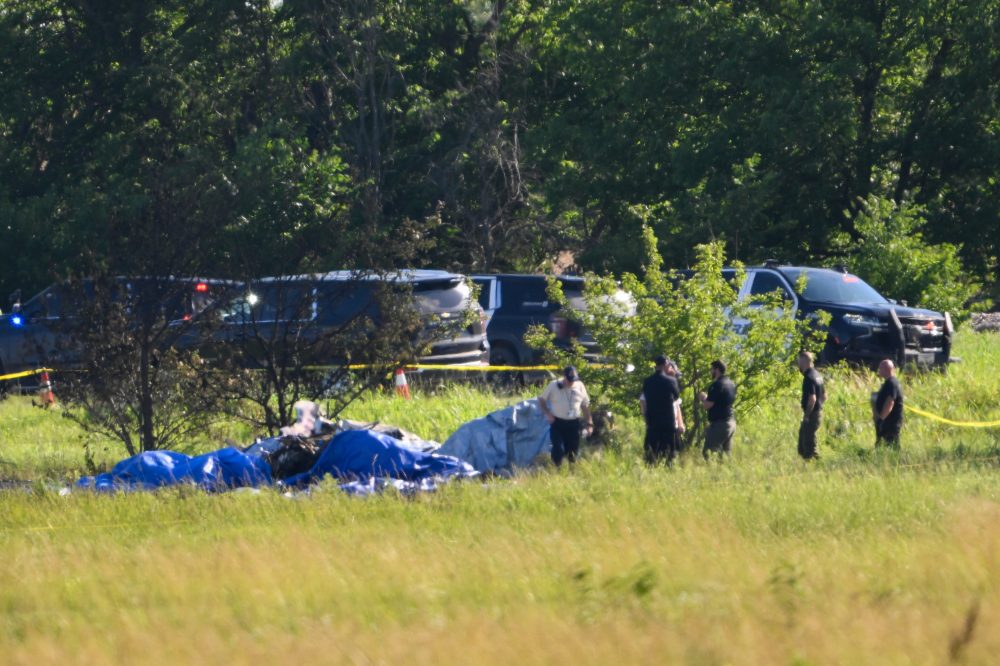

Federal safety investigators have released a preliminary report on a deadly plane crash last month in Missouri that killed all 12 people aboard during a skydiving outing — and the report does not point to any major mechanical failures as a cause.
The National Transportation Safety Board published the report Thursday following an inspection of the wreckage. According to the NTSB, investigators found no evidence of pre-crash mechanical problems or engine failures that would have stopped the aircraft from operating normally.
The agency also reported that fuel samples taken from the fuel truck after the crash showed no sediment or debris. Additionally, a review of the skydiving company’s software confirmed the plane was within its approved weight and balance limits for that flight.
The crashed aircraft was not equipped with a flight data or voice recorder — the kind used on commercial airliners — and was not legally required to have one, investigators noted. However, the NTSB said its team did recover damaged GoPro cameras from the crash site.
The federal investigation is still active, and a final determination on the cause of the crash typically takes a year or longer to complete.
The crash occurred on June 14, roughly an hour south of Kansas City. The plane, carrying a pilot and 11 skydivers, lifted off from Butler Memorial Airport at 11:25 a.m. on a clear day. During its initial climb, the aircraft began a slow leftward turn. Both wings gradually tilted until they were nearly perpendicular to the ground, and the plane then plunged nose-first into a field, erupting in flames on impact.
The fire caused severe damage to the plane’s main structural components, including the cockpit, cabin, and fuel system, investigators said.
Some of the victims’ family members had come to the airport to watch the jump and witnessed the crash firsthand, according to authorities. The United States Parachute Association, which serves as skydiving’s national governing body, confirmed that its technology director, Jen Sharp, was among those who perished.
On the day of the crash, Dennis Jacobs — the acting airport manager and Bates County Emergency Management Agency director — said he believed the plane was losing power and that the pilot appeared to be attempting an emergency landing on a nearby highway before the crash occurred.
The aircraft was operated by Skydive Kansas City, which described the tragedy as a “devastating loss.”
Investigators and safety advocates have long noted that poor maintenance is frequently a contributing factor in skydiving plane accidents. The NTSB has raised alarms in the past about inadequate oversight of skydiving operators. Following a 2019 crash in Hawaii that killed 11 people, the agency stated that the Federal Aviation Administration’s regulatory framework was not sufficient to ensure safe skydiving flights.
The FAA has not yet acted on the NTSB’s recommendations, but said it formed a committee in April that will look at ways to improve skydiving safety and will consider the safety board’s proposals.
The United States Parachute Association stated that Skydive Kansas City follows the safety standards of the world’s largest skydiving organization, including all FAA maintenance requirements. The skydiving industry points to what it describes as a strong overall safety record. The association noted that nearly 3.5 million jumps were completed last year, with 16 civilian fatalities — most attributed to human error.
The aircraft involved in the crash was a Pacific Aerospace 750XL, a model commonly used in skydiving operations and also valued for cargo transport, aerial surveys, and medical evacuation missions. The plane can carry more than 4,000 pounds (1,800 kilograms) and is designed to operate from short runways, according to its manufacturer. FAA records show the aircraft was built in 2010.
Flight tracking data from FlightAware shows the plane completed nine successful flights in the days leading up to the crash, including two on the morning of the accident. The pilot held a commercial pilot certificate and had logged more than 4,100 total flight hours. It was the pilot’s second consecutive season working for Skydive Kansas City, the NTSB said.
Skydive Kansas City told investigators they had no prior concerns about the pilot, describing him as safety-focused and cautious in his decision-making as a jump pilot.