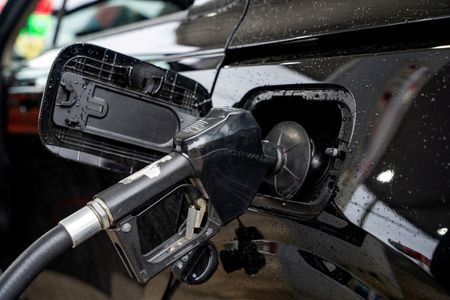

Americans are heading out in force this Independence Day weekend, brushing aside gasoline prices that are still running well above historical norms.
Some relief has come from the easing of tensions between the United States and Iran, which calmed fears that oil shipments through the Strait of Hormuz could be disrupted and send fuel costs skyrocketing.
Even so, drivers are expected to pay the second-highest Fourth of July gas prices ever recorded. Price-tracking service GasBuddy projected last week that the national average would sit around $3.75 per gallon on July 4 — trailing only the all-time holiday record of $4.80 per gallon set on July 4, 2022. As of Thursday, the national average stood at $3.79 per gallon, which is 63 cents higher than the same time last year, according to GasBuddy.
Patrick De Haan, head of petroleum analysis at GasBuddy, addressed the recent price movements in his Monday weekly update. “The declines came despite a turbulent week, as fresh attacks were traded between the U.S. and Iran before both sides agreed to halt hostilities just in time for Sunday. … For now, GasBuddy anticipates the national average will continue drifting lower this week, though the situation remains anything but predictable,” he wrote.
President Donald Trump has pushed gas station operators to drop prices more aggressively, saying pump prices have not come down enough since tanker traffic through the Strait of Hormuz resumed last month. U.S. Treasury Secretary Scott Bessent echoed that call on Tuesday, urging retailers to lower prices as the nation marks its 250th birthday.
Despite the cost, motorist organization AAA is forecasting a record 72.2 million Americans will travel at least 50 miles from home over the holiday period — edging past last year’s record of 71.8 million travelers. However, the number of people driving and flying is expected to stay relatively flat compared to last year, with more travelers opting for other modes of transportation such as cruises.
AAA estimates that about 61.4 million people will drive to their destinations, while nearly 5.85 million are expected to fly. Another 4.93 million are projected to travel by bus, train, or cruise ship.
Denton Cinquegrana, chief oil analyst at Dow Jones Energy, said Americans simply don’t let holiday plans fall apart over gas prices. “I think when it comes to summer holidays Americans will go through with their plans. … It’s the ‘I have had something planned’ mindset and ‘I am not changing it, I’ll figure it out next week,’” he said.
Demand data backs that up. The U.S. Energy Information Administration reported Wednesday that gasoline supplied — a measure used to track fuel demand — climbed by 356,000 barrels per day ahead of the holiday weekend, reaching 9.13 million barrels per day. That compares to 8.64 million barrels per day during the same period last year.
Looking ahead, analysts warn that prices could stay high if fuel supplies continue to tighten. Gasoline stockpiles along the U.S. Gulf Coast have dropped to their lowest point since October 2024, falling to 76.48 million barrels. Overall gasoline inventories declined by 2.3 million barrels to 214 million barrels last week.
Cinquegrana flagged the Gulf Coast situation as particularly worrying. “That (Gulf Coast inventory level) is probably more concerning from a supply standpoint than the U.S. being at the current deficit,” he said. Refineries in that region account for more than 55% of total U.S. refining capacity and are a key supplier to other parts of the country.
Nationwide, gasoline stockpiles for the week ending June 26 were roughly 8% below where they stood at the same point last year, EIA figures show. Unplanned refinery outages in Russia and Mexico, along with the approaching Atlantic hurricane season, could also push prices back up in the weeks ahead.