
American drivers who had enjoyed weeks of falling gas prices are now facing a reversal at the pump, as fresh military clashes between the United States and Iran sent crude oil prices sharply higher.
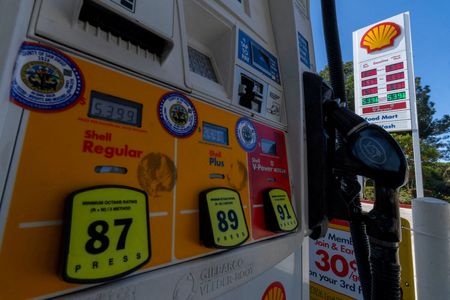
According to AAA data, the national average price for a gallon of gasoline climbed 6 cents this week to $3.88 on Friday — the steepest single-week increase since mid-May. The jump came as global oil benchmark Brent crude posted a weekly gain of roughly 5.5%, its strongest weekly performance in eight weeks.
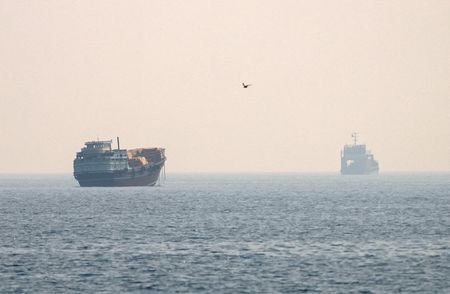
The trigger was renewed fighting centered on the Strait of Hormuz, a critical waterway that carried about 20% of the world’s daily oil and gas supplies before the conflict began on February 28. Attacks on several tankers passing through the strait were followed by retaliatory strikes between Washington and Tehran, and the U.S. subsequently revoked a general license that had allowed the sale of Iranian oil.
“Gasoline prices have rallied alongside the massive move higher in crude oil after several tankers in the Strait of Hormuz were attacked,” said Alex Hodes, director of energy market strategy at brokerage StoneX.
Oil flows through the Strait of Hormuz remain well below pre-conflict levels, raising concerns that even small disruptions could send shockwaves through global fuel markets.
The situation has become a political pressure point for President Donald Trump, whose Republican Party is working to maintain slim congressional majorities heading into November midterm elections. Trump has accused oil companies of price gouging and has pushed gasoline retailers to lower prices more aggressively. The administration has also urged the Justice Department to investigate potential gouging and recently launched a price-cutting program offering discounted fuel at certain locations in Pennsylvania and New Jersey.
Beyond the conflict in the Middle East, supply problems elsewhere are adding to the crunch. Hodes noted that unplanned refinery shutdowns in both Russia and the United States have further squeezed available fuel.
Russia’s refining industry has been battered by repeated attacks, sharply cutting fuel production. Moscow has responded by limiting diesel exports and increasing gasoline imports, which has tightened global supplies and pushed prices higher. Tom Kloza, chief energy adviser at Gulf Oil, described Russian output of gasoline, diesel, jet fuel, and fuel oil as having been “decimated,” with many months of recovery time still ahead.
Domestically, refinery disruptions have compounded the problem. Outages have been reported at Marathon Petroleum’s 146,000-barrel-per-day facility in Detroit, Michigan, and Delta’s 190,000-barrel-per-day refinery in Trainer, Pennsylvania.
The Energy Information Administration reported Wednesday that U.S. gasoline inventories dropped by 1.9 million barrels last week to 212.1 million barrels — nearly 10 million barrels below the five-year seasonal average.
Denton Cinquegrana, chief oil analyst at Dow Jones Energy, noted that gasoline stocks are running below normal levels across every region of the country, with the Gulf Coast showing the most severe shortfall. Inventories there fell to 76.4 million barrels, compared to a five-year average of 82.3 million barrels. The Gulf Coast is the source of the vast majority of the nation’s refined fuel products.
With Middle Eastern and Russian barrels largely off the global market, U.S. refiners have stepped in as key suppliers, boosting exports. U.S. petroleum product exports hit a weekly record of 8.7 million barrels per day in the week ending July 3, according to EIA data.
“The U.S. Gulf of Mexico may see consistent gasoline exports of 1-million b/d and there are bets among Houston traders as to whether 2-million b/d will be achieved for distillate departures,” Kloza wrote to clients on Thursday.
The summer driving season, which runs from June through early September, typically increases gasoline demand. The switch to more expensive summer-blend fuel also raises refining costs, putting additional upward pressure on pump prices.
“It seems prices will mostly drift up and down here in the short-term,” Cinquegrana said.