
MADISON, Wis. — Wisconsin voters headed to the polls Tuesday to choose between two appeals court judges in a Supreme Court race that could strengthen liberal influence on the state’s highest court, with abortion access emerging as the central campaign issue alongside pending cases involving legislative maps and labor rights in this key swing state.
Unlike the previous two Supreme Court contests in Wisconsin that shattered national spending records while determining court control, this year’s race has attracted significantly less money and nationwide focus since the court’s balance isn’t hanging in the balance.
The outcome could help Democrats solidify their court advantage just months ahead of November elections where they aim to retain the governor’s mansion and win back the state Legislature, which has remained under Republican control since 2011. Democratic leaders hope to reverse numerous GOP-backed policies that positioned Wisconsin as a centerpiece of conservative politics during the last decade.
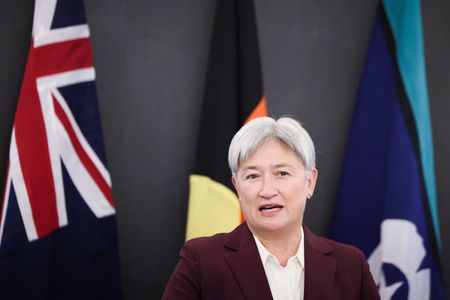
Tuesday’s contest pits Chris Taylor, who has Democratic backing and previously served as a state legislator while also working for Planned Parenthood, against Maria Lazar, the Republican-endorsed candidate. Both women currently serve as judges on the state’s Appeals Court.
A victory for Taylor would expand the liberal advantage on the seven-member court from the current 4-3 split to a more commanding 5-2 majority, securing liberal control through at least 2030.
The liberal faction gained court control in 2023, breaking a 15-year period of conservative dominance. They maintained their majority in last year’s election that attracted involvement from President Donald Trump and wealthy figures including George Soros and Elon Musk, who made headlines by personally distributing $1 million payments to Wisconsin voters.
Liberal supporters have framed the 2025 election as crucial for democratic principles, pointing to 2020 when the conservative-controlled court nearly sided with Trump’s efforts to throw out enough ballots to reverse his electoral defeat in Wisconsin.
After liberals gained control, the court has overturned multiple election-related decisions, including restoring the use of absentee ballot drop boxes, positioning the court to play a significant role again during the 2028 presidential race.
While Supreme Court elections in Wisconsin are technically nonpartisan, candidate support typically follows party lines.
Taylor has made abortion rights the cornerstone of her campaign, running television advertisements declaring that “abortion is on the ballot.” She has also attacked Lazar for previously describing the U.S. Supreme Court’s 2022 decision eliminating Roe v. Wade as “very wise.”
Lazar, who received endorsements from anti-abortion organizations during her appeals court campaign, has portrayed Taylor as merely a politician who would advance a partisan agenda from the bench.
The candidates clashed over accusations of partisanship during their only debate last week.
“Radical, extreme legislator” and “judicial activist” were among the terms Lazar used to describe Taylor. Taylor responded by saying Lazar would bring “an extreme, right-wing political agenda to the bench.”
Lazar has struggled to match Taylor’s outreach efforts. Taylor enjoyed a substantial fundraising edge and outspent Lazar roughly nine-to-one on television advertising, according to tracking by the Brennan Center for Justice.
The liberal-majority court has already eliminated a state abortion ban and mandated new legislative district maps, boosting Democratic optimism about winning legislative control this November.
Taylor has served as a judge since 2020, following a decade as a Democratic Assembly member representing Madison, the liberal state capital.
Lazar has been on the bench since 2015 and previously spent four years working for a Republican attorney general in the state Justice Department. In that position, she defended legislation signed by former Republican Governor Scott Walker that essentially eliminated collective bargaining rights for most government employees.
A lower court judge declared that law unconstitutional in December, setting up a likely appeal to the state Supreme Court.
Lazar also defended Republican-passed measures signed by Walker that established voter identification requirements and limited abortion access.
Democrats feel confident based on the last two Supreme Court races, where their preferred candidates won by margins exceeding 10 percentage points.
The opening exists because a conservative justice chose to retire. With another conservative justice stepping down next year, liberals could achieve 6-1 court control if they prevail on Tuesday.