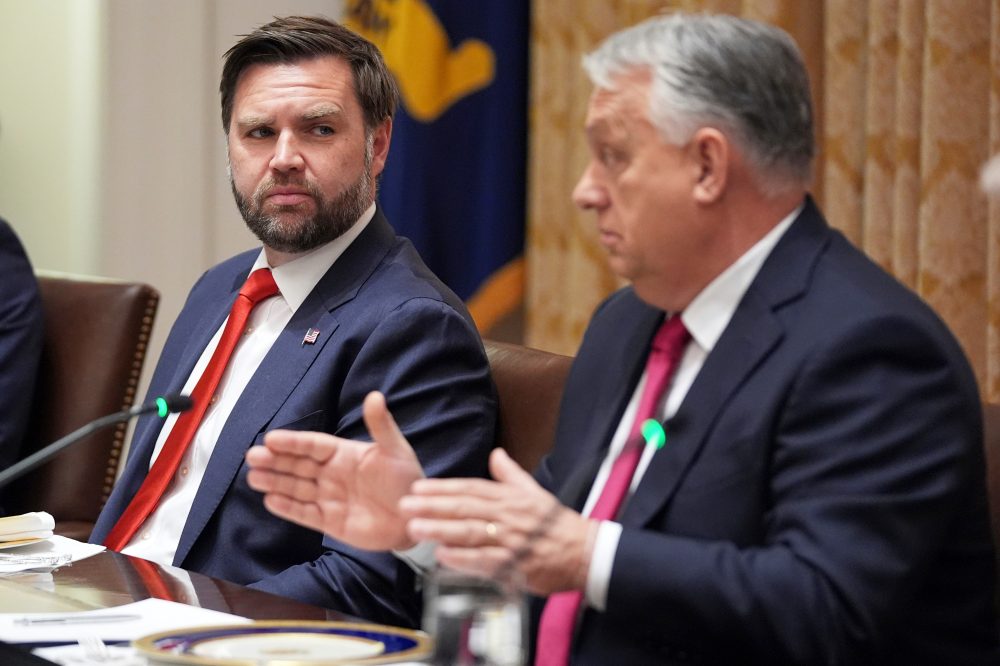

BUDAPEST, Hungary — Vice President JD Vance arrived in Hungary’s capital city Tuesday for a two-day visit aimed at supporting Prime Minister Viktor Orbán’s struggling reelection campaign just days before voters head to the polls.
The visit, which includes an official meeting with Orbán followed by an appearance at one of his campaign events, represents the most direct signal yet that the Trump administration is fully backing the Hungarian leader’s bid for another term when the nation votes this Sunday.
Orbán has held power continuously since 2010 and is seeking a fifth consecutive term as prime minister. However, he and his Fidesz party are confronting their most challenging electoral battle in twenty years against center-right opposition candidate Péter Magyar, who leads the Tisza party and could potentially end Orbán’s decade-and-a-half grip on power.
Critics have long accused the Hungarian leader of seizing control of the country’s institutions, restricting media freedoms, and allowing widespread government corruption to flourish — allegations Orbán rejects. Despite these controversies, he has emerged as a prominent figure within international far-right political circles.
President Trump has publicly backed Orbán’s reelection efforts multiple times, with many supporters of the Make America Great Again movement praising the Hungarian prime minister’s strict immigration policies, restrictions on LGBTQ+ rights, and control over media outlets and educational institutions.
However, recent independent polling data suggests Fidesz is running more than ten points behind among committed voters in advance of the April 12 election, prompting Orbán to seek public appearances with his international supporters to enhance his standing.
This marks the second major show of American backing for Orbán’s government in recent months.
Hungary has diverged from most European Union member nations by declining to provide Ukraine with financial aid or military equipment to defend against Russia’s ongoing invasion, while continuing to purchase Russian energy resources despite EU efforts to reduce such dependencies.
Following a White House meeting between Orbán and Trump last November, Hungary secured an exemption from American sanctions targeting Russian oil and gas imports.
During a February visit to Budapest, Secretary of State Marco Rubio offered strong praise for Orbán and highlighted the “person-to-person connection” between the Hungarian leader and President Trump. Rubio told Orbán: “President Trump is deeply committed to your success because your success is our success.”
At the end of last month, Orbán welcomed dozens of international allies to Budapest for the Hungarian version of the Conservative Political Action Conference and a gathering of the Patriots for Europe party alliance, which holds the third-largest bloc of seats in the European Parliament.
Trump contributed a video message to the Hungarian CPAC event, declaring that Orbán had his “complete and total endorsement” and calling him a “fantastic guy.”
The Trump administration’s support for Orbán demonstrates its broader alignment with European far-right political movements, with mutual admiration evident across countries including Spain, France, Germany, and the Netherlands.
Nevertheless, Trump’s recent foreign policy decisions regarding Greenland, Venezuela, and Iran have created tension with some European relationships.
Orbán has maintained his loyalty to Trump, including repeating the former president’s unfounded assertions about winning the 2020 election. Speaking on state radio shortly before Trump’s second term began, Orbán claimed Democrats “took the presidency away from Donald Trump through fraud.”
Vance’s scheduled participation in Orbán’s campaign rally represents an uncommon move for a foreign official and departs from the typical practice of political leaders avoiding direct involvement in other nations’ electoral contests.
Ironically, Orbán has previously criticized any mention of Hungary’s election by fellow EU leaders, condemning expressions of support for his political rivals as serious violations of Hungarian sovereignty and improper interference in the democratic process.