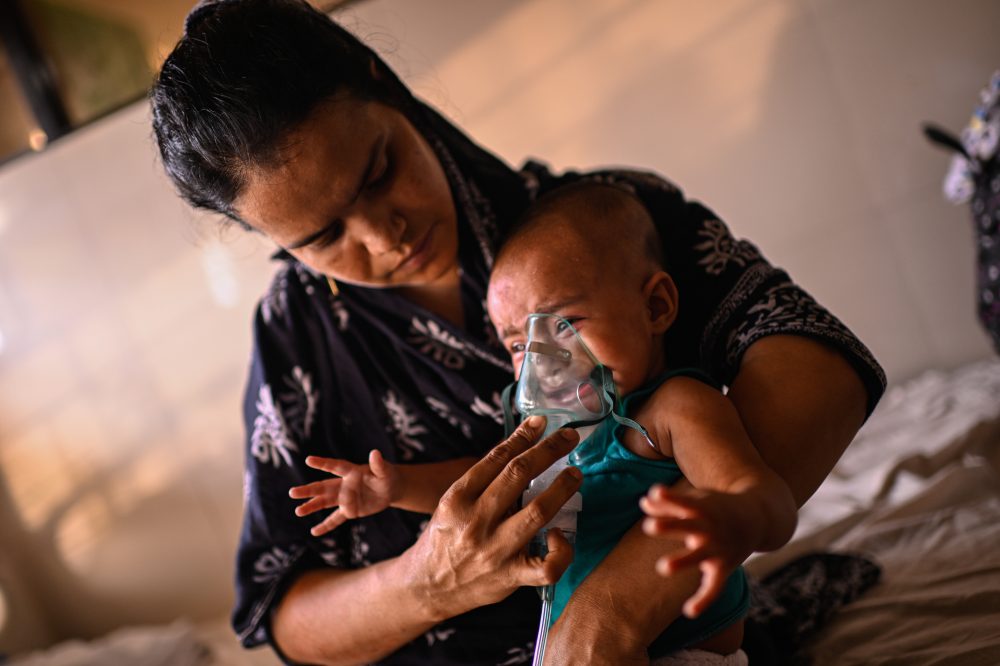

DHAKA, Bangladesh (AP) — Health officials in Bangladesh have launched an urgent vaccination drive to combat a deadly measles outbreak that has claimed the lives of more than 100 children in less than four weeks.
Working alongside the World Health Organization, UNICEF, and the Gavi vaccine alliance, Bangladesh’s government started immunizing children between 6 months and 5 years old in 18 districts with the highest risk on Sunday. The vaccination effort will roll out across the entire country in stages beginning next month, according to a collaborative announcement.
UNICEF’s representative in Bangladesh, Rana Flowers, expressed grave concern about the rapid increase in infections, noting the severe threat to the nation’s youngest population. “This resurgence highlights critical immunity gaps, particularly among zero-dose and under-vaccinated children, while infections among infants under nine months, who are not yet eligible for routine vaccination, are especially alarming,” Flowers stated.
Health data from the South Asian country of over 170 million residents shows more than 900 confirmed measles cases among 7,500 suspected infections reported since March 15.
According to WHO, measles spreads easily through the air and triggers fever, breathing problems, and a distinctive skin rash. The disease can lead to serious complications or death, particularly in young children.
Health experts emphasize that immunization is essential for controlling measles transmission, but WHO guidelines indicate 95% population vaccination coverage is necessary to halt the disease’s spread.
During parliamentary questioning Monday, Bangladesh’s Health Minister Sardar Mohammed Sakhawat Husain attributed the current crisis to poor management and mistakes by former administrations.
The minister pointed to failures by the previous administration under former Prime Minister Sheikh Hasina and the interim government led by Nobel Peace Prize winner Muhammad Yunus, saying their inadequate vaccine stockpile decisions created shortages affecting measles and six additional disease vaccines.
Bangladesh’s measles immunization program faced disruption during recent political turmoil. Hasina was removed from power during mass protests in 2024, followed by Yunus’s interim leadership before an elected government took control after February elections.
Health officials are urging parents to seek hospital care immediately when measles is suspected.
“They should avoid taking medicine from shopkeepers unnecessarily. If a child has a fever, especially high fever — 101, 102, 3, 4 (Fahrenheit, or higher than 38.3 Celsius) — they should not rely on medicine from local shops,” explained F. A. Asma Khan, deputy director of Dhaka’s Infectious Diseases Hospital.
“Instead, they must take the child to a hospital as soon as possible, because our medical officers are capable of providing proper basic treatment,” she added.
Bangladesh has achieved significant immunization improvements since launching a comprehensive vaccination program in 1979, increasing fully vaccinated children from merely 2% to 81.6%.
However, UNICEF cautioned last year that despite Bangladesh’s substantial progress in expanding vaccine coverage, significant inequalities remain throughout the country.