
SEOUL, April 7 – Officials in South Korea announced Tuesday that North Korea’s unusually diplomatic reaction to an apology over drone flights represents significant advancement in reducing military hostilities between the neighboring countries.
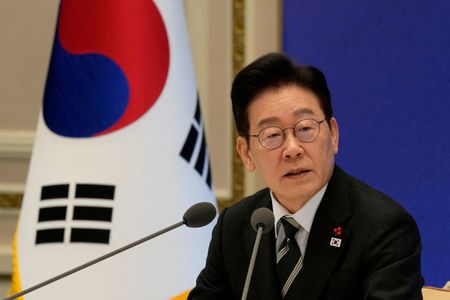
The South Korean Unification Ministry characterized North Korea’s response as “meaningful progress” following President Lee Jae Myung’s expression of regret regarding unauthorized drone operations that crossed into North Korean territory.
Lee’s administration has been working to repair severely damaged relations between the two nations, which technically remain in a state of war following the armistice that ended the Korean War from 1950-53.
In an official statement, the ministry responsible for managing inter-Korean relations said Seoul would continue adhering to its commitment to avoid hostile actions against North Korea while pursuing peaceful coexistence across the Korean peninsula.
The ministry’s comments came in response to statements published Monday by North Korea’s state-run KCNA news agency. In those remarks, Kim Yo Jong, the powerful sister of North Korean leader Kim Jong Un, described Lee’s apology and promise to prevent future incidents as “very fortunate and wise” – language markedly different from the harsh criticism typically seen in recent years.
However, Kim Yo Jong also warned that Seoul should “refrain from any attempt at contact” with North Korea.
President Lee issued his statement of regret Monday, acknowledging that the drone incursions had created unnecessary military tensions. He explained that civilians acting contrary to government policy had conducted these flights into North Korean airspace.
Lee revealed that an investigation discovered involvement by a National Intelligence Service worker and an active military official, describing these incidents as violations of South Korea’s constitution.
South Korean media reported Tuesday that presidential chief of staff Kang Hoon-sik explained Lee’s decision to express regret demonstrated his strong commitment to reducing military tensions and rebuilding trust. The president ordered the message after receiving briefing materials about the investigation’s findings.
In recent years, Pyongyang has designated South Korea as its “most hostile state” and abandoned reunification goals, instead treating inter-Korean relations as connections between two enemy nations rather than parts of a divided country.
Kyungnam University professor Lim Eul-chul interpreted North Korea’s response as a measured acceptance of Lee’s statements, but warned that South Korea remains viewed as a hostile state. Any reduction in tensions would likely focus on managing the current situation rather than changing Pyongyang’s rigid two-state approach.