A young person was arrested early Friday morning in Wilmington after a stolen vehicle incident resulted in a traffic accident, according to New Castle County police.
The incident began around 3:18 a.m. on April 17, 2026, when law enforcement officers received a call about a stolen Kia Optima in the 400 block of South Scott Street. Police immediately began canvassing the neighborhood to locate the missing vehicle.
During their search, an officer spotted the stolen Kia and turned on emergency lights in an attempt to conduct a traffic stop. The situation escalated when the vehicle ultimately crashed, leading to the apprehension of the juvenile driver.
The New Castle County Division of Police has not released additional details about the circumstances surrounding the theft or the extent of any injuries from the crash. The investigation remains ongoing.
Bringing friends and family together for celebrations, holidays, or casual dinners creates valuable opportunities for human connection, though many people avoid hosting due to anxiety about preparing delicious meals and maintaining pristine homes.
Mental health professionals and experienced party hosts argue there are compelling reasons to organize gatherings and effective methods to minimize entertaining stress. As remote work increases and digital communication replaces face-to-face conversations, adults face growing risks of loneliness and social isolation.
“Oftentimes, we expect someone else to reach out to us. But if the vast majority of people are expecting someone else to do it, then it’s going to become a rare thing,” said Julianne Holt-Lunstad, a psychology professor at Brigham Young University and the lead author of a 2023 U.S. surgeon general’s report on the widespread health risks of loneliness.
Experienced event organizers recommend focusing on creating genuine interactions rather than achieving perfection to reduce hosting anxiety. They suggest planning engaging activities for guests, keeping menus straightforward, and requesting assistance to ensure everyone can participate and have fun.
“When we are more socially connected, we are not only happier, but we’re healthier and live longer,” Holt-Lunstad said.
Madeline Johnson, 24, shares party recipes, decorating advice, and backyard celebration ideas on social media as Madeline May. She began hosting events because she craved social connections.
“As an only child, I always wanted community,” said Johnson, who organized approximately twelve large gatherings with friends and five intimate family events last year. “I started to realize if I wanted that village around me that I would have to build it on my own.”
Johnson now encourages others to develop confidence in inviting guests and facilitating relationships between them.
“There’s just way too much unnecessary pressure that makes people feel like the bar to host is up here when it’s much lower,” Johnson said.
Being naturally introverted, she prefers organizing activities like painting flower vases or answering trivia questions to ease initial social anxiety, particularly when groups include strangers.
Having guests contribute different dishes or assigning collaborative tasks like table setting can stimulate conversation while reducing the host’s workload, Holt-Lunstad explained.
“In the U.S., we are so time deprived and have over-scheduled everything that it is difficult to sit down and be present, but a meal allows us to do that. We should not underestimate the power of what food can do,” she said.
Communal appetizers including charcuterie and grazing platters, along with make-ahead dishes such as casseroles and soups, are streamlining modern entertaining by minimizing day-of kitchen time and simplifying service and cleanup.
Oregon-based chef and cookbook author Josh McFadden, recognized for transforming seasonal produce into accessible, shareable meals, discusses in his writing how grazing-style dining originated from communal farm tables.
Butter boards, featuring softened or whipped butter spread on platters and topped with honey, herbs, or spices for dipping with bread and crackers, represent a contemporary variation that has become trendy.
“You can put a lot of variety and textures and different flavors into things in an easier way, showing off the seasonality of the food. It becomes a mobile meal,” McFadden said in an interview with The Associated Press. “It also creates conversation, and it’s just a fun way to eat.”
Arranging food on platters for communal picking provides efficient guest service, he noted. McFadden also recommends incorporating store-purchased items and asking guests to contribute specific dishes or drinks as additional ways hosts can reduce their responsibilities.
Katie Eu, 26, who resides in New Hampshire, enjoys “bring your own” style gatherings, particularly since hosting expenses can accumulate without potluck arrangements or friend groups taking turns as hosts.
“It is pretty low pressure because what you are providing is not the food, but the space for people to gather,” Eu said.
Creating an environment for social connection holds more importance than food quality, decorative elements, or home size, according to Richard Slatcher, a social psychology professor at the University of Georgia.
“The other stuff is a bonus,” Slatcher said. “It’s really about the people.”
Opening your home to first-time visitors can feel emotionally risky since guests may form impressions about the host’s preferences, hobbies, and values through color choices, bookshelf contents, and displayed artwork and keepsakes.
Remember that vulnerability serves as a crucial component in developing genuine human relationships, noted Slatcher, who collaborated with Holt-Lunstad on research examining how attending live events can address loneliness.
Guests bear responsibility for making social gatherings meaningful for themselves and their hosts, Holt-Lunstad emphasized.
“If you’re passively being an attendee, you are not going to feel connected,” she said.
For Johnson, guests failing to confirm attendance, arriving late, or not appearing at all create significant stress.
“I put my heart and soul into everything,” she said. “If you want to truly be a good guest, put the invitation on your calendar, don’t double book yourself and try to show up on time.”
Guests demonstrate respect for hosts by cleaning up appropriately and avoiding overstaying their welcome, according to Eu.
“Hosting is hard, so being aware of space that you’re coming into and space you’re taking up” matters, she said.
STUTTGART, Germany – Kazakhstan’s Elena Rybakina dominated the Stuttgart Open final on Sunday, defeating Karolina Muchova 7-5, 6-1 to capture her second championship at the prestigious tournament and earn another luxury Porsche automobile.
The top-seeded player secured her second tournament victory of 2024, but it was the traditional automotive prize that seemed to excite Rybakina most. After winning her first Porsche in 2024, she was motivated to obtain her driver’s license, and she beamed with joy as she drove her newly-earned second sports car down the ramp before positioning it on the tournament’s signature red clay court.
This triumph places Rybakina among tennis elite, as she becomes only the fourth current player to capture at least five WTA titles across different court surfaces, joining the exclusive ranks of Venus Williams, Elina Svitolina, and Iga Swiatek.
“It’s an amazing tournament, we love coming back here… It really feels like home and you just want to come back every year,” Rybakina expressed after her victory.
“Super happy for the second win here in Stuttgart and this beautiful car,” she added.
The match began with Rybakina establishing early control, racing to a commanding 3-0 advantage in the first set through powerful, attacking tennis while Muchova remained primarily on defense.
Rybakina’s first serve proved nearly impossible to handle, constantly forcing Muchova into defensive positions. The Australian Open champion also demonstrated skillful net approaches, compelling her Czech rival to scramble across the entire court.
Muchova demonstrated fighting spirit by mounting a comeback from a 5-2 deficit to tie the set at 5-5. Yet when attempting to push the set to a tiebreaker, crucial mistakes emerged, allowing Rybakina to seize the opening set as Muchova’s return flew beyond the baseline.
This momentum shift energized Rybakina for the second set, where she dominated by winning five straight games – similar to her commanding semifinal performance against Mirra Andreeva – before Muchova managed to win a game.
When serving for the championship, Rybakina finished in impressive fashion, completing a love service game to secure her tour-leading 25th victory of the season in just 78 minutes.
“Elena, honestly, too good. You played really well,” Muchova acknowledged during the post-match ceremony.
“I tried to stop you, but you clearly wanted a Porsche for the second time really bad. So, (you) made it very tough for me. Congrats!” she concluded.
Alphabet’s Google is reportedly collaborating with Marvell Technology to create a pair of specialized computer chips designed to enhance artificial intelligence operations, according to a Sunday report from The Information citing sources familiar with the negotiations.
The partnership involves developing two distinct processors: a memory processing component that will complement Google’s existing tensor processing units (TPUs), and an entirely new TPU specifically engineered for artificial intelligence applications, sources indicated.
The tech giant has been working to establish its TPUs as a competitive option to challenge Nvidia’s market-leading graphics processing units. Revenue from TPU sales has emerged as a significant growth factor for Google’s cloud computing division, as the company seeks to demonstrate to shareholders that its artificial intelligence investments are producing financial results.
Neither Google nor Marvell immediately provided responses to requests for comment, and Reuters was unable to independently confirm the report’s details.
According to the sources, both companies hope to complete the memory processing unit’s design specifications by next year, after which the chip would move into experimental manufacturing phases.
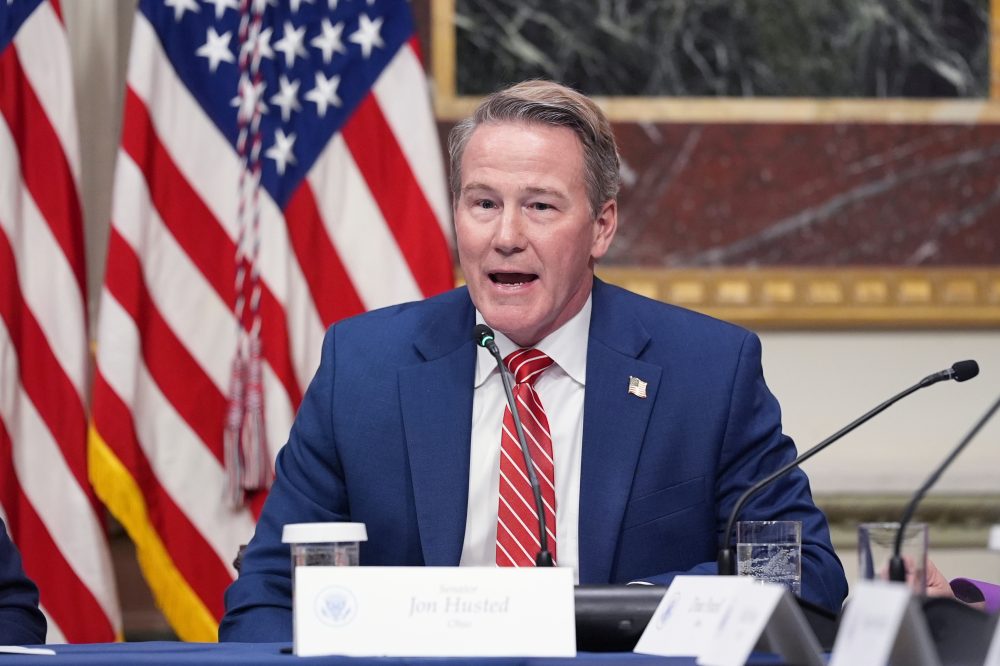
COLUMBUS, Ohio — Ohio Republican Senator Jon Husted continues to grapple with connections to a massive $60 million corruption case that has dominated state politics for over half a decade as he campaigns for reelection this fall.
The senator recently provided testimony as a defense witness in the criminal proceedings against two former energy company leaders, and he may need to testify again following a mistrial in March due to a deadlocked jury. An Akron judge has set the new trial date for September 28, potentially placing Husted back in court just one week before early voting commences for November’s election.
While the former lieutenant governor and Ohio secretary of state has never faced charges or accusations of criminal conduct, extensive court records from the corruption investigation have sparked questions about his interactions with key figures who were either indicted or incarcerated in connection with the scheme. The scandal centered on legislative passage of a $1 billion rescue package for Ohio’s two nuclear facilities.
Whether Husted’s connection to the proceedings will hurt him politically remains unclear as the first-term senator prepares to face Democrat Sherrod Brown, who lost his Senate seat in 2024.
Suggesting possible Republican anxiety, the Senate Leadership Fund — the party’s primary super PAC — recently declared its intention to invest $79 million supporting Husted’s campaign. This represents approximately 25% of the organization’s total planned expenditure across eight competitive Senate contests nationwide.
When questioned in 2022 about his involvement in the bailout measure, called House Bill 6, Husted responded, “None.” He has maintained this position repeatedly, despite emerging evidence that has prompted scrutiny of his participation.
Calendar records belonging to Husted that surfaced during the recent trial of FirstEnergy executives revealed numerous additional meetings and telephone conversations with former CEO Chuck Jones, Ohio’s deceased former chief utility regulator, and then-House Speaker Larry Householder. Federal prosecutors identified these three as forming the central power triangle in the corruption scheme. The Ohio Capital Journal obtained Husted’s schedules through public records requests, which The Associated Press subsequently examined.
Jones and former FirstEnergy lobbyist Michael Dowling face charges for their alleged participation in the bribery operation and will stand trial again this fall. Householder is currently serving a 20-year federal prison term after his 2023 conviction for orchestrating the scheme, which FirstEnergy has acknowledged funding.
The meetings documented in Husted’s calendars occurred during the period when lawmakers were crafting and approving the bailout legislation. Court evidence from multiple cases showed Jones and Dowling discussing Husted’s efforts to secure additional subsidies within the bill.
Husted has repeatedly denied participating in the legislation’s creation or having any awareness of criminal activities related to the measure.
During a January NBC4 interview, Husted stated, “My role was very clear. I wanted the nuclear power plants to remain operational.” He explained his position as “about keeping those plants open and keeping the lights on for millions of Ohioans.”
In June 2019, Jones sent Dowling text message screenshots of his conversation with Householder indicating that Husted was advocating for FirstEnergy to extend the nuclear plant subsidies from six to 10 years.
Jones pressed Householder to “negotiate hard” for the decade-long subsidies or face revisiting the matter before his speakership concluded. “Ugh, that adds $600M,” Householder responded regarding the additional cost, a figure not previously disclosed publicly. The legislation required Ohio customers to pay $150 million annually in nuclear subsidies.
“Husted called me 2 nights ago and was supposed to get it in the Senate version,” Jones texted back.
“He’s not a legislator,” Householder replied about Husted, who served as lieutenant governor at the time.
“I know but he said Senate leaders would listen,” Jones responded. “He didn’t deliver.”
These text exchanges formed part of the evidence in Householder’s criminal case. When previously asked about these communications, Husted has firmly denied they demonstrate his involvement in negotiations.
“I don’t know what you’re talking about. We weren’t involved,” Husted said when questioned about the messages during an unrelated 2024 press conference. “Texts to other people — texts to other people shared amongst themselves — have nothing to do with me. And I wasn’t involved in that conversation.”
A veteran Ohio lobbyist informed federal investigators that FirstEnergy and its subsidiary FirstEnergy Solutions, which owned the nuclear plants aided by the bailout, channeled undisclosed political money to nonprofit organizations that supported Husted and Republican Governor Mike DeWine.
Based on interview notes from his Department of Justice meeting obtained by The Associated Press and not previously made public, lobbyist Neil Clark named Freedom Frontier as one such organization. This same group received a $1 million donation in 2017 that FirstEnergy internally labeled as “Husted campaign.” The contribution came to light through FirstEnergy shareholder lawsuit documents and cleveland.com records requests. Husted was running for governor during this period.
Dark money describes political donations to specific nonprofit groups whose contributors can remain anonymous. Federal law typically prohibits coordination between these organizations and candidate campaigns.
FirstEnergy internal correspondence from 2017 and 2018, which serves as evidence in a Securities and Exchange Commission probe, includes discussions among Jones, Dowling and others about participating in Husted events dating to 2016. The communications also show Dowling’s worries about dark money donations becoming public knowledge.
Jones and Dowling additionally discussed methods to contribute using alternative names. In July 2018, while planning a DeWine-Husted fundraising event in Naples, Florida, they considered contributing under one identity while paying event expenses under another — ensuring “no cost billed to (the) campaign.”
Husted refused additional comment requests about the details emerging from the ongoing bribery scandal cases.
“Sen. Husted has commented extensively with the media and given testimony under oath and doesn’t have anything additional to add,” said Josh Eck, his spokesperson.
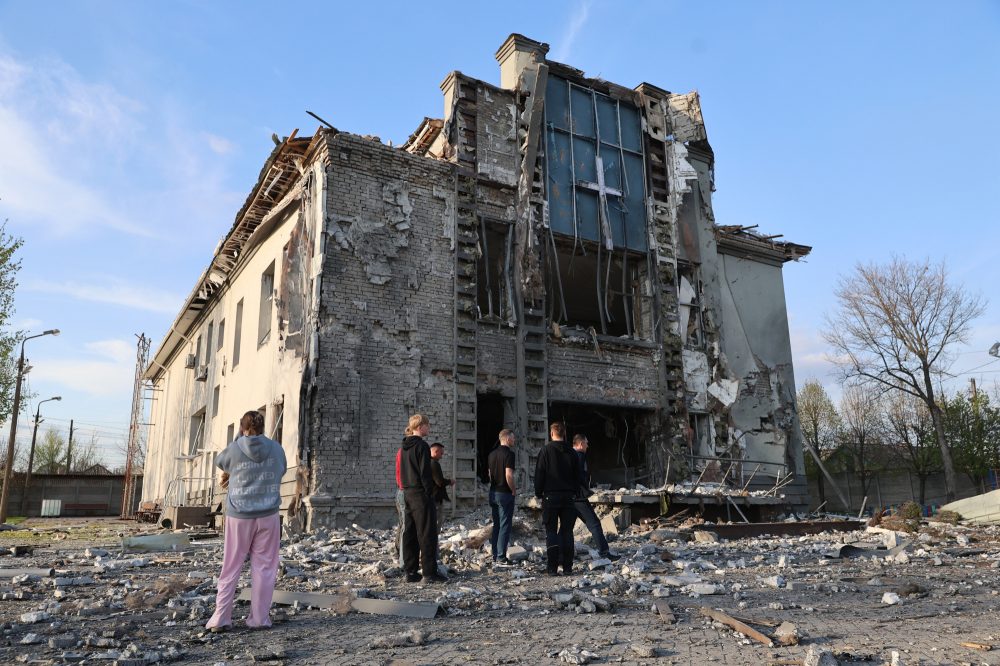
KYIV, Ukraine — Sunday brought fresh casualties from the ongoing conflict as Russian drone strikes claimed at least two Ukrainian lives, while Ukrainian forces responded by targeting a Russian unmanned aircraft production facility.
The youngest victim was a 16-year-old boy who perished during what officials described as an extensive overnight drone assault on Chernihiv in Ukraine’s northern region. Emergency crews discovered the teenager’s remains while removing debris from the attack site, city military administrator Dmytro Bryzhynskyi announced via Telegram Sunday morning.
“The drone strike also injured three women and one man. Several houses were set on fire,” Bryzhynskyi reported.
The southern Ukrainian city of Kherson faced its own drone bombardment Sunday morning, resulting in a second fatality. Regional administrator Oleksandr Prokudin confirmed that a man succumbed to injuries after a drone struck his van as he traveled through downtown Kherson. Another man required hospitalization for blast-related trauma, regional officials stated.
Ukraine’s air defense forces worked through the night to counter a massive aerial assault, with the country’s air force documenting 236 Russian drones entering Ukrainian airspace. Defense systems successfully intercepted 203 of these aircraft, though 32 managed to strike targets across 18 different areas.
Ukrainian forces launched their own counteroffensive, targeting the Atlant Aero facility located in Taganrog, approximately 55 kilometers east of Russian-controlled eastern Ukrainian territory. Ukraine’s General Staff confirmed that their drones ignited fires at this southwestern Russian factory.
The targeted facility specializes in creating strike and surveillance drones, along with parts for larger unmanned vehicles capable of carrying guided explosives weighing up to 250 kilograms, according to military sources.
Russian regional governor Yuri Slyusar acknowledged that three individuals sustained injuries during the nighttime assault on commercial infrastructure in Taganrog. While he declined to identify the specific target, Slyusar confirmed that warehouses caught fire following the attack.
Taganrog Mayor Svetlana Kambulova reported damage to local businesses, a technical training school, and numerous vehicles from the strike.
Russia’s Defense Ministry claimed its forces intercepted 274 Ukrainian drones overnight, along with guided aerial bombs and a Ukrainian-manufactured Neptune missile, though they provided no information about successful strikes on Russian targets.
WASHINGTON — Federal law enforcement agencies are working urgently to address severe staffing shortages following widespread departures over the past year, implementing new hiring practices that some officials believe compromise traditional standards.
The Federal Bureau of Investigation has launched social media recruitment drives, shortened training periods for candidates transferring from other federal agencies, and loosened requirements for support personnel seeking agent positions, according to sources familiar with the changes and internal documents obtained by The Associated Press. Meanwhile, the Justice Department has begun recruiting prosecutors directly from law school to address vacancies in federal attorney offices nationwide.
Current and former agents report that the FBI is also advancing employees to leadership roles with less experience than typically required for such positions.
These actions represent a comprehensive attempt to stabilize an organization weakened by retirements and departures, many triggered by concerns about the Trump administration’s politicization of the department and the dismissal of personnel considered disloyal to the Republican president’s priorities. Opponents of these modifications argue they represent a decline in standards for a law enforcement organization that has traditionally emphasized professional excellence and handles responsibilities ranging from terrorism prevention to complex corruption cases.
“It’s a sign of, among other things, the difficulty the department is having right now in keeping and recruiting people,” said Greg Brower, a former U.S. attorney in Nevada who left the FBI in 2018 as its chief congressional liaison.
The FBI has justified these modifications as necessary updates to its recruitment process, stating it is improving rather than reducing standards and eliminating what it describes as unnecessary administrative barriers in the application procedure. The agency maintains that candidates continue to be evaluated using identical criteria.
“The Bureau holds high standards for potential and current employees, and there is a rigorous application and background process to join the FBI,” the FBI said in a statement.
The FBI has traditionally maintained its reputation as the country’s leading federal law enforcement organization, with a selection process built around physical fitness evaluations, written examinations, interviews and academy training at Quantico, Virginia.
Components of this system have been occasionally modified to meet the bureau’s requirements, including recent changes under FBI Director Kash Patel’s direction.
Promoting a philosophy to “let good cops be cops,” Patel announced last fall that personnel transferring from agencies like the Drug Enforcement Administration could complete a nine-week training program rather than the standard academy lasting over four months. This modification has frustrated some current and former officials who believe the FBI’s procedures, professional environment and variety of cases help distinguish it from other agencies.
For support personnel seeking to become agents, the bureau recently announced it would eliminate requirements for a written evaluation and an interview with a three-member FBI agent panel designed to assess life experience and judgment, according to sources familiar with the matter who requested anonymity and an internal document reviewed by the AP.
The FBI stated that current employees would still require endorsements from senior leadership and must complete Quantico training.
“We are not lowering standards or removing qualifications in any way. What we are doing is streamlining the process to remove duplicative, bureaucratic steps to the application system for onboard employees,” the FBI said in a statement, adding, “These are changes based on a wide variety of feedback from successful agents with over 20 years’ experience.”
Patel announced in January a 112% increase in applications, and the FBI reports having a “clear path” to add approximately 700 special agents this year with its current Quantico class being among its largest in years. However, some sources indicate that increased applications don’t necessarily translate to a surge in qualified candidates that can compensate for the bureau’s personnel losses.
At senior levels, the FBI also confronts turnover among leadership, including special agents in charge who lead most of the bureau’s 56 field offices. Some were dismissed by Patel over the past year while others retired. Many offices are now managed by individuals who have held their positions for less than a year.
Confronting what current and former officials describe as challenges filling certain positions, the FBI has rapidly advanced agents through the ranks, sources report. This includes promoting assistant special agents in charge to special agents in charge and allowing employees to be considered for leadership positions without the extensive headquarters experience the FBI historically considered essential for comprehensive understanding of bureau operations.
Before becoming director, Patel worked as a conservative podcast host and had discussed closing FBI headquarters to transform it into a “deep state” museum, telling colleagues on his first day he would relocate hundreds of employees from Washington to field offices.
“As a field agent, you have a field agent’s mentality, you have a field agent’s view,” said Chris Piehota, a retired FBI senior executive. Without sufficient headquarters experience, he noted, you don’t understand “the business side of the FBI, the logistical side of the FBI or the political jungle” that can accompany the position.
The Justice Department has similarly reduced hiring requirements for certain federal prosecutors.
Department leadership recently eliminated a policy requiring U.S. attorney offices to hire only prosecutors with a minimum of one year practicing law. The department provided no explanation but stated it is “proud to empower young and passionate prosecutors and offer attorneys at every level the opportunity to invest their talents into keeping their communities safe.”
This occurs as sections of the agency struggle with workload demands amid critical staffing gaps, with the department recently acknowledging the loss of nearly 1,000 assistant U.S. attorneys.
In Minnesota, the federal prosecutor’s office has been severely impacted by resignations amid frustration with the administration’s increased immigration enforcement and the department’s handling of fatal civilian shootings by federal agents.
Justice Department headquarters in Washington has also experienced significant staffing reductions.
Attorney numbers in the Criminal Division’s Violent Crime and Racketeering Section, which prosecutes organized crime and violent gangs, have dropped substantially, though the section seeks to hire additional lawyers. A National Security Division section handling espionage cases has reported a 40% decrease in prosecutors.
The department stated it has witnessed increased criminal complaints and indictments despite prosecutor losses, highlighting what it calls the “bloated, ineffective and weaponized” institution the administration inherited.
Officials have recruited military attorneys to serve as special prosecutors in some offices. The administration has also utilized social media for applicant recruitment. One recent post from the FBI’s Omaha, Nebraska office stated: “A calling bigger than yourself. A mission that matters. If you’re ready for the challenge, there’s a place for you on the FBI team.”
Chad Mizelle, who served as chief of staff to Trump’s first attorney general, Pam Bondi, recently encouraged lawyers to contact him on X if they wanted to become prosecutors “and support President Trump and anti-crime agenda.” Mizelle’s post drew attention not only because federal prosecutors haven’t typically been recruited through social media, but also because presidential support hasn’t been a requirement for career employees.
“We need good prosecutors,” wrote Mizelle, who departed the department in October. “And DOJ is hiring across the country. Now is your chance to join the mission and do good for our country.”
RIVERTON, Utah — At a suburban gathering outside Salt Lake City, a dozen Republican activists discussed typical conservative concerns including water shortages, immigration issues, and conspiracy theories. However, state representative Doug Fiefia, who’s seeking a Senate seat, prioritized a different topic: artificial intelligence regulation.
The former Google employee has centered his campaign around technology oversight, joining other tech industry veterans who’ve entered politics with similar goals.
“I know it sounds like ‘Doug, this is all you talk about,’” Fiefia explained. “That’s because it’s coming, it’s here and it’s going to be our biggest fight.”
This emphasis has created tension with President Trump’s administration, which blocked Fiefia’s state legislation mandating child safety measures for AI companies. The federal government advocates for unified national AI standards, contending that varied state regulations could weaken America’s competitive position against China.
With congressional inaction on the issue, state legislators nationwide are tackling AI concerns independently. Florida’s Republican Governor Ron DeSantis has added AI to an upcoming special legislative session, while Democratic-controlled New York mandated that major AI developers report dangerous incidents.
More than 1,000 state legislative proposals currently address artificial intelligence, demonstrating widespread public anxiety about the technology.
“None of us are really sure,” said Brett Young, a structural engineer attending Fiefia’s backyard event. “Is this something we should be scared about, or is it no so big a deal and it’ll enhance our lives?”
Trump has consistently opposed state-level AI policies, issuing executive orders with legal warnings and funding threats to discourage new regulations.
The White House recently unveiled a congressional framework that would override “too burdensome” state laws while permitting certain protections for children and copyrighted material.
These federal efforts haven’t reduced state legislative activity. Common proposals include requiring chatbots to disclose their non-human nature and prohibiting AI-generated nonconsensual pornography, including digitally altered clothing removal from online photos.
“There’s a lot of state lawmakers looking at what the federal government is doing and saying, ‘We want to take action because we’re not satisfied,’” explained Craig Albright, senior vice president for government relations at the Business Software Alliance, representing software companies.
Recent Quinnipiac polling shows approximately 80% of Americans express concern about AI, with three-quarters believing government regulation is insufficient. About 90% of Democrats and 60% of Republicans favor increased government oversight.
California and New York, both Democratic strongholds, have enacted the most comprehensive regulations, focusing on catastrophic risk disclosure, such as AI-controlled nuclear facility failures or AI systems ignoring human commands.
Republican-led states also face regulatory pressure. DeSantis supported legislation implementing parental controls for minors using AI and prohibiting unauthorized use of personal likenesses. The measure passed the state Senate overwhelmingly but failed in the House. Similar bills in Republican-controlled Louisiana and Missouri stalled due to Trump administration opposition.
Fiefia belongs to a network of former technology workers turned state legislators advocating stronger regulations. He co-chairs the Future Caucus AI task force alongside Vermont Democrat Monique Priestley, also a tech industry veteran.
Priestley described using video conferences and group chats to share legislative ideas and counter industry lobbyists opposing their bills. Last year, 166 of Vermont’s 482 registered lobbyists commented on her data privacy legislation, which the governor ultimately vetoed.
“It’s like you’re running around against an army of full-time lobbyists,” Priestley noted. Like many state lawmakers, she maintains separate full-time employment.
Alex Bores, a former Palantir data scientist who resigned after the company contracted with Trump’s first administration on immigration enforcement, also participates in the AI task force. The Democrat authored New York’s successful AI legislation last year.
Currently competing in a crowded Democratic primary to replace retiring U.S. Representative Jerrold Nadler in Manhattan, Queens, and Brooklyn, Bores faces industry retaliation. A pro-AI campaign committee has spent $2.3 million opposing his candidacy.
Bores believes tech companies are using him as an example to discourage further state and federal regulation.
“It’s one reasons it’s so important for me to win this race is because, if I don’t, that intimidation they’re trying on Congress will be successful,” he stated. His June 23 primary opponents include Jack Schlossberg, former President Kennedy’s grandson, and George Conway, a former Republican turned prominent Trump critic.
Fiefia hasn’t attracted similar attention while transitioning from House to Senate after one legislative session. His district encompasses subdivisions and shopping centers between Utah’s mountain ranges, with neighborhoods filled with children on bicycles and scooters.
The son of Tongan immigrants, Fiefia grew up in Utah before relocating to Silicon Valley for a Google sales position.
Rising to manage teams implementing Google’s early AI models, Fiefia became troubled by industry practices.
“What I realized is Big Tech cares about their bottom line, and they were worried about making money, not doing right for the human race,” said Fiefia, now employed at a Utah cloud computing and AI company.
His legislation passed a House committee unanimously this year before the Trump administration labeled it “unfixable” in a Senate letter. The measure subsequently failed.
Daniel McCay, the incumbent senator Fiefia challenges in the primary, considers this outcome positive.
“I’ve been around long enough to recognize the invention of fire, the wheel, cars and the internet did not ruin society and I’m very skeptical of anyone trying to scare society into regulations,” McCay stated.
He emphasized the bill extended beyond child safety, incorporating whistleblower protections for AI workers and public risk disclosure.
“It would have driven Utah out of the AI innovation business,” McCay argued.
At the cottage meeting — Utah’s term for small home gatherings discussing important issues — Fiefia addressed multiple technology-related questions.
When asked about opposing the Trump administration, Fiefia emphasized the importance of defending states’ rights, particularly when challenging fellow Republicans to demonstrate principled governance.
“The Trump administration is, ‘We want zero regulations on AI,’” Fiefia said. “I think that’s wrong. I agree with a lot of what Trump says on taxes. I disagree with him on this.”
A traffic accident has resulted in the closure of the left lane on Interstate 95 northbound at the Naamans Road interchange.
Delaware Department of Transportation officials report that the collision is causing traffic delays in the area as crews work to clear the scene.
Drivers traveling northbound on I-95 through this section should anticipate slower-than-normal traffic conditions and may want to consider using alternate routes if possible.
No information has been released regarding injuries or the number of vehicles involved in the crash.
Motorists are advised to exercise caution when driving through the area and to allow extra time for their commute until the roadway is fully reopened.
Jeff Bezos’ space company Blue Origin achieved a significant milestone on Sunday when it successfully recovered a previously-used New Glenn rocket booster following its launch.
The aerospace firm announced the achievement on social media platform X, celebrating what represents their first successful landing of a booster that had flown before.
“BOOSTER TOUCHDOWN! ‘Never Tell Me The Odds’ has done it again!”, Blue Origin said in an X post.
The successful recovery represents a major step forward for Blue Origin’s reusable rocket program, as landing and reusing boosters is crucial for reducing launch costs in the commercial space industry.
Eight victims of a deadly shooting rampage in Ukraine’s capital are still receiving hospital treatment, including a child who lost both parents in the attack, according to Kyiv Mayor Vitali Klitschko.
The violence erupted Saturday when a gunman of Russian origin used an automatic weapon to fire on pedestrians before taking refuge in a grocery store with hostages. Law enforcement officers killed the shooter after a 40-minute standoff failed to produce a peaceful resolution.
Among those still hospitalized, the orphaned child is listed in moderate condition while one adult victim remains in critical condition, Klitschko reported. The mayor confirmed that six people died in the attack, which Ukrainian President Volodymyr Zelenskiy said wounded a total of 14 individuals.
“They are all receiving all necessary medical care,” the mayor said on Telegram.
The grocery store where the standoff occurred remains shuttered and surrounded by police barriers. Bullet damage is clearly visible in the store’s windows, while bloodstains mark the surrounding sidewalks and street surfaces.
Memorial flowers have been placed near an apartment building several hundred yards from the store, marking the location where the gunman’s shooting spree began.
Local resident Daryna, 31, witnessed the chaos as it unfolded. “I saw how people grabbed children from the playground and ran away. They screamed: ‘run away, hide.’ People didn’t understand what was going on. They said that there was a man there, a man was shooting with a machine gun,” she told Reuters.
A 73-year-old neighborhood resident who observed the gunman described his appearance as deceptively normal. “I don’t want to clear him of blame or anything like that… but he didn’t look like a killer,” the pensioner said, adding that the shooter “looked kind of smart.”
Such mass shooting incidents are virtually unheard of in Ukraine, prompting the country’s security services to classify the case as an act of terrorism. Investigators have not yet determined what motivated the deadly attack.
LUANDA, April 19 – During a massive religious gathering in Angola on Sunday, Pope Leo condemned the escalating conflict in Ukraine and urged “for the weapons to fall silent and for the path of dialogue to be followed.”
The pontiff delivered these remarks following an outdoor Mass near Angola’s capital city of Luanda, which attracted approximately 100,000 worshippers.
Pope Leo, who is the first American to hold the papacy, also expressed optimism about the recent ceasefire agreement between Israel and Lebanon that halted combat between Israeli military forces and the Iran-supported Hezbollah organization, describing it as a “reason for hope.”
LONDON — Britain’s highest-ranking rabbi issued a stark warning Sunday about escalating threats against Jewish communities following weekend arson attempts targeting a London synagogue, marking the newest incident in an ongoing series of similar attacks.
Saturday evening’s fire attempt caused limited damage to Kenton United Synagogue and represents part of a troubling pattern of blazes at Jewish-connected facilities and an Iranian opposition media outlet currently under counterterrorism investigation.
Rabbi Ephraim Mirvis, the nation’s chief rabbi, posted on X that “a sustained campaign of violence and intimidation against the Jewish community of the UK is gathering momentum.”
“Thank God, no lives have been lost, but we cannot, and must not, wait for that to change before we understand just how dangerous this moment is for all of our society,” he added.
Prime Minister Keir Starmer expressed being “appalled” by the incidents and promised that “those responsible will be found and brought to justice.”
London’s Metropolitan Police has deployed additional uniformed and undercover officers throughout northwest London following last month’s attacks targeting synagogues, Jewish charity emergency vehicles, and a Persian-language news organization that criticizes Iran’s regime.
The Kenton synagogue incident occurred just one day after someone attempted to set fire to bottles containing flammable liquid outside a former Jewish charity building Friday evening.
All incidents have resulted in zero injuries. Authorities have arrested and filed charges against multiple suspects whose ages span from teenagers to individuals in their forties.
While police have not officially connected these incidents, Counter Terrorism Policing London is spearheading all investigations due to “similar circumstances and online claims of responsibility.”
Internet posts have attributed responsibility to Harakat Ashab al-Yamin al-Islamia. Israeli officials characterize this organization, whose name translates to the Islamic Movement of the Companions of the Right, as a newly established group with suspected ties to “an Iranian proxy” that has also taken credit for synagogue attacks across Belgium and the Netherlands.
The organization additionally released a video threatening Israel’s London embassy with drone attacks using hazardous materials. Though no embassy attack occurred, authorities closed nearby Kensington Gardens park Friday while officers investigated abandoned items including two containers holding powder. Police determined the materials posed no danger.
Britain has accused Iran of employing criminal networks to execute attacks across European territory, specifically targeting opposition media and Jewish communities. The UK’s MI5 domestic intelligence agency reports disrupting over 20 “potentially lethal” Iran-supported plots during the year ending in October.
Security analysts suggest Harakat Ashab al-Yamin al-Islamia may represent a convenience label rather than an organized entity, cautioning that their statements require careful scrutiny.
Investment companies specializing in real estate are acquiring thousands of nursing homes, assisted living centers, and medical facilities nationwide, creating concerns about patient care quality.
These real estate investment trusts operate as property owners for long-term care facilities, with some taking active roles in selecting facility managers while maintaining close oversight of operations. However, when problems with patient care emerge, these investment companies frequently reject accountability for substandard treatment.
Leslie Adams experienced this issue firsthand when his mother Shirley developed serious infected bedsores while staying at a rehabilitation facility, ultimately leading to her death according to legal documents he filed. A court ruled in favor of the family, granting them $17 million in damages, though Adams continues working to collect the awarded funds.
The growing trend of investment trusts entering the healthcare property market has created a complex web of ownership and management responsibilities, often leaving families struggling to determine who bears responsibility when care falls short of acceptable standards.
Iranian authorities have detained four people, including two individuals from other countries, in the nation’s northwestern region on allegations of participating in what officials describe as a spy network connected to the United States and Israel, according to the semi-official Tasnim news agency’s Sunday report.
The detained foreign nationals, whose home countries were not revealed, face charges of illegally bringing in satellite internet devices including Starlink equipment, which violates Iranian law. This arrest comes as the nation continues to experience a widespread internet shutdown that has lasted seven weeks.
Since the beginning of the conflict between the U.S.-Israeli alliance and Iran, Iranian officials have detained hundreds of citizens on accusations of collaborating with hostile nations.
ATHENS – Greek government sources announced Sunday that French President Emmanuel Macron is scheduled to visit Greece next week to extend their bilateral defense partnership amid ongoing tensions in Iran.
The two NATO member nations originally established their security and defense partnership in 2021, creating mutual aid obligations in case of attack and facilitating Athens’ acquisition of three French frigates and approximately 24 Rafale fighter aircraft manufactured by Dassault.
According to an unnamed government official, Macron’s April 24-25 trip to Greece will extend their defense cooperation for an additional five-year period, with provisions for automatic extensions going forward.
The French president and Greek leadership are also expected to address maritime security concerns and developments in the Strait of Hormuz during their discussions, the source indicated.
Naval traffic through the Strait of Hormuz came to a halt Sunday following Iran’s renewed assertion of authority over the critical shipping route, occurring just before a tenuous ceasefire agreement with the United States is scheduled to end.
While Greece commands the European Union’s Red Sea naval protection mission for commercial vessels, Athens has maintained its opposition to participating in any military actions within the Strait of Hormuz region.
European diplomats are raising red flags about what they see as the Trump administration’s hasty approach to nuclear negotiations with Iran, warning that an inexperienced American team could secure a shallow agreement that creates lasting complications.
Eight current and former diplomats with Iran nuclear experience told Reuters they’re concerned Washington’s desire for a quick diplomatic victory for President Trump could result in a framework deal that looks good initially but falls apart during detailed follow-up discussions.
“The concern isn’t that there won’t be an agreement,” a senior European diplomat explained. “It’s that there will be a bad initial agreement that creates endless downstream problems.”
The White House pushed back against these criticisms when contacted by Reuters. Spokeswoman Anna Kelly stated: “President Trump has a proven track record of achieving good deals on behalf of the United States and the American people, and he will only accept one that puts America first.”
BACKGROUND ON PREVIOUS NUCLEAR AGREEMENT
Representatives from France, Britain and Germany, who started Iran negotiations in 2003, report feeling excluded from current discussions.
These three nations collaborated with the United States between 2013 and 2015 to establish an agreement limiting Iran’s nuclear activities in return for lifting sanctions, called the Joint Comprehensive Plan of Action.
During his first presidency in 2018, Trump pulled America out of this landmark foreign policy achievement from Barack Obama’s administration, describing it as “horribly one-sided.”
Following 40 days of military strikes, American and Iranian representatives began new discussions in Islamabad this month, once again centered on the standard exchange of nuclear limitations for economic benefits. Recent activity in Pakistan’s capital suggests preparations for renewed direct negotiations may be underway.
Diplomatic sources indicate that deep suspicion and vastly different negotiating approaches increase the likelihood of creating a weak framework that neither country can politically maintain.
Federica Mogherini, who oversaw the 2013-2015 negotiations, emphasized the complexity involved: “It took us 12 years and immense technical work. Does anyone seriously think this can be done in 21 hours?”
CONCERNS ABOUT SUPERFICIAL AGREEMENTS
Diplomatic sources suggest a basic agreement covering nuclear and economic elements might be possible, though they emphasize the nuclear aspects remain the most challenging.
“The Americans think you agree on three or four points in a five-page document and that’s it, but on the nuclear file, every clause opens the door to a dozen more disputes,” another European diplomat noted.
Current discussions center on Iran’s stockpile of approximately 440 kilograms of uranium enriched to 60% purity, material that could potentially be used for nuclear weapons with additional processing.
The preferred solution involves “downblending” this material within Iran under International Atomic Energy Agency oversight. An alternative approach would involve shipping some material to other countries.
Turkey and France have been suggested as potential receiving nations. Moving material to the United States would be politically challenging for Iran, while Russia presents difficulties for Washington, according to diplomatic sources.
Even these alternatives would require extensive negotiations regarding material recovery from areas possibly damaged by airstrikes, quantity verification, and secure transportation methods.
Iran has also proposed storing material in foreign countries temporarily.
“Whatever happens now is only a starting point,” explained a Western diplomat with previous nuclear negotiation experience. “That’s why the 2015 JCPOA ran to 160 pages.”
Beyond stockpile issues lies the fundamental disagreement over Iran’s uranium enrichment rights. Trump has publicly advocated for complete elimination of enrichment, while Iran maintains its right to enrich uranium for peaceful purposes and denies pursuing weapons.
A potential middle ground might involve a temporary halt followed by resumption at minimal levels under strict oversight.
European officials stress that central IAEA involvement, including thorough verification and unlimited access, remains crucial.
Gérard Araud, France’s lead negotiator from 2006 to 2009, cautioned: “A negotiation with Iran is meticulous and subtle: every word matters. That’s not something you rush.”
ECONOMIC RELIEF AND POLITICAL CONSIDERATIONS
The economic component focuses on removing sanctions and releasing frozen Iranian funds.
Iran immediately wants access to limited overseas frozen assets. Broader sanctions removal would occur later and requires European cooperation, diplomatic sources said, since Iranian leadership views European commerce as essential long-term.
Officials indicate Washington is again separating preliminary agreements from detailed implementation, an approach they believe misunderstands Iranian political dynamics.
“These talks aren’t a real-estate deal settled with a handshake,” said a senior regional diplomat briefed by Tehran, referencing Trump’s primary negotiators Steve Witkoff and Jared Kushner’s business backgrounds. “They involve sequencing, sanctions relief and reciprocal nuclear steps.”
The recent conflict has strengthened Iran’s negotiating position, diplomats noted, demonstrating its ability to withstand pressure while still seeking economic relief.
Tehran’s primary requirement is a non-aggression commitment after experiencing attacks from the U.S. and Israel during previous diplomatic initiatives.
This worry extends to U.S. partners. Gulf nations want Iran’s missile programs and proxy operations addressed, while Israel advocates for maximum restrictions.
Iran, however, views its remaining missile capabilities as essential protection after the war weakened its military forces.
Diplomatic sources say demanding complete missile abandonment would be unrealistic without comprehensive security assurances.
A senior Trump administration official outlined Washington’s non-negotiable demands: stopping uranium enrichment, dismantling major enrichment facilities, recovering highly enriched uranium, and accepting a broader regional de-escalation agreement involving allied nations.
EUROPEAN ROLE REMAINS IMPORTANT DESPITE SIDELINING
European officials admit they partially marginalized themselves by advocating for renewed U.N. sanctions last year and designating Iran’s Revolutionary Guards as a terrorist organization.
However, they note that their choice to avoid the conflict has been recognized in Tehran.
“There’s simply not enough expertise in this U.S. team,” stated one European official, pointing out that approximately 200 diplomats, financial specialists and nuclear experts participated in the 2015 negotiations. “We’ve worked on this file for two decades.”
A White House official confirmed that representatives from the National Security Council, State Department and Defense Department participated in Islamabad meetings and continue their involvement.
A senior Iranian military official claims the country is now rebuilding its weapons systems more rapidly than before recent hostilities with the United States and Israel.
According to reports from Nournews on Sunday, Revolutionary Guards Aerospace Force commander Majid Mousavi stated that Iran is currently updating and restocking its missile and drone launch systems at an accelerated pace compared to pre-conflict levels.
The February 28 strikes by Israeli and American forces specifically targeted Iran’s missile capabilities as one of their primary objectives.
Mousavi’s remarks were accompanied by edited video footage showing him touring what appeared to be an underground weapons facility. The footage displayed various drones, missiles, and launching equipment housed in subterranean locations, along with scenes of ground-based missile tests.
The authenticity of the video material could not be independently confirmed by Reuters.
LONDON — British Prime Minister Keir Starmer confronts a political crisis as top Cabinet officials defend his leadership amid growing calls for his resignation over a controversial diplomatic appointment.
The embattled leader faces Parliament Monday following damaging revelations about his selection of Peter Mandelson as ambassador to the United States, despite security vetting failures tied to Mandelson’s association with convicted sex offender Jeffrey Epstein.
According to reports, Starmer expressed anger over not being informed that January 2025 security screenings had flagged concerns about Mandelson’s clearance. The Foreign Office proceeded with the appointment regardless of the vetting recommendations.
“He would never, ever have appointed him ambassador,” Deputy Prime Minister David Lammy stated, referring to what Starmer would have done with prior knowledge of the security issues.
Technology Secretary Liz Kendall reinforced this position during a Sunday Sky News interview, saying Starmer “is a man of integrity and there is no way he would have proceeded” if he had been aware of the vetting problems.
The controversy forced Foreign Office chief civil servant Olly Robbins to step down Thursday, though supporters argue he became an unfair scapegoat for following standard procedures. Robbins plans to present his account to the House of Commons Foreign Affairs Committee Tuesday.
Former Foreign Office permanent secretary Simon McDonald criticized Robbins’ treatment, telling the BBC he was “thrown under the bus.” McDonald explained that sensitive vetting details are typically never disclosed to prime ministers or their staff.
Opposition leaders across the political spectrum have demanded Starmer’s resignation. Conservative Party leader Kemi Badenoch declared the prime minister’s situation “untenable,” while Liberal Democrat chief Ed Davey said Sunday the government remains “in perpetual crisis” and needs new leadership.
Despite holding a substantial parliamentary majority, Starmer’s Labour Party faces internal discontent over poor polling numbers, giving his own lawmakers potential power to remove him from office.
The prime minister previously weathered February criticism over the Mandelson selection but could encounter leadership challenges following May 7 local elections, where Labour anticipates poor results.
Some Labour members believe leadership changes would prove harmful during current global tensions, including ongoing conflicts in Ukraine and the Middle East, with three years remaining before mandatory national elections.
However, others express frustration with Starmer’s pattern of missteps since Labour’s overwhelming July 2024 election triumph. His administration has struggled with economic growth promises, public service improvements, and cost-of-living relief while making several policy reversals.
Government documents released in March after parliamentary pressure revealed staff warnings to Starmer about “reputational risk” from Mandelson’s Epstein connections. The convicted financier died in custody in 2019.
Officials viewed Mandelson’s experience as former EU trade commissioner and elite connections as valuable assets for engaging President Donald Trump’s administration.
Mandelson’s tenure lasted under nine months before Starmer dismissed him in September 2025 following evidence of dishonesty regarding his Epstein ties.
January’s release of extensive Epstein-related Justice Department documents revealed Mandelson maintained contact with the financier even after Epstein’s 2008 conviction for sexual offenses involving minors.
Email evidence suggested Mandelson shared sensitive government information with potential market implications to Epstein during the 2009 financial crisis aftermath.
British authorities opened a criminal investigation and arrested Mandelson February 23 on public office misconduct suspicions.
He remains free without bail conditions as the investigation proceeds. Mandelson previously denied wrongdoing and faces no charges or sexual misconduct allegations.
LONDON – Jewish community security officials report that a north London synagogue has been targeted in what appears to be part of an escalating series of arson attempts against Jewish facilities throughout Britain’s capital city.
The Community Security Trust, which handles security matters for Britain’s Jewish population, confirmed the incident in a Sunday statement. “We are aware of another attempted arson, this time targeting a synagogue in north London, following similar recent incidents targeting the Jewish community in Finchley, Golders Green and Hendon,” the organization announced.
“On this occasion there was minor smoke damage to an internal room, but there were no injuries and no significant structural damage,” the trust added.
London police have not yet issued a statement regarding the incident at Kenton United Synagogue.
The attack follows Friday evening’s attempted arson at a Jewish-connected business, and comes after police detained two individuals suspected in another synagogue arson attempt earlier in the week.
Security concerns have also extended to diplomatic facilities, with authorities establishing a security perimeter around London’s Israeli embassy after online reports claimed it was attacked by drones carrying “dangerous substances.” Police later determined that recovered materials posed no threat.
Last month, attackers burned several ambulances owned by Hatzola, a Jewish volunteer emergency service, while the vehicles were stationed near a Golders Green synagogue.
Britain’s Chief Rabbi Ephraim Mirvis expressed alarm about the pattern of incidents. “Last night yet another synagogue, this time in Kenton, was targeted in a cowardly arson attack,” Mirvis wrote on X. “A sustained campaign of violence and intimidation against the Jewish community of the UK is gathering momentum.”
A pro-Iranian organization calling itself Harakat Ashab al-Yamin al-Islamiyya, or Movement of the Companions of the Right Hand of Islam, has taken credit for most of these incidents. The group posted claims about the Kenton attack on social media, along with video footage allegedly showing the incident.
The same organization has declared responsibility for various attacks on American, Israeli and Jewish targets throughout Europe.
Law enforcement officials announced Saturday they have increased patrols in affected areas, deploying armed response units and counter-terrorism personnel.
Detective Chief Superintendent Luke Williams, who oversees policing in the region, acknowledged community concerns. “We recognise the feeling of concern among local people and do not underestimate the impact of incidents of this nature – particularly our Jewish communities,” Williams stated.
“We continue to work with our colleagues from Counter Terrorism Policing who are leading the investigations into all of these incidents due to the similar circumstances and online claims of responsibility,” he added.
Massive crowds estimated at 200,000 people assembled Sunday in Kilamba, near Angola’s capital city of Luanda, to participate in Mass celebrated by Pope Leo during what officials describe as a centerpiece event of his African tour.
The Vatican projected that roughly 200,000 attendees would fill the Kilamba district, an extensive urban development outside the capital, to listen to remarks from the pontiff, who has gained attention for his bold statements regarding conflict and social inequality, drawing criticism from U.S. President Donald Trump.
Many Angolans began arriving in the early morning hours despite sweltering, muggy weather to secure their opportunity to witness the pope firsthand.
“The pope coming here is a joy,” said Sister Christina Matende, who arrived around 6 a.m. (0500 GMT). “We are living in a moment of a lot of difficulties and we are waiting for the blessing of the pope.”
While Angola ranks among sub-Saharan Africa’s top oil producers, its 36.6 million residents continue facing severe poverty, with over 30% surviving on less than $2.15 daily, based on World Bank data.
Catholic believers comprise more than half the nation’s population.
During his African journey, Pope Leo, America’s first pontiff, made Angola his third stop on a four-country visit. Speaking to the nation’s political leadership Saturday, he condemned the exploitation of the continent’s natural wealth.
The pope criticized “despots and tyrants” whom he accused of promising prosperity while failing to fulfill commitments, resulting in hardship and loss of life.
He additionally called on government officials to prioritize serving all citizens rather than focusing solely on business interests.
“History will then vindicate you, even if in the near term some may oppose you,” he said.
Anielka Caliata, 25, waiting among the Sunday crowd in Kilamba, expressed appreciation for the pope’s bold messaging throughout his African tour.
“Our country needs a lot of this message and I think the pope will help us to think and reflect about that, knowing that all of us need to work together and do our best to have peace,” she said, as she stood with her fiancé and parents.
Wall Street is experiencing a dramatic comeback as global investors flood back into American stocks following the recent ceasefire between the United States and Iran announced in early April.
The peace agreement has sparked renewed confidence in what market experts call “TINA” trades – short for “There Is No Alternative” – as investors abandon overseas investments in favor of U.S. markets they view as more stable and profitable.
According to data from LSEG/Lipper, international investors have injected a massive $28 billion into American equities since President Donald Trump’s April 7 ceasefire announcement sent Wall Street to new record heights. American investors contributed nearly $23 billion of that total.
This represents a stunning reversal from earlier in the year, when investors had withdrawn $56 billion from U.S. stocks, including almost $90 billion pulled out by domestic investors seeking better returns in foreign markets.
The ceasefire has highlighted which economies are best positioned for growth, with early corporate earnings reports showing continued strength in American companies. While most major stock markets worldwide have recovered their war-related losses, the S&P 500 now sits 2% above its pre-conflict levels.
“We’ve had our fourth exogenous shock in six years and given the nature of the shock, it’s not surprising that we go back to the economy that has performed the best over the very long-term, is investing the most in the short-term and is producing the best set of results,” explained Michael Browne, global investment strategist at the Franklin Templeton Institute in London.
For years, the “TINA” philosophy drove U.S. stocks to record highs, but it faced challenges around January 2025 when Trump began his second term. During that period, investors embraced “TIARA” trades – “There Is A Real Alternative” – focusing instead on European and emerging market investments.
“I like to say there’s something called ‘TINA’,” noted Gabriel Shahin, founder of Falcon Wealth Planning, which oversees approximately $1.4 billion. “Investors are looking at the resilience of the S&P and realising the engine is still humming.”
America’s position as a net energy exporter has provided significant advantages over European nations and countries like Japan, helping Wall Street bounce back more rapidly from post-war market volatility.
The recovery gained additional momentum Friday when Iranian Foreign Minister Abbas Araqchi announced the Strait of Hormuz remained open following the ceasefire agreement reached in Lebanon, boosting global stock prices.
Major investment firms are shifting their strategies accordingly. Jim Caron, chief investment officer at Morgan Stanley Investment Management, which oversees nearly $2 trillion, told a virtual meeting on April 10 that his firm was reconsidering its earlier prediction that European stocks would outperform American ones in 2025.
“We do not, any longer, think that is the case. In fact, we’re taking actions in portfolios, and we’re discussing this, and we’re thinking about making a move towards reducing our European overweight to actually even going towards underweight Europe in favour of going overweight the U.S.,” he stated.
Several major investment banks have recently upgraded U.S. equities from “neutral” to “overweight” status, pointing to strong corporate earnings – especially in technology – that could help offset any remaining fallout from Middle Eastern tensions.
Current first-quarter earnings data reveals mixed results across sectors, with energy and banking performing well while other industries continue dealing with war-related impacts. LSEG/IBES projections show S&P 500 companies are expected to achieve nearly 14% earnings growth for the first quarter, significantly outpacing European companies’ projected 4.2% growth, which relies heavily on oil and gas sector performance.
“We started the year with a more positive approach to the U.S. than others,” Browne from the Franklin Templeton Institute said. “Clearly what’s happened, whether it (the war) stops tomorrow or not, is going to have more of an impact on the European and some Asian economies than it is on the U.S. economy.”
Economic forecasts support this outlook. The International Monetary Fund on Tuesday reduced its 2026 U.S. growth projection by only one-tenth of a percentage point to 2.3%, while cutting the euro zone growth estimate by 0.2 percentage points to 1.1%.
Investment flows reflect this shift in sentiment. Since the ceasefire announcement, investors have reduced their exposure to previously popular trades in Europe and Asian emerging markets.
A Bank of America weekly report released Friday, using EPFR data, showed South Korean equity funds experienced a record $2.5 billion outflow during the week ending April 15, while European stocks saw $4.7 billion exit – the largest outflow since November 2024.
Although U.S. equities still show a cumulative net outflow of $30 billion for 2026, this represents nearly a 75% improvement from mid-March levels, according to LSEG data.
The S&P index’s breakthrough above 7,000 this week marked a remarkable gain exceeding 10% in just 11 days, surpassing even the recovery speed following Trump’s “Liberation Day” tariff announcement in April 2025 that initially rattled global markets, according to Deutsche Bank strategist Jim Reid.
“Excluding overlaps, such rapid gains are a relatively rare occurrence, with the S&P 500 achieving a 10%+ rally in 11 sessions only 15 times this century,” Reid observed.
WASHINGTON – International finance officials gathered in the nation’s capital this week found themselves confronting a harsh reality: their capacity to shield the global economy from mounting geopolitical crises remains severely constrained.
During the International Monetary Fund and World Bank Spring Meetings, delegates experienced dramatic mood swings as Middle East conflict developments alternately darkened and brightened economic prospects. Initial pessimism about worsening global conditions due to energy supply disruptions gave way to cautious hope when Iran appeared ready to reopen the Strait of Hormuz for commodity shipments. However, fresh shipping attacks by Saturday had already dampened that brief optimism.
The financial institutions announced a joint commitment of up to $150 billion in new assistance for developing nations most severely affected by energy price volatility. They also marked their return to engagement with Venezuela’s acting administration following a seven-year hiatus.
Officials urged nations against stockpiling oil reserves and implementing costly, broad fuel subsidies. Yet ultimately, their influence proved limited as they monitored diplomatic exchanges between Tehran and Washington.
Josh Lipsky, who chairs international economics at the Atlantic Council, observed the constraints facing these institutions. “Actually some of the most important decisions on the global economy are not happening here,” Lipsky noted regarding the IMF and World Bank headquarters.
“The single most important development in the global economy happened between the U.S. and Iran,” he continued. “We hope it’s good news, and we’ll wait and see.”
Saudi Finance Minister Mohammed Al-Jadaan captured widespread official sentiment despite rising stock markets and declining oil futures Friday. He emphasized his reluctance to forecast improvement until commercial vessels resume normal transit through the strait with affordable insurance coverage and energy costs decline.
“If the clear waters are open,” Al-Jadaan stated during a press briefing, “I think that’s what would trigger, for me, a change in the scenario.”
The IMF’s modest reduction of global growth projections to 3.1% for 2026 under its most favorable scenario quickly became obsolete, with the organization indicating the economy was trending toward a more pessimistic 2.5% growth rate. Their latest World Economic Outlook warned that extended conflict could drive the global economy into recession.
The current crisis emerged as the world economy was still recovering from previous disruptions, including President Donald Trump’s significant tariff increases on international trading partners implemented late last year.
Trade dispute discussions received less attention at this year’s gatherings, as did Russia’s ongoing conflict in Ukraine, though G7 finance ministers committed to maintaining pressure on Moscow.
The continuous series of economic disruptions beginning with the COVID-19 pandemic in 2020 and Russia’s Ukraine invasion in 2022 has demonstrated that the United States no longer serves as “the general” of international order and may not provide crisis solutions, according to Lipsky.
Treasury Secretary Scott Bessent announced Friday a new initiative encouraging G20 nations, the IMF, and World Bank to coordinate ensuring fertilizer access amid Gulf supply interruptions. However, seven weeks into the conflict, this effort offers little relief for farmers currently planting spring crops across the Northern Hemisphere facing shortages and elevated prices.
African Development Bank Chief Economist Kevin Chika Urama said the Middle East crisis reinforced the need for African nations to strengthen regional commerce and economic connections, develop alternative energy sources, expand domestic revenue collection, and utilize substantial natural gas deposits.
“Geopolitical tensions are the new normal and uncertainty in policymaking has become certain,” he told a panel of multilateral institution economists.
Finance ministers, central bankers, and other attendees expressed frustration at being drawn into another economic crisis by Trump’s decisions.
In private discussions, officials, particularly Europeans, clearly communicated to the U.S. that Washington must act to reopen the strait, according to a senior finance official present at the meetings. Public statements remained more diplomatic with reduced blame assignment.
“The knot of this conflict is the Strait of Hormuz. We need this to open, but not at any price,” French Finance Minister Roland Lescure told media representatives. “I don’t want to pay a dollar to go through the Strait of Hormuz.”
Consecutive crises, including the current war, have disrupted developing economy planning “and you hardly have time to breathe,” said Retselisitsoe Adelaide Matlanyane, Lesotho’s Minister of Finance and Development Planning, during an African ministers’ panel.
“For small, open, and vulnerable economies like Lesotho, these shocks have presented extraordinary pressures on the fiscals, on prices and on everything.”
Matlanyane explained that debt management has become increasingly complex and tensions have “brought on a sense that we have to rethink policy and we have to think differently.”
“It’s frustrating dealing with this,” she told reporters.
For Thailand, an energy-importing nation scheduled to host October’s IMF and World Bank annual meetings, lasting effects from damaged Gulf energy infrastructure will maintain elevated prices long-term, said Deputy Prime Minister Ekniti Nitithanprapas.
However, he viewed the crisis as an opportunity for Thailand to decrease fossil fuel dependence and expand renewable energy, including solar installations – contrasting with Trump’s energy policies.
“We need to commit to transform…to help people transform to face the new fragmented world and high oil prices,” Nitithanprapas stated.
Good morning, Delmarva! We’re starting this Sunday with active weather across the peninsula as rain showers move through the region.
Expect those showers to stick around through early afternoon before tapering off around 3pm. We’ll see mostly cloudy skies with temperatures reaching a cool 58 degrees. The northwest wind will be quite noticeable today, blowing at 10 to 20 mph with gusts up to 35 mph, so secure any loose outdoor items. There’s an 80% chance of rain, but amounts will be light – less than a tenth of an inch.
Tonight brings much better news as skies clear out nicely. We’ll drop to a chilly 41 degrees under mostly clear conditions – perfect for stargazing if you’re so inclined!
Looking ahead to Monday, we’re in for a beautiful day with mostly sunny skies and a pleasant high of 55 degrees. Monday night will be clear and cool again, dipping down to 33 degrees.
Bottom line: endure today’s wet weather because beautiful spring conditions are just around the corner! Have a great Sunday, Delmarva!
As educational choice initiatives gain traction throughout Iowa and the broader United States, the city of Cedar Rapids provides a real-world example of the outcomes when market principles intersect with public schooling.
At Cleveland Elementary School in Cedar Rapids, Principal Condra Allred made her rounds through a third-grade classroom this past April, knowing that she may soon receive definitive word about whether her school will be forced to shut down.
The situation in Cedar Rapids illustrates the complex reality of educational choice policies, revealing both the beneficiaries and those who face challenges as market-driven reforms reshape the traditional public school landscape.
CAIRO (AP) — Iran has reinforced its commitment to blocking maritime traffic through the Strait of Hormuz while American sanctions continue against Iranian ports, as diplomatic efforts intensify to arrange additional negotiations before the current ceasefire ends this week.
These competing maritime restrictions have hindered Pakistani-led diplomatic efforts and created uncertainty about whether the temporary truce can be prolonged past its Wednesday expiration date.
“It is impossible for others to pass through the Strait of Hormuz while we cannot,” Iranian parliamentary Speaker Mohammed Bagher Qalibaf said in a televised interview late Saturday.
Qalibaf, serving as Iran’s primary negotiator in discussions with Washington, stated that Tehran would maintain its restrictions on commercial shipping through the vital waterway, following Iranian naval forces opening fire on vessels trying to transit on Saturday.
Iran had declared the strait would reopen following a 10-day ceasefire between Israel and the Iranian-supported Hezbollah organization in Lebanon that began Friday. However, after U.S. President Donald Trump announced the American blockade of Iranian ports “will remain in full force” until Tehran reaches an agreement with Washington, Iran stated it would maintain its strait restrictions.
Following a temporary increase in shipping attempts Saturday, vessels in the Persian Gulf remained stationary after two India-flagged ships came under fire during transit and were compelled to retreat. This development returned the strait, which typically handles approximately one-fifth of global oil commerce, to its previous blocked condition, potentially worsening the worldwide energy shortage and pushing both sides closer to renewed warfare as the conflict enters its eighth week.
With only days remaining before the temporary ceasefire between Washington and Tehran concludes, Iran announced Saturday it had received fresh proposals from the United States, while Pakistani mediators worked to organize another round of direct talks.
For Iran, blocking the strait — implemented after the U.S. and Israel initiated the conflict on Feb. 28 during nuclear program discussions — represents perhaps its strongest leverage, threatening global economic stability and creating political pressure on Trump. For Washington, the blockade pressures Iran’s struggling economy and its leadership by cutting off crucial revenue streams.
While the ceasefire continues, the maritime standoff risks returning the region to warfare that has claimed at least 3,000 Iranian lives, over 2,290 in Lebanon, 23 in Israel and more than a dozen across Gulf Arab nations. Thirteen American military personnel have died.
Revolutionary Guard patrol boats fired upon a tanker and struck a container ship with a projectile, damaging cargo containers, according to the British military’s United Kingdom Maritime Trade Operations center. India’s Foreign Ministry summoned Iran’s ambassador regarding the “serious incident” involving gunfire directed at two Indian-flagged commercial vessels, particularly after Iran had previously allowed several India-bound ships to pass.
“Americans are risking the international community, risking the global economy through these, I can say, miscalculations,” Iranian Deputy Foreign Minister Saeed Khatibzadeh told The Associated Press, adding that the U.S. is “risking the whole ceasefire package.”
Iran’s Supreme National Security Council released a statement declaring the blockade violated the ceasefire and announced Iran would stop “any conditional and limited reopening” of the strait. The council has recently functioned as Iran’s primary decision-making authority.
Because most military supplies for American bases in the Gulf region transit through the strait, “Iran is determined to maintain oversight and control over traffic through the strait until the war fully ends,” the council stated. This requires Iran-approved shipping lanes, fee payments and transit permit acquisition.
The renewed maritime dispute occurred hours after Pakistani Foreign Minister Ishaq Dar announced his nation was working to “bridge” disagreements between Washington and Tehran. Pakistan is anticipated to host a second negotiation round early next week.
Iran’s Supreme National Security Council said “new proposals” from Washington had been presented during a visit by Pakistan’s military chief and were under consideration.
However, Khatibzadeh indicated Iranians were not prepared for additional face-to-face negotiations because Americans “have not abandoned their maximalist position.”
He also stated Iran will not transfer its stockpile of 970 pounds (440 kilograms) of enriched uranium to the United States, describing the concept as “a nonstarter.” Khatibzadeh did not discuss alternative proposals for the enriched uranium, saying only that “we are ready to address any concerns.”
Trump said Saturday that Iran “got a little cute” but that “very good” conversations were occurring, with more information expected by day’s end. “They can’t blackmail us,” he added.
A parachutist carrying an American flag veered dramatically off course during a Virginia Tech football game on Saturday, becoming entangled on the stadium’s electronic scoreboard and hanging suspended above the field until rescue crews could reach them.
The incident occurred at Lane Stadium during the university’s spring football game, where two skydivers were performing a pre-game demonstration. Video footage that spread rapidly across social media platforms captured the moment when one parachutist missed their intended landing zone and collided with the large video display.
Spectators looked on with concern as the individual remained trapped approximately 15 to 20 minutes while emergency responders positioned an aerial ladder truck to conduct the rescue operation. The parachutist’s identity has not been made public.
University officials took to social media to address the situation, stating: “We are grateful to report that the skydiver was safely secured and is currently stable. Our primary focus remains on their well-being.”
The statement continued: “We extend our sincere appreciation to the first responders, event staff, and medical personnel for their swift, coordinated and professional response.”
Authorities confirmed that no one sustained injuries during the mishap.
Austrian authorities have confirmed the discovery of rat poison inside a container of HiPP infant food, leading to an extensive product withdrawal from more than 1,000 SPAR grocery stores throughout the nation due to safety concerns.
Law enforcement officials in Burgenland, Austria, announced in a Saturday evening statement that laboratory analysis of a 190-gram container of “Carrots and Potatoes” baby food, which was reported by a concerned customer, confirmed the presence of rat poison.
HiPP acknowledged on Saturday that the possibility of a hazardous material being deliberately added to their HiPP Vegetable Carrot with Potato products could not be dismissed, suggesting potential product tampering had occurred.
The company warned that ingesting the jar contents could result in fatal consequences.
According to the police announcement, compromised containers displayed specific warning signs: a sticker featuring a red circle on the jar’s bottom, lids that appeared previously opened or damaged, missing safety seals, or containers emitting strange odors.
Authorities noted that preliminary laboratory analysis of comparable jars confiscated by law enforcement in the Czech Republic and Slovakia also revealed toxic substance presence, though additional specifics were not disclosed.
Police indicated that Austrian officials received alerts about potential dangers following investigative work conducted in Germany, but declined to elaborate further.
HiPP stated on Saturday: “According to our current knowledge, this critical situation involves an external criminal interference that affects the SPAR Austria distribution channel.”
Company representatives were unavailable for additional comment on Sunday.
A SPAR representative informed Reuters on Saturday that the product withdrawal represented a safety precaution affecting 1,500 Austrian locations, with no consequences for stores in other countries.
Both SPAR and HiPP urged consumers to avoid eating contents from jars purchased at SPAR Austria locations, promising complete refunds for returned merchandise.
Law enforcement recommended that anyone who handled the containers should thoroughly cleanse their hands afterward.
Belarus President Alexander Lukashenko has expressed openness to holding discussions with President Donald Trump, contingent upon the completion of a comprehensive agreement between their respective nations.
Speaking during a television interview with Russian network RT, portions of which were made public on Sunday, Lukashenko stated: “We are ready for a deal, but it needs to be prepared in a way that reflects the interests of both the United States and Belarus.”
The Belarusian leader maintains strong ties with Russian President Vladimir Putin and has provided backing for Russia’s military actions in Ukraine, though he has not deployed Belarusian forces in the conflict.
Last month, Trump representative John Coale indicated that Lukashenko might travel to the United States in the near future. Such a visit would represent a significant diplomatic shift for the long-serving authoritarian ruler, who has faced international isolation due to human rights violations and his support for Putin’s military campaign.
During his RT interview, Lukashenko noted that his country has adjusted to Western economic penalties and emphasized that any prospective agreement with Washington should encompass more than simply lifting sanctions.
“We have far more issues to resolve, and that’s the subject of a big deal,” he stated, though he did not elaborate on the specific matters. “Once we finalise this at a lower level, we’re ready to meet with Donald and sign the agreement.”
Iran’s President Masoud Pezeshkian challenged Donald Trump’s authority to limit his country’s nuclear capabilities, according to statements reported by the Iranian Student News Agency on Sunday. The comments come amid continuing tensions between the United States and Iran regarding nuclear policy matters.
Pezeshkian questioned the basis for such restrictions, stating: “Trump says Iran cannot make use of its nuclear rights but doesn’t say for what crime. Who is he to deprive a nation of its rights?”
The president’s remarks underscore the persistent disagreements between Washington and Tehran on nuclear-related issues, with both nations maintaining opposing positions on Iran’s nuclear program development.
The San Diego Padres cooled off the Los Angeles Angels’ red-hot offense with a 4-1 victory Saturday night at Angel Stadium, evening their series behind strong performances from Fernando Tatis Jr. and closer Mason Miller.
Tatis Jr. collected two hits and drove in two runs while Miller recorded two strikeouts to secure his seventh save of the season. The victory marked San Diego’s 12th win in their last 14 contests.
Ramon Laureano contributed two RBIs for the Padres, while Jake Cronenworth reached base safely four times through a single, two walks, and being hit by a pitch, also crossing home plate once. Freddy Fermin scored twice in the winning effort.
Relief pitcher Adrian Morejon (2-0) tossed 1 1/3 innings without allowing a hit, while Miller worked around a leadoff single by Yoan Moncada and a walk to Vaughn Grissom in the ninth inning. Miller’s performance extended his scoreless streak to 31 2/3 innings, dating back to August 6, 2025.
For Los Angeles, Zach Neto and Mike Trout each collected doubles, and Nolan Schanuel delivered an RBI single. The Angels managed only six hits total. Ryan Zeferjahn (1-1) surrendered two runs on three hits and two walks in one inning of work after Yusei Kikuchi completed six scoreless innings as the starter.
Kikuchi gave up four hits, one walk, and hit one batter while striking out eight Padres hitters.
The Angels entered the game having launched 16 home runs while plating 49 runs over their previous six contests, but San Diego starter German Marquez held them to just two hits through 5 2/3 innings.
Los Angeles nearly grabbed a 1-0 advantage in the second inning when Moncada launched a deep fly ball to right-center field. However, Padres center fielder Jackson Merrill made a spectacular catch, reaching over the outfield wall to rob Moncada of a home run. The defensive gem marked Merrill’s third home run robbery this season.
San Diego broke through for a 2-0 lead in the eighth inning against Zeferjahn, who issued consecutive walks to Fermin and Cronenworth on eight straight pitches to start the frame. Laureano then lined a single to center field, bringing home Fermin, before Tatis followed with a slow grounder into shallow right field that scored Cronenworth.
The Angels responded in the bottom of the eighth, cutting the deficit to 2-1 when Schanuel’s single drove home Logan O’Hoppe, who had reached on a single and moved to second base on Adam Frazier’s base hit.
The Padres added insurance in the ninth inning with two more runs, scoring on a bases-loaded sacrifice fly by Laureano and an RBI single from Tatis.
Atlanta’s Chris Sale delivered a masterful performance on the mound Saturday, tossing seven outstanding innings to guide the Braves to a 3-1 triumph over Philadelphia in a classic pitchers’ battle.
Sale improved his record to 4-1 by fanning seven batters while issuing just one walk, surrendering only a single run on five hits. The Braves received offensive contributions from Austin Riley, Jonah Heim, and Ozzie Albies, who each collected two hits in the victory.
Atlanta has now captured eight victories in their past ten contests and will attempt to complete a series sweep Sunday against Philadelphia. The Phillies continue to struggle, dropping eight of their last ten games as their recent slide continues.
Philadelphia starter Cristopher Sanchez (2-2) suffered the loss despite a solid effort, allowing three unearned runs across six innings while giving up eight hits and one walk. Sanchez managed eight strikeouts in the defeat.
The contest opened with dramatic flair when Ronald Acuna Jr. launched a drive toward deep center field, only to see Brandon Marsh make a spectacular leaping catch at the wall to rob what appeared to be a home run. Philadelphia answered in the second frame when Felix Reyes connected on Sale’s 2-0 fastball, sending it over the right field wall for his first major league home run in his debut at-bat. Unfortunately for the home team, that marked their lone offensive highlight of the evening.
In other Saturday action around the majors, Corbin Carroll broke a deadlock with a grand slam in the eighth inning as Arizona defeated Toronto 6-2 to extend their winning streak to four games. The Diamondbacks have now won eight of ten and lead baseball with ten comeback victories this season.
Cody Bellinger powered the New York Yankees to a dominant 13-4 victory over Kansas City with two home runs and five RBIs. Will Warren earned his second win by allowing just two runs across seven innings while striking out eleven batters.
The Oakland Athletics rallied from a 5-0 deficit to defeat Chicago 7-6 in eleven innings, with Max Muncy delivering the game-winning sacrifice fly. Nick Kurtz tied the contest in the seventh with a two-run homer.
San Francisco edged Washington 7-6 in twelve innings when Matt Chapman drove in the go-ahead run with a single to left field. Cincinnati overcame three separate two-run deficits to beat Minnesota 5-4 on Dane Myers’ ninth-inning bloop single.
Detroit snapped a nine-game road losing streak by defeating Boston 4-1 behind Tarik Skubal’s dominant six-inning performance that included ten strikeouts. Tampa Bay outlasted Pittsburgh 8-7 in a thirteen-inning marathon that lasted over four hours and included a lengthy weather delay.
Cleveland topped Baltimore 4-2 as Brayan Rocchio connected for a three-run homer, while Seattle beat Texas 7-3 behind George Kirby’s continued mastery of the Rangers. St. Louis clinched their interleague series with Houston by winning 7-5, and Chicago defeated New York 4-2 on Carson Kelly’s pinch-hit three-run homer.
Milwaukee extended their winning streak to four games with a 5-2 victory over Miami, San Diego beat Los Angeles Angels 4-1, and Colorado edged the Dodgers 4-3 to win just their second game in nine contests.
HAVANA — The bustling streets of Cuba’s capital city fall silent after dark these days. Entertainment venues have shuttered their doors, restaurants have drawn their curtains, and the vibrant nighttime economy that once defined Havana has virtually vanished.
Cuba is experiencing its worst economic downturn in generations, worsened by fuel embargos implemented during President Donald Trump’s second term and the severing of oil supplies from Venezuela, the island nation’s former primary energy source.
“I feel empty inside when I see my streets empty,” said Yusleydi Blanco, a 41-year-old accountant. “I can’t be happy when my country is sad.”
The transformation represents a dramatic reversal from just a few years ago. After Presidents Barack Obama and Raúl Castro reached an agreement in 2016 to relax American travel restrictions to Cuba, tourist dollars poured onto the island. Private entrepreneurs launched new businesses while modern imported cars began sharing roads with vintage 1950s automobiles.
Tourist arrivals peaked at 4.7 million visitors in 2018. Hotels became so overcrowded that some travelers without reservations were spotted camping in parks in Viñales, a western Cuban destination known for its dramatic limestone formations that attract hikers and climbers.
The current reality paints a starkly different picture. Vehicle owners face fuel rationing of just 20 liters (5 gallons) and may wait months between fill-ups. Public transportation shuts down at 6 p.m., and major international carriers like Air France, Air Canada and Iberia have suspended Havana flights due to refueling difficulties. In the upscale El Vedado district, automobile noise has been replaced by the sounds of singing birds.
February tourism numbers plummeted to 77,600 visitors, compared to 178,000 during the same period the previous year, according to Cuban government statistics.
“This is worse than the Special Period,” said 65-year-old parking attendant Dolores de la Caridad Méndez about the years of economic devastation that followed the collapse of the Soviet Union, Cuba’s Cold War patron, in the 1990s.
Unlike his Democratic predecessors, President Trump has intensified economic pressure on Cuba, calling for an end to political oppression, the release of detained dissidents, and market reforms to Cuba’s struggling economy.
The escalating crisis has brought rolling power outages, reductions in government food distributions, and critical shortages of water and medical supplies that have made everyday survival a challenge for the island’s 10 million residents. From 2021 through 2024, roughly 1.4 million Cubans departed their homeland — predominantly younger citizens along with talented musicians, performers, dancers and other artists who had powered Havana’s entertainment industry.
This past January, U.S. forces apprehended Venezuela’s then-President Nicolás Maduro, cutting off Cuba’s main petroleum lifeline. The Trump administration blocked that supply route and warned of potential tariffs against other nations selling oil to Cuba, leaving the island without fuel deliveries until a Russian vessel arrived in March.
Business owners and entrepreneurs throughout Cuba now face enormous challenges as visitor numbers collapse and their dreams of serving affordable products to local customers crash against harsh economic realities.
“You wake up and you’re ready to conquer the world, saying, ‘Today I’ll sell more than ever,’” said Yeni Pérez, owner of the Old Havana cafe Entre Nos. “Then not a single client comes in and you go home devastated.”
“The next day,” she said, “You say, ‘Let’s give it another chance.’ It’s a time that’s testing everyone’s stamina.”
University of Connecticut basketball star Braylon Mullins revealed on Saturday through social media that he will skip the NBA draft and come back to play his second year with the Huskies.
The talented shooter, who scouts project as a potential first-round selection or even lottery pick in the 2026 draft next June, shared his decision on Instagram while celebrating his 20th birthday.
The lanky 6-foot-6 player from Greenfield, Indiana, earned recognition as a five-star high school recruit and McDonald’s All-American before joining UConn. During his debut college season, he received every vote for the Big East All-Freshman Team honors after posting averages of 12.0 points, 3.5 rebounds and 1.4 assists across 33 contests, despite sitting out the opening six games due to an ankle problem. He became a starter for 29 of the team’s final 30 matchups.
Mullins connected on 72 three-point shots, establishing the second-highest total by any first-year player in UConn program history. He converted 33.5% of his attempts from beyond the arc (72 of 215), with his most memorable basket coming during the NCAA Tournament.
The freshman’s dramatic 35-foot jumper with just 0.3 seconds remaining on the clock defeated Duke 73-72 in the Elite Eight round, propelling UConn into the Final Four. The Huskies finished with a 34-6 record but eventually fell 69-63 to top-seeded Michigan in the national title game.
Also on Saturday, Duke’s Nikolas Khamenia, who will be a sophomore next season, announced his transfer decision. The 6-foot-8 forward will join a UConn roster that brings back Mullins along with point guard Silas Demary Jr., wing Jayden Ross, transfer addition Najai Hines from Seton Hall, and incoming first-year players Colben Landrew and Junior County.
The Huskies are still awaiting word from guard Solo Ball regarding his future plans, while they have already lost forward Jaylin Stewart and center Eric Reibe through the transfer portal.
A Coastal Flood Advisory remains in effect for New Castle County in Delaware and Salem County in New Jersey until 3 AM this morning, according to the National Weather Service.
Up to six inches of water above ground level is expected in low-lying areas near shorelines and tidal waterways. The flooding primarily affects the most vulnerable roads along tidal areas, with some partial or full road closures possible.
Residents and early morning commuters should avoid leaving vehicles in flood-prone locations and never attempt to drive through standing water. The water may be deeper than it appears, putting both drivers and vehicles at risk of costly damage.
This minor tidal flooding event is expected to impact typical trouble spots throughout the coastal communities in our viewing area. Most vulnerable roadways near tidal waterways are already beginning to see water accumulation.
The advisory expires at 3 AM EDT, but drivers should remain cautious of residual flooding on roadways even after the alert period ends. For real-time water level information and flood impacts specific to your area, visit the National Water Prediction Service online.
TV Delmarva will continue monitoring conditions and provide updates as needed throughout the morning hours.
Weather officials from the National Weather Service Mount Holly office have issued a coastal flood advisory affecting Delaware’s coastal areas early Friday morning.
The advisory went into effect at 1:57 AM on April 19th and is scheduled to expire at 3:00 AM the same day, lasting just over one hour.
Residents and visitors along Delaware’s coast should remain aware of potential minor flooding conditions during the advisory period. The brief timeframe suggests conditions are expected to improve quickly as the morning progresses.
The National Weather Service Mount Holly office monitors weather conditions for Delaware and surrounding areas, issuing advisories when conditions warrant public awareness for safety purposes.
The National Weather Service office in Mount Holly, New Jersey has issued a freeze watch beginning Friday, April 19th at 1:11 AM and remaining in effect until Sunday, April 21st at 9:00 AM.
Weather forecasters are warning residents to prepare for potentially damaging cold temperatures that could affect outdoor plants, gardens, and agricultural crops during this extended period.
The freeze watch indicates that conditions are favorable for temperatures to drop to 32 degrees or below, which could cause significant harm to temperature-sensitive vegetation and plants that have already begun their spring growth.
Residents are advised to take precautionary measures to protect tender plants, outdoor plumbing, and other items that could be damaged by freezing conditions during this late-season cold snap.
CHERNOBYL, Ukraine (AP) — In a zone too contaminated for human habitation, some of the planet’s rarest horses have found freedom.
Throughout the Chernobyl exclusion zone, Przewalski’s horses — compact, tan-colored animals with an almost miniature appearance — feed across a radiation-soaked territory that exceeds Luxembourg in size.
Nearly four decades ago, on April 26, 1986, a catastrophic blast at the Ukrainian nuclear facility spread radioactive material throughout Europe, forcing mass evacuations that displaced tens of thousands of residents. The incident stands as history’s most devastating nuclear accident.
Today, the area around Chernobyl — spelled “Chornobyl” in Ukrainian transliteration — continues to pose serious risks to human health. Yet wildlife populations have made a remarkable comeback.
Wolf packs now hunt throughout the expansive buffer zone that stretches across Ukraine and Belarus, while brown bears have reestablished themselves after being absent for over 100 years. Numbers of lynx, moose, red deer and feral dog packs have all recovered significantly.
The Przewalski’s horses, originally from Mongolia and previously facing extinction, arrived in 1998 as part of a scientific study.
Called “takhi” in their native Mongolia, meaning “spirit,” these horses differ genetically from domestic varieties, possessing 33 chromosome pairs versus 32 in farm horses. Their current scientific name honors the Russian explorer who first documented them officially.
“The fact that Ukraine now has a free-ranging population is something of a small miracle,” said Denys Vyshnevskyi, the zone’s lead nature scientist.
Without human interference, sections of the exclusion zone now mirror what European wilderness looked like hundreds of years ago, he explained, noting: “Nature recovers relatively quickly and effectively.”
Evidence of this recovery appears throughout the region. Vegetation grows through abandoned structures, pathways disappear into woodland, and deteriorating Soviet-era markers stand next to tilted wooden crosses in overgrown graveyards.
Remote cameras reveal the horses displaying remarkable adaptability. They take refuge in deteriorating barns and empty houses, using these structures for protection from severe weather and insects — sometimes even sleeping indoors.
The horses organize into small family units — usually one male leading several females and their offspring — while separate groups of younger males form their own bands. Though many perished initially after their release, survivors have successfully adjusted.
Monitoring these animals requires patience. Vyshnevskyi frequently spends hours driving solo, installing motion-activated cameras in concealed housings secured to trees.
While radiation levels remain elevated, researchers haven’t documented mass deaths, though more subtle impacts are noticeable. Some amphibians have developed darker pigmentation, and birds in high-radiation zones show increased rates of cataracts.
Yet new dangers have appeared.
Russia’s 2022 military offensive brought combat through the exclusion zone as forces moved toward Kyiv, with soldiers excavating defensive positions in contaminated earth. Blazes connected to military operations burned through forested areas.
Severe wartime winters have also caused damage. Power grid destruction left nearby managed regions without essential services, and researchers document rising numbers of fallen trees and animal deaths — victims of both extreme weather and rapidly constructed military fortifications.
“Most forest fires are caused by downed drones,” said Oleksandr Polischuk, who leads a firefighting unit in the zone. “Sometimes we have to travel dozens of kilometers to reach them.”
These fires risk releasing radioactive particles back into the atmosphere.
Currently, the zone functions as more than an accidental wildlife preserve. It has transformed into a heavily surveilled military passage, featuring concrete blockades, razor wire and explosive devices — creating what observers call a landscape of stark beauty.
Workers cycle through assignments to minimize radiation exposure. Chernobyl will likely stay restricted for many generations — too hazardous for human settlement, yet teeming with animal life.
“For those of us in conservation and ecology, it’s kind of a wonder,” Vyshnevskyi said. “This land was once heavily used — agriculture, cities, infrastructure. But nature has effectively performed a factory reset.”
BRUGES, Belgium (AP) — The sounds of rolling luggage on stone streets, motor boats navigating waterways, and tourists speaking multiple languages create the typical atmosphere of one of Belgium’s most visited destinations.
However, approximately two dozen women have discovered a peaceful retreat from the city’s chaos just beyond a small bridge, beneath a decorative archway bearing the Latin inscription “sauvegarde,” meaning “safe place.”
Surrounded by bright yellow daffodils sits a peaceful haven established in 1245: the Princely Beguinage Ten Wijngaerde of Bruges.
Trees Dewever has made this beguinage her residence for 22 years. She describes it as providing “an overwhelming feeling of calm and I think we need that in this world.”
Jo Verplaetsen, who has lived in the beguinage for 23 years, describes the medieval refuge’s atmosphere as both peaceful and welcoming.
“Each day you are thankful to be here,” she said.
Despite their current peaceful nature, beguinages originated after the 12th century as a response to tragedy.
Medieval warfare decimated men, leaving numerous widows and unmarried women seeking stability. Many preferred the flexible lifestyle of beguinages over the rigid requirements of convents, explained Michel Vanholder, a volunteer at the Grand Beguinage Church of Mechelen.
“They didn’t want to go become nuns but nevertheless they wanted to live together without men because there were not enough men to marry,” he said.
Residents known as beguines couldn’t marry while living in these communities, but maintained freedom to leave, could possess personal property, and weren’t bound by religious vows of celibacy and poverty required of nuns in nearby convents.
“Women who didn’t want to become real nuns or religious could have an in-between form, becoming a beguine,” said Brigitte Beernaert, who relocated to the Bruges beguinage over two decades ago.
Beguinage residents typically worked tending to ill and impoverished people, while also generating income through needlework and lace creation. Some residents invested their earnings back into their communities.
The Vatican’s relationship with beguinages fluctuated between acceptance and persecution throughout history. Marguerite Porete, a notable French Christian mystic and beguine, was declared a heretic and executed by burning in 1310.
Authors Ken Follett, Charlotte Brönte and Umberto Eco have featured beguines and their male equivalents, beghards, in their literary works.
Structurally, beguinages were created to house like-minded women in comfortable, peaceful, and secure environments, featuring small gardens within accessible pathways or surrounding central squares with homes overlooking shared courtyards. A chapel or church typically served as each community’s focal point.
Currently, UNESCO designates 13 beguinages in Flanders, Belgium’s Dutch-speaking northern region, as world heritage locations.
Biata Weissbaeker, a German visitor touring Bruges with her spouse Achim, emphasized the continued importance of such spaces.
“Women need a place like this: a safe place that gives them the possibility to go inside themselves.”
Although Belgium’s final beguine, Marcella Pattijn, passed away in 2013 at age 92, the fundamental principles of beguinage communities have endured for eight centuries.
“Once you are in here, you are safe — that was of course literal in the Middle Ages, once you lived here, the law couldn’t take you away,” she said. “Today it’s more like a safe place for women alone.”
The Bruges beguinage continues its women-only policy today, though the city now owns and maintains the property, with residents paying rent to municipal authorities.
Belgian beguinages host public events designed to build internal community through gardening activities and external connections via open house events.
Several Bruges residents recently installed raspberry plants along the canal wall and maintain beehives for honey production. “The world is terrible for the moment, and this gives us the impression that it’s still safe here,” said Beernaert. “This gives Bruges already a little bit of a small paradise, if you want. And living inside that paradise feels unbelievable.”
Iranian officials have backtracked on their previous commitment to allow ships through the Strait of Hormuz, announcing a complete shutdown of the vital waterway until American forces end their blockade of Iranian shipping facilities.
This growing confrontation over the strategically important passage raises concerns about worsening global energy shortages and potential military conflict between the nations, despite diplomatic efforts suggesting progress toward a resolution.
Iran’s Revolutionary Guard naval forces declared Saturday evening that the waterway would remain shut as long as US restrictions on Iranian ports continue. Earlier that day, Iranian patrol boats fired upon an oil tanker navigating the strait, according to Britain’s United Kingdom Maritime Trade Operations center, though the vessel and its crew remained unharmed.
About 20% of global petroleum shipments travel through this narrow passage, and additional supply restrictions could further strain already limited oil availability, potentially driving fuel costs even higher. Iran’s Friday statement regarding the waterway’s accessibility coincided with an ongoing 10-day ceasefire between Israel and the Iranian-supported Hezbollah organization in Lebanon.
The regional conflict has resulted in approximately 3,000 Iranian casualties, nearly 2,300 Lebanese deaths, 23 Israeli fatalities, and over a dozen deaths in Gulf Arab nations. Thirteen American military personnel have also lost their lives.
Israeli defense forces reported another combat death in southern Lebanon, marking the second military fatality announced within 12 hours and bringing total Israeli losses in Lebanon to 15 soldiers, with two deaths occurring since the ceasefire began.
Military officials said the same incident left one soldier critically injured, four with moderate wounds, and four others with minor injuries.
Iran’s Revolutionary Guard naval command announced it was expanding the closure beyond the previously designated safe corridor for vessel passage and implementing a total blockade until American restrictions on Iranian ports and shipping are removed.
On Friday, Iranian authorities had indicated ships could transit the strait under Iranian coordination and upon paying required fees.
However, in a Saturday evening statement broadcast on Iranian state television, naval officials warned that any ships violating the closure would face attack.
Iranian leadership views the American blockade as a breach of the ceasefire agreement between the nations. Two commercial vessels came under attack Saturday in the Strait of Hormuz and near Oman’s coastline, with at least one assault carried out by Iranian gunboats.
Weather forecasters have issued a freeze watch for the area, warning residents to prepare for potentially damaging cold temperatures over the weekend.
The National Weather Service office in Mount Holly, New Jersey issued the freeze watch on April 19th at 1:11 AM EDT, with the alert remaining in effect until Sunday, April 21st at 9:00 AM EDT.
The timing of this cold weather advisory comes during a period when many plants and crops are vulnerable to frost damage as spring growing season gets underway.
Residents should take precautions to protect sensitive plants, outdoor plumbing, and pets during this period of below-freezing conditions.
The Philadelphia Flyers captured a 3-2 road victory against the Pittsburgh Penguins on Saturday night, securing an early advantage in their first-round playoff matchup with a 1-0 series lead.
Porter Martone, just 19 years old and appearing in only his tenth NHL contest, delivered a pivotal insurance goal with 2:37 remaining to put Philadelphia ahead 3-1 in this Battle of Pennsylvania clash. His timely scoring proved essential when Pittsburgh’s Bryan Rust responded with a goal in the final minute of play.
Philadelphia received additional scoring from Travis Sanheim and Jamie Drysdale in what marked the organization’s return to postseason play after a six-year absence. Goaltender Dan Vladar turned away 15 shots in his first playoff appearance, making a crucial stop on Anthony Mantha’s close-range attempt in the game’s final moments.
Pittsburgh veteran Evgeni Malkin tallied his 68th career postseason goal while also setting up Rust’s late marker. Stuart Skinner recorded 17 saves for the Penguins. The teams will meet again Monday night in Pittsburgh for Game 2.
In other first-round action, Minnesota dominated Dallas 6-1 behind Matt Boldy’s two goals and one assist. Kirill Kaprizov contributed a goal and two helpers while Joel Eriksson Ek found the net twice for the Wild, who haven’t advanced past the opening round since 2015. Rookie netminder Jesper Wallstedt made 27 saves in the victory.
Carolina blanked Ottawa 2-0 as Frederik Andersen stopped all 22 shots he faced for his sixth career playoff shutout. Logan Stankoven scored once and assisted on another goal for the Hurricanes, who overcame an sluggish beginning to win their series opener in Raleigh.
SYDNEY, April 19 – A highly decorated Australian military veteran has publicly rejected war crime accusations stemming from his service in Afghanistan over ten years ago, stating Sunday that he remains proud of his military record.
Ben Roberts-Smith, age 47, who was released on bail this week, faces five war crime charges connected to the alleged killings of five unarmed Afghan civilians during the period from 2009 to 2012. If convicted, he could face life imprisonment on each count.
The ex-Special Air Service (SAS) corporal has maintained his innocence regarding the accusations, which were initially brought to light through a series of reports published by Nine Entertainment newspapers beginning in 2018.
During a media appearance on Queensland’s Gold Coast, Roberts-Smith emphasized that his actions in Afghanistan always followed proper military protocols.
“I categorically deny all of these allegations, and while I would have preferred these charges not be brought, I will be taking this opportunity to finally clear my name,” he stated. “I’m proud of my service in Afghanistan.”
Roberts-Smith received bail approval following more than a week in detention, with a judge noting that his case would likely require years before reaching trial. Prosecution attorneys had argued against bail, expressing concerns that Roberts-Smith might attempt to influence potential witnesses.
Law enforcement officials have indicated they plan to argue that Roberts-Smith’s alleged victims were not engaged in combat activities when they died and were being held as unarmed detainees under Australian military supervision at the time of their deaths.
Previously, in 2023, Roberts-Smith was unsuccessful in a defamation lawsuit regarding the media reports and was determined by the court to have likely participated in the deaths of four Afghan civilians.
A devastating blaze swept through a waterfront community in Malaysia’s Sabah state early Sunday, leaving hundreds of residents homeless after approximately 200 houses were consumed by flames.
Emergency responders received the initial alert about the fire in Sandakan district at approximately 1:32 a.m. local time (1732 GMT), according to district fire and rescue chief Jimmy Lagung, as reported by Malaysia’s state news service Bernama.
“Strong winds and the close proximity of the houses caused the fire to spread rapidly, while low tide conditions also made it difficult to obtain an open water source,” Lagung explained to Bernama.
The devastating incident occurred in one of Sabah’s traditional water villages, where wooden structures are constructed on stilts above the water. These communities typically house some of Malaysia’s most economically disadvantaged residents, including indigenous populations and people without official citizenship status.
Preliminary counts show that approximately 445 individuals have been forced from their homes, based on registration numbers at a temporary emergency shelter established in Sandakan, according to Bernama’s reporting.
Malaysian Prime Minister Anwar Ibrahim announced that federal officials are working alongside Sabah regional authorities to deliver essential aid and temporary housing solutions for displaced families.
“The priority now is the safety of the victims and immediate assistance on the ground,” Ibrahim wrote in a social media post on Facebook.
In a commanding playoff opener, the Los Angeles Lakers defeated the Houston Rockets 107-98 on Saturday, with Luke Kennard delivering an outstanding 27-point performance to lead the way in Game 1 of their Western Conference first-round matchup.
Despite playing without key contributors Luka Doncic (hamstring injury) and Austin Reaves (oblique strain), the fourth-seeded Lakers found offensive firepower from unexpected sources. LeBron James contributed 19 points along with 13 assists, while Deandre Ayton posted a double-double with 19 points and 11 rebounds. Marcus Smart chipped in 15 points and eight assists for the victorious Lakers.
Kennard, making only his seventh start since arriving from the Atlanta Hawks via trade deadline deal, shot exceptionally well by connecting on 9 of 13 field goal attempts and a perfect 5-for-5 from beyond the arc. His 27-point output marked a season-best scoring performance as he stepped up to fill the backcourt scoring gap.
The visiting fifth-seeded Rockets, playing without their top scorer Kevin Durant due to a knee injury, received solid contributions from multiple players. Alperen Sengun led Houston with 19 points, while both Amen Thompson and Reed Sheppard contributed 17 points each. Jabari Smith Jr. recorded a double-double with 16 points and 12 rebounds, and Tari Eason also scored 16 points in the losing effort.
The defeat extended Houston’s road struggles against Los Angeles, as the Rockets have now dropped three straight games in Los Angeles dating back to mid-March.
Other Playoff Results:
Nuggets 116, Timberwolves 105
Nikola Jokic recorded his second triple-double of the postseason with 25 points, 13 rebounds, and 11 assists as Denver captured Game 1 of their Western Conference series against Minnesota at home. Jamal Murray led all scorers with 30 points and made franchise history by converting all 16 of his free throw attempts.
Aaron Gordon provided 17 points for the Nuggets, with nearly half coming during a pivotal 14-0 third-quarter surge that broke the game open after Denver trailed early. Anthony Edwards paced Minnesota with 22 points despite dealing with knee problems that sidelined him for 11 of the team’s final 14 regular season contests. Rudy Gobert added 17 points and 10 rebounds for the Timberwolves, who held a 12-point advantage in the opening quarter.
Knicks 113, Hawks 102
Karl-Anthony Towns and OG Anunoby connected on back-to-back three-pointers to ignite a decisive third-quarter rally, propelling New York past Atlanta in their Eastern Conference quarterfinal opener at Madison Square Garden.
Jalen Brunson erupted for 19 first-quarter points on his way to a game-leading 28-point performance for the third-seeded Knicks, who advanced to the Eastern Conference finals last season for the first time in over two decades. Towns finished with 25 points while shooting a flawless 10-of-10 from the charity stripe, and Anunoby added 18 points.
CJ McCollum paced the sixth-seeded Hawks with 26 points in their first playoff appearance since 2023. Jalen Johnson contributed 23 points, while Onyeka Okongwu (19 points) and Nickeil Alexander-Walker (17 points) also reached double figures for Atlanta.
Cavaliers 126, Raptors 113
Donovan Mitchell powered Cleveland’s offense with 32 points, while James Harden recorded 22 points and 10 assists as the Cavaliers dominated Toronto in their Eastern Conference first-round series opener.
Max Strus provided a spark off the bench with 24 points, and Evan Mobley added 17 for the fourth-seeded Cavaliers, who extended their playoff winning streak over Toronto to 11 consecutive games. The series shifts to Game 2 on Monday in Cleveland, where the Raptors remain winless in eight all-time postseason appearances.
RJ Barrett scored 24 points to lead the fifth-seeded Raptors, with Scottie Barnes adding 21 points and seven assists. Brandon Ingram contributed 17 points, while Jamal Shead made his playoff debut with 17 points, filling in for injured guard Immanuel Quickley who is sidelined with a hamstring strain.
SOFIA, Bulgaria — Citizens across Bulgaria cast their votes Sunday in what marks the nation’s eighth parliamentary election within a five-year span, as the country seeks to break free from persistent political gridlock that has paralyzed this southeastern European nation.
The emergency election comes after a conservative government stepped down last December following massive demonstrations that brought hundreds of thousands of protesters, particularly young citizens, into the streets demanding judicial independence to combat rampant corruption.
The country of 6.5 million residents has endured a series of fractured legislative bodies since 2021, resulting in unstable administrations that have each collapsed within twelve months due to public demonstrations or legislative maneuvering.
This constant governmental turnover has created deep public skepticism, electoral disengagement, and declining participation rates in democratic processes.
Sunday’s election carries particular weight as it may elevate a leftist, Moscow-friendly former head of state to power — occurring just after Hungarian citizens rejected Viktor Orbán’s authoritarian agenda and far-right ideology, despite his close relationship with Russian leader Vladimir Putin.
Leading the race is Bulgaria’s ex-President Rumen Radev, who heads the recently established center-left Progressive Bulgaria alliance. The former president stepped down from his largely symbolic role in January, several months ahead of completing his second term, to pursue the prime minister position.
The 62-year-old former military aviator and air force leader enjoys widespread popularity and has pledged to deliver national renewal. His base includes both those seeking an end to oligarchic corruption and supporters drawn to his EU-skeptical and Russia-friendly positions.
Voting began at 7 a.m. and concluded at 8 p.m., with initial exit polling released immediately afterward. Official preliminary tallies are anticipated Monday.
Bulgaria maintains membership in both the European Union and NATO, adopted the euro currency on January 1st, and recently gained access to the Schengen borderless zone. Despite these achievements, political chaos has persisted since 2021, when three-term conservative leader Boyko Borissov stepped down amid massive demonstrations driven by public fury over systemic corruption and judicial failures.
Radev has positioned himself against the nation’s established criminal networks and their connections to senior political figures. During campaign events, he pledged to “eliminate the corrupt, oligarchic system of leadership from political authority.”
While Radev has formally condemned Russia’s military assault on Ukraine, he has consistently opposed providing weapons to Kyiv and supports renewed diplomatic engagement with Moscow to resolve the war.
Polling data suggests Radev’s alliance may capture over 30% of votes, placing him roughly 10 percentage points ahead of his primary competitor — Borissov’s center-right GERB organization. Survey margins of error range between 3 and 3.5%.
BEIJING — Chinese technology reached a new milestone Sunday when a humanoid robot crossed the finish line of a robotic half-marathon in record-breaking time, showcasing the nation’s growing prowess in advanced robotics.
The mechanical athlete, developed by Honor smartphone company, covered the 21-kilometer course in 50 minutes and 26 seconds, according to officials from Beijing Economic-Technological Development Area, where the competition took place. The robot’s time eclipsed Uganda’s Jacob Kiplimo, who holds the human record at approximately 57 minutes set in March.
This year’s robotic achievement represents a dramatic improvement from the previous year’s competition, when the fastest robot required 2 hours, 40 minutes and 42 seconds to complete the same distance.
The 2024 event attracted significantly more participants than its predecessor, with over 100 teams competing compared to last year’s smaller field. International participation also grew, with five overseas teams joining the competition.
Despite the technological advances, the race experienced some mechanical difficulties. One robot collapsed immediately at the starting line, while another collided with a course barrier during the event.
Officials reported that roughly 40% of the competing robots operated independently using autonomous navigation systems, while human operators remotely controlled the remaining machines. Adding to the technological showcase, a robotic traffic controller used arm movements and voice commands to guide participants along the route, according to state television CCTV.
The robotic competition reflects China’s broader technological ambitions as it seeks to compete with the United States in critical technology sectors with national security implications. Beijing’s current five-year economic plan emphasizes pushing “the frontiers of science and technology,” with accelerated humanoid robot development specifically outlined in the 2026-2030 strategy for the world’s second-largest economy.
Recent industry analysis from London-based research firm Omdia identified three Chinese manufacturers — AGIBOT, Unitree Robotics and UBTech Robotics Corp. — as the only top-tier suppliers in global shipments of general-purpose intelligent robots. All three companies delivered more than 1,000 robotic units in the previous year, with AGIBOT and Unitree Robotics each shipping over 5,000 units, according to the research report.
LOS ANGELES — Wealthy businessman Tom Steyer is unleashing an unprecedented financial assault in California’s gubernatorial contest, flooding airwaves and digital platforms with his personal fortune.
The former hedge fund executive turned progressive advocate is deploying his massive wealth to dominate television screens and smartphone displays with campaign messages, prompting rivals to criticize him for attempting to purchase the state’s highest office through sheer financial power.
Throughout heavily Democratic Los Angeles, California’s most significant media hub, Steyer’s commercials — featuring pledges to reduce living expenses and criticism of federal immigration enforcement actions — have become virtually unavoidable. According to data from AdImpact, an advertising monitoring service, Steyer has invested or reserved more than $115 million for broadcast television, cable, and radio advertisements — approximately 30 times what his closest Democratic opponent has spent.
Should Steyer advance past the June 2 primary contest, he could surpass the 2010 spending record established by Republican candidate Meg Whitman, who invested $178.5 million of largely personal funds in an unsuccessful gubernatorial campaign that represented the nation’s most expensive statewide race at that time.
When combining advertising expenditures from all major candidates plus independent committee purchases supporting various contenders, Steyer’s financial outlay still exceeds the entire field by tens of millions.
“Billionaire money is flooding our state in an attempt to buy this election,” former U.S. Representative Katie Porter, among Steyer’s primary challengers, cautioned her supporters recently.
Voter mail-in ballots will be distributed next month. Steyer joins numerous candidates seeking prominence following former Democratic U.S. Representative Eric Swalwell’s sudden campaign withdrawal amid sexual assault accusations he disputes.
While Steyer’s poll numbers have improved during his advertising campaign, he hasn’t separated himself from competitors, causing observers to question his return on investment.
“If your first round of ads doesn’t move you dramatically (in the polls), the third, fourth, fifth, six, seventh and eighth rounds won’t either,” explained seasoned Democratic consultant Bill Carrick, longtime advisor to the late Democratic U.S. Senator Dianne Feinstein. “There is something inherently holding Steyer back.”
In previous gubernatorial campaigns at this point, a frontrunner typically emerged to dominate the race. This cycle, voters seem disengaged with a competition lacking a standout figure among seven prominent Democrats and two Republicans.
“Somehow the campaign is frozen,” Carrick observed.
Past elections demonstrate that financial resources don’t guarantee electoral victory.
Real estate mogul Rick Caruso invested over $100 million in 2022 pursuing the Los Angeles mayoral position, primarily using personal funds, yet suffered a decisive loss to Mayor Karen Bass, who spent considerably less. Former New York City Mayor Michael Bloomberg committed more than $1 billion of personal wealth to his 2020 presidential campaign before withdrawing. Steyer’s financial resources failed to elevate his standing in the 2020 presidential race, leading to his early exit following disappointing results in South Carolina’s primary.
Steyer has no prior elected office experience.
During a 2019 Associated Press interview, when asked about accusations of attempting to purchase the presidency, Steyer responded:
“I don’t think that’s possible,” before adding, “I’m never going to apologize for succeeding in business. That’s America, right?”
His campaign declined direct comment regarding similar criticism of his gubernatorial bid.
“Tom now stands as the only Democrat with the grassroots energy, institutional backing and resources to advance to the general election,” campaign spokesperson Kevin Liao stated.
Two recent developments reshaped the governor’s contest: Swalwell’s abrupt campaign suspension and congressional resignation following sexual assault allegations, and President Donald Trump’s endorsement of conservative broadcaster Steve Hilton.
No clear frontrunner has emerged.
Late March and early April polling by the nonpartisan Public Policy Institute of California revealed tight competition among several candidates: Democrats Steyer and Porter, Republicans Hilton and Chad Bianco, plus Swalwell. Other contenders lagged behind. This polling occurred before Swalwell’s withdrawal.
Democrats worry their numerous candidates could result in complete exclusion from November’s general election, since California’s primary system advances only the top two vote recipients regardless of party affiliation.
Prominent Democrats claim gaining support since Swalwell’s departure. Steyer secured a significant endorsement from the powerful California Teachers Association, which previously supported Swalwell.
Steyer’s advertisements promise to “abolish” U.S. Immigration and Customs Enforcement, currently conducting raids throughout California. Another commercial addresses the state’s crushing housing expenses: “Everybody needs an affordable place to live,” he declares.
PHALABORWA, South Africa — Two massive sand-like mounds at a former chemical facility in South Africa have become the focal point of a U.S.-supported initiative to harvest valuable rare earth minerals from discarded industrial materials.
The Phalaborwa Rare Earths Project receives American backing through a $50 million equity investment from the International Development Finance Corporation, representing part of intensified U.S. initiatives to decrease dependence on China for minerals essential to manufacturing electronic equipment, robotics, defense technology, electric cars and other advanced products.
Nations worldwide have designated numerous minerals, including copper, cobalt, lithium and nickel, as critical due to their importance in emerging technologies. The 17 rare earth elements represent a specialized category within this group.
President Donald Trump has prioritized expanding American access to critical minerals, particularly rare earth elements, as a key strategy to challenge China’s dominance. The Trump administration announced this year it would allocate nearly $12 billion to establish its own strategic stockpile.
The DFC originated during Trump’s first presidency and approved its investment in the Phalaborwa initiative in 2023 under former President Joe Biden’s leadership.
The current Trump administration has continued supporting the project despite significant diplomatic tensions with South Africa, which emerged when Trump returned to office and signed an executive order last February suspending all financial aid to the nation.
However, the administration has demonstrated that specific economic priorities take precedence. The DFC has highlighted its participation in the Phalaborwa project as part of efforts to tap Africa’s mineral resources “while advancing U.S. strategic interests.”
Rainbow Rare Earths is developing the Phalaborwa project. The DFC’s funding flows through partner TechMet, a firm that describes itself as focused on securing critical mineral supplies for Western nations. South Africa’s government holds no direct ownership in the venture.
Rainbow Rare Earths CEO George Bennett told The Associated Press they hope to supply predominantly the U.S., saying its interest in the project was largely related to defense systems.
The company indicates it plans to provide rare earth elements neodymium, praseodymium, dysprosium, terbium and others from its South African operation. These materials are utilized in high-performance magnets for wind turbines, electric vehicles, defense applications and emerging uses, including robotics.
The Phalaborwa project plans to begin harvesting rare earths from the two enormous mounds in 2028. The mounds contain 35 million tons of phosphogypsum, a waste product from mining operations and phosphate rock processing for acid and fertilizer manufacturing.
Rainbow Rare Earths expects the project to run for 16 years. The $50 million DFC funding will only be released once Rainbow Rare Earths begins building its processing facility in Phalaborwa, expected in early 2027.
Rare earths exist in relative abundance but typically appear in low concentrations and prove challenging to separate, making extraction expensive.
Neha Mukherjee, research manager at Benchmark Mineral Intelligence, said that while the Phalaborwa project was unique, with its experimental above-ground mineral extraction process, its potential remains unknown.
“It looks like a fairly low-cost asset in terms of operational cost,” she said. “Even the capital requirement is not very high … which is a good sign.”
Mukherjee added that the project is important because “we do not have enough projects to meet the entire demand outside of China.”
Rainbow Rare Earths claims mineral harvesting from the mounds will utilize up to 90% renewable energy and cost significantly less than conventional rare earth mining.
Bennett stated Phalaborwa would become a low-cost producer competitive with Chinese operations.
“(Former owners) crushed it, they milled it, they put energy into it, put heat into it, all that to make the phosphogypsum, which is what’s needed to make rare earths,” said Rainbow Rare Earths project director Alberto Bruttomesso, referring to the processes the waste previously underwent. “Heating is the most expensive part of the process. It’s what costs the most money.”
The Trump administration has also funded critical mineral mining within the U.S. and pursued agreements to secure access to these materials internationally, including in Ukraine. Greenland’s rare earth deposits partially explain Trump’s interest in acquiring the Arctic territory.
The Phalaborwa project represents one of multiple mineral ventures in Africa receiving DFC investment.
Patience Mususa, a mining specialist at the Nordic Africa Institute in Sweden, said the U.S. was “trying to catch up in terms of investment in mining” on the African continent, where China dominates mining operations.
In February, the U.S. Trade and Development Agency signed a formal agreement to provide $1.8 million for a feasibility study at the Monte Muambe rare earths project in Mozambique.
In Africa, the Trump administration continues U.S. financial backing for the Lobito Corridor, a Biden administration program to construct an 800-mile railway connecting mineral-rich areas of Congo and Zambia to Africa’s Atlantic coastline.
Cincinnati has acquired veteran defensive tackle Dexter Lawrence from New York in exchange for the 10th overall selection in this week’s NFL Draft, multiple sources confirmed Saturday evening.
The 28-year-old Lawrence had asked for a trade from the Giants last week and skipped the team’s offseason workouts following stalled negotiations on a contract extension.
With this deal, New York now possesses both the fifth and 10th picks in Thursday’s first round.
According to NFL Network, Cincinnati plans to sign Lawrence to a new contract extension. Lawrence is currently scheduled to make $18.5 million in base salary for 2026 and remains under contract through 2027, though no guaranteed money is left on his current deal.
Originally selected 17th overall by New York in 2019 from Clemson, Lawrence has accumulated 341 tackles, 30.5 sacks and 103 quarterback hits across 109 games with 102 starts during his seven-year career with the Giants.
Lawrence earned Pro Bowl selections from 2022 through 2024, though he did not receive the honor last season despite starting all 17 games and recording 31 tackles, 0.5 sacks, four tackles for loss, eight quarterback hits and one interception.
The Bengals have already strengthened their defensive front this offseason by signing former Seattle pass rusher Boye Mafe to a three-year, $60 million contract and former Minnesota defensive tackle Jonathan Allen to a two-year, $25 million agreement.
Delaware State University’s softball team marked their Senior Day celebration with a commanding shutout victory over South Carolina State, as standout performances from White and Rodriguez led the Hornets to victory.
The game served as both a competitive showcase and an emotional tribute to the program’s graduating seniors, who were honored before taking the field for what could be among their final home games in a DSU uniform.
White’s dominant presence in the circle anchored the Hornets’ defensive effort, while Rodriguez contributed significantly to the team’s success in the comprehensive victory over the Bulldogs.
The shutout performance highlighted the depth and talent of the Delaware State softball program as they continue their season with momentum from this impressive Senior Day showing.
Delaware State University’s athletic program continues to build on successful seasons across multiple sports, with the softball team’s latest victory adding to the positive momentum on campus.
Delaware’s Goldey-Beacom College track and field athletes delivered outstanding performances during a two-day competition at the Paul Donahue Invitational held in Chester, Pennsylvania.
Both the men’s and women’s teams from the Wilmington-based college demonstrated impressive athletic abilities throughout the multi-day event, with particularly notable achievements from the women’s squad.
The Lightning athletes traveled to Pennsylvania to compete against other collegiate programs in various track and field disciplines during the invitational meet.
A remarkable display of technological advancement unfolded in Beijing on Sunday as over 100 Chinese-manufactured humanoid robots demonstrated impressive athletic capabilities during a half-marathon event, significantly outperforming their human counterparts and showing dramatic improvement from the previous year.
The event marked a striking transformation from its debut in 2023, when only 20 robots participated and many experienced technical difficulties at the starting line, with most failing to complete the course entirely.
This year’s competition featured a dramatic increase in both participation and performance. The top-performing robot, created by Chinese smartphone manufacturer Honor, completed the 13.1-mile course in 50 minutes and 26 seconds – a time that surpassed the current world record set by Jacob Kiplimo in Lisbon last month. However, the mechanical athlete required assistance after colliding with a barrier just meters before crossing the finish line.
To prevent accidents, organizers arranged separate running lanes for the robotic and human competitors throughout the race.
Last year’s winning robot had recorded a time of 2 hours and 40 minutes, which was more than twice as long as the human champion’s performance in the traditional race.
While practical commercial uses for humanoid robots are still being tested and developed, Sunday’s demonstration highlighted their potential to transform various industries, from hazardous occupations to military applications.
The Chinese government has made becoming a leader in humanoid robotics technology a national priority, implementing various support measures including financial incentives and infrastructure development to strengthen domestic companies in this emerging field.
China’s commitment to robotic innovation was also featured during the country’s most-watched television program, the annual CCTV Spring Festival celebration in February, which highlighted the nation’s ambitions in humanoid robotics and future manufacturing capabilities.
The broadcast included an elaborate martial arts performance featuring more than a dozen Unitree humanoid robots executing complex combat routines with swords, staffs, and nunchucks while performing alongside human children.
The Houston Rockets will begin their playoff battle against the Los Angeles Lakers without their biggest star, as Kevin Durant has been sidelined due to a right knee injury sustained during practice, head coach Ime Udoka announced prior to Saturday’s series opener.
“He bumped a knee in practice on Wednesday,” Udoka explained. “Hopefully, it’s a one-game thing, but he tried it out just (a) short (time) ago and didn’t feel good enough.”
The veteran forward, now 37 years old and playing in his 19th NBA season, led Houston in scoring this year with 26.0 points per game while also contributing 5.5 rebounds and 4.8 assists. Notably, Durant appeared in 78 regular-season contests this year, marking his highest availability since the 2018-19 campaign.
Game 2 of this Western Conference first-round playoff matchup is scheduled for Tuesday in Los Angeles. For Saturday’s opener, Houston’s starting lineup featured forward Jabari Smith Jr., center Alperen Sengun, and guards Josh Okogie, Amen Thompson, and Reed Sheppard. When Durant last took the court as a starter on April 10 against Minnesota, Sheppard was coming off the bench.
Medical imaging revealed no structural issues with Durant’s injured knee, according to Udoka.
“It’s very tender, tough to bend certain ways,” Udoka described Durant’s condition. “He hit it in a very awkward spot, I guess, more than anything. If he had a regular bumped knee, I think he could kind of play through that. But right above the knee, the patellar tendon area, up there, it’s just very tender and sore.
“Pain tolerance is one thing, but actually limited movement is more the cause (of Durant being out).”
Durant brings an impressive resume to Houston, including 16 All-Star selections, the 2013-14 NBA Most Valuable Player award, 2007-08 Rookie of the Year honors, and six first-team All-NBA selections. He has captured two NBA championships with Golden State in 2017 and 2018.
Throughout his career, Durant has posted averages of 27.1 points, 6.9 rebounds, 4.4 assists, 1.0 steals, 1.1 blocks and 36.7 minutes across 1,201 regular-season appearances, starting 1,198 of those games.
Citizens of Bulgaria head to the polls this Sunday for the nation’s eighth parliamentary election in just five years, with former president Rumen Radev holding a commanding lead as he pledges to bring stability and eliminate corruption.
Radev, a former fighter pilot with eurosceptic views who opposes sending military aid to Ukraine in its conflict with Russia, resigned from the presidency in January to enter the parliamentary race. The election follows massive demonstrations that toppled the previous administration in December.
The candidate’s polished social media presence, substantial financial resources, and promises of governmental stability have strengthened his position in the Balkan nation of approximately 6.5 million residents, where citizens have grown tired of constant elections and longtime politicians widely viewed as corrupt.
Economic concerns have also emerged as a major factor since Bulgaria adopted the euro currency in January. The former administration collapsed following demonstrations against a proposed budget that included tax increases and higher social security payments.
These domestic economic worries appear to outweigh voter concerns about Radev’s desire to strengthen ties with Moscow or restart Russian energy imports to Europe.
“I will put my trust in the new general in politics,” said Georgi Bozhkov, a 37-year-old civil servant worried about rising bills. “When there is something new, we should try the new thing.”
Recent polling data from Friday indicates Radev’s Progressive Bulgaria party commands approximately 35% support, an increase from the previous month. While this would represent one of the strongest single-party performances in recent years, it falls short of securing a parliamentary majority.
Public engagement appears to be increasing, with Sofia-based Alpha Research projecting voter turnout around 60%, nearly doubling the 34% participation rate from June 2024.
These numbers reflect growing dissatisfaction with the extended control of the GERB party under former Prime Minister Boyko Borissov, currently polling second at roughly 18%, and the Movement for Rights and Freedoms, led by Delyan Peevski, who faces U.S. and UK sanctions for corruption.
A potential governing partner could be the pro-European We Continue the Change-Democratic Bulgaria (PP-DB) alliance, which similarly advocates for reform measures.
Detractors point to Radev’s role in questionable actions by temporary governments he selected during his 2016-2024 presidency, including a 2023 energy agreement between Turkey’s Botas and Bulgaria’s Bulgargaz that resulted in financial losses and sparked an investigation.
“Any coalition that is formed is likely to suffer from government instability and face significant scrutiny from civil society and the opposition. Another snap election in 2026 is less likely now, but remains a significant possibility,” said Mario Bikarski, an analyst at risk consultancy Verisk Maplecroft.
Bulgaria has experienced significant development since communism ended in 1989 and became an EU member in 2007. The country has seen improved life expectancy, the European Union’s lowest unemployment rate, and enhanced economic protections since joining the eurozone.
However, corruption continues to be widespread, including during elections where vote purchasing is common. Bulgaria ranks 84th on Transparency International’s 2025 Corruption Perceptions Index, sharing the EU’s lowest position with Hungary.
“We really, really hope that something will change, and that these corrupt rulers of ours will be replaced,” said 82-year-old pensioner Temenuzhka Vaseva.
SALISBURY, Md. – Athletes from Salisbury University delivered exceptional performances at their home track and field complex during Saturday’s Eastern Shore Challenge, which featured special recognition for graduating seniors and returning alumni.
The Sea Gulls track and field squad achieved numerous individual career-best times and distances, along with season-leading marks, while competing at the SU Track & Field Complex during the afternoon competition.
The timing of the meet allowed the program to celebrate its senior class members and welcome back former athletes as part of the university’s annual Senior and Alumni Day festivities.
DENVER — A perfect performance at the charity stripe has become the center of controversy following Denver’s 116-105 victory over Minnesota in Saturday’s playoff opener.
Jamal Murray connected on all 16 of his free throw attempts while the entire Timberwolves roster combined for just 19 trips to the line — a stark difference that caught the attention of Minnesota’s coaching staff.
“Well, the 16 free throws from Murray was a head scratcher,” Minnesota coach Chris Finch commented following the defeat. “I thought we played really good defense on him.”
Murray defended the officiating after his 30-point performance.
“I thought I got fouled on every single one of them,” Murray stated. “I don’t know what everybody’s talking about. Real fouls.”
The guard’s flawless free throw shooting established a new Denver franchise record for most successful attempts without a miss in postseason play, surpassing Bryant Stith’s previous mark of 14 consecutive makes against Utah on May 17, 1994. The 16 attempts also represented a career high for Murray in any NBA contest.
With his three-point shot struggling — finishing 0-for-8 from beyond the arc — Murray adjusted his approach by attacking the basket more aggressively. Eight of his free throw attempts came during the second quarter alone.
“A lot of those ones in the second quarter, we were there,” Finch explained. “We were physical. We were vertical. He initiates the contact, he spills away and then he gets rewarded for it.”
“Sixteen free throws is a lot. It’s almost as many as we shot all game,” Finch added.
Murray received strong support from teammate Nikola Jokic, who recorded his 22nd career playoff triple-double with 25 points, 13 rebounds, and 11 assists. Denver now holds a 15-7 record in postseason games when Jokic achieves a triple-double.
Murray dominated throughout the contest, contributing seven assists and five rebounds across more than 39 minutes of action.
“He’s been so good all year,” Denver coach David Adelman praised, as his squad prepares for Monday night’s Game 2. “Jamal has been Jamal all year, tough-minded.”
Minnesota guard Anthony Edwards continues working back to full strength following a right knee injury, contributing 22 points and seven assists in just over 38 minutes of play.
“It wasn’t the Ant we’re used to seeing, but is pretty much as expected in where he is in trying to find his rhythm,” Finch noted about his star player’s performance.
Edwards acknowledged he’s still finding his form.
“A little fatigued,” Edwards admitted. “Other than that I felt good.”
Edwards converted 6 of 7 attempts from the free throw line himself.
“Jamal helped them. He shot, what 19 — how many free throws did he shoot?” Edwards said while reviewing the statistics. “Sixteen for sixteen from the free-throw line. So that helped them a lot.”
Cincinnati has made a significant move by trading their first-round draft selection to the New York Giants in exchange for three-time Pro Bowl defensive lineman Dexter Lawrence, according to two sources familiar with the transaction who spoke to The Associated Press on Saturday evening.
The sources requested anonymity since Lawrence must still complete a medical examination before the trade becomes official.
New York now holds both the fifth and tenth selections in the opening round of next week’s draft. The Giants are preparing for their inaugural draft under head coach John Harbaugh’s leadership.
Cincinnati paid a significant cost to obtain the 28-year-old Lawrence, who had requested a trade due to his desire for an updated contract. Lawrence is currently in the second year of a four-year, $90 million deal he signed in 2023.
SEOUL, South Korea (AP) — North Korea conducted another series of ballistic missile tests on Sunday morning, firing multiple projectiles into ocean waters, according to reports from neighboring countries.
Military officials in South Korea confirmed the weapons were launched from North Korea’s eastern Sinpo region during morning hours on Sunday. In response, South Korea’s Joint Chiefs of Staff announced they have increased surveillance measures and are maintaining close communication with American and Japanese authorities.
An emergency session of South Korea’s National Security Council has been scheduled to address the missile activity, according to the presidential office.
Japanese defense officials also confirmed detecting the weapon launches, reporting that the missiles appeared to splash down in waters along North Korea’s eastern shoreline. Tokyo issued a strong condemnation to Pyongyang, stating that Sunday’s missile activity poses a threat to both regional stability and global peace while breaking United Nations Security Council prohibitions against North Korean ballistic weapons programs.
The weekend testing follows recent reports that North Korean leader Kim Jong Un oversaw missile trials conducted from a naval destroyer. Following those tests, Kim announced his administration’s continued commitment to the “limitless expansion” of nuclear capabilities and assigned new objectives to enhance the nation’s nuclear strike and rapid-response systems.
Rafael Grossi, who leads the International Atomic Energy Agency, reported last week that his organization has documented “a rapid increase” in operations at North Korean nuclear installations.
Diplomatic efforts between the United States and Iran have shown advancement, though significant disagreements persist regarding nuclear policies and control of the strategically vital Strait of Hormuz, according to statements from both nations on Saturday.
Iran’s lead negotiator Mohammad Baqer Qalibaf acknowledged advancement in recent discussions while emphasizing remaining challenges. “We have had progress but there is still a big distance between us,” Qalibaf stated to government media outlets, referencing negotiations held the previous weekend. “There are some issues on which we insist … They also have red lines. But these issues could be just one or two.”
President Trump confirmed positive diplomatic engagement, describing “very good conversations” with Iranian officials, though he provided no additional specifics about the discussions.
The ongoing conflict, which entered its eighth week, has resulted in thousands of casualties and expanded into Israeli military operations in Lebanon. Oil markets have experienced significant volatility due to the effective shutdown of the strait, a waterway that previously handled twenty percent of global petroleum shipments.
**IRAN REASSERTS WATERWAY CONTROL**
Tehran made a strategic shift on Saturday, once again asserting authority over the crucial shipping channel and introducing new uncertainties to the conflict that began February 28 when U.S. and Israeli forces launched their campaign.
Iranian officials justified their actions as a response to continued American port blockades, characterizing these measures as ceasefire violations. Supreme Leader Ayatollah Mojtaba Khamenei declared Iran’s naval forces prepared to deliver “new bitter defeats” against adversaries. Trump characterized Iran’s waterway closure as “blackmail” while simultaneously expressing optimism about ongoing negotiations.
Just one day earlier, Iran had announced the temporary reopening of the Strait of Hormuz following a separate U.S.-mediated ten-day ceasefire arrangement between Israel and Lebanon established Thursday.
Trump defended American blockade policies and issued warnings “to start dropping bombs again” should the nations fail to achieve a comprehensive agreement before Wednesday’s ceasefire expiration.
Iran’s Supreme National Security Council announced that Tehran’s waterway oversight would include requiring payments for security, safety, and environmental protection services, according to state media reports.
**SHIPPING VESSELS REPORT ATTACKS**
Maritime security concerns intensified after multiple vessels reported coming under attack Saturday while attempting passage through the waterway. Indian government officials summoned Iran’s ambassador in New Delhi, expressing serious concerns that two Indian-flagged ships had been fired upon in the strait.
U.S. Central Command confirmed American forces were maintaining a maritime blockade against Iran but declined to address Iran’s latest waterway actions.
Iran’s policy reversal increased risks that petroleum and natural gas shipments through the strait could face continued disruptions as Trump considers whether to extend the current ceasefire.
During last weekend’s negotiations in Islamabad, American representatives proposed a twenty-year suspension of all Iranian nuclear activities, while Iran countered with a three-to-five-year halt, according to sources familiar with the proposals.
Iran’s deputy foreign minister Saeed Khatibzadeh indicated no schedule had been established for additional negotiation rounds, stating that a framework agreement must be reached initially.
Trump had indicated Friday that weekend discussions were possible and suggested the parties were “very close to making a deal.”
Saturday showed no evidence of preparation for renewed talks in Pakistan’s capital, where the most senior U.S.-Iran diplomatic engagement since the 1979 Islamic Revolution concluded without agreement the previous weekend.
Senior national security advisors convened at the White House Saturday morning. Trump subsequently visited Trump National Golf Club with chief envoy Steve Witkoff, one of his Iran negotiation team members.
Political pressure for conflict resolution has intensified as Trump’s Republican colleagues defend slim Congressional majorities in November’s midterm elections amid elevated U.S. gasoline costs, increasing inflation, and declining presidential approval ratings.
Petroleum prices dropped approximately ten percent and global financial markets surged Friday on prospects of resumed marine traffic through the strait. However, hundreds of vessels and roughly 20,000 maritime workers remain stranded in the Gulf awaiting waterway passage, shipping industry sources reported.
Recovery operations have commenced in Wellington, New Zealand’s capital city, following devastating flash floods that struck the North Island over the weekend, according to local officials.
The Hutt City Council, which oversees part of the greater Wellington metropolitan area home to more than 520,000 residents, reported widespread damage throughout the region. “Severe weather has caused flood damage across the city,” the council stated in their official announcement.
Emergency response teams are currently deployed across Lower Hutt, where residents are grappling with significant flooding damage and scattered debris. The council confirmed that cleanup crews are prioritizing the most severely affected neighborhoods, particularly in Stokes Valley where conditions remain challenging.
“We know many people across Lower Hutt are dealing with flooding impacts and debris,” officials noted while describing ongoing recovery efforts in what they termed the “hardest hit areas.”
The flooding emergency extended beyond Wellington, with the Whanganui District, located approximately 95 miles to the north, declaring an official state of emergency. Radio New Zealand reported that 18 residents required evacuation due to dangerous flood conditions in that area.
Weather officials are cautioning residents to prepare for additional severe conditions, with forecasters predicting more intense thunderstorms and extremely heavy rainfall targeting portions of the North Island, including Wellington, throughout Sunday.
“These severe thunderstorms are moving towards the southeast,” meteorologists warned in their latest advisory.
The destructive weather pattern, which prompted Saturday’s evacuations, represents the second major weather event to impact the island within a week. Just seven days earlier, Cyclone Vaianu battered the same region, forcing numerous residents to seek safety on higher ground.
NEWARK, Del. – The University of Delaware Blue Hens softball squad extended their remarkable winning streak to 10 games after completing a doubleheader sweep against Kennesaw State on Saturday. The team dominated with scores of 9-1 in a shortened five-inning contest and 9-4 in the second game.
The victories marked Delaware’s third consecutive Conference USA series sweep, showcasing the team’s continued dominance in league play. Two Blue Hens players reached significant career milestones during the games – Gianna Costaro achieved her 100th career hit with a home run blast, while Katie Scheivert appeared in her 200th collegiate game.
This 10-game winning streak represents just the seventh time in Delaware softball program history that the team has achieved such a feat, and marks the fourth occurrence within the past three seasons. Additionally, the Blue Hens’ nine consecutive conference victories ties the fourth-longest such streak in the program’s record books.
The sweep continues Delaware’s impressive run through Conference USA competition as they build momentum heading into the latter portion of the season.
The University of Delaware men’s tennis team’s season came to an end Saturday afternoon in Murfreesboro, Tennessee, following a 4-0 defeat against top-seeded Middle Tennessee State University in the Conference USA semifinal round.
Delaware entered the match as the fifth seed but was unable to overcome the nationally-ranked Blue Raiders, who hold the 48th spot in national rankings. The loss concludes the Fightin’ Blue Hens’ season with a final record of 14 wins and 10 losses.
Middle Tennessee State advances to the conference championship match with their victory, carrying a 21-8 season record into the finals. The Blue Raiders will compete for the Conference USA title following their dominant semifinal performance against Delaware.
Delaware transportation officials have temporarily shut down a section of Route 9 following a vehicle collision that occurred earlier today.
The affected roadway spans from South Little Creek Road to Postles Corner Road, with traffic being diverted around the crash site while emergency responders work at the scene.
DelDOT has not yet provided details about the severity of the accident or an estimated timeline for when normal traffic flow will resume on this stretch of highway.
Motorists are advised to seek alternate routes and expect delays in the area until further notice.
Coast Guard search crews have located a capsized vessel in waters off Saipan during their ongoing mission to find a missing cargo ship that ran into trouble during severe weather conditions.
An HC-130 Hercules aircraft from Coast Guard Air Station Barbers Point discovered the overturned boat on Saturday while conducting search operations for the Mariana, a cargo vessel that went missing after mechanical problems struck.
The Mariana, which measures 145 feet in length and carries a U.S. registration, encountered engine troubles on Wednesday just as a powerful typhoon was approaching Saipan and surrounding islands in the Pacific region.
Search and rescue operations continue as Coast Guard teams work to determine the connection between the capsized vessel and the missing cargo ship that disappeared during the severe weather event.
ITHACA, N.Y. – The University of Delaware rowing squad captured three victories during Saturday’s Cornell Invite competition, facing off against host Cornell and Bucknell University.
The Blue Hens’ 1V4+ crew led the charge with two race victories, helping Delaware dominate the day’s events in Ithaca, New York.
The strong showing demonstrates the continued success of Delaware’s rowing program as they compete against established regional rivals in collegiate rowing.
SALISBURY, Md. – Salisbury University’s softball squad completed a doubleheader sweep against the University of Mary Washington on Saturday at Margie Knight Sea Gull Softball Stadium.
The Sea Gulls dominated the opening contest, securing a 9-1 victory in just six innings after invoking the run rule. In the nightcap, Salisbury held off the Eagles for a 4-2 triumph to complete the sweep.
With the twin victories, Salisbury improved their season record to 18-10, while Mary Washington dropped to 16-18 following the losses on the road.
The sweep gives the Sea Gulls significant momentum as they continue their campaign at their home venue in Salisbury, Maryland.
The University of Maryland Eastern Shore men’s volleyball team has punched their ticket to the Northeast Conference Tournament following a decisive victory over Manhattan College.
The Hawks dominated the Jaspers with a 3-1 match victory, marking their second win against Manhattan this season with an identical score line. The triumph came during UMES Senior Day festivities, adding extra significance to the achievement.
This latest victory ensures the Hawks will compete in the upcoming NEC Tournament as they continue their strong season performance. The team’s consistent play against Manhattan demonstrates their readiness for postseason competition.
The win represents an important milestone for the UMES volleyball program as they look to make a deep run in the conference tournament.
The University of Maryland Eastern Shore softball team dominated NC Central in a doubleheader sweep, powered by outstanding pitching performances from Clarke Calvin and teammate Skinner.
Both pitchers went the distance in their respective games, throwing complete games that anchored the Hawks’ victories over their opponents. The stellar mound work proved to be the difference-maker as UMES captured both contests of the twin bill.
Calvin’s complete game effort showcased the depth of talent in the Hawks’ pitching rotation, while Skinner’s equally impressive performance demonstrated the team’s ability to maintain consistent excellence throughout a demanding doubleheader schedule.
The sweep represents a significant achievement for the UMES softball program as they continue their competitive season. The Hawks’ ability to secure victories in both games of the doubleheader highlights the team’s preparation and execution when facing conference competition.
The Goldey-Beacom Lightning baseball team faced a challenging afternoon at home, suffering defeats in both ends of a doubleheader against Chestnut Hill College at Doyle Field in Hockessin.
The Lightning struggled in Central Atlantic Collegiate Conference play, losing the opening game by a score of 11-6 before falling again in the nightcap, 6-2.
The twin losses mark a setback for Goldey-Beacom as they continue their conference schedule this season.
Diplomatic tensions between Iran and the United States have intensified as Tehran pulls back from scheduled peace negotiations, undermining Pakistan’s extensive mediation efforts.
Iran’s decision to once again threaten closure of the Strait of Hormuz demonstrates that current ceasefire agreements and diplomatic talks remain precarious and unstable, despite Pakistan’s continued intervention attempts.
Pakistani military leader Field Marshal Asim Munir and Prime Minister Shehbaz Sharif both returned to their country on Saturday following separate diplomatic missions focused on resolving the Iranian conflict. Yet new friction between Tehran and Washington has become evident.
Pakistan’s diplomatic initiatives, combined with encouraging responses from Iran and recent statements by U.S. President Donald Trump, had indicated that American and Iranian representatives would reconvene for discussions in Islamabad by Monday.
The diplomatic landscape shifted dramatically Saturday afternoon when Iranian officials began issuing statements declaring their nation unprepared to join the Islamabad negotiations.
Iranian Deputy Foreign Minister Saeed Khatibzadeh rejected the proposed timeline and scheduling for upcoming U.S.-Iran discussions.
Speaking with journalists at a diplomatic conference in Antalya, southern Turkey, on Saturday, Khatibzadeh characterized American assertions about the next negotiation round’s timing as “contradictory and vague,” according to Iranian state-run Press TV.
Khatibzadeh emphasized Iran’s unwavering dedication to diplomatic solutions despite current delicate circumstances, while calling on the United States to abandon its “maximalist approach” and honor international laws to guarantee “result-oriented diplomacy.”
Iran’s Supreme National Security Council announced Saturday that officials are examining “new proposals” delivered from the United States via Pakistani intermediaries, while emphasizing there will be no relaxation or concessions during negotiations.
Iranian state media reported that the security council’s statement indicated these proposals arrived during Field Marshal Asim Munir’s visit to Tehran.
Iran emphasized that its diplomatic representatives “will make no concessions, will not step back, and will not show weakness, but will firmly defend the interests of the Iranian nation.”
President Donald Trump cautioned Iran on Saturday against what he characterized as continuous changes in position regarding the Strait of Hormuz, declaring Washington would not be “blackmailed” on this matter.
During a White House gathering, President Trump stated: “We are talking to them (Iran). They wanted to close the Strait again, as they have done for years, but they cannot blackmail us.”
President Trump indicated that “very good talks” are continuing with Iran.
Nevertheless, the Iranian Tasnim News Agency reported Saturday, citing unnamed sources, that “Iran has so far not agreed on the next round of talks with the United States due to President Trump’s announcement regarding a naval blockade of Iran, as well as Washington’s excessive demands in the negotiations, which have continued in the recent exchange of messages.”
Pakistan continues establishing itself as a crucial intermediary between Washington and Tehran.
Observers contend that regional complications and conflicting international priorities have become so intricate that mediation by a single nation may prove inadequate to completely reduce tensions.
Despite these challenges, a Pakistani military statement confirmed the country’s dedication to pursuing comprehensive efforts toward achieving peace between Iran and the United States.
Pakistan has not yet provided any official statement regarding these recent developments that have quickly altered the diplomatic situation. However, Islamabad’s behind-the-scenes diplomacy continues operating at full capacity, while extensive security measures have been implemented in preparation for anticipated foreign delegate arrivals for the discussions.
CLEVELAND — Despite having a stronger supporting cast this postseason, Donovan Mitchell continues his tradition of making bold statements in playoff series openers.
The Cleveland Cavaliers All-Star guard maintained his remarkable consistency Saturday, scoring 32 points to lead his team to a 126-113 win against the Toronto Raptors in their Eastern Conference first-round playoff opener.
Mitchell’s performance marks an unprecedented ninth consecutive playoff series opener where he has reached the 30-point threshold, establishing a new NBA record.
“It’s not something like I’m searching for,” Mitchell explained regarding his pursuit of 30 points to begin each series. “It’s just something that I’m playing my game. Just trying to set a tone of aggression by getting downhill, taking the open shots, taking what’s given to me and obviously making the defense have to react.”
This historic run started during Mitchell’s time with Utah in the 2020 playoffs at Walt Disney World in Florida amid the COVID-19 pandemic, when he exploded for 57 points against Denver. That performance still stands as a Jazz playoff record and ranks as the third-highest individual scoring effort in NBA postseason history.
Throughout this nine-game stretch, Mitchell holds a 5-4 record in series openers, including a 3-3 mark since joining Cleveland following his September 2022 trade from Utah.
While recently-acquired James Harden helped stabilize Cleveland during a tight first half, it was Mitchell alongside Max Strus who delivered the decisive blows in the second half against Toronto.
At halftime, Harden led the scoring with 15 points compared to Mitchell’s 13, as Cleveland held a 61-54 advantage. The third quarter belonged to Mitchell, who added 11 points, and Strus, who contributed eight, as the Cavaliers built a commanding 21-point lead entering the final period.
“That’s his job. That’s what he gets paid the big bucks for being aggressive, taking shots and doing his thing. We understand that, so our job is to just go out there and fulfill the roles and do other things to impact the game,” Harden commented. “I think for me, it’s trying to get more assists and trying to get into the paint. We’ve got shooting, we’ve got bigs who are versatile and athletic. My job is to get them the ball.”
Harden concluded the game with 22 points and 10 assists that generated 23 points for teammates. Six of those assists found center Jarrett Allen and forward Evan Mobley.
Mitchell reached his 30-point milestone on a driving layup with 9:28 left on the clock, pushing Cleveland’s advantage to 106-84. The nine-year veteran connected on 7 of 13 attempts from inside the paint, an approach that impressed head coach Kenny Atkinson.
“I said that before the game, how we’ve changed our mindset where we’ve become more rim- and paint-oriented. Don, he can try to do those pirouette 3s, but I think he was locked in on getting to the rim and made some really good decisions,” Atkinson noted.
Mitchell’s 33.1 points per game average in series openers ranks second in NBA history among players who have participated in at least 10 postseason series. His overall playoff scoring average of 28.4 points ties with LeBron James for sixth-best among players with a minimum of 50 playoff games.
“I thought we handled the environment and the crowd pretty well. They had a lot of guys scoring at a high rate and they got a lot of easy shots, getting to the rim and dunks,” said Toronto’s Scottie Barnes, who finished with 21 points.
WASHINGTON — A federal appeals court has temporarily lifted restrictions on President Donald Trump’s controversial $400 million White House ballroom project, overturning a lower court’s decision to halt above-ground construction work.
The three-judge panel from the U.S. Court of Appeals for the District of Columbia Circuit issued the temporary stay late Friday, reversing U.S. District Judge Richard Leon’s order that had stopped surface-level construction. The appeals court has set a hearing date of June 5 to examine the matter further.
Judge Leon’s Thursday decision had permitted only underground construction to proceed, specifically work on bunker facilities and other “national security installations” beneath the site. His order blocked all above-ground development of the proposed 90,000-square-foot ballroom expansion.
The President demolished the existing East Wing last fall to make way for the enormous ballroom facility. The National Trust for Historic Preservation subsequently filed a lawsuit challenging the construction, claiming Trump exceeded his executive powers by proceeding without proper authorization from essential federal departments and congressional approval.
Leon initially sided with the preservation organization in late March, though he temporarily suspended his ruling while permitting subterranean work to proceed. The Trump administration subsequently filed an appeal.
The President has defended the ballroom project as a necessary expansion to the White House facilities that has been needed for years. He maintains his authority to proceed with construction since private donations from wealthy donors and corporations will fund the project, although taxpayer money will cover security-related components.
A Coast Guard search aircraft has located a capsized ship that may be the missing cargo vessel Mariana, which vanished with six people aboard during a powerful typhoon near Saipan, officials announced Saturday.
The HC-130 Hercules search plane discovered the overturned vessel Saturday morning approximately 100 nautical miles northeast of where the Mariana was last tracked, according to Coast Guard officials. The capsized ship was found 34 nautical miles northeast of Pagan, a small island located north of Saipan in the western Pacific.
Coast Guard officials confirmed the capsized vessel appears consistent with the Mariana’s description – a 145-foot dry cargo ship registered in the United States.
The cargo vessel experienced engine trouble Wednesday when Typhoon Sinlaku approached Saipan and surrounding islands, bringing destructive winds and heavy rainfall. After the crew radioed that their starboard engine had failed and they required help, Coast Guard personnel established hourly radio contact with the ship.
However, all communication ceased Thursday. A search aircraft departed that morning but was forced to return to Guam because of dangerous wind conditions.
The Mariana’s final recorded location was roughly 140 miles north-northwest of Saipan, positioned about 3,800 miles west of Hawaii.
Coast Guard headquarters in Honolulu is collecting details about the capsized vessel, according to an official statement.
Authorities have not released information about the crew members’ nationalities.
Multiple assets will join the ongoing search operation, including a U.S. Navy Boeing P-8A Poseidon aircraft, a Coast Guard cutter, and Japanese coast guard aircraft and vessels with specialized diving capabilities.
Typhoon Sinlaku caused extensive damage across Saipan, creating flooding, destroying rooftops, and flipping vehicles. The storm’s massive size subjected the island to approximately 48 hours of destructive winds, hampering emergency responders’ efforts to evaluate damage and assist affected communities.
BLUE MOUNDS, Wis. — Law enforcement officers used rubber bullets and pepper spray to disperse nearly 1,000 animal rights demonstrators who attempted to force their way into a Wisconsin beagle breeding operation on Saturday, resulting in multiple arrests including the protest leader.
The confrontation at Ridglan Farms in Blue Mounds marked the second time in two months that activists have targeted the facility, located roughly 25 miles southwest of Madison, in an effort to remove dogs from the premises.
Dane County Sheriff Kalvin Barrett described the scene in a video statement, saying 300 to 400 demonstrators were “violently trying to break into the property” and assault officers. Barrett noted that protesters had abandoned designated peaceful demonstration zones and were blocking roadways, preventing emergency responders from accessing the area.
“This is not a peaceful protest,” Barrett said.
Authorities reported arresting a “significant” number of individuals from the crowd of approximately 1,000 protesters, though exact figures were not available Saturday afternoon as processing continued.
Demonstrators attempted to breach multiple security measures including a trench filled with manure, hay bales, and barbed wire fencing. While some activists managed to penetrate the perimeter, none succeeded in accessing the building housing an estimated 2,000 beagles, according to the Wisconsin State Journal.
“I just feel defeated,” activist Julie Vrzeski told the newspaper approximately three hours after the operation began with no dogs successfully removed. The protesters later relocated to demonstrate outside the Madison jail.
The Coalition to Save the Ridglan Dogs had announced plans to take the animals on Sunday but moved their operation up by one day. Group leader Wayne Hsiung’s social media account posted an image of his arrest at the scene.
Sheriff’s officials reported arresting an individual who “recklessly” drove a pickup truck through the facility’s front gate, “preventing a potentially deadly outcome.”
In March, demonstrators broke into the same facility and removed 30 dogs, leading to the arrest of 27 people on trespassing and related charges.
While Ridglan has maintained it does not mistreat animals, the company agreed in October to surrender its state breeding license by July 1 as part of an agreement to avoid prosecution on animal mistreatment allegations.
According to the company’s website, Ridglan states that “no credible evidence of animal abuse, cruelty, mistreatment or neglect at Ridglan Farms has ever been presented or substantiated.”
An Israeli reserve soldier lost his life and three others sustained injuries Friday when an explosive went off during a weapons search mission in southern Lebanon, just 24 hours after a ceasefire agreement between the two nations began.
Israeli military officials identified the deceased as Warrant Officer (res.) Barak Kalfon, age 48, who served with the 226th Reserve Paratroopers Brigade’s 7056th Battalion and lived in Adi. Preliminary military reports indicate the explosion happened while soldiers were examining a structure for weapons in the village of Al-Jibbain, and the device was not triggered from a distance.
Thursday’s ceasefire agreement requires Israel to avoid military operations unless under attack, while maintaining its authority to defend against threats.
Saturday brought additional developments when Israeli forces from the 401st Armored Brigade reported encountering what they described as “a cell of terrorists that violated the ceasefire understandings and approached the forces in a manner that posed an immediate threat, during their activity in southern Lebanon, south of the forward defense line area used to prevent a direct threat to northern communities.”
Military officials also announced they targeted a tunnel entrance after witnessing Hezbollah fighters emerging from the location.
In a separate development, Axios news outlet reported that Israeli Prime Minister Benjamin Netanyahu expressed surprise at President Donald Trump’s social media statement claiming Israel was “prohibited” from attacking Hezbollah. Trump posted on Truth Social: “Israel will not be bombing Lebanon any longer. They are PROHIBITED from doing so by the U.S.A. Enough is enough!!!”
The post led Israel to request clarification from the White House over concerns it contradicted the ceasefire terms. Speaking with Axios, Trump maintained his position, stating: “Israel has to stop. They can’t continue to blow buildings up. I am not gonna allow it.”
A U.S. official subsequently clarified that policy remained unchanged, explaining: “The President’s ceasefire agreement between Lebanon and Israel clearly states that Israel will not carry out any offensive military operations against Lebanese targets but preserves its right to self-defense against planned, imminent or ongoing attacks.”
A 19-year-old Kurdish female fighter has died following an Iranian drone attack in Iraq’s Kurdistan Region, marking another tragic loss in the ongoing conflict between Iranian forces and Kurdish opposition groups.
Ghazal Molan was laid to rest Thursday afternoon in Sulaymaniyah amid continued Iranian Revolutionary Guard Corps drone and missile attacks throughout the region. Mourners gathered to honor the young woman who had become known as the youngest female Peshmerga fighter opposing Iran’s Islamic Republic.
The fatal attack occurred Tuesday evening when Iranian forces launched a drone strike against a residential complex in Surdash that housed families connected to the Komala Zahmtkeshan Party of Iranian Kurdistan. Molan sustained critical injuries in the strike and later succumbed to her wounds.
At just 18 years old, Molan had crossed the border to join Kurdish armed resistance forces fighting against the Iranian government. Her death has drawn attention to the broader struggle of Kurdish opposition groups operating in the region.
Omar Ilkhanizadeh, who serves as deputy secretary-general of Komala, emphasized the significance of Kurdish forces in regional politics. “Kurdish forces represent a key part of any alternative to the Islamic Republic, embodying principles such as pluralism, secularism, and democratic freedoms,” Ilkhanizadeh stated.
The incident highlights the ongoing tensions between Iran and Kurdish opposition movements, with Iranian forces continuing to target Kurdish positions across the border in Iraq’s autonomous Kurdistan Region.
American tennis player Ben Shelton secured his spot in the BMW Open championship match on Saturday, defeating Slovakian qualifier Alex Molcan 6-3, 6-4 in Munich, Germany.
The second-seeded Shelton ended Molcan’s impressive tournament run and will now meet Italy’s Flavio Cobolli in Sunday’s final. Cobolli pulled off a major upset by defeating top-seeded defending champion Alexander Zverev of Germany 6-3, 6-3.
While Shelton didn’t showcase his typically dominant serving game, he managed to avoid trouble by facing just one break point throughout the entire match. The American capitalized on crucial moments, breaking Molcan’s serve late in both sets to earn his place in his seventh ATP Tour final.
Cobolli delivered a masterful performance against Zverev, unleashing 32 winners on the clay surface while dropping only eight points on his own serve. The Italian achieved his first career victory over a Top-5 ranked player, breaking the powerful German’s serve four times, including the decisive final game.
Shelton holds a 3-2 advantage in their career head-to-head record, having won all three encounters in 2025.
Barcelona Open Results
At the Barcelona Open ATP 500 clay court tournament, Russia’s Andrey Rublev and France’s Arthur Fils both battled through three-set semifinals to reach the championship match.
Fifth-seeded Rublev mounted a comeback victory over Serbian qualifier Hamad Medjedovic 3-6, 6-2, 6-2, while ninth-seeded Fils overcame Spain’s Rafael Jodar 3-6, 6-3, 6-2.
Rublev secured his 29th ATP final appearance by winning the match’s final four games. He successfully converted four of nine break point opportunities, compared to Medjedovic’s one of six.
Fils ended Jodar’s eight-match winning streak by producing 28 winners against just 11 for the 19-year-old Spaniard. After the third set was tied 3-3, Fils saved four break points, broke Jodar’s serve, and then defended two additional break chances in the final game to secure victory.
The two finalists have an even 1-1 record in previous meetings, with Fils claiming victory on clay courts during their 2025 Monte-Carlo encounter in straight sets.
KANSAS CITY, Kan. — Anyone willing to wager on Chase Elliott with just one lap remaining in overtime during last September’s race at Kansas Speedway on the 28th would have faced incredibly long odds.
When the white flag waved, Elliott sat in fifth position, trailing four Toyota drivers: Bubba Wallace, Denny Hamlin, Chase Briscoe, and Christopher Bell. Wallace had pulled ahead by half a car length with Hamlin giving chase.
In a move that would prove costly, Hamlin drove his No. 11 Camry to the inside of Wallace’s vehicle, pushing Wallace wide through the track’s final two turns. This created an opening that Elliott exploited, diving inside both Toyota cars to capture victory for Hendrick Motorsports and Chevrolet.
Speaking Saturday ahead of practice for Sunday’s AdventHealth 400 at Kansas (2 p.m. ET on FOX, MRN and SiriusXM NASCAR Radio), Hamlin acknowledged the broader implications of that moment. “It certainly played a factor, kind of in the manufacturer battle as well, right?” Hamlin said. “I mean, you go from winning one to now your competition actually won.
“There were definitely a lot of negatives to the way that race ended, but it certainly was I just, I feel like, I was trying to go for it, certainly, and used a little bit too much aggression, for sure, in Turn 3.
“But overall, you’re going to have that in racing. When you have teammates, manufacturer guys that you all share information with, we’re going to always be right around each other. So sometimes those racing incidents happen in one out of 20 times.”
Despite holding the record for most Kansas victories with four wins, Hamlin expressed amazement at his recent inability to reach Victory Lane at the track.
“For the last six years, if someone else wins a Kansas race, I’m just trying to figure out how we didn’t win, because we’re always just so fast here,” Hamlin said.
“We found 10 to 12 different ways to not win here, and I thought I saw the stat this week that there has only been. … I think (Kyle) Larson’s been the only repeat winner here in the last 11 races, and it was like, the fact that we haven’t is just criminal. So, hopefully we can change that.”
Gibbs Advocates for More Physical Racing
Fresh off his inaugural NASCAR Cup Series triumph, 23-year-old Ty Gibbs believes the sport should become more demanding and physically challenging for drivers.
“I think we should rip all the cool suits out of everyone’s cars and make it a more physical sport,” Gibbs said Saturday. “I think that would be very entertaining and bring out more emotion, obviously…
“I think no cool suits — rip ’em all out. I think, honestly, people would be pumped with that, ’cause half the time they break on everybody and make it worse. I think we should rip all of it out, make it more physical.”
Cool suits are designed to regulate temperatures inside the car’s cockpit when functioning correctly. However, when these systems fail, the circulating water can become overheated and actually increase driver discomfort.
Several drivers, including Gibbs’ teammate Denny Hamlin, opt not to utilize cool suits during competition.
Jones Optimistic About New LEGACY Leadership
LEGACY Motor Club’s newly appointed president brings more than administrative experience to the organization, according to driver Erik Jones, who spoke Saturday at Kansas Speedway before Sunday’s AdventHealth 400.
Michael Guttilla arrives with extensive experience as chief operating officer at Joe Gibbs Racing and previous roles as vice president of engineering, R&D, global sales and marketing at automotive supplier Multimatic, providing LEGACY with diverse expertise.
“I didn’t know him beforehand, but I had a chance to sit down and spend some time with him in the last week and a half,” Jones explained Saturday. “I think he’s a super impressive guy. His resume’s really strong, and he’s done a lot of things, in motorsports and in manufacturing and production cars.
“He has a pretty broad range of skills, and I think he has a lot of managerial skills. I think the role he’s in is great, obviously, but I think he can bring a lot to the table and a sense of understanding the engineering side as well. I don’t think he’s a guy that is just well-versed in business, but I think he’s well versed in competition and performance.
“I’m excited to have him. We’ve been kind of waiting to fill that role and find the right guy, and that’s been a role that wasn’t just randomly filled when Michael became available. It was something that’s been in the works, and we’ve been trying to find the right fit for a while. I was excited to do that, excited to have him, and see what he can bring. It’s still super early. It’s been a couple of weeks, but I really, I think his influence is already starting to be felt a bit.”
Women Drivers Shine in ARCA Competition
While Gio Ruggiero claimed victory in Saturday’s Tide 150 ARCA Menards Series race at Kansas Speedway, several compelling storylines developed throughout the field.
Three of four female competitors secured top-10 finishes, with Lanie Buice placing fifth, Jade Avedisian finishing seventh, and Dystany Spurlock earning 10th place. The race marked Avedisian’s debut on a 1.5-mile intermediate track.
Isabella Robusto, the fourth female driver and a former Kansas pole winner, was competing just outside the top 10 when Cleetus McFarland’s car experienced engine failure, spreading oil across the racing surface.
Robusto lost control in the fluid, crashed into the outside barrier, and was eliminated from competition.
Daniel Dye secured second place in his first race following reinstatement from a suspension related to inappropriate remarks directed toward IndyCar driver David Malukas.
Elena Rybakina, the tournament’s top seed from Kazakhstan, dominated her semifinal match against sixth-seeded Mirra Andreeva with a 7-5, 6-1 victory on Saturday, securing her spot in the Porsche Tennis Grand Prix championship match in Stuttgart, Germany.
The Kazakhstani player will meet Czech Republic’s seventh-seeded Karolina Muchova in Sunday’s title match. Muchova earned her place in the final by defeating fourth-seeded Ukrainian Elina Svitolina 6-4, 2-6, 6-4 in a competitive three-set battle.
Rybakina, fresh off her 2026 Australian Open championship and Indian Wells final appearance, traded early service breaks with the Russian Andreeva before seizing control late in the opening set, claiming four out of five points during Andreeva’s service game to take the set. The second set proved one-sided as Rybakina dominated both her own first serves and Andreeva’s second serve attempts, capturing 21 of 25 total points in those situations.
The Muchova-Svitolina semifinal appeared headed for a tight finish until the Czech player closed out the match with authority, taking the final eight points including four consecutive points while Svitolina served in the ninth game. This victory sets up the fourth career encounter between Muchova and Rybakina, with the Czech player holding a 2-1 advantage in their previous meetings, including a quarterfinal win at Brisbane in January.
At the Rouen Metropolitan Open in France, Ukraine’s top-seeded Marta Kostyuk advanced to the final with a commanding 6-3, 6-0 victory over Germany’s Tatjana Maria.
Kostyuk will face fellow Ukrainian teenager Veronika Podrez, who reached the final when Romania’s Sonia Cirstea withdrew from their scheduled semifinal due to a leg injury. Kostyuk successfully defended against all four break point opportunities created by the 38-year-old German opponent, while Maria struggled to handle Kostyuk’s aggressive style, losing 32 of her 43 service points for a 74.4% loss rate.
The 19-year-old Podrez earned her semifinal berth by defeating notable opponents including Sloane Stephens, Italy’s seventh-seeded Elisabetta Cocciaretto, and Great Britain’s Katie Boulter. Kostyuk enters the final seeking her second WTA championship and first since capturing the Austin, Texas title in 2023.
The Hawks baseball squad came up just short in a high-scoring affair against the Lakers, falling 6-5 in the second game of their series despite a solid offensive showing.
The Hawks managed to connect for four doubles that drove in runs throughout the contest, but it wasn’t enough to overcome the Lakers’ attack. The team’s ability to find gaps and drive in runners kept them competitive in what turned into a back-and-forth battle.
On the mound, pitcher Richard De Jesus delivered a quality start for the Hawks, working five complete innings while recording three strikeouts. De Jesus kept his team in the game during his time on the hill before turning duties over to the bullpen.
The narrow one-run loss highlighted both the Hawks’ offensive capabilities and the competitive nature of their matchup with the Lakers. Despite the setback, the team showed they could generate runs and stay within striking distance throughout the game.
NEWPORT NEWS, Va. – A historic individual achievement was overshadowed by a disappointing team result for Salisbury University’s men’s lacrosse squad on Saturday.
Senior Blake Malamphy accomplished a remarkable milestone by securing his 1,000th career faceoff victory during the Sea Gulls’ matchup against Christopher Newport University. However, the celebration was dampened as the sixth-ranked Sea Gulls suffered a 12-9 defeat to the fourth-ranked Captains at Jennings Family Stadium.
The loss proved costly in the race for conference positioning, as Christopher Newport claimed the advantage in the battle for the top seed in the Coastal Lacrosse Conference standings.
Malamphy’s achievement represents years of dominance at the faceoff X, marking him as one of the elite specialists in college lacrosse. The milestone came during one of the most important games of the season for both teams.
The Sea Gulls will need to regroup quickly as they continue their pursuit of conference championship aspirations despite this setback against a top-five opponent.
OKLAHOMA CITY — The Oklahoma City Thunder are no longer the scrappy underdogs as they launch their championship defense Sunday at home facing the Phoenix Suns.
While Oklahoma City maintains its status as one of the NBA’s youngest rosters, reigning Most Valuable Player Shai Gilgeous-Alexander now commands a battle-tested squad that survived two grueling seven-game playoff series last season, culminating in an NBA Finals victory over the Indiana Pacers.
The Thunder followed their championship run by compiling the NBA’s top regular season mark at 64-18, edging out the San Antonio Spurs for home-court advantage throughout the playoffs. Oklahoma City now faces the fresh challenge of defending their crown.
“This playoff run is so unique and so different to the last one, and we have to have the ability to understand that every series is going to be different, every game is going be different,” Thunder guard/forward Jalen Williams said.
Oklahoma City enters the postseason on fire, capturing 19 victories in their final 20 contests before resting key players in the season’s final two games. The Thunder have suffered just one defeat since the All-Star break with Gilgeous-Alexander active, and their most recent home loss with him came January 25 against Toronto.
Gilgeous-Alexander ranked second league-wide with 31.1 points per contest. All-Star teammate Chet Holmgren contributed 17.1 points and 8.9 assists while finishing second in the NBA with 1.9 blocks per game.
However, Oklahoma City’s championship path won’t come easily. Thunder head coach Mark Daigneault emphasized that despite Phoenix earning their playoff spot through the play-in tournament, the Suns represent a legitimate postseason threat deserving respect. Phoenix concluded the regular season 45-37 and advanced to the NBA Cup quarterfinals. All-Star Devin Booker contributed 26.1 points and six assists nightly.
Suns head coach Jordan Ott expressed pride in his team’s recovery from Tuesday’s play-in tournament defeat to Portland, bouncing back with Friday’s victory over Golden State to claim the eighth seed.
“I think that the group that’s in that locker room has a ton of resilience and wants to do things different, and that’s what we stress from the get-go,” Ott said. “And sometimes the road’s not always the one that you choose and think it’s going to happen or the one that’s most traveled. Sometimes, it’s the least traveled. So we found our way in. Now, it’s onto the next thing.”
Three prominent members of Canada’s national squad will feature in this matchup — Gilgeous-Alexander and defensive specialist Lu Dort representing the Thunder, with Dillon Brooks suiting up for the Suns.
Brooks stands among the league’s premier defenders and most effective agitators. He posted a career-best 20.2 points this season.
Thunder guard Ajay Mitchell entered last year’s playoffs battling through multiple injuries. As a rookie, he saw limited postseason action.
This season, Mitchell has become crucial to Oklahoma City’s success while establishing himself among the NBA’s elite bench players. He improved from 6.5 points last season to 13.6 this year.
Williams endured the entire previous playoff run with a hand injury requiring surgical repair. This season, he missed 19 games early while recovering from that procedure and 30 additional contests healing from a hamstring problem.
He’s now fully healthy and prepared for action.
“I feel extremely fresh because I played, like, 12 games,” he said.
Phoenix’s Jalen Green delivered explosive performances in both play-in contests. He scored 35 points in the Portland loss, then erupted for 36 in the Golden State Warriors victory.
That production significantly exceeds his 17.8-point regular season average. Green’s recent surge will challenge the Thunder’s defensive planning between focusing on him or Booker.
“I’m very comfortable playing up there with Book,” Green said. “You kind of have to pick your poison of how you’re going to guard it. Even if it’s a heavy shift or not, we kind of play off each other in that situation.”
Oklahoma City captured three of five regular season encounters. In the most significant meetings, the Thunder demolished the Suns 138-89 during NBA Cup play, while Phoenix responded with a 108-105 victory in their building on January 4.
Residents in New Castle County should prepare for minor coastal flooding tonight as the National Weather Service has issued a Coastal Flood Advisory effective from 11 PM tonight through 3 AM Sunday morning.
Up to one foot of water above ground level is expected in low-lying areas near shorelines and tidal waterways. The flooding will primarily impact the most vulnerable roads along tidal areas, with some partial or full road closures possible.
Salem County, New Jersey is also included in this advisory.
Officials are urging drivers to avoid parking vehicles in flood-prone locations and never attempt to drive through standing water. “The water may be deeper than you think,” warns the Weather Service, emphasizing that drivers could face personal danger and costly vehicle damage.
While this is considered minor flooding, it’s enough to make some roadways impassable during the overnight hours. Residents should plan alternate routes if traveling during the advisory period.
The Coastal Flood Advisory will remain in effect until 3 AM Sunday morning. For real-time water level information and flood impacts for local tide gauges, residents can visit the National Water Prediction Service online.
Stay with TV Delmarva for continued weather updates throughout the night.
Residents and visitors along the Delaware coast and Cape May area should prepare for minor coastal flooding tonight as high tides bring up to one foot of water above ground level to low-lying areas.
The National Weather Service issued a Coastal Flood Advisory effective from 8 PM tonight through 2 AM Sunday morning. The advisory covers Delaware’s beaches, inland Sussex County, and both Cape May County and Atlantic Coastal Cape May in New Jersey.
Flooding is expected to impact the most vulnerable coastal and bayside roads, as well as areas along inland tidal waterways. Drivers may encounter partial or full road closures in these flood-prone zones.
“Minor tidal flooding often results in some road closures, usually affecting the most vulnerable roadways,” weather officials warned.
Authorities urge residents to avoid parking vehicles in flood-prone locations and never attempt to drive through flood waters, which may be deeper than they appear. Such attempts put drivers at risk and can cause costly vehicle damage.
The advisory expires at 2 AM Sunday. Residents can monitor local water levels and additional flood impact information at the National Water Prediction Service website at water.noaa.gov/wfo/phi.
Stay with TV Delmarva for continued weather updates throughout the evening.
South Korean military officials reported Sunday that North Korea launched a ballistic missile in an eastward direction, according to the Yonhap News Agency.
The missile launch represents the first such test conducted by North Korea since April 8, adding to a string of similar weapons tests that have occurred throughout this year.
South Korea’s Joint Chiefs of Staff provided the information about the launch to Yonhap News Agency. When contacted for additional details, South Korea’s Defense Ministry had not yet provided a response to requests for comment.
Representatives from the Democratic Republic of Congo’s government and the rebel group Alliance Fleuve Congo have reached significant agreements during peace talks held in Switzerland this week, according to a Saturday announcement from the U.S. State Department.
The two sides made substantial headway on establishing protocols covering humanitarian aid access, judicial protections, monitoring of ceasefire conditions, and the freeing of detained individuals, State Department officials reported.
In a joint statement released by the State Department alongside both the Congolese government and rebel representatives, the negotiating parties committed to ending attacks on civilian populations and ensuring safe passage for aid workers and relief supply convoys operating in the region.
Residents in Kent County, Delaware should prepare for minor coastal flooding tonight as the National Weather Service has issued a Coastal Flood Advisory effective from 8 PM this evening through 2 AM Sunday morning.
Up to one foot of water inundation is expected in low-lying areas near shorelines and tidal waterways across the region. The flooding will primarily impact the most vulnerable coastal and bayside roads, with some partial or full road closures possible.
“At this level, flooding begins on the most vulnerable roads in coastal and bayside communities, and along inland tidal waterways,” according to the National Weather Service Mount Holly office, which issued the advisory at 4 PM today.
Officials are urging drivers to avoid parking vehicles in flood-prone areas and never attempt to drive through standing water. The water depth can be deceptive and may cause significant vehicle damage or put drivers in danger.
While the flooding is classified as minor, residents should remain cautious during the overnight hours when high tide conditions will be at their peak. The advisory is set to expire at 2 AM Sunday morning.
For real-time water level information, residents can visit the National Water Prediction Service website.
Good evening, Delmarva! We’re looking at a mild but somewhat unsettled Saturday night ahead. Temperatures will hold steady around 52 degrees before actually climbing to near 59 overnight – that’s thanks to a warm front moving through our area.
The main story tonight is fog development between 9 PM and 2 AM, so please use extra caution if you’re driving during those hours. Visibility could be significantly reduced across the peninsula. After 2 AM, that fog may linger in spots while we pick up a slight chance for some light rain showers. Don’t cancel your evening plans, though – we’re only looking at a 20% chance of precipitation.
Looking ahead to Sunday, rain showers become much more likely as our weather pattern becomes more active. Then we’ll see a nice clearing trend Sunday night with temperatures dropping to a crisp 41 degrees. Monday starts pleasant but brings another chance for light showers by evening.
Stay safe out there tonight in any foggy conditions, and I’ll see you tomorrow with your Sunday forecast!
SALISBURY, Md. – The top-ranked Salisbury University women’s lacrosse team delivered a commanding performance Friday, overwhelming St. Mary’s College of Maryland 23-8 to preserve their undefeated season.
The Sea Gulls’ explosive attack activated the mercy rule running clock during the third quarter before adding five additional goals in the fourth period against their Maryland rivals.
Harrington spearheaded the offensive explosion that helped Salisbury maintain their perfect record and number one national ranking. The lopsided victory showcased the team’s depth and scoring ability across multiple quarters.
The win keeps Salisbury’s championship aspirations on track as they continue their dominant campaign through the 2026 season.
NEWARK, Del. – Head coach Sarah Jenkins revealed Saturday that the University of Delaware women’s basketball team has secured the commitment of Frances Ulysse, who is joining the Blue Hens as a transfer from Longwood University.
The announcement marks another addition to the Blue Hens’ roster as the program continues to build for the upcoming season under Jenkins’ leadership.
CHARLOTTESVILLE, Va. – Delaware’s Blue Hens track and field athletes took part in the Virginia Challenge meet this past weekend, competing at the University of Virginia’s facilities.
The three-day athletic competition ran from April 16 through April 18, giving the Blue Hens squad an opportunity to compete against other collegiate programs in Charlottesville.
The University of Virginia served as host for the multi-day track and field event, welcoming teams from across the region to participate in the spring competition.
The Trump Organization has announced plans to develop a massive skyscraper in the Republic of Georgia’s capital city, according to a Wall Street Journal report published Saturday.
The proposed 70-story structure, which will carry the name “Trump Tower Tbilisi,” is designed as a mixed-use development that would claim the title of tallest building in Georgia’s capital, according to representatives from the Trump Organization’s development partners.
Reuters was unable to independently confirm the details of the project, and the Trump Organization has not responded to requests for comment about the development.
This international expansion follows the company’s February announcement of plans to construct its first Australian tower, a project valued at approximately A$1.5 billion, or $1.07 billion in U.S. currency.
The planned Tbilisi development will feature upscale residential units, commercial retail spaces, and amenities similar to those found in luxury hotels, according to the Wall Street Journal report.
Architecture firm Gensler has been selected to design the tower, while financial backing comes from a group of investors including Georgian real estate company Archi Group and Biograpi Living, which operates as part of a larger Georgian business conglomerate.
Following President Trump’s inauguration in January, the Trump Organization announced that all of the president’s business holdings, investments, and commercial interests would be placed into a trust overseen by his children, with Trump stepping away from daily business operations and major decisions.
Despite this arrangement, Trump remains a beneficiary of the trust that controls the Trump Organization, meaning he will receive income from these international projects once his presidency concludes.
As cost-of-living concerns continue to weigh heavily on families nationwide, NPR correspondent Jennifer Ludden recently discussed her ongoing coverage of government policies affecting Americans’ ability to secure affordable housing and food.
Ludden’s reporting focuses on examining how various policy decisions at different levels of government influence whether families can access basic necessities within their budgets. Her work explores the intersection of policy-making and everyday affordability challenges that an increasing number of Americans face.
The journalist’s coverage comes at a time when housing costs and food prices remain significant financial burdens for many households across the country.
The Justice Department is bringing aboard an attorney with ties to former President Donald Trump to handle the ongoing investigation of ex-CIA Director John Brennan, according to CNN reporting on Saturday.
Network sources indicate that Joseph diGenova, who previously served on Trump’s legal team for various matters, will be assigned to the Justice Department’s Southern District of Florida office to work on the Brennan investigation. Brennan, who now works as a television news commentator and has been a vocal Trump critic, has denounced any investigations targeting him as politically motivated and an abuse of the justice system.
Neither the Justice Department nor diGenova’s legal practice responded to Reuters’ requests for statements. Brennan’s legal representation has previously stated that no legitimate grounds exist for such an investigation.
News of diGenova’s assignment follows the recent departure of Maria Medetis Long, a senior career prosecutor with the Miami U.S. Attorney’s office, who informed lawyers connected to the case that she would no longer be involved.
Reuters previously reported that the FBI intends to conduct interviews with approximately six individuals, including former intelligence agency officials, over the coming weeks as the Brennan investigation continues.
A Justice Department official revealed to Reuters that internal dissatisfaction exists regarding how slowly the investigation has moved forward. Another source with knowledge of the matter indicated that some witness interviews may not occur until June.
Acting Attorney General Todd Blanche has encountered pressure to pursue prosecutions against individuals Trump views as political adversaries, following the removal of his predecessor Pam Bondi due to Trump’s displeasure with her approach to investigations he had requested.
DiGenova, a former federal prosecutor, served on Trump’s defense team during Robert Mueller’s investigation into Russian election interference in 2016. He later joined pro-Trump attorneys in efforts to challenge the 2020 election outcome, drawing attention when he suggested that a former Trump administration cybersecurity official should be “Taken out at dawn and shot.”
Iran shut down the strategically vital Strait of Hormuz shipping channel on Saturday, responding to U.S. naval blockade actions with a declaration that the waterway will stay sealed until “the war fully ends and lasting peace is achieved in the region.”
During a White House press briefing, President Trump minimized the significance of Iran’s action while noting that diplomatic discussions with Tehran continue to advance positively.
Iran “got a little cute” by shutting down the Strait of Hormuz, Trump told reporters, emphasizing that negotiations are “working really well.” The president noted “They wanted to close up the strait again,” but insisted “they can’t blackmail us.”
Iran’s Supreme National Security Council issued a formal declaration stating they had received fresh U.S. proposals delivered through Pakistani intermediaries. While avoiding specific details about the proposal’s contents, the council cautioned that America must drop “excessive demands and adjust its requests to the realities on the ground.” The council justified the strait closure by claiming the U.S. naval blockade breached existing truce agreements.
A senior Iranian representative informed CNN that Tehran plans to fast-track vessels willing to pay transit fees. “Given the limitation on the number of vessels that will be allowed to pass,” the official explained to the network, “Iran has decided to give priority to those vessels that respond more quickly to the new Strait of Hormuz protocols and pay the costs of security and safety services.”
Ships refusing to pay the required fees will have their transit “postponed,” according to the Iranian official.
This fee-based system mirrors Iran’s previous attempts to charge ships for Strait of Hormuz passage, which Washington previously rejected while demanding unrestricted access for all maritime traffic.
Meanwhile, the Wall Street Journal reported that U.S. military forces are preparing imminent operations to intercept Iran-connected oil tankers and commandeer commercial vessels in international waters, according to government sources. The report indicates this would significantly expand Washington’s naval enforcement operations beyond Middle Eastern waters.
NEWARK, Del. – University of Delaware’s Scott Conte made lacrosse history Saturday afternoon, capturing 26 faceoffs in a single contest – marking the highest total by any player across the nation this season and ranking as the third-best performance in Blue Hens program history.
The remarkable individual achievement helped propel Delaware to a 19-16 victory over St. Bonaventure at Delaware Stadium, as the Fightin’ Blue Hens extended their current winning streak to four consecutive games.
With the victory, Delaware’s record improved to 5-7 overall and 3-2 in Atlantic 10 Conference play. Meanwhile, St. Bonaventure fell to 4-9 on the season and remains winless in A-10 action at 0-5.
Conte’s dominant performance at the faceoff X gave Delaware crucial possession advantages throughout the high-scoring affair, helping the Blue Hens maintain control against the visiting Bonnies.
Delaware transportation officials have temporarily shut down the on-ramp connecting Martin Luther King Jr. Boulevard to southbound Interstate 95 after a vehicle accident occurred in the area.
The Delaware Department of Transportation is advising drivers to seek alternative routes while crews work to clear the scene and assess any potential roadway damage.
No information has been released regarding the severity of the crash, number of vehicles involved, or potential injuries. Officials have not provided an estimated timeline for when the ramp will be reopened to normal traffic flow.
Motorists traveling in the area should expect delays and plan extra time for their commutes while this major highway access point remains unavailable.
Residents in New Castle County should prepare for minor coastal flooding tonight as tidal waters are expected to rise up to one foot above ground level in low-lying areas.
The National Weather Service has issued a Coastal Flood Advisory effective from 11 PM tonight through 3 AM Sunday morning. Areas near shorelines and tidal waterways are most at risk for flooding.
The flooding is expected to impact the most vulnerable roadways along tidal areas, with some partial or complete road closures possible. Drivers should avoid leaving vehicles in flood-prone locations and never attempt to drive through flood waters, which may be deeper than they appear.
“Minor tidal flooding often results in some road closures, usually affecting the most vulnerable roadways,” according to the weather service alert issued early Friday morning.
Residents can monitor water levels and flood impacts for local tide gauges by visiting the National Water Prediction Service website at water.noaa.gov.
The advisory is set to expire at 3 AM Sunday morning. Salem County in New Jersey is also under the same advisory.
TV Delmarva will continue monitoring conditions and provide updates as needed throughout the weekend.
Dense fog is creating hazardous driving conditions across multiple areas of Sussex County, prompting Delaware Department of Transportation officials to issue a safety advisory for motorists.
The foggy conditions are significantly reducing visibility throughout various locations in the county, making travel more dangerous for drivers on local roadways.
DelDOT is urging all drivers to exercise extra caution while navigating through the fog-affected areas. Officials recommend reducing speed and ensuring headlights are turned on to improve visibility for both the driver and other vehicles on the road.
The fog advisory remains in effect as conditions continue to impact travel throughout Sussex County. Motorists are encouraged to allow extra time for their commutes and maintain safe following distances while the weather conditions persist.