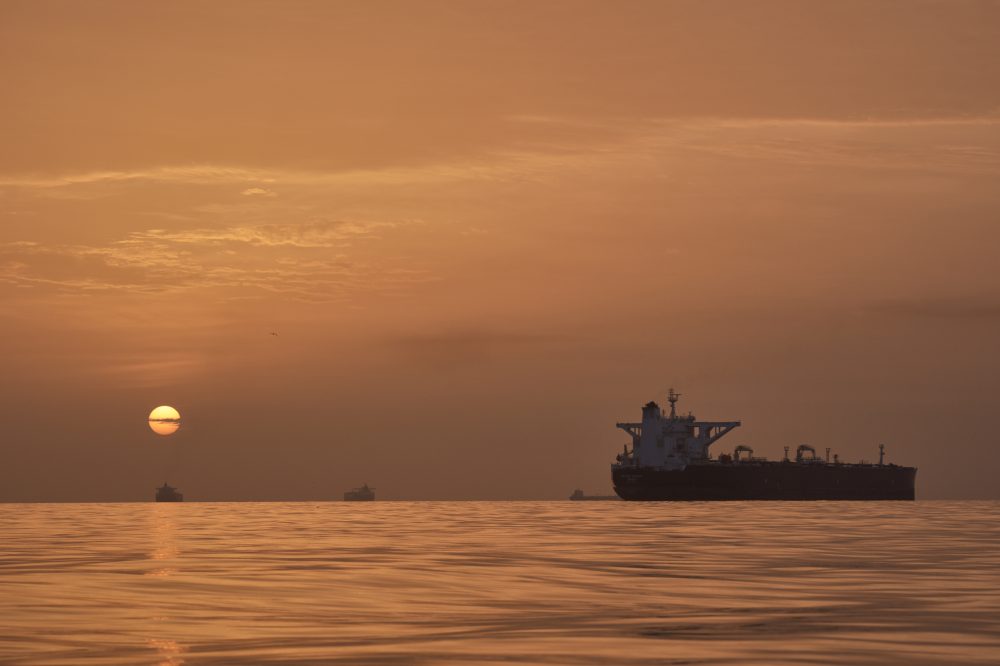

CAIRO (AP) — Iran has reinforced its commitment to blocking maritime traffic through the Strait of Hormuz while American sanctions continue against Iranian ports, as diplomatic efforts intensify to arrange additional negotiations before the current ceasefire ends this week.
These competing maritime restrictions have hindered Pakistani-led diplomatic efforts and created uncertainty about whether the temporary truce can be prolonged past its Wednesday expiration date.
“It is impossible for others to pass through the Strait of Hormuz while we cannot,” Iranian parliamentary Speaker Mohammed Bagher Qalibaf said in a televised interview late Saturday.
Qalibaf, serving as Iran’s primary negotiator in discussions with Washington, stated that Tehran would maintain its restrictions on commercial shipping through the vital waterway, following Iranian naval forces opening fire on vessels trying to transit on Saturday.
Iran had declared the strait would reopen following a 10-day ceasefire between Israel and the Iranian-supported Hezbollah organization in Lebanon that began Friday. However, after U.S. President Donald Trump announced the American blockade of Iranian ports “will remain in full force” until Tehran reaches an agreement with Washington, Iran stated it would maintain its strait restrictions.
Following a temporary increase in shipping attempts Saturday, vessels in the Persian Gulf remained stationary after two India-flagged ships came under fire during transit and were compelled to retreat. This development returned the strait, which typically handles approximately one-fifth of global oil commerce, to its previous blocked condition, potentially worsening the worldwide energy shortage and pushing both sides closer to renewed warfare as the conflict enters its eighth week.
With only days remaining before the temporary ceasefire between Washington and Tehran concludes, Iran announced Saturday it had received fresh proposals from the United States, while Pakistani mediators worked to organize another round of direct talks.
For Iran, blocking the strait — implemented after the U.S. and Israel initiated the conflict on Feb. 28 during nuclear program discussions — represents perhaps its strongest leverage, threatening global economic stability and creating political pressure on Trump. For Washington, the blockade pressures Iran’s struggling economy and its leadership by cutting off crucial revenue streams.
While the ceasefire continues, the maritime standoff risks returning the region to warfare that has claimed at least 3,000 Iranian lives, over 2,290 in Lebanon, 23 in Israel and more than a dozen across Gulf Arab nations. Thirteen American military personnel have died.
Revolutionary Guard patrol boats fired upon a tanker and struck a container ship with a projectile, damaging cargo containers, according to the British military’s United Kingdom Maritime Trade Operations center. India’s Foreign Ministry summoned Iran’s ambassador regarding the “serious incident” involving gunfire directed at two Indian-flagged commercial vessels, particularly after Iran had previously allowed several India-bound ships to pass.
“Americans are risking the international community, risking the global economy through these, I can say, miscalculations,” Iranian Deputy Foreign Minister Saeed Khatibzadeh told The Associated Press, adding that the U.S. is “risking the whole ceasefire package.”
Iran’s Supreme National Security Council released a statement declaring the blockade violated the ceasefire and announced Iran would stop “any conditional and limited reopening” of the strait. The council has recently functioned as Iran’s primary decision-making authority.
Because most military supplies for American bases in the Gulf region transit through the strait, “Iran is determined to maintain oversight and control over traffic through the strait until the war fully ends,” the council stated. This requires Iran-approved shipping lanes, fee payments and transit permit acquisition.
The renewed maritime dispute occurred hours after Pakistani Foreign Minister Ishaq Dar announced his nation was working to “bridge” disagreements between Washington and Tehran. Pakistan is anticipated to host a second negotiation round early next week.
Iran’s Supreme National Security Council said “new proposals” from Washington had been presented during a visit by Pakistan’s military chief and were under consideration.
However, Khatibzadeh indicated Iranians were not prepared for additional face-to-face negotiations because Americans “have not abandoned their maximalist position.”
He also stated Iran will not transfer its stockpile of 970 pounds (440 kilograms) of enriched uranium to the United States, describing the concept as “a nonstarter.” Khatibzadeh did not discuss alternative proposals for the enriched uranium, saying only that “we are ready to address any concerns.”
Trump said Saturday that Iran “got a little cute” but that “very good” conversations were occurring, with more information expected by day’s end. “They can’t blackmail us,” he added.