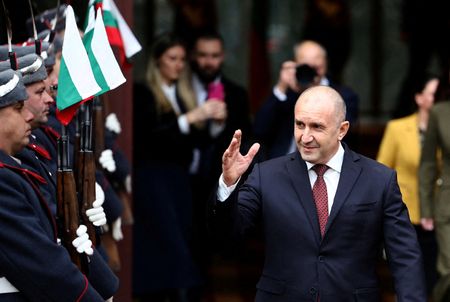

Citizens of Bulgaria head to the polls this Sunday for the nation’s eighth parliamentary election in just five years, with former president Rumen Radev holding a commanding lead as he pledges to bring stability and eliminate corruption.
Radev, a former fighter pilot with eurosceptic views who opposes sending military aid to Ukraine in its conflict with Russia, resigned from the presidency in January to enter the parliamentary race. The election follows massive demonstrations that toppled the previous administration in December.
The candidate’s polished social media presence, substantial financial resources, and promises of governmental stability have strengthened his position in the Balkan nation of approximately 6.5 million residents, where citizens have grown tired of constant elections and longtime politicians widely viewed as corrupt.
Economic concerns have also emerged as a major factor since Bulgaria adopted the euro currency in January. The former administration collapsed following demonstrations against a proposed budget that included tax increases and higher social security payments.
These domestic economic worries appear to outweigh voter concerns about Radev’s desire to strengthen ties with Moscow or restart Russian energy imports to Europe.
“I will put my trust in the new general in politics,” said Georgi Bozhkov, a 37-year-old civil servant worried about rising bills. “When there is something new, we should try the new thing.”
Recent polling data from Friday indicates Radev’s Progressive Bulgaria party commands approximately 35% support, an increase from the previous month. While this would represent one of the strongest single-party performances in recent years, it falls short of securing a parliamentary majority.
Public engagement appears to be increasing, with Sofia-based Alpha Research projecting voter turnout around 60%, nearly doubling the 34% participation rate from June 2024.
These numbers reflect growing dissatisfaction with the extended control of the GERB party under former Prime Minister Boyko Borissov, currently polling second at roughly 18%, and the Movement for Rights and Freedoms, led by Delyan Peevski, who faces U.S. and UK sanctions for corruption.
A potential governing partner could be the pro-European We Continue the Change-Democratic Bulgaria (PP-DB) alliance, which similarly advocates for reform measures.
Detractors point to Radev’s role in questionable actions by temporary governments he selected during his 2016-2024 presidency, including a 2023 energy agreement between Turkey’s Botas and Bulgaria’s Bulgargaz that resulted in financial losses and sparked an investigation.
“Any coalition that is formed is likely to suffer from government instability and face significant scrutiny from civil society and the opposition. Another snap election in 2026 is less likely now, but remains a significant possibility,” said Mario Bikarski, an analyst at risk consultancy Verisk Maplecroft.
Bulgaria has experienced significant development since communism ended in 1989 and became an EU member in 2007. The country has seen improved life expectancy, the European Union’s lowest unemployment rate, and enhanced economic protections since joining the eurozone.
However, corruption continues to be widespread, including during elections where vote purchasing is common. Bulgaria ranks 84th on Transparency International’s 2025 Corruption Perceptions Index, sharing the EU’s lowest position with Hungary.
“We really, really hope that something will change, and that these corrupt rulers of ours will be replaced,” said 82-year-old pensioner Temenuzhka Vaseva.