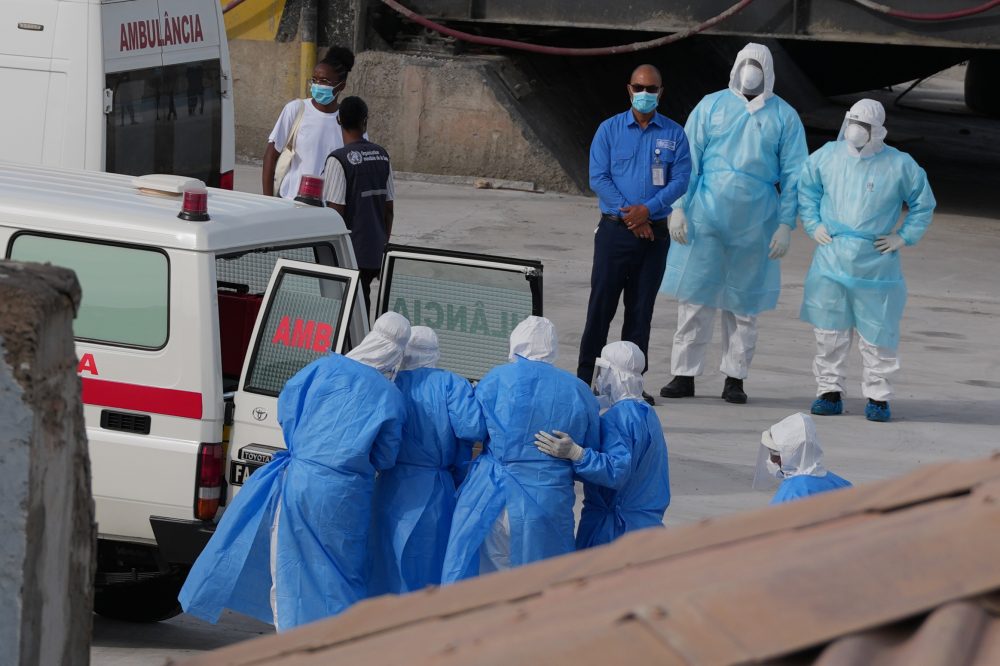

THE HAGUE, Netherlands (AP) — International authorities are coordinating efforts to manage 140 passengers and crew aboard a cruise vessel affected by a deadly hantavirus outbreak as it approaches Spain’s Canary Islands.
The ship is scheduled to arrive at Tenerife, located off West Africa’s coast, early Sunday morning.
The outbreak has claimed at least three lives, with additional passengers showing signs of infection.
Hantavirus typically spreads through breathing in contaminated particles from rodent waste. The disease’s symptoms emerge between one and eight weeks following exposure. While the World Health Organization states the general public faces minimal risk from this outbreak, the specific Andes strain involved in this incident can occasionally transmit between humans.
Officials and the cruise company continue releasing updates, though significant details remain unclear.
Here are the unanswered questions:
Argentine health investigators believe a Dutch couple initially caught the virus during a bird-watching excursion before joining the cruise in Argentina on April 1. However, no agency has verified the exact location or method of their infection.
Argentina’s Health Ministry has focused attention on Ushuaia, the country’s southernmost city. According to a written statement to The Associated Press, officials plan to visit the area in upcoming days, though no reason was provided for the postponement.
Spanish officials are making preparations to receive the remaining passengers and crew at Tenerife. Authorities announced Friday that upon the vessel’s arrival, passengers will be transferred via small boats to buses only after their homebound flights are confirmed ready for departure.
The United States has committed to dispatching an aircraft to the Canary Islands for American citizens, with Britain making similar arrangements. Other nations have not yet announced their evacuation strategies, leaving uncertainty about passenger wait times.
Virginia Barcones, Spain’s emergency services director, stated Friday that the country had requested medically equipped aircraft for symptomatic passengers, though availability remained uncertain.
Cruise operator Oceanwide Expeditions reports the MV Hondius left Ushuaia on April 1, making two port calls before the outbreak began.
Six additional passengers joined at Tristan da Cunha, a remote island. The vessel subsequently stopped at St. Helena island, where 30 passengers departed, including a Dutch woman and her deceased husband’s remains. Two of those 30 passengers have unknown nationalities, believed to be Chileans who boarded at Tristan da Cunha, the company stated.
Stephen Doughty, the U.K. minister of overseas territories, reported Friday that a Tristan da Cunha resident has been hospitalized with hantavirus symptoms. Whether this individual traveled on the ship remains unclear.
Oceanwide Expeditions initially reported the ship departed Argentina with 114 passengers plus an undetermined crew count. Updated company figures indicate 61 crew members from 12 nations were aboard, though potential crew changes during the voyage remain unknown.
The cruise company was compelled to revise passenger numbers and nationalities for those who disembarked at St. Helena after finding errors in their original data. Their revised count differs from Dutch Foreign Ministry estimates, with the discrepancy unexplained.
Numerous passengers who left at St. Helena continued to other destinations, including the Dutch woman whose husband perished aboard. She traveled to Johannesburg before briefly boarding an Amsterdam-bound flight. She was removed due to severe illness and later died.
South African and Dutch authorities are tracking anyone who contacted the deceased woman during her journey. A flight attendant who interacted with her tested negative for hantavirus after developing symptoms.
Certain governments, including the United Kingdom, have confirmed their citizens’ locations after leaving the vessel. U.K. health officials report two are self-quarantining at home, four remain on St. Helena, and one “has been traced outside of the U.K.” However, British officials have not disclosed or determined how many others these individuals may have contacted since departing.