
Speaking from Addis Ababa, Ethiopia, the head of Africa’s top health agency issued a strong call Friday for African governments to put more of their own money into fighting the Ebola outbreak spreading through Congo and Uganda — and into developing vaccines to combat it.
The Africa Centers for Disease Control and Prevention reported that the outbreak has killed more than 200 people among 894 confirmed cases since May 15. Officials are still working to trace more than 35,000 people who may have been exposed to the virus. The true number of cases is thought to be even higher, since the outbreak wasn’t officially confirmed until weeks after it began.
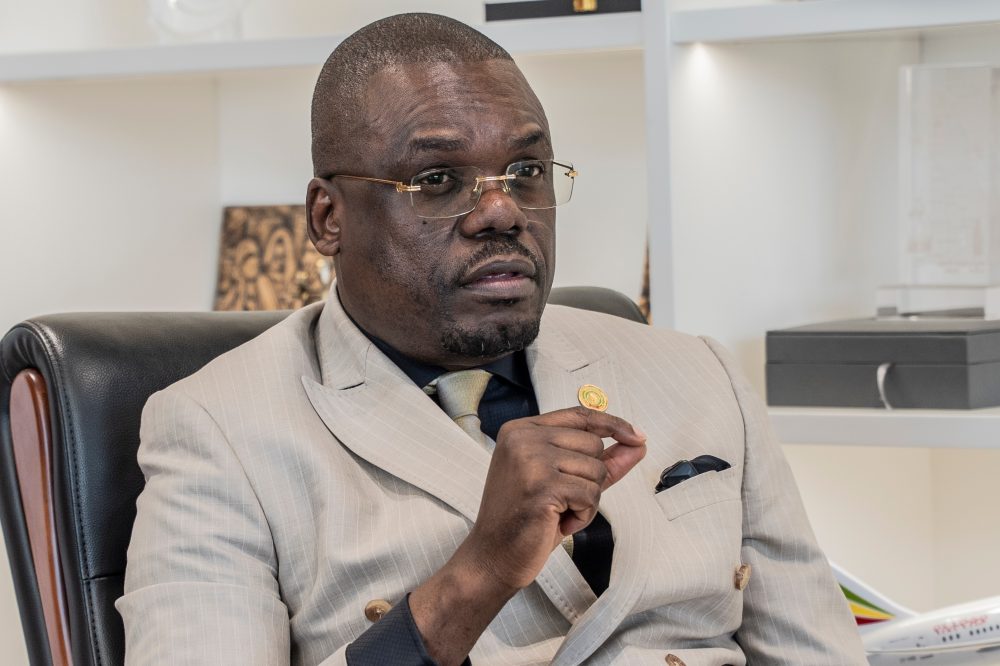
Africa CDC Director-General Dr. Jean Kaseya spoke with The Associated Press and made clear that this crisis — described as the worst Ebola outbreak at this stage ever recorded — should serve as a wake-up call for the continent to build up its own health infrastructure.
“If this outbreak was in Europe, the United States or other continents, they would already have developed a vaccine and medicine,” Kaseya said.
He added: “We don’t want to be a continent begging every day. We want to be a continent of people who know what they are doing and who are respected because they are doing the right thing.”
A major obstacle to containing the current outbreak is the absence of any approved vaccine or treatment for the Bundibugyo strain of the virus. Unlike the more common Zaire strain — which has an approved vaccine and was responsible for most of Congo’s 16 previous outbreaks — the Bundibugyo virus currently has no proven medical countermeasures.
At the heart of the outbreak in Congo’s eastern Ituri province, health workers are stretched thin, dealing not only with a relentless caseload but also with attacks from frustrated residents and widespread distrust of the response effort. Burials, including those of infants, have become a grim daily occurrence.
Africa has long struggled with limited vaccine production capacity. The continent currently manufactures less than 1% of the vaccines it needs and only 3% of its medicines, leaving hundreds of millions of people exposed when outbreaks occur. While the COVID-19 pandemic and other health emergencies have sparked efforts to grow local manufacturing, progress has been slow.
Kaseya said he is uncertain whether a vaccine against this strain of Ebola will be ready before the end of the year, even as work to speed up development continues. He also cautioned that the outbreak has not yet reached its peak, largely because contact tracing has been slow and officials have not yet identified the original patient who started the chain of transmission.
“This is why we are accelerating our fundraising to put on the ground so many teams to look for any contact, direct or indirect, and to start following them,” Kaseya said.
To push African nations to contribute financially, Kaseya said South Africa’s President Cyril Ramaphosa plans to travel to Ituri Province in Congo and to Uganda next week to help rally funding commitments. A newly created African Epidemic Fund has already received about $80 million in pledges from African governments, and a broader donor conference held this week brought in pledges totaling around $910 million.
“We need to take care of ourselves,” Kaseya said. “We need to say, ‘It’s time for us to really think strongly about how we can manufacture medicines and vaccines to meet our own needs.’”