
The Trump administration has handed over a large volume of previously withheld evidence to prosecutors in Minneapolis who are investigating the deaths of two American citizens shot by immigration agents during deportation operations earlier this year, local officials announced Monday.
Hennepin County Attorney Mary Moriarty, the city’s top prosecutor, said the federal government finally provided the evidence after six months of negotiations, disputes over jurisdiction, and legal action. She described the materials as “voluminous.”
The evidence package includes body camera recordings from agents involved in the shootings, additional digital materials, and the bullet-damaged vehicle belonging to victim Renee Good. Speaking at a news conference, Moriarty thanked federal officials for their willingness to “consider changing course.”
“We need cooperation. Our community needs it,” she told reporters. “Our democracy requires it.”
Moriarty said the handover followed conversations with the Minnesota U.S. Attorney’s office and the FBI’s local field office, neither of which responded to requests for comment Monday.
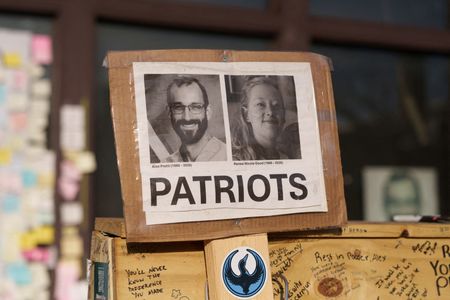
An Immigration and Customs Enforcement agent fatally shot Good inside her vehicle on January 7. Border Patrol agents shot and killed Alex Pretti on a public street during protests on January 24. Both victims were U.S. citizens. Separately, an ICE agent shot Venezuelan citizen Julio Sosa-Celis in the leg on January 14, wounding him.
Moriarty’s office is still actively investigating the deaths of Good and Pretti, and she has not yet announced whether state charges will be filed against the federal agents responsible. However, charges have already been brought in connection with the Sosa-Celis shooting — ICE agent Christian Castro has been indicted under Minnesota law on four counts of second-degree assault and one count of falsely reporting a crime.
All three incidents occurred during Trump’s Operation Metro Surge last winter, a large-scale enforcement campaign in which hundreds of armed immigration agents swept through Minnesota cities in search of individuals to deport.
Democratic leaders in the state publicly condemned the Republican president’s actions, saying constitutional rights of Minnesotans were being widely violated, and pledged to pursue accountability.
The Trump administration had previously refused state requests for the evidence, arguing that only the U.S. Department of Justice and the Department of Homeland Security should investigate the agents involved. Officials also incorrectly claimed the agents had blanket immunity from state prosecution.
Federal law enforcement agencies abruptly stopped their standard evidence-sharing practices shortly after Good’s killing, prompting the state to file a lawsuit against the Trump administration. That legal case is still active, though Moriarty indicated it could potentially be resolved once her office has had time to review the newly received materials.
Pursuing a state criminal case against a federal law enforcement officer is an uncommon and legally challenging process. The U.S. government has the ability to move such a case from state to federal court if the Department of Justice argues the agent was performing lawful duties at the time.
In February, amid public anger over the shootings, the Trump administration announced it was ending the large-scale deportation surge in Minnesota and would instead focus on more targeted enforcement rather than broad sweeps.
In other recent immigration-related incidents, an ICE agent last week fatally shot Lorenzo Salgado Araujo, a Mexican man federal officials said had been living in the U.S. without legal status for decades, during a traffic stop in Houston. On Monday, a separate shooting involving U.S. immigration agents left one person dead in Biddeford, Maine.