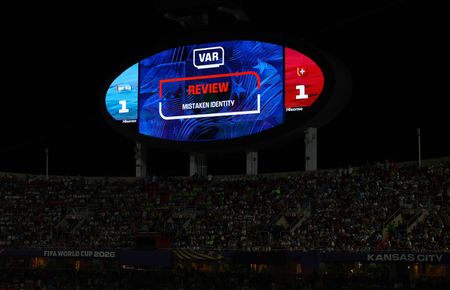

Argentina’s run to the World Cup semi-finals is drawing as much attention for refereeing disputes as it is for the team’s play on the field, with critics and former officials raising serious concerns about the fairness of officiating at the tournament.
The defending champions have faced repeated accusations from opponents who believe referee decisions have gone in Argentina’s favor, and social media users have taken to calling the team “VARgentina” — a nod to the video review system at the center of the controversy.
Things came to a head during Saturday’s quarter-final matchup between Argentina and Switzerland. Swiss forward Breel Embolo received a second yellow card for simulation — a call made possible through a VAR protocol — and was ejected from the game. Switzerland’s head coach Murat Yakin did not hold back, describing the rule as “unacceptable.”
Reuters has reached out to FIFA seeking comment on the controversy.
The protocol at issue relates to cases of mistaken identity and is one of several situations where VAR is permitted to step in under rules adopted for the 2026-27 season and the current World Cup. Critics say the largely untested rule has now been thrust into the spotlight at the biggest stage in soccer.
Christina Unkel, a rules analyst for British broadcaster ITV and a former FIFA referee, said the protocol was applied too broadly. “I don’t think it should have been applied in the first place. It was too broad,” she said.
Unkel went on to explain her deeper concern with how the rule is being used. “And where I’m struggling with it is we’re not just changing who gets the card, we’re changing the underlying decision from a free kick going this way to saying no, no, no, it’s actually a decision completely opposite way. So we’re changing the basis of the decision,” she said. “And to me, that is where we are now officially, I think, in the re-refereeing area that VAR has been fighting to try to stay out of.”
The fact that the ruling ended up helping Argentina only intensified the backlash from fans. Unkel described the situation as a ticking time bomb. “This new expansion of the protocol without testing it, without really knowing that that’s what they wanted it to do… it’s just like a powder keg,” she told Reuters. “I’m just waiting for the final lynchpin.”
The controversy did not begin with the quarter-final. During the group stage, Algeria called for Messi to be removed from the game after he appeared to step on the calf of their captain Aissa Mandi. No card was issued, and Messi went on to score three goals. Algeria later filed a formal complaint about the officiating in that match, according to a source who spoke with Reuters.
Argentina’s round of 16 victory over Egypt also generated days of controversy. Egypt scored in the 62nd minute, but the goal was overturned following a VAR review that determined a foul occurred during the buildup. A penalty appeal from Egypt later in the match was denied, and Argentina ultimately won the game with a goal in the 92nd minute. Egypt’s football association stated that multiple officiating decisions affected the result.
Unkel said she did not see clear evidence of poor refereeing in either of those two matches, though she acknowledged that referees are often the first to be blamed when things go wrong. She did note, however, that decisions made off the field have contributed to growing distrust among fans.
FIFA’s handling of two red-card cases drew additional criticism this month. U.S. striker Folarin Balogun received a last-minute reprieve from a one-match ban, while England defender Jarell Quansah was handed a two-match suspension — a contrast that raised eyebrows.
Unkel, who also serves as president of United Soccer League women’s side Tampa Bay Sun FC, said the level of public frustration she is witnessing is unlike anything she has seen before. “I think fan confidence is completely eroded right now,” she said. “I’ve covered major tournaments in this position and or as a referee and I have never seen the level of chatter — not just on social media.”