Motorists traveling on Peach Tree Run should plan for potential delays today as construction crews have shut down one southbound lane.
The lane closure affects the stretch of roadway between Lochmeath Way and Mifflin Meadows Drive, according to Delaware Department of Transportation officials.
The construction work is scheduled to continue until 5 PM today, after which normal traffic patterns are expected to resume.
Drivers are advised to allow extra travel time and consider alternate routes if possible to avoid congestion in the area.
QUSHTAPA, Iraq (AP) — Displaced as children from Iran decades ago, thousands of Kurdish refugees now living in Iraq maintain cautious optimism that ongoing conflicts involving the U.S. and Israel could destabilize the Iranian government that drove them from their homeland.
These Iranian Kurds cling to dreams of returning to ancestral homes they know only through wall paintings and aging family photos displayed in their current dwellings.
However, these thousands of displaced people understand that their desire for political independence and their long-standing resistance to Iran’s religious leadership make a safe return improbable. They insist they will only return home if Iran gets a new government that ensures their protection and supports their political objectives.
More than 300 families live in Kawa Camp, located in the Qushtapa district of Irbil within northern Iraq’s self-governing Kurdish territory. These families were forced from their homes following Iran’s 1979 Islamic Revolution, which triggered prolonged warfare with Kurdish independence movements.
Many current residents descend from those original fighters. As children, they escaped with their families from Kermanshah, a northern Iranian province. Some later joined resistance movements while in exile, launching attacks against Iranian security personnel. Most now struggle economically on the fringes of Iraqi Kurdish society, lacking citizenship, full legal rights, access to public services, or property ownership rights.
At Kawa Camp, residents’ hopes for homecoming are clouded by profound distrust of international powers that have repeatedly used their struggle for strategic purposes. Many interpreted recent reports about the Trump administration potentially asking for their support in ground operations against Iran as another example of such exploitation.
“From 1979 until now, this has been our only hope — that the regime will fall. I’m watching the clock; if it falls now, I’ll return home the next second,” said a 57-year-old member of the Iranian Kurdish opposition party living in Kawa, who fled Iran at age 11.
This individual, like most people interviewed for this report, requested anonymity due to concerns about retaliation from Iran-supported Iraqi militias that have increased attacks on Iranian Kurdish installations. They also worry about Iranian intelligence surveillance, as many still have family members living in Iran.
Iraqi Kurds control a semi-independent region in northern Iraq. Many have conducted insurgency operations aimed at creating their own nation, which they call Kurdistan. Iranian Kurds have extensive historical complaints against both the Islamic Republic and the monarchy that came before it.
Community leader Jehangir Ahmadi displays a painting of a street from his birth village in Iran’s predominantly Kurdish Kermanshah province, which shares a border with Iraq. He hasn’t visited that street in almost five decades, and his childhood memories play like vintage footage: He remembers playing among those dusty walls while village elders would gather under the poplar trees.
Ahmadi recalls the frantic escape from home and the lengthy wait to cross the border. His family initially stayed in a border camp before relocating to another facility in the desert regions of western Anbar province. Security conditions worsened dramatically after Saddam Hussein’s overthrow during the 2003 U.S.-led invasion, leading the United Nations to relocate them again.
Through the years, temporary shelters were replaced with permanent housing, marketplaces developed, and the Iranian Kurds gained employment rights, with many working as traders, cab drivers and factory employees. However, purchasing property or vehicles requires finding an Iraqi guarantor who must accept legal responsibility for them, essentially binding their futures to that guarantor, Ahmadi explained.
“For all our lives in Iraq we were paying the price of leaving. Until now people look at us like we are slaves,” Ahmadi said. “Until now we don’t have good work, no good place to live.”
According to Ahmadi, Kurds, particularly Iran’s Kurdish population, have consistently been victims throughout history. He cited the brief Republic of Mahabad in northwestern Iran, which had Soviet backing before collapsing in 1976; Iran’s 1975 withdrawal of support for a failed Kurdish rebellion against Iraq; Iraq’s 1988 chemical weapon attacks against Kurds; and territorial losses in northeast Syria following President Bashar Assad’s December 2024 downfall.
Therefore, Ahmadi expressed doubt about the reported U.S. request for backing an Iranian Kurdish military force in the current conflict.
“We didn’t trust that they will support us because we are wounded nation, we have been betrayed many times,” he said.
Iranian Kurdish opposition militias operating from Iraq have faced attacks from Iran’s Iraqi allies since the Iran conflict began.
Military leaders and Iraqi Kurdish politicians report they lack the capability to launch a genuine ground assault without U.S. air support, and that the concept proposed by the United States was never formally discussed with Washington.
A high-ranking Iraqi Kurdish official revealed that some Iranian Kurdish organizations initially anticipated Iran’s religious government would quickly collapse and planned to advance into Iranian Kurdish regions to claim victory. Other Iraqi Kurdish leaders, viewing Tehran’s administration as more durable, gave them a stark warning: “You will be massacred,” according to the official.
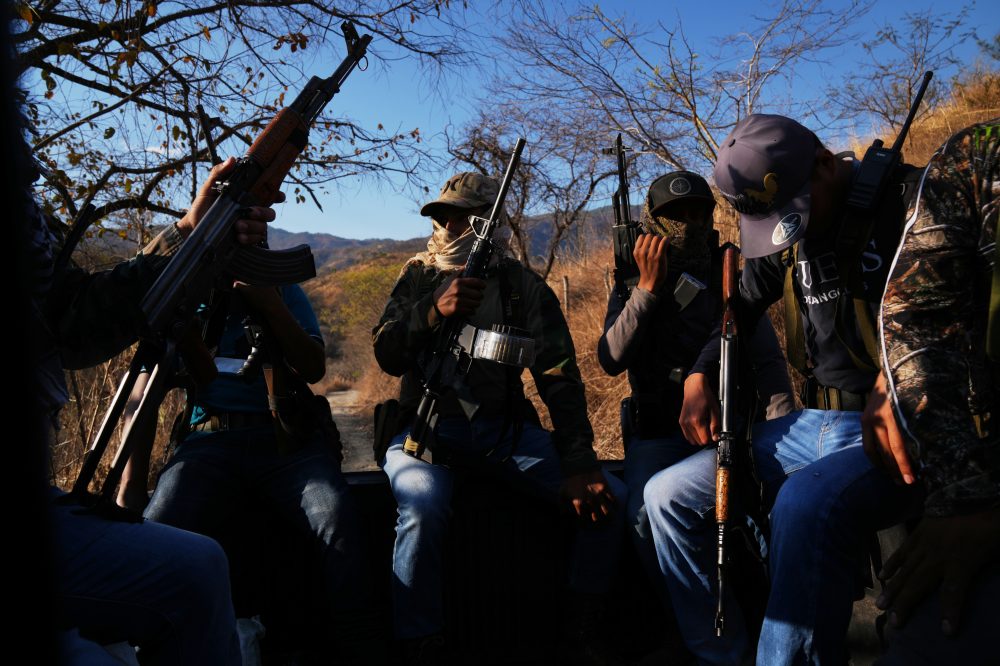
Unit commander Rebaz Sharifi took cover in a mountain crevice when Iran-backed militias launched a drone attack on a Kurdistan Freedom Party base, waiting for additional strikes to end. The party is an Iranian-Kurdish nationalist independence organization known locally as PAK.
Sharifi reported there are approximately 8,000 to 10,000 Iranian Kurdish fighters — a number confirmed by two other Iraqi Kurdish officials. Apart from standard assault weapons, they lack advanced modern armaments and do not have drones, which are essential in contemporary warfare.
He stated that Iranian-Kurdish organizations are requesting security assurances, particularly air protection, to defend against Iranian rockets and drones.
“We don’t want to go now because we know we will die because of (Iranian) airstrikes and missiles,” he said. “It’s not the right time for this because Iranian forces still have power to control the skies.”
At just the possibility that these groups might prepare for deployment, Iran-backed forces in Iraq began launching almost daily aerial bombardments.
“So, imagine what they will do if we move there now,” Sharifi said.
The danger of ongoing attacks forced Kurdish fighters to relocate their families from military installations to nearby towns for protection.
In Kawa, a local resident connected to the Democratic Party of Iranian Kurdistan is providing shelter for a fighter’s wife and children from the party’s military branch. They relocated from the party’s Koya camp near the border due to persistent attacks during the war’s initial days.
The militia drone strikes haven’t targeted civilian areas yet, but the party member worries this could change as the conflict continues.
“Every day we are afraid of the militias,” he said. “We are nervous at night because we think they might hit here also.”
He also fears Iranian intelligence operations in the region.
“My relatives in Iran told me that they know where I work, what I do, and where I live,” he said.
Drivers traveling on Janice Road are facing traffic delays today as construction crews have temporarily shut down the southbound lane.
The closure affects the stretch of roadway running from Nassau Park Road to Coastal Highway (Route 1), according to DelDOT officials.
The southbound lane is expected to reopen by 5 PM today, though motorists are advised to seek alternate routes or allow extra travel time when passing through the area.
No additional details about the nature of the construction work were immediately available.
Motorists traveling southbound on Kenton Road should expect delays today as construction crews have closed one lane of traffic.
The lane closure affects the stretch of Kenton Road between Chestnut Grove Road and Burning Tree Road, according to DelDOT traffic information.
The construction-related lane restriction is scheduled to be lifted by 5 PM this evening. Drivers are advised to allow extra travel time or consider alternate routes to avoid potential backups in the area.
OSLO, Norway (AP) — In her first public discussion about the controversial connection, Norway’s Crown Princess Mette-Marit revealed she felt manipulated and unsafe during interactions with deceased sex offender Jeffrey Epstein, particularly during a 2013 visit to his Florida estate in Palm Beach.
Crown Princess Mette-Marit, wife of Crown Prince Haakon who is next in line for Norway’s throne, participated in a 20-minute television interview Thursday with Norwegian network NRK alongside her husband. The interview took place on the same day her son Marius Borg Høiby’s criminal trial wrapped up.
Høiby, the crown princess’s child from an earlier relationship, faces rape charges that he has denied. Prosecutors are requesting a sentence of seven years and seven months imprisonment. The court’s decision is anticipated in early June.
While Thursday’s NRK broadcast didn’t reveal any shocking new information, it represented the royal couple’s first formal media appearance to discuss the controversy surrounding the crown princess’s connection to Epstein. Although her association with him has prompted criticism of her decision-making, she faces no criminal allegations.
The interview’s duration was shortened because of Mette-Marit’s medical condition — she suffers from pulmonary fibrosis, a lung disease that severely impacts breathing.
The crown princess had previously issued an apology for placing the royal family in a difficult position. Her initial meeting with the American financier occurred in 2011, with their communication extending through 2014. Documents related to Epstein referenced the crown princess hundreds of times, and she expressed regret about their association in 2019.
Epstein died by suicide in 2019 while facing trial for sexually abusing minors at his U.S. residences. Speaking to NRK, Mette-Marit stated she was unaware of his criminal behavior and abuse, noting she only observed his interactions with adults and never saw illegal activity.
During the interview, she expressed feelings of responsibility toward Epstein’s victims and revealed she has spent years reflecting on their connection and the accusations against him. She acknowledged failing to properly investigate his background.
Released documents containing email correspondence between the pair suggested what appeared to be a close friendship to some observers. In one electronic message, Mette-Marit told Epstein, “you tickle my brain.”
During October 2012, Epstein mentioned in an email that he was in Paris “on my wife hunt.” The crown princess responded that Paris was “good for adultery” but “Scandis” made “better wife material.”
Additional email exchanges revealed that Mette-Marit used an Epstein-owned Florida property in Palm Beach for several days in 2013. She explained the arrangement came through a shared acquaintance, and it was during this stay that she experienced the troubling encounter that prompted her to telephone Haakon back in Norway.
Though she refused to provide additional details during the NRK interview, she explained that she maintained contact with Epstein afterward because she was naive and had fallen victim to his manipulation.
ROME (AP) — Umberto Bossi, who established Italy’s Northern League party and emerged as one of the nation’s most impactful yet controversial political personalities, passed away Wednesday at 84 years old, according to his party.
Political leaders from across Italy responded quickly to news of his passing. President Sergio Mattarella honored him as “a passionate political leader and sincere democrat,” while Premier Giorgia Meloni recognized his “fundamental contribution” to creating Italy’s first modern center-right coalition.
Starting from humble beginnings, Bossi built a political movement that transformed Italy’s postwar political scene. Beginning in the late 1980s, he became the spokesperson for northern Italy’s frustrated taxpayers, turning regional complaints into a populist campaign focused on independence and sometimes complete separation from the south.
His famous populist phrase “Roma ladrona” (Thieving Rome) captured his criticism of the corrupt central government and became a battle cry for disappointed voters across a generation.
Bossi was born September 19, 1941, in Cassano Magnago, a small industrial town in northern Italy’s manufacturing region. He officially began his national political career in 1987, gaining the nickname “Il Senatùr” (the Senator in Lombard dialect) when he joined Italy’s senate.
Throughout the following years, he successfully grew the Northern League from a small regional organization into a major national political power, creating partnerships — and unexpected breaks — with late center-right leader Silvio Berlusconi.
Under Berlusconi’s government, he held ministerial positions twice, focusing on institutional reform while advancing his lifelong goal of national federalism.
Bossi’s legacy remains complicated: supporters viewed him as a visionary while critics saw him as a divisive populist, but everyone agrees he was a major figure whose ideas and aggressive political approach permanently changed modern Italian politics.
His appearance in a white tank top during summer 1994 became a legendary moment in Italian political history, deliberately contrasting with the polished image of his political partner-turned-opponent Berlusconi. This image became a lasting representation of his straightforward, “common man” approach.
A severe stroke in 2004 greatly impacted Bossi’s health, though he stayed involved in politics for many years following his recovery.
In 2012, he resigned from party leadership after a controversy involving misused party money, but he maintained his influence as the movement’s founding figure, despite tensions with current party leader Matteo Salvini.
DES MOINES, Iowa (AP) — Rev. Sarah Trone Garriott moves effortlessly between the pulpit and the campaign trail, equally at ease discussing faith and political issues.
Last Sunday, she delivered a powerful message at Grace Lutheran Church urging congregants to embrace strangers as Christ would. Just one day earlier, she was campaigning across rural Iowa, condemning cuts to Medicaid and their effects on healthcare accessibility for residents.
The Lutheran minister and state legislator represents one of three religious leaders in Iowa seeking Democratic nominations for U.S. House seats.
Following years where white Christian voters have heavily backed Republican Donald Trump, an unprecedented number of religious leaders are now pursuing political office under the Democratic banner. While James Talarico, a 36-year-old Presbyterian Church (U.S.A.) seminary student who recently secured his Texas primary victory for U.S. Senate, has captured widespread media coverage, he represents just one example of numerous progressive candidates with theological backgrounds this election cycle.
“Because there’s been the tendency to define Christianity as very conservative and with a Christian nationalist lens, I think you are seeing people on the Democratic side saying, ‘Wait a minute. There are different ways to think about how our faith informs our policy,’” said Melissa Deckman, CEO of the Public Religion Research Institute.
The Democratic Party now faces the complex task of developing sustainable faith-based messaging within a coalition that includes more religious diversity than Republicans while also accommodating a significant portion of non-religious voters.
Trone Garriott, who received ordination through the Evangelical Lutheran Church in America, has built extensive experience in interfaith collaboration, which she credits with strengthening her own Lutheran identity. This background shapes her campaign approach, allowing her to move naturally from a Friday evening Lenten fish fry at a Catholic parish to an Iftar meal at a nearby mosque.
Even with prominent politicians like former President Joe Biden, a devout Catholic Democrat, speaking openly about their beliefs, Trone Garriott believes many Democrats struggle to connect with certain religious communities due to discomfort in meaningful faith discussions.
“A lot of folks just don’t have the practice to do it in a way that doesn’t feel like it’s imposing oneself on others or being dismissive of other perspectives,” she said. “Folks tend to fall back into this, ‘Well, everyone’s basically the same.’ We’re different and those differences are important.”
However, Trone Garriott observes that Democrats are recognizing that minimizing religious distinctions isn’t effective. “That left a vacuum that the religious right has filled. And there are a lot of people now realizing that it is really important to speak about these issues from the perspective of faith and claim their faith,” she said.
Talarico, a Texas state legislator who gained national recognition following his appearance on Joe Rogan’s podcast last summer, exemplifies this approach.
“If we have to force people to put up a poster, to me that means that we have a dead religion,” he said of his opposition to a Texas bill requiring that public schools display the Ten Commandments.
Deckman notes that Talarico stands out among white Democrats for his ease in discussing Biblical teachings. However, this has also made him a target for conservative critics, especially regarding his theological justifications for supporting abortion access and LGBTQ+ rights.
“He would be one that I would say, ‘Wait a minute. You are misrepresenting the word of God,’” said Bob Vander Plaats, the politically influential president and CEO of the conservative Christian group The Family Leader. “The GOP has been vastly more consistent in their proximity to God’s word, versus using a verse here and there to try to back up a position.”
During the 2024 election, Trump again secured support from approximately 8 in 10 white evangelical Christian voters, according to AP VoteCast, a comprehensive survey of more than 120,000 voters, while the same percentage of Black Protestant voters chose Democrat Kamala Harris. Roughly 7 in 10 non-religious voters backed Harris.
Democratic Kentucky Gov. Andy Beshear attributes this lack of support from certain religious voters to the party’s messaging approach.
“We stopped talking about our why,” he said. “When that happens, I think you lose your authenticity. And sometimes that means that people stop believing that you are going to work as hard as you’re committed to doing.”
As speculation grows about a potential 2028 presidential run, Beshear, who serves as a deacon in his Disciples of Christ congregation, plans to share his motivations through his upcoming book, “Go and Do Likewise: How We Heal a Broken Country,” referencing the Biblical Parable of the Good Samaritan.
“My faith is is my authentic why. It’s what drives me to try to better this world,” he said.
The overwhelming Trump support among white Christians has prompted some to engage in self-reflection. “I put that on us as pastors, that maybe we haven’t done a great job of explaining the faith to people,” said Clint Twedt-Ball, a minister seeking office in Iowa’s 2nd Congressional District.
Black religious leaders running as Democrats isn’t unprecedented. U.S. Sen. Raphael Warnock, D-Ga., serves as a Baptist senior pastor and the late Rev. Jesse Jackson mounted two presidential campaigns. However, fewer examples exist of white clergy pursuing similar paths, despite possessing obvious transferable skills like public speaking that benefit campaigning.
Both Twedt-Ball, a third-generation United Methodist pastor and founder of the nonprofit Matthew 25, and Lindsay James, a PCUSA chaplain also running in Iowa’s 2nd district, cite the 2016 election as the turning point for their political engagement.
This movement of pastors entering politics extends beyond congressional campaigns.
Rae Huang, also a PCUSA minister and Democratic Socialists of America member, is challenging Los Angeles Mayor Karen Bass. Huang reports that her openness about being a pastor generates questions from voters.
“‘Are you somebody who is homophobic? Are you somebody who is gonna try and create a theocracy in our city?’ Because that’s all they’ve known,” she recalled. She views this as a chance to present voters with a positive theological vision. “Religion doesn’t have to be that space of oppression, that space where we have been suppressing voices rather than uplifting and liberating.”
Following his election as New York City’s first Muslim mayor, Zohran Mamdani discussed on comedian Trevor Noah’s podcast the significance of having imagination for change in politics — a concept Noah connected to religious faith.
“Religion is declining, but it’s declining in areas where people are particularly left-leaning or progressive,” Noah said. “One of the things that faith requires of you is the ability to believe that this current state that you’re in is not the end — there is a possibility that something can be greater.”
Mamdani, who isn’t clergy but speaks openly about his faith, concurred. “It’s often in houses of worship where New Yorkers still have that trust,” he said. “It’s by and large lost when it comes to politics.”
Huang, whom the Los Angeles Times suggested could be “L.A.’s Mamdani,” shares this perspective.
“We’re called and being invited to be prophetic, to be forward thinking, to actually grow our imagination,” she said. “The religious right has a hold over American culture. I think that’s changing. I think progressive Christianity is beginning to stand up.”
WASHINGTON — Defense Secretary Pete Hegseth’s integration of evangelical Christian beliefs into Pentagon operations has sparked fresh controversy as the United States engages in military conflict with Iran.
Since taking office, Hegseth has organized monthly Christian worship gatherings for Pentagon staff and incorporated biblical passages into departmental promotional materials. The defense chief frequently promotes the idea that America was established as a Christian nation and encourages military personnel to embrace faith, raising concerns about the armed forces’ traditionally secular approach and religious diversity.
The current military engagement with Iran, an Islamic republic, has amplified concerns about Hegseth’s religious messaging. During a Pentagon briefing, he described Iranian leadership as “desperate and scrambling,” then quoted Psalm 144: “Blessed be the Lord, my rock, who trains my hands for war and my fingers for battle.”
Hegseth has previously praised the medieval Crusades, writing in his 2020 publication “American Crusade” that supporters of Western civilization should “thank a crusader.” His body art includes Crusader symbols: the Jerusalem Cross and “Deus Vult” (“God wills it”), which he describes as “the rallying cry of Christian knights as they marched to Jerusalem.”
Matthew D. Taylor, a Georgetown visiting scholar specializing in religious extremism who has criticized Hegseth, expressed alarm about the current situation. “The U.S. voluntarily going to war against a Muslim country with the military under the leadership of Pete Hegseth is exactly the kind of scenario that people like me were warning about before the election and throughout his appointment process,” Taylor stated.
Taylor argued that Hegseth’s approach “can only inflame and reinforce the fears and deep animosity that the regime in Iran has towards the U.S.”
When questioned about whether Hegseth interprets the Iranian conflict through a religious lens, Pentagon officials referenced a CBS interview where he appeared to confirm this perspective. “We’re fighting religious fanatics who seek a nuclear capability in order for some religious Armageddon,” Hegseth said regarding Iranian leadership. “But from my perspective, I mean, obviously I’m a man of faith who encourages our troops to lean into their faith, rely on God.”
Many evangelical Christians have been shaped by apocalyptic literature and films depicting end-times scenarios, with some believing Middle Eastern conflicts involving Israel will trigger Christ’s return. Christian Zionist leader John Hagee, who heads Christians United for Israel, commented on the Iran war: “Prophetically, we’re right on cue.”
However, Hegseth’s denomination takes a different theological approach. Pastor Doug Wilson of the Communion of Reformed Evangelical Churches believes most biblical apocalyptic events have already occurred, setting the stage for gradual global Christianization before Christ’s return.
While Hegseth hasn’t explicitly connected the Iran conflict to Christian prophecy, viral claims emerged suggesting military leaders were telling troops the war fulfilled biblical end-times predictions. These allegations originated from Mikey Weinstein of the Military Religious Freedom Foundation, prompting 30 Democratic Congress members to request a Pentagon investigation.
Weinstein declined to provide documentation supporting his claims when interviewed, citing troops’ fears of retaliation. Three major religious watchdog organizations reported receiving no similar complaints, and the Pentagon refused to address the allegations.
Hegseth’s church network promotes traditional gender roles, prohibiting women from leadership positions and advocating for criminalizing homosexuality. He recently shared content from a pastor opposing women’s voting rights. Wilson, the denomination’s prominent leader, identifies as a Christian nationalist and spoke at the Pentagon in February at Hegseth’s invitation.
Both Wilson and Hegseth have questioned Muslim immigration policies. Wilson advocates restricting Muslim immigration to maintain America’s Christian majority, while Hegseth’s book expressed concern about Muslim population growth and the popularity of the name Muhammad in America.
As defense secretary, Hegseth has implemented policies reflecting his conservative Christian beliefs, including prohibiting transgender military service, reducing diversity programs, and examining women’s combat roles.
Christopher Newport University political scientist Youssef Chouhoud criticized these developments, stating: “The intrusion of Christian nationalist policy, not just Christian nationalist rhetoric … that is what’s troubling.”
Hegseth plans to overhaul the military chaplain system, which traditionally serves personnel of all faiths and those without religious beliefs. He eliminated the 2025 Army Spiritual Fitness Guide and aims to strengthen chaplains’ religious emphasis, which he claims has been weakened “in an atmosphere of political correctness and secular humanism.”
Retired Army Colonel and chaplain Rabbi Laurence Bazer warned this approach could alienate service members when military leadership draws exclusively from one religious tradition. “The U.S. military reflects the full diversity of this country — people of every faith step forward to serve,” Bazer stated. “That diversity is a strength worth protecting.”
While Election Day falls on November 3rd this year, voters in 14 states who mail their ballots have additional time for their votes to arrive and be tallied – anywhere from one day to several weeks after the election.
This extended timeframe faces a crucial test as the U.S. Supreme Court prepares to hear arguments Monday in a case that could eliminate these grace periods entirely. A ruling against these policies would force affected states to quickly adapt their procedures with just months remaining before absentee ballots go out for the upcoming midterm elections.
The decision’s impact could reach beyond the 14 states with standard ballot grace periods. According to data from the National Conference of State Legislatures and the Voting Rights Lab, 29 states currently permit late-arriving military and overseas ballots.
Election officials from states and major cities warned the court about “the risks of confusion and disenfranchisement” should mail ballot grace periods be suddenly eliminated in jurisdictions where voters have depended on them for years.
Stuart Holmes, who oversees elections for Washington’s Secretary of State office, noted that 127,000 ballots arrived after Election Day in 2024. He expects roughly that same number of ballots would face rejection if Mississippi loses its case. Washington allows the longest grace period nationwide at 21 days post-election.
Should the court rule that ballots become invalid even when postmarked by Election Day, “it might as well have never been received,” Holmes explained.
“There’s no way to resolve that issue,” Holmes said. “There’s no second chance.”
Counting ballots beyond Election Day has drawn criticism from President Donald Trump since his 2020 “STOP THE COUNT” efforts. Trump and supporters contend the practice delays outcomes and creates suspicion about vote totals. This challenge fits into Trump’s wider criticism of mail voting, which he claims encourages fraud despite contrary evidence and successful implementation across multiple states over many years.
The Republican National Committee and Mississippi’s Libertarian Party filed suit against Mississippi Secretary of State Michael Watson, also a Republican. They contend federal Election Day laws require voting to occur on a single day. Grace periods for mail ballot receipt – also used in Washington D.C. and three U.S. territories – break federal law, according to their argument.
“Election Day is Election Day for a reason,” Ohio state Sen. Theresa Gavarone, a Republican, stated during last year’s debate over her state’s prohibition of the practice. “Allowing ballots to be delivered days after the election does nothing but hurt the integrity and credibility of our elections.”
In court filings backing Mississippi, voting rights organizations, local election administrators and groups representing military and overseas voters defend states’ authority to establish their own voting procedures. The Constitution grants states power to determine the “times, places and manner” of elections.
Grace period advocates warned the court that upholding the 5th Circuit Court of Appeals’ decision striking down Mississippi’s law would create disorder and uncertainty in this year’s midterm contests.
“State legislatures have recognized this issue and set election deadlines that balance the interests of canvassing speed and ballot security depending on the specific needs of each individual state,” local election officials and governments informed the court.
These organizations said removing grace periods could impact ballot verification procedures, provisional ballot handling, and military and overseas ballot processing that typically occurs after Election Day.
Every state requires ballots to be cast or postmarked by Election Day. The 14 states with grace periods accept and tally mailed ballots for timeframes spanning from one day post-election in Texas to Washington state’s 21-day window. Mississippi’s challenged grace period lasts five days.
A November 2025 Brookings Institution analysis determined mail voting offers a practical, secure method to expand voter participation, finding approximately four fraud cases per 10 million mail ballots. About 30% of U.S. voters chose this option during the 2024 presidential race.
Anticipating the Mississippi case outcome, several states have already taken action.
According to the National Conference of State Legislatures and Voting Rights Lab, four states – Ohio, Kansas, North Dakota and Utah – removed grace periods last year. Minnesota reduced its ballot deadline from poll closing on Election Day to 5 p.m.
When signing Ohio’s legislation, Republican Gov. Mike DeWine – who had promised not to approve additional election restrictions promoted by fellow Republicans – said the Mississippi lawsuit compelled his decision.
“I believe that this four-day grace period is reasonable, and I think for many reasons it makes a lot of sense,” he stated then, acknowledging his preference to reject the bill.
However, DeWine said a ruling against Mississippi would endanger similar statutes in other states like Ohio, leaving insufficient time for adjustments.
For Adriane Mohlenkamp, Ohio’s former grace period offered reassurance against concerns that factors beyond her control might invalidate her ballot.
“I live in a rural part of the state and sometimes our mail has to go to a larger city and then come back,” explained Mohlenkamp, 48, a stay-at-home mother and volunteer in Athens who doesn’t align with either major party. “It gave me a safe feeling, because, even if I do my due diligence and return it in enough time, I can’t always anticipate what it does when it leaves my hands.”
Katy Owens Hubler, elections program director at the National Conference of State Legislatures, explained that in certain large states, distributing all mailed ballots and receiving them back within designated timeframes proves challenging.
She noted the postmark matter has grown more complex for states following recent U.S. Postal Service mail processing modifications.
An updated agency rule from December stated postmarks may not reflect the initial day the Postal Service receives mail, but instead when it reached a processing facility. These facilities may be more distant from some communities due to consolidations, a group of U.S. senators informed the postmaster earlier this year.
Responding to potential Postal Service processing delays, some states have suggested extending ballot deadlines – California by three days, Virginia by five hours and Kansas by one hour depending on county, per NCSL data.
Owens Hubler emphasized that notifying voters of any changes from the Supreme Court’s Mississippi case ruling must happen rapidly.
“It’s not ideal to do it in a big election year like this year,” she said. “Voters do adapt, but if there is a change from a postmarked-by to a received-by date, that needs to be communicated and signaled well in advance.”
SRN News has launched a new daily audio program designed to keep audiences informed about religious developments worldwide. The program, titled ‘Global Landscape,’ offers a compact two-minute overview of the most important faith-related news stories each day.
The daily segment focuses on delivering quick updates about major religious developments, cultural changes, and significant events where faith intersects with world affairs. According to SRN News, the program serves as a valuable resource for listeners seeking to stay current on how religious matters influence global events.
The audio feature represents SRN News’ effort to provide accessible coverage of religious news in an easily digestible format for busy audiences.
Drivers should expect periodic traffic delays on Estates Drive as construction crews continue their work in the area.
According to DelDOT, flagging operations will intermittently control traffic flow along Estates Drive between Appleby Road and Conlin Court. The traffic control measures are scheduled to remain in place until 6 PM today.
Motorists are advised to allow extra travel time when using this route and to exercise caution when approaching the work zone.
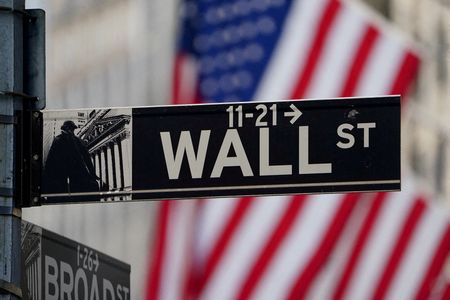
Stock market futures fell during volatile Friday trading as the Iranian conflict neared its fourth week, creating turbulence in energy markets and causing investors to significantly adjust their expectations for Federal Reserve interest rate reductions.
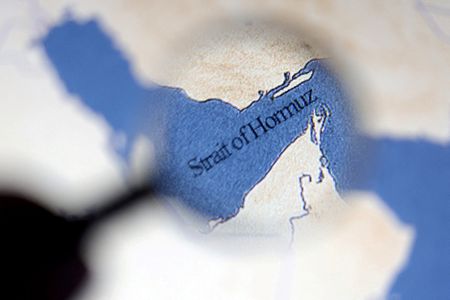
Reports indicate the Trump administration is weighing options to occupy or impose a blockade on Iran’s Kharg Island as a strategy to force Iran into reopening the Strait of Hormuz.
Oil prices climbed higher, erasing previous declines that occurred after major European countries, Japan, and the United States suggested measures to increase energy supply. Brent crude prices jumped 1.7% to exceed $110 per barrel.
The CBOE volatility index, commonly known as Wall Street’s fear gauge, increased by 1.72 points to reach 25.78. Futures for the rate-sensitive Russell 2000 index dropped 1%.
Market participants found some reassurance in FedEx’s positive earnings report and outlook despite ongoing geopolitical tensions and rising fuel expenses, pushing the company’s shares up 10% in pre-market activity. Competitor United Parcel Service gained 1%.
FedEx, frequently viewed as an indicator of overall business conditions, reported that worldwide demand remained stable in early March despite the Iranian war, noting that fuel surcharges were protecting profits from escalating fuel expenses.
The week featured policy decisions from major international central banks that, alongside the Federal Reserve, recognized how the conflict has made monetary policy decisions more challenging. Although U.S. officials continue to plan for at least one quarter-point rate reduction this year, market participants remain skeptical.
Market traders have delayed their expectations for rate cuts to 2027, moving from December 2026 projections made earlier this month, based on LSEG data.
As of 6:06 a.m. ET, Dow E-minis declined 242 points or 0.52%, S&P 500 E-minis fell 39 points or 0.59%, and Nasdaq 100 E-minis dropped 200.5 points or 0.82%.
The benchmark S&P 500 and blue-chip Dow were heading toward their fourth consecutive weekly decline, though a moderate recovery in artificial intelligence stocks like Advanced Micro Devices and Micron helped limit losses on the Nasdaq.
All three major indices also fell beneath their 200-day moving averages, a technical measure showing long-term trends, while the small-cap Russell 2000 index temporarily recorded a 10% decline from record highs earlier in the week.
Super Micro Computer plummeted 23% following charges against three individuals connected to the AI server company for allegedly helping smuggle at least $2.5 billion worth of U.S. artificial intelligence technology to China, violating export regulations.
Energy sector stocks have shown strong performance, with the S&P 500 energy index positioned for its thirteenth consecutive week of increases as geopolitical developments in Venezuela and the Middle East dominated the first quarter.
Energy companies including Halliburton and Cheniere Energy rose 1% and 3% respectively.
Tegna surged 9.4% after the Federal Communications Commission announced approval of the $3.54 billion acquisition of the local television station operator by Nexstar.
Shares of shipping giant FedEx jumped roughly 10% in pre-market trading Friday following the company’s decision to increase its annual earnings outlook and report consistent package delivery volumes despite international conflicts and climbing fuel expenses.
The Memphis-based company, widely viewed as an indicator of worldwide commerce health, indicated that shipping activity during March’s first two weeks met projections for maintaining third-quarter performance levels, even as the U.S.-Israeli conflict with Iran has driven up air cargo prices and required flight path changes.
Although climbing oil costs and Middle Eastern instability may impact shipping expenses in upcoming weeks, FedEx noted its fuel adjustment pricing systems continue handling most effects. However, company leadership cautioned that additional price increases could reduce customer demand.
Chief Executive Raj Subramaniam stated the company is “monitoring this extremely carefully,” emphasizing that Middle East operations represent just a minor portion of FedEx’s overall business.
Investment analysts from J.P.Morgan highlighted FedEx’s Express division as particularly strong, citing improved profit margins, steadier domestic U.S. shipping volumes, and ongoing expense reductions that boosted adjusted operating earnings while compensating for weaker freight performance.
Competitor stocks also gained, with European rival Deutsche Post DHL Group climbing 2.2% and domestic competitor UPS advancing 1.4%.
The company’s scheduled June 1 separation of its Freight division represents a significant upcoming event as FedEx concentrates on more profitable delivery operations.
Raymond James analysts noted: “We believe that the recently announced spin-out of FedEx Freight into a standalone company should serve as a value-unlocking event and will put more scrutiny on the operations of the Freight segment.”
FedEx continues coordinating with aviation regulators to restore its inactive MD-11 aircraft fleet by late May, following approximately $120 million in associated expenses during the third quarter, with an additional $55 million expected this quarter.
The shipping company currently trades at 16.58 times anticipated forward earnings compared to UPS at 13.23 times.
For its fiscal year concluding May 31, FedEx projects adjusted earnings between $19.30 and $20.10 per share, while anticipating total revenue growth of 6.0% to 6.5%.
Jewish Americans are facing significant emotional challenges as they navigate current events, dealing with both rising hostility toward their communities and internal disagreements about Israeli government actions. The tension has created deep rifts between liberal and conservative members within Jewish communities across the nation.
Rabbi Rick Jacobs, who leads the Union for Reform Judaism, expressed concern about unfair treatment of American Jews. “To hold American Jews accountable for the actions of any foreign government is a dangerous double standard that we don’t apply to any other group,” Jacobs stated. The heightened threats have forced Jewish communities nationwide to invest millions of dollars in enhanced security measures.
Research from the University of Massachusetts reveals a troubling pattern where Middle Eastern conflicts consistently trigger violence against Jewish populations worldwide. Following the 2023 Hamas assault on Israel, the Anti-Defamation League documented almost 9,500 anti-Semitic incidents across America – more than 25 occurrences daily. This represents the highest number recorded in the organization’s 46-year tracking history. Recent U.S.-Israeli military actions targeting Iran’s nuclear capabilities have sparked another wave of anti-Semitic attacks on Jewish facilities globally.
In a separate development, University of Portland researcher Beth DeFault has identified a shift in how Americans determine moral standards. “As societies grow more diverse and fewer people affiliate with formal religious groups, faith’s moral influence on society is waning. People start to assemble their own sense of right or wrong from a patchwork of sources – and increasingly, that involves scores, rankings and dashboards,” DeFault explained. She warns that many Americans now base their self-worth on metrics like credit scores and fitness levels rather than traditional spiritual values.
Despite these challenges, Protestant pastors are increasingly addressing global Christian persecution in their ministries. LifeWay Research polling shows that 86 percent of Protestant ministers have encouraged their congregations to pray for persecuted believers overseas. Approximately two-thirds have delivered sermons specifically addressing the mistreatment of Christians abroad, with some inviting experts to speak about these issues.
British comedy legend John Cleese has publicly voiced his concerns about what he sees as his homeland’s shift away from Christian traditions. The Monty Python comedian recently posted on the social media platform X, expressing his views on Britain’s changing religious landscape.
“For centuries British people have been influenced by Christ’s teaching. If these values are replaced by Islamic ones, this will not be Britain any more,” Cleese wrote in his social media post.
The entertainment figure’s comments echo similar sentiments previously expressed by well-known British atheist Dr. Richard Dawkins, who gained attention for his own criticism of Christianity’s diminishing influence in Britain while expressing concern about Islam’s growing presence in the country.
Legislation that would eliminate criminal penalties for abortion procedures throughout pregnancy is making progress through the British Parliament. The House of Lords had the opportunity to support an amendment to the Crime and Policing Bill that would have stripped out the decriminalization provisions, but chose not to act.
The Christian Institute’s Simon Calvert criticized British legislators, stating they have “shown little regard for public opinion and have dehumanised the unborn to a shocking new degree.”
A recent survey conducted by YouGov and St. Louis University reveals Missouri voters remain divided on abortion policy, with 47% expressing support for a proposed constitutional amendment that would prohibit abortion procedures except during the first trimester. The poll shows 40% of respondents oppose the measure, while 12% remain undecided.
Missouri has experienced significant back-and-forth movement on abortion policy in recent years. State lawmakers initially enacted a prohibition on the procedure, but voters later passed a constitutional amendment protecting abortion access. This autumn, Missouri residents will have another opportunity to weigh in on the issue through the ballot box.
A comprehensive national survey conducted by the Pew Research Center has identified which behaviors Americans find most ethically objectionable, with adultery leading the list by a significant margin.
According to the extensive polling data, nine out of ten Americans—specifically 90%—view extramarital affairs as morally unacceptable, making it the most widely condemned behavior examined in the study.
The research also found that just over half of respondents, at 52%, believe consuming pornographic material crosses moral boundaries.
However, the survey revealed that most Americans do not view several other controversial topics as ethical violations. Large majorities expressed no moral objections to end-of-life assistance for terminally ill patients, same-sex relationships, betting and gaming activities, marijuana use, or ending marriages through divorce.
The polling showed Americans remain deeply divided on reproductive rights, with opinions on abortion splitting almost evenly between those who consider it morally acceptable and those who do not.
Drivers traveling on eastbound Route 16 in New Castle County should expect delays today as construction work has forced the closure of the right lane.
The Delaware Department of Transportation announced that the right lane on Route 16 eastbound will remain blocked from Jefferson Street to the Route 1 northbound connector through 3 p.m. this afternoon.
Motorists are advised to use caution in the area and allow extra travel time while work crews complete their construction activities. The lane is expected to reopen once the scheduled work is finished later today.
Escalating tensions in the Iran conflict have prompted investors nationwide to abandon riskier investments and pour money into ultra-safe money market funds, pushing total assets to an unprecedented $8 trillion milestone.
Financial data from organizations including the Investment Company Institute, JPMorgan Chase, and Crane Data shows these short-term Treasury funds have reached historic levels as oil prices surge and inflation worries mount. Though calculation methods differ, with estimates ranging between $7.8 trillion and $8.1 trillion, all sources confirm record-breaking asset levels during the ongoing conflict.
Malcolm Polley, who serves as director of strategic market analysis at Stratos Investment Management, explained the investor mindset driving this trend. “When you have times of dislocation and times of fear, cash is the only thing that makes sense to a lot of people, because there’s the belief that you ‘can’t lose’ by holding it,” Polley stated. He mentioned reassuring clients that “the world is not coming to an end just yet.”
Sweta Singh, founding partner at City Different Investments, characterized the phenomenon as cautious positioning. “This is the ‘wait-and-see’ money coming from investors who are wary about what’s happening right now,” Singh observed.
Soaring crude oil costs have become the primary driver behind this massive shift toward cash holdings. Brent crude futures climbed 1.2% Thursday, reaching $108.65 per barrel after experiencing intraday gains as high as 10%.
Steven Wieting, co-founder of CIO Group, noted how oil prices are influencing traditional safe havens. “Gold, silver and currencies are increasingly being driven by oil” prices, Wieting said. “As all risk assets take on this uncertain path, dependent on oil, it is natural for cash to build on the sidelines.”
Market experts warn that sustained elevated oil prices will negatively impact consumer spending and corporate profits across the economy.
BlackRock Investment Institute analysts highlighted the limited options available to investors in a Monday client note, writing: “There are few places to hide from this near-term supply shock. Government bonds and gold are not providing ballast as equities fall.” Even Treasury securities offer little protection given potential inflation increases and mounting government debt from war expenditures.
Jacob Taurel, managing partner at Activest Wealth Management, identified a key economic concern. “The elephant in the room is stagflation,” Taurel said, describing this combination of rising prices and economic stagnation as “a real risk.”
These conditions make money market funds attractive to some investors, particularly since current yields exceed 3% and approach 4% at certain financial institutions. Deborah Cunningham, chief investment officer of global liquidity markets at Federated Hermes, noted in early March analysis that the “collective negative vibe often sends investors to safer harbors,” including money market funds. Cunningham estimates the total cash held in money markets at $8.3 trillion.
However, financial advisors are warning clients against excessive risk avoidance and over-allocation to money market funds.
Polley cautioned about the challenges of market timing. “The problem with going to cash is that you have to make two separate decisions correctly: when to get into cash and when to move back into other assets,” he explained. “When people are scared, they can be irrational.”
More than a decade has passed since Amazon’s Fire Phone became one of the company’s most embarrassing failures, but the tech giant is quietly working on another attempt to break into the smartphone market.
Four sources with knowledge of the project reveal that Amazon is developing a new mobile device internally called “Transformer” within its devices and services division. The smartphone concept centers around creating a highly personalized experience that would seamlessly connect with Amazon’s Alexa voice assistant and provide constant access to the company’s services throughout users’ daily routines.
This latest smartphone venture represents another step toward fulfilling founder Jeff Bezos’ longtime dream of creating an omnipresent voice-controlled computing system similar to the computer featured in the “Star Trek” science fiction franchise.
Bezos originally imagined a mobile device built around shopping functionality that could compete with Apple by offering Prime membership benefits like fast shipping and exclusive discounts. Such a device would also provide Amazon with valuable user data that smartphones uniquely capture, combined with customers’ purchasing patterns and entertainment preferences.
Reuters has exclusively reported on Amazon’s smartphone development efforts. However, key details remain unknown, including projected costs, expected revenue targets, and the total investment Amazon plans to make in the initiative.
The project’s timeline remains uncertain, and sources warn that Amazon could abandon the effort if strategic priorities change or financial concerns arise.
Amazon representatives refused to provide comment on the matter.
According to the sources, who requested anonymity due to lack of authorization to discuss internal projects, the new device’s customization capabilities would streamline access to Amazon.com shopping, Prime Video streaming, Prime Music listening, and food ordering through partners like Grubhub.
Artificial intelligence integration has become a central element of the Transformer initiative, sources indicate. This AI focus could potentially eliminate traditional app stores by removing the need to download and register applications before use.
While Alexa would play a significant role in the phone’s functionality, it wouldn’t necessarily serve as the device’s main operating system, according to the sources.
The brief history of AI-powered hardware devices includes numerous failures, such as the Humane AI pin and Rabbit R1 assistant, both designed to provide generative AI access without requiring computer or smartphone logins. Poor reviews led to both products being discontinued.
Despite these setbacks, other major companies continue pursuing AI-integrated devices that move beyond traditional smartphone app interfaces. OpenAI is collaborating with former Apple design executive Jony Ive on multiple hardware prototypes, while Apple, Google, and Meta are creating new AI-enhanced glasses, watches, and headphones.
Although Amazon’s AWS dominates global cloud computing infrastructure, the company has struggled to shed its reputation for being slow to develop AI applications while competitors have advanced rapidly.
Alexa, which completed a comprehensive AI-driven redesign before relaunching in 2025, is considered internally crucial to Amazon’s future consumer service offerings. Sources describe the smartphone project as another Amazon strategy to increase customer AI adoption either directly on the device or through Alexa integration.
Amazon’s original 2014 smartphone launch featured innovations like camera-based shopping technology that could identify products, locate them on Amazon.com, and add them to customers’ online shopping carts.
However, the Fire Phone’s custom Fire OS operating system lacked popular applications available through Android and iOS app stores. Additionally, its complex multi-camera system for 3D image display consumed excessive battery power, causing frequent overheating problems.
Despite bundling a complimentary year of Amazon Prime membership, the Fire Phone sold poorly. Amazon slashed pricing from $649 unlocked to $159 before ultimately discontinuing the device after 14 months, resulting in a $170 million loss from unsold inventory.
R.W. Baird financial analyst Colin Sebastian noted that Amazon’s previous smartphone failure doesn’t necessarily prevent future success, but acknowledged significant challenges ahead. “Amazon will have to give consumers a compelling reason to switch phones and people are pretty attached to the existing app stores,” Sebastian stated.
Just as it faced over ten years ago, Amazon confronts the challenging task of competing against market leaders Apple and Samsung, which together controlled approximately 40% of global sales last year according to Counterpoint Research, a technology market research company.
Furthermore, smartphone shipments are projected to experience their largest decline ever in 2026, with an expected 13% drop according to International Data Corporation, as rising memory chip costs increase device prices.
The smartphone project is being managed by ZeroOne, a year-old group within Amazon’s devices unit tasked with creating “breakthrough” products, sources revealed. J Allard, a former Microsoft executive who worked on devices including the Zune music player and Xbox gaming console, leads ZeroOne.
Panos Panay, who heads Amazon’s devices and services division, has been working to address years of financial losses in the department. This includes developing an upcoming tablet that will operate on Android instead of Fire OS for the first time and could retail for approximately $400, as Reuters first reported.
Three individuals involved with the Transformer project confirmed the phone remains in development. Amazon has investigated both conventional smartphone designs and simplified “dumbphone” options with limited features that could help address screen addiction concerns. The company has not yet approached wireless carrier partners about the device, these sources indicated.
Two sources mentioned that the Light Phone has served as inspiration for the new device – a $700 minimalist smartphone featuring a camera, map, calendar, and few other functions, excluding an app store or web browser.
A simplified phone design could help Amazon position the device as a secondary handset to complement customers’ existing iPhones and Samsung Galaxy devices, sources suggested. Such basic phones, including the Light Phone and flip phones, represented 15% of global handset sales in 2025 according to Counterpoint Research.
Independent wireless analyst Chetan Sharma noted that limited data exists regarding multi-phone usage patterns. Currently, he explained, the practice is most prevalent among business professionals seeking a second device away from employer oversight or parents wanting to provide teenagers with social media-restricted phones.
As nationwide demonstrations swept across Iran in late 2025, Shayan Ghadimi watched her 70-year-old mother make a fateful decision to travel from Paris back to their homeland to witness the historic uprising firsthand.
Now, months later, that separation weighs heavily on the family as they struggle to maintain contact through violent government suppression and ongoing military conflict. For Iranian communities worldwide, the traditionally joyous Persian New Year celebration of Nowruz has become a time of profound worry rather than celebration.
Ghadimi’s elderly mother had been following the early demonstrations on television from Paris. “We could see the market closed, the people in the street. She said, ‘I want to be there,’” the 41-year-old restaurant owner explained while preparing meals in her aromatic Paris eatery.
“Now, she is all alone at home, with no way to stay in contact, watching the sky. I cannot imagine the state she is in,” Ghadimi shared.
The impact extends far beyond individual families. A Paris-based Iranian cultural organization that previously hosted musical performances for Nowruz has declared itself in mourning this year. Similarly, Iranian American groups across the United States have either called off their celebrations entirely or dramatically reduced their scope.
The holiday known as Nowruz, meaning “new day” in the Persian language, traditionally aligns with the spring equinox and is observed across a vast region spanning from Afghanistan to Turkey. People of various religious backgrounds within Iranian communities celebrate this ancient Zoroastrian festival, which traces its origins back thousands of years, despite periodic attempts by religious conservatives to discourage the practice.
Shakiba Edighoffer, while shopping for traditional Nowruz ingredients, described the emotional turmoil she and fellow Iranians experience as military operations continue. Israel and the United States have launched attacks targeting Iran’s government officials and armed forces, while the Islamic Republic has responded by launching missiles and unmanned aircraft toward Israel and neighboring Gulf nations.
“You hear news about this or that leader of the Islamic Republic being eliminated … about executions or bombings,” explained Edighoffer, who works as a makeup artist.
The near-complete breakdown of communication networks has transformed attempts to check on relatives and friends enduring bombardments into anxiety-inducing ordeals.
“I had a friend who managed to connect very briefly on Instagram a few days ago, but I think it’s been about 20 days now since the war started, and that was really the only time I was able to speak with him a little,” Edighoffer noted.
Despite the circumstances, she emphasized the importance of maintaining cultural traditions. Observing Nowruz alongside family and friends “helps us cope, at least a little, with the psychological pressure,” she explained. “All these oppressors want is for us to be sad, to forget our millennia-old Persian and Iranian traditions. We must not give them that victory.”
Among the customers visiting Ghadimi’s restaurant for traditional grilled meat dishes and seasoned rice, opinions about the conflict’s potential outcomes vary dramatically. Some express hope that the warfare might herald positive change, while others focus solely on the casualties and devastation caused by Israeli and American military strikes.
“I have people in tears. I have people who cry for joy. They say, ‘Did you see? They are coming. We are going to be saved.’ Others say, ‘Our country is being destroyed,’” she observed.
Communication with her mother has been severely limited since her January departure for Iran, with only two successful phone conversations occurring during the entire period.
“Quite honestly, I don’t try anymore. Because it stresses me out, if I try calling and can’t get hold of her,” she admitted. “My sister calls 100 times a day and can’t reach her.”
Her mother had originally purchased a round-trip ticket and promised to return in time for the Nowruz celebration.
However, during their most recent conversation approximately one week ago, her mother revealed that those plans had shifted. Having witnessed the 1979 Islamic Revolution firsthand, she expressed determination to remain and observe Iran’s unfolding political transformation.
“I am staying here until the end,” her mother declared.
Security preparations for this summer’s World Cup are running behind schedule after a months-long delay in releasing $625 million in federal security funding, according to intelligence briefings obtained by Reuters.
The briefings from federal agencies, state officials, and FIFA warn of potential threats from extremists and criminals who may target the massive sporting event. Officials expressed particular concern about possible attacks on transportation systems and civil unrest connected to President Donald Trump’s immigration enforcement policies.
The World Cup will take place across the United States, Canada, and Mexico during June and July, representing one of the world’s largest sporting events.
Law enforcement agencies have maintained heightened vigilance since the conflict with Iran began, raising additional worries about retaliatory actions during the tournament.
Security planners have grown increasingly concerned about the delayed distribution of federal grants that were approved as part of a Republican spending measure passed in July 2025. The Federal Emergency Management Agency had promised to distribute the funds by January 30 but only announced the awards this Wednesday after Reuters made inquiries about the delays.
FEMA stated the funding would “bolster security preparations” for the event.
With Mexico hosting the tournament’s opening matches on June 11, followed by games in the U.S. and Canada the next day, host cities are deep into their security planning phases. The funding delays have complicated an already challenging preparation process, according to multiple officials involved.
Mike Sena, who leads the National Fusion Center Association representing 80 intelligence-sharing centers nationwide, noted that grant distribution typically requires months, with technology and equipment purchases taking even longer.
“It will be extremely tight,” he said.
Intelligence documents reveal specific concerns about the tournament. A December 2025 New Jersey intelligence assessment examining threats to matches in the state, including the final game, highlighted recent domestic attacks, foiled terror plots, and increasing extremist messaging. The report also warned about potential spontaneous gatherings related to international tensions.
A separate September 2025 intelligence report described online content encouraging attacks on railroad systems during the World Cup, with posts stating there were “plenty of opportunities for us to knock it off the tracks” while specifically mentioning West Coast matches in the U.S. and Canada.
Democratic lawmakers have criticized outgoing Homeland Security Secretary Kristi Noem for the funding delays. Under her leadership, DHS previously withheld hundreds of millions in homeland security money from twelve Democratic-led states and Washington, D.C., while demanding increased immigration enforcement cooperation.
White House spokesperson Davis Ingle blamed Democrats for the delayed funding, citing disputes over immigration enforcement methods.
“The president is focused on making this the greatest World Cup ever while ensuring it is the safest and most secure in history,” Ingle stated. “The Democrats need to stop playing games.”
Trump’s immigration crackdown has already created uncertainty around the event and raised questions about Immigration and Customs Enforcement presence. Since Trump returned to office in January 2025, masked immigration agents have conducted raids in U.S. cities and detained some tourists at airports.
These actions have coincided with a decrease in international visitors to the U.S., according to Commerce Department statistics. However, early indicators suggest continued strong interest in flight bookings and tournament tickets.
A FIFA intelligence briefing from January 28 warned that anti-ICE protests in American cities responding to immigration enforcement could reduce barriers “to hostile actions by lone actors or extremist elements.”
Trump has implemented full or partial travel restrictions affecting nationals from more than three dozen countries, including Iran, which is discussing with FIFA the possibility of moving its matches to Mexico due to the current U.S.-Iran conflict. Three other qualifying nations whose fans face Trump’s travel bans are Haiti, Ivory Coast, and Senegal.
Security officials have identified “FIFA Fan Festival” events as particular areas of concern. These gatherings allow large crowds to watch matches together on outdoor screens.
A Fan Festival planned for Liberty State Park in Jersey City throughout the tournament was unexpectedly cancelled last month and replaced with smaller events. New Jersey Governor Mikie Sherrill explained that multiple smaller events would allow more area residents to participate in the experience. A source familiar with the planning confirmed that security concerns influenced the decision.
U.S. Representative Nellie Pou, a New Jersey Democrat whose district includes MetLife Stadium where World Cup matches will occur, compared each of the tournament’s 104 games to a Super Bowl in terms of security requirements.
“Local government, local law enforcement, will certainly have their hands full,” Pou said. “They need every single dollar that they are eligible to receive, and they need it now.”
CHICAGO, March 20 – American airline executives are expressing optimism about ticket prices and passenger demand even as the Middle East conflict drives up fuel costs and creates challenges for international carriers worldwide.
The major US airlines, which don’t protect themselves against oil price fluctuations, are seeing the war’s impact primarily through their fuel expenses. Jet fuel costs have nearly doubled since fighting began in late February.
International airlines in Europe and Asia face additional complications beyond higher fuel bills, including disrupted flight schedules, operational challenges, and uncertain business forecasts as they implement surcharges and raise ticket prices.
At this week’s industry conference, leading US carriers highlighted steady passenger demand. United Airlines CEO Scott Kirby described the revenue climate as “really strong.”
“We have a goal this year to fully offset the increase in fuel prices,” Kirby stated on Tuesday. He noted that fare bookings over the previous week had jumped 15% to 20%, and airlines could currently recover “100%” of fuel price increases.
United has also eliminated less profitable routes, including certain midweek, Saturday, and overnight flights. Kirby explained the airline prefers leaving some passenger demand unserved rather than operating money-losing routes if fuel remains expensive.
Delta Air Lines similarly indicated it could reduce flight capacity if fuel prices remain high.
Both American Airlines and Delta upgraded their quarterly revenue projections this week, even though each company expects roughly $400 million in first-quarter losses from increased fuel costs. Southwest Airlines predicted significant margin growth for the year.
However, the robust US demand appears stronger partly because of unusually weak comparison numbers from last year, when travel demand suddenly collapsed and reservations dropped after President Donald Trump announced extensive tariffs, causing most airlines to withdraw their financial guidance.
The confidence also stems from how constrained the US market was before fuel prices spiked. Budget carriers had already been cutting routes, parking planes, and reducing expansion plans following an extended period of poor profitability.
US airlines intend to increase seating capacity by 2.8% in the second quarter of 2026, but this figure includes a 10% capacity reduction by ultra-low-cost carriers, according to TD Cowen. This removes some of the market’s cheapest seats and allows major airlines more flexibility to increase prices without sparking widespread fare competition.
International carriers are taking a more cautious approach across Europe and Asia.
Germany’s Lufthansa stated its 2026 projections were uncertain due to geopolitical tensions. Hungary’s Wizz Air cautioned that the Middle East conflict would reduce net profits in fiscal 2026. Air New Zealand paused its annual earnings forecast and announced it would eliminate approximately 5% of flights through early May.
For these international carriers, the conflict creates operational challenges beyond fuel costs. Their flight networks operate closer to the war zone, making them more vulnerable to airspace restrictions, route changes, and demand fluctuations, though Asia-Europe fares have temporarily increased due to reduced Gulf region capacity.
Air France-KLM has warned of increased expenses and complications from route changes. British Airways has extended its temporary Middle East flight reductions. Scandinavian airline SAS announced it would cancel 1,000 flights in April.
Industry analysts generally support the more optimistic US perspective. Melius Research reported that carriers had already implemented two fare increases of approximately $10 per direction and that market conditions could sustain an additional 5% to 7% increase.
TD Cowen raised its 2026 profit estimates for the six largest US carriers on Wednesday, citing strong demand and better-than-expected success in raising fares to cover higher fuel expenses.
While some passengers rushed to book flights earlier than usual to avoid higher prices, US airline executives said reservation patterns remained mostly typical during the March quarter.
Delta executives characterized the demand strength as normalization and recovery rather than panic-driven purchasing. This confidence could face challenges if the conflict continues and rising energy costs begin affecting household budgets and business expenditures.
Currently, demand has remained stronger at large US carriers partly because they depend more heavily on premium passengers, corporate clients, and loyalty program members, who typically reduce travel more slowly when fares increase.
Delta CEO Ed Bastian said the US economy has stayed healthy among high-income consumers, whom he identified as Delta’s primary customer base, helping maintain demand despite uncertainty.
Delta reported only a slight decrease in Europe-origin bookings since the war started, while US demand for European travel remained solid. “When you got a war in your backyard, people tend to stay home,” Bastian explained.
Major financial institutions across the United States are celebrating a federal regulatory proposal that would significantly reduce the cash reserves they’re required to maintain, though some banks appear positioned to benefit more than others from the changes.
The new framework, unveiled Thursday, would decrease capital requirements at the nation’s largest banks by 4.8%. This reduction would unlock billions of dollars that institutions could use for customer loans, shareholder dividends, and stock repurchases – marking a substantial victory for the banking sector.
The industry had previously faced the prospect of much steeper capital increases under a 2023 proposal that would have required double-digit hikes in their reserve requirements. That earlier plan was ultimately scrapped.
Financial experts indicate that institutions heavily involved in trading activities, particularly Goldman Sachs and Morgan Stanley, may emerge as the primary beneficiaries of the revised regulations. This outcome is somewhat ironic, given that trading operations were initially the main focus of the “Basel III” rules that formed the foundation of Thursday’s regulatory overhaul.
Banking institutions will have a 90-day window to submit feedback on the comprehensive and technical proposal. Industry observers expect firms to advocate for additional reductions in capital requirements, which could translate to billions more in potential savings.
The current administration supports loosening capital restrictions, arguing such moves could stimulate lending activity and boost overall economic growth.
However, opponents argue these modifications will compromise financial system protections at a time when geopolitical tensions and private credit risks are escalating. Some major banks are already restricting lending while certain funds have limited customer withdrawals.
The proposed changes could create divisions within the banking industry, which had previously presented a united front against stricter regulations.
“Some will think they got worse treatment than others,” explained Ian Katz, managing director of Capital Alpha Partners. “They may feel like this other cohort or size of banks just got a better deal and have to stick up for themselves.”
Representatives from individual banks either declined to comment or were unavailable for immediate response. A Federal Reserve spokesperson, whose agency is spearheading the capital reform effort, also declined to provide comment.
The Federal Reserve’s latest draft represents a complete reversal from the 2023 proposal, which would have increased bank capital requirements by as much as 20%.
While the Basel regulations would raise large bank capital by 1.4%, this increase would be neutralized by modifications to the GSIB surcharge – an additional capital layer imposed on eight systemically important global U.S. banks.
One significant adjustment would lessen the impact of banks’ dependence on short-term wholesale funding when calculating the surcharge. Federal officials acknowledged this factor carried more weight in the 2023 calculations than originally planned.
This modification could particularly advantage Goldman Sachs and Morgan Stanley, as they rely much more heavily on short-term wholesale funding compared to their GSIB competitors, who maintain substantial deposit bases, according to analysts and banking industry sources.
“The purest winners are the trading-heavy institutions,” noted Michael Ashley Schulman, partner at Cerity Partners. “Cracks in the coalition may appear as the specific rule details get negotiated as different banks push hardest for most favorable treatment.”
Wall Street banking advocacy organizations, which have spearheaded opposition efforts, issued a measured response Thursday, describing the draft regulations as an “important step forward” while stating the industry “will carefully review the proposals and expect to provide feedback.”
Despite potential internal conflicts, analysts believe the overall changes will benefit the entire industry by freeing up funds for lending, particularly among large regional banks.
Capital requirements at major regional institutions such as PNC and Truist would decrease by 5.2%, while banks with assets below $100 billion would see their capital obligations drop by 7.8% under the proposed framework.
Morgan Stanley analysts noted earlier this month that large U.S. banks currently maintain approximately $175 billion in excess capital due to years of regulatory uncertainty. They could begin deploying these funds through increased lending, capital markets activities, and stock buybacks.
“I think that there’s been universal belief that this is a good thing for the industry,” said Christopher Marinac, director of research at Brean Capital.
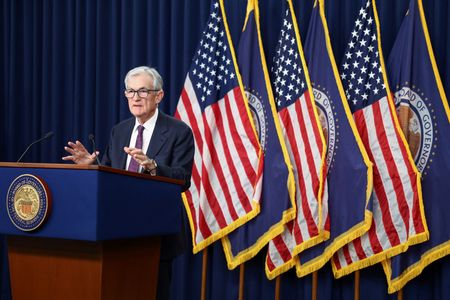
WASHINGTON – The Federal Reserve faces an unprecedented situation as Chairman Jerome Powell weighs whether to remain on the central bank’s governing board beyond his leadership term, a decision that could dramatically influence how his potential successor Kevin Warsh operates and whether the Trump administration can restructure Fed operations.
Speaking publicly about the matter for the first time Wednesday, Powell indicated he won’t depart the Fed until a criminal investigation led by U.S. Attorney Jeanine Pirro reaches completion “well and truly over with transparency and finality.” He hasn’t made a final choice about staying in his governor position, which extends through 2028 and would overlap significantly with Warsh’s potential leadership period.
Financial experts believe it’s doubtful the Fed would function with “two popes” – referencing a historical Catholic Church division – and expect the current standoff between Powell’s Republican supporters and the Trump administration will resolve with the investigation ending, Warsh gaining Senate confirmation, and Powell stepping down.
Key GOP lawmakers including North Carolina Senator Thom Tillis have stated they won’t approve Warsh’s nomination until Pirro ends her investigation. This stance likely ensures Powell’s departure condition will be satisfied before a new Fed leader takes charge, according to Mark Spindel, chief investment officer at Potomac River Capital and Fed historian.
“If the legal issues are resolved and Tillis stands down, (and) Kevin is confirmed, I believe Jay will retire,” Spindel explained. “I think he would be respectful of the incoming chair” after the Pirro investigation concludes, with the confirmation delay protecting both Powell and sparing Warsh from managing an organization with his well-respected predecessor still present.
However, Powell’s potential extended stay as a board member presents a different scenario. Additional challenges facing the central bank remain active, including Trump’s Supreme Court case seeking Fed Governor Lisa Cook’s removal and Treasury Secretary Scott Bessent’s proposals for regional bank president residency requirements. Powell might choose to address these issues before vacating his position and allowing Trump another board appointment.
During Wednesday’s press conference following the Fed’s decision to maintain current interest rates, Powell stated he would determine his board future “based on what I think is best for the institution and for the people we serve.” This approach could place both Warsh and the Fed in unprecedented circumstances.
LH Meyer analyst Derek Tang noted in detailed research that Powell’s current “source of leverage … lies more in not having decided yet, to induce better behavior from Trump.”
Should genuine threats to Fed independence persist as Warsh assumes leadership, Tang suggested Powell might reasonably remain through November’s midterm elections, which could alter Congressional power dynamics, or even until his governor term expires in 2028 during Trump’s final presidential year.
Such a strategy carries risks, including potential departures of other Fed governors that would provide the administration additional appointment opportunities and greater influence despite Powell’s continued presence.
Without contemporary precedent for an ex-Fed chair’s role, Powell would risk appearing politically motivated while defending the Fed’s independence from political interference.
Vincent Reinhart, chief economist at BNY Investments and former Fed monetary affairs division head, characterized Powell remaining as “confrontational … to the new chair and to the White House and to the Senate who confirmed the new chair. Powell staying is basically the old guard announcing they’re going to the mattresses.”
The closest historical parallel occurred during the 1950s when departing Fed Chair Marriner Eccles stayed on the board at President Harry Truman’s request for post-war economic management, though Reinhart noted that situation differed significantly.
The informal tradition of Fed chairs leaving their governor seats reflects institutional design principles. While the Fed maintains independence in interest rate decisions, it’s not meant to be immune from electoral outcomes, with four-year leadership terms aligned with presidential cycles allowing each president to select a Fed chief. Governor terms follow separate 14-year schedules to shield them from political pressures.
Christopher Hodge, chief U.S. economist at Natixis CIB, suggested Powell’s continued board presence could “be a beneficial counterpoint if the Fed was being unduly influenced by political factors. … The administration has shown they’re going to try whatever tools are at hand” to influence the central bank, an approach unlikely to change under Warsh.
Nevertheless, Hodge expressed confidence in institutional protections and believes Warsh, once confirmed as Fed chief, “is going to be looking at how history views him.”
After Senate confirmation, “he’s outside the political touch of the president. He is going to use that independence to implement policy how he sees fit,” Hodge concluded.
Federal transportation safety officials have concluded their investigation into potential defects affecting more than 2.26 million Tesla vehicles, determining there are no safety concerns related to the complaint.
The National Highway Traffic Safety Administration announced Friday it was dismissing a complaint filed in March 2023 that raised concerns about Tesla’s driving controls potentially causing drivers to accidentally press the wrong pedal, which could result in unexpected acceleration. The complaint specifically pointed to features like one-pedal driving as potentially confusing to drivers.
According to NHTSA officials, their investigation turned up minimal relevant incidents and confirmed that the vehicles operated as designed, showing no indication of safety defects or risks to drivers.
Tesla representatives have not yet provided a statement regarding the agency’s decision to close the investigation.
Good morning, Delmarva! We’re starting off this Friday with beautiful spring weather across the peninsula. Expect plenty of sunshine today with temperatures climbing to a comfortable 65 degrees – perfect weather to welcome the first official day of spring! You’ll notice a south wind picking up throughout the day, ranging from 5 to 20 mph, so secure any lightweight outdoor items.
The nice weather won’t last long, though. Rain showers are likely to move in tonight as temperatures drop to around 49 degrees. It’s a good idea to bring in any laundry or close those windows before heading to bed.
The good news? Saturday bounces back beautifully! We’ll see sunshine return with highs reaching 62 degrees – another lovely day to get outside. Saturday night stays pleasant with partly cloudy skies and lows around 43 degrees.
Overall, it’s a typical spring pattern with sunshine bookending a brief rainy period. Enjoy today’s gorgeous weather, and don’t forget that umbrella tonight! Have a wonderful Friday, Delmarva!
Delaware Department of Transportation officials have implemented a temporary lane closure on Route 1 northbound as construction crews work in the area.
The affected stretch runs from Painters Drive to Route 16, where the northbound lane has been blocked to traffic. DelDOT indicates the closure will last until 3 PM this afternoon.
Motorists traveling through this corridor should expect delays and consider alternate routes during the construction period. The closure is part of ongoing roadwork in the area.
National Public Radio is issuing an advance warning to participants of their weekly news quiz, alerting them that this edition contains particularly disturbing subject matter.
The quiz features questions about cannibalistic invertebrates and weather phenomena involving food, content that NPR acknowledges many people would find unpleasant.
The news organization’s quiz typically covers current events from the week, but this particular edition stands out for its unsettling nature. NPR humorously noted that many things would be more pleasant than the topics covered in this week’s questions.
The weekly quiz appears to reference various news stories and current events, though the specific details of the disturbing content were not elaborated upon in the brief announcement.
A little-known federal immigration tribunal is wielding significant influence over national immigration policy while operating largely outside public view, according to a new analysis by NPR.
The Board of Immigration Appeals, which handles appeals from immigration courts across the country, has undergone dramatic changes under President Trump’s administration. Trump has dramatically reduced the board’s membership while appointing loyalists to fill key positions, according to the investigation.
This restructuring has resulted in reduced legal protections for immigrants navigating the deportation process, the analysis reveals. The board serves as the primary avenue for challenging decisions made in local immigration courts, including facilities like the one pictured in New York where federal agents were stationed on March 6, 2026.
The changes represent a significant shift in how immigration appeals are processed nationwide, potentially affecting thousands of cases as immigrants seek to challenge removal orders and other adverse decisions through the federal court system.
COPENHAGEN – Danish voters will cast ballots Tuesday in a national election overshadowed by President Donald Trump’s ongoing campaign to acquire Greenland, the Arctic territory home to 57,000 residents that has remained under Danish control for hundreds of years.
The following chronology outlines key developments in the international standoff:
2019
Trump unexpectedly floated purchasing Greenland from Denmark during his initial presidency, prompting Danish Prime Minister Mette Frederiksen to dismiss the idea as “absurd.”
The president canceled his scheduled Denmark trip, describing Frederiksen’s response as “nasty.”
JANUARY 2025
Before his inauguration, Trump declined to eliminate the possibility of employing military or economic pressure to gain control of Greenland.
Donald Trump Jr. visited the territory, claiming residents “will benefit tremendously if, and when, it becomes part of our nation.”
MARCH 2025
The victorious Demokraatit party in Greenland’s elections promised to deepen relationships with Denmark.
Vice President JD Vance criticized Denmark’s security efforts regarding Greenland.
DECEMBER 2025
Trump named Louisiana Governor Jeff Landry as special representative to “lead the charge” concerning Greenland.
JANUARY 4-6, 2026
Following the capture of Venezuelan leader Nicolas Maduro, Trump declared “we do need Greenland,” with administration officials confirming the president was considering various approaches, including possible military action.
JANUARY 9
“We are going to do something on Greenland whether they like it or not. Because if we don’t do it, Russia or China will take over Greenland, and we’re not going to have Russia or China as a neighbour,” Trump stated to journalists.
JANUARY 14-15
Greenlandic Foreign Minister Vivian Motzfeldt and Danish counterpart Lars Lokke Rasmussen met with Vance and Secretary of State Marco Rubio, declaring that Danish and Greenlandic independence remained non-negotiable.
Multiple European nations including Germany, France, Sweden, Norway, Finland and the Netherlands deployed military personnel to Greenland as a show of solidarity and deterrence.
White House officials indicated that European troop deployments would not influence Trump’s strategy.
JANUARY 17-19
Trump threatened escalating tariffs against European partners until America could purchase Greenland, causing market volatility and dollar weakness.
European Union leadership cautioned against a “dangerous downward spiral.”
JANUARY 21
At the Davos forum, Trump unexpectedly retreated from tariff threats, eliminated force as an option, and indicated a resolution might be near.
The president announced that he and NATO Secretary General Mark Rutte had “formed the framework of a future deal.”
Financial markets rebounded and oil prices dropped as confidence returned.
Reuters learned from sources that Rutte and Trump agreed to continue discussions between America, Denmark and Greenland regarding modifications to a 1951 military access accord.
JANUARY 28
Official diplomatic negotiations commenced among the United States, Greenland and Denmark.
FEBRUARY 11
NATO initiated an Arctic presence enhancement mission as part of tension reduction efforts.
FEBRUARY 21-22
Trump announced a U.S. medical vessel was “on the way” to Greenland “to take care of the many people who are sick, and not being taken care of there.” Greenland’s prime minister rejected the ship, saying “no thanks.”
FEBRUARY 26
Frederiksen announced Denmark’s parliamentary election would occur March 24.
A comprehensive investigation into last year’s historic power failure across Spain and Portugal has revealed that numerous system breakdowns combined to create Europe’s most severe electrical grid collapse in more than two decades.
The European Network of Transmission System Operators for Electricity (ENTSO-E) released its final analysis Friday, detailing how the April 28th incident unfolded when voltage control systems failed to respond properly, triggering widespread power plant shutdowns across the Iberian Peninsula.
The blackout left millions of residents in Spain and Portugal without electricity for as long as 16 hours, marking the first incident of this magnitude in the region’s history.
According to the investigation, several critical issues contributed to the cascade failure. Traditional power facilities including coal, natural gas, and nuclear plants failed to regulate voltage levels as grid operators had anticipated under standard operating procedures. Additionally, some voltage control systems required manual operation, creating dangerous delays during the emergency.
The report also identified that protective equipment designed to disconnect during voltage spikes was not properly calibrated according to established safety standards.
Investigators noted that Spain’s electrical grid operates with broader voltage tolerance ranges compared to other European nations, leaving minimal safety margins between normal operations and automatic shutoff thresholds.
The study further suggested that coordination problems with power connections to France may have worsened the situation as it developed.
“The analyses above clearly indicate that the key phenomenon in the incident was the non-effectiveness of voltage control within the Spanish power system,” the report’s summary said.
Researchers encountered obstacles during their investigation when power plant operators claimed they lacked essential data needed to explain some of the initial generation failures that occurred in Spain.
To prevent similar widespread outages, the report recommends enhanced monitoring systems for electrical networks and improved communication protocols between utilities and grid operators throughout the region.
The investigation was designed to identify systemic problems and propose solutions rather than assign responsibility for the incident.
Muslims worldwide are observing Eid al-Fitr this week, marking the conclusion of the sacred month of Ramadan with traditional celebrations that span from devastated areas of Gaza to the magnificent mosques of Istanbul.
The holiday traditionally brings joy and celebration, featuring communal prayers and festivities that encompass family reunions, social gatherings, community outings, and the tradition of wearing new clothing. Religious observances and celebrations are taking place throughout Muslim-majority nations including Egypt, as well as among Muslim communities in countries like Greece, Russia, and many other locations globally.
However, this year’s Eid celebrations occur against the backdrop of ongoing conflicts in Iran and numerous regions throughout the Middle East.
The observances were documented in a collection of photographs compiled by Associated Press photo editors.
BEIRUT (AP) — Following Israel’s assassination of a senior Iranian Basij commander earlier this week, the military launched additional attacks targeting lower-level members of the notorious force that helped suppress major demonstrations this year. An Israeli drone destroyed one of numerous temporary roadblocks the Basij had established throughout Tehran, the Iranian capital.
According to Israeli and American officials, their ongoing bombardment campaign seeks to dismantle the Islamic Republic’s mechanisms for internal suppression. The military offensive, now approaching its third week, has seen monitoring organizations estimate that approximately one-third of all attacks have focused on senior leadership and major installations of the paramilitary Revolutionary Guard and its volunteer Basij units responsible for maintaining allegiance to Iran’s religious government.
Israeli forces recently expanded their targeting to include Basij security checkpoints, putting lower-ranking personnel at risk. However, the Basij, police forces, and Revolutionary Guard continue to maintain control, with no evidence of Iranians responding to American and Israeli encouragement for revolt, as citizens instead seek shelter from aerial bombardments and ongoing instability.
Tehran residents report that security personnel continue to maintain a threatening presence throughout the city. War monitoring groups indicate that an escalated suppression campaign, which started with January’s nationwide protest crackdown, persists and frequently targets individuals who record footage of strikes or attempt to circumvent weeks-long internet restrictions to communicate externally.
Israel’s strategy may seek to damage Basiji morale and encourage desertion or service refusal. The campaign could also embolden numerous Iranians who remain outraged over the thousands killed during January’s violent suppression. In early March, Israeli military forces broadcast a message in Farsi encouraging Basiji mothers to “save their children” by urging them to abandon their weapons.
However, according to Hamidreza Azizi, an authority on Iran’s security and foreign policy, Basijis maintain strong ideological commitment and represent “the most decentralized force within an already highly decentralized system.”
Azizi explained that Israel’s elimination of top commander Gen. Gholam Reza Soleimani on Tuesday morning will probably not significantly impact the organization. The Basij leadership position is selected based on “ideological rigidity and demonstrated loyalty to the supreme leader” rather than technical competence, serving a primarily symbolic function.
“In most cases, Basij units operate autonomously or semiautonomously, particularly in operational matters,” Azizi stated.
Throughout Tehran, Basij security checkpoints have multiplied, typically consisting of simple traffic cone barriers and several vehicles. One local resident reported five or six new checkpoints appearing in his affluent neighborhood alone. Personnel at these locations search cars for weapons, inspect identification documents, and occasionally demand to examine mobile phones, according to the resident who requested anonymity for security reasons.
Checkpoint attacks commenced on March 11, with Armed Conflict Location and Event Data, an American monitoring organization, documenting at least 15 separate incidents in one day.
“We are landing crushing blows on the Revolutionary Guards and the Basij, both in the streets and at checkpoints,” Israeli Prime Minister Benjamin Netanyahu declared the following day, stating the objective was establishing conditions for Iranians to remove their government.
On Tuesday, Israeli military officials announced strikes against more than 10 Basij locations throughout the capital. Video footage shared online and confirmed by the Associated Press displayed two burning vehicles near traffic cones on a central Tehran boulevard. The scene corresponded with aerial footage released by Israeli forces showing a Tuesday checkpoint strike as public transportation and civilian vehicles passed nearby.
Iranian citizens have been distributing videos and social media posts revealing checkpoint locations, frequently tagging the Israeli military’s Farsi account and requesting strikes, sometimes honoring protesters killed in those areas. Others share checkpoint information to warn commuters about traffic delays. Multiple videos show checkpoints positioned beneath bridges, apparently seeking protection from aerial attacks.
The Basij, meaning “mobilization” in Farsi, comprises tens of thousands of volunteers operating under Revolutionary Guard authority. Most remain unarmed and participate in “ideological and political activities,” according to Azizi, a visiting researcher at the German Institute for International and Security Affairs.
The organization operates similarly to how the Communist Party functioned in the Soviet Union, maintaining divisions in educational institutions, universities, government agencies, and other organizations, he explained. Male and female volunteers work to guarantee devotion to the Islamic Republic through activities like conducting religious instruction or intimidating those who violate social regulations. They can also be activated for government-sponsored events, including counter-demonstrations, Azizi noted.
Local paramilitary divisions deploy during periods of domestic unrest — such as January’s protests — equipped with weapons ranging from clubs and stun devices to lethal ammunition.
Throughout those protests and the current conflict, the Basij’s function has been supplying personnel, Azizi explained.
“The state’s security apparatus has been continuously engaged, leaving many of its core forces both deeply entrenched and likely fatigued,” he said. Through checkpoint operations, the Basij enables security agencies to concentrate on intelligence collection and detentions.
Iranians describe widespread text message warnings against demonstrations and aggressive Basij patrols in Tehran. On Thursday, Iran announced executing three men detained during January’s protests, marking the first known implementation of such sentences.
Over the past week, semi-official media sources have reported arresting more than 100 individuals across Iran, mostly charged with collaborating with hostile nations or sharing media content with foreign organizations. At least 14 faced accusations of possessing Starlink internet equipment or planning to distribute them or virtual private network access cards. Starlink has provided one of the few methods for accessing global internet since the unprecedented blackout started January 8.
The government has also reportedly disabled portions of Iran’s domestic internet and canceled some VPN cards issued to individuals with specialized occupations.
The Iran Human Rights Documentation Center, an American-based organization, reported people being arrested for photographing checkpoint, base, and military facility locations. Authorities continue detaining individuals connected to January’s protests, former political prisoners, or minority group members.
The rights organization said it received reports of security forces firing weapons at checkpoints. In one case, two teenage brothers were shot and killed after honking their vehicle horn celebrating Supreme Leader Ayatollah Ali Khamenei’s death in the war’s initial attack.
ATHENS, Greece — Israeli military operations have systematically eliminated Iran’s highest-ranking officials in a series of targeted strikes.
The campaign began with the death of Supreme Leader Ayatollah Ali Khamenei in the conflict’s initial phase. Subsequently, Ali Larijani, who served as secretary of Iran’s Supreme National Security Council and ranked among the nation’s most influential figures, was also eliminated. Multiple other senior military and political officials have been killed as well.
With such extensive losses among Iran’s top echelon, questions emerge about the country’s current leadership structure and who maintains operational control.
Iran’s governmental system centers around the supreme leader position, which has served as the ultimate authority since the Islamic Republic’s establishment following the 1979 revolution that toppled the shah.
Following Khamenei’s death, his 56-year-old son Mojtaba Khamenei received swift appointment as the new supreme leader. The younger Khamenei, known for maintaining a low profile, has remained absent from public appearances since the airstrike that claimed his 86-year-old father’s life.
Despite never holding an elected or appointed governmental role, the cleric had been widely viewed as a potential successor. He maintains strong connections with Iran’s influential paramilitary Revolutionary Guard.
His ideological stance is reportedly more extreme than his father’s positions. In his official capacity, he now oversees Iran’s military forces, and nuclear program decisions fall under his authority.
However, questions persist about his actual control over the nation.
“I’m not sure who’s running Iran right now,” Israeli Prime Minister Benjamin Netanyahu stated during a Thursday evening press conference. “Mojtaba, the replacement ayatollah, has not shown his face. Have you seen him? We haven’t, and we can’t vouch for what exactly is happening there.”
The Israeli strike that killed his father also claimed the life of Mojtaba Khamenei’s wife, Zahra Haddad Adel. American and Israeli intelligence sources indicate he sustained injuries in the same attack.
“Iran’s command and control structure is in utter chaos,” Netanyahu declared.
According to Burcu Ozcelik, a senior research fellow specializing in Middle East security at the Royal United Services Institute, a UK-based defense and security think tank, the elimination of numerous Iranian leaders will transform the theocratic system, though changes may unfold gradually.
“Leadership matters, and the loss of key decision-makers spanning politics, intelligence, internal security and (the) army will have transformative consequences,” Ozcelik stated.
“The fixation on the terminology of ‘regime collapse’ is obscuring the fact that the regime is already changing” as a result of the military strikes and leadership assassinations. However, she noted that the war’s complete impact on the country may require time to fully manifest.
“We need to be prepared for change that may take years, not weeks or months.”
Many experts believe actual authority now lies with Iran’s formidable paramilitary Islamic Revolutionary Guard.
“The Revolutionary Guard is the state now,” explained Ali Vaez, Iran project director at the International Crisis Group. Prior to the conflict, civilian leadership was “subservient entirely” to the supreme leader, while the Guard represented the country’s second-most powerful institution.
However, with the elder Khamenei deceased and his son lacking equivalent authority, “it is really the Revolutionary Guards who are running the country.”
The Guard emerged from Iran’s 1979 Islamic Revolution as a protective force for the Shiite cleric-led government. It subsequently gained constitutional recognition and functions alongside Iran’s conventional military.
The Guard’s overseas operations unit, the Quds Force, played a crucial role in establishing what Iran calls its “Axis of Resistance” opposing Israel and the United States. It provided support to Syria’s former President Bashar Assad, Lebanese militant organization Hezbollah, Yemen’s Houthi rebels, and additional regional armed groups.
During the conflict’s early stages, Iranian Foreign Minister Abbas Araghchi indicated that the country’s military forces were operating without centralized governmental oversight.
“Our … military units are now in fact independent and somehow isolated and they are acting based on instructions — you know, general instructions — given to them in advance,” Araghchi stated during a March 1 Al Jazeera interview.
When questioned about Tehran’s attacks on other Gulf states, including Oman, which had served as an intermediary in recent U.S.-Iran nuclear negotiations, he responded: “What happened in Oman was not our choice. We have already told our … army, armed forces to be careful about the targets that they choose.”
The prospect of Israeli or American military action against Iran had long been anticipated. The Islamic Republic had incorporated this possibility into its strategic planning, establishing numerous backup plans, according to Vaez.
“I think the mistake in the U.S. and in Israel is that they ended up believing their own rhetoric that Iran is akin to a terrorist organization, that decapitating the regime or removing one or two layers of political elite would result in paralysis and collapse,” Vaez observed. “Whereas this is a state, … it has multiple layers of leadership.”
Even with all senior commanders eliminated, he noted, subordinate officers can assume their predecessors’ responsibilities. “The expectation that this regime will … implode by removing a few dozen senior leaders, I think is nothing but an illusion.”
NUUK/COPENHAGEN – Political candidates from Greenland are using President Trump’s interest in purchasing their Arctic homeland as a bargaining chip to secure greater concessions from Denmark in next week’s parliamentary elections.
Trump’s public desire for the United States to obtain Greenland has spotlighted the remote island home to 57,000 residents, highlighting ongoing concerns about Denmark’s investment in military defense, infrastructure development, and economic growth.
“The most important thing for us in this election is the sovereignty of the Greenlandic people,” stated Juno Berthelsen, 43, who represents the opposition Naleraq party that supports independence. “The Greenlandic people … should always be at the centre of any conversation about Greenland.”
The Naleraq party, whose name translates to “point of orientation” in the indigenous Kalaallisut language, has put forward five candidates including Berthelsen to compete for Greenland’s two parliamentary seats in Denmark’s national legislature. Greenland operates as an autonomous territory under Danish sovereignty.
UNPRECEDENTED MOMENT
Although many residents view Naleraq’s push for immediate separation from Copenhagen as hasty or misguided, others recognize Trump’s territorial ambitions as an opportunity to address decades-old complaints against Denmark.
As global superpowers increasingly compete for Arctic influence and climate change creates new shipping lanes while exposing natural resources, Greenland’s strategic value has become undeniable. This forces Copenhagen to demonstrate its value as an ally rather than taking the relationship for granted.
Any appearance of Danish negligence could strengthen Trump’s argument for American involvement.
Numerous Greenlanders criticize Denmark for unfairly profiting from their fishing sector, preventing economic self-sufficiency, and failing to shield the over 17,000 Greenlanders residing in Denmark from prejudice.
Anna Wangenheim, who serves as Greenland’s health minister and represents the Demokraatit party alongside Prime Minister Jens-Frederik Nielsen, believes Trump’s demands have triggered a necessary confrontation.
“The fact that we are in the eye of the hurricane in the Arctic means that we have a very great opportunity to have much greater influence than we have had before.”
SEEKING REPRESENTATION
Aage Josefsen, a 55-year-old bus operator in capital city Nuuk, views the election through a straightforward lens: determining who truly represents Greenland’s interests. “The Greenlandic government should have more say in meetings, instead of Denmark just speaking on Greenland’s behalf,” he explained.
Campaign platforms from Greenlandic politicians include establishing a maritime patrol unit staffed by local fishermen and hunters, restructuring fishing operations to keep more profits on the island, and requiring Danish students to study Greenlandic history and culture.
Denmark’s left-leaning Prime Minister Mette Frederiksen confronts a competitive election despite gaining support for her firm resistance to American pressure regarding Greenland, as many Danish citizens express frustration with increasing living expenses and social service strains.
Political experts suggest Frederiksen may find it difficult to secure a parliamentary majority, making every vote critical – including those from Greenlandic representatives – for maintaining her leadership position.
Candidates are also demanding revision of the 1951 military cooperation agreement between Denmark and the United States, which was negotiated without Greenlandic participation.
“It must be something that Greenland can also see itself reflected in, a defence agreement about our land,” explained Ane Lone Bagger from the Siumut party.
SHIFTING ATTITUDES
Bagger noted that Trump’s pressure has already altered Danish behavior. “Suddenly there are apologies and this and that,” she observed.
In the previous year, Denmark issued formal apologies to thousands of Greenlandic women who were subjected to forced contraception procedures from the 1960s through 1991.
This changed approach from Copenhagen is exemplified by Frederiksen, who has established herself as Greenland’s strongest advocate, making multiple visits to the territory and mobilizing European allies against American pressure.
She has clearly stated that Greenland’s destiny belongs solely to its people to determine.
However, many islanders worry that international political tensions overshadow their everyday concerns.
For Inuujuk Louis Petersen, a 24-year-old taxi driver campaigning for Demokraatit in Nuuk’s Danish parliamentary race, the situation carries both personal and political significance.
Greenland never requested to become the center of superpower competition, he noted. “It is of course at the expense of the life we have always been used to,” he said. “And that was peace and quiet.”
A senior executive at London-based insurance company Hiscox is confronting criminal perjury charges in Greece, accused of submitting false testimony during extradition proceedings involving a former company official, according to court documents reviewed by Reuters.
Greek prosecutors claim the executive, whose identity remains protected under Greek legal statutes, provided misleading evidence between 2019 and 2020 to support Bermuda’s request to extradite Yuval Abraham, who previously served as chief financial officer of Hiscox Services Ltd (HSL), a Bermuda-based division of the company.
This Greek legal proceeding, not previously disclosed publicly, emerges from a complex international legal saga spanning eight years across multiple countries including Bermuda, Britain, the United States, South Africa and Greece. The case involves accusations that Abraham misappropriated approximately $1.8 million to purchase high-end Swiss timepieces, alongside claims of whistleblower retaliation.
During a March 4 court session in Athens, the Hiscox executive’s legal representative argued for dismissal, claiming the court summons was improperly served in Greek instead of English. Defense attorney Ioannis Androulakis maintained his client’s innocence, stating to the judge: “The entirety of what (my client) has testified as part of the extradition process … corresponds to the truth.”
The executive faces misdemeanor charges for false testimony, which could result in monetary penalties and imprisonment up to three years.
Hiscox, headquartered in Bermuda and among Lloyd’s of London’s major commercial insurance market participants, has refused to provide statements regarding the ongoing legal matter.
Abraham’s legal counsel, Zoe Konstantopoulou, who also leads a political party, addressed Greece’s parliament in May 2025, describing her client as a “victim of a very serious corruption case.” During the March 4 hearing, Konstantopoulou characterized Abraham as a “very promising, senior executive” who was targeted after declining to overlook workplace tax violations.
The case, initiated by Abraham’s 2021 lawsuit against the Hiscox manager, will continue with the next court session scheduled for April 21.
Abraham claims he discovered fraudulent activities in 2017 that generated “astronomical profits” through unpaid taxes to unnamed jurisdictions, though he has not presented supporting evidence. Following this alleged discovery, Abraham refused to approve the 2017 financial statements of a Hiscox subsidiary, according to legal documents.
Reuters was unable to independently confirm Abraham’s allegations, and Hiscox has declined commentary on the tax fraud claims.
Three Hiscox subsidiaries, including HSL, have accused Abraham of creating fraudulent invoices for fictitious consulting work to redirect company funds for luxury watch purchases between June 2017 and February 2018, based on court records from Bermuda and London proceedings.
Abraham, a 45-year-old holding citizenship in Israel, South Africa and Poland, was terminated in 2018 but has denied all wrongdoing. In his 2021 legal counterclaim, he alleges the charges against him were fabricated to silence his internal whistleblowing efforts.
Greek prosecutors, in referring the case to trial, determined that Abraham had not committed fraud, did not oversee the disputed invoices and payments, and lacked sole authorization for such financial transactions, court records indicate.
HSL, Hiscox Agency and Hiscox Insurance Company (Bermuda) obtained a civil summary judgment through Bermuda’s Supreme Court against Abraham in October 2018, ordering payment of approximately $1.5 million and 334,000 Swiss francs ($427,600), plus accumulated interest.
Courts across Bermuda, New York and London implemented asset-freezing measures against Abraham during 2018 and 2019, according to public legal records.
Bermuda authorities reported in July 2019 that Abraham had fled before arrest on charges including fraudulent money transfers, accounting falsification, money laundering and additional offenses.
Abraham was detained at Athens airport in August 2019 following an Interpol Red Notice alert, court documentation shows. He remained in a maximum-security facility for nearly one year, during which he applied for Greek asylum, before Greece’s justice ministry ruled in 2021 that Bermuda lacked authority to request his extradition.
A leading pharmaceutical trade organization in the United Kingdom is sounding the alarm about potential medicine shortages if Middle East conflicts continue to disrupt global supply chains.
Medicines UK, which represents companies responsible for 85% of NHS prescriptions, reports that while Britain has managed to avoid drug shortages up to this point, escalating shipping expenses are putting severe financial strain on generic medication producers.
Mark Samuels, the organization’s Chief Executive, described Britain as being “one step away” from experiencing medicine shortages should regional instability continue, noting that current stockpiles only offer temporary protection.
According to Samuels, manufacturers of low-cost generic medications are already feeling the impact of increased transportation expenses and shipping delays. These companies may soon reach their limit for absorbing additional costs.
“If the conflict continues for the longer term, then I think manufacturers will cease being able to absorb the costs, and then we’ll either have some price rises for the NHS or we’ll have a failure to supply. Probably a mixture of both,” Samuels explained during a Thursday interview with Reuters.
The executive emphasized that off-patent medications face particular vulnerability compared to patented drugs, as their narrow profit margins provide minimal flexibility for handling increased freight expenses. With approximately 55% of generic drugs in Britain costing less than 1 British pound ($1.34) for a month’s treatment, transportation represents a substantial portion of total costs, raising concerns that some products could become unprofitable.
Previous reporting has indicated that the ongoing conflict is already affecting the flow of essential medications to Gulf regions, threatening supply chains for cancer treatments and other medications requiring temperature-controlled transport as companies seek alternative shipping routes.
Samuels noted that biosimilar medications face greater risk than standard oral medications due to their longer production timelines and more complicated manufacturing processes.
South Africa’s trade regulators have announced significant new import duties targeting structural steel from China and Thailand following a comprehensive investigation that uncovered evidence of unfair trade practices.
The International Trade Administration Commission of South Africa revealed that Chinese structural steel imports will now face a substantial 74.98% tariff, while products from Thailand will be subject to a 20.32% duty. These final rates represent a major increase from the temporary measures implemented in 2024, which set provisional duties at 52.81% for China and 9.12% for Thailand.
The new tariffs specifically target structural steel products primarily utilized in construction projects. According to the March 19 government announcement, the trade commission’s investigation determined that both countries were engaging in dumping practices.
In their official statement, regulators concluded that steel products “originating in or imported from the PRC and Thailand was being imported into the SACU market at dumped prices, thereby causing material injury.”
The commission explained that dumping occurs when products are sold in foreign markets below normal pricing or production costs, creating unfair competition that harms local manufacturers.
Officials from both the Chinese and Thai embassies have not yet responded to requests for comment regarding the new trade restrictions.
The trade commission confirmed that South Africa’s commerce minister has given approval for the recommended tariff structure.
South Africa’s steel sector has been struggling with declining domestic demand while simultaneously dealing with a surge of foreign imports, predominantly from Chinese manufacturers. Major industry players like ArcelorMittal South Africa have been forced to close production facilities due to these market pressures.
According to data from the South African Iron and Steel Institute, imported steel represents approximately 36% of the country’s total steel usage, with Chinese products accounting for 73% of those imports.
Financial markets witnessed significant buying activity this week as traders seized opportunities created by falling asset prices, despite ongoing Middle East conflicts creating market uncertainty, Bank of America Global Research reported Friday.
According to data from EPFR cited by the bank, market participants directed $62.2 billion toward equities, allocated $23.5 billion to cash positions, committed $10.2 billion to bond investments, and placed $1.0 billion in cryptocurrency. Meanwhile, investors withdrew $4.5 billion from gold holdings.
Gold investment vehicles experienced their most significant weekly exodus since October, while energy sector funds continued their remarkable streak with a 17th consecutive week of capital inflows, adding another $1.1 billion as oil and natural gas prices climbed higher.
American stock funds attracted $47.1 billion, marking the largest single-week influx since December. However, high-yield bond funds faced substantial withdrawals of $5.2 billion, representing the biggest outflow since April 2025.
Emerging market investments struggled across both categories, with debt funds losing $3.3 billion and equity funds seeing $4.8 billion in withdrawals during the same period.
A recent NPR interview examined how Latino communities across the nation are responding to troubling allegations of sexual violence involving civil rights leader Cesar Chavez.
Host Michel Martin conducted the discussion with Mónica Ramírez, a prominent activist and author, who provided insight into the community’s reaction to these serious accusations against the iconic labor organizer.
The interview focused on understanding the complex emotions and responses within Latino communities as they grapple with allegations against a figure long celebrated as a champion of workers’ rights and social justice.
While conflict continues to intensify throughout the Middle East, Iranian American families nationwide are determining how best to celebrate Nowruz, the traditional Persian New Year holiday.
Communities with Iranian heritage are navigating the challenge of honoring their cultural traditions during a time of regional turmoil and uncertainty.
Residents of a small Tennessee community are mobilizing to prevent the establishment of a uranium processing plant that would operate under federal contract to transform depleted uranium materials.
The proposed facility would be responsible for converting depleted uranium into its metallic state, which the federal government requires for nuclear weapons manufacturing purposes.
Local citizens are now urging their elected officials to take action against the planned construction of this controversial facility in their area.
Two individuals who lived through the devastating 2018 synagogue shooting in Pittsburgh have shared their story of connection and recovery with StoryCorps.
The survivors opened up about how their shared experience during the tragic attack helped forge a meaningful friendship between them. They discussed their ongoing process of healing and how their bond has evolved in the years since the deadly incident.
The 2018 attack at the Tree of Life synagogue in Pittsburgh marked one of the most devastating acts of antisemitic violence in American history, claiming multiple lives and leaving survivors to cope with lasting trauma.
Through their conversation with StoryCorps, these two survivors provided insight into how tragedy can sometimes create unexpected connections and how the journey toward healing continues years after such traumatic events.
Listen to the Morning Delmarva Farm Report Update — March 20, 2026
DELMARVA — Cattle and hog futures declined Thursday at the Chicago Mercantile Exchange as traders exercised caution ahead of Friday’s USDA On Feed report.
Live cattle for April delivery dropped $2.12 to $233.27 per hundredweight, while June contracts fell $2.30 to finish at $231.70. Feeder cattle saw steeper losses with April down $6.07 to $347.75. The pullback reflects caution as the industry waits for federal cattle inventory numbers due out Friday morning.
Policy
An ethanol industry leader is warning that the Department of Energy may exclude sustainable farming practices from final rules governing the 45Z biofuel production tax credit. The concern centers on whether low-carbon farming techniques will be recognized in the tax incentive program that affects corn growers across the region.
Markets
Corn futures are trading mixed Friday morning. Soybeans are seeing continued strength as analysts predict a shift of 4 to 5 million acres away from corn nationwide in 2026 plantings. Wheat remains steady in early trading.
Locally, corn is bringing $3.85 to $4.00 per bushel on Delmarva, with soybeans at $9.50 to $9.75.
Forecast
Friday will bring sunny skies and temperatures reaching 60 degrees under light south winds. Rain showers are likely Friday night with lows near 46 degrees. Saturday clears out with mostly sunny skies and highs back to 60 degrees.
This article is based on the Delmarva Farm Report Update Morning Edition, March 20, 2026. Hosted by Tom Bradley.
South Korean lawmakers approved comprehensive judicial reforms Friday that will remove investigative authority from prosecutors, a change supporters say will reduce the potential for political manipulation of one of the nation’s most influential government institutions.
The new law establishes a dedicated agency focused solely on indictments and prosecutions while transferring investigative responsibilities to a different organization.
This historic decision formalizes the division of authority that President Lee Jae Myung and his liberal Democratic Party believe is essential to stop political misuse of unconstrained prosecutorial influence.
Liberal efforts to restructure the prosecution system intensified following accusations that former prosecutor chief Yoon Suk Yeol exploited the office to secure the presidency and target political adversaries.
When conservative leader Yoon declared martial law briefly in December 2024, many reform supporters viewed this as the ultimate justification for dismantling the system that elevated him to power.
Friday’s vote concludes a multi-decade political battle in South Korea to restructure the prosecution service. Demands for reform grew as prosecutors faced allegations of pursuing political opponents while shielding allies, with liberal politicians contending that such concentrated authority encouraged abuse and undermined democratic oversight.
Park Eun-jung, a former prosecutor and representative from the liberal Rebuilding Korea Party, explained that the reform aims to address “a shameful history of prosecutors changing the standard of the law to suit their political advantage.”
However, opponents, including conservative legislators who attempted to prevent the vote through filibuster tactics, argue the restructuring could diminish oversight of investigators and transform reform into a political weapon for the current administration.
Choi Jin-a, a law professor at Korea University, warned the legislation would eliminate safeguards ensuring the prosecution service’s political neutrality and independence, “making prosecutors and police even more beholden to political power.”
Reform advocates maintain that breaking the prosecution’s control is exactly their objective.
“In democracy, no function is controlled by one group, and power works for the people through dispersion and checks,” explained former Democratic Party representative Choe Kang-wook.
Iranian state television announced Friday that Ali Mohammad Naini, a communications official with the Islamic Revolutionary Guard Corps, died in military strikes carried out by the United States and Israel.
Naini served as both a spokesperson and deputy of public relations for Iran’s Revolutionary Guard forces, according to the state media report from Tehran.
The announcement comes amid ongoing tensions in the Middle East involving Iranian military forces and their regional activities.
Consumer products giant Unilever announced Friday that it’s engaged in discussions with McCormick & Company, the American spice manufacturer, regarding the potential sale of its food division in what could be a major industry reshuffling.
The British-Dutch company disclosed it has received an unsolicited proposal for its food operations, which account for roughly 25% of Unilever’s overall revenue and brought in more than 12.9 billion euros ($14.91 billion) during the previous year.
Such a transaction would merge Unilever’s well-known food brands, including Hellmann’s mayonnaise and Knorr seasonings, with McCormick’s popular Cholula hot sauce and other spice products under one corporate umbrella.
The discussions represent a possible quickening of Chief Executive Fernando Fernandez’s plan to refocus Unilever on more profitable beauty and personal care segments, following the company’s decision to spin off its ice cream division in the previous year.
Both corporations emphasized in their individual announcements that no agreement is guaranteed, and neither provided specific financial terms for the proposed transaction.
The companies made their statements after the Wall Street Journal revealed Thursday evening that Unilever was exploring options to separate its food operations, which also encompass brands like Colman mustard and Marmite spread, potentially combining them with McCormick through an all-stock arrangement that could finalize within weeks.
Earlier reports from the Financial Times indicated that Unilever had previously considered but ultimately abandoned plans to merge its food assets with Kraft Heinz’s condiment operations.
The Food Safety and Inspection Service has announced plans to extend its current data collection system that governs how companies must report new technologies and submit waiver applications to the federal agency.
Following requirements under the Paperwork Reduction Act of 1995 and federal Office of Management and Budget guidelines, FSIS officials said they will seek to continue the existing notification procedures without any modifications.
The current authorization for these information gathering requirements is set to end on July 31, 2026, prompting the renewal request.
The procedures establish how food industry companies must inform the federal agency when implementing new technologies in their operations and outline the process for requesting exemptions from certain regulations.
Chinese anti-corruption authorities announced Friday they are investigating Chongqing Mayor Hu Henghua for alleged serious violations of law and party discipline.
China’s Central Commission for Discipline Inspection revealed the probe in a brief statement but provided no specific details about the nature of the alleged violations against Hu.
This investigation represents the latest development in China’s ongoing “high-pressure” anti-corruption drive targeting Communist Party officials. The campaign has resulted in numerous senior party members facing investigations, dismissals, and criminal charges in recent years.
Chongqing ranks among China’s four directly-controlled municipalities, sharing equivalent administrative authority with provinces. The other three cities with this special status are Beijing, Tianjin, and Shanghai.
Hu’s record includes a previous disciplinary action from 2023, when party officials issued him a formal warning for inadequate oversight of housing, construction, and safety standards. This failure contributed to a deadly building collapse in Changsha, the capital of Hunan province, which claimed more than 50 lives in 2022.
The mayor took office in Chongqing in December 2021, following a career that included various high-ranking positions in Hunan province from late 2013 through 2020.
Officials from Myanmar’s legislature announced Friday that the presidential selection process will commence on March 30, with many political observers anticipating the current military leader will secure the position.
The announcement comes after a disputed election victory by a party supported by the military. Under the established procedure, three presidential nominees will be put forward – one each from the military, the upper legislative chamber, and the lower legislative chamber.
Following a review period, lawmakers will choose one of these three nominees to serve as president, while the remaining two will take on vice presidential roles, according to officials from the Pyidaungsu Hluttaw speaking during a state media broadcast.
The timeline for the candidate review process and the actual presidential vote remains unclear, as officials provided no specific dates for these steps.
Political analysts widely believe Min Aung Hlaing, the current junta leader, will assume the presidency of the Southeast Asian nation.
Independent political observer Htin Kyaw Aye anticipates the general will resign from his military leadership position before the March 30 deadline, citing constitutional requirements that prevent active civil servants from seeking the presidency.
“Since Min Aung Hlaing aspires to the presidency, he must step down from his current role as Commander-in-Chief to be eligible with 2008 constitution,” stated the Thailand-based analyst.
The analyst noted that military forces and the army-supported Union Solidarity and Development Party will maintain their grip on the nation’s political landscape following the staged elections conducted in December and January.
“This is not a transition to democracy, but rather a transformation from a military-clad dictatorship to a civilian-clothed one,” he explained.
The country has experienced significant unrest since early 2021, when military forces removed the democratically elected civilian administration headed by Nobel Peace Prize winner Aung San Suu Kyi. The military takeover sparked widespread demonstrations that eventually evolved into armed resistance movements challenging junta rule throughout the nation.
South Korean government officials acknowledged Friday that Iranian strikes on Qatar’s energy infrastructure have created market uncertainty, though they emphasized the nation maintains adequate liquefied natural gas supplies through diverse sourcing options.
The state-owned QatarEnergy company announced it must invoke force majeure clauses on long-term supply agreements lasting up to five years for LNG deliveries to Italy, Belgium, South Korea, and China following the Iranian attacks that eliminated 17% of the country’s LNG export capabilities.
As the globe’s third-largest LNG purchaser behind China and Japan, South Korea relies on natural gas for electricity generation, industrial operations, and residential heating systems. Data from analytics company Kpler shows the country imported 47.77 million metric tons of LNG last year, with Qatar providing 7.16 million metric tons of that total.
Qatar ranks as South Korea’s third-most important LNG supplier, following Australia and Malaysia in volume.
“Given that the share of imports from Qatar is relatively low (at around 14% in 2026) and alternative supply sources are available, there are no issues regarding gas supply and demand,” South Korea’s Industry Ministry said in a statement, without elaborating on the potential alternative sources.
“However, as uncertainty has been growing, we plan to closely monitor supply, demand, and price trends and respond accordingly,” the ministry added.
The government-controlled Korea Gas Corp (KOGAS) reported Friday that its LNG stockpiles exceed required reserve levels. “KOGAS has sufficient capabilities to respond to supply and demand crises,” the company stated.
Officials plan to manage LNG supplies by boosting coal and nuclear power production while decreasing dependence on natural gas-powered electricity generation, according to Democratic Party representative Ahn Do-geol, who spoke earlier this week.
Natural gas-fired power plants generated 27% of South Korea’s electricity in 2025, with the remainder primarily coming from coal, nuclear, and renewable energy sources.
Ahn indicated that restrictions limiting coal power generation would be removed, while scheduled maintenance at six nuclear facilities would be expedited to maximize nuclear energy utilization.
LNG purchasers across Asia have been scrambling to secure replacement supplies since the U.S.-Israeli conflict with Iran blocked tanker passage through the Strait of Hormuz and interrupted Qatari deliveries.
Alex Siow, lead Asia gas analyst at ICIS analytics firm, suggested that Kogas should have little trouble replacing Qatari volumes through spot market purchases, as the company is less constrained by price considerations than other buyers.
Siow noted that South Korea had already begun increasing coal-fired electricity generation, while a new nuclear power facility scheduled to begin operations in the second half of the year will provide additional energy capacity.
WASHINGTON — The scorching heat wave that demolished March temperature records throughout the Southwest United States represents far more than an isolated weather anomaly. Scientists say it’s the most recent example of increasingly severe weather patterns occurring as global temperatures continue rising.
Weather experts warn that unprecedented and lethal climate extremes are now appearing at unusual times and in unexpected locations, placing more communities at risk. While the Southwest regularly experiences dangerous heat, this wave arrived months earlier than typical, including a 110-degree reading in Arizona’s desert on Thursday that broke the nation’s highest March temperature on record.
Preliminary temperature measurements from Arizona and southern California reached 109 degrees Fahrenheit on Thursday, potentially marking the hottest March day ever documented in the United States.
“This is what climate change looks like in real time: extremes pushing beyond the bounds we once thought possible,” said University of Victoria climate scientist Andrew Weaver. “What used to be unprecedented events are now recurring features of a warming world.”
According to a Friday report from World Weather Attribution, an international team of researchers studying extreme weather causes, March’s heat wave would have been nearly impossible without human-driven climate change.
Over a dozen scientists, meteorologists and disaster specialists contacted by The Associated Press classified the March heat wave alongside ultra-extreme events including the 2021 Pacific Northwest heat wave, Pakistan’s 2022 flooding, and devastating hurricanes Helene, Harvey and Sandy.
Data from the National Oceanic and Atmospheric Administration’s Climate Extremes Index shows the portion of the United States experiencing extreme weather over the past five years has doubled compared to two decades ago, encompassing various severe conditions from heat waves to droughts and intense rainfall.
The nation now breaks 77% more hot weather records compared to the 1970s and 19% more than the 2010s, based on an Associated Press analysis of NOAA data. Billion-dollar weather disasters in recent years occur twice as frequently and cost twice as much as a decade ago, and nearly four times more than 30 years ago, according to NOAA and Climate Central records.
“It’s really hard to even keep up with how extreme our extremes are becoming,” said Climate Central Chief Meteorologist Bernadette Woods Placky. “It’s changing our risk, it’s change our relationship with weather, it’s putting more people in risky situations and at times we’re not used to. So yes, we are pushing extremes to new levels across all different types of weather.”
Government disaster management officials describe the escalating extremes as a major challenge.
Craig Fugate, who led the Federal Emergency Management Agency through 2017, observed increasing extreme events during his tenure.
“We were operating outside the historical playbook more and more. Flood maps, surge models, heat records — events kept showing up outside the envelope we built systems around. That’s just what we saw,” Fugate said via email.
He continued: “We built communities on about 100 years of past weather and assumed that was a good guide going forward. That assumption is starting to break. And the clearest signal isn’t the science debate. It’s insurers walking away.”
Climate researchers at World Weather Attribution conducted a rapid analysis examining climate change’s role in the Southwest heat wave. Comparing this week’s projected temperatures with March observations since 1900 and computer climate models, they determined that “events as warm as in March 2026 would have been virtually impossible without human-induced climate change.”
The warming caused by burning fossil fuels added between 4.7 and 7.2 degrees Fahrenheit to current temperatures, the analysis found.
“What we can very confidently say is that human-caused warming has increased the temperatures that we’re seeing as a result of this heat dome, and it’s going to be pushing those temperatures from what would have been very uncomfortable into potentially dangerous,” said report co-author Clair Barnes, an Imperial College of London attribution scientist.
Stanford University climate scientist Chris Field categorizes the Southwest heat wave as a “giant event,” with temperatures climbing up to 30 degrees above normal levels.
Field identified five similar events from the past six years: Siberia’s 2020 heat wave, the 2021 Pacific Northwest heat wave that made British Columbia hotter than Death Valley, extreme summer temperatures across North America, China and Europe in 2022, western Mediterranean heat in 2023, and a 2023 South Asian heat wave with dangerous humidity levels.
This list excludes East Antarctica’s 2022 heat wave, when temperatures soared 81 degrees above normal — the largest temperature anomaly ever recorded, according to weather historian Chris Burt, author of “Extreme Weather.”
Scientists told the Associated Press that climate-influenced severe weather extends beyond extreme heat to include destructive hurricanes, prolonged droughts and intense storms.
Catastrophic flooding struck West Africa in both 2022 and 2024. Iran continues experiencing a six-year drought. The deadly Typhoon Haiyan that devastated the Philippines in 2013 stunned global observers.
Superstorm Sandy flooded New York City and surrounding areas in 2012, generating tropical storm-force winds across nearly one-fifth of the continental United States. The storm created 12-foot waves spanning 1.4 million square miles with energy matching five atomic bombs, said Yale Climate Connections meteorologist Jeff Masters.
Recent extremes should also include wildfires intensified by heat and drought, such as 2025’s Palisades and Eaton fires, which became the nation’s costliest weather disaster last year, noted Climate Central meteorologist and economist Adam Smith.
“This is due to climate change, that we see more extreme events, and more intense ones and have so many records being broken,” said Friederike Otto, an Imperial College of London climate scientist who coordinates World Weather Attribution.
TOKYO — Small unmanned aircraft have captured unprecedented footage from within a severely damaged nuclear reactor at Japan’s Fukushima Daiichi power plant, marking the first time officials have gotten a clear view of the pressure vessel’s bottom since the catastrophic meltdown occurred 15 years ago.
The remarkable video reveals a significant breach in the reactor’s heavy steel containment structure, with chunks of what appears to be solidified nuclear fuel material suspended from the opening like massive frozen drips.
These miniature flying devices — each measuring roughly 12 by 13 centimeters and weighing just 95 grams — conducted a two-week exploration mission inside Unit 3 to gather visual evidence, radiation readings, and other critical information. Officials made the footage public on Thursday.
The devastating earthquake and tsunami that struck Japan on March 11, 2011, knocked out power systems at Fukushima Daiichi, leading to core meltdowns in three separate reactors.
Those three units now contain approximately 880 tons of melted radioactive material, with radiation levels that remain extremely hazardous. Tokyo Electric Power Company Holdings, the facility’s operator, managed to extract small samples of melted fuel from Unit 2 last year, though much about the internal conditions remains unknown.
The power company intends to conduct additional remote investigations and sampling operations to study the melted material and create robotic systems for eventual debris extraction — a process specialists estimate will require several more decades.
Getting the drones as near as possible to the pressure vessel’s base represented a key objective for this latest investigation, according to Tokyo Electric Power Company Holdings officials.
Beginning March 5, the remote-controlled aircraft conducted several individual flights, navigating carefully around wreckage, damaged equipment, and other barriers to film the primary containment area, particularly around the pressure vessel’s lower section.
The recorded material displayed ruptured piping and other compromised structures that were once housed within the now-breached pressure vessel. The footage also captured brown and gray masses suspended in formations resembling enormous icicles.
Company representative Masaki Kuwajima confirmed that officials verified the existence of an opening at the vessel’s bottom, stating that the hanging formations, clumps, and deposits are thought to be solidified nuclear fuel debris.
The aircraft also gathered radiation data and measurements to create a comprehensive three-dimensional blueprint of Unit 3’s interior, Kuwajima explained. “We have obtained valuable data that can be used for our future internal investigations and to develop melted fuel debris removal strategy.”
This recent drone operation occurred almost ten years following a previous underwater robotic investigation that produced less detailed images of Unit 3’s internal conditions.
DAEJEON, South Korea — A devastating blaze broke out at an automotive parts manufacturing plant in South Korea’s central region Friday, leaving no fewer than 50 workers injured, according to emergency officials.
South Korea’s National Fire Agency reported that 35 individuals sustained serious injuries, though authorities could not immediately determine if any victims faced life-threatening conditions.
Dramatic footage captured at the location revealed dense gray smoke pouring from the industrial complex.
Emergency officials could not immediately determine how many employees remained trapped within the building and cautioned that the casualty count might climb higher. The blaze began around 1:17 p.m., with authorities declining to speculate on what may have sparked the fire.
The fire agency dispatched more than 200 emergency responders along with 70 emergency vehicles to combat the flames.
Prime Minister Kim Min-seok, who serves as the nation’s second-ranking official under President Lee Jae Myung, ordered the complete deployment of emergency personnel and equipment to suppress the fire and conduct rescue missions.
Norway’s Crown Princess Mette-Marit publicly addressed her controversial connection to deceased sex offender Jeffrey Epstein on Friday, expressing deep remorse about their relationship in what represents one of the most significant scandals to impact the Norwegian royal family.
The princess’s comments come after the U.S. Justice Department made public millions of documents related to Epstein, creating worldwide controversy as they exposed the convicted financier’s connections to high-profile individuals, including the Norwegian royal and several prominent politicians, business leaders, and diplomatic officials from Norway.
“I was manipulated and deceived,” Mette-Marit stated during her television interview with Norway’s public broadcasting network NRK.
“Of course, I wish I had never met him,” the crown princess added when discussing Epstein.
The newly released documentation revealed ongoing correspondence between the 52-year-old princess and Epstein that continued well beyond 2008, when he entered a guilty plea for soliciting a minor. Mette-Marit, who issued an apology to King Harald and Queen Sonja in a statement on February 6th, faces no criminal allegations.
Although previous news reports had established some connection between Mette-Marit and Epstein, the recent document release revealed a far more substantial relationship, prompting criticism from Norway’s prime minister and calls for the princess to provide a complete explanation.
According to the American documents, the princess, who is married to Crown Prince Haakon and future queen, remained in contact with Epstein between 2011 and 2014, including a four-day stay at his Palm Beach residence during a personal visit in 2013.
“I’ve never seen anything illegal,” Mette-Marit emphasized during Friday’s NRK interview.
Public support for Norway’s royal institution has declined in recent months, according to polling data from February involving 1,009 participants.
The Norstat survey, published February 21st by NRK, found that 60% of Norwegian citizens now back the monarchy, representing a drop from 70% in January, while republican support increased from 19% to 27% during the same timeframe.
World tennis sensation Iga Swiatek’s remarkable winning streak came to a stunning end Thursday at the Miami Open in Miami Gardens, Florida, marking her first opening match defeat in 74 WTA Tour competitions.
Fellow Polish competitor Magda Linette mounted an impressive comeback to defeat the tournament’s second seed 1-6, 7-5, 6-3 in their second-round encounter, ending Swiatek’s extraordinary run.
Swiatek, who received an automatic first-round bye along with the tournament’s other top 32 seeds, had maintained her opening match dominance through an impressive stretch that included reaching at least the quarterfinals in her last six major championships, highlighted by her Wimbledon victory last year – her sixth Grand Slam title.
Despite dominating the opening set, Swiatek faltered significantly in the match’s final two sets. She managed to create only a single break point opportunity across both sets and failed to capitalize on it.
“I stopped doing anything well tactically,” Swiatek explained following the defeat. “It just was a bad match for me in the second and third sets. Unconsciously, or consciously, it’s hard for me to say. I need to work to get back from that, because I haven’t felt things like that for like five years.”
“I’ll just get back to work and try to get something positive out of the practices … and try to figure it out,” she added.
Speaking with Tennis Channel about her strategy shift, Linette explained: “I just had to go for a little bit more. I had to start hitting a little bit faster, too, to push her a little bit more back, not give her space. But I think it all started with serving a bit better.”
Linette will face 31st-seeded Alexandra Eala from the Philippines in the third round. Eala also rallied from a set down, overcoming Germany’s Laura Siegemund 6-7 (6), 6-3, 6-3.
In other second-round results, 32nd-seeded Marie Bouzkova of the Czech Republic dominated France’s Elsa Jacquemot 6-2, 6-2.
The evening’s final match saw eighth-seeded Mirra Andreeva advance to round three with a 6-1, 6-7 (3), 6-1 victory over former University of Florida player McCartney Kessler.
First-round action saw tennis veteran Venus Williams extend her winless streak to six matches this season, falling to Great Britain’s Francesca Jones 7-5, 7-5. The 45-year-old Williams has now dropped nine consecutive matches since her last victory at Washington last summer.
American Sloane Stephens secured a 6-4, 6-2 win over Jennifer Brady in their all-American clash. Several other U.S. players advanced including Taylor Townsend, Caty McNally, Hailey Baptiste, Ann Li, Peyton Stearns, and Alycia Parks, while Ashlyn Krueger and Katie Volynets were eliminated.
American qualifier Elvina Kalieva narrowly escaped with a 6-3, 6-7 (5), 7-6 (5) win against Hungary’s Dalma Galfi.
Additional players advancing to the second round included Romania’s Elena-Gabriela Ruse, Ukraine’s Dayana Yastremska and Yuliia Starodubtseva, Uzbekistan’s Kamilla Rakhimova, Kazakhstan’s Yulia Putintseva, Russia’s Anastasia Zakharova and Oksana Selekhmeteva, Austria’s Lilli Tagger, Italy’s Elisabetta Cocciaretto, the Czech Republic’s Tereza Valentova, Spain’s Paula Badosa, and Australia’s Talia Gibson and Emerson Jones.
International trade relations face a potential turning point as diplomats warn that stalled reform efforts at the World Trade Organization may drive nations toward alternative trading arrangements.
A crucial four-day conference of WTO trade ministers scheduled for next week in Yaounde, Cameroon arrives at a pivotal moment for the organization that replaced the post-World War II trade framework in 1995.
The discussions occur against the backdrop of the ongoing U.S.-Israeli conflict with Iran, which has disrupted global energy markets and poses significant risks to worldwide economic stability.
President Donald Trump’s aggressive use of tariffs has heightened international trade disputes, undermining the WTO’s authority while multilateral negotiations remain stagnant and the organization’s dispute resolution system has been paralyzed for six years.
While most WTO member nations support organizational changes, they remain split on developing an actionable strategy, according to diplomatic sources and confidential documents reviewed by Reuters. This disagreement may push trade-dependent nations to explore alternative solutions.
“Our ‘Plan A’ is to get reform within the WTO system, but there are many hurdles,” stated Swedish Trade Minister Benjamin Dousa, noting that unsuccessful Yaounde negotiations would motivate the European Union “to pursue a parallel track.”
The 27-member European bloc might strengthen partnerships with nations in the Comprehensive and Progressive Agreement for Trans-Pacific Partnership (CPTPP) and other aligned economies, Dousa explained to Reuters.
The CPTPP encompasses 12 nations, including Australia, Japan, Canada, Mexico, Malaysia and Britain.
Such cooperation would “supplement” the WTO framework, enabling participants to establish specific trade regulations among themselves while continuing to advocate for broader multilateral system reforms, according to two EU diplomatic sources.
“As a Plan B we have to open up for plurilateral agreements,” Dousa continued, referring to arrangements where willing nations commit to binding obligations.
Although some plurilateral deals have been integrated into WTO operations, certain members express frustration that a development investment initiative scheduled for Yaounde discussion has faced repeated obstruction despite majority backing.
Should this initiative remain blocked without agreement on reform directions, “we will consider our options,” warned one Western diplomatic representative.
EU-CPTPP partnerships could advance agreements covering digital commerce and essential raw materials while expanding Free Trade Agreements, according to Svitlana Taran from the European Policy Centre.
A Canadian official identified “a lot of momentum” in EU-CPTPP collaboration, with Yaounde discussions planned regarding origin rules and investment policies.
WTO Director General Ngozi Okonjo-Iweala informed Reuters that the organization endorses diversifying trade relationships.
“If they want to get together as a group and try to do something, we see it as complementary,” she stated.
Both Dousa and a European diplomat described the EU-CPTPP partnership, which currently represents more than 35% of worldwide trade, as potentially forming a “core group” open to additional members.
Looking ahead, participants might develop a “multi-speed” WTO structure, maintaining fundamental regulations while incorporating flexibility through different commitment levels and plurilateral arrangements for motivated groups to progress in specific sectors, Dousa explained.
One European trade diplomat anticipates a “tiered trade system” with varying commitment degrees, including ‘most favoured nation’ (MFN) status, among willing participants developing outside WTO structures within five years before eventual WTO integration.
MFN status, a fundamental WTO principle, mandates that countries apply identical tariffs to all trading partners.
Confidential reform documents reviewed by Reuters reveal significant member disagreements: the United States supports changes but opposes detailed, comprehensive work plans, while the EU, Britain and China favor such approaches.
“I expect it to be quite a difficult ministerial,” acknowledged Okonjo-Iweala, though she expressed optimism about member consensus on reform necessity.
Washington’s main objective involves permanently extending a moratorium preventing customs duties on electronic transmissions like digital downloads, which expires this month. This extension would provide U.S. confidence to “remain fully engaged” in WTO operations, stated U.S. Ambassador Joseph Barloon.
India will likely continue opposing the moratorium, according to an official source.
“If U.S. Trade Representative Jamieson Greer leaves Yaounde without a moratorium, the U.S. proclamations on the death of the WTO will be even louder,” predicted one diplomat.
The International Chamber of Commerce reports that businesses worry failure could trigger new taxes on cross-border data transfers.
Ministers will examine the MFN principle, currently governing 72% of global commerce, after Washington declared last December that MFN was inappropriate for the current era. The EU has similarly indicated interest in reconsidering MFN, primarily due to China-related concerns, a senior diplomat revealed.
Beijing maintains that MFN must continue as the foundation of the global trading system, a Chinese diplomat emphasized.
Florida Panthers netminder Sergei Bobrovsky delivered a stellar 21-save performance to lead his team to a decisive 4-0 victory over the Edmonton Oilers Thursday evening. The matchup served as a rematch between the two clubs that battled in the Stanley Cup Final during the previous two campaigns.
The Panthers received offensive contributions from four different goal scorers, while Evan Rodrigues, Mike Benning, and Sam Bennett each contributed two assists. Florida improved to 34-31-3 for 71 points, evening the season series at one game apiece. The victory ended a two-game losing streak for the Panthers, who had struggled with six losses in nine contests and find themselves eliminated from playoff contention.
The shutout marked Bobrovsky’s fourth clean sheet this season and the 53rd of his professional career. His 454th career victory moved him into a tie with Curtis Joseph for seventh place in NHL history.
Edmonton goaltender Connor Ingram turned away 19 shots in the losing effort. The defeat dropped the Oilers to a 2-2-1 record over their last five outings, leaving them trailing Pacific Division leader Anaheim by a single point.
Bruins 6, Jets 1
Boston established a commanding three-goal advantage through two periods before adding three more tallies in the final frame to overwhelm visiting Winnipeg 6-1.
Six different Bruins found the back of the net, led by Lukas Reichel, who netted the game-winning goal and added an assist in his first appearance with the team. David Pastrnak, Viktor Arvidsson, and Pavel Zacha each recorded one goal and one assist, while Fraser Minten and Jonathan Aspirot also scored. Goaltender Jeremy Swayman made 23 saves to improve to 5-1-1 in seven March starts.
Jonathan Toews tallied a power-play marker for Winnipeg, and Connor Hellebuyck — who faced U.S. Olympic teammate Swayman — made 21 saves. The Jets had posted a 2-0-1 mark in their three previous contests.
Lightning 6, Canucks 2
Tampa Bay’s Darren Raddysh, Yanni Gourde, and Nikita Kucherov combined for three quick goals early in the middle period to power the Lightning past host Vancouver.
Kucherov and Anthony Cirelli each finished with one goal and two assists, while Brandon Hagel and Raddysh contributed one goal and one assist apiece for Tampa Bay, which secured its second consecutive victory. Jake Guentzel also found the net, Erik Cernak registered two assists, and Andrei Vasilevskiy stopped 19 shots between the pipes.
Vancouver received goals from Liam Ohgren and Linus Karlsson, two assists from Marco Rossi, and 24 saves from Kevin Lankinen. The Canucks have dropped four of six games (2-3-1) and sit at the bottom of the league standings with 50 points and a 21-39-8 record.
Sabres 5, Sharks 0
Sam Carrick scored twice as Buffalo blanked host San Jose, extending the Sabres’ franchise-record road point streak to 12 games with an 11-0-1 mark.
Rasmus Dahlin contributed one goal and one assist, Logan Stanley recorded two helpers, and Alex Lyon made 23 saves for Buffalo. The Sabres have compiled an impressive 11-1-0 record in their last 12 contests overall.
San Jose netminder Alex Nedeljkovic stopped 11 shots for the Sharks, who have suffered three straight defeats.
Blackhawks 2, Wild 1
Connor Bedard netted the decisive goal as Chicago held off Minnesota in Saint Paul for the victory.
Ilya Mikheyev also scored for the Blackhawks, who earned at least one point for the fifth time in six games. Chicago bounced back from a 4-3 overtime setback against the Wild two nights prior in the Windy City as part of a home-and-home series. Goaltender Spencer Knight made 28 saves on 29 shots to preserve the win.
Nico Sturm provided Minnesota’s only goal, while Hunter Haight and Brock Faber each picked up an assist. The Wild have lost in regulation three times in four games. Jesper Wallstedt suffered the tough loss despite stopping 24 of 26 shots.
Blue Jackets 6, Rangers 3
Adam Fantilli netted two goals to surpass the 20-goal milestone as host Columbus defeated New York.
Boone Jenner recorded one goal and one assist, while Isac Lundestrom, Conor Garland, and defenseman Damon Severson also tallied for the Blue Jackets, who extended their point streak to 11 games at 7-0-4. Defenseman Zach Werenski contributed three assists and Jet Greaves made 22 saves.
Mika Zibanejad and Alexis Lafreniere each had one goal and one assist, and Vincent Trocheck also scored for New York, which dropped its third straight contest. Igor Shesterkin turned away 31 shots.
Senators 3, Islanders 2
Brady Tkachuk scored the game-winner with just 12.2 seconds remaining in regulation as host Ottawa rallied past New York to gain ground in the Eastern Conference playoff chase.
The victory marked Ottawa’s 12th win in 17 games, cutting their deficit to five points behind the final wild-card position in the Eastern Conference. The Islanders currently hold a spot just ahead of them in the standings.
New York had won four consecutive visits to Ottawa and entered with eight victories in 11 games. Rising Islanders star Matthew Schaefer scored his 21st goal and became the youngest defenseman to reach 50 points at 18 years, 195 days old, according to SportsNet.
Red Wings 3, Canadiens 1
Alex DeBrincat scored the go-ahead goal and assisted on his team’s other two tallies as Detroit topped Montreal.
DeBrincat put Detroit ahead 2-1 with 3:25 left in the contest. J.T. Compher scored earlier in the period, and Andrew Copp added an empty-net goal with 16.8 seconds remaining. John Gibson made 32 saves for the Red Wings.
Juraj Slafkovsky scored Montreal’s only goal on a second-period power play. Jakub Dobes stopped 25 shots for the Canadiens.
Predators 3, Kraken 1
Justus Annunen, making an unexpected start after Juuse Saros sustained an upper-body injury during morning warmups, stopped 25 shots as Nashville defeated visiting Seattle.
Filip Forsberg tallied one goal and two assists, while Ryan Ufko and Ryan O’Reilly also scored for Nashville, which won its second straight to tie Seattle for third place in the Western Conference’s second wild-card playoff race.
Freddy Gaudreau scored for Seattle, which lost its second consecutive game. Joey Daccord made 24 saves on 26 shots as the Kraken began a six-game road trip.
Flyers 4, Kings 3 (SO)
Trevor Zegras and Matvei Michkov converted in the shootout to give Philadelphia a victory over Los Angeles, continuing the Flyers’ extra-time success away from home.
Noah Cates recorded one goal and one assist, while Travis Konecny and Travis Sanheim also scored for Philadelphia, which has won six straight road games, all requiring extra time. Flyers goaltender Sam Ersson made 22 saves through regulation and overtime and stopped both Kings shooters.
Artemi Panarin had one goal and one assist, while Quinton Byfield and Anze Kopitar each scored once for Los Angeles. Darcy Kuemper made 17 saves through regulation and overtime.
Utah 4, Golden Knights 0
Karel Vejmelka recorded 28 saves for his second shutout this season as Utah scored on its first three shots in a victory at Las Vegas.
Clayton Keller scored twice, Barrett Hayton had one goal and one assist, and Jack McBain also tallied for Utah, which won its second straight game. The shutout was Vejmelka’s eighth career clean sheet, aided by four Vegas shots that hit the posts.
Akira Schmid made 14 saves for Vegas, which was blanked in back-to-back games for the first time during the regular season since March 2022. Schmid replaced starter Adin Hill, who was pulled after allowing three goals on three shots.
Israeli forces launched overnight airstrikes against Syrian government military installations on Friday, responding to recent attacks targeting Druze civilians in the Sweida province, according to Israeli military officials.
The military operation focused on command and control facilities as well as weapons storage sites located within Syrian military compounds in the southern region of the country. Israeli defense officials stated they will not accept violence directed at Druze communities and pledged ongoing efforts to safeguard these populations while closely watching regional developments.
A teenage migrant from Mexico has died while in the custody of Immigration and Customs Enforcement at a Florida detention facility, marking the second death in immigration custody within a week.
The victim has been identified as Royer Perez-Jimenez, who was being held at a Florida jail that contracts with ICE to house immigration detainees.
This tragic incident represents the second fatality involving someone in ICE custody during this week alone, raising concerns about conditions and care at immigration detention facilities.
Details surrounding the circumstances of Perez-Jimenez’s death have not been released, and it remains unclear how long the teenager had been in custody before his death.
The death comes amid ongoing scrutiny of immigration detention facilities and their treatment of migrants, particularly minors who find themselves in the custody of federal immigration authorities.
The conflict in the Middle East has stalled American-mediated peace discussions between Ukraine and Russia, creating an opportunity for Vladimir Putin to launch fresh military campaigns against Ukraine that could intensify pressure on the embattled nation.
Moscow’s war treasury is swelling with profits from climbing global oil prices, while Iranian attacks in the Gulf region are rapidly depleting American air defense resources, sparking worries about reduced availability of support for Ukraine as the conflict enters its fifth year since Russia’s comprehensive invasion began.
European nations backing Ukraine have pledged continued unwavering assistance, but disagreements surrounding a substantial 90 billion euro ($106 billion) European Union financial package designed to fund Kyiv’s defense and economic requirements over two years demonstrate the growing difficulties.
NATO member countries’ unwillingness to deploy naval forces to help reestablish oil tanker movement through the Strait of Hormuz has triggered sharp criticism from President Donald Trump, revealing another developing division with potentially serious consequences for Ukraine.
Ukrainian leader Volodymyr Zelenskyy has attempted to maintain Washington’s focus by proposing Ukrainian knowledge in combating Iranian Shahed drones, dispatching more than 200 military specialists to the Gulf region. However, Trump has dismissed Zelenskyy’s assistance offer, stating America doesn’t require Kyiv’s help.
While fresh indicators of Western alliance tensions surface, Putin and his military commanders are considering strategies for spring and summer operations along the extensive 1,200-kilometer (approximately 750-mile) battle zone.
Russian armed forces seem to be preparing for another attempt to seize remaining Ukrainian-controlled portions of eastern Donetsk region, along with potential attacks in multiple other areas.
Military experts have noticed Moscow accumulating reserves, with operations anticipated to accelerate as spring weather conditions improve ground conditions.
The Washington-based Institute for the Study of War has observed Russian forces intensifying artillery bombardments and drone strikes, attempting to weaken Ukrainian defensive positions ahead of ground assaults.
Ukraine has tried to disrupt the Kremlin’s strategies by conducting counter-operations in Dnipropetrovsk and Zaporizhzhia regions, where Russian troops have attempted to establish footholds aimed at advancing toward regional capitals that serve as crucial industrial centers.
The ISW stated in a recent battlefield evaluation that Ukraine’s effective retaliation in Dnipropetrovsk region will likely continue forcing Russia to “choose between defending against the Ukrainian counterattacks and allocating manpower and materiel for offensive operations elsewhere” along the front, potentially disrupting the expected Russian offensive.
The organization also observed that Ukrainian forces have increased their medium-range attacks against Russian supply lines, military hardware and personnel to attempt derailing the anticipated offensive.
Russian military commentators caution that Moscow would require significant force reinforcement to execute any major offensive, creating difficulties for the Kremlin.
Following the highly unpopular “partial mobilization” of 300,000 reservists during the war’s early stages that caused hundreds of thousands to leave the country to avoid conscription, Russian military leadership has shifted approaches, depending on volunteers and recruiting international fighters enticed by competitive salaries and additional benefits.
Putin stated Russia maintains approximately 700,000 troops engaged in Ukraine, roughly equivalent to Ukraine’s reported troop numbers.
Following rapid movements by substantial tank and mechanized infantry formations during Russia’s initial 2022 invasion, the conflict has transformed into an attrition war featuring small soldier units engaged in exhausting, building-by-building combat throughout devastated eastern Ukrainian towns and villages. Widespread drone usage has limited troop concentration for significant maneuvers.
Russia has also utilized long-distance missiles and drones to bombard Ukraine’s power infrastructure and other critical facilities.
Throughout the past year, Russia has successfully penetrated and weakened Ukrainian defensive positions due to the “growing lethality” of Moscow’s attacks and Kyiv’s declining personnel numbers, according to analyst Jack Watling from the Royal United Services Institute.
“Russia is likely able to maintain its current rate of recruitment, despite the punishing rate of casualties” inflicted by Ukraine, he added.
While preparing for new offensives, Russia has increasingly attempted to recruit students for its recently established Drone Forces, providing relatively generous compensation and positioning at safe distances from combat zones.
Tulsi Gabbard, the U.S. director of national intelligence, informed the Senate Intelligence Committee on Wednesday that “Russia has maintained the upper hand in the war against Ukraine.”
She indicated the U.S.-led discussions between Ukraine and Russia “are ongoing. Until such an agreement is met, Moscow is likely to continue fighting a slow war of attrition until they view their objectives have been achieved.”
Multiple negotiation rounds have yielded no apparent progress as both sides remain deeply divided on fundamental issues.
Putin demands Ukraine remove its forces from four regions Russia has unlawfully claimed but never completely conquered, abandon NATO membership aspirations, drastically reduce its military, and eliminate restrictions on Russian language and Moscow-aligned Orthodox Church — conditions Zelenskyy has refused.
Zelenskyy has requested a ceasefire, American-supported security assurances to prevent future Moscow invasions, and has dismissed territorial claims over Ukrainian land.
Kyiv’s European supporters accuse Moscow of prolonging discussions hoping to achieve additional gains and insist Europe must participate in negotiations. Russia has refused their involvement.
Moscow declares it won’t permit European troops to oversee a potential ceasefire and will consider them legitimate targets.
“There have been signals from the Europeans indicating that they would like to take a place at the negotiating table regarding the Ukrainian settlement,” Kremlin spokesman Dmitry Peskov stated this week, but added that “we don’t consider it necessary or expedient.”
Sam Greene, a professor at King’s College London, commented that Moscow’s approach was clear — “engaging with Washington just enough to prevent Ukraine from getting what it needed to shift the balance on the ground, and just enough to keep the Europeans at bay, but not enough to make real progress.”
The U.S. has provided Moscow a temporary exemption from oil sanctions, permitting sales of Russian crude already in transit — disappointing Kyiv and European nations.
Additionally, Trump has portrayed Zelenskyy as hindering peace efforts. “He has to get on the ball, and he has to get a deal done,” Trump said regarding the Ukrainian leader earlier this month.
He stated in an NBC News interview that while Putin was prepared for an agreement, “it’s much harder to reach a deal with Zelenskyy.”
Trump also rejected Zelenskyy’s proposal to assist in protecting American forces and allies in the Gulf from Iranian drones. “No, we don’t need their help on drone defense,” Trump told Fox News Radio.
Zelenskyy, who has adopted a more pragmatic public approach with Trump following their tense White House meeting in February 2025, has voiced increasing worry that the Iran conflict could damage Ukraine.
He informed the BBC this week that he had a “very bad feeling” about the Middle East conflict’s effect on Ukraine’s war, observing that peace negotiations are being “constantly postponed” while Russia profits from elevated oil prices and Ukraine might face shortages of American-made Patriot missiles.
DUBAI, United Arab Emirates — Iranian drone strikes targeted a major Kuwaiti oil processing facility in the early hours of Friday, igniting fires while warning sirens blared across Israel and explosive sounds echoed through Tehran during Israel’s retaliatory operations coinciding with Iran’s Persian New Year celebrations.
The ongoing conflict, now approaching its third week, continues to destabilize global markets as Iran maintains its assault on regional energy infrastructure. Kuwait reported that drone attacks on its Mina Al-Ahmadi refinery caused significant blazes, with emergency teams working to extinguish the flames.
The targeted facility has the capacity to process approximately 730,000 barrels daily and had previously sustained damage from another Iranian strike on Thursday. The refinery represents one of three major oil processing plants in Kuwait, a small but petroleum-wealthy nation situated along the Persian Gulf.
Tehran escalated its targeting of Gulf Arab energy installations following Israel’s Wednesday bombing campaign against Iran’s extensive South Pars natural gas complex located offshore in the Persian Gulf.
Powerful explosions rattled Dubai as defensive systems engaged incoming projectiles above the city, where residents were commemorating Eid al-Fitr, marking the conclusion of Ramadan’s holy fasting period, with mosques broadcasting their morning prayer calls.
Bahrain’s Interior Ministry reported warehouse fires caused by debris from intercepted missiles, while Saudi Arabia announced successfully downing several drones aimed at its petroleum-rich Eastern Province.
These fresh assaults followed an intensive period during which Iran targeted energy facilities throughout the region and fired over a dozen missile barrages toward Israel after the South Pars attack.
The South Pars field, representing Iran’s portion of the globe’s largest natural gas reserve shared with Qatar, sits offshore in the Persian Gulf. Given that approximately 80% of Iran’s electrical generation relies on natural gas, the Israeli strike directly threatened the nation’s power grid.
Israeli Prime Minister Benjamin Netanyahu announced Thursday evening that his country would pause additional strikes on the gas facility following U.S. President Donald Trump’s request, after Iran’s response caused oil prices to surge dramatically.
Iran’s attacks on neighboring Gulf Arab states, combined with its control over shipping lanes through the Strait of Hormuz—a vital passage for one-fifth of global oil and essential goods transport—have heightened fears of a worldwide energy emergency.
Brent crude oil, the global benchmark, which jumped above $119 per barrel during Thursday’s Iranian attacks, traded around $107 Friday morning, representing a more than 47% increase since the February 28 Israeli-U.S. strikes on Iran that initiated the current conflict.
Warning sirens activated across Israel early Friday, alerting residents in Jerusalem and northern regions of incoming attacks and forcing people into protective shelters. Initial reports indicated no immediate casualties.
Shortly after Israel announced new military operations against Iran, explosive sounds were audible in Tehran as Iranians observed Nowruz, their traditional New Year celebration. Additional details were not immediately released.
The war has claimed over 1,300 lives in Iran. Israeli military actions against the Iranian-supported Hezbollah organization in Lebanon have forced more than 1 million people from their homes, according to Lebanese officials, who report over 1,000 deaths. Israel claims to have eliminated more than 500 Hezbollah fighters.
Iranian missile strikes have killed 15 people within Israel, while four additional fatalities occurred in the occupied West Bank from Iranian projectiles.
At least 13 U.S. service members have lost their lives in the conflict.
The United Arab Emirates announced Friday it had dismantled what officials described as “a terrorist network funded and operated by Lebanon’s Hezbollah and Iran.”
Authorities detained five individuals on money laundering charges, claiming they were “operating within the country under a fictitious commercial cover” while planning activities that could destabilize the nation’s financial system.
The UAE’s state-operated WAM news service published photographs of the five detainees without revealing their identities.
PARIS, March 20 – Following a historic release of emergency oil reserves earlier this month, the International Energy Agency has now issued recommendations for combating rising fuel costs triggered by the ongoing U.S.-Israeli conflict with Iran.
The conflict has sent energy prices soaring globally, raising inflation concerns worldwide and prompting the agency to seek additional ways to help consumers manage the financial strain.
On Friday, the IEA presented a series of measures that governments, companies, and individual households can implement to mitigate the impact of climbing energy costs on consumers.
Among the agency’s recommendations are encouraging remote work arrangements, lowering highway speed limits by a minimum of 10 kilometers per hour, and choosing alternative transportation methods over air travel when feasible.
IEA Executive Director Fatih Birol emphasized the organization’s ongoing efforts in a statement: “We have recently launched the largest ever release of IEA emergency oil stocks – and I am in close contact with key governments around the world, including major energy producers and consumers, as part of our international energy diplomacy.”
Birol further explained the purpose of the new guidelines: “In addition to this, today’s report provides a menu of immediate and concrete measures that can be taken on the demand side by governments, businesses and households to shelter consumers from the impacts of this crisis.”
Earlier this month on March 11, the IEA authorized the release of a historic 400 million barrels of oil from emergency reserves to address the dramatic increase in worldwide crude oil prices, with the United States providing the majority of the released supply.
Star Entertainment, the Australian casino company that has been dealing with significant operational challenges, announced Friday that it has selected H.C. Charles (Charlie) Diao to serve as the organization’s new chief financial officer.
The appointment comes as the gaming company continues to navigate through a difficult period in its corporate history.
DAEJEON, South Korea – Emergency crews are battling a massive industrial fire that has left 50 workers injured at an automotive parts manufacturing plant in South Korea, according to reports from Yonhap News Agency on Friday.
The blaze erupted at the facility located in Daejeon, a city situated approximately 99 miles south of Seoul. Of the 50 injured workers, 35 have sustained serious injuries requiring immediate medical attention.
South Korean fire officials have issued a nationwide emergency mobilization order to combat the dangerous flames. Nearly 240 emergency responders have been dispatched to the scene to fight the fire and conduct rescue operations.
Authorities are expressing grave concerns that the casualty count may continue to climb as firefighting efforts continue.
The country’s Prime Minister Kim Min-seok has issued direct orders emphasizing that rescuing human lives must remain the absolute top priority in the emergency response, according to Yonhap’s reporting.
Officials from the National Fire Agency were not immediately available to provide additional details when contacted by phone.
Global financial markets are experiencing a significant shift as the U.S. dollar’s impressive climb has finally stalled, according to market analyst Rae Wee’s assessment of European and international trading conditions.
The American currency had been performing strongly despite the continuing conflict between the U.S.-Israel coalition and Iran, but recent developments in worldwide interest rate policies have changed the landscape entirely.
Energy price increases have dramatically altered what investors expect from central banks around the globe, positioning the Federal Reserve as the sole major banking institution among developed nations that isn’t anticipated to implement rate increases during the current year.
Following an intense period of policy discussions among Group of Seven countries and other major economies, market participants are focusing primarily on the likelihood of more stringent monetary approaches ahead.
Central bank officials, having faced scrutiny for responding slowly to inflation spikes that emerged after COVID-19 and worsened with Russia’s 2022 Ukraine invasion, are now committed to controlling prices while protecting fragile economic recovery. Their primary concern is preventing a “stagflation” scenario that combines economic downturn with rising costs.
Market analysts currently estimate a 40% probability that Britain’s central bank will implement a rate increase next month, while insider sources indicate the European Central Bank might begin rate hike discussions in April, potentially implementing policy changes by June.
This shift toward stricter monetary policy has triggered widespread selling in international bond markets. British government bonds experienced one of their most severe trading days since record-keeping began, while two-year U.S. Treasury yields jumped over 20 basis points during peak trading.
Asian markets saw limited U.S. Treasury trading Friday due to a Japanese holiday, though futures markets suggested reduced selling activity. German and French government bond futures showed modest gains.
Financial markets found some stability Friday as oil prices retreated following announcements from major European countries and Japan pledging to help secure shipping routes through the Strait of Hormuz, while the United States outlined supply increase measures.
Despite these efforts, Brent crude remains well above $100 per barrel after climbing 47% this month, while U.S. crude has risen 40% during the same timeframe.
As Middle Eastern conflicts continue without resolution, investors increasingly recognize the potential for sustained high energy costs.
Recent attacks on energy infrastructure since the war began have realized the energy sector’s greatest concerns – that regional conflict could cause lasting damage and supply shortages in global energy markets.
Friday’s key market influences include Germany’s February producer price data.
Luka Doncic delivered a historic performance Thursday night, erupting for 60 points to help the Los Angeles Lakers defeat the Miami Heat 134-126 and extend their winning streak to eight games. Doncic’s explosive offensive display established a new record for the highest point total ever scored against Miami.
LeBron James contributed significantly to the victory with his second triple-double of the season, recording 19 points, 15 rebounds, and 10 assists. Doncic, who currently leads the league with a 32.9 points per game average, demonstrated exceptional shooting efficiency by connecting on 18 of 30 field goal attempts, including 9 of 17 from three-point range and 15 of 19 free throws.
Miami received a strong performance from Bam Adebayo, who finished with 28 points and 10 rebounds while appearing to be at full strength after sitting out the previous contest due to right calf tightness. The Heat have struggled recently, posting a 1-3 record since Adebayo’s 83-point outburst against Washington on March 10, which ranks as the second-highest scoring performance in league history.
The previous scoring record against Miami belonged to James Harden, who tallied 58 points while playing for Houston on February 28, 2019.
In other NBA action, Victor Wembanyama delivered a clutch game-winning jumper with 1.1 seconds remaining to lift San Antonio past Phoenix 101-100. Wembanyama finished with 34 points and 12 rebounds in the thrilling victory.
Phoenix held advantages of seven points at halftime and six entering the fourth quarter, extending their lead to 10 when Khaman Maluach completed a powerful dunk off a Devin Booker pass with 4:50 remaining. San Antonio responded with an 8-0 run to close the gap.
Following Rasheer Fleming’s missed free throws with 11.1 seconds left, Wembanyama received the inbound pass, moved to his right, and knocked down a contested 17-foot shot over Ighodaro for the victory.
Charlotte dominated Orlando 130-111 behind balanced scoring from multiple contributors. Coby White led the bench with 27 points, while Brandon Miller added 25 and LaMelo Ball contributed 20 in the offensive showcase.
The Hornets shot exceptionally well, connecting on 22 three-pointers and converting 24 of 27 free throw attempts. Kon Knueppel scored 17 points, Ryan Kalkbrenner added 13, and Miles Bridges chipped in 11 for Charlotte, which has won four of its last five contests.
Orlando got 24 points from Desmond Bane and 20 from Paolo Banchero, but struggled from beyond the arc, making only 33.3% of their three-point attempts (14-for-42). Jamal Cain scored 15 and Jevon Carter had 11 as the Magic’s deficit reached 35 points.
Detroit achieved a milestone victory over Washington 95-117, reaching 50 wins for the first time since the 2007-08 season. Jalen Duren posted 24 points and 11 rebounds, while Paul Reed provided 17 points off the bench.
The Pistons controlled the interior, outscoring Washington 66-26 in the paint and holding a 56-35 rebounding advantage. Duncan Robinson contributed 14 points with four three-pointers, and both Caris LeVert and Kevin Huerter added 14 points each.
Washington received 21 points from bench player Tristan Vukcevic and 15 from rookie Will Riley, but the Wizards extended their losing streak to 14 games since their last victory in a two-game sweep of Indiana on February 19-20.
Cleveland survived a late Chicago rally to win 115-110, led by James Harden’s 36 points on seven three-pointers and Evan Mobley’s 26-point, 14-rebound double-double. Mobley shot an efficient 63.1% from the field, while Jaylon Tyson added 18 points and 11 rebounds.
Chicago got 20 points from Tre Jones, 16 from Nick Richards, and a career-high 19 assists from Josh Giddey. Rob Dillingham paced the Bulls’ bench with 17 points as Chicago’s reserves outscored Cleveland’s 43-22.
Utah snapped a four-game losing streak with a dominant 128-96 victory over Milwaukee. Rookie Ace Bailey set a season-high with 33 points and matched his best with seven three-pointers to lead the Jazz.
Elijah Harkless achieved career highs with 23 points and 10 assists, while Cody Williams also scored 23 points for Utah, which earned just its third win in the past 15 games.
Milwaukee played without two-time MVP Giannis Antetokounmpo for the second consecutive game due to a hyperextended left knee, and the Bucks have now lost 10 of their last 12 contests. Ryan Rollins scored 15 points and Cam Thomas added 14 off the bench.
Philadelphia cruised to a 139-118 road victory over Sacramento behind outstanding performances from their young core. VJ Edgecombe led the way with 38 points, his highest total as a rookie, while taking on increased responsibility with Joel Embiid, Paul George, and Tyrese Maxey sidelined.
Justin Edwards achieved a career-high 32 points and Quentin Grimes contributed 27 to help the 76ers (38-32) win their third game in four attempts. Edgecombe also distributed a game-high 11 assists, while Andre Drummond came off the bench for 13 points, a team-leading 11 rebounds, and three blocks.
Sacramento rookie Maxime Raynaud came within two points of his season-best with 30 points. Daeqwon Plowden scored 20, DeMar DeRozan had 13, Precious Achiuwa added 12, and both Russell Westbrook and Doug McDermott contributed 11 for the Kings (18-53), who dropped their second straight game.
Federal regulators have given their blessing to a major consolidation in the television industry, allowing Nexstar Media Group to move forward with its acquisition of competitor Tegna.
The Federal Communications Commission announced its approval on Thursday, clearing the way for the combination of these two major local television station operators.
However, the merger faces immediate legal challenges, with two separate lawsuits filed on the same day the FCC granted its approval. Both legal actions aim to prevent the deal from proceeding.
The merger would significantly reshape the landscape of local television ownership across the country, bringing together two of the industry’s largest station groups under one corporate umbrella.
Three members of the University of Maryland Eastern Shore Hawks bowling squad have been selected for All-MEAC team recognition ahead of the upcoming conference championship tournament.
The honored athletes are Santos Rivero, Gordon, and Almeida, who earned the distinction based on their exceptional performance throughout the current season.
This recognition comes as the Hawks prepare for the Mid-Eastern Athletic Conference championship competition, where these standout players will look to help lead their team to success.
The All-MEAC selections highlight the strength of the Hawks’ bowling program and the individual achievements of these three student-athletes during the 2025-26 season.
The U.S. Mint has received authorization to move forward with creating a special 24-karat gold commemorative coin featuring President Donald Trump’s image, following approval from a federal arts panel on Thursday.
The U.S. Commission of Fine Arts gave their final stamp of approval on the coin’s design, which will be part of the celebration for America’s 250th birthday on July 4th. Commission members, who are known supporters of the Republican president, unanimously backed the proposal.
With this approval now secured, mint officials can begin the production process for the commemorative piece. However, important specifications including the coin’s physical dimensions and official denomination have yet to be finalized and remain under ongoing review.
The special coin represents part of the broader national celebration planned for the country’s semiquincentennial milestone, marking two and a half centuries since America’s founding.
COPENHAGEN, Denmark — Danish citizens will cast ballots next week to determine their nation’s leadership for the coming four years, in an election taking place after a diplomatic clash between the United States and Denmark regarding Greenland’s future.
Last month, Prime Minister Mette Frederiksen announced the upcoming election, seemingly betting that her direct approach during the Greenland dispute would resonate with voters. Should the Social Democratic Party leader successfully form a new coalition following Tuesday’s voting, it would mark the beginning of her third administration.
The 48-year-old has served as head of government for the EU and NATO member nation since mid-2019. Frederiksen has built a reputation for backing Ukraine against Russian aggression while maintaining tough immigration policies.
During her current term, public approval declined amid rising living costs. However, her standing improved as Denmark dealt with Trump’s ambitions for Greenland, which reached a peak in January when he briefly threatened European tariffs over opposition to American control of the Arctic territory.
Election analyst Kasper Møller Hansen from the University of Copenhagen expects Frederiksen to retain leadership, though potentially with her party’s poorest performance to date. The Social Democrats appear headed for less than their 2022 total of 27.5% while maintaining their position as the largest party.
“She’s getting a big burst to her poll results on the topic of Greenland, or the relationship with the United States, or Ukraine,” said Møller Hansen. “On home turf, she’s being really challenged.”
Denmark’s proportional voting system usually creates coalition governments formed by multiple parties from either the political left or right. The current administration broke decades of tradition by spanning both sides of the political spectrum.
Two center-right politicians are competing against Frederiksen — one from within her existing coalition and another from the opposition.
Liberal Party leader Troels Lund Poulsen currently serves as Defense Minister. His Venstre party previously controlled multiple governments but has struggled in recent polling.
Alex Vanopslagh, 34, heads the Liberal Alliance within the conservative “blue bloc,” advocating for reduced taxes, streamlined government, and ending Denmark’s nuclear power prohibition. However, his recent acknowledgment of past cocaine use while leading his party may have damaged his electoral prospects.
The anti-immigration Danish People’s Party appears positioned for a comeback after performing poorly in 2022. Should neither liberal nor conservative factions secure governing majorities, Foreign Minister Lars Løkke Rasmussen’s centrist Moderate party could determine the outcome.
Immigration remains a central campaign issue, with Denmark maintaining some of Europe’s strictest policies under Frederiksen’s influence.
Responding to right-wing pressure and citing potential migration increases due to Middle Eastern conflicts, she recently proposed measures including an asylum “emergency brake” and enhanced oversight of undocumented criminals. Her administration previously announced plans allowing deportation of foreign nationals sentenced to one year or more for serious offenses.
Frederiksen advocates for establishing “return hubs” beyond EU borders for rejected asylum applicants.
Denmark processed 1,961 asylum requests last year, significantly lower than the 21,000 received in 2015.
Economic concerns including living expenses, retirement benefits, and potential wealth taxation have dominated campaign discussions — along with agricultural issues.
As a major global pork producer, Denmark faces calls from the left-wing Alternative party for improved animal welfare standards, agricultural whistleblower protections, and reducing livestock to levels needed only for the country’s 6 million residents. This proposal would eliminate 86% of the nation’s pig population.
Greenland itself hasn’t featured prominently in campaigning due to widespread agreement on the territory’s relationship with Denmark.
“There’s a huge consensus on our relationship to Greenland and our relationship to foreign powers,” Møller Hansen said.
Frederiksen declared in January that American acquisition of Greenland would effectively destroy NATO. The crisis has since cooled following Trump’s withdrawal of tariff threats, leading to trilateral security discussions between the U.S., Denmark, and Greenland.
The election will also test Greenlandic Prime Minister Jens-Frederik Nielsen, who has held office for approximately one year.
Campaign tensions have exposed divisions within his coalition government. Disagreements over local officials seeking Copenhagen parliamentary seats prompted one party to leave his alliance, forcing Greenlandic Foreign Minister Vivian Motzfeldt from her position. She subsequently left her Siumut party.
Voters will select members of the Folketing, Denmark’s unicameral legislature.
The parliament contains 179 seats: 175 representing mainland Denmark, plus two each from sparsely populated Greenland and the Faroe Islands, the kingdom’s other autonomous territory.
Over 4.3 million eligible voters can participate in next week’s election. Danish turnout traditionally runs high, reaching 84.2% during the 2022 contest.
GUAJES DE AYALA, Mexico — In the rugged mountains of Mexico’s Guerrero state, Jesús Domínguez navigates dense vegetation with an assault rifle across his back and an explosive device attached to his belt.
The 34-year-old moves with a group of camouflage-wearing fighters who patrol remote areas against one of Mexico’s most dangerous criminal organizations.
Equipped with high-powered weapons trafficked from the United States, this 50-person militia represents one of many “autodefensa” or civilian protection units that have formed across Mexico during the last ten years to combat increasingly advanced cartels in regions where government forces cannot reach.
“The government doesn’t care about us, and it’s impossible for our arms to compete with (the cartel’s),” Domínguez explained from an observation point overlooking Guerrero’s mountainous terrain. “They come at you with a ton of force, so you need to respond with force…If you don’t, they’ll overwhelm you.”
These civilian fighters in Guajes de Ayala operate within Mexico’s chaotic environment of competing armed factions — ranging from international cartels to neighborhood criminal groups — particularly in areas like Guerrero that have suffered from fragmenting drug organizations for years. This complex situation presents a major challenge for Mexican President Claudia Sheinbaum as she faces demands from the Trump administration while concerns grow about increased violence after the death of Mexico’s most influential drug kingpin.
The civilian defense unit formed in 2020 when La Nueva Familia Michoacana attempted to seize seven mountain communities located along a crucial route that connects drug trafficking organizations to Acapulco’s port, where narcotics and contraband move through.
Community members reported that this cartel, which the Trump administration labeled a terrorist organization last year, began cutting down trees illegally on their property and attempted to coerce locals into fighting against competing criminal groups.
Without Mexican army or police presence, townspeople took up weapons. Intermittent battles continued for almost twelve months. People evacuated on foot, trekking for hours across distant mountains carrying only their clothing. Towns that once housed 1,600 residents shrank to merely 400.
Following a temporary ceasefire, the militia reorganized in October when Nueva Familia Michoacana resumed their territorial expansion, establishing drug production facilities and conducting surveillance with unmanned aircraft, according to group commander Javier Hernández.
Currently, the fighters protect their communities from elevated positions and monitor approximately 100 cartel soldiers stationed several miles away using their own surveillance drones.
“We don’t want to be part of their ranks and we don’t want to leave our lands,” Hernández stated. “We don’t want to be slaves to any cartel.”
Guerrero experiences more deeply rooted conflict than most Mexican regions, with a militant history extending back to rebel movements from the 1960s. The situation has become more complicated as cartels have split into competing factions, creating conditions vastly different from previous eras when single organizations maintained complete regional dominance. A 2025 DEA assessment identifies five cartels operating in the area, along with numerous local gangs and civilian militias, many aligned with larger criminal enterprises.
“You have a kaleidoscope of armed groups,” explained Mónica Serrano, a researcher at Colegio de Mexico who studies Guerrero violence. “It’s one of the most vexing challenges facing the country and is at the root of the violence.”
Civilian protection forces expanded throughout Michoacan and Guerrero beginning around 2013. Similar to the Guajes de Ayala organization, they emerged from desperate efforts to avoid becoming casualties in cartel warfare.
However, in locations where criminal organizations have stronger presence than law enforcement, virtually every vigilante movement in recent years has either been absorbed by rival cartels or eliminated. Mexico’s federal government remains divided on whether to negotiate with vigilantes or prosecute them as criminals.
Sometimes, these groups transformed into cartel military units, well-funded and terrorizing the same communities they promised to defend. In other instances, cartels provided weapons to local residents to help combat rival organizations.
“They corner you and you can’t do anything,” Domínguez observed. “That’s how what’s been created – which began as autonomy – is corrupted. People end up joining criminal groups just to survive.”
The Guajes de Ayala community claims independence, yet their forces possess equipment far exceeding what local farmers could afford, including drone detection technology, intercepted radio communications, and DJI surveillance aircraft worth thousands of dollars for monitoring cartel operatives.
They carry assault rifles marked “MADE IN USA” and bearing manufacturer names from Florida, South Carolina and Poland. Due to Mexico’s restrictive firearms regulations, most weapons in the country are smuggled from the United States by cartels.
One fighter acknowledged the vigilantes buy weapons from cartels but declined to specify which organization.
Another revealed he previously belonged to the Jalisco New Generation Cartel (CJNG) and received payment to join the vigilantes. A third wore headgear displaying “El Señor de los Gallos,” referring to Nemesio Oseguera Cervantes, the influential CJNG commander killed by Mexican military forces in February.
Two regional criminal gangs battling Nueva Familia Michoacana permit Guajes de Ayala residents to travel through their areas, preventing complete encirclement as occurred previously.
Meanwhile, Hernández said he provides information about the opposing cartel to law enforcement and that his organization rejected partnership proposals from other vigilante groups known for attacking civilians.
The spread of armed organizations throughout Mexico tests Sheinbaum as she works to counter Trump administration threats of U.S. military action.
Under Sheinbaum’s leadership, security forces have targeted criminal groups more aggressively than previous administrations. Murder rates have decreased significantly since she assumed office, reaching decade-low levels according to government statistics.
But Hernández said conditions have deteriorated for his community.
“It’s a lie. They say the government is doing wonders, but it’s nothing but propaganda,” he stated.
The elimination of Oseguera Cervantes, known as “El Mencho,” dealt a significant blow to Mexico’s most powerful criminal organization. However, experts and some community members in places like Guajes de Ayala fear this could trigger additional violence as other criminal groups attempt violent takeovers or competing CJNG factions battle for leadership.
A Marine officer in Guerrero, speaking anonymously for security reasons, said his units were “preparing for a possible reorganization of these groups.” He emphasized that Mexican forces haven’t abandoned communities like Guajes de Ayala and respond to requests for assistance from rural locations.
The settlements in Guajes de Ayala have become deserted areas filled with empty houses belonging to people too frightened to return.
Marisela Mojica, Domínguez’s mother, relocated six children and grandchildren after her daughter was abducted by individuals claiming membership in Nueva Familia Michoacana.
“If they come to kill us all, I want one of us to still be alive,” she said.
Mojica hasn’t seen her family in six years or met two grandchildren born after they escaped. She’s uncertain if she ever will.
Educators too afraid to travel between different criminal groups’ territories stopped attending classes in October, leaving schools empty. Government medical facilities have closed.
Hernández tallies the abandoned houses left in decay as he and his fighters drive to patrol the surrounding hills and valleys.
“These mountains are a place of silence,” he said. “You have no voice, and no one hears you.”
HONG KONG — Global markets showed mixed results Friday as energy prices pulled back from recent highs, with crude oil dropping to approximately $107 per barrel amid ongoing concerns about Middle Eastern supply disruptions.
Energy markets experienced significant volatility Thursday when Brent crude, the global benchmark, temporarily spiked to roughly $119 per barrel as Iranian strikes on regional oil and gas infrastructure intensified following Israel’s assault on Iran’s major natural gas facility.
By Friday morning trading, Brent crude had declined 1.6% to $106.90 per barrel after Israeli Prime Minister Benjamin Netanyahu announced he would pause additional strikes on Iranian gas facilities at the urging of U.S. President Donald Trump. U.S. benchmark crude dropped 2% to $93.63 per barrel.
The three-week-old Iranian conflict has driven energy costs higher and sparked concerns about worldwide inflation. Anxiety continues mounting over petroleum and gas availability as the Strait of Hormuz, a vital shipping channel for energy exports situated between Iran and Oman, remains mostly blocked. U.S. Treasury Secretary Scott Bessent suggested Thursday the possibility of removing sanctions on Iranian maritime oil shipments as one strategy to reduce crude prices.
The decline in energy costs helped steady financial markets. Among Asian exchanges, South Korea’s Kospi climbed 0.6% to 5,798.23. Japan’s Nikkei 225 remained closed Friday for a holiday.
Hong Kong’s Hang Seng dropped 0.6% to 25,340.43, while Shanghai’s Composite index advanced 0.2% to 4,013.16.
Thursday brought moderate declines to Wall Street. The S&P 500 slipped 0.3% to 6,606.49. The Dow Jones Industrial Average decreased 0.4% to 46,021.43, while the Nasdaq composite dropped 0.3% to 22,090.69.
Memory chip manufacturer Micron Technology saw shares fall 3.8% despite posting quarterly earnings that exceeded analyst expectations. The stock has still surged approximately 330% over the past year due to global memory supply shortages.
In early Friday trading, precious metals posted gains. Gold had fallen below $4,700 earlier, partially due to inflation concerns. Friday saw gold prices rise 2.6% to $4,727.20 per ounce. Silver jumped 4.2% to $74.22 an ounce, also recovering from previous losses.
The U.S. dollar strengthened to 158.38 Japanese yen from 157.76 yen. The euro traded at $1.1558, down from $1.1589.
Regional warfare expanded Friday as Iranian forces launched coordinated attacks across Gulf Arab nations, targeting critical energy infrastructure while residents celebrated Eid al-Fitr, marking the conclusion of Ramadan’s holy fasting period.
Loud blasts echoed through Dubai during early morning hours as defense systems successfully stopped incoming projectiles from reaching the city. The Dubai Media Office confirmed the effectiveness of defensive measures, stating “Authorities in Dubai confirm the success of all air interception operations, with no injuries reported.”
In Bahrain, government officials reported debris from intercepted missiles sparked a warehouse fire Friday morning, while Kuwaiti forces worked to counter incoming Iranian attacks. Saudi Arabian military units destroyed several Iranian unmanned aircraft attempting to strike the kingdom’s petroleum-producing eastern regions.
Israeli forces conducted bombing operations against Tehran Friday morning, with local observers reporting explosion sounds throughout Iran’s capital as citizens celebrated Nowruz, their traditional New Year holiday.
These Friday morning assaults occurred one day after Israel announced it would halt further attacks on a crucial Iranian natural gas installation, even as Iran continued its sustained campaign against petroleum and gas infrastructure throughout the Gulf region, forcing millions to seek shelter and creating turmoil in international markets.
Brent crude petroleum prices, the global benchmark, have surged dramatically since Israeli and American forces initiated hostilities with Iran. Combat casualties from Israeli military operations in Lebanon exceeded 1,000 people Thursday amid renewed clashes with Hezbollah militants.
Kuwait’s Mina Al-Ahmadi petroleum processing facility suffered its second Iranian drone assault in two days Friday, igniting fires across multiple operational sections. Emergency crews battled the flames with no immediate reports of personnel injuries.
The facility, capable of processing 730,000 barrels daily, represents one of three major refineries in the small but oil-wealthy Persian Gulf nation. Kuwait Petroleum Corporation announced the shutdown of damaged units following the attack.
Kuwait’s oil export capabilities have been severely compromised throughout the conflict due to its dependence on maritime shipping routes through the Persian Gulf and Strait of Hormuz, both frequent targets of Iranian military action.
The timing of Friday’s attacks coincided with Eid al-Fitr celebrations across the region, occurring as mosques issued their first daily prayer calls.
Israeli military officials announced the commencement of Tehran strikes in the early Friday hours, with local activists confirming they heard explosions around the Iranian capital following Israel’s declaration of renewed offensive operations.
The announcement followed Thursday’s intense Iranian missile bombardment of Israeli targets, with more than twelve separate launches documented by Israeli defense forces during that single day.
PORTLAND, Ore. — An Oregon federal judge determined Thursday that the federal government exceeded its authority when it declared transgender medical treatments for young people to be unsafe and ineffective without following required administrative processes.
Federal Judge Mustafa Kasubhai focused his decision on Health Secretary Robert F. Kennedy Jr.’s failure to follow established procedures when he issued the December declaration. That announcement also threatened to remove doctors from federal programs like Medicare and Medicaid if they continued providing such treatments.
The judge additionally rejected the government’s request to dismiss the lawsuit entirely.
Kasubhai delivered his decision after approximately six hours of courtroom proceedings and plans to issue a detailed written opinion later.
“Today’s win breaks through the noise and gives some needed clarity to patients, families, and providers,” stated New York Attorney General Letitia James, the Democrat who spearheaded the legal challenge. “Health care services for transgender young people remain legal, and the federal government cannot intimidate or punish the providers who offer them.”
The Department of Health and Human Services did not immediately provide a response when contacted for comment.
According to The New York Times, the judge addressed the wider democratic concerns raised by this case.
“The notion that ‘I will go forward and issue a declaration and see if we can get away with it’ is not a principle of governance that adheres to the overarching commitment to a democratic republic that requires the rule of law to be regarded and respected and honored as a sacred,” the judge stated.
This marks Kennedy’s second significant courtroom loss this week. On Monday, a Boston federal judge temporarily halted several of Kennedy’s vaccine policy modifications, finding he likely bypassed federal protocols when restructuring an important vaccine advisory panel and reducing childhood vaccination requirements without committee approval. Federal authorities have signaled their intention to challenge that decision.
Twenty states plus the District of Columbia filed suit against HHS, Kennedy, and the department’s inspector general in December, challenging the declaration as both inaccurate and illegal while seeking court intervention to prevent its implementation.
The legal challenge contends that the HHS declaration attempts to pressure healthcare providers into discontinuing gender-affirming treatments while bypassing mandatory policy-making procedures. The lawsuit argues that federal regulations require public notification and comment periods before implementing significant healthcare policy changes — steps that were allegedly skipped before the declaration’s release.
The HHS declaration drew its findings from a peer-reviewed departmental study conducted earlier this year that recommended emphasizing behavioral therapy over comprehensive gender-affirming care for youth with gender dysphoria.
That study challenged treatment guidelines from the World Professional Association for Transgender Health and expressed concern that teenagers might be too young to consent to life-altering treatments that could affect future fertility.
Leading medical organizations and transgender healthcare specialists have strongly denounced the report as factually flawed, while most prominent U.S. medical associations, including the American Medical Association, maintain their opposition to restricting transgender healthcare and services for minors.
MOSCOW – Russian citizens are experiencing significant digital disruptions as the Kremlin implements sweeping internet restrictions across the country. Office employees face blocked websites, young people constantly switch between virtual private networks, and taxi operators navigate Moscow streets without digital mapping tools.
Moscow’s government has been systematically disrupting web access throughout various Russian regions while limiting access to popular messaging platforms Telegram and WhatsApp. Authorities have also eliminated numerous VPN services that citizens use to bypass online restrictions.
During the previous week, mobile internet service has been completely unavailable daily in sections of central Moscow, St. Petersburg, and additional major metropolitan areas, according to news correspondents and eight high-ranking international diplomatic sources stationed in Russia.
When questioned about limitations on messaging applications and internet access, Kremlin representative Dmitry Peskov confirmed to news outlets: “These measures are taking place.”
“They are partly related to the fact that a number of foreign companies refuse to comply with the norms of Russian legislation, and partly due to security measures against the threat of Ukrainian drones,” Peskov explained.
Military drones can utilize cellular infrastructure for navigation assistance.
This year’s digital restrictions in Russia have coincided with new legislation requiring mobile service providers to disconnect any customer upon Federal Security Service requests and granting the agency authority to establish its own network of pre-trial detention facilities.
The expanded digital control measures aim to help the Kremlin maintain internal stability during the ongoing Ukrainian conflict, according to diplomatic sources who spoke anonymously about sensitive matters.
If the conflict continues, it may progressively weaken public support, the envoys noted. When the war concludes, Russian leadership likely wants to prepare for potential domestic opposition, they added. One diplomat described Moscow’s assembled capabilities as enabling a potential “great crackdown” in cyberspace.
The conclusion of Moscow’s Afghan military involvement in 1989 triggered significant social upheaval in Russia, with returning military personnel contributing to widespread disorder throughout the 1990s. The turmoil intensified following the Soviet Union’s dissolution in 1991.
Russian investigative reporter Andrei Soldatov, who specializes in security service analysis, stated: “Russia’s leaders and security services remember 1991 and they remember what happened to Russia and what happened to them when Moscow stopped a big war in Afghanistan: the country collapsed, the security services were split apart — it was a disaster.”
“What is happening now is that the security services are trying to create a situation in which — if Putin signs a peace deal or if Putin goes for a protracted war — it would not destroy the whole thing,” Soldatov added.
Two Russian sources familiar with the digital restrictions revealed that Moscow examined other nations’ approaches, especially China and Iran, and assigned officials to develop methods for blocking extensive internet access, including both mobile and fixed connections, while managing online communications.
Following the 2022 Ukraine invasion, Russia enacted the most restrictive legislation witnessed since the Soviet era, expanding censorship authority and FSB influence, the primary KGB successor organization.
This year, Moscow has further escalated security measures. President Vladimir Putin, who worked as a KGB operative from 1985-1990, commemorated the Ukraine war’s fourth anniversary on February 24 by participating in the FSB’s annual Moscow conference.
He directed the agency to intensify counter-terrorism efforts — including Ukrainian attacks — while reinforcing the “information and digital space.”
Kremlin spokesperson Peskov stated that all actions were legally implemented to maintain security during the Ukraine conflict, which Putin characterizes as a Western confrontation.
Two Russian officials with Kremlin connections rejected claims that internet and messaging app restrictions were oppressive, describing them as necessary for enhanced security and national cohesion against Western attempts to create internal division.
Russia’s state digital and communications oversight agency, Roskomnadzor, did not respond to comment requests.
The eight diplomatic sources indicated Moscow’s internet restrictions this year exceeded anything they had previously witnessed in the nation.
Mobile internet access has been intermittently disabled in certain Russian regions for months, frequently following significant Ukrainian drone strikes. By mid-January, Russia had blocked over 400 VPNs, representing a 70% increase from late last year, according to Kommersant newspaper reporting.
Recently, the restrictions have intensified in Moscow, according to diplomatic sources and news correspondents, with the government also targeting Dubai-based Telegram and U.S.-owned WhatsApp.
Last month, Russia reduced Telegram’s service speed — the platform serves over 1 billion active users and is extensively used in both Russia and Ukraine — and investigated billionaire founder Pavel Durov in connection with a criminal terrorism case.
Russian authorities claimed Telegram had been compromised by Ukrainian and NATO intelligence services, resulting in Russian military casualties.
Telegram has rejected penetration claims and stated Moscow is attempting to force Russians toward MAX, a government-supported messaging application that educational institutions have been directed to use for parent and student communications.
Durov told news outlets: “Each day, the authorities fabricate new pretexts to restrict Russians’ access to Telegram as they seek to suppress the right to privacy and free speech. A sad spectacle of a state afraid of its own people.”
The Kremlin also completely prohibited WhatsApp last month for non-compliance with domestic regulations. The application’s owner, technology corporation Meta, criticized the action as detrimental to Russian citizens’ security.
Some young Russians pledged to circumvent the restrictions by adopting different VPNs as services face bans, not for political reasons but to access Western applications like Instagram and Snapchat, which face Russian limitations.
Andrei, who withheld his surname due to the situation’s sensitivity, questioned: “If these quite old politicians want to block everything, why have they not made any Russian apps that are interesting?”
Energy buyers seeking oil shipments in Asia or jet fuel in Europe are facing unprecedented costs as physical commodity prices surge beyond even the steep increases seen in futures markets.
The dramatic price spikes stem from a massive supply shortage triggered by the ongoing U.S.-Israeli military conflict with Iran, forcing refiners and energy traders throughout Asia and Europe to compete fiercely for available petroleum products.
This supply crisis shows no signs of quick resolution following extensive strikes on energy infrastructure throughout the Middle East region, creating what experts describe as the most severe global energy supply disruption on record. Iranian forces have also restricted vessel movement through the Strait of Hormuz, a vital shipping channel that handles one-fifth of worldwide oil and gas transport, threatening to attack ships attempting passage through the strategic waterway.
“It is going to take longer than people realize to bring supply back to the market even once the strait is re-opened, because we would still have a logistics nightmare,” said Dennis Kissler, senior vice president of trading at BOK Financial.
Energy supply disruptions and price volatility can severely impact transportation, manufacturing, and shipping sectors, with consequences for consumers, businesses, and entire economies lasting months or years.
According to oil shipments tracker Petro-Logistics, daily crude and condensate volumes have plummeted by approximately 12 million barrels, representing roughly 12% of global daily consumption, due to production cuts and export suspensions by Gulf region producers. These lost barrels cannot be readily substituted from other sources.
While futures contracts have climbed steadily since U.S. and Israeli forces began striking Iran on February 28, actual cargo prices have experienced far more extreme movements.
Benchmark Brent crude reached a session peak of $119 Thursday before closing near $109 per barrel. Meanwhile, the key Middle East Dubai crude benchmark soared to an all-time high of $166.80 per barrel. Goldman Sachs predicted Thursday that continued supply disruptions could push Brent beyond its record $147.50 level from 2008.
European and African crude shipments have climbed to $120 per barrel, while even heavily sanctioned Russian oil, previously trading at steep discounts, has rebounded above $100.
Mediterranean markets remained stable until this week, but those prices have also increased as prospects for quickly reopening Hormuz have dimmed, according to one crude trader.
“What we’re seeing in spot differentials suggests a much tighter system beneath the headline price,” said David Jorbenaze, global oil market lead at commodities information provider ICIS.
Energy companies have expanded their search for alternatives to Middle Eastern supplies, which typically consist of medium-density, high-sulfur crude known as “sour” in industry terminology.
Russia’s Urals crude, a medium sour variety, has traded at significant discounts to Brent since that nation’s Ukraine invasion due to international sanctions. However, those prices have skyrocketed, with Urals delivered to India trading above Brent earlier this month for the first time in history.
In North Sea markets, Norwegian medium sour crude Johan Sverdrup commanded a record $11.30 premium over Brent Thursday, implying a cash price around $124 per barrel. Sour crude normally trades below Brent due to higher refining costs required.
American crude varieties have also gained ground, though the U.S. market’s geographic separation has created a substantial gap between Brent and benchmark West Texas Intermediate, which closed near $96 Thursday.
The benchmark Mars sour crude from the U.S. Gulf of Mexico, similar in quality to Middle Eastern production, has risen more dramatically. Mars Sour hit $107.53 on March 9, its highest level since July 2008, and traded Thursday at roughly $6 above U.S. crude.
Transportation fuel costs have increased even more sharply than physical crude prices. Northwest European jet fuel reached record levels around $220 per barrel according to LSEG data, while European diesel topped $200 per barrel for the first time since 2022. Europe depends heavily on Middle Eastern sources for both products.
Asian fuel prices have risen as refineries reduced processing rates, with refinery profit margins for gasoil reaching their highest point since June 2022 at over $60 per barrel.
On March 11, the United States and other International Energy Agency members announced plans to release 400 million barrels from strategic reserves, with the U.S. subsequently waiving sanctions on Russian oil shipments. However, these measures may prove insufficient, Jorbenaze warned.
“The market ultimately runs on barrels moving, not barrels being announced,” he said.
A major Wall Street investment firm has dramatically revised its predictions for when the United Kingdom will lower interest rates, pushing back expectations by several years due to ongoing global conflicts and inflation concerns.
Goldman Sachs announced Thursday it now expects the Bank of England to delay rate cuts until 2027, a significant shift from its previous forecast that anticipated quarterly reductions beginning in July of this year.
The revised timeline follows the Bank of England’s decision Thursday to maintain its current rate at 3.75% while warning that inflation could rise to approximately 3.5% in the coming six months. Central bank officials emphasized their continued concern about rising price expectations taking hold in the broader economy.
Goldman Sachs now projects a more gradual approach to rate reductions starting next year, with cuts eventually bringing rates down to a final target of 3%.
The investment firm also highlighted the possibility of rate increases in the near future, warning that the Bank of England could potentially raise rates as soon as its April meeting if global energy costs continue their upward trajectory.
Ongoing warfare in the Middle East and the practical shutdown of the Strait of Hormuz shipping route have driven oil prices higher, creating new inflationary pressures throughout Europe. This development has prompted other major financial institutions, including J.P. Morgan and Morgan Stanley, to similarly postpone their predictions for when monetary policy will become more accommodating.
MIAMI (AP) — As Luka Doncic approached the free-throw line during the closing minutes, the arena erupted with a chant he couldn’t ignore.
The crowd was shouting “MVP” — and this was in an opposing team’s building.
“I think every player wants to hear it,” Doncic said. “I got a lot of goosebumps, so it was pretty special.”
The Miami fans had good reason to show their appreciation after witnessing Doncic, currently the league’s top scorer, deliver a spectacular 60-point performance that powered the Los Angeles Lakers to a 134-126 victory over the Heat.
Doncic now holds a 1.9 points per game edge over Oklahoma City’s Shai Gilgeous-Alexander in the scoring title race. He’s been on fire lately, putting up 37.2 points per game throughout March and 35.1 points per game following the All-Star break. His exceptional play has coincided perfectly with the Lakers’ current eight-game winning streak.
“It became just an incredible display of shotmaking, drawing fouls, etc.,” Heat coach Erik Spoelstra said. “We just probably weren’t active enough to get the ball out of his hands. … We didn’t get to enough stuff to keep him at least a little bit off-balance.”
Thursday night’s remarkable stat line came on the same Miami court where Heat center Bam Adebayo scored 83 points against Washington earlier this month. Doncic shot 18-of-30 from the floor, connected on 9-of-17 three-pointers, and made 15-of-19 free throws while adding seven rebounds and five steals. Most impressively, this came during the second game of back-to-back nights, with the Lakers having played in Houston Wednesday before arriving at their Miami hotel at 5:10 a.m. Thursday morning.
“It was a superhero performance,” Lakers coach JJ Redick said.
The 60-point explosion matched Doncic’s second-highest scoring output, trailing only his 73-point game against Atlanta in 2024 and equaling his previous 60-point effort against New York in 2022 — both achievements coming during his time with Dallas.
Doncic also established a new scoring record for any visiting player at Miami’s arena, surpassing James Harden’s 58-point game for Houston on Feb. 28, 2019.
While coaches naturally advocate for their players in award discussions, Redick has been particularly vocal about questioning why Doncic — who has never placed higher than third in MVP voting — receives limited consideration as a leading candidate this season.
That was his stance even before Thursday’s 60-point explosion.
“I think he’s playing as well as anyone in basketball,” Redick said. “He’s really elevated his play at a really important time for our team. He’s elevated the play of his teammates. … He’s one of the best and should be in the M-word conversation. Hopefully, people will start talking about that because he’s having as good a season as anyone.”
According to BetMGM Sportsbook, Doncic ranks as the second favorite in the MVP race — though he trails significantly behind Gilgeous-Alexander, who claimed last year’s award.
Doncic’s dominant showing even overshadowed another milestone achievement by LeBron James, who matched Robert Parish’s NBA record for total games played while recording a triple-double with 19 points, 15 rebounds, and 10 assists.
James was impressed by how effortless Doncic made his path to 60 points appear.
“It wasn’t even like he was trying to force his way to get it,” James said. “I mean, everything came in the flow. Once he got hot in that third (quarter), obviously he had a red hand and he just kept it going and then made some big time plays for us in the fourth. … Big time, big time, big time.”
A striking collection of photographs from across Latin America and the Caribbean captured significant moments during the week of March 13-19, 2026.
The images showcase the bustling activity at a mezcal production facility in Mexico’s Oaxaca state, where the traditional spirit continues experiencing unprecedented popularity. While this surge has delivered substantial financial gains to numerous regional distillers, it has simultaneously created mounting concerns about environmental impact.
Additional photographs document Venezuela’s enthusiastic response to their national baseball team’s triumph against the United States during World Baseball Classic competition, as well as public demonstrations targeting government policies in Ecuador.
Mexico City-based photographer Fernando Llano assembled this visual collection.
HANOI, Vietnam (AP) — Military conflict in Iran is highlighting how dependent the world remains on vulnerable fossil fuel supply chains, adding new pressure for nations to accelerate their transition to clean energy sources.
Combat operations have virtually stopped petroleum shipments through the Strait of Hormuz, a critical shipping channel that handles roughly 20% of global oil and liquefied natural gas deliveries. This supply disruption has shaken energy markets worldwide, driving up costs and creating economic pressure for countries that depend on energy imports.
Asian nations, which receive most of their oil through this route, are experiencing the most severe impacts. However, the supply problems are also creating challenges for European leaders seeking to reduce energy consumption and African countries preparing for higher fuel prices and inflation.
What makes this crisis different from past oil supply shocks is that renewable energy has become cost-competitive with traditional fossil fuels in many regions. Data from the International Renewable Energy Agency shows that more than 90% of new clean energy projects launched in 2024 cost less than fossil fuel alternatives.
While petroleum products are essential for industries beyond electricity generation—including fertilizer manufacturing and plastics production—countries with greater renewable energy capacity are experiencing less severe impacts. Clean energy sources depend on local resources like sunlight and wind rather than imported materials.
“These crises regularly occur,” said James Bowen of the Australia-based consultancy, ReMap Research. “They are a feature, not a bug, of a fossil fuel-based energy system.”
China and India, home to more than a billion people each, both face the challenge of producing sufficient electricity for continued economic growth. While both nations have increased renewable energy production, China has implemented these changes on a much larger scale despite continuing to use coal-powered plants.
China now ranks first globally in renewable energy adoption. Data from the International Energy Agency indicates that approximately one out of every ten vehicles in China runs on electricity. Despite remaining the world’s top crude oil importer and largest purchaser of Iranian petroleum, China has reduced its import dependence by electrifying portions of its economy with clean energy.
Without this transition, China would be “far more vulnerable to supply and price shocks,” said Lauri Myllyvirta of the Centre for Research on Energy and Clean Air. China can also draw on stockpiles accumulated during periods of lower prices and alternate between coal and oil for industrial fuel, he explained.
India has also increased clean energy usage, particularly solar power, but has moved more gradually and with less government backing for renewable equipment manufacturing and solar grid integration.
Following Russia’s 2022 invasion of Ukraine, India made energy security a priority by purchasing discounted Russian petroleum and increasing coal production. The country also expanded solar and wind capacity, which has helped cushion supply disruptions without completely avoiding them, according to Duttatreya Das of the think tank Ember.
“Everyone cannot be China,” Das said.
India now confronts a cooking gas shortage that has sparked increased purchases of induction cooktops and raised concerns about restaurant closures. The fertilizer and ceramics sectors may also face difficulties.
This energy crisis is not unfamiliar to wealthy nations in Europe and East Asia.
During 2022, some European governments attempted to reduce fossil fuel dependence. However, many quickly shifted focus to securing new fossil fuel suppliers instead, according to Pauline Heinrichs, who researches climate and energy at King’s College London.
Germany moved quickly to construct LNG terminals for replacing Russian gas with primarily American fuel, while the energy transition, including demand reduction efforts, lost momentum, she noted.
According to a 2023 analysis, Europe’s additional fossil fuel spending since the Russia-Ukraine conflict equaled roughly 40% of the investment required to convert its power system to clean energy.
“In Europe, we learned the wrong lesson,” Heinrichs said.
In import-reliant Japan, policy responses to previous energy shocks have concentrated on diversifying fossil fuel sources rather than investing in domestic renewable energy, said Ayumi Fukakusa of Friends of the Earth Japan.
According to Ember data, solar and wind account for only 11% of Japan’s energy production, matching India’s level but trailing China’s 18%. Japan’s overall energy consumption is significantly lower than both countries.
The Iran conflict dominated discussions during Japanese Prime Minister Sanae Takaichi’s meeting this week with U.S. President Donald Trump. Trump, who has consistently encouraged Japan to purchase more American LNG, recently called on allied nations like Japan to “step up” in helping secure the Strait of Hormuz.
South Korean President Lee Jae-myung described the crisis as potentially “a good opportunity” to accelerate the shift toward renewable energy.
Developing nations in Asia and Africa are competing with wealthy European and Asian countries and major buyers like India and China for limited gas supplies, driving prices higher.
Import-dependent economies—including Benin and Zambia in Africa and Bangladesh and Thailand in Asia—may experience some of the most severe impacts. Expensive fuel increases transportation and food costs, and many countries have limited foreign-exchange reserves, restricting their ability to pay for imports if prices remain elevated.
Africa may face particular vulnerability because many nations depend on imported oil for transportation and supply chains.
Building long-term energy security through cleaner energy investments makes strategic sense for African countries, said Kennedy Mbeva, a research associate at the Centre for the Study of Existential Risk at the University of Cambridge.
However, not all are choosing renewables: South Africa is exploring construction of an LNG import facility and new gas-powered plants.
Others, like Ethiopia which prohibited gasoline and diesel vehicles in 2024 to promote electric cars, are increasing their renewable energy commitment.
The true challenge extends beyond surviving the next crisis to ensuring it doesn’t “derail the country’s development trajectory,” said Hanan Hassen, an analyst at Ethiopia’s government-linked think tank, the Institute of Foreign Affairs.
Greater renewable energy adoption has helped protect some Asian countries from the energy crisis.
Pakistan’s solar expansion has prevented more than $12 billion in fossil fuel imports since 2020 and could save an additional $6.3 billion in 2026 at current prices, according to think tanks Renewables First and the Centre for Research on Energy and Clean Air.
Vietnam’s existing solar capacity will help the country avoid hundreds of millions of dollars in potential coal and gas imports over the next year, based on current elevated prices, according to the research group Zero Carbon Analytics.
Other nations are managing limited supplies carefully.
Bangladesh has shuttered universities to conserve electricity. With limited storage capacity to handle supply disruptions, the government implemented fuel rationing following a surge of panic buying at gas stations, said Khondaker Golam Moazzem, an economist with the Centre for Policy Dialogue in Dhaka.
Currently, governments must focus on managing shortages and controlling prices. Thailand has halted petroleum exports, increased domestic gas production, and started using reserves.
If the conflict continues into April, Thailand’s limited reserves and constrained subsidy budget mean prices will rise sharply, warned Areeporn Asawinpongphan, a research fellow with the Thailand Development Research Institute.
“The time for promoting domestic renewables should have happened a long time ago,” Asawinpongphan said.
Religious leaders in Minnesota are taking their fight for detention center access to federal court, challenging restrictions that prevented them from ministering to immigrants held during a major enforcement operation.
Federal Judge Jerry Blackwell is scheduled to hear arguments Friday in a lawsuit filed by representatives from the Evangelical Lutheran Church in America’s Minnesota branches, the United Church of Christ, and a Catholic priest. The religious leaders want a court order forcing Department of Homeland Security officials to permit immediate in-person spiritual visits for all individuals detained at the Bishop Henry Whipple Federal Building in Minneapolis, which became the operational center for approximately 3,000 federal officers during the recent enforcement campaign.
The legal challenge describes how the Whipple building, which honors Minnesota’s first Episcopal bishop known for his 19th-century human rights advocacy, “now stands in stark contrast to its namesake’s legacy.” According to the lawsuit, the facility has “become the epicenter of systematic deprivation of fundamental constitutional and legal rights by the federal government.”
Federal lawyers plan to counter that the legal challenge has become largely irrelevant since Operation Metro Surge officially concluded on February 12th. They maintain that detention numbers have dropped significantly, visitor limitations have been relaxed, and religious visits have been permitted for more than two weeks. In court documents, government attorneys explained that facility staff previously couldn’t accommodate visits because the Whipple building served as “both a hub of heightened ICE operations and the symbolic center of community unrest.”
The legal effort has garnered support from Catholic and Episcopal bishops throughout Minnesota, along with additional Christian and Jewish religious leaders and the Minnesota Council of Churches.
This court battle reflects a nationwide trend of faith leaders demanding greater access to immigration detention centers, particularly during significant religious periods like Lent and Ramadan. While spiritual ministry to detainees has long been standard practice, the current immigration enforcement climate has made such access increasingly controversial.
Similar legal action was necessary last month for two Catholic priests and a nun to enter an ICE facility in Broadview, a Chicago suburb, on Ash Wednesday. Muslim and Christian clergy in Texas have encountered comparable difficulties accessing large Immigration and Customs Enforcement detention centers in that state.
The Minnesota legal filing accuses ICE of unconstitutionally preventing faith leaders “from offering prayer, pastoral guidance, sacramental ministry, and spiritual comfort to detainees in moments of profound fear, isolation, and despair.”
Court records document multiple occasions when clergy attempted to provide spiritual services at Whipple but were denied entry, including on Ash Wednesday, a sacred day in many Christian denominations when clergy traditionally mark worshippers’ foreheads with ashes in the shape of a cross.
The legal challenge claims the Whipple restrictions violated both the constitutional religious freedom rights of clergy who feel spiritually obligated to serve detainees and the 1993 Religious Freedom Restoration Act.
According to ICE’s official guidelines, facilities housing detainees beyond 72 hours must provide either a chaplain or “religious services coordinator,” along with designated areas for worship services. ICE policy also mandates advance notification and background screening for clergy and faith volunteers.
However, government lawyers and ICE officials argue that the Whipple building functions only as a temporary holding location, with most individuals transferred to other ICE facilities within 24 hours.
Tauria Rich, a senior local ICE official responsible for overseeing the facility, stated in this week’s court filing that visitor requests are uncommon and that any clergy requests would return to case-by-case evaluation. She noted that one clergy member attempted a visit in early March but departed because no detainees were present at the time. The visit would have been permitted if detainees had been there, she indicated.
Access challenges have extended beyond religious leaders. Three Minnesota congressional representatives were initially refused entry when they attempted to inspect the facility. When they eventually gained access, they documented substandard conditions.
Attorney access has also proven problematic. A separate federal judge ordered Homeland Security last month to provide new Whipple detainees with immediate legal counsel access before their transfer to other locations.
Three high school students from Tennessee have filed a legal action against Elon Musk’s artificial intelligence company xAI, alleging the firm’s image-creation technology was utilized to transform authentic photographs of them into sexually explicit content.
The students, requesting to remain anonymous in court documents, submitted their case in California where xAI maintains its corporate offices. They are pursuing class-action designation to represent what their legal filing describes as thousands of similar victims who were underage when explicit images were generated of them.
The legal documents reveal that Jane Doe 1 received an anonymous tip in December alerting her that sexually explicit images bearing her likeness were being shared on a social media platform.
“At least five of these files, one video and four images, depicted her actual face and body in settings with which she was familiar, but morphed into sexually explicit poses,” the lawsuit states. The filing alleges that the individual sharing these images was acquainted with Doe and employed xAI’s image-creation technology to transform legitimate photographs into sexually abusive material. One image originated from a homecoming photograph, while another came from her high school yearbook.
The individual responsible also generated explicit content featuring at least 18 additional girls, with two of them joining as co-plaintiffs in the case. Law enforcement officials apprehended the perpetrator in late December and seized his mobile device. Investigators discovered he had uploaded the images to multiple platforms where he exchanged them for sexually explicit content of other minors.
While competing AI companies have banned their image-creation tools from producing any sexually explicit material, including adult content, Musk viewed this as a market opportunity and advertised xAI’s Grok chatbot’s capability to generate “spicy” content, according to the lawsuit. The legal filing argues that current technology cannot prevent adult explicit image generation while simultaneously blocking all child imagery. It further alleges that xAI understood Grok could produce sexually explicit images of children but proceeded with its release regardless.
The lawsuit contends that the person who shared images of the plaintiffs utilized an application that had licensed xAI’s technology or “otherwise purchased its access to Grok, and was used as a cut-out or middleman.”
XAI has not responded to requests for comment from The Associated Press. However, a January 14th statement posted on social media platform X declared: “We remain committed to making X a safe platform for everyone and continue to have zero tolerance for any forms of child sexual exploitation, non-consensual nudity, and unwanted sexual content.
“We take action to remove high-priority violative content, including Child Sexual Abuse Material (CSAM) and non-consensual nudity, taking appropriate action against accounts that violate our X Rules. We also report accounts seeking Child Sexual Exploitation materials to law enforcement authorities as necessary.”
The students involved in the legal action express concern that the fabricated images will remain permanently accessible online. They fear potential stalking since their actual first names and school identification are connected to the files. The students worry that peers and classmates may have viewed the realistic-appearing photos and videos, and they remain anxious about future viewers.
Jane Doe 1 reports experiencing anxiety, depression, and stress. “She has difficulty eating and sleeping and suffers from recurring nightmares,” the lawsuit states. Jane Doe 2 “has begun self-isolating and avoiding being on her school campus, and even dreads attending her own graduation.” Jane Doe 3 experiences persistent fear and anxiety that someone will discover the AI-created images and identify her face, according to the court filing.
SANTA FE, N.M. — Jurors in New Mexico are reviewing extensive testimony and evidence in a landmark case examining what social media giant Meta understood about how its platforms affect young users.
New Mexico prosecutors claim Meta failed to adequately warn about dangers its platforms create for children, including mental health issues and sexual predation. Defense lawyers for Meta argue the company has implemented safety measures for teens and removes harmful material, though they admit some dangerous content slips through their screening systems.
The case has now reached its seventh week, with jurors not yet beginning deliberations. Should the jury determine that Meta — parent company of Instagram, Facebook and WhatsApp — broke New Mexico’s consumer protection statutes, prosecutors indicate penalties could reach billions of dollars. Meta disputes this calculation and seeks a different penalty structure.
Beginning February 9, this trial represents one of the earliest cases in a wave of litigation targeting Meta, occurring as school systems and lawmakers push for greater smartphone restrictions in educational settings.
A planned second trial phase, potentially scheduled for May with only a judge deciding, would examine whether Meta’s social media platforms constitute a public nuisance requiring the company to fund corrective public programs.
Meta faces three charges of breaking New Mexico’s Unfair Trade Practices Act, which shields consumers from misleading or exploitative business conduct.
Following final arguments, jurors must determine if Meta deliberately misrepresented platform dangers through omission or active hiding of information.
This lawsuit might bypass or contest immunity protections that shield technology companies from responsibility for user-posted content under Section 230, a three-decade-old component of the U.S. Communications Decency Act, plus First Amendment defenses.
In California, another jury is already deliberating whether social media corporations bear responsibility for harm to children using their services, in one of three key cases that may influence thousands of similar lawsuits.
New Mexico’s lawsuit rests on different evidence — including a state undercover operation where investigators established fake social media profiles pretending to be minors to document sexual approaches and Meta’s responses.
The 2023 lawsuit from New Mexico Attorney General Raúl Torrez also contends that social media addiction risks haven’t been properly disclosed or addressed by Meta. While Meta doesn’t acknowledge social media addiction as real, company leaders recognize “problematic use” and claim they want users to have positive experiences on Meta’s platforms.
Among thousands of document pages, the New Mexico proceedings examine numerous internal Meta records and communications. Jurors have heard from Meta leadership, platform developers, former employees turned whistleblowers, mental health professionals and technology safety experts.
The jury may also consider testimony from local educators who have dealt with social media-related disruptions, including sharing of violent and sexually graphic content, plus online extortion targeting New Mexico children.
Two additional consumer protection violation charges claim Meta engaged in “unconscionable” business practices that were extremely unfair.
During opening statements, prosecutor Donald Migliori stressed allegations that Meta unconscionably targeted children for social media engagement as a long-term revenue source while aware of sexual exploitation risks on social platforms. Meta challenges this by pointing to platform safety tools and content filtering for teenagers, whom Meta views as influencers with limited buying power for advertisers.
Jurors would determine if the behavior was “willful” and deserves civil fines up to $5,000 per violation, and may help count total violations.
Torrez suggests these fines could accumulate significantly given New Mexico’s Meta platform user numbers. However, Meta requests limiting sanctions to one penalty per misleading statement or trade violation — not per social media view or user.
State District Judge Bryan Biedscheid oversees both trial phases. He would rule on nuisance claims as the case proceeds — and whether the company must pay financial damages.
Prosecutors accuse Meta of recklessly establishing a marketplace and “breeding ground” for predators targeting children for sexual abuse. They claim Meta’s platforms also damage teenage mental health through various means — including sleep loss, depression and self-injury.
Meta’s legal team accuses prosecutors of selective evidence use and poor investigative methods that may have worsened problems.
During testimony, Meta executives outlined comprehensive systems for identifying child sexual abuse content on platforms and alerting authorities — while noting the company warns users that enforcement isn’t perfect.
“We believe it’s important to disclose the risks, but to do so in a consistent and rigorous way,” Instagram head Adam Mosseri testified, describing an approach that includes blog posts, user agreements and other communications.
In recorded testimony shown at trial, Meta CEO Mark Zuckerberg stated that “safety is extremely important for the service and having it be something that people trust and want to use over time.” He noted Meta stopped tying business performance metrics directly to user time spent on platforms in 2017.
Torrez plans to seek court-mandated changes to Meta’s business operations and remedies for social media harm to children.
“We’re going to have meaningful investments in targeted strategic programming around how you use the internet and how you use social media in ways that are responsible and healthy,” he stated on the trial’s first day.
WASHINGTON (AP) — Following the Supreme Court’s decision to overturn President Donald Trump’s international trade tariffs less than a week ago, New York Governor Kathy Hochul met with a business owner who had challenged the policy in court to hear about its economic impact on his company.
Victor Schwartz, who runs VOS Selections, explained to Hochul while touring his wine import facility that stocks products from 16 nations: “This is a heavy tax and you have to pay it up front.”
Hochul, who is running for reelection, describes the effects of Trump’s trade policies as the “centerpiece” of her campaign messaging. She has demanded the current administration provide New York residents with $13.5 billion in tariff reimbursements after the high court’s ruling. This week, she launched a television advertisement attacking her GOP opponent Bruce Blakeman for backing the trade measures and appearing at the White House ceremony where Trump announced them using a large display showing rates for different nations.
“This is a lethal issue for Republicans this November,” Hochul stated during an interview. “You can be sure we’re going to make sure people know who did this to them.”
Hochul’s strategy reflects a broader Democratic approach. Gubernatorial candidates from the party nationwide are placing tariff criticism at the heart of their voter outreach efforts. They’re wagering that amid an election cycle focused on various concerns from border security to Middle Eastern conflicts, increased expenses linked to trade policies will drive voter turnout.
“That picture of (Trump) with the tariff board is going to be front and center in every single one of our campaigns,” said Kentucky Governor Andy Beshear, who chairs the Democratic Governors Association this cycle.
White House representative Kush Desai responded that “what Democrats are really running against are President Trump’s Most-Favored-Nations deals to slash prescription drug prices by up to 90 percent, trillions in investments to bring manufacturing back to America, and new trade deals that level the playing field for American workers.”
“All of these historic victories were possible because of tariffs.”
The GOP faces a difficult electoral landscape as they address public concerns about rising costs — something Trump promised to address during his 2024 campaign — while dealing with the typical pattern of the incumbent president’s party losing seats in off-year elections.
While much attention has focused on congressional races, where Democrats need only a few additional seats to control the House, the party also seeks to expand its influence beyond the nation’s capital. They aim to retain governorships in Arizona, Michigan and Wisconsin while targeting Republican-controlled positions in Nevada, Georgia and Iowa.
During recent conversations, Democratic candidates in several of these states indicated that tariffs and broader affordability concerns will dominate their campaign messages.
Nevada’s Attorney General Aaron Ford previously filed legal action against the administration’s first wave of tariffs and is pursuing new litigation as Trump attempts to reinstate them. Competing for the Democratic nomination to face Republican Governor Joe Lombardo, Ford labeled the tariffs “illegal” and held them responsible for restaurant shutdowns and reduced tourism in his state.
“Tariffs are at the very top of the conversation because Nevadans every single day are feeling the impacts,” Ford explained.
Arizona’s Democratic Governor Katie Hobbs is campaigning for reelection in a state Trump carried by more than 5 percentage points in 2024, emphasizing cost-of-living issues. She condemned GOP Representatives Andy Biggs and David Schweikert, who are competing for their party’s nomination to challenge her, for “cheering on these reckless tariffs.” Both legislators opposed legislation last month that would have terminated the national emergency Trump declared to implement tariffs on Canada.
Hobbs noted that cost concerns extend beyond tariffs, mentioning Medicaid reductions, increasing healthcare expenses, and gasoline price jumps following the Iranian conflict.
“They’re being hit everywhere,” she observed.
Republicans generally dismiss the tariff attacks and attempt to redirect affordability concerns toward Democrats, particularly in expensive states under Democratic leadership. Blakeman, for example, released a statement claiming Hochul bears “sole responsibility for the affordability crisis in New York, with crushing electric bills, soaring insurance rates and the highest taxes in America.”
During an interview, Schweikert contended that “it was only a few years ago in a previous administration that the Democrats actually liked tariffs. So this seems to be if Trump’s for it, they’re against it.”
Trump continues pursuing his tariff agenda despite the setback. After describing the Supreme Court’s ruling as “unfortunate,” his administration is exploring alternative methods to restore the trade measures. The president has already implemented a 10% tariff through different authority, though this faces court challenges, and seeks to increase rates to 15%.
However, Trump’s forecast of a manufacturing boom from companies relocating production domestically to avoid tariffs hasn’t occurred. His second term’s first year saw 98,000 manufacturing jobs disappear. Tariff revenues have done little to address the federal deficit, which economists predict will grow over the coming decade.
Public opinion research indicates discomfort with Trump’s aggressive tariff implementation. A January AP-NORC survey conducted before the Supreme Court decision found approximately 60% of American adults believed Trump overreached in imposing new tariffs and exercising presidential authority.
Republicans now face the challenge of acknowledging public concerns while avoiding conflict with Trump, who maintains strong support among GOP voters.
Lombardo’s comments about tariffs during a local television appearance last year continue providing Democratic ammunition. The governor stated, “We need to maybe feel a little pain in the short term and hopefully in the long term it’s a huge benefit for us.”
“We’re feeling it,” Ford said regarding the pain, “and Nevadans are ready for new leadership.”
Drew Galang, Lombardo’s communications director, responded in a statement that “while the governor cannot control federal trade policy, he has prioritized policies to drive growth in Nevada — diversifying the state’s economy, cutting red tape, and attracting billions of dollars of business investments.”
The conflicting pressures on Lombardo appeared in correspondence he sent Trump last year, requesting the president remove tariffs on lithium. He argued that since “domestic processing is not yet a viable option, the current environment poses a serious risk to jobs in Nevada and across the country.”
Yet he avoided rejecting Trump’s broader tariff strategy, expressing “sincere appreciation for your efforts to return manufacturing jobs back to United States soil.”
Multiple independent research organizations have released findings showing America’s democratic institutions are deteriorating at an alarming rate under the current administration.
Three separate comprehensive analyses examining democratic freedoms and governmental structures all reached similar conclusions about the United States’ trajectory away from traditional democratic norms.
Researchers who conducted two of these investigations assert that President Trump’s ultimate objective involves establishing autocratic control over the nation’s governing systems.
The studies represent the latest in a series of academic and policy assessments tracking changes in American democratic practices and institutional stability.
These findings add to growing concerns among political scientists and democracy advocates about the current state of American governance and its future direction.
DUBAI, March 19 – Should the current U.S.-Israeli military campaign against Iran conclude in the near future, political analysts believe one outcome has become evident: Israeli Prime Minister Benjamin Netanyahu emerges in a stronger position, while President Donald Trump faces the challenge of addressing market volatility and strain on Gulf partnerships that have shouldered significant burdens.
Political experts suggest the conflict has reshaped Israel’s domestic political landscape to Netanyahu’s advantage, shifting focus from Gaza operations toward Iran, where Israeli public unity remains strongest and Netanyahu’s defense and economic track record carries the most weight.
The situation presents Trump with opposite results: he finds himself engaged in a conflict without a clear conclusion, his Gulf Arab partners face escalating dangers, and the economic narrative that helped secure his return to the presidency has been undermined.
“There is a clear winner and a clear loser,” said Aaron David Miller, a former U.S. Middle East negotiator. “Netanyahu is by far the key winner. He has demonstrated Israel’s military competence. The Gulf states are by far the biggest losers.”
Miller noted that Trump lacks an exit strategy that would enable him to claim success and withdraw from the situation.
Iran expert Karim Sadjadpour explained that Trump, who called for Iran’s complete capitulation, anticipated discovering an Iranian equivalent to Venezuela’s compliant power broker Delcy Rodríguez, but instead “found an Iranian Kim Jong-un,” referencing North Korea’s resistant authoritarian approach.
Unlike perspectives in Washington, the Iranian conflict is viewed broadly in Israel as essential rather than optional, according to Natan Sacks, a senior fellow at the Middle East Institute. “Even if regime change doesn’t happen,” Sacks said, “weakening Iran and the (militia) axis it leads is a huge goal for Netanyahu.”
FOR TRUMP, ONLY TOUGH CHOICES
Israeli sources indicate the aerial campaign has been strategically divided, with Israel targeting western and northern Iranian regions, striking ballistic missile and nuclear facilities, while U.S. forces focus on eastern and southern areas, including the Strait of Hormuz, to diminish Iran’s maritime capabilities.
Israel has spearheaded the elimination of Iran’s top leadership, officials report, including security chief Ali Larijani on Tuesday and Intelligence Minister Esmail Khatib on Wednesday. Defence Minister Israel Katz announced that he and Netanyahu had given military commanders authority to target any senior Iranian official they can find, without needing additional authorization.
Despite these achievements, the conflict has not moved closer to resolution. Trump confronts three unfavorable options: continue the airstrikes, claim victory while hoping Tehran backs down, or significantly intensify operations — none providing a clear exit strategy, analysts observed.
The White House, U.S. State Department and Netanyahu’s office did not respond to requests for comment for this story.
U.S. intelligence chief Tulsi Gabbard informed Congress on Wednesday that although Iran’s government has been damaged since hostilities began, it continues to function, with Tehran and its allied groups still able to threaten U.S. and partner interests throughout the Middle East.
Trump’s apparent strategic error is creating significant repercussions across the Gulf region. As Iran launches missiles and drones toward commercial centers and restricts Hormuz, the pathway for one-fifth of global oil transport, analysts warn that Gulf nations risk becoming the conflict’s primary victims.
“The common threat they (Gulf Arab states) now perceive is nothing short of the future security and stability of the Gulf,” said Miller, also a senior fellow at the Carnegie Endowment for International Peace. “The notion that the Gulf represents the future of the region is now at stake — and with it, the Gulf’s vision for itself.”
US, ISRAEL OPERATE WITH DIFFERENT RISK PERCEPTIONS
Experts suggest Israel may accept Iranian instability more readily than the United States, believing it would experience less regional consequences, particularly following the weakening of allied groups Hamas and Hezbollah during recent years.
Meanwhile, Washington and Gulf partners face greater exposure to energy infrastructure attacks that increase oil costs and interrupt maritime commerce.
Assaf Orion, former strategy chief for the Israeli military, noted that regional nations question whether Israel seeks disorder in Iran, observing that Israel would experience less impact from such instability compared to neighboring countries or Washington.
Fundamentally, analysts explain, the two allies maintain different threat assessments: Israel considers Iran a potential existential danger, while Washington prioritizes preventing an extended conflict that could create substantial economic damage and harm partnerships.
Demonstrating this tension, an Israeli strike on Iran’s massive South Pars gasfield, the world’s largest offshore natural gas reserve shared with Qatar, prompted an angry Trump response. He posted on social media that the U.S. “knew nothing about this particular attack”, noting that Qatar, a U.S. partner that has experienced Iranian strikes on its own gas infrastructure, was uninvolved.
Trump’s Wednesday statement revealed his careful balance between the strong U.S. military partnership with Israel and crucial U.S. relationships with wealthy Gulf Arab nations.
Israeli officials report that Trump and Netanyahu have maintained daily phone conversations since the conflict began. However, Trump’s denial of advance knowledge regarding the Israeli attack contradicted earlier statements from both leaders claiming their armed forces operate in coordination.
Israel has not publicly accepted responsibility for the South Pars strike, which prompted Iranian retaliation against Gulf Arab energy installations. Israeli media extensively reported that the Israeli operation proceeded with U.S. approval.
Iranian sources indicate Tehran is carefully managing its response to inflict significant costs, restore deterrence and secure sanctions relief — offering Washington an exit only at a substantial price.
ISRAEL MARKETS BUOYED BY ATTACKS ON IRAN
Although the Iranian conflict receives public approval in Israel and could provide Netanyahu with political advantages, it has not yet resulted in improved polling numbers before elections scheduled for later this year.
Opinion polls indicate his conservative coalition lacks a majority, holding approximately 50 of the Knesset’s 120 seats, declining from 68.
This gap between public support and political benefit remains hidden, temporarily, by strong Israeli financial markets. Rising Israeli stock prices and shekel strength may suggest confidence, but they hide a more unstable situation.
Aviv Bushinsky, a former Netanyahu advisor, explained the war will ultimately receive judgment in absolute terms: either Iran’s “regime” collapses, or it survives. Anything less risks converting initial military successes into political problems for Netanyahu, who has characterized the operation as pursuing “total victory.”
Should Ali Khamenei’s system survive, even in a diminished capacity, the story would transform from success to excessive ambition, reviving unresolved dangers from Hamas in Gaza and Hezbollah in Lebanon. Israeli markets may reflect resilience, but they seem unaware of the price of an incomplete war.
Federal authorities announced Thursday they successfully dismantled four massive criminal computer networks that had compromised more than 3 million devices across the globe, including hundreds of thousands within the United States.
The coordinated international law enforcement effort involved agencies from the United States, Germany, and Canada working together to shut down the criminal operations known as Aisuru, KimWolf, JackSkid, and Mossad, according to the U.S. Justice Department.
These criminal networks primarily targeted everyday internet-connected household items such as security cameras, digital recording devices, and wireless routers to build their illegal operations. The cyber criminals then used these compromised devices to overwhelm computer systems and servers worldwide with massive traffic attacks, including systems belonging to the U.S. military’s computer network. In certain instances, the criminals demanded ransom payments from their targets, federal officials said.
The perpetrators launched hundreds of thousands of these overwhelming cyber attacks using the infected devices, federal prosecutors stated.
“Today’s disruption of four powerful botnets highlights our commitment to eliminate emerging cyber threats to the Department of Defense and its warfighters,” said Kenneth DeChellis, a special agent in charge at the Department of Defense Investigative Service.
The simultaneous law enforcement action across three countries focused on identifying and targeting the individuals responsible for operating these illegal networks, Justice Department officials said.
Nearly two dozen major technology corporations assisted in the operation, including Amazon Web Services, Google, PayPal, and Nokia. The effort also involved the European Union’s law enforcement agency Europol, which has been running specialized operations against cyber criminals since 2017.
LONDON – Seven major world powers released a coordinated statement Thursday denouncing Iran’s military actions in the Strait of Hormuz and announcing their willingness to participate in efforts to protect commercial shipping in the vital waterway.
The declaration from Britain, France, Germany, Italy, the Netherlands, Japan and Canada represents a unified international response to escalating tensions in the Persian Gulf region.
“We condemn in the strongest terms recent attacks by Iran on unarmed commercial vessels in the Gulf, attacks on civilian infrastructure including oil and gas installations, and the de facto closure of the Strait of Hormuz by Iranian forces,” the nations stated.
The coalition expressed alarm over the deteriorating situation and demanded Iran halt its aggressive tactics immediately. “We call on Iran to cease immediately its threats, laying of mines, drone and missile attacks and other attempts to block the Strait to commercial shipping, and to comply with UN Security Council Resolution 2817,” the statement read.
The countries emphasized that open sea lanes represent a cornerstone of international maritime law, referencing the United Nations Convention on the Law of the Sea.
Officials warned that Iran’s interference will impact populations worldwide, particularly those in vulnerable regions. “The effects of Iran’s actions will be felt by people in all parts of the world, especially the most vulnerable,” according to the joint declaration.
The nations characterized Iran’s disruption of international commerce and global energy supply chains as a direct challenge to worldwide peace and stability, citing UN Security Council Resolution 2817. They demanded an immediate halt to strikes against civilian energy infrastructure.
“We express our readiness to contribute to appropriate efforts to ensure safe passage through the Strait. We welcome the commitment of nations who are engaging in preparatory planning,” the statement indicated.
To address energy market volatility, the countries praised the International Energy Agency’s authorization of coordinated strategic petroleum reserve releases. They pledged additional market stabilization measures, including collaboration with oil-producing nations to boost production levels.
The coalition also committed to supporting nations most affected by the crisis through United Nations channels and International Financial Institutions.
The statement concluded by emphasizing that maritime security and navigation freedom serve all countries’ interests, calling on every nation to honor international law and maintain fundamental principles of global prosperity and security.
The University of Maryland Eastern Shore women’s basketball team made program history Tuesday night, securing their inaugural postseason victory with a triumph over Wake Forest in the Women’s National Invitation Tournament.
The Hawks’ victory represents a double milestone for the program, as it also marks their first win against a power conference opponent. The team advanced to the WNIT’s second round with the breakthrough performance against the Atlantic Coast Conference school.
This historic achievement caps off a remarkable season for UMES, as the Hawks earned their first-ever invitation to postseason play. The team’s success against Wake Forest demonstrates the program’s growth and competitiveness on a national stage.
The Hawks will now prepare for their next WNIT matchup as they continue their inaugural postseason journey, looking to build on this landmark victory.
Delaware State University’s Early Childhood Innovation Center recently participated in the prestigious SXSW EDU conference, contributing to nationwide discussions about workforce challenges in early childhood education.
The university’s center joined education leaders from across the country at the annual conference, which brings together professionals to address critical issues facing the education sector. The participation highlights Delaware State’s role in addressing early childhood workforce development on a national scale.
The SXSW EDU event serves as a platform for educational institutions and organizations to share innovative approaches and solutions to pressing challenges in the field of education, particularly focusing on early childhood development and staffing needs.
A Colombian journalist working for a Spanish-language media outlet in Nashville walked free Thursday after spending over two weeks in federal immigration custody, according to her legal representatives.
Estefany Maria Rodriguez Florez, who works for Nashville Noticias in Tennessee’s capital city, was taken into custody by U.S. Immigration and Customs Enforcement officers in early March. Her detention sparked immediate criticism from press freedom organizations, human rights groups, and immigration advocates.
The journalist has resided in the United States for five years and “frequently reports on stories critical of ICE,” according to her legal team. Federal immigration officials claim she violated the terms of her visa.
Following 16 days behind bars, Rodriguez Florez gained her freedom after posting a $10,000 bond, confirmed Mike Holley, an attorney with the Tennessee Immigrant and Refugee Rights Coalition who is handling the journalist’s habeas corpus case.
In his statement, Holley indicated that the reporter’s legal team is pursuing a court order that would prevent ICE from “mistreating her in a similar way in the future.”
The immigration enforcement agency has become central to President Donald Trump’s stricter immigration policies, which civil rights advocates claim undermine free speech protections and due process rights while fostering a dangerous climate. Trump maintains his administration’s approach is designed to reduce unauthorized immigration and strengthen national security.
ICE officials have stated that Rodriguez Florez will be afforded proper legal proceedings.
The journalist had been scheduled to meet with ICE’s Enforcement and Removal Operations division in mid-March, her attorneys revealed earlier this month during her detention. Immigration officials had previously postponed two scheduled appointments with her – first because of severe winter weather, then when an agent was unable to locate her appointment in the computer system.
According to her lawyers, Rodriguez Florez entered the United States using a tourist visa, subsequently applied for political asylum, later wed an American citizen, and currently holds valid work authorization. They note that she and her spouse have submitted paperwork requesting adjustment of her immigration status to permanent resident.
The Trump administration contends she lacked authorization to remain in the United States past 2021 under her tourist visa terms. Her legal proceedings will move forward.
The U.S. dollar retreated from recent multi-month peaks this week as escalating energy costs disrupted global monetary policy expectations, leaving America’s central bank as the sole major institution not anticipated to raise interest rates in 2024.
Market expectations have shifted dramatically since the U.S.-Israeli conflict with Iran commenced in late February. Previously, traders had anticipated two Federal Reserve rate reductions this year, but now view even a single cut as highly unlikely.
Multiple currencies posted weekly advances against the dollar, including the euro, yen, British pound, Swiss franc, and Australian dollar, as monetary authorities worldwide prepared for potential rate increases responding to Middle Eastern warfare that has severely disrupted oil and gas distribution networks.
In Asian trading Friday, the euro held near $1.1569 after climbing 1.4% for the week. The yen stabilized around 157.88 following a 1.2% weekly rise, while sterling traded at $1.3422, up more than 1.5% over five days.
Brent crude oil prices have surged approximately 50% since the U.S.-Israeli military action against Iran began last month, effectively shutting down crucial shipping routes for Middle Eastern energy exports.
The European Central Bank maintained current rates Thursday but issued warnings about energy-driven inflation. Reuters sources indicated policymakers will likely begin discussing rate increases next month, marking a clear departure from the Fed’s cautious stance.
Market participants quickly abandoned expectations that European rates would remain at 2% for an extended period, instead pricing in a rate increase by June.
“While the Fed is willing to display patience in the face of a shock generating two-sided risks to its mandate, the ECB seems unusually sensitive,” analysts at J.P. Morgan said.
“There appears to be a genuine tilt towards a rate hike this year, even if it remains uncertain how quickly it will translate into action.”
Britain’s central bank also held rates steady but triggered one of the most severe sell-offs in short-term government bonds by indicating readiness for action. Markets that previously expected declining rates now anticipate 80 basis points of increases before year-end.
The Bank of Japan surprised investors Thursday by suggesting a possible rate hike as early as April, catching off-guard those betting on continued yen weakness and helping boost the currency.
Australia’s dollar traded just below 71 cents Friday, gaining 1.5% for the week after the Reserve Bank of Australia implemented its second rate increase in two months, with investors expecting additional hikes ahead.
Oil prices declined slightly Friday after President Donald Trump advised Israel against targeting Iranian energy facilities following recent retaliatory strikes that damaged a Qatari gas facility.
The Federal Reserve kept rates unchanged as expected earlier this week, with Chairman Jerome Powell stating it was premature to assess the war’s economic impact duration and severity.
The dollar index held steady at 99.359 but remained on course for a 1.1% weekly drop, its steepest decline since late January. However, many market experts doubt a sustained downturn is likely.
“The longer the war drags on, the higher the U.S. dollar will go, because it will benefit from safe-haven demand arising from higher uncertainty (and) also from the U.S. being an energy exporter,” said Carol Kong, currency strategist at Commonwealth Bank of Australia.
The streaming service Netflix is eyeing expanded opportunities for live programming in South Korea, company executives announced Friday during preparations for broadcasting a major BTS reunion performance in Seoul.
Brandon Riegg, who serves as Netflix’s vice president of nonfiction series and sports, told reporters at a media briefing that the platform plans to increase its Korean investments. He expressed hopes that Saturday’s BTS performance would deliver “a spectacle unlike anything we’ve seen before.”
“I would imagine that with our commitment to partnering with our producers in Korea, there will be many other opportunities for other live events,” Riegg stated.
“We have some things perhaps in the works I can’t speak to right now,” he added.
The K-pop supergroup will perform for one hour at Seoul’s iconic Gwanghwamun Square, celebrating their first album release in over three years and launching their April global tour.
Netflix will broadcast the performance live to viewers in 190 countries worldwide, representing the platform’s inaugural global livestream of a musical concert.
According to Riegg, Netflix is expanding its technical infrastructure within South Korea to support additional live programming capabilities.
“Korean culture, Korean entertainment which is so beloved, clearly just makes it an obvious choice to continue deepening that partnership,” he explained.
Earlier this week, Reuters sources indicated Netflix is developing a “KPop Demon Hunters” international tour as part of efforts to maximize revenue from its hit content.
Taiwan’s Defense Minister Wellington Koo warned Friday that China’s relentless military expansion creates an urgent security threat, emphasizing that robust deterrence measures are essential to prevent Beijing from launching an attack.
Koo’s comments came after U.S. intelligence officials reported Wednesday that China currently has no plans to invade Taiwan by 2027 and prefers to gain control of the island through non-military means. However, the defense minister stressed that Beijing has not abandoned the possibility of using military force.
China has intensified its pressure campaign against Taiwan through regular military exercises, viewing the self-governing island as part of its territory. Taiwan’s democratically chosen leadership firmly rejects Beijing’s territorial claims.
Addressing the American intelligence assessment, Koo emphasized that China continues its military buildup without reduction in defense spending.
“So its military expansion, and the threat it poses to us, remain very serious,” he told reporters at parliament.
“We need to make it feel that any plan to attack Taiwan would carry a high degree of risk: in other words, to make its assessment of a successful invasion very low.”
The defense minister warned that if China’s military growth continues while Taiwan fails to strengthen its own defense systems, the probability of an attack would increase.
“On the other hand, if our defence capabilities continue to improve and our deterrence grows stronger, then its calculation regarding an attack on Taiwan will decrease. That would have the effect of pushing back such a date again and again.”
Beijing’s foreign ministry responded Thursday by calling Taiwan a domestic matter and urging the United States to “stop hyping up the ‘China threat’ theory.”
Taiwan’s President Lai Ching-te has put forward a $40 billion defense spending increase, though legislative approval has been delayed. Opposition lawmakers, who hold a parliamentary majority, argue the proposals lack specificity and refuse to approve “blank cheques.”
President Lai toured Taiwan’s newly built domestic submarine Thursday, which remains in testing phases, along with one of the island’s two operational submarines purchased from the Netherlands during the 1980s.
Koo reported that upgrades have been completed on one Dutch-manufactured submarine, with the second vessel’s modernization scheduled to finish by year’s end.
“These two submarines will significantly enhance our combat capabilities,” he said.
WASHINGTON – President Donald Trump dismissed the possibility of sending additional military personnel to the Middle East on Thursday as the conflict with Iran enters its fourth week.
When questioned by a reporter about potential troop deployments to the region, Trump responded: “I’m not putting troops anywhere. If I were, I certainly wouldn’t tell you. But I’m not putting troops. We will do whatever is necessary.”
The president made these remarks during an Oval Office meeting with Japanese Prime Minister Sanae Takaichi at the White House.
His comments came one day after Reuters published a report suggesting the Trump administration was weighing the deployment of thousands of American service members to strengthen the Iran operation, according to a U.S. official and three sources with knowledge of the discussions.
The ongoing conflict, which began on February 28, has already claimed the lives of thirteen American military personnel following Iranian attacks on U.S. military installations.
Electric vehicle giant Tesla is negotiating to purchase nearly $3 billion in solar manufacturing equipment from Chinese companies as part of CEO Elon Musk’s ambitious plan to establish massive solar production capacity in America, according to sources familiar with the discussions.
The deal involves purchasing equipment valued at approximately $2.9 billion from several Chinese suppliers, with Suzhou Maxwell Technologies – the global leader in screen-printing equipment for solar cell production – emerging as a primary candidate to provide machinery for the project. Sources say the company is currently seeking export clearance from China’s commerce ministry.
Additional potential suppliers in the negotiations include Shenzhen S.C New Energy Technology and Laplace Renewable Energy Technology, according to people close to the matter who requested anonymity since the discussions are confidential.
Musk announced earlier this year his goal to establish 100 gigawatts of solar manufacturing capacity using American raw materials by the end of 2028. In January, he stated that solar energy has the potential to satisfy all electricity requirements across the United States, including the growing power demands from expanding data center operations.
The Chinese manufacturers have been instructed to deliver the equipment, including screen-printing production lines, before this fall, with sources indicating the machinery will be shipped to Texas. Some of the equipment worth an estimated 20 billion yuan requires export authorization from Chinese authorities, though the timeline for approval remains unclear.
Musk intends to use the solar capacity primarily for Tesla operations, though some will also power SpaceX satellite systems, according to the sources.
This potential purchase underscores a key challenge facing the United States as it attempts to decrease reliance on China – rebuilding domestic manufacturing capabilities still requires some level of trade with the world’s second-largest economy.
The order would provide significant relief to Chinese solar equipment manufacturers who have faced declining demand due to domestic overproduction. Meanwhile, the U.S. solar industry operates under heavy tariff protection designed to limit imports of lower-cost panels and cells from China and Southeast Asia.
Solar manufacturing equipment was exempted from tariffs by the Biden administration in 2024 following requests from American solar panel manufacturers who argued they had no alternative sources for necessary factory machinery. The Trump administration has maintained this exemption as the U.S. works to develop its own solar supply chain.
Musk has previously criticized tariff policies, arguing they make solar deployment in America “artificially high” in cost at a time when the nation faces critical power shortages driven by artificial intelligence data centers and manufacturing growth.
His solar initiatives present a sharp contrast to the energy agenda of President Trump, who advocates for maximizing fossil fuel production and has reduced federal support for solar and wind projects, which he characterizes as expensive and unreliable.
According to the Energy Information Administration, U.S. electricity consumption reached its second consecutive record high in 2025 and is projected to continue rising through 2027.
Establishing 100 gigawatts of solar manufacturing within a few years would represent an extraordinary accomplishment, though Musk has a history of announcing ambitious goals with aggressive timelines that sometimes face delays.
Current U.S. electricity generation capacity totaled 1,300 gigawatts as of 2024, with solar power accounting for only 135 gigawatts or 10% of the total, according to the American Public Power Association.
While Tesla has been working to increase local sourcing in various regions, the company still relies on approximately 400 China-based suppliers to maintain competitive costs. Sixty of these suppliers serve Tesla’s global operations, including U.S. electric vehicle facilities.
Tesla’s Cybertruck and Semi production preparations in the United States experienced delays last year when component shipments from China were halted following substantial tariff increases on Chinese goods implemented by the Trump administration.
Tesla, China’s commerce ministry, and the Chinese companies mentioned did not respond to requests for comment.
A federal judge announced Thursday he will halt Health Secretary Robert F. Kennedy Jr.’s policy that would have dramatically limited access to gender-affirming medical treatments for young people.
U.S. District Judge Mustafa Kasubhai in Eugene, Oregon, stated during a court hearing that he would approve a summary judgment request filed by attorneys general from 19 states plus Washington D.C. The state officials argued Kennedy’s December declaration exceeded his legal powers and broke federal regulations.
Kennedy’s December policy statement indicated the Department of Health and Human Services could exclude healthcare facilities providing gender-affirming treatments to minors from Medicaid and Medicare programs, while also stopping the Children’s Health Insurance Program from covering such services.
Following extensive courtroom arguments on Thursday, Kasubhai made his decision and simultaneously rejected the Department of Health and Human Services’ attempt to have the case thrown out, court documents reveal.
New York Attorney General Letitia James, among the state officials who filed the legal challenge, released a statement saying the decision “gives some needed clarity to patients, families, and providers.”
“Health care services for transgender young people remain legal, and the federal government cannot intimidate or punish the providers who offer them,” James stated.
The Department of Health and Human Services has not yet provided a response to requests for comment.
The current administration has prioritized removing legal safeguards for transgender individuals, pursuing policies to exclude transgender service members from the military, prevent them from displaying their gender identity on official documents, and restrict federal employees from using restrooms that match their gender identity.
The coalition of states filed their lawsuit in December, shortly after Kennedy released his declaration claiming his department’s analysis determined that medical and surgical interventions for young people with gender dysphoria showed an “unfavorable risk-benefit profile.”
Kennedy’s declaration allows HHS’ Office of Inspector General to exclude medical facilities from federal healthcare programs, with three hospitals already being sent to the office for review, the states reported.
The legal challenge claimed Kennedy’s declaration constituted an improperly created regulation and represented an illegal attempt to remove states’ power to oversee medical practice.
HHS countered that Kennedy’s declaration simply expressed his viewpoint on the matter and did not directly exclude healthcare providers from Medicare and Medicaid programs. The department said the inspector general’s office would make such determinations following proper investigations.
Judge Kasubhai indicated Thursday he will provide written decisions and requested both parties submit legal briefs outlining how to prevent the declaration from taking effect moving forward.