
BEIRUT (AP) — Following Israel’s assassination of a senior Iranian Basij commander earlier this week, the military launched additional attacks targeting lower-level members of the notorious force that helped suppress major demonstrations this year. An Israeli drone destroyed one of numerous temporary roadblocks the Basij had established throughout Tehran, the Iranian capital.
According to Israeli and American officials, their ongoing bombardment campaign seeks to dismantle the Islamic Republic’s mechanisms for internal suppression. The military offensive, now approaching its third week, has seen monitoring organizations estimate that approximately one-third of all attacks have focused on senior leadership and major installations of the paramilitary Revolutionary Guard and its volunteer Basij units responsible for maintaining allegiance to Iran’s religious government.
Israeli forces recently expanded their targeting to include Basij security checkpoints, putting lower-ranking personnel at risk. However, the Basij, police forces, and Revolutionary Guard continue to maintain control, with no evidence of Iranians responding to American and Israeli encouragement for revolt, as citizens instead seek shelter from aerial bombardments and ongoing instability.
Tehran residents report that security personnel continue to maintain a threatening presence throughout the city. War monitoring groups indicate that an escalated suppression campaign, which started with January’s nationwide protest crackdown, persists and frequently targets individuals who record footage of strikes or attempt to circumvent weeks-long internet restrictions to communicate externally.
Israel’s strategy may seek to damage Basiji morale and encourage desertion or service refusal. The campaign could also embolden numerous Iranians who remain outraged over the thousands killed during January’s violent suppression. In early March, Israeli military forces broadcast a message in Farsi encouraging Basiji mothers to “save their children” by urging them to abandon their weapons.
However, according to Hamidreza Azizi, an authority on Iran’s security and foreign policy, Basijis maintain strong ideological commitment and represent “the most decentralized force within an already highly decentralized system.”
Azizi explained that Israel’s elimination of top commander Gen. Gholam Reza Soleimani on Tuesday morning will probably not significantly impact the organization. The Basij leadership position is selected based on “ideological rigidity and demonstrated loyalty to the supreme leader” rather than technical competence, serving a primarily symbolic function.
“In most cases, Basij units operate autonomously or semiautonomously, particularly in operational matters,” Azizi stated.
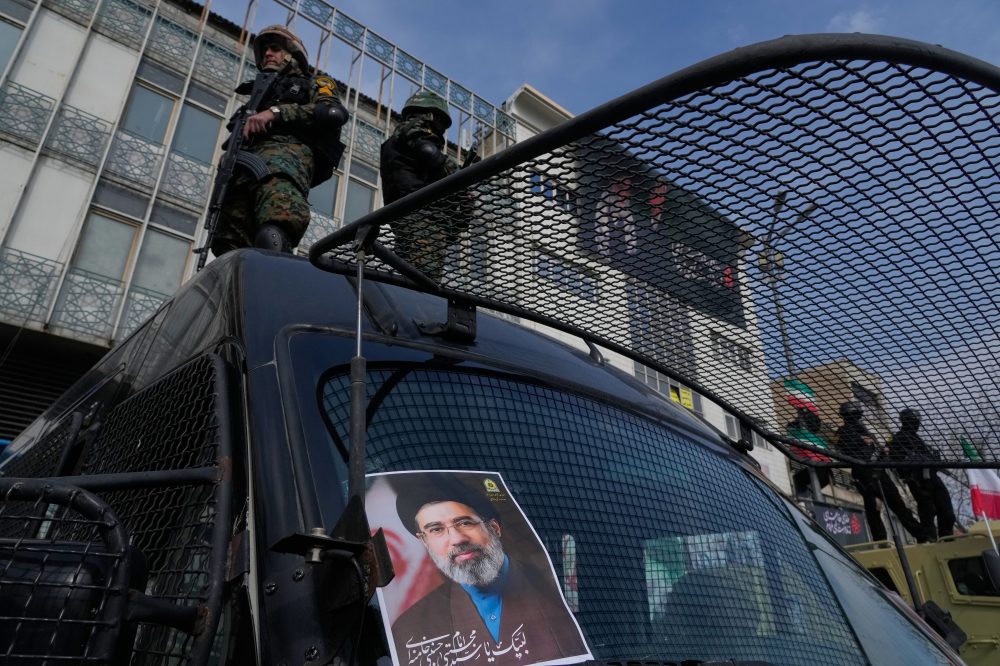
Throughout Tehran, Basij security checkpoints have multiplied, typically consisting of simple traffic cone barriers and several vehicles. One local resident reported five or six new checkpoints appearing in his affluent neighborhood alone. Personnel at these locations search cars for weapons, inspect identification documents, and occasionally demand to examine mobile phones, according to the resident who requested anonymity for security reasons.
Checkpoint attacks commenced on March 11, with Armed Conflict Location and Event Data, an American monitoring organization, documenting at least 15 separate incidents in one day.
“We are landing crushing blows on the Revolutionary Guards and the Basij, both in the streets and at checkpoints,” Israeli Prime Minister Benjamin Netanyahu declared the following day, stating the objective was establishing conditions for Iranians to remove their government.
On Tuesday, Israeli military officials announced strikes against more than 10 Basij locations throughout the capital. Video footage shared online and confirmed by the Associated Press displayed two burning vehicles near traffic cones on a central Tehran boulevard. The scene corresponded with aerial footage released by Israeli forces showing a Tuesday checkpoint strike as public transportation and civilian vehicles passed nearby.
Iranian citizens have been distributing videos and social media posts revealing checkpoint locations, frequently tagging the Israeli military’s Farsi account and requesting strikes, sometimes honoring protesters killed in those areas. Others share checkpoint information to warn commuters about traffic delays. Multiple videos show checkpoints positioned beneath bridges, apparently seeking protection from aerial attacks.
The Basij, meaning “mobilization” in Farsi, comprises tens of thousands of volunteers operating under Revolutionary Guard authority. Most remain unarmed and participate in “ideological and political activities,” according to Azizi, a visiting researcher at the German Institute for International and Security Affairs.
The organization operates similarly to how the Communist Party functioned in the Soviet Union, maintaining divisions in educational institutions, universities, government agencies, and other organizations, he explained. Male and female volunteers work to guarantee devotion to the Islamic Republic through activities like conducting religious instruction or intimidating those who violate social regulations. They can also be activated for government-sponsored events, including counter-demonstrations, Azizi noted.
Local paramilitary divisions deploy during periods of domestic unrest — such as January’s protests — equipped with weapons ranging from clubs and stun devices to lethal ammunition.
Throughout those protests and the current conflict, the Basij’s function has been supplying personnel, Azizi explained.
“The state’s security apparatus has been continuously engaged, leaving many of its core forces both deeply entrenched and likely fatigued,” he said. Through checkpoint operations, the Basij enables security agencies to concentrate on intelligence collection and detentions.
Iranians describe widespread text message warnings against demonstrations and aggressive Basij patrols in Tehran. On Thursday, Iran announced executing three men detained during January’s protests, marking the first known implementation of such sentences.
Over the past week, semi-official media sources have reported arresting more than 100 individuals across Iran, mostly charged with collaborating with hostile nations or sharing media content with foreign organizations. At least 14 faced accusations of possessing Starlink internet equipment or planning to distribute them or virtual private network access cards. Starlink has provided one of the few methods for accessing global internet since the unprecedented blackout started January 8.
The government has also reportedly disabled portions of Iran’s domestic internet and canceled some VPN cards issued to individuals with specialized occupations.
The Iran Human Rights Documentation Center, an American-based organization, reported people being arrested for photographing checkpoint, base, and military facility locations. Authorities continue detaining individuals connected to January’s protests, former political prisoners, or minority group members.
The rights organization said it received reports of security forces firing weapons at checkpoints. In one case, two teenage brothers were shot and killed after honking their vehicle horn celebrating Supreme Leader Ayatollah Ali Khamenei’s death in the war’s initial attack.