
PORTLAND, Ore. — An Oregon federal judge determined Thursday that the federal government exceeded its authority when it declared transgender medical treatments for young people to be unsafe and ineffective without following required administrative processes.
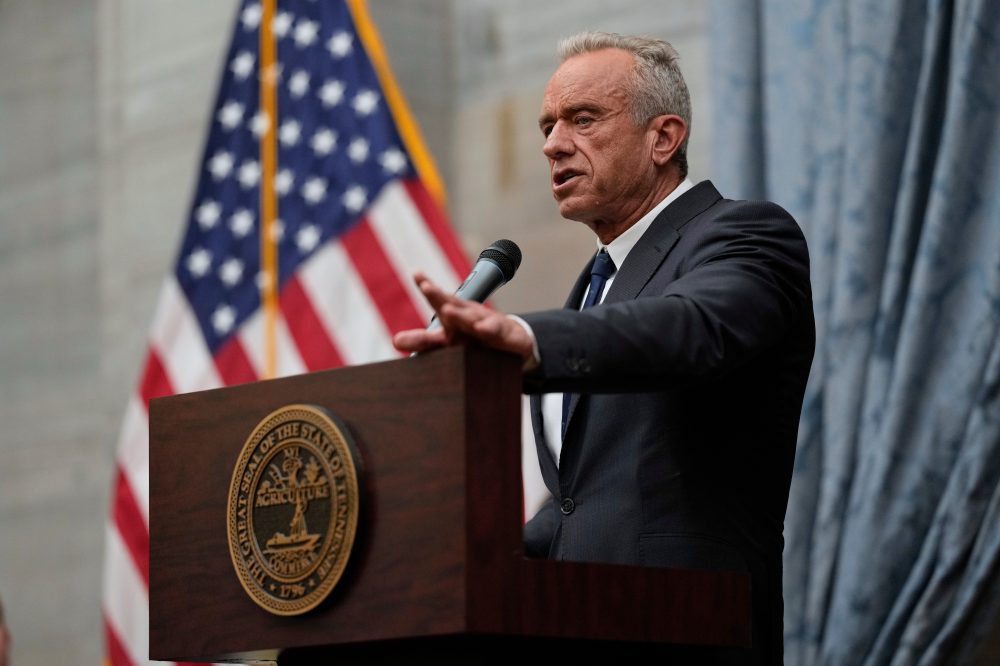
Federal Judge Mustafa Kasubhai focused his decision on Health Secretary Robert F. Kennedy Jr.’s failure to follow established procedures when he issued the December declaration. That announcement also threatened to remove doctors from federal programs like Medicare and Medicaid if they continued providing such treatments.
The judge additionally rejected the government’s request to dismiss the lawsuit entirely.
Kasubhai delivered his decision after approximately six hours of courtroom proceedings and plans to issue a detailed written opinion later.
“Today’s win breaks through the noise and gives some needed clarity to patients, families, and providers,” stated New York Attorney General Letitia James, the Democrat who spearheaded the legal challenge. “Health care services for transgender young people remain legal, and the federal government cannot intimidate or punish the providers who offer them.”
The Department of Health and Human Services did not immediately provide a response when contacted for comment.
According to The New York Times, the judge addressed the wider democratic concerns raised by this case.
“The notion that ‘I will go forward and issue a declaration and see if we can get away with it’ is not a principle of governance that adheres to the overarching commitment to a democratic republic that requires the rule of law to be regarded and respected and honored as a sacred,” the judge stated.
This marks Kennedy’s second significant courtroom loss this week. On Monday, a Boston federal judge temporarily halted several of Kennedy’s vaccine policy modifications, finding he likely bypassed federal protocols when restructuring an important vaccine advisory panel and reducing childhood vaccination requirements without committee approval. Federal authorities have signaled their intention to challenge that decision.
Twenty states plus the District of Columbia filed suit against HHS, Kennedy, and the department’s inspector general in December, challenging the declaration as both inaccurate and illegal while seeking court intervention to prevent its implementation.
The legal challenge contends that the HHS declaration attempts to pressure healthcare providers into discontinuing gender-affirming treatments while bypassing mandatory policy-making procedures. The lawsuit argues that federal regulations require public notification and comment periods before implementing significant healthcare policy changes — steps that were allegedly skipped before the declaration’s release.
The HHS declaration drew its findings from a peer-reviewed departmental study conducted earlier this year that recommended emphasizing behavioral therapy over comprehensive gender-affirming care for youth with gender dysphoria.
That study challenged treatment guidelines from the World Professional Association for Transgender Health and expressed concern that teenagers might be too young to consent to life-altering treatments that could affect future fertility.
Leading medical organizations and transgender healthcare specialists have strongly denounced the report as factually flawed, while most prominent U.S. medical associations, including the American Medical Association, maintain their opposition to restricting transgender healthcare and services for minors.