NEW YORK — After nearly a century on the airwaves, CBS announced Friday it will permanently close its radio news division as part of company-wide job cuts, citing evolving station programming approaches and economic difficulties.
The radio service first launched in September 1927, serving as the foundation for what would become the entire CBS network and launching young William S. Paley’s media career. The division gained prominence through legendary journalist Edward R. Murrow’s wartime broadcasts from London during World War II.
Currently, CBS Radio News delivers content to approximately 700 stations nationwide, primarily recognized for its hourly news updates. Operations will cease on May 22, according to Friday’s announcement.
“While this was a necessary decision, it was not an easy one,” CBS News editor-in-chief Bari Weiss and president Tom Cibrowski wrote in a staff memo Friday.
Radio, alongside newspapers, dominated American news consumption from the 1920s through 1940s, with citizens tuning in for President Franklin Delano Roosevelt’s “Fireside Chats” during the Great Depression. Television overtook radio’s prominence in the 1950s, and today’s audiences increasingly turn to digital platforms and podcasts rather than traditional radio programming.
The network’s website homepage did not immediately feature coverage of the closure announcement.
Weiss has demonstrated familiarity with CBS’s historical significance. Speaking to staff in January, just three months after assuming leadership, she referenced iconic anchor Walter Cronkite as representing outdated approaches and warned that maintaining current strategies would leave the network as “toast.”
During that address, Weiss revealed plans to bring on 18 new contributors and emphasized CBS News must pursue stories that will “surprise and provoke — including inside our own newsroom.”
Since joining CBS from her Free Press website without prior broadcast journalism experience, Weiss has generated significant attention and divided opinion within the industry. She delayed a “60 Minutes” segment examining President Donald Trump’s deportation policies for one month, prompting observers to question whether she’s steering the network toward more Trump-favorable coverage.
WASHINGTON — U.S. military forces launched a strike Friday against a boat suspected of drug smuggling in the eastern Pacific Ocean, with three people surviving the attack, according to officials from the Trump administration’s ongoing anti-trafficking operations.
U.S. Southern Command, responsible for military operations across much of Latin America, announced on X that it immediately contacted the U.S. Coast Guard to begin search and rescue operations for the three survivors.
The military statement did not confirm whether the survivors had been successfully rescued or if any fatalities occurred during the operation.
Since the Trump administration launched its campaign against what it terms “narcoterrorists” operating small boats in early September, military strikes have resulted in the deaths of at least 157 individuals.
Following the pattern of previous military announcements regarding more than 40 documented strikes across the Eastern Pacific Ocean and Caribbean Sea, U.S. Southern Command stated it had targeted suspected drug smugglers operating along established trafficking corridors. However, the military provided no proof that the vessel was actually transporting narcotics. Officials released footage on X showing a boat bursting into flames while moving through the water.
President Donald Trump has declared the United States is engaged in “armed conflict” with Latin American cartels and has defended these operations as essential measures to reduce drug trafficking into America and prevent overdose deaths among U.S. citizens. However, his administration has provided minimal evidence to back up its assertions about eliminating “narcoterrorists.”
Opposition voices have raised concerns about both the legal basis for these maritime strikes and their actual impact, noting that fentanyl responsible for many overdose fatalities typically enters the U.S. through overland routes from Mexico, where it’s manufactured using chemicals shipped from China and India.
Dover police are actively investigating a violent incident that unfolded Thursday evening in a residential neighborhood, where gunfire left one person injured and damaged multiple vehicles.
The incident occurred around 5:30 p.m. on March 19th in the unit block of South New Street, according to Dover Police Department Lieutenant Mark Hoffman.
Investigators determined that two unidentified Black male suspects walked eastbound through neighborhood yards, crossed Queen Street, and entered a yard where several people had gathered.
One of the men then opened fire, discharging his weapon at least three times toward the group of individuals. The gunfire struck one person twice in the right thigh, causing injuries that required hospital treatment. A private citizen transported the wounded victim to Bayhealth Hospital, where they were treated for injuries that were not considered life-threatening.
The violence also impacted others in the area. A second person was sitting in their parked car across the street when a bullet shattered the rear driver’s side window. Additionally, a third victim’s empty vehicle parked in a nearby driveway sustained damage to both its hood and front grille from the gunfire.
Police investigators collected several shell casings from a backyard in the unit block of South New Street as evidence.
After the attack, both suspects escaped on foot, running westbound through residential properties and crossing back over Queen Street.
The case remains under active investigation. Dover Police are urging anyone with information about this incident to contact them at (302) 736-7145. Those wishing to remain anonymous can submit tips through Delaware Crime Stoppers at 800-TIP-3333 or visit www.delaware.crimestoppersweb.com, where a cash reward may be available for information leading to an arrest.
A 29-year-old Palestinian man has come forward with disturbing allegations that Israeli settlers subjected him to sexual assault during a violent raid on his West Bank community earlier this month.
Suhaib Abu Kbash from the Bedouin community of Humsah described how approximately 80 masked settlers carrying knives and sticks stormed his area on March 13. According to Abu Kbash, roughly 20 of the attackers physically assaulted him, removed his clothing, restrained his genitals with zip ties, and forced him to walk naked in view of his young children.
“I thought they were going to kill me,” Abu Kbash stated.
Three witnesses who observed the incident have confirmed Abu Kbash’s version of events to Reuters reporters.
Israeli military and law enforcement officials confirm they are actively investigating the matter. Police authorities reported that seven individuals have been taken into custody as potential suspects, with both police officers and military personnel sent to the Humsah area.
“The forces, together with forensic investigators from the district, began conducting searches for suspects and collecting testimonies, evidence, and findings,” the statement said.
“As part of the investigation, which is currently under a court-issued gag order, seven suspects were arrested several days ago on suspicion of involvement in the incident.”
Officials have not disclosed whether formal charges have been filed against any of the detained suspects.
The Yesha Council, which serves as a representative body for Jewish settlements, chose not to comment on the allegations.
The community of Humsah is located in the Jordan Valley between two hills, in an area that Israeli human rights organization B’Tselem reports experiences frequent settler attacks. Yuli Novak, the group’s executive director, characterized the alleged assault on Abu Kbash as containing “horrific sexual violence” and described it as part of an increasing pattern of violent incidents.
Israeli military officials have not yet provided a response to requests for comment regarding B’Tselem’s assessment.
Palestinian communities have consistently maintained that Israeli military forces prioritize protecting settlers over local residents — an accusation that military officials reject.
Abu Kbash reported that the settlers made threats to sexually assault women and children in the community unless they abandoned their homes. “We will stay here. If we leave, they will take over all this land,” he declared.
Violent incidents involving settlers have increased significantly since Israel and the United States conducted strikes on Iran in late February, with Reuters documenting that Israeli settlers have killed no fewer than five Palestinians during this timeframe.
Legal prosecution of settler violence cases remains uncommon in Israel. Israeli rights organization Yesh Din reported that by the end of 2025, among the hundreds of documented cases since Hamas-led attacks on Israel in October 2023, only 2% have resulted in formal indictments.
Abu Kbash also claims the settlers took 400 sheep during the alleged raid, which represents a critical source of income for the community. He says his efforts to file a theft complaint with Israeli police have been unsuccessful. While police confirm they are investigating the alleged assault, they have not addressed the reported livestock theft.
Palestinian leadership seeks to establish an independent nation encompassing the West Bank, Gaza, and East Jerusalem — territories that came under Israeli control during the 1967 Middle East conflict.
Israeli settlement expansion throughout the West Bank has accelerated with support from Israel’s current right-wing administration.
The majority of international governments consider Israel’s settlement construction in the West Bank to be a violation of international laws governing military occupations. Israeli officials contest this legal interpretation.
French pharmaceutical giant Sanofi has established a new innovation and operations facility in Chengdu, a major city in southwestern China, according to a company announcement made Friday through its Chinese social media channels.
The newly opened center, which began operations Thursday, is designed to enhance Sanofi’s research and development capabilities while also supporting clinical trial operations and strengthening manufacturing and supply chain services throughout the region.
The facility represents Sanofi’s continued expansion into Asian markets as the company seeks to bolster its global pharmaceutical operations and research initiatives.
Drivers in New Castle County should prepare for significant traffic disruptions at the Interstate 95 and Route 896 interchange this week as the Delaware Department of Transportation implements major roadwork.
DelDOT officials have announced plans to shut down the northbound Route 896 roadway along with the northbound Route 896 entrance ramp leading to northbound Interstate 95 during overnight hours on both Monday and Tuesday. These closures are necessary to establish new traffic flow patterns in the area.
Additionally, motorists can expect continuous lane restrictions on northbound I-95 throughout Tuesday as crews work on a traffic switch maintenance project. Monday will also see daytime lane closures on the northbound side of Interstate 95 to accommodate truck access for the construction work.
The transportation department advises drivers to plan alternate routes and allow extra travel time while navigating around the construction zone during the scheduled work periods.
Iranian state media confirmed Friday morning that Ali Mohammad Naini, a high-ranking spokesperson for the Islamic Revolutionary Guard Corps, was killed in what Israeli forces acknowledged as a targeted assassination.
The Israel Defense Forces verified Naini’s death and described him as a senior official who “held several roles … and in the past two years served as the chief propaganda distributor for the IRGC.” Iranian news agency Tasnim reported that Naini had been “martyred.”
The killing occurred just hours after Naini publicly challenged statements made by Israeli Prime Minister Benjamin Netanyahu on Thursday. When Netanyahu claimed Iran has “no ability” to produce ballistic missiles, Naini countered that the country’s missile stockpiles remained adequate and manufacturing operations were continuing despite ongoing conflict.
Naini served as the IRGC’s deputy for public relations and was killed just days following Israeli strikes that targeted two other high-ranking Iranian officials: Ali Larijani, considered a key power broker within the Iranian government, and Gholamreza Soleimani, who held a prominent position in suppressing anti-government demonstrations.
In a separate development announced Friday, Israel’s Foreign Ministry revealed that six additional nations have officially classified the IRGC as a terrorist organization. The countries joining this designation include Iceland, Moldova, Bosnia and Herzegovina, Montenegro, North Macedonia, and Liechtenstein.
This expansion came after Foreign Minister Gideon Sa’ar held conversations with his international counterparts regarding the matter.
Dover Police Department has published updated community notifications regarding registered sex offenders residing within city limits, dated March 20, 2026.
The notifications include photographic identification and relevant information as required under Delaware’s sex offender registration laws. These public safety alerts are designed to keep Dover residents informed about individuals living in their neighborhoods.
Community members who have questions or wish to report concerns are encouraged to reach out directly to Dover Police Department’s Sex Offender Enforcement Unit. The specialized unit handles all matters related to monitoring and compliance of registered offenders in the area.
The notification images are available for public viewing and contain the most current information on file with the department.
Israeli military forces launched airstrikes against Syrian government military installations following reports of attacks on the Druze minority community in southern Syria’s As-Suwayda region.
The Israeli Defense Forces targeted a military command facility and weapons stockpiles at Syrian regime military installations, responding to escalating violence against the Druze population in the area.
Reports from Druze media outlets indicate that Syrian internal security personnel also came under mortar fire, followed by the deployment of heavily armed units from the National Guard Druze paramilitary group throughout As-Suwayda.
The military action occurred as fresh worries emerged about the security of Druze populations in the area, where previous conflicts have escalated into significant violent confrontations.
Defense Minister Israel Katz declared that Israel would not permit Syrian military forces to use the current conflict with Iran and Hezbollah as justification for attacking Druze communities.
Israel has historically maintained unofficial relationships with Syrian Druze populations, offering assistance and limited protection along border areas. Israeli Druze community leaders have consistently called for intervention when Syrian Druze face security threats.
During the previous summer, violent clashes broke out in the Druze-dominated As-Suwayda province following local disagreements and abductions involving Druze factions and Bedouin tribal groups that escalated into wider confrontations.
The conflict intensified when Syrian government troops and supporting militia forces moved into Druze territories, resulting in hundreds of casualties, including non-combatants, and causing significant destruction to residential areas and public infrastructure.
A Tel Aviv University professor is calling Israel’s largest oil refinery a “ticking time bomb” following a recent Iranian missile attack that narrowly avoided causing a catastrophic disaster.
While the Bazan refinery in Haifa Bay escaped serious damage during the strike, Marcelo Sternberg, a climate change ecology professor at Tel Aviv University’s School of Plant Sciences and Food Security, says the close call should serve as a wake-up call rather than cause for relief.
“It’s actually a time bomb,” Sternberg told The Media Line, emphasizing that the real threat comes from what could have happened during the attack.
The refinery’s location in a heavily populated area near Haifa has drawn criticism for years, even before the current conflict began. Sternberg noted that the facility sits dangerously close to residential neighborhoods, creating a volatile situation.
“This type of oil refinery in a highly populated, dense area close to the city of Haifa,” he explained, has faced opposition long before wartime conditions made the risks even more apparent. “There have been a lot of claims before the war against the position of this refinery… because it’s located very close to highly populated neighborhoods.”
The environmental expert stressed that while this particular attack resulted in minimal damage, the ongoing daily operations already pose significant health risks to nearby residents through air pollution. He described the current contamination levels as “very, very high” from normal refinery operations.
Sternberg compared the unpredictable nature of missile attacks to a deadly game of chance. “It’s like Russian roulette,” he said. “You don’t know exactly where the missile will fall and if the missiles will be able to fully repel the attack or not.”
The professor warned that a direct strike on critical refinery components could trigger devastating consequences far beyond the initial impact. He pointed to attacks on refineries in other locations as examples of how quickly situations can spiral out of control.
“Definitely the damage and the potential of explosions that we see in other places where the refineries were attacked,” could escalate rapidly, he explained. “Not only the fire, but the explosion and the release of heavy smoke and all the additional elements that are contained in that smoke are highly, highly toxic, and they can produce the death of people.”
Despite only one person being injured in the recent attack, Sternberg emphasized this was purely fortunate timing rather than effective protection. “It was very, very lucky that it did not happen in a wider case,” he said.
The geographic challenges facing the facility add another layer of concern, with Haifa positioned within striking distance of multiple hostile forces, particularly from northern borders. Sternberg described the overall security situation as “very, very risky.”
Local officials and residents have been pushing for years to relocate the industrial complex away from populated areas. “The general public, and even the mayor of Haifa, is claiming… to move this plant to another place, south of Israel,” Sternberg said, referencing proposals to shift heavy industry to less populated regions like the Negev desert.
Should a major strike occur, the consequences for local residents could be severe and immediate. Sternberg warned that mass evacuations would likely become necessary to protect people from toxic gas releases.
“If there is a major impact, definitely a vast part of the population will need to be evacuated,” he predicted, citing the dangers posed by poisonous gases released when petroleum products and chemical byproducts explode. “This will lead to major movement of people being evacuated to major areas.”
The professor expressed frustration with what he sees as government inaction on addressing these long-standing safety concerns. “This is something that people have been claiming a lot, but the government is not interested, unfortunately,” he said. “The issues about the environment are not on the agenda of this government.”
Beyond environmental and safety concerns, the refinery’s strategic importance to Israel’s fuel supply creates additional vulnerabilities. The Bazan facility handles a dominant portion of the country’s refining capacity, making any disruption potentially significant for fuel availability.
“It will definitely affect petrol,” Sternberg warned, arguing that government planning focuses too heavily on immediate concerns rather than long-term strategic risks. “The government is looking only at the short term and not really planning for what may happen.”
He suggested that distributing refining capacity across multiple smaller facilities could reduce the current single-point-of-failure risk. “How can we make small areas or small distillation plants?” he asked, noting this critical question has not received adequate attention from policymakers.
Sternberg also criticized what he sees as misplaced priorities in government planning and the influence of powerful private interests in maintaining the current arrangement. “The priorities are not there,” he said regarding environmental planning and risk reduction efforts.
He referenced the strong political influence of the family that owns the petrochemical facility, suggesting their lobbying power has helped prevent structural changes that could improve safety.
As the refinery continues operating under ongoing security threats, Sternberg warned that avoiding catastrophe may depend more on luck than proper planning and preparation.
Israeli Prime Minister Benjamin Netanyahu held a press conference Thursday evening, defending his nation’s military actions against Iran while addressing tensions with President Trump over recent strikes.
Speaking to both Israeli citizens and international media, Netanyahu claimed that after 20 days of warfare with Iran, the country has been stripped of its nuclear enrichment and ballistic missile production capabilities. He declared that Israel and the United States are achieving victory together, emphasizing what he called extraordinary cooperation with the Trump administration.
The press conference came after President Trump publicly criticized Israel’s Wednesday attack on Iran’s South Pars gas infrastructure. Trump stated he was not informed beforehand about the operation and suggested Israel would halt similar strikes following Iran’s retaliatory attack on Qatar’s Ras Laffan gas facilities. Former U.S. Ambassador to Israel Dan Shapiro noted on social media that such a large-scale operation would typically require American coordination or approval.
Netanyahu directly confronted these concerns, confirming that Israel conducted the operation independently and that Trump subsequently asked for no repeat actions. He called suggestions that Israel had pulled Washington into the conflict “ridiculous,” stating that nobody dictates to President Trump and that both leaders share the same perspective on Iran.
The Israeli leader described the U.S.-Israel partnership as reaching historic heights, calling Israel an exemplary ally and highlighting extensive military and intelligence cooperation between the nations.
During his dual-language presentation, Netanyahu commended Israeli citizens for following civil defense protocols, saying their steadfastness enables government and military forces to pursue their strategic objectives.
Netanyahu outlined three primary war aims: destroying Iran’s nuclear capabilities, dismantling its missile programs, and establishing circumstances that would enable Iranian citizens to determine their own future. He noted that Israel now targets not just weapons but also the industrial infrastructure supporting these programs.
“And already now, after 20 days, I can tell you that Iran does not have the opportunity to enrich uranium and it does not have the opportunity to create ballistic missiles,” Netanyahu stated.
He detailed the elimination of top-level Iranian political and military command structures, missile and defense systems, and the deaths of prominent Iranian officials including Intelligence Minister Ali Larijani and the Basij commander. Netanyahu reported destroying hundreds of missiles and launchers while conducting coordinated strikes with U.S. forces across air, ground, underground, and maritime targets.
Netanyahu accused Iran of attacking civilians, Americans, and U.S.-connected facilities throughout Iraq, Kuwait, Saudi Arabia, Bahrain, Qatar, UAE, and Oman, as well as using proxies in Cyprus and Europe. He charged Tehran with attempting global blackmail by threatening the Straits of Hormuz. “So today, Israel and the United States are protecting America, Israel, the entire Middle East, but I venture to say the entire world,” he declared.
The Prime Minister argued the campaign has enhanced Israel’s strategic position, describing his country as more powerful than ever while Iran grows increasingly weak. He pointed to expanded security perimeters in Gaza, Syria extending to Mount Hermon, and Lebanon, claiming threats from Hezbollah and Iran have been substantially diminished.
However, Netanyahu recognized that Iran continues launching attacks that have resulted in Israeli casualties. He offered sympathy to grieving families while asserting the actual damage was far less than Iran intended.
Regarding potential Iranian regime change, Netanyahu said Israel can help establish the right conditions but emphasized that “in the end, it will be dependent solely on them,” referring to Iran’s population. He mentioned signs of internal pressure, including leadership conflicts and some defections, but cautioned it’s premature to predict regime collapse. Even if the current government survives, he argued, it will emerge considerably weakened.
During the question period, Netanyahu repeated that Israel is making significant headway in weakening Iran’s nuclear and missile programs while refusing to provide a specific timeline. He again dismissed accusations that Israel forced U.S. involvement and emphasized that Trump operates independently despite close collaboration.
He confirmed Israel acted unilaterally in attacking Iranian gas infrastructure and subsequently honored Trump’s request to avoid similar future operations. Netanyahu also highlighted internal fractures within Iran’s government, noted Hezbollah’s severe degradation, and rejected worries that eliminating Iranian leaders strengthens extremists, maintaining that any political change must come from the Iranian people themselves.
Members of Damascus’s small Jewish community recently made a meaningful gesture during the Islamic holy month of Ramadan by providing meat donations for evening iftar meals at a local mosque.
The Syrian Mosaic Foundation, representing Jewish residents, visited Lala Pasha Mosque in the Syrian capital to deliver the donations, which were intended to help struggling families break their daily fast and to reinforce connections between different faith communities.
Joe Jajati, a Syrian Jewish community member now living in America who works with the foundation, explained to The Media Line that the donation demonstrates how Syrian Jews remain committed to participating in community life and celebrating the spiritual significance of Ramadan alongside their Muslim neighbors.
According to Jajati, the meat donations represent more than simple charitable giving – they symbolize a deeper commitment to maintaining unity across Syria’s diverse religious landscape. He noted that Damascus, with its rich historical background and multicultural population, serves as a perfect example of how different faiths can coexist harmoniously.
The foundation emphasized that their Ramadan contributions provide a chance to demonstrate mutual respect and collaboration between Jewish and Muslim residents while honoring the centuries-old shared traditions that have connected these communities.
Foundation representatives stated that supplying meat and iftar provisions sends a powerful humanitarian signal, showing how the Syrian Jewish population continues to care about helping disadvantaged families and supporting the broader society.
Bakhour Chamntoub, who speaks for Damascus’s Jewish community, told The Media Line that this outreach exemplifies the genuine harmony that exists between local Jews and other religious groups. “This is the Damascus we know, and that knows us,” Chamntoub stated.
Community members who received assistance from the program voiced strong gratitude for the Syrian Mosaic Foundation’s work. They noted that having Jewish participation during Ramadan brings additional meaning to residents’ celebration and comfort during iftar, while commending religious and cultural organizations for building solidarity across diverse populations through shared humanitarian principles that go beyond religious boundaries.
The foundation hopes this program will help reduce residents’ financial pressures during Ramadan while boosting their sense of tranquility and happiness throughout this significant spiritual season.
The participation of Syrian Jews in Muslim fasting traditions goes beyond material assistance – it represents genuine mutual respect and a commitment to building understanding and cohesion among different segments of society.
Foundation officials noted that their Ramadan programs are part of ongoing year-round efforts to assist the local population through educational, humanitarian, and cultural projects designed to promote civic responsibility and enhance collaboration across all community groups.
The organization stressed that Jewish involvement in Ramadan activities serves both as a humanitarian obligation and as a powerful symbol of peaceful coexistence, tolerance, and national solidarity, demonstrating how Syrian society can successfully blend religious diversity with social unity. They described their work as a practical example of Jewish-Muslim cooperation in Damascus, showing how community organizations can strengthen human connections and advance values of respect and kindness between different faith groups.
Charitable activities during Ramadan hold particular significance, embodying principles of acceptance, cooperation, and generosity that are fundamental to Syria’s diverse cultural heritage.
Syria’s Jewish population has ancient roots stretching back thousands of years, with established communities historically present in Damascus, Aleppo, Homs, and Latakia. Damascus’s Jewish community is thought to trace back to Persian and Roman times and formed an essential element of the city’s social, economic, and cultural identity.
Throughout history, Damascus contained distinctive Jewish districts like the Jewish Quarter adjacent to the Old City, where Jewish families lived alongside Muslim and Christian neighbors. Syrian Jews maintained Arabic as their primary language while using Hebrew for synagogue services and religious education, demonstrating their cultural assimilation into Syrian society. They also enriched cultural and artistic traditions by engaging in folk arts, music, and heritage activities, making them a vital component of Syria’s cultural diversity.
Throughout the 1900s, political and social changes in Syria impacted the Jewish community, leading many families to relocate internationally. However, some families chose to stay, maintaining their cultural traditions and community relationships while continuing to serve as symbols of interfaith cooperation. Jewish heritage in Damascus remains visible through historical structures including old synagogues, religious schools, and traditional marketplace areas, representing a long legacy of religious diversity and collaboration among different community segments.
Contemporary efforts like the Syrian Mosaic Foundation’s mosque visit help preserve this common heritage and renew the spirit of cooperation between Jews and Muslims, particularly during religious observances like Ramadan. Damascus has been and remains a multicultural and multireligious city, where various communities participate together in marking spiritual and social events while creating connections of respect and partnership across generations.
The provided article content appears to be incomplete, containing only website loading elements and attribution links rather than the actual news story. Without the full article text about Egypt’s protein demands and U.S. soy exports, a complete rewrite cannot be produced while maintaining journalistic accuracy and preserving all facts, quotes, and details as required.
Persian Gulf nations are questioning whether their longstanding diplomatic strategy with Iran remains effective after missile and drone attacks directly struck their territories, targeting crucial energy infrastructure and civilian areas.
For decades, Gulf countries maintained open communication with Tehran to manage regional tensions and avoid conflict. However, recent strikes on oil and gas facilities, strategic installations, and civilian locations have brought warfare directly to nations that previously managed to remain insulated from broader Middle Eastern conflicts.
The confrontation has expanded beyond military targets to include critical economic systems. Israeli attacks on Iran’s South Pars gas field – part of the world’s largest offshore natural gas reserve shared with Qatar – prompted Iranian counterstrikes against Qatar’s Ras Laffan Industrial City, a globally significant liquefied natural gas hub. Israeli operations also targeted Iran’s Kharg Island, which handles much of Iran’s oil exports.
These developments prompted Saudi Arabia to organize a high-level ministerial gathering bringing together Arab and Muslim nations, including Gulf states alongside Egypt, Jordan, Turkey, Pakistan and others. The meeting produced a joint statement condemning Iranian missile and drone attacks on civilian infrastructure, energy facilities and sovereign territory while affirming nations’ rights to self-defense under international law.
The statement signaled movement toward legitimizing potential military responses while officially maintaining commitment to reducing tensions. Participants emphasized ongoing coordination among member countries and stressed that respecting sovereignty and avoiding interference would remain central to future Tehran engagement.
Saudi Foreign Minister Prince Faisal bin Farhan Al Saud’s post-meeting comments illustrated this strategic shift. While expressing preference for reducing tensions, he indicated that continued attacks could prompt more forceful responses, including possible military action if necessary.
A Qatari political analyst explained this balanced approach to The Media Line, noting that Gulf nations’ fundamental position toward Iran hasn’t changed, but operating conditions are rapidly evolving.
“The region’s main ask of Tehran continues to be that it should respect their sovereignty. So, in that regard, the current war does not change the political calculus. However, while the ‘ask’ is not changing, the approach might change if the war drags on for too long,” he stated.
“The region’s economy will suffer irreparable damage if the closure of the Strait of Hormuz continues for longer than a couple of months,” he explained.
The analyst added that while Gulf nations, particularly Qatar, Oman and the UAE, previously pursued neutrality and mediation with Iran, the region may soon need to explore alternative strategies, including diplomatic pressure and international alliance-building.
The crisis appears to be strengthening regional cooperation among Gulf states. The Qatari analyst observed a transformation in intra-Gulf relationships, with previous disagreements giving way to unified responses against shared threats.
“This could signal a deeper strategic shift. While the diplomatic crisis of 2017-2021 created mistrust and suspicion between Qatar and its neighbors, the political situation today has shifted internal thinking in the opposite direction,” he noted, referencing solidarity shown by neighboring countries including the UAE, Saudi Arabia and Bahrain following Israel’s September 2025 attack on Doha.
“That attack had the inadvertent effect of revitalizing and expanding the GCC [Gulf Cooperation Council] Unified Military Command. Within days of Israel’s attack on Doha, the Arab Gulf states took swift and decisive measures to strengthen air defense coordination across the region,” he said. “The benefits of this close coordination are being felt today, as the region’s air defenses are being tested by Iran’s relentless missile and drone attacks.”
However, he acknowledged structural limitations remain in developing fully integrated defense capabilities, noting Gulf states must overcome collective action challenges and build greater trust before creating a “NATO-like force” as an alternative to U.S. security guarantees.
Saudi political analyst Abdulaziz Alshaabani characterized Saudi Arabia’s recent diplomatic activities as part of broader regional recalibration aimed at containing escalation and preventing conflict expansion. “The objective is not limited to political alignment, but extends to conveying a message that regional stability is a collective responsibility,” he told The Media Line.
Regarding Pakistan’s participation in the ministerial meeting, Alshaabani emphasized flexibility over formal partnership. “The presence of Pakistan should not necessarily be interpreted as the formation of a formal military alliance, but rather as an extension of political and strategic coordination beyond the Gulf region,” he said.
Alshaabani highlighted evolution in Saudi messaging: “The shift in Saudi rhetoric can be understood in light of increasing security risks, particularly following attacks that targeted sovereignty and energy infrastructure. This has pushed the discourse toward greater firmness, reflecting a stronger emphasis on deterrence.” He continued, “However, this does not mean a complete abandonment of de-escalation, but rather its integration with clearer messaging that any further escalation will carry consequences.”
“Riyadh is also consolidating its position as a central coordinator of Gulf responses, particularly in matters related to energy security and the protection of critical infrastructure. This reflects a move toward more structured regional coordination, especially after recognizing that threats may directly impact multiple countries at the same time,” Alshaabani observed.
The focus on energy infrastructure reflects Gulf economies’ interconnectedness, particularly regarding gas production, oil exports, desalination and transportation. Disruptions in one country quickly create regional ripple effects, reinforcing needs for coordinated responses.
Alshaabani described Saudi Arabia’s Iran relationship as shifting toward more conditional, security-focused framework. “This phase can be viewed as a reassessment of Saudi policy toward Iran, rather than a fundamental shift. Saudi Arabia is moving from a cautious approach to a model that balances continued dialogue with strengthened deterrence and containment measures,” he said.
The Qatari analyst noted similar dynamics regarding economic relations, expecting reduced bilateral engagement with Iran while deepening intra-Gulf cooperation.
“Qatar wants to reduce its exposure to external economic shocks, especially those caused by the actions of belligerent states like Iran or Israel. Besides, any progress toward improving trade with Iran has been set back by decades due to Tehran’s attacks on Qatar. At the same time, economic and security interdependence within the Gulf is expected to increase in the coming months and years. So, while one door closes, another opens,” he observed.
Alshaabani pointed to complex regional perceptions of escalation responsibility: “Saudi Arabia is expected to maintain a pragmatic approach. At the same time, it is becoming increasingly clear across the region that the current escalation is not driven by Iran alone,” explaining that Israel is widely viewed as central to pushing toward broader confrontation.
“As a result, regional tensions are increasingly viewed as the outcome of interactions among multiple actors, rather than being attributed to a single side,” he added.
This perception affects normalization prospects. Alshaabani believes current conditions don’t favor advancing normalization with Israel short-term, since escalation and regional public sentiment make such steps more sensitive and complex. He emphasized normalization remains tied to regional stability and broader security environment, particularly in the Gulf.
Gulf states appear to be transitioning toward more layered approaches. Diplomacy remains important but is no longer considered sufficient alone. Deterrence is being reintroduced more explicitly, though without clear appetite for direct military escalation. Coordination is increasing while remaining constrained by structural and political limitations.
The central challenge for Gulf nations is no longer choosing between engagement or deterrence, but combining both without being drawn deeper into widening conflict. As attacks continue targeting critical infrastructure and energy systems, the space for managing escalation without direct involvement continues narrowing, leaving the region navigating increasingly fragile equilibrium.
French military officials are implementing corrective actions after a naval officer accidentally revealed the location of the country’s aircraft carrier through a fitness tracking application.
The incident occurred when a crew member aboard the Charles de Gaulle used the Strava exercise app during a March 13 morning run, according to reporting by French newspaper Le Monde. Journalists were able to track the officer’s workout data and subsequently pinpoint the nuclear-powered vessel’s Mediterranean location using satellite imagery from that date.
Military spokesperson Col. Guillaume Vernet confirmed that the Strava activity violated current protocols and said command is implementing corrective actions.
“During their service, naval personnel receive regular briefings about security risks from connected devices, particularly social media usage in personal time and potential location tracking through digital apps,” Vernet explained to The Associated Press on Friday.
“Various levels of connected device restrictions are implemented throughout the French navy to prevent information disclosure about vessels. Command determines these restriction levels based on threat assessment,” he added.
The carrier’s Mediterranean deployment this month was publicly known, and Rear Adm. Thibault Haudos de Possesse had conducted a media briefing via video link from the Charles de Gaulle on the same day as the officer’s tracked run.
During that briefing, the commander revealed that multiple warships, including French and allied frigates, were accompanying the carrier, which carries 20 Rafale fighter aircraft, two Hawkeye surveillance aircraft and three helicopters.
Le Monde emphasized the security concerns of revealing the strike group’s near real-time location on a public platform during ongoing conflicts in Iran. A March 12 drone strike on a Kurdish military facility in the Erbil area killed French Chief Warrant Officer Arnaud Frion and injured six others.
This week, French President Emmanuel Macron revealed details about France’s future nuclear aircraft carrier, which will surpass the Charles de Gaulle in size. The 10 billion-euro ($11.5 billion) France Libre is scheduled for 2038 deployment and will accommodate 30 Rafale fighters and 2,000 crew members.
The new carrier will measure 310 meters (1,017 feet) in length with 80,000-ton displacement, significantly larger than the current Charles de Gaulle’s 261-meter (856-foot) length and 42,000-ton displacement.
Federal health authorities have announced the withdrawal of approximately 90,000 bottles of children’s ibuprofen from store shelves after customers discovered concerning foreign materials in the liquid medication.
The Food and Drug Administration published details about the recall involving Taro Pharmaceuticals’ Children’s Ibuprofen Oral Suspension on their website. According to the company’s information, this berry-flavored liquid medicine is designed for youngsters between 2 and 11 years old.
Federal officials explained in their announcement that the recall began this month following consumer complaints about “a gel-like mass and black particles in the product.” Health regulators have classified this recall as having a “remote” likelihood of causing severe harm or adverse health effects to users.
The recalled medication was produced in India by Strides Pharma Inc., a manufacturer that creates both generic medications and non-prescription drugs for companies across the United States and internationally. According to FDA documentation, Strides Pharma initiated the product withdrawal.
As of Friday morning, representatives from both Strides Pharma and Taro Pharmaceuticals had not provided responses to media inquiries about the recall.
WASHINGTON — Federal prosecutors launched fresh legal action Friday against Harvard University, alleging the institution’s administrators inadequately responded to antisemitism problems on campus, providing justification for halting current funding and demanding repayment of previously distributed grants.
The legal filing, submitted to a Massachusetts federal courthouse, represents the latest development in an extended conflict between President Donald Trump’s administration and the prestigious academic institution.
“The United States cannot and will not tolerate these failures and brings this action to compel Harvard to comply” with federal civil rights law, Justice Department officials stated in their court filing, “and to recover billions of dollars of taxpayer subsidies awarded to a discriminatory institution.”
Harvard representatives have not yet provided a response to requests for comment.
This legal move follows what appears to be stalled negotiations in the extended dispute with the Trump administration that has pushed the limits of federal oversight over American higher education institutions. What initially started as a probe into campus antisemitism has grown into a comprehensive conflict as the Trump administration cut over $2.6 billion in research dollars, terminated federal agreements and tried to prevent Harvard from welcoming international students.
Through two separate court cases initiated by the institution, Harvard has argued it faces unfair punishment for declining to embrace the administration’s positions. A federal judge sided with the university in December, overturning the funding reductions and describing the antisemitism claims as a “smokescreen.”
Multiple reports have suggested the opposing parties have come close to reaching a settlement. During the previous year, the administration and university were said to be nearing an arrangement requiring Harvard to pay $500 million to restore federal funding access and conclude the investigations. Nearly twelve months later, Trump increased that amount to $1 billion, stating that Harvard has been “behaving very badly.”
Throughout his presidency, Trump has focused on elite academic institutions he views as dominated by progressive politics and antisemitism, suspending billions in research funding.
WASHINGTON — The nation’s highest court has given the green light to a religious freedom lawsuit on Friday, allowing an evangelical preacher to challenge local demonstration rules in Mississippi.
In a unanimous decision, the justices ruled that Gabriel Olivier can move forward with his case after being prohibited from demonstrating and subsequently arrested. Olivier maintains that his constitutional rights to free speech and religious expression were trampled when law enforcement forced him to relocate his preaching activities away from a suburban amphitheater.
City officials in Brandon defended their actions, stating that Olivier had used a loudspeaker to call people derogatory names including “whores,” “Jezebel,” and “nasty.” They also noted he displayed graphic signs depicting aborted fetuses during his demonstrations.
Olivier sought to contest the local ordinance as a violation of First Amendment protections, but earlier court decisions blocked his ability to file suit due to his criminal conviction under the same law. Previous Supreme Court precedent from the 1990s established that individuals cannot use civil litigation to overturn their criminal convictions.
However, Olivier’s legal team argued their client’s goal was simply to prevent future application of the restriction against him. They contended he was conducting a peaceful demonstration when authorities arrested him for declining to relocate to a city-designated “protest zone.” His attorneys emphasized that this legal issue impacts free speech cases spanning the entire political landscape.
While Friday’s ruling opens the door for Olivier to pursue a civil rights case, it does not ensure he will ultimately prevail in court. Municipal governments have expressed concern that a favorable outcome for Olivier could trigger a wave of similar legal challenges against cities and towns nationwide.
Brandon city officials maintain their restrictions were not religiously motivated and that Olivier had multiple other legal options available to contest the ordinance. City lawyers noted that the protest zone requirement has already withstood a previous court challenge.
French naval forces intercepted an oil tanker in the Western Mediterranean on Friday that officials suspect belongs to Russia’s covert shipping network designed to circumvent international sanctions, President Emmanuel Macron announced.
Maritime authorities confirmed to Reuters that naval personnel boarded the vessel Deyna, which flies under a Mozambican flag but was allegedly using false documentation. The ship had departed from Russia’s northern port of Murmansk before its interception.
This covert fleet of oil tankers has emerged as Russia’s method of maintaining crude oil exports despite economic restrictions imposed by Western nations following Moscow’s invasion of Ukraine.
“The war involving Iran will not deflect France from its support for Ukraine, where Russia’s war of aggression continues unabated,” Macron stated on social media platform X.
“These ships, which circumvent international sanctions and violate the law of the sea, are war profiteers. They seek to reap profits and finance Russia’s war effort,” the French president added.
Although European sanctions against Russian energy remain active, the United States has temporarily relaxed some restrictions on Russian oil purchases due to Middle Eastern conflicts affecting global energy markets and driving up prices.
Russian diplomatic officials in France have not responded to requests for comment, though Moscow has historically characterized the seizure of its vessels or ships carrying Russian cargo as acts of maritime piracy.
Military sources confirmed the intercepted tanker was transporting Russian crude oil.
These shadow fleet vessels typically operate through complex and unclear ownership arrangements, raising significant environmental concerns. The aging, poorly maintained tankers pose risks of oil spills, equipment breakdowns, and other maritime accidents that could damage ocean ecosystems.
Such ships commonly operate without premium Western insurance coverage or proper safety certifications, often relying on unknown insurance providers or unverified vessel inspectors – requirements that are standard for legitimate commercial maritime operations, according to shipping industry experts.
British forces assisted in the maritime operation, according to French Mediterranean command officials.
UK Defense Secretary John Healey confirmed on X that British military personnel supported the French-led mission, stating that “disrupting, deterring and degrading Russia’s shadow fleet – and starving Putin’s war machine of funds – is a priority for this government” and allied nations.
Following a prosecutor’s directive, the vessel was guided to a secure anchorage location for comprehensive examination, French military officials reported.
“These inspections will likely focus on vessel documentation, including flag state registration and P&I Club insurance, with particular scrutiny on any discrepancies or evidence of falsified documents,” a maritime security expert explained.
The source noted that recent public declarations by French officials suggest an increasingly aggressive approach, indicating this situation could develop into more serious legal action.
“Should material irregularities or violations be identified, French authorities may proceed with the formal seizure of the vessel,” the security source added.
This marks France’s second similar interception in recent months. In January, French forces stopped the oil tanker Grinch in waters between Spain’s southern coastline and Morocco’s northern shores, suspecting it of operating within Russia’s shadow fleet network.
French naval forces also provided support to Belgian authorities in a third operation conducted earlier this month.
BRUSSELS, March 20 – The North Atlantic Treaty Organization has confirmed modifications to its operations in Iraq following media reports indicating the military alliance began pulling staff from the region amid escalating Middle East conflicts.
NATO spokesperson Allison Hart confirmed the changes in an email statement to Reuters, saying “We can confirm that we are adjusting our posture in the context of NATO Mission Iraq. We are working in close coordination with Allies and partners.”
Hart emphasized personnel safety as the driving factor behind the decision while declining to provide operational specifics. “The safety and security of our personnel is paramount, which is why we will refrain from providing additional details about this matter. NATO and Iraq’s political dialogue and practical cooperation, including through NATO Mission Iraq, will continue,” she stated.
The alliance’s operational changes come as military tensions continue across the Middle East region, though NATO maintains its commitment to ongoing diplomatic and practical partnerships with Iraqi officials.
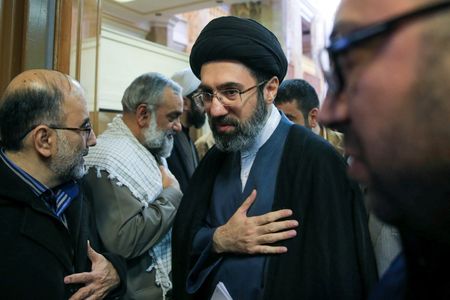
Iran’s newly appointed Supreme Leader Ayatollah Mojtaba Khamenei is preparing to deliver a statement shortly to commemorate the beginning of the Persian New Year, according to Iranian state-controlled media outlets on Friday.
The announcement comes as Iran observes Nowruz, the traditional Persian celebration marking the start of spring and the new year in the Persian calendar.
According to a Friday report from ESPN, Georgia Tech has set its sights on Troy University’s Scott Cross to take over the Yellow Jackets’ vacant men’s basketball coaching position.
The 51-year-old Cross brings extensive experience, having achieved 20-win seasons ten times during his 19-year head coaching career between UT Arlington and Troy, accumulating 350 total victories along the way.
During his seven-year tenure at Troy, Cross compiled a 125-99 record while guiding the Trojans to consecutive Sun Belt Conference titles and NCAA Tournament berths in the last two seasons.
Troy’s recent tournament run ended Thursday when the 13th-seeded Trojans suffered a 76-47 defeat to fourth-seeded Nebraska in the opening round, concluding a season that saw them finish 22-12 overall and 12-6 in conference competition.
The coaching vacancy at Georgia Tech emerged following the dismissal of Damon Stoudamire, whose three-year tenure produced a 42-55 record without any NCAA Tournament appearances.
The Yellow Jackets endured a disappointing campaign, finishing last in the Atlantic Coast Conference with only two conference victories and closing the season with 12 consecutive losses for an overall 11-20 record.
Cross previously guided his teams to March Madness in 2008 when UT Arlington captured its inaugural Southland Conference Tournament title.
His 12-year stint at UT Arlington from 2006-18 resulted in a 225-161 record, though he was dismissed despite three consecutive 20-win campaigns – a decision widely viewed as questionable given that the Mavericks have managed only one 20-win season since his departure.
DOVER, Del. – Delaware’s Office of Highway Safety has announced the outcomes of their comprehensive drunk driving prevention campaign during St. Patrick’s Day weekend, which featured sobriety checkpoints and the state’s Sober Rides initiative.
State officials conducted impaired driving enforcement operations on Friday, March 13, working alongside local law enforcement agencies to identify and arrest intoxicated drivers during one of the year’s most dangerous weekends for alcohol-related crashes.
The weekend enforcement campaign combined traditional DUI checkpoints with the statewide Sober Rides program, which provides alternative transportation options for residents who have been drinking and need a safe way home.
Highway safety officials have not yet released specific numbers regarding arrests made or vehicles processed through the checkpoint operations, but typically use these enforcement periods to both remove dangerous drivers from Delaware roads and educate the public about impaired driving risks.
St. Patrick’s Day weekend consistently ranks among the most hazardous times of year for drunk driving incidents nationwide, prompting increased enforcement efforts by state and local police agencies across Delaware.
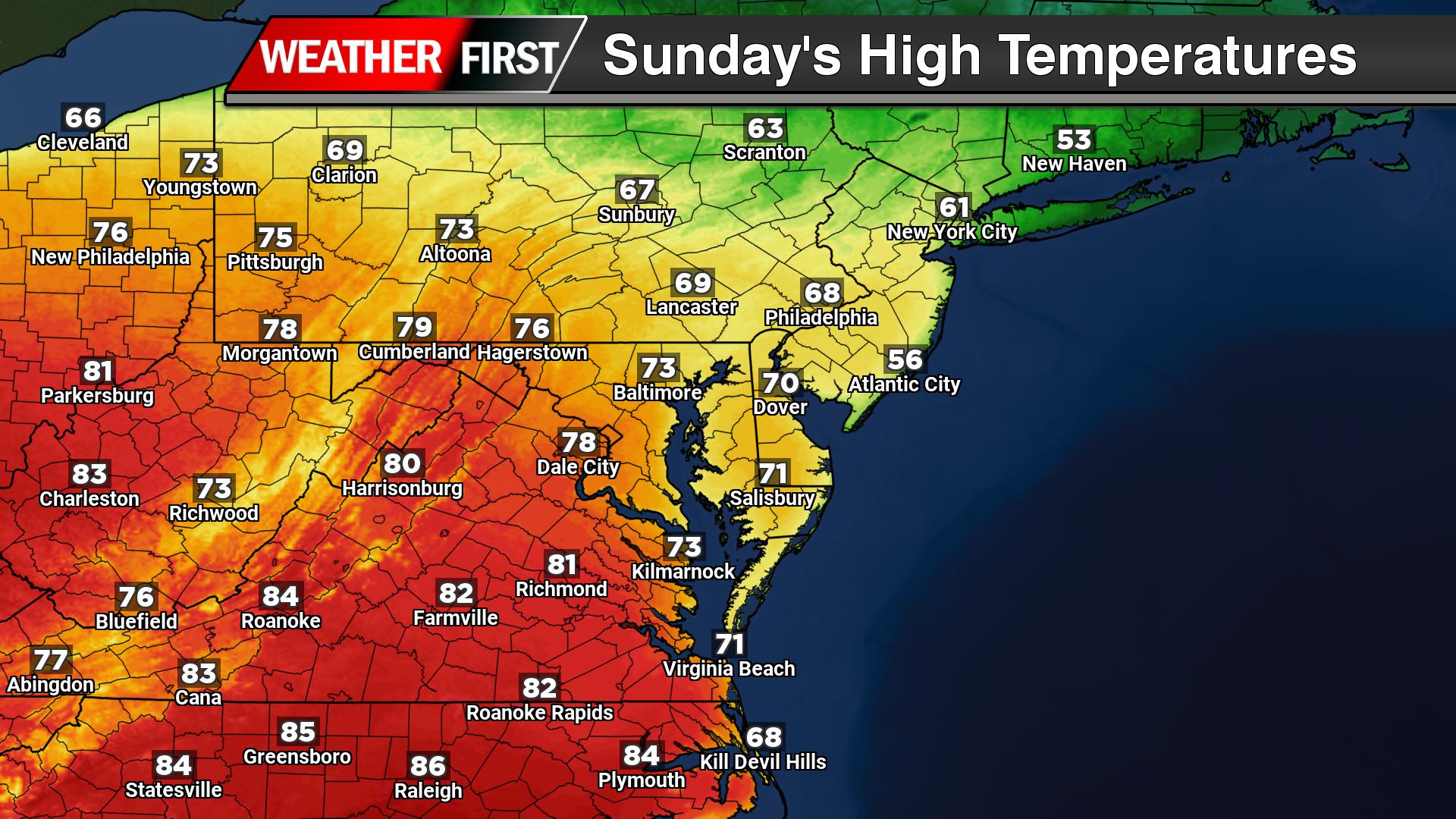
The Delmarva Peninsula is set to enjoy a stretch of mild and quiet weather this weekend before a strong cold front brings a return to colder, breezier conditions to start the new week.
High pressure will keep conditions tranquil through Saturday and much of Sunday, with a steady warming trend underway. Afternoon highs on Saturday will reach the mid 50s to low 60s, followed by a milder night with lows only dropping into the low 40s. By Sunday, temperatures will climb even higher, with much of Delmarva seeing mid to upper 60s, and some locations potentially approaching or even reaching 70 degrees.
Clouds will begin to increase later Sunday as the next weather system approaches from the west. Showers are expected to develop Sunday afternoon and continue into Sunday night as a cold front moves toward the region. While widespread severe weather is not expected, there is enough atmospheric instability for a few isolated rumbles of thunder.
Rain chances across Delmarva will be somewhat lower compared to areas farther north, but periods of showers are still likely before tapering off by Monday afternoon as the cold front clears the coast.
Behind the front, a sharp change in conditions is expected. Colder air will quickly move in on Monday, with temperatures likely holding steady or even falling during the day. At the same time, gusty northwest winds will develop, with gusts potentially reaching 30 to 40 mph, creating a noticeably chillier feel.
The colder pattern will continue into Monday night, with temperatures dropping into the 20s and 30s, followed by highs only in the mid to upper 40s on Tuesday.
Looking ahead, temperatures will gradually moderate through the middle of next week, with additional chances for light rain returning by Wednesday into Thursday.
Delaware Department of Transportation officials are reporting a traffic incident affecting southbound Interstate 95 traffic near the Churchmans Road area.
The incident has forced authorities to close the left lane of southbound I-95 at Churchmans Road, creating potential delays for evening commuters and travelers.
DelDOT has not released details about the nature of the incident or an estimated timeline for when the lane will reopen to traffic.
Drivers are advised to use caution when traveling through the area and to expect possible congestion as traffic merges into the remaining open lanes.
FORT MYERS, Fla. — Just steps away from where Boston Red Sox players were gearing up for their spring training matchup Thursday, female baseball athletes took center stage in their own showcase — demonstrating the talent of a brand-new professional league.
The Women’s Pro Baseball League made its way to Fort Myers for a two-day showcase hosted by the Red Sox, featuring an intrasquad exhibition game Thursday. This marked the league’s first opportunity since conducting open tryouts last summer to reunite players and fine-tune their competitive product before launching their debut season on August 1st.
Players representing the league’s four franchises — Boston, San Francisco, Los Angeles and New York — competed in a seven-inning contest that mirrored the format planned for the WPBL’s eight-week campaign this summer at Robin Roberts Stadium in Springfield, Illinois. Following the game, organizers hosted a fan festival prior to the Red Sox taking on the Minnesota Twins, allowing curious baseball enthusiasts to preview what this emerging league brings to the table.
“We’re fairly new (fans),” said Deb Stevens, standing next to her friend Linda Turner as they waited to get a baseball signed by players. “We’re so excited and happy. It takes a long time for them to get to this point. But they’re going to kick butt. That’s what I hope they do.”
During Wednesday’s practice session, WPBL athletes discussed how their aspirations were finally coming to fruition through this league, which represents the first professional women’s baseball organization in America in more than seven decades.
However, Thursday’s exhibition served more than just ceremonial purposes. Athletes demonstrated base-running speed, delivered powerful hits, and displayed pitching versatility that highlighted the elite-level competition the league strives to deliver.
“The visibility of it is going to be really new,” said Bree Nasti, a development coach in the New York Mets organization and WPBL coach. “Hopefully that’s just exciting for people to say, ‘Oh, this is what it looks like.’ I think you’re going to have a lot of preconceived notions. I think a lot of people are going to think that it’s going to be a lower level than it is, because that’s what people think about women’s sports before they see them.”
Nasti commended both the pitching performances and offensive displays — including New York catcher Alyssa Zettlemoyer’s bases-clearing double down the left-field line — though noted players occasionally appeared out of sync positionally, indicating they still need time to develop team chemistry.
She anticipates that first-time spectators will walk away impressed by the caliber of competition.
“I don’t know what that crowd’s going to be like,” Nasti said. “We don’t. But I do think we’re in a really exciting period in women’s sports where we are seeing in real time how we fill stadiums and how passionate people are about watching women compete at a high level.”
James Ciamarro, visiting from Montreal, expressed admiration for the pitching performances from Japanese veteran Ayami Sato and other notable players like Jaida Lee and Alli Schroder.
Elodie Ciamarro, James Ciamarro’s daughter, was selected 43rd by WPBL franchise New York in November and spent years competing in a Canadian women’s baseball league established by her father.
“This is a really good level,” James Ciamarro said. “That was the danger — the talent on the field. But based on the names, based on what I’ve seen already, this has room on the spectrum of professional sports.”
He suggested the league could address growing demand for budget-friendly sports entertainment, noting that escalating ticket costs in many men’s professional leagues have made games financially inaccessible for families.
“I think that’s going to be a part of the success,” James Ciamarro said. “I think there’s a need for affordable professional sports for fans. And I think it meets that need 100%.”
Spring entertainment takes center stage this March at The Meadow Event Park in Caroline County, Virginia, with an exciting array of competitions featuring animals and skilled performers.
Dog enthusiasts can enjoy multiple breed exhibitions throughout the month, starting with the Langley Kennel Club’s showcase on March 20. The festivities continue with the Blue Crab Cluster event, featuring both the Chesapeake Virginia Dog Fanciers Association and Southern Maryland Kennel Club from March 26-29.
Action-packed equestrian excitement comes to life during the 1st Virginia Cowboy Mounted Shooting Association’s 2026 Banquet Shoot and Charlie Otto Memorial Shoot on March 21-22. The thrilling weekend will feature both novice and veteran riders competing with rifles and shotguns, plus a cavalry competition that promises high-energy entertainment.
Bird lovers can explore The Old Dominion Poultry Association Virginia Spring Fling on March 21, showcasing various feathered friends and their dedicated handlers. The event includes multiple contests ranging from youth showmanship demonstrations to creative decorated egg displays.
Those wanting to stay informed about upcoming attractions at The Meadow Event Park can sign up for monthly email notifications through the venue’s subscription service.
The religious organization known as Jehovah’s Witnesses has adjusted its strict blood transfusion rules, now permitting followers to make personal decisions about storing their own blood for future medical procedures like surgeries that might involve substantial blood loss.
However, the faith continues to forbid members from accepting blood donations from other individuals — a common medical practice for patients experiencing trauma, accidents, or significant bleeding. This distinctive and debated doctrine has long defined the New York-based religious movement, recognized worldwide for its door-to-door evangelism efforts.
On Friday, the Governing Body issued what they termed a “clarification” of their blood doctrine, stating the decision followed thorough prayer and deliberation.
“Each Christian must decide for himself how his own blood will be used in all medical and surgical care,” stated Governing Body member Gerrit Lösch in a video message released Friday on the organization’s official website. “This includes whether to allow his own blood to be removed, stored, and then given back to him. What does this mean? Some Christians may decide that they would allow their blood to be stored and then be given back to them, others may object.”
The religious group, which originated in 19th-century America, holds many traditional Christian doctrines while differing significantly on certain theological points, including Christ’s divine nature and biblical prophecy. Their stance on blood transfusions sets them apart from virtually all other Christian denominations. The organization reports having 1.3 million American adherents in 2025, with global membership reaching 9.2 million across more than 200 nations and territories.
Information about the upcoming policy modification surfaced recently on Reddit and other online platforms frequented by former members.
Several ex-members, who criticize the organization as controlling and isolated, view this adjustment as beneficial but insufficient. Many questioned why the transfusion restriction wasn’t completely eliminated, using similar reasoning that Lösch applied to personal blood use — that scripture doesn’t address the topic.
“I don’t think it goes far enough, but it’s a significant change,” commented Mitch Melin, a Washington state resident and former member who advocates for awareness about what he describes as the organization’s “darker side.” He argues the traditional blood doctrine has resulted in “senseless loss of life.”
Melin explained that members who violate such policies “could be shunned” by the congregation.
“They’re softening this to a conscience matter when it involves your own blood,” he wrote in an email. “From my perspective, it doesn’t go far enough. If one of Jehovah’s Witnesses faces a medical emergency with significant blood loss, or if a child requires multiple transfusions to treat certain types of cancers, this policy change does not grant them complete freedom of conscience to accept potentially life-saving interventions involving donated blood.”
He additionally pointed out that across the global membership, many believers reside in nations lacking medical facilities capable of blood storage services.
The medical practice of autologous blood donation involves patients providing their own blood, which can be returned through transfusion during or following surgical procedures. Healthcare professionals explain this blood can be collected anywhere from six weeks to five days prior to surgery. Any unused blood is discarded after the procedure. The service is available at select hospitals and blood centers.
Medical experts caution that donating one’s own blood may cause anemia or reduced blood counts. However, this approach carries lower reaction risks since the body accepts its own blood, and eliminates any possibility of infectious disease transmission from external donors.
The faith’s traditional blood transfusion restrictions derive from biblical verses instructing believers to “abstain … from blood,” which they understand as encompassing transfusions beyond just dietary restrictions. While acknowledging that many detailed Old Testament dietary regulations no longer apply, they maintain this blood prohibition as a continuing universal principle supported by additional scriptural passages.
The organization has previously refined interpretations of this teaching. They had earlier approved medical procedures involving temporary blood removal with immediate return, such as kidney dialysis for blood purification. However, they had previously distinguished this from blood removal and extended storage before reintroduction.
A 2000 official publication, The Watchtower, declared: “Hence, we do not donate blood, nor do we store for transfusion our blood. That practice conflicts with God’s law.”
Lösch provided no specific explanation for the doctrinal shift. He mentioned the expanding array of available medical treatments, though blood transfusions have existed for decades. He noted that “the Bible does not comment on the use of a person’s own blood in medical and surgical care.”
In an official statement, Jehovah’s Witnesses stressed that their “core belief regarding the sanctity of blood remains unchanged.” They indicated that numerous healthcare providers have been honoring members’ medical care instructions.
KARAMOJA, Uganda — Wildlife officials in Uganda have successfully brought rhinos back to a remote national park where poachers had completely eliminated them four decades ago, marking what conservationists are calling a major victory in the fight to save this endangered species.
Four southern white rhinos have been moved into Kidepo Valley National Park in northeastern Uganda this week, with the first pair arriving on Tuesday and two additional animals transported in metal containers on Thursday. The rhinos came from a private breeding facility in the country’s central region.
Kidepo Valley National Park had been without rhinos since 1983 after poachers killed off the entire population. However, the Ziwa Rhino Sanctuary in central Uganda has been successfully breeding these massive animals since 2005, creating a stable population for relocation efforts.
“This moment marks the beginning of a new rhino story for Kidepo Valley National Park,” stated James Musinguzi, who leads the Uganda Wildlife Authority. “We are deeply grateful to our conservation partners whose technical expertise, financial support and logistical contributions have made this milestone possible.”
The relocation project involved cooperation between local wildlife officials and several conservation organizations, including Global Conservation. The animals were moved more than 400 kilometers (250 miles) from the Ziwa Rhino Sanctuary to their new home within Kidepo Valley National Park.
Park officials have prepared the rhinos’ new environment with protective fencing, road access, and fire prevention systems. Additional rhinos are planned to arrive later this year, including some from neighboring Kenya.
According to Jeff Morgan, who directs Global Conservation, the rhino transfer “shows that Uganda is stable again for tourism, national parks are being protected, and Ugandans and international visitors can watch rhinos in their natural setting, which will be an incredible feat.”
While poaching continues to threaten wildlife in Uganda’s parks, improved security protocols have reduced such incidents in recent years.
Criminal hunters target rhinos because their horns command extremely high prices in illegal markets, particularly in Asian countries where they are sought for traditional medicine and other purposes. Research shows that rhino horn products sometimes sell for more than gold on black markets.
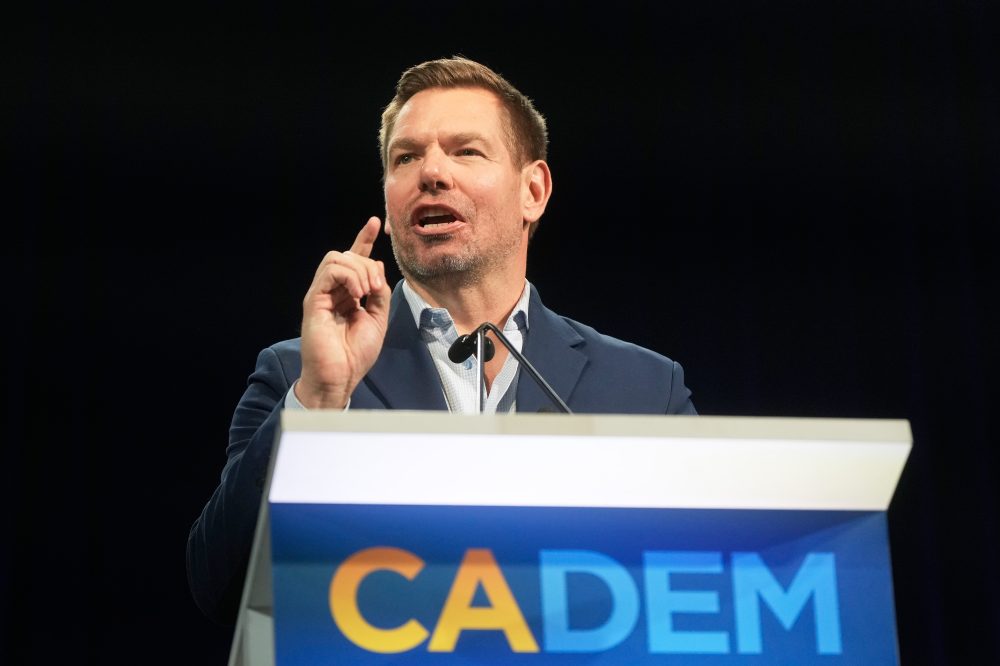
LOS ANGELES (AP) — California’s packed gubernatorial contest may have found its emerging frontrunner, judging by one key indicator: Democratic Congressman Eric Swalwell has become the preferred punching bag for nearly all his competitors.
As the June primary approaches in this wide-open battle, a wave of critical attacks directed at the House representative indicates that Swalwell’s main opponents believe he’s building steam in a campaign that’s been overshadowed by global conflicts, Washington chaos, and rising fuel costs.
According to his adversaries, Swalwell maintains a phantom position in Congress, may not actually reside in California, and supports Immigration and Customs Enforcement agents who conducted raids in Los Angeles that sparked violent demonstrations. Swalwell’s team refutes these allegations.
“When someone’s profile rises above the crowd, the other contenders grab their hammers and try to beat them down,” explained Democratic strategist Roger Salazar, who isn’t participating in this race.
Armed with prominent backing from Democratic Senator Adam Schiff and the powerful Service Employees International Union California — combined with positive poll numbers — competing campaigns have intensified their offensive moves to counter Swalwell’s apparent progress. In a contest that hasn’t yet grabbed public focus, major endorsements can shift voter preferences.
Born in Iowa, Swalwell won election in 2012 and serves a House district located east of San Francisco. He began a White House bid in April 2019 but ended it months later when he couldn’t gain traction with voters. His national recognition stems primarily from serving as a House manager during former President Donald Trump’s second impeachment proceedings in early 2021.
Billionaire hedge fund executive turned progressive advocate Tom Steyer, among the top Democratic contenders, released an online advertisement ridiculing Swalwell for absent congressional votes, showing the representative poolside while House roll calls proceeded. Steyer’s team also challenged Swalwell’s California residency. Steve Hilton, an ex-Fox News personality and leading Republican candidate, claims Swalwell should be disqualified due to residency concerns.
Through correspondence to the state’s top election official this month, Steyer’s operation contended that Swalwell maintained California residence “in name only” and requested an investigation into the congressman’s gubernatorial eligibility. State law mandates five years of residency for governor candidates, though the California Secretary of State’s Office considers this requirement unenforceable.
The office didn’t immediately respond to inquiries about the request’s status.
The California Post recently dispatched a journalist to Swalwell’s registered Bay Area address. The publication spoke with neighbors who claimed they’d never encountered Swalwell. However, Swalwell’s property owner submitted official documents to the secretary of state confirming the congressman and his spouse have leased the residence since 2017. “He resides at the property,” the paperwork stated.
Swalwell explained he gets numerous death threats and maintains address privacy for family protection, accusing Steyer and the news organization of endangering them. His campaign notes his housing situation mirrors other California House members. He keeps two homes, one in-state and another in Washington.
Swalwell was absent for September votes following his mother’s passing, but campaign spokesman Micah Beasley noted the congressman “has consistently appeared for significant or tight votes.”
“Tom Steyer has spent $100 MILLION lying about me,” Swalwell declared on social platform X.
Former Representative Katie Porter, another top Democratic candidate, has criticized Swalwell for what she characterizes as his immigration enforcement support.
“Eric Swalwell voted to thank ICE,” Porter stated in a supporter email. “ICE needs to be abolished, not thanked.”
Swalwell’s team verified he joined 75 Democrats supporting a GOP-backed resolution last year condemning an attack at a Colorado pro-Israeli hostage demonstration that killed one woman. The measure expressed “gratitude” toward law enforcement, including ICE.
His campaign emphasized he’s proposed ICE activity limitations, requiring agents to remove face coverings and show official credentials. “If anyone Rep. Swalwell has targeted more than Trump, it’s ICE,” Beasley stated.
With mail-in balloting starting in early May, candidates are competing for position in a race where tiny margins could determine results. This election represents the first gubernatorial contest since voters approved the state’s “top two” primary format over ten years ago without a clear favorite, drawing multiple Democrats into competition.
Democrats are openly worried their numerous candidates will damage each other and permit two Republicans to reach the November election. Even in this heavily Democratic state, an all-Republican general election remains possible under the unique top-two system, which places all candidates on a single ballot and advances the two highest vote-getters regardless of party affiliation.
Recent surveys by the nonpartisan Public Policy Institute of California showed the field had separated into two groups, with Swalwell, Hilton, Porter, Steyer and Republican Riverside County Sheriff Chad Bianco in tight competition, while other candidates lagged behind.
Swalwell confronts the same difficulty as fellow Democrats — distinguishing himself in a field where candidates largely align on many positions, including opposing Trump’s policies and reducing living costs in a state with among America’s highest housing expenses, taxes and utility rates.
Despite Swalwell securing the valuable SEIU endorsement, “there remains a small opening” for another Democratic candidate to surge ahead, said Democratic political consultant Elizabeth Ashford.
“There is energy behind Swalwell,” she noted. “I’m just uncertain it has reached the critical point of like, ‘Okay, this is the obvious leader.’”
The uncertainty surrounding the race to succeed outgoing Democratic Governor Gavin Newsom was highlighted by an unusual but not unheard-of choice by the influential California Federation of Labor Unions, which backed four competing Democrats — Swalwell, Steyer, Villaraigosa and Porter. Each maintains extensive labor collaboration history.
Federation President Lorena Gonzalez Fletcher said the race’s dynamics remain fluid.
“I believe you’ll continue seeing considerable fluctuation before things truly stabilize,” she added.
As warmer weather returns following a challenging winter season, many families are planning spring vacations and looking for ways to stretch their travel budgets. Virginia Farm Bureau members have access to exclusive hotel discount programs that could make that getaway more affordable.
Through a partnership with Choice Hotels International, VFB members can secure discounts of up to 20% off standard rates at over 7,000 hotel properties across the country. The savings apply to the lowest available room rates at participating locations.
Another option for members comes through Drury Hotels, where travelers can obtain 15% reductions on room rates at more than 150 properties spread across 26 states. The discount applies to the best rates available at the time of booking.
VFB members also have access to savings through Wyndham Hotels & Resorts, with potential discounts reaching 20% off standard pricing at over 8,000 participating properties around the globe. Like the other programs, the savings are calculated from the best available rates.
Rich in protein and beloved across cultures for thousands of years, peanuts represent a major agricultural success story for Virginia.
March serves as National Peanut Month, a designation established in 1974 to recognize how this versatile legume has shaped societies, communities and economic systems worldwide.
The National Peanut Board reports that ancient Incas in Peru offered peanuts in religious ceremonies dating back to 1500 B.C. These nutritious crops traveled from South America through Asia, crossed the Atlantic, and eventually returned to North America, where Virginia near Wakefield became home to the first commercial U.S. peanut harvest in 1842.
Currently, Virginia-variety peanuts have earned worldwide recognition for their superior flavor, premium quality and impressive size. Eight southeastern Virginia counties produce these crops, which brought in more than $41 million in cash receipts during 2023, based on U.S. Department of Agriculture data. Virginia holds the eighth position among peanut-producing states, with approximately 200 growers cultivating 30,000 acres in 2024.
Honor this legume’s widespread influence by preparing rich satay sauce or a crunchy Thai-style salad.
Chicken Satay
½ cup full-fat coconut milk 3 cloves garlic, minced ½ teaspoon salt ½ teaspoon ground black pepper ½ teaspoon cayenne powder 2 boneless skinless chicken breasts 10 wooden skewers, soaked for 30 minutes
Peanut sauce:
¼ cup creamy peanut butter 2 cloves garlic, minced 2 tablespoons sesame oil 1 tablespoon soy sauce 1 tablespoon lime juice Optional garnishes: 1 scallion, thinly sliced black pepper to taste
Mix coconut milk, minced garlic, salt, black pepper and cayenne powder in a large bowl. Stir thoroughly until marinade appears well-combined and uniformly seasoned.
Slice chicken breasts into 1-inch pieces, place in bowl, and mix until completely coated. Cover and chill for 5 to 6 hours.
Preheat oven to 450°.
Place marinated chicken pieces on soaked wooden skewers, keeping approximately half of each skewer free for easy handling. Position skewers in single layer on large baking sheet for even heat distribution. Bake 10 minutes, turn skewers over, then continue baking 5 minutes or until chicken reaches proper doneness.
During baking, prepare peanut sauce in small saucepan by mixing peanut butter, minced garlic, sesame oil, soy sauce and lime juice. Whisk over medium-low heat until mixture becomes smooth. Maintain warmth over low heat, stirring periodically. Add small amount of water if sauce becomes too thick.
Place chicken skewers on serving platter, brush lightly with peanut sauce. Garnish with sliced scallions and black pepper, serve with additional sauce alongside if preferred.
Thai Crunch Salad
Peanut dressing:
¼ cup creamy peanut butter 2 tablespoons unseasoned rice vinegar 2 tablespoons fresh lime juice 3 tablespoons vegetable oil 1 tablespoon soy sauce 2 tablespoons honey 2 ½ tablespoons sugar 2 cloves garlic, roughly chopped 1-inch piece fresh ginger, peeled and roughly chopped 1 teaspoon salt ¼ teaspoon crushed red pepper flakes 2 tablespoons fresh cilantro leaves
Salad:
½ cup gourmet cocktail peanuts 4 cups chopped Napa cabbage or shredded coleslaw mix 1 cup prepared shredded carrots 1 red bell pepper, halved lengthwise, seeded, thinly sliced 1 cup edamame, cooked, shelled 2 medium scallions, thinly sliced ½ cup fresh cilantro, chopped, loosely packed
Blend all dressing components except cilantro in blender until smooth. Add cilantro and pulse briefly until finely chopped. Refrigerate until serving time.
Combine all salad ingredients in large bowl and mix well. Pour peanut dressing over mixture and toss, or offer dressing separately. Top with additional peanuts if desired.
Recipes modified from AboutPeanuts.com, a joint effort of the Virginia Peanut Growers Association, North Carolina Peanut Growers Association and South Carolina Peanut Board.
A 19-year-old Dover man is behind bars on multiple weapons charges after attempting to evade police officers who were serving a warrant at his residence.
Marlon Martinez was taken into custody Wednesday evening at 7:02 p.m. in the 200 block of Northdown Drive by a joint operation involving Dover Police’s Street Crimes Unit, Drugs, Vice, and Organized Crime Unit, along with Delaware Probation and Parole officers.
According to Dover Police Lieutenant Mark Hoffman, Martinez was wanted on an outstanding felony warrant for Possession of Ammunition by a Person Prohibited when officers attempted to serve the warrant. Martinez tried to escape on foot but was quickly caught by pursuing officers.
During the arrest, police discovered Martinez was carrying a loaded Country Arms RAS47 firearm hidden in his clothing, which contained 7.62 caliber ammunition.
Following Martinez’s arrest, investigators secured a search warrant for his Northdown Drive home. The search revealed additional weapons and twelve different types of ammunition stored inside the residence.
Martinez has been booked into Sussex Correctional Institution on a $107,000 cash bond. He faces multiple charges including Possession of Firearm by Person Prohibited, twelve counts of Possession of Ammunition by Person Prohibited, Carry Concealed Deadly Weapon, Resisting Arrest, and Large Capacity Magazine violations.
The incident was assigned case number 50-26-8960 by the Dover Police Department.
State senators in Delaware have advanced important legislation designed to strengthen civil rights safeguards for people living with disabilities, marking a major milestone in advocacy efforts.
The legislative action took place on March 20, 2026, according to an announcement from the Delaware Developmental Disabilities Council.
Emmanuel Jenkins, who serves as Community Relations Officer for the Delaware Developmental Disabilities Council, provided information about the legislative progress. Jenkins can be reached at 302-739-7192 or [email protected] for additional details.
The Dover-based announcement indicates that state lawmakers have made meaningful progress toward expanding protections for individuals with disabilities throughout Delaware.
This legislative development represents continued efforts by Delaware officials to address civil rights concerns and ensure equal treatment for all residents, particularly those in the disability community.
The chief executive of Pinterest has issued a public appeal to global leaders, advocating for a worldwide prohibition on social media access for teenagers below the age of 16.
Bill Ready, who heads the popular image-sharing platform, published his stance in a LinkedIn essay on Friday, outlining his vision for stricter digital age restrictions.
“We need a clear standard: no social media for teens under 16, backed by real enforcement, and accountability for mobile phone operating systems and the apps that run on them,” Ready stated in his online post.
The Pinterest executive’s call comes amid growing concerns about the impact of social media platforms on young users’ mental health and development.
A deadly meningitis B outbreak in Kent, England has claimed two lives and infected 29 people, creating widespread panic that has led to severe vaccine shortages and renewed debate over Britain’s immunization policies.
The crisis has prompted young adults across southeastern England and other regions to seek immediate vaccination, overwhelming pharmacy supplies and forcing government intervention to address the shortage.
Those who may have come into contact with infected individuals can receive both the vaccine and preventive antibiotics through the UK Health Security Agency via university locations, medical clinics, and family doctors.
However, private sector demand has skyrocketed as concerned citizens seek protection, creating unprecedented strain on available supplies.
“Pharmacies have been inundated with requests for MenB vaccines in recent days,” stated the National Pharmacy Association, which represents 6,000 independent pharmacies across Britain.
Major pharmacy chains Boots and Superdrug have both issued shortage warnings and established online waiting lists for the vaccine. Boots announced efforts to secure additional supplies while prioritizing high-demand areas, particularly Kent.
The government responded Thursday by releasing 20,000 meningitis B vaccine doses from NHS reserves to help alleviate private market shortages, though the National Pharmacy Association believes this won’t satisfy current demand levels.
Two vaccines are available: Bexsero, manufactured by British company GSK and used by the NHS, and Trumenba, produced by American pharmaceutical giant Pfizer. Both cost approximately 200 pounds ($267) when purchased privately.
Currently, British teenagers don’t receive routine meningitis B vaccination, unlike many other nations. The disease attacks protective membranes surrounding the brain and spinal cord.
Meningitis B represents one bacterial strain causing the condition, though other bacterial types and viral infections can also trigger meningitis. Warning signs include fever, drowsiness, and vomiting, with the disease potentially becoming life-threatening rapidly.
Britain has administered meningitis B shots to infants since 2015, as babies face the highest risk. Teenagers receive a different vaccine targeting other strains.
“I can understand people suddenly wanting the vaccine,” commented Brendan Wren, professor and co-director of the London School of Hygiene and Tropical Medicine Vaccine Centre, noting no harm comes from receiving the shot.
Nevertheless, Wren emphasized that antibiotics remain the optimal choice for those fearing exposure, as antibiotics work almost immediately while vaccine immunity requires a full month to develop from the two-dose series.
The outbreak has intensified discussions about expanding meningitis B vaccine access to teenagers, who represent the second-highest risk group.
“There is a gap in the NHS vaccination schedule… there’s a strong moral case for stepping in,” declared Tom Nutt, chief executive of Meningitis Now, Britain’s largest meningitis charity.
Following the Kent outbreak, Health Secretary Wes Streeting has requested the Joint Committee on Vaccination and Immunisation to reassess meningitis B vaccine eligibility within the NHS system.
However, Streeting also stated that private vaccine purchases weren’t necessary, as at-risk individuals receive coverage through the UKHSA campaign.
Adam Finn, professor emeritus of pediatrics at the University of Bristol and JCVI member for other vaccines, explained that healthcare intervention recommendations like vaccines rely on “cost-benefit” analyses.
While the 29 Kent cases represent an unusually high number, Finn suggested this alone wouldn’t likely alter JCVI’s position unless similar outbreaks follow.
He said the JCVI would “follow the evidence-based methods they always use to ensure that we all obtain the best value possible from the resources allocated to the NHS,” while acknowledging this approach cannot compensate for the suffering experienced by meningitis victims.
WASHINGTON, March 20 – President Donald Trump launched a scathing attack Friday against NATO member nations, branding them as ‘cowards’ for their refusal to back the ongoing U.S.-Israel military campaign against Iran.
Taking to social media, Trump declared: ‘Without the U.S.A., NATO IS A PAPER TIGER!’
The president has been pressing major American allies – none of whom were briefed about the military action beforehand – to assist in protecting maritime traffic through the strategically vital Strait of Hormuz. The military confrontation has caused widespread disruption to international markets, resulted in thousands of casualties, and forced millions from their homes since the U.S.-Israeli offensive launched on February 28.
Trump expressed frustration that NATO member states refuse to participate in combat operations against Iran while simultaneously voicing concerns about escalating fuel costs.
‘Now that fight is Militarily WON, with very little danger for them, they complain about the high oil prices they are forced to pay, but don’t want to help open the Strait of Hormuz, a simple military maneuver that is the single reason for the high oil prices. So easy for them to do, with so little risk,’ Trump posted.
He concluded his message with: ‘COWARDS, and we will REMEMBER!’
A mild but breezy day is unfolding across the Delmarva Peninsula as a fast-moving weather system tracks north of the region, bringing increasing winds, warmer temperatures, and a chance for evening showers.
Southerly winds are strengthening through the afternoon as the pressure gradient tightens ahead of an approaching cold front. Wind gusts are expected to reach 25 to 35 mph, especially during the mid to late afternoon hours. These gusty conditions are being driven by a strengthening low-level jet and improved daytime mixing, allowing stronger winds aloft to reach the surface.
Temperatures are responding accordingly, climbing into the lower to mid 60s inland, marking a noticeable warm-up compared to recent days. However, areas along the immediate coast will remain cooler due to persistent onshore flow off the still-chilly Atlantic waters.
Clouds will continue to increase through the day, with showers developing late this afternoon and becoming more widespread this evening as a weak cold front approaches. While the overall severe weather risk remains low across Delmarva, there is a slight chance of a thunderstorm, primarily west of the region. Most local impacts will be limited to periods of rain and brief heavier downpours.
Rainfall totals across Delmarva are expected to be relatively light, generally ranging from around 0.10 to 0.20 inches, though isolated higher amounts are possible in any heavier showers.
Conditions will improve overnight as the cold front pushes offshore, bringing an end to the rain and a gradual decrease in winds heading into early Saturday.
ANNAPOLIS, MD (March 20, 2026) — Governor Wes Moore has signed three official proclamations recognizing Maryland’s vital agricultural sector and the farmers who contribute significantly to the state’s economy.
The Maryland Department of Agriculture announced that the governor formally declared recognition for National Agriculture Week, which runs from March 15-21, along with National Poultry Day on March 19, and a third farming-related observance.
These official declarations highlight the important role that Maryland’s agricultural community plays in feeding families and supporting the state’s economic foundation.
Water management giant Ecolab announced Friday it will purchase CoolIT Systems from private equity firm KKR in a $4.75 billion cash transaction, positioning itself to benefit from the explosive growth in artificial intelligence data center infrastructure.
The company’s stock dropped 1% during pre-market trading following the announcement.
As tech giants pour billions into AI capabilities, they’re moving away from conventional air cooling methods toward advanced liquid-based cooling solutions that can manage the intense heat generated by high-performance computing chips and dense server configurations.
CoolIT, currently owned by KKR investment funds, specializes in creating and producing liquid cooling technologies for large-scale data center operators and colocation facilities. The company counts major semiconductor manufacturers like Nvidia and Advanced Micro Devices among its client base.
According to Ecolab, combining CoolIT’s hardware expertise and thermal engineering capabilities with its own water treatment, chemical solutions, and digital monitoring technologies will create a comprehensive cooling and fluid management service provider.
Ecolab projects that CoolIT will bring in approximately $550 million in revenue over the coming 12-month period.
The acquisition is scheduled to finalize during the third quarter of 2026 and is expected to boost Ecolab’s adjusted diluted earnings per share by 2028.
In related financial news, Ecolab released its first-quarter earnings forecast, projecting adjusted earnings per share between $1.69 and $1.71, representing an increase from the previous year’s $1.50.
Looking ahead to the full 2026 fiscal year, Ecolab maintains its earnings projection of $8.43 to $8.63 per adjusted diluted share, not accounting for the impact of this acquisition.
Delaware’s Bryan Allen Stevenson School of Excellence will permanently shut its doors this June after state education officials pulled the school’s operating authorization.
Education Secretary Cindy Marten made the announcement with backing from the State Board of Education, citing problems with student enrollment numbers, financial management, and organizational structure at the charter school known as BASSE.
The closure decision follows a recommendation from the Delaware Department of Education’s Charter School Accountability Committee, which oversees charter school performance and compliance throughout the state.
Students and families affected by the closure will need to find alternative educational options for the upcoming school year as the charter revocation takes effect at the conclusion of the current academic term.
Drivers in the Hockessin area should plan alternate routes as DelDOT prepares to shut down a major intersection for infrastructure repairs.
The Delaware Department of Transportation will close the intersection where Millcreek Road meets Mendenhall Mill Road beginning Tuesday, March 31st and continuing until Friday, April 10th, assuming weather conditions cooperate. The closure is necessary to replace a crossroad pipe beneath the intersection.
Officials are warning drivers to find different routes and prepare for minor traffic delays throughout the nearby area during the construction period.
Additional details are available on DelDOT’s official website at www.deldot.gov.
Spring fishing enthusiasts in Virginia are getting expert advice from state wildlife officials as the season kicks into gear, with walleye, yellow perch, and black crappie taking center stage.
The Virginia Department of Wildlife Resources is providing an inside look at current fishing conditions, featuring work by biologists in the southwestern part of the state. These experts are sharing exclusive details about walleye collection efforts currently underway on both the New and Clinch Rivers.
Along with the field updates, wildlife officials are offering specialized strategies for anglers hoping to land yellow perch and black crappie during the early spring period. The department is also featuring their monthly highlight of notable catches from across the state.
Anglers looking to improve their success rates are encouraged to review the department’s walleye fishing predictions and additional fishing reports available through their official resources.
Investment firm Trian Fund Management raised serious red flags Friday regarding Victory Capital’s enhanced takeover proposal for Janus Henderson, which directly competes with Trian’s own privatization agreement with the asset management company.
The asset manager had initially turned down Victory’s $8.6 billion cash-and-stock proposal, determining the offer presented completion risks and failed to surpass the current $7.4 billion all-cash agreement already in place with Trian and venture capital partner General Catalyst.
However, Victory modified its proposal earlier this week by increasing the cash portion of the deal.
When contacted for comment, Janus Henderson chose not to respond, while Victory Capital has not yet replied to requests for a statement.
Trian currently holds the position as Janus Henderson’s biggest shareholder, controlling a 20.7% ownership stake in the company.
Bill Powers, who leads the Delaware Farm Bureau, represented the state’s agricultural community at the Bay in Balance Conference from March 2-4, 2026, in Gettysburg, Pennsylvania. The three-day gathering united various stakeholders throughout the Chesapeake Bay region to assess current restoration efforts and plan future environmental initiatives. Key discussion points centered on farming conservation practices, managing watershed resources, and developing cooperative approaches to improve water quality.
Powers stressed the critical need for agricultural voices in environmental policy discussions, allowing farmers to tell their own stories and share the obstacles they face. He highlighted the value of bringing together policy makers and those who will be directly impacted by the decisions. Powers expressed his pride in serving as a representative for both the Delaware Farm Bureau and the state’s entire farming sector during the conference.
DOVER, Del. – The Delaware State University Hornets football program has revealed its 2026 season schedule, featuring six total home contests including a special game at Lincoln Financial Field in Philadelphia.
The upcoming season will mark the second year for head coach DeSean Jackson, who guided the team through an exceptional inaugural campaign. The Hornets will host five regular games on their Dover campus, with the Lincoln Financial Field matchup serving as an additional home venue opportunity for fans.
Jackson’s first season at the helm of the DSU program was described as historic, setting high expectations for the 2026 campaign. The former NFL star turned collegiate coach will look to build on that early success with the expanded home schedule.
The announcement comes as the university continues to generate excitement around its football program under Jackson’s leadership. Further details about opponents and specific game dates are expected to be released in the coming weeks.
DUBAI, United Arab Emirates (AP) — Iranian military leaders issued warnings against global tourist destinations and declared continued missile production capabilities on Friday, displaying defiance as U.S.-Israeli military operations enter their third week, having eliminated numerous high-ranking Tehran officials and damaged weapons manufacturing and energy infrastructure.
The Islamic Republic launched attacks against Israeli targets and energy facilities in neighboring Gulf nations while many Muslims observed Eid al-Fitr, one of Islam’s most sacred celebrations. Iranians simultaneously celebrated Nowruz, their traditional Persian New Year, though festivities remained more restrained than usual this year.
Limited intelligence emerging from Iran makes it difficult to assess the extent of damage to the nation’s military, nuclear, or energy infrastructure since hostilities commenced February 28, or to determine current leadership structures. However, Iran has demonstrated ongoing capacity for attacks that disrupt oil distribution and impact the worldwide economy, driving up food and fuel costs well beyond Middle Eastern borders.
American and Israeli officials have presented varying justifications for the military campaign, ranging from encouraging domestic rebellion to overthrow Iranian leadership to dismantling nuclear and missile development programs. No visible signs of popular uprising have emerged, and Iran’s remaining military capabilities and potential conflict resolution remain unclear.
Iran’s senior military spokesperson issued a Friday warning that “parks, recreational areas and tourist destinations” globally would face danger for Tehran’s adversaries.
Gen. Abolfazl Shekarchi delivered these threats while Iran endures continued American and Israeli bombardment. The statement raises fresh worries that Iran might resume militant operations outside the Middle East as wartime leverage.
American and Israeli leadership claim weeks of bombardment have devastated Iran’s armed forces. Air campaigns have also eliminated the supreme leader, Supreme National Security Council chief, and numerous other high-level military and government officials.
Thursday saw Israeli Prime Minister Benjamin Netanyahu assert that Iran’s naval forces were destroyed and air capabilities severely compromised, while claiming ballistic missile manufacturing had been eliminated. Iran’s paramilitary Revolutionary Guard challenged the missile production claims Friday.
“We are producing missiles even during war conditions, which is amazing, and there is no particular problem in stockpiling,” spokesman Gen. Ali Mohammad Naeini was quoted as saying in Iran’s state-run IRAN newspaper.
Naeini stated Iran had no plans for rapid conflict resolution. “These people expect the war to continue until the enemy is completely exhausted,” he said.
Shortly following the statement’s publication, Iranian state media reported Naeini’s death in an airstrike.
The nation’s new Supreme Leader Ayatollah Mojtaba Khamenei issued an uncommon declaration, stating Iran’s adversaries must have their “security” eliminated.
Khamenei has remained unseen since replacing his father, 86-year-old Ayatollah Ali Khamenei, who died in an Israeli strike on the war’s opening day.
Iran has intensified energy facility attacks across Gulf Arab nations following Israel’s bombing of Iran’s extensive South Pars offshore natural gas installation earlier this week.
Two Iranian drone waves targeted a Kuwaiti oil refinery Friday morning, igniting fires. The Mina Al-Ahmadi facility, capable of processing approximately 730,000 daily barrels, ranks among the Middle East’s largest refineries. Thursday brought another Iranian assault on the same installation.
Bahrain reported warehouse fires from intercepted projectile debris, while Saudi Arabia confirmed destroying multiple drones aimed at its oil-producing Eastern Province.
Massive explosions echoed through Dubai as defensive systems intercepted incoming attacks over the city, where residents were celebrating Eid al-Fitr, marking Ramadan’s conclusion.
In Iran, many observed Nowruz despite Israel announcing fresh strikes and explosions heard over Tehran. The Persian New Year, coinciding with spring equinox, represents a southwestern Asian tradition spanning millennia.
Jerusalem also experienced loud explosions after Israeli military warnings about incoming Iranian missiles. Emergency responders treated two approximately 70-year-old individuals with minor injuries.
Beyond consistent Iranian strikes, Israel has repeatedly targeted Lebanon, focusing on Iran-supported Hezbollah fighters who have launched rockets and drones into Israeli territory.
Friday brought Israeli expansion into Syria, with officials citing infrastructure attacks responding to what they characterized as assaults on the Druze minority community. Syria’s state-operated SANA news service did not immediately confirm the attack.
Over 1,300 Iranian deaths have occurred during the conflict. Israeli operations in Lebanon have displaced more than one million residents, according to Lebanese authorities, who report over 1,000 fatalities. Israel claims eliminating more than 500 Hezbollah fighters.
Within Israel, Iranian missile attacks have killed 15 people. Four additional deaths occurred in the occupied West Bank from Iranian missile strikes.
At least 13 American military personnel have died.
Iranian energy infrastructure attacks throughout the Gulf, combined with shipping disruption in the Strait of Hormuz—a crucial passage for one-fifth of global oil and essential goods transport—has sparked global energy crisis concerns.
Brent crude oil, the international benchmark, has surged during fighting, reaching approximately $107 in Friday morning trading, representing over 47% increase since war began.
Rising fuel costs arrive as world leaders already struggle with elevated food prices and consumer goods. Asia faces particular hardship as most Strait of Hormuz oil and gas exports flow there.
However, price impacts spread throughout the global economy. Essential raw materials—including helium for computer chip manufacturing and sulfur for fertilizer production—face supply disruptions and potential shortages, elevating costs across entire supply chains.
CAPE CANAVERAL, Fla. — NASA has once again transported its lunar rocket from its assembly hangar to the launch pad on Friday, marking the second such move this year as the space agency prepares to send four astronauts on a moon mission next month.
The Space Launch System rocket could potentially launch as soon as April 1 from Kennedy Space Center in Florida, assuming recent repairs hold up and other conditions align favorably. The Artemis II astronaut crew entered quarantine protocols this week while stationed in Houston.
The towering 322-foot rocket started its gradual 4-mile journey during overnight hours, carried by one of the enormous crawler vehicles that have been in service since the Apollo program of the 1960s. The transport operation was scheduled to span 12 hours but encountered delays due to strong winds.
The mission will feature three American astronauts and one Canadian crew member who will travel around the moon inside their spacecraft before returning directly to Earth without landing. This mission was originally scheduled to be completed already, but technical problems including hydrogen fuel leaks and blocked helium lines caused a two-month postponement.
Engineers were able to address the fuel leak problems while the rocket remained at the launch site, but resolving the helium line blockages required returning the vehicle to the Vehicle Assembly Building, prompting NASA to move the rocket back in late February.
NASA’s last crewed lunar mission occurred during Apollo 17 in 1972. The current Artemis program has set a goal of achieving a two-person moon landing by 2028.
ROME — Church leaders at the Vatican announced Friday a new initiative pushing Catholic institutions to withdraw financial investments from mining companies, arguing that church funds should reflect Catholic environmental principles.
The movement draws from Pope Francis’ 2015 environmental document “Praised Be,” which criticized multinational companies for exploiting Earth’s resources while harming impoverished and Indigenous communities.
Behind this effort is the Churches and Mining Network, an interfaith coalition of Catholic and other Christian groups particularly active throughout Latin America.
The program seeks to motivate individual parishes to examine their investment portfolios and withdraw funds where appropriate, while also providing Indigenous communities with information about resource extraction activities on their ancestral lands.
At a Vatican press conference, Yolanda Flores, an Aymara leader from Peru, became emotional while explaining how Indigenous mothers worry about contaminating their children through polluted drinking water caused by mining operations.
“The big question is: Who finances this? Who provides the money to poison us?” she said.
Guatemalan Cardinal Álvaro Ramazzini shared his experience as bishop of San Marcos, where the government permitted a Canadian company to explore and extract precious metals from local territory. Though the operation created temporary jobs for residents, shareholders ultimately benefited most, he explained.
“Was it a legal activity? Yes. Was it an activity that promoted the holistic development of those communities? No,” Ramazzini said. “In terms of distributive justice: were the mining operations fair? No.”
When asked whether the Vatican had previously invested in mining corporations and was now reassessing its approach, Cardinal Fabio Baggio from the Vatican’s ecology department said he was uncertain but noted that such campaigns require institutions to “also look in one’s home.”
In 2022, Francis established an investment committee combining church officials and external financial advisors to ensure “the ethical nature of the Holy See’s securities investments according to the church’s social doctrine and at the same time their profitability, adequacy and risks.”
The Vatican bank revealed last month two new investment benchmarks following Catholic ethical standards, designed to guide Catholic investments worldwide: the Morningstar IOR Eurozone Catholic Principles and the Morningstar IOR US Catholic Principles.
French naval forces seized control of an oil tanker in the Mediterranean Sea on Friday that officials believe is part of Russia’s covert shipping network designed to bypass international sanctions imposed over the Ukraine conflict.
Maritime officials identified the vessel as the Deyna, which they suspect was operating with fraudulent flag documentation. The seizure occurred in the western Mediterranean with assistance from British forces who had been tracking the ship’s movements.
“This operation aimed to verify the nationality of the vessel,” maritime authorities explained in an official statement. The tanker was displaying Mozambique’s flag while traveling from the Russian Arctic port of Murmansk. Paperwork discovered during the boarding “confirmed doubts about the validity of the flag,” officials reported.
French naval personnel redirected the vessel to a secure anchorage location for additional inspection, and the matter has been forwarded to prosecutors in Marseille for potential legal action.
President Emmanuel Macron identified the Deyna as part of Russia’s “shadow fleet” in a social media statement.
“These vessels, which circumvent international sanctions and violate the law of the sea, are war profiteers. They seek to generate profits and finance Russia’s war effort,” Macron declared. “We won’t let this happen.”
Intelligence estimates suggest Russia operates hundreds of ships to dodge sanctions related to its military campaign in Ukraine. France and allied nations have pledged to intensify enforcement efforts against these operations.
This marks the third such incident involving French forces in recent months. In January, France’s navy stopped another Russian oil tanker in the Mediterranean, which was eventually released after paying millions in penalties. Last September, French naval personnel boarded a different tanker off the Atlantic coast that Macron also connected to the shadow fleet operation. Russian President Vladimir Putin condemned that earlier action as maritime piracy.
LONDON — Three men who survived bombings carried out by the Irish Republican Army in England withdrew their civil lawsuit against former Sinn Féin leader Gerry Adams on Friday.
The case was dismissed on what should have been the final day of a two-week trial at London’s High Court. Attorney Anne Studd, representing the three plaintiffs, told the court the lawsuit would be withdrawn following “proceedings developed overnight.” She indicated the decision stemmed from issues surrounding “abuse of process.”
The lawsuit accused Adams of bearing direct responsibility and complicity in Provisional IRA decisions to carry out bombings in England during 1973 and 1996. The men were seeking symbolic damages of 1 pound ($1.34).
Adams, age 77, testified during the proceedings but was absent from court Friday when the case was dropped. He quickly issued a statement expressing satisfaction with the plaintiffs’ decision.
“I attended the civil case out of respect for them,” he said in a statement. “This decision brings to an emphatic end, a case that should never have been brought.”
Adams stands as one of Northern Ireland’s most significant figures during decades of sectarian violence. He served as head of the IRA-associated political organization Sinn Féin from 1983 through 2018 and played a key role in negotiating the 1998 Good Friday peace agreement. While he has consistently rejected claims of IRA membership, some former associates have identified him as a senior leader.
The three plaintiffs alleged Adams served on the IRA’s governing Army Council and bore equal responsibility with those who physically planted explosives during “the Troubles,” three decades of violence involving Irish republican militants, British loyalist groups, and U.K. military forces. The conflict claimed approximately 3,600 lives, primarily in Northern Ireland, though the IRA also conducted bombing campaigns in England.
Police officer John Clark sustained shrapnel wounds to his head and hand during the 1973 Old Bailey courthouse attack in London. Jonathan Ganesh experienced psychological trauma from the 1996 London Docklands explosion. Barry Laycock became 50% disabled and faced emotional and financial hardship following the 1996 Arndale shopping center bombing in Manchester.
During testimony, the three men explained they had not pursued legal action previously because they were unaware of their options, lacked financial resources, dealt with physical or mental injuries, and worried about violent retaliation.
Adams has never faced criminal charges related to these bombings or been detained on suspicion of involvement. Authorities charged him with IRA membership in 1978, but prosecutors later abandoned the case due to insufficient evidence.
Last year, Adams secured a 100,000 pound ($116,000) libel judgment against the BBC regarding claims in a television documentary that he had authorized the execution of an informant within the Irish republican movement.
WASHINGTON — The Trump Administration delivered its policy recommendations to Congress on Friday, establishing a roadmap for how federal lawmakers should approach artificial intelligence regulation.
The administration’s guidance document presents six core principles for legislators to consider when crafting AI-related laws. These priorities encompass: safeguarding children while empowering parents, protecting and strengthening communities across America, upholding intellectual property laws, preventing censorship while defending free speech rights, fostering innovation to maintain America’s AI leadership, and preparing the workforce through education initiatives.
“The Trump Administration is committed to winning the AI race to usher in a new era of human flourishing, economic competitiveness, and national security for the American people,” the White House stated in its announcement. “Achieving these goals requires a commonsense national policy framework that both enables American industry to innovate and thrive and ensures that all Americans benefit from this technological revolution.”
Administration officials emphasized that robust federal oversight is essential to build public confidence in artificial intelligence applications affecting daily life.
Lawmakers across party lines, along with advocacy organizations focused on civil liberties and consumer protection, have called for increased AI regulation, citing insufficient oversight of this transformative technology. In December, President Trump issued an executive order preventing individual states from developing their own AI rules, contending that inconsistent state-by-state regulations would stifle industry growth.
Spanish authorities have determined that the death of an Illinois college student who vanished during a spring break trip to Barcelona appears to be accidental, regional police announced Friday.
Twenty-year-old James “Jimmy” Gracey, a University of Alabama student from Elmhurst, Illinois, was discovered Thursday afternoon in coastal waters near a Barcelona beach. The location was close to where he had last been spotted with friends outside a local nightclub early Tuesday morning.
According to a representative from Catalonia’s regional police force, investigators believe “all signs point” to an accidental death for the young man. An autopsy has been scheduled to determine the exact cause.
Gracey disappeared around 3 a.m. Tuesday after leaving the Shoko nightclub. He failed to return to his shared rental accommodation, prompting concern from his travel companions. Authorities later located his mobile phone. The student’s hometown of Elmhurst sits approximately 19 miles west of Chicago.
The grieving family released a public statement requesting prayers and privacy during this difficult period.
“Our family is heartbroken as we confirm that Jimmy’s body has been recovered in Barcelona. Jimmy was a deeply loved son, grandson, brother, nephew, cousin, and friend, and our family is struggling to come to terms with this unimaginable loss,” the statement said.
The Spanish coastal city attracts millions of international tourists annually and maintains a reputation for safety, particularly when compared to major American metropolitan areas. Petty theft typically represents the primary concern for visitors to the Mediterranean destination.
Barcelona’s seaside areas remain easily accessible from the city’s core, making them particularly attractive to younger travelers. The location where Gracey spent his final evening features numerous dining establishments and entertainment venues popular with both residents and tourists.
Speaking to reporters before official confirmation of the death, Gracey’s aunt described her nephew as “just a great kid, a good Catholic boy from the Midwest.”
University of Alabama officials expressed their sorrow in an official statement, saying the campus community “is heartbroken to learn of the death of Jimmy Gracey.”
“Jimmy’s loss is deeply felt across our campus. Our condolences are with the Gracey family during this devastating time,” the university added.
Moscow is moving forward with comprehensive regulations that could block major international artificial intelligence platforms from operating within Russian borders, according to newly released government documents.
The Russian Ministry for Digital Development has outlined proposed rules targeting AI services including ChatGPT, Claude, and Gemini if these platforms cannot meet Moscow’s compliance requirements. Officials say the measures aim to expand Russia’s efforts to create an independent internet infrastructure free from outside influence while upholding what authorities describe as “traditional Russian spiritual and moral values.”
Ministry officials stated the proposed framework is intended to “help protect citizens from covert manipulation and discriminatory algorithms.”
The regulatory plan is expected to favor domestically developed AI systems created by Russian companies like state-owned Sberbank and tech firm Yandex. This initiative comes as Moscow continues expanding government oversight of internet services within the country.
Following additional review and official approval, these rules are anticipated to take effect in the coming year.
According to the proposed regulations: “The operation of cross-border artificial intelligence technologies may be prohibited or restricted in cases specified by the legislation of the Russian Federation.”
State media outlet RIA reported Friday that international AI platforms would be subject to these new requirements because they inherently transfer Russian users’ information outside the country’s borders.
Technology attorney Kirill Dyakov explained to RIA that “Cross-border artificial intelligence technologies refers to all foreign AI models, including ChatGPT, Claude and Gemini, where the use of such models results in user data, queries and dialogues being transmitted to the developers of these models outside Russia.”
The three AI systems Dyakov referenced were created by American companies: OpenAI developed ChatGPT, Anthropic created Claude, and Google parent company Alphabet built Gemini.
However, Dyakov noted that other international open-source AI technologies, including China’s Qwen and DeepSeek platforms, could potentially operate within closed systems using Russian infrastructure belonging to government agencies and domestic businesses, since user information would remain within those networks.
Under the proposed regulatory framework, AI platforms serving more than 500,000 daily users would be required to maintain Russian citizen data on servers located within the country for a three-year period, according to RIA’s reporting. Western technology companies have historically declined to comply with similar data localization requirements.
France’s top diplomat delivered a sobering assessment Friday following discussions with Israeli leadership, stating that the ongoing Middle East crisis shows no clear path to resolution in the near future.
Foreign Minister Jean-Noel Barrot acknowledged the challenging reality during a press briefing with his Israeli counterpart Gideon Saar near Tel Aviv, emphasizing that despite the bleak outlook, diplomatic efforts must continue.
“There is no obvious short-term way out of the ongoing regional escalation, which has in some ways been unfolding since October 7, 2023. But this must in no way serve as a pretext for inaction,” Barrot stated to assembled journalists.
The gravity of the situation became immediately apparent when Iranian missiles streaked toward Israel as the minister prepared to address reporters, forcing Barrot, his delegation, and media personnel to seek shelter as warning sirens wailed across the area.
The French official’s visit to Israel followed his Thursday trip to Lebanon, where he worked to promote ceasefire negotiations and reduce regional tensions. France maintains deep historical connections with Lebanon and has partnered with the United States in mediation efforts since Iran-backed Hezbollah began launching attacks against Israel.
During his meetings, Barrot conveyed France’s concerns regarding potential Israeli ground operations in southern Lebanon while emphasizing that Lebanese forces must take all necessary steps to disarm Hezbollah, as the Lebanese government has demanded.
However, Israeli officials have dismissed Beirut’s offer for direct negotiations, viewing it as insufficient given the timing and circumstances, according to sources familiar with the discussions. These sources indicate that while Lebanon’s government shares Israel’s goal of disarming Hezbollah, officials fear that confronting the group could spark civil conflict.
Lebanese President Joseph Aoun, who held talks with Barrot on Thursday, has indicated readiness to engage in direct discussions with Israel. This comes as Israel continues conducting airstrikes in Lebanon following Hezbollah’s March 2 attack on Israeli territory, while Hezbollah has dismissed diplomatic overtures and maintained its military operations.
Recent diplomatic activity has seen France proposing alternative solutions to American-led peace initiatives, though three diplomatic sources report that Washington has shown limited enthusiasm for the French proposals. Israel has reportedly rejected these suggestions entirely while discussions with U.S. officials continue.
BEIJING – A senior Chinese trade official welcomed continued investment from Danish pharmaceutical giant Novo Nordisk during a Friday meeting in Beijing, according to government statements.
Vice Commerce Minister Ling Ji met with an executive vice president from the diabetes and obesity medication manufacturer, expressing the government’s desire for the company to maintain its business operations in the country.
“Continue to cultivate the Chinese market and contribute to building a healthy China,” Ling Ji told the Novo Nordisk representative during their discussion, the commerce ministry reported.
The meeting reflects ongoing diplomatic and commercial ties between China and international pharmaceutical companies as the country seeks to strengthen its healthcare infrastructure.
Chinese foreign ministry officials issued a plea Friday for immediate cessation of Middle East hostilities, expressing alarm over the conflict’s growing impact on worldwide commerce, energy supplies, and shipping lanes after nearly three weeks of fighting.
Foreign ministry spokesman Lin Jian addressed the escalating situation as Muslim communities worldwide conclude Ramadan observances. “History and reality have repeatedly shown the world that force is not the solution to problems and armed conflict will only breed new hatred,” Lin stated during a ministry briefing.
Beijing’s diplomatic representative described the expanding Middle East conflict as damaging to shared global interests, reaffirming China’s stance that all parties must halt military actions while ensuring uninterrupted energy distribution from the region.
The Chinese statement coincided with the 23rd commemoration of the Iraq War’s beginning, when coalition forces led by the United States launched their 2003 invasion to remove Saddam Hussein from power, based partially on allegations his regime maintained weapons of mass destruction.
The Iraq intervention resulted in prolonged regional turmoil and governmental collapse, ultimately creating conditions that enabled the emergence of ISIS terrorist operations.
Current Middle East tensions present Beijing with mixed consequences, according to policy experts. While the crisis allows China to position itself as a more dependable global partner, rising energy prices pose threats to Chinese manufacturing and could spark domestic inflation if hostilities persist.
The regional instability also jeopardizes President Xi Jinping’s signature Belt and Road development program, which relies on Middle Eastern corridors to transport Chinese exports to markets across the Gulf region, North Africa, and Europe during a period when domestic consumer demand remains weak.
Military actions have resulted in postponing a planned summit between Xi and President Donald Trump by approximately six weeks. The delayed China visit had been viewed as an opportunity to improve strained relations between the economic superpowers following disputes over American trade tariffs.
Russian government officials acknowledged Friday that additional unidentified diseases are worsening a livestock crisis in Siberia that has resulted in the mass slaughter of thousands of cattle and triggered unusual public demonstrations against the government’s response.
Sergei Dankvert, who leads the government panel examining the situation, told Komsomolskaya Pravda newspaper that veterinary officials struggled to carry out such unpopular actions. “However, this concerns an outbreak of a dangerous infectious disease, pasteurellosis, complicated by other illnesses, and incurable rabies,” Dankvert explained, though he did not identify what those additional diseases were.
The widespread animal killings have generated uncommon opposition in wartime Russia, with livestock owners demanding that senior agricultural officials step down from their positions.
American agricultural experts are raising questions about Russia’s explanation of the crisis. The U.S. Department of Agriculture’s Foreign Agriculture Service released a Friday report citing local contacts who suggested “the scale of these measures may indicate an unconfirmed outbreak of foot-and-mouth disease.” The agency noted that Moscow’s handling of the situation “raised concerns about the adequacy of current vaccines and the potential impact on Russia’s cattle trade.”
Russian agricultural authorities have not responded to inquiries about whether foot-and-mouth disease might be present. This distinction matters significantly because Russia received certification from the World Organisation for Animal Health in 2025 as being free of foot-and-mouth disease. The extremely transmissible viral infection typically demands large-scale animal culling, and any verified cases could severely damage Russian farm exports, which President Vladimir Putin has directed officials to boost by 50% before 2030.
Documents obtained by the U.S. agency show that Russia implemented a complete ban on livestock shipments from 15 impacted regions across Siberia and central Russia, effective February 25.
The Novosibirsk region in Siberia announced an emergency declaration earlier this week to address the crisis, with local officials attributing the problem to pasteurellosis, described as a serious bacterial lung infection, along with rabies cases.
Animal killings continued Friday in Kozikha village, located 45 miles southwest of Novosibirsk, based on eyewitness reports and video footage from the location.
Svetlana Panina, a prominent demonstrator who lost 150 cattle in the government’s culling program, shared a video message saying authorities briefly held her for questioning as a witness regarding an arson incident at an animal burial location.
According to Dankvert, laboratory analysis revealed that the pasteurellosis strain in the initial outbreak had changed genetically and was displaying more severe symptoms than typically seen. “In such a situation, the only way to stop the spread is the rapid removal and destruction of sick and suspect animals, as is done worldwide,” he stated.
Drivers traveling south on Route 13 near Georgetown should expect delays due to a temporary turn lane closure in effect until 3 PM today.
The Delaware Department of Transportation reports that the turn lane blockage is located on southbound Sussex Highway between Cart Branch Circle and Market Street (Route 16).
Motorists are advised to allow extra travel time and use caution when navigating through the affected area during the closure period.
The Maryland Environmental Trust has distributed $205,134 among 21 organizations through its Keep Maryland Beautiful grant initiative, supporting environmental conservation efforts throughout the state.
This year’s funding cycle represents four decades of continuous grant distribution, with the program celebrating 40 consecutive years of supporting projects that protect Maryland’s natural environment.
Three state agencies collaborate to fund these grants: the Maryland Environmental Trust, Maryland Department of Transportation, and Maryland Department of Agriculture. The Maryland Environmental Trust, operating under the Department of Natural Resources, oversees the program while the Chesapeake Bay Trust handles administrative duties.
“The community work being supported through this program shows that every contribution matters when it comes to protecting our natural resources,” said DNR Secretary Josh Kurtz. “The Keep Maryland Beautiful grants are a testament to the work and collaboration among our funding partners and longstanding supporters who invest in the program year after year.”
Maryland Department of Transportation Acting Secretary Katie Thomson emphasized the importance of environmental accessibility. “Our natural resources are among Maryland’s greatest assets and the Maryland Department of Transportation is proud to be a partner in ensuring a healthy and accessible environment for our families and communities,” Thomson stated. “Funding from the Keep Maryland Beautiful grants fosters stewardship of nature and supports environmental work by organizations, schools and neighborhoods.”
Agriculture Secretary Kevin Atticks highlighted the connection between environmental stewardship and farming success. “By empowering local communities, land trusts, and non-profits to take ownership of environmental stewardship, we are protecting the very natural resources that the agricultural community relies on to thrive,” Atticks explained. “From supporting soil health to preserving the open spaces that define our rural heritage, these grants ensure that Maryland’s working landscapes remain productive and vibrant. When we invest in the beauty and health of our land, we are directly investing in the long-term success of our farmers and the resiliency of our state’s number one industry.”
The grant program traces its origins to 1967 with the establishment of the Maryland Environmental Trust, though the current streak of annual awards started in 1987. Administrative responsibilities transferred to the Chesapeake Bay Trust in 2023.
MET Director John Turgeon expressed gratitude for ongoing partnership support. “Thank you to our partners for their unwavering support of the Keep Maryland Beautiful grants program,” Turgeon said. “These small but mighty grants help invest in our local nonprofits, communities, and land trusts that protect and care for Maryland’s natural resources.”
Dr. Jana Davis, president of the Chesapeake Bay Trust, praised the program’s community impact. “The Keep Maryland Beautiful grant program empowers people across the state to lead local projects for their communities,” Davis shared. “We are proud to administer this program that engages a wide range of local groups, from students to land trusts to civic organizations, to enhance natural spaces, strengthen neighborhoods, and inspire continued stewardship for the people and places that make Maryland special.”
Educational institutions, nonprofit organizations, and land conservation groups across nine counties plus Baltimore City received funding through four distinct grant categories:
The Tree Planting on Agricultural Lands program distributed $98,134 across two grants, funded by the Maryland Department of Agriculture. These awards support cost-effective forest restoration projects on qualifying farmland, contributing to Maryland’s goal of planting 5 million native trees by 2031.
Six Land Trust Assistance grants totaling $55,000 were funded by MDOT and MET. These awards help Maryland land trusts build capacity, develop community programs, and strengthen organizational connections. The program honors Janice Hollmann, co-founder of both the Severn River Land Trust and Arundel Conservation Trust.
Eleven Community Stewardship grants worth $47,000 total were distributed to schools, nonprofits, and community groups by MDOT and MET. These funds support environmental education, community engagement, and green space projects while raising awareness of local environmental challenges.
One Aileen Hughes Grant of $5,000, funded by MET, recognizes outstanding conservation leadership within Maryland land trusts. This annual award honors the memory of Aileen Hughes, former longtime president of the American Chestnut Land Trust and conservation movement leader.
Recipients span from Anne Arundel County’s Scenic Rivers Land Trust to Washington County’s Land and Cultural Preservation Fund, with multiple organizations in Baltimore City and Baltimore County receiving awards. Other beneficiaries include groups in Calvert, Charles, Garrett, Howard, Montgomery, and Prince George’s counties.
Two teenagers were taken into custody in Newark following an incident where someone was struck in the face with a gel blaster projectile at a local shopping center.
Police officers were called to Brookside Shopping Center on the unit block of Marrows Road at approximately 11:45 a.m. on Thursday, March 19, 2026, after receiving reports that an individual had been hit in the face by an unidentified object.
Initially, authorities believed the projectile was from a paintball gun, but the investigation revealed the teens had used a gel blaster device. Law enforcement officials gathered descriptions of two suspects during their response to the scene.
The incident highlights growing concerns about the misuse of gel blaster toys, which can cause injury when used improperly or aimed at people without consent.
Motorists should expect delays on a busy stretch of Polly Drummond Hill Road today as construction crews have shut down the right lane in the northbound direction.
The lane closure affects the section of roadway between White Clay Creek State Park and Old Coach Road, according to DelDOT traffic officials.
The construction work is expected to wrap up by 5 PM today, at which time normal traffic flow should resume.
Drivers are advised to allow extra time for their commute and use caution when traveling through the work zone.
Motorists traveling on Route 9 southbound should expect lane restrictions in the New Castle area this afternoon.
Delaware Department of Transportation officials report that the shoulder is currently closed along the southbound lanes of River Road (Route 9) in the stretch between Federal School Lane and Hamburg Road.
The shoulder closure is scheduled to remain in place until 3:30 PM today. Drivers are advised to use caution when traveling through the affected area and to expect possible delays during the restriction period.
A group of four young agricultural professionals from Delaware made their way to Portland, Oregon this past March to participate in the 2026 Farm Bureau Young Farmers & Ranchers Leadership Conference. The multi-day event, which ran from March 13-16, brought together agriculture advocates from across the nation for professional development and networking opportunities aimed at strengthening the farming industry’s future.
The Delaware Farm Bureau’s Young Farmers & Ranchers division serves agricultural professionals between the ages of 18 and 40, focusing on building leadership capabilities and advancing careers within the farming sector. The organization ensures its members can attend such conferences through fundraising initiatives including their yearly Tractor Pull event and auction held during the State Annual Banquet, with additional support from sponsors including Horizon Farm Credit.
Representing Delaware at the conference was Emerson Hickey from Middletown, who currently holds the position of DEFB Ambassador. Hickey earned her spot at the national gathering after claiming victory in Delaware’s Collegiate Discussion Meet this past December, which qualified her to compete on the national stage.
“Competing in the Collegiate Discussion Meet allowed me to engage in meaningful conversations about critical agricultural issues impacting not only the United States, but also right here in Delaware, alongside passionate and like-minded individuals from across the country,” Hickey said of her experience.
The conference agenda included educational workshops on various subjects such as policy developments, strategies for connecting with consumers, and leveraging social media platforms for agricultural advocacy. These learning opportunities prepared participants with tools necessary for promoting and protecting farming interests. Attendees also visited Oregon’s diverse agricultural businesses, including facilities producing cider, dairy products, and chocolate, as well as various growing operations that showcased the state’s agricultural variety.
Those seeking additional details about Delaware’s Young Farmers & Ranchers program can reach State Chair Connor Vincent at connor.vincent33@gmail. Questions regarding the Collegiate Discussion Meet can be directed to DEFB Government Affairs Coordinator Sydnie Grossnickle at [email protected] or by calling 302-697-3183.
Motorists traveling on southbound Route 9, also known as River Road, should expect delays due to an ongoing shoulder closure between Federal School Lane and Hamburg Road.
According to DelDOT officials, the closure is currently affecting traffic flow in the area and is scheduled to remain in place until 3:30 PM today.
Drivers are advised to allow extra travel time when using this route and to exercise caution while passing through the work zone.
Motorists traveling on Park Avenue (Route 431) should plan for potential delays this afternoon as construction crews continue work in the area.
According to DelDOT, intermittent lane restrictions are in effect on Park Avenue between Cedar Lane and the Lewes Georgetown Highway (Route 9). The lane closures are expected to remain in place until 5:00 PM today.
Drivers are advised to allow extra travel time and consider alternate routes if possible while crews complete their work in the area.
BUDAPEST, Hungary (AP) — Hungarian Prime Minister Viktor Orbán warned Friday that his administration may implement additional measures targeting Ukraine to force the restart of Russian oil shipments that have been halted to Hungary and Slovakia since the beginning of the year.
During a media briefing in Brussels following his decision to obstruct a 90-billion euro ($104-billion) European Union aid package for Ukraine, Orbán declared that his administration possesses “a lot of cards in our hands” beyond preventing the financial assistance that Kyiv requires for military equipment and economic stability.
“We have other tools as well,” he stated. “Forty percent of Ukraine’s electricity supply goes through Hungary, we haven’t touched that yet. (The EU) constantly wants to introduce new sanctions (against Russia). That will require unanimity, and we will not give it.”
Relations between Hungary and Ukraine have deteriorated significantly in recent weeks, creating an intense dispute over Hungary’s ability to receive Russian oil via a pipeline running through Ukrainian land.
The flow of oil through the Druzhba pipeline was disrupted following what Ukraine described as Russian drone attacks that damaged pipeline facilities. Hungarian officials have blamed Ukraine for intentionally establishing an “oil blockade” to prevent Russian crude deliveries, and have vowed to oppose all EU assistance to Kyiv until the shipments restart.
Hungary and Slovakia, both governed by leaders who maintain friendly ties with the Kremlin, remain the sole EU nations still receiving Russian oil imports.
In a bid to convince Orbán to remove his opposition to the loan, EU representatives announced Tuesday that the bloc had provided Ukraine with technical assistance and funding to fix the pipeline, which Kyiv has agreed to accept.
On Friday, Orbán also warned he would reject the EU’s upcoming seven-year budget if it contains aid for Ukraine, stating: “We have a lot of cards in our hands, so I don’t think it’s worth picking a fight with Hungary.”
European Union leaders criticized Orbán Thursday for his obstruction of Ukrainian aid, claiming he is blocking essential assistance and weakening EU decision-making processes to gain electoral advantage domestically.
With Orbán confronting what analysts predict will be his most competitive election on April 12, he has intensified an anti-Ukraine strategy that depicts Ukrainian President Volodymyr Zelenskyy as a fundamental danger to Hungary.
He has claimed that the Ukrainian president, together with European Commission President Ursula von der Leyen, seeks to pull Hungary into Russia’s conflict, now in its fifth year, and has maintained that his re-election represents the sole path to peace and stability.
KYIV, Ukraine — Ukraine’s President Volodymyr Zelensky has dispatched an official team to the United States as he works to revive stalled peace discussions aimed at ending Russia’s military campaign against his nation. Meanwhile, a top Russian government official suggested Friday that fresh U.S.-facilitated negotiations between Moscow and Kyiv may happen in the near future.
The three-way discussions, which haven’t achieved any major breakthroughs on critical matters, have been suspended as the Iran conflict has captured global focus.
Zelensky wants to rebuild progress in the diplomatic process and announced Thursday evening that he had dispatched officials to America for what’s anticipated to be a Saturday gathering. The White House has not verified any such meeting.
Russian government spokesperson Dmitry Peskov stated that Moscow will not participate in those discussions. He noted that timing and location for fresh three-party negotiations remain undecided.
“The pause is temporary, we hope it’s temporary regarding the continuation of the trilateral format,” he said.
Western European leaders have consistently criticized Russian President Vladimir Putin over the past year for stalling in diplomatic efforts while attempting to leverage his larger military’s combat advantage and seize additional Ukrainian territory. Russian troops currently occupy almost 20% of Ukraine.
The recent Middle East crisis that started February 28 with Israeli and American attacks on Iran has shifted global focus away from Ukraine’s situation.
Simultaneously, Russia benefits from a temporary American exemption on petroleum sanctions while Ukraine faces severe financial constraints and continues awaiting a 90-billion-euro ($103 billion) loan commitment from the European Union.
Kyiv may also receive fewer sophisticated air defense systems needed to counter Russian aerial bombardments as the Iran conflict depletes available supplies.
Putin is widely anticipated to begin fresh military campaigns as Ukraine’s weather conditions improve, creating additional challenges for Kyiv.
Ukraine has emerged as a major global manufacturer of combat-proven drone defense systems, and Zelensky hopes to offer technical knowledge to Arab Gulf nations facing Iranian Shahed attacks in return for air defense weaponry.
A group of high-ranking Ukrainian representatives has traveled to the Gulf area recently.
“There is an understanding of what new security agreements can be reached with countries in the region,” Zelensky said in an evening address on Thursday.
CAPE CANAVERAL, Fla. — NASA has once again transported its massive lunar rocket from its repair facility to the launch pad at Kennedy Space Center, marking the second such move this year as the agency prepares to send four astronauts on a journey around the moon next month.
The space agency is targeting April 1 as the earliest possible launch date for the Space Launch System rocket, provided recent repairs hold up and no additional problems arise. The four-person Artemis II crew entered quarantine protocols this week at their Houston training facility.
The towering 322-foot rocket started its careful 4-mile journey to the launch pad during overnight hours Friday, riding on the same massive crawler vehicle that has been in service since the Apollo missions of the 1960s. Officials anticipated the transport would require approximately 12 hours to complete, though strong winds caused several hours of additional delays.
The international crew, consisting of three American astronauts and one Canadian, will travel around the moon in their spacecraft before returning directly to Earth without landing. This mission was originally scheduled to occur months ago, but problems with hydrogen fuel systems and blocked helium lines resulted in a two-month postponement.
Repair crews were able to address the fuel leaks while the rocket remained at the launch pad, but the helium system problems required the specialized equipment available only in the Vehicle Assembly Building, necessitating the rocket’s return to the hangar in late February.
NASA has not launched astronauts to lunar orbit since the Apollo 17 mission concluded in 1972. The current Artemis program has set a goal of returning astronauts to the moon’s surface by 2028, with plans for a two-person landing mission.
The Chinese technology giant behind TikTok announced Friday that it has finalized a deal to transfer ownership of Shanghai Moonton Technology to a gaming company backed by Saudi Arabia’s sovereign wealth fund.
ByteDance completed the sale of the gaming studio, which developed the widely-played mobile title Mobile Legends: Bang Bang, to Savvy Games Group, a Riyadh-based company owned by Saudi Arabia’s Public Investment Fund.
While ByteDance did not reveal the purchase price, a source familiar with the deal indicated that Moonton’s valuation exceeded $6 billion in the transaction.
Earlier reports from February indicated that ByteDance was engaged in serious negotiations to transfer the gaming business to Savvy Games Group, with the deal estimated to be worth between $6 billion and $7 billion.
According to its official website, Savvy Games Group operates as an international gaming and esports enterprise under the ownership of Saudi Arabia’s Public Investment Fund, focusing on expansion through acquisitions, strategic investments, and business partnerships.
The agreement was initially disclosed by Japan’s Nikkei newspaper on Friday.
Motorists traveling on Shipley Road should expect delays today as construction crews have traffic flaggers directing vehicles through an active work zone.
The flagging operation is taking place on Shipley Road between Philadelphia Pike and Washington Street Extension, according to DelDOT traffic alerts.
The traffic control measures are scheduled to remain in effect until 5 PM today. Drivers are advised to allow extra travel time and use alternate routes if possible to avoid potential delays in the area.
Motorists traveling on Peach Tree Run should plan for potential delays today as construction crews have shut down one southbound lane.
The lane closure affects the stretch of roadway between Lochmeath Way and Mifflin Meadows Drive, according to Delaware Department of Transportation officials.
The construction work is scheduled to continue until 5 PM today, after which normal traffic patterns are expected to resume.
Drivers are advised to allow extra travel time and consider alternate routes if possible to avoid congestion in the area.
QUSHTAPA, Iraq (AP) — Displaced as children from Iran decades ago, thousands of Kurdish refugees now living in Iraq maintain cautious optimism that ongoing conflicts involving the U.S. and Israel could destabilize the Iranian government that drove them from their homeland.
These Iranian Kurds cling to dreams of returning to ancestral homes they know only through wall paintings and aging family photos displayed in their current dwellings.
However, these thousands of displaced people understand that their desire for political independence and their long-standing resistance to Iran’s religious leadership make a safe return improbable. They insist they will only return home if Iran gets a new government that ensures their protection and supports their political objectives.
More than 300 families live in Kawa Camp, located in the Qushtapa district of Irbil within northern Iraq’s self-governing Kurdish territory. These families were forced from their homes following Iran’s 1979 Islamic Revolution, which triggered prolonged warfare with Kurdish independence movements.
Many current residents descend from those original fighters. As children, they escaped with their families from Kermanshah, a northern Iranian province. Some later joined resistance movements while in exile, launching attacks against Iranian security personnel. Most now struggle economically on the fringes of Iraqi Kurdish society, lacking citizenship, full legal rights, access to public services, or property ownership rights.
At Kawa Camp, residents’ hopes for homecoming are clouded by profound distrust of international powers that have repeatedly used their struggle for strategic purposes. Many interpreted recent reports about the Trump administration potentially asking for their support in ground operations against Iran as another example of such exploitation.
“From 1979 until now, this has been our only hope — that the regime will fall. I’m watching the clock; if it falls now, I’ll return home the next second,” said a 57-year-old member of the Iranian Kurdish opposition party living in Kawa, who fled Iran at age 11.
This individual, like most people interviewed for this report, requested anonymity due to concerns about retaliation from Iran-supported Iraqi militias that have increased attacks on Iranian Kurdish installations. They also worry about Iranian intelligence surveillance, as many still have family members living in Iran.
Iraqi Kurds control a semi-independent region in northern Iraq. Many have conducted insurgency operations aimed at creating their own nation, which they call Kurdistan. Iranian Kurds have extensive historical complaints against both the Islamic Republic and the monarchy that came before it.
Community leader Jehangir Ahmadi displays a painting of a street from his birth village in Iran’s predominantly Kurdish Kermanshah province, which shares a border with Iraq. He hasn’t visited that street in almost five decades, and his childhood memories play like vintage footage: He remembers playing among those dusty walls while village elders would gather under the poplar trees.
Ahmadi recalls the frantic escape from home and the lengthy wait to cross the border. His family initially stayed in a border camp before relocating to another facility in the desert regions of western Anbar province. Security conditions worsened dramatically after Saddam Hussein’s overthrow during the 2003 U.S.-led invasion, leading the United Nations to relocate them again.
Through the years, temporary shelters were replaced with permanent housing, marketplaces developed, and the Iranian Kurds gained employment rights, with many working as traders, cab drivers and factory employees. However, purchasing property or vehicles requires finding an Iraqi guarantor who must accept legal responsibility for them, essentially binding their futures to that guarantor, Ahmadi explained.
“For all our lives in Iraq we were paying the price of leaving. Until now people look at us like we are slaves,” Ahmadi said. “Until now we don’t have good work, no good place to live.”
According to Ahmadi, Kurds, particularly Iran’s Kurdish population, have consistently been victims throughout history. He cited the brief Republic of Mahabad in northwestern Iran, which had Soviet backing before collapsing in 1976; Iran’s 1975 withdrawal of support for a failed Kurdish rebellion against Iraq; Iraq’s 1988 chemical weapon attacks against Kurds; and territorial losses in northeast Syria following President Bashar Assad’s December 2024 downfall.
Therefore, Ahmadi expressed doubt about the reported U.S. request for backing an Iranian Kurdish military force in the current conflict.
“We didn’t trust that they will support us because we are wounded nation, we have been betrayed many times,” he said.
Iranian Kurdish opposition militias operating from Iraq have faced attacks from Iran’s Iraqi allies since the Iran conflict began.
Military leaders and Iraqi Kurdish politicians report they lack the capability to launch a genuine ground assault without U.S. air support, and that the concept proposed by the United States was never formally discussed with Washington.
A high-ranking Iraqi Kurdish official revealed that some Iranian Kurdish organizations initially anticipated Iran’s religious government would quickly collapse and planned to advance into Iranian Kurdish regions to claim victory. Other Iraqi Kurdish leaders, viewing Tehran’s administration as more durable, gave them a stark warning: “You will be massacred,” according to the official.
Unit commander Rebaz Sharifi took cover in a mountain crevice when Iran-backed militias launched a drone attack on a Kurdistan Freedom Party base, waiting for additional strikes to end. The party is an Iranian-Kurdish nationalist independence organization known locally as PAK.
Sharifi reported there are approximately 8,000 to 10,000 Iranian Kurdish fighters — a number confirmed by two other Iraqi Kurdish officials. Apart from standard assault weapons, they lack advanced modern armaments and do not have drones, which are essential in contemporary warfare.
He stated that Iranian-Kurdish organizations are requesting security assurances, particularly air protection, to defend against Iranian rockets and drones.
“We don’t want to go now because we know we will die because of (Iranian) airstrikes and missiles,” he said. “It’s not the right time for this because Iranian forces still have power to control the skies.”
At just the possibility that these groups might prepare for deployment, Iran-backed forces in Iraq began launching almost daily aerial bombardments.
“So, imagine what they will do if we move there now,” Sharifi said.
The danger of ongoing attacks forced Kurdish fighters to relocate their families from military installations to nearby towns for protection.
In Kawa, a local resident connected to the Democratic Party of Iranian Kurdistan is providing shelter for a fighter’s wife and children from the party’s military branch. They relocated from the party’s Koya camp near the border due to persistent attacks during the war’s initial days.
The militia drone strikes haven’t targeted civilian areas yet, but the party member worries this could change as the conflict continues.
“Every day we are afraid of the militias,” he said. “We are nervous at night because we think they might hit here also.”
He also fears Iranian intelligence operations in the region.
“My relatives in Iran told me that they know where I work, what I do, and where I live,” he said.
Drivers traveling on Janice Road are facing traffic delays today as construction crews have temporarily shut down the southbound lane.
The closure affects the stretch of roadway running from Nassau Park Road to Coastal Highway (Route 1), according to DelDOT officials.
The southbound lane is expected to reopen by 5 PM today, though motorists are advised to seek alternate routes or allow extra travel time when passing through the area.
No additional details about the nature of the construction work were immediately available.
Motorists traveling southbound on Kenton Road should expect delays today as construction crews have closed one lane of traffic.
The lane closure affects the stretch of Kenton Road between Chestnut Grove Road and Burning Tree Road, according to DelDOT traffic information.
The construction-related lane restriction is scheduled to be lifted by 5 PM this evening. Drivers are advised to allow extra travel time or consider alternate routes to avoid potential backups in the area.
OSLO, Norway (AP) — In her first public discussion about the controversial connection, Norway’s Crown Princess Mette-Marit revealed she felt manipulated and unsafe during interactions with deceased sex offender Jeffrey Epstein, particularly during a 2013 visit to his Florida estate in Palm Beach.
Crown Princess Mette-Marit, wife of Crown Prince Haakon who is next in line for Norway’s throne, participated in a 20-minute television interview Thursday with Norwegian network NRK alongside her husband. The interview took place on the same day her son Marius Borg Høiby’s criminal trial wrapped up.
Høiby, the crown princess’s child from an earlier relationship, faces rape charges that he has denied. Prosecutors are requesting a sentence of seven years and seven months imprisonment. The court’s decision is anticipated in early June.
While Thursday’s NRK broadcast didn’t reveal any shocking new information, it represented the royal couple’s first formal media appearance to discuss the controversy surrounding the crown princess’s connection to Epstein. Although her association with him has prompted criticism of her decision-making, she faces no criminal allegations.
The interview’s duration was shortened because of Mette-Marit’s medical condition — she suffers from pulmonary fibrosis, a lung disease that severely impacts breathing.
The crown princess had previously issued an apology for placing the royal family in a difficult position. Her initial meeting with the American financier occurred in 2011, with their communication extending through 2014. Documents related to Epstein referenced the crown princess hundreds of times, and she expressed regret about their association in 2019.
Epstein died by suicide in 2019 while facing trial for sexually abusing minors at his U.S. residences. Speaking to NRK, Mette-Marit stated she was unaware of his criminal behavior and abuse, noting she only observed his interactions with adults and never saw illegal activity.
During the interview, she expressed feelings of responsibility toward Epstein’s victims and revealed she has spent years reflecting on their connection and the accusations against him. She acknowledged failing to properly investigate his background.
Released documents containing email correspondence between the pair suggested what appeared to be a close friendship to some observers. In one electronic message, Mette-Marit told Epstein, “you tickle my brain.”
During October 2012, Epstein mentioned in an email that he was in Paris “on my wife hunt.” The crown princess responded that Paris was “good for adultery” but “Scandis” made “better wife material.”
Additional email exchanges revealed that Mette-Marit used an Epstein-owned Florida property in Palm Beach for several days in 2013. She explained the arrangement came through a shared acquaintance, and it was during this stay that she experienced the troubling encounter that prompted her to telephone Haakon back in Norway.
Though she refused to provide additional details during the NRK interview, she explained that she maintained contact with Epstein afterward because she was naive and had fallen victim to his manipulation.
ROME (AP) — Umberto Bossi, who established Italy’s Northern League party and emerged as one of the nation’s most impactful yet controversial political personalities, passed away Wednesday at 84 years old, according to his party.
Political leaders from across Italy responded quickly to news of his passing. President Sergio Mattarella honored him as “a passionate political leader and sincere democrat,” while Premier Giorgia Meloni recognized his “fundamental contribution” to creating Italy’s first modern center-right coalition.
Starting from humble beginnings, Bossi built a political movement that transformed Italy’s postwar political scene. Beginning in the late 1980s, he became the spokesperson for northern Italy’s frustrated taxpayers, turning regional complaints into a populist campaign focused on independence and sometimes complete separation from the south.
His famous populist phrase “Roma ladrona” (Thieving Rome) captured his criticism of the corrupt central government and became a battle cry for disappointed voters across a generation.
Bossi was born September 19, 1941, in Cassano Magnago, a small industrial town in northern Italy’s manufacturing region. He officially began his national political career in 1987, gaining the nickname “Il Senatùr” (the Senator in Lombard dialect) when he joined Italy’s senate.
Throughout the following years, he successfully grew the Northern League from a small regional organization into a major national political power, creating partnerships — and unexpected breaks — with late center-right leader Silvio Berlusconi.
Under Berlusconi’s government, he held ministerial positions twice, focusing on institutional reform while advancing his lifelong goal of national federalism.
Bossi’s legacy remains complicated: supporters viewed him as a visionary while critics saw him as a divisive populist, but everyone agrees he was a major figure whose ideas and aggressive political approach permanently changed modern Italian politics.
His appearance in a white tank top during summer 1994 became a legendary moment in Italian political history, deliberately contrasting with the polished image of his political partner-turned-opponent Berlusconi. This image became a lasting representation of his straightforward, “common man” approach.
A severe stroke in 2004 greatly impacted Bossi’s health, though he stayed involved in politics for many years following his recovery.
In 2012, he resigned from party leadership after a controversy involving misused party money, but he maintained his influence as the movement’s founding figure, despite tensions with current party leader Matteo Salvini.
DES MOINES, Iowa (AP) — Rev. Sarah Trone Garriott moves effortlessly between the pulpit and the campaign trail, equally at ease discussing faith and political issues.
Last Sunday, she delivered a powerful message at Grace Lutheran Church urging congregants to embrace strangers as Christ would. Just one day earlier, she was campaigning across rural Iowa, condemning cuts to Medicaid and their effects on healthcare accessibility for residents.
The Lutheran minister and state legislator represents one of three religious leaders in Iowa seeking Democratic nominations for U.S. House seats.
Following years where white Christian voters have heavily backed Republican Donald Trump, an unprecedented number of religious leaders are now pursuing political office under the Democratic banner. While James Talarico, a 36-year-old Presbyterian Church (U.S.A.) seminary student who recently secured his Texas primary victory for U.S. Senate, has captured widespread media coverage, he represents just one example of numerous progressive candidates with theological backgrounds this election cycle.
“Because there’s been the tendency to define Christianity as very conservative and with a Christian nationalist lens, I think you are seeing people on the Democratic side saying, ‘Wait a minute. There are different ways to think about how our faith informs our policy,’” said Melissa Deckman, CEO of the Public Religion Research Institute.
The Democratic Party now faces the complex task of developing sustainable faith-based messaging within a coalition that includes more religious diversity than Republicans while also accommodating a significant portion of non-religious voters.
Trone Garriott, who received ordination through the Evangelical Lutheran Church in America, has built extensive experience in interfaith collaboration, which she credits with strengthening her own Lutheran identity. This background shapes her campaign approach, allowing her to move naturally from a Friday evening Lenten fish fry at a Catholic parish to an Iftar meal at a nearby mosque.
Even with prominent politicians like former President Joe Biden, a devout Catholic Democrat, speaking openly about their beliefs, Trone Garriott believes many Democrats struggle to connect with certain religious communities due to discomfort in meaningful faith discussions.
“A lot of folks just don’t have the practice to do it in a way that doesn’t feel like it’s imposing oneself on others or being dismissive of other perspectives,” she said. “Folks tend to fall back into this, ‘Well, everyone’s basically the same.’ We’re different and those differences are important.”
However, Trone Garriott observes that Democrats are recognizing that minimizing religious distinctions isn’t effective. “That left a vacuum that the religious right has filled. And there are a lot of people now realizing that it is really important to speak about these issues from the perspective of faith and claim their faith,” she said.
Talarico, a Texas state legislator who gained national recognition following his appearance on Joe Rogan’s podcast last summer, exemplifies this approach.
“If we have to force people to put up a poster, to me that means that we have a dead religion,” he said of his opposition to a Texas bill requiring that public schools display the Ten Commandments.
Deckman notes that Talarico stands out among white Democrats for his ease in discussing Biblical teachings. However, this has also made him a target for conservative critics, especially regarding his theological justifications for supporting abortion access and LGBTQ+ rights.
“He would be one that I would say, ‘Wait a minute. You are misrepresenting the word of God,’” said Bob Vander Plaats, the politically influential president and CEO of the conservative Christian group The Family Leader. “The GOP has been vastly more consistent in their proximity to God’s word, versus using a verse here and there to try to back up a position.”
During the 2024 election, Trump again secured support from approximately 8 in 10 white evangelical Christian voters, according to AP VoteCast, a comprehensive survey of more than 120,000 voters, while the same percentage of Black Protestant voters chose Democrat Kamala Harris. Roughly 7 in 10 non-religious voters backed Harris.
Democratic Kentucky Gov. Andy Beshear attributes this lack of support from certain religious voters to the party’s messaging approach.
“We stopped talking about our why,” he said. “When that happens, I think you lose your authenticity. And sometimes that means that people stop believing that you are going to work as hard as you’re committed to doing.”
As speculation grows about a potential 2028 presidential run, Beshear, who serves as a deacon in his Disciples of Christ congregation, plans to share his motivations through his upcoming book, “Go and Do Likewise: How We Heal a Broken Country,” referencing the Biblical Parable of the Good Samaritan.
“My faith is is my authentic why. It’s what drives me to try to better this world,” he said.
The overwhelming Trump support among white Christians has prompted some to engage in self-reflection. “I put that on us as pastors, that maybe we haven’t done a great job of explaining the faith to people,” said Clint Twedt-Ball, a minister seeking office in Iowa’s 2nd Congressional District.
Black religious leaders running as Democrats isn’t unprecedented. U.S. Sen. Raphael Warnock, D-Ga., serves as a Baptist senior pastor and the late Rev. Jesse Jackson mounted two presidential campaigns. However, fewer examples exist of white clergy pursuing similar paths, despite possessing obvious transferable skills like public speaking that benefit campaigning.
Both Twedt-Ball, a third-generation United Methodist pastor and founder of the nonprofit Matthew 25, and Lindsay James, a PCUSA chaplain also running in Iowa’s 2nd district, cite the 2016 election as the turning point for their political engagement.
This movement of pastors entering politics extends beyond congressional campaigns.
Rae Huang, also a PCUSA minister and Democratic Socialists of America member, is challenging Los Angeles Mayor Karen Bass. Huang reports that her openness about being a pastor generates questions from voters.
“‘Are you somebody who is homophobic? Are you somebody who is gonna try and create a theocracy in our city?’ Because that’s all they’ve known,” she recalled. She views this as a chance to present voters with a positive theological vision. “Religion doesn’t have to be that space of oppression, that space where we have been suppressing voices rather than uplifting and liberating.”
Following his election as New York City’s first Muslim mayor, Zohran Mamdani discussed on comedian Trevor Noah’s podcast the significance of having imagination for change in politics — a concept Noah connected to religious faith.
“Religion is declining, but it’s declining in areas where people are particularly left-leaning or progressive,” Noah said. “One of the things that faith requires of you is the ability to believe that this current state that you’re in is not the end — there is a possibility that something can be greater.”
Mamdani, who isn’t clergy but speaks openly about his faith, concurred. “It’s often in houses of worship where New Yorkers still have that trust,” he said. “It’s by and large lost when it comes to politics.”
Huang, whom the Los Angeles Times suggested could be “L.A.’s Mamdani,” shares this perspective.
“We’re called and being invited to be prophetic, to be forward thinking, to actually grow our imagination,” she said. “The religious right has a hold over American culture. I think that’s changing. I think progressive Christianity is beginning to stand up.”
WASHINGTON — Defense Secretary Pete Hegseth’s integration of evangelical Christian beliefs into Pentagon operations has sparked fresh controversy as the United States engages in military conflict with Iran.
Since taking office, Hegseth has organized monthly Christian worship gatherings for Pentagon staff and incorporated biblical passages into departmental promotional materials. The defense chief frequently promotes the idea that America was established as a Christian nation and encourages military personnel to embrace faith, raising concerns about the armed forces’ traditionally secular approach and religious diversity.
The current military engagement with Iran, an Islamic republic, has amplified concerns about Hegseth’s religious messaging. During a Pentagon briefing, he described Iranian leadership as “desperate and scrambling,” then quoted Psalm 144: “Blessed be the Lord, my rock, who trains my hands for war and my fingers for battle.”
Hegseth has previously praised the medieval Crusades, writing in his 2020 publication “American Crusade” that supporters of Western civilization should “thank a crusader.” His body art includes Crusader symbols: the Jerusalem Cross and “Deus Vult” (“God wills it”), which he describes as “the rallying cry of Christian knights as they marched to Jerusalem.”
Matthew D. Taylor, a Georgetown visiting scholar specializing in religious extremism who has criticized Hegseth, expressed alarm about the current situation. “The U.S. voluntarily going to war against a Muslim country with the military under the leadership of Pete Hegseth is exactly the kind of scenario that people like me were warning about before the election and throughout his appointment process,” Taylor stated.
Taylor argued that Hegseth’s approach “can only inflame and reinforce the fears and deep animosity that the regime in Iran has towards the U.S.”
When questioned about whether Hegseth interprets the Iranian conflict through a religious lens, Pentagon officials referenced a CBS interview where he appeared to confirm this perspective. “We’re fighting religious fanatics who seek a nuclear capability in order for some religious Armageddon,” Hegseth said regarding Iranian leadership. “But from my perspective, I mean, obviously I’m a man of faith who encourages our troops to lean into their faith, rely on God.”
Many evangelical Christians have been shaped by apocalyptic literature and films depicting end-times scenarios, with some believing Middle Eastern conflicts involving Israel will trigger Christ’s return. Christian Zionist leader John Hagee, who heads Christians United for Israel, commented on the Iran war: “Prophetically, we’re right on cue.”
However, Hegseth’s denomination takes a different theological approach. Pastor Doug Wilson of the Communion of Reformed Evangelical Churches believes most biblical apocalyptic events have already occurred, setting the stage for gradual global Christianization before Christ’s return.
While Hegseth hasn’t explicitly connected the Iran conflict to Christian prophecy, viral claims emerged suggesting military leaders were telling troops the war fulfilled biblical end-times predictions. These allegations originated from Mikey Weinstein of the Military Religious Freedom Foundation, prompting 30 Democratic Congress members to request a Pentagon investigation.
Weinstein declined to provide documentation supporting his claims when interviewed, citing troops’ fears of retaliation. Three major religious watchdog organizations reported receiving no similar complaints, and the Pentagon refused to address the allegations.
Hegseth’s church network promotes traditional gender roles, prohibiting women from leadership positions and advocating for criminalizing homosexuality. He recently shared content from a pastor opposing women’s voting rights. Wilson, the denomination’s prominent leader, identifies as a Christian nationalist and spoke at the Pentagon in February at Hegseth’s invitation.
Both Wilson and Hegseth have questioned Muslim immigration policies. Wilson advocates restricting Muslim immigration to maintain America’s Christian majority, while Hegseth’s book expressed concern about Muslim population growth and the popularity of the name Muhammad in America.
As defense secretary, Hegseth has implemented policies reflecting his conservative Christian beliefs, including prohibiting transgender military service, reducing diversity programs, and examining women’s combat roles.
Christopher Newport University political scientist Youssef Chouhoud criticized these developments, stating: “The intrusion of Christian nationalist policy, not just Christian nationalist rhetoric … that is what’s troubling.”
Hegseth plans to overhaul the military chaplain system, which traditionally serves personnel of all faiths and those without religious beliefs. He eliminated the 2025 Army Spiritual Fitness Guide and aims to strengthen chaplains’ religious emphasis, which he claims has been weakened “in an atmosphere of political correctness and secular humanism.”
Retired Army Colonel and chaplain Rabbi Laurence Bazer warned this approach could alienate service members when military leadership draws exclusively from one religious tradition. “The U.S. military reflects the full diversity of this country — people of every faith step forward to serve,” Bazer stated. “That diversity is a strength worth protecting.”
While Election Day falls on November 3rd this year, voters in 14 states who mail their ballots have additional time for their votes to arrive and be tallied – anywhere from one day to several weeks after the election.
This extended timeframe faces a crucial test as the U.S. Supreme Court prepares to hear arguments Monday in a case that could eliminate these grace periods entirely. A ruling against these policies would force affected states to quickly adapt their procedures with just months remaining before absentee ballots go out for the upcoming midterm elections.
The decision’s impact could reach beyond the 14 states with standard ballot grace periods. According to data from the National Conference of State Legislatures and the Voting Rights Lab, 29 states currently permit late-arriving military and overseas ballots.
Election officials from states and major cities warned the court about “the risks of confusion and disenfranchisement” should mail ballot grace periods be suddenly eliminated in jurisdictions where voters have depended on them for years.
Stuart Holmes, who oversees elections for Washington’s Secretary of State office, noted that 127,000 ballots arrived after Election Day in 2024. He expects roughly that same number of ballots would face rejection if Mississippi loses its case. Washington allows the longest grace period nationwide at 21 days post-election.
Should the court rule that ballots become invalid even when postmarked by Election Day, “it might as well have never been received,” Holmes explained.
“There’s no way to resolve that issue,” Holmes said. “There’s no second chance.”
Counting ballots beyond Election Day has drawn criticism from President Donald Trump since his 2020 “STOP THE COUNT” efforts. Trump and supporters contend the practice delays outcomes and creates suspicion about vote totals. This challenge fits into Trump’s wider criticism of mail voting, which he claims encourages fraud despite contrary evidence and successful implementation across multiple states over many years.
The Republican National Committee and Mississippi’s Libertarian Party filed suit against Mississippi Secretary of State Michael Watson, also a Republican. They contend federal Election Day laws require voting to occur on a single day. Grace periods for mail ballot receipt – also used in Washington D.C. and three U.S. territories – break federal law, according to their argument.
“Election Day is Election Day for a reason,” Ohio state Sen. Theresa Gavarone, a Republican, stated during last year’s debate over her state’s prohibition of the practice. “Allowing ballots to be delivered days after the election does nothing but hurt the integrity and credibility of our elections.”
In court filings backing Mississippi, voting rights organizations, local election administrators and groups representing military and overseas voters defend states’ authority to establish their own voting procedures. The Constitution grants states power to determine the “times, places and manner” of elections.
Grace period advocates warned the court that upholding the 5th Circuit Court of Appeals’ decision striking down Mississippi’s law would create disorder and uncertainty in this year’s midterm contests.
“State legislatures have recognized this issue and set election deadlines that balance the interests of canvassing speed and ballot security depending on the specific needs of each individual state,” local election officials and governments informed the court.
These organizations said removing grace periods could impact ballot verification procedures, provisional ballot handling, and military and overseas ballot processing that typically occurs after Election Day.
Every state requires ballots to be cast or postmarked by Election Day. The 14 states with grace periods accept and tally mailed ballots for timeframes spanning from one day post-election in Texas to Washington state’s 21-day window. Mississippi’s challenged grace period lasts five days.
A November 2025 Brookings Institution analysis determined mail voting offers a practical, secure method to expand voter participation, finding approximately four fraud cases per 10 million mail ballots. About 30% of U.S. voters chose this option during the 2024 presidential race.
Anticipating the Mississippi case outcome, several states have already taken action.
According to the National Conference of State Legislatures and Voting Rights Lab, four states – Ohio, Kansas, North Dakota and Utah – removed grace periods last year. Minnesota reduced its ballot deadline from poll closing on Election Day to 5 p.m.
When signing Ohio’s legislation, Republican Gov. Mike DeWine – who had promised not to approve additional election restrictions promoted by fellow Republicans – said the Mississippi lawsuit compelled his decision.
“I believe that this four-day grace period is reasonable, and I think for many reasons it makes a lot of sense,” he stated then, acknowledging his preference to reject the bill.
However, DeWine said a ruling against Mississippi would endanger similar statutes in other states like Ohio, leaving insufficient time for adjustments.
For Adriane Mohlenkamp, Ohio’s former grace period offered reassurance against concerns that factors beyond her control might invalidate her ballot.
“I live in a rural part of the state and sometimes our mail has to go to a larger city and then come back,” explained Mohlenkamp, 48, a stay-at-home mother and volunteer in Athens who doesn’t align with either major party. “It gave me a safe feeling, because, even if I do my due diligence and return it in enough time, I can’t always anticipate what it does when it leaves my hands.”
Katy Owens Hubler, elections program director at the National Conference of State Legislatures, explained that in certain large states, distributing all mailed ballots and receiving them back within designated timeframes proves challenging.
She noted the postmark matter has grown more complex for states following recent U.S. Postal Service mail processing modifications.
An updated agency rule from December stated postmarks may not reflect the initial day the Postal Service receives mail, but instead when it reached a processing facility. These facilities may be more distant from some communities due to consolidations, a group of U.S. senators informed the postmaster earlier this year.
Responding to potential Postal Service processing delays, some states have suggested extending ballot deadlines – California by three days, Virginia by five hours and Kansas by one hour depending on county, per NCSL data.
Owens Hubler emphasized that notifying voters of any changes from the Supreme Court’s Mississippi case ruling must happen rapidly.
“It’s not ideal to do it in a big election year like this year,” she said. “Voters do adapt, but if there is a change from a postmarked-by to a received-by date, that needs to be communicated and signaled well in advance.”
SRN News has launched a new daily audio program designed to keep audiences informed about religious developments worldwide. The program, titled ‘Global Landscape,’ offers a compact two-minute overview of the most important faith-related news stories each day.
The daily segment focuses on delivering quick updates about major religious developments, cultural changes, and significant events where faith intersects with world affairs. According to SRN News, the program serves as a valuable resource for listeners seeking to stay current on how religious matters influence global events.
The audio feature represents SRN News’ effort to provide accessible coverage of religious news in an easily digestible format for busy audiences.
Drivers should expect periodic traffic delays on Estates Drive as construction crews continue their work in the area.
According to DelDOT, flagging operations will intermittently control traffic flow along Estates Drive between Appleby Road and Conlin Court. The traffic control measures are scheduled to remain in place until 6 PM today.
Motorists are advised to allow extra travel time when using this route and to exercise caution when approaching the work zone.
Stock market futures fell during volatile Friday trading as the Iranian conflict neared its fourth week, creating turbulence in energy markets and causing investors to significantly adjust their expectations for Federal Reserve interest rate reductions.
Reports indicate the Trump administration is weighing options to occupy or impose a blockade on Iran’s Kharg Island as a strategy to force Iran into reopening the Strait of Hormuz.
Oil prices climbed higher, erasing previous declines that occurred after major European countries, Japan, and the United States suggested measures to increase energy supply. Brent crude prices jumped 1.7% to exceed $110 per barrel.
The CBOE volatility index, commonly known as Wall Street’s fear gauge, increased by 1.72 points to reach 25.78. Futures for the rate-sensitive Russell 2000 index dropped 1%.
Market participants found some reassurance in FedEx’s positive earnings report and outlook despite ongoing geopolitical tensions and rising fuel expenses, pushing the company’s shares up 10% in pre-market activity. Competitor United Parcel Service gained 1%.
FedEx, frequently viewed as an indicator of overall business conditions, reported that worldwide demand remained stable in early March despite the Iranian war, noting that fuel surcharges were protecting profits from escalating fuel expenses.
The week featured policy decisions from major international central banks that, alongside the Federal Reserve, recognized how the conflict has made monetary policy decisions more challenging. Although U.S. officials continue to plan for at least one quarter-point rate reduction this year, market participants remain skeptical.
Market traders have delayed their expectations for rate cuts to 2027, moving from December 2026 projections made earlier this month, based on LSEG data.
As of 6:06 a.m. ET, Dow E-minis declined 242 points or 0.52%, S&P 500 E-minis fell 39 points or 0.59%, and Nasdaq 100 E-minis dropped 200.5 points or 0.82%.
The benchmark S&P 500 and blue-chip Dow were heading toward their fourth consecutive weekly decline, though a moderate recovery in artificial intelligence stocks like Advanced Micro Devices and Micron helped limit losses on the Nasdaq.
All three major indices also fell beneath their 200-day moving averages, a technical measure showing long-term trends, while the small-cap Russell 2000 index temporarily recorded a 10% decline from record highs earlier in the week.
Super Micro Computer plummeted 23% following charges against three individuals connected to the AI server company for allegedly helping smuggle at least $2.5 billion worth of U.S. artificial intelligence technology to China, violating export regulations.
Energy sector stocks have shown strong performance, with the S&P 500 energy index positioned for its thirteenth consecutive week of increases as geopolitical developments in Venezuela and the Middle East dominated the first quarter.
Energy companies including Halliburton and Cheniere Energy rose 1% and 3% respectively.
Tegna surged 9.4% after the Federal Communications Commission announced approval of the $3.54 billion acquisition of the local television station operator by Nexstar.
Shares of shipping giant FedEx jumped roughly 10% in pre-market trading Friday following the company’s decision to increase its annual earnings outlook and report consistent package delivery volumes despite international conflicts and climbing fuel expenses.
The Memphis-based company, widely viewed as an indicator of worldwide commerce health, indicated that shipping activity during March’s first two weeks met projections for maintaining third-quarter performance levels, even as the U.S.-Israeli conflict with Iran has driven up air cargo prices and required flight path changes.
Although climbing oil costs and Middle Eastern instability may impact shipping expenses in upcoming weeks, FedEx noted its fuel adjustment pricing systems continue handling most effects. However, company leadership cautioned that additional price increases could reduce customer demand.
Chief Executive Raj Subramaniam stated the company is “monitoring this extremely carefully,” emphasizing that Middle East operations represent just a minor portion of FedEx’s overall business.
Investment analysts from J.P.Morgan highlighted FedEx’s Express division as particularly strong, citing improved profit margins, steadier domestic U.S. shipping volumes, and ongoing expense reductions that boosted adjusted operating earnings while compensating for weaker freight performance.
Competitor stocks also gained, with European rival Deutsche Post DHL Group climbing 2.2% and domestic competitor UPS advancing 1.4%.
The company’s scheduled June 1 separation of its Freight division represents a significant upcoming event as FedEx concentrates on more profitable delivery operations.
Raymond James analysts noted: “We believe that the recently announced spin-out of FedEx Freight into a standalone company should serve as a value-unlocking event and will put more scrutiny on the operations of the Freight segment.”
FedEx continues coordinating with aviation regulators to restore its inactive MD-11 aircraft fleet by late May, following approximately $120 million in associated expenses during the third quarter, with an additional $55 million expected this quarter.
The shipping company currently trades at 16.58 times anticipated forward earnings compared to UPS at 13.23 times.
For its fiscal year concluding May 31, FedEx projects adjusted earnings between $19.30 and $20.10 per share, while anticipating total revenue growth of 6.0% to 6.5%.
Jewish Americans are facing significant emotional challenges as they navigate current events, dealing with both rising hostility toward their communities and internal disagreements about Israeli government actions. The tension has created deep rifts between liberal and conservative members within Jewish communities across the nation.
Rabbi Rick Jacobs, who leads the Union for Reform Judaism, expressed concern about unfair treatment of American Jews. “To hold American Jews accountable for the actions of any foreign government is a dangerous double standard that we don’t apply to any other group,” Jacobs stated. The heightened threats have forced Jewish communities nationwide to invest millions of dollars in enhanced security measures.
Research from the University of Massachusetts reveals a troubling pattern where Middle Eastern conflicts consistently trigger violence against Jewish populations worldwide. Following the 2023 Hamas assault on Israel, the Anti-Defamation League documented almost 9,500 anti-Semitic incidents across America – more than 25 occurrences daily. This represents the highest number recorded in the organization’s 46-year tracking history. Recent U.S.-Israeli military actions targeting Iran’s nuclear capabilities have sparked another wave of anti-Semitic attacks on Jewish facilities globally.
In a separate development, University of Portland researcher Beth DeFault has identified a shift in how Americans determine moral standards. “As societies grow more diverse and fewer people affiliate with formal religious groups, faith’s moral influence on society is waning. People start to assemble their own sense of right or wrong from a patchwork of sources – and increasingly, that involves scores, rankings and dashboards,” DeFault explained. She warns that many Americans now base their self-worth on metrics like credit scores and fitness levels rather than traditional spiritual values.
Despite these challenges, Protestant pastors are increasingly addressing global Christian persecution in their ministries. LifeWay Research polling shows that 86 percent of Protestant ministers have encouraged their congregations to pray for persecuted believers overseas. Approximately two-thirds have delivered sermons specifically addressing the mistreatment of Christians abroad, with some inviting experts to speak about these issues.
British comedy legend John Cleese has publicly voiced his concerns about what he sees as his homeland’s shift away from Christian traditions. The Monty Python comedian recently posted on the social media platform X, expressing his views on Britain’s changing religious landscape.
“For centuries British people have been influenced by Christ’s teaching. If these values are replaced by Islamic ones, this will not be Britain any more,” Cleese wrote in his social media post.
The entertainment figure’s comments echo similar sentiments previously expressed by well-known British atheist Dr. Richard Dawkins, who gained attention for his own criticism of Christianity’s diminishing influence in Britain while expressing concern about Islam’s growing presence in the country.
Legislation that would eliminate criminal penalties for abortion procedures throughout pregnancy is making progress through the British Parliament. The House of Lords had the opportunity to support an amendment to the Crime and Policing Bill that would have stripped out the decriminalization provisions, but chose not to act.
The Christian Institute’s Simon Calvert criticized British legislators, stating they have “shown little regard for public opinion and have dehumanised the unborn to a shocking new degree.”
A recent survey conducted by YouGov and St. Louis University reveals Missouri voters remain divided on abortion policy, with 47% expressing support for a proposed constitutional amendment that would prohibit abortion procedures except during the first trimester. The poll shows 40% of respondents oppose the measure, while 12% remain undecided.
Missouri has experienced significant back-and-forth movement on abortion policy in recent years. State lawmakers initially enacted a prohibition on the procedure, but voters later passed a constitutional amendment protecting abortion access. This autumn, Missouri residents will have another opportunity to weigh in on the issue through the ballot box.
A comprehensive national survey conducted by the Pew Research Center has identified which behaviors Americans find most ethically objectionable, with adultery leading the list by a significant margin.
According to the extensive polling data, nine out of ten Americans—specifically 90%—view extramarital affairs as morally unacceptable, making it the most widely condemned behavior examined in the study.
The research also found that just over half of respondents, at 52%, believe consuming pornographic material crosses moral boundaries.
However, the survey revealed that most Americans do not view several other controversial topics as ethical violations. Large majorities expressed no moral objections to end-of-life assistance for terminally ill patients, same-sex relationships, betting and gaming activities, marijuana use, or ending marriages through divorce.
The polling showed Americans remain deeply divided on reproductive rights, with opinions on abortion splitting almost evenly between those who consider it morally acceptable and those who do not.
Drivers traveling on eastbound Route 16 in New Castle County should expect delays today as construction work has forced the closure of the right lane.
The Delaware Department of Transportation announced that the right lane on Route 16 eastbound will remain blocked from Jefferson Street to the Route 1 northbound connector through 3 p.m. this afternoon.
Motorists are advised to use caution in the area and allow extra travel time while work crews complete their construction activities. The lane is expected to reopen once the scheduled work is finished later today.
Escalating tensions in the Iran conflict have prompted investors nationwide to abandon riskier investments and pour money into ultra-safe money market funds, pushing total assets to an unprecedented $8 trillion milestone.
Financial data from organizations including the Investment Company Institute, JPMorgan Chase, and Crane Data shows these short-term Treasury funds have reached historic levels as oil prices surge and inflation worries mount. Though calculation methods differ, with estimates ranging between $7.8 trillion and $8.1 trillion, all sources confirm record-breaking asset levels during the ongoing conflict.
Malcolm Polley, who serves as director of strategic market analysis at Stratos Investment Management, explained the investor mindset driving this trend. “When you have times of dislocation and times of fear, cash is the only thing that makes sense to a lot of people, because there’s the belief that you ‘can’t lose’ by holding it,” Polley stated. He mentioned reassuring clients that “the world is not coming to an end just yet.”
Sweta Singh, founding partner at City Different Investments, characterized the phenomenon as cautious positioning. “This is the ‘wait-and-see’ money coming from investors who are wary about what’s happening right now,” Singh observed.
Soaring crude oil costs have become the primary driver behind this massive shift toward cash holdings. Brent crude futures climbed 1.2% Thursday, reaching $108.65 per barrel after experiencing intraday gains as high as 10%.
Steven Wieting, co-founder of CIO Group, noted how oil prices are influencing traditional safe havens. “Gold, silver and currencies are increasingly being driven by oil” prices, Wieting said. “As all risk assets take on this uncertain path, dependent on oil, it is natural for cash to build on the sidelines.”
Market experts warn that sustained elevated oil prices will negatively impact consumer spending and corporate profits across the economy.
BlackRock Investment Institute analysts highlighted the limited options available to investors in a Monday client note, writing: “There are few places to hide from this near-term supply shock. Government bonds and gold are not providing ballast as equities fall.” Even Treasury securities offer little protection given potential inflation increases and mounting government debt from war expenditures.
Jacob Taurel, managing partner at Activest Wealth Management, identified a key economic concern. “The elephant in the room is stagflation,” Taurel said, describing this combination of rising prices and economic stagnation as “a real risk.”
These conditions make money market funds attractive to some investors, particularly since current yields exceed 3% and approach 4% at certain financial institutions. Deborah Cunningham, chief investment officer of global liquidity markets at Federated Hermes, noted in early March analysis that the “collective negative vibe often sends investors to safer harbors,” including money market funds. Cunningham estimates the total cash held in money markets at $8.3 trillion.
However, financial advisors are warning clients against excessive risk avoidance and over-allocation to money market funds.
Polley cautioned about the challenges of market timing. “The problem with going to cash is that you have to make two separate decisions correctly: when to get into cash and when to move back into other assets,” he explained. “When people are scared, they can be irrational.”
More than a decade has passed since Amazon’s Fire Phone became one of the company’s most embarrassing failures, but the tech giant is quietly working on another attempt to break into the smartphone market.
Four sources with knowledge of the project reveal that Amazon is developing a new mobile device internally called “Transformer” within its devices and services division. The smartphone concept centers around creating a highly personalized experience that would seamlessly connect with Amazon’s Alexa voice assistant and provide constant access to the company’s services throughout users’ daily routines.
This latest smartphone venture represents another step toward fulfilling founder Jeff Bezos’ longtime dream of creating an omnipresent voice-controlled computing system similar to the computer featured in the “Star Trek” science fiction franchise.
Bezos originally imagined a mobile device built around shopping functionality that could compete with Apple by offering Prime membership benefits like fast shipping and exclusive discounts. Such a device would also provide Amazon with valuable user data that smartphones uniquely capture, combined with customers’ purchasing patterns and entertainment preferences.
Reuters has exclusively reported on Amazon’s smartphone development efforts. However, key details remain unknown, including projected costs, expected revenue targets, and the total investment Amazon plans to make in the initiative.
The project’s timeline remains uncertain, and sources warn that Amazon could abandon the effort if strategic priorities change or financial concerns arise.
Amazon representatives refused to provide comment on the matter.
According to the sources, who requested anonymity due to lack of authorization to discuss internal projects, the new device’s customization capabilities would streamline access to Amazon.com shopping, Prime Video streaming, Prime Music listening, and food ordering through partners like Grubhub.
Artificial intelligence integration has become a central element of the Transformer initiative, sources indicate. This AI focus could potentially eliminate traditional app stores by removing the need to download and register applications before use.
While Alexa would play a significant role in the phone’s functionality, it wouldn’t necessarily serve as the device’s main operating system, according to the sources.
The brief history of AI-powered hardware devices includes numerous failures, such as the Humane AI pin and Rabbit R1 assistant, both designed to provide generative AI access without requiring computer or smartphone logins. Poor reviews led to both products being discontinued.
Despite these setbacks, other major companies continue pursuing AI-integrated devices that move beyond traditional smartphone app interfaces. OpenAI is collaborating with former Apple design executive Jony Ive on multiple hardware prototypes, while Apple, Google, and Meta are creating new AI-enhanced glasses, watches, and headphones.
Although Amazon’s AWS dominates global cloud computing infrastructure, the company has struggled to shed its reputation for being slow to develop AI applications while competitors have advanced rapidly.
Alexa, which completed a comprehensive AI-driven redesign before relaunching in 2025, is considered internally crucial to Amazon’s future consumer service offerings. Sources describe the smartphone project as another Amazon strategy to increase customer AI adoption either directly on the device or through Alexa integration.
Amazon’s original 2014 smartphone launch featured innovations like camera-based shopping technology that could identify products, locate them on Amazon.com, and add them to customers’ online shopping carts.
However, the Fire Phone’s custom Fire OS operating system lacked popular applications available through Android and iOS app stores. Additionally, its complex multi-camera system for 3D image display consumed excessive battery power, causing frequent overheating problems.
Despite bundling a complimentary year of Amazon Prime membership, the Fire Phone sold poorly. Amazon slashed pricing from $649 unlocked to $159 before ultimately discontinuing the device after 14 months, resulting in a $170 million loss from unsold inventory.
R.W. Baird financial analyst Colin Sebastian noted that Amazon’s previous smartphone failure doesn’t necessarily prevent future success, but acknowledged significant challenges ahead. “Amazon will have to give consumers a compelling reason to switch phones and people are pretty attached to the existing app stores,” Sebastian stated.
Just as it faced over ten years ago, Amazon confronts the challenging task of competing against market leaders Apple and Samsung, which together controlled approximately 40% of global sales last year according to Counterpoint Research, a technology market research company.
Furthermore, smartphone shipments are projected to experience their largest decline ever in 2026, with an expected 13% drop according to International Data Corporation, as rising memory chip costs increase device prices.
The smartphone project is being managed by ZeroOne, a year-old group within Amazon’s devices unit tasked with creating “breakthrough” products, sources revealed. J Allard, a former Microsoft executive who worked on devices including the Zune music player and Xbox gaming console, leads ZeroOne.
Panos Panay, who heads Amazon’s devices and services division, has been working to address years of financial losses in the department. This includes developing an upcoming tablet that will operate on Android instead of Fire OS for the first time and could retail for approximately $400, as Reuters first reported.
Three individuals involved with the Transformer project confirmed the phone remains in development. Amazon has investigated both conventional smartphone designs and simplified “dumbphone” options with limited features that could help address screen addiction concerns. The company has not yet approached wireless carrier partners about the device, these sources indicated.
Two sources mentioned that the Light Phone has served as inspiration for the new device – a $700 minimalist smartphone featuring a camera, map, calendar, and few other functions, excluding an app store or web browser.
A simplified phone design could help Amazon position the device as a secondary handset to complement customers’ existing iPhones and Samsung Galaxy devices, sources suggested. Such basic phones, including the Light Phone and flip phones, represented 15% of global handset sales in 2025 according to Counterpoint Research.
Independent wireless analyst Chetan Sharma noted that limited data exists regarding multi-phone usage patterns. Currently, he explained, the practice is most prevalent among business professionals seeking a second device away from employer oversight or parents wanting to provide teenagers with social media-restricted phones.
As nationwide demonstrations swept across Iran in late 2025, Shayan Ghadimi watched her 70-year-old mother make a fateful decision to travel from Paris back to their homeland to witness the historic uprising firsthand.
Now, months later, that separation weighs heavily on the family as they struggle to maintain contact through violent government suppression and ongoing military conflict. For Iranian communities worldwide, the traditionally joyous Persian New Year celebration of Nowruz has become a time of profound worry rather than celebration.
Ghadimi’s elderly mother had been following the early demonstrations on television from Paris. “We could see the market closed, the people in the street. She said, ‘I want to be there,’” the 41-year-old restaurant owner explained while preparing meals in her aromatic Paris eatery.
“Now, she is all alone at home, with no way to stay in contact, watching the sky. I cannot imagine the state she is in,” Ghadimi shared.
The impact extends far beyond individual families. A Paris-based Iranian cultural organization that previously hosted musical performances for Nowruz has declared itself in mourning this year. Similarly, Iranian American groups across the United States have either called off their celebrations entirely or dramatically reduced their scope.
The holiday known as Nowruz, meaning “new day” in the Persian language, traditionally aligns with the spring equinox and is observed across a vast region spanning from Afghanistan to Turkey. People of various religious backgrounds within Iranian communities celebrate this ancient Zoroastrian festival, which traces its origins back thousands of years, despite periodic attempts by religious conservatives to discourage the practice.
Shakiba Edighoffer, while shopping for traditional Nowruz ingredients, described the emotional turmoil she and fellow Iranians experience as military operations continue. Israel and the United States have launched attacks targeting Iran’s government officials and armed forces, while the Islamic Republic has responded by launching missiles and unmanned aircraft toward Israel and neighboring Gulf nations.
“You hear news about this or that leader of the Islamic Republic being eliminated … about executions or bombings,” explained Edighoffer, who works as a makeup artist.
The near-complete breakdown of communication networks has transformed attempts to check on relatives and friends enduring bombardments into anxiety-inducing ordeals.
“I had a friend who managed to connect very briefly on Instagram a few days ago, but I think it’s been about 20 days now since the war started, and that was really the only time I was able to speak with him a little,” Edighoffer noted.
Despite the circumstances, she emphasized the importance of maintaining cultural traditions. Observing Nowruz alongside family and friends “helps us cope, at least a little, with the psychological pressure,” she explained. “All these oppressors want is for us to be sad, to forget our millennia-old Persian and Iranian traditions. We must not give them that victory.”
Among the customers visiting Ghadimi’s restaurant for traditional grilled meat dishes and seasoned rice, opinions about the conflict’s potential outcomes vary dramatically. Some express hope that the warfare might herald positive change, while others focus solely on the casualties and devastation caused by Israeli and American military strikes.
“I have people in tears. I have people who cry for joy. They say, ‘Did you see? They are coming. We are going to be saved.’ Others say, ‘Our country is being destroyed,’” she observed.
Communication with her mother has been severely limited since her January departure for Iran, with only two successful phone conversations occurring during the entire period.
“Quite honestly, I don’t try anymore. Because it stresses me out, if I try calling and can’t get hold of her,” she admitted. “My sister calls 100 times a day and can’t reach her.”
Her mother had originally purchased a round-trip ticket and promised to return in time for the Nowruz celebration.
However, during their most recent conversation approximately one week ago, her mother revealed that those plans had shifted. Having witnessed the 1979 Islamic Revolution firsthand, she expressed determination to remain and observe Iran’s unfolding political transformation.
“I am staying here until the end,” her mother declared.
Security preparations for this summer’s World Cup are running behind schedule after a months-long delay in releasing $625 million in federal security funding, according to intelligence briefings obtained by Reuters.
The briefings from federal agencies, state officials, and FIFA warn of potential threats from extremists and criminals who may target the massive sporting event. Officials expressed particular concern about possible attacks on transportation systems and civil unrest connected to President Donald Trump’s immigration enforcement policies.
The World Cup will take place across the United States, Canada, and Mexico during June and July, representing one of the world’s largest sporting events.
Law enforcement agencies have maintained heightened vigilance since the conflict with Iran began, raising additional worries about retaliatory actions during the tournament.
Security planners have grown increasingly concerned about the delayed distribution of federal grants that were approved as part of a Republican spending measure passed in July 2025. The Federal Emergency Management Agency had promised to distribute the funds by January 30 but only announced the awards this Wednesday after Reuters made inquiries about the delays.
FEMA stated the funding would “bolster security preparations” for the event.
With Mexico hosting the tournament’s opening matches on June 11, followed by games in the U.S. and Canada the next day, host cities are deep into their security planning phases. The funding delays have complicated an already challenging preparation process, according to multiple officials involved.
Mike Sena, who leads the National Fusion Center Association representing 80 intelligence-sharing centers nationwide, noted that grant distribution typically requires months, with technology and equipment purchases taking even longer.
“It will be extremely tight,” he said.
Intelligence documents reveal specific concerns about the tournament. A December 2025 New Jersey intelligence assessment examining threats to matches in the state, including the final game, highlighted recent domestic attacks, foiled terror plots, and increasing extremist messaging. The report also warned about potential spontaneous gatherings related to international tensions.
A separate September 2025 intelligence report described online content encouraging attacks on railroad systems during the World Cup, with posts stating there were “plenty of opportunities for us to knock it off the tracks” while specifically mentioning West Coast matches in the U.S. and Canada.
Democratic lawmakers have criticized outgoing Homeland Security Secretary Kristi Noem for the funding delays. Under her leadership, DHS previously withheld hundreds of millions in homeland security money from twelve Democratic-led states and Washington, D.C., while demanding increased immigration enforcement cooperation.
White House spokesperson Davis Ingle blamed Democrats for the delayed funding, citing disputes over immigration enforcement methods.
“The president is focused on making this the greatest World Cup ever while ensuring it is the safest and most secure in history,” Ingle stated. “The Democrats need to stop playing games.”
Trump’s immigration crackdown has already created uncertainty around the event and raised questions about Immigration and Customs Enforcement presence. Since Trump returned to office in January 2025, masked immigration agents have conducted raids in U.S. cities and detained some tourists at airports.
These actions have coincided with a decrease in international visitors to the U.S., according to Commerce Department statistics. However, early indicators suggest continued strong interest in flight bookings and tournament tickets.
A FIFA intelligence briefing from January 28 warned that anti-ICE protests in American cities responding to immigration enforcement could reduce barriers “to hostile actions by lone actors or extremist elements.”
Trump has implemented full or partial travel restrictions affecting nationals from more than three dozen countries, including Iran, which is discussing with FIFA the possibility of moving its matches to Mexico due to the current U.S.-Iran conflict. Three other qualifying nations whose fans face Trump’s travel bans are Haiti, Ivory Coast, and Senegal.
Security officials have identified “FIFA Fan Festival” events as particular areas of concern. These gatherings allow large crowds to watch matches together on outdoor screens.
A Fan Festival planned for Liberty State Park in Jersey City throughout the tournament was unexpectedly cancelled last month and replaced with smaller events. New Jersey Governor Mikie Sherrill explained that multiple smaller events would allow more area residents to participate in the experience. A source familiar with the planning confirmed that security concerns influenced the decision.
U.S. Representative Nellie Pou, a New Jersey Democrat whose district includes MetLife Stadium where World Cup matches will occur, compared each of the tournament’s 104 games to a Super Bowl in terms of security requirements.
“Local government, local law enforcement, will certainly have their hands full,” Pou said. “They need every single dollar that they are eligible to receive, and they need it now.”
CHICAGO, March 20 – American airline executives are expressing optimism about ticket prices and passenger demand even as the Middle East conflict drives up fuel costs and creates challenges for international carriers worldwide.
The major US airlines, which don’t protect themselves against oil price fluctuations, are seeing the war’s impact primarily through their fuel expenses. Jet fuel costs have nearly doubled since fighting began in late February.
International airlines in Europe and Asia face additional complications beyond higher fuel bills, including disrupted flight schedules, operational challenges, and uncertain business forecasts as they implement surcharges and raise ticket prices.
At this week’s industry conference, leading US carriers highlighted steady passenger demand. United Airlines CEO Scott Kirby described the revenue climate as “really strong.”
“We have a goal this year to fully offset the increase in fuel prices,” Kirby stated on Tuesday. He noted that fare bookings over the previous week had jumped 15% to 20%, and airlines could currently recover “100%” of fuel price increases.
United has also eliminated less profitable routes, including certain midweek, Saturday, and overnight flights. Kirby explained the airline prefers leaving some passenger demand unserved rather than operating money-losing routes if fuel remains expensive.
Delta Air Lines similarly indicated it could reduce flight capacity if fuel prices remain high.
Both American Airlines and Delta upgraded their quarterly revenue projections this week, even though each company expects roughly $400 million in first-quarter losses from increased fuel costs. Southwest Airlines predicted significant margin growth for the year.
However, the robust US demand appears stronger partly because of unusually weak comparison numbers from last year, when travel demand suddenly collapsed and reservations dropped after President Donald Trump announced extensive tariffs, causing most airlines to withdraw their financial guidance.
The confidence also stems from how constrained the US market was before fuel prices spiked. Budget carriers had already been cutting routes, parking planes, and reducing expansion plans following an extended period of poor profitability.
US airlines intend to increase seating capacity by 2.8% in the second quarter of 2026, but this figure includes a 10% capacity reduction by ultra-low-cost carriers, according to TD Cowen. This removes some of the market’s cheapest seats and allows major airlines more flexibility to increase prices without sparking widespread fare competition.
International carriers are taking a more cautious approach across Europe and Asia.
Germany’s Lufthansa stated its 2026 projections were uncertain due to geopolitical tensions. Hungary’s Wizz Air cautioned that the Middle East conflict would reduce net profits in fiscal 2026. Air New Zealand paused its annual earnings forecast and announced it would eliminate approximately 5% of flights through early May.
For these international carriers, the conflict creates operational challenges beyond fuel costs. Their flight networks operate closer to the war zone, making them more vulnerable to airspace restrictions, route changes, and demand fluctuations, though Asia-Europe fares have temporarily increased due to reduced Gulf region capacity.
Air France-KLM has warned of increased expenses and complications from route changes. British Airways has extended its temporary Middle East flight reductions. Scandinavian airline SAS announced it would cancel 1,000 flights in April.
Industry analysts generally support the more optimistic US perspective. Melius Research reported that carriers had already implemented two fare increases of approximately $10 per direction and that market conditions could sustain an additional 5% to 7% increase.
TD Cowen raised its 2026 profit estimates for the six largest US carriers on Wednesday, citing strong demand and better-than-expected success in raising fares to cover higher fuel expenses.
While some passengers rushed to book flights earlier than usual to avoid higher prices, US airline executives said reservation patterns remained mostly typical during the March quarter.
Delta executives characterized the demand strength as normalization and recovery rather than panic-driven purchasing. This confidence could face challenges if the conflict continues and rising energy costs begin affecting household budgets and business expenditures.
Currently, demand has remained stronger at large US carriers partly because they depend more heavily on premium passengers, corporate clients, and loyalty program members, who typically reduce travel more slowly when fares increase.
Delta CEO Ed Bastian said the US economy has stayed healthy among high-income consumers, whom he identified as Delta’s primary customer base, helping maintain demand despite uncertainty.
Delta reported only a slight decrease in Europe-origin bookings since the war started, while US demand for European travel remained solid. “When you got a war in your backyard, people tend to stay home,” Bastian explained.
Major financial institutions across the United States are celebrating a federal regulatory proposal that would significantly reduce the cash reserves they’re required to maintain, though some banks appear positioned to benefit more than others from the changes.
The new framework, unveiled Thursday, would decrease capital requirements at the nation’s largest banks by 4.8%. This reduction would unlock billions of dollars that institutions could use for customer loans, shareholder dividends, and stock repurchases – marking a substantial victory for the banking sector.
The industry had previously faced the prospect of much steeper capital increases under a 2023 proposal that would have required double-digit hikes in their reserve requirements. That earlier plan was ultimately scrapped.
Financial experts indicate that institutions heavily involved in trading activities, particularly Goldman Sachs and Morgan Stanley, may emerge as the primary beneficiaries of the revised regulations. This outcome is somewhat ironic, given that trading operations were initially the main focus of the “Basel III” rules that formed the foundation of Thursday’s regulatory overhaul.
Banking institutions will have a 90-day window to submit feedback on the comprehensive and technical proposal. Industry observers expect firms to advocate for additional reductions in capital requirements, which could translate to billions more in potential savings.
The current administration supports loosening capital restrictions, arguing such moves could stimulate lending activity and boost overall economic growth.
However, opponents argue these modifications will compromise financial system protections at a time when geopolitical tensions and private credit risks are escalating. Some major banks are already restricting lending while certain funds have limited customer withdrawals.
The proposed changes could create divisions within the banking industry, which had previously presented a united front against stricter regulations.
“Some will think they got worse treatment than others,” explained Ian Katz, managing director of Capital Alpha Partners. “They may feel like this other cohort or size of banks just got a better deal and have to stick up for themselves.”
Representatives from individual banks either declined to comment or were unavailable for immediate response. A Federal Reserve spokesperson, whose agency is spearheading the capital reform effort, also declined to provide comment.
The Federal Reserve’s latest draft represents a complete reversal from the 2023 proposal, which would have increased bank capital requirements by as much as 20%.
While the Basel regulations would raise large bank capital by 1.4%, this increase would be neutralized by modifications to the GSIB surcharge – an additional capital layer imposed on eight systemically important global U.S. banks.
One significant adjustment would lessen the impact of banks’ dependence on short-term wholesale funding when calculating the surcharge. Federal officials acknowledged this factor carried more weight in the 2023 calculations than originally planned.
This modification could particularly advantage Goldman Sachs and Morgan Stanley, as they rely much more heavily on short-term wholesale funding compared to their GSIB competitors, who maintain substantial deposit bases, according to analysts and banking industry sources.
“The purest winners are the trading-heavy institutions,” noted Michael Ashley Schulman, partner at Cerity Partners. “Cracks in the coalition may appear as the specific rule details get negotiated as different banks push hardest for most favorable treatment.”
Wall Street banking advocacy organizations, which have spearheaded opposition efforts, issued a measured response Thursday, describing the draft regulations as an “important step forward” while stating the industry “will carefully review the proposals and expect to provide feedback.”
Despite potential internal conflicts, analysts believe the overall changes will benefit the entire industry by freeing up funds for lending, particularly among large regional banks.
Capital requirements at major regional institutions such as PNC and Truist would decrease by 5.2%, while banks with assets below $100 billion would see their capital obligations drop by 7.8% under the proposed framework.
Morgan Stanley analysts noted earlier this month that large U.S. banks currently maintain approximately $175 billion in excess capital due to years of regulatory uncertainty. They could begin deploying these funds through increased lending, capital markets activities, and stock buybacks.
“I think that there’s been universal belief that this is a good thing for the industry,” said Christopher Marinac, director of research at Brean Capital.
WASHINGTON – The Federal Reserve faces an unprecedented situation as Chairman Jerome Powell weighs whether to remain on the central bank’s governing board beyond his leadership term, a decision that could dramatically influence how his potential successor Kevin Warsh operates and whether the Trump administration can restructure Fed operations.
Speaking publicly about the matter for the first time Wednesday, Powell indicated he won’t depart the Fed until a criminal investigation led by U.S. Attorney Jeanine Pirro reaches completion “well and truly over with transparency and finality.” He hasn’t made a final choice about staying in his governor position, which extends through 2028 and would overlap significantly with Warsh’s potential leadership period.
Financial experts believe it’s doubtful the Fed would function with “two popes” – referencing a historical Catholic Church division – and expect the current standoff between Powell’s Republican supporters and the Trump administration will resolve with the investigation ending, Warsh gaining Senate confirmation, and Powell stepping down.
Key GOP lawmakers including North Carolina Senator Thom Tillis have stated they won’t approve Warsh’s nomination until Pirro ends her investigation. This stance likely ensures Powell’s departure condition will be satisfied before a new Fed leader takes charge, according to Mark Spindel, chief investment officer at Potomac River Capital and Fed historian.
“If the legal issues are resolved and Tillis stands down, (and) Kevin is confirmed, I believe Jay will retire,” Spindel explained. “I think he would be respectful of the incoming chair” after the Pirro investigation concludes, with the confirmation delay protecting both Powell and sparing Warsh from managing an organization with his well-respected predecessor still present.
However, Powell’s potential extended stay as a board member presents a different scenario. Additional challenges facing the central bank remain active, including Trump’s Supreme Court case seeking Fed Governor Lisa Cook’s removal and Treasury Secretary Scott Bessent’s proposals for regional bank president residency requirements. Powell might choose to address these issues before vacating his position and allowing Trump another board appointment.
During Wednesday’s press conference following the Fed’s decision to maintain current interest rates, Powell stated he would determine his board future “based on what I think is best for the institution and for the people we serve.” This approach could place both Warsh and the Fed in unprecedented circumstances.
LH Meyer analyst Derek Tang noted in detailed research that Powell’s current “source of leverage … lies more in not having decided yet, to induce better behavior from Trump.”
Should genuine threats to Fed independence persist as Warsh assumes leadership, Tang suggested Powell might reasonably remain through November’s midterm elections, which could alter Congressional power dynamics, or even until his governor term expires in 2028 during Trump’s final presidential year.
Such a strategy carries risks, including potential departures of other Fed governors that would provide the administration additional appointment opportunities and greater influence despite Powell’s continued presence.
Without contemporary precedent for an ex-Fed chair’s role, Powell would risk appearing politically motivated while defending the Fed’s independence from political interference.
Vincent Reinhart, chief economist at BNY Investments and former Fed monetary affairs division head, characterized Powell remaining as “confrontational … to the new chair and to the White House and to the Senate who confirmed the new chair. Powell staying is basically the old guard announcing they’re going to the mattresses.”
The closest historical parallel occurred during the 1950s when departing Fed Chair Marriner Eccles stayed on the board at President Harry Truman’s request for post-war economic management, though Reinhart noted that situation differed significantly.
The informal tradition of Fed chairs leaving their governor seats reflects institutional design principles. While the Fed maintains independence in interest rate decisions, it’s not meant to be immune from electoral outcomes, with four-year leadership terms aligned with presidential cycles allowing each president to select a Fed chief. Governor terms follow separate 14-year schedules to shield them from political pressures.
Christopher Hodge, chief U.S. economist at Natixis CIB, suggested Powell’s continued board presence could “be a beneficial counterpoint if the Fed was being unduly influenced by political factors. … The administration has shown they’re going to try whatever tools are at hand” to influence the central bank, an approach unlikely to change under Warsh.
Nevertheless, Hodge expressed confidence in institutional protections and believes Warsh, once confirmed as Fed chief, “is going to be looking at how history views him.”
After Senate confirmation, “he’s outside the political touch of the president. He is going to use that independence to implement policy how he sees fit,” Hodge concluded.
Federal transportation safety officials have concluded their investigation into potential defects affecting more than 2.26 million Tesla vehicles, determining there are no safety concerns related to the complaint.
The National Highway Traffic Safety Administration announced Friday it was dismissing a complaint filed in March 2023 that raised concerns about Tesla’s driving controls potentially causing drivers to accidentally press the wrong pedal, which could result in unexpected acceleration. The complaint specifically pointed to features like one-pedal driving as potentially confusing to drivers.
According to NHTSA officials, their investigation turned up minimal relevant incidents and confirmed that the vehicles operated as designed, showing no indication of safety defects or risks to drivers.
Tesla representatives have not yet provided a statement regarding the agency’s decision to close the investigation.
Good morning, Delmarva! We’re starting off this Friday with beautiful spring weather across the peninsula. Expect plenty of sunshine today with temperatures climbing to a comfortable 65 degrees – perfect weather to welcome the first official day of spring! You’ll notice a south wind picking up throughout the day, ranging from 5 to 20 mph, so secure any lightweight outdoor items.
The nice weather won’t last long, though. Rain showers are likely to move in tonight as temperatures drop to around 49 degrees. It’s a good idea to bring in any laundry or close those windows before heading to bed.
The good news? Saturday bounces back beautifully! We’ll see sunshine return with highs reaching 62 degrees – another lovely day to get outside. Saturday night stays pleasant with partly cloudy skies and lows around 43 degrees.
Overall, it’s a typical spring pattern with sunshine bookending a brief rainy period. Enjoy today’s gorgeous weather, and don’t forget that umbrella tonight! Have a wonderful Friday, Delmarva!