
As nationwide demonstrations swept across Iran in late 2025, Shayan Ghadimi watched her 70-year-old mother make a fateful decision to travel from Paris back to their homeland to witness the historic uprising firsthand.
Now, months later, that separation weighs heavily on the family as they struggle to maintain contact through violent government suppression and ongoing military conflict. For Iranian communities worldwide, the traditionally joyous Persian New Year celebration of Nowruz has become a time of profound worry rather than celebration.
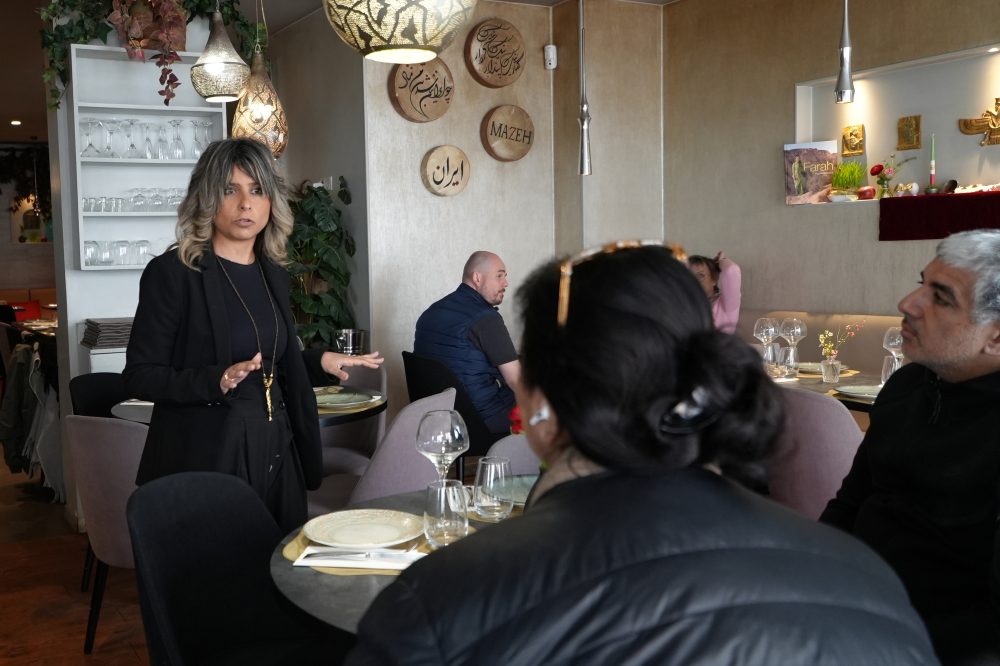
Ghadimi’s elderly mother had been following the early demonstrations on television from Paris. “We could see the market closed, the people in the street. She said, ‘I want to be there,’” the 41-year-old restaurant owner explained while preparing meals in her aromatic Paris eatery.
“Now, she is all alone at home, with no way to stay in contact, watching the sky. I cannot imagine the state she is in,” Ghadimi shared.
The impact extends far beyond individual families. A Paris-based Iranian cultural organization that previously hosted musical performances for Nowruz has declared itself in mourning this year. Similarly, Iranian American groups across the United States have either called off their celebrations entirely or dramatically reduced their scope.
The holiday known as Nowruz, meaning “new day” in the Persian language, traditionally aligns with the spring equinox and is observed across a vast region spanning from Afghanistan to Turkey. People of various religious backgrounds within Iranian communities celebrate this ancient Zoroastrian festival, which traces its origins back thousands of years, despite periodic attempts by religious conservatives to discourage the practice.
Shakiba Edighoffer, while shopping for traditional Nowruz ingredients, described the emotional turmoil she and fellow Iranians experience as military operations continue. Israel and the United States have launched attacks targeting Iran’s government officials and armed forces, while the Islamic Republic has responded by launching missiles and unmanned aircraft toward Israel and neighboring Gulf nations.
“You hear news about this or that leader of the Islamic Republic being eliminated … about executions or bombings,” explained Edighoffer, who works as a makeup artist.
The near-complete breakdown of communication networks has transformed attempts to check on relatives and friends enduring bombardments into anxiety-inducing ordeals.
“I had a friend who managed to connect very briefly on Instagram a few days ago, but I think it’s been about 20 days now since the war started, and that was really the only time I was able to speak with him a little,” Edighoffer noted.
Despite the circumstances, she emphasized the importance of maintaining cultural traditions. Observing Nowruz alongside family and friends “helps us cope, at least a little, with the psychological pressure,” she explained. “All these oppressors want is for us to be sad, to forget our millennia-old Persian and Iranian traditions. We must not give them that victory.”
Among the customers visiting Ghadimi’s restaurant for traditional grilled meat dishes and seasoned rice, opinions about the conflict’s potential outcomes vary dramatically. Some express hope that the warfare might herald positive change, while others focus solely on the casualties and devastation caused by Israeli and American military strikes.
“I have people in tears. I have people who cry for joy. They say, ‘Did you see? They are coming. We are going to be saved.’ Others say, ‘Our country is being destroyed,’” she observed.
Communication with her mother has been severely limited since her January departure for Iran, with only two successful phone conversations occurring during the entire period.
“Quite honestly, I don’t try anymore. Because it stresses me out, if I try calling and can’t get hold of her,” she admitted. “My sister calls 100 times a day and can’t reach her.”
Her mother had originally purchased a round-trip ticket and promised to return in time for the Nowruz celebration.
However, during their most recent conversation approximately one week ago, her mother revealed that those plans had shifted. Having witnessed the 1979 Islamic Revolution firsthand, she expressed determination to remain and observe Iran’s unfolding political transformation.
“I am staying here until the end,” her mother declared.