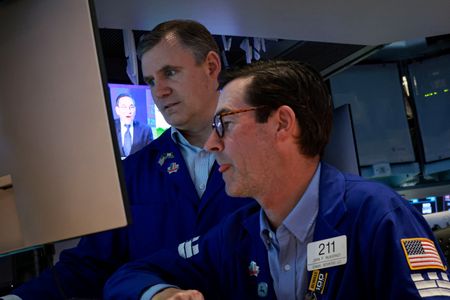

Escalating tensions in the Iran conflict have prompted investors nationwide to abandon riskier investments and pour money into ultra-safe money market funds, pushing total assets to an unprecedented $8 trillion milestone.
Financial data from organizations including the Investment Company Institute, JPMorgan Chase, and Crane Data shows these short-term Treasury funds have reached historic levels as oil prices surge and inflation worries mount. Though calculation methods differ, with estimates ranging between $7.8 trillion and $8.1 trillion, all sources confirm record-breaking asset levels during the ongoing conflict.
Malcolm Polley, who serves as director of strategic market analysis at Stratos Investment Management, explained the investor mindset driving this trend. “When you have times of dislocation and times of fear, cash is the only thing that makes sense to a lot of people, because there’s the belief that you ‘can’t lose’ by holding it,” Polley stated. He mentioned reassuring clients that “the world is not coming to an end just yet.”
Sweta Singh, founding partner at City Different Investments, characterized the phenomenon as cautious positioning. “This is the ‘wait-and-see’ money coming from investors who are wary about what’s happening right now,” Singh observed.
Soaring crude oil costs have become the primary driver behind this massive shift toward cash holdings. Brent crude futures climbed 1.2% Thursday, reaching $108.65 per barrel after experiencing intraday gains as high as 10%.
Steven Wieting, co-founder of CIO Group, noted how oil prices are influencing traditional safe havens. “Gold, silver and currencies are increasingly being driven by oil” prices, Wieting said. “As all risk assets take on this uncertain path, dependent on oil, it is natural for cash to build on the sidelines.”
Market experts warn that sustained elevated oil prices will negatively impact consumer spending and corporate profits across the economy.
BlackRock Investment Institute analysts highlighted the limited options available to investors in a Monday client note, writing: “There are few places to hide from this near-term supply shock. Government bonds and gold are not providing ballast as equities fall.” Even Treasury securities offer little protection given potential inflation increases and mounting government debt from war expenditures.
Jacob Taurel, managing partner at Activest Wealth Management, identified a key economic concern. “The elephant in the room is stagflation,” Taurel said, describing this combination of rising prices and economic stagnation as “a real risk.”
These conditions make money market funds attractive to some investors, particularly since current yields exceed 3% and approach 4% at certain financial institutions. Deborah Cunningham, chief investment officer of global liquidity markets at Federated Hermes, noted in early March analysis that the “collective negative vibe often sends investors to safer harbors,” including money market funds. Cunningham estimates the total cash held in money markets at $8.3 trillion.
However, financial advisors are warning clients against excessive risk avoidance and over-allocation to money market funds.
Polley cautioned about the challenges of market timing. “The problem with going to cash is that you have to make two separate decisions correctly: when to get into cash and when to move back into other assets,” he explained. “When people are scared, they can be irrational.”