
DUBAI, United Arab Emirates — While President Donald Trump announced Tuesday that America is negotiating with Iran to halt current military operations, Iranian forces simultaneously launched missile and drone attacks against Israel and several Gulf Arab nations.
Trump also extended his ultimatum for Iran to reopen the crucial Strait of Hormuz shipping lane, postponing threatened airstrikes against Iranian power facilities. This extension temporarily lowered oil prices and lifted stock markets.
The postponement provided temporary relief following weekend exchanges of threats between Washington and Tehran that could have left millions without electricity across Iran and Gulf regions, potentially destroying water desalination facilities critical to desert countries and raising concerns about nuclear facility strikes.
However, Iran disputes Trump’s characterization of ongoing negotiations, flatly rejecting claims that discussions are underway.
“No negotiations have been held with the US,” Iranian parliament Speaker Mohammad Bagher Qalibaf posted on X, adding that “fakenews is used to manipulate the financial and oil markets.”
Israeli Prime Minister Benjamin Netanyahu stated Israel would maintain its military operations against Iran and Lebanon despite U.S. ceasefire considerations.
“There’s more to come,” he said.
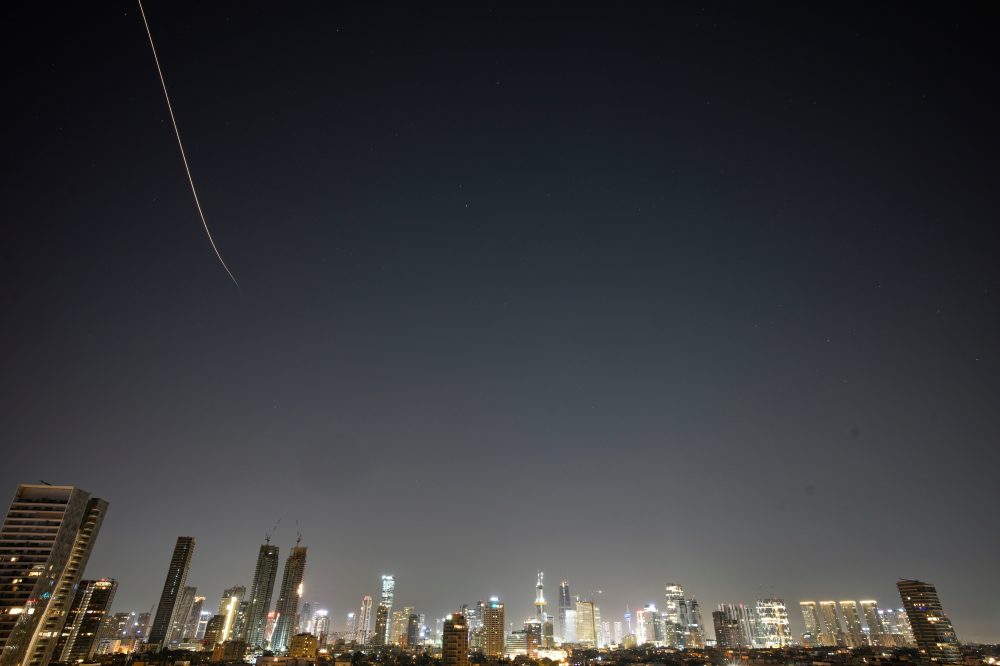
Early Tuesday, Iran launched three separate missile waves toward Israel, with the Israeli Home Front Command confirming impacts in northern regions.
Israeli forces simultaneously bombarded southern Beirut neighborhoods, claiming they were destroying facilities operated by Hezbollah, the Iran-backed militant organization.
The attacks affected multiple Gulf nations. In Kuwait, air defense debris damaged electrical infrastructure, creating power outages lasting several hours. Bahrain activated missile warning systems, while Saudi Arabia’s Defense Ministry reported intercepting 19 Iranian drones aimed at its oil-producing Eastern Province.
Oil markets initially dropped below $100 per barrel following Trump’s negotiation claims. However, this decline proved temporary, with Brent crude prices returning to $104 per barrel during morning trading, representing a 40% increase since the conflict began February 28.
Trump originally established a Monday evening deadline for Iran to reopen the Strait of Hormuz or face power plant attacks, but extended this timeframe by five additional days.
Iran has permitted limited vessel passage through the strait connecting the Persian Gulf to international waters, while maintaining its policy of targeting ships associated with the United States, Israel, or their allies.
Iranian leadership remains suspicious of Washington’s intentions, partly because Tehran was engaged in negotiations with America before the surprise offensive that initiated current hostilities. Iran was also conducting talks last year when U.S. and Israeli forces struck its nuclear installations, triggering a 12-day conflict.
Trump’s deadline extension coincides with thousands of Marines heading toward the region, sparking speculation about potential American efforts to capture Kharg Island, located off Iran’s coastline and essential to its petroleum operations.
American forces bombed this Persian Gulf island over a week ago, targeting defensive systems while reportedly preserving oil infrastructure.
Iran has warned it might deploy mines throughout the Persian Gulf if U.S. ground forces appear imminent, which would complicate amphibious operations and endanger all regional shipping.
The postponement might align with Marine arrival schedules, expected Friday, according to analysis from the New York-based Soufan Center think tank.
“As Trump has in the past, he could be moving military assets into place, in this case to prepare for an invasion and seizure of Kharg Island, while using negotiations as a cover until those assets are fully combat-ready.”
The center also observed that “Trump could be actively seeking an offramp. Whether Iran reciprocates is yet to be seen.”
While Trump has stated no intentions to deploy ground troops inside Iran, he hasn’t eliminated this possibility. Israel has indicated its ground forces might participate in the conflict.
Iran’s Health Ministry reports casualties exceeding 1,500 deaths. Israeli losses include 15 fatalities from Iranian attacks. At least 13 American military personnel have died, along with more than a dozen civilians in the occupied West Bank and Gulf Arab states.